
5 of the best hotels in Tokyo for architecture and design
Michelin's best Tokyo hotels for design lovers, from a bank with record players to rooms by 26 emerging artists
Credit: BnA_WALL
Tokyo has always produced architecture and interiors that reward close attention. The city’s design culture draws on centuries of craft tradition and an appetite for radical reinvention, making the gap between a generic business hotel and a genuinely considered one more visible here than almost anywhere else. A room that treats design as ornament is easy to identify and easy to forget. A room built around a conceptual framework — where every material choice, every furniture selection, and every lighting decision reflects a coherent creative position — stays in the memory long after checkout. Tokyo now produces both types in abundance, and knowing which category a hotel falls into before booking makes a significant difference to the experience travelers take home.
The boutique hotel sector in Tokyo has accelerated in recent years, giving design-conscious travelers more options across a wider range of price points than the city previously offered. The assumption that a genuinely designed hotel requires a luxury budget no longer holds in Tokyo, where the most interesting properties often position themselves as accessible to travelers with limited accommodation budgets who nonetheless refuse to sacrifice aesthetic engagement. At the same time, the city’s upper tier of boutique hotels has pushed further into experiential territory, integrating dining programs, artist partnerships, and community programming into the guest experience in ways that blur the line between staying somewhere and participating in a neighborhood's cultural life.
The five hotels below come from the Michelin Guide’s selection of the best hotels for design lovers in Tokyo, which evaluated properties based on their design ambition, the coherence and quality of their interiors, the distinctiveness of the guest experience they deliver, and their engagement with Tokyo’s broader art and design culture. The list spans neighborhoods from Nihombashi to Shibuya, price points from millennial-accessible to luxury boutique, and creative frameworks from emerging artist collaborations to Swedish-Japanese design fusions.
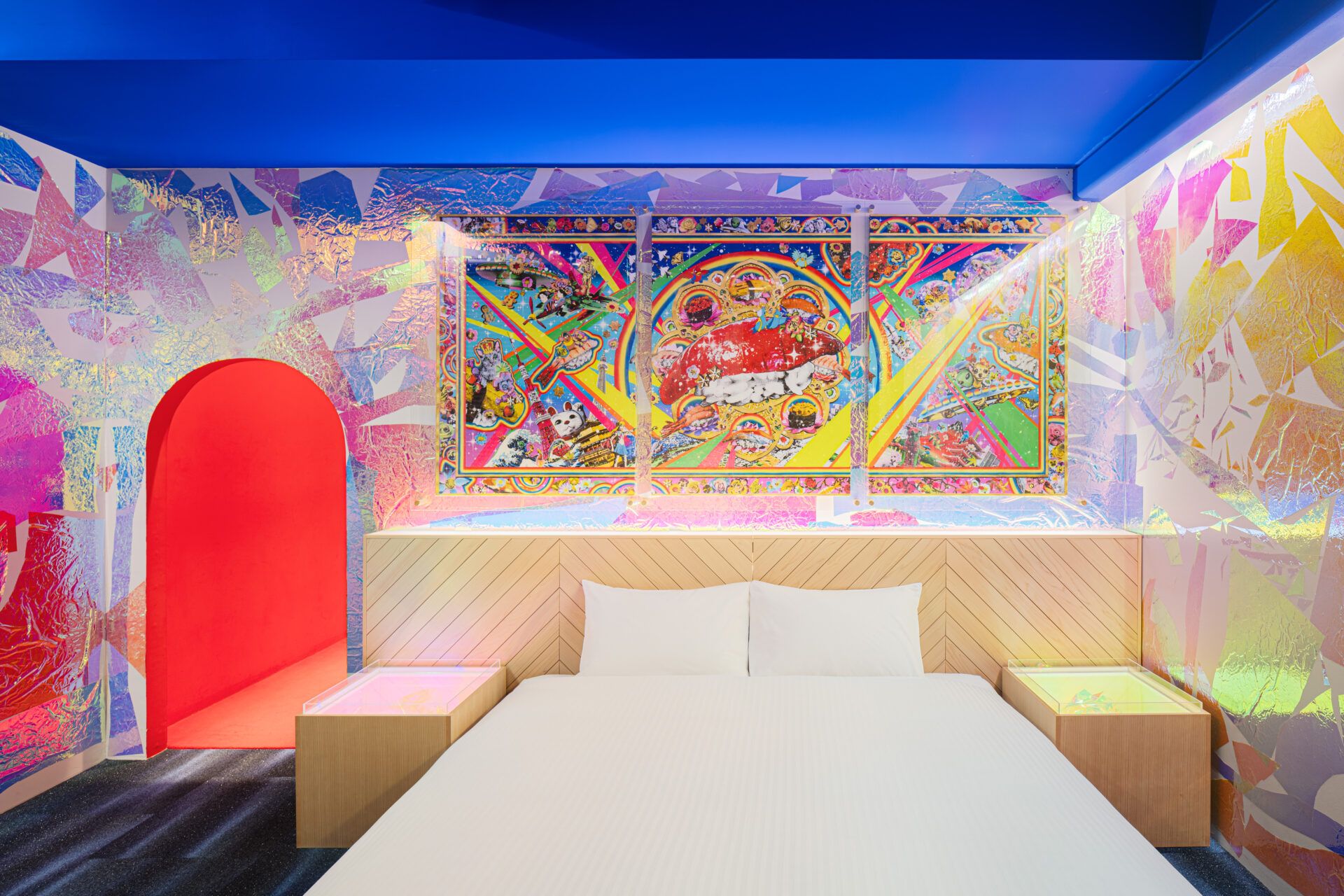
1. BnA_WALL lets 26 artists design its Nihombashi guestrooms
Credit: BnA_WALL
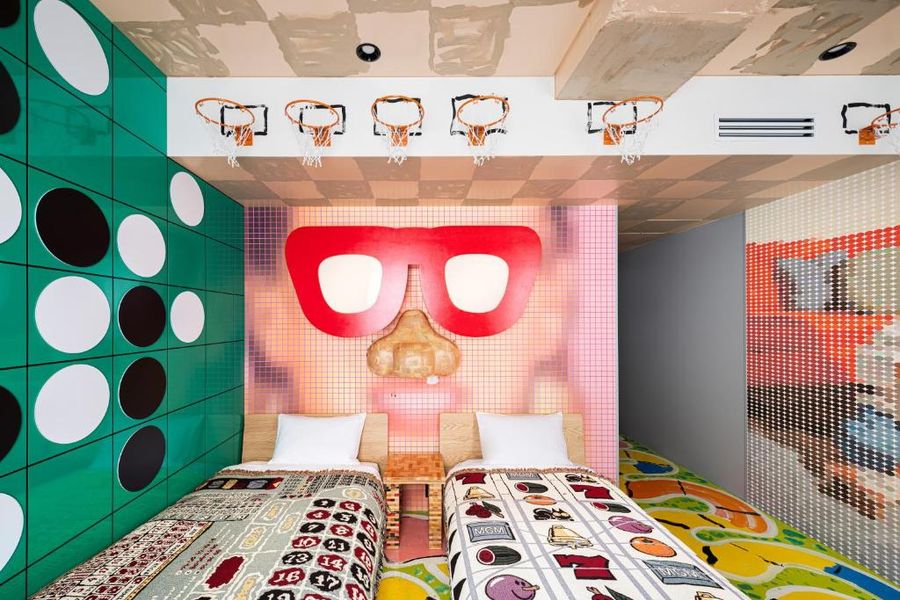
BnA_WALL, in Nihombashi, assigns each of its 26 guestrooms to a different emerging artist, making the room the artwork and the guest a participant in the installation, not a spectator. The name stands for “bed and art,” which encodes the hotel’s core proposition directly in its branding: the accommodation and the creative experience are inseparable, not a hotel with art on the walls but a living environment where the distinction between the two has been eliminated. Guests choose their room from the full artist roster and can calibrate their stay toward relaxation, something more demanding, or something fantastical, depending on which artist’s vision they select.
The artist relationship at BnA_WALL extends beyond the initial room design into an ongoing revenue-sharing arrangement. Artists receive a portion of the booking fee each time a guest selects their room, which gives the hotel a community economics model unusual in the accommodation sector and provides emerging artists with a passive income stream tied directly to the appeal of their work. The hotel reinforces this community orientation through regular programming: art performances and food events bring guests and Tokyo locals into the same spaces, collapsing the boundary between hotel guest and neighborhood participant that most properties maintain as a matter of course.
The lobby bar, which doubles as a bistro, serves as the social center of the hotel and draws both guests and local visitors who arrive independently of any room booking. The basement level houses an art studio where artists work on a continuously evolving large-scale mural, offering guests who choose to spend time there a live encounter with the creative process rather than a completed artifact. BnA_WALL’s model — emerging artists, community revenue-sharing, live studio access, and a lobby that functions as a neighborhood gathering point — gives the hotel an identity built around creative participation that no other property on this list replicates at the same structural depth.
2. K5 swaps televisions for record players in a bank
Credit: K5
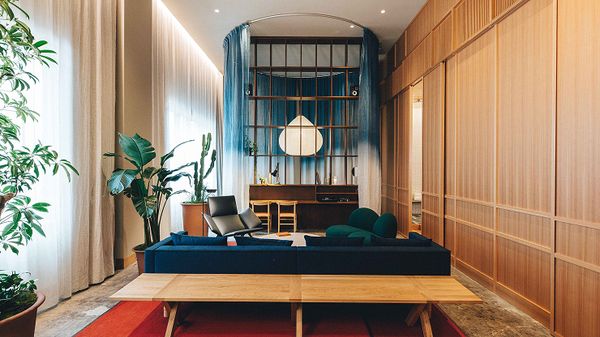
K5 occupies a century-old former bank building directly across from the Japanese Stock Exchange in Nihombashi, a conversion project completed by the architectural firm Claesson Koivisto Rune that treats the building's historical fabric as a design asset rather than an obstacle. The interiors blend traditional Japanese aesthetic sensibility with contemporary Swedish design values. The source describes this fusion as harmonious, meaning the two traditions produce an integrated visual language that draws on both without defaulting to either as the dominant register.
The room design rewards attention at the level of individual decisions. Circular fabric veils, dipped in indigo, encircle custom beds that incorporate built-in shelves and desks, giving the sleeping area a sense of enclosure and intimacy that a conventional hotel bed arrangement does not. Paper lamps and pot plants complete a material palette that emphasizes natural materials and handcraft. In place of a television, each room has a record player, and guests have access to a vinyl library maintained by the hotel, along with a book collection and bicycles available for use in the neighborhood. The substitution of a record player for a television is not merely a stylistic gesture. It establishes a different relationship between the guest and leisure time, favoring slow, intentional listening over passive screen consumption.
The public spaces at K5 apply the Japanese concept of aimai — which the source translates as ambiguity in its most positive sense — to the hotel’s common areas. The lounge, café, wine bar, and restaurant flow together without hard boundaries, creating an environment where the appropriate activity in any given moment is left open and not prescribed by the room's architecture. The Instagram appeal of the interiors, mentioned explicitly in the source, reflects how thoroughly the design succeeds on a visual level. The conceptual framework behind the room decisions gives the property a depth that a purely photogenic hotel cannot match.
3. Mesm Tokyo echoes Japanese wave design on the waterfront
Credit: Marriott
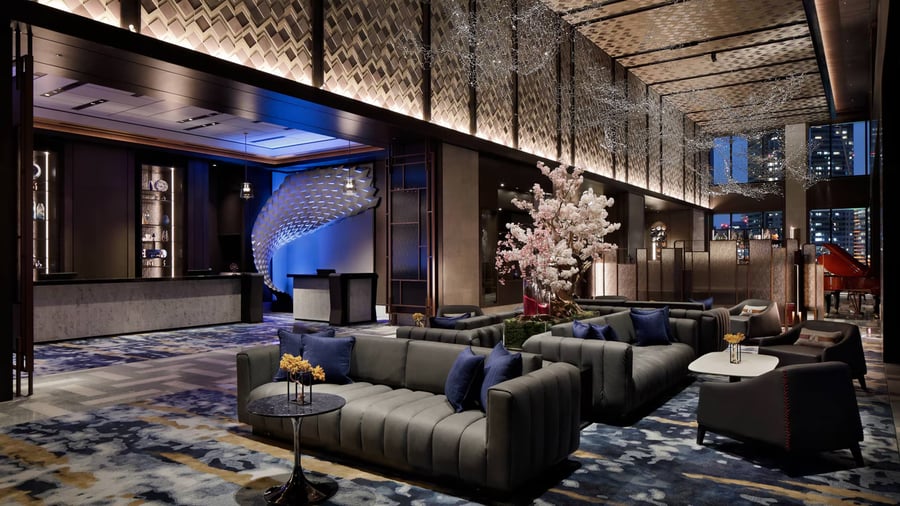
Mesm Tokyo, whose name abbreviates the word “mesmerize,” occupies the upper floors of Waters Takeshiba, a mixed-use development built on former docklands, giving it waterfront views toward the nearby Hamarikyu Gardens and positioning it within reach of central Tokyo’s major attractions. The hotel names its interior design concept “Tokyo waves,” a framework that translates the undulating character of contemporary Japanese design and culture into the guestrooms and public spaces. The concept gives the interiors a coherent rationale that extends beyond surface decoration into the design's structural logic.
The guestrooms demonstrate that sustainability and visual sophistication can coexist without compromise. Glass bottles replace plastic in the mini-fridges, and amenities are packaged in paper and displayed in a format the source describes as resembling books. The playful touch turns a functional object into something that holds a considered position in the designed environment. The attention given to these details reflects a design philosophy in which nothing within the guest’s visual field is treated as incidental, and in which sustainability choices become visible design choices, not invisible operational ones.
The dining program at Mesm Tokyo adds a cultural layer to the stay that most hotels in this price category do not attempt. A French restaurant takes its conceptual cue from Kabuki performance traditions, meaning its culinary approach draws on one of Japan’s most formalized theatrical art forms as a framework for how food and service are presented. A steakhouse and an intimate bar complete the food-and-drink offering, while nightly live musical performances take place in the 16th-floor lobby. The programming decision treats the lobby as a performance venue rather than a transit space. Mesm Tokyo’s waterfront position, its wave-concept interiors, its sustainability details, and its Kabuki-inflected dining together give the hotel a more fully articulated cultural identity than any other luxury property on this list.
4. Moxy Tokyo Kinshicho delivers style at millennial prices
Credit: Marriott
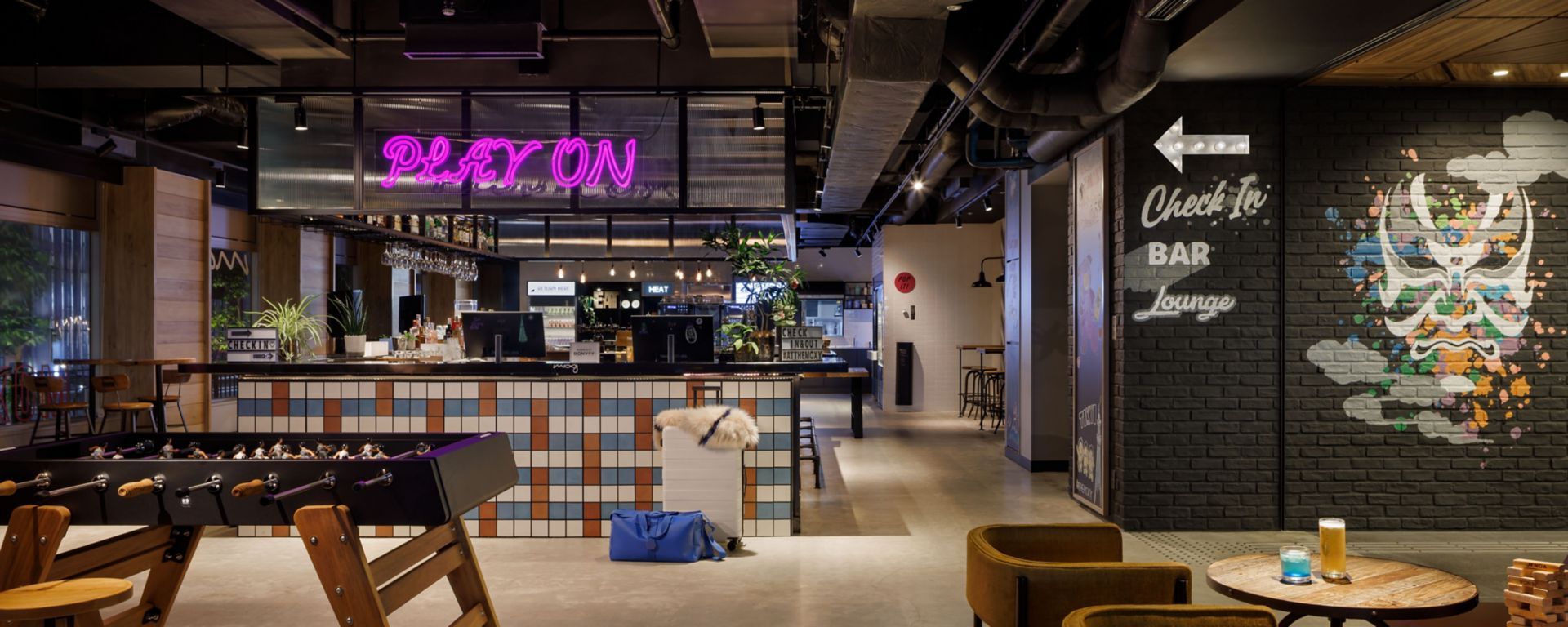
Moxy Tokyo Kinshicho represents Marriott $MAR’s entry into the boutique hotel category and positions itself explicitly toward a primarily millennial clientele, which shapes every design and programming decision the property makes. The exterior is described as utilitarian. The design concentrates visual and material investment in the spaces guests actually occupy, rather than on the building’s facade. Inside, the rooms make efficient and creative use of limited floor space without sacrificing the quality of the guest experience: high-thread-count bed linens, walk-in showers, and 50-inch televisions provide amenities that belong to a higher price tier than the room rate suggests.
The dining approach at the Moxy Tokyo Kinshicho reflects a clear-eyed understanding of who the guest is and how they prefer to eat. Continental breakfast is included, but the hotel assumes that its primarily millennial clientele will choose their own dining experiences outside the property for most meals, selecting restaurants at their own preferred price points across the surrounding neighborhood. The hotel skips a full-service restaurant that the target guest would bypass anyway and instead provides grab-and-go noodles and snacks available around the clock from the combination bar and lounge, which simultaneously serves as the social hub where guests gather outside of mealtimes.
The hotel’s location in Kinshicho, a predominantly residential neighborhood that the source notes sits somewhat off the tourist radar, gives the Moxy Tokyo a neighborhood character that properties in Shibuya or Shinjuku cannot offer at a comparable price point. Despite the local flavor, the location provides practical access to Tokyo Skytree and Sensoji Temple, two of the city’s most significant visitor destinations. A library and a gym add amenities that extend the property’s appeal beyond the purely social register of the bar and lounge. The Moxy Tokyo Kinshicho proves that boutique design sensibility and budget-accessible pricing are compatible in Tokyo when the creative brief is honest about its actual constraints.
5. Shibuya Stream Hotel sits inside a Scramble Square tower
Credit: Shibuya Stream Hotel
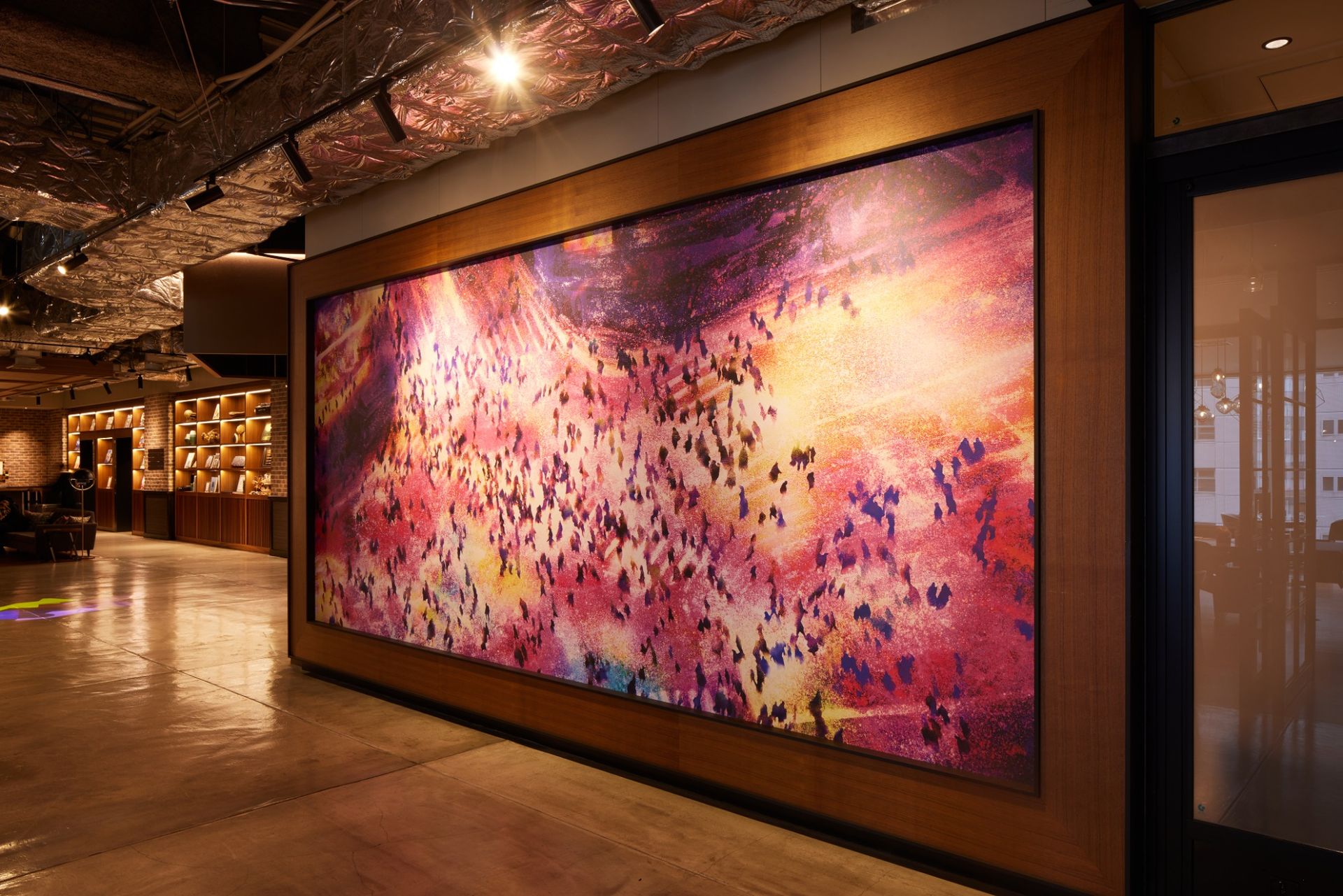
The Shibuya Stream Hotel occupies the upper floors of the Shibuya Stream shopping complex, a location that puts guests in one of Tokyo’s most concentrated zones of contemporary urban energy. Shibuya’s Scramble Square $SQ crossing — the intersection that has become shorthand for the organized chaos of modern Tokyo — sits immediately outside, which means that guests who want to be at the physical center of the city’s busiest cultural crossroads have chosen the right address. The hotel treats this location as a design asset: proximity to the action is the primary value proposition, and the interiors support it by delivering comfort and considered style without competing with the city outside the window for the guest's attention.
The guestrooms use contemporary colorways and patterned textiles to create, according to the source, a vintage-modern vibe. The visual register acknowledges the present without abandoning reference to the past, placing the rooms in the same aesthetic conversation as Shibuya’s broader retail and entertainment culture, which draws on both current international design trends and a distinctively Japanese capacity for fusing historical reference with contemporary form. The communal spaces are designed with particular care: a well-equipped guest kitchen provides guests who want to cook their own meals with a functional space, an amenity unusual enough in a hotel setting to serve as a genuine differentiator.
Dining options within the hotel include Torrent, a Japanese-French fusion restaurant whose culinary approach reflects the same cross-cultural sensibility that animates the interiors. An ambient cocktail lounge with live music provides evenings with a social venue and a designed atmosphere, not a generic hotel bar. For guests who want to explore Shibuya’s exceptional dining landscape independently, the neighborhood provides options across every cuisine, price point, and dining format imaginable. The Shibuya Stream Hotel gives travelers who want to immerse themselves in the visual and social energy of contemporary Tokyo the most direct access of any property on this list.