
From MSC's teen drone academy to Disney's private island beach club for teens, six cruise lines ranked by what they offer kids
Credit: MSC Cruises
Family cruising works partly because ships solve the logistics problem that land-based vacations leave open: what do children do while parents want adult time, and what do adults do while children want kid time? The answer on most major cruise lines is a dedicated kids club, staffed by trained counselors, stocked with age-appropriate activities, and available for most of the sailing day. Parents can drop children off, enjoy a meal or a spa treatment in peace, and pick them up when they’re ready, all without leaving the ship.
The clubs are more sophisticated than most new cruisers expect. Many cruise lines segment their programs into four or five age brackets, from infant rooms with appropriate toys and supervision to teen lounges with gaming consoles, themed parties, and specialty programming that seriously competes for teenagers’ attention. Some programs go further still, with unique features like drone academies, Kennedy Space Center science partnerships, and private islands with teen-only beach areas. The quality of a ship’s kids' club can determine whether a family cruise goes smoothly or becomes a negotiation every few hours.
These six programs come from U.S. News and World Report’s selection of the best cruise line kids' clubs in 2026. The programs differ significantly in the age ranges they cover, the degree to which they charge for late-night care, and the specialty features they offer beyond standard supervised play. This comparison covers the key structural differences for families choosing between lines.

Credit: MSC Cruises
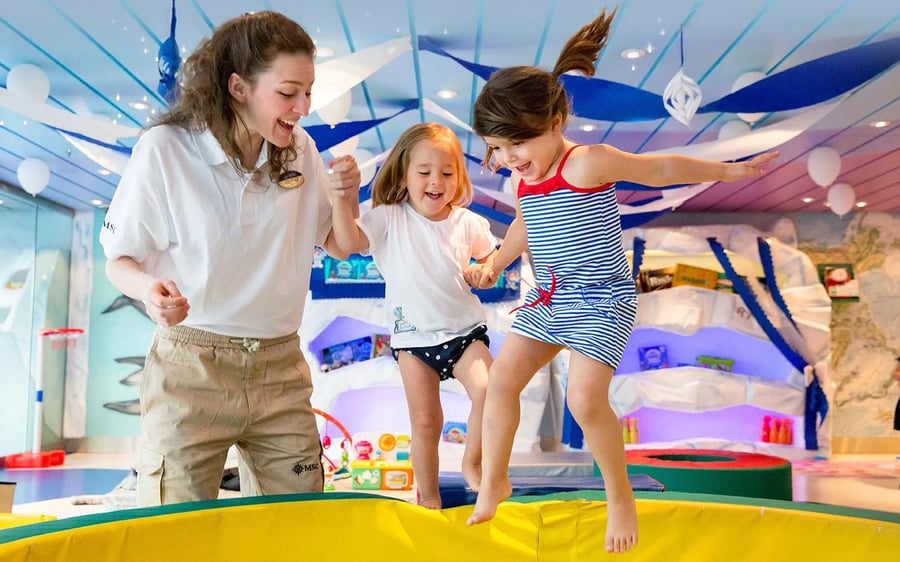
MSC Cruises operates five separate clubs that cover children and teens from birth through age 17. The Baby Club at the youngest end has two distinct offerings: MSC Baby Time allows parents to bring children under three years old into the baby club during set daytime hours for play together, while MSC Baby Care is an extra-charge drop-off babysitting service available eight hours a day for babies six months to three years old, with a maximum of 15 babies at one time.
The Mini Club for ages three to six is free and runs in partnership with LEGO, offering younger kids open-ended creative play alongside organized games, crafts, and activities. The whole family can join a disco featuring Doremi, the line’s giant plush star mascot. The Junior Club for ages seven to 11 is also free and includes group sports, video game consoles, and a MasterChef at Sea Juniors cooking activity for young culinary enthusiasts. The Young Club for tweens ages 12 to 14 focuses on social connection through board, table, and video games in a monitored space.
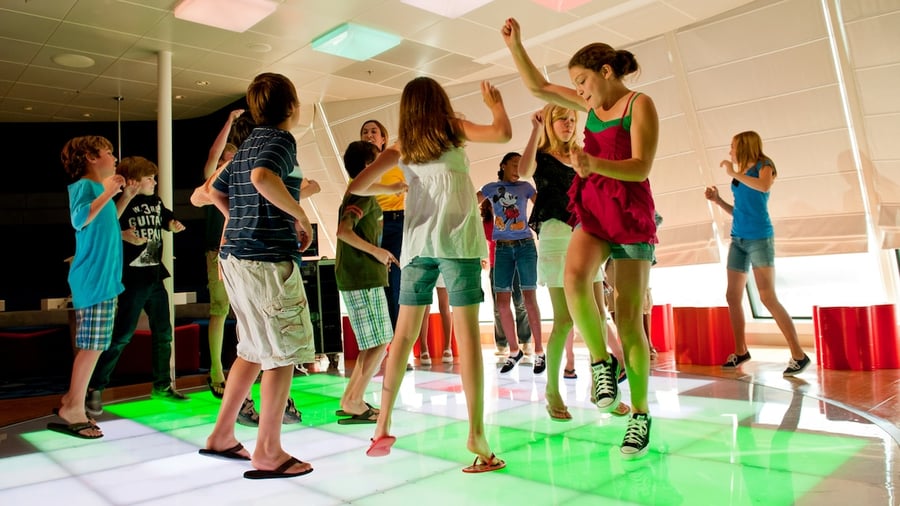
The Teen Club for 15- to 17-year-olds is where MSC’s programming reaches its highest-profile feature: the Drone Academy, available on select ships, lets teens pilot real drones through a nighttime obstacle course. The rest of the Teen Club program includes video game tournaments across Wii, Xbox, and PS4, dance contests, themed nights, karaoke, flash mobs, and a disco. The range and quality of the Teen Club’s specialty programming give MSC’s oldest youth demographic a genuine reason to engage with the ship’s kids program, not simply tolerate it. The Drone Academy, in particular, gives MSC’s Teen Club a signature experience that most competing teen programs cannot replicate. The five-club structure also gives MSC one of the most granular age segmentations on this list, with dedicated spaces for five distinct developmental stages from infancy through late adolescence.
Credit: Disney Cruise Line
Disney $DIS Cruise Line structures its youth program around five clubs, and the range is distinctive: while most cruise lines cap their youth programming at 17, Disney extends its offerings to age 20 through the Hideaway lounge, available on the Disney Wish, Disney Treasure, and Disney Destiny. The Hideaway is a DJ booth and lounge space designed for older teens and young adults who want a social gathering spot without counselor-led activities. It functions more as a central meeting spot than a traditional supervised club.
The “It’s a Small World” Nursery offers infant and toddler care for children ages 6 months to 3 years for an extra fee, with baby care for the youngest guests and games, activities, and movies for older toddlers. Parents must register and reserve space on embarkation day, and cancellations require at least four hours’ notice to avoid a 50% fee. The Oceaneer Club for ages three to 10 runs free until midnight with character appearances, storytelling, and ship-specific attractions: the Walt Disney Imagineering Lab on the Wish, Treasure, Destiny, and Adventure lets kids build and virtually ride their own roller coasters, while the Magic Play Floor on the Dream and Fantasy offers an interactive technology-driven play space.
The Edge club for ages 11 to 14 includes scavenger hunts, karaoke, and dance parties, with a private outdoor sundeck on the Dream and Fantasy that includes splash pools. The Vibe club for 14- to 17-year-olds goes further, providing indoor and outdoor pool spaces on those same ships reserved exclusively for teens, plus a Teen Hideout on Disney’s private island, Castaway Cay, where the same counselors and friends from Vibe accompany teens to the beach. The extension of the kids program to a private island setting is a detail that most cruise lines do not replicate, and it gives Disney families a consistent supervised experience even during port days at Castaway Cay.
Credit: Royal Caribbean
Royal Caribbean $RCL’s youth program spans five clubs from infancy through late adolescence, most of which are free during daytime hours with fees applying after 10 p.m. The Babies and Tots program for ages six months to three years offers age-appropriate toys, games, and trained staff supervision. Nursery drop-off is available on most vessels for an extra fee, with the exception of three ships: Jewel of the Seas, Adventure of the Seas, and Explorer of the Seas.
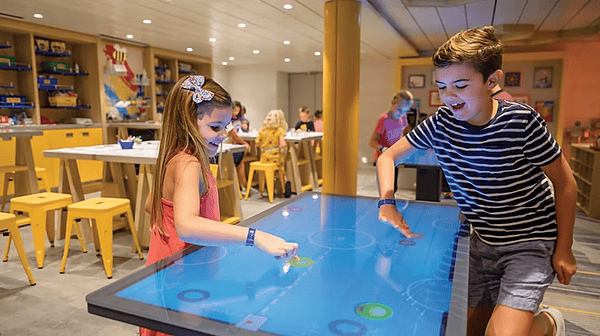
The Aquanauts club for ages three to five is free before 10 p.m. and requires children to be fully potty-trained. Activities include arts and crafts, story time, face painting, and free play. The Explorers club for ages six to eight elevates the programming with child-led performances, science experiments centered on fossils and meteorology, and regular dance parties with ice cream. The Voyagers club for ages nine to 11 shifts toward group sports tournaments, ship-wide scavenger hunts, and talent shows in a lounge-style space.
Royal Caribbean’s teen club covers ages 12 through 17 across a single dedicated space whose name varies by ship: Social100, Social020, Living Room, and Fuel are among the names used across the fleet. Each teen club provides gaming consoles, music, lounge space, and, on some ships, access to an outdoor patio. Popular programming includes silent discos, organized game tournaments, and movie nights. Families new to Royal Caribbean should check their specific ship’s deck plan to confirm their teen club’s name and location before the sailing begins. Royal Caribbean’s five-club structure covers a wide age span with programming that escalates in autonomy and social focus as kids move through each age bracket, which gives the overall program a developmental logic that suits families returning to the line across multiple sailings as their children age through the brackets over multiple years, making the program structure worth understanding in detail before the first sailing with Royal Caribbean.
Credit: Norwegian Cruise Line
Norwegian Cruise Line $NCLH’s youth programming is organized into two clubs that together serve ages 3 through 17. One important operational note before booking: Norwegian Spirit does not offer any youth programming, which makes it a poor fit for families who depend on kids' clubs during the sailing.
Splash Academy serves children ages 3 through 12 in a single combined club that spans an unusually wide age range for a single supervised space. The programming covers game shows, scavenger hunts, trivia, and sports competitions, with specific offerings varying by ship and sailing. The club is free during standard hours, and late-night hours from 10 p.m. to midnight are available at $10 per hour per child, a fee worth factoring into the trip budget for families who regularly use evening childcare. Registration for Splash Academy takes place on embarkation day, which means families should make it a priority when they board.
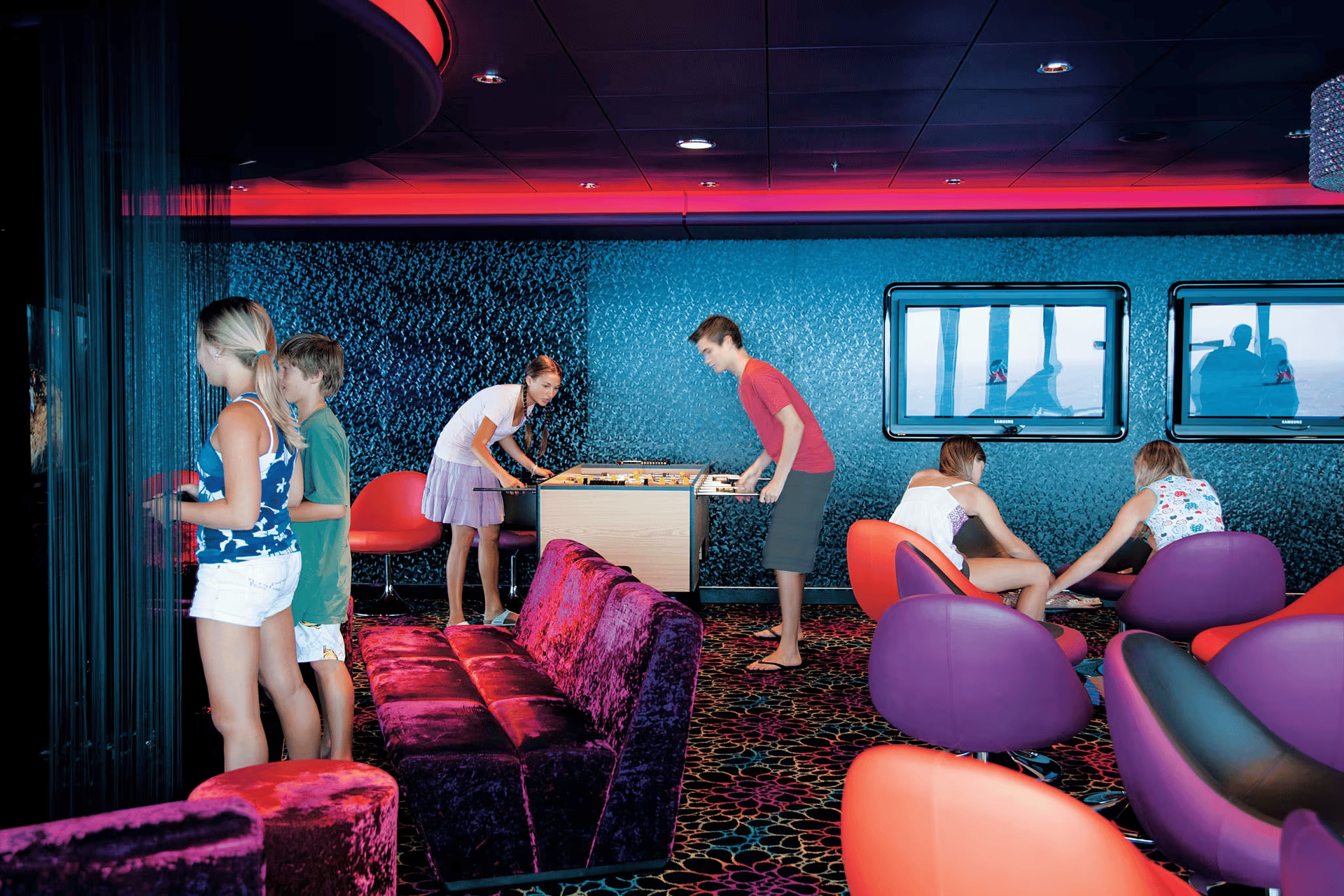
The Entourage club for teens 13 through 17 offers movies, video games, and lounge space, along with themed nights such as College Night, a White-Hot Party, and Glow Night. Some activities take place outside the Entourage lounge but are still hosted by teen counselors, extending the program beyond the club walls. NCL’s two-club structure is simpler than the multi-tiered programs of Disney $DIS or Carnival, but the coverage it provides — free supervised care for a wide age range during standard hours — meets the core need of most cruising families. The $ 10-per-hour late-night rate for Splash Academy is also specific enough to plan around when building the daily schedule for a family sailing. Families who tend to stay out late in the evenings should budget for that cost explicitly, since it can add meaningfully to the overall cruise expense across a seven-night sailing with multiple late evenings. Families on back-to-back sailings or longer voyages should factor that cost into their planning from the start.
Credit: Carnival Cruise Line
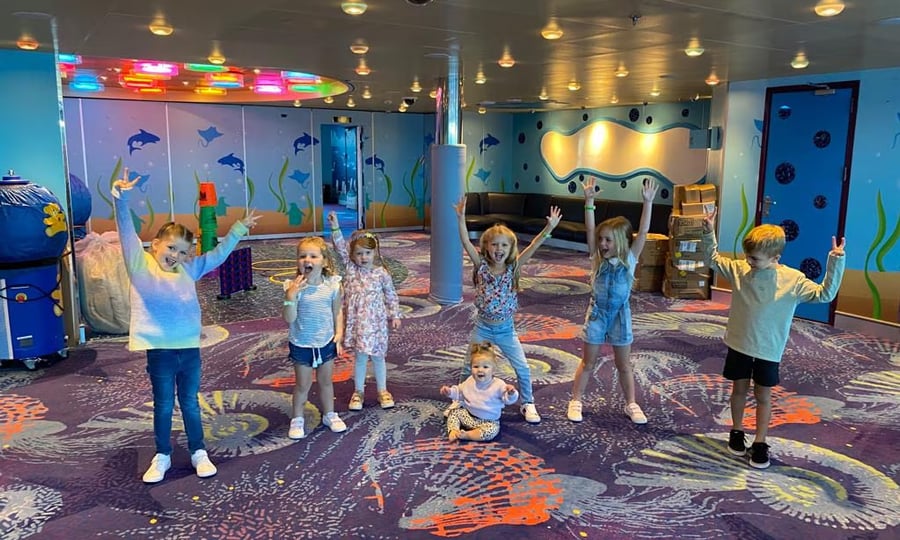
Carnival Cruise Line organizes its youth programming into six age-specific clubs, the broadest segmentation on this list. The Turtles club for babies six months to 23 months requires pre-cruise registration and carries an hourly fee for supervised drop-off. Activities include educational games, storytelling, music and dancing, Zumbini classes, and sensory activities tailored to that age group.
Camp Ocean Penguins for ages two to five is free during standard hours; late-night fees apply after 10 p.m. Children do not need to be potty-trained to participate, which makes it more inclusive than comparable clubs on other lines. Activities include board games, arts and crafts, video games, and face painting. Families can also participate together in the Build-A-Bear Workshop at Sea and family scavenger hunts. Camp Ocean Stingrays for ages six to eight stands out for its partnership with the Kennedy Space Center Visitor’s Complex, which brings Mars rover racing, bridge design challenges, and space-themed bingo to the club alongside more standard activities like jewelry making and painting.
Camp Ocean Sharks for ages nine to 11 allows kids to check in and out independently, which gives older children within the club age range a degree of autonomy that many parents and kids appreciate. Circle C for ages 12 to 14 operates on a come-and-go basis and includes a See the World program highlighting traditions and celebrations from cultures around the world. Club O2 for ages 15 through 17 keeps a dedicated leader present throughout and offers a full schedule from dodgeball and capture the flag to karaoke and board game competitions. Carnival’s six-club structure gives the line the finest age segmentation on this entire list, with separate spaces for six distinct age groups from six months through 17, each with programming tailored to the developmental priorities of that bracket and enough variety across clubs that siblings at different ages each find something genuinely suited to them.
Credit: Princess Cruises
Princess Cruises takes a different structural approach from most of the other lines on this list: the line does not operate a dedicated baby club, though infants and toddlers ages six months to two years may use the youth facilities during designated hours if accompanied by an adult. Supervised kids clubs begin at age three and cover through age 17 across three clubs.
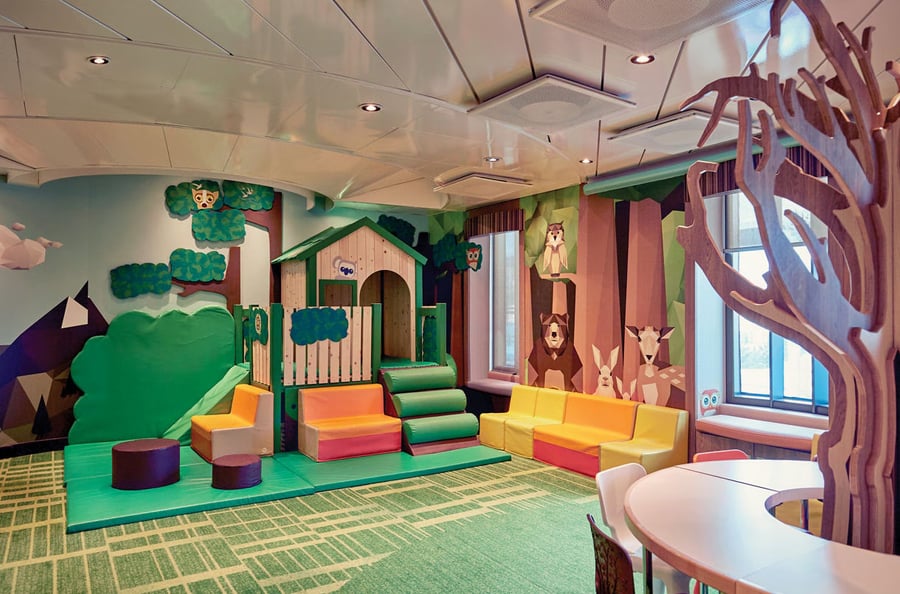
The Treehouse for ages three to seven is free during standard hours, with an hourly fee of approximately $5 applying after 10 p.m. The club includes arts and crafts, indoor play structures, air hockey, movie nights, educational workshops, disco nights, talent shows, and pajama and ice cream parties. The Lodge, for ages 8 to 12, takes the great outdoors as its theme and provides video game consoles, board games, and spaces for kids-only dinners. Programming includes Jr. Chef @ Sea cooking competitions, gaming tournaments, scavenger hunts, talent shows, and arts and crafts. The hourly late-night fee applies after 10 p.m. here as well.
The Beach House for ages 13 through 17 operates as a free, supervised retreat with a dance floor, DJ booth, video game systems, and outdoor sports courts, including basketball. The standout event in the Beach House programming is the Rock the Boat Party, which features a red carpet and VIP badges for teen participants. Princess Cruises’ three-club structure covers the fundamental age groups with distinct programming and environments for each, and the outdoor sports courts in the Beach House represent a specific amenity that teen clubs elsewhere often lack. The Beach House’s outdoor sports courts also give Princess teens a physical activity option that indoor-only teen clubs do not provide, and the Rock the Boat Party’s red carpet format gives the programming a memorable centerpiece that teens tend to remember well after the cruise ends and a recurring reason to book Princess Cruises again when the next trip comes around.