
25 long-haul flights that are actually worth it
The best long-haul flights pair serious range with cabins, food, and routings good enough to make 12 to 19 hours in the air feel like part of the trip
Credit: Nicolas J Leclercq /Unsplash
Long-haul flying has quietly become one of the most competitive arenas in commercial aviation. Two aircraft made that happen: the Airbus A350 and the Boeing $BA 787. Both burn far less fuel than the four-engine jets they replaced, and both can stay aloft long enough to connect city pairs that once required a stopover in Dubai, Anchorage, or Singapore. The result is a generation of nonstop routes stretching 15, 17, even 19 hours — flights that would have sounded like endurance stunts two decades ago but now depart on ordinary weekday schedules.
Not all of these flights are created equal. A 16-hour sector in a cramped cabin with indifferent catering is a punishment. The same 16 hours on an aircraft configured for ultra-long-haul flying — lower cabin altitude, higher humidity, better lighting, more legroom, food designed to be eaten at 38,000 feet — can pass with less friction than a pair of eight-hour legs separated by a three-hour layover and a second security screening. The nonstop premium is real: travelers routinely pay more to skip the connection, and airlines have responded by putting their best hardware and their best service on their longest routes.
This list gathers 25 of the best long-haul flights flying today, drawn from every major region. Some earn their place through sheer geography — the only nonstop link between two continents, or a routing that arcs over the North Pole. Others earn it through the cabin: enclosed business-class suites, economy seats that convert into flat couches, or a three-room apartment at the front of an Airbus A380. A few earn it through service culture, because 17 hours is long enough for the difference between good and great cabin crews to become obvious.
The common thread is that each of these flights offers something a traveler cannot get by simply booking the cheapest connecting itinerary. Distance alone does not make a flight worth taking. What follows is a route-by-route case for 25 that are.
Singapore Airlines' Singapore to New York, the world's longest flight

Credit: Cyrill / Pexels
Singapore Airlines flight SQ24 from New York JFK to Singapore Changi is the longest scheduled nonstop flight in the world, covering roughly 9,500 miles with block times approaching 19 hours. Its sister service from Newark is only a few miles shorter. No other commercial route comes close, and no other flight better demonstrates what purpose-built ultra-long-haul flying looks like.
The aircraft is the key. Singapore Airlines operates the route with the Airbus A350-900ULR, a variant modified specifically for extreme range. The airline made a deliberate choice about the cabin: there is no regular economy class on board. The jet carries only business class and premium economy, a configuration that keeps weight down and acknowledges a simple truth — 19 hours is a long time to spend in a standard economy seat, and the passengers who book this route tend to be traveling on business between two of the world's most important financial centers.
The service reflects the route's flagship status. Meals are staged across the flight rather than crammed into the first and last hours, with lighter dishes developed for high-altitude dining, where taste perception dulls. The A350's cabin is pressurized to a lower effective altitude than older jets and carries more humid air, which reduces the dehydration and fatigue that define most long flights.
Is it worth it? For travelers connecting between New York and Singapore, the alternative is a one-stop itinerary through Europe, the Gulf, or East Asia that adds four to eight hours of total travel time. The nonstop erases an entire layover and lands passengers in noticeably better shape. As a piece of aviation history still in daily operation, it is also simply the benchmark against which every other flight on this list gets measured.
Fares reflect the fact that no other airline flies the pair nonstop, but premium economy regularly books at a fraction of the business fare, making the world's longest flight more attainable than its reputation suggests.
Qantas' Perth to London, the first nonstop between Australia and Europe
Credit: Benjamin Davies / Unsplash
Qantas flight QF9 from Perth to London Heathrow was the first regularly scheduled nonstop passenger flight between Australia and Europe when it launched in March 2018, and it remains one of the longest Boeing $BA 787 routes in the world at up to 17 and a half hours. For a century, every journey between the two continents required at least one stop. This flight ended that era.
Qantas treated the route as a research project as much as a commercial launch. The airline worked with the University of Sydney's Charles Perkins Centre to study passenger wellbeing on ultra-long-haul sectors, adjusting meal timing, lighting sequences, and menu composition to help passengers adapt to the destination time zone rather than the departure one. Dishes lean toward hydration and lighter proteins, and the cabin lighting shifts gradually to nudge body clocks toward London or Perth time.
The Perth stopover experience matters, too. Most passengers connect from Australia's east coast, and Qantas built a dedicated international transit area in Perth with outdoor space and shower facilities designed around the route. The flight then tracks across the Indian Ocean, over the Middle East or southern Asia depending on winds, and into Europe — a routing that produces some of the most varied scenery of any flight in this list.
The case for booking it is straightforward. The traditional Kangaroo Route through Singapore, Dubai, or Hong Kong involves a second takeoff, a second landing, and hours of transit time. The nonstop compresses the journey between Australia and the U.K. into a single sleep-and-two-meals sequence. For travelers starting in Western Australia, it turned London from a two-flight ordeal into a direct hop, and it proved the commercial model that Qantas' planned Sydney-to-London flights will eventually extend.
Qantas has since added a Perth to Paris nonstop built on the same model, confirmation that the airline treats Western Australia as a permanent gateway to Europe rather than a single-route experiment.
Air New Zealand's Auckland to New York and the economy Skycouch
Credit: Kwin M / Pexels
Air New Zealand's nonstop between Auckland and New York JFK runs about 16 hours eastbound and longer coming home against the winds, making it one of the longest Boeing $BA 787 flights in service since its 2022 launch. It is also the rare ultra-long-haul route where the most interesting product is in the economy cabin.
That product is the Skycouch, an Air New Zealand invention dating to 2011. A row of three economy seats comes with leg rests that flip up to form a flat, couch-like surface, which couples or parents with small children can book to lie down across. No other airline offers quite the same thing on a flight of this length, and on a 16-plus-hour sector the difference between sitting upright and lying flat is not a luxury debate — it is the difference between arriving functional and arriving wrecked.
The rest of the aircraft holds up its end. Premium economy on Air New Zealand's 787s is regarded as one of the more generous versions of that cabin, and Business Premier provides lie-flat beds up front. The airline's service culture is informal by flag-carrier standards, which suits a flight where crews and passengers spend the better part of a day together.
Geography makes the route valuable. Before 2022, travelers between New York and New Zealand faced a connection in Los Angeles, San Francisco, or Houston, adding hours and a U.S. domestic-style transfer to an already punishing journey. The nonstop turned the trip into a single overnight run across the Pacific and the U.S. Qantas liked the economics enough to route its own Sydney–New York service through Auckland. For anyone heading to New Zealand from the U.S. East Coast, this flight is the shortest possible path.
Skycouch inventory is limited to a handful of rows per aircraft, so travelers set on lying flat in economy should reserve the couch at booking rather than hoping for availability at the airport.
Qatar Airways' Doha to Auckland in the Qsuite

Credit: Akbar Nemati / Unsplash
Qatar Airways' nonstop between Doha and Auckland covers roughly 9,000 miles and held the title of world's longest flight when it launched in 2017. It remains among the longest routes flying today, and it doubles as one of the best showcases for the Qsuite, the business-class product that reset expectations for the entire industry.
The Qsuite, introduced in 2017 on Qatar Airways' Boeing $BA 777s, was the first business class to offer a private suite with a closing door on a wide scale. Certain center suites can be combined into a double bed, and groups of four can convert their suites into a shared compartment with a table — a configuration no competitor matched for years. On a flight scheduled at 16 to 17 hours or more depending on direction, a closed door and a genuinely flat bed change the character of the journey from endurance to routine.
Qatar Airways backs the hardware with dine-on-demand service, meaning passengers eat when they choose rather than when the trolley arrives. That flexibility matters more on ultra-long-haul flights than anywhere else, because passengers board in wildly different states of hunger and jet lag.
The route itself solves a real problem. New Zealand sits about as far from the Gulf as commercial aviation can reach, and this flight connects Auckland to Qatar Airways' global network through a single stop in Doha — one aircraft change to reach most of Europe, Africa, and the Middle East. The flight path runs across the Indian Ocean and over or near Australia, and passengers on the northern side occasionally get long views of the Australian interior. For travelers between New Zealand and points west, it compresses the planet about as efficiently as currently possible.
Award availability in the Qsuite appears on the sector often enough that points travelers treat Doha to Auckland as one of aviation's better redemption targets, a rare case where the longest flights are also among the most bookable ones.
Emirates' Dubai to Auckland, 17 hours over the Indian Ocean
Credit: Fabian Joy / Unsplash
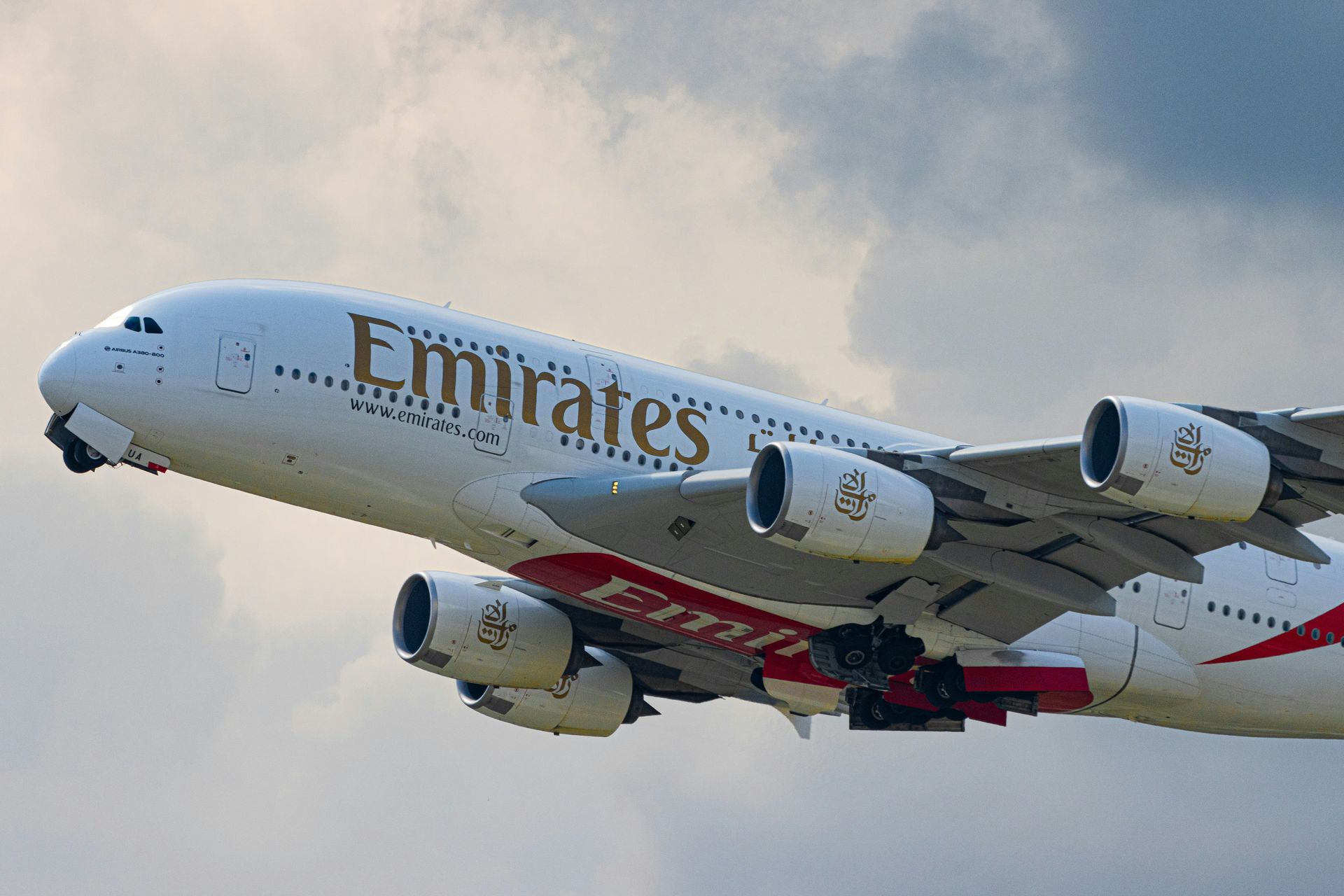
Emirates' nonstop between Dubai and Auckland runs to roughly 17 and a half hours westbound against the jet stream, placing it firmly among the longest flights in the world. It is also one of the few ultra-long-haul routes where travelers have a realistic shot at flying the Airbus A380, an aircraft that remains the most comfortable way to cross an ocean in every cabin.
The A380's advantages compound over 17 hours. The double-deck cabin is quieter than almost any other jet, particularly on the upper deck. Emirates' version includes an onboard lounge at the rear of the upper deck where business and first-class passengers can stand, stretch, and order drinks — a small thing on a three-hour hop, a significant one when the flight lasts most of a day. First-class passengers have access to shower suites, a feature no other airline operates at scale. Emirates has also flown the route with the Boeing $BA 777, so travelers who care about the aircraft type should check the equipment before booking.
Economy passengers benefit, too. Emirates' A380 economy cabin is among the more spacious interpretations of the class, and the airline's ICE entertainment system carries one of the largest content libraries in the sky, which stops being a trivial amenity somewhere around hour 10.
The route's logic mirrors the Qatar Airways service to the same city: a single stop in Dubai connects Auckland to hundreds of destinations across Europe, Africa, the Middle East, and South Asia. Before these Gulf nonstops existed, New Zealanders heading to Europe typically made two stops. This flight cut the journey to one, and it did so aboard the largest passenger aircraft ever built.
Auckland's arrival timing also works in the flight's favor: westbound departures from Dubai land in New Zealand in the morning, giving travelers a full day of daylight to reset before the jet lag argument even begins. The reverse leg runs shorter with the tailwinds behind it.
Cathay Pacific's Hong Kong to New York marathon

Credit: Lander Lai / Pexels
Cathay Pacific's nonstop between Hong Kong and New York JFK runs close to 16 hours and ranks among the longest flights operated by any Asian carrier. It is a route with history — Cathay has flown it nonstop since the 1990s, making it one of the oldest ultra-long-haul services still in operation — and its routing is part of the appeal.
Depending on winds and season, the flight tracks far to the north, sometimes arcing over or near the Arctic. Passengers with window seats on the right day get hours of views over Siberia, the polar ice, and northern Canada — scenery essentially unavailable on any other kind of trip. The eastbound and westbound paths can differ enormously, which is why the return leg often runs noticeably longer than the outbound.
Cathay Pacific's product has been through a renewal. The airline has been rolling out the Aria Suite, a new business class with sliding privacy doors, across its Boeing $BA 777-300ER fleet, with flagship routes like New York among the priorities. Premium economy on Cathay is a mature, well-regarded product rather than an afterthought, and the airline's economy seats include a distinctive design detail: the recline mechanism slides the seat pan forward rather than tipping the seatback into the passenger behind.
The route's value comes down to network and time. Hong Kong remains one of Asia's great connecting hubs, and the nonstop links it to the U.S. East Coast without the West Coast transfer that defined transpacific travel for decades. For travelers continuing to Southeast Asia, one stop in Hong Kong beats two stops anywhere else. Sixteen hours is a serious commitment, but this flight has spent 30 years proving that people will make it.
Cathay schedules the pair with multiple weekly frequencies, and its Hong Kong lounges — regularly ranked among the world's best, with sit-down dining and the airline's signature noodles — give departing passengers a strong start before the long ride east.
ANA's Tokyo to New York with The Room business class
Credit: Jeffry Surianto / Pexels
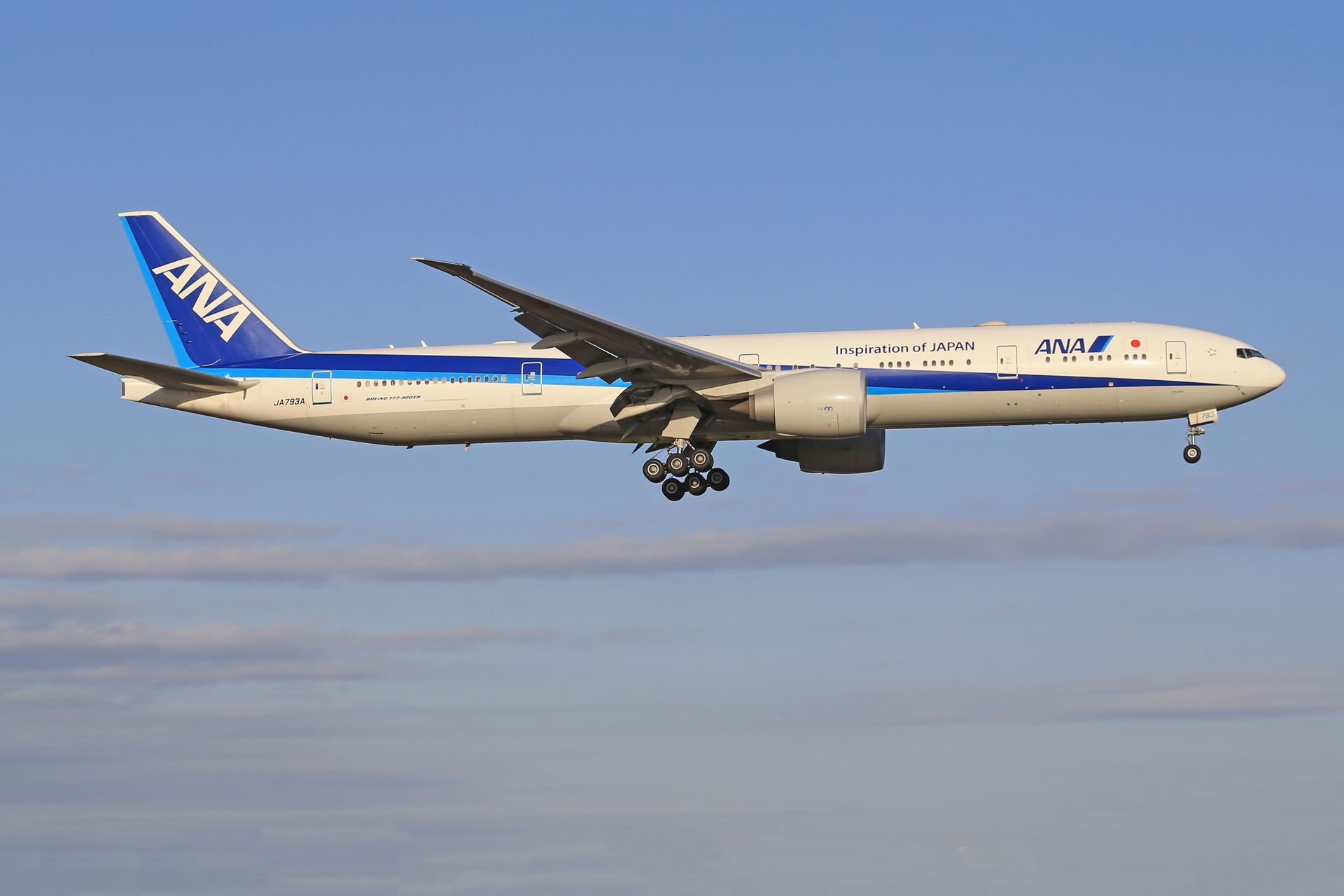
All Nippon Airways' nonstop between Tokyo and New York runs about 13 to 14 hours, and it is the route where the airline shows off The Room, a business-class product so large it blurs the line with first class. Launched in 2019 on ANA's Boeing $BA 777-300ERs, The Room gives each passenger a suite with a closing door and a seat roughly twice the width of a conventional business seat — wide enough that two people can sit side by side in one suite while socializing.
The width changes how the flight feels. Most lie-flat business seats require sleeping in a narrow channel; The Room approximates a small bed. Alternating suites face forward and backward, which is how the cabin achieves its unusual dimensions. Reviewers and frequent flyers have consistently ranked it among the best business-class hard products in the world since its debut, and Tokyo–New York was one of its launch routes.
ANA's soft product matches the hardware. Meal service offers a choice between Western menus and multi-course Japanese kaiseki-style dining, and the airline's cabin crews operate with the precision Japanese carriers are known for. First class on the same aircraft, branded The Suite, extends the closed-door concept further for travelers who want the maximum version.
The route itself is a workhorse of trans-Pacific business travel, linking Tokyo's Haneda airport — dramatically closer to central Tokyo than Narita — with the U.S. East Coast. Flying into Haneda rather than Narita saves an hour or more of ground travel on the Japan side, a detail that matters as much as anything that happens in the air. For travelers who care about business-class hardware, this specific flight is one of the few worth routing a trip around.
The Haneda departure also pairs with ANA's trans-Pacific joint venture with United, which opens the flight to Star Alliance mileage bookings and coordinated connections across the U.S. on a single itinerary.
Japan Airlines' Tokyo to London and the case for Japanese service
Credit: Tsukada Kazuhiro / Unsplash
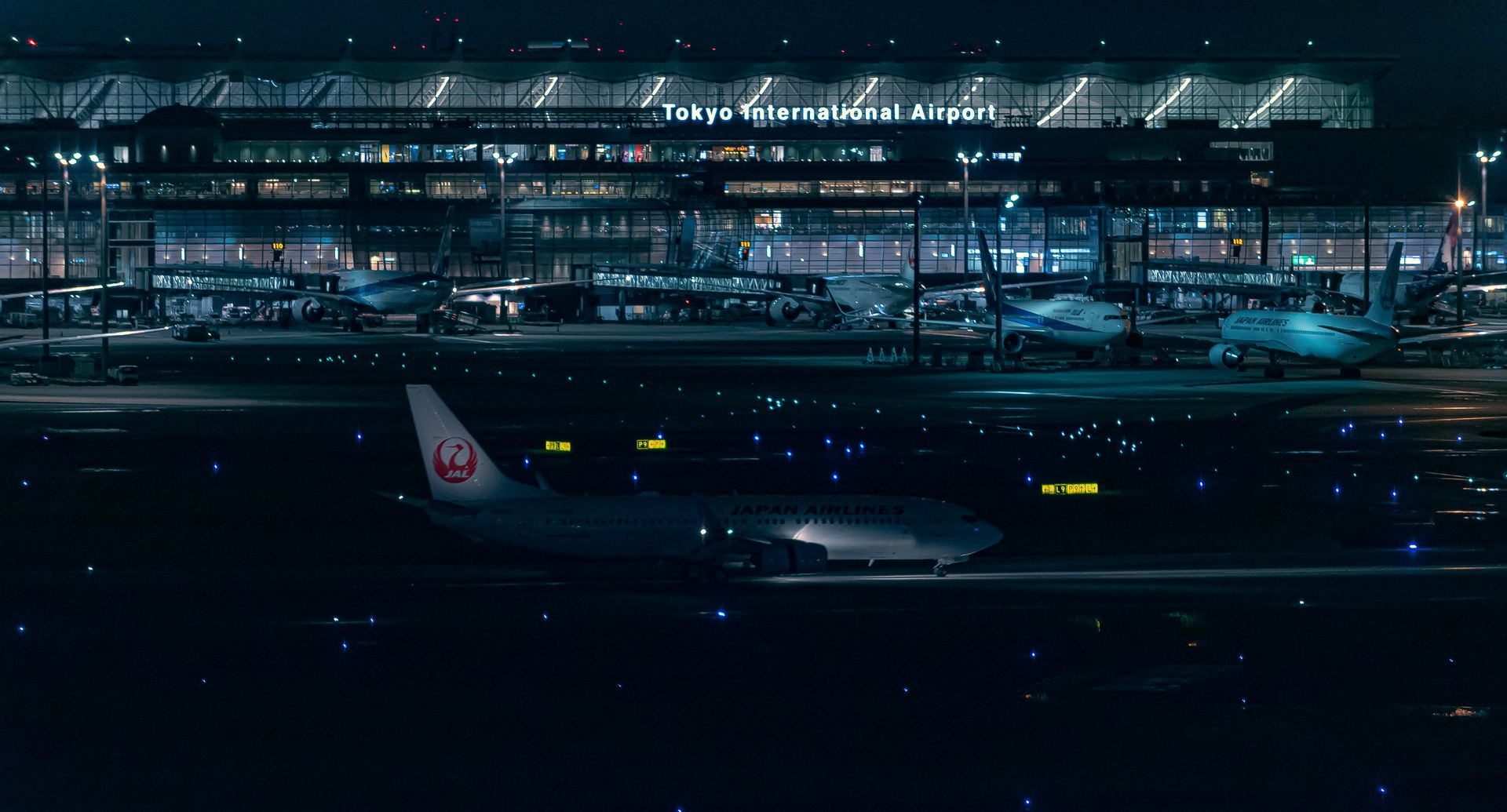
Japan Airlines' nonstop between Tokyo and London runs roughly 12 to 14 hours depending on direction and routing, and it earns its place here less through distance than through consistency. JAL is a perennial fixture near the top of global rankings for punctuality and cabin service, and a flight of this length is where those qualities pay off most.
The airline has been renewing its long-haul fleet, introducing the Airbus A350-1000 as its new international flagship with enclosed business-class suites and a first-class cabin, and deploying it on its most important routes out of Tokyo Haneda. Even on JAL's Boeing $BA 777s and 787s, the airline made a decision years ago that still distinguishes it: on many of its 787s, JAL installed eight-abreast economy seating where most competitors squeeze in nine, giving ordinary economy passengers a wider seat than the industry standard on the same aircraft.
Catering is a genuine strength rather than a marketing line. JAL's Japanese meal service in premium cabins runs to multiple courses built around seasonal ingredients, and even economy meals hold to a standard most carriers do not match. The airline's service style is quiet and precise — crews anticipate rather than perform.
The routing has its own story. Since Russian airspace closed to many carriers in 2022, flights between Japan and Europe have flown longer paths, often south over Central Asia or north toward Alaska and the Arctic. That has added time to the journey and made the quality of the airline operating it matter even more. For travelers between Japan and the U.K., the choice on this city pair includes several strong carriers; JAL's blend of hardware, food, and reliability makes its version the benchmark.
JAL's oneworld membership also makes the flight bookable with partner miles, including British Airways Avios, which frequent flyers have long used to reach Japanese premium cabins at reasonable rates.
Qantas' Sydney to Dallas/Fort Worth across the Pacific

Credit: Rijan Hamidovic / Pexels
Qantas' nonstop between Sydney and Dallas/Fort Worth covers about 8,600 miles, with westbound flights against the jet stream stretching to roughly 17 hours. It is one of the longest routes in the Qantas network and one of the longest flights serving the continental U.S., and Qantas has operated it with the Airbus A380 — making it one of the longest superjumbo flights in the world.
The route exists because of an alliance. Dallas/Fort Worth is American Airlines' largest hub, and the Qantas service feeds passengers from across the eastern and central U.S. onto a single Australia-bound departure. For travelers in Texas, the Midwest, or the Southeast, that geography beats backtracking to Los Angeles: one connection in Dallas instead of a transcontinental flight followed by a 15-hour trans-Pacific leg.
The A380 makes the length manageable. Qantas refurbished its superjumbos with updated business-class seats and an enlarged onboard lounge on the upper deck, and the aircraft's size gives every cabin more breathing room than a twinjet. Premium economy on Qantas is a well-established product rather than a recent add-on, and the airline's long experience with ultra-long-haul flying shows in details like meal pacing and lighting designed around sleep.
The flight also carries a bit of aviation-geek significance. When it launched, the Sydney–Dallas pairing was among the longest routes ever attempted, and it pushed the limits of what the era's aircraft could do with a full load. Today it operates as a routine daily-scale service, which is its own kind of statement about how far long-haul flying has come. For travelers connecting the American heartland to Australia, no itinerary is faster.
The eastbound leg to Dallas runs roughly two hours shorter than the return, a gap wide enough to shape connection planning on the American side. Travelers $TRV continuing beyond Dallas should build generous buffers, since a late trans-Pacific arrival can unravel a tight domestic itinerary.
United's San Francisco to Singapore, nearly 17 hours over the Pacific

Credit: Patrick Tomasso / Unsplash
United's nonstop between San Francisco and Singapore covers about 8,400 miles, with block times approaching 17 hours, ranking it among the longest flights operated by any U.S. carrier. Launched in 2016 with the Boeing $BA 787-9, it was a signal that American airlines intended to compete in ultra-long-haul flying rather than leave it to Asian and Gulf carriers.
The route's importance is largely about what sits at each end. San Francisco is the gateway to Silicon Valley; Singapore is Southeast Asia's financial and technology hub. The flight functions as a corporate shuttle between two of the world's densest concentrations of tech investment, and demand from business travelers is what makes a sector this long commercially viable at all.
United's Polaris business class gives every passenger direct aisle access and a lie-flat bed, with bedding from Saks Fifth Avenue and a dedicated Polaris lounge at San Francisco offering sit-down dining before departure — a genuinely useful feature before a 17-hour flight, since eating on the ground and sleeping immediately after takeoff is the strategy most frequent flyers of this route recommend. United Premium Plus, the carrier's premium economy, occupies the middle ground for travelers unwilling to spend business-class money on the crossing.
The 787-9 helps in every cabin. Like the A350, it holds a lower cabin altitude and higher humidity than previous-generation jets, and its large dimmable windows suit a flight that chases or flees daylight for most of a day. Singapore Airlines flies the same city pair, giving travelers a rare direct comparison between a U.S. and an Asian carrier on an identical ultra-long-haul sector. That competition keeps both airlines honest, and passengers benefit either way.
Wind patterns swing the block time by more than an hour between seasons, and the westbound leg to Singapore is the longer one — a detail worth knowing when deciding which direction of the trip deserves the better seat.
Delta's Atlanta to Johannesburg on the A350
Credit: Agnieszka Taggart / Pexels
Delta's nonstop between Atlanta and Johannesburg covers roughly 8,400 miles, with flight times around 16 to 17 hours, making it one of the longest routes in the Delta network and one of the longest flights linking the U.S. with Africa. Delta has flown between the two cities for years, and the service is a rare example of an ultra-long-haul route connecting two hemispheres' worth of hub traffic.
Geography gives the flight its value. Direct air links between North America and sub-Saharan Africa remain scarce relative to demand, and most itineraries route through Europe or the Gulf, adding a connection and often five or more hours of total travel time. The Atlanta departure connects Johannesburg to Delta's largest hub, which funnels traffic from across the U.S. onto a single aircraft. For travelers anywhere in the American South or Midwest heading to southern Africa, this flight is the shortest practical path.
Delta operates the route with the Airbus A350-900, its long-haul flagship. Delta One suites offer lie-flat beds with sliding privacy doors, and Premium Select provides a true premium economy cabin with extra recline and legroom. The A350's cabin conditions — lower pressurization altitude, better humidity — matter enormously across 16 hours, particularly on a flight that crosses six or more time zones and the equator.
The flight also serves as an anchor for Delta's broader Africa expansion, which has grown to include Cape Town service. Johannesburg's O.R. Tambo airport is southern Africa's dominant hub, so the route opens onward connections across the region. Sixteen-plus hours is a long time in any seat, but the alternative — two flights and a European layover — takes longer and delivers passengers in worse shape.
The southbound and northbound legs differ by more than an hour with the winds, and both spend much of the journey in darkness, so a genuine sleep strategy — and resisting the temptation of the second meal service — pays off more here than on almost any other Delta route.
Air India's Delhi to San Francisco over the top of the world

Credit: Toa Heftiba / Unsplash
Air India's nonstop between Delhi and San Francisco is one of the longest flights in the world by flying time, often exceeding 15 to 16 hours, and it features some of the most extreme routing in commercial aviation. The airline has flown the sector on polar and near-polar paths, taking the aircraft over the Arctic — a routing few passengers ever experience and one that produces a flight-map display unlike anything else in the sky.
The route's existence reflects a demographic reality: the San Francisco Bay Area is home to one of the largest Indian diaspora communities in the U.S., anchored by the technology industry. Demand between Silicon Valley and India is deep enough to support nonstop flying despite the distance, and the route saves travelers the Gulf or European connection that defined India–U.S. travel for decades. One aircraft, no layover, no second security screening with a laptop bag at 3 a.m. in a connecting hub.
Air India itself is in the middle of the most consequential transformation in its history. Since the Tata Group took the airline back from government ownership in 2022, it has ordered hundreds of new aircraft, begun retrofitting its long-haul fleet, and absorbed Vistara, the premium domestic carrier. The airline's legacy widebodies drew criticism for years; the refresh is specifically aimed at routes like this one.
Because the routing runs so far north, passengers can see the Arctic Ocean, northern Canada, and occasionally the polar ice cap from the window — in winter, potentially the aurora. Few scheduled flights anywhere offer that. For travelers between India and the U.S. West Coast, this remains the time-saving option, and it is becoming a more comfortable one.
Flight paths on the sector shift with geopolitics and seasonal winds, so two bookings a few months apart can produce entirely different journeys — one arcing over the Arctic, one tracking across the Pacific — under the same flight number.
Korean Air's Seoul to New York on the Boeing 747-8
Credit: Hieu / Unsplash
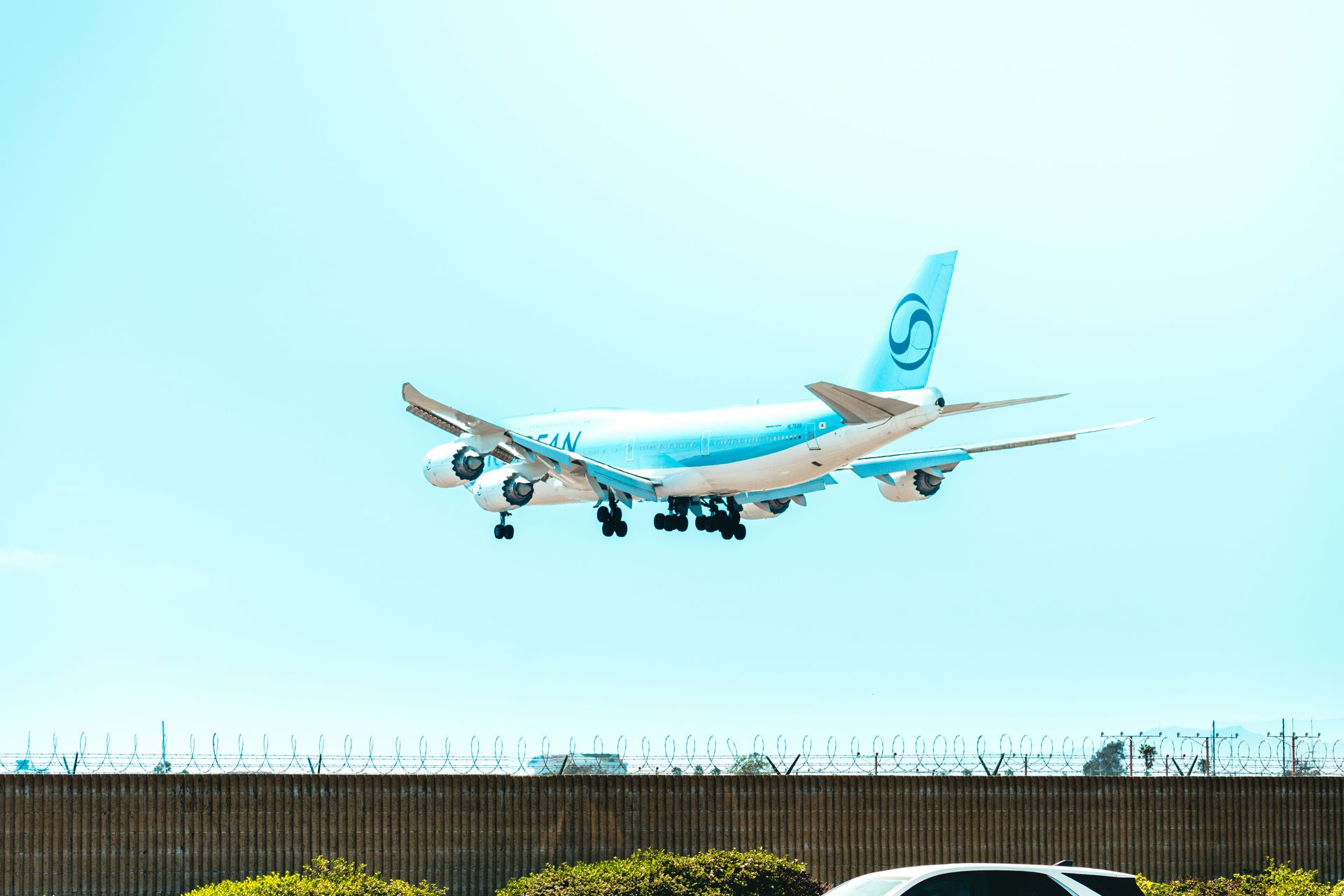
Korean Air's service between Seoul Incheon and New York JFK runs about 14 hours and change, and it offers something that has nearly vanished from the sky: a scheduled passenger Boeing $BA 747. Korean Air is one of the last airlines in the world still operating the 747-8 with passengers aboard, and New York has long been one of its premier routes for the aircraft.
The 747-8 is the final evolution of the original jumbo jet, and flying on one is now a deliberate act of aviation appreciation as much as transportation. The upper deck, configured for business class, remains one of the most distinctive cabins ever built — a small, quiet space with storage bins beside the window seats and the feel of a private aircraft. Once Korean Air and the handful of other remaining operators retire their fleets, no passenger will ride a new-build 747 again. Boeing ended production of the type in 2023.
Korean Air's product on the route holds its own beyond nostalgia. Prestige class offers lie-flat seating, and the airline's catering includes bibimbap, a signature dish it has served in every cabin for decades and one of the most recognizable airline meals in the world. Korean cabin service is formal and attentive in the classic East Asian flag-carrier style.
Incheon airport adds to the case. It is consistently rated among the world's best hubs, with fast transfers and facilities that make it a strong connecting point between North America and Southeast Asia. The airline's merger with Asiana is reshaping Korean aviation and will consolidate even more traffic through Seoul. For travelers with any flexibility, checking the equipment and choosing the 747-8 departure turns a routine crossing into something worth remembering.
Fares between Seoul and New York also stay competitive because Asiana, Korean Air's merger partner, has long flown the same pair, giving travelers two schedules' worth of options while the integration proceeds.
EVA Air's Taipei to New York and the Royal Laurel cabin

Credit: Timo Volz / Pexels
EVA Air's nonstop between Taipei and New York JFK stretches past 17 hours on the westbound leg, ranking it among the longest flights in the world, and it pairs that distance with one of the most consistently praised business-class operations in the sky. The Taiwanese carrier holds a five-star rating from Skytrax and has built its reputation almost entirely on execution rather than flash.
Royal Laurel, EVA's business class, delivers lie-flat seats in a reverse-herringbone layout that gives every passenger direct aisle access. The airline's soft product is where it separates itself: catering developed with well-known culinary partners, an extensive tea program, and cabin crews with a service culture that frequent transpacific flyers rank alongside the best Japanese and Korean carriers. On a 17-hour flight, service consistency stops being an abstraction — passengers interact with the crew across three meal services and everything in between.
Premium economy is part of EVA's story, too. The airline was one of the earliest adopters of the cabin, decades before most competitors, and its version remains one of the more comfortable, with wide seats and dedicated service. For a flight of this length, premium economy on EVA is a credible middle path rather than a token upsell.
The route matters for network reasons. Taipei's Taoyuan airport is a natural connecting point between North America and Southeast Asia, and EVA runs a dense schedule onward to cities across Vietnam, Thailand, the Philippines, and beyond. For travelers from the U.S. East Coast heading deep into Southeast Asia, one stop in Taipei often beats one stop anywhere else. The airline's safety record, among the strongest of any carrier never to have suffered a fatal accident, rounds out the case.
EVA's Star Alliance membership opens the flight to partner mileage bookings through programs such as United MileagePlus and Air Canada Aeroplan, a practical path into Royal Laurel for points collectors.
Turkish Airlines' Istanbul to San Francisco with flying chefs
Credit: Kagou Dicko / Unsplash
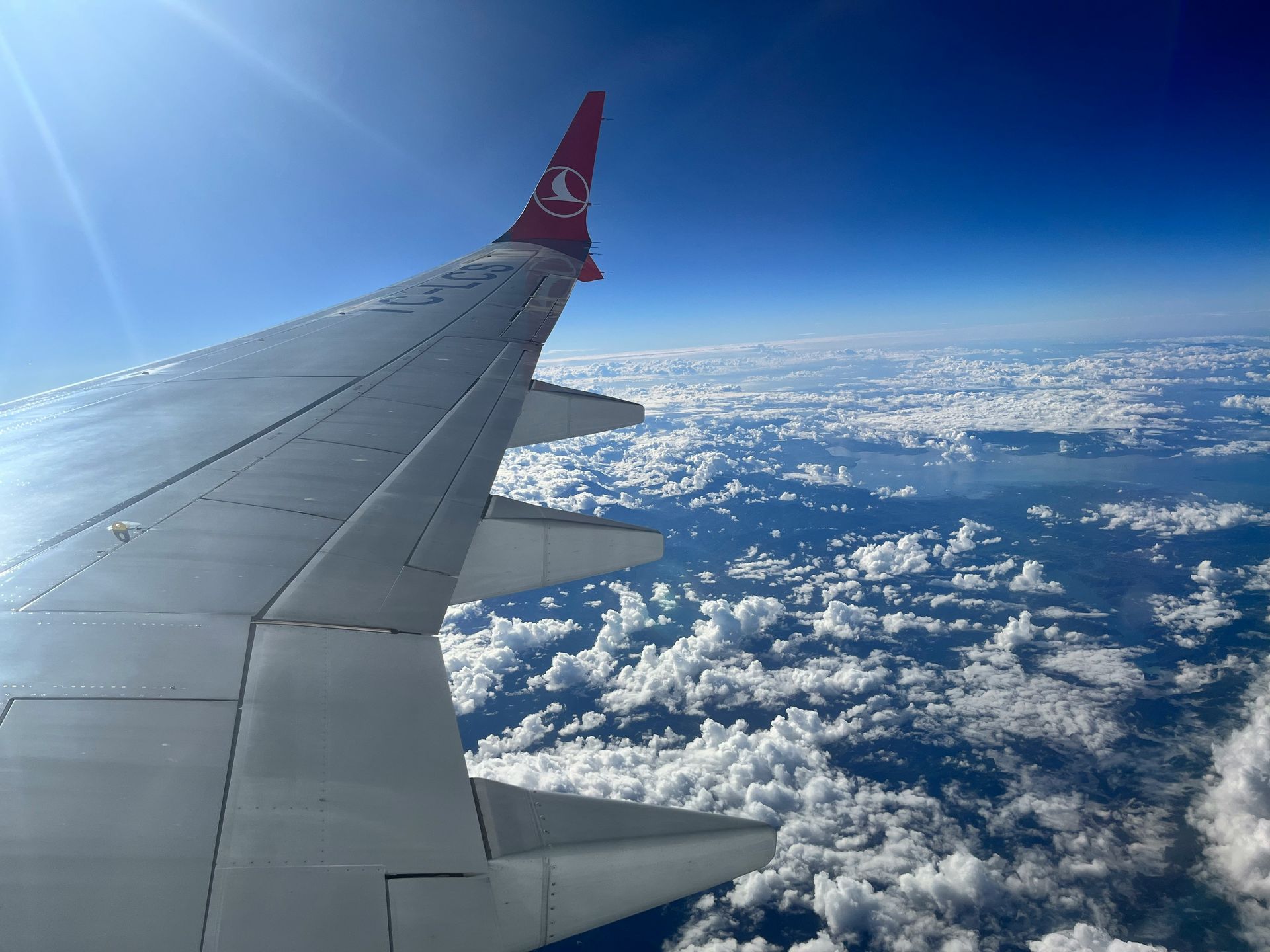
Turkish Airlines' nonstop between Istanbul and San Francisco runs roughly 13 hours westbound, and it showcases the single thing the airline is most famous for: food. Turkish Airlines staffs its long-haul flights with onboard chefs — trained culinary staff in white jackets who finish and plate meals in the galley — and its catering, produced with its Do & Co joint venture, is widely considered the best in the sky in business class and near the top in economy.
The meal service is an event. Business-class passengers get a candle-lit table setting, a mezze course drawn from Turkish cuisine, and mains finished to order, with fresh bread that has developed a genuine cult following among frequent flyers. Economy meals on Turkish routinely outclass what many carriers serve in premium cabins. On a 13-hour flight with two full services, catering quality shifts from a nicety to a core part of the experience.
The route also represents the reach of Istanbul as a hub. Turkish Airlines flies to more countries than any other airline in the world, and Istanbul's newer mega-airport sits at a geographic pivot between Europe, Asia, and Africa. A San Francisco departure connects the U.S. West Coast to secondary cities across Central Asia, the Middle East, Africa, and Eastern Europe that no U.S. carrier serves nonstop — places that would otherwise require two or three connections.
Turkish's hard product has improved alongside the food, with newer business-class seats on its latest widebodies and a consistently solid economy cabin. The airline's Istanbul lounge, with its cooking stations and sheer scale, extends the culinary theme to the ground. For travelers heading east of Europe, this flight makes the long way around feel like the civilized way.
Istanbul's transit hotel arrangements and the airline's complimentary city-tour program for eligible connecting passengers turn a long layover into part of the trip rather than a penalty.
Qantas' Sydney to Santiago, the South Pacific shortcut

Credit: Matteo Basile / Pexels
Qantas' nonstop between Sydney and Santiago covers about 7,000 miles in roughly 12 and a half hours, and it is one of the very few nonstop passenger links between Oceania and South America. That scarcity is the point: entire continents' worth of travelers funnel through this single air corridor, and the flight crosses one of the emptiest stretches of ocean on Earth.
The routing is unlike anything else in commercial aviation. The great-circle path between Sydney and Santiago dips far into the southern Pacific, at times taking the aircraft closer to Antarctica than almost any other scheduled service. Passengers cross the international date line mid-flight, producing the calendar oddity where the eastbound flight lands in Chile before it departed Australia by local clock time. For most of the journey there is nothing below but open ocean — no diversion airports, no shipping lanes, no islands of consequence — which is part of why so few airlines have ever attempted the sector.
Qantas operates the route with the Boeing $BA 787-9, carrying business, premium economy, and economy cabins. The airline's decades of Pacific flying show in the operational details, and its safety reputation carries particular weight on a routing this remote.
The practical case is overwhelming for anyone traveling between Australia and South America. The alternatives involve backtracking through Auckland, or worse, routing through North America — Los Angeles or Dallas — which can add 10 or more hours to the journey. The nonstop connects two Southern Hemisphere economies with growing trade and tourism links, and Santiago serves as a gateway to onward connections across Chile, Argentina, and the rest of the continent. Few flights on this list have less competition, and few justify their existence more clearly.
The 787's range made the pairing routine where earlier aircraft needed favorable winds, and Qantas has used the route to anchor broader commercial ties with LATAM, South America's largest airline group.
United's Newark to Cape Town nonstop
Credit: Marlin Clark / Pexels
United's nonstop between Newark and Cape Town covers roughly 7,800 miles in around 14 to 15 hours, and it solved a problem that had frustrated travelers for decades: getting from the U.S. to one of the world's most celebrated destinations without a detour through Europe, the Gulf, or Johannesburg. United launched the service in 2019, and it opened Cape Town to American travelers as a one-flight trip.
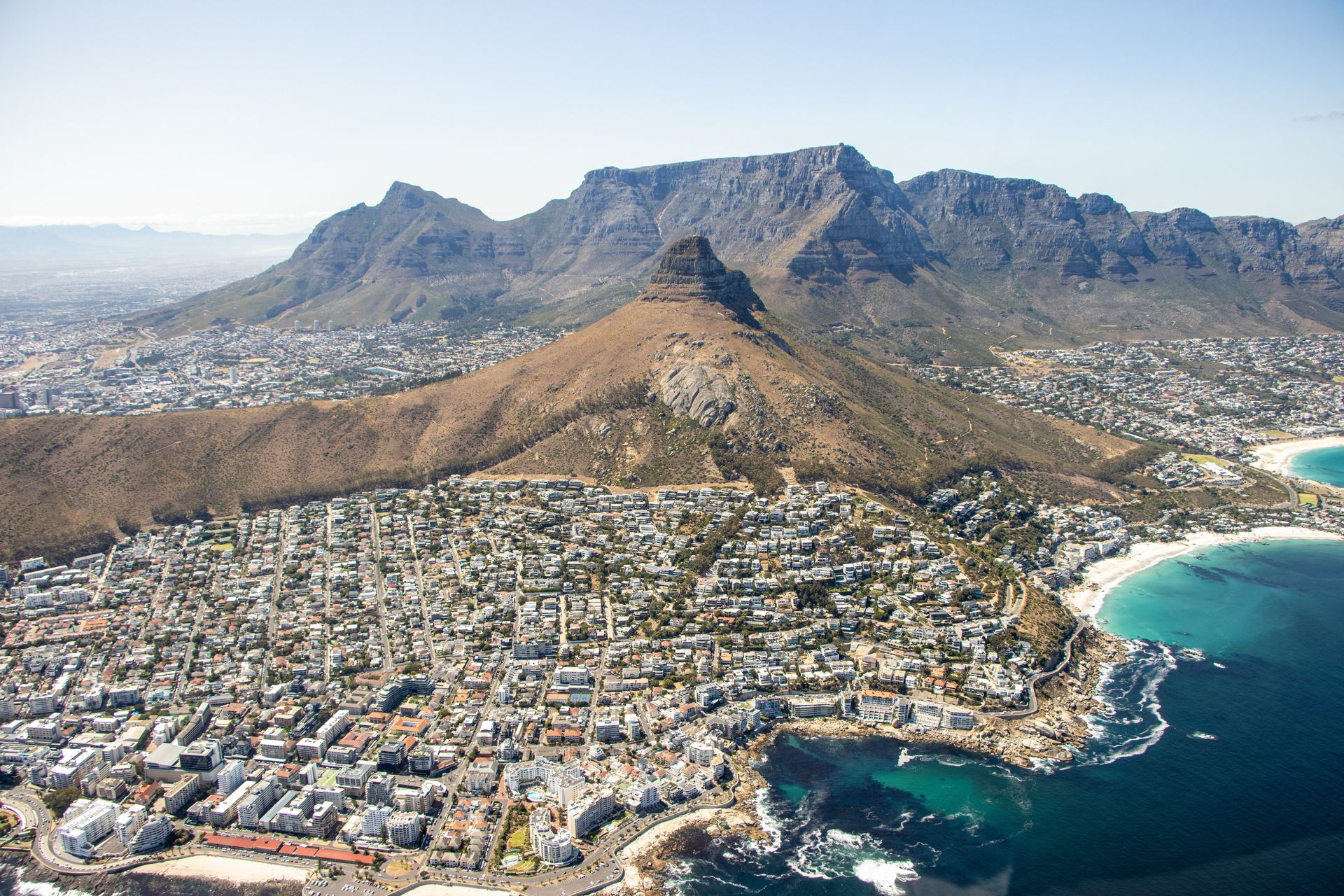
Cape Town's appeal needs little elaboration — Table Mountain, the Cape Winelands, the penguin colonies at Boulders Beach, and a food scene that ranks with any city in the Southern Hemisphere. What the flight changed is the arithmetic of getting there. The old standard itinerary ran through Amsterdam, London, Frankfurt, Doha, or Dubai, turning the journey into a 20-plus-hour, two-flight slog. The nonstop departs the New York area in the evening and arrives in Cape Town the following afternoon, with only a modest time-zone shift because the route runs largely north–south. That last detail is underrated: crossing few time zones means far less jet lag than a transpacific flight of similar length.
United flies the route with the Boeing $BA 787-9, offering Polaris business class with lie-flat seats and direct aisle access, plus Premium Plus premium economy. The 787's cabin environment helps across 14 hours, and the southbound overnight timing suits sleep.
The route has grown from a seasonal experiment into a fixture of United's Africa network, alongside its Johannesburg service. For travelers in the northeastern U.S., it converted a bucket-list destination from a logistical project into an ordinary long-haul booking, and its success helped demonstrate that U.S.–Africa leisure demand could support nonstop widebody flying.
Demand runs strongly seasonal, peaking in the southern summer from November through March, when Cape Town's weather is at its best and fares climb accordingly; travelers with flexible dates find markedly better pricing in the shoulder months on either side.
Finnair's Helsinki to Tokyo the long way around

Credit: Hendrik Morkel / Unsplash
Finnair's flight between Helsinki and Tokyo now takes roughly 13 hours or more — several hours longer than it did before 2022 — and the reason is written on the flight map. When Russian airspace closed to European carriers after the invasion of Ukraine, Finnair lost the shortcut its entire business model was built on. Its response turned a geographic disaster into one of the more interesting flights in the world.
Finnair spent decades marketing Helsinki as the fastest connection between Europe and Asia, because the great-circle routes from Northern Europe to Japan, Korea, and China run directly across Siberia. The airspace closure forced its Tokyo flights onto enormous detours — north over the Arctic near the pole, or south across Central Asia — adding thousands of kilometers. The airline kept flying anyway, and passengers on the northern routing now get a semi-polar crossing with views of the Arctic that used to require a charter.
The onboard product rewards the extra hours. Finnair's Airbus A350s carry the airline's AirLounge business class, a distinctive seat design without a recline mechanism — instead, a fixed shell-like sofa that passengers configure with cushions and bedding into positions no conventional seat allows. The airline's Nordic design sensibility runs through the cabin, the tableware, and a catering program that leans on Finnish and Japanese ingredients on this specific route.
The flight earns its place as a case study in resilience: a carrier whose core advantage vanished overnight, still connecting Europe and Japan with a product good enough to compete on quality rather than speed. For travelers between Northern Europe and Tokyo, it remains a one-stop-free option — just a longer and stranger one than geography intended.
Helsinki's compact airport keeps European connections short, which preserves some of the old speed advantage on total journey time even with the detour, particularly for travelers starting outside Europe's mega-hubs.
Air France's Paris to Santiago, among the longest flights from Europe

Credit: Vivi Pascar / Pexels
Air France's nonstop between Paris and Santiago covers roughly 7,250 miles in about 14 hours or more, ranking among the longest routes in the airline's network and among the longest nonstop flights departing Europe. It links the French capital with the far side of South America in a single overnight run down the Atlantic and across the continent.
The flight's geography gives it a distinct rhythm. Departing Paris in the evening, the aircraft tracks southwest over the Atlantic, crosses the Brazilian coast, and continues down the length of South America before crossing the Andes into Chile. Passengers on the final approach into Santiago get one of the great arrival views in commercial aviation: the Andes rising to nearly 23,000 feet at Aconcagua, often snowcapped, walling off the city to the east. Because the route runs mostly north–south, the time-zone change is modest for the distance flown, which softens the jet lag considerably compared with an eastbound flight of similar length.
Air France operates its flagship long-haul cabins on the route, with lie-flat business seats and its well-regarded premium economy. The airline's catering, built around French culinary tradition with rotating menus from noted chefs in the premium cabins, remains one of its genuine differentiators — and cheese service at 38,000 feet is taken as seriously as anywhere in the sky.
The route also carries cultural weight. France and Chile have deep historical and commercial ties, and Paris serves as the primary European gateway for Chilean travelers. For anyone connecting Europe to Chile, Argentina, or the Pacific coast of South America, this nonstop erases a Madrid or São Paulo connection, and it delivers passengers into a city framed by mountains few landings can match.
The route also feeds the Air France-KLM group's combined network, giving Santiago single-connection access to dozens of European cities beyond Paris on one ticket.
Air Canada's Vancouver to Sydney trans-Pacific run

Credit: Anthony Maw / Unsplash
Air Canada's nonstop between Vancouver and Sydney covers roughly 7,750 miles in about 15 hours or more, making it one of the longest routes in the airline's network and the anchor of Canada's air links to Australia. It is the classic trans-Pacific ultra-long-haul: a full night and then some over open ocean, crossing the equator and the date line in one sitting.
Vancouver's geography makes it a natural launch point. The city sits closer to the great-circle paths between North America and Oceania than most U.S. hubs, and its airport has grown into a genuine trans-Pacific gateway. For Canadian travelers, the nonstop eliminates the once-standard detour through Los Angeles or San Francisco — and, just as valuably, eliminates a U.S. transit, with its visa requirements and re-clearing of security, for passengers connecting from Europe or elsewhere in Canada.
Air Canada operates the route with the Boeing $BA 787-9, carrying its Signature Class business cabin with lie-flat seats and direct aisle access, plus premium economy and economy. The airline's Signature Class product includes dedicated check-in and lounge access at Vancouver, and the overnight southbound timing is built for sleep: departure in the late evening, arrival in Sydney in the morning two calendar days later, courtesy of the date line.
The route's appeal extends beyond the two endpoint cities. Sydney opens Air Canada's network to onward connections across Australia and New Zealand, while Vancouver connects to the airline's full domestic and transatlantic network. Traffic between Canada and Australia — students, working-holiday travelers, family ties from decades of migration in both directions — gives the flight an unusually loyal passenger base. As trans-Pacific ultra-long-hauls go, it is a quietly efficient piece of geography put to work.
Vancouver's airport adds a practical bonus for travelers continuing south: U.S. preclearance facilities let connecting passengers clear American immigration in Canada, smoothing itineraries that carry on beyond the border.
Etihad's Abu Dhabi to New York and The Residence
Credit: Etihad
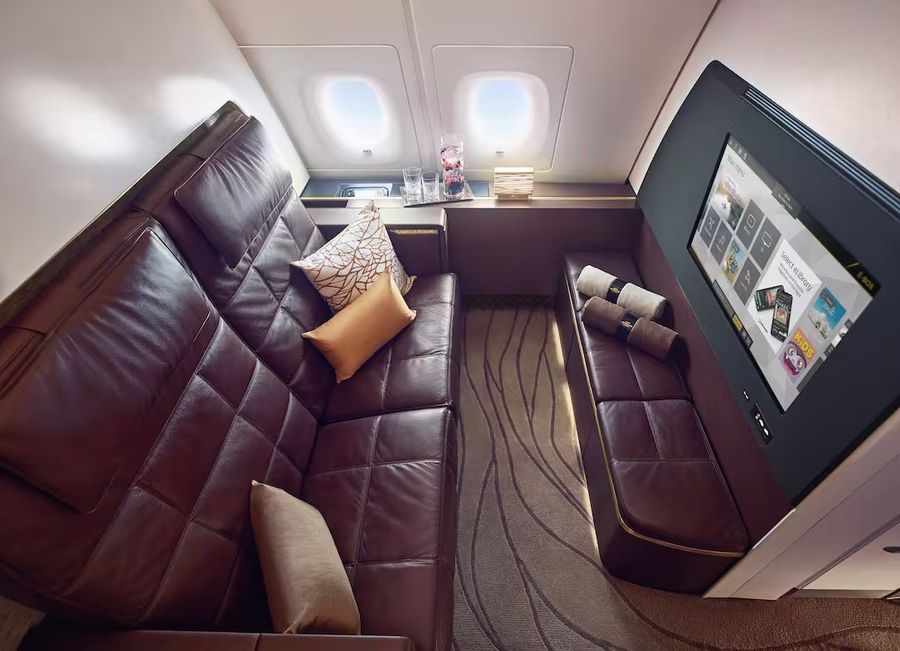
Etihad's flight between Abu Dhabi and New York JFK runs about 14 hours westbound, and it is the only route in the world where a passenger can book The Residence — a three-room private suite aboard the Airbus A380 with a living room, a separate double bedroom, and a private shower room, attended by a dedicated crew member. Nothing else in commercial aviation compares to it.
The Residence debuted in 2014 as the most extravagant product ever installed on a passenger jet, and when Etihad returned its A380s to service after the pandemic, New York was the showcase route. The rest of the aircraft's premium real estate is nearly as notable: First Apartments offer a separate seat and full-length bed for each passenger, and the business-class cabin includes access to an onboard lounge. Even for travelers who will never buy the front of the plane, the A380 itself — quiet, stable, spacious in every cabin — makes this one of the more comfortable ways to cross from the Gulf to North America.
The route's practical role is as Etihad's flagship link between the UAE capital and the U.S. Abu Dhabi's airport operates a U.S. Customs and Border Protection preclearance facility, meaning passengers clear American immigration before boarding and land at JFK as domestic arrivals — walking straight off the plane past the immigration hall. On a 14-hour journey ending at one of the world's most congested arrival airports, that feature alone saves an hour or more.
Etihad's newer Zayed International terminal, opened in 2023, modernized the ground experience on the Abu Dhabi side. As a single flight combining a preclearance shortcut, a superjumbo, and the most elaborate cabin ever flown, this one stands alone.
Etihad prices The Residence as a category of its own, but the A380's First Apartments and business cabin open to partner mileage bookings often enough to keep the aircraft on aspirational-travel lists year after year.
Philippine Airlines' Manila to New York nonstop
Credit: Paolo Syiaco / Unsplash
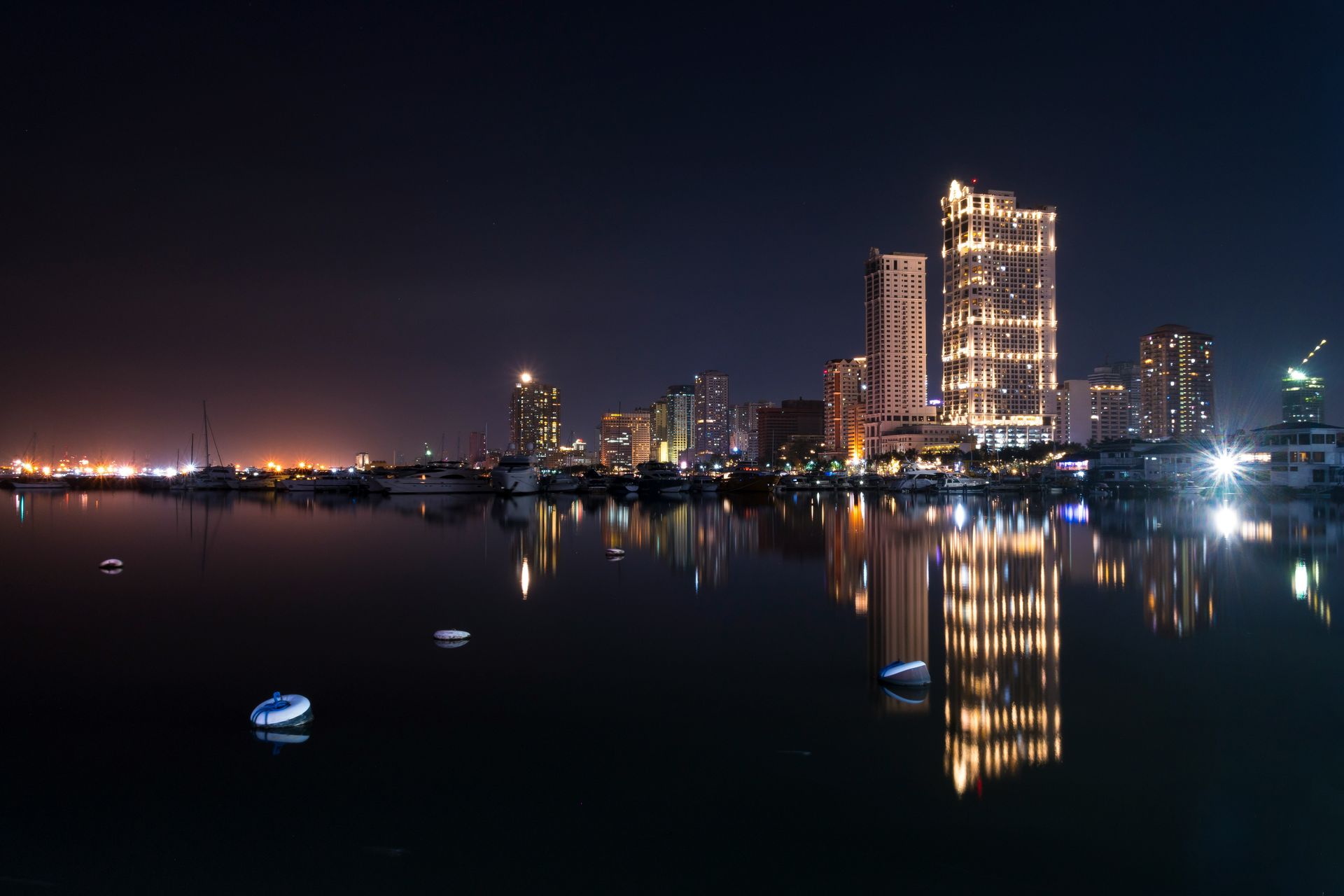
Philippine Airlines' nonstop between Manila and New York JFK runs past 17 hours on the westbound leg, ranking it among the longest flights in the world and making it the only nonstop link between the Philippines and the U.S. East Coast. For one of the world's great diaspora populations, this flight is not a novelty — it is infrastructure.
The Filipino community in the New York area numbers in the hundreds of thousands, part of a U.S. Filipino population of more than four million. Before the nonstop, the journey required a connection in Vancouver, Tokyo, Seoul, or a U.S. West Coast city, pushing total travel time past 20 hours. Philippine Airlines' Airbus A350 made the direct flight possible, and the airline has ordered the longer-range A350-1000 to deepen its ultra-long-haul network across the Pacific.
The flight itself crosses nearly half the planet, typically routing far north over or near Alaska and Canada before descending the length of the continent — or the reverse, chasing the sun westward for the better part of a day. Business class on the A350 offers lie-flat seats, and the airline's service carries the informal warmth Philippine carriers are known for, along with Filipino dishes in every cabin that most global airlines never serve.
The route's significance extends beyond convenience. It connects Manila — a city of 13 million and the heart of a country of over 110 million people — directly to the U.S. financial capital, supporting business ties, remittance-driven family travel, and a tourism flow that runs heavily in both directions. Seventeen hours is a serious flight by any measure. For the passengers this one serves, the alternative was always longer.
Philippine Airlines also flies nonstop from Manila to Los Angeles, San Francisco, and other North American gateways, but the New York service remains the network's longest reach and its clearest statement of intent.
Singapore Airlines' Singapore to London in A380 Suites
Credit: Troy Mortier / Unsplash
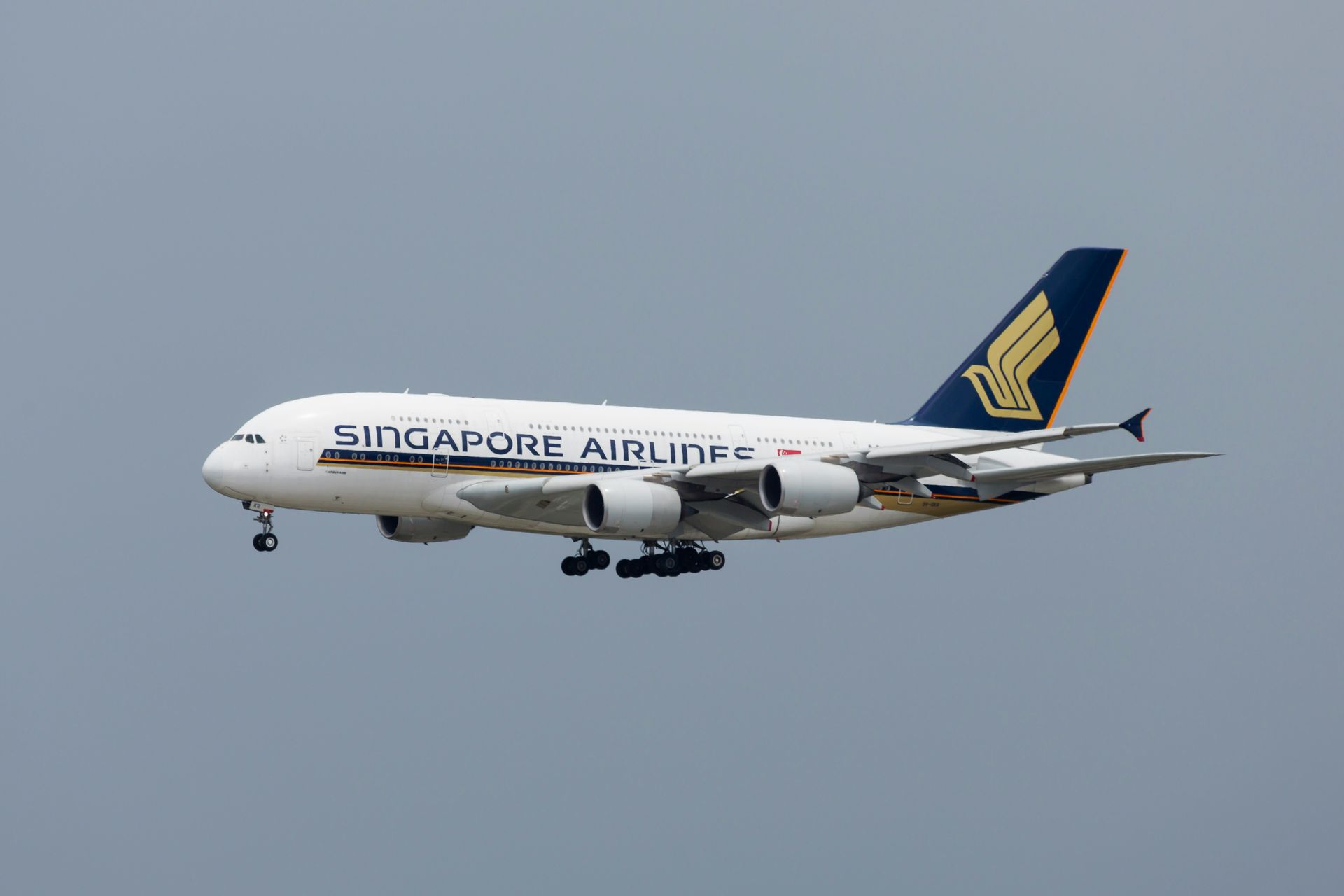
Singapore Airlines' flight between Singapore and London Heathrow runs about 13 to 14 hours, and it is one of the best places in the world to experience the Airbus A380 at full ambition. The airline flies its flagship superjumbos on the route, including the version of first class it calls Suites — private cabins on the upper deck with a separate full-size bed, a swiveling leather armchair, and sliding doors, where adjoining suites can combine into a double bedroom.
Suites is the product that, alongside Etihad's Residence, defines the ceiling of commercial flying. Singapore Airlines introduced private-cabin first class when it launched the A380 in 2007 and rebuilt the concept entirely in 2017; the current version is closer to a hotel room than a seat. Business class on the same deck offers some of the widest seats in the sky, and the airline's economy and premium economy cabins benefit from the A380's quiet and space.
The soft product is the airline's enduring advantage. Singapore Airlines has topped global airline rankings for decades on the strength of its cabin service, and its Book the Cook program lets premium passengers pre-order from an extensive menu — including the airline's famous lobster thermidor — rather than choosing from a trolley.
The route itself is one of the oldest and most storied in long-haul aviation, a direct descendant of the Kangaroo Route era, linking two of the world's premier hub cities. Changi and Heathrow bookend the journey with two of aviation's most connected airports. Among the roughly 13-hour flights a traveler could take anywhere on Earth, this one has a strong claim to being the most refined.
Singapore Airlines schedules multiple daily London departures, but not all carry the A380, so travelers chasing Suites should filter by aircraft type when booking rather than assume the superjumbo by default. The airline's other widebodies on the pair carry different, still strong, premium cabins.
Lufthansa's Munich to San Francisco with the new Allegris cabins
Credit: Magda Ehlers / Pexels
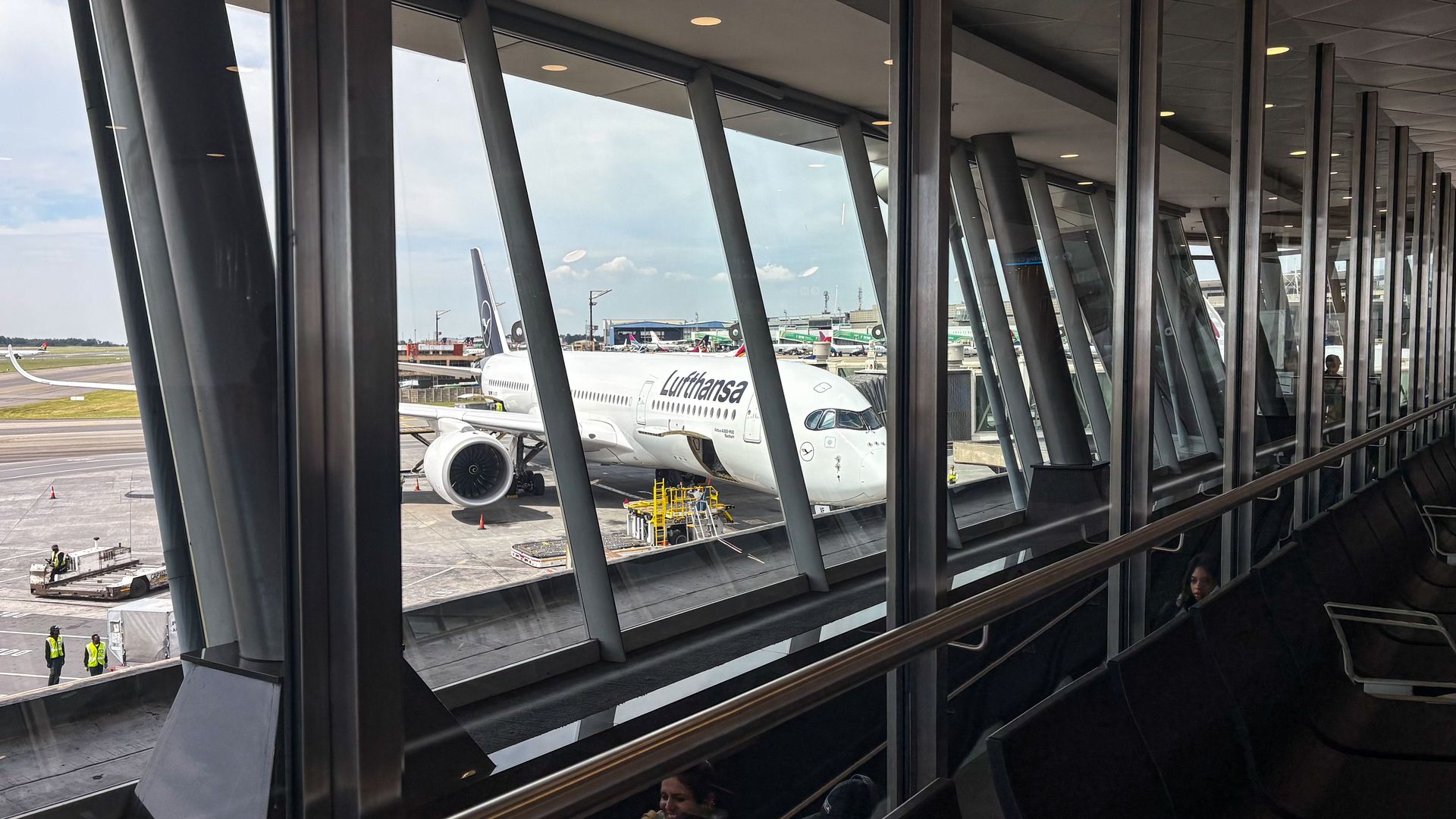
Lufthansa's nonstop between Munich and San Francisco runs about 11 to 12 hours westbound, and it belongs on this list because of what is inside the aircraft: Allegris, the most sweeping cabin overhaul in the airline's history, which has been rolling out across the long-haul Airbus A350 fleet based in Munich since 2024.
Allegris replaced a business-class product that had fallen visibly behind the industry. The new cabin abandons the one-seat-fits-all model: passengers can choose among multiple seat types within business class, including suites with closing doors, seats with extra-long beds, and throne-style seats with expanded work surfaces. The accompanying first class introduces enclosed suites, including a double suite designed for two passengers traveling together. A new premium economy with hard-shell seats and improved economy cabins complete the overhaul.
Munich is the fleet's home base, which makes the city's long-haul routes — San Francisco among them — the most reliable places to find the new cabins while the rollout continues across the network. Munich airport itself strengthens the case: it is consistently ranked among Europe's best hubs, compact and efficient by mega-airport standards, with Lufthansa's well-regarded lounges and, for first-class passengers, dedicated ground service.
The route links Bavaria's technology and industrial economy with Silicon Valley, a corridor busy enough with corporate traffic to justify flagship hardware. For travelers connecting through Europe to the U.S. West Coast, the combination of a smooth Munich transfer and a new-generation cabin makes this a materially different experience from the same airline's older aircraft. Allegris arrived years late by Lufthansa's own admission; on this route, travelers can finally judge the result for themselves.
Lufthansa sells Allegris business seats with differentiated pricing by seat type, an unusual model that lets travelers pay only for the features they want — a door, extra bed length, more workspace — instead of a single flat business fare. The approach has drawn attention across the industry as the retrofit spreads.
Starlux's Taipei to Los Angeles, the new premium contender

Credit: Cedric Letsch / Unsplash
Starlux Airlines' nonstop between Taipei and Los Angeles runs about 11 to 13 hours depending on direction, and it represents something genuinely rare in modern aviation: a new full-service, premium-positioned long-haul airline. Founded by K.W. Chang, a scion of the family behind EVA Air, Starlux launched in 2020 and began transpacific flying with this route in 2023 aboard the Airbus A350-900.
The airline built itself top-down as a boutique premium carrier rather than growing out of a budget model. Its A350s carry a four-cabin layout — first class, business, premium economy, and economy — an unusually ambitious configuration for a startup. Business class features lie-flat seats with doors on its newest aircraft, and the airline's design language runs from custom-composed boarding music to cabin lighting schemes and amenity kits developed with fashion and fragrance partners. Catering draws on partnerships with well-known Taiwanese restaurants, bringing dishes like braised beef noodle soup into the premium cabins.
The Los Angeles route was Starlux's statement of intent: its first flight to North America and its entry into direct competition with EVA Air and China Airlines, two established carriers with decades on the corridor. The airline has since expanded to other U.S. West Coast cities, using Taipei as a connecting point into its Southeast Asian network.
For travelers, the appeal is the combination of new aircraft, small-carrier attention to detail, and competitive pricing as the airline builds its name. Aviation produces very few new long-haul premium airlines — the economics usually forbid it. Flying one in its early years, while it is still trying to out-serve the incumbents on every flight, is its own kind of opportunity.
First class on a startup airline is itself a rarity; Starlux's version, a small cabin at the nose of the A350, gives travelers a shot at the top of the aircraft at fares the established carriers on the corridor rarely match.