From a 110-guest Tauck sailing with private after-hours museum access to a 20-guest Nile cruise with entry to a restricted Sphinx enclosure
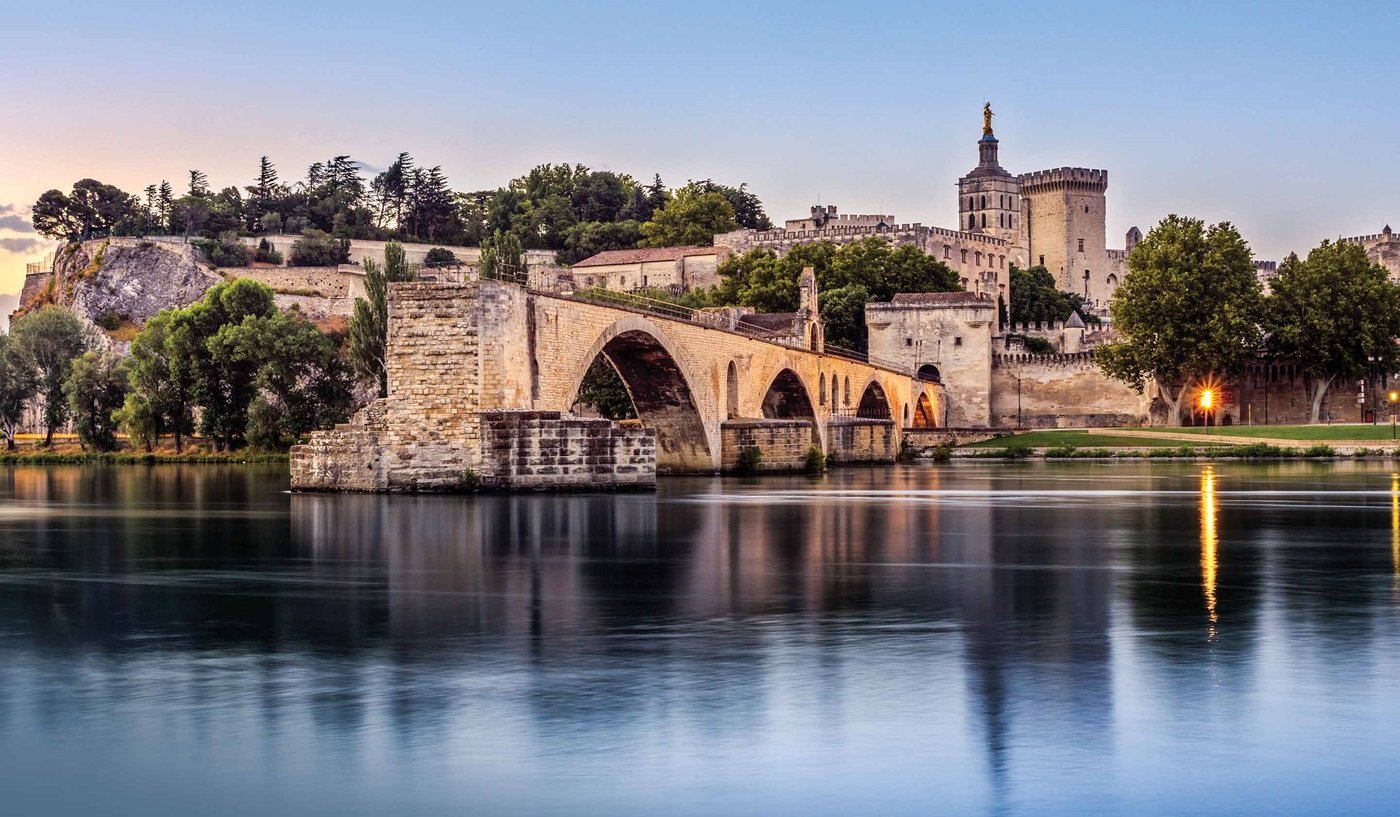
Credit: Tauck
The river cruise category occupies a specific position in the luxury travel market: smaller ships than ocean cruises, more intimate service ratios, and itineraries that place guests within walking distance of their destinations, not requiring tenders, buses, and logistical management to reach them. The premium segment of the river cruise market takes these structural advantages and compounds them with butler service, all-inclusive beverage and excursion programs, and onboard design standards that the standard river cruise lines cannot approach. The result is a product category whose per-night cost reflects a genuine quality differential, not merely a branding one.
The service ratios tell the most direct story. A river cruise with 110 guests and a 1-to-1 staff ratio has more staff than passengers. A vessel carrying 20 passengers, featuring world-class chefs and dedicated butlers, is delivering a hospitality experience whose per-guest attention the most celebrated small hotels struggle to match. The itineraries extend this advantage: private access to attractions after regular visiting hours, private concerts in venues not accessible to the public, and curated excursions whose quality reflects the negotiating leverage that premium cruise lines have developed with their destination partners give the luxury river cruise a program depth that the self-arranged travel experience cannot replicate at any price.
The 5 cruise lines below appear in U.S. News and World Report, selected for their onboard quality, service standards, and itinerary distinction. They represent the premium segment of a category that already sits above the mass-market cruise in quality, and the experiences they offer are as close to a private charter as the shared-vessel format can deliver. Pricing for these cruises is substantial and varies by itinerary, season, and cabin category. Contacting the cruise line or a specialist river cruise travel agent gives the most accurate current fare information.
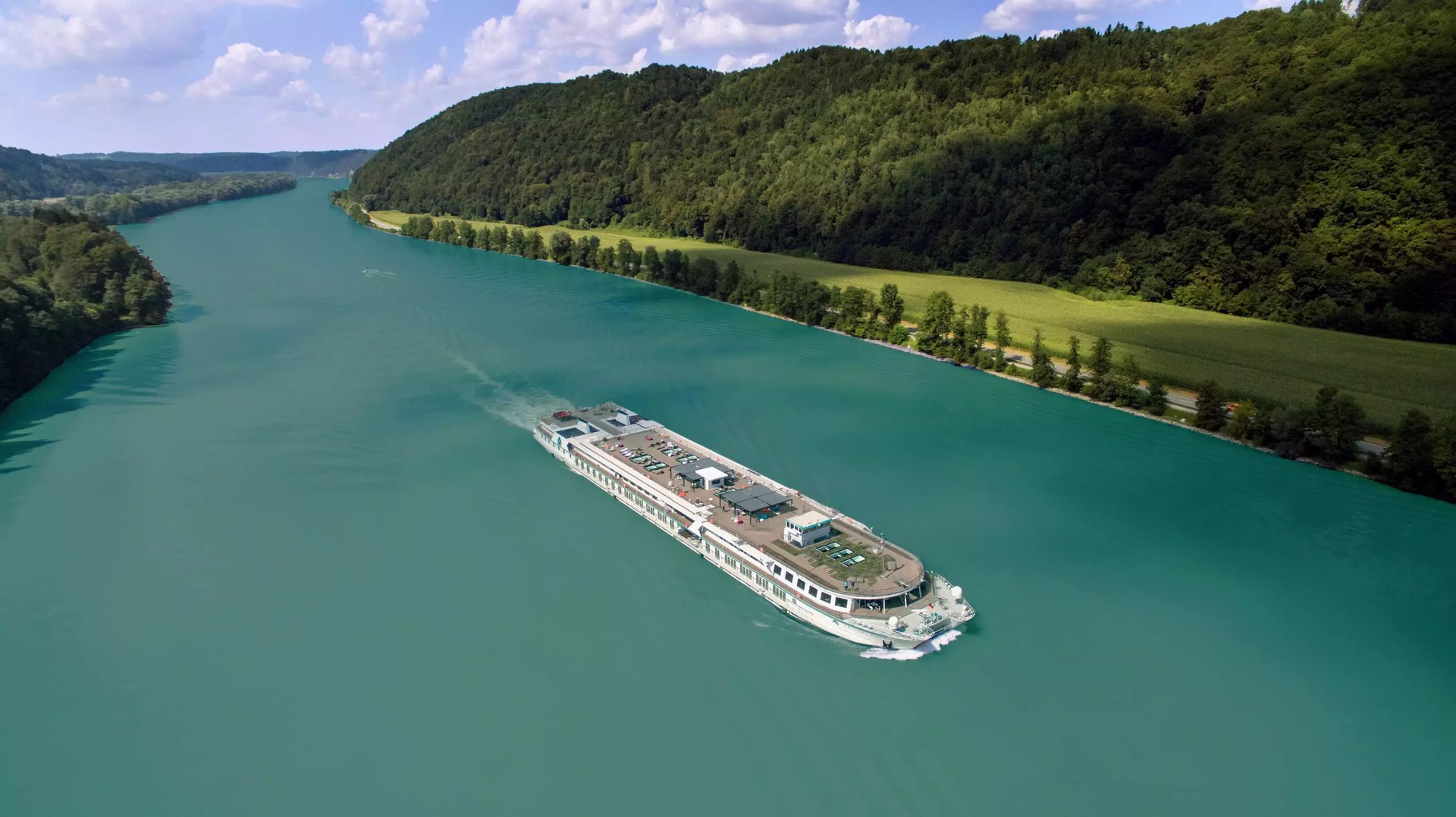
Credit: Riverside Luxury Cruises
Riverside Luxury Cruises operates a fleet of three ships on European waterways, including the Mosel, Main, Danube, Rhine, Rhône, and Saône rivers, and the service ratio it maintains, between two and four crew members for every passenger, gives the onboard experience a level of personal attention that most river cruise lines do not approach. The butler service includes unpacking luggage on arrival and booking spa treatments in advance, and the wellness infrastructure includes fitness centers equipped with Technogym equipment, alongside counter-current pools that offer hydrotherapy, giving the wellness program a physiological dimension beyond the standard plunge pool.
The Waterside Restaurant gives the Riverside culinary program its fine dining anchor, and the shore excursion calendar offers wine tastings and private concerts alongside the standard cultural visits that reflect the crew’s specific knowledge of the waterways they work. The entertainment program on select itineraries brings local musicians, lecturers, and dancers aboard for pre- or post-dinner performances, giving the evenings a cultural dimension specific to the river region the ship is currently navigating.
The Three Rivers itinerary on the Rhine, Main, and Danube is among Riverside’s most celebrated sailings: the 15-day voyage aboard Riverside Debussy runs from Amsterdam to Budapest, navigating the Main-Danube Canal and visiting the vineyard-terraced Wachau Valley, the UNESCO World Heritage stretch of the Danube that the premium river cruise category treats as its signature destination. The suite accommodations include bathrobes and slippers for every guest, and the ship’s small capacity gives every voyage the specific quiet that large-ship cruising cannot produce in the same terms. The Wachau Valley’s distinctive landscape, with its vineyard terraces, monastery at Melk, and the medieval town of Dürnstein, whose blue church tower is the most photographed single building in the Austrian Danube valley, provides the Three Rivers itinerary’s scenic cruising section with its most visually concentrated European river scenery. The Main-Danube Canal, which connects the two river systems, was completed in 1992, giving the sailing its most technically impressive single transit and allowing ships to move between the North Sea watershed and the Black Sea watershed in a crossing that no waterway on earth had provided before the canal’s completion.

Credit: Scenic Cruises
Scenic Luxury Cruises and Tours builds its value proposition on the completeness of its all-inclusive model: gourmet dining, premium beverages, airport transfers, and a full excursion program are bundled into the cruise fare, eliminating the supplemental costs that the à la carte cruise model requires at every port and every meal. The ships carry no more than 163 guests, and the custom-designed vessels give the onboard spaces a specific fit-for-purpose quality that the converted standard river ship cannot achieve at the same level.
The suite accommodations include minibars replenished daily, pillow menus, nightly turndown service, and, in the premium category, the Scenic Sun Lounge, a private glass-enclosed balcony that provides the suite with a direct outdoor connection to the river scenery without the exposure of a standard open balcony. The ships operate on European rivers and the Mekong River in Southeast Asia, giving the line a geographic breadth that few luxury river cruise operators provide.
The 13-day Treasures of the Mekong Meandering Cruise gives Scenic’s Southeast Asia program its most complete expression: the itinerary immerses guests in Cambodian and Vietnamese culture through Phnom Penh and Ho Chi Minh City, and the rural and ancestral sites along the river add depth beyond the capital city visits. The 10th-century Banteay Srei Temple, a Khmer sandstone structure whose intricate carvings give it a historical and artistic significance that the more famous Angkor Wat complex overshadows in mainstream tourism, is among the itinerary’s most specific cultural stops. The Mekong River’s character in this section, narrower and more intimate than Europe’s major rivers, gives the onboard experience a closeness to the riverbank life that the wider European waterways cannot provide in the same terms. The floating villages of the Tonlé Sap lake and the stilted houses visible from the river at low water give the Southeast Asian river cruise its most specifically regional visual content, and the market boat interactions possible from the ship at some anchorages give the passenger a direct engagement with local commerce specific to the Mekong’s role as the primary commercial artery of mainland Southeast Asia.
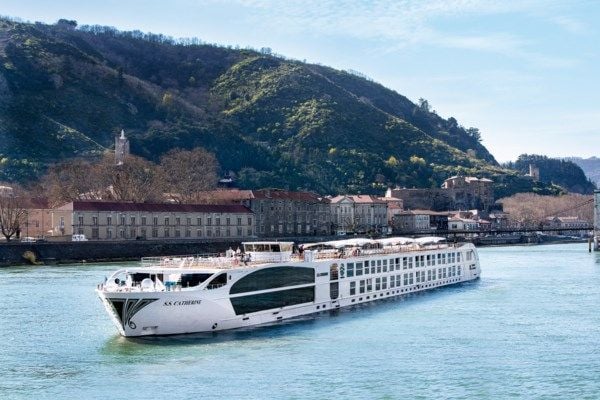
Credit: Uniworld River Cruises
Uniworld Boutique River Cruises operates on the boutique hotel model applied to river cruising: each ship is individually designed with eclectic furnishings and artwork inspired by the specific river and region it sails, giving the fleet a variety of aesthetic identities whose visual distinctiveness reflects the brand’s commitment to the premise that a ship sailing the Nile should feel different from one on the Danube. The service philosophy commits to no request too large and no detail too small, and the all-inclusive model covers beverages, farm-to-table cuisine, onboard entertainment, fitness classes, and curated excursions, including private after-hours access to major attractions.
The suite program includes dedicated butler service, marble bathrooms, fully stocked bars, and daily deliveries of fresh cookies and fruit, the latter a detail whose specific domestic character gives the hospitality a warmth that the more formalized luxury-hotel approach sometimes trades away in pursuit of elegance. The geographic range is among the widest in the luxury river cruise category: Central Europe, Italy, France, Portugal, Spain, Asia, Egypt, India, and Peru give Uniworld a destination portfolio that covers the world’s most compelling river systems.
The Cruise and Rail itinerary on the Sacred Ganges and the Maharajas’ Express gives Uniworld its most distinctive single offering: the voyage combines sailing the Ganges River through the Hindu temples of Kalna and the flower markets of Kolkata with a journey aboard the Maharajas’ Express, the luxury train that gives access to the Taj Mahal and Jaipur in a rail travel format whose heritage rolling stock and onboard service give the land component its own specific quality. The Ganges segment gives the river's spiritual dimension a daily presence in the itinerary, and the contrast between the ancient sacred character of the river and the contemporary luxury of the ship gives the experience its most specifically Indian juxtaposition. The dawn ritual bathing at Varanasi, viewed from the ship’s deck at the point where the Ganges’s sacred significance reaches its most concentrated public expression, gives the itinerary its single most memorable moment for the majority of passengers who make the sailing.
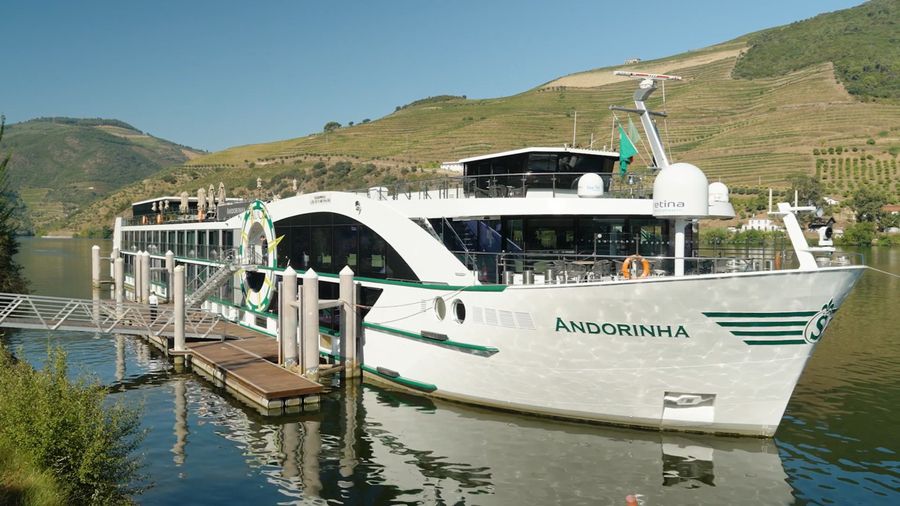
Credit: Tauck
Tauck’s luxury river cruise program distinguishes itself through the access it provides to experiences that the standard tour cannot arrange: private entry to historic sites and attractions after regular visiting hours, engagements with local communities and craftspeople organized through the line’s Tauck Directors and vetted local guides, and an itinerary philosophy that specifically emphasizes lesser-known destinations alongside the celebrated ones. The ship averages 110 guests, which gives the crowd-free access to major attractions a practical foundation: 110 people move through a historic site at a pace and with a quietness that a standard 300-passenger river cruise ship cannot produce in the same terms.
The all-inclusive fare covers accommodations, excursions, dining, beverages, fitness classes, and entertainment, including local folkloric performances and tastings, and the culinary program’s use of locally sourced ingredients gives the onboard dining a specific regional character that the ship’s current geographic position informs daily. The European river network that Tauck’s ships navigate gives the itinerary program its broadest geographic range in the luxury river cruise category, covering the Seine, Douro, Rhine, Danube, Main, and the rivers of Portugal and France.
The 25-day Grand European Cruise gives Tauck’s most ambitious itinerary its fullest expression: the voyage travels the Danube, Main, and Rhine rivers through the Netherlands, Austria, Germany, Slovakia, Croatia, Hungary, Serbia, Bulgaria, and Romania. A reception and dinner at the Bragadiru Palace in Bucharest, a private guided tour of Amsterdam’s Rijksmuseum, and a day in the medieval city of Nuremberg give the itinerary specific cultural anchors whose access and historical depth reflect the Tauck approach to river cruising as a form of in-depth cultural education delivered in conditions of maximum comfort. The Danube’s passage through the Iron Gates gorge between Serbia and Romania, where the river narrows between walls of limestone and the remains of Trajan’s Roman road are visible carved into the cliff face, gives the journey its most geologically and historically dramatic single transit and a visual spectacle that the short transit time makes unexpectedly affecting.
Credit: Abercrombie & Kent
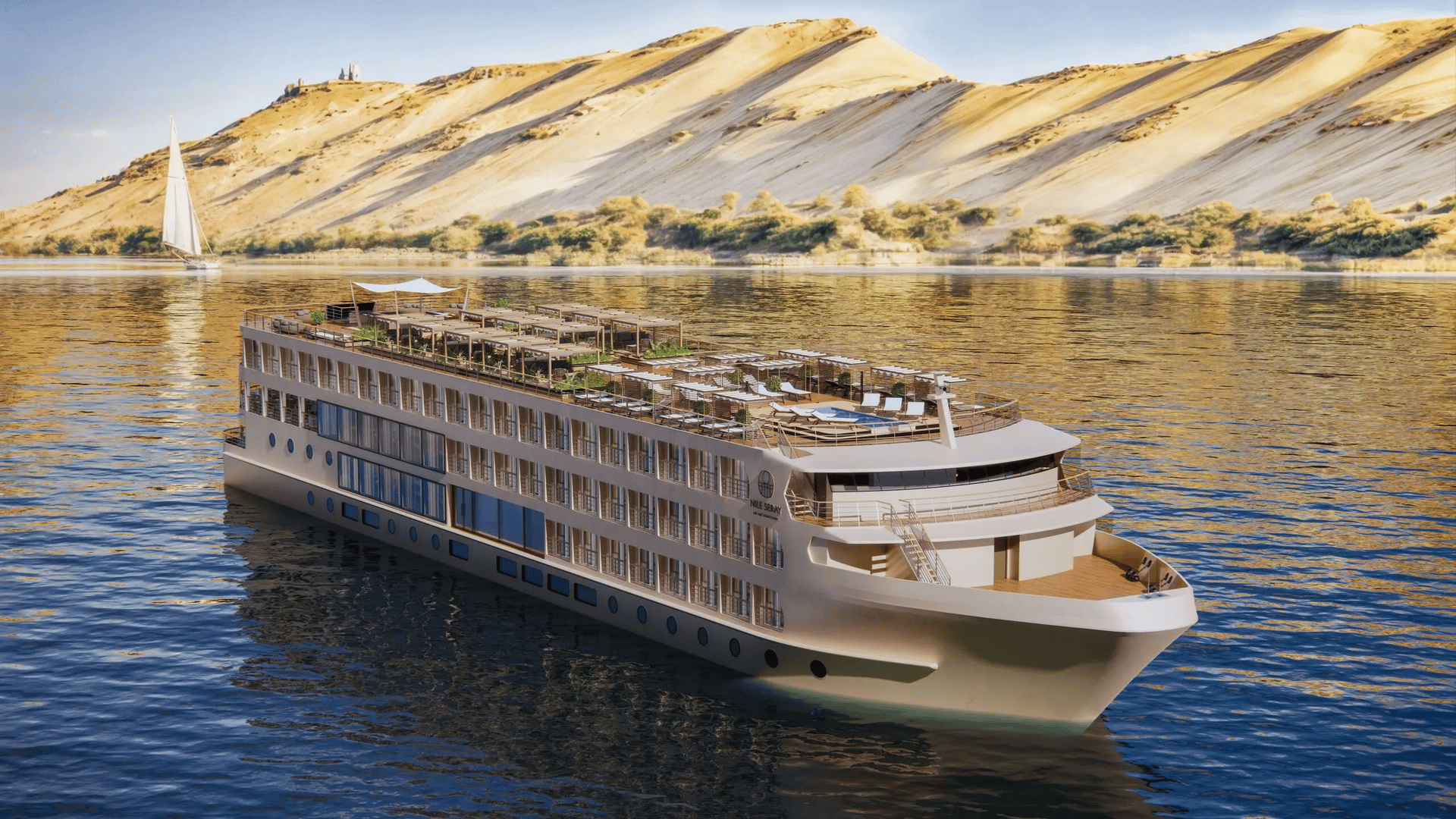
Abercrombie and Kent is the luxury tour operator whose river cruise program brings the same standard of personalized service and expert guiding to the water that the company has applied to its land-based safari and expedition programs for decades. The Nile sailing operates on ships carrying approximately 20 passengers with a 1-to-1 staff-to-guest ratio, giving the Egypt program the most intimate service standard of any cruise line on this list: 20 guests and 20 staff members produce an attention level whose specific quality is closer to a private yacht charter than to a conventional small-ship cruise. The world-class chefs who prepare the onboard meals, along with the refined spaces, including rooftop pool decks, outdoor bars, and spas, give the physical environment its quality.
The Ultimate Egypt itinerary gives the Abercrombie and Kent Nile program its most ambitious cultural access: the ability to enter an ancient pyramid on the Giza Plateau, gain insider access to a restricted area at the base of the Great Sphinx, and enter the tomb of Tutankhamun in the Valley of the Kings, giving the program an archaeological access level that the standard Egypt tour cannot arrange. The restricted access to the Sphinx enclosure and the Tutankhamun tomb reflects the specific relationships that Abercrombie and Kent has developed with the Egyptian Supreme Council of Antiquities through decades of operation in the country, and those relationships give the itinerary experiences that cannot be purchased separately on the open market.
Beyond Egypt, the company extends its river cruise program through partnerships with regional operators in Southeast Asia and Europe, giving the Abercrombie and Kent traveler access to the Mekong, the Irrawaddy, and the European river network under the same service and guiding standard that the proprietary Nile operation maintains. The partnership model gives the line geographic flexibility that building and operating its own fleet across multiple continents would not achieve at the same reasonable per-voyage cost and sustained operational consistency.
