
Luxury river cruises around the world pair small, intimate ships with immersive itineraries from the Danube to the Amazon and the Nile
-1920x1440.jpg)
Credit: Filipa Moreira / Pexels
A great river cruise solves a problem an ocean cruise never quite can: it gets you close enough to a place to actually see it. Ships dock in the middle of towns instead of miles offshore. Rivers wind past scenery that a highway bypasses. The whole experience unfolds at the pace of a private yacht rather than a floating city. That description covers river cruising in general. Luxury river cruising is a narrower, sharper category inside it.
The difference shows up in specifics. A ship carries 40 guests instead of 400. A butler is assigned to every suite rather than every deck. A private dock replaces a shared municipal berth. A named chef with a reputation replaces a buffet line. These are the best luxury river cruises in the world by that standard, judged on ship size, staff ratio, access, and how much of a destination each one actually reaches.
The seven below span five continents and nearly as many styles of river travel. A colonial-style ship glides past temples on the Nile. A design-forward vessel doubles as a jungle lodge on the Peruvian Amazon $AMZN. A trio of sister ships works Portugal's terraced wine country on the Douro. A houseboat safari drifts along the border of Botswana and Namibia. A fleet of all-suite ships covers Europe's Rhine and Danube. A ship with a Michelin-trained kitchen threads the Mekong Delta. In India, a boutique vessel turns the Ganges into a five-star itinerary.
None of these are the least expensive way to see these rivers. Each one is built on the idea that a river cruise, done properly, should feel less like transportation between sights and more like a destination in its own right. What follows is what sets each one apart, the specific ships and operators behind them, and why each earns its place on this list.
Credit: Canva Images
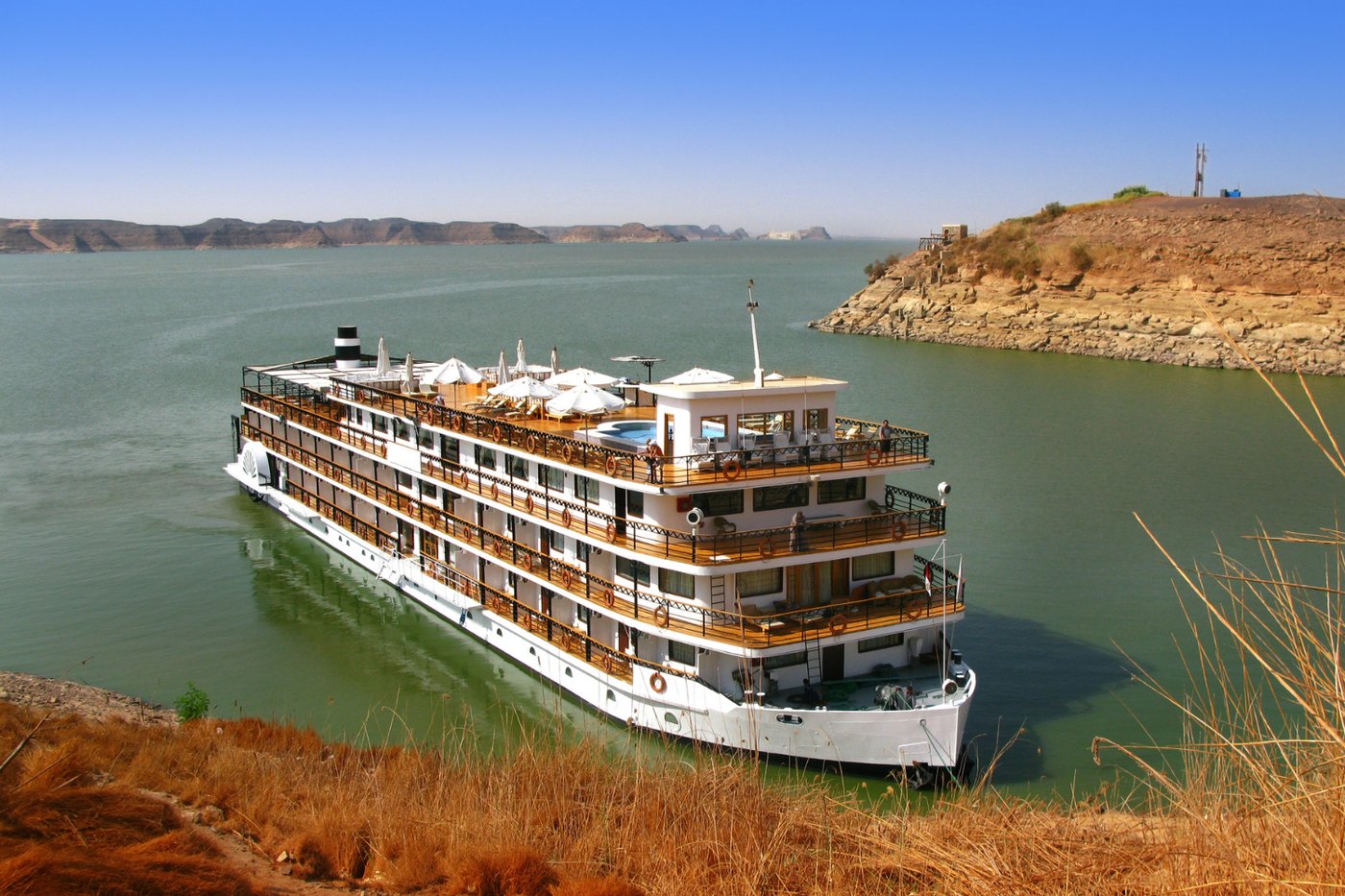
The Oberoi Zahra and its sister ship, the Oberoi Philae, are the two most exclusive ships sailing Egypt's Nile. Both are run by the Oberoi Group, the India-based luxury hotel company known for private butlers and understated design.
The ships sail the classic route between Luxor and Aswan. That stretch of the Nile passes the temples of Karnak, the Valley of the Kings, Edfu, and Kom Ombo, along with the Aswan High Dam. Abu Simbel is usually added as a day excursion. Cruises run four, five, or eight days. Both ships hold to a small passenger count by Nile standards, closer to a boutique hotel than a mass-market river ship.
What separates them from most Nile cruise ships is docking. Nile riverboats often raft together three or four wide at a single berth. Guests on an inside boat have to walk across the decks of the ships in front of them just to reach shore. The Zahra and Philae use private moorings instead, docking directly at the riverbank in Luxor and Aswan. That single detail changes the daily rhythm of the trip, with no crossing through other ships' lobbies and no queue of gangways to clear.
Onboard, the Zahra carries a full spa with treatment rooms, a rarity on the Nile, along with a sun deck pool and a lounge with river views on both sides. The Philae, slightly more compact, leans into wood paneling, antique-style furniture, and large sliding windows over the water. Both ships assign an Egyptologist guide to every group. Group sizes stay small enough that a temple visit doesn't turn into a scrum of tour buses arriving all at once.
Meals lean toward Egyptian and Mediterranean dishes, served in a single seating, with wine pairings drawn largely from Egypt's own vineyards near Ismailia and the Nile Delta. Spa treatments draw on regional techniques and local essential oils rather than an imported spa menu. For travelers who want the temples of Upper Egypt without the crowding and rafting of a standard Nile cruise, this pairing of ships is the one to book.
Credit: Canva Images
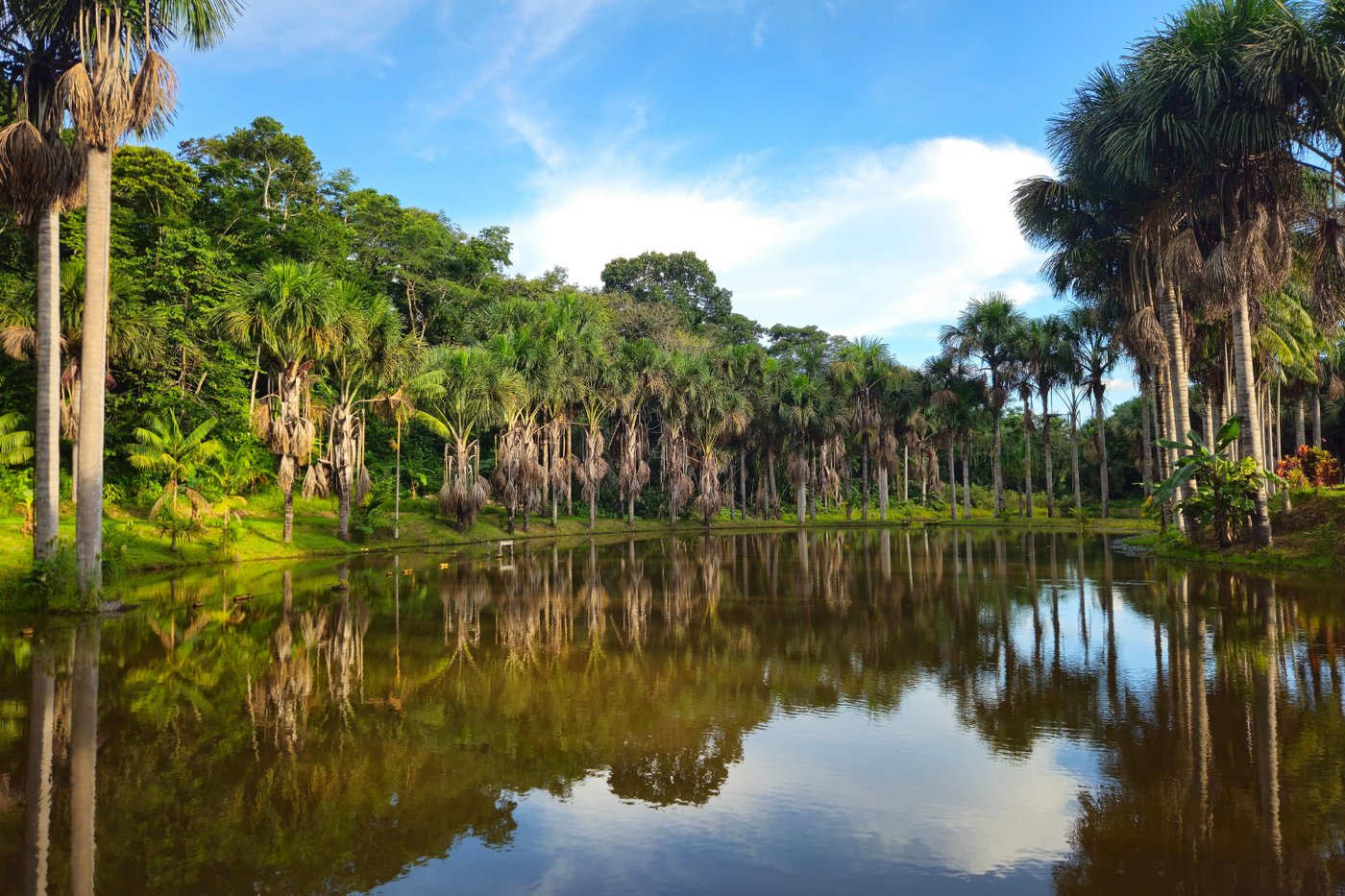
Aqua Expeditions runs the two most design-forward ships on the Amazon $AMZN River: the Aria Amazon and the newer Aqua Nera. Both are based in Iquitos, Peru, and both are built around floor-to-ceiling windows rather than the small portholes typical of older jungle boats.
The Aria Amazon carries 16 suites and was the line's original vessel. It is credited with proving that Amazon river travel could compete with a five-star hotel rather than a rustic expedition boat. The Aqua Nera, its 20-suite sister ship, expanded on that idea with interiors by Noor Design. The look draws on the aesthetic of the Amazon's black-water lagoons, alongside details borrowed from Peru's rubber-boom era and the Portuguese and Spanish communities that shaped the region.
Both ships sail three-, four-, and seven-night itineraries into the Pacaya-Samiria National Reserve, near the point where the Ucayali and Marañón rivers converge to form the Amazon. Guests head out twice a day in small skiffs with naturalist guides. The target list includes pink river dolphins, sloths, caimans, macaws, and, on a good afternoon, an anaconda coiled in the branches above the water.
Food is where Aqua Expeditions has built its reputation. Chef Pedro Miguel Schiaffino, known for pioneering rainforest-to-table cooking in Peru, oversees the menu on both ships. He works with ingredients native to the Amazon basin rather than imported staples, including river fish, palm fruit, and jungle produce most visitors will not have tasted before. Each dish is prepared with the technique of a city restaurant kitchen.
Onboard, both ships carry a spa, a plunge pool, and a lounge for evening talks with the resident naturalists. Excursions run in small groups rather than one large fleet of tenders, so a wildlife sighting tends to stay a quiet moment rather than a crowd scene. For a traveler weighing the Amazon against Africa's more established safari circuits, this is the version built around comfort and cuisine. It also offers close access to one of the most biodiverse rainforests on Earth.
Credit: Filipa Moreira / Pexels
AmaWaterways operates three nearly identical ships on Portugal's Douro River: AmaVida, AmaDouro, and the newest, AmaSintra, launched in 2025. Each carries just over 100 guests through terraced vineyards that UNESCO has recognized as a World Heritage cultural landscape.
The Douro is narrower and shallower than the Rhine or Danube, with locks that cap how large a ship can be. That constraint works in the traveler's favor. Instead of the 200-guest ships common in central Europe, Douro vessels stay small and closely tied to the vineyard towns along the water. AmaDouro and AmaSintra were purpose-built for these conditions, while AmaVida, launched in 2013, was the line's first ship on the river.
The signature itinerary, Enticing Douro, runs seven nights round trip from Porto. Stops are built around Portugal's Port wine industry, with tastings at working quintas and walks through terraced hillsides that climb almost straight up from the river. Towns like Régua and Pinhão have built their daily life around the wine trade for centuries, and a land extension often continues into Spain, toward Salamanca and its plateresque architecture.
Cabins on all three ships run around 215 square feet, with private balconies and floor-to-ceiling glass doors that make the most of the scenery outside. Public spaces include a sun deck pool and a lounge that hosts live entertainment, including traditional Portuguese guitar performances, over the course of the sailing. The dining room serves regional dishes alongside the local wines the region is named for.
The Douro sees far less ship traffic than the Rhine or Danube. Towns along the route have not been reshaped around cruise tourism the way parts of central Europe have. For travelers who want the format of a European river cruise without the crowds of its busier rivers, the Douro is the answer. AmaWaterways' three ships on it make the case well, especially for wine lovers who rate this route above the more famous Rhine and Danube itineraries.
Credit: Canva Images
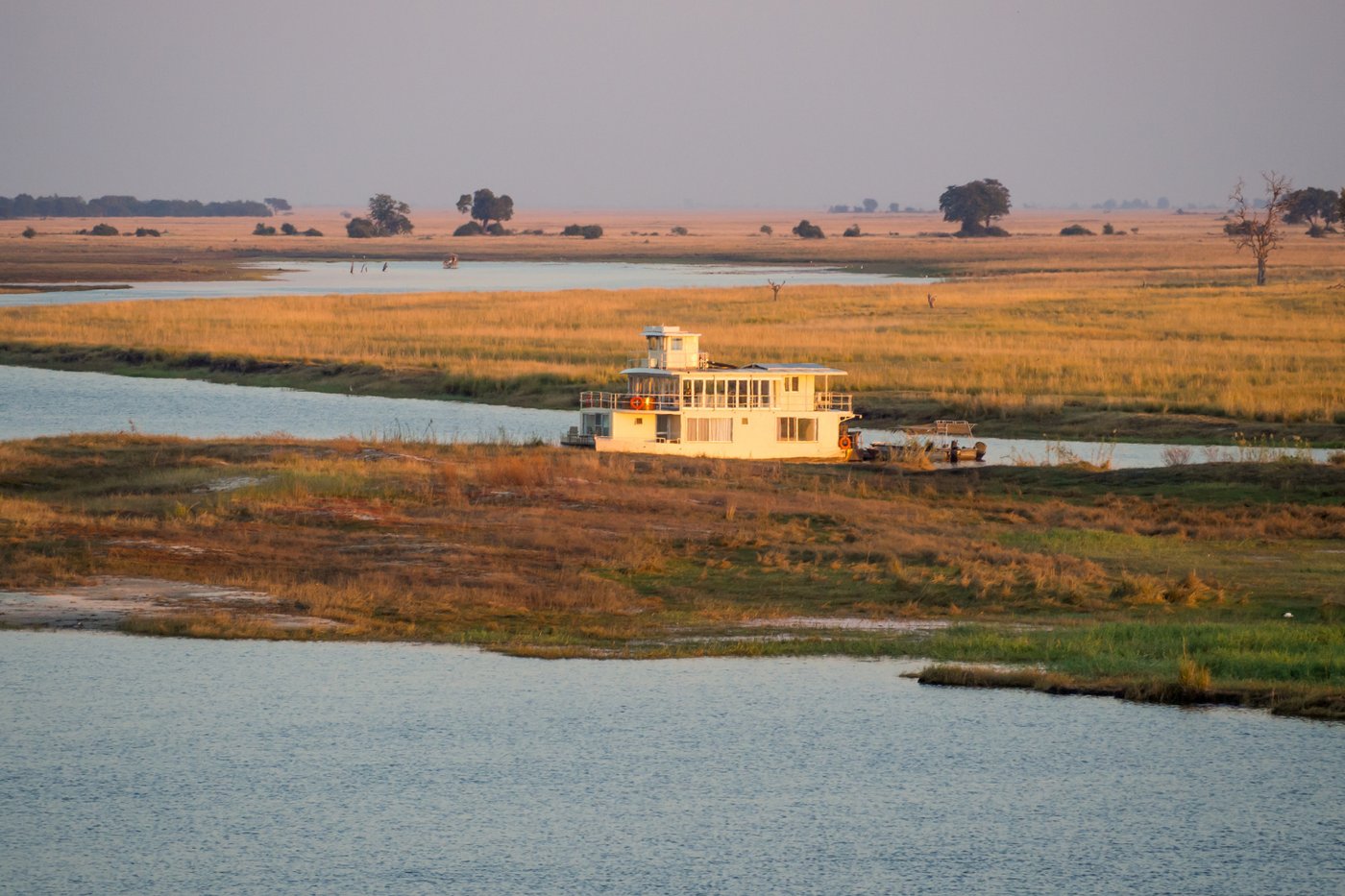
The Zambezi Queen is a 42-meter houseboat that cruises the Chobe River, along the border of Botswana and Namibia. It carries just 14 suites and functions less like a traditional river cruise ship and more like a floating safari lodge.
The Chobe River borders Chobe National Park, home to one of the largest elephant populations in Africa. Hippos, buffalo, and a wide range of birdlife also gather along the water. Wildlife concentrates most heavily during the dry season, when inland waterholes shrink and animals move toward the river to drink. Rather than docking and busing guests to game drives on land, the Zambezi Queen anchors on the river itself. Guests head out in smaller tender boats for water-based game viewing, often coming within a boat's length of elephants at the water's edge.
Suites, designed by South African designer Jenni Button, run floor-to-ceiling windows and private balconies facing the water. That layout turns every cabin into its own private viewing deck, even before a single excursion begins. The ship's pace mirrors a safari lodge rather than a cruise line. Mornings and afternoons are built around water-based game drives. A midday break allows for lunch and rest during the hottest hours, followed by sundowners on deck as the light changes over the river.
Typical stays run two or three nights, shorter than a European river cruise. The schedule is timed to the dawn and dusk rhythm of wildlife activity rather than a fixed itinerary of towns and sights. Activities beyond game viewing include tiger fish and bream fishing excursions and village visits on the Namibian side of the river. Land-based game drives into Chobe National Park are also available for guests who want to pair the water safari with a more conventional one. Meals are prepared onboard and served buffet or plated style, depending on the sailing, with a strong focus on fresh, locally sourced ingredients.
For travelers who assume a safari means a truck and a fixed lodge, the Zambezi Queen offers a genuine alternative. It covers the same wildlife-dense landscape, viewed entirely from a boat that never has to leave the water.
Credit: Vish Pix / Pexels
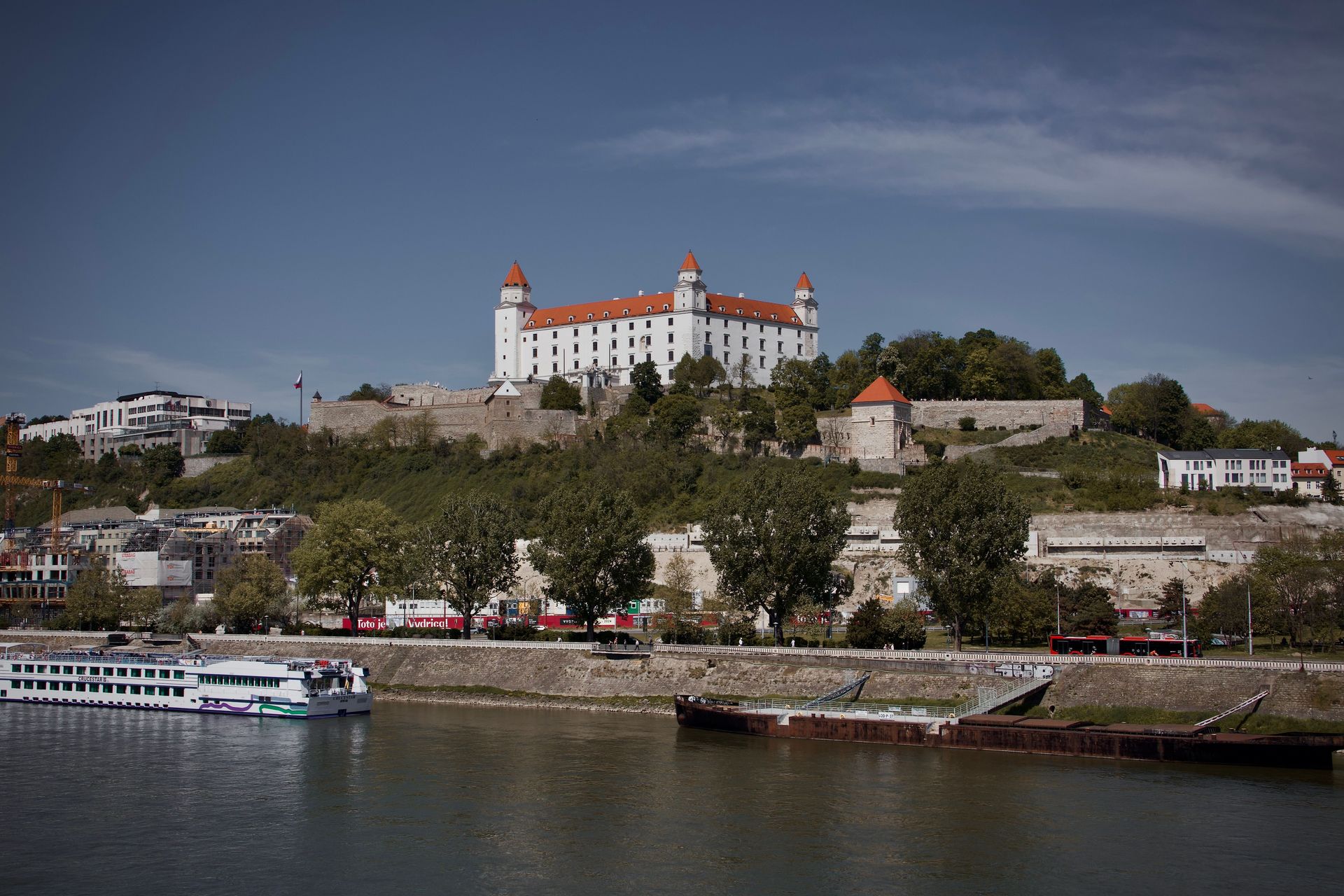
Scenic, the Australian river cruise line, operates 10 so-called Space-Ships across Europe's Rhine, Main, Danube, Moselle, Rhône, Saône, Seine, Dordogne, and Garonne rivers. Every ship is built entirely from all-suite cabins, and every guest is assigned a personal butler, regardless of suite category.
The name comes from the ships' design priority: interior space. Suites range from around 160 to over 500 square feet, well above the industry standard for river vessels. A feature called the Scenic Sun Lounge lets a window slide down at the push of a button, turning a sealed cabin into an open-air balcony in seconds. Ships cap out around 163 guests, which keeps the ratio of staff to passengers high across a fleet built for full-service, fully inclusive travel.
The Rhine and Danube itineraries are the line's most popular routes. They cover the castle-lined stretch of the Rhine Gorge, the Christmas markets of Nuremberg and Regensburg in winter, and the imperial capitals of Vienna and Budapest along the Danube. Ships built for France's Rhône and Saône add a dedicated salt therapy room and an onboard cooking school, Scenic Culinaire, reflecting the culinary focus of that region.
Meals and drinks are included at a level uncommon even among luxury lines. Beverages throughout the day and evening, gratuities, WiFi, and shore excursions are folded into the fare rather than billed separately. A Scenic cruise tends to arrive with few surprise charges once booked. Balcony, junior, and top-tier Royal suites each add further tiers of butler service, from nightly turndown and laundry to arranging private shore experiences and specialty dining.
Scenic operates across nearly every major river in western and central Europe. A single line can cover a Rhine castle cruise one season and a Bordeaux wine cruise the next, all built to the same all-suite, fully inclusive standard. That range, combined with the butler service on every suite, is what keeps Scenic near the top of most river cruise rankings.
Credit: Rawpixel
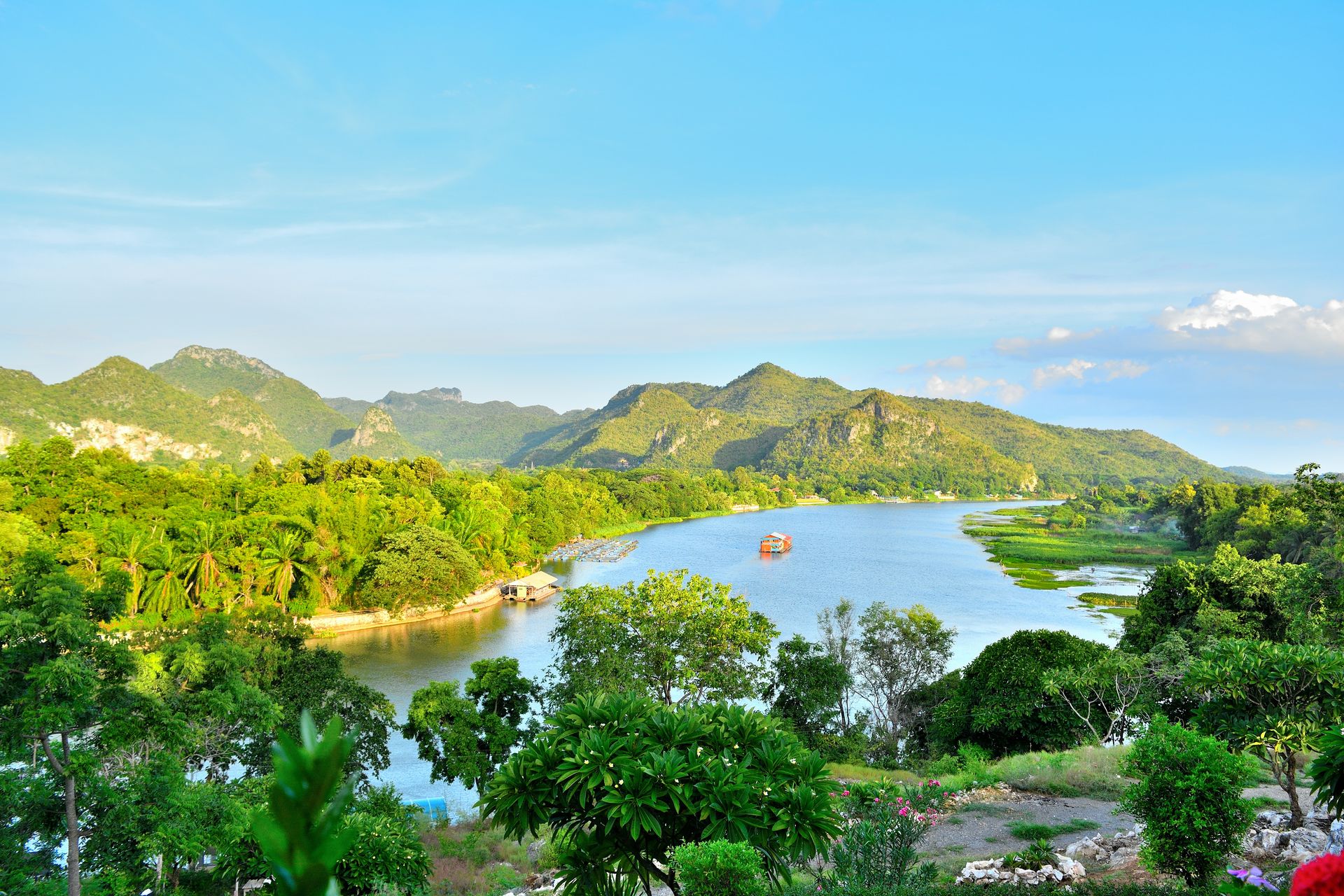
The Aqua Mekong is a 20-suite, 40-guest ship built by Aqua Expeditions in 2014 to cruise the lower Mekong River between Vietnam and Cambodia. It runs on a one-to-one staff-to-guest ratio. The menu is overseen by Australian chef David Thompson, a Michelin-starred authority on Thai cuisine who has cooked across Bangkok, Sydney, and London.
The ship's signature route runs eight days between Ho Chi Minh City, Vietnam, and Siem Reap, Cambodia. The itinerary traces the Mekong Delta through Cai Be's floating markets and the border town of Chau Doc. It then continues to Phnom Penh before heading upriver toward Tonlé Sap Lake and the temples of Angkor. During high water season, from roughly August through November, the ship can cross onto Tonlé Sap Lake itself, cutting the final approach to Siem Reap to under an hour.
Design leans toward clean, contemporary lines rather than the colonial-revival look common on older Mekong vessels. Onboard, the ship carries a plunge pool, an open-air movie screening deck, and a compact spa built into its overall footprint. The Aqua Mekong also carries its own fleet of four private tender boats, letting the ship run smaller group excursions into narrow tributaries that larger riverboats cannot access.
Dining draws on Thompson's background in Thai cuisine alongside Vietnamese and Cambodian dishes, served with cocktails developed by the spirits consultancy Proof & Co. Excursions include a Khmer Apsara dance performance, a tradition once reserved for Cambodian royalty, along with village visits and temple stops. Guests who choose it can also visit Phnom Penh's Tuol Sleng genocide museum and the Killing Fields, a sober counterpoint to the rest of the itinerary.
Cabins are among the largest on the Mekong, each with floor-to-ceiling windows and a sitting area separate from the bed. Because the ship carries only 40 guests total, temple visits and village stops tend to stay small and unhurried compared with the busier river traffic on the upper Mekong. The Mekong is better known for budget backpacker boats than luxury river travel. The Aqua Mekong is the clearest argument that it deserves the same five-star treatment as the Nile or the Danube.
Credit: Monojit Dutta / Pexels
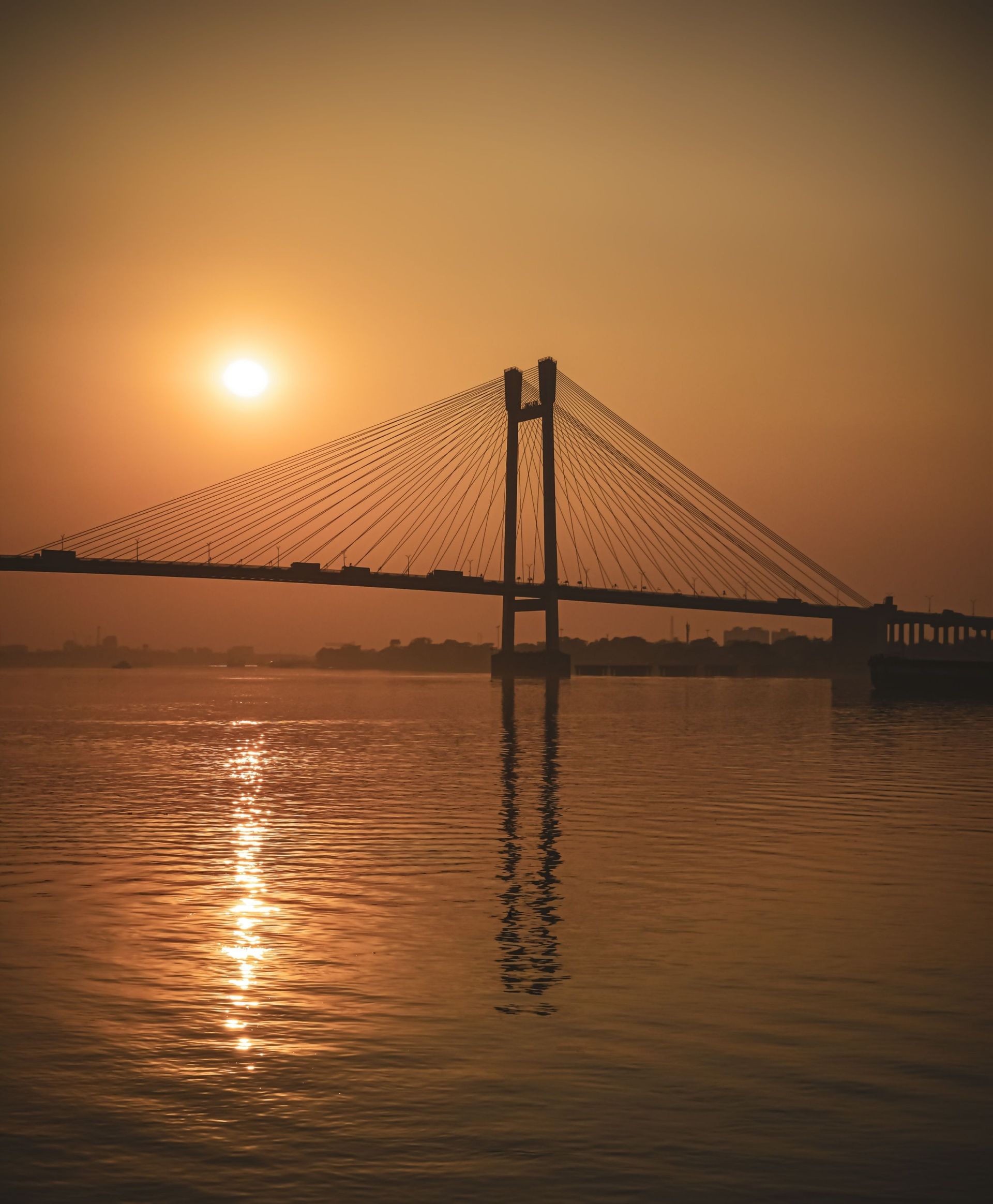
The Ganges Voyager II is a 28-suite ship operated in partnership between Uniworld and Indian river cruise specialist Antara. It sails from Kolkata along the Ganges and Hooghly rivers through West Bengal, one of only a small number of true luxury vessels operating on the Ganges river system.
The ship's suites run high-ceilinged, with hand-painted murals, French balconies, and floor-to-ceiling glass doors. The styling leans colonial rather than contemporary, with wood furniture and stenciled patterns that nod to 19th-century steamers that once worked the same river. A dedicated spa, a fitness room, and a sun deck round out the ship's public spaces. They are modest in scale compared with a European river ship, but staffed generously relative to the small number of guests on board.
Itineraries typically pair the river cruise with a land tour of India's Golden Triangle: Delhi, Agra, and Jaipur. Guests stay at Oberoi properties before or after the sailing. The full package covers both the Taj Mahal and the temples, tea estates, and colonial-era river forts along the Ganges and Hooghly. Along the river itself, stops include Hindu temple towns, working ghats where daily rituals take place at the water's edge, and rural Bengali villages rarely visited by land-based tour groups.
Cuisine on board mixes Indian regional dishes with continental options, served in a single dining room with a menu that changes through the sailing. Morning yoga sessions on deck lean into the river's spiritual associations without turning the cruise into a retreat. The ship carries a fraction of the passengers of a typical Nile or Danube vessel. Excursions to temple towns and villages tend to stay small, and guides can adjust the pace of a visit around whichever ritual or festival happens to be underway that day.
Travelers $TRV often assume India means chaos or budget travel only. The Ganges Voyager II makes the case that its namesake river can carry the same five-star standard as any river in Europe or Egypt.