From a 36-guest ship navigating Mekong backwaters to a 15-day Viking cruisetour across Vietnam and Cambodia
Credit: Pandaw
The Mekong River is one of the world’s great waterways by almost any measure: 3,000 miles in length flowing through China, Myanmar, Laos, Thailand, Cambodia, and Vietnam, one of the most biodiverse river systems on earth, and the organizing geographic fact of an enormous region of Southeast Asia whose cultures, economies, and daily lives have been shaped by the river’s seasonal rhythms for thousands of years. A Mekong River cruise is not simply a scenic journey, though the scenery is extraordinary: it is a format of travel that gives access to communities along the river’s banks that road infrastructure does not serve in the same way, and whose relationship to the river, through floating markets, riverside temples, fishing communities, and agricultural villages built to the water’s edge, gives the cruise experience a cultural depth that bus tours through the same region’s cities cannot replicate.
The majority of Mekong River cruise itineraries sail the lower section of the river in Cambodia and Vietnam, which gives travelers access to the Mekong Delta’s extraordinary agricultural landscape, the capital cities of Phnom Penh and Ho Chi Minh City, and the historical sites of both countries. A smaller number of cruises explore the upper Mekong in Laos and Thailand, where the river narrows, the landscape becomes more mountainous, the communities become more remote, and the pace of daily life along the banks is further from the tourist infrastructure of the lower section. The vessel size on the upper Mekong is necessarily smaller, which gives those itineraries an intimacy that the lower Mekong’s larger ships cannot achieve in the same terms.
The six cruises below appear in U.S. News & World Report, covering sailings from seven nights to 15 days across both the lower and upper sections of the river. Each offers a distinct character and itinerary structure that suits different travel priorities.
Credit: AmaWaterways
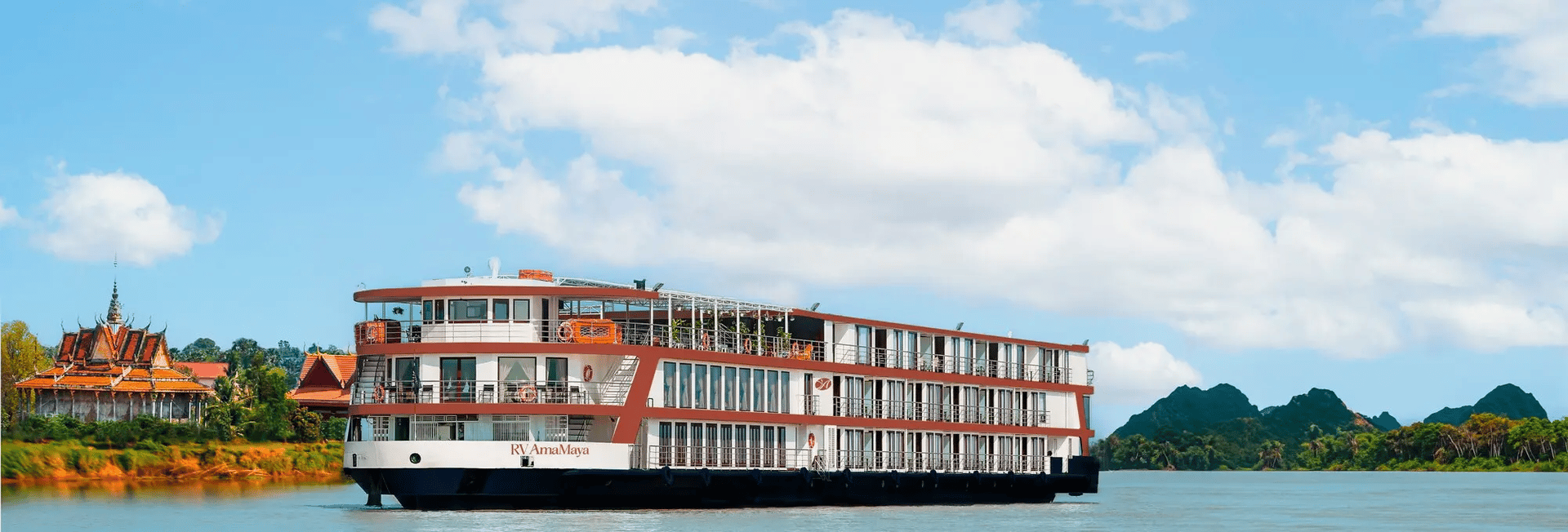
AmaWaterways’ Charms of the Mekong is a seven-night sailing that departs Ho Chi Minh City, Vietnam, and disembarks in Kampong Cham, Cambodia, covering the lower Mekong’s most historically and culturally dense section aboard either the AmaDara or AmaMaya, both of which carry up to 120 passengers. The itinerary’s southbound-to-northbound direction gives travelers the Mekong Delta’s floating market culture and wetland landscapes in Vietnam before crossing the border into Cambodia, where the river’s character changes and the historical and cultural program shifts to the temples, palaces, and Buddhist institutions that Cambodia’s Khmer heritage has built along the riverbanks.
The Vietnamese stops include Cái Bè, where a local market and temple give the cruise its first direct encounter with the Mekong Delta’s agricultural market culture, followed by Tân Châu and the wetlands of Tra Su Forest, a flooded cajuput forest whose bird and wildlife population gives the cruise a natural dimension alongside the cultural program. The Tra Su wetlands are among the most biodiverse forest ecosystems in the Mekong Delta and are best experienced by small boat through the forest canopy, which the shore excursion format the cruise provides makes practically accessible.
In Cambodia, Phnom Penh gives the cruise its most historically significant stop: the Royal Palace and National Museum give the capital’s imperial history a physical address, and the optional Buddhist blessing ceremony gives travelers a direct participatory encounter with the living religious practice that the country’s temple architecture expresses in built form. The stops at Oudong, Koh Oknha Tey, Angkor Ban, and the disembarkation at Kampong Cham extend the Cambodian program through smaller riverside communities, whose silk weaving and school visits add depth to the cultural itinerary beyond the capital’s institutional attractions. Optional pre- and post-cruise land packages give the AmaWaterways itinerary geographic flexibility for travelers who want to extend the journey into Angkor Wat or further into Vietnam. For travelers making their first Mekong River cruise and wanting the established quality and logistical reliability of a major river cruise operator alongside a comprehensive lower Mekong itinerary, the Charms of the Mekong gives the most trusted entry point into the region with up to 120 passengers aboard a vessel whose facilities match the expectations of experienced river cruise travelers.
Credit: Avalon
Avalon Waterways’ Mekong Discovery southbound itinerary distinguishes itself from the larger-vessel alternatives on this list by sailing on the Avalon Saigon, a ship designed specifically to carry just 36 guests and engineered to access harder-to-reach stretches of the river that the wider beam of 120-passenger vessels cannot navigate. The eight-day sailing embarks from Phnom Penh, Cambodia, and disembarks in Ho Chi Minh City, covering the same lower Mekong corridor as the AmaWaterways itinerary but in the opposite direction, with a guest-to-crew ratio and vessel scale that give the experience a different level of attention and access.
The Cambodian section of the itinerary begins at Wat Hanchey, a hilltop temple dating to the eighth century that is the cruise's oldest historical site and offers a panoramic view of the Mekong from the elevated position provided by the temple’s ridge. An ox-cart ride through the Cambodian countryside, a walking tour through the village of Angkor Ban, and a visit to the Royal Palace and Silver Pagoda in Phnom Penh give the Cambodian program a range from rural agricultural life to urban historical monuments that the small ship’s flexibility allows the itinerary to cover without the logistical constraints that larger vessels impose on shore excursion planning.
The Vietnamese section gives travelers guided excursions through the Mekong’s backwater channels, where floating homes, religious sites, and speedboat merchants give the river a living social geography quite different from the open river vistas of the main channel. A cotton weaving demonstration in the village of Long Khanh A and a local workshop visit in Vinh Long add the artisan culture dimension to the Vietnam program, highlighting the Mekong Delta’s traditional craft communities, which sustain them alongside the agricultural economy. For travelers whose priority is the intimacy of a small-ship experience over the amenity range of a larger vessel, the Avalon Saigon’s 36-passenger capacity gives the Mekong its most personally scaled lower-river version. The combination of the vessel’s access to harder-to-reach sections of the river and the guest count that makes the guide-to-traveler ratio more favorable than on larger ships gives the Avalon Mekong Discovery a quality of individualized cultural encounter that travelers who have done larger Mekong sailings consistently identify as the most significant difference between the two formats.

Credit: Emerald Cruises
Emerald Cruises’ 10-day Meandering Majestic Mekong itinerary gives the lower Mekong program two additional days compared to the AmaWaterways seven-night equivalent, and uses those days to build an excursion schedule that reaches beyond the temples and palaces of the main itinerary stops into the agricultural and community life of the Mekong Delta. The Tan My Floating community and the mushroom and fruit farms that the Vietnam section includes give the cruise a specific engagement with the Delta’s working agricultural economy that temple visits alone do not provide, and the Cho Gao Canal transit gives the southern Vietnam program a navigational experience specific to the Delta’s intricate waterway network.
The sampan tour to Sa Déc, a provincial city in the Mekong Delta known for its flower nurseries and French colonial architecture, gives the Vietnam section a cultural program that the major historical sites of Phnom Penh and Ho Chi Minh City complement rather than replicate. The local motorcycle rickshaw tour through the island of Cu Lao Gieng gives travelers a ground-level encounter with the Delta’s island villages at the pace and proximity that the rickshaw format offers, navigating through lanes too narrow for larger vehicles at a speed that allows proper observation of the street life.
In Cambodia, the Tuol Sleng Genocide Museum visit in Phnom Penh gives the historical program its most sobering and significant encounter: the former school converted to a detention center during the Khmer Rouge period is one of the most important sites of twentieth-century historical documentation in Southeast Asia, and its inclusion in the cruise itinerary gives the Cambodia program a historical depth that purely temple and palace visits do not provide in the same terms. The final stop at Peam Chi Korng provides a disembarkation point that frames the journey’s conclusion in a smaller riverside community rather than a major city, giving the ending an intimacy appropriate to a river cruise whose most memorable stops were the quieter ones.
Credit: Pandaw
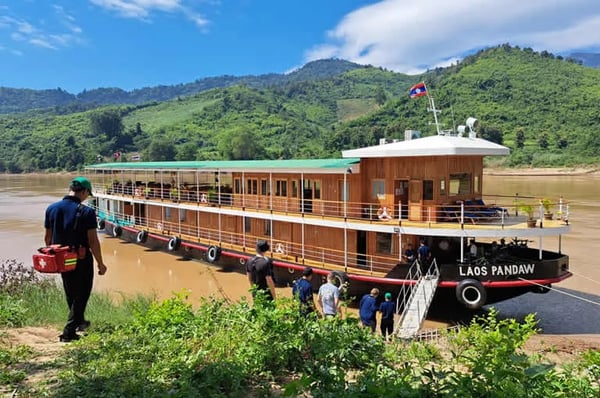
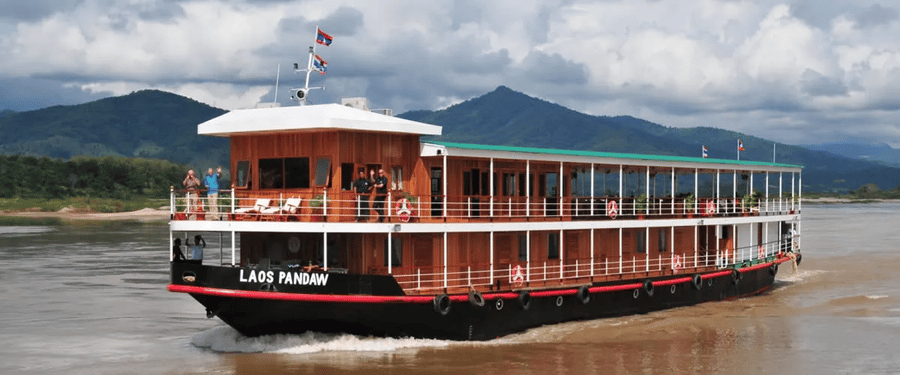
Pandaw Cruises’ Laos Mekong is one of the very few itineraries that sails the upper section of the Mekong, exploring the river’s character in Laos and Thailand rather than the more heavily traveled lower section in Cambodia and Vietnam. The 10-night sailing begins with a hotel pickup in Vientiane, Laos’ capital, and a Laotian long-tail boat ride, followed by boarding the main vessel, giving the cruise an immediate immersion in river culture before the formal itinerary begins. The upper Mekong’s narrower channel, stronger current, and more mountainous surrounding landscape give the sailing a visual and navigational character that the broad, flat lower Mekong sections in Cambodia and Vietnam do not replicate.
Luang Prabang, the UNESCO World Heritage city where the cruise moors for three nights, is the itinerary's most significant cultural destination. The city’s extraordinary concentration of Buddhist temples, French colonial architecture, riverside communities, traditional arts, and the famous morning alms-giving ceremony offer three days of a cultural program whose depth rewards the extended stop rather than the single-day visits most itineraries allot to major cities. The Pak Ou Caves, limestone caves filled with thousands of Buddha images set into a cliff face above the confluence of the Ou and Mekong rivers, give the river approach to this site a visual drama that arriving by road cannot match.
The Pak Beng Elephant Sanctuary visit gives the Pandaw itinerary one of its most distinctive inclusions: a responsible wildlife experience with Asian elephants in a sanctuary setting that the upper Mekong’s forest landscape makes geographically and ecologically appropriate. The Kuang Si Waterfalls visit in Ban Mouang Khai and the Laos Buffalo Farm add natural and agricultural dimensions to the program before the sailing crosses the Thai border and disembarks in Chiang Khong, a small town at the intersection of Laos and Thailand that gives the journey a specifically frontier quality as its conclusion. For travelers who have already explored the lower Mekong in Cambodia and Vietnam and want the less-traveled upper-river experience in Laos, the Pandaw Laos Mekong gives the most complete upper-river itinerary on this list, with three nights in Luang Prabang providing the extended cultural immersion that the city’s UNESCO World Heritage status fully justifies.
Credit: Viking
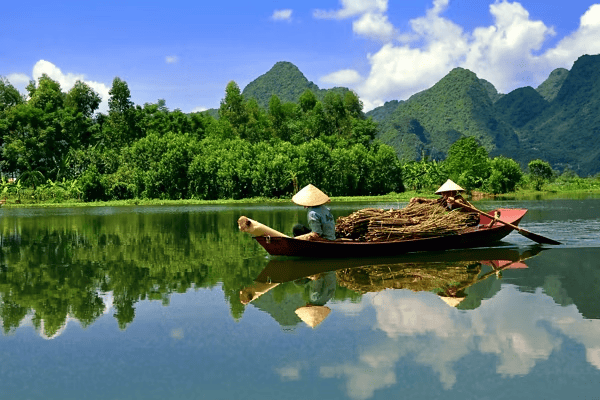
Viking’s Magnificent Mekong is the most comprehensive itinerary on this list at 15 days, beginning in Hanoi, Vietnam, and ending in Ho Chi Minh City through a cruisetour format that combines land travel with river sailing. The 16 guided tours included in the base itinerary give every major stop a structured educational program rather than leaving shore time to unguided exploration, which suits travelers who want the historical and cultural context that informed interpretation provides but that the self-directed visitor must bring independently. The Hanoi and Ha Long Bay pre-cruise extension, and the Bangkok post-cruise extension, give the itinerary a geographic scope that spans Vietnam’s full length along the Mekong River corridor.
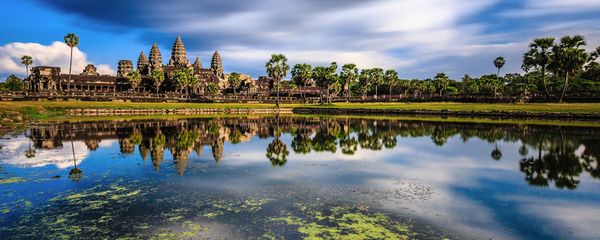
The shore excursion highlights reflect the ambition of the 15-day format: the Museum of Ethnology in Hanoi offers the most comprehensive institutional presentation of Vietnam’s remarkable ethnic diversity, with 54 recognized ethnic groups documented through objects, dwellings, and performances, and the museum’s outdoor component gives physical scale. The 12th-century temple complex of Angkor Wat, accessible via a Siem Reap extension, provides the cruise with a Cambodia program whose most famous single site is among the most significant architectural achievements in the history of Southeast Asia. The sunset boat ride to the floating villages of Tonlé Sap Lake, the Twin Holy Mountains excursion, and the Cu Chi Tunnel experience give the itinerary its full historical range from ancient temple culture to the immediate history of the Vietnam War.
Viking’s river cruise reputation for high-quality guided tours and included excursions gives the Magnificent Mekong its specific practical advantage over independently assembled itineraries of the same length: the logistics of moving efficiently between Hanoi, Ha Long Bay, Siem Reap, and the full length of the Mekong River corridor while hitting the key historical sites at each stop requires the kind of coordinated planning that the cruise format handles as part of its operating model. For travelers who want the most complete possible overview of Vietnam and Cambodia’s history, culture, and landscape in a single journey, the 15-day Viking itinerary offers the most comprehensive option on this list.
Credit: Heritage Line
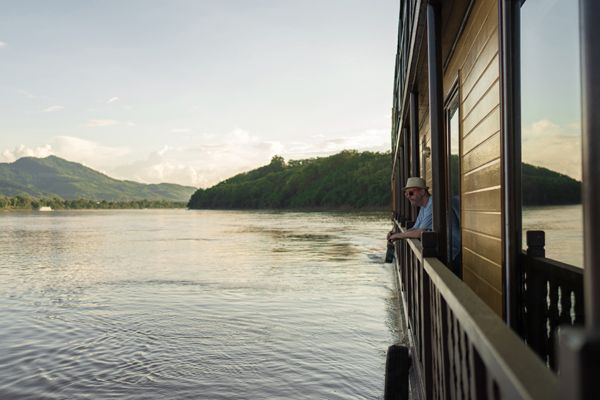
Heritage Line’s Golden Triangle Traverse gives the upper Mekong its most intimate available format: a three-night voyage aboard Anouvong, a boutique cruiser with just eight staterooms and two suites, sailing between Luang Prabang and the Lao-Thai border region known as the Golden Triangle. The Golden Triangle is the mountainous area where Laos, Thailand, and Myanmar converge, historically associated with opium production and now a region of exceptional natural beauty and cultural complexity. Reaching the upper Mekong’s most remote stretches requires a vessel of Anouvong’s dimensions, and the eight-cabin scale gives the sailing a guest population small enough to operate more like a private charter than a commercial cruise.
The shore excursion program gives the three-night format a density of cultural experience that the small duration requires: the Pak Ou Caves visit, a kayak tour along the Nam Ou River, a traditional Baci ceremony led by local community members, and a cotton and silk weaving demonstration give each day multiple distinct encounters with the cultural and natural landscape of the upper Mekong. The Baci ceremony specifically gives travelers a participatory ritual encounter, a Laotian blessing conducted by local practitioners rather than performed for tourist observation, that gives the cultural program an authenticity of engagement that many cruise shore excursions do not achieve at the same level.
The onboard programming gives the small-ship format an additional dimension: a traditional dance performance on the terrace deck, lectures on Laotian royalty and ethnic groups, and daily yoga classes provide evenings on the river with a program that complements the shore excursions rather than simply providing evening entertainment. The Pak Beng Elephant Sanctuary visit, which appears on both the Pandaw and Heritage Line itineraries, gives the upper Mekong cruises a shared commitment to a responsible wildlife experience, which the sanctuary’s model of elephant care specifically supports. For travelers who want the most intimate and boutique version of the upper Mekong experience, Anouvong’s eight cabins and the Golden Triangle’s specific geography give a combination available nowhere else in the Mekong cruise market.
