-1920x1280.jpg)
Ricardo Gomez Angel / Unsplash
Switzerland is a country whose geographic compression works in the traveler’s favor. Within a country roughly the size of Maryland, the terrain shifts from the glacier-draped peaks of the western Alps to the palm-lined lake shores of Ticino, from French-speaking wine country on Lake Geneva to German-speaking medieval towns in the northeast, from the car-free plateau villages of the central highlands to the urban banking and design culture of Zurich. The four official languages, French, German, Italian, and Romansh, are not merely administrative distinctions but signals of genuinely distinct regional cultures whose food, architecture, and daily rhythms differ enough to make the same country feel like different countries depending on which canton you are in.
The practical case for Switzerland as a travel destination rests on infrastructure. The train network is comprehensive, punctual, and specifically designed to give visitors access to the mountain terrain that defines the country’s identity. The Swiss Travel Pass gives unlimited access to trains, buses, boats, and most mountain railways, which means the logistical planning required for mountain travel in most countries is largely pre-solved before departure. Tour guide Catja-Camilla Straub, who operates Gatya Goes, describes Switzerland as a place where every one of the 26 cantons is unique and offers something different, and the infrastructure makes accessing that variety the central pleasure of a Swiss trip, not its primary challenge.
The 10 destinations below appear in Travel + Leisure, drawn from a longer list covering every major region of the country. The destinations span the full range of the Swiss experience, from the high Alpine resorts of the south and east to the lakeside cities of the central plateau, from the wine terraces of the French-speaking west to the pastoral cheese culture of the northeast.
1 / 10
Tucker Monticelli / Unsplash
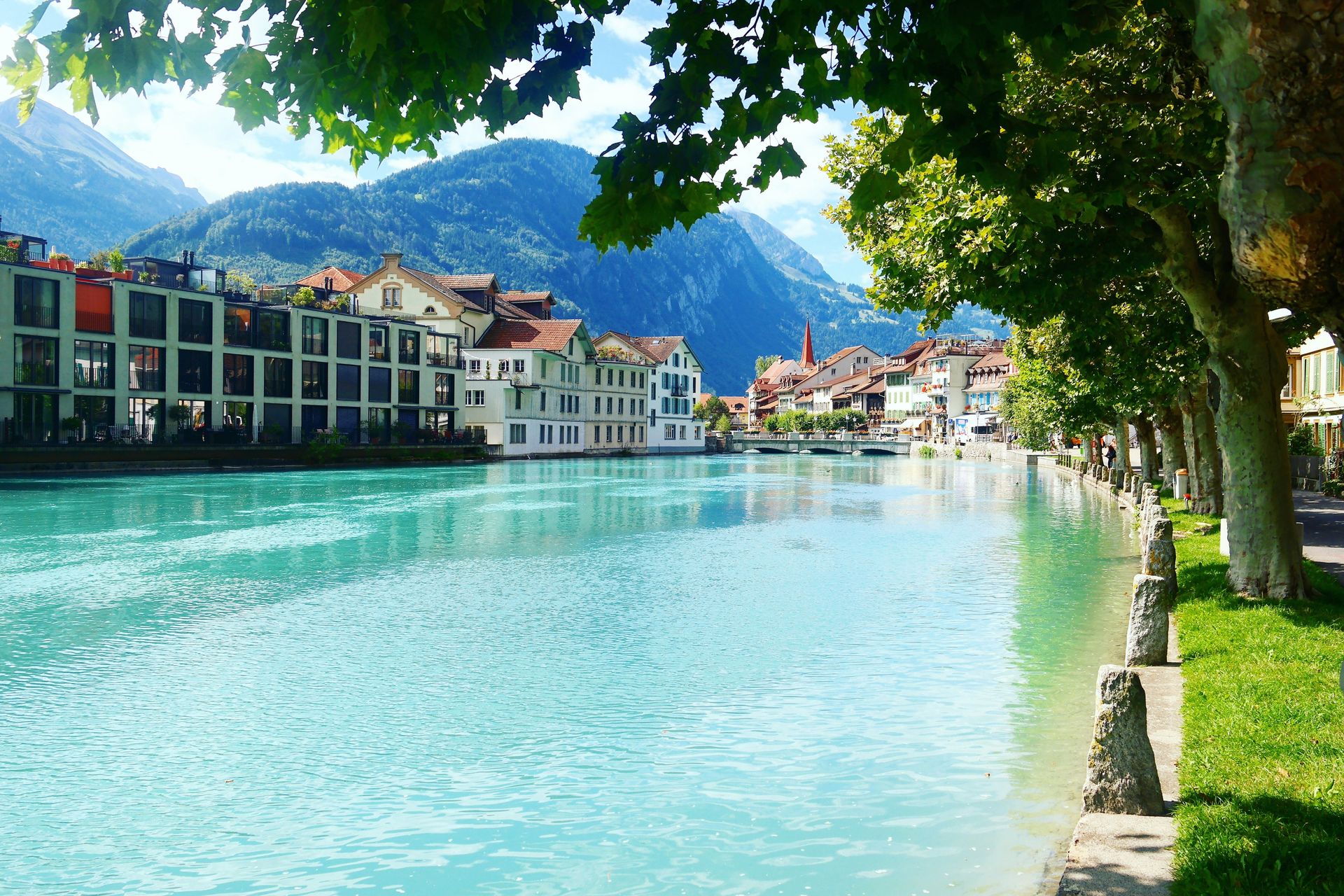
Interlaken occupies a flat valley between Lake Thun and Lake Brienz in the Bernese Oberland, and the two lakes that give the town its name also give it its visual setting: the water on both sides of the valley, the Eiger, Mönch, and Jungfrau peaks visible at the valley’s southern end, and the town’s traditional chalets and chocolate shops in between create an environment that functions simultaneously as an adventure sports center and a scenic base. The paragliding from the Männlichen ridge, which launches tandem passengers off the mountain above Wengen and lands them on the Interlaken meadow, gives the activity program its most specifically Alpine expression: the view of the three great peaks from the air, with the lakes below, gives the experience a visual scale that the ground-level equivalent does not produce.
Skydiving over Interlaken, one of the region’s most popular adventure activities, gives the adrenaline-seeking visitor the same landscape from a higher altitude and a faster descent, and the view from 13,000 feet encompasses a wider portion of the Alpine arc than any ground-based viewpoint provides. The skiing in winter and hiking in summer across the Jungfrau region give the activity calendar year-round depth that resort towns without a valley base cannot provide with the same convenience.
The alpine botanical garden at Schynige Platte, reached via a five-minute train from Interlaken to Wilderswil and a 50-minute cogwheel railway ride from there, adds a natural history dimension specific to the subalpine plant communities of the Bernese Alps. The garden sits at 6,454 feet and offers panoramic views of the Thunersee and Brienzersee, alongside its botanical program, making the railway journey as rewarding as the destination it serves. The Trümmelbach Falls, accessible on foot from the Lauterbrunnen valley floor, offer a thunderous indoor waterfall experience specific to the glacial plumbing of this Alpine valley.
2 / 10
The 414 Company / Unsplash
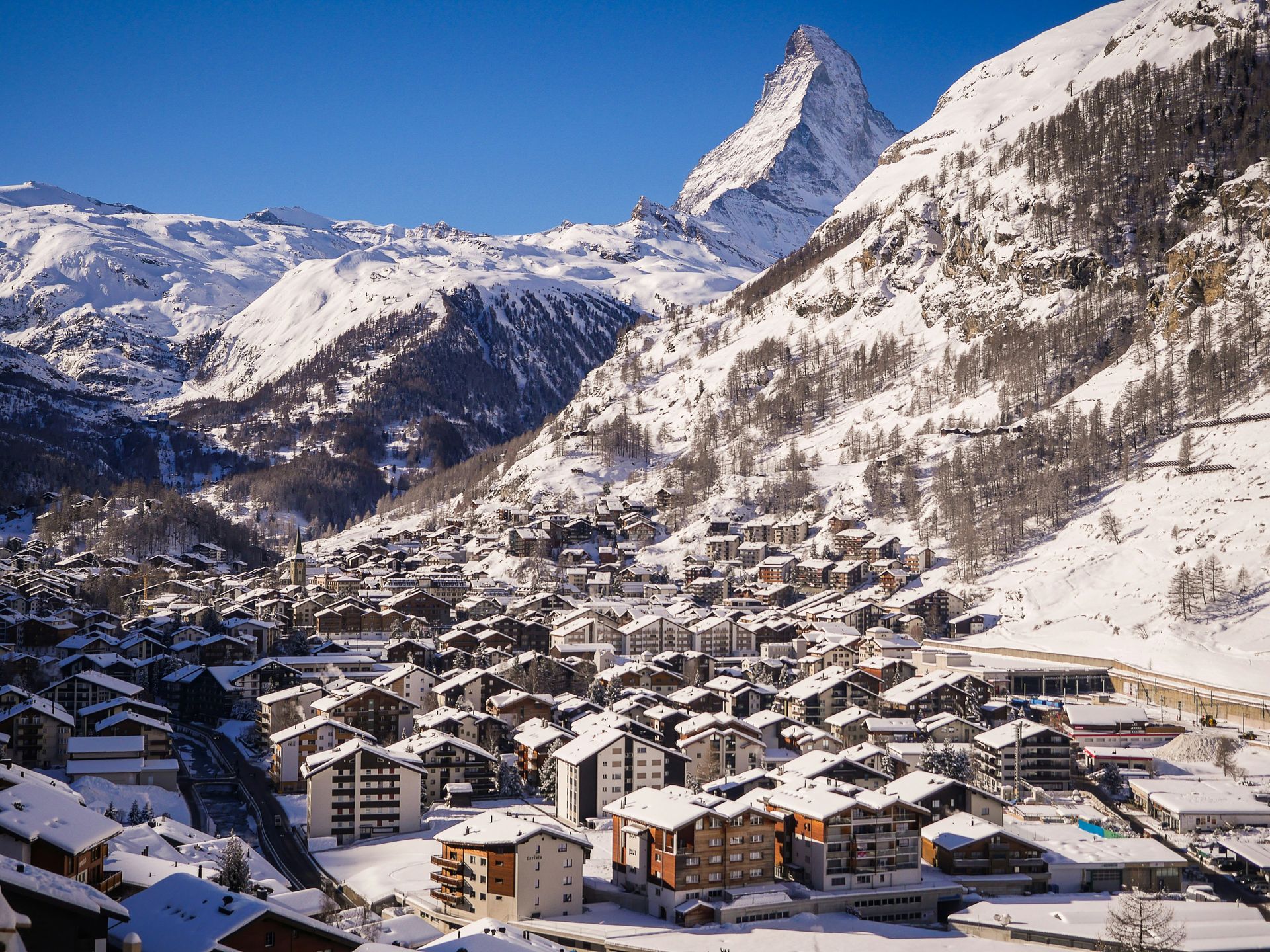
Zermatt is the mountain resort town at the end of the Nikolaital in southern Valais, and the Matterhorn, the 14,692-foot pyramid of rock and ice that rises directly above the town, gives it the most recognizable single skyline in Alpine tourism. The car-free village policy, maintained since 1947, gives Zermatt a unique quality of silence that car-dependent Alpine resorts cannot match: the electric taxis and horse-drawn carriages that serve as local transport give the pedestrian experience an unhurried atmosphere, whose absence of engine noise amplifies the surrounding mountain soundscape.
The skiing extends across more than 360 kilometers of pisted runs across the Zermatt, Cervinia, and Valtournenche ski areas on both the Swiss and Italian sides of the Matterhorn massif, giving the area one of the most extensive lift-linked ski domains in Europe. The Klein Matterhorn cable car reaches 12,533 feet, giving access to summer skiing on the glacier and to the highest cable car station in the Alps. High altitude, consistent snow, and the Italian border’s proximity give Zermatt a cross-border skiing dimension available from no other Swiss resort.
The summer and autumn seasons offer Zermatt a hiking and mountaineering program whose scale and scenic quality match or exceed that of winter skiing. The Hörnli Ridge, the standard route for Matterhorn ascents, begins above the Hörnligrat hut and gives serious mountaineers a technically demanding day above 10,000 feet. The lower valley’s hiking routes, connecting the town to the surrounding mountain hamlets, give the moderately fit walker access to the same peaks from below in conditions that the skiing season’s snow coverage makes impractical. The Gornergletscher glacier, visible from the paths above Zermatt and accessible by a gondola that descends toward the glacier’s snout, gives the summer visitor a direct encounter with the high Alpine ice environment that the winter’s skiing experience, conducted on the glacier’s upper surface, does not provide at the same close-up visual scale and readily legible geological cross-section.
3 / 10
Oksana Burki / Unsplash
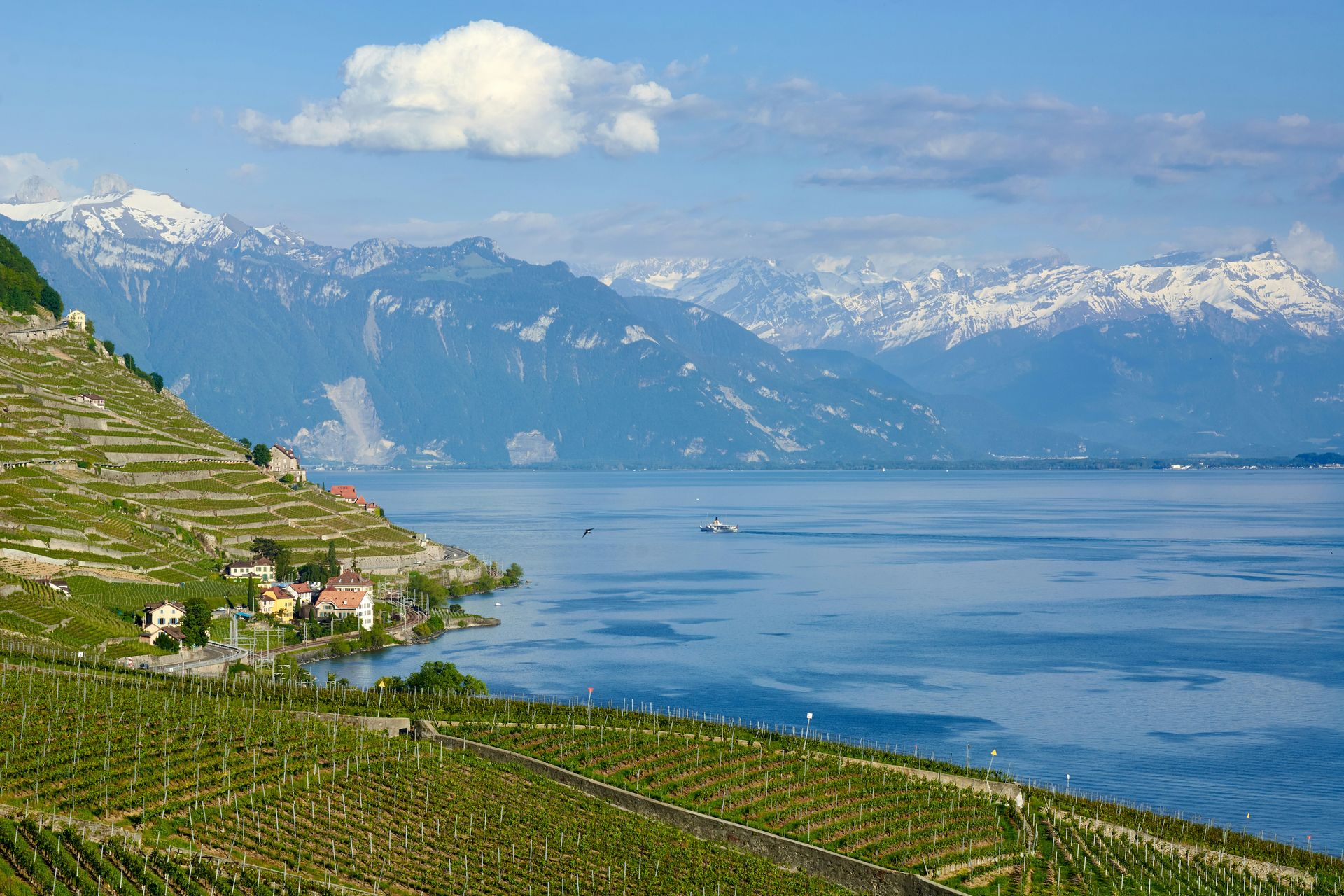
Lavaux is the vineyard region on the northern shore of Lake Geneva between Lausanne and Montreux, and the terraced vineyards that rise from the lake shore to the hillside ridge above give it a visual character specific to the centuries-long tradition of viticulture established by the Cistercian monks who began cultivating these slopes in the 11th century. The vineyard terraces cover nearly 2,000 acres and earned UNESCO World Heritage status in 2007 for the cultural landscape they represent: the lake below, the Alps across the water, and the terraced vines in the foreground give the view from within the vineyards a layered depth that no flat-country wine region can produce.
The Chasselas grape, which the Lavaux climate and the lake’s reflective heat produce in a specifically mineral and delicate style, gives the regional wine its identity. Tastings at the domaines that dot the vineyard terraces give visitors direct access to a wine product that rarely travels well because it is made in quantities too small to support significant export, which makes the Lavaux visit specifically valuable for the wine traveler: what is available here is not widely available anywhere else.
The Train des Vignes, departing from Vevey and running through the terraces to Puidoux, offers the vineyard visit at its most efficient, running hourly and offering views of the lake and the mountains from within the vines, while the walking routes through the terraces extend at a slower pace. The walking paths that connect the vineyard villages of Cully, Rivaz, Épesses, and Dezaley give the on-foot visitor a more intimate encounter with the working vineyard landscape, whose operational character, with the seasonal pruning and harvest work visible depending on the time of year, gives the cultural dimension of the UNESCO designation its most concrete form. The October harvest period, when the grapes are handpicked on the steep terraced slopes, gives the Lavaux visit its most specifically agricultural and visually dramatic window.
4 / 10
Mads Egmose / Unsplash
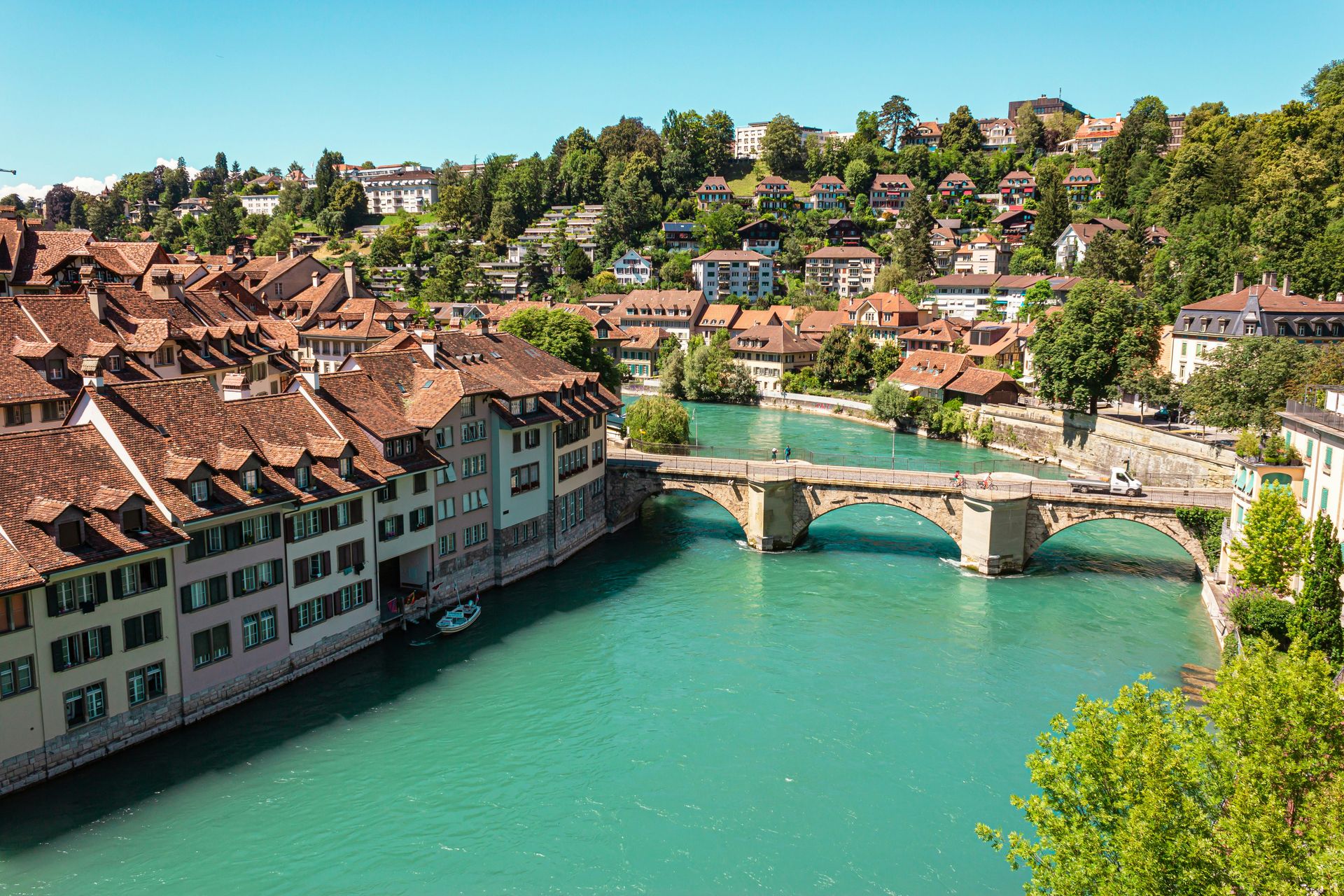
Bern is Switzerland’s federal capital, a role it occupies with an understatement that distinguishes it from other European capitals whose governmental function has driven a scale of development that overrides the historical city. The old town, built on a sandstone ridge above the Aare River, has been continuously inhabited since its founding in 1191 and retains much of its medieval layout: the arcaded walkways, called Lauben, that run for nearly six kilometers through the old town’s main streets give the city a pedestrian infrastructure specific to the 13th and 14th century planning that produced them and a weather protection from rain and snow that the open-street alternatives lack.
The Zytglogge, the astronomical clock tower dating to 1218, gives the old town its most celebrated single attraction: on the hour, the clock’s mechanical figures, a jester, bears, knights, and Father Time, perform a 2-minute animated sequence that the city has maintained in operation for centuries. The observation platform above the clock tower gives a bird’s-eye view of the old town’s roofline and the Aare’s green curve below that the street-level perspective cannot provide.
The contemporary dining and beer garden culture that has developed within the medieval architecture gives Bern a social program specific to a city whose university population and governmental function have cultivated a year-round intellectual and culinary life beyond the tourist season. The Rosengarten, a public rose garden above the old town, gives the best panoramic view of the city’s characteristic red-tiled rooftops and the river below, and the Bear Park at the base of the Nydeggbrücke, where the brown bears that have been Bern’s heraldic symbol since its founding are kept in a riverbank enclosure, gives the city’s most historically specific attraction a living presence specific to this capital. The Bern Historical Museum, one of Switzerland’s largest history museums, houses the original sculptures from the Bern Minster’s cathedral portal alongside collections covering the city’s medieval and early modern history, providing a documentary complement to the old town’s visible architectural heritage.
5 / 10
Henrique Ferreira / Unsplash
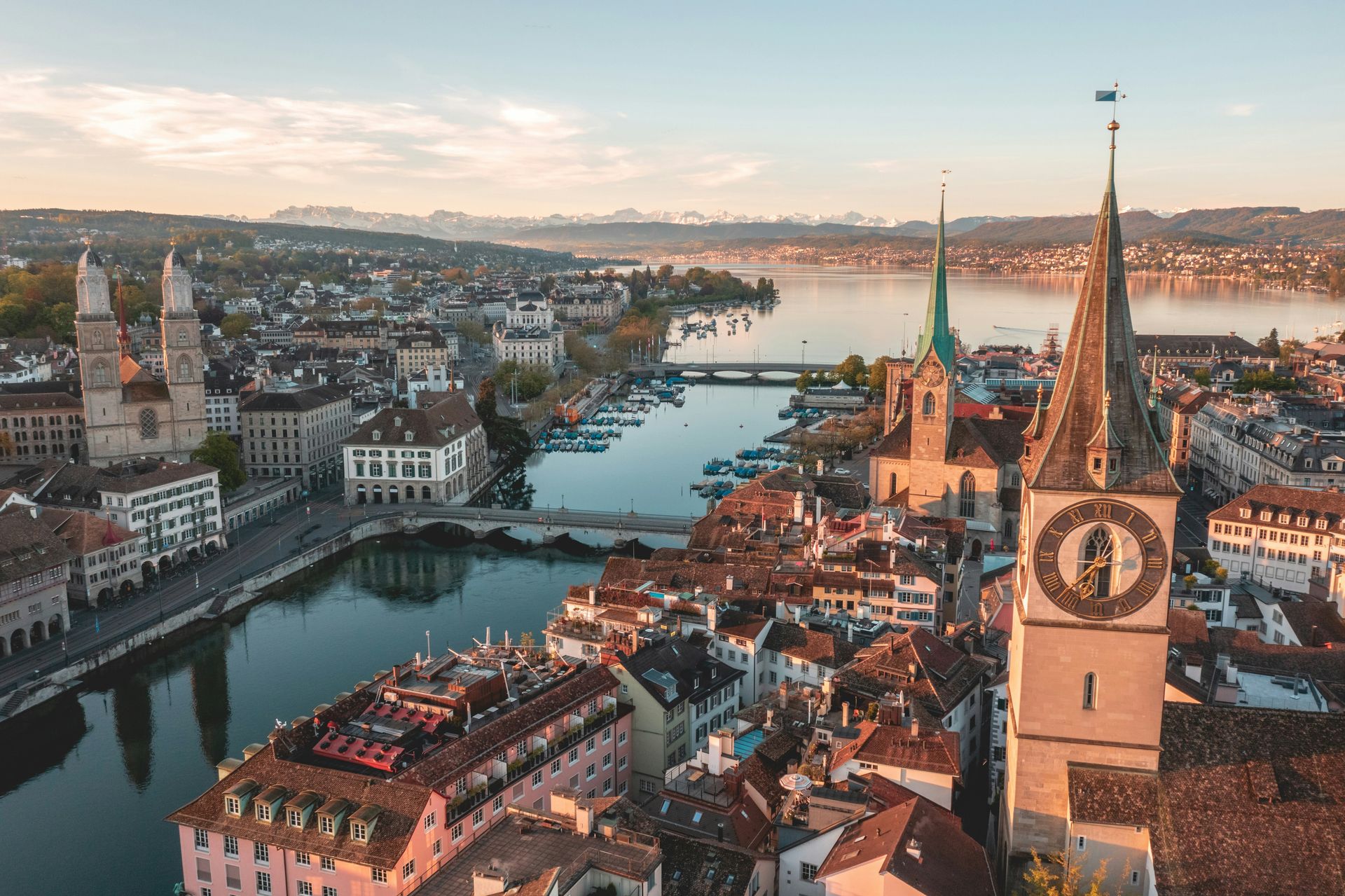
Zurich is Switzerland’s largest city, and tour guide Catja-Camilla Straub describes it as the country’s most vibrant, noting that its reputation for banking and shopping understates the depth of a city whose history extends to Roman settlement in the 1st century BCE. The Lindenhügel hill, where the Roman fort of Turicum stood, now gives the old town its highest point, and the churches of Grossmünster and Fraumünster, which dominate the old town’s skyline, give the medieval architectural heritage its most visible expression. The Fraumünster’s stained glass windows, designed by Marc Chagall and installed in 1970, give the medieval church an unexpected contemporary-art dimension whose quality makes the pairing of Gothic architecture and Chagall glass one of the most specifically Zurich experiences in the city.
The lake gives Zurich its summer outdoor program: Lake Zurich extends 25 miles southeast of the city, and the Zürisee lidos that line the city’s lakefront provide swimmers, sunbathers, and boat renters with public infrastructure specific to the Swiss urban lakefront tradition. The Zürich Street Parade in summer, one of the largest techno music festivals in the world, gives the banking city a late-summer cultural event that its public reputation does not predict.
The Kunsthaus Zürich, Switzerland’s largest art museum, provides the visual arts program with its institutional anchor, with collections spanning Swiss masters, Impressionism, and one of the most significant Alberto Giacometti collections in the world. The Niederdorf quarter, the old town’s narrow lane district on the east bank of the Limmat, gives the evening restaurant and bar culture its most concentrated expression, and Straub’s recommendation to explore the city with a local guide reflects the depth of historical and contemporary knowledge that the city’s compact but densely layered character rewards in guided form. The Zurich Design Museum’s collection of Swiss industrial design gives the city’s applied arts tradition a public institutional presence, complementing the Kunsthaus’s fine art collection across two distinct creative disciplines.
6 / 10
Rich Martello / Unsplash
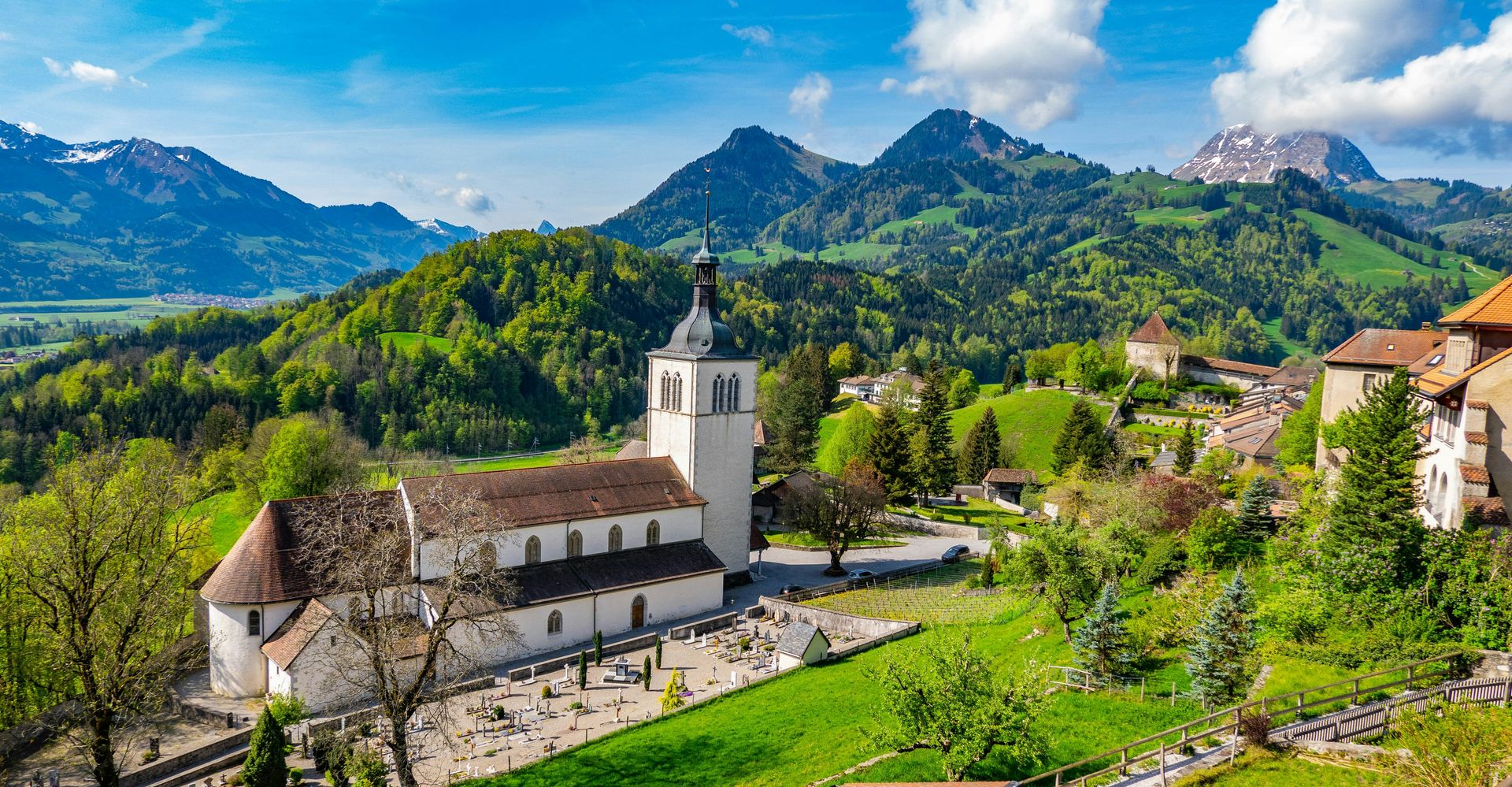
Gruyères is a medieval village in the Fribourg canton whose name is inseparable from the cheese produced in the surrounding valley since at least the 12th century. The village itself, a single main street of medieval stone buildings perched on a hilltop above the Jaunbach valley, is one of the most visually complete medieval towns in Switzerland: the absence of modern commercial signage, the preserved guild houses and fountains, and the 13th-century Gruyères Castle at the hilltop’s end give the visitor the experience of a medieval town whose character has not been diluted by the modernizing pressures that larger Swiss towns have absorbed.
The Maison du Gruyère, the cheese-making demonstration facility at the base of the hill, gives the cheese-focused visit its most educational component: the facility shows the production process from milk to aged wheel, and the tasting opportunities give visitors access to wheels at different stages of the 5-to-18-month aging range that the AOC designation requires. The distinction between the mild young cheese and the complex, crystalline aged version is the specific lesson the tasting delivers, and no description of the cheese fully substitutes.
The Gruyères Castle, open to the public, gives the hilltop its most historically significant building: the castle has been inhabited continuously from the 13th century through the present, and the collections of medieval furniture, Flemish tapestries, and the HR Giger Museum housed in the castle precinct give the interior visit a range that the exterior’s fortification architecture does not predict. Giger, the Swiss artist who designed the creature in Ridley Scott’s Alien, was born in Chur and spent his later years in Gruyères, giving the medieval castle one of the more unexpected contemporary art museum adjacencies in Europe. The Double Cream de Gruyère, the regional crème fraîche with one of the highest fat contents of any European cream product, gives the local pastry and dessert culture a richness specific to this valley’s dairy tradition and unavailable at the same quality outside its region of production.
7 / 10
Daniela Paola Alchapar / Unsplash
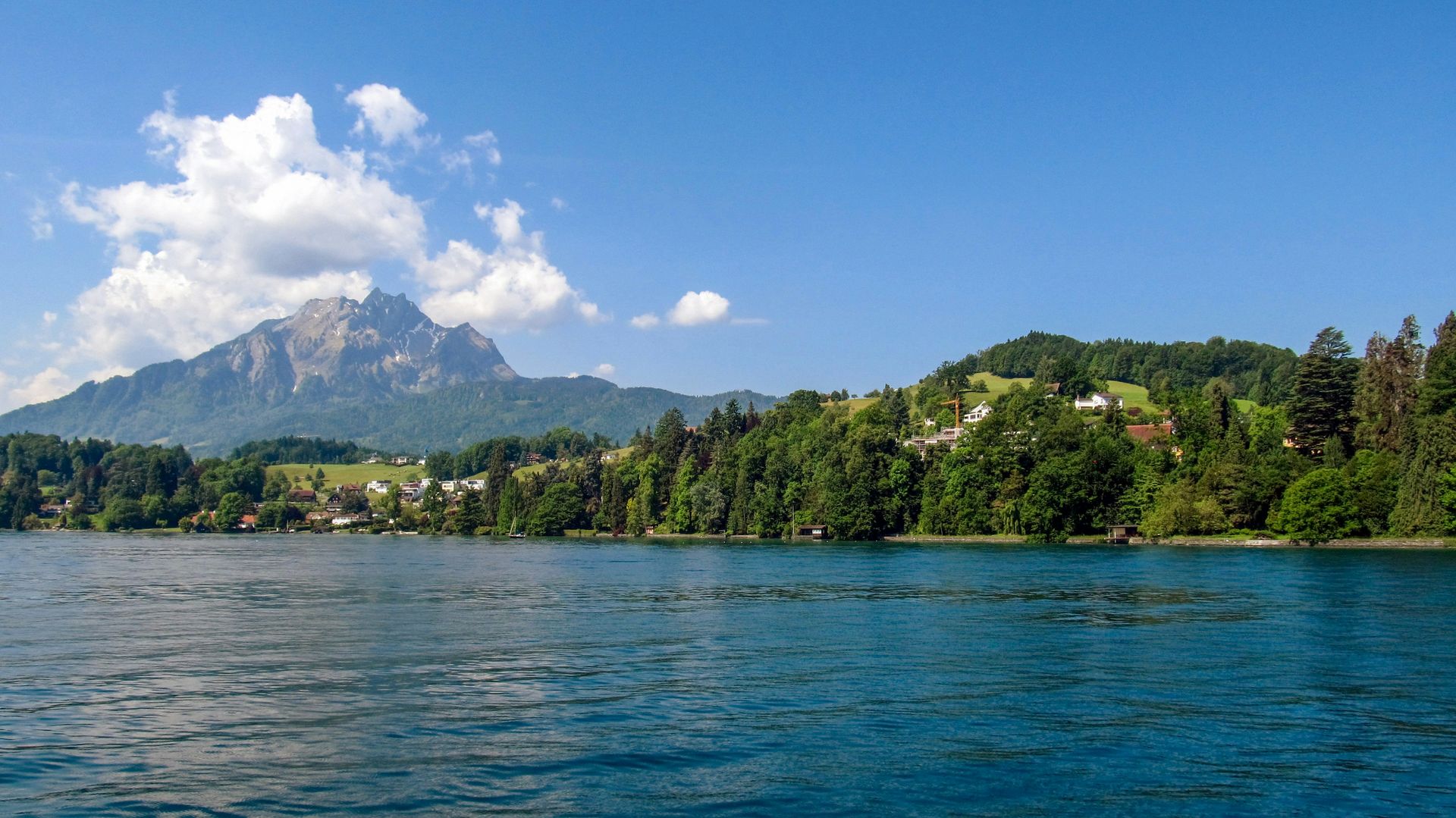
Lake Lucerne, known in German as the Vierwaldstättersee or Lake of the Four Forest Cantons, covers 44 square miles in the geographic heart of Switzerland and gives the Alpine lake experience its most scenically varied version: the lake’s irregular shape, with multiple arms extending between the forested hills and limestone peaks of the surrounding terrain, gives each of its shores a different character and a different visual relationship with the surrounding mountains. The city of Lucerne at the lake’s northwestern end provides the urban component of the visit with its fullest expression.
The lake cruise, operated by the Swiss Federal Railways boat service, which runs on the same integrated transport system as the trains, offers the visitor a moving perspective on the surrounding Alpine landscape that static lakeside viewpoints cannot. The paddle steamers that operate alongside the modern fleet lend the cruise a historic atmosphere, evoking the era when steamboat travel was the primary mode of lake transport in Switzerland. The castles, chapels, and villages that line the lake’s shores add a destination dimension to the cruise alongside the scenic program.
Lucerne itself, whose Chapel Bridge spanning the Reuss River dates to 1333 and contains a series of 17th-century paintings depicting the history of Switzerland, gives the city visit a single attraction of such concentrated historical and visual quality that it functions as the trip’s centerpiece, not its setting. The Lion Monument, the sandstone carving of a dying lion commemorating the Swiss Guards killed at the Tuileries Palace in 1792, gives the city a second major attraction whose emotional impact surprised Mark Twain sufficiently that he described it as the most mournful and moving piece of stone in the world. The city’s Verkehrshaus, Switzerland’s national museum of transport, gives the lakefront a family-oriented attraction whose collection spans the history of Swiss rail, road, air, and water transport on a scale that makes it one of the most visited museums in the country.
8 / 10
Theodor Esenwein / Unsplash
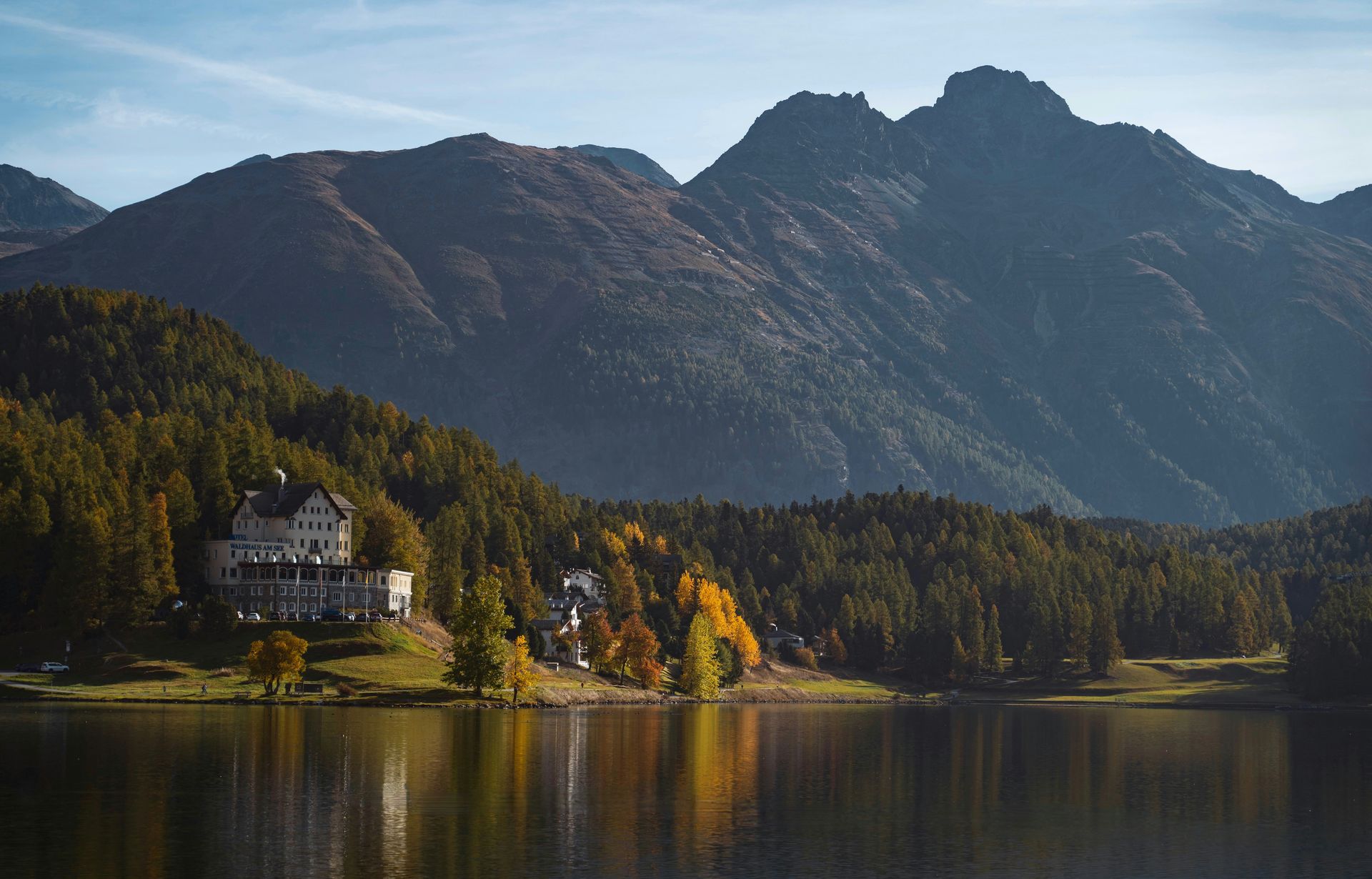
St. Moritz, in the Upper Engadin valley at 5,905 feet above sea level, gives the high-altitude Alpine resort its most historically specific luxury identity: the town hosted the Winter Olympic Games in 1928 and 1948, giving it a winter sports credential that no other Swiss resort outside Zermatt approaches in depth of competitive heritage. The high elevation, the south-facing Engadin Valley’s 322 days of sunshine per year, and the Corviglia, Corvatsch, and Diavolezza ski areas surrounding the town give St. Moritz its specific skiing environment: dry, champagne powder conditions produced by the altitude and the continental climate that the valley’s position on the Alpine crest creates.
The Grand Hotel des Bains Kempinski, in operation since the 1860s and the source of the specific accommodation recommendation, gives the luxury component its most historically grounded expression: the hotel’s clientele since its opening has included European royalty, artists, and the wealthy international society that the Engadin Valley’s altitude, winter sports, and social exclusivity have attracted since the mid-19th century.
The summer season gives St. Moritz a second program, with hiking, cycling, and lake activities on the Silsersee, Silvaplanersee, and Engadinersee chain, giving the valley a warm-weather character that winter’s snow coverage obscures. The Engadin valley’s cross-country skiing trails in winter, connecting the chain of lakes across a flat valley floor that the Nordic skiing tradition specifically requires, give St. Moritz a skiing dimension beyond the alpine piste that the resort’s high-altitude lift system provides in the downhill category. The Glacier Express, the scenic mountain railway that runs from St. Moritz to Zermatt across the central Alps, connects the two resorts with a rail journey whose 291 bridges and 91 tunnels make for a spectacle unique to the high Alpine rail engineering tradition. The Engadin Summer Marathon $MPC in late May and the White Turf horse racing on the frozen lake in February give the St. Moritz calendar its summer and winter event anchors alongside the skiing program.
9 / 10
Jesper Brouwers / Unsplash
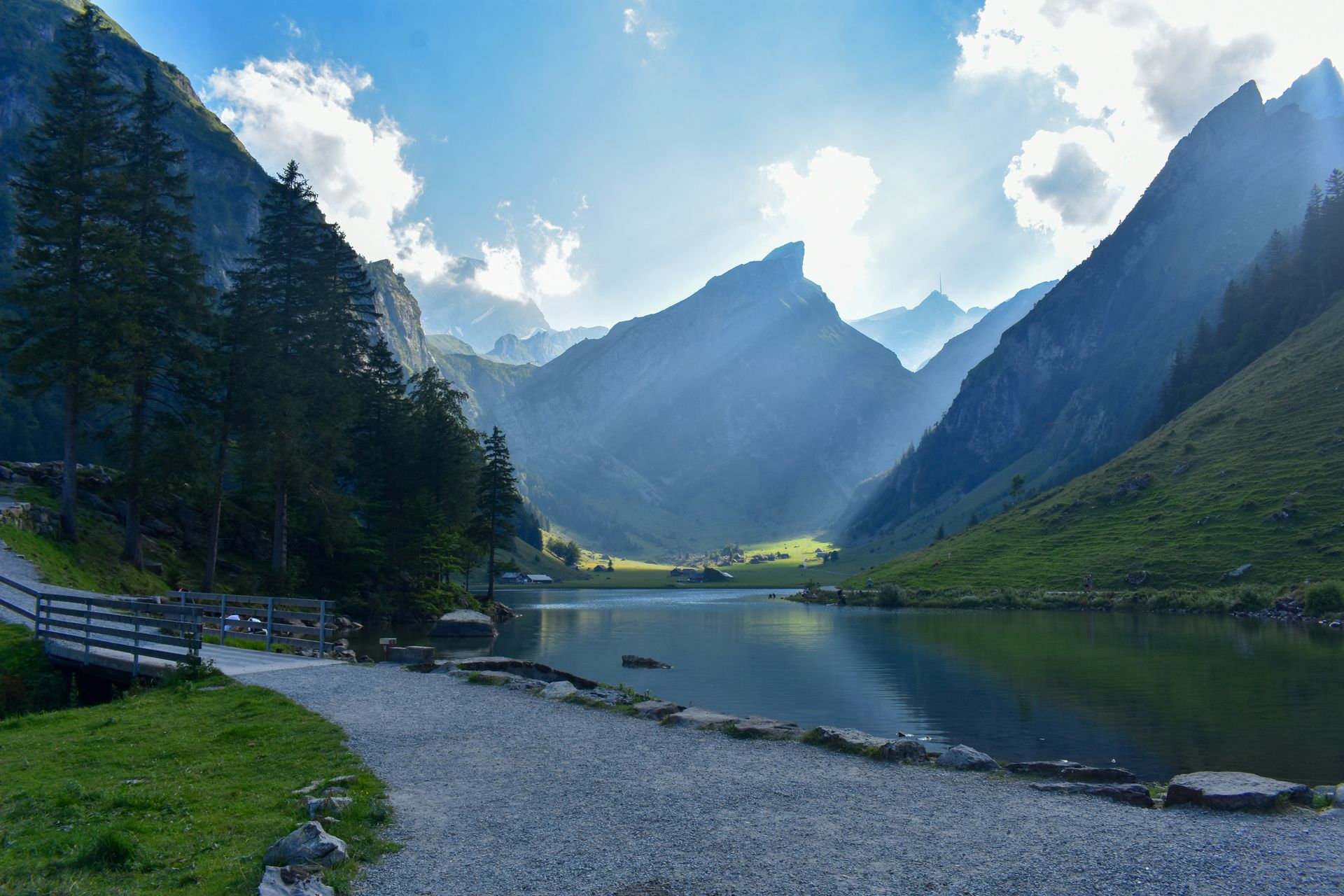
Appenzell is a village of about 6,000 permanent residents in northeast Switzerland whose identity rests on culinary tradition, pastoral landscape, and civic culture specific to the Appenzell Innerrhoden half-canton, one of the most culturally distinctive political units in the country. The handmade Appenzeller cheese, produced in the surrounding farms according to a recipe whose secret herbal brine has been kept by the cheesemakers since the 14th century, gives the village its most internationally recognized export and its most locally embedded daily food culture: the cheese appears in the village’s restaurants, shops, and picnic provisions in a variety of preparations specific to the regional culinary tradition.
The Almabtrieb, the ceremonial descent of the cows from the high summer pastures to the valley farms in September, gives Appenzell its most visually distinctive annual event: the cows are decorated with flower crowns and ceremonial headdresses for the descent, which passes through the village streets in a procession that the farming community has maintained as both a practical agricultural event and a cultural celebration. The spring ascent gives a second version of the same ceremony, and the timing of a visit around either event gives the traveler a specifically Appenzell experience unavailable in any other Swiss village in the same terms.
The rolling green hills of the Alpstein range surrounding the village give the hiking program its most pastoral version: the trails connect the surrounding farmsteads, the Seealpsee mountain lake above the village, and the Säntis summit above it, giving the day hiker a progression from village to alpine lake to high summit that the Appenzell landscape concentrates within a single day’s walking distance from the town center. The Appenzell Museum in the village center gives the traditional culture of embroidery, music, and the Landsgemeinde, the outdoor communal vote that Appenzell Innerrhoden holds annually in the village square in early spring, its historical and contemporary context, and a visual archive whose depth reflects the cultural continuity of this small canton.
10 / 10
Credit: Swiss National Park
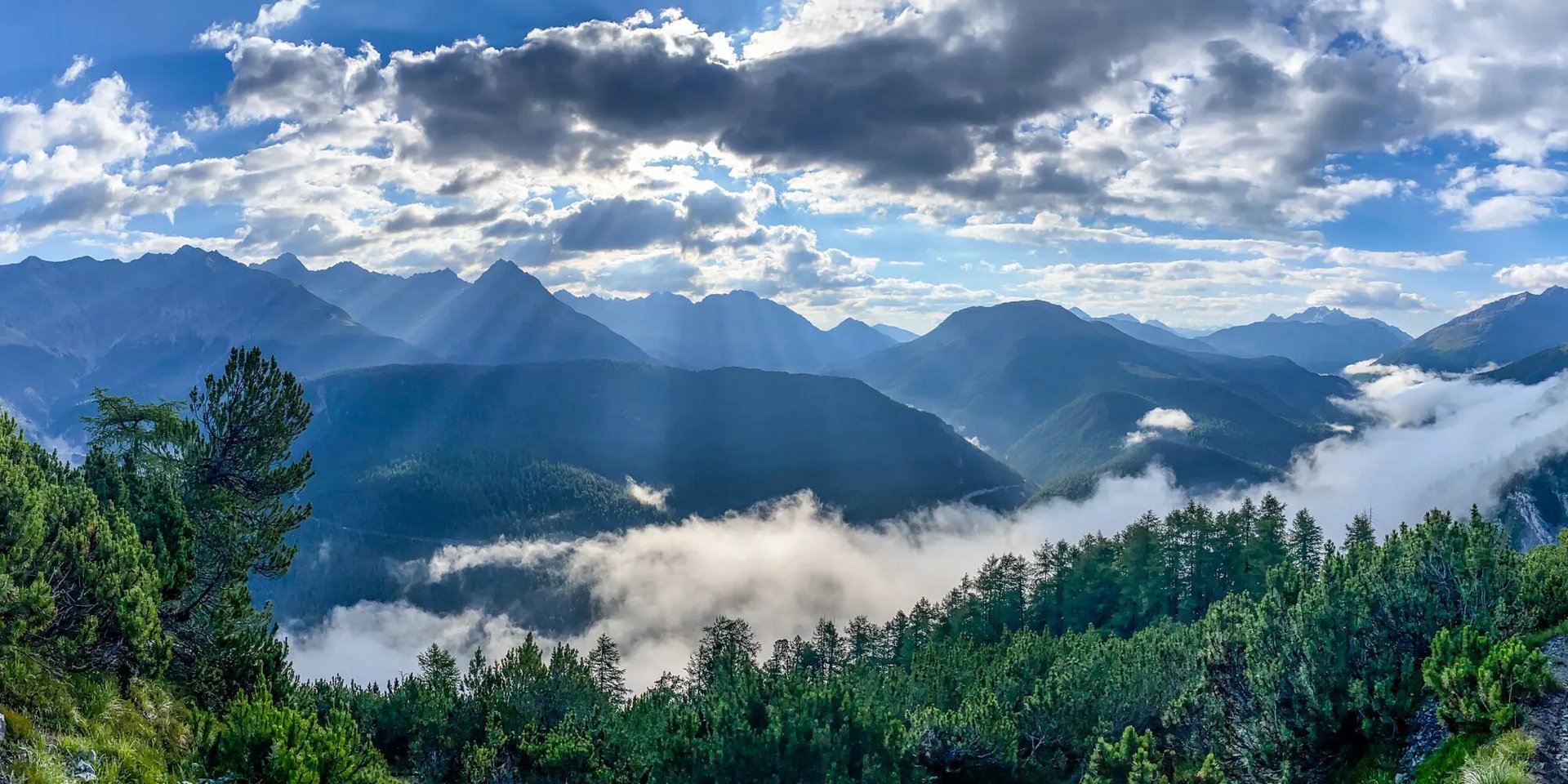
The Swiss National Park, located in the Lower Engadin valley in Graubünden canton, is Switzerland’s only national park and covers 65 square miles of protected Alpine terrain whose management philosophy, since the park’s founding in 1914, has been strict non-intervention: no logging, no hunting, no grazing, and no trail construction beyond the designated 62-mile path network. The result, over more than a century of natural succession, is a landscape whose forest, meadow, and rocky terrain have developed according to ecological processes, not the agricultural management that shapes the surrounding Swiss landscape, giving the park a biological baseline whose wildlife populations reflect what the Alpine environment produces without human influence.
The wildlife visibility gives the park its most immediate visitor appeal: marmots are encountered frequently on the lower meadow trails, ibexes occupy the rocky ridgelines above the treeline, and golden eagles patrol the valley thermals above the spruce forest. The park’s century-long wildlife recovery, following the near-extirpation of both ibex and eagles from the Swiss Alps by the early 20th century, underscores the significance of the current populations as indicators of what Alpine wildlife management at the landscape scale can achieve over a sufficient time period.
The 62 miles of marked trails provide a walking network that ranges from valley-floor paths along the Inn River to high-ridge routes above 9,000 feet, with a trail classification system and trail books available at the park entrance that give the planning process a specific structure. The park’s visitor center in Zernez, the nearest village, provides the natural history dimension with its interpretive complement, covering the park’s ecology, geology, and management history in a program that gives the walking day a contextual framework whose depth the trails alone, however spectacular, do not provide. The park’s location within the Rhaeto-Romanic cultural zone of Graubünden gives the surrounding villages a linguistic and architectural character specific to Romansh-speaking Switzerland, the country’s fourth and smallest official language, whose survival in Graubünden is itself a cultural dimension of the Swiss national identity that the park visit places in geographic context.
