From Boldt Castle's tragic love story on a Saint Lawrence River island to a ruined Hudson River warehouse that hosts movie nights in the dark
Credit: Central Park Conservancy
New York State’s castle count surprises most people who associate the state primarily with its urban density and mountain wilderness. From the Thousand Islands region on the Canadian border to the Gold Coast of Long Island to Central Park, the state holds an unexpected concentration of castle-like structures that span genuine medieval-inspired fortresses, converted armories, abandoned estates, and a national monument that spent its history as a fort, an opera house, an immigration center, and an aquarium before becoming what it is today. The range of what New York calls a castle is itself worth noting: these are not uniform expressions of a single architectural tradition but a diverse accumulation of buildings produced by the 19th and early 20th centuries, when wealthy owners and ambitious architects attempted to transplant European grandeur to American soil.
Some of these structures are fully functional as hotels, restaurants, and event venues. Others stand in various states of ruin, accessible by boat or on foot, where the decay itself has become the attraction. A few remain privately owned and visible only from the outside, while national monuments and state preserves hold others in conditions that sustain public access. The range of what a New York castle visit entails — a night in a luxury hotel, a murder-mystery dinner, a movie night on an uninhabited island, a boat tour across the Saint Lawrence River — reflects the variety of the structures themselves.
The 10 castles below appear in Travel + Leisure, drawn from a list of 15 that covers the state from Manhattan to the Finger Lakes to the northern border. Each earns its place through a distinct character: architectural, historical, experiential, or some combination of the three.
Credit: Oheka Castle
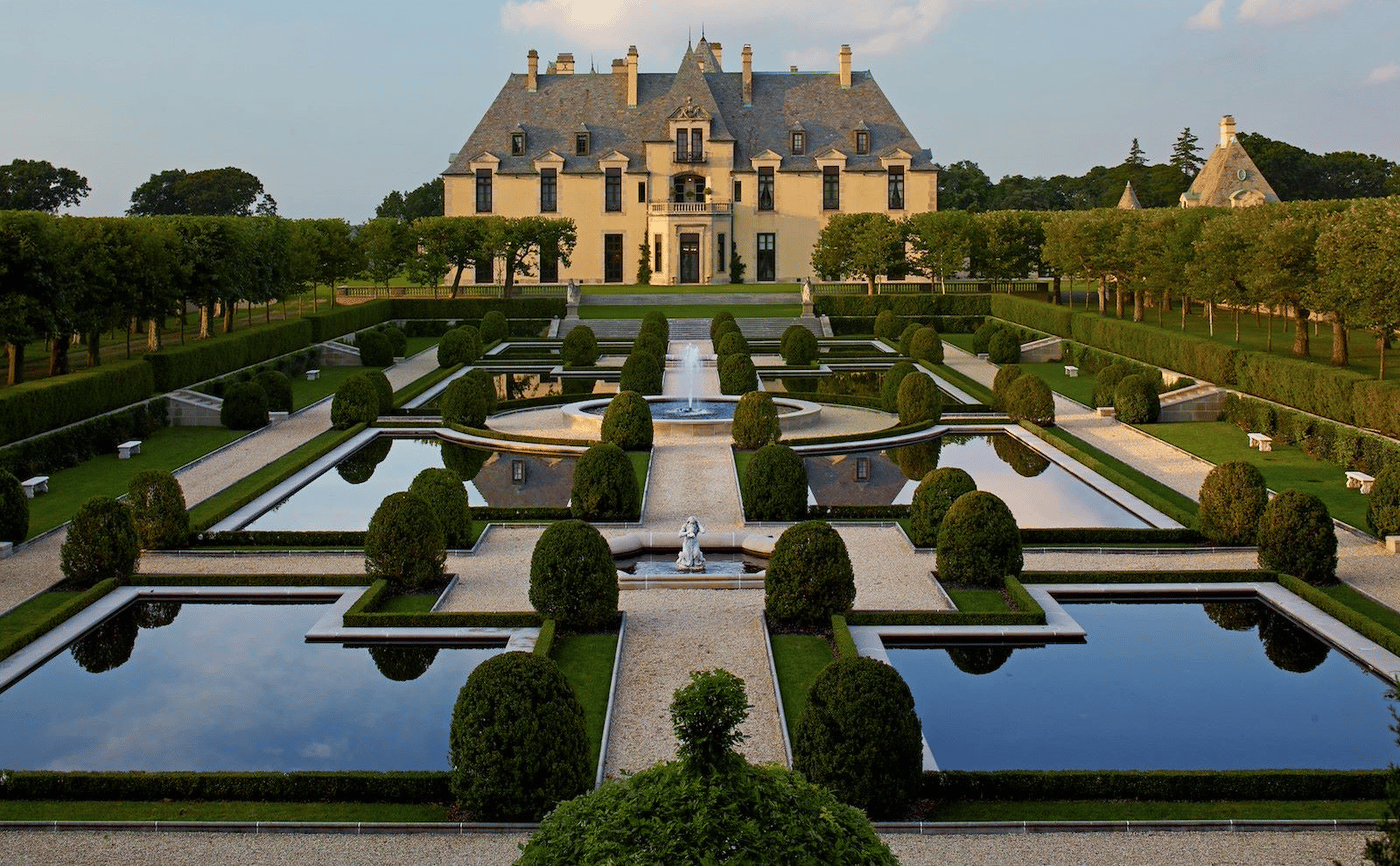
Oheka Castle on Long Island’s Gold Coast sits an hour from New York City and presents an exterior that, thanks to its Châteauesque architecture, feels transplanted from the French countryside rather than built on the edge of a major American metropolitan area. The manicured gardens that surround the main structure reinforce this impression, giving the property a formal landscape design that the building’s stone facade and tower profiles reward at close range and from the approach down the main drive. The Gold Coast of Long Island earned its name from the opulent estates that wealthy New Yorkers built along the north shore in the early 20th century, and Oheka stands out within that already extraordinary company.
The castle operates today as a luxury hotel, offering visitors the opportunity to experience it from the inside rather than solely as an architectural destination. Tours of the property are available for visitors who want a structured introduction to the castle’s history and design details, which the conversion to hotel use has preserved more completely than many comparable estates that changed function during the same period. The proximity to New York City gives Oheka a logistical accessibility that the castle’s visual grandeur might not predict: a day trip or a weekend stay from Manhattan requires only an hour of travel.
The Gold Coast context adds an additional dimension to an Oheka visit for visitors interested in the period of American wealth and architecture documented by the North Shore estates. The broader Sands Point Preserve area nearby holds Castle Gould, another significant Gold Coast property, which gives visitors who combine both destinations a sense of the scale and ambition that the region’s early 20th-century estate culture produced.
Surja Sen Das Raj / Unsplash
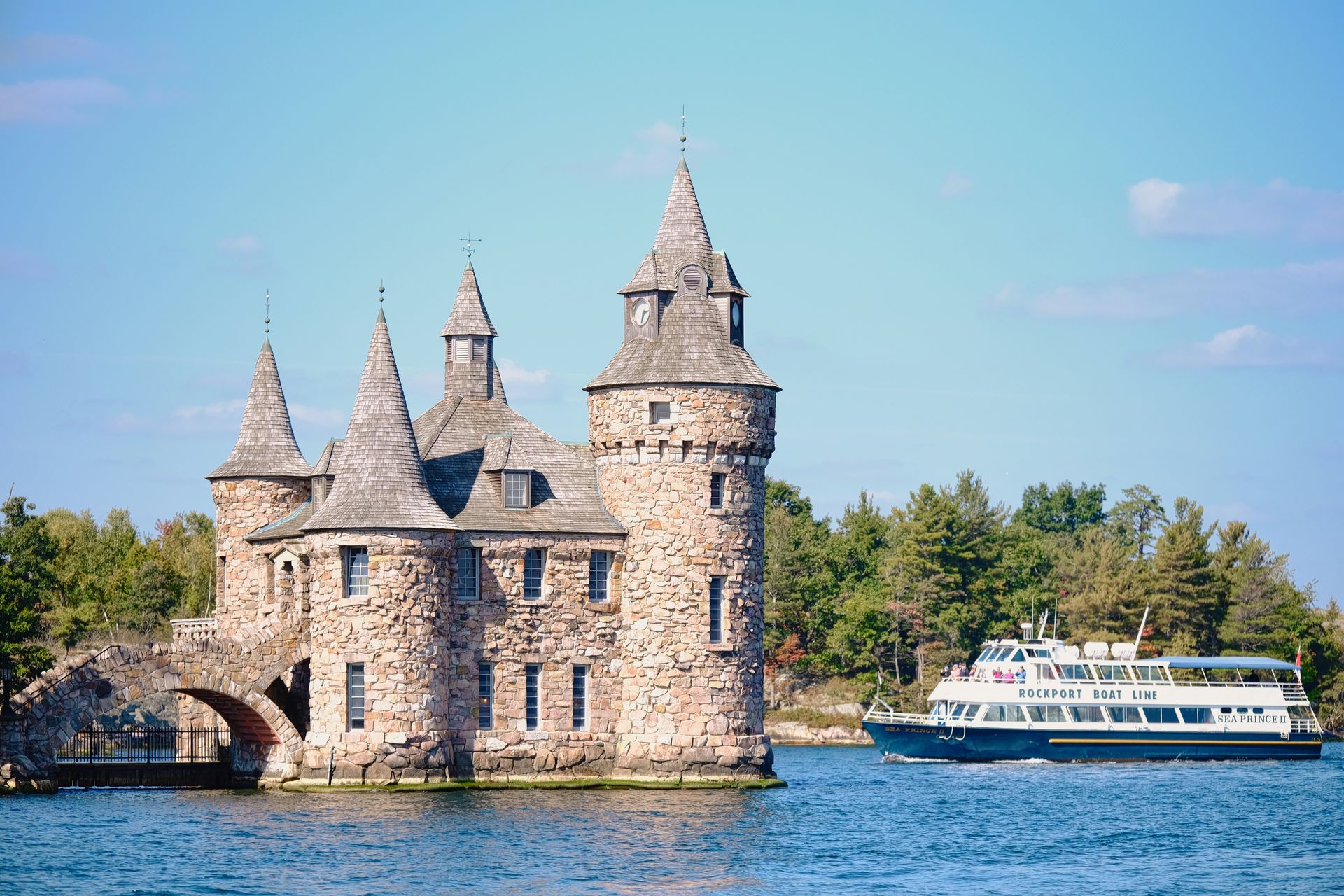
Boldt Castle, built on a small island on the Saint Lawrence River in the Thousand Islands region, is accessible only by boat during its seasonal opening from mid-May to mid-October. Construction began in 1900, and the six-story castle was intended as a testament to the owner’s love for his wife. When she died suddenly, construction stopped, and the unfinished structure stood vacant for more than 70 years. The emotional weight of that history gives Boldt Castle a narrative dimension that pure architectural appreciation cannot capture, and the subsequent restoration of the interiors, with custom doors, decorative windows, and period furnishings, provides visitors with a structure that reflects both the original ambition and the preservation effort that followed.
The Thousand Islands setting amplifies the castle’s island position. The region’s geography — the Saint Lawrence River, broken by more than 1,800 islands at the point where Lake Ontario empties into it — gives every structure in the area a relationship to water that the surrounding landscape frames dramatically. Boldt Castle’s island, entirely occupied by the castle and its outbuildings, gives the property a self-contained quality that mainland castles cannot achieve: the approach by boat establishes the destination as genuinely separate from the surrounding world before the castle’s towers come fully into view.
The seasonal operation and boat-only access give a Boldt Castle visit a logistical character that planning rewards. The Thousand Islands region that surrounds the castle extends the visit into a broader destination that the castle anchors rather than exhausts: the river, the other islands, and the region’s towns give visitors who come specifically for Boldt Castle a full trip’s worth of context around the primary destination.
Credit: Singer Castle
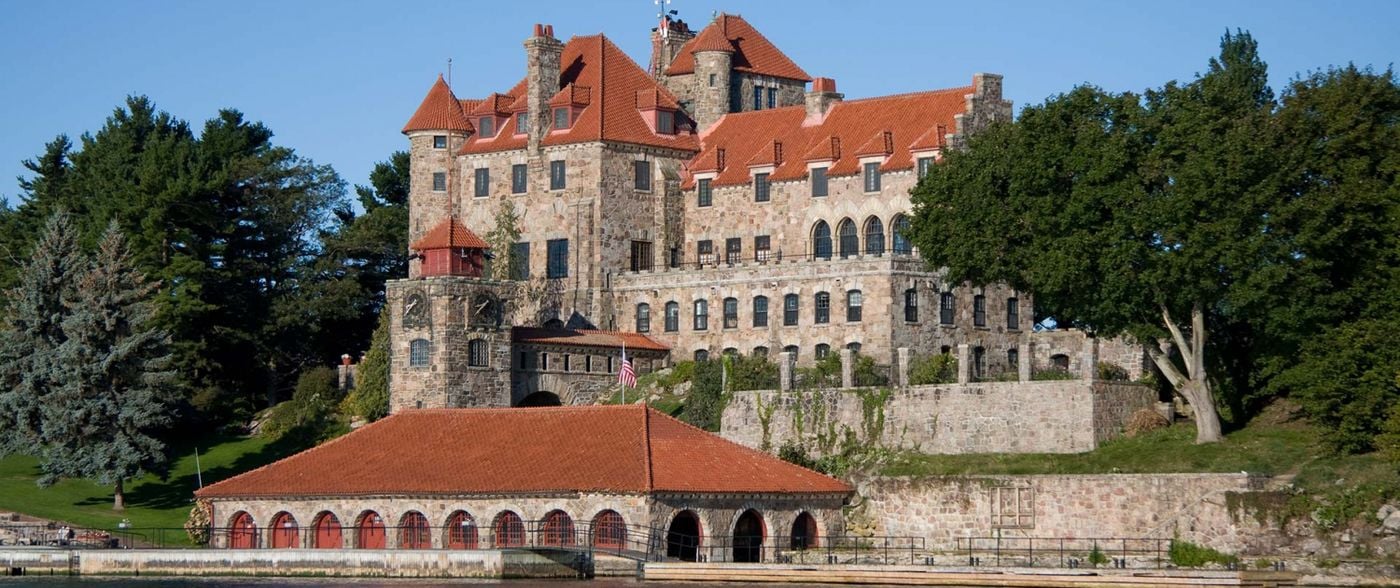
Singer Castle, on Dark Island in the Thousand Islands, a few miles from Boldt Castle, draws on Scottish architectural inspiration in the same river setting as its more famous neighbor. The castle is open from late April to mid-October, when tours give visitors access to the striking architecture, ornate furnishings, and artifact-filled interiors. The once-secret passages that tour guests can see during a visit give the experience a distinct discovery dimension that standard castle tours, which move through public spaces in a fixed sequence, do not.
The Royal Suite, available for overnight stays, accommodates up to six guests and adds a hospitality dimension to Singer Castle alongside its day-tour function. Spending a night in a castle on an uninhabited island in the Saint Lawrence River is a specific experience that the room category’s name understates: the darkness and quiet of the island after the day tours conclude, and the water visible from the windows in every direction, give overnight guests a version of the castle that visitors on the day program do not encounter.
The combination of Singer Castle and Boldt Castle within the same Thousand Islands visit gives travelers who make the journey to this corner of New York a pair of complementary architectural experiences in the same regional setting. Both are island castles accessible by boat, both reflect the ambitions of early 20th-century American wealth, and both have been maintained and restored for public access, giving the structures longevity beyond their original purpose.
Credit: Belhurst Castle
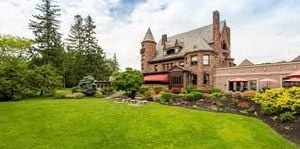
Belhurst Castle in Geneva, at the edge of Seneca Lake in the Finger Lakes, dates to the late 19th century and has been converted into a destination shaped by the wine region surrounding it as much as by its architectural heritage. Three lodging options, two restaurants, a spa and salon, and a winery and tasting room give the property a self-contained resort infrastructure that makes a Belhurst visit a multi-day proposition rather than a day trip. The tasting room’s sauvignon blanc, craft beer, and hard cider give visitors a range of local production to sample without leaving the property.
The Finger Lakes wine region, which the castle inhabits, has developed into one of the East Coast’s most recognized wine destinations, thanks to the cool-climate varieties — Riesling, Gewürztraminer, and sauvignon blanc — that the lakes’ moderating influence makes possible. A Belhurst stay gives wine-focused visitors a castle-based anchor for a broader Finger Lakes itinerary that the surrounding wineries extend across multiple days.
The lakeside setting gives the property a view that most Finger Lakes accommodations share, but the castle’s architectural scale frames it more dramatically than standard hotels or bed-and-breakfasts can. The combination of a historic stone structure, a working winery, and Seneca Lake visible from the property gives Belhurst Castle a layered appeal that single-focus destinations — purely architectural, purely wine-focused, or purely hotel — cannot replicate within the same address.
Credit: Beardslee Castle
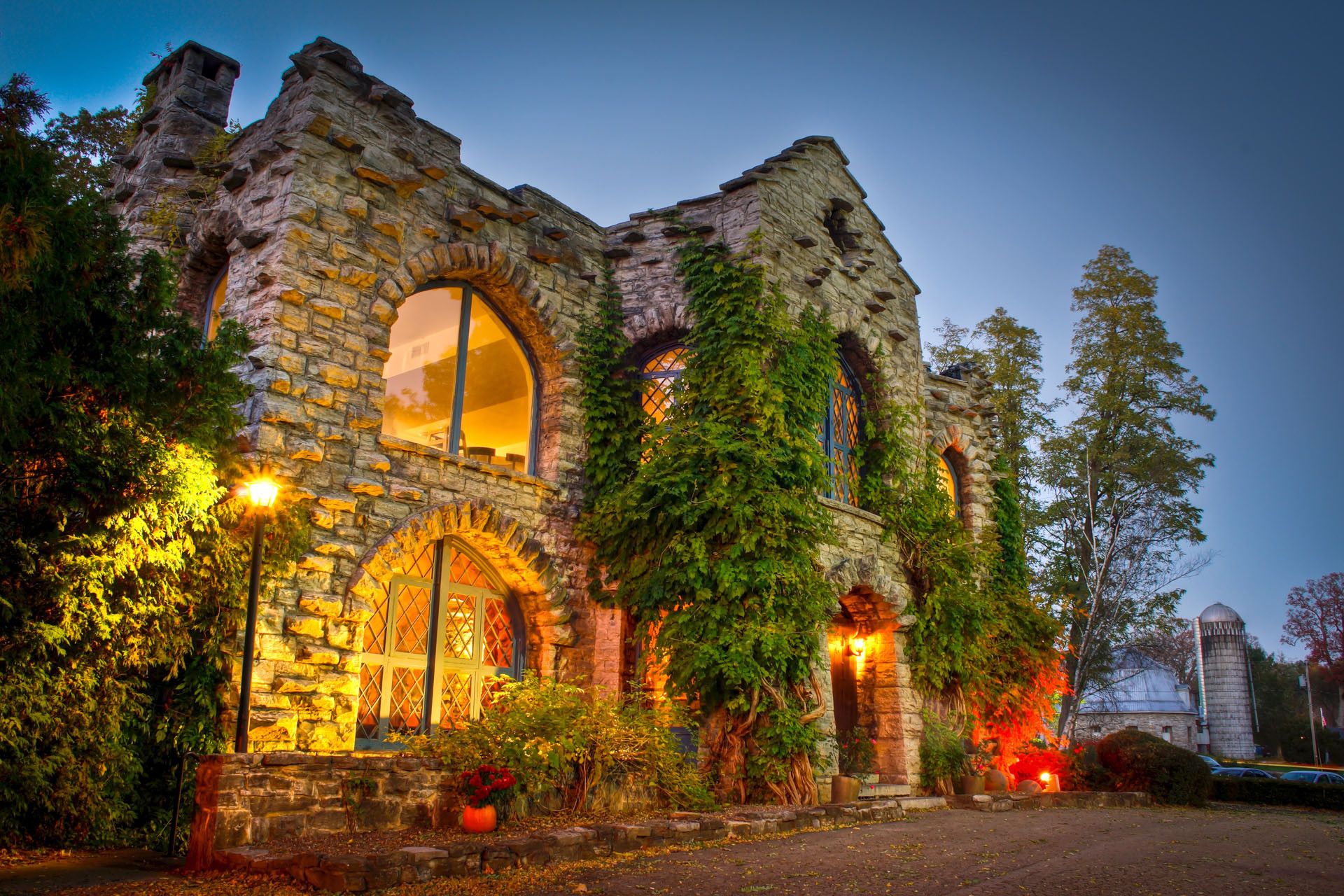
Beardslee Castle in Little Falls, built in 1860 in the style of Irish castles with thick limestone walls, oak-paneled ceilings, and a wide wood-burning fireplace, operates primarily as a dining and event venue that gives visitors three distinct experiential options within the same structure. The main restaurant serves dinner in the castle’s formal spaces, where the original architectural elements give the spaces a historical character that contemporary restaurant design rarely achieves without deliberate recreation. The Dungeon bar downstairs operates in the aptly named lower level with approximately 125 beer options and a pool table, which gives the same visit a casual register entirely at odds with the formal dining above it.
The murder mystery theater events that Beardslee Castle runs during the summer months give the castle a programmatic dimension that few dining venues in any architectural category attempt. These events combine a meal with a performed theatrical mystery in a castle setting, where the stone walls and historical atmosphere lend a specific environmental credibility that modern event spaces attempting the same format cannot match. The castle’s character as a stage for this kind of performance reflects the building’s ongoing life as an experience rather than a preserved artifact.
The combination of a formal restaurant, a dungeon bar, and a seasonal murder-mystery theater gives Beardslee Castle a range of programming that suits different visitor intentions within the same destination. A couple wanting a historically atmospheric dinner, a group looking for a casual evening with a large beer selection, and visitors who want an interactive theatrical event can each find their version of the Beardslee Castle experience without the property having to compromise any of the three in service of the others.
Credit: Mohonk Mountain House
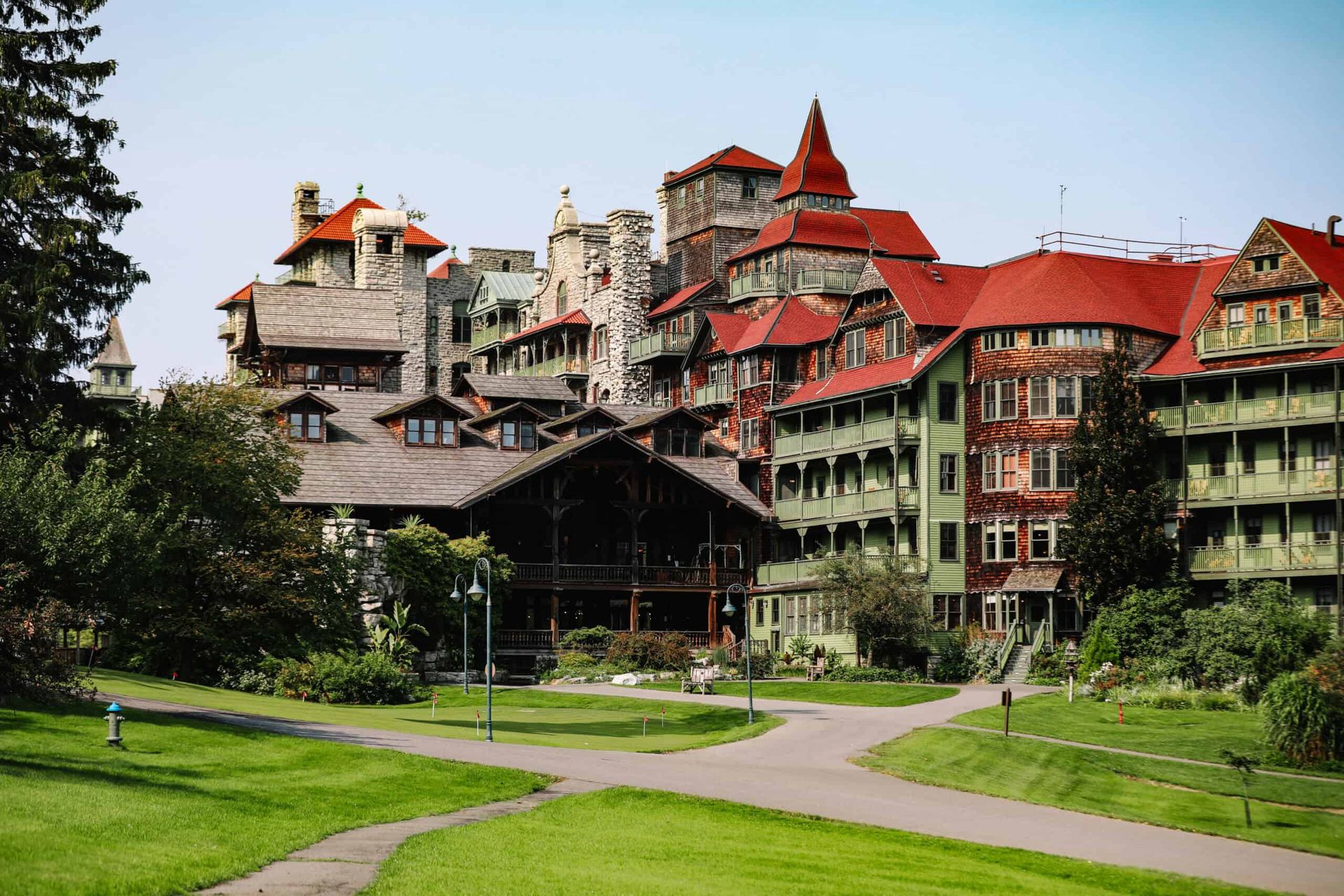
Mohonk Mountain House in the Hudson Valley combines Victorian castle architecture with a lakefront setting and a resort program that the National Historic Landmark designation places within a specific historical and architectural context. The property dates to 1869 and offers visitors access to outdoor activities,, including horseback riding, golf, tennis, and hiking, alongside wellness offerings that give the resort a contemporary function alongside its Victorian character. The combination of an architecturally significant historic building and a full-service resort infrastructure positions Mohonk as a destination that architectural tourism and family resort travel both reach from different starting points.
The lakeside position gives the Mohonk Mountain House a visual anchor, with the surrounding Shawangunk Mountains framing it at a scale appropriate to the building’s ambitions. The Victorian architecture’s towers, porches, and the rambling additions that give the structure its characteristic profile are most fully appreciated from the lake’s surface, where the building’s relationship to the surrounding mountain and water landscape reads as a complete composition rather than a facade. Guests who use the lake for swimming or boating encounter this view regularly, which provides the water access with a visual reward beyond its recreational function.
The tours of Mohonk's resort, which offer tours of its Victorian decor and artwork, give visitors with specific architectural or decorative arts interests a structured way into the building’s historical layers that independent wandering through the public spaces does not. The resort’s operation as a working hospitality destination provides it with maintenance and curatorial attention that purely preserved historic sites, however significant, cannot always sustain at the same level of physical condition.
Credit: Central Park Conservancy
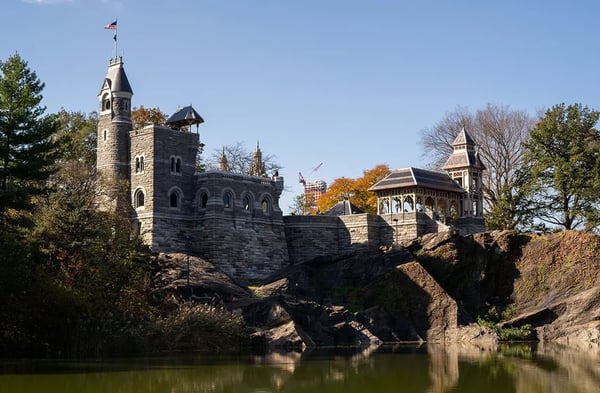
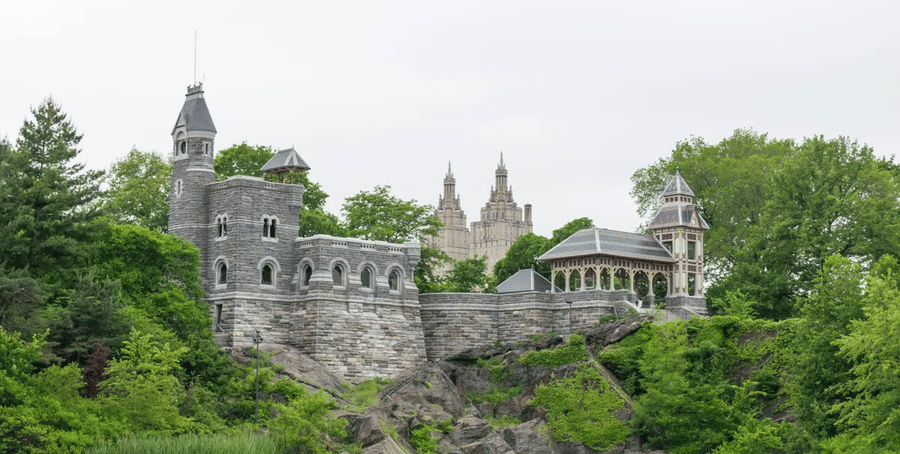
Belvedere Castle sits on a rocky outcropping in the middle of Central Park, visible from several park pathways and from the Great Lawn, where its tower and battlements appear above the treeline in a composition that landscape architect Frederick Law Olmsted designed with the castle as a deliberate visual element. The structure dates to 1869 and was built in the Victorian Gothic style as a decorative folly — a building designed primarily for its visual contribution to the landscape rather than for a functional purpose. The terraces that extend from the castle’s upper levels give visitors views of Turtle Pond below, the Great Lawn, and the Manhattan skyline beyond the park’s northern edge, made possible by the castle’s elevated position on the Vista Rock formation.
The accessibility of Belvedere Castle on foot from any Central Park entrance gives it a logistical simplicity that no other New York castle approaches. Visitors to the park encounter the castle as a destination within a larger landscape excursion rather than as a standalone trip, which makes it genuinely incidental to a park visit in a way that the castle’s visual prominence does not predict. The combination of a real castle architecture and the parkland setting that Olmsted designed around it gives Belvedere a quality specific to Central Park’s character as a designed landscape that incorporates authentic historical elements alongside its naturalistic infrastructure.
The castle functions as a nature observatory and education center, giving the building a contemporary purpose that the decorative folly's origins did not anticipate. This function gives visitors beyond architecture enthusiasts a practical reason to enter the building and engage with its spaces, extending the castle’s relevance beyond the visual impact that its tower and battlements provide from the surrounding park.
Jess Man / Wikimedia Commons (CC BY-SA 4.0)
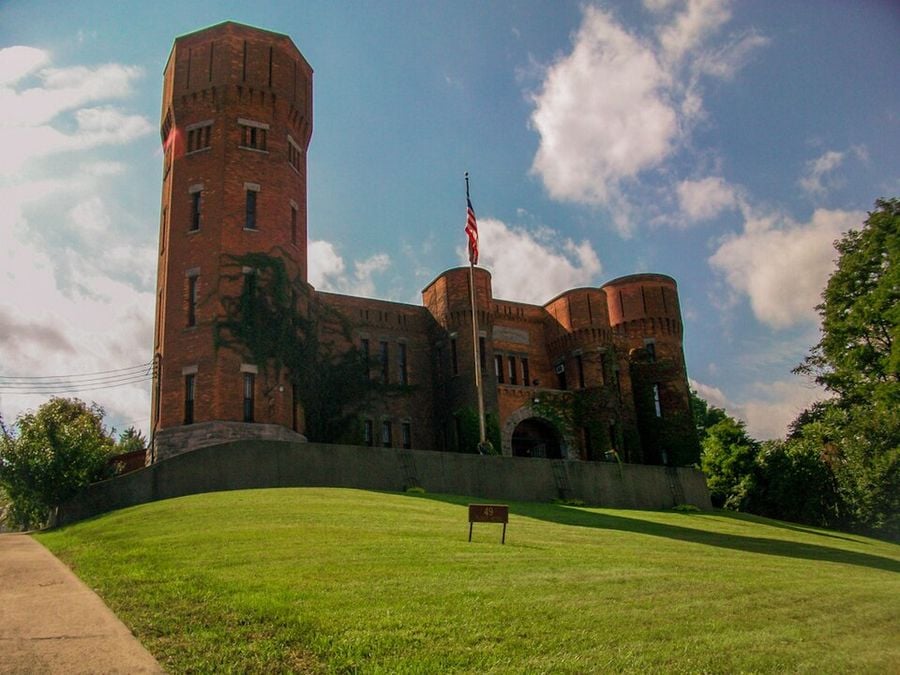
Amsterdam Castle, constructed in 1895 by architect Isaac Perry as a National Guard armory, gives the city of Amsterdam, New York, a historic structure whose conversion to a 22-room boutique hotel has preserved the interior character that the armory’s original function produced. The wood-vaulted ceilings, suits of armor that reference the building’s military history, and the artwork that the hotel has assembled within the historic spaces give the property an interior experience that conventional boutique hotel design achieves through deliberate effort at best and that the Amsterdam Castle achieves through the accumulation of genuine history within a building designed for gravity.
The armory typology that Perry used for the Amsterdam Castle places it within a specific tradition of late 19th-century American civic architecture that produced similar structures across the Northeast — large, castle-like stone buildings designed to project military authority while functioning as drill halls and armories for state National Guard units. The conversion of this building to hospitality use gives the armory tradition a contemporary relevance that the other castles on this list, most of them privately built rather than publicly commissioned, do not share.
The city of Amsterdam, located in the Mohawk Valley between Albany and Utica, provides the castle with geographic context within upstate New York’s industrial and historical landscape, rather than the scenic natural settings that the Finger Lakes, Thousand Islands, and Hudson Valley castles occupy. For visitors whose New York itinerary already traces the Mohawk Valley’s historical significance — the Revolutionary War sites, the Erie Canal heritage, and the region’s industrial history — Amsterdam Castle offers a distinctive overnight option within a building shaped by the city’s own history.
Credit: Bannerman Castle
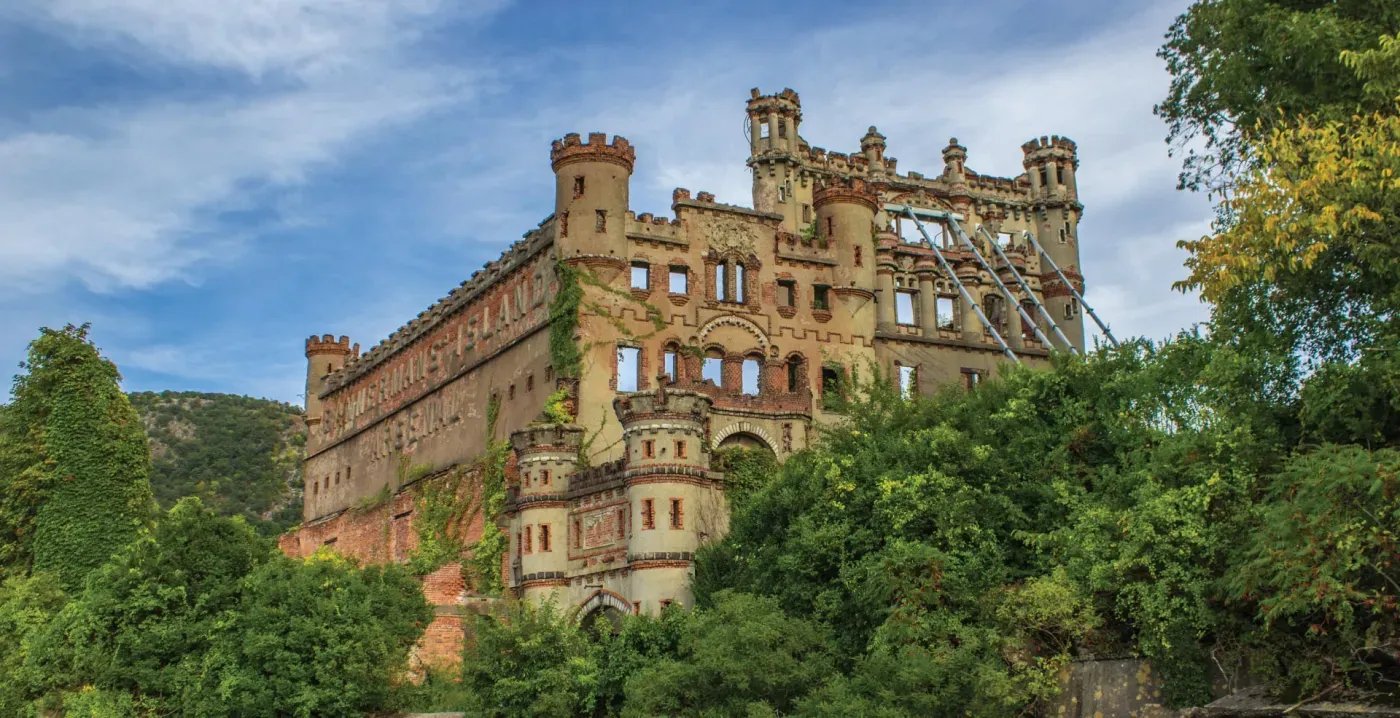
Bannerman Castle, on a 6.5-acre island in the Hudson River near Beacon, falls into a different category from the restored or operational castles on this list: the structure is primarily in ruins, and the experience of visiting is that of a ruin rather than an intact building. The castle was built as a military surplus warehouse by Francis Bannerman VI beginning in 1901, who used the Scottish castle form to give commercial storage the visual authority that the Hudson Valley’s Gilded Age architectural context demanded. The island’s uninhabited status and the building’s ruined condition give the site an atmospheric quality that intact historical structures, however significant, cannot produce in the same register.
Access to the island is by boat from the Beacon waterfront, which gives the visit a logistical separation from the mainland that the island’s Hudson River position makes genuinely physical rather than symbolic. The guided tours that allow visitors to explore the structure on foot give the ruin a safety management that the unstable elements of the deteriorating building make necessary, and the interpretive context that guides provide gives the fragmented architecture a historical legibility that the visual experience alone does not supply.
The movie nights that Bannerman Castle hosts give the ruined warehouse a seasonal programming function that converts the site into an outdoor cinema with one of the more unusual venues in the Hudson Valley. Watching a film in the open air on an island with a castle ruin as the backdrop gives the event a character that no purpose-built cinema can replicate, and the Hudson River’s presence surrounding the island amplifies with the sound and the smell of moving water in the dark.
Credit: U.S. National Park Service
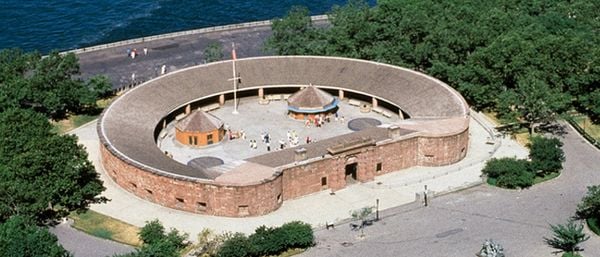
Castle Clinton in Battery Park is technically not a castle — it was built as a fort in 1812 to prevent British naval invasion of New York Harbor, and its round sandstone structure reflects military engineering priorities rather than residential or decorative ones. But the building’s subsequent history gives it a complexity that purely architectural categories cannot capture: fort, opera house, theater, immigration center, and aquarium are the documented successive functions of a structure that has survived in Lower Manhattan through every period of the city’s transformation since the early 19th century. It is now a National Monument accessible only on foot or by bicycle, which gives it a pedestrian accessibility within Battery Park that the surrounding area’s density and the park’s waterfront position make particularly suited to.
The ticket office for the Statue of Liberty ferries now operates within Castle Clinton, giving the monument a contemporary function that connects it to one of New York’s most visited destinations. Visitors who begin their Statue of Liberty excursion from within the walls of a 19th-century fort that itself served as an immigration processing point during an earlier period of American history encounter a historical layering specific to this building at this location that the ferry boat departure alone cannot provide.
The sandstone construction that gives Castle Clinton its distinctive warm color and formal, circular profile gives the structure an architectural character specific to the early American military engineering tradition of the Northeast’s harbor forts during the post-Revolutionary period. The building’s survival through the development pressures that Battery Park and Lower Manhattan have sustained across two centuries gives it a resilience that the National Monument designation protects and that the four centuries of documented use make worth understanding as a historical record of what New York has needed from its civic infrastructure across different periods of its growth.
