Leonard Laub / Unsplash
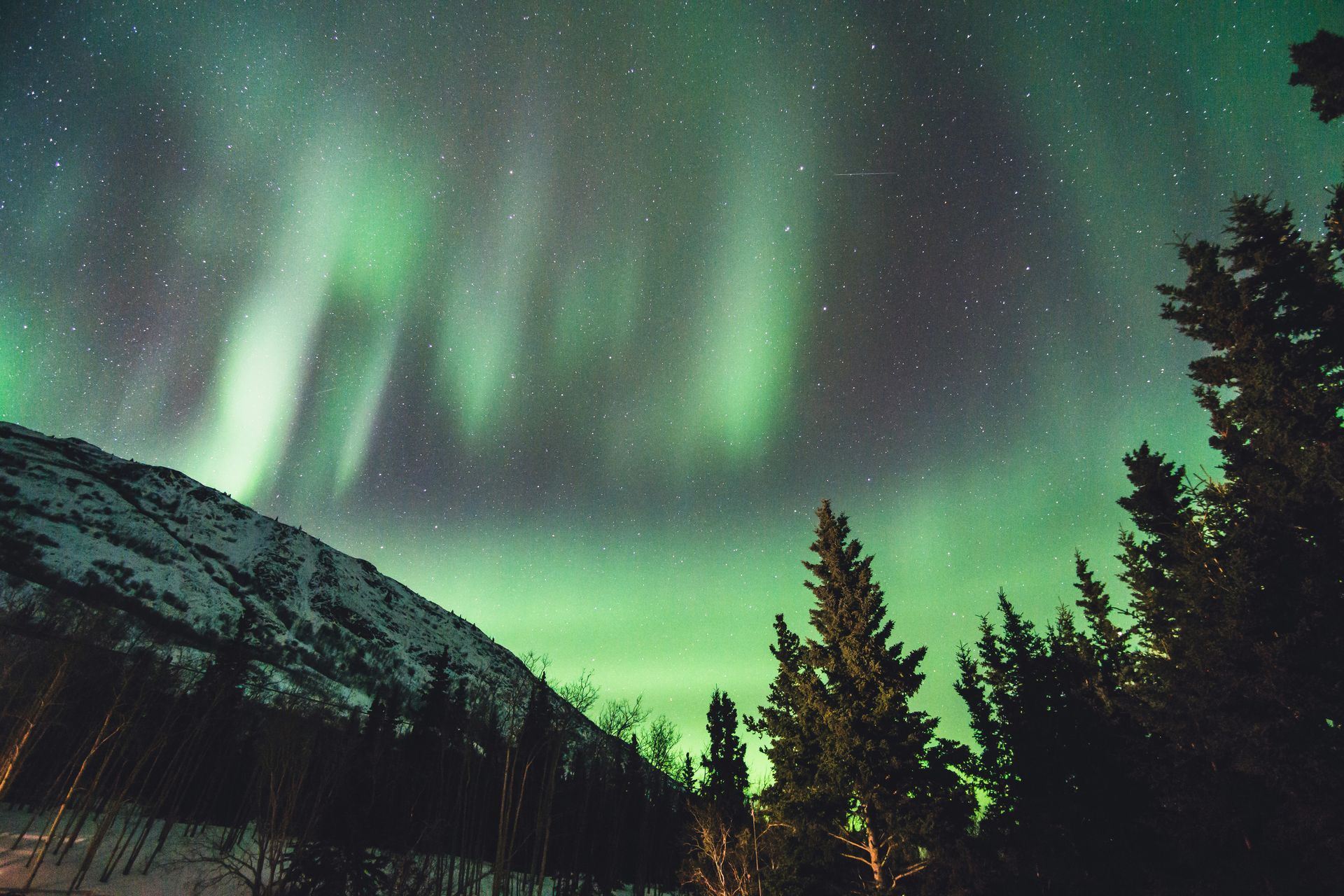
The Yukon’s claim to be among the best places on earth to see the northern lights is not marketing. Parts of the territory sit directly beneath the auroral oval, the atmospheric band encircling the poles where the aurora borealis concentrates its activity, which means the Yukon is not merely in the neighborhood of the phenomenon but directly beneath its most productive zone. The viewing season runs from late August through early April, with the peak months of November through March providing the longest dark hours and the coldest, clearest skies that the aurora prefers. The territory’s vast, light-pollution-free wilderness amplifies every advantage: in the Yukon, you do not need to drive far from a city to find a sky dark enough to show the full range of the aurora’s color and motion.
The experience of watching the aurora in the Yukon has a specific quality that the photographs and television appearances of the lights do not accurately convey. The movement is what surprises first-time viewers most consistently: the lights do not simply glow but shift, pulse, and reorganize themselves in real time across the full arch of the sky, making the viewer feel watched back. Harmony Hunter, manager of tourism development at the Yukon First Nations Culture and Tourism Association, describes the experience as one that rewards the pause: seeing the lights is not a task to be photographed and moved past, but an occasion to stop, breathe, and be fully present in a landscape doing something extraordinary.
The 5 operators and experiences below appear in Travel + Leisure, covering the territory from Whitehorse to Old Crow, with options ranging from accessible night tours to luxury wake-up-call viewing and remote First Nations cultural experiences.
1 / 5
Leonard Laub / Unsplash
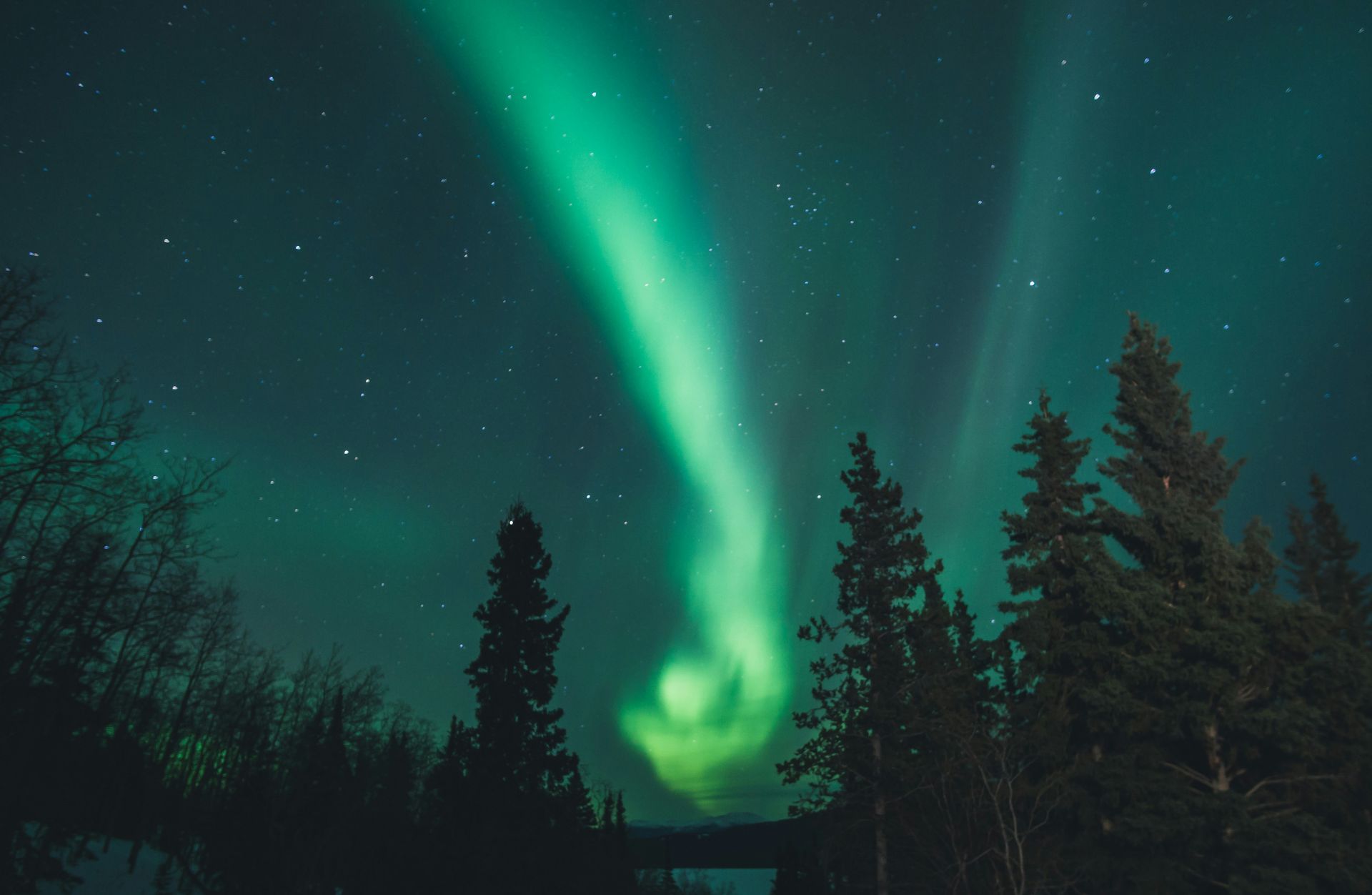
Northern Tales is the Whitehorse-based wilderness outfitter that has been guiding northern lights tours across the Yukon territory since 2001, giving it the longest continuous aurora tourism operation of any operator on this list and an institutional knowledge of the territory’s conditions, cloud patterns, and viewing sites whose depth reflects more than two decades of seasonal experience. The Basic Aurora Borealis Package, the operator’s most accessible offering for visitors staying in Whitehorse, begins with a hotel pickup and a 30-minute drive to Northern Tales’ private viewing site outside city limits, removing the guesswork of where to go and the difficulty of driving on winter roads after dark.
The private site gives the Northern Tales experience its most important structural advantage over aurora hunting from a public viewpoint: the fire pit, the cabin for warming up, and the seating give the viewing session a comfort infrastructure that allows visitors to stay outside for extended periods in temperatures that can drop to well below freezing. The hot chocolate and snacks extend the psychological sustainability of the cold-weather wait, which is relevant because the aurora does not perform on a schedule, and rewarding viewing requires patience as much as good location.
The operator’s optional add-ons give the Northern Tales visit its most complete winter activity program: dog mushing, snowmobiling, and ice fishing can be combined with the aurora experience in packages that offer a full Yukon wilderness day alongside the evening light show. For the visitor coming to the Yukon primarily for the aurora but wanting to experience the broader character of the territory’s winter landscape, the Northern Tales menu gives the most practical single-operator access to that range. The private viewing site’s 30-minute distance from Whitehorse gives guests a sky whose darkness the city’s streetlighting and building illumination would significantly compromise, and the site’s consistent use across two decades of operations has given the Northern Tales guides a specific familiarity with its viewing angles, wind protection, and optimal positioning that a newly established site would take years to develop.
2 / 5
-1920x1281.jpg)
Vincent Guth / Unsplash
Nomada Excursions is the aurora hunting operation run by Sandra Peña, who has been professionally chasing the aurora borealis since 2006. The aurora-hunting format distinguishes Nomada from fixed-site viewing operators: where Northern Tales takes visitors to a predetermined location and waits for the aurora to appear overhead, Nomada’s approach is mobile and adaptive. If the lights are not performing over Whitehorse, Peña drives guests across the territory to wherever the conditions and her experience suggest the viewing will be best, which can mean traveling an hour or more to Carcross or other locations based on real-time cloud cover assessment and aurora forecasting.
The guide’s specific background gives Nomada its most distinctive credential: Peña grew up in the Tagish area of the southern Yukon and has spent decades developing the local knowledge and aurora-forecasting instincts that the hunting format requires. Her original home is Xalapa, in the Mexican state of Veracruz, and she conducts tours in both Spanish and English, giving Nomada a specific accessibility for Spanish-speaking travelers that no other Yukon aurora operator provides in the same native-speaker terms.
The aurora-hunting approach carries an inherent uncertainty alongside its advantage: chasing a natural phenomenon across a dark terrain in a vehicle requires trust in the guide, and the outcome depends on conditions beyond anyone’s control. Peña’s experience since 2006 provides that trust with the most defensible foundation available in the Yukon market, and the mobile format’s willingness to travel multiple hours in pursuit of a clear sky gives the serious aurora traveler a higher probability of a sighting on any given night than the fixed-site alternative can offer. The southern Yukon’s landscape between Whitehorse and Carcross, which the hunting format traverses in pursuit of clear sky, gives the vehicle journey its own visual program: the frozen Yukon River crossings, the boreal forest corridors, and the mountain silhouettes above the tree line give the night drive an atmospheric quality specific to the subarctic winter.
3 / 5
-1920x1280.jpg)
Nicolas J Leclercq / Unsplash
Mount Logan EcoLodge sits just outside Kluane National Park and Reserve, near Haines Junction, a setting whose proximity to the St. Elias Mountains and the Kluane UNESCO World Heritage Site provides the property with a natural backdrop that the Whitehorse-based operators cannot match. The lodge’s defining aurora service is the wake-up call: when the lights appear, staff alert guests, who can roll out of bed, put on slippers, and step outside to see the aurora without the planning, the late nights, or the cold-weather endurance that the active aurora hunting format requires. The convenience is the point, and for travelers who want the northern lights experience without the logistical effort, the wake-up call model eliminates the primary barriers.
The winter packages available at the lodge offer the Kluane aurora visit in its most structured format: they bundle private guided aurora experiences with perks such as picnic lunches and airport transfers, giving the self-sufficient visitor a complete Yukon winter experience without the coordination effort required to assemble the same components independently. The private guiding component gives the luxury aurora experience a knowledgeable local presence alongside the comfort infrastructure.
The Kluane National Park setting gives the lodge visit its most significant natural context: the park contains Canada’s largest non-polar icefields and is home to Mount Logan, the highest peak in Canada. The winter landscape visible from the lodge, with the St. Elias peaks above and the dark, forest-covered valley floor below, provides the aurora-viewing foreground whose scale amplifies the light show above. Accessible luxury, wake-up alert service, and extraordinary mountain scenery together make the Mount Logan EcoLodge the most immediately comfortable aurora experience on this list. The Kluane National Park hiking and wildlife program available in the summer and shoulder seasons gives the EcoLodge a year-round appeal that the aurora winter packages extend into the coldest months, and the park’s population of Dall sheep, grizzly bears, and wolves gives the daytime natural history program a wildlife scope that the darkness-dependent aurora viewing does not provide in the same terms.
4 / 5
Nelly Volkovich / Unsplash
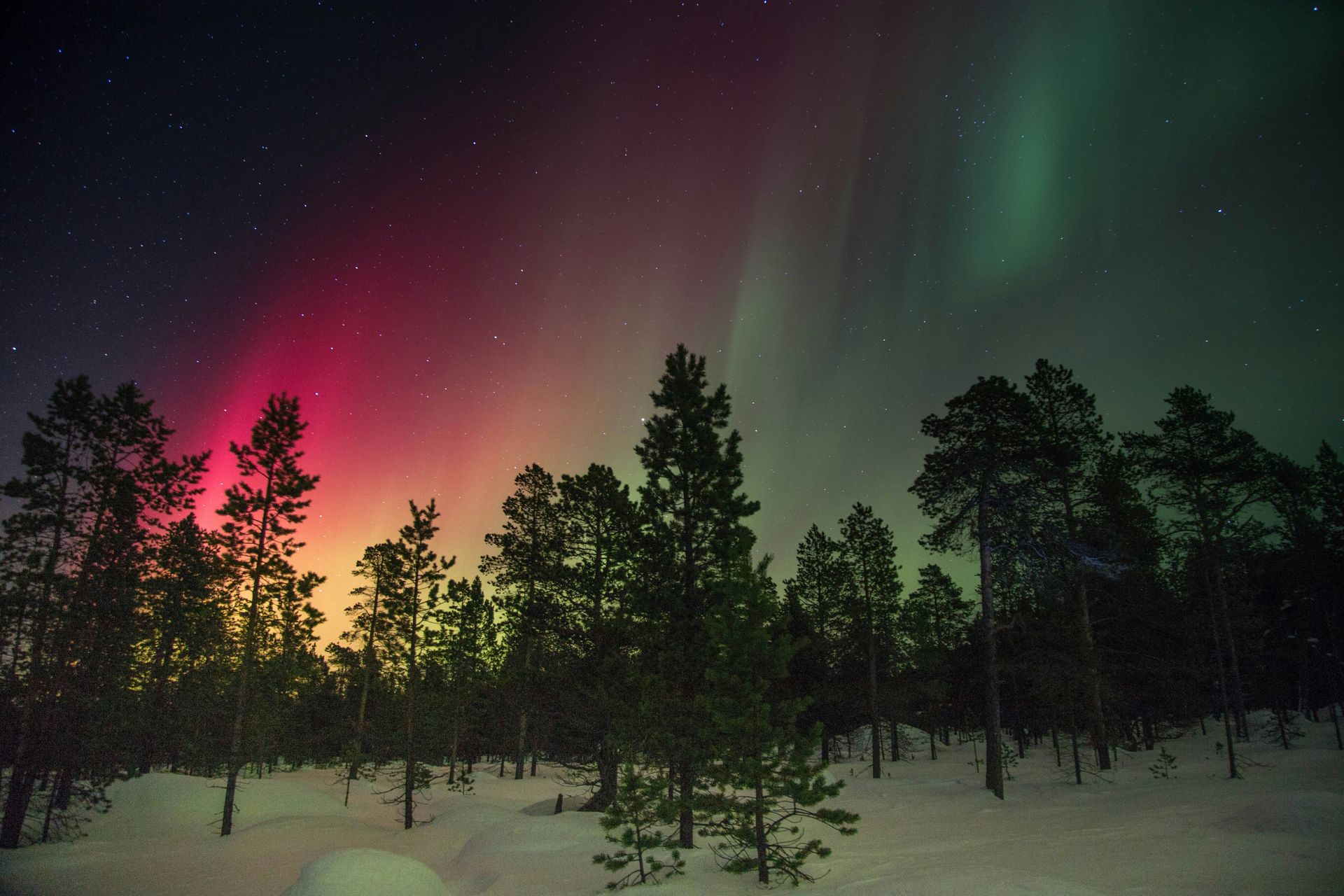
Dawson City is further north than Whitehorse, and the greater latitude gives it a statistical advantage in aurora viewing that the source specifically identifies: the farther north you travel in the Yukon, the more directly beneath the auroral oval you sit, and the higher the probability of a sighting on any given clear night. The Klondike Experience is the family-owned Dawson City operator whose aurora tours add a cultural and historical dimension that the Whitehorse operators do not provide in the same concentrated form: the Klondike’s gold rush history, the 1898 stampede that brought 100,000 prospectors to this corner of the subarctic, and the Tombstone Territorial Park that borders the city give the northern location a specific character.
The Klondike Experience’s aurora tours include midnight snacks, coffee and tea, access to a campfire, and a heated yurt, giving the cold-weather viewing session a comfort infrastructure comparable to the Northern Tales setup in Whitehorse. The addition of local history and lore during the viewing session gives the Dawson City experience its most distinctive programmatic element: hearing about the gold rush, the Indigenous history of the Tr’ondëk Hwëch’in First Nation, and the legends associated with the northern lights in this specific community gives the aurora an interpretive context that transforms the viewing from a passive natural spectacle into an encounter with a place.
The operator’s range extends from afternoon excursions to multiday adventures into Tombstone Territorial Park and the old gold fields, giving the visitor who wants to extend the Dawson City experience beyond a single aurora evening a complete itinerary whose historical and natural program rewards the three-to-five-day stay that the distance from Whitehorse justifies. Dawson City’s preserved gold rush townsite, whose wooden sidewalks and painted false-front buildings give it the most intact 1898 character of any Klondike community, gives the daytime program a walkable historical environment that the evening aurora tour’s campfire, yurt, and local history storytelling program directly and naturally complement.
5 / 5
Greg Johnson / Unsplash
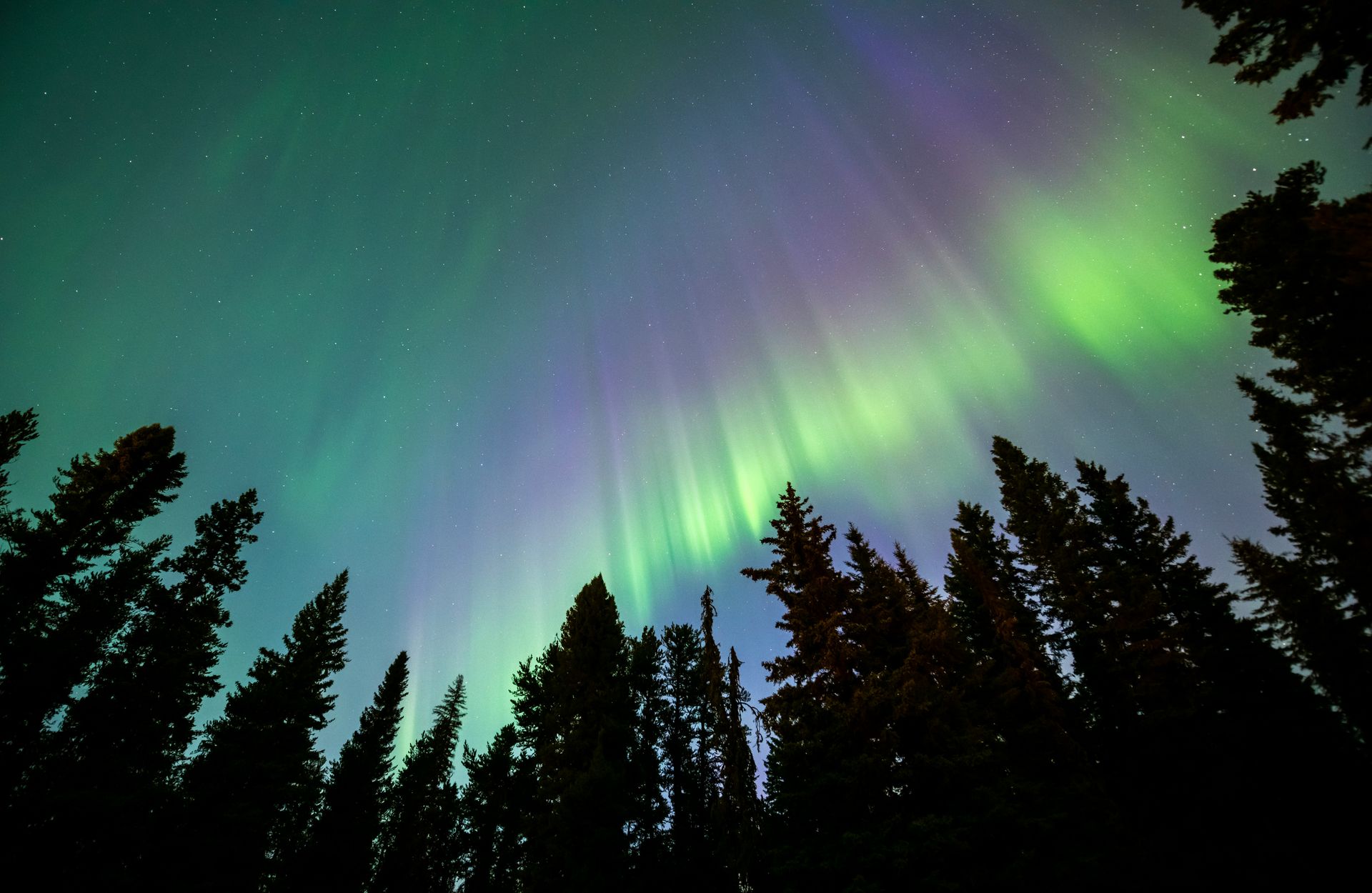
Old Crow is the northernmost community in the Yukon, accessible only by air, with a permanent population of approximately 250 people and one grocery store. The isolation and the latitude give it the most extreme aurora viewing conditions on this list: the town sits deep within the auroral oval, farther from urban light pollution than any other community in the territory, and the lack of road access filters the visitor experience to those specifically motivated by what Old Crow has to offer. Josie’s Old Crow Adventures operates the night tours that give those visitors the inside knowledge of the land and its people that arrival by plane alone cannot provide.
The specific cultural dimension of the Old Crow experience is the Vuntut Gwitchin First Nation, whose community has inhabited this territory for thousands of years and whose relationship with the northern lights carries cultural significance that southern Yukon operators cannot speak to with the same authority. The stories shared during Josie’s tours give the aurora the cultural framing of a community for whom the lights are not a tourist attraction but a living element of a cosmology and a seasonal calendar whose meaning runs deeper than the visual spectacle.
Harmony Hunter, who coordinates tourism development for the Yukon First Nations Culture and Tourism Association, has personally done the three-day winter package in Old Crow and describes it as one of the best tour experiences of her lifetime. The endorsement from someone whose professional focus is First Nations cultural tourism and who has seen the northern lights throughout her life carries specific weight: if the Old Crow experience moves someone who grew up with the aurora in the Yukon, it is worth the logistical commitment required by the fly-in-only access. The Vuntut Gwitchin First Nation’s land stewardship, which has maintained the Old Crow Flats wetlands as one of the most significant migratory bird staging areas in North America, gives the territory around Old Crow an ecological significance that extends beyond the aurora season and into the spring migration that follows.
