From the Met's new 12,000-square-foot Costume Institute galleries to a Florence shoe museum inside a 13th-century medieval palazzo
Credit: The Metropolitan Museum of Art
Fashion occupies an unusual position in the museum world. The objects it produces — garments, shoes, accessories, sketches — are among the most personal and perishable that any collecting institution handles, and their survival across decades or centuries requires conservation care that most textile institutions have developed only recently into a rigorous discipline. A 17th-century gown and a 1930s Chanel evening dress are conserved in the same environment but represent entirely different cultural contexts, construction methods, and symbolic meanings. Making sense of what connects them and what distinguishes them is the work that the best fashion museums do, at a level of curatorial depth that the clothes themselves reward.
The institutions that hold fashion collections span a range of institutional identities: a museum attached to a design school, a museum housed in a couture house’s original building, a museum founded by a shoemaker’s wife, and a museum within one of the world’s largest general collections. Each approaches fashion from a different starting point, producing different strengths and gaps. The Victoria and Albert Museum’s five centuries of dress history give it a chronological depth that a single-designer museum cannot match. La Galerie Dior’s position within the original House of Dior gives it an archival intimacy with a single creative legacy that no encyclopedic institution can replicate. Together, the range of approaches these institutions take gives the fashion museum category a diversity that rewards visiting more than one.
The eight institutions below appear in the April 2026 issue of Travel + Leisure. Several have recently opened new galleries or are presenting exhibitions new to their respective cities. Each offers a distinct entry point into fashion history, design, and the relationship between clothing and culture.
Credit: The Metropolitan Museum of Art
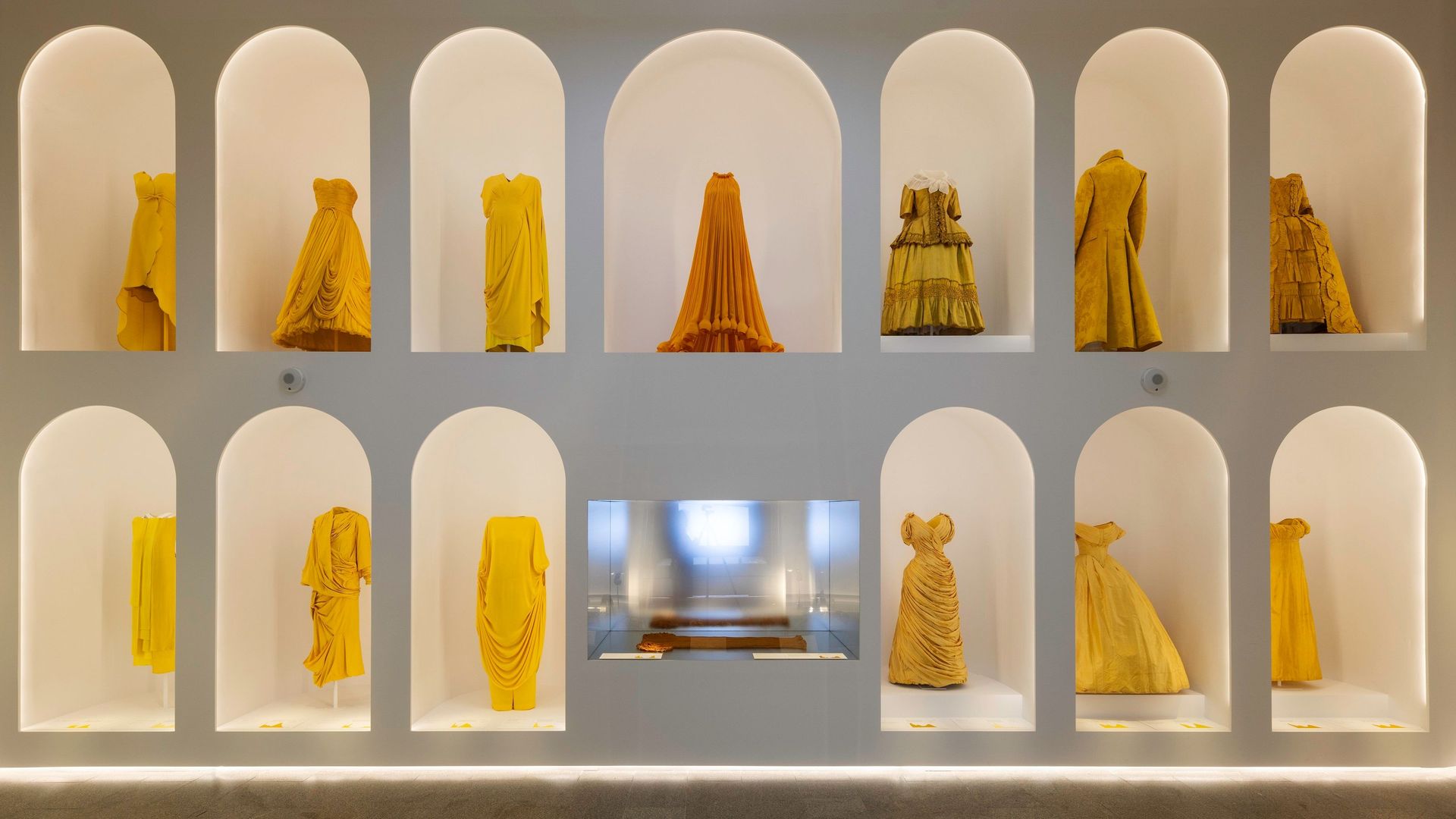
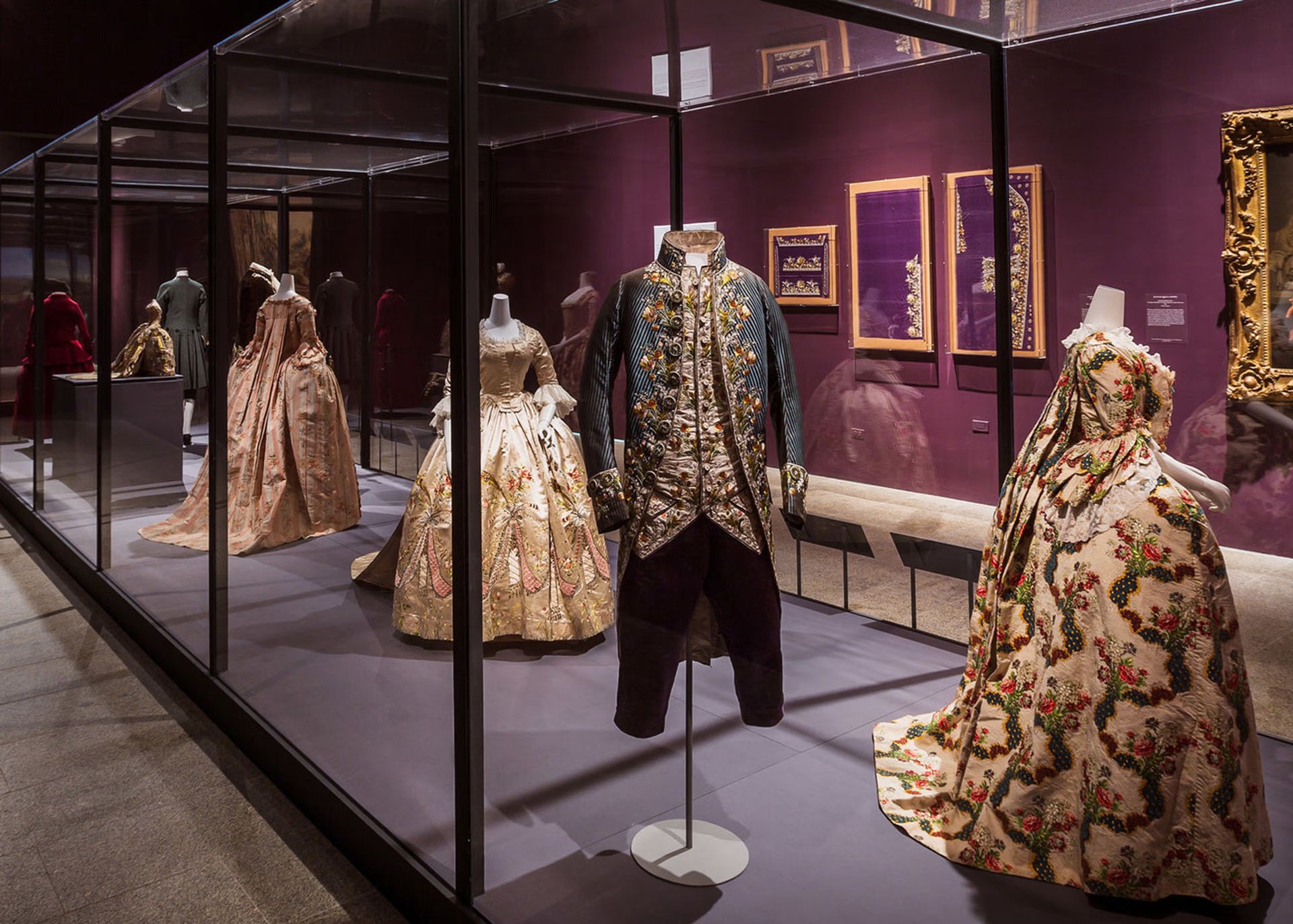
The Costume Institute of the Metropolitan Museum of Art in New York is opening new galleries of nearly 12,000 square feet adjacent to the museum’s Great Hall entrance on May 10, 2026. The expanded space gives the Institute room to present its annual spring exhibition alongside shows from other curatorial departments within the museum, which reflects the Institute’s broader ambition to position fashion not as a category apart from fine art but as continuous with it. The inaugural exhibition in the new galleries, “Costume Art,” juxtaposes garments from the Institute’s collection with works of art from across the Met’s holdings, building pairings that illuminate the relationship between clothing and the body and between artistic representations of the body and fashion as a form of expression.
The “Costume Art” exhibition was celebrated at the May 4 Met Gala, cochaired by Beyoncé, Nicole Kidman, Venus Williams, and Anna Wintour, and remains on view through January 10, 2027. The Gala, which serves as a fundraiser for the Costume Institute, gives the spring exhibition an annual moment of cultural visibility that few museum exhibitions receive, and the cochairs’ selection each year signals the exhibition’s thematic orientation before the doors open to the public.
The Costume Institute’s permanent collection provides the new galleries with a foundation of significant depth: it encompasses garments from the 17th century to the present and has been assembled with the same acquisitions rigor that the Met applies to its painting and sculpture collections. The new gallery space provides this collection with a presentation environment commensurate with its importance, which the Institute’s previous gallery arrangement, dispersed across the museum’s lower level, did not always achieve.
Credit: The Museum at the Fashion Institute of Technology
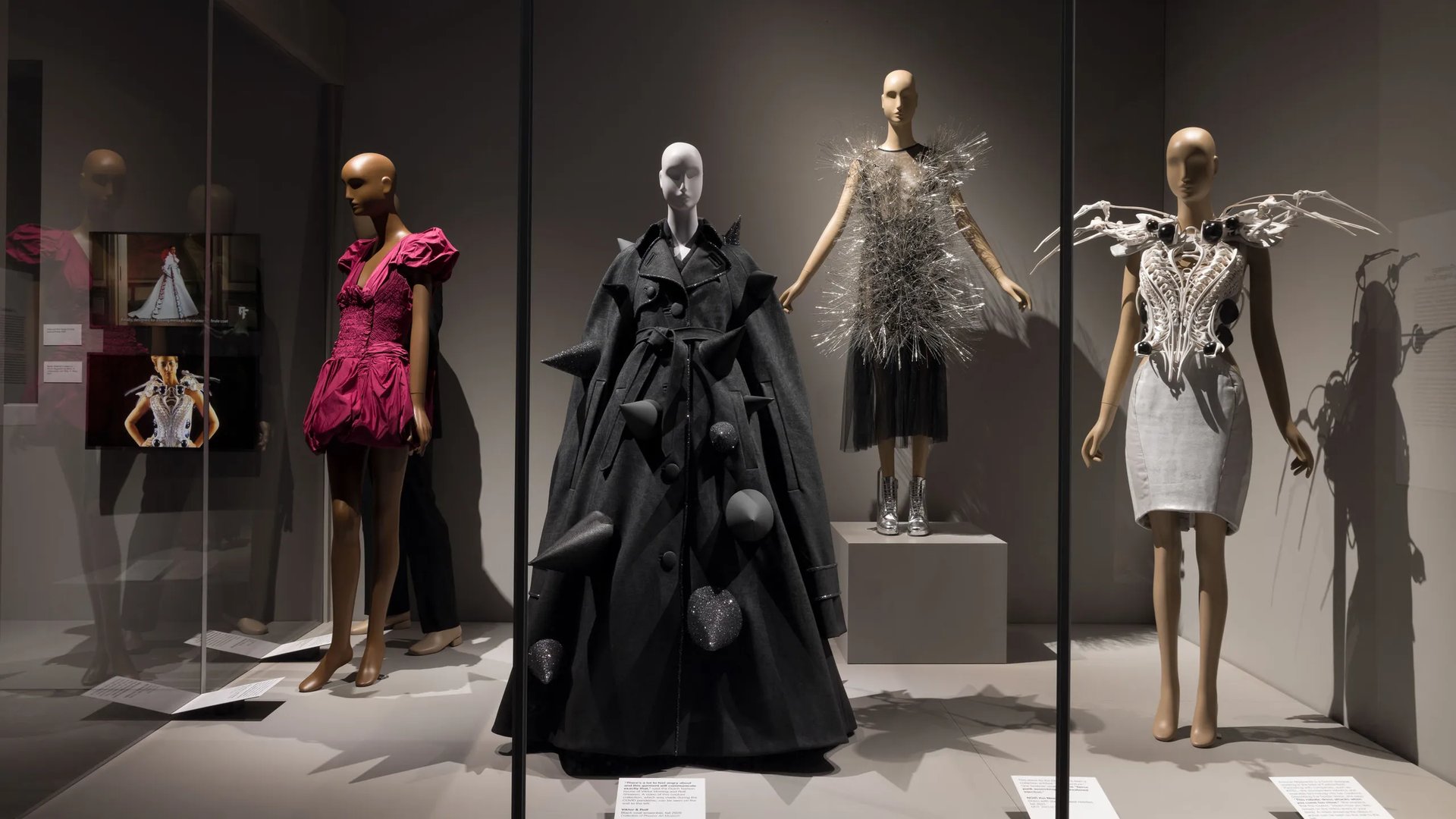
The Museum at the Fashion Institute of Technology in New York maintains a permanent collection of some 50,000 garments and accessories covering three centuries of dress history, including works by Adrian, Balenciaga, Chanel, and Dior. The museum’s institutional identity as part of a working design school gives it a pedagogical function alongside its exhibition role: the collection serves students studying fashion history and construction, as well as visitors attending exhibitions and programs. This dual purpose shapes the depth of the collection’s documentation, since the garments serve as primary sources for students learning from them directly.
The upcoming special exhibition, on view from September 16 through January 4, 2027, explores connections between dolls and high fashion across three centuries, featuring designs by Marc Jacobs, Lanvin, Martin Margiela, and Anna Sui. The connection between fashion design and doll construction has a historical depth that the exhibition’s chronological range from the 18th century to the present allows it to trace: dolls have functioned as vehicles for fashion display, as prototypes for scaled garments, and as cultural objects whose clothing reflects the fashions of their period in ways that the exhibition uses to illuminate relationships between play, domesticity, and high design.
The museum’s location within FIT’s campus in the Chelsea neighborhood of Manhattan gives it an institutional context that the fashion industry’s own concentration in New York amplifies. The proximity of working designers, production facilities, and fashion media to an institution that holds primary-source garments from the field's history gives the Museum at FIT a relevance to the contemporary industry that institutions in other cities with comparable collections cannot replicate through geographic proximity alone.
Credit: The Weitzman Shoe Museum
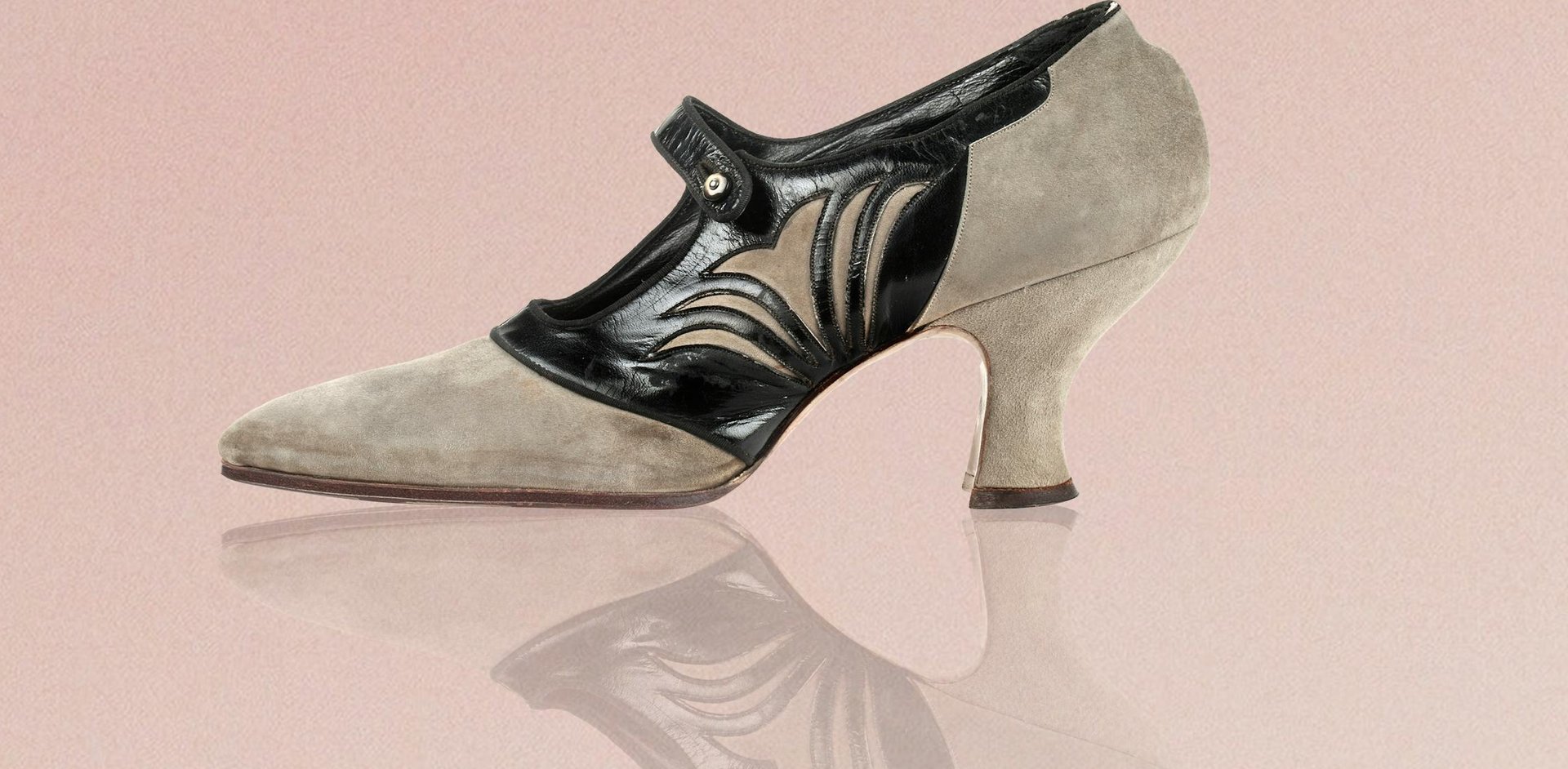
The Weitzman Shoe Museum, opening June 18 within The New York Historical Society’s new Tang Wing for American Democracy, presents approximately 150 pairs of historic shoes from the collection Jane Weitzman began assembling in 1996. The collection originated as a window display commission: Jane Weitzman began collecting and commissioning artistically interpreted display shoes for the windows of Stuart Weitzman’s stores, with objects made from materials including fresh flowers and stained glass. These commissioned display pieces represent a category of footwear that exists between sculpture and commercial display, and their assembly into a museum collection gives them a reading that neither the store window nor a conventional shoe collection provides.
The museum’s installation tracing women’s history through shoes extends the collection’s scope from the decorative to the documentary, using footwear as evidence for broader social and political history from the suffrage movement of the early 20th century through Hollywood’s mid-century influence on shoe design. The argument that shoes can carry this kind of historical freight — that the transformation of women’s footwear across a century of social change reflects rather than merely accompanies that change — gives the Weitzman collection a thematic ambition that shoe museums built primarily around craft and design do not always attempt.
Stuart Weitzman founded his namesake shoe brand in 1986, providing the museum with an institutional founder whose professional context in the contemporary luxury footwear industry connects the historical collection to the living design practice it documents. The Tang Wing setting within The New York Historical gives the Shoe Museum a curatorial framework oriented toward American history and democratic culture, which frames the women’s history installation within a specifically American political narrative.
Credit: Bata Shoe Museum
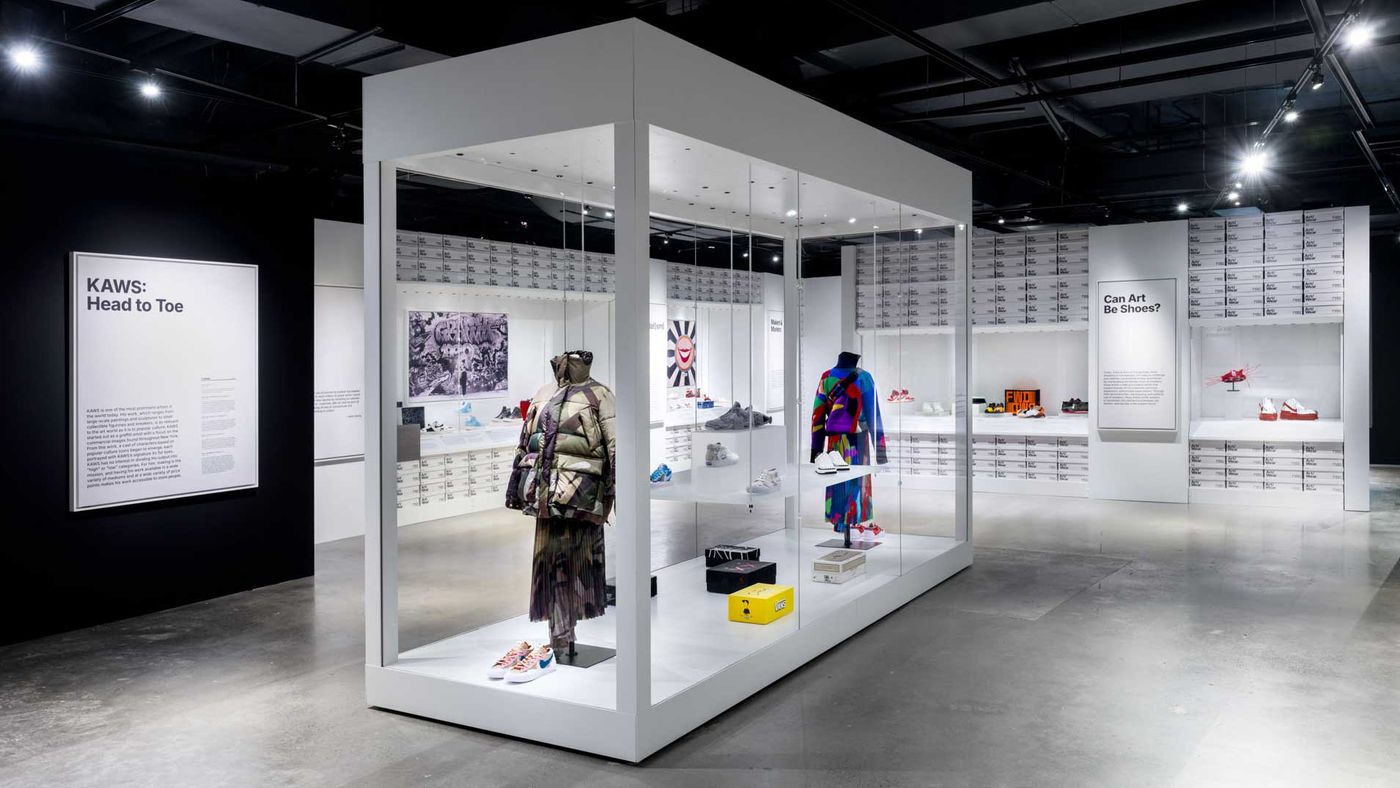
The Bata Shoe Museum in Toronto, founded in 1995 by Sonja Bata, spans 4,500 years of footwear history through four rotating galleries, giving the institution a chronological depth unmatched by any other shoe museum in the world. The collection’s range from ancient footwear through contemporary design gives the Bata the capacity to mount exhibitions across the full span of human dress history, which the current exhibition program demonstrates: “Rough & Ready: A History of the Cowboy Boot,” on display through September 20, covers a specifically American cultural form; the first-ever exhibition of André Perugia’s work, on view through April 2027, focuses on a designer whose early 20th-century innovations transformed luxury footwear; and “Unearthing Vindolanda,” opening May 7 and running through September 2027, presents footwear-related archaeological finds from the Roman Empire’s northern frontier.
The three simultaneous exhibitions represent the Bata’s ability to hold ancient history, design history, and cultural history in the same institution at the same time without any of the three reducing the others. André Perugia, an Italian-French designer who worked in Paris in the first half of the 20th century, occupies a significant position in footwear history, and this monographic treatment, dedicated to him for the first time in this museum context, gives him the recognition he deserves. The Vindolanda footwear from the Roman fort south of Hadrian’s Wall in Northumberland provides the archaeological dimension of footwear history with a specific site and period whose excavations continue to yield new finds.
The museum building, designed by Raymond Moriyama and opened in 1995, provides the Bata with a purpose-built gallery environment that its rotating program fully utilizes. The Toronto location gives the museum a North American presence for a collection assembled over a lifetime of global collecting and research by its founder, born into a family with European shoemaking roots.
Credit: The Victoria and Albert Museum
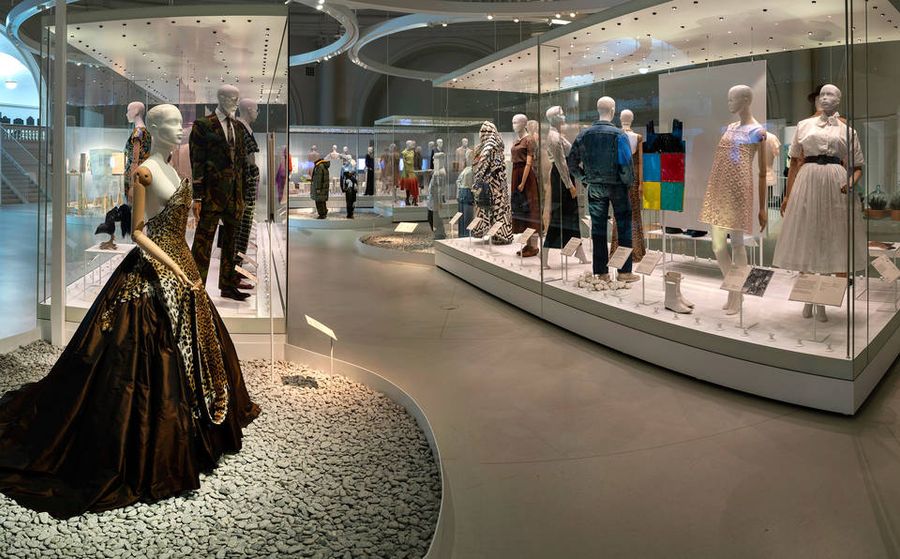
The fashion collection of the Victoria and Albert Museum in London’s South Kensington spans five centuries of dress history and constitutes the largest and most comprehensive collection of historic clothing in the world. Its holdings range from 17th-century gowns to 1930s Chanel eveningwear, 1960s Mary Quant daywear, and post-war couture by Christian Dior and Cristóbal Balenciaga, in a chronological sweep that no other single institution matches in terms of quality and breadth. The V&A’s collection provides a primary source base for fashion history comparable in depth and documentation to what the National Gallery provides for British painting.
The current special exhibition, “Schiaparelli: Fashion Becomes Art,” on display through November 8, marks the first exhibition in the United Kingdom devoted to Maison Schiaparelli. The exhibition covers the full history of the house, from Elsa Schiaparelli’s first paradigm-shifting garments in the late 1920s through the contemporary work of current creative director Daniel Roseberry. More than 400 objects are included, encompassing 100 ensembles and 50 artworks alongside accessories, jewelry, paintings, photographs, furniture, perfumes, and archival material that give the exhibition a density of documentation appropriate to a designer whose work sits at the intersection of fashion, Surrealism, and fine art.
Elsa Schiaparelli’s collaborations with Salvador Dalí and Jean Cocteau, and her development of trompe-l’œil knitwear, lobster dresses, and skeleton suits, give the house a specific place in the history of fashion’s relationship to avant-garde art, a relationship the exhibition’s title acknowledges directly. The V&A’s South Kensington location gives the exhibition a museum context, whose collections — decorative arts, design, textiles, sculpture, and photography — make the case for fashion as art, with the institutional weight of an encyclopedic collection behind it.
Credit: MoMu
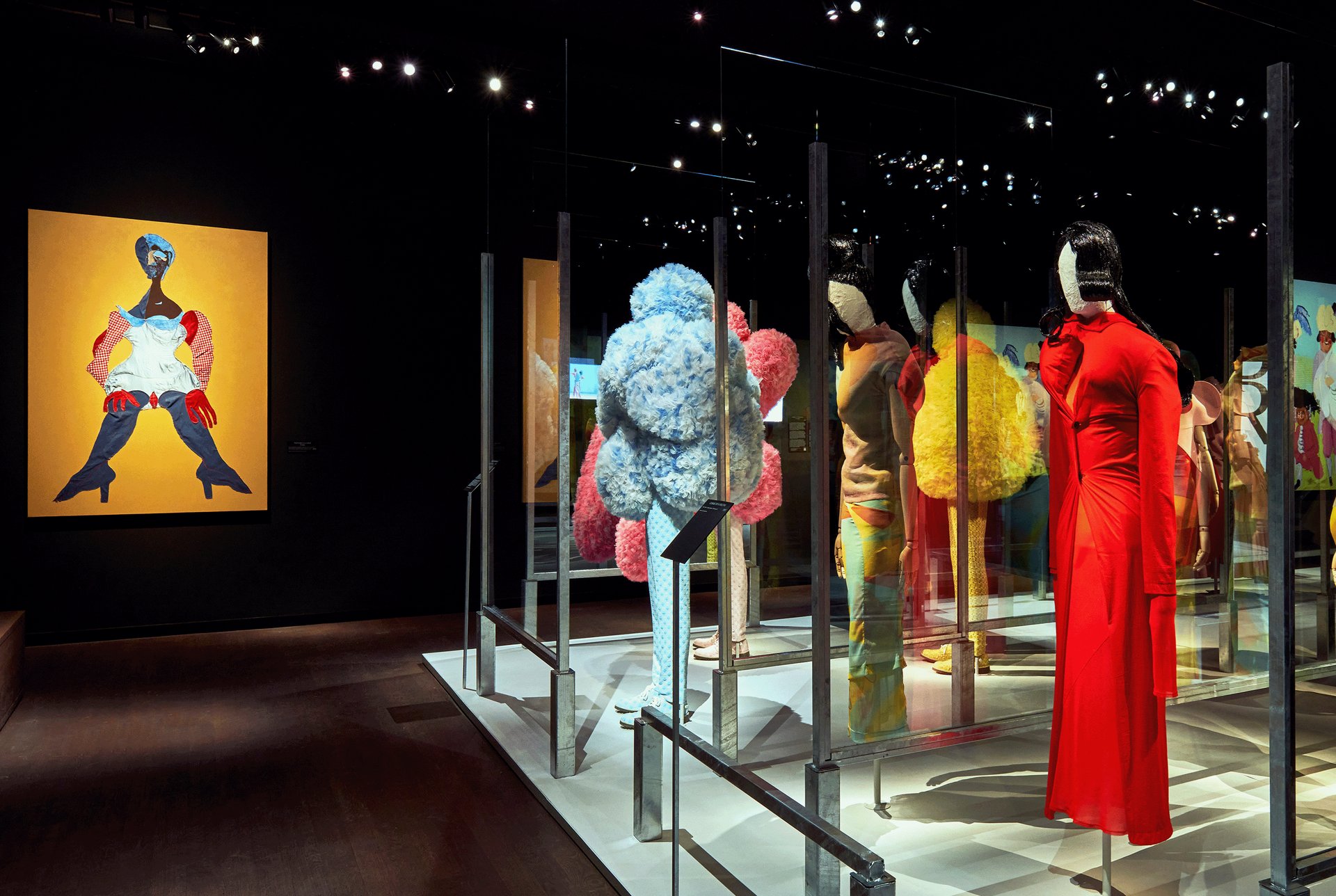
MoMu in Antwerp holds the largest collection of contemporary Belgian fashion in the world, which gives the museum a specific national collecting focus that its current exhibition uses as the primary subject. “The Antwerp Six,” on display through January 17, 2027, presents the six Belgian designers — Dirk Bikkembergs, Ann Demeulemeester, Walter Van Beirendonck, Dries Van Noten, Dirk Van Saene, and Marina Yee — whose shared education at the Royal Academy of Fine Arts in Antwerp and collective presentation at the British Designer Show in 1986 established Belgian fashion as an international force and Antwerp as a fashion capital.
The exhibition’s organizing argument is the specific trajectory that connects six designers who trained in the same institution at the same time, presented collectively in a format that made them visible in a market where any of them alone might have attracted less notice, and went on to individually significant careers that the shared moment of the 1986 London presentation made possible. The Antwerp Six’s story is as much about collective strategy as individual talent, and the exhibition uses MoMu’s collection of their work to trace both the shared conditions that produced them and the distinct aesthetic directions each pursued independently.
MoMu’s reputation for immersive exhibitions gives “The Antwerp Six” a presentation format that the designers’ own approach to fashion — conceptually rigorous, theatrically staged, resistant to purely commercial logic — rewards. The museum’s Antwerp location gives it a relationship to the city’s fashion identity that institutions presenting Belgian fashion from outside Belgium cannot replicate, and the Royal Academy of Fine Arts, whose fashion department produced the Six, remains an active institution a short distance from the museum.
Credit: La Galerie Dior
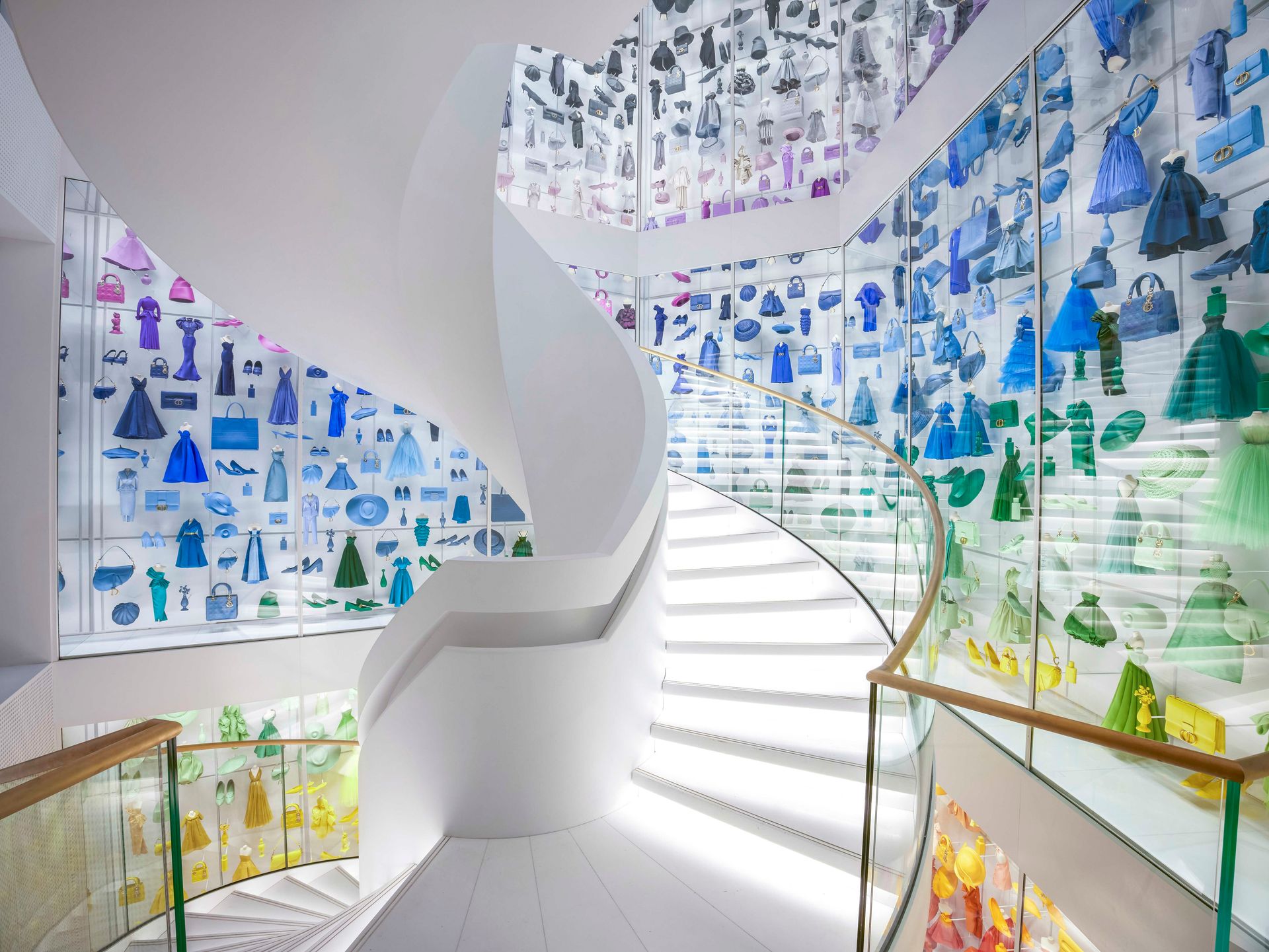
La Galerie Dior occupies the original House of Dior building at 30 Avenue Montaigne in Paris, giving the museum a physical connection to its subject that no externally located Dior collection can claim. The gallery documents Christian Dior and his six creative successors — Yves Saint Laurent, Marc Bohan, Gianfranco Ferré, John Galliano, Raf Simons, and Maria Grazia Chiuri — through outfits, original sketches, archival documents, accessories, and what the museum describes as exceptional pieces, many shown publicly for the first time within the gallery’s permanent exhibition.
The current temporary exhibition, on display through May 17, features over 100 Dior works from the Azzedine Alaïa Foundation collection. The Tunisian French couturier Alaïa’s own collection of Dior works, assembled across decades of his career as one of the 20th century’s most significant independent designers, gives the exhibition a curatorial perspective specific to one designer’s relationship to another’s legacy. A related exhibition at the Alaïa Foundation, elsewhere in Paris, runs through June 21, giving visitors who see both a complete picture of the dialogue between the two houses.
The Avenue Montaigne address situates La Galerie Dior within the geography of Parisian haute couture that the street has anchored since the postwar period, when Dior’s 1947 New Look collection transformed the international fashion landscape. The building that houses the gallery was the site where Dior himself worked, which gives the sketches and garments displayed within it a locational specificity that reproduction in any other venue would lose entirely.
Credit: Ferragamo Museo
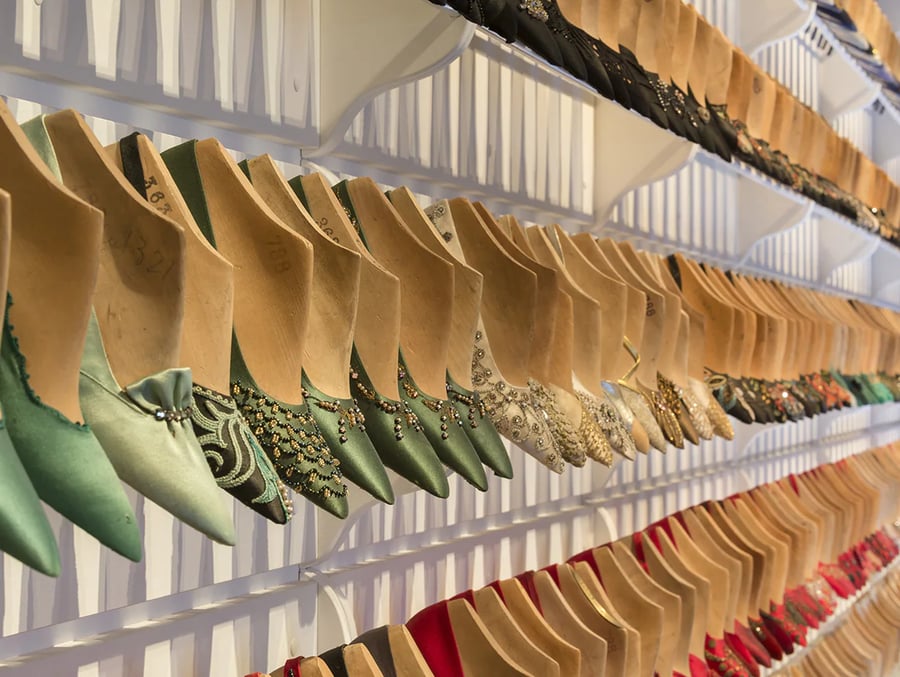
The Ferragamo Museo in Florence occupies the medieval basement of the Palazzo Spini Feroni, a 13th-century building that also houses the Ferragamo company’s contemporary headquarters, a collection of 17th- and 18th-century Florentine paintings, and a 17th-century chapel. The museum was founded in 1995 by the Ferragamo family to introduce international visitors to the artistic dimension of Salvatore Ferragamo’s work and his role in the history of footwear and global fashion. The palazzo’s medieval architecture and its centuries of subsequent layering give the museum a physical setting that adds historical depth to its objects.
The current temporary exhibition, “Salvatore Ferragamo 1898-1960,” is on display through May 10 and covers the designer’s career from birth to death. Ferragamo, who emigrated from Italy to the United States and built his reputation initially in Hollywood before returning to Florence to establish his couture operation, occupies a specific position in fashion history that crosses between American celebrity culture and Italian craft tradition. The museum’s description of the exhibition as a “film reel of our past, a step back to explore the role of a museum and the curating that accompanies it” reflects a self-reflective curatorial stance that the Ferragamo family’s long stewardship of the archive makes possible.
The Florence location gives the Ferragamo Museo a geographic context within the Italian fashion and craft landscape that the museum’s contents reflect directly: the artisanal shoemaking tradition that Florence has sustained across centuries gives Ferragamo’s work a regional inheritance as well as an individual genius, and the city’s existing tourism infrastructure around its art and architecture gives the museum a visitor base already oriented toward the kind of material culture engagement that the Ferragamo collection rewards.
