From kushari's layered bowl of lentils and crispy onions for a few cents to a hot-air balloon over Luxor's temples at dawn
-1920x1280.jpg)
Spencer Davis / Unsplash
Egypt encompasses an extraordinary range in a single country. The ancient monuments along the Nile represent 5,000 years of continuous civilization, preserved on a scale unmatched anywhere else on earth. The Western Desert has silence and geological formations that make the wilderness experience genuinely strange. The Red Sea's coral reef biodiversity places it among the world’s top diving destinations. The national dish, kushari, costs almost nothing and is better than most expensive food.
The practical range is equally extreme. A two-week Egypt trip can include breakfast at the Pyramids, floating in a salt lake in the Siwa Oasis, hiking with Bedouin guides through unmapped Sinai wilderness, and watching the sunrise over the Theban hills from a hot-air balloon over Luxor. Most visitors start in Cairo, which rewards the time spent there: the ancient streets of Old Cairo, the Khan al-Khalili bazaar, the tanoura performances at Wekalet el Ghouri, and the kushari at Koshary Abou Tarek are collectively enough to fill a week without running out of substance. Luxor is a one-hour flight or an overnight train south. The Red Sea coast is a short flight from Cairo or a drive from Cairo through the Eastern Desert.
The 10 activities below appear in Lonely Planet, written by Monica Gerges, an Egypt-based writer, covering the country’s most distinct and rewarding experiences from Cairo to the Sinai to Upper Egypt.
A practical note: Egypt is not a country that rewards being rushed. The monuments require time to understand. The street food requires stopping, eating, and moving on, not planning. Cairo especially rewards travelers who spend at least four or five nights, allowing the city to reveal itself through repeated encounters rather than a single comprehensive tour. Luxor is a two- or three-night stop. The desert destinations, Fayoum, Siwa, and the Sinai, each require at least one night.

Dina Said / Wikimedia Commons (CC BY-SA 4.0)
Kushari is Egypt’s national dish, a layered bowl of noodles, rice, brown lentils, and chickpeas topped with crispy fried onions, then smothered in tomato sauce, doused with garlicky vinegar, and finished with hot sauce. The layering is sequential and deliberate: each component is added in order, and the flavors build on one another, making the finished bowl taste more coherent than its ingredient list suggests. It’s cheap, filling, and good: the kind of food that sustains an entire working population and happens to be worth eating for its own merits.
Koshary Abou Tarek on Champollion Street in Cairo is the most celebrated kushari institution in the city, a cafeteria-style operation with a decades-long reputation among Cairenes. This is where to go for a first taste. The guided food tours run by Bellies En-Route cover the broader Cairo street-food circuit: family-run canteens, old-school coffee roasters, and hole-in-the-wall ta’amiyya and fiteer stands that tourists rarely find on their own. Egyptian ta’amiyya is made from fava beans, not chickpeas, which gives it a herb-green interior and a different flavor from the Lebanese version most international visitors are familiar with.
The rest of the street food program rewards adventurous eating. Ful medames, slow-cooked fava beans eaten at breakfast, is among the world’s oldest continuously prepared dishes. Molokhia, kebda, mombar, and shorbet kaware take the program into more challenging territory. The kushari is the entry point. The full Cairo street food tour is the complete picture.
The deeper Egyptian food culture takes some deliberate effort to reach. The adventurous options, mombar (stuffed sausage), makhasi (bull testicles), and shorbet kaware (cow’s foot soup), are available at specialist stalls, not general restaurants. The Bellies En-Route tours provide access to these stalls and the context to understand what you’re eating, which is more useful than arriving at a stall without any preparation. Egyptian food rewards the curious visitor who’s willing to eat things that don’t look immediately approachable.
Ashraf Abdelalim / Unsplash
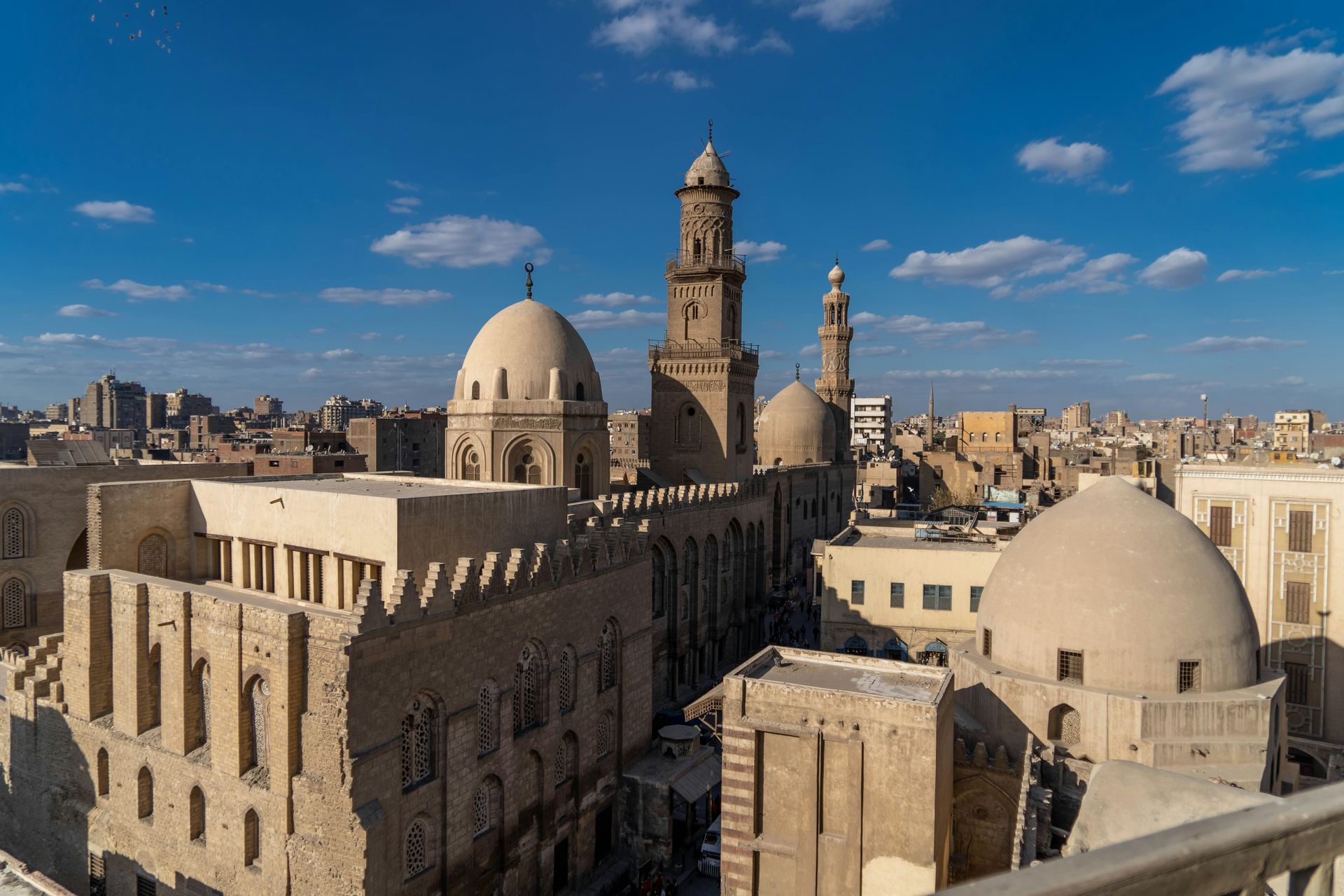
Old Cairo is one of the most historically layered urban environments in the world. The narrow alleys contain architecture spanning the Fatimid, Mamluk, and Ottoman periods within a few blocks of each other, creating a density of Islamic heritage that most entire cities can’t match. El Moez Street is the spine of the walk: a 1-kilometer stretch of medieval architecture whose continuous streetscape of domed mausoleums, ornate mosques, and decorated facades functions as an open-air museum, with the street itself as its collection. Start at the northern Bab al-Futuh gate and walk south.
The Khan al-Khalili bazaar, which the El Moez Street walk feeds into, is a full sensory experience: vendors calling from every stall, incense and spice mixing in the air, and the press of bodies navigating lanes that haven’t significantly changed in centuries. The stalls sell everything from soap powder to ornate clothing to small tourist trinkets, which is what makes the market feel like a working neighborhood, not a tourist production. Take your time. Bargain where bargaining is expected. The bazaar is large enough to get genuinely lost in.
Bab Zuweila, one of three surviving gates from the original Old City wall, is best visited in the late afternoon. Climbing the twin minarets costs a small fee and provides one of the finest sunset views in Cairo: the rooftops, minarets, and domes of the medieval city spread below in a composition that’s been essentially unchanged for centuries. The gate was historically used for public executions and as the ceremonial departure point for the annual Hajj caravan, which gives the architecture a layered historical significance beyond its visual appeal.
The best approach to Old Cairo is to start early, before the heat builds. The neighborhood is at its most atmospheric in the morning when the light is soft, and the crowds are still manageable. An afternoon rest during the hottest part of the day, followed by a return for the Bab Zuweila sunset, well structures the visit. The entire circuit, El Moez Street, Khan al-Khalili, and Bab Zuweila, covers about two miles on foot at a relaxed pace.
Ömer Evren / Unsplash
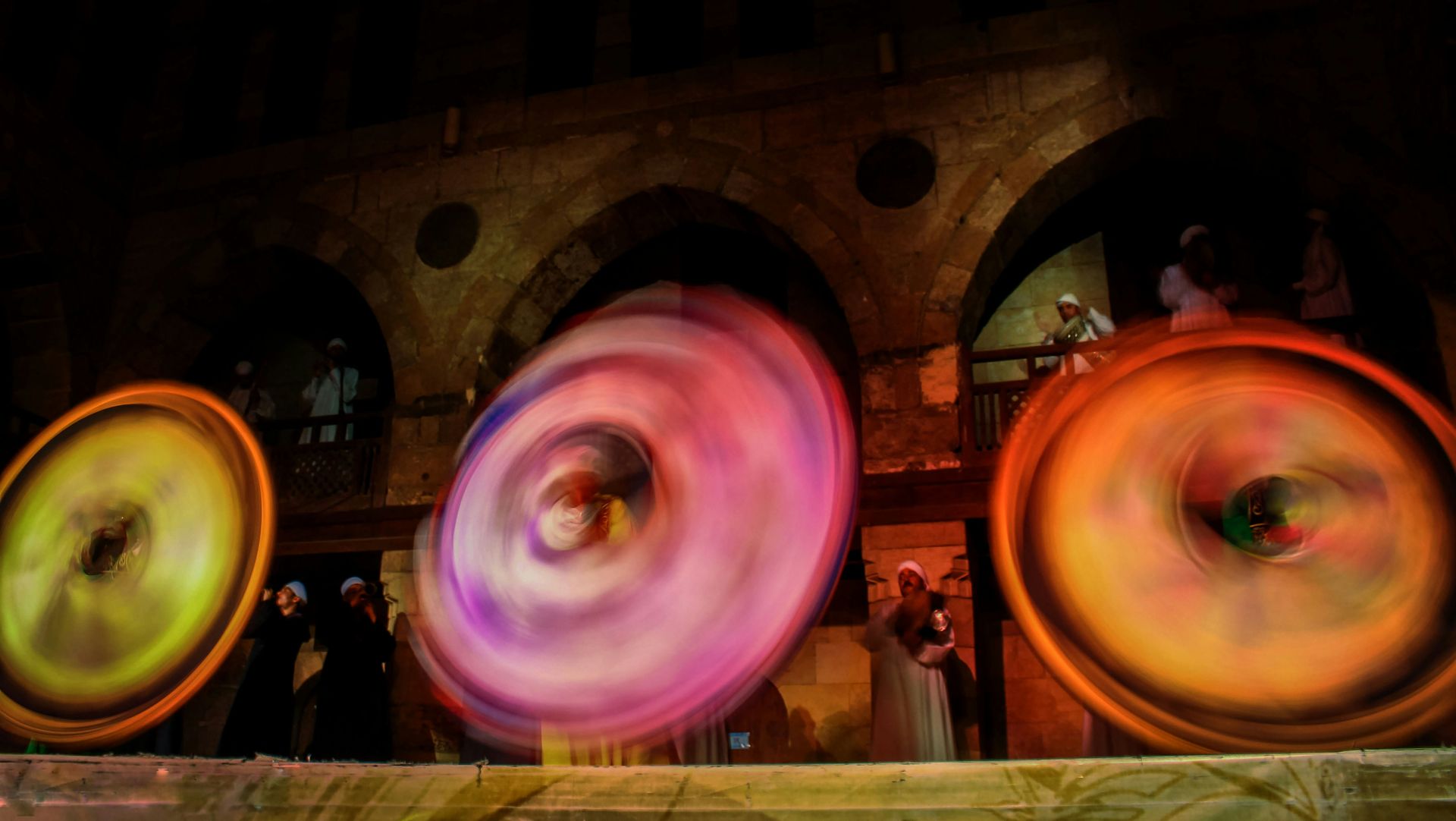
The Wekalet el Ghouri Arts Center in Old Cairo hosts a tanoura show every Wednesday and Saturday evening. Tanoura is a form of whirling dervish performance that merges Egyptian folklore with Sufi spiritual practice: the performers spin continuously for an hour, wearing layered skirts that spread into a wide horizontal disc as the centrifugal force builds. The Sufi chanting that accompanies the dance gives the performance a spiritual dimension, distinguishing it from a purely theatrical experience.
The venue itself is part of the appeal. The Wekalet el Ghouri is a restored medieval caravanserai, a commercial and cultural gathering place that has been operating in some form for 500 years. Watching a Sufi performance in a building with that history, in the heart of Old Cairo’s Islamic heritage district, gives the evening a contextual weight that a modern concert hall performance of the same material couldn’t provide.
Admission is free, which makes this the most accessible serious cultural experience in Cairo. Book tickets in advance through your accommodation or online. The show fills up, particularly in high tourist season. Arriving early allows time to explore the Wekalet el Ghouri’s courtyard and the surrounding streets before the performance begins.
The tanoura is not the only performance the Wekalet el Ghouri hosts. The center maintains a broader program of Egyptian folk and classical music events, and checking the current schedule when planning a Cairo visit is worthwhile. The building itself is worth visiting during the day, regardless of the performance schedule: the restored caravanserai courtyard is one of the most architecturally distinguished single spaces in Old Cairo and gives a clear sense of what the neighborhood’s commercial life looked like before the modern era. The Khan al-Khalili tea houses in the bazaar are worth a stop if you want to sit down: they’re tourist-facing but comfortable, and the mint tea is good. The show is free, but tips to the performers are appropriate and expected. Bringing Egyptian pounds in small denominations for this purpose is a practical preparation.
Abdelrhman Allam / Unsplash
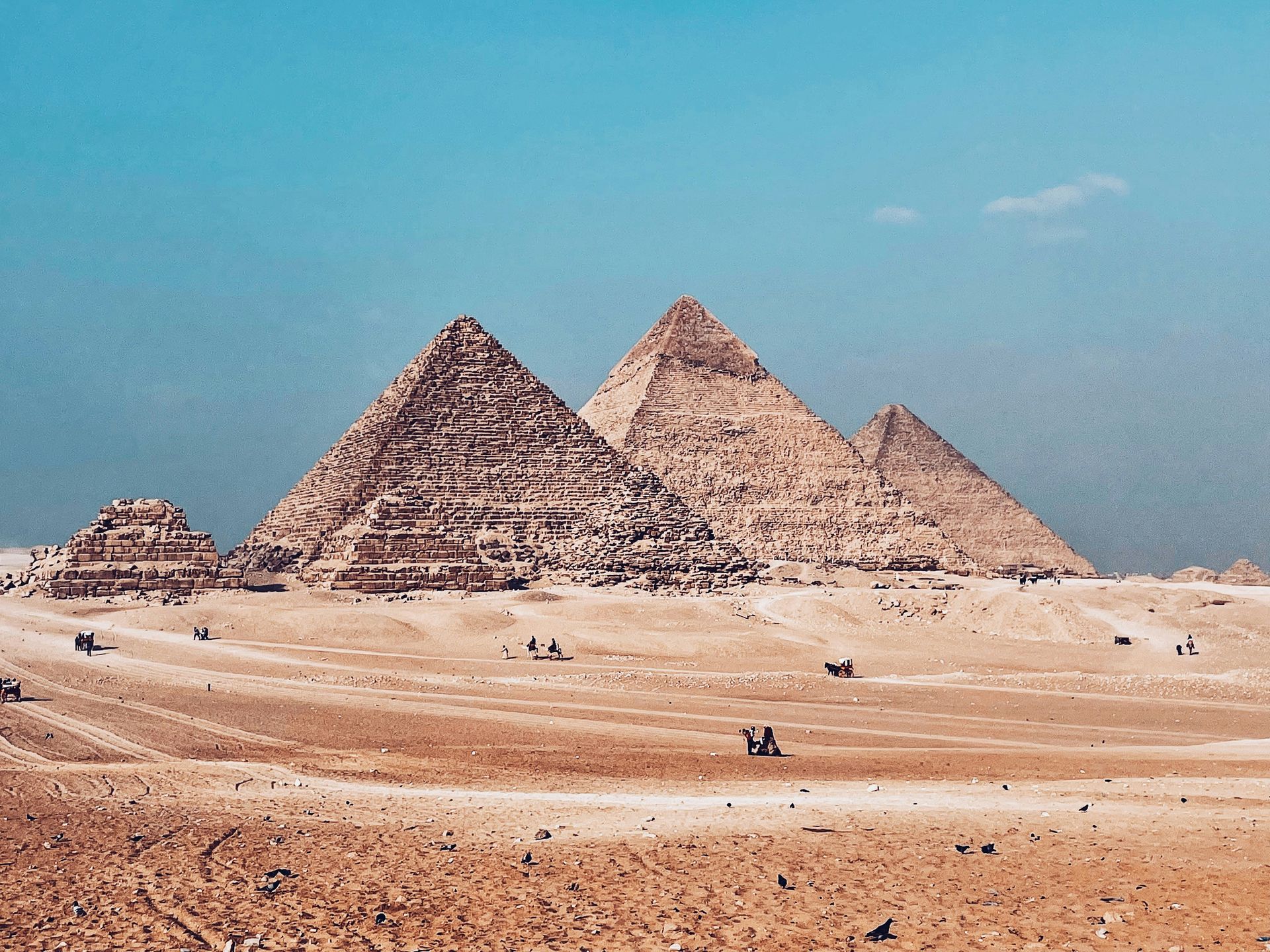
The 9 Pyramids Lounge offers a breakfast of freshly baked bread, feta cheese, tahini salad, falafel, and hot mint tea with an unobstructed panoramic view of the Pyramids. The logic is straightforward: arriving at the Pyramids with a crowd, queuing in the heat, and eating a snack from a vendor is the standard experience. Arriving at the Lounge before the crowds, sitting down to an Egyptian breakfast, and watching the light change across the limestone faces of the Great Pyramid and the Sphinx is a different experience entirely.
The Pyramids of Giza are most compelling in early morning light. The low angle of the sun throws the limestone block edges into sharp relief and gives the stone a warm color that the harsh midday sun flattens. The Great Pyramid stood at 481 feet when it was completed and remained the world’s tallest structure for nearly 4,000 years. Neither statistic fully prepares you for the actual scale, which photographs consistently underrepresent.
The view from the Lounge includes the Sphinx, whose position adjacent to the Great Pyramid makes it visible in the same panoramic frame. The surrounding Cairo suburbs are also visible, which gives the view its most distinctively Egyptian quality: a skyline of ancient monuments and apartment blocks sharing the same horizon, a juxtaposition that the postcard image invariably crops out but that is more honest about what Giza actually is.
The 9 Pyramids Lounge requires a reservation, particularly in high season. The breakfast costs more than most Cairo meals, which is the point: it’s a specific upgrade to the standard Pyramids visit, not a budget option. The Sphinx is included in the same entry ticket as the Pyramids complex, and a morning that includes breakfast at the Lounge followed by a walk through the complex to the Sphinx is a full and satisfying half-day before the afternoon heat sets in. Entry tickets for the Pyramids complex, the Sphinx enclosure, and the Solar Boat Museum are sold separately, and the prices change periodically, so checking current costs before arrival is worthwhile.
Ahmad Ajmi / Unsplash
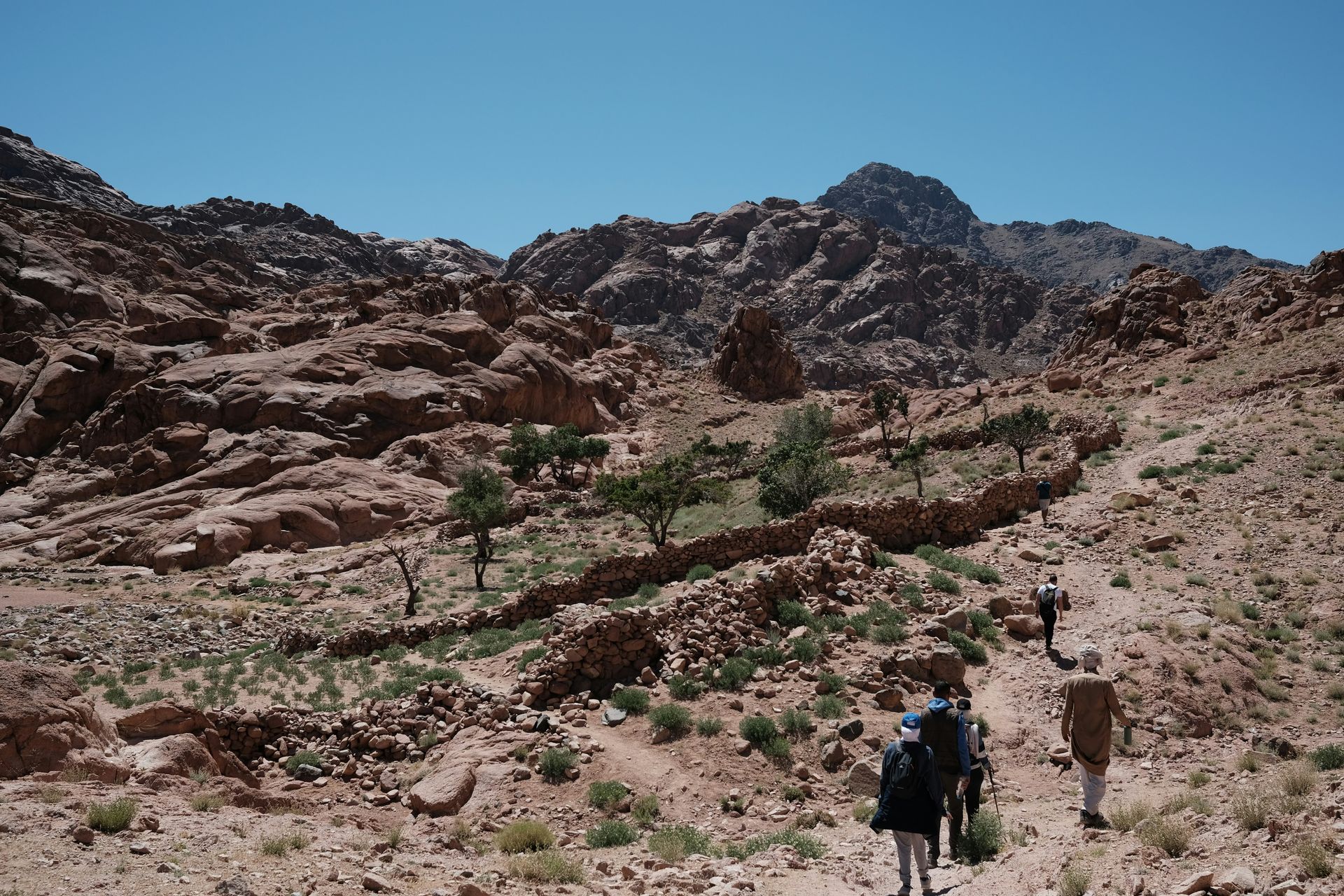
The Sinai Trail is Egypt’s first long-distance hiking trail: a 550-kilometer circuit through the territories of the eight Bedouin tribes of South Sinai. The trail was designed as a sustainable tourism initiative that keeps fee revenue within the Bedouin communities and preserves the traditional knowledge and heritage of the guides whose expertise the hike depends on. Segments range from two days to several weeks, so the commitment level is adjustable.
The landscape is the Sinai Peninsula’s granite core: deep wadis, high summits, and red-orange rock exposed by erosion over millions of years. The Bedouin guides know the water sources, traditional campsites, and terrain in ways no map can capture. The campfire conversations, the Bedouin tea ritual, and the star-filled desert nights are as much the point of the trail as the walking itself. This is not a place where you experience Bedouin culture as a performance. You’re traveling through it with people who live it.
The sister route, the 170-kilometer Red Sea Mountain Trail outside Hurghada, covers different terrain: desert plains, deep gorges, Roman ruins, prehistoric rock art, and the chapels of Egypt’s Desert Fathers. The two trails complement each other. The Sinai is a granite mountain culture, and the Red Sea Mountain Trail is a coastal desert with layered historical evidence of successive civilizations. Both are divided into segments and bookable in sections.
The Sinai Trail is organized by local Bedouin communities, not by standard tour operators. Booking requires contacting the trail’s community coordinators in advance, typically several weeks ahead for the longer segments. The logistics are straightforward once the initial contact is made, but this is not an activity that can be arranged spontaneously on arrival. The investment in planning pays off: this is one of the most genuinely off-grid hiking experiences available in North Africa or the Middle East. The trail is best suited to physically fit walkers with some prior desert hiking experience, or those prepared to take shorter segments under close Bedouin guidance.
Omar Elbadry / Unsplash
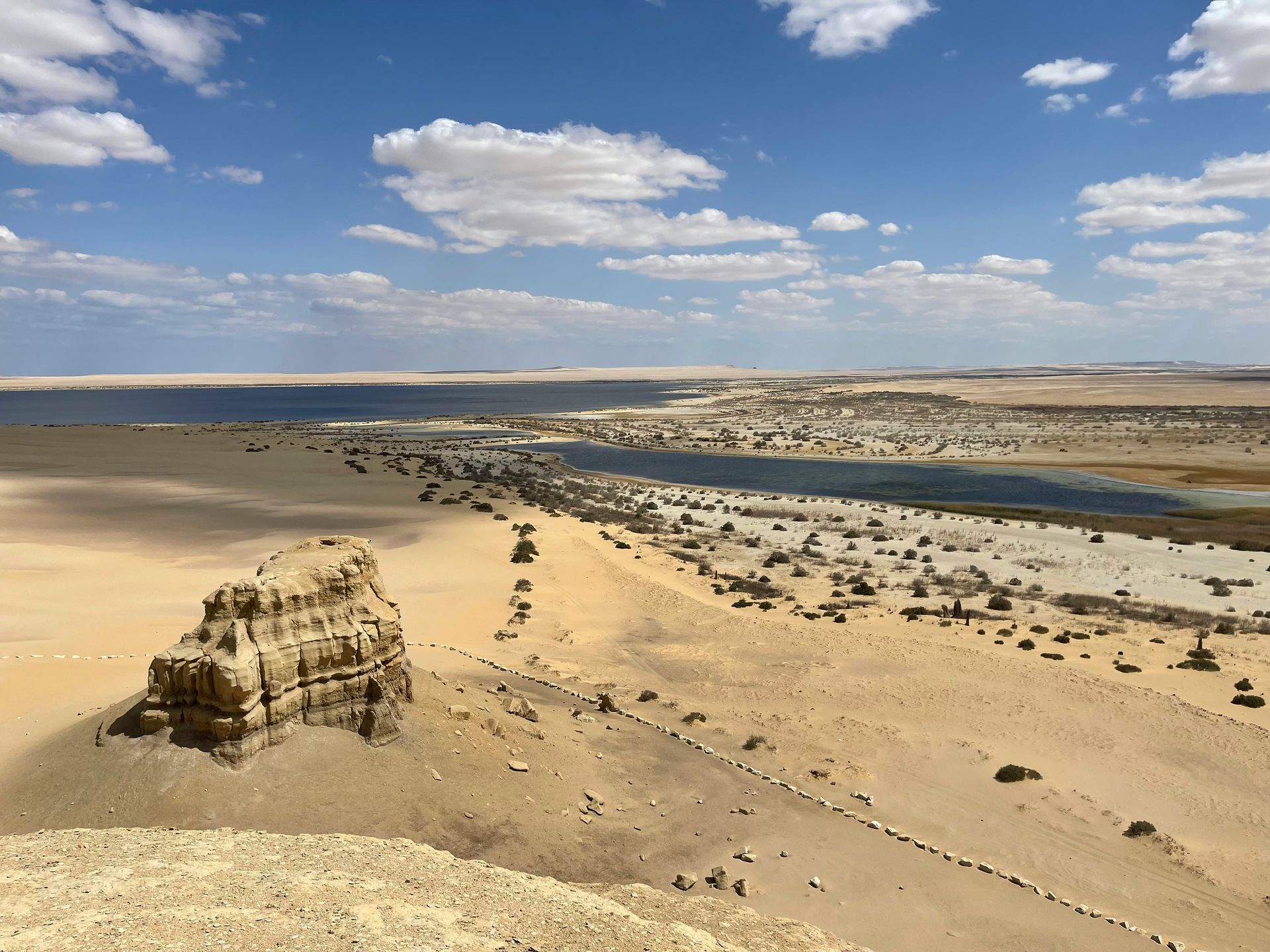
Fayoum is two hours south of Cairo and contains two things that have no business being in the middle of an Egyptian desert: waterfalls and a valley full of ancient whale fossils. The Wadi Rayyan waterfalls are Egypt’s only natural waterfalls, fed by an aquifer system that also produces the crystal-blue desert lakes that the 4WD safari route passes through. The surreal quality of cold, clear water in a desert landscape is the defining visual experience of the Fayoum day trip.
Wadi Al Hitan, the Valley of the Whales, is a UNESCO World Heritage Site and one of the most important paleontological sites in the world. Forty million years ago, this was the Tethys Sea, and the carnivorous whales that swam here left fossils embedded in the dune-swept rock formations that now look like desert sculptures. Walking among the fossils, which show the evolutionary transition from land mammal to ocean-going cetacean, produces a specifically strange experience: the physical evidence of a world so different from the current one that it requires a real effort of geological imagination to inhabit it.
The day trip typically ends with a Bedouin dinner under the stars. The desert at night is cold year-round, and the Lonely Planet article specifically advises bringing more clothing than you think necessary. This is good advice. The stargazing is exceptional: far enough from Cairo’s light pollution that the Milky Way is visible.
Fayoum is two hours south of Cairo by car, and a day trip is feasible, though an overnight stay allows a more relaxed itinerary and access to the desert night. The Sobek Lodge near Wadi Rayyan is the most frequently recommended base. A 4WD vehicle is necessary for the safari route through the desert to the waterfalls and lakes, and most visitors arrange it through their accommodation rather than renting independently. The Fayoum itself rewards a slower itinerary than the day trip allows, and visitors who stay overnight can visit Tunis Village, a pottery-making community on the lake’s edge, which adds a cultural dimension to what is otherwise primarily a natural landscape trip.
tronics / Wikimedia Commons (CC BY 2.0)
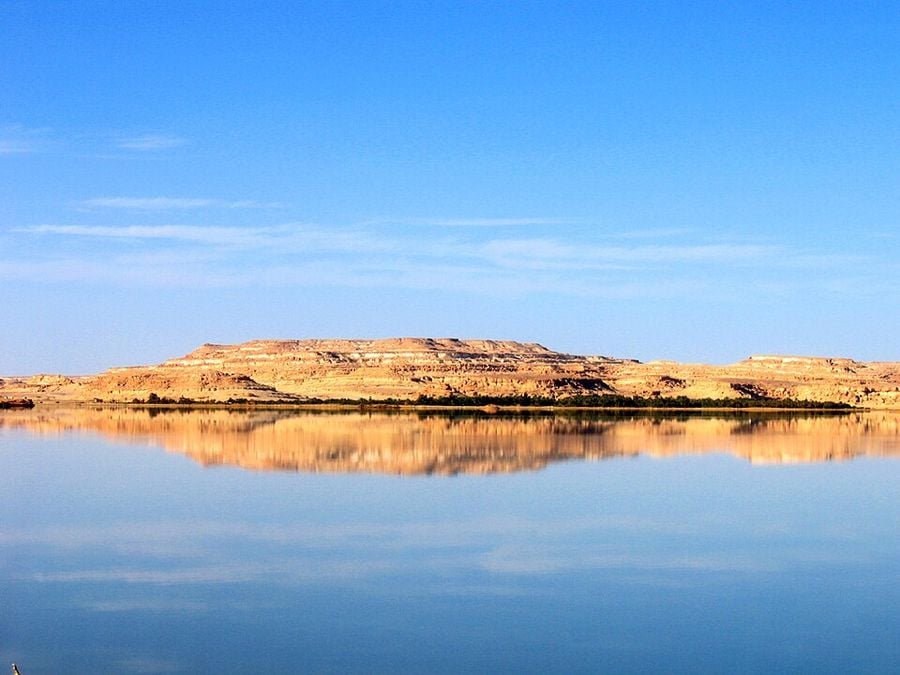
Siwa is in the Western Desert near the Libyan border, genuinely remote in a way that requires commitment to reach. The oasis contains hundreds of salt lakes whose high mineral content makes floating effortless, similar to the Dead Sea. Turquoise water, salt formations, date palm groves, and the desert plateau behind create a color palette so specific to this location that photographs of Siwa look digitally enhanced when they haven’t.
The salt lakes have a local reputation for therapeutic properties. Whether or not the sinus-clearing and infection-treating claims are accurate, floating in highly salinated water in the middle of the desert is pleasant in an unambiguously physical way. The water is clear, the salt concentration prevents sinking, and the surrounding landscape is among the most visually unusual in Egypt. The Lonely Planet article recommends keeping fresh water nearby to rinse the salt off afterward, which is practical advice that significantly improves the experience.
Cleopatra’s Spring is a freshwater pool surrounded by date palms, used since antiquity and named for the queen whose father, Alexander the Great, visited the Siwa Oracle $ORCL in 331 BCE to receive the pronouncement of his divine parentage. The Oracle of Amun was one of the most consulted oracles in the ancient world, and Alexander’s visit was among the most consequential single journeys in classical history. The spring is now a place to rinse off salt and sit in the shade, which it accomplishes without requiring the mythology.
Siwa is eight hours from Cairo by road, or reachable by overnight bus. The journey is long enough that a minimum of two nights is necessary to make it worthwhile. The oasis has a distinct local culture, Siwi-speaking, not Arabic-speaking, with its own traditions and its own food. The best accommodation is in garden guesthouses, not the larger hotels, and the Siwa Shali Resort and Adrere Amellal are the most recommended options for travelers who want comfort alongside the remote desert experience.
Dilip Poddar / Unsplash
Luxor is often called the world’s greatest open-air museum, which is accurate in that the density of pharaonic architecture per square kilometer exceeds that of any other location on earth. The temples, tombs, and monuments of the Theban plain and the East Bank represent more than three thousand years of construction, from the New Kingdom through the Greco-Roman period, and the preservation quality is extraordinary by any standard.
The Temple of Karnak is the right starting point. The hypostyle hall, with its 134 massive columns, is the most physically imposing single architectural space in Egyptian antiquity, the kind of room whose scale makes the human body feel small in a genuinely humbling, not uncomfortable, way. The Luxor Temple, a few kilometers southwest, is best visited in the evening, when the illumination transforms the colonnades and pylons into something almost theatrical. The Valley of the Kings, 40 minutes away on the West Bank, contains the painted burial chambers of Ramses III, Seti I, and dozens of other New Kingdom pharaohs, each tomb a complete artistic world.
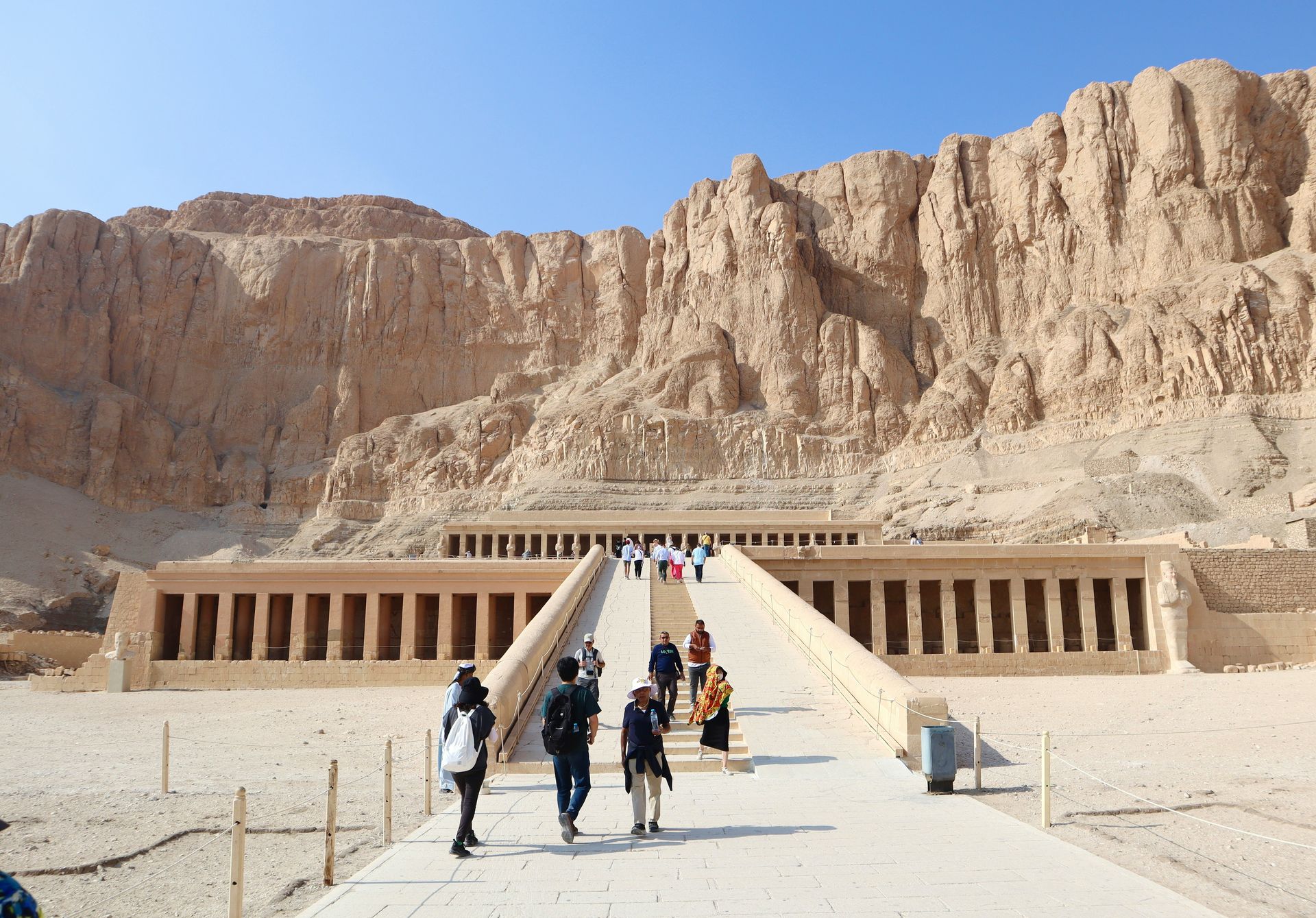
The Valley of the Queens and Hatshepsut’s mortuary temple round out the West Bank program. The tomb of Nefertari, Ramses II’s most beloved wife, has the most elaborately painted chamber in the valley. Hatshepsut’s temple, built into the cliff face at Deir el-Bahari, is the finest example of New Kingdom architecture in Egypt and the monument of the female pharaoh whose reign was one of ancient Egypt’s most prosperous.
Luxor requires at least two full days to do justice to the East Bank and the West Bank programs. The ideal approach is one day per bank, with the Valley of the Kings and Hatshepsut’s temple combined on the West Bank day and Karnak and the Luxor Temple on the East Bank day. Early mornings and late afternoons are the most comfortable times to visit monuments. The midday heat in Luxor is severe, particularly from May through September, and the covered tombs in the Valley of the Kings provide useful shade.
Joe deSousa / Unsplash
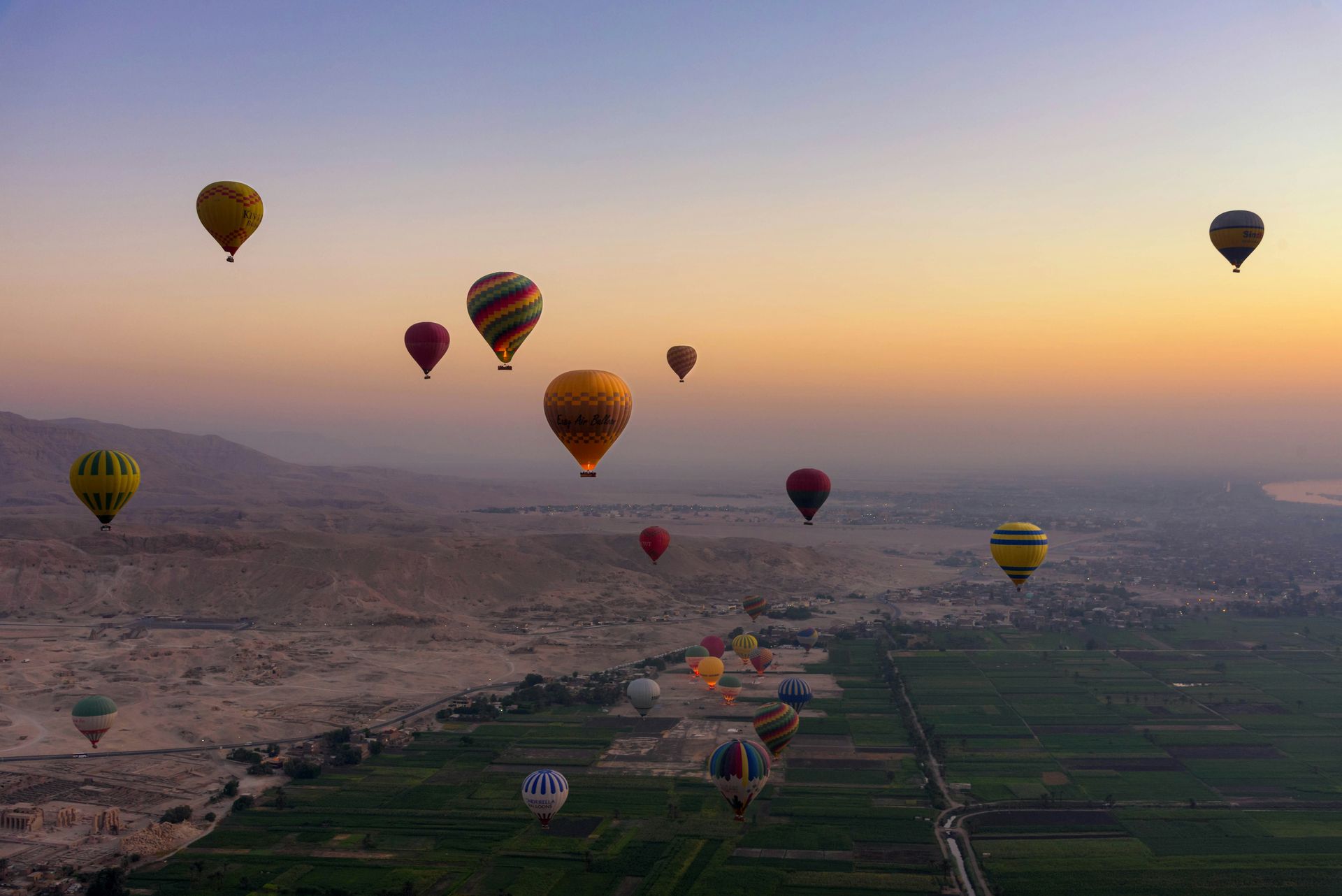
About 50 balloons launch over Luxor every morning at dawn. The spectacle from the ground is already impressive. From inside a balloon basket, watching the sun rise over the Theban hills while the temples, tombs, farms, and the Nile appear below in a single continuous ancient landscape is among the most genuinely moving travel experiences Egypt offers. The scale and concentration of the monuments, which are hard to comprehend from ground level, become legible from the air.
The first launch requires a 3 a.m. wake-up call, which the Lonely Planet article honestly acknowledges as the price of admission. The dawn light, the transition from pre-dawn darkness through rose and gold to full morning illumination across the limestone, is what makes the timing worth it. A second shift launches about an hour later for visitors who can’t manage the early alarm. The light is more intense and the colors more saturated, though the atmospheric quality of dawn is specific to the first shift.
Luxor’s balloon operations are regulated by Egypt’s Civil Aviation Authority, with licensed pilots, traveler manifests, and formal approval processes. The launch field looks somewhat chaotic, with 50 balloons inflating simultaneously by blasts of fire, but the operational standard is professional. The maximum ceiling is around 1,000 feet above the Theban plain, which is high enough to see the full monument complex and the river in a single frame and low enough to see individual temple columns and wave at locals watching from their rooftops.
Booking a hot-air balloon in Luxor is most reliably done through an established operator, not through a hotel recommendation. Magic Horizon and Hod Hod Soliman are the two most consistently reviewed operators. The price has remained relatively stable for years and covers transport to the launch site, the flight, and a small breakfast afterward. Weather cancellations happen, particularly in the winter months when desert winds can ground the balloons. If a flight is canceled, most operators reschedule for the following morning, which is a reason to build flexibility into a Luxor itinerary.
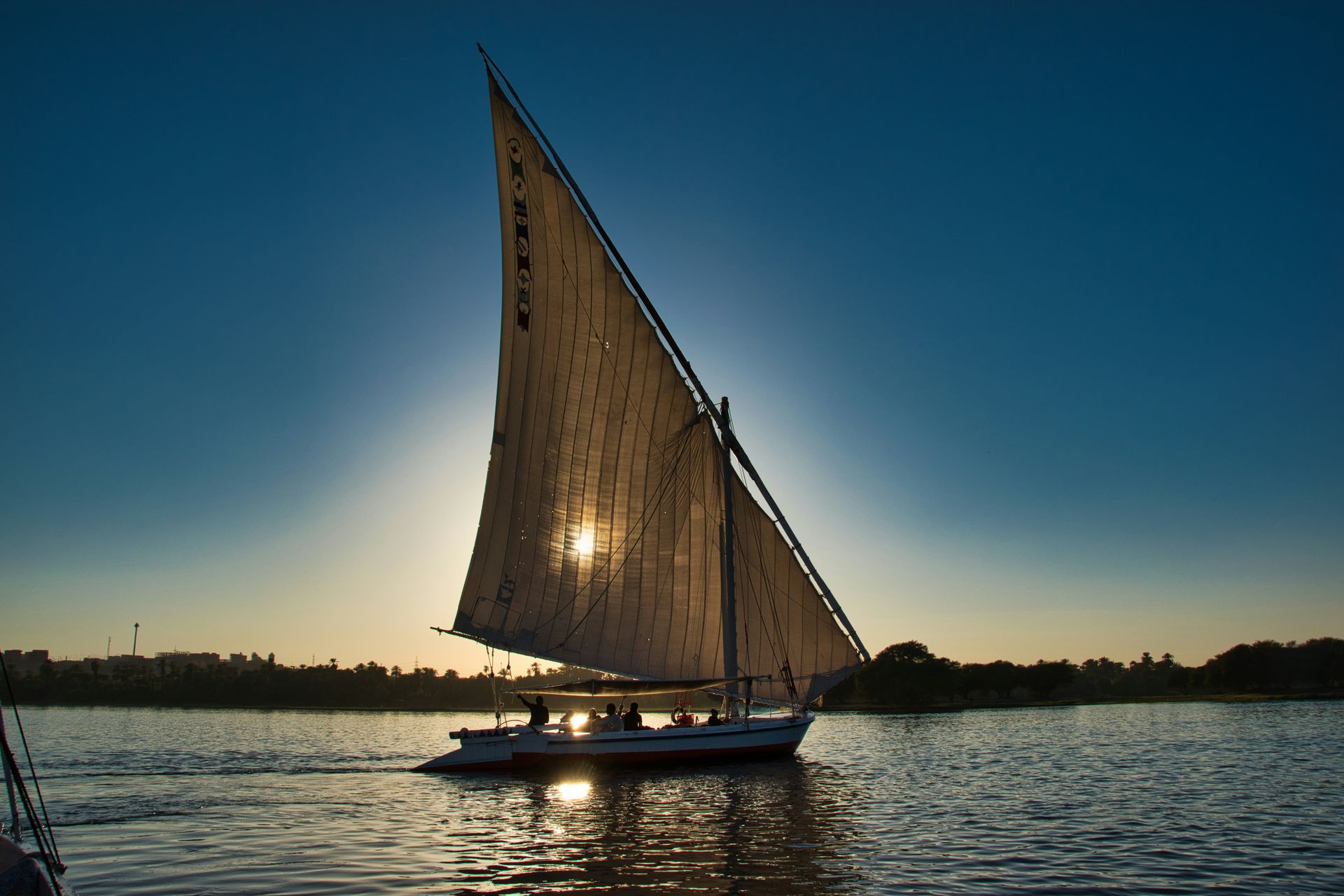
Gijs Jakobs / Unsplash
The felucca is a traditional wooden sailboat that has been the Nile’s primary small-vessel form for centuries. The design hasn’t changed significantly because it works: a shallow draft, a lateen sail, and a low profile that makes the boat nimble in variable wind. Renting one for an hour or an afternoon, either in Cairo or Aswan, is the most direct way to experience the river as a living thing, not a backdrop.
In Cairo, felucca docks line the corniche at Maadi, Zamalek, and Garden City. The view of the city from the water is different from anything available on shore: the buildings appear in proper scale relative to the river’s width, and the skyline reads as a whole composition, not individual facades glimpsed between other buildings. In Aswan, feluccas serve a more practical function, connecting the city’s 20 islands in the absence of bridges. The same boat used by tourists for scenic cruises is also the means of transport for island residents.
The sunset is the right time. The late afternoon light turns the river surface orange and gold, and the felucca’s slow progress through that light, sail-powered and wind-dependent instead of engine-driven and timed, gives the ride a pace that’s genuinely restorative after a day of active sightseeing. The fare is negotiated directly with the captain, which is more informal and more characteristically Egyptian than the organized tour format.
In Aswan specifically, a felucca trip to the Botanical Garden on Kitchener’s Island or a sunset cruise around Elephantine Island is a well-established activity that is genuinely enjoyable, not merely scenic. The evening light on the Nile in Aswan, with the sandstone cliffs of the West Bank turning orange and the domed tombs of the Aga Khan visible above, is one of the more specifically beautiful landscapes in Egypt, and experiencing it from the water at low speed is the best way to absorb it. The Nubian villages on the West Bank are also reachable by felucca and worth a stop for anyone spending more than two nights in Aswan.
