
The best — and most unique — things to eat and drink in Iceland
From geothermally baked underground rye bread in the Mývatn volcanic zone to langoustines grilled in butter at the Höfn harbor festival
Andy Wang / Unsplash
Iceland’s food reputation is a study in contrasts. On one side sits hákarl, the fermented Greenland shark that requires six months of underground rotting before it is safe to eat, and whose ammonia-and-decomposition smell prompted the late Anthony Bourdain to call it the worst thing he had ever tasted. On the other hand, sits a generation of New Nordic chefs whose work in Reykjavík has earned Michelin recognition and whose approach to Iceland’s extraordinary seafood, grass-fed lamb, geothermal vegetables, and ancient preservation techniques has made the country one of the more interesting food destinations in Northern Europe. The reality of eating in Iceland is that both coexist: the challenging traditional dishes and the genuinely world-class contemporary cooking occupy the same island, and the visitor who approaches the food culture with curiosity rather than trepidation finds a culinary landscape whose historical logic and present-day ambition both reward attention.
The historical context helps explain why Iceland’s food is the way it is. Sparse soil, harsh winters, and geographic isolation meant that survival required using every part of every animal, preserving everything through drying, smoking, salting, and fermenting, and building a cuisine around the ingredients the island reliably produced: sheep, fish, and seabirds. The geothermal energy that made survival difficult also made innovation possible: hverabrauð rye bread baked underground using volcanic heat is a cooking method available nowhere else on earth, and greenhouse tomatoes, bananas, and pineapples grown using geothermal power have turned Iceland into an unlikely greenhouse agriculture pioneer.
The 10 foods and drinks below appear in Lonely Planet, written by Icelandic food writer Oliver Berry. Reykjavík is home to the most ambitious contemporary cooking, but the best versions of several dishes below are found outside the capital, in the fishing towns, farm restaurants, and geothermally active corners of the island, where specific local conditions give the food its most authentic character.
1. Skyr is Iceland’s national dairy product
Christopher Gaines / Unsplash
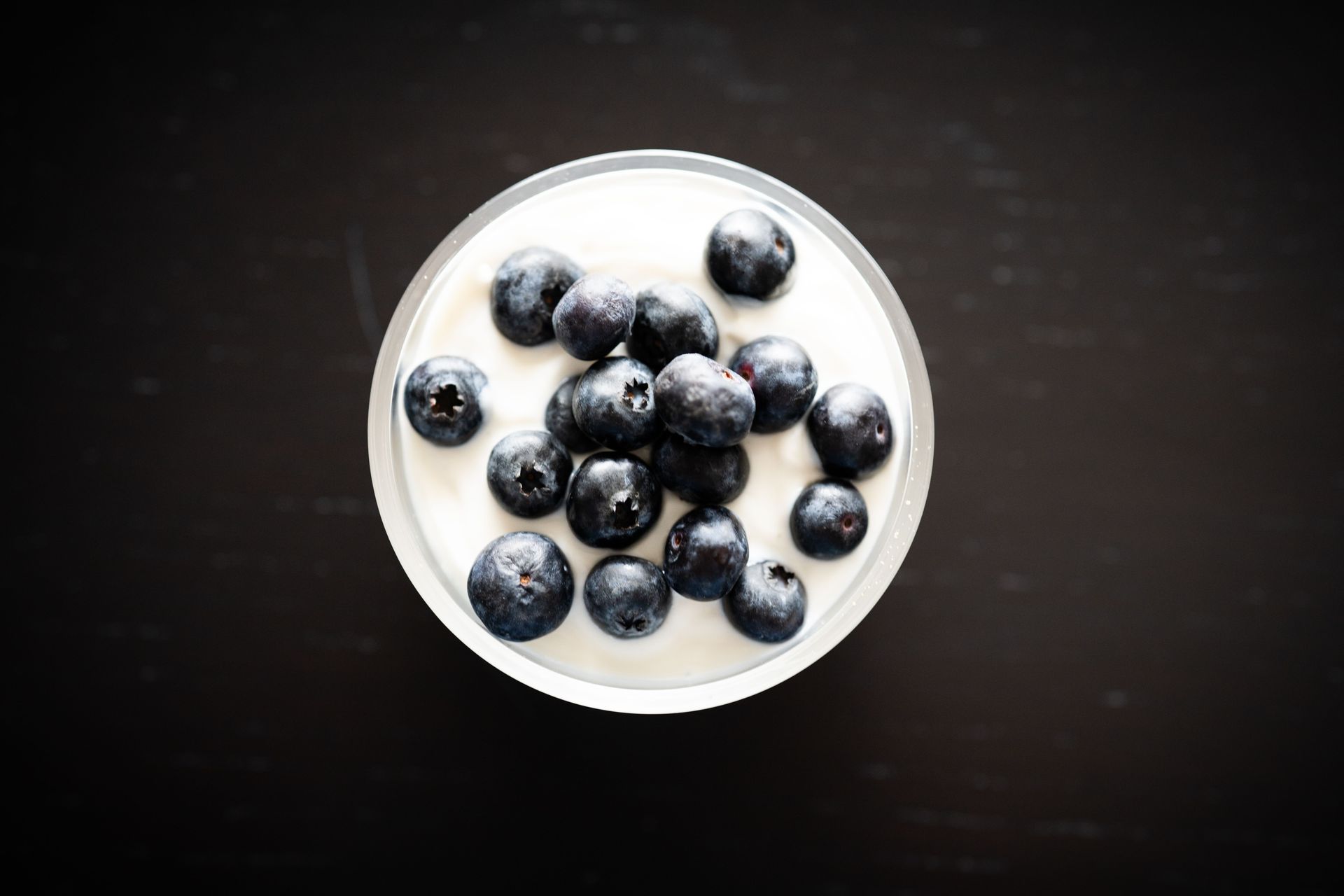
Skyr gives Iceland its most internationally recognized single food product: a thick, creamy dairy dish that resembles yogurt in texture but is technically a soft cheese whose protein density and mild, slightly tart flavor give it a nutritional profile and a culinary versatility that the simple yogurt comparison undersells. The classic preparation, sweetened with sugar or honey and topped with fresh berries, gives the breakfast table its most specifically Icelandic single dish, and the smoothie and drink formats that cafés across Iceland offer give the skyr program its most portable and most immediately accessible version for the visitor whose first morning in Reykjavík is spent looking for something local and recognizable.
The contemporary dessert applications give skyr its most creative single dimension: the skyr volcano at Pakkhús restaurant in Höfn, the skyr cheesecake and skyramisu versions that appear on menus across the island, and the skyr crème brûlée give the dairy product a dessert range whose variety reflects a culinary culture that has taken a traditional breakfast ingredient and applied it to the full course sequence. The Erpsstaðir dairy farm between Búðardalur and the Ring Road gives the skyr experience its most specific farm-origin single stop: tasting skyr at the working dairy, whose animals produce the milk, gives the product its most direct provenance.
The skyr’s widespread availability, from supermarket tubs to farm shop servings to restaurant dessert menus, gives the Iceland food visitor the option of encountering it multiple times across the trip in contexts whose variety provides a single ingredient with its most complete nationwide survey. The New Nordic cooking movement’s application of skyr to contemporary restaurant menus gives the traditional dairy product its most creative single current expression: chef Gunnar Karl Gíslason’s work at Dill, Reykjavík’s Michelin-starred flagship of New Nordic Icelandic cuisine, has featured skyr in preparations whose sophistication gives the ancient dairy product its most internationally recognized fine-dining moment and its most convincing argument that Iceland’s dairy tradition has always deserved more serious culinary attention than the country’s food reputation historically attracted.
2. Hardfiskur gives Iceland its most ancient fish snack
Richard Eriksson / Wikimedia Commons (CC BY 2.0)
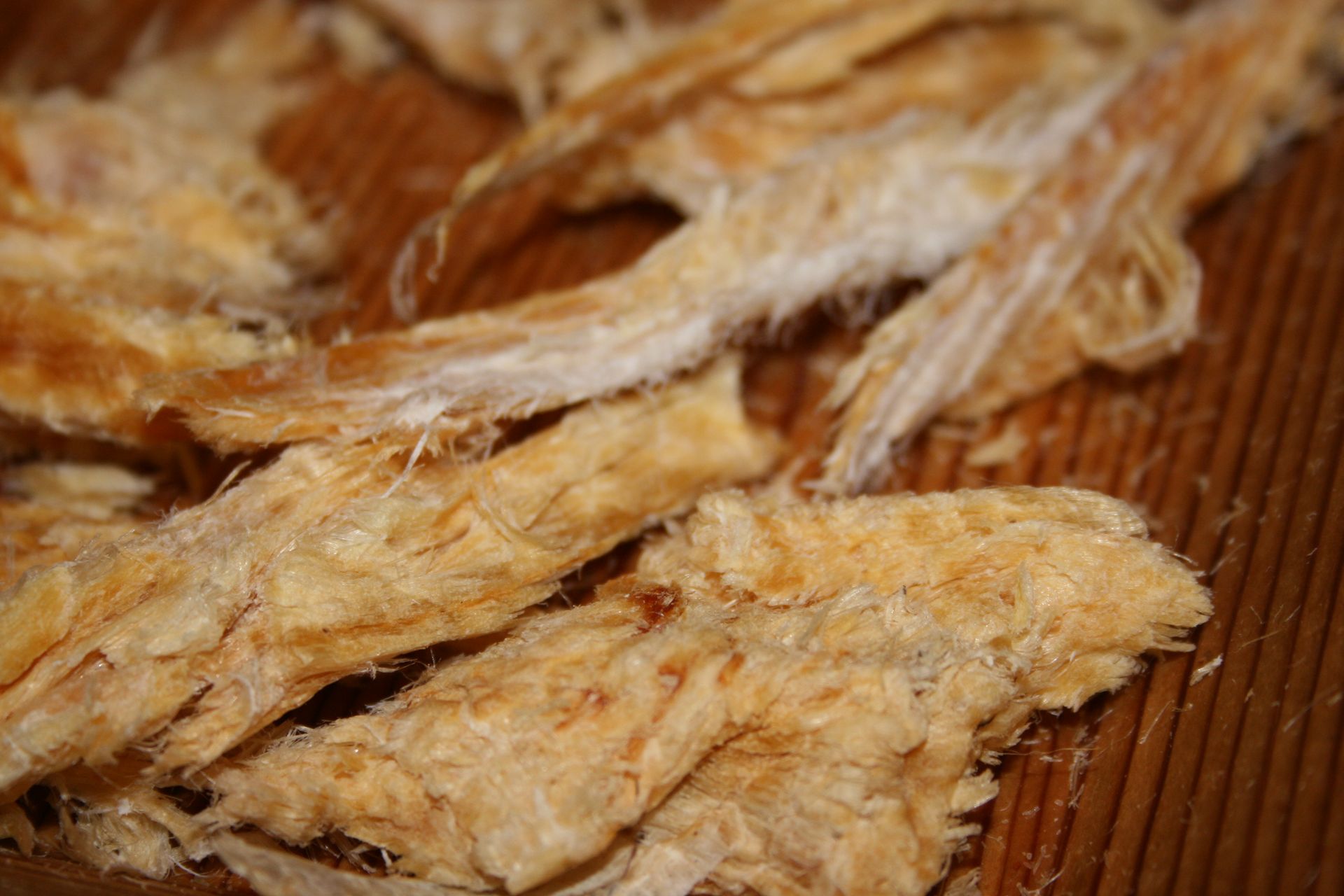
Harðfiskur is brittle, wind-dried haddock, something between fish jerky and a cracker, and is among the most direct expressions of Icelandic food culture’s survival logic. The process is straightforward: the fish is cleaned and hung in the open air until moisture has fully evaporated, leaving a shelf-stable product with an intensely concentrated flavor. Eaten with butter, whose fat rounds out the salt and ocean intensity of the dried fish, harðfiskur is a snack whose simplicity reflects centuries of necessity, not culinary experimentation.
The wind-drying method works because of Iceland’s cold, dry coastal air, and the same environmental conditions that shaped the island’s broader preservation culture. Supermarkets and food markets stock it, but the fishmonger's version is more carefully prepared and has a fresher flavor. For hikers and outdoor travelers, harðfiskur is a practical choice: high in protein, light in the pack, requiring no refrigeration, and flavorful enough that a small quantity satisfies.
Fiskbúð Sjávarfangs in Ísafjörður, in the Westfjords, is the most specifically recommended source in the Lonely Planet article. The Westfjords’ remoteness from the Ring Road tourist circuit means visiting Ísafjörður takes genuine commitment, but the dramatic fjord scenery and the preserved fishing culture give the regional food its most appropriate physical context of any stop on this list.
The practical case for harðfiskur on any Icelandic hiking or driving trip is strong. A bag from the supermarket or a fishmonger costs very little, needs no refrigeration, and provides enough protein to sustain a full day of walking. The flavor is intense enough that a small amount is sufficient. Eat it with butter pulled from a foil pat if nothing else is available. The combination works because the fat moderates the salt and concentrates the oceanic intensity into something genuinely pleasurable and not overwhelming. The version from Fiskbúð Sjávarfangs in Ísafjörður is worth the detour into the Westfjords, but the supermarket version, bought at a Bónus in Reykjavík and eaten in the car on the way to the next stop, is also fine and more honest about what harðfiskur is: a practical food that happens to be delicious.
3. Pylsur are Iceland’s lamb hot dogs
Kirk K / Flickr (CC BY-NC-ND 2.0)
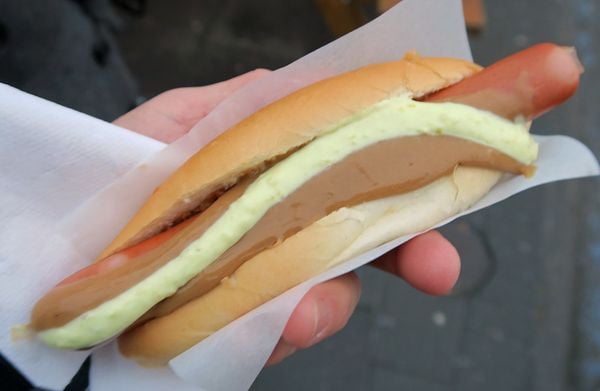
The Icelandic pýlsa gives the hot dog format its most specifically Nordic single variation: a sausage made from lamb, beef, and pork, whose lamb content gives the flavor a distinct gamey richness, distinct from the all-beef or pork-dominant hot dogs of the American and German traditions. The full topping order, raw and deep-fried onion, ketchup, mustard, and tangy remoulade, ordered with the phrase “eina með öllu” meaning “one with everything,” gives the pýlsa its most specifically Icelandic single eating ritual, whose phrase functions as a practical linguistic souvenir specific to a country whose food culture is not always accessible to the visitor without local knowledge.
The hot dog’s status as the classic late-night, post-pub street food in Reykjavík gives the pýlsa a social context specific to a city whose nightlife extends well past midnight on weekends and whose visitors historically discover the hot dog at the exact moment when the need for something hot, substantial, and affordable becomes most acute. The queue that forms at the best hot dog stands gives the visitor the most practical single quality signal available at street food level: the line of locals and tourists at 1 a.m. reflects a collective endorsement whose volume is a more reliable indicator than any review.
Bæjarins Beztu gives the pýlsa program its most historically celebrated single stand: a Reykjavík institution whose Bill Clinton patronage has become part of the establishment’s marketing identity, and whose stellar reputation among the city’s residents makes it the most specifically endorsed single hot dog stop in Iceland. The pýlsa’s lamb content gives Iceland’s hot dog a flavor that reflects the country’s most abundant and most culturally important single livestock animal, and the deep-fried onion topping, whose crispy texture contrasts with the raw onion’s sharpness, gives the full topping version its most specifically Icelandic single preparation detail, whose layered textures make the dressed pýlsa a more complete eating experience than the naked sausage alone.
4. Licorice in Iceland earns its place as a Nordic obsession

nataliaaggiato / Pixabay
Salty licorice, sweet licorice, and chocolate-covered licorice fill entire sections of Icelandic supermarket confectionery aisles. This is a Nordic-wide phenomenon: Scandinavian and Nordic countries collectively consume more licorice per capita than anywhere else in the world, but Iceland’s enthusiasm is particularly concentrated. The salted variety, whose ammonium chloride coating adds a sharp mineral intensity to the licorice root’s natural bitterness, is the version that most clearly separates Nordic from non-Nordic palates. Many visitors find it challenging. Locals find it essential.
The chocolate-covered version is the most accessible entry point for the uninitiated. A thorough survey of the supermarket aisle costs very little and covers a variety of formats, including individual pieces, bags, and bars, unavailable in non-Nordic markets. The specific Icelandic branded versions differ meaningfully from their Dutch and Scandinavian competitors in flavor intensity and salt level, making the aisle worth exploring even for travelers who’ve had licorice elsewhere.
Le Kock, a Reykjavík burger restaurant, serves salt licorice and chocolate donuts, one of the more creative contemporary applications of Iceland’s defining candy obsession. For the visitor willing to approach the ingredient with genuine curiosity and not resigned tolerance, the Icelandic licorice landscape turns out to be more varied and more interesting than the initial grimace suggests.
The salty variety, called salt lakkrís, is where most visitors either commit to licorice culture or decide the whole obsession is not for them. The ammonium chloride coating creates a flavor effect that has no close analog in non-Nordic candy traditions. Icelanders eat it matter-of-factly, the way other cultures eat things that confuse outsiders. Approaching it as anthropology rather than just snacking makes the experience more productive. The chocolate-covered versions significantly reduce the intensity. Brands worth trying include Nói Síríus and Þór, both of which produce licorice in multiple formats, with quality that differs meaningfully. Le Kock’s salt licorice donuts are the most creative contemporary application in Reykjavík and a reasonable argument for the ingredient's broader culinary range than a candy aisle suggests.
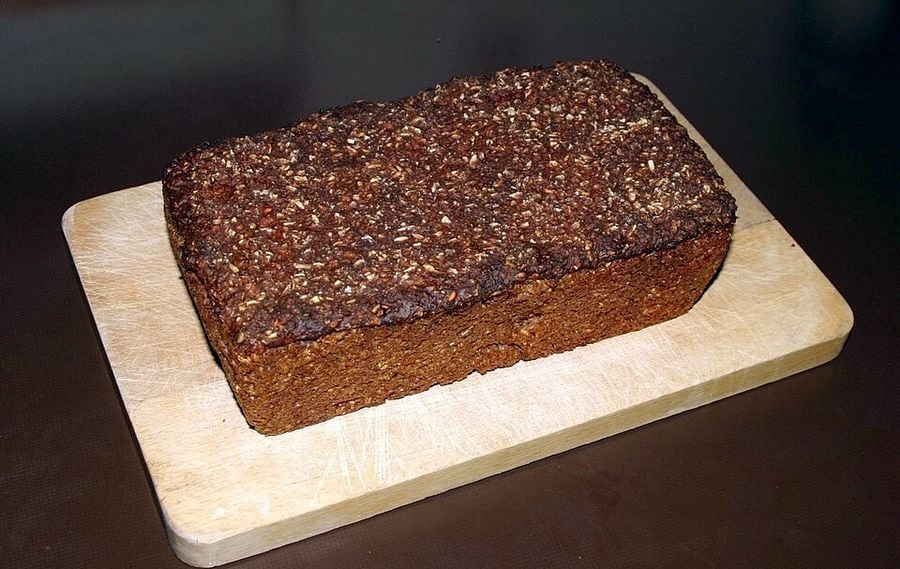
5. Rugbraud holds Iceland’s geothermally baked rye tradition
Sten Porse / Wikimedia Commons (CC BY-SA 3.0)
Rúgbrauð is a dark, dense rye bread. The standard version is excellent in its own right: slightly sweet, malty, with a texture denser than most Scandinavian rye breads. But the most specifically Icelandic version is hverabrauð, baked underground in volcanic rock using geothermal heat for over 24 hours. This is a cooking method available nowhere else on earth: the heat source is the planet itself.
The geothermal baking method requires the volcanic conditions of the Mývatn area in northeast Iceland, where shallow geothermal activity produces steaming vents and boiling mud pots, and the same underground heat that cooks the bread. The slow process gives the hverabrauð a slight sweetness and a malty depth that oven-baked versions can’t replicate. Eating bread cooked by volcanic rock in a region where the ground visibly steams is one of those experiences specific to Iceland and nowhere else.
Vogafjós, a café on the northeastern shore of Mývatn lake, is where the Lonely Planet article sends visitors for hverabrauð. The family-run operation buries the bread mix in volcanic rocks and lets the earth complete the cooking, a provenance story that makes a bread slice feel considerably more significant than it has any right to. The traditional accompaniments, smoked salmon, harðfiskur, or Icelandic butter, complete the picture.
The Mývatn area is worth a full day or two beyond the bread. The lake itself is a significant natural attraction, surrounded by lava formations, pseudo-craters, and the geothermal features that enable the baking of hverabrauð. Visiting Vogafjós early in the morning, eating bread that the earth cooked overnight, and then driving through a landscape that is visibly and actively volcanic gives the rúgbrauð experience a geographic context that no food in any other country quite matches. The bread is good on its own terms, but what it represents about the relationship between Icelandic cooking and Icelandic geology is more interesting than the taste alone, and the two together make a compelling case for visiting Mývatn specifically.
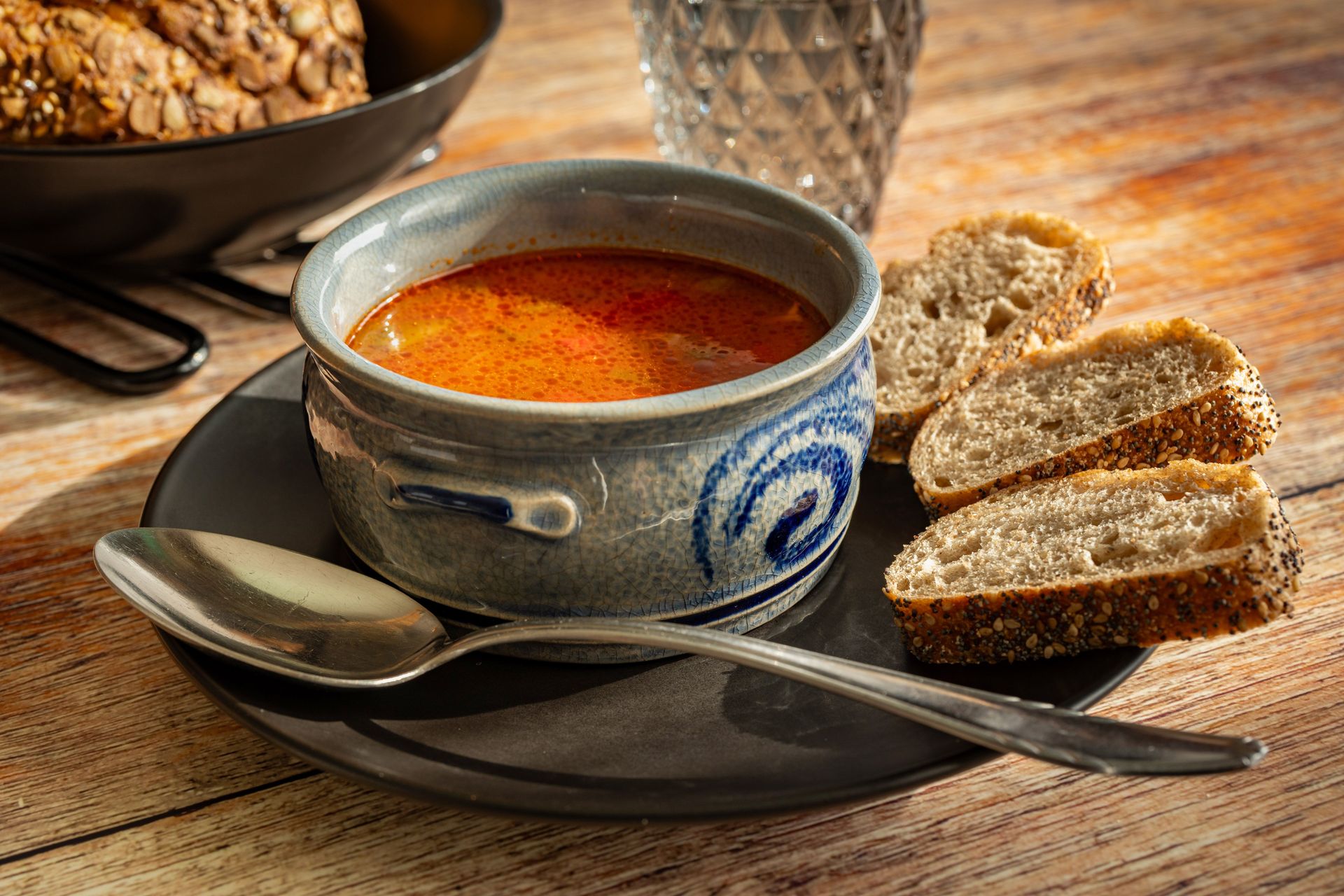
6. Fiskisupa serves Iceland’s best coastal fish soup
Gundula Vogel / Unsplash
Fiskisúpa, the rich, hearty Icelandic fish soup, is a coastal restaurant staple whose quality varies directly with the freshness of the catch. The Lonely Planet article’s observation that any fish restaurant worth its salt will serve it functions as practical ordering guidance: a kitchen producing excellent fish soup is almost certainly treating the rest of its seafood program with equal care. The warming depth of a well-made fiskisúpa is particularly welcome in the cold, wind-driven conditions of Iceland’s coastal towns, making it the most practically appropriate single Icelandic meal for anyone spending time on the coast.
The best versions come from ports whose trawlers deliver the kitchen’s catch that morning. Inland versions involve longer supply chains and typically show it. The soup’s core concept, broth, fresh fish, and vegetables, and cream, is simple enough that exceptional ingredients are the only real differentiator. No technique compensates for fish that isn’t fresh.
Tjöruhúsið in Ísafjörður is among the most celebrated fish soup stops in Iceland: a top seafood restaurant in a building dating to 1781, where the set menu and serve-yourself dinner format create a communal eating environment whose historical atmosphere the food lives up to. The building predates Icelandic independence, and its timber construction gives the coastal seafood meal an architectural context as specifically period-appropriate as anywhere on the island.
The serve-yourself format at Tjöruhúsið is worth explaining: the set menu arrives at the table in stages, but the soup and some of the accompaniments are self-served from communal pots. This creates an informal, convivial dynamic unusual in a restaurant of this quality. The building’s age and the seafood’s freshness do the heavy lifting. The format simply gets out of the way. For a fish soup stop that requires less commitment than a full Tjöruhúsið dinner, the coastal towns along the Ring Road, including Stykkishólmur, Hofsos, and Akureyri, all have at least one reliable fish restaurant whose fiskisúpa is worth ordering at lunch.
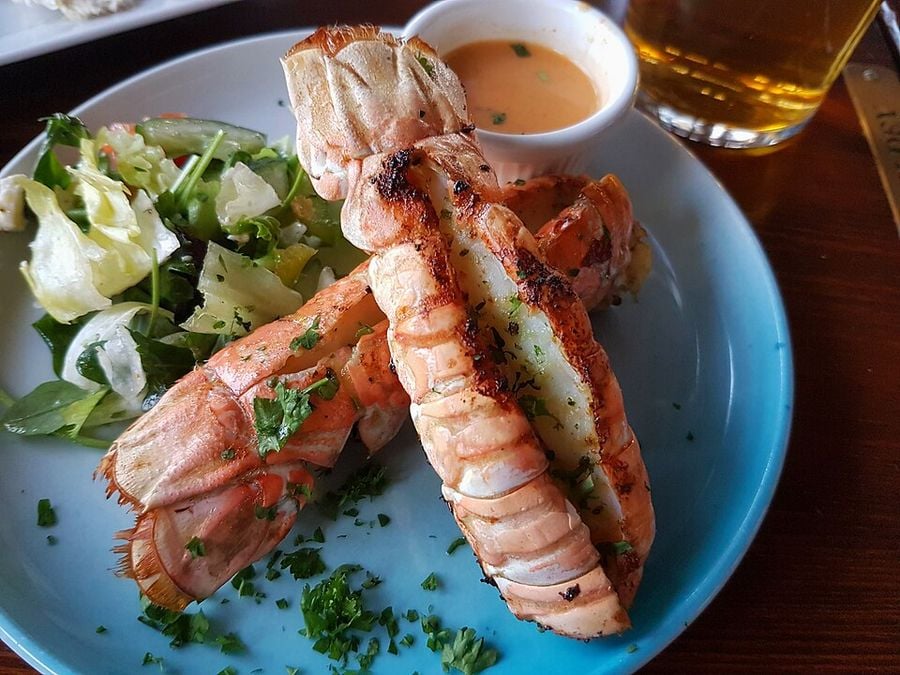
7. Humar anchors Iceland’s finest shellfish dining in Hofn
Benreis / Wikimedia Commons (CC BY 3.0)
What Icelanders call lobster, or humar, is what the rest of the world calls langoustine. The slender, clawed crustacean has sweeter, more delicate flesh than true lobster, and the traditional preparation, grilled and topped with butter, is restrained by design: it reflects confidence that the ingredient needs no elaboration. This is langoustine caught close, served fast, and cooked simply, one of the cleaner arguments for proximity-to-source in any food culture.
Höfn, in southeast Iceland, is the langoustine capital. The fishing town’s annual humar festival in late June and early July draws visitors who treat the harvest’s peak as a specific travel occasion. Pakkhús restaurant is the most recommended sit-down option in town, and Hafnarbúðin offers a langoustine baguette for the visitor who wants the same quality in a more casual format. Many Höfn restaurants don’t take reservations, so arriving early for dinner is the most practical single piece of advice for the visit.
The langoustine’s texture deteriorates quickly after harvest. Being in Höfn during the peak season means the restaurant kitchen has the freshest possible product at the shortest possible interval between catch and plate, an advantage whose effect on the eating experience is immediately apparent to anyone who has had langoustine elsewhere and wondered why this version tastes better.
The humar festival in late June and early July is a genuine event and not a tourism invention: the town fills with visitors who specifically come for the langoustine at peak harvest, creating a festive energy that the restaurant experience absorbs. Pakkhús is the most consistently recommended sit-down option, but the langoustine baguette at Hafnarbúðin is worth knowing about for a more casual encounter with the same quality of shellfish. Höfn is a small town, and the restaurants are not large. Arriving early for dinner is not just advice. It is the difference between eating and not eating on a busy festival night. The humar’s delicate texture deteriorates quickly after harvest, which is the core practical argument for eating it in Höfn during peak season and not anywhere else at any other time.
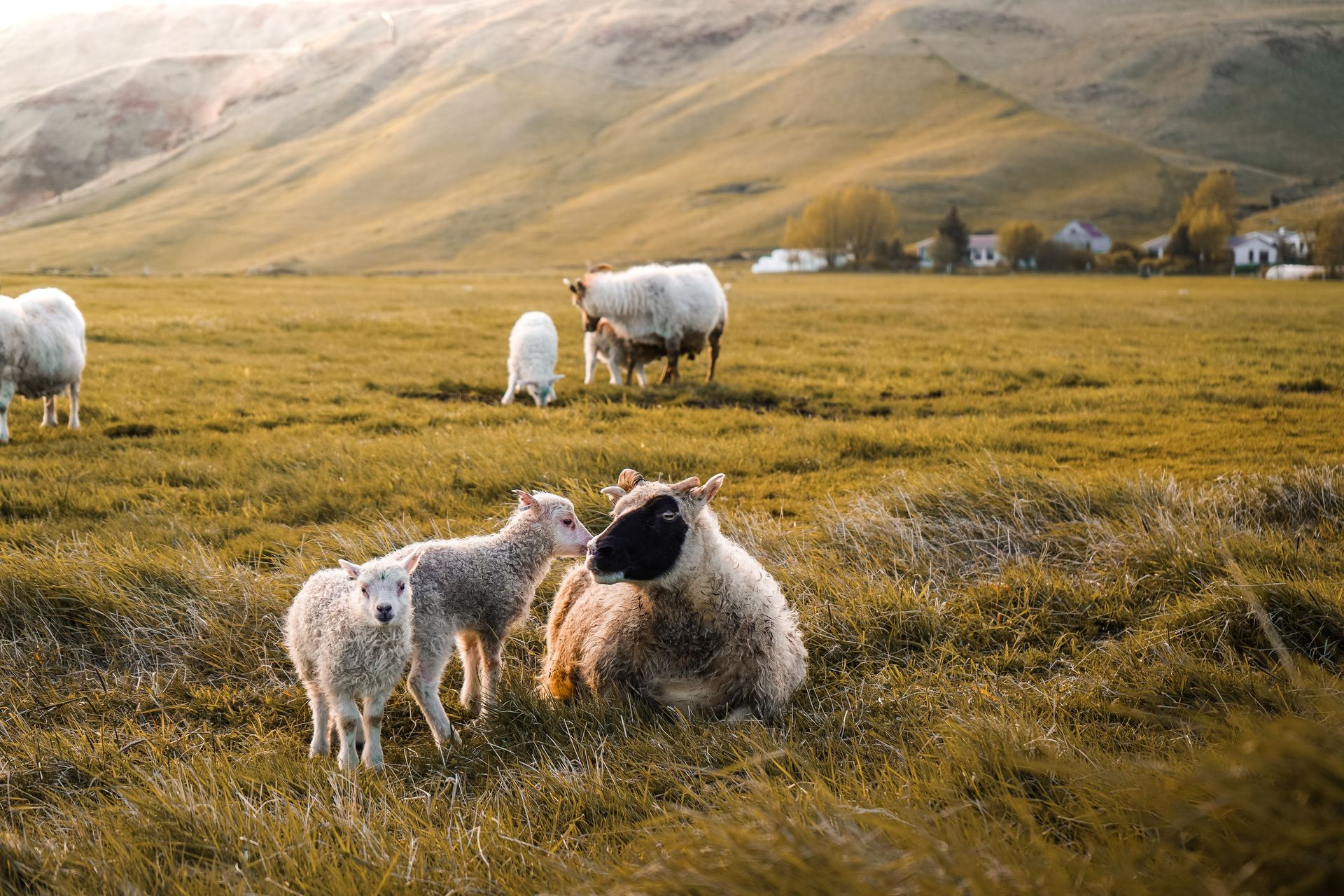
8. Icelandic lamb defines the country’s finest ingredient
Tobi & Chris / Pexels
Icelandic lamb gives the country’s meat program its most specifically celebrated single product: sheep that graze freely across Iceland’s vast lava fields and mountain slopes for the summer months before the autumn roundup produces a meat whose flavor reflects the herbs, grasses, and mineral-rich soil of one of the world’s most geologically distinctive grazing environments. The free-range grazing across the Icelandic highland interior gives the lamb a fat marbling and a flavor intensity that the confined and grain-supplemented production systems of other lamb-producing countries cannot replicate in the same terroir terms, and the Icelandic chef’s preference for simple preparation, grilling or roasting, reflects a kitchen philosophy that the ingredient’s quality makes elaborate technique unnecessary.
The farm restaurant format gives the Icelandic lamb its most specifically provenance-transparent single eating context: a meal at Fjallakaffi near Egilsstaðir or at Vallanes, the organic farm in East Iceland open in summer, gives the visitor the lamb in the physical setting of the farming landscape that produced it, giving the meal a farm-to-table directness that the urban restaurant’s supply chain cannot provide in the same immediate terms. The lamb’s status as Iceland’s most beloved homegrown meat gives it a presence across the restaurant menu spectrum from the simple rural farm table to the New Nordic tasting menu, making it the single ingredient whose range of preparations best reflects the full breadth of contemporary Icelandic cooking.
The autumn slaughter season, when the sheep brought down from the summer highland grazing are processed, gives the Icelandic lamb its most specifically seasonal single moment, and the preservation techniques that follow, smoking, salting, and drying, give the seasonal meat its most historically continuous single connection to Iceland’s food preservation culture. The lamb’s specific flavor character, shaped by the herbs and minerals of the highland grazing and the cold Atlantic air of the coastal valleys, gives the Icelandic version a taste that farmers and chefs describe as cleaner and more intensely herbaceous than lamb from any other European production system, and the blind taste test evidence that consistently distinguishes Icelandic lamb from its competitors gives the terroir claim its most empirically supported single argument.
9. Brennivin carries Iceland’s black death schnapps legacy
-900x675.jpg)
cogdogblog / Wikimedia Commons (CC0 1.0)
Brennivín is a potent schnapps distilled from fermented potatoes and flavored with caraway. The caraway’s herbal bitterness distinguishes it immediately from flavorless potato vodkas, and the combination gives the spirit its foreboding nickname: svarti dauði, the black death. Bright green and high-proof, it has the specific character of a drink designed to do a job, not to be pleasant, though the caraway’s complexity makes it more interesting than that framing suggests.
The Egill Skallagrímsson brand, founded in 1935, is the most widely distributed in Iceland and is what most bars pour. Reykjavík Distillery and other newer craft producers apply more artisanal methods to the same tradition, producing versions whose quality ceiling sits considerably higher than the mass-market original. A bar request for a shot is met without confusion anywhere in Iceland.
Brennivín’s most culturally embedded serving context is the Þorrablót midwinter feast, held across Iceland in late January and February, where it is served alongside hákarl, svið, and other traditional foods in a Viking-themed celebration. The traditional pairing, Iceland’s most notorious food alongside its most characteristically national spirit, with the spirit serving as the prescribed antidote, is one of the more darkly logical single pairings in any food culture. The visitor in Iceland during Þorrablót should not miss it.
The Egill Skallagrímsson brand is the most widely available version and a reasonable first encounter. Reykjavík Distillery and other newer craft producers make more refined versions whose caraway expression is cleaner and whose potato base is more carefully distilled. The difference between the mass-market and artisan versions is audible in the spirit’s warmth and complexity. On a cold evening in a Reykjavík bar, ordering a shot of brennivín alongside a plate of smoked lamb or a bowl of fish soup makes more contextual sense than drinking it cold and alone as a challenge. The Þorrablót feast is the most culturally embedded encounter with the spirit, but the spirit is available year-round in every bar in Iceland and is worth trying in any season.
10. Hangikjot marks Iceland’s smoked lamb Christmas dish
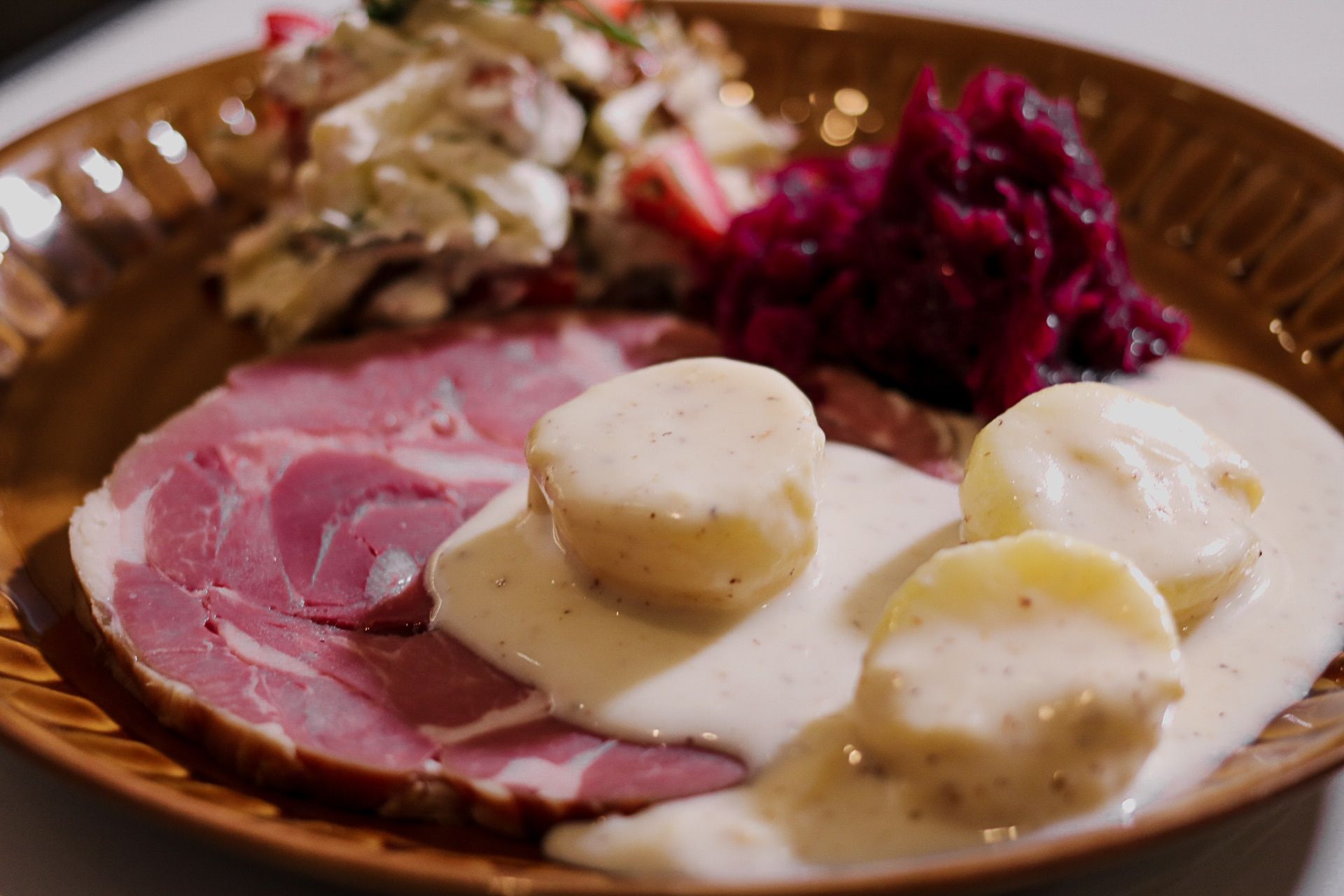
Credit: Icelandic Lamb Official Site
Hangikjöt is lamb smoked over sheep’s dung. The smoke source is not incidental: it reflects the historical absence of abundant wood fuel on an island whose tree cover was cleared by Norse settlers and never recovered. Using the waste product of the same animal being preserved to fuel the preservation process is resourceful in the most specifically Icelandic sense, a solution shaped entirely by the available materials. The result is lean, thinly sliced cured meat with a smoky character, likened by the Lonely Planet article to Icelandic carpaccio.
The dish is traditionally a Christmas preparation, which matters practically: finding it outside the December season requires more effort, and the mid-year visitor should expect it to be absent from most restaurant menus. The traditional Christmas table serves it alongside potatoes, green peas, and béchamel sauce, accompaniments that reflect mid-20th-century influences on Icelandic home cooking more than ancient tradition, giving the dish a layered historical timeline on a single plate.
The connection to Iceland’s broader lamb culture is direct: the same free-range grazing that gives Icelandic lamb its distinctive flavor foundation is what the smoking then overlays. Hangikjöt is perhaps the single dish that most completely expresses the two defining qualities of Icelandic food, exceptional primary ingredients and ingenious preservation methods, in one preparation. The hákarl fermented shark, whose infamy tends to overshadow most Icelandic traditional food, is served alongside a shot of brennivín at the Þorrablót feast, with the spirit functioning as the antidote. That pairing tells you most of what you need to know about how Iceland has historically approached the relationship between challenging food and the drink required to survive it.
Finding hangikjöt outside the Christmas season takes effort. Some Reykjavík restaurants and delicatessens stock it year-round, and the supermarket deli counter sometimes carries it in vacuum-sealed portions. The mid-year visitor who specifically wants to try it should ask at the hotel or check with a local food shop. For the visitor in Iceland in December, hangikjöt on the Christmas table is simply part of the ambient culture, and encountering it in that context gives the smoked lamb its most specifically Icelandic possible frame.