
The best museum virtual tours you can take without leaving home
From the Rosetta Stone in the British Museum to a Berlin museum closed for renovation where virtual access is the only way in
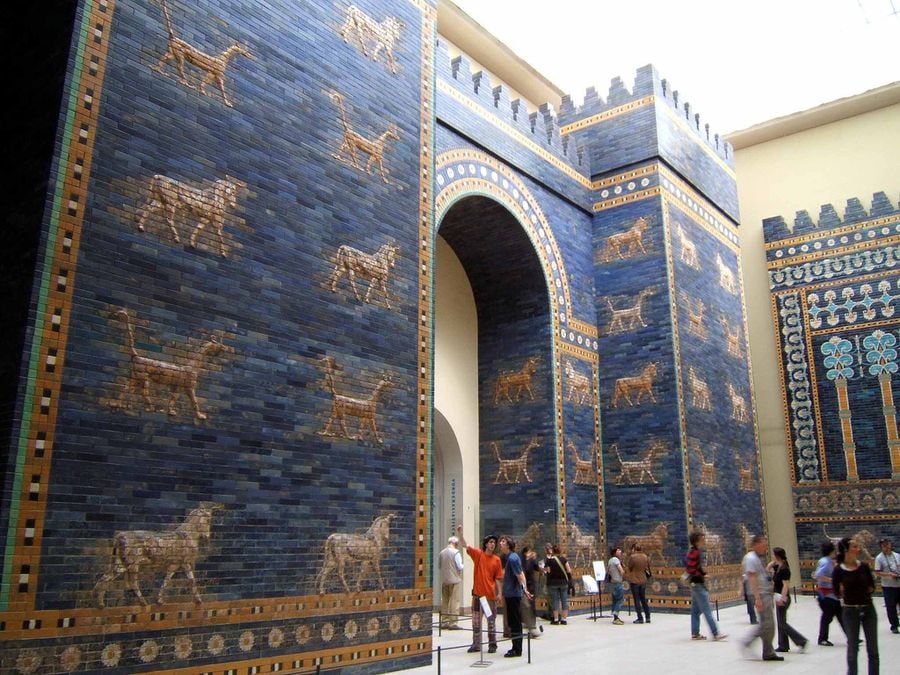
Rictor Norton / Wikimedia Commons (CC BY 2.0)
The case for visiting a museum in person is real and not worth dismissing: the scale of a painting, the texture of a sculpture, and the physical experience of moving through a grand architectural space are things that a screen cannot replicate. But the case for virtual museum access is equally real and equally specific. A virtual tour requires no flights, no queues, no timed-entry tickets, and no adjustment to the museum’s opening hours. It costs nothing and ends when the visitor decides to end it. For the Pergamon Museum in Berlin, which is currently closed for a multi-year renovation, virtual access is the only option for most of the collection until at least 2027.
The institutions that have built genuinely useful virtual tours have done so through two primary platforms: Google $GOOGL Arts & Culture, which provides Street View-style navigation through museum galleries for hundreds of institutions globally, and the museums’ own websites, where some institutions offer immersive 360-degree experiences or curated online exhibitions that go beyond what Google’s platform provides. The best virtual tours are not filmed walkthroughs or promotional videos. They are navigable environments where the visitor controls the direction, speed, and duration of the experience, and where the ability to zoom in on specific works gives the virtual encounter a quality of close looking that the physical museum, with its required distances from objects, sometimes prevents.
The 10 virtual museum experiences below appear in Travel + Leisure, drawn from a list of 16 covering institutions across four continents. Each offers a distinct reason to visit virtually — whether the physical institution is inaccessible due to distance, renovation, crowds, or cost — and each delivers a navigable experience of a collection that rewards the attention.
1. The British Museum gives virtual visitors Street View access to the Rosetta Stone and beyond
-1920x1045.jpg)
Christian Lendl / Unsplash
The British Museum’s virtual tour drops visitors into the Great Court, the soaring glass-capped central space that a 2000 redesign transformed into one of the most architecturally significant interior spaces in European museumology. From the Great Court, the tour allows Street View-style navigation into the Egyptian sculpture gallery, where the Rosetta Stone is viewable in high-resolution detail at a proximity and duration that the physical museum’s crowd patterns and protective barriers rarely allow. The combination of landmark object and navigable approach gives the virtual tour a clarity of encounter with one of the world’s most significant historical artifacts that the in-person experience, however valuable, often lacks through distance.
The galleries accessible through the virtual tour extend beyond Egypt to ancient Greek statues and vases, Aztec artifacts, including the double-headed serpent sculpture, and rare Chinese artifacts with digitized scrolls. The range gives the virtual visit a geographic and chronological sweep that reflects the British Museum’s encyclopedic collecting history without requiring the hours it takes to navigate the physical building’s eight million permanent objects. Visitors who use the virtual tour to identify specific objects and galleries before an in-person visit can compress the orientation process significantly and spend more of their physical time in front of specific works.
The British Museum’s virtual access gives geographically remote visitors a practical entry point into one of the world’s most significant collections, which physical barriers of distance and cost would otherwise make inaccessible. For the majority of the world’s population, for whom a trip to London is not a near-term possibility, the virtual tour is the primary mode of access to the Rosetta Stone and the objects alongside it.
2. The Vatican Museums offer virtual access to the Sistine Chapel without shoulder-to-shoulder crowds

Maximillian Brand / Unsplash
The Vatican Museums’ virtual tour provides access to more than a dozen galleries and ornate spaces within one of the most visited museum complexes in the world, which means that the primary practical advantage of the virtual version — avoiding the shoulder-to-shoulder crowd density that the physical Sistine Chapel generates at peak hours — is also its most significant experiential one. Michelangelo’s ceiling and the Last Judgment on the altar wall can be examined at the visitor’s own pace in the virtual environment, with the ability to pan across the full expanse of the painted surface without the neck strain and crowd pressure of in-person viewing.
The Raphael’s Rooms, where every surface of wall and ceiling is covered in Renaissance frescoes, are navigable through the virtual tour, offering visitors continuous immersion in the painted surfaces that the frescoes reward. The lesser-trafficked spaces accessible through the tour — including the Pio-Clementino Museum and the Room of the Chiaroscuro — give the virtual visit a depth beyond the Sistine Chapel that physical visitors who move efficiently toward the chapel and away often miss. The 360-degree views of these secondary spaces give the Vatican Museums’ virtual tour an educational value specific to the collection’s breadth rather than its most famous single attraction.
The Vatican Museums virtual tour operates on the institution’s website rather than solely through Google $GOOGL Arts & Culture, which gives it a depth of navigation and image quality that platform-dependent tours do not always achieve. For visitors who want to prepare for a physical trip, the virtual tour gives the collection a sense of familiarity before arrival, allowing the physical visit to focus on the moments and objects the virtual encounter identified as most significant.
3. The Louvre’s virtual exhibitions trace ancient trade networks and art’s relationship to political power

DAT VO / Unsplash
The Louvre’s official virtual tours organize their content around curated themed exhibitions rather than full gallery walkthroughs, which gives the virtual experience a curatorial structure that the institution’s 35,000 on-display objects and nine curatorial departments would otherwise make navigation impossible. The exhibition “Traveling Materials and Objects” traces ancient trade routes through the materials — ivory, lapis lazuli, and others — that enabled the exchange of goods across continents over millennia, giving the collection’s ancient objects a geographic and economic context that object-by-object gallery navigation does not assemble as clearly.
The exhibition “Power Plays” uses paintings of royalty and official portraits across different periods to examine the relationship between artistic representation and political authority, providing a specific analytical framework for a category of objects that physical museums display more often as aesthetic achievements than as political instruments. The thematic approach allows the virtual exhibitions to make arguments about the collection that the physical museum’s primarily chronological and geographic spatial organization does not foreground.
The Louvre’s separate online collection of more than 500,000 works gives virtual visitors a complement to the curated exhibitions that the institution’s depth of holdings makes possible: the ability to zoom in on individual objects with impressive clarity gives close looking a scale of access that physical museum distance restrictions prevent. The combination of curated thematic exhibitions and an open, searchable collection gives the Louvre’s virtual presence two distinct modes of engagement that suit different visitor intentions.
4. The Rijksmuseum brings Dutch Golden Age masterpieces into focus, room by room
-1920x1209.jpg)
redcharlie / Unsplash
The Rijksmuseum’s virtual tour moves through Dutch art history room by room, giving visitors a sequential encounter with the collection that more closely mirrors the physical museum’s curatorial organization than tours that allow random navigation. Rembrandt’s “The Night Watch” and Vermeer’s “The Milkmaid” are accessible in the virtual tour at a resolution and proximity that the physical museum, where both paintings draw sustained crowds, makes difficult to sustain for the duration that genuine-looking rewards require. The soft light that defines Vermeer’s work is one of the qualities most dependent on reproduction quality, and the virtual tour’s zoom capability gives it a chance to register in ways that standard-distance museum viewing at crowded peak hours does not.
The collection’s range beyond the canonical Golden Age paintings — Delftware, naval models, centuries-old fashion and furniture — gives the virtual tour a breadth of material culture that visitors whose primary interest is painting sometimes overlook in the physical museum. The virtual tour’s room-by-room structure encourages a slower engagement with the collection than the physical museum’s more expansive floor plan, where the option to move quickly between galleries is always available and often taken. The tour’s own description of the experience as an elegant, slow scroll reflects this quality.
The Rijksmuseum’s Amsterdam location gives the physical visit a city context that the virtual tour’s domestic accessibility cannot replicate, but the virtual tour gives the collection a preparation function that makes the eventual physical visit considerably more productive for visitors who have used the virtual version to identify specific objects and rooms they want to prioritize.
5. The Uffizi Gallery in Florence gives virtual visitors Botticelli’s “Birth of Venus” with zooming capability
Pauline Iakovleva / Unsplash
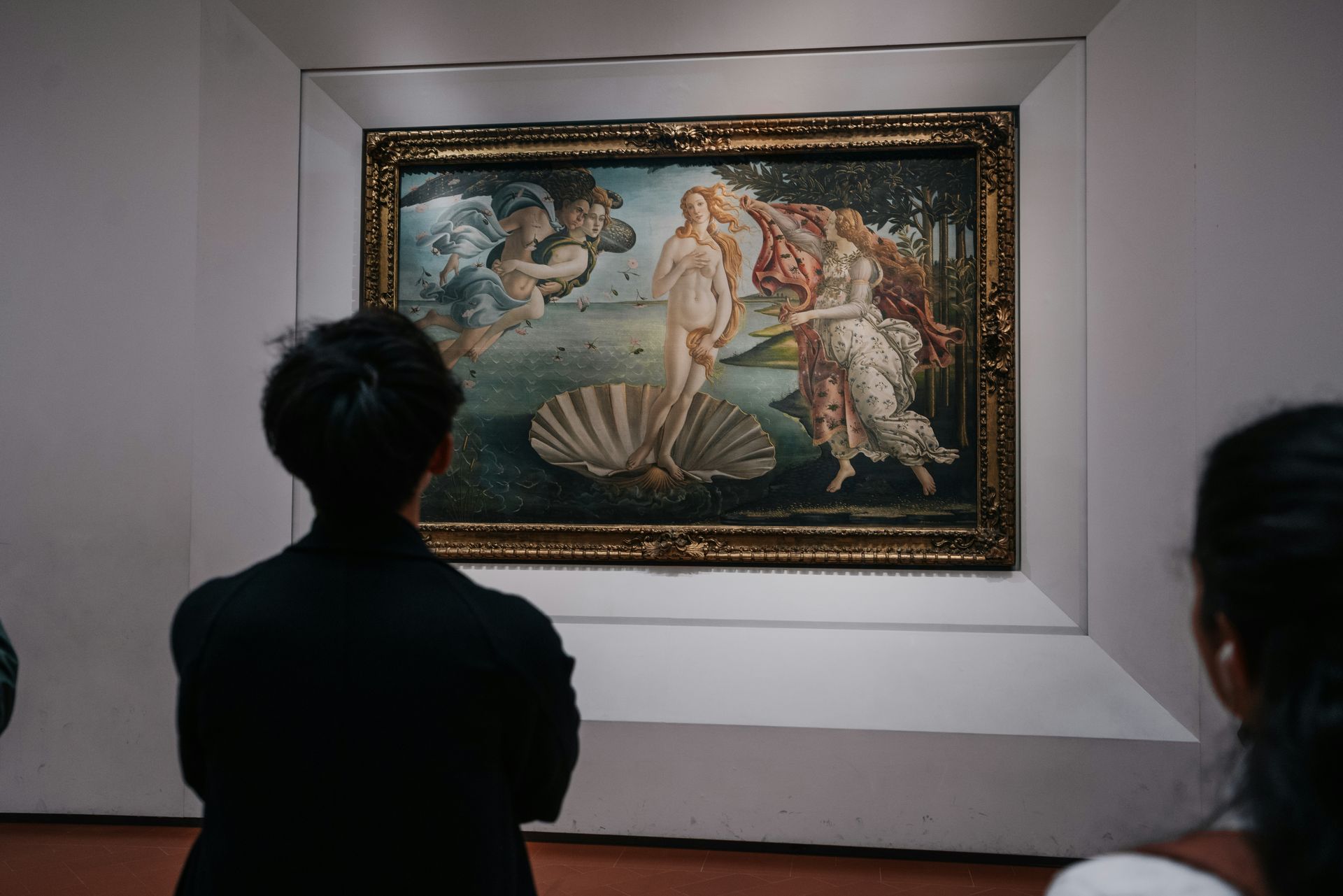
The Uffizi Gallery’s virtual tour navigates through the 16th-century palace that houses the Medici family’s art collection, beginning in the halls lined with ancient Roman sculptures before moving into the rooms that hold Botticelli’s “The Birth of Venus” and “Primavera.” The zoom capability that the virtual tour provides gives both paintings a quality of close examination that their physical scale — large enough to walk along their surface without the full composition coming into view — makes difficult to achieve in person. The details of Botticelli’s painting, from the texture of Venus’s hair to the individual flowers of the Three Graces’ spring scene, reward the zoom function in ways that reinforce rather than replace the physical visit.
The rooms dedicated to Caravaggio and Michelangelo give the virtual tour a range across the Italian Renaissance and Baroque that the Uffizi’s collection encompasses within a single building. Online exhibits within the Uffizi’s virtual presence closely analyze specific paintings by zooming in on compositional elements and explaining the choices they reflect, giving the tour's analytical dimension depth that physical museum labels, constrained by length, cannot provide.
The Uffizi’s central location in Florence makes in-person visits subject to the tourist pressure generated by the city’s most popular museums throughout most of the year. The virtual tour’s accessibility at any hour, at any pace, and without the timed entry system required by the physical museum gives the collection an availability that the physical institution’s popularity constraints make genuinely useful to replicate virtually.
6. The Van Gogh Museum in Amsterdam traces the artist’s full creative evolution
Frans Ruiter / Unsplash
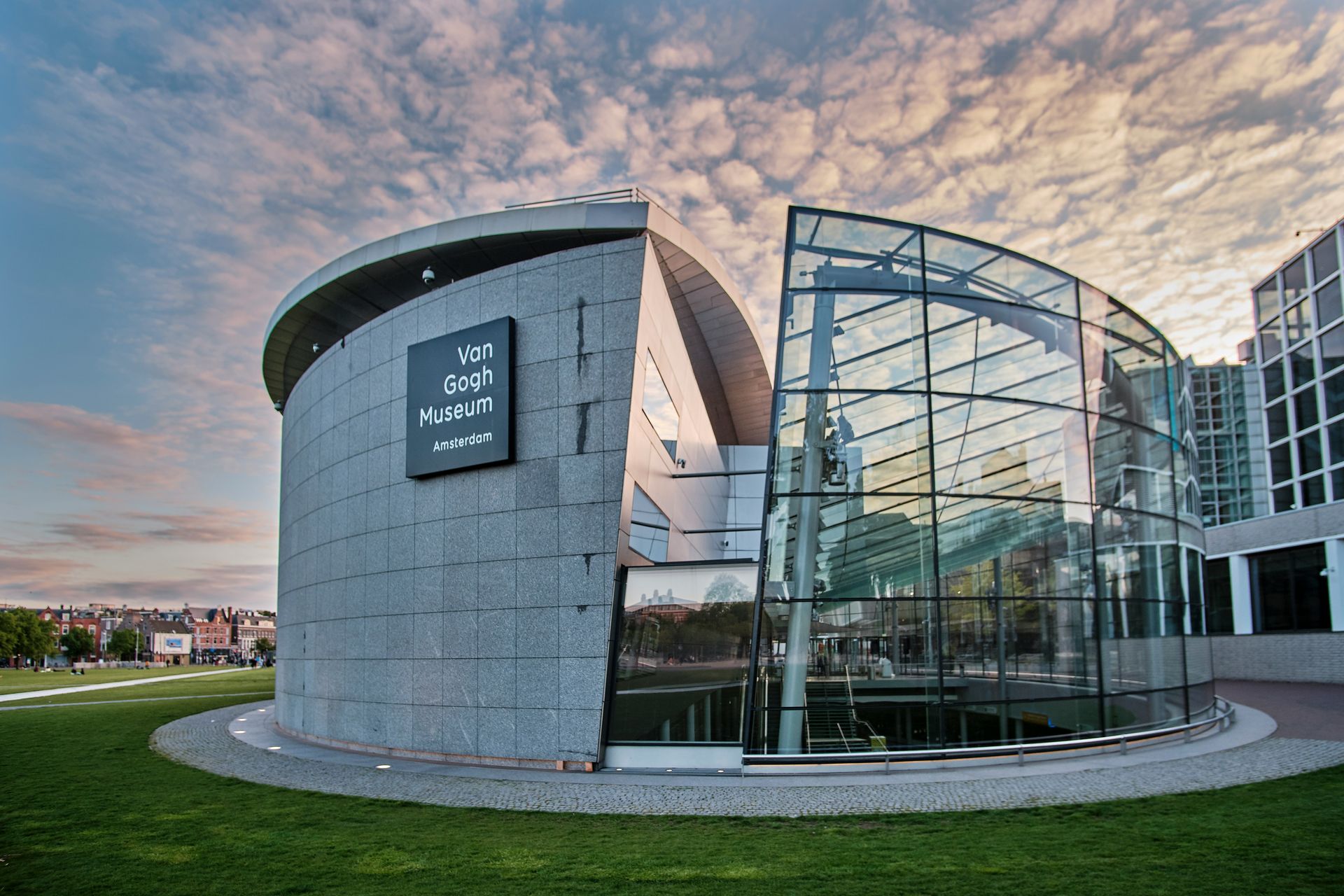
The Van Gogh Museum’s virtual tour covers the largest single holding of Vincent van Gogh’s work anywhere in the world, which gives the online experience a comprehensiveness of the artist’s output that even the most dedicated van Gogh enthusiast is unlikely to encounter in a single physical institution. The progression from the dark, earthy palette of “The Potato Eaters” — the early Nuenen period when van Gogh was painting rural Dutch peasant life — to the vivid, expressive color of “Sunflowers” and the swirling compositions of the later Arles and Saint-Rémy periods gives the virtual tour a developmental arc through the artist’s work that art history lectures describe but that seeing the paintings in chronological sequence makes viscerally legible.
The museum’s collection of more than 200 paintings, 500 drawings, and 750 personal letters gives the virtual tour access to objects beyond the canonical paintings on which the institution’s reputation rests. The letters, in particular, give the virtual visitor a textual dimension alongside the visual one that the physical museum’s display of selected correspondence provides in a more physically limited format.
The Amsterdam location of the physical museum sits within a museum district that also includes the Rijksmuseum and the Stedelijk Museum, giving in-person visitors a density of major institutions within walking distance that the virtual tour’s individual museum focus reproduces only partially. For visitors who want the van Gogh collection specifically, without the logistics of Amsterdam travel, the virtual tour delivers the paintings with a clarity made possible by the museum’s commitment to high-resolution image access.
7. The Pergamon Museum’s virtual tour is the primary access point while the building is renovated
Credit: Pergamon Museum
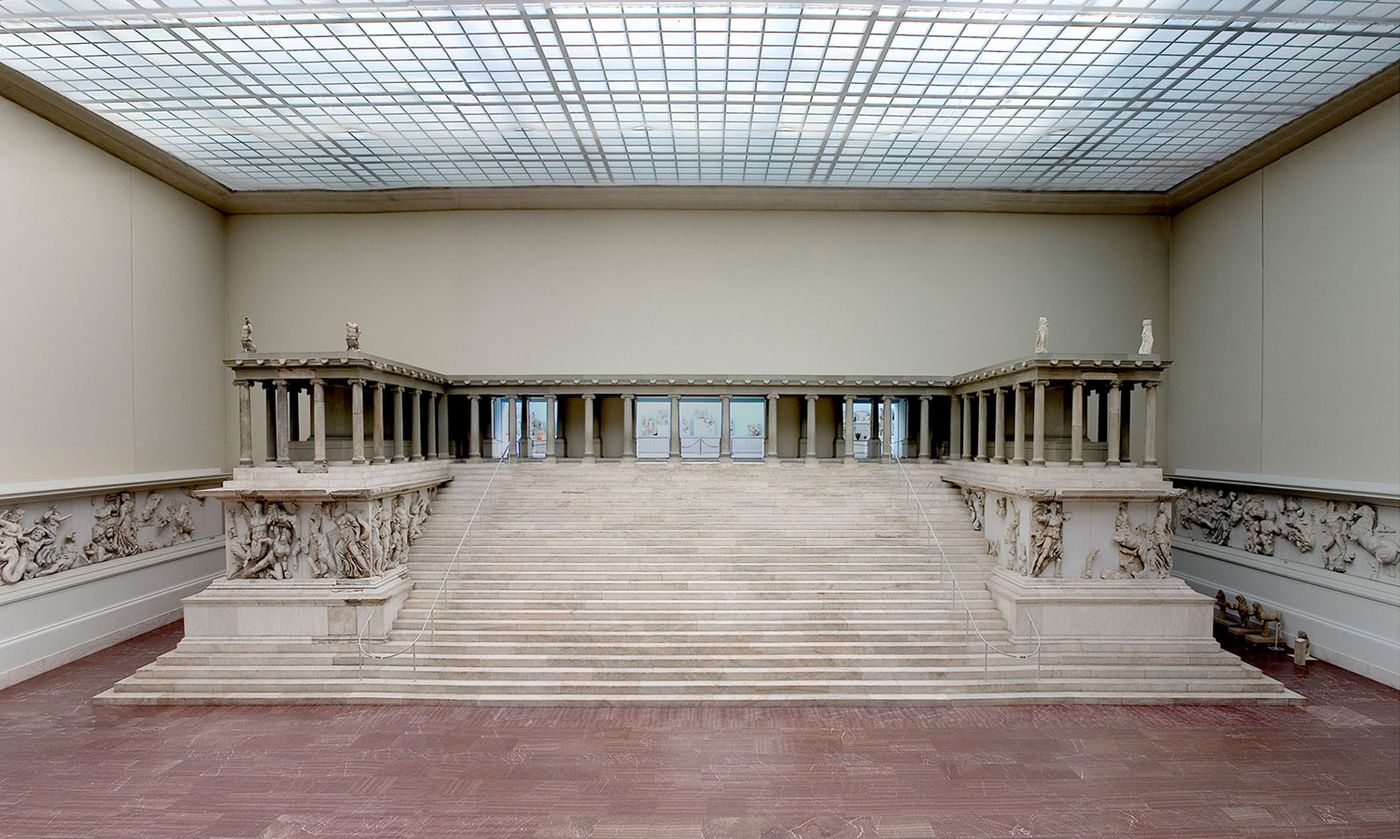
The Pergamon Museum in Berlin is closed for a multi-year renovation whose completion is not expected until 2027, which makes its virtual tour the most practically significant on this list: for the duration of the renovation, virtual access is the only way most visitors can encounter the collection. The Google $GOOGL Arts & Culture tour provides access to the archaeological monuments in Pergamon’s physical galleries, including towering Assyrian relief sculptures and a reconstruction of the Ishtar Gate of Babylon, the massive blue-glazed brick structure built by the Neo-Babylonian Empire in the sixth century BCE.
The Ishtar Gate is one of the most significant surviving structures from the ancient Near East, and its reconstruction within the Pergamon’s galleries — giving visitors a physical experience of the gate’s scale and the intensity of its cobalt-blue glazed brick surface — represented one of the most immersive encounters with ancient Mesopotamian architecture available anywhere. The virtual tour preserves this encounter during the renovation period, giving the viewer access to the object’s scale and color through Street View navigation that the physical closure would otherwise make inaccessible.
The renovation that closed the Pergamon reflects the German government’s commitment to the long-term conservation of the archaeological collections the museum houses, which include objects from ancient Rome, ancient Greece, and the Islamic world, alongside the Mesopotamian collection. The virtual tour gives these collections a continued public presence during a closure that the renovation’s complexity and scope have extended across most of the decade.
8. MASP in São Paulo presents its floating glass easels and international collection in a navigable format
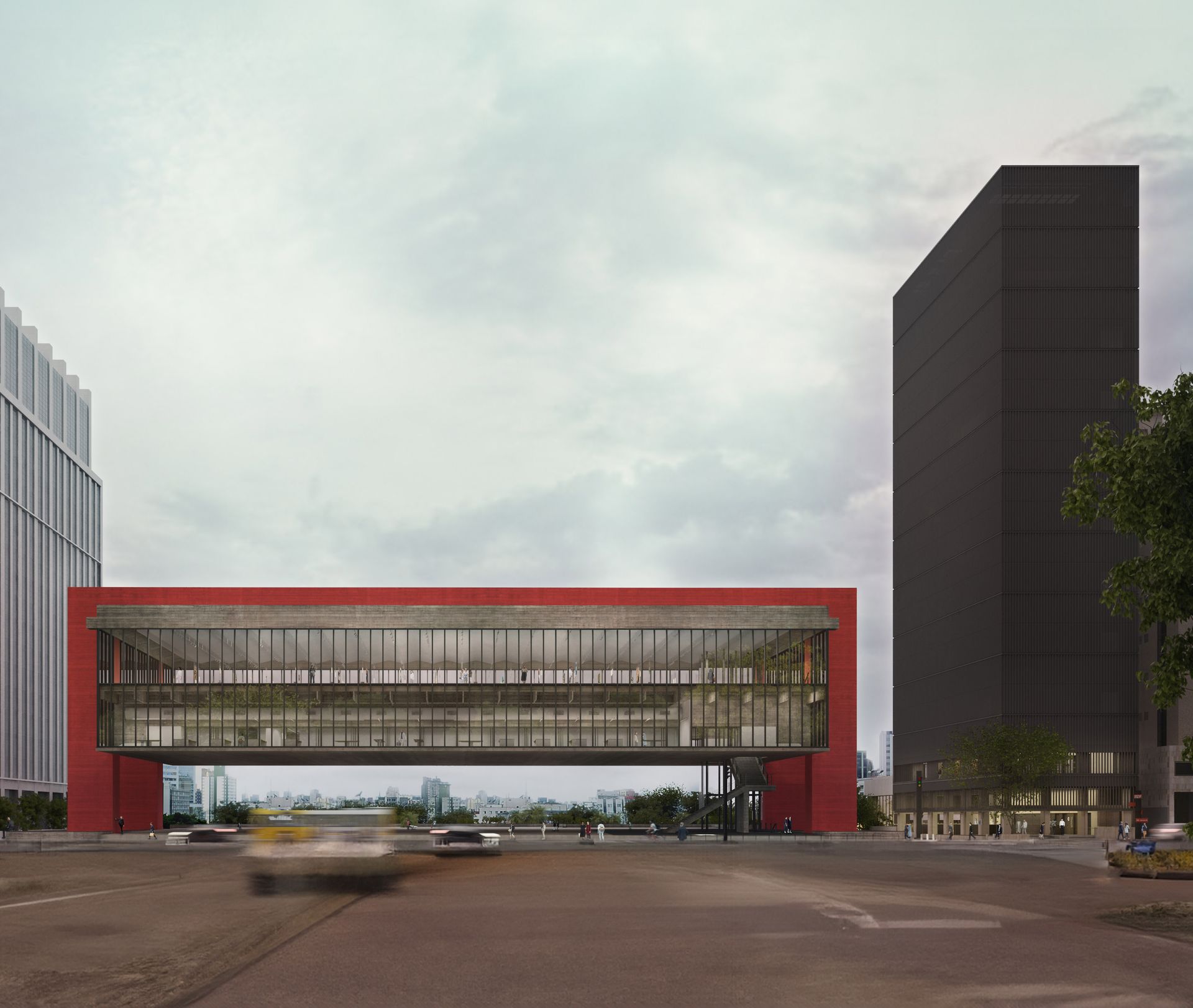
Credit: Museu de Arte de São Paulo
The Museu de Arte de São Paulo, founded in 1947, is Brazil’s first modern art museum and the institution that introduced a hanging system that the collection’s presentation is internationally known for: artworks displayed on crystal-clear glass easels in open-floor galleries, giving each object a visual independence from surrounding walls that the transparent support maintains. The virtual tour on Google $GOOGL Arts & Culture lets visitors navigate Lina Bo Bardi’s brutalist building and encounter this display format in a space that the physical museum’s open-floor design makes unusually amenable to virtual navigation.
The collection’s range gives the virtual visit a global scope that the South American context lacks: van Gogh, Modigliani, and Brazilian artists of international significance, including Candido Portinari and Tarsila do Amaral, are all accessible through the tour. The inclusion of Brazilian artists alongside the European collection gives MASP’s virtual presence a curatorial argument specific to the institution — that Brazilian modernism belongs in the same galleries and the same conversation as European painting — and that the virtual tour delivers this argument in the same spatial terms as the physical museum.
The São Paulo location gives the physical museum a South American context, positioning it differently from any European or North American institution presenting a comparable range of international art. For visitors outside South America who are not near-term São Paulo destinations, the virtual tour gives MASP’s collection and its distinctive display philosophy visibility that the institution’s geographic position relative to major international art tourism circuits would otherwise limit.
9. The Frida Kahlo Museum in Mexico City opens Casa Azul to virtual visitors worldwide
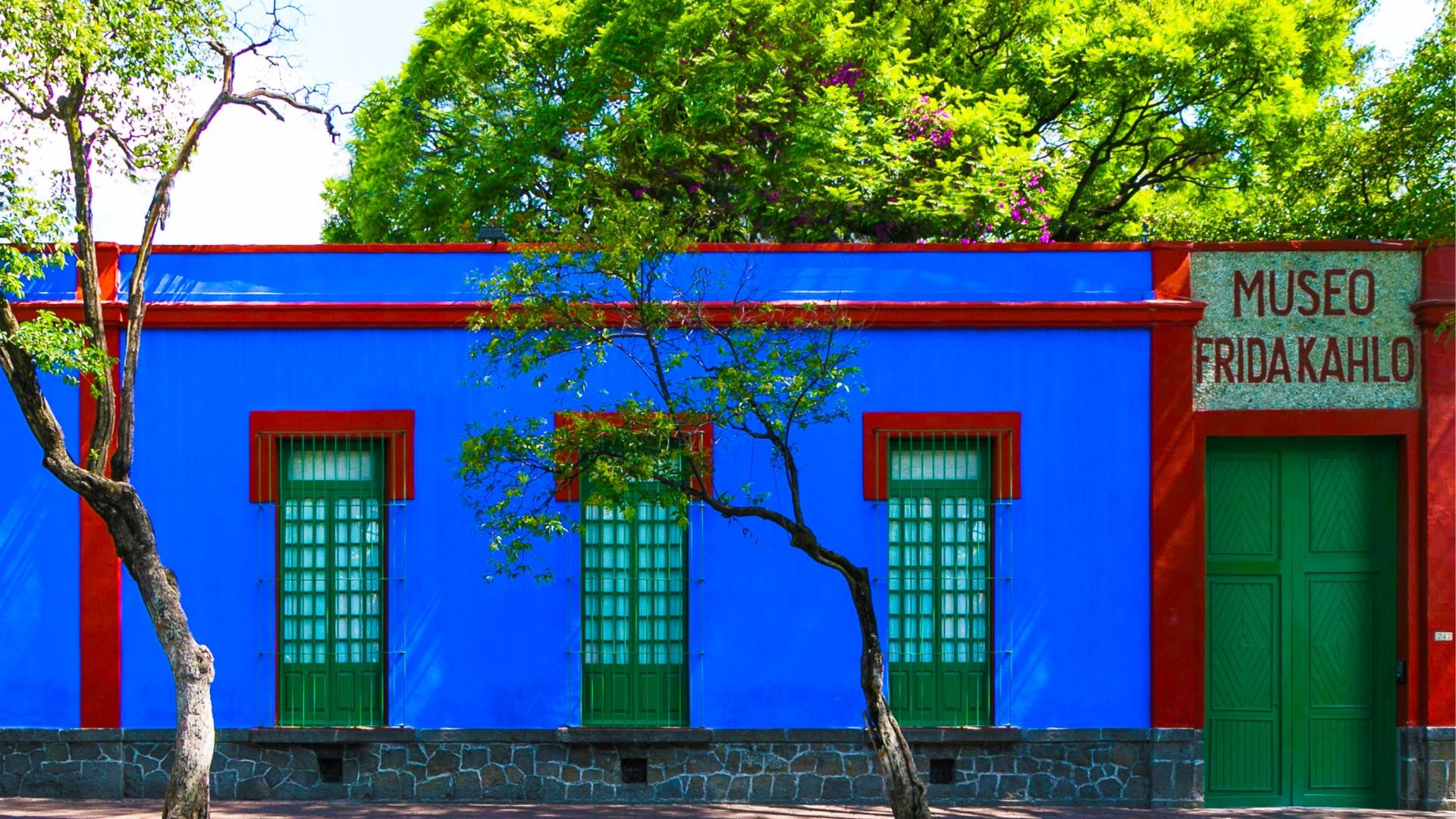
Credit: Frida Kahlo Museum
The Frida Kahlo Museum, housed in the Casa Azul — the bright blue house in the Coyoacán neighborhood of Mexico City where Kahlo was born and died — gives virtual visitors access to a space that functions as an artist’s home, studio, and museum simultaneously. The virtual tour includes the garden with its cactus and bougainvillea, the kitchen with its traditional Mexican tile and cooking equipment, and the studio where Kahlo’s wheelchair still sits by the easel. The combination of domestic space and creative workspace gives the Casa Azul a quality of intimacy that most artists’ museums, which display work in gallery settings removed from the life context that produced it, cannot provide.
The online exhibit examining Kahlo’s wardrobe — including her signature Tehuana dresses and the medical corsets required by her physical injuries — gives the virtual tour a material culture dimension, extending the institution’s subject beyond paintings and objects to the artist’s self-presentation and physical experience. Kahlo’s deliberate construction of her appearance as an extension of her artistic identity gives the wardrobe exhibit an analytical depth that a conventional costume display would not achieve with the same explanatory framework.
The Casa Azul’s physical accessibility in Mexico City has been constrained by its popularity, with timed entry tickets selling out well in advance during peak periods. The virtual tour gives the institution global accessibility that its physical capacity limits, and the building's domestic scale — a house rather than a grand museum — gives the virtual navigation an intimacy that the architectural context reinforces rather than diminishes.
10. The Smithsonian National Air and Space Museum gives virtual visitors access to Neil Armstrong’s spacesuit

Credit: The Smithsonian
The Smithsonian National Air and Space Museum’s virtual tour provides access to what the institution describes as the world’s largest collection of air and spacecraft, giving virtual visitors encounters with objects that represent humanity’s most significant moments of technological ambition. Neil Armstrong’s spacesuit from the Apollo 11 moon landing, the Wright Brothers’ original Flyer that made its first flight in 1903, and the cockpits of U.S. Navy fighter jets are all accessible through the virtual tour in ways that give the objects a proximity that the physical museum’s necessary protective distances prevent.
The Apollo 11 spacesuit is among the most significant material objects in American history — a garment worn by the first human being to stand on another world — and its virtual accessibility extends the object's availability beyond the physical museum’s Washington, D.C., location, which limits access for visitors outside the U.S. capital region. The ability to inspect the spacesuit’s surface detail through the virtual tour’s zoom capability gives the object a level of close examination that the physical museum’s display distance prevents, making the virtual encounter with the spacesuit, in some respects, more detailed than the physical one.
The Wright Flyer, which marks the beginning of the powered aircraft era in December 1903, serves as the museum’s virtual tour's object of equivalent historical weight to the Apollo spacesuit at the other end of the century of aviation history that the collection documents. The virtual tour’s ability to hold both objects within a single navigable institution gives the air and space collection a temporal sweep that the physical museum requires hours to cover at walking pace.