From the Tokyo National Museum's 110,000-work collection to a teamLab room where digital koi respond to your every step
Credit: teamLab Planets
Tokyo’s museum landscape reflects the city that contains it: extraordinarily varied, densely packed, and operating simultaneously across registers that most cities cannot sustain within the same metropolitan area. The institutions clustered around Ueno Park include some of the most significant collections of Japanese and Asian art in the world. The same city also holds a museum dedicated to parasites, a hilltop contemporary art space with views across the skyline, and a facility on a man-made island in Tokyo Bay where visitors can walk through rooms of digital koi and interact with humanoid androids. The range is not accidental. It reflects a collecting culture that takes niche expertise as seriously as institutional grandeur.
For visitors with limited time in a city of this size and density, selecting which museums to prioritize requires understanding what each institution offers that no other in Tokyo replicates. The Tokyo National Museum covers Japanese art with depth and breadth that no other institution approaches. The Ghibli Museum provides an experience available nowhere else on Earth, contingent on obtaining tickets that sell out a month in advance. teamLab has created immersive digital environments that the art world has spent years trying to categorize. Each occupies a distinct position on a spectrum that runs from the ancient to the algorithmic.
The nine institutions below appear in Travel + Leisure, covering the full range of what Tokyo’s museum culture offers: national collections, private galleries, contemporary art spaces, science facilities, historical reconstructions, and experiences that resist conventional museum categorization entirely. Together, they make a case that Tokyo’s museum landscape is as worth navigating as any city on Earth.
Credit: National Art Center Tokyo
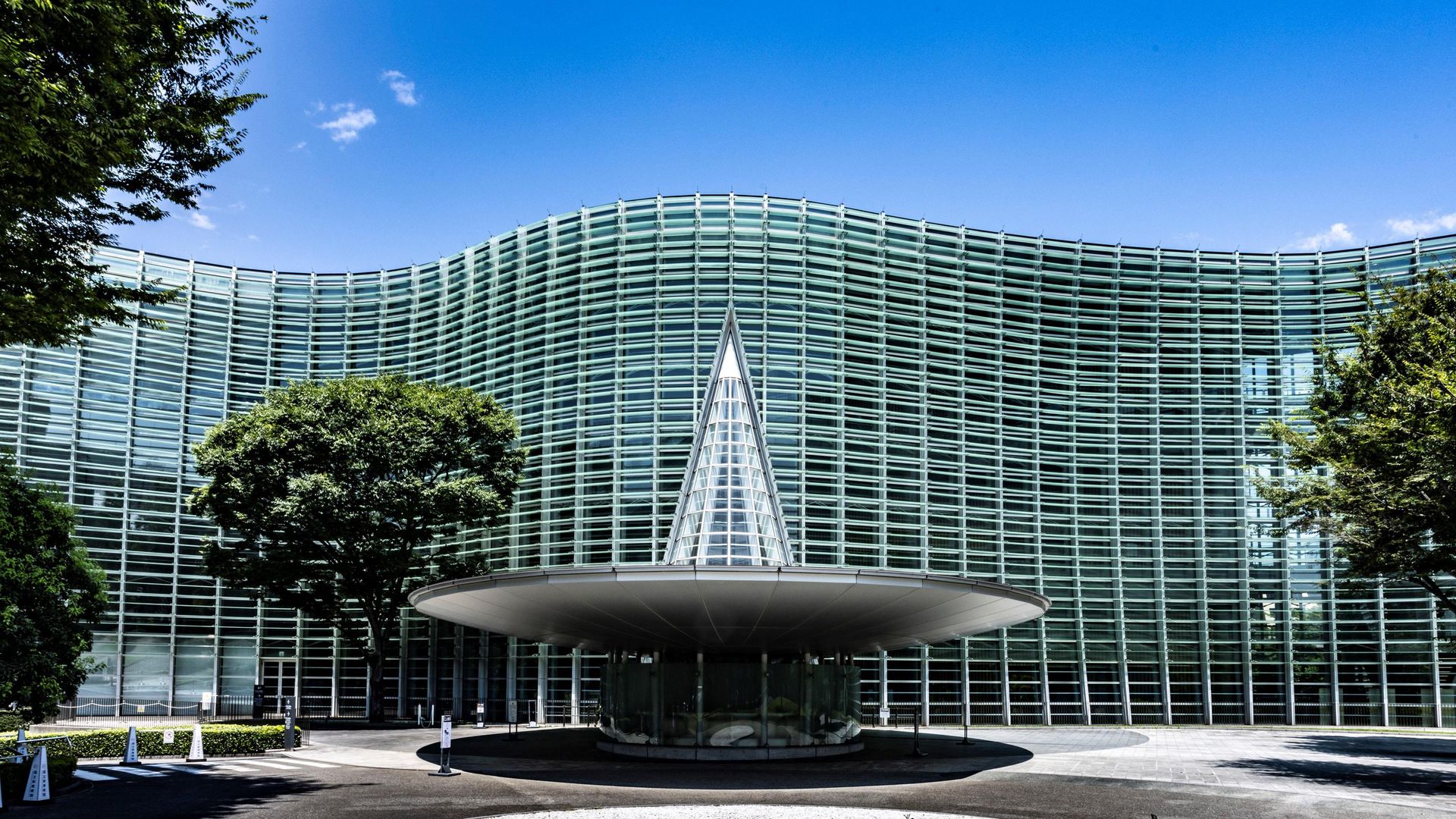
The National Art Center does not maintain a permanent collection, which makes it structurally unlike every other major museum on this list. What it holds instead is one of the largest exhibition spaces in Japan: 12 galleries distributed across a building that architect Kisho Kurokawa completed as his final work before his death. Kurokawa, the Pritzker Prize-winning founder of the Metabolist movement, designed a structure whose undulating glass-and-steel facade generates an interior flooded with natural light, giving the building a quality of space that the temporary exhibitions it hosts benefit from, regardless of subject matter. The building is worth visiting as a work of architecture before considering what show is currently mounted within it.
The programming covers a wide range of genres, with recent exhibitions including a retrospective of designer Hanae Mori and a survey of Fauvist painter Henri Matisse. Annual juried exhibitions such as the Nitten, a major national fine arts show, draw crowds substantial enough to require planning around. The lack of a permanent collection keeps the museum in continuous motion: a visitor who comes once and returns six months later encounters an entirely different set of exhibitions, which gives the National Art Center a repeat-visit value that collection-based museums, however strong their holdings, cannot match.
The dining options within the building add an extra dimension to the visit. A brasserie operated by the late French chef Paul Bocuse occupies space within the museum, and the first-floor cafe’s outdoor deck provides a quiet retreat from the surrounding Roppongi district’s pace. The museum’s location in Roppongi, a neighborhood that also holds the Mori Art Museum and the National Art Center within walking distance of each other, makes it a natural anchor for a museum day that combines multiple institutions in a single outing.
Credit: Mori Art Museum
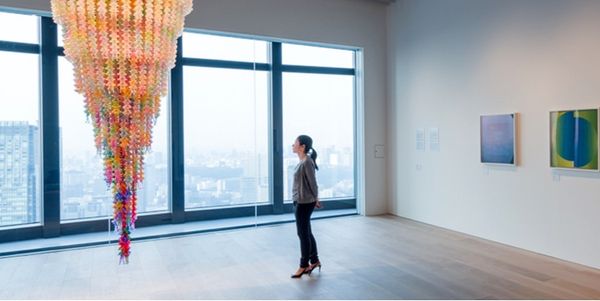
The Mori Art Museum sits at the top of Roppongi Hills Mori Tower, giving it a physical position that no other art museum in Tokyo occupies and city views that the exhibition content competes with for attention. The museum is run by Mori Building, the developer whose name appears throughout the Roppongi Hills complex, and its curatorial approach reflects an institutional confidence in contemporary art and architecture as primary subjects rather than secondary concerns within a broader encyclopedic collection. Major solo exhibitions have featured Takashi Murakami, Sou Fujimoto, and Louise Bourgeois, giving the museum a track record of presenting significant artists at a scale and quality of installation that the space’s size allows.
The most consistently compelling programming at Mori addresses substantive contemporary issues rather than conventional art historical subjects. Past exhibitions have centered on post-pandemic wellbeing, the cultural impact of artificial intelligence, and art’s relationship to environmental crisis, treating these subjects with curatorial depth that the museum’s focus on living artists and current concerns enables. The triennial Roppongi Crossing series, which surveys contemporary art in Japan, stands out as a destination for visitors seeking to understand the current state of Japanese contemporary practice rather than its historical precedents.
The admission ticket to the Mori Art Museum typically includes access to the Tokyo City View observation deck on the same floor, offering skyline views that the museum’s location promises without requiring a separate ticket. The combination of a strong exhibition program and a 53rd-floor perspective on one of the world’s largest cities, available with a single admission, makes the Mori Art Museum one of the more efficiently structured visits on this list.
Credit: Tokyo Photographic Art Museum
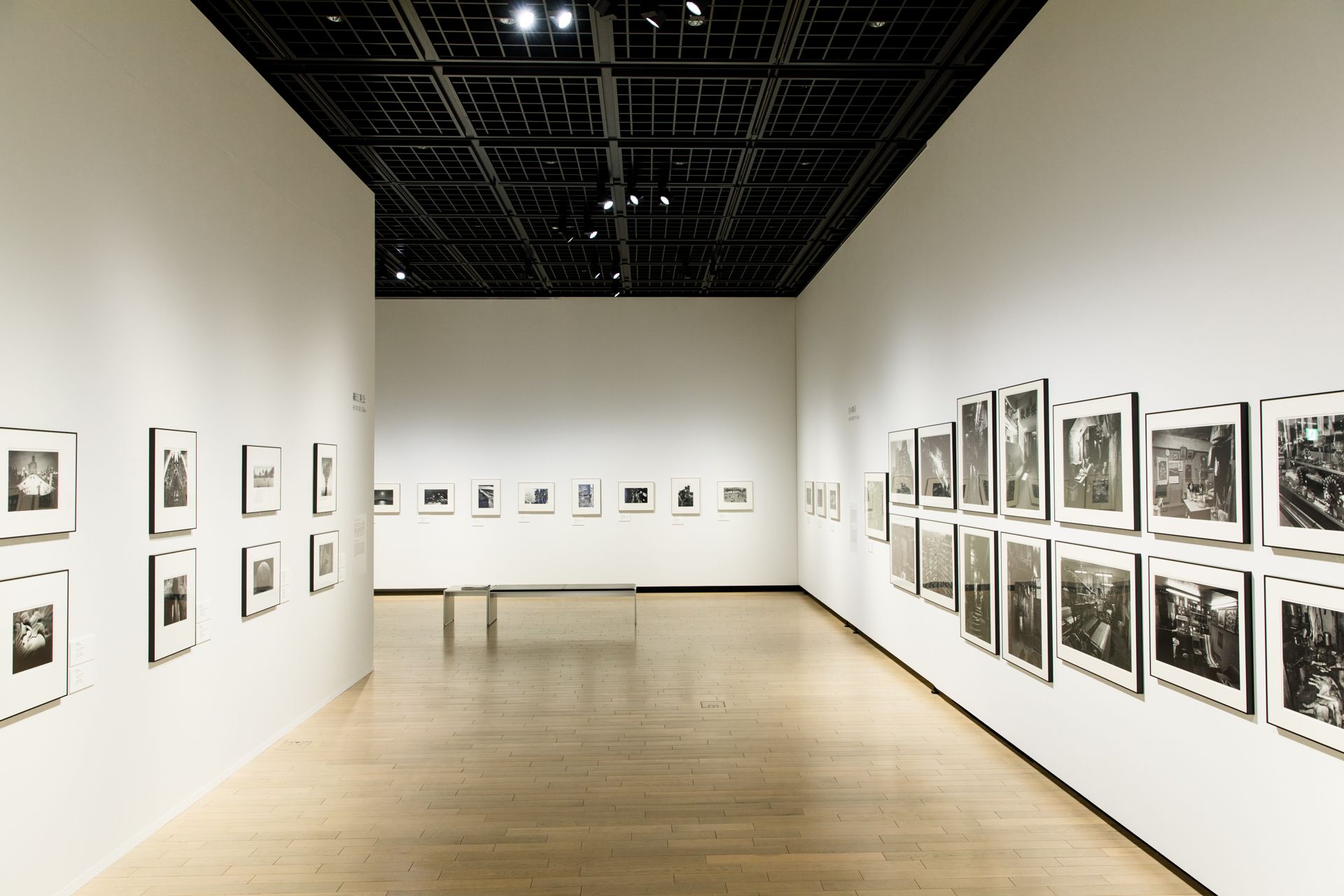
The Tokyo Photographic Art Museum, known by its abbreviation TOP, devotes five floors of the Yebisu Garden Palace development exclusively to photography and moving image, giving a medium that most major museums treat as a secondary category its own dedicated institution. Three exhibition halls draw from a collection of around 36,000 works, covering both contemporary and historical artists from Japan and internationally in a program that treats the medium’s full chronological and geographic range as equally worthy of sustained curatorial attention.
The annual World Press Photo Awards showcase, which TOP hosts as a traveling exhibition, gives the museum a specific appointment in the cultural calendar for visitors interested in documentary and photojournalism. The awards represent the most recognized international competition in press photography, and seeing the year’s recognized work in a dedicated photography museum rather than as a sidebar exhibition in a general institution gives the images a context that their subject matter rewards. The 190-seat theater within the museum presents video and film programming, extending the institution’s scope into moving images in a way that the exhibition galleries alone do not.
TOP’s position within the Yebisu Garden Palace complex, a redevelopment of the former Sapporo Brewery site in Ebisu, gives the museum an architectural setting distinct from the institutional buildings that house most of Tokyo’s museums. The development’s central plaza and surrounding commercial buildings give the area a distinct character from the dense urban streets that most Tokyo museum visits navigate, and the museum’s proximity to Ebisu station makes it accessible without the transfer complexity that some Tokyo museum neighborhoods require.
Luke Galloway / Unsplash
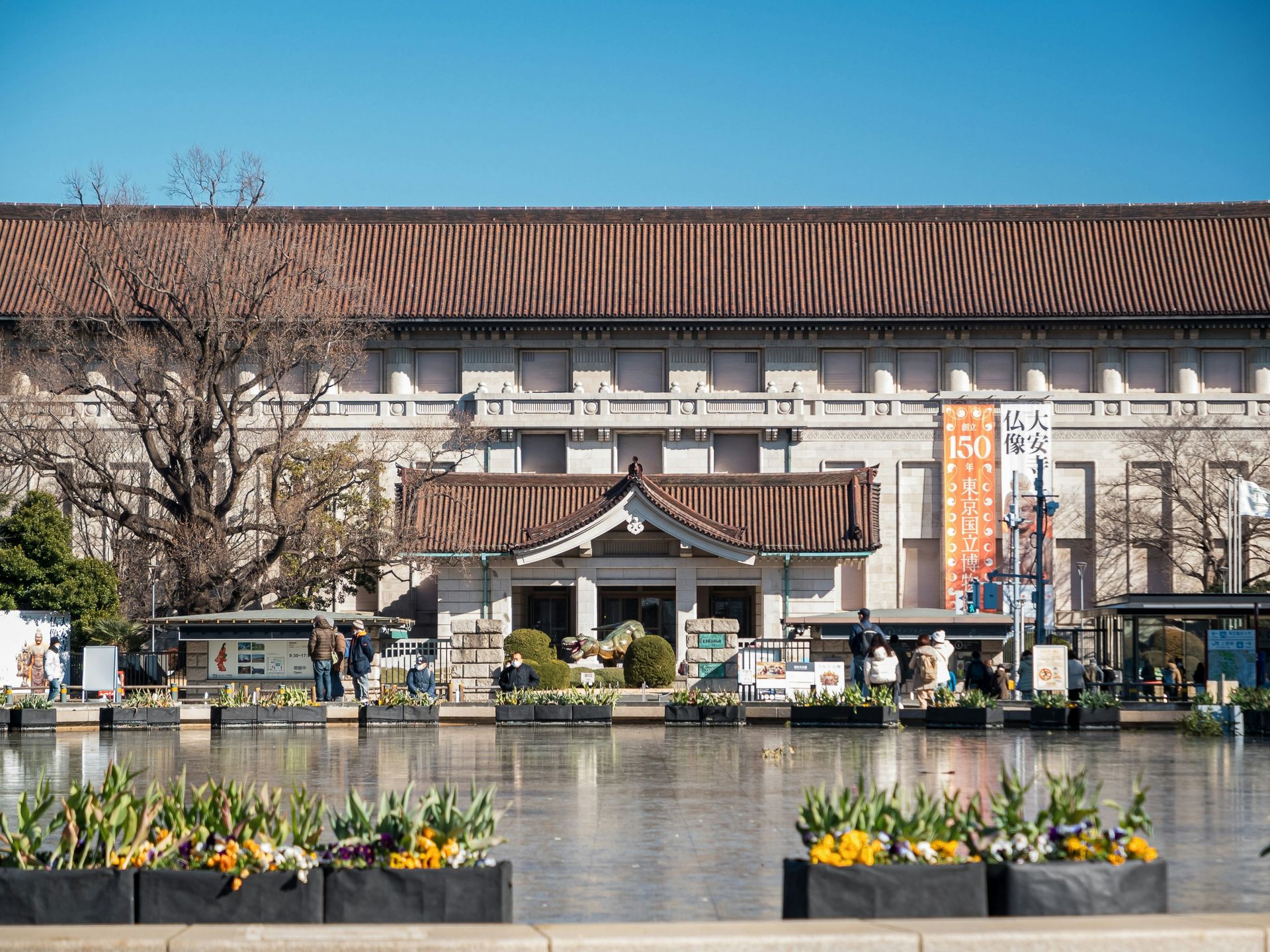
The Tokyo National Museum in Ueno Park is Japan’s oldest and largest museum, and its collection of more than 110,000 works covering Japanese art and artifacts across the country’s full recorded history gives it a depth that no other institution in Tokyo approaches. The Honkan, or main building, houses paintings, tea ceremony ceramics, samurai swords and armor, kimonos, lacquerware, sculpture, and ukiyo-e woodblock prints, spanning Japanese aesthetic traditions from their earliest documented forms to the modern period. The scale of what the Honkan contains alone would constitute a significant museum in most other cities; at the Tokyo National Museum, it represents one building among several on the same campus.
The Toyokan devotes five floors to Asian art from beyond Japan, covering China, Korea, Southeast Asia, and the broader region in a collection whose geographic scope gives the Japanese works in the Honkan a continental context. The Gallery of Horyu-ji Treasures houses Buddhist artifacts from a 7th-century temple in Nara, including objects of such fragility and historical significance that the gallery carefully controls its climate and visitor flow. Special exhibitions in the Hyokeikan and Heiseikan bring specific subjects into focus at a depth that the permanent galleries’ breadth cannot sustain, and the separately ticketed special exhibitions tend to draw lines that the permanent collection does not.
The Japanese garden behind the main buildings preserves five historic teahouses within a landscape designed in the traditional style, extending the museum campus's natural and architectural presence beyond the gallery buildings. The garden is accessible to museum visitors and offers a quiet that the galleries themselves, particularly during special exhibition periods, rarely sustain. The Ueno Park location places the Tokyo National Museum within walking distance of several other significant institutions, making a full day in this neighborhood one of the most culturally dense options in the city.
Credit: Miraikan
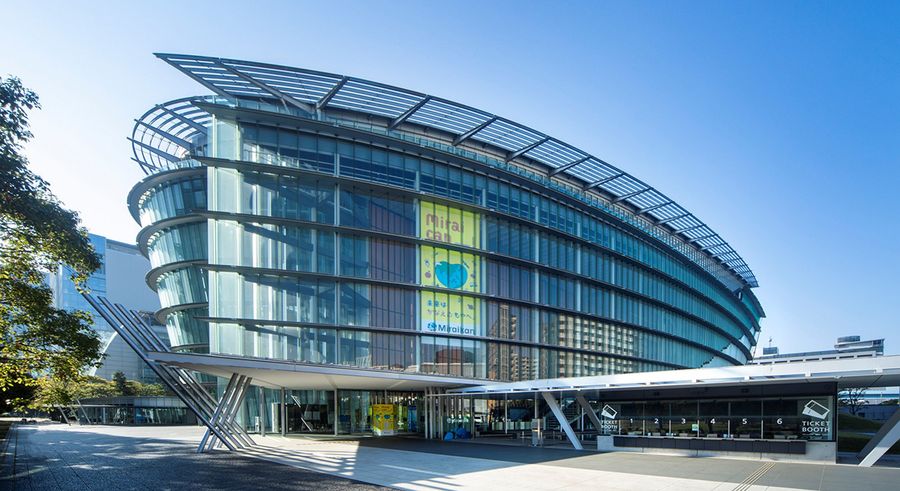
Miraikan, the National Museum of Emerging Science and Innovation, occupies a purpose-built facility on the artificial island of Odaiba in Tokyo Bay, giving it a geographic remove from the city’s museum clusters that the breadth of its programming more than compensates for. The museum’s permanent exhibits cover cellular biology, space exploration, robotics, and environmental science through dual-language signage calibrated for both children and adults, giving Miraikan practical accessibility that specialist science museums sometimes sacrifice in favor of technical depth.
The interactive androids that greet visitors in certain exhibit areas represent the public face of Japan’s robotics research community, which Miraikan connects to through institutional relationships with universities and research organizations. Interacting with humanoid robots in a museum context provides the technology with a human-scale encounter that laboratory demonstrations or product launches do not. The 6.5-meter LED globe, suspended in the museum’s central atrium, visualizes data on weather patterns, ocean currents, population distribution, and human migration at a scale that makes global systems perceptible rather than abstract.
The 3D dome theater extends the museum’s programming into subjects that the exhibition halls cannot fully address in a static format. Planetarium programming shares the dome with presentations on animation techniques and theoretical physics, reflecting Miraikan’s interest in making complex subjects accessible through immersive presentations rather than conventional explanations. The museum’s Odaiba location requires a dedicated trip from most of central Tokyo, but the breadth of its offerings and the quality of its interactive design justify the trip for visitors with a genuine interest in science and technology.
Credit: Edo-Tokyo Museum
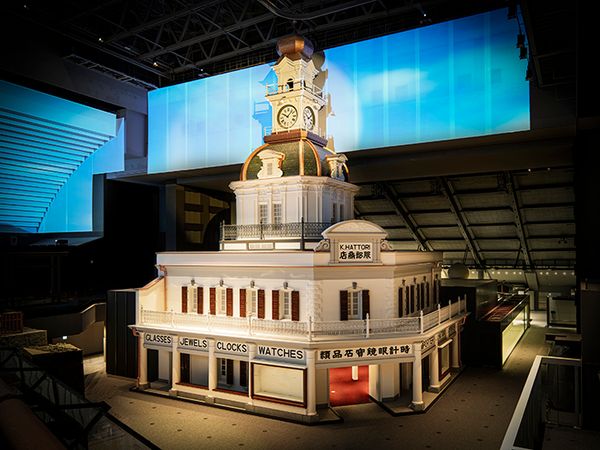
The Edo-Tokyo Museum, which reopened in March 2026 after a four-year renovation, covers the history and culture of the city from its founding as Edo through its transformation into modern Tokyo. The building that houses the collection draws its form from the traditional waterside storehouses that once defined the city’s riverfront, sitting on massive stilts above the surrounding streetscape. Inside, life-size displays depicting urban life at different periods of the city’s history give the exhibition an immediacy that conventional artifact display does not produce: visitors move through reconstructed environments rather than past cases of objects extracted from their original contexts.
The full-scale replica of the Nihonbashi Bridge serves as the permanent exhibition’s centerpiece, reconstructing the arched wooden structure that once stood at the convergence of the five roads to Edo and marked the gate to the capital. The bridge’s symbolic importance in Edo’s urban geography lends the reconstruction historical weight, a weight that the physical experience of walking across it amplifies. The exhibition material surrounding the bridge covers the political and cultural history of the city from the Tokugawa shogunate’s establishment of Edo as the seat of government to the Meiji Restoration, which renamed it Tokyo and opened it to Western influence.
The sister institution, Edo-Tokyo Open-Air Architectural Museum, located in the western suburbs of Koganei, extends the main museum’s project into physical architecture. Historic buildings relocated from their original sites across the city are preserved and reconstructed in an outdoor setting, allowing visitors to walk through structures that would otherwise have been lost to Tokyo’s continuous cycle of development and reconstruction. The two museums together cover the history of Tokyo’s built environment at a depth that neither institution achieves alone.
Credit: Nezu Museum
The Nezu Museum houses the personal collection of industrialist and politician Kaichiro Nezu, with a particular focus on premodern Buddhist art from Japan and East Asia. Seven national treasures and Chinese bronzes dating as far back as the 13th century BC anchor the collection, alongside calligraphy, paintings, textiles, and ceramics that the museum preserves with the care that objects of this age and fragility require. The collection’s specificity — the result of a single collector’s sustained engagement with a defined area of interest — gives the Nezu Museum a coherence that encyclopedic institutions, however comprehensive, cannot replicate.
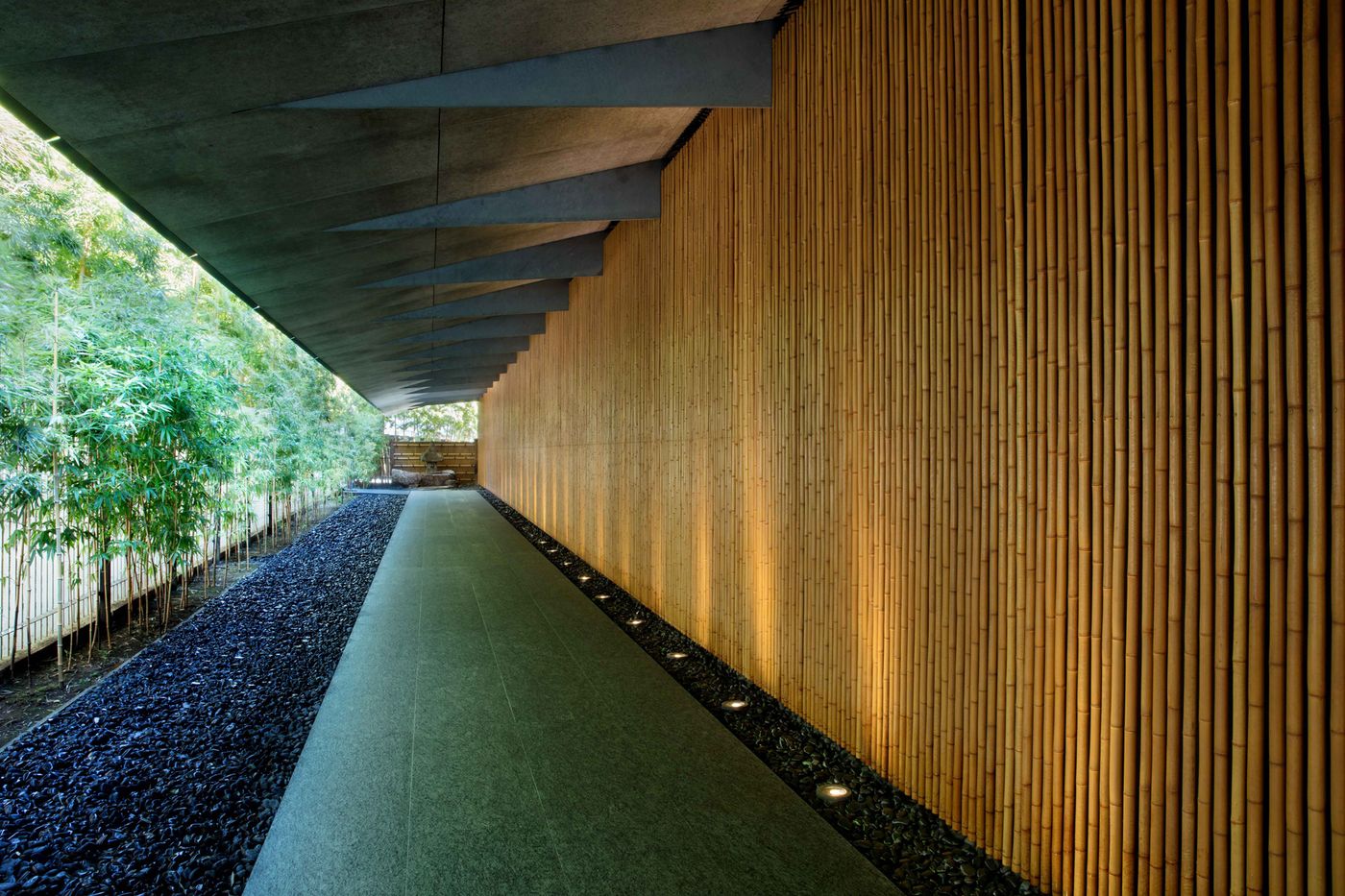
The building that houses the collection was designed by Kengo Kuma, one of Japan’s most internationally recognized contemporary architects, in a spare modern style that uses natural materials to create a visual dialogue with the garden that surrounds it. The relationship between the building and the garden is deliberate: Kuma designed both to be experienced together, and the floor-to-ceiling glass of the Nezucafe at the garden’s edge gives visitors a framed view of the landscape that extends the museum’s aesthetic sensibility into the natural world. The garden itself, a traditional Japanese landscape design covering substantial acreage in the middle of Minami-Aoyama, offers a natural environment unusual for this part of the city.
Traditional teahouses within the garden open occasionally for tea ceremony and cultural events, giving the Nezu Museum a living practice dimension alongside its historical collection. When the teahouses are not in use for formal events, the Nezucafe provides a comfortable place to rest and observe the garden without the ceremony’s structural requirements. The museum’s location in Minami-Aoyama, a neighborhood known for design and fashion, positions it within a district whose street-level culture complements the museum’s aesthetic interests.
Credit: teamLab Planets
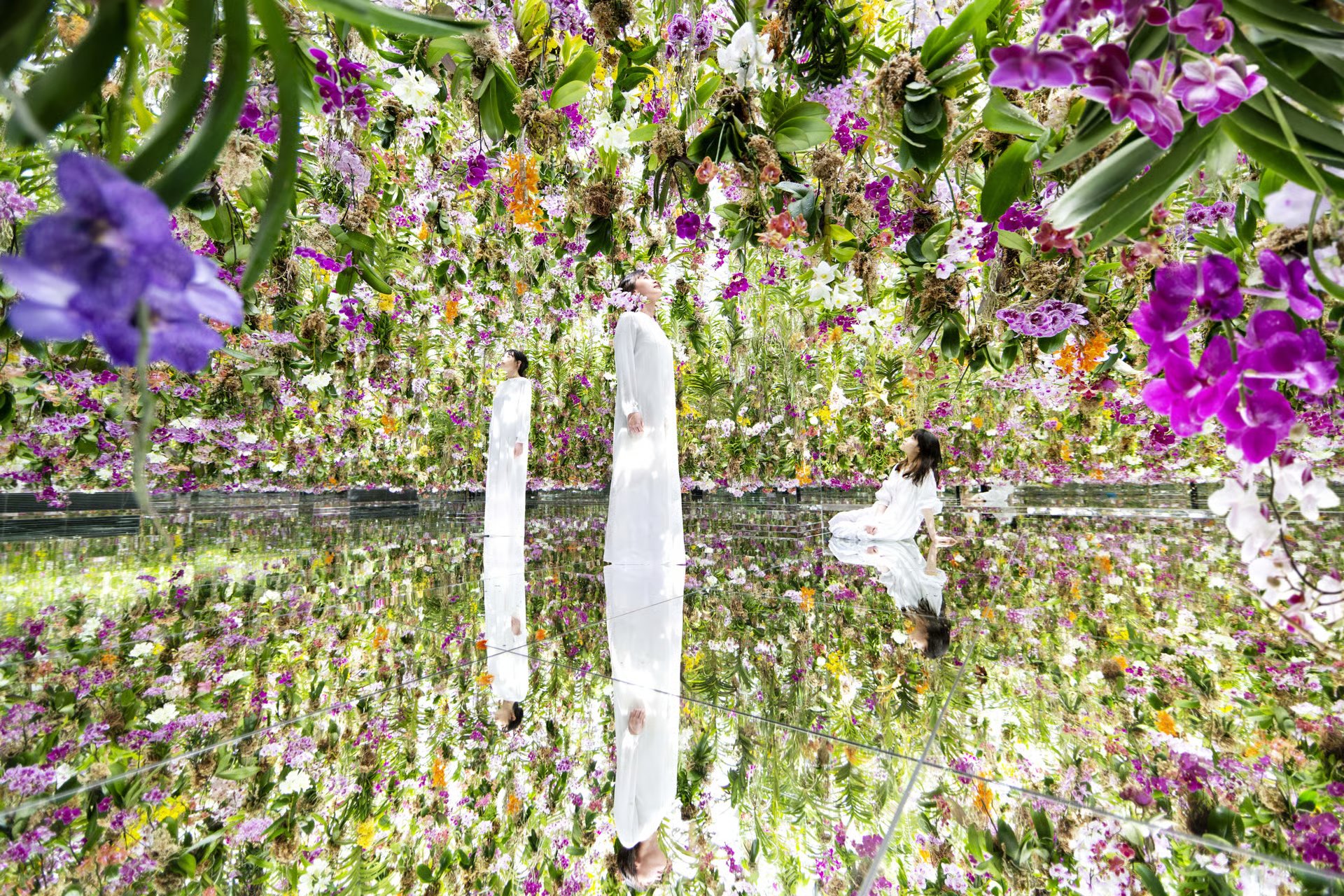
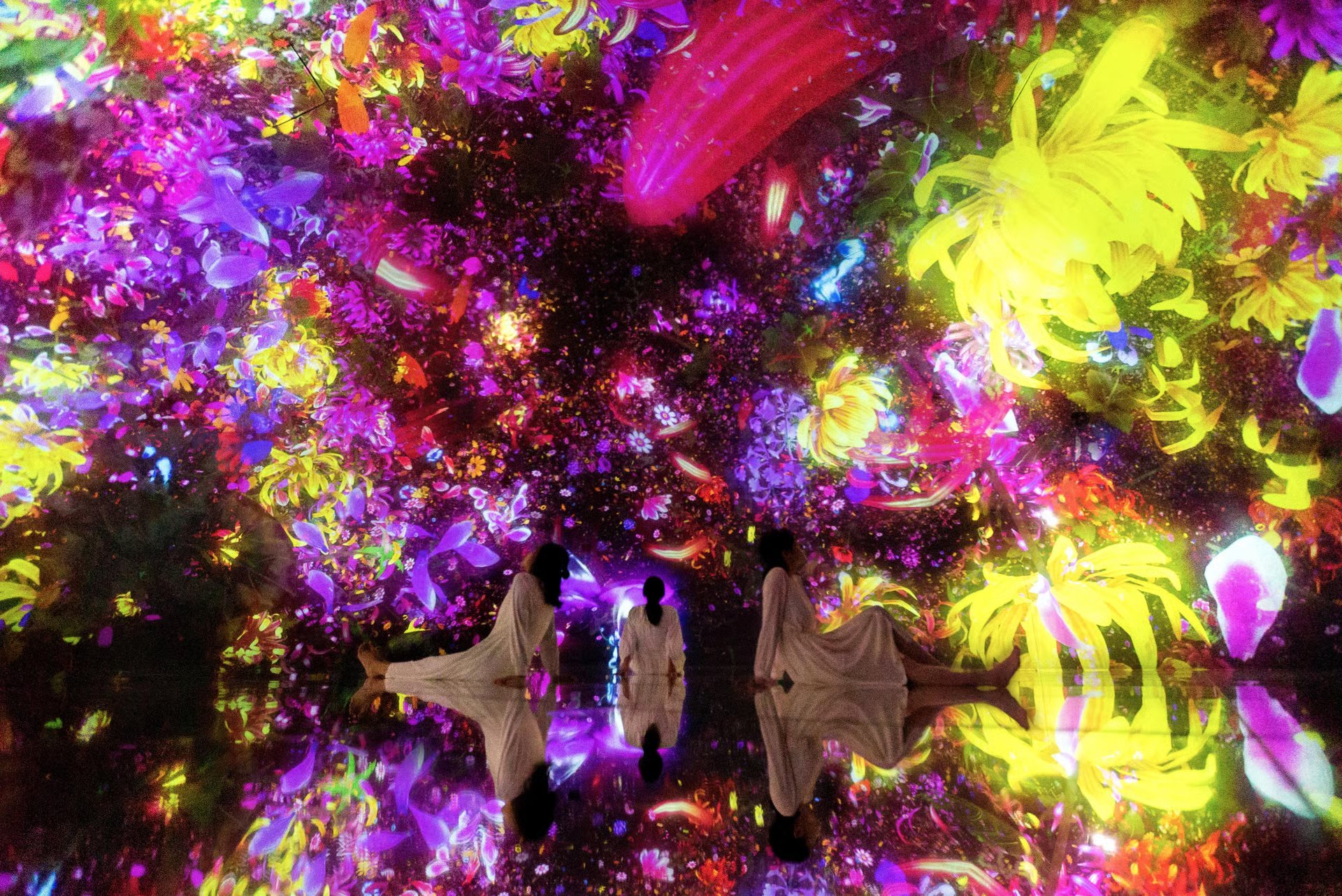
TeamLab Planets in Toyosu is the larger and more immersive of the art collective’s two Tokyo locations, covering enough ground and enough distinct environments that a full day of engagement with the interactive works is a realistic estimate rather than a marketing claim. The exhibitions include a room with knee-deep water containing digital koi that respond to visitors' movement, a forest of suspended orchids, and spaces designed around physical challenges that require jumping, balancing, and movement to navigate. The digital environments throughout the facility respond to the presence and actions of each visitor, which means the experience changes continuously based on how many people are in a given space and what they are doing.
The technology teamLab deploys gives its work a sensory engagement that conventional art viewing does not. The koi room’s combination of physical water, projected imagery, and responsive behavior produces an encounter that the collective’s documentation photographs extensively, but that photographs do not adequately convey: the experience of being inside a responsive digital environment differs fundamentally from observing one from a fixed position. This gap between documentation and experience is part of what makes teamLab’s work genuinely significant in contemporary art rather than merely spectacular, and it is why Planets rewards the time required to move through it slowly.
The dining options within the facility extend the digital aesthetic into the meal itself. A pitch-dark ramen restaurant uses tactile digital art to transform the dining experience, and a glass-encased bar applies similar principles to the drinking environment. The integration of these spaces into the broader visit gives Planets a completeness that most museum experiences do not attempt, treating the meal as continuous with the art rather than as an interruption of it.
Roland Lee / Unsplash
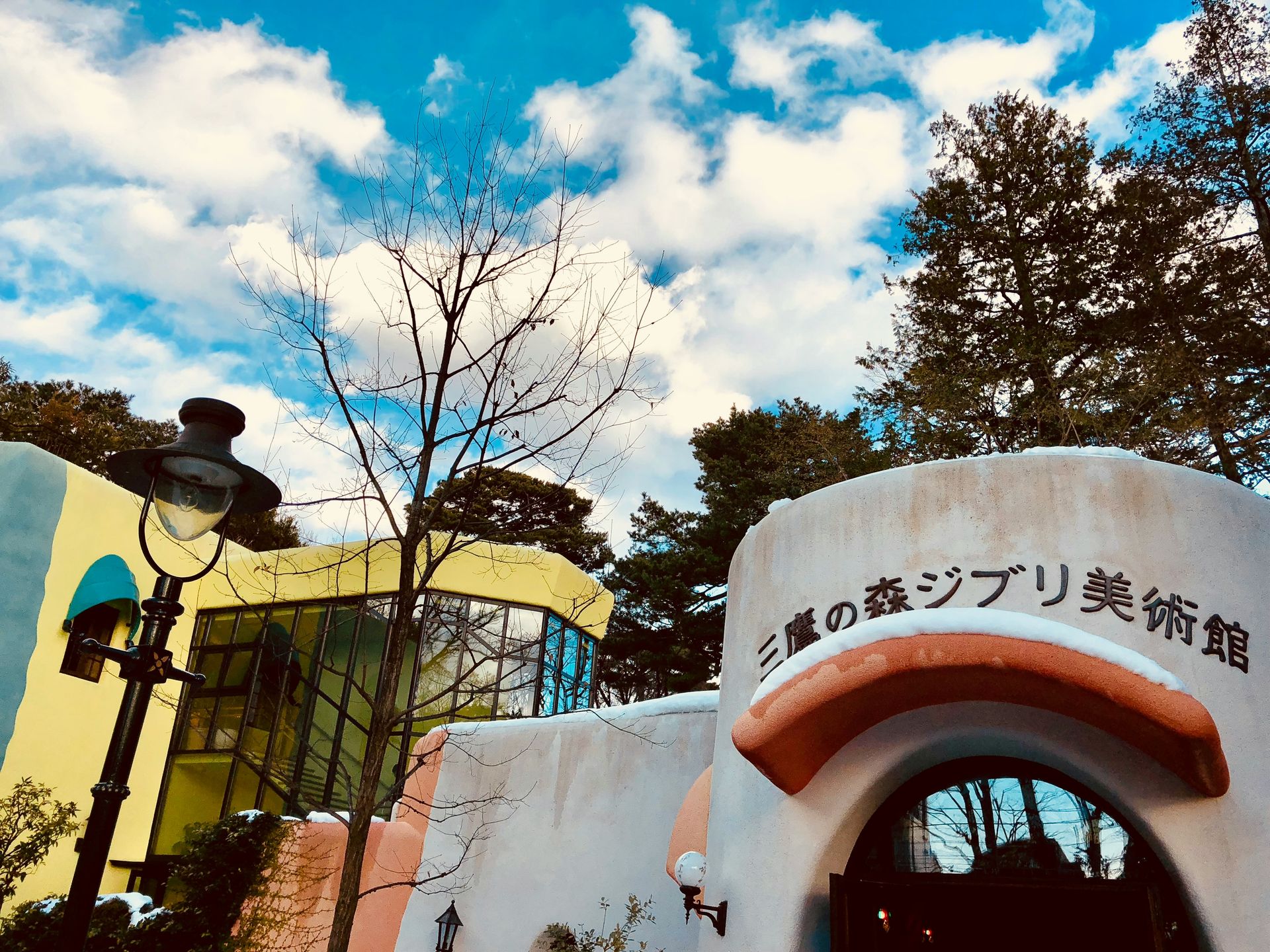
The Ghibli Museum in the Mitaka suburbs operates less like a conventional museum and more like a physical extension of the imaginative world director Hayao Miyazaki has built over decades of animated filmmaking. The building and its contents reference the films — “Laputa,” “Porco Rosso,” “My Neighbor Totoro,” and others — in a way that rewards visitors who arrive with knowledge of the work but that offers enough tactile and visual richness to engage those without it. The design integrates greenery throughout the architecture, giving the interior a quality of overgrowth that the films’ relationship to the natural world reflects.
Tickets present the primary logistical challenge. Slots for a specific date and time must be purchased online in advance, and demand consistently outpaces supply: tickets for a given month go on sale on the 10th of the preceding month and sell out quickly. International visitors should plan their Ghibli Museum visit as a fixed point in their Tokyo itinerary, rather than a flexible option, and book tickets as the first step in arranging the broader trip. The advance purchase requirement and the sell-out speed are worth understanding before arriving in Tokyo with the expectation of a spontaneous visit.
Once inside, the museum offers free exploration of a tactile maze of exhibition spaces, staircases, and roof terraces, which the Ghibli films’ visual world populates at every turn. A theater within the museum shows short films produced exclusively for this venue, available nowhere else and not commercially released, which gives the Ghibli Museum a content offering specific to this location. The Robot Soldier statue on the roof terrace, inspired by the film “Castle in the Sky,” has become the museum’s most recognized exterior feature and the most photographed point on the grounds.
