
The best apps for listening to music, according to Consumer Reports
The right music service depends on your budget and listening habits. Consumer Reports compared pricing, audio quality and standout features
Fath / Unsplash
The right music streaming service depends less on which one is objectively best and more on how someone actually listens, whether that means bargain-hunting, chasing audiophile sound quality or sticking with whatever ecosystem a phone already runs. Pricing, catalog size and standout features vary enough between services that the wrong pick can mean paying for features that never get used.
Consumer Reports compared pricing, audio quality and standout features across eight major services, so listeners can find the right fit for their budget and habits.
Amazon Music Unlimited and Amazon Prime Music

Credit: Amazon Music
Amazon $AMZN Prime Music comes bundled free with an existing Amazon Prime membership, while Amazon Music Unlimited costs $9 a month for Prime members or $10 for everyone else, with a discounted $5 rate available through certain Amazon Echo devices. Consumer Reports found Music Unlimited a strong deal for existing Prime members, offering a catalog exceeding 90 million tracks, hand-picked playlists, podcast content and a large spatial audio library, with everything streamable in high definition and a subset of over 7 million songs available in 24-bit Ultra HD. CR noted the free Prime Music tier's 2 million songs feel thin next to competing services, and Music Unlimited's recommendation engine doesn't match rivals like Spotify $SPOT. Anyone already paying for Prime gets solid value here even before considering the paid upgrade.
Apple Music

Credit: Apple Music
Apple $AAPL Music costs $10 a month for individuals or $15 for a family plan of up to six, with a discounted $5 student rate and a cheaper $5 voice-only plan that works exclusively through Siri commands. Consumer Reports found the service ran especially well on iPhones and Macs, with a 90-million-song catalog that now streams in lossless hi-fi without any added cost, plus human-curated playlists designed to help listeners discover new music. CR also highlighted a dedicated classical music service launching for Apple Music subscribers at no extra charge, built to handle the naming conventions that trip up classical listings on more mainstream platforms. CR did note the Windows desktop app feels a bit clunky, though listening through a browser offers a smoother alternative.
Idagio

Credit: Idagio
Idagio costs around $10 a month for its standard tier, with a free ad-supported option offering 2 million songs, a 50 percent student discount and a two-week free trial to test the service first. Consumer Reports found it particularly well suited to classical music fans, since its search tools handle the genre's complex naming conventions far better than mainstream competitors, alongside browsing tools like curated playlists and the ability to sort by instrument. A $30-a-month tier adds access to exclusive online concerts featuring notable performers, and CR noted signing up through a browser instead of an app store can save around $3 a month on the Premium+ high-definition tier. CR's one drawback is that Idagio sticks strictly to classical music, so listeners wanting other genres alongside it may prefer Apple $AAPL Music's newer classical offering instead.
Pandora
Credit: Google Play Store
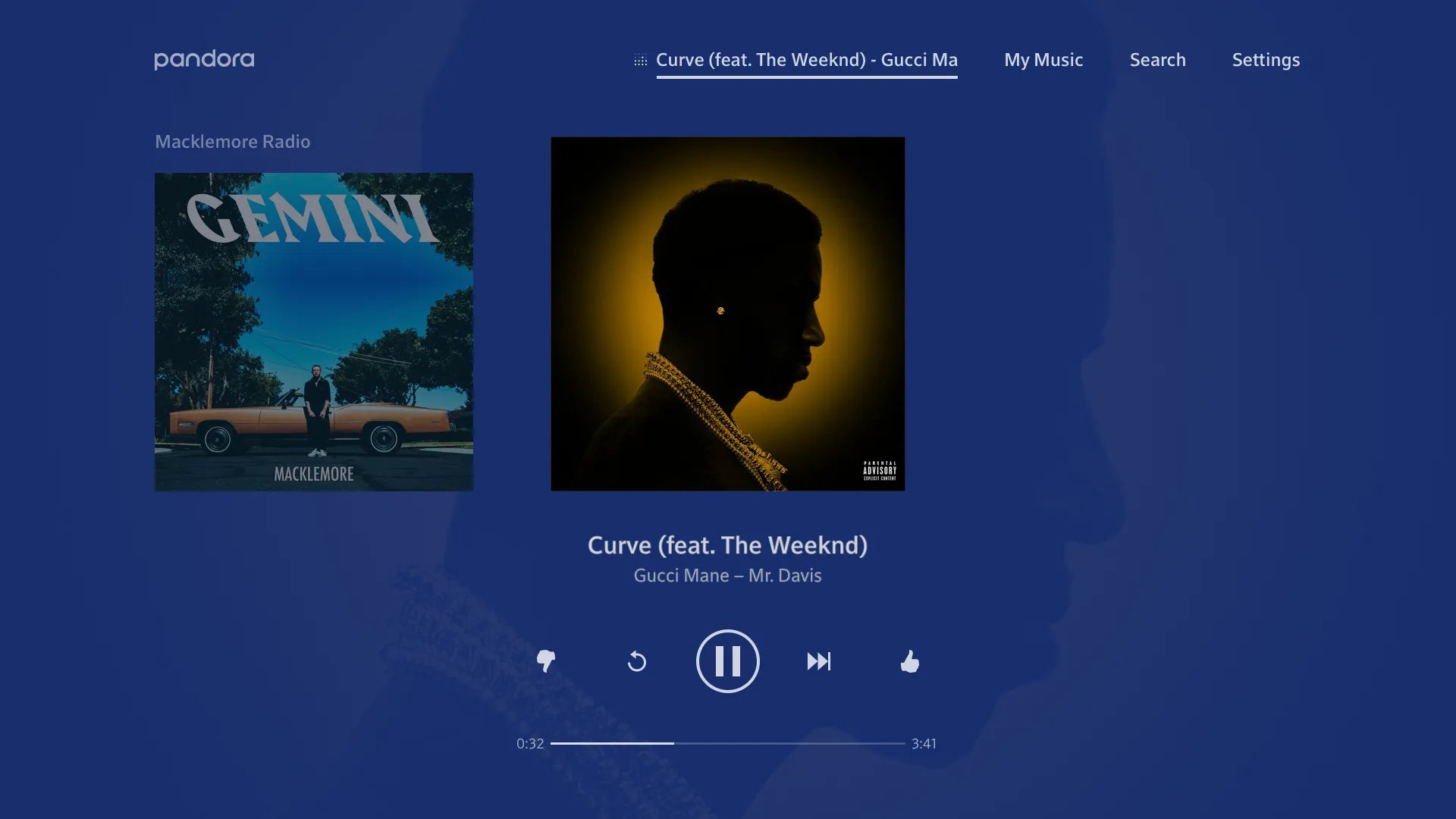
Pandora offers a free ad-supported radio tier, a $5 tier for ad-free radio with limited on-demand control, and a $10 tier unlocking the full service ad-free, with a $15 family plan also available. Consumer Reports found it especially easy to get started, since naming a favorite artist instantly builds a listening channel that can be fine-tuned over time, making it well suited to listeners who prefer a hands-off, radio-style experience. CR noted the company doesn't publicize its total song library size, suggesting a more limited catalog than leading competitors, and its maximum audio quality trails several rivals. Since SiriusXM acquired Pandora in 2019, subscribers to either service now get some cross-access to the other's content.
SiriusXM

Credit: SiriusXM
SiriusXM runs about $14 a month for phone-based streaming access to hundreds of channels, with a $24 Premium tier sometimes required for exclusive Howard Stern content, plus an added $19 monthly fee for direct satellite streaming to a car radio. Consumer Reports found the service appeals especially to fans of traditional radio who want a wider channel selection with commercial-free, skippable tracks, and pointed out phone streaming over good cell service can be cheaper than the equivalent satellite package. CR flagged the plan lineup as confusing, with frequently shifting packages, optional add-ons and fees that make it hard to know if a given deal is competitive. Canceling proved to be a lengthy, frustrating process in CR's own experience, requiring a call to customer service instead of a simple online cancellation.
Spotify

Credit: Spotify
Spotify $SPOT's free tier streams music with ads on desktop and web, while Premium runs $10 a month for one person, $13 for two or $16 for up to six, plus a discounted $5 student plan bundled with ad-supported Hulu and Showtime. Consumer Reports found the recommendation algorithm a particular strength, paired with a large library of 80 million songs and 4 million podcast titles organized into playlists built around specific activities like workouts or long drives. CR noted mobile users on the free tier face restrictions, including limited on-demand song selection and a cap on skips per hour, and pointed out Spotify still lacks the high-quality audio option the company has discussed since 2021 without a firm release date. CR also mentioned a major interface overhaul in the works, shifting toward a video-forward feed that has drawn mixed reactions from longtime users.
Tidal

Credit: Tidal
Tidal starts at $10 a month for hi-res audio, with a $20 tier unlocking its highest "master quality" fidelity, alongside a free ad-supported tier and discounts for students, military members and families. Consumer Reports found the audio quality a standout, with both CD-quality and high-res streaming available plus a substantial spatial audio library in Dolby Atmos and Sony $SONY 360 Reality Audio, and highlighted Tidal Connect as a way to stream directly to compatible speakers without routing through Bluetooth. CR also noted Tidal pays artists notably more per stream than many competing services, by some estimates nearly four times what Spotify $SPOT pays. The $20 tier's price stands out as steep, especially since rivals like Amazon $AMZN and Apple $AAPL now include lossless audio at no extra cost, and large hi-res files can eat into mobile data quickly.
YouTube Music

Credit: YouTube Music
YouTube Music offers a free ad-supported tier, with YouTube Music Premium costing $10 a month individually or $15 for a family plan, plus student discounts and a separate $12 YouTube Premium bundle that adds ad-free video on top of the same music catalog. Consumer Reports found the standout feature to be free uploads of up to 100,000 personal audio files for on-the-go streaming, making it a strong fit for anyone with an existing music collection who wants access without paying anything. The paid Premium tier adds a 70-million-song library, personalized playlists and location-aware suggestions, like higher-tempo picks while at the gym. CR flagged a real limitation on the free tier, since unless someone is streaming self-uploaded tracks, the music stops the moment a phone gets locked or another app opens.