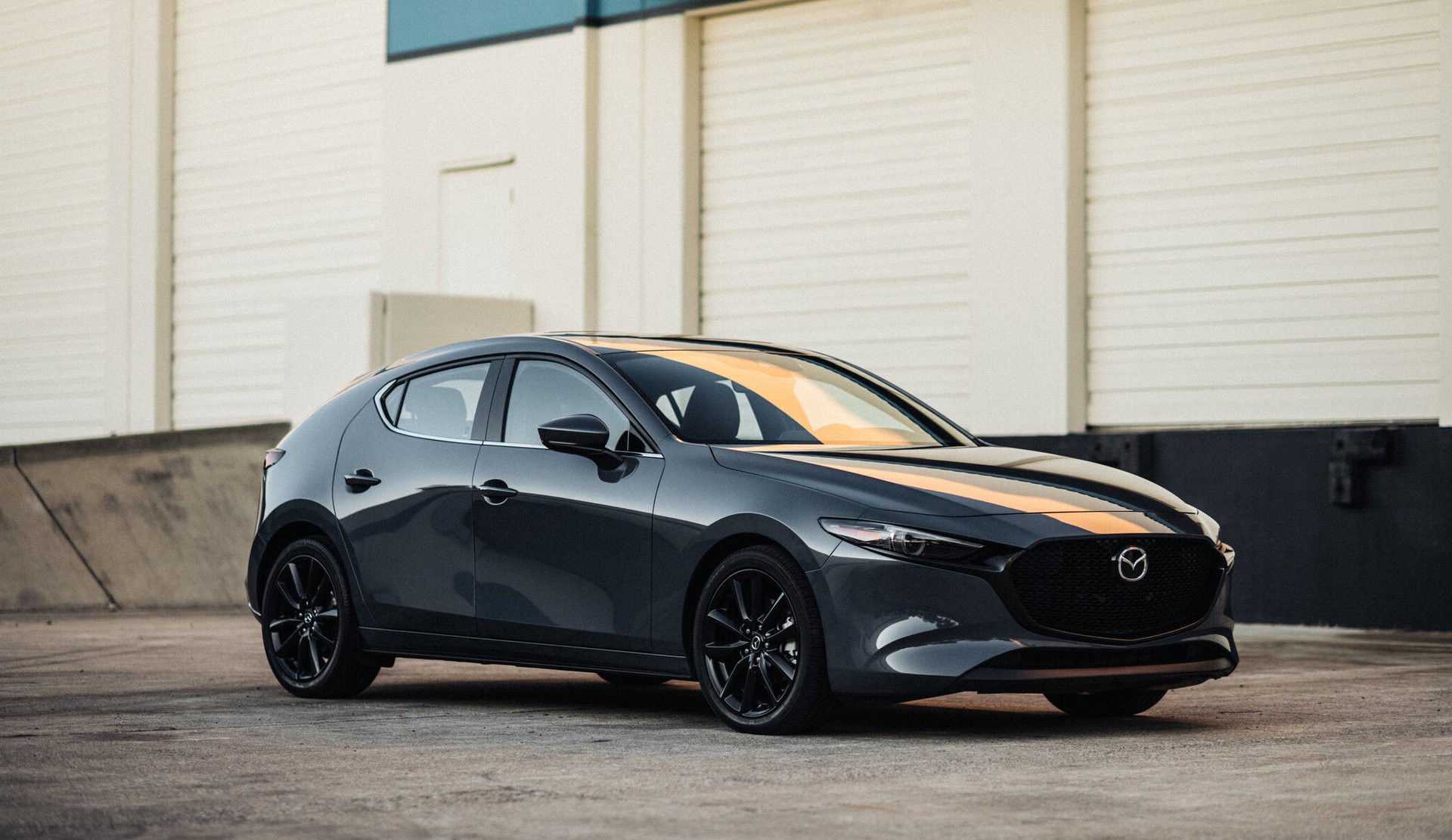
Credit: Mazda
The modern car cabin has become one of the most contested spaces in consumer technology. Where a dashboard once held physical knobs for the heater and mechanical switches for the lights, it now hosts a touchscreen that controls everything from the fan speed to the seat memory to the ambient lighting color. Some automakers have gone further, removing the volume knob entirely, hiding the ventilation controls in a haptic touch strip, and replacing the gear selector with a joystick. The argument is that this approach produces a cleaner, more modern aesthetic. The counterargument is that it requires the driver to look away from the road to press a flat glass screen whose location changes with every software update.
The vehicles on this list represent the automotive market’s answer to that counterargument. They prioritize physical controls, honest drivetrains, and in several cases a manual transmission that asks the driver to be a participant in the driving process, not an overseer of an automated one. None of them are technophobic in the sense of being primitive, and most carry modern safety systems as standard. The distinction is in the philosophy: these are vehicles whose engineers solved problems with mechanical hardware and driver feel, not software menus and computer-mediated responses.
The 8 vehicles below appear in U.S. News and World Report, selected for their emphasis on physical controls, mechanical simplicity, and driver engagement in the 2026 model year. Approximate starting prices are noted for each vehicle. Buyers should confirm current pricing with dealers, as market conditions and option packages affect the final number.
1 / 8
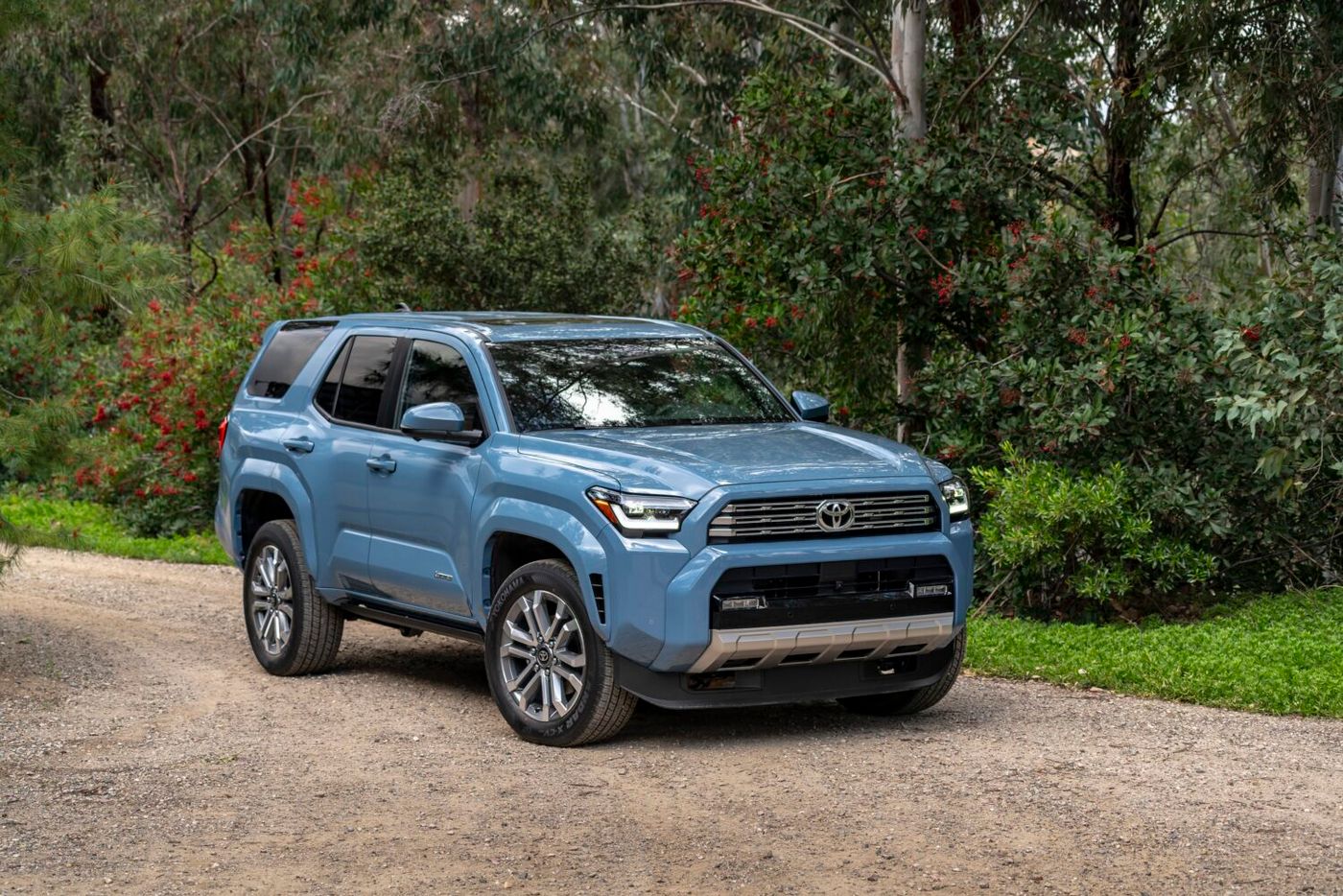
Credit: Toyota
The Toyota $TM 4Runner emerged from its 2025 redesign with more technology than its predecessor, while retaining the mechanical philosophy that has made it a modern classic in the off-road community. The body-on-frame construction gives the 4Runner its most fundamental characteristic: a structural approach the SUV world has largely abandoned in pursuit of car-like handling, but that provides the 4Runner with durability, towing capacity, and off-road capability at the expense of the refinement and fuel economy that unibody crossovers offer. Low-range four-wheel drive is available, providing the gear reduction necessary for technical trail driving that part-time AWD systems in most crossovers do not.
The cabin’s physical switchgear, retained across the redesign, gives the interior a tactile control environment that touchscreen-dominant cabins in the 4Runner’s competitors do not. The large touchscreen in higher trims is complemented by a full complement of knobs and buttons, giving the driver physical access to controls whose daily use makes touchscreen navigation frustrating on the move. The U.S. News rating of 8.4 out of 10 and a starting price around $43,270 give the 4Runner its market position at the upper end of the midsize SUV segment.
The updated design’s improvement in on-road comfort gives the new 4Runner a livability that the outgoing model’s sacrifice-everything-for-capability approach did not fully provide, and the truck-based platform’s improved daily driving manners give the owner who uses it primarily on pavement a less punishing daily experience without compromising the off-road identity that the model’s owner base specifically buys it for. The available GR Sport variant, whose performance-tuned suspension and more aggressive visual treatment give the 4Runner a road-focused personality alongside the TRD Off-Road’s trail-focused one, gives the buyer a configuration range specific to how they actually intend to use the vehicle on a daily and recreational basis throughout the full range of the model year and across the varied terrain types the 4Runner’s platform is specifically designed to handle.
2 / 8
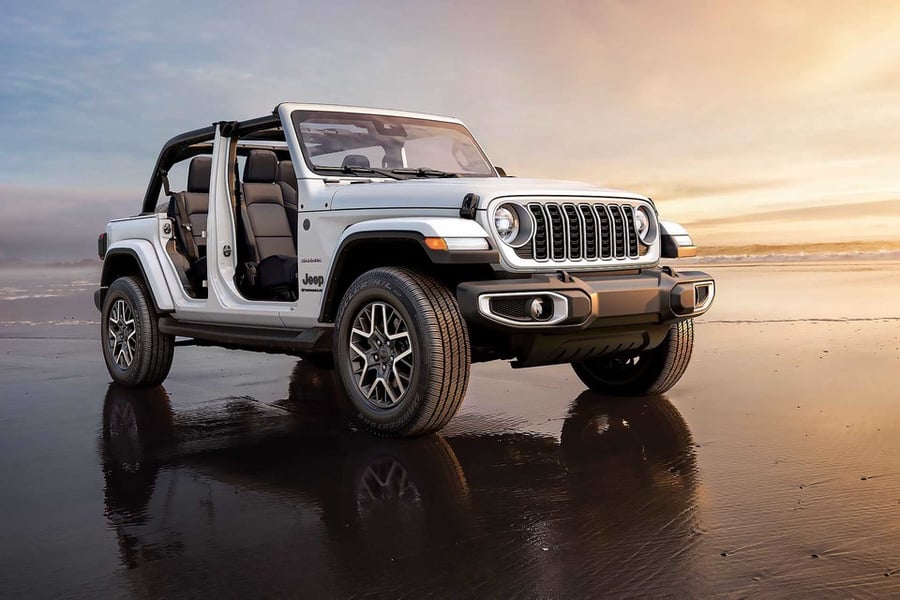
Credit: Jeep
The Jeep Wrangler is the vehicle whose philosophy most directly represents the technophobe driver’s ideal: the base model comes with four-wheel drive, a six-speed manual transmission, two removable doors, and a soft convertible top as standard, giving the entry-level Wrangler a configuration that the enthusiast community would have considered well-equipped a decade ago and that most contemporary base models have traded away in the pursuit of simplicity and cost reduction. The solid front axle, a rarity in the modern SUV market whose independent front suspension has become the near-universal standard, gives the Wrangler ground clearance and axle articulation in technical terrain that independent-suspension vehicles cannot match.
The interior’s chunky knobs and substantial switchgear give the tactile control experience its most deliberately rugged expression in the current market: the Wrangler’s controls are designed to be operated with gloves on, in a vehicle without doors, in the dirt, which gives them a physical robustness and a size that the fine-tuned interior of a luxury crossover does not prioritize. The infotainment system is straightforward by design, reflecting the Wrangler’s ethos that the driver should be looking at the trail, not the screen.
The trade-off is on-road behavior: the solid front axle, the tall ride height, and the aerodynamics of a vehicle designed to cross water and navigate boulders give the Wrangler handling and ride quality that are measurably below the crossover standard. The starting price is around $36,035, and the U.S. News rating of 8.1 out of 10 positions it in the compact SUV segment, though its off-road capability places it in a category of its own. The Wrangler 4xe, a plug-in hybrid variant, gives the buyer who wants the Wrangler’s mechanical character with improved fuel efficiency an option whose electric motor delivers additional torque for rock-crawling at low speed, alongside the fuel-economy benefit at highway speeds that the standard gasoline powertrain cannot match in the same efficiency terms.
3 / 8
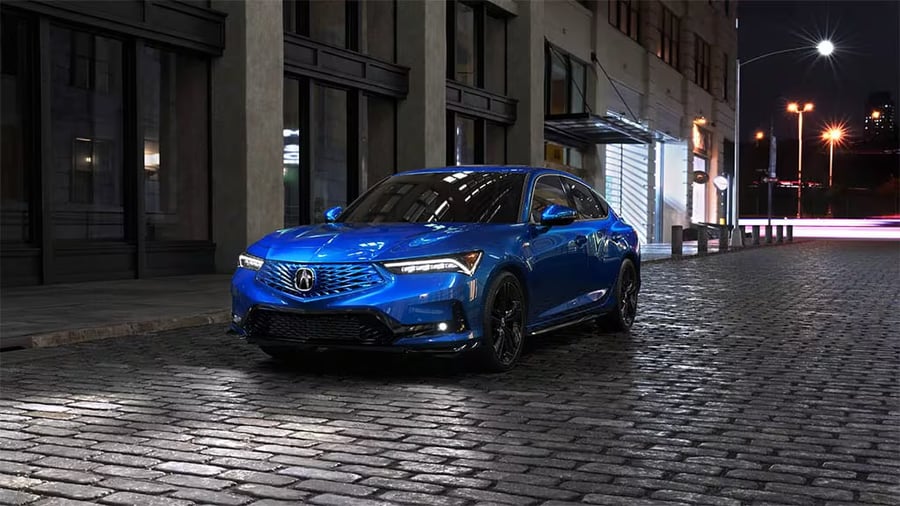
Credit: Acura
The Acura Integra’s revival of a nameplate from the 1990s places the nameplate under a dual obligation: to honor the original’s reputation for driver engagement and to meet the quality standards that the Acura brand’s current position in the luxury market demands. It meets both. The six-speed manual transmission, available in an era when luxury cars have almost universally moved to automatic-only drivetrains, gives the Integra its most significant technophobe credential and its most effective connection to the original’s driver-focused character. The cabin’s wealth of physical controls and an infotainment screen with a straightforward, easy-to-navigate interface give the overall driving environment a pleasingly low level of distraction.
The cabin quality borders on genuine luxury despite the compact-car price, with materials and assembly that approach what the Acura brand’s Honda $HMC parent offers at higher price points. The sound insulation is a noted weakness, allowing more road and wind noise than the interior’s visual quality leads buyers to expect, but the driving dynamics compensate: the Integra’s handling and steering feedback give the enthusiast driver a level of road connection that the automatic-only luxury compacts in the same price range do not provide with the same clarity.
The U.S. News rating of 9.3 out of 10 and a starting price of around $33,400 give the Integra a strong value position in the luxury small-car segment. The manual transmission’s availability makes it a specific recommendation for the buyer who wants the engagement of a stick shift in a vehicle whose daily comfort and quality exceed those of a typical sports-focused manual-transmission car, and whose cabin ambitions extend beyond the stripped-out sport-compact market. The Type S variant, a more powerful version with a turbocharged five-cylinder engine and a sport-tuned chassis, gives the buyer who wants even more driving focus a further step up the performance ladder within the same fundamental driver-focused interior philosophy that defines the standard Integra’s central and enduring appeal in the competitive luxury compact car segment.
4 / 8
Credit: Nissan
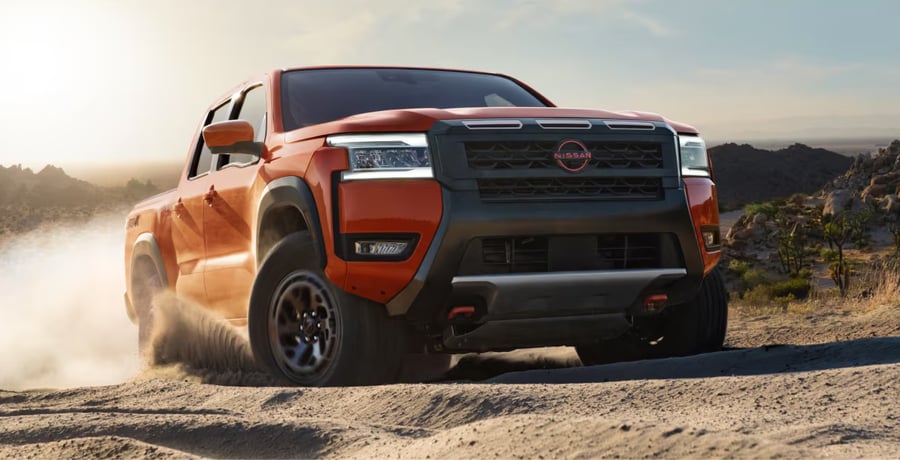
The Nissan Frontier is the midsize truck that most directly preserves the older generation’s approach to the segment: a straightforward V6 without turbochargers, hydraulic power steering instead of the electric power steering that the rest of the market has adopted, and a cabin whose chunky buttons and switchgear allow most major functions to be operated without touching the touchscreen. The hydraulic steering gives the Frontier its most specifically technophobe-relevant technical distinction: where electric power steering gives the vehicle a tunable feel through software calibration, hydraulic steering gives a more direct and consistent physical connection whose character is less variable across the speed range, at the cost of being heavier and less precise than the best electric systems.
The V6’s freedom from turbocharging gives it a power delivery whose linear, predictable response across the rev range contrasts with the torque peaks of the turbocharged four-cylinder engines that its competitors have adopted. The off-road capability relies on mechanical preparation, excellent ground clearance, and a two-speed transfer case rather than electronically selected drive modes, which give the Frontier a trail-readiness that the driver understands and controls directly. The U.S. News rating of 8.6 out of 10 and a starting price around $32,150 give it a competitive position in the midsize truck segment.
The acknowledged trade-offs are real: the hydraulic steering can feel heavy and less refined than the electric alternatives, and the Frontier falls behind some rivals in the pure off-road capability metric despite its mechanical approach. The fuel economy reflects the V6’s lack of the efficiency-oriented technologies offered by the turbocharged and hybrid competitors. The buyer who chooses the Frontier accepts these trade-offs in exchange for a truck whose operational simplicity and direct mechanical feel represent a considered preference rather than a compromise. The Frontier Pro-4X variant, with its Bilstein shock absorbers, locking rear differential, and underbody skid plates, gives the off-road buyer the most mechanically prepared version of the Frontier’s already capable base platform and the most direct expression of the truck’s analog approach to trail capability.
5 / 8
Credit: Mazda
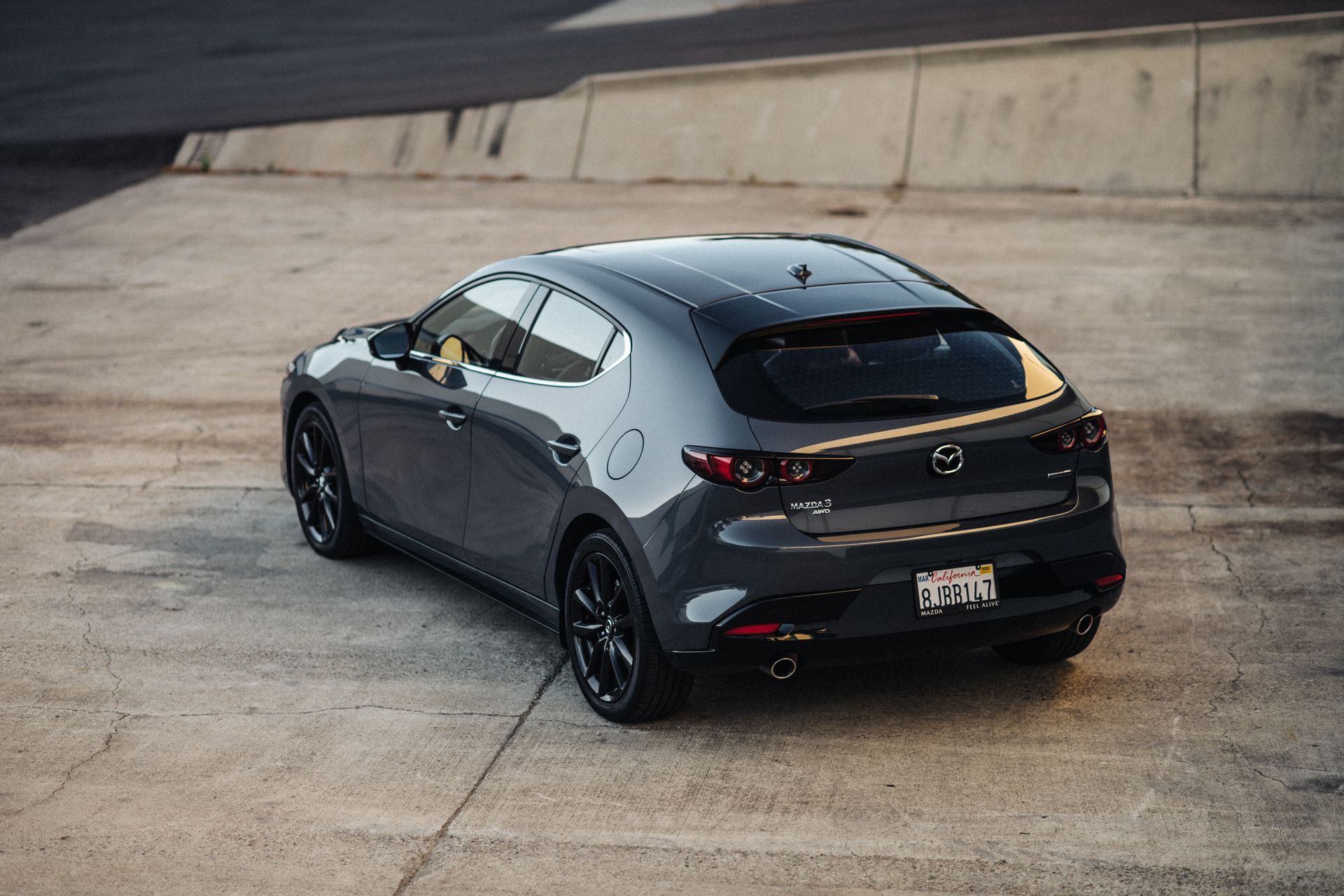
The Mazda3 occupies a specific position in the compact car market: a vehicle whose interior quality approaches luxury-car standards, whose driving dynamics are the most engaging in its class, and whose infotainment approach specifically avoids the touchscreen-while-driving interaction model that most competitors have adopted. The 8.8-inch display is navigated by a rotary dial in the center console, a physical control interaction whose eyes-on-road safety advantage over touchscreen navigation has been documented in multiple independent studies. The climate controls are physical buttons, and the overall cabin offers a material quality that, in its fit, finish, and texture, gives the Mazda3 an interior that buyers consistently find unexpected at the compact-car price point.
The six-speed manual transmission, available in a class where the stick shift has become vanishingly rare, gives the Mazda3 its driver-engagement credentials alongside its physical-control philosophy. The driving dynamics, consistently rated among the best in the compact car segment, give the manual transmission a role that contributes meaningfully to the driving experience: this is a car that rewards being driven, and the manual gearbox is the mechanism by which the driver participates in that reward.
The U.S. News rating of 9.3 out of 10 and a starting price around $24,550 give the Mazda3 the best value proposition on this list in absolute dollar terms. The compact car category positions it below the SUVs and trucks in the market’s preference hierarchy, but for the buyer whose primary interest is the driving experience and the interior quality, not the cargo space and the ride height, the Mazda3 gives those qualities at a price that the luxury compact competitors charge a significant premium to approach. The available all-wheel drive, paired with the automatic transmission, gives the buyer in a snow-belt market a Mazda3 whose all-weather capability extends the car’s usability into the winter months, whereas the front-wheel-drive manual-transmission configuration navigates with more difficulty in the colder, significantly snowier months of the winter calendar.
6 / 8
Credit: Toyota
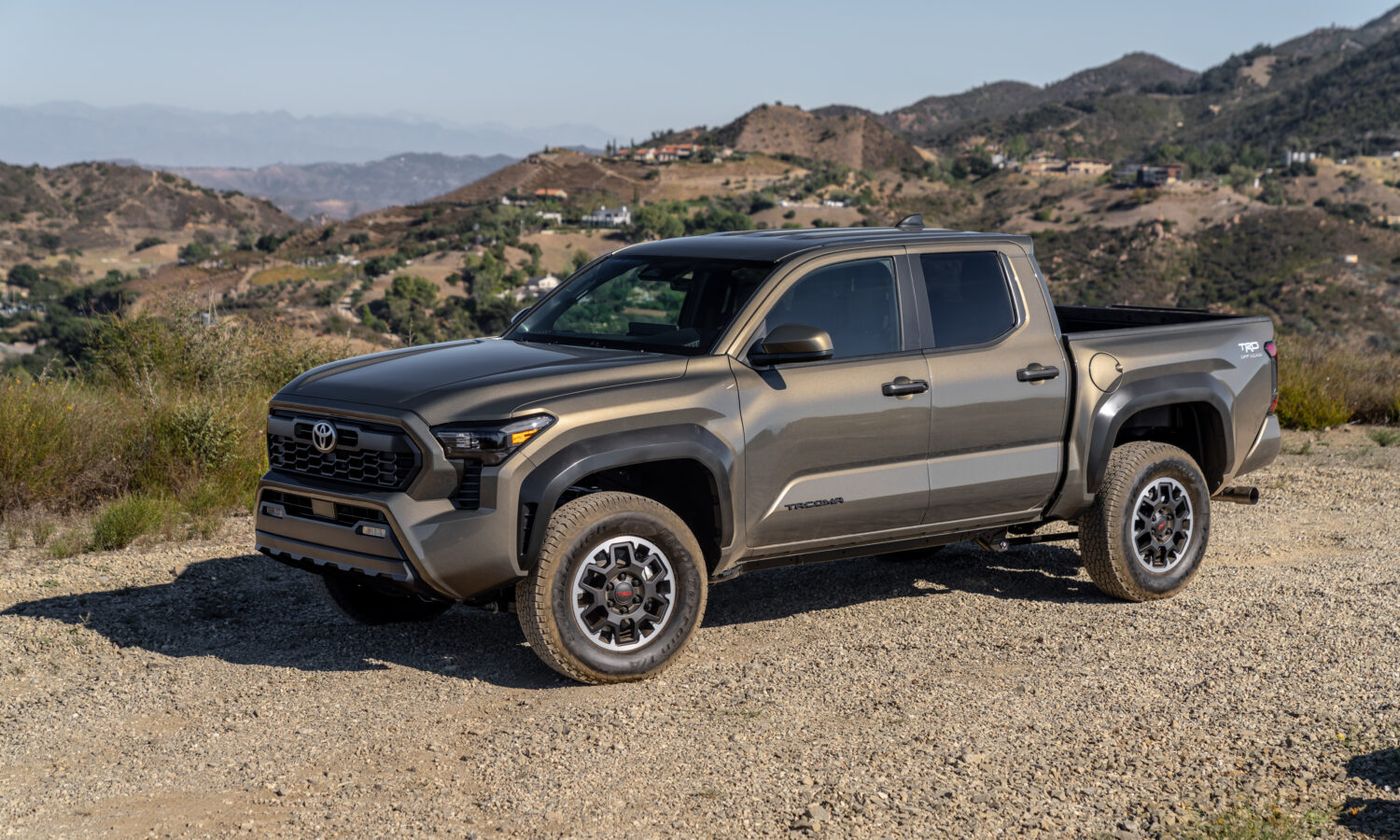
The Toyota $TM Tacoma’s 2024 redesign gave the country’s most consistently popular midsize truck a substantial update: the body-on-frame platform shared with the 4Runner gives the Tacoma its structural DNA, and the available powertrains, gasoline and hybrid, give the buyer options whose range reflects the truck’s position as a genuine daily driver as well as a weekend off-road vehicle. The redesign improved on-road comfort and fuel efficiency meaningfully over the outgoing model, giving the Tacoma’s longtime buyers a truck whose pavement livability now competes more directly with the unibody trucks whose crossover origins give them a ride-quality advantage.
The optional six-speed manual transmission gives the Tacoma its most specifically technophobe-relevant feature and its most enthusiast-focused configuration: a midsize truck with a stick shift is a product whose specific buyer knows exactly what they want and whose purchase reflects a deliberate preference for direct mechanical involvement in the driving process. The off-road capability, available on the TRD Pro and Trailhunter variants, gives the Tacoma a trail-ready program whose depth and reputation put it on par with the 4Runner in the overlanding community.
The U.S. News Best Midsize Pickup Truck for the Money award and a rating of 8.9 out of 10, alongside a starting price around $32,245, give the Tacoma a value credential that its sales numbers confirm: no midsize truck sells in comparable volume, and the breadth of the lineup, from basic work truck to fully outfitted expedition vehicle, gives every buyer a Tacoma whose configuration matches the specific use case they bring to the purchase. The hybrid powertrain’s fuel economy improvement over the standard gasoline engine, in a class where fuel economy has historically been a weak point, gives the Tacoma an operating cost profile whose per-mile cost reduces the total ownership premium over a comparable crossover in the same practical daily commuter, grocery run, weekend project, and light utility truck use category across the full ownership period.
7 / 8
Credit: Mazda
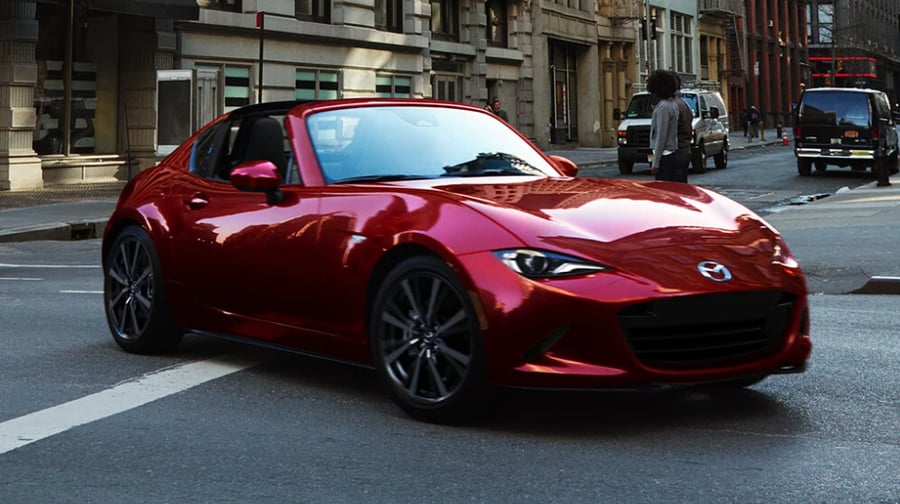
The Mazda MX-5 Miata is the vehicle on this list whose technophobe credentials extend furthest into a positive philosophy of driving: where the other entries define themselves partly by what they exclude, the Miata defines itself by what it perfects. The six-speed manual transmission, the convertible top, and the four-cylinder engine are all standard, and the combination gives the driver a car whose entire engineering program is directed at making the act of driving on a winding road as engaging as possible. The handling is as good as any car at any price in its pure physical balance and response, and the steering gives back information about the road surface and the tire’s grip state that the electrically assisted systems of most modern cars filter out in the pursuit of isolation.
The infotainment system’s responsiveness and the physical rotary dial that supplements the touchscreen give the Miata’s cabin a control philosophy consistent with the car’s overall approach: the screen exists and functions well, but the driver does not need to take eyes from the road to adjust the volume or the temperature. Climate controls are physical buttons, giving the interior its most directly functional interface in the context of spirited driving, where a touchscreen press requires a level of attention the driver cannot spare.
The U.S. News rating of 9.3 out of 10 and a starting price around $30,430 give the Miata its best-in-class position in the sports car segment. The open-air driving experience, the mechanical directness, and the specific pleasure of a well-executed manual gearbox in a car whose dynamics reward precise input give the Miata a quality of driving experience that no other vehicle at this price, and few vehicles at any price, provides in the same terms. The RF variant, a retractable fastback hardtop that gives the Miata a coupe profile with power-folding roof access, offers the buyer who wants the open-air option without the fabric top’s weight and structural limitations a more rigid, quieter alternative within the same driver-focused mechanical package.
8 / 8
Credit: Ford
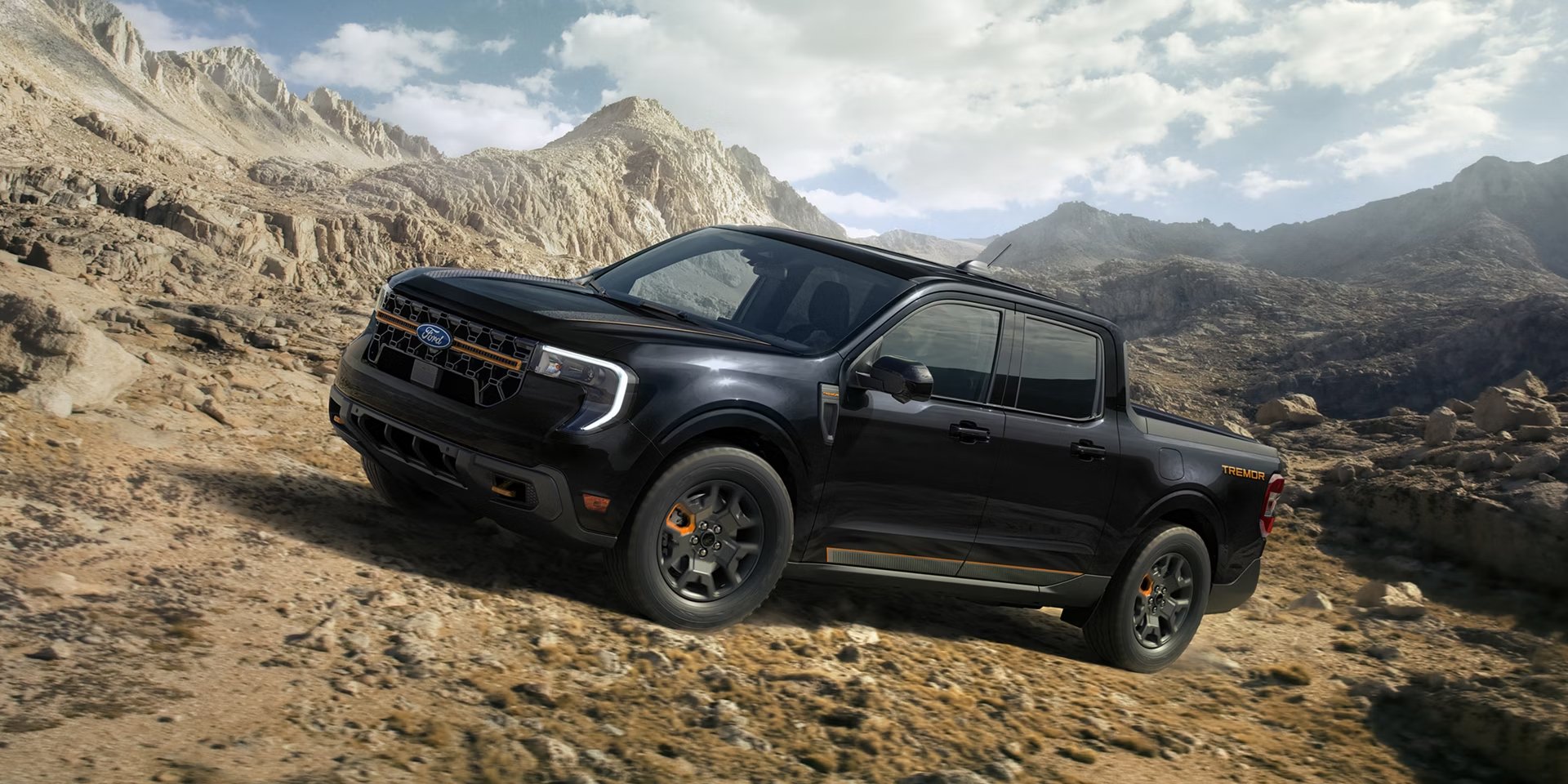
The Ford $F Maverick is the entry on this list whose technophobe credentials are the most pragmatic and the least purist: the Maverick’s interior prioritizes durable, cleanly organized controls over the tech-forward premium aesthetic, and the result is a truck whose operational simplicity reflects the work truck context more than the sport truck or enthusiast context. The 13.2-inch touchscreen is easy to operate, and the stereo and climate settings can be adjusted without navigating deep menus, giving the Maverick’s interface a directness that the complexity-maximizing systems in more expensive trucks do not always provide. The emphasis on physical controls for climate and audio gives the daily driving experience a tactile accessibility consistent with the vehicle’s blue-collar utility positioning.
The standard hybrid powertrain is the Maverick’s most extraordinary single specification: the rating of 42 miles per gallon city and 35 highway gives the compact truck a fuel economy that no other pickup truck on the market approaches, and that most passenger cars struggle to match. The hybrid system operates without the driver’s direct management, giving the Maverick’s fuel economy a transparency specific to the system’s design for daily practical use. A more powerful turbocharged gasoline engine is available for buyers who need greater towing or payload capacity at the cost of the fuel economy advantage.
The U.S. News rating of 9.0 out of 10 and a starting price around $28,145 give the Maverick a value position in the compact truck segment, whose fuel economy, practicality, and accessible pricing together give it a specific appeal for the buyer who wants a truck’s utility without a truck’s traditional running costs. The durable interior materials, described as brightly colored plastics, serve the work-truck context well and give the cabin resilience to tools, mud, and cargo that the more premium materials of the lifestyle trucks sacrifice for a more refined appearance. The Maverick’s compact dimensions, shorter than most midsize trucks and narrow enough to fit in a standard parking garage, give it a daily usability in urban and suburban contexts that the full-size trucks, whose capability it approaches in some use cases, cannot provide.
