
From French Polynesia to a three-month polar expedition spanning 10 countries, the repositioning cruises worth the journey
Margret Hoang / Getty Images
Most cruises follow a circuit: the ship departs, visits a sequence of ports, and returns to the same dock it left. A repositioning cruise breaks that logic entirely. The vessel is moving from one seasonal deployment to another, and passengers ride along for a one-way crossing that covers ocean distances no standard loop itinerary ever attempts. The format suits travelers who have accumulated enough time and flexibility to spend two or three weeks at sea, reaching ports that regular cruise routes rarely include.
Repositioning cruises exist because ships have seasons. A vessel that works the Mediterranean in summer needs to reach the Caribbean before winter bookings open. One finishing an Alaska season needs to get somewhere warmer. Cruise lines fill those repositioning voyages with passengers rather than sail empty, and the economics of filling cabins on a ship already moving create an unusual pricing dynamic. Royal Ahmadi, senior vice president and general manager of The Vacation Group, notes that repositioning cruises have grown more popular in recent years and points to two factors: the itineraries they cover are not available on any standard year-round route, and the fares tend to run more affordably than comparable standard sailings.
The eight voyages below range from a 14-night Arctic-to-Canada crossing to a nearly three-month polar expedition covering 10 countries. U.S. News & World Report compiled this list for travelers with flexible schedules and an appetite for destinations that loop cruises rarely reach. All eight sailings share a one-way structure, a longer-than-average duration, and itineraries built around transit routes that double as genuinely ambitious travel experiences. Similar repositioning voyages run every year as cruise lines continuously shift ships between regions. Ahmadi’s observation that these itineraries are not available on standard year-round routes reflects why the format draws travelers who have covered the loop-cruise circuit and want a route that genuinely goes somewhere new.
Credit: Celebrity Cruises
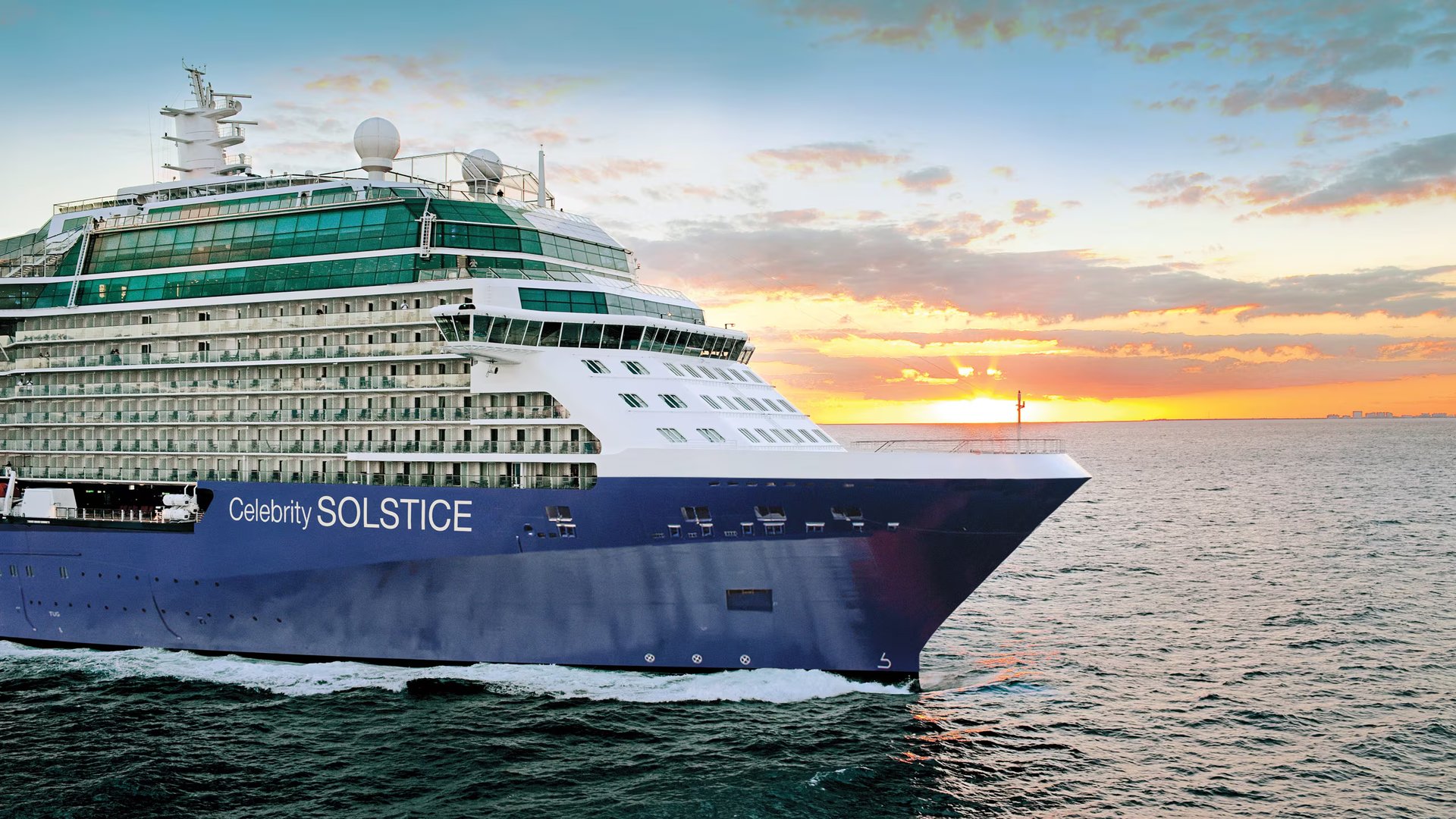
Celebrity Solstice departs Hawaii in September 2026 for an 18-night repositioning voyage that calls at three ports in French Polynesia: Papeete, Tahiti, with a late-night departure, then Moorea and Raiatea. Afterward, there are five days at sea, a stop in Suva and Lautoka in Fiji, two additional sea days, a visit to the Bay of Islands in New Zealand, and a final disembarkation in Auckland. Twelve sea days give passengers extended open-ocean time across the South Pacific, with whale watching possible from the ship’s top deck during the early segment of the voyage, as Tahiti’s migration season runs from July through November.
Specialty dining aboard Celebrity Solstice includes Trattoria Rosa, a restaurant drawing on Roman and Southern Italian cuisine, and Fine Cut Steakhouse, which offers 30-day dry-aged steaks alongside fresh seafood. The ship’s bars and lounges include the 125-seat Boulevard Lounge and The Parlor, a gaming and sports lounge. The dining and bar lineup gives passengers enough variety to approach the 12 sea days as a structured exploration of the ship’s offerings. Fine Cut Steakhouse’s 30-day dry-aged steaks represent a specific culinary process that distinguishes the venue from standard cruise ship steak programs, and the 125-seat Boulevard Lounge’s scale makes it one of the larger dedicated bar spaces on a vessel of Celebrity Solstice’s size.
Entertainment programming runs two production shows. “Smoke and Ivories” uses a 1950s-inspired framework to combine piano music, vocals, and acrobatic performance. “Rockumentary” structures its show around iconic rock performances spanning the decades, presenting it as a historical survey, not a concert. The French Polynesian port sequence includes three of the archipelago's most visited islands: Papeete, Moorea, and Raiatea. Papeete’s late-night departure extends the time in Tahiti’s main port, giving passengers an evening in the city before the ship sails on. The whale watching opportunity arrives at the earliest point in the voyage, when the migration is most active, and the ship’s top deck offers an unobstructed sightline across the South Pacific before the route turns south toward Fiji.
Credit: Holland America
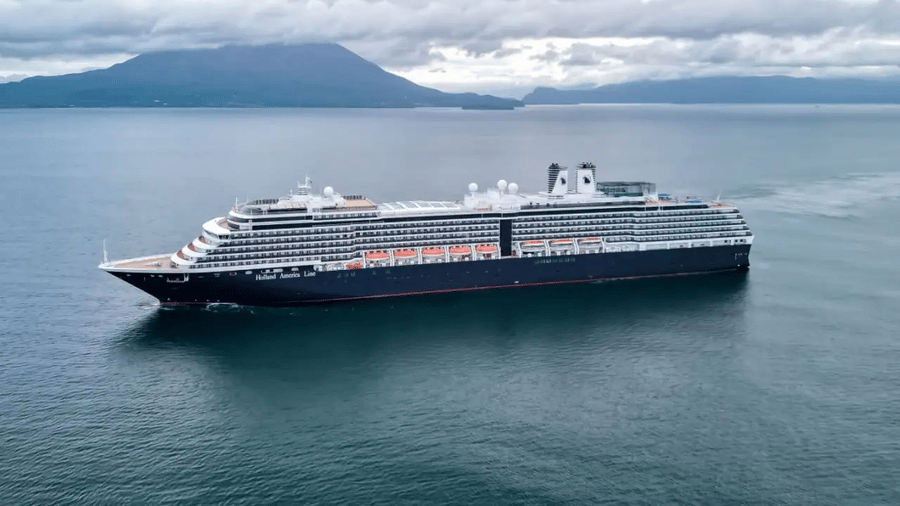
Holland America’s 34-day Legendary Pacific Crossing departs Seattle aboard Noordam for a voyage to Sydney that crosses the International Date Line twice, crosses the equator on Day 14, and calls at ports including Hawaii and Kiritimati, the world’s largest atoll. The itinerary also includes three islands in French Polynesia with an overnight in Papeete, the Cook Islands, Tonga twice, and three ports in New Zealand before arriving in Sydney. The crossing of the equator and the double date-line transit give the voyage structural milestones that mark the passage through the Pacific in ways most itineraries cannot replicate.
Sea days across a 34-day voyage demand a ship with enough programming depth to remain engaging over multiple weeks. Live musical performances take place at the Rolling Stone Lounge, and production shows fill the World Stage. The fitness center offers Pilates classes, and pickleball is available for guests who want a competitive activity during the longer stretches of ocean. The breadth of the entertainment calendar reflects the extended sailing duration.
Morimoto by Sea anchors the specialty dining program: the pop-up restaurant, created by Holland America’s Global Fresh Fish Ambassador and Japanese celebrity chef Masaharu Morimoto, takes over either Tamarind or Pinnacle Grill at least once during the sailing. The menu centers on seafood dishes. The pop-up format makes the restaurant a voyage-specific experience rather than a permanent fixture, giving passengers something to anticipate during the weeks at sea. Kiritimati, designated as the world’s largest atoll, adds a geographic superlative to the itinerary that few Pacific crossings can claim. The Cook Islands and Tonga stop add Polynesian destinations that standard round-trip Hawaii itineraries do not reach. Crossing the equator on Day 14 and the International Date Line twice gives the voyage a physical and temporal scale that marks the transit in ways most Pacific sailings do not formalize for passengers. Holland America’s Legendary Voyages designation signals that the line treats this 34-day itinerary as a flagship product within its extended-sailing portfolio.
Credit: Azamara Cruises
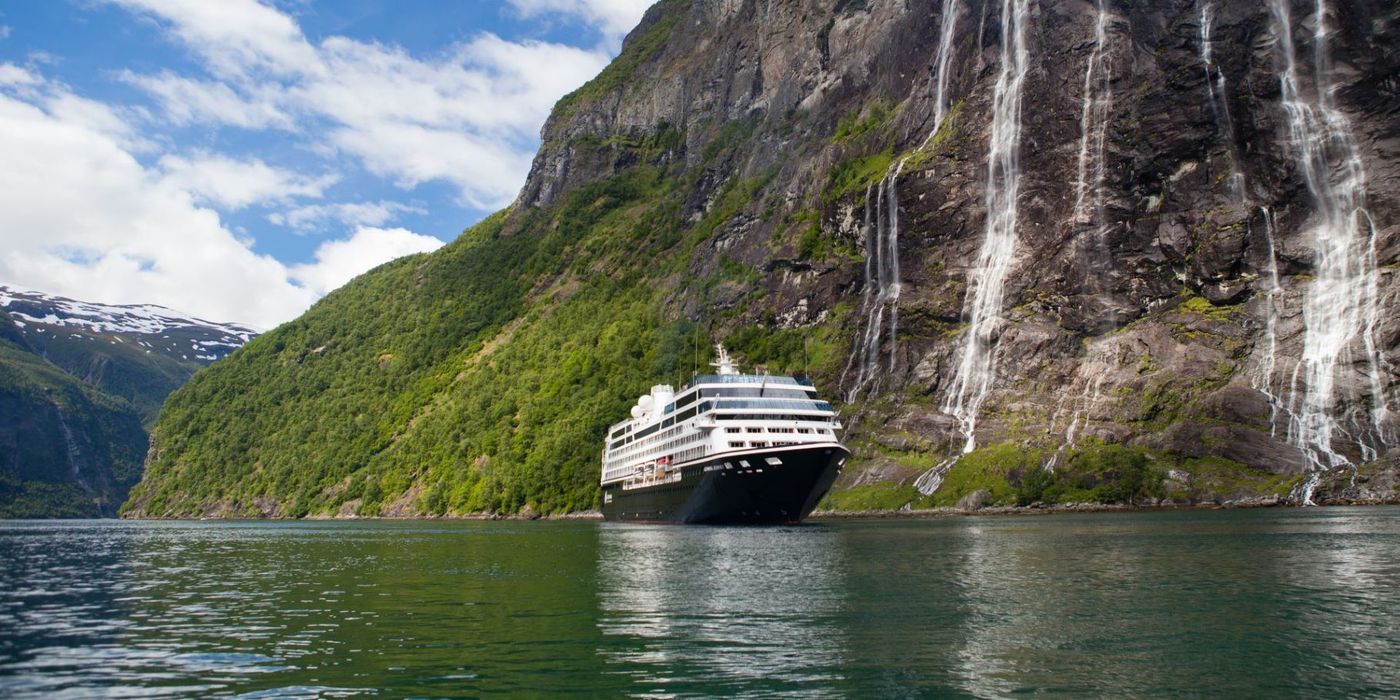
Azamara’s 14-night repositioning cruise departs Reykjavik, Iceland, and heads to Greenland before sailing on to Canada, arriving in Montreal after stops that span some of the North Atlantic’s most remote accessible coastline. After leaving Iceland, the ship spends a day cruising the Prince Christian Sound before calling at two Inuit villages in Greenland: Qaqortoq and Nanortalik. The route then continues to St. John’s, Newfoundland, followed by Sept-Îles in Quebec, scenic sailing in the Saguenay Fjord, and a day in Quebec City before disembarkation in Montreal.
The timing positions the Canadian portion of the voyage within the autumn foliage season, making the Saguenay Fjord scenic cruising and the Quebec City stop visually distinct from what the same itinerary would offer in summer. Four sea days give passengers time to use the ship’s amenities, including evening entertainment in the Cabaret Lounge and spa treatments at the Sanctum Spa. Azamara Journey carries two specialty dining venues beyond the main dining room: Aqualina for Italian cuisine and Prime C, the line’s signature steakhouse.
Two signature events appear on all Azamara sailings. The AzAmazing Evening presents shows and performances tied to the destinations on the itinerary, giving guests a cultural programming experience ashore. The White Night party operates as the line’s festive onboard celebration. Both events give the sailing a social structure that the sea days alone do not provide. Greenland’s remote Inuit villages, the Prince Christian Sound, the Saguenay Fjord, and the walled old town of Quebec City each cover a distinct kind of landscape, making this 14-night itinerary one of the more geographically concentrated on this list. The Azamara Journey’s two specialty dining venues, Aqualina and Prime C, give passengers structured dining alternatives across the four sea days, and the AzAmazing Evening programming connects the onboard entertainment directly to the destinations the ship has visited, running shows specific to Iceland, Greenland, and Canada instead of generic variety programming.
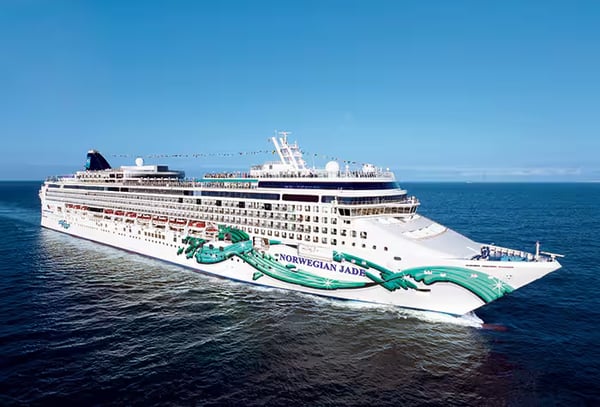
Credit: Norwegian Cruise Line
Norwegian Jade departs Vancouver on a 16-day transpacific repositioning voyage to Tokyo that begins with five days in Alaska — visiting Ketchikan, Sitka, the Hubbard Glacier, Whittier, and Kodiak — before crossing the international date line and calling at Hakodate, Japan, ahead of disembarkation in Tokyo at Yokohama. Norwegian Jade accommodates 2,352 passengers at double occupancy. Eight sea days during the Pacific crossing give passengers extended time with the ship’s 15 dining venues, 13 bars and lounges, entertainment programming, casino, and spa and fitness center.
Norwegian’s “It’s Different Out Here” cruising experience removes the fixed schedule most cruise ships use, letting passengers eat, use the bars, and attend entertainment at their own pace across the eight sea days. The Alaska segment adds a scenic dimension to the first half of the voyage before the open ocean transit begins: the Hubbard Glacier stop gives passengers access to one of the most active tidewater glaciers in Alaska, and the five-port Alaska sequence covers the state’s southeast and south-central coast in a single sailing.
Vancouver in the fall provides a worthwhile pre-cruise extension for passengers who arrive early. Stanley Park and Queen Elizabeth Park both offer autumn foliage that peaks during the departure window, and Vancouver hotel rates tend to drop at the end of peak tourist season, making the city less expensive than its summer prices suggest. The arrival in Tokyo in early October coincides with festival season, giving disembarking passengers access to the city’s autumn cultural programming. The five Alaska stops before the Pacific crossing give this itinerary a structure that separates it from most transpacific repositioning sailings, which tend to begin the open-ocean transit from the departure port without an intermediate scenic sequence. The Hubbard Glacier in particular gives passengers a tidewater glacier experience that ranks among Alaska’s most accessible natural spectacles and would otherwise require a separate Alaska itinerary to reach.
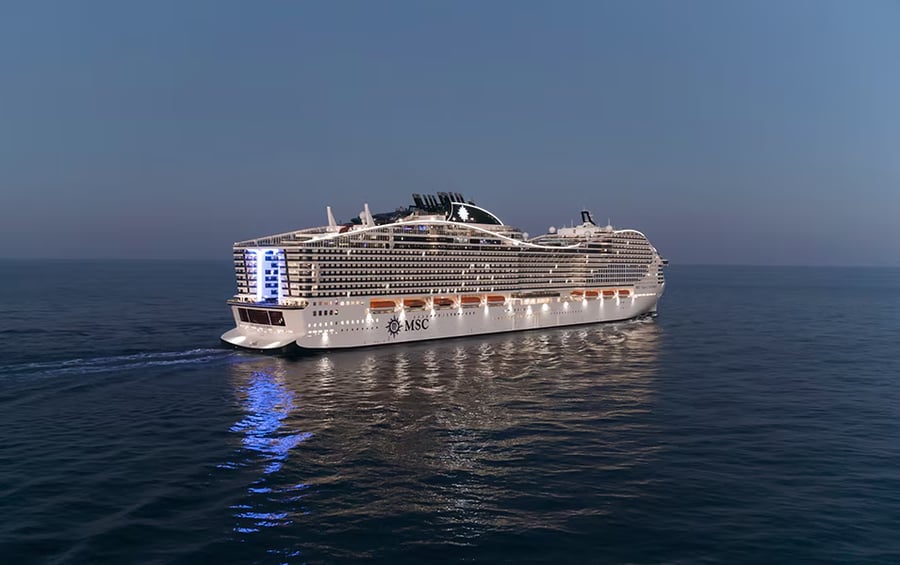
Credit: MSC Cruises
MSC World Europa departs Martinique on an 18-night repositioning voyage to Rome, covering 10 ports of call across the Caribbean and Europe with eight days at sea. After leaving Martinique, the ship calls at Pointe-à-Pitre in Guadeloupe, Philipsburg in St. Maarten, Road Town in Tortola, and St. John’s in Antigua and Barbuda before spending six days crossing the Atlantic. European ports include Santa Cruz de Tenerife in the Canary Islands, Barcelona, Marseille, Genoa, and La Spezia before disembarkation in Rome at Civitavecchia.
MSC World Europa’s onboard amenities include specialty restaurants, Champagne and gin bars, the Jean-Philippe Chocolat & Café, a tea house, multiple pools, and the Aurea Spa. The MSC Sportplex adds an indoor activity layer with sports facilities, bumper cars, and roller skating, extending the ship’s recreational range beyond the standard pool deck and casino formats. The 10-port lineup gives passengers frequent shoreside stops across the Caribbean segment before the six-day Atlantic crossing consolidates the sea-day portion of the voyage.
The MSC Yacht Club is the ship’s premium all-inclusive tier, offering passengers who book suites access to private spaces, butler service, and a dedicated experience within the larger vessel. The Caribbean-to-Europe direction of this repositioning voyage reverses the more common fall pattern, which typically moves ships westward from Europe to the Caribbean for the winter season. Passengers boarding in Martinique travel east across the Atlantic toward European ports, not west toward Florida, giving the itinerary a geographic logic distinct from most repositioning cruises. The six-day Atlantic crossing consolidates the sea-day portion of the voyage into a single sustained stretch, avoiding the scattered open-water days that break up shorter itineraries, making the transition between the Caribbean and European segments feel deliberate. The final sequence of European ports — Barcelona, Marseille, Genoa, La Spezia, and Rome — covers five distinct Mediterranean destinations in rapid succession, giving passengers a concentrated Mediterranean survey as the voyage’s closing act.
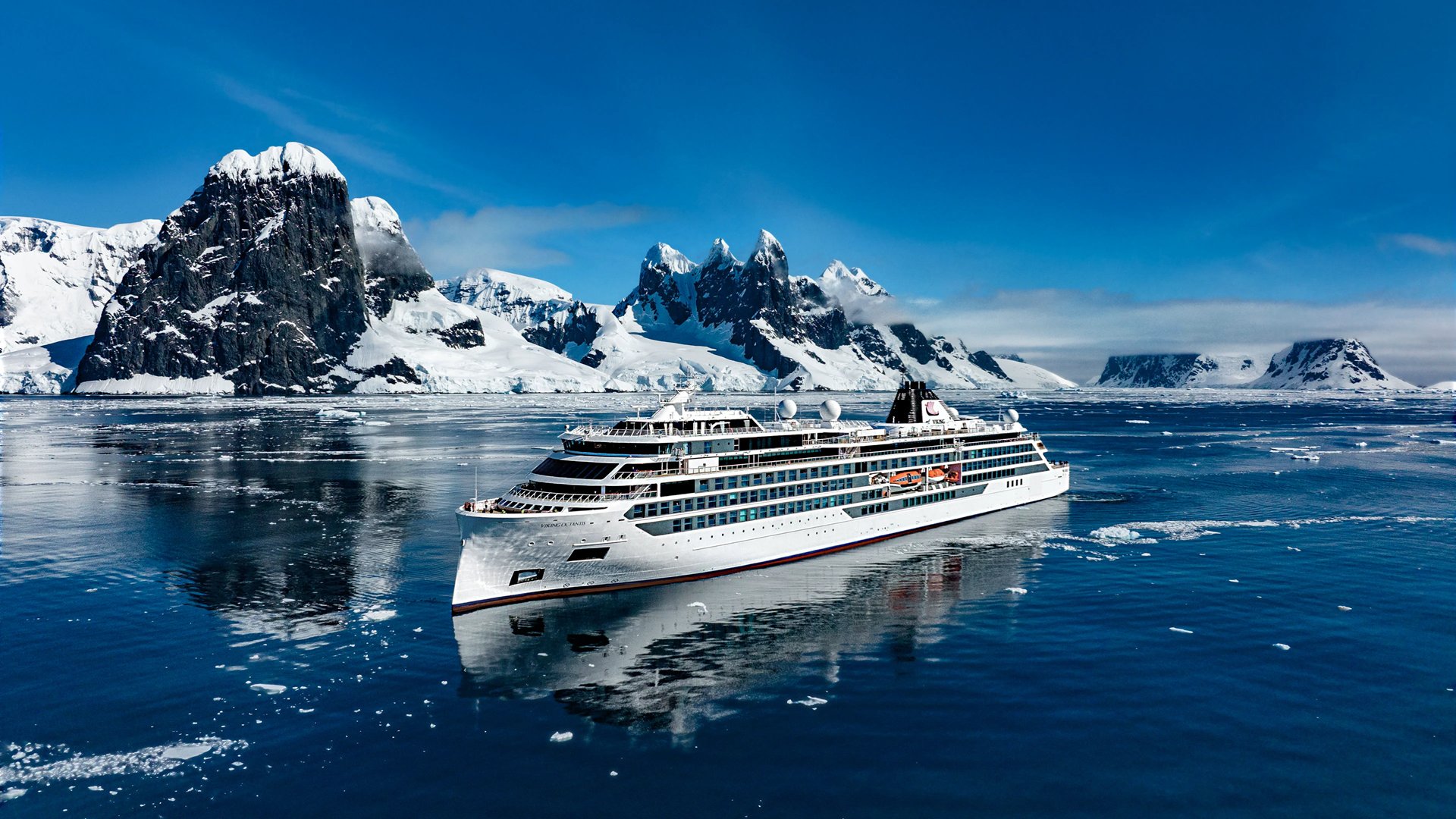
Credit: Viking
Viking’s nearly three-month expedition departs from Greenland and ends in Argentina, covering 10 countries and reaching some of the most remote destinations accessible by ship on either end of the Earth. The route moves south from Greenland through the Canadian High Arctic, transits the St. Lawrence Seaway, stops in Quebec City, Nova Scotia, and New York City, traverses the Panama Canal, continues through the Chilean fjords, and crosses the Drake Passage twice to reach Antarctica before ending in Argentina. Wildlife viewing along the route includes whales, seals, and multiple penguin species in the Antarctic segment.
Sea days on a voyage of this length occupy a different function from sea days on a two-week sailing. Viking fills the extended at-sea time through enrichment programming in The Aula and the ship’s other educational spaces, where resident scientists and researchers deliver lectures, films, and briefings connected to the regions the ship is passing through. The programming gives the sea days a cumulative educational dimension that builds across the expedition without repeating the same activities on a weekly cycle.
Viking’s all-inclusive pricing includes Scandinavian-inspired ocean-view accommodations with Nordic balconies, destination-focused dining, one excursion per port, free Wi-Fi, access to the Nordic Spa & Fitness Center, and additional perks. The Drake Passage crossing — made twice during the voyage — represents one of the most challenging open-water segments in global cruising, giving the expedition a physical scale beyond what any other itinerary on this list attempts. The 10-country scope, the dual polar engagement with both Greenland and Antarctica, and the nearly three-month duration place Viking’s offering in a separate category from every other repositioning voyage on this list. The Drake Passage crossing — executed twice — represents one of the most demanding open-water transits in global sailing, and the resident scientists aboard give the experience a research-expedition quality that recreational cruises rarely achieve at this geographic scale.
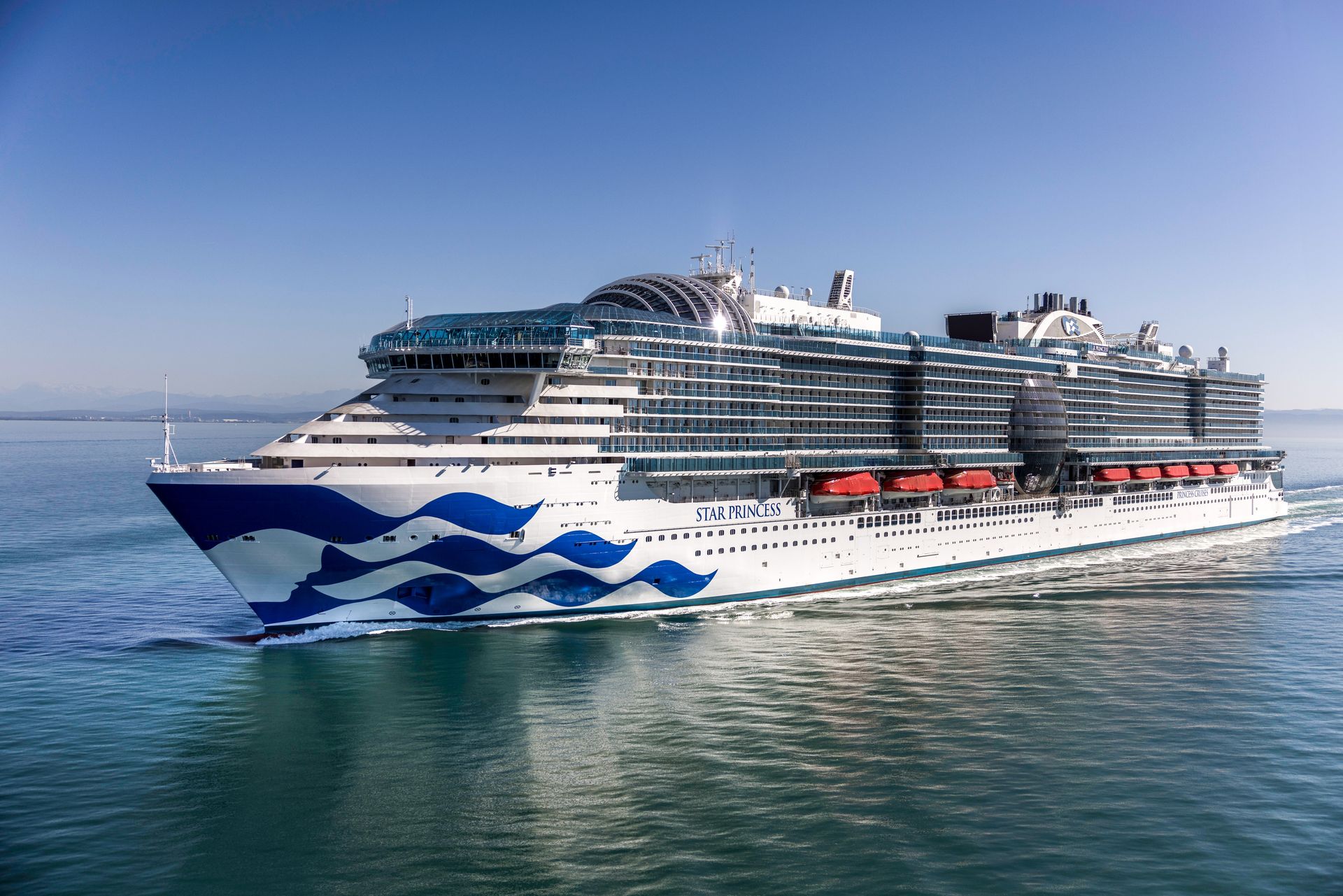
Credit: Princess Cruises
Star Princess departs Fort Lauderdale on a 16-day repositioning voyage to Los Angeles, passing through the Panama Canal with a full transit on a dedicated scenic cruising day. The itinerary includes stops in Aruba, Fuerte Amador in Panama, Mazatlán, and Cabo San Lucas before arriving in Los Angeles. The Fuerte Amador stop connects passengers to Panama City, where shore excursions cover the Miraflores locks, Gatun Lake, the Panama Canal Railway, and rainforest tours. Ten days at sea give passengers extended time aboard the ship.
Star Princess offers approximately 30 complimentary and specialty dining venues and bars, multiple pools, the Lotus Spa & Salon, a fitness center, and various entertainment options. The Sanctuary Collection premium accommodations — Sanctuary Balcony staterooms, Sanctuary Mini-Suites, and Sanctuary Suites — give passengers who book at that tier access to an exclusive restaurant, the Signature Suite Lounge, the adults-only outdoor Sanctuary Club, and 24-hour room service. The premium tier offers a ship-within-a-ship experience for passengers who want a more private environment throughout the 10 sea days.
The Canal transit positions the most operationally significant moment of the voyage on a single dedicated day, giving passengers a focused experience of the waterway before the itinerary continues north through Mexico to California. The Fort Lauderdale-to-Los Angeles route takes the ship from the Atlantic coast to the Pacific, a one-way geographic shift that no standard round-trip itinerary replicates. The Aruba and Fuerte Amador stops on either side of the Canal crossing give passengers a Caribbean and Central American context before the Pacific segment begins in Mazatlán. Star Princess launched in late 2025, meaning passengers aboard this April sailing travel on a vessel still in its first full season of operation. The timing adds an extra novelty to the Panama Canal transit for travelers who want to experience a brand-new ship alongside one of the world’s most historic waterways.
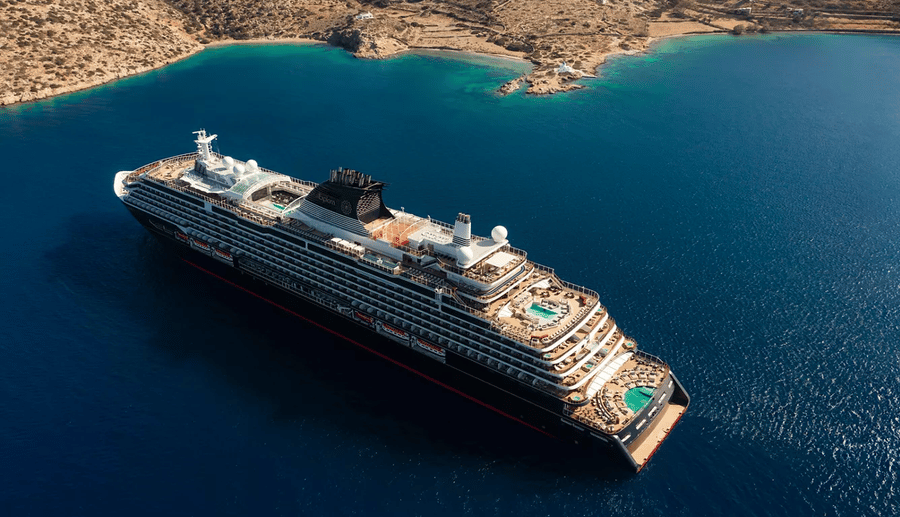
Credit: Explora Journeys
Explora Journeys’ 20-night repositioning voyage from Barcelona to Jeddah, Saudi Arabia, covers 13 ports of call in seven countries and includes a transit of the Suez Canal aboard Explora 1. The itinerary visits La Valletta, Malta; the Greek islands of Crete and Rhodes; Limassol, Cyprus; and four Egyptian ports — Safaga, Ain Sokhna, Sharm El-Sheikh, and Cairo — before stopping in Aqaba, Jordan, and disembarking in Jeddah. Five sea days are spread across the 20-night sailing.
The Egyptian segment gives the voyage its densest port-by-port programming. The Safaga stop provides access to Luxor, where excursions include hot air balloon rides over the Valley of the Kings and a visit to the tomb of Tutankhamun. Ain Sokhna connects passengers to the Red Sea’s coral reef habitats for underwater exploration. Sharm El-Sheikh offers access to Old Sharm’s souqs, Bedouin villages reachable through desert excursions, and the Aqaba stop leads to Petra, the ancient rose-hued city, and Wadi Rum.
Explora Journeys’ all-inclusive fare structure covers spacious Ocean Suites with private verandas, nine culinary experiences, unlimited fine beverages, onboard gratuities, high-speed Wi-Fi, thermal spa access, wellness and fitness programming, and a complimentary welcome bottle of Champagne. The yacht-style vessel provides an itinerary with a premium onboard environment, suited to the 13-port shore-side intensity. The Suez Canal transit, the Egyptian port sequence, and the Jordanian stop at Petra make this the most historically and archaeologically concentrated itinerary on this list. The four Egyptian ports alone — Safaga, Ain Sokhna, Sharm El-Sheikh, and Cairo at Ain Sokhna — give passengers access to the Valley of the Kings, Red Sea coral reefs, Bedouin villages, and the Pyramids within a single country visit. Explora Journeys’ all-inclusive suite format keeps the on-ship experience at a premium level across the five sea days, providing a deliberate contrast to the dense shoreside programming in Egypt and Jordan and giving passengers a restful base between some of the most historically significant port stops on this list.