Jim Strasma / Unsplash
The Fourth of July has been celebrated with fireworks since 1777, when Philadelphia lit up the sky on the first anniversary of the Declaration of Independence, honoring John Adams’s call for “pomp and parade, bells, bonfires, and illuminations from one end of this continent to the other.” The basic formula has held for nearly 250 years, but the specific character of the celebration varies dramatically from city to city. Philadelphia’s celebration runs 16 days, anchored in the actual history of independence. Boston’s Harborfest wraps Revolutionary War history around a week of waterfront events that culminate in a fireworks spectacular over the Charles River. Washington, D.C., pairs the National Symphony Orchestra with a fireworks display over the monuments whose collective symbolic weight no other July Fourth setting in the country approaches.
Beyond the major patriotic capitals, the Fourth of July produces some of the country’s most distinctive and idiosyncratic celebrations. Gatlinburg, Tennessee, begins the holiday at 11:59 p.m. on July 3 with what claims to be the first midnight parade in America, drawing 80,000 people to a mountain town at the base of the Smokies. Coney Island’s celebration is permanently entangled with Nathan’s Famous Hot Dog Eating Contest, whose Mustard Belt and cash prize make competitive eating the day’s defining spectacle before the fireworks. New Orleans synchronizes dueling barge fireworks to patriotic music on the Mississippi, with the General Roy S. Kelley fireboat’s red, white, and blue water fountains opening the show.
The 10 celebrations below appear in Travel + Leisure, covering the country’s most celebrated and most distinctive July Fourth events from coast to coast. The selections span cities whose celebrations have been shaped by military heritage, living history, competitive eating, music, and regional traditions that make each genuinely different from the generic fireworks-and-concert format.
1 / 10
Credit: Visit Philadelphia
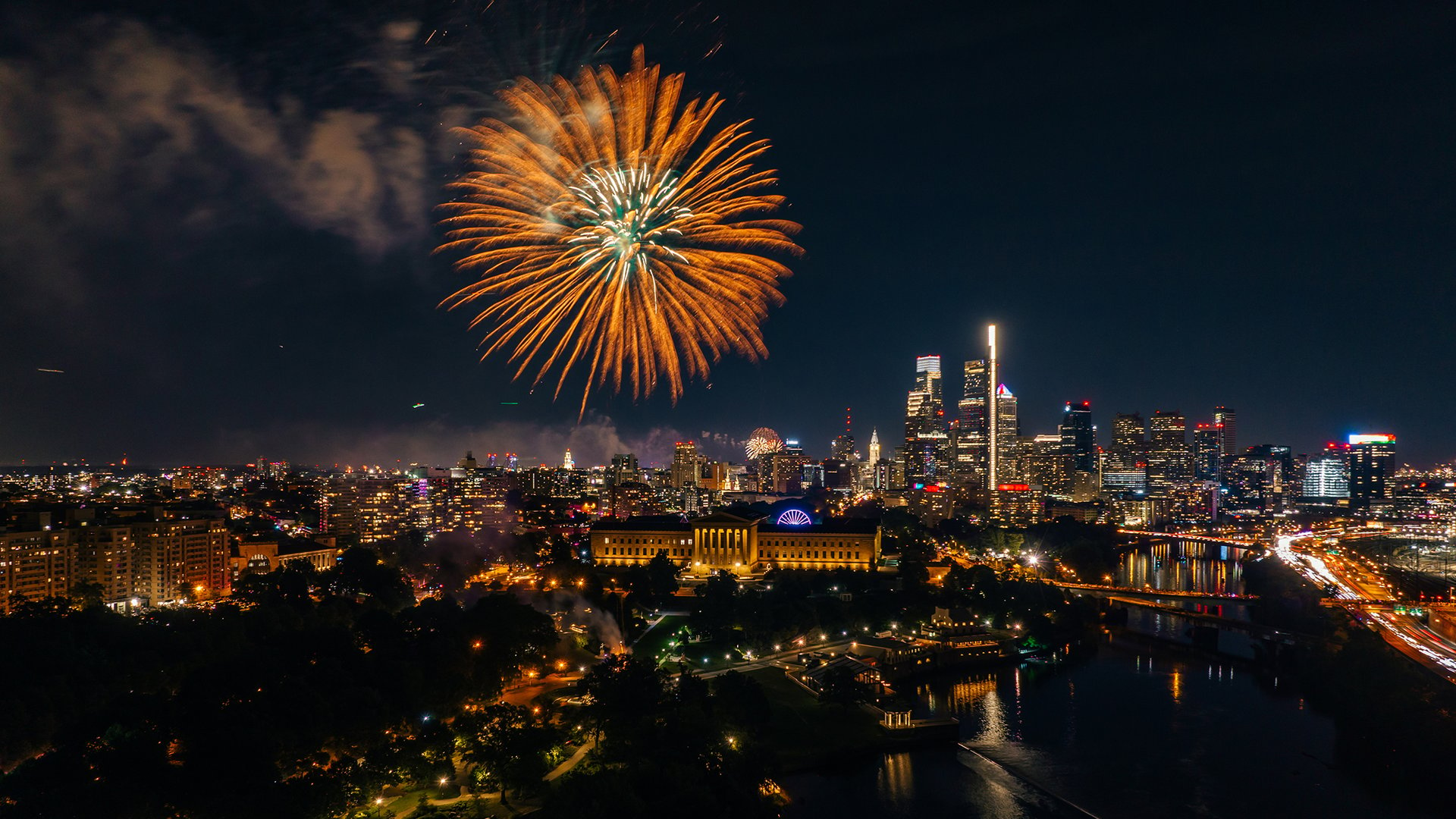
Philadelphia’s Fourth of July celebration carries the weight of the actual historical event: the Declaration of Independence was signed here in 1776, and the city’s annual Wawa Welcome America Festival reflects that foundational significance with 16 days of programming from Juneteenth on June 19 through July 4. The free concerts, complimentary museum admissions, and historical reenactments give the extended festival a cultural density that no other American city’s July Fourth program approaches in both depth and duration. The celebration of Juneteenth as the official beginning of the independence festival reflects Philadelphia’s specific commitment to a fuller accounting of American history than the conventional Fourth of July framing provides.
On July 4 itself, the Salute to America Parade departs from Independence Hall, the most historically appropriate departure point for any Independence Day parade in the United States, giving the march a specific provenance that the Washington, D.C., parade, for all its grandeur, cannot match in the same direct historical terms. The Historic District Block $SQ Party on Independence Mall runs all day, featuring local food trucks and musical entertainment, offering a daytime program that is festive and accessible, appropriate to a city whose historic district is itself the primary destination. The evening concert at the Benjamin Franklin Parkway concludes with fireworks over the Philadelphia Museum of Art, giving the city’s most celebrated cultural landmark a backdrop whose symbolic pairing of art and independence gives the July Fourth finale a specifically Philadelphian character. The free museum admissions during the Wawa Welcome America Festival give the visitor access to the National Constitution Center, the Museum of the American Revolution, and Independence Hall itself, whose Second Floor Assembly Room is where the Declaration was signed and whose physical authenticity gives the July Fourth visit a historical immediacy unavailable at any other American celebration. The 16-day format gives the visitor who cannot arrive on July 4 a full range of dates across which the programming continues in full force.
2 / 10
Credit: Boston Harborfest
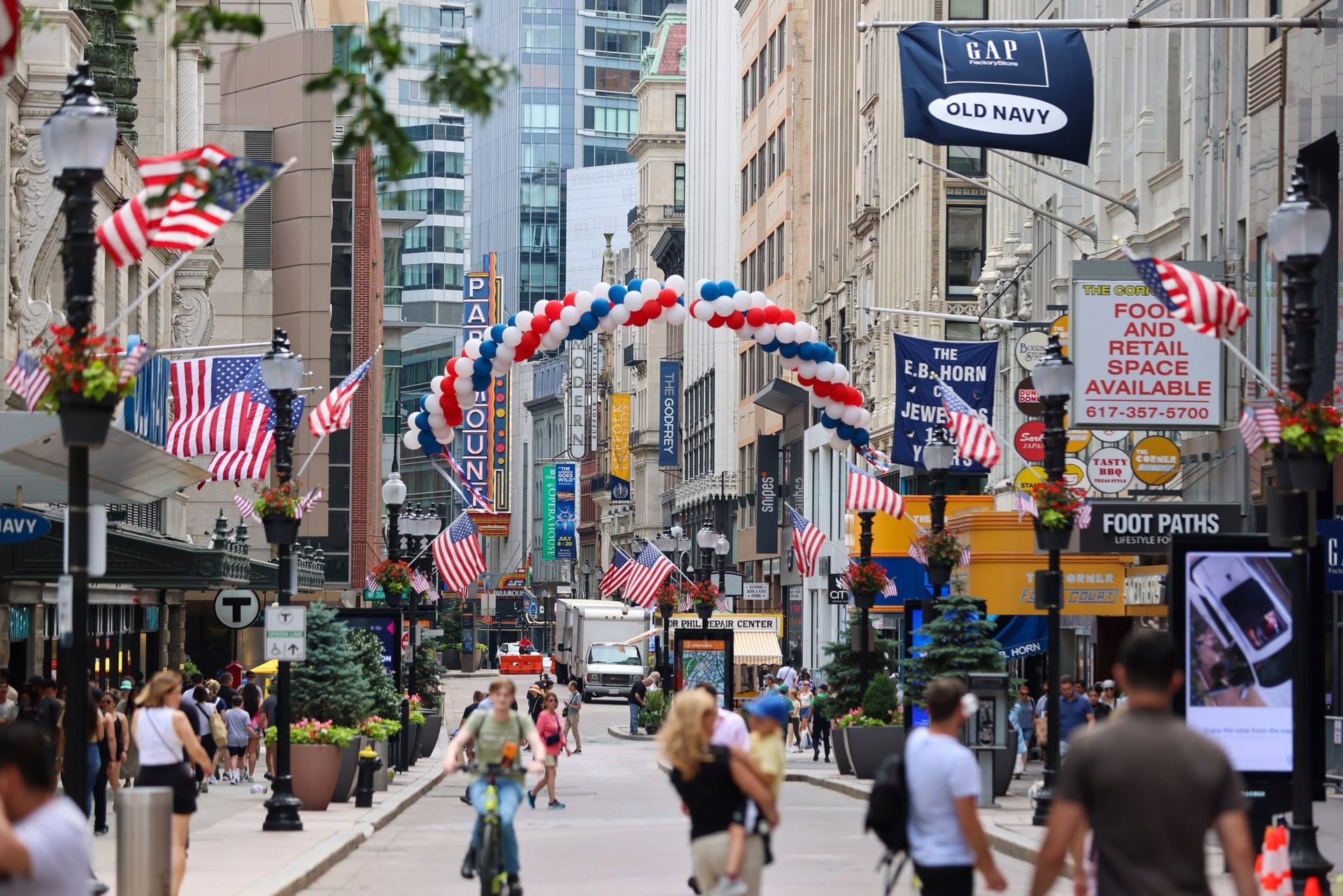
Boston’s Fourth of July program gives the city’s Revolutionary War heritage its most concentrated annual expression: Boston Harborfest begins three days before July 4 and takes over locations across the city, including Christopher Columbus Park, Downtown Crossing, and the Freedom Trail, whose three-mile walking route connects the 16 most significant sites of Boston’s colonial and Revolutionary history. The USS Constitution, the world’s oldest commissioned naval vessel still afloat, serves as an event venue during Harborfest, giving the military history program a living artifact whose presence aboard gives the holiday its most direct physical connection to the naval heritage of the American founding.
The Massachusetts 215th Army Band’s Harborfest performances give the musical program a military heritage that the civilian orchestras of other city celebrations do not provide in the same institutional terms, and Chowderfest gives the food program its most specifically Boston credential: a competitive and celebratory sampling event for the clam chowder whose New England character is as associated with Boston’s food identity as the baked bean or the lobster roll. The Boston Pops Fireworks Spectacular on the evening of July 4 is the holiday's most widely televised single American fireworks event, with the orchestra performing on the Charles River Esplanade and the fireworks display synchronized to the music over the river.
The viewing locations along the Esplanade and the bridges crossing the Charles give the spectator a range of options whose crowd density varies by proximity to the stage, and the Boston tradition of arriving in the early afternoon to secure a blanket spot on the Esplanade’s grass gives the day a communal picnic character specific to this city’s particular approach to outdoor summer events on the water. The Freedom Trail’s 16 sites, including the Paul Revere House, the Old North Church, and the Bunker Hill Monument, give the July Fourth visitor a self-guided historical walking program that can occupy an entire morning before Harborfest’s afternoon events begin, giving the Boston July Fourth a complete-day itinerary whose historical depth justifies a multi-night stay.
3 / 10
Credit: Colonial Williamsburg
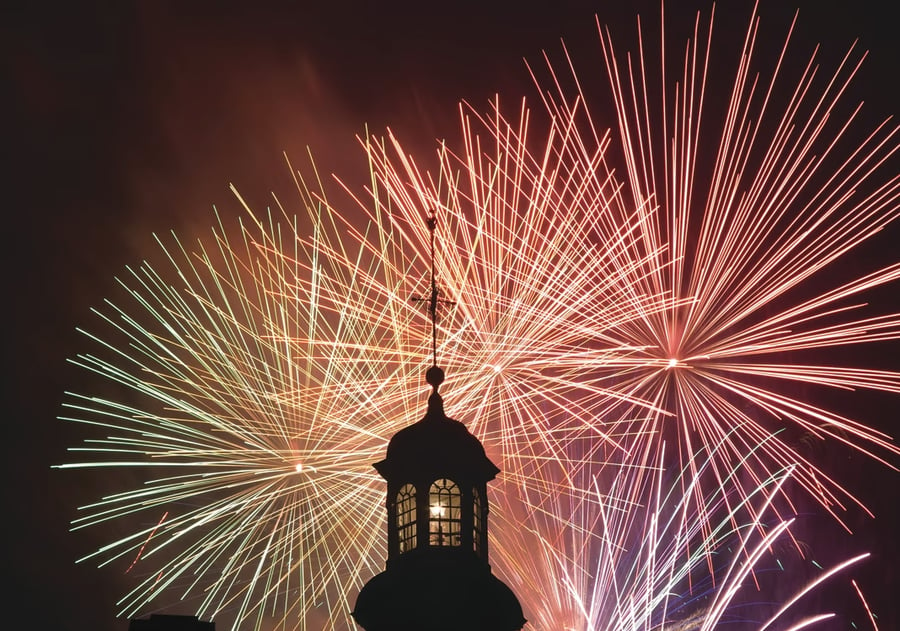
Colonial Williamsburg gives the Fourth of July its most specifically historical and most theatrically immersive celebration: the reenactors who portray Patrick Henry, Thomas Jefferson, and other founding figures read the Declaration of Independence aloud on the Palace Green, giving the document whose words are familiar from school a specific dramatic context whose living historical interpretation brings the text’s origins and meaning into immediate focus. The cannon salute to the original 13 states, accompanied by fife and drum corps music in period uniforms, gives the military heritage program a sonic and visual authenticity specific to a living history museum whose entire purpose is the accurate recreation of 18th-century American life.
The sing-along of patriotic songs before the fireworks gives the evening program a participatory character that the purely spectator-based fireworks viewing of other celebrations does not provide, and the Declaration of Independence readings throughout the day give the visitor who arrives early enough multiple opportunities to hear the founding document in the setting whose restored 18th-century architecture makes the reading feel proximate to the original event in a way that no modern city can replicate. The fireworks begin at 9:30 p.m. over the Palace Green, with the Governor’s Palace as the backdrop, providing a colonial architectural setting unique to this destination.
The experience of spending the Fourth of July in Colonial Williamsburg gives the holiday a historical density that the conventional fireworks-and-concert format cannot approach. The visitor who spends the full day moving through the restored colonial town, watching the reenactments, and attending the evening ceremony finds the holiday transformed from a celebration of a date into an encounter with the people, the arguments, and the circumstances that produced the Declaration whose anniversary the day commemorates. Admission to Colonial Williamsburg gives access to the fully restored colonial town, whose working trades demonstrations, tavern dining, and costumed interpreter interactions offer a fully immersive 18th-century experience that extends well beyond the specifically Fourth of July events.
4 / 10
Credit: Explore Gatlinburg, TN
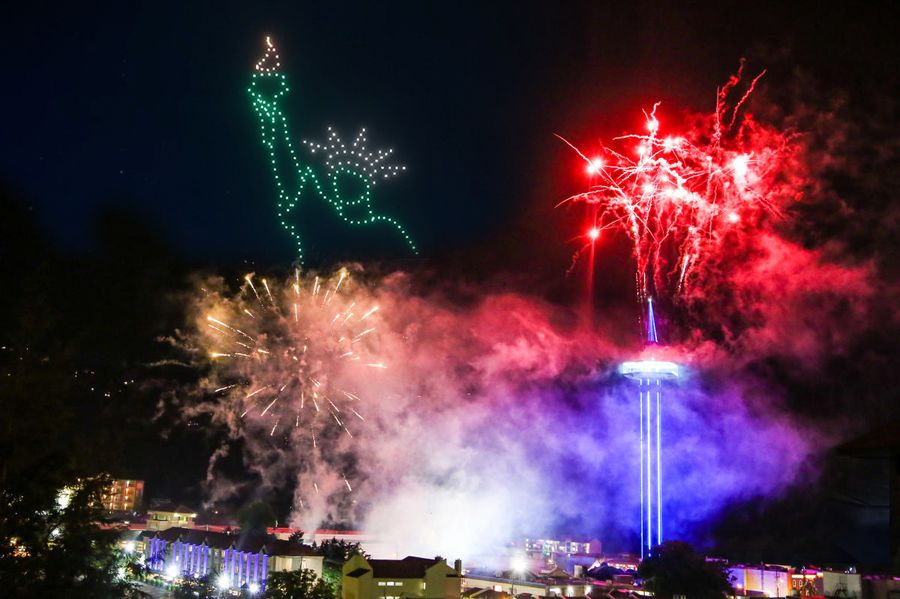
Gatlinburg launches its Fourth of July celebration at 11:59 p.m. on July 3 with the Midnight Parade, which gives the Tennessee mountain town the claim of being the first city in the United States to celebrate the holiday each year, drawing approximately 80,000 people to a town whose permanent population is a fraction of that number. The parade’s specific start time, one minute before midnight, gives the event its most precise and most deliberate scheduling detail, and the community’s collective investment in arriving before midnight in a mountain town at the base of Great Smoky Mountains National Park gives the event a specific sense of festive commitment specific to a celebration that requires genuine planning and early arrival.
The day of July 4 continues with the River Raft Regatta along the Little Pigeon River, which begins at 11 a.m. and reaches its competitive peak at 1 p.m. with the unmanned floatable race whose prize categories include the most creative boat design. The creativity category gives the Regatta its most community-expressive single dimension, and the variety of entries offers the spectator a unique novelty program for a competition whose format is unique to Gatlinburg. The evening fireworks and drone display combine conventional pyrotechnics with a 200-drone aerial formation show, giving the July 4 finale a technology component whose precision and programmable visual range expand the night sky display beyond what the fireworks alone can produce.
The Gatlinburg SkyLift, an open-air chairlift rising 1,800 feet to the summit of Crockett Mountain, offers a scenic program for July Fourth visitors that extends the experience beyond the holiday events into the natural landscape of the Great Smoky Mountains that surrounds the town. The town’s location at the entrance to Great Smoky Mountains National Park, the most visited national park in the United States, gives the July Fourth visitor a natural program whose trails, wildlife, and waterfalls extend the day before and after the holiday beyond the town itself.
5 / 10
Credit: San Diego Tourism Authority
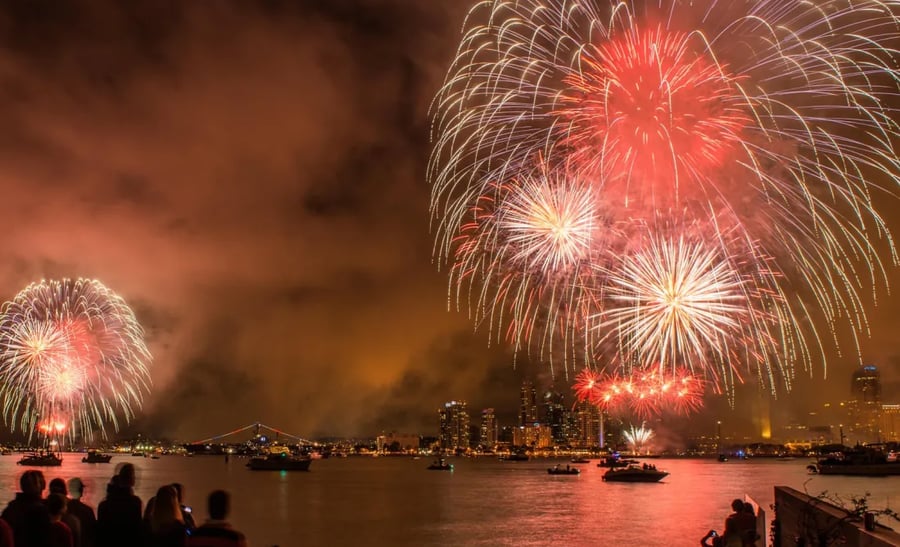
San Diego’s Big Bay Boom gives the July Fourth fireworks display its most technically ambitious format on the West Coast: four barges positioned across San Diego Bay simultaneously launch fireworks at 9 p.m., giving the spectator viewing from any of the multiple shoreline locations a synchronized display whose multi-point firing creates a visual field that single-barge shows cannot produce in the same panoramic terms. The viewing locations around the bay, including Shelter Island, Harbor Island, North Embarcadero, the Marina District, and the Coronado Ferry Landing, give the spectator a choice of vantage points whose crowd density and viewing angle vary by location, giving the experienced San Diego visitor a specific optimal spot based on the year’s particular barge positions.
The USS Midway’s flight deck gives the holiday’s most historically resonant single viewing platform: the aircraft carrier whose service history spans Korea, Vietnam, and Desert Storm gives the Fourth of July observation deck a military heritage context specific to a city whose population includes thousands of active service members, veterans, and military families from the Navy, Air Force, Army, Marine Corps, and Coast Guard. The family-friendly entertainment and all-American concessions on the flight deck give the USS Midway viewing experience a complete event program, though the popularity of this location means tickets sell out well in advance and require early planning.
Coronado Island’s separate Fourth of July celebration, with its own parade and fireworks over Glorietta Bay, gives the San Diego region a secondary celebration option whose smaller scale gives the visitor who finds the Big Bay Boom’s crowds overwhelming a more intimate viewing alternative, a short ferry ride from downtown. The concentration of military history in San Diego gives the Fourth of July a specific patriotic context that no other American city matches in the same operational terms: the Naval Air Station North Island, the Marine Corps Air Station Miramar, and the Navy’s largest West Coast installations give the city a July Fourth crowd whose personal connection to the military’s service gives the patriotic holiday its most direct human meaning.
6 / 10
Jingda Chen / Unsplash
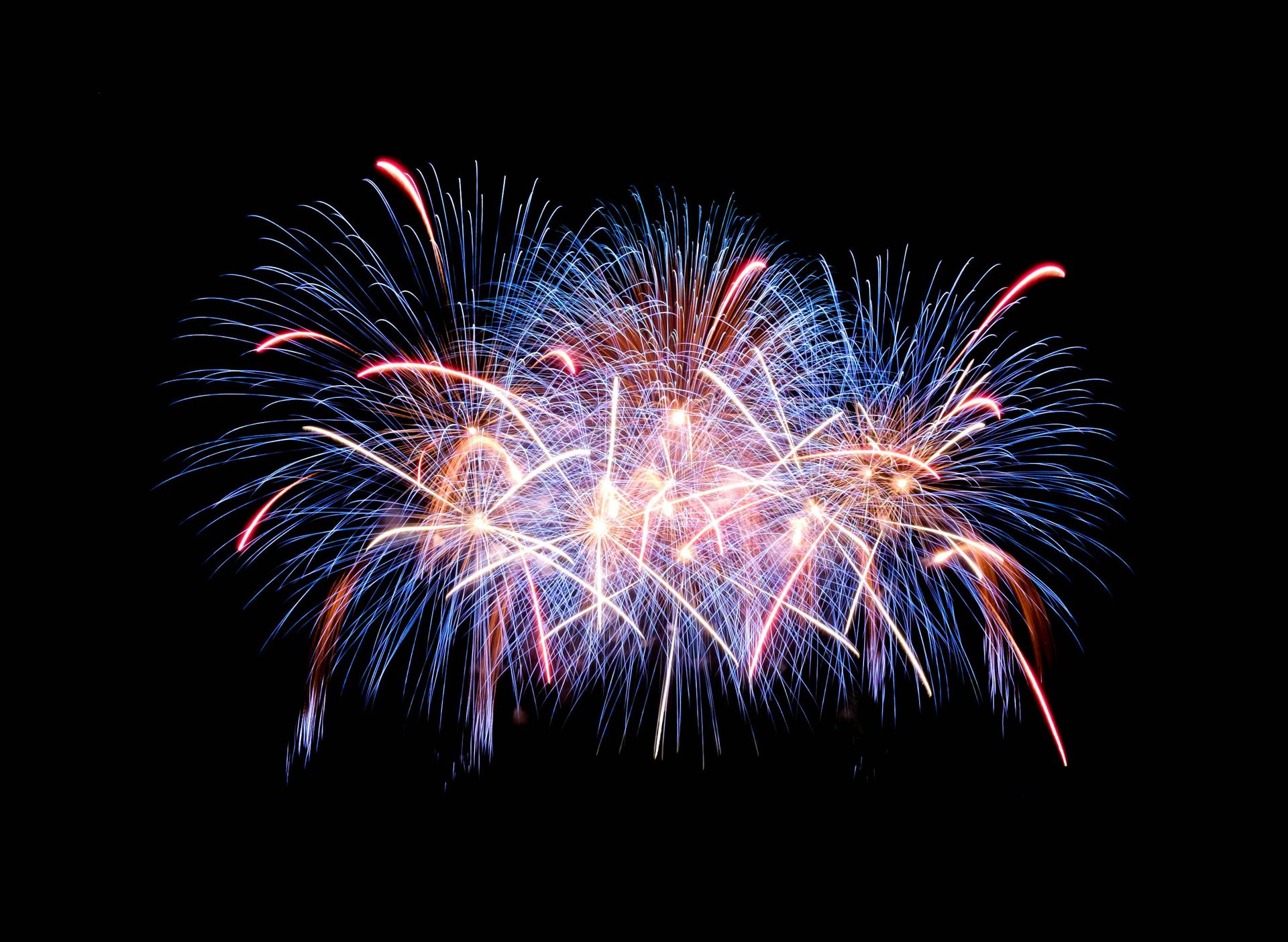
New Orleans gives the Fourth of July its most specifically New Orleans-flavored celebration: the Go 4th on the River event stretches along the Mississippi waterfront and features two barges whose synchronized fireworks display, coordinated to patriotic music, gives the show a theatrical precision specific to a city whose culture has always treated the public event as a performance whose production value is the point. The General Roy S. Kelley fireboat’s opening act, a water show featuring red, white, and blue fountains before the main fireworks, gives the Mississippi River program a prelude specific to New Orleans’s tradition of treating the river as an active participant in the city’s public celebrations, not a passive backdrop.
The viewing locations at Woldenberg Park and the Moon Walk promenade give the July Fourth crowd the riverfront access points whose proximity to the water gives the fireworks display its most direct overhead viewing angle, and the Algiers neighborhood across the river gives the visitor who wants the show without the French Quarter crowd a specific alternative whose elevated perspective from the west bank gives a different compositional view of the display over the city skyline. The Creole Queen and the Steamboat Natchez river cruises offer the holiday its most specifically New Orleans experiential format: watching fireworks over the Mississippi from the deck of a working riverboat gives the celebration a character specific to a city whose relationship with its river is the central fact of its geography and history. The French Quarter’s Bourbon Street and the surrounding streets give the July Fourth evening a nightlife program that continues well past the fireworks’ conclusion, and the city’s food culture, whose July Fourth menu in NOLA restaurants extends from the traditional American to the specifically Creole, gives the holiday its most distinctive culinary program of any celebration on this list. The port city’s July Fourth crowd includes visitors from across the American South whose regional travel to New Orleans for the holiday gives the Go 4th on the River event a distinct regional social energy, reflecting New Orleans’s role as the South’s most celebratory city.
7 / 10
DESIGNECOLOGIST / Unsplash
Coney Island gives the Fourth of July its most unconventional and most specifically Brooklyn sequence of events: Nathan’s Famous International Hot Dog Eating Contest on the morning of July 4 and fireworks over the boardwalk in the evening. The Hot Dog Eating Contest, held at the corner of Surf and Stillwell, draws competitive eaters from around the world to compete for the Mustard Belt and a cash prize in a format whose spectacle, dozens of hot dogs consumed in minutes, gives the event a specific absurdist grandeur appropriate to Coney Island’s historical identity as the place where American popular entertainment learned to be loud, fast, and unapologetic.
The afternoon between the contest and the fireworks gives the Coney Island visitor a program specific to one of the country’s most historically layered urban amusement destinations: the New York Aquarium on the boardwalk, the beach, Luna Park’s arcade and thrill rides, and the Coney Island Cyclone roller coaster, whose wooden construction dates to 1927 and whose operation into its second century gives the Fourth of July ride a specific historical weight available on no other American roller coaster. The fireworks around Pat Auletta Steeplechase Pier give the evening its oceanfront finale, with the Atlantic as the backdrop and the boardwalk’s characteristic mix of food, noise, and crowd giving the celebration its most democratically exuberant single atmosphere on this list. The Nathan’s Famous contest’s Mustard Belt tradition, in which the current champion wears the belt until the following year’s competition, gives the hot dog eating contest the specific championship iconography of a professional athletic event, and the competitors’ international backgrounds give the contest a global reach specific to a competition whose prize and prestige have made it a genuine international sporting circuit event. The Coney Island Boardwalk’s free and open access gives the Fourth of July celebration its most inclusive single entry point on this list: no ticket, no reservation, and no admission fee give the Nathan’s contest and the fireworks a public accessibility that the festival-format celebrations in other cities impose access costs to participate in.
8 / 10
Credit: U.S. National Park Service
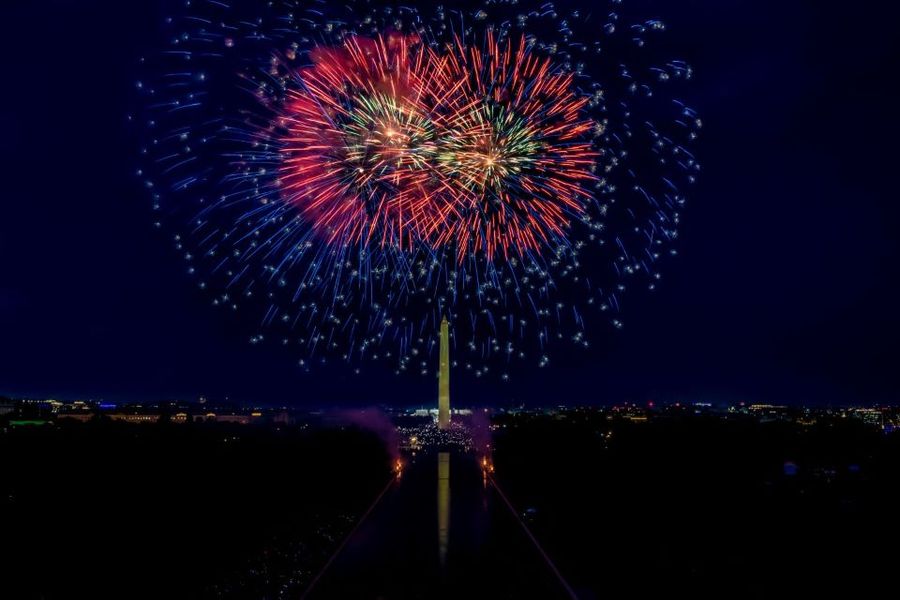
Washington, D.C., gives the Fourth of July its most symbolically appropriate setting: a city built specifically to be the capital of the republic whose founding the holiday commemorates, and whose monuments and memorials give the fireworks display a backdrop whose collective architectural and historical significance cannot be replicated anywhere else in the United States. The National Independence Day Parade begins at 11:45 a.m. on Constitution Avenue, featuring patriotic floats, fife and drum corps, and occasional celebrity and political guests, offering a mix of civic ceremony and spectacle unique to the nation’s capital.
The Capitol’s West Lawn hosts A Capitol Fourth, the National Symphony Orchestra concert that begins at 8 p.m. and has featured performers of the caliber of Stevie Wonder and Dolly Parton in recent years, giving the outdoor concert a production standard specific to a nationally televised event whose audience extends far beyond the thousands seated on the lawn. The fireworks display over the National Mall, shortly after 9 p.m., gives the holiday its most photographed and symbolically resonant single image: the Washington Monument, the Lincoln Memorial, and the Capitol illuminated by the night sky’s pyrotechnic display, in a composition that represents American national identity in its most compressed visual form.
Viewing from rooftop bars across downtown, from the streets surrounding the National Mall, or from East Potomac Park across the water gives the spectator options for escaping the densest crowd concentrations while maintaining sight lines to the display, and the Potomac River cruise options give the holiday its most unobstructed waterborne viewing platform for those who plan in advance. The National Mall’s free and open access gives the July Fourth crowd its largest and most diverse single gathering, and the monuments illuminated by the fireworks give the display’s visual program a symbolic dimension whose meaning deepens for the visitor who has spent the day touring the Lincoln Memorial, the World War II Memorial, and the Vietnam Veterans Memorial before watching the fireworks rise above them.
9 / 10
Credit: Visit Nashville, TN
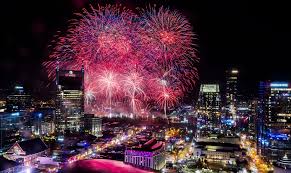
Nashville gives the Fourth of July its most musically centered celebration: the Let Freedom Sing country concert, free to the public, gives the day its primary event identity in a city whose entire civic identity is organized around popular music and whose Fourth of July programming reflects that identity more directly than any other element of the holiday. The Nashville Symphony’s evening fireworks performance at the Ascend Amphitheater gives the classical program a fireworks spectacular whose synchronization with the live orchestral performance gives the display a musical sophistication that the recorded music accompaniment of other cities’ fireworks shows does not.
The Music City July 4th 5K at 7 a.m. gives the active visitor a morning program that begins the holiday before most celebration destinations have opened their first event, and the sequence from the morning race through the afternoon concert to the evening fireworks gives the Nashville Fourth of July a full-day structure whose variety accommodates different visitor priorities across the day’s length. Riverfront Park provides the fireworks viewing with its most accessible public space for visitors who have not secured Amphitheater seating, and the downtown rooftop bar options offer a commercial alternative for the premium viewing program, with food and beverage service that adds a hospitality dimension to the outdoor event.
The free live country music paired with a symphony-accompanied fireworks spectacular gives Nashville’s Fourth of July a programming duality specific to a city where both musical traditions coexist as civic institutions, not competing genres. The Nashville Symphony’s participation in the Fourth of July program gives the evening fireworks a specifically classical music accompaniment that reflects the city’s commitment to its symphony orchestra as a public institution alongside its commercial country music identity, and the free and public access to the Let Freedom Sing concert reflects Nashville’s investment in the July Fourth celebration as a civic event available to all residents and visitors regardless of their budget or their prior planning.
10 / 10
Credit: Bristol, RI
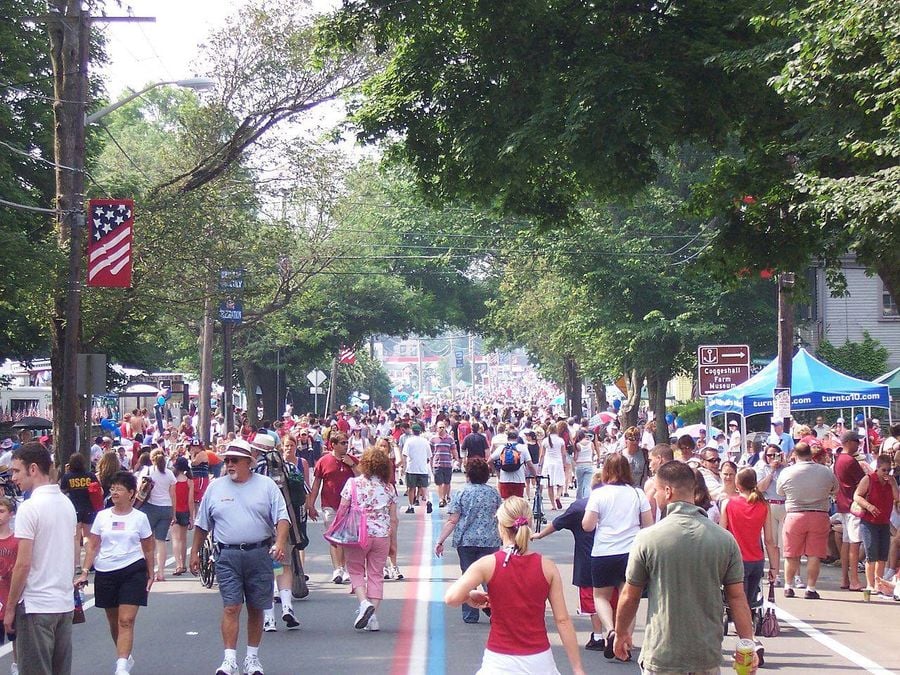
Bristol hosts the oldest continuous Fourth of July celebration in the United States, dating back to 1785, and gives the holiday its most historically persistent single event: nine years after the Declaration of Independence, Bristol began a celebration that has continued without interruption for more than two centuries and whose 2.5-mile Military, Civic, and Firemen’s Parade on July 4 represents the celebration’s most visible and most traditional single event. The parade’s longevity gives it a specific cumulative historical depth that no other American Fourth of July tradition can claim, and Bristol’s designation of a specific center-line stripe down Hope Street in the parade route’s patriotic red, white, and blue colors gives the town’s built environment its most permanently July Fourth-specific single visual element.
The celebration begins on June 14, Flag Day, giving the Bristol Fourth of July the longest runway of any event on this list: a full three weeks of programming whose concert series at Independence Park and the Fourth of July Ball on June 20 give the extended festival its most social and musical dimensions. The fireworks display over Bristol Harbor on July 3, a day before the national holiday, gives the visitor whose schedule does not permit a July 4 arrival the option to experience the Bristol Harbor fireworks without competing with the July 4 crowds that the parade draws the following day.
The town’s small size and the parade’s 2.5-mile route give the Bristol Fourth of July its most pedestrian and most community-scaled celebration on this list, and the genuine historical continuity of a tradition that has persisted since 1785 gives the event a weight whose authenticity the newer, larger celebrations cannot replicate. The red, white, and blue center stripe painted down Hope Street’s pavement year-round gives Bristol’s Main Street the most permanently July Fourth-identified physical infrastructure of any American city, and the town’s community investment in the tradition’s continuity across 241-plus years gives the celebration its most remarkable single statistic in American civic life.
