
Edgar Chaparro / Unsplash
Young adulthood is one of the few windows in life when uprooting yourself feels less like a risk and more like a reasonable Tuesday decision. Careers are still taking shape, leases are short, and the pull of somewhere new, somewhere entirely different, can outweigh the comfort of staying put. Living abroad during this period does more than add stamps to a passport. It builds adaptability, expands professional networks across borders, and offers a vantage point on your own assumptions that no domestic move can replicate. The question, for most young people weighing the idea, is not whether to go but where.
The answer depends on more than scenery. Remote work has decoupled income from geography for a significant share of young professionals, which means the traditional calculus, move for a job, stay for stability, no longer applies in the same way. Cost of living, visa access, expat community density, and the quality of everyday infrastructure now carry more weight in the decision. A city that lets you live well on a modest income, connect with a community of people who share your values, and build something professionally without burning out on logistics is worth far more than a glamorous address that drains your savings in six months. These practical concerns shape the list below.
Two international relocation experts, Tim Leffel, author and editor of the Nomadico newsletter, and Luther Yeates, founder of U.K. Expat Mortgage, guided the selections in this piece. Their recommendations appear in Travel + Leisure, which surveyed both advisors to identify the most compelling destinations for young adults in 2026. The cities they named span four continents and cover a range of climates, cultures, and cost profiles, but share one quality: each offers a genuine quality of life that young people can access without extraordinary income or perfect circumstances.
1 / 8

Peter Borter / Unsplash
Thailand’s Destination Thailand Visa $V, launched in 2024, changed the calculation for long-term remote workers. The five-year, multi-entry visa gives Chiang Mai an edge no other city on this list can match on paper: a legal framework that actively invites people to stay, build routines, and treat the country as a base rather than a stopover. Leffel calls it the best digital nomad visa of its kind in the world, and the offer's structure supports that claim. A multi-entry arrangement over five years removes the visa-run friction that has historically made Southeast Asia appealing in short bursts but exhausting as a long-term base.
The cost structure reinforces the visa’s appeal. Monthly rent for many residents runs at or below $500, and the food quality, including street stalls, markets, and sit-down restaurants, earns consistent praise from long-term residents. Neither figure is hypothetical: Chiang Mai has hosted a remote-work community for well over a decade, and the infrastructure reflects that history. Co-working spaces, reliable internet, and a social ecosystem built around expat connections are embedded in the city’s fabric, not imported as a recent amenity.
Travel access adds another dimension. Domestic flights across Thailand cost less than $100 in most cases, and regional flights to neighboring Southeast Asian countries are comparable. For young people who want to use a base city as a jumping-off point for broader regional exploration — Vietnam, Cambodia, Laos, Indonesia — Chiang Mai’s position in northern Thailand puts a wide range of destinations within easy reach. The city itself offers enough cultural texture, food variety, and natural surroundings to sustain interest over months or years, which matters when the goal is to live somewhere rather than just visit it.
What sets Chiang Mai apart from other affordable Southeast Asian cities is the maturity of its expat community. Decades of remote workers, freelancers, and entrepreneurs have built social structures that a newcomer can enter without starting from scratch. Events, meetups, shared housing networks, and informal professional communities exist at a scale that newer nomad destinations are still developing. For a young person arriving without a ready-made social circle, that density of connection is a practical advantage, not just a nice-to-have.
2 / 8

Andre Frueh / Unsplash
Canada’s largest city draws young expats primarily through professional opportunities. Yeates points to clients who have built careers in Toronto after emigrating from the U.K. and elsewhere, citing the city’s employment market as the engine behind its appeal. The range of industries represented — finance, technology, media, healthcare, and a growing startup sector — gives young professionals a realistic chance of advancing in their chosen field rather than accepting lateral moves or career detours as the cost of living abroad.
The quality-of-life case extends beyond work. Toronto’s public infrastructure, healthcare access, and proximity to nature — the city borders Lake Ontario and sits within a few hours of genuine wilderness — give everyday life a breadth that comparable career hubs in Europe or Asia often lack. The city's cultural diversity also matters: Toronto consistently ranks among the most multicultural cities in the world, which tends to reduce the social friction of arriving as an outsider. Finding community, food, cultural connection, and professional peers from your background is easier here than in most cities of comparable size.
The honest counterpoint is cost. Yeates flags rental rates as among the steepest globally, and the broader cost of living requires either a high local income or a well-paying remote position to sustain a comfortable standard of living. His preference for Toronto over Vancouver — the other Canadian city that draws significant expat attention — rests on a marginal-cost advantage: Toronto runs slightly cheaper, and its employment market is deeper. Neither city suits a young person arriving without an income plan or a job offer. Both reward those who arrive ready to plug into the local economy.
The balance Yeates describes is specific: career opportunity and quality of life tip the scales past the cost disadvantage for young professionals with the right skill set. Toronto is not a city to choose for affordability. It is a city to choose because the professional and personal return on a higher cost of living is demonstrably real, and because the legal pathway into Canada’s employment market, while not frictionless, is more accessible for many nationalities than comparable markets in Western Europe.
3 / 8
Juho Luomala / Unsplash
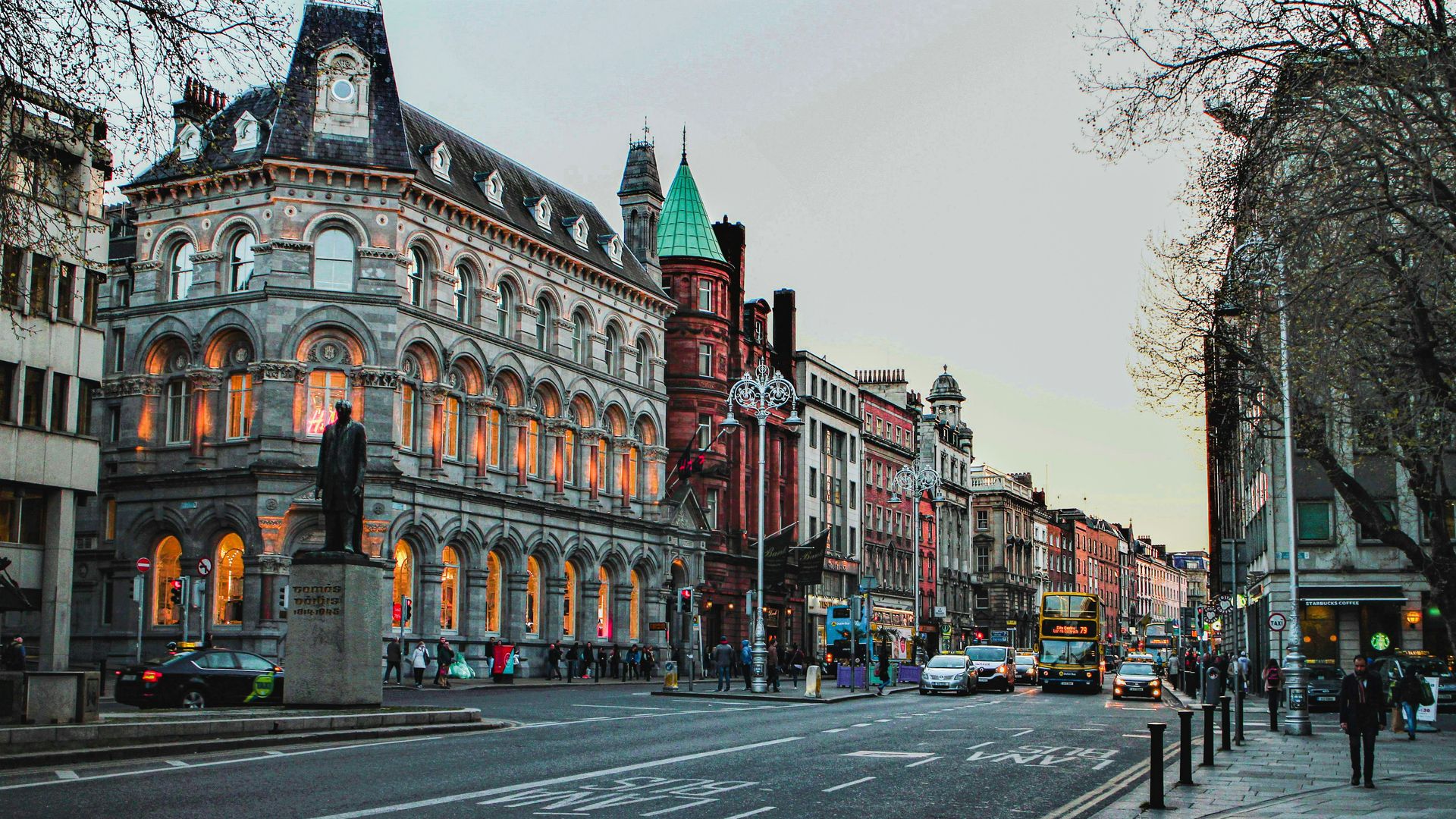
Dublin’s reputation as an expensive European capital obscures a more useful comparison: measured against the salaries the city’s employment market generates, the cost of living looks considerably more manageable. Yeates makes this point directly, noting that the monthly expense profile for a single person is low relative to what local employers pay. Numbeo estimates monthly costs for a single person, excluding rent, at roughly $1,210 — a figure that looks different when set against the salaries offered by Dublin’s technology sector.
The tech dimension of Dublin’s economy is the sharpest draw for young professionals in that field. Major technology companies have established European headquarters in the city, creating a concentration of roles in software, product, data, and adjacent functions that few European capitals outside London can rival. For a young person entering or advancing in the technology industry, Dublin offers access to employers and professional networks that would otherwise require relocating to a much more expensive city. The career infrastructure is in place, and the competition for roles, while real, operates at a human scale rather than in oversaturated markets.
Beyond the employment picture, Yeates describes Dublin’s social environment in terms that suggest the city rewards investment. Its historic architecture, cultural life, and pub culture form an ecosystem that long-term residents find genuinely sustaining rather than merely picturesque. The social dimension of Irish pub culture, less about drinking and more about conversation and community, functions as a ready-made social infrastructure for newcomers who might otherwise find building a local network slow work. Public transport covers the city reliably, and the healthcare system meets the standard of other Western European countries.
The weather, as Yeates freely acknowledges, is Dublin’s most persistent drawback. Winters are grey, wet, and long by the standards of most climates young expats compare the city against. This is a real consideration, not a trivial one: seasonal weather affects mood, motivation, and social behavior over the course of a year in ways that a short visit does not reveal. Young people who find cold and overcast conditions genuinely draining should factor this in honestly. Those who can work around it, or who find the cozy indoor culture it produces appealing, will find that Dublin’s other strengths hold up through the winter months.
4 / 8

Thach Tran / Unsplash
Vietnam’s third-largest city has closed the gap on Chiang Mai faster than most comparable destinations, and Leffel identifies the drivers clearly. Da Nang offers beaches, a young and rapidly English-proficient local population, and a cost profile that places it among the most affordable cities covered here. Numbeo puts monthly expenses for a single person, excluding rent, at roughly $423 — a figure that gives a remote worker or freelancer significant latitude to save, invest in a project, or simply live at a standard that a comparable income would not sustain in Europe or North America.
The entrepreneurial angle distinguishes Da Nang from other budget-friendly Southeast Asian cities. Leffel notes that founders and developers can find skilled local talent for technology projects at rates that make early-stage ventures viable without outside funding. Vietnam’s technology workforce has grown substantially over the past decade, and Da Nang, while smaller than Ho Chi Minh City or Hanoi, benefits from that national trend. A young entrepreneur who wants to build something, such as a product, a small agency, or a digital service, finds both the cost conditions and the human capital to do so without the overhead that comparable projects require in Western markets.
Regional access amplifies Da Nang’s appeal as a base. Laos, Cambodia, and Thailand are all within a short flight, and Vietnam’s internal travel network connects Da Nang to the country’s other major cities at a reasonable cost and with minimal logistical complexity. The coastline immediately surrounding the city adds a quality-of-life dimension that many budget-friendly cities lack: beaches that residents use regularly, not just as a weekend destination, sit close enough to the city center to integrate into daily or weekly routines.
Da Nang also benefits from being earlier in its expat development curve than Chiang Mai. The social infrastructure for remote workers is growing rather than established, which means the city still has a degree of discovery to it: less worn-in, more open to the kind of community-building that characterizes a destination before it becomes widely known. For young people who find the polished expat ecosystems of more established cities slightly formulaic, Da Nang offers a more open environment where the social landscape is still taking shape.
5 / 8

Florian Wehde / Unsplash
Time Out named Bangkok the world’s best city for Gen Z, citing high scores among young respondents for both happiness and affordability — a pairing that rarely appears in the same city at this quality level. Yeates describes Bangkok as an environment where a remote worker or freelancer can maintain a high standard of living without the income level required elsewhere to support those standards. The cost gap between Bangkok and most European cities is wide enough that a modest remote income stretches into a genuinely comfortable life: good food, reliable transport, quality accommodation, and access to a social scene that does not require constant spending to participate in.
The nomad community is a specific and practical asset. Bangkok hosts a large, established population of young remote workers, freelancers, and entrepreneurs who have chosen the city as a long-term base rather than a transit point. That community provides the kind of social and professional density that makes a new city feel habitable quickly: co-working spaces where connections form organically, informal networks that share housing leads and visa information, and a shared culture of people building professional lives outside traditional employment structures. Yeates describes this as a community with “shared vision and values,” a phrase that points to something real about the selective nature of the people Bangkok tends to attract.
The infrastructure supports that community. Bangkok’s public transport system, a combination of elevated rail, underground metro, and river ferry, covers the city’s key districts reliably. Healthcare quality is high by regional standards, and the city’s food scene is affordable, making eating well inexpensive. The scale of Bangkok also means that different neighborhoods serve different preferences: quieter, residential areas coexist with dense commercial districts, and a resident can find a pocket of the city that matches their preferred pace without sacrificing access to the whole.
Thailand’s DTV visa applies to Bangkok as much as it does to Chiang Mai, giving residents of both cities the same long-term legal framework. For young people drawn to urban density, a larger city, more varied nightlife, and a broader range of professional and cultural events, Bangkok offers everything Chiang Mai does in terms of visa access and cost structure, scaled up to a metropolitan environment. The tradeoff is traffic and noise, which Bangkok generates at a scale that Chiang Mai does not. Young people who calibrate well to large-city living will find the energy a feature; those who prefer a slower pace will find Chiang Mai’s smaller scale more comfortable.
6 / 8
Vera Mezhvynskiy / Unsplash
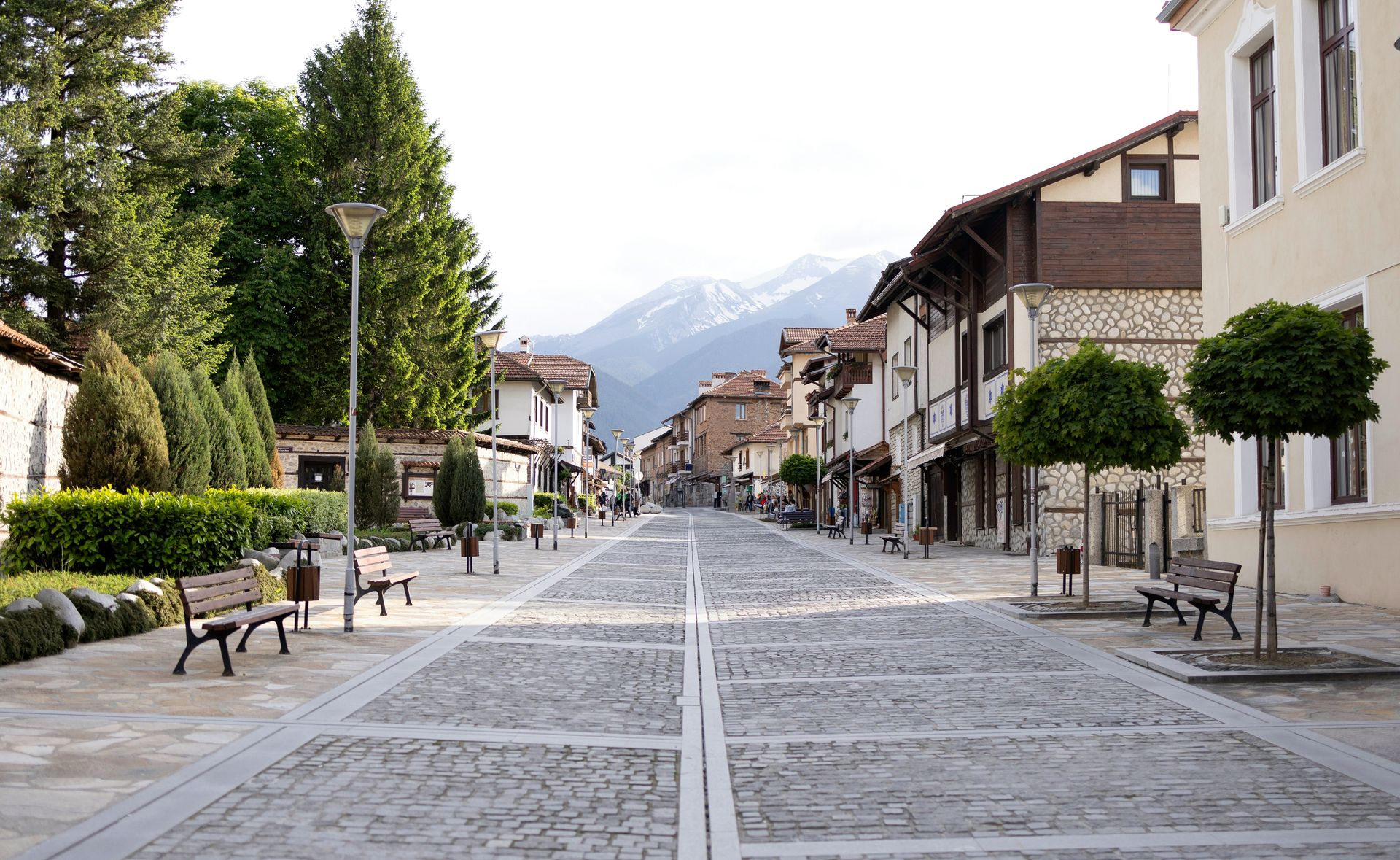
Bansko’s identity shifts with the seasons. It's a ski destination in winter and a hiking base in summer, but its expat community operates year-round across both. Leffel identifies Bansko Nomad Fest, a week-long annual event centered on the remote lifestyle, as an expression of the social infrastructure the town has built. The festival draws participants from across Europe and beyond, and its longevity reflects the stability of Bansko’s nomad scene rather than a one-time spike in interest. Co-working spaces, social events, and a rental market oriented toward longer stays give the town a texture that purely seasonal destinations lack.
Apartment costs here sit at the affordable end of the European range. Monthly rentals fall within a band that gives remote workers meaningful savings relative to Western European cities, with the broader monthly cost of living for expats estimated at around $1,283. Bulgaria’s position within the European Union adds a layer of logistical simplicity for EU citizens: freedom of movement, a recognized legal framework, and access to European healthcare arrangements apply without additional visa steps. For non-EU residents, Bulgaria launched a dedicated digital nomad visa that addresses the entry question directly.
The euro adoption in 2026 removes a currency complication that previously added friction for residents and visitors accustomed to eurozone transactions. Bansko now operates on the same currency as the majority of the countries that supply its expat population, which simplifies banking, transfers, and everyday financial management in ways that may seem minor individually but compound over months of daily life.
Sofia, Bulgaria’s capital, is a few hours away and offers international flights, a larger urban culture, and professional services that a mountain town like Bansko’s scale cannot accommodate. The proximity means Bansko residents can treat Sofia as an extension of their base — a place to meet clients, access services, or spend a weekend — without committing to city living full-time. For young people who want community, affordability, and natural surroundings without complete isolation from urban infrastructure, the Bansko-Sofia axis provides a workable structure.
7 / 8

Sebastian Velasquez / Unsplash
Uruguay’s capital carries a set of distinctions that set it apart from its larger, more frequently discussed South American neighbors. Leffel describes Uruguay as the most liberal country in South America and one of the safest in the entire Americas. These claims reflect the country’s consistent performance on governance, rule of law, and personal freedom metrics. For a young person choosing a South American base, Montevideo’s stability is not a minor footnote but a foundational feature: daily life, financial planning, and long-term decisions rest on a different footing in a country where institutions function reliably.
Monthly expenses for a single person in Montevideo run under $1,000, excluding rent. This is higher than Da Nang or Bangkok but competitive within the Americas and substantially below Western European equivalents. Uruguay costs more than Argentina or Brazil, as Leffel acknowledges, but the comparison involves tradeoffs that extend beyond the monthly total. Argentina’s economic instability and Brazil’s security concerns in many urban areas represent real costs that budget figures do not capture. Montevideo’s higher baseline comes with a lower risk profile that many young people will find worth the premium.
The neighborhoods that attract English-speaking expats, including Ciudad Vieja and Centro, the Pocitos area, and Carrasco, cover a range of price points and living styles, from the historic density of the old city to the beachside residential character of Pocitos. International Living highlights these three areas as the primary zones for anglophone expat communities, providing new arrivals with a starting point for finding compatible neighborhoods and social connections without having to map the entire city from scratch.
Regional access adds leisure and practical value. The beaches near Punta del Este, a coastal resort city east of Montevideo, give residents a natural weekend destination of genuine quality. Argentina sits accessible by ferry from Colonia, a small city west of Montevideo, making Buenos Aires a viable day trip or weekend excursion. For young people who want a stable South American base with easy access to a broader regional context, Montevideo’s geography as much as its governance makes it a compelling choice.
8 / 8

Louis Droege / Unsplash
Portugal’s capital draws several distinct groups, and Yeates maps the landscape clearly. High earners use Lisbon as a retirement destination or an investment property market, drawn by a decade of strong property performance. A separate and younger cohort, digital nomads with established remote incomes, finds the city’s expat infrastructure, climate, and lifestyle compelling for different reasons. The two groups coexist without much friction, resulting in a city with mature, well-developed support systems for long-term foreign residents across a range of income levels.
For young people specifically, Lisbon offers a set of conditions that few Western European capitals combine. The weather is warm and sunny by northern European standards, beaches are within easy reach of the city center, and the quality of everyday life, including food, public space, walkability, and cultural events, is high without the premium that London, Paris, or Amsterdam imposes. The expat communities already established in Lisbon give new arrivals a social context to enter rather than build from scratch, thereby compressing the isolation period most people experience in a new city.
Yeates is direct about the rental situation in the city center: costs have risen sharply, and the central neighborhoods that most new arrivals target carry some of the highest housing costs in Southern Europe. This is a real constraint for young people without high incomes. The broader cost-of-living profile remains competitive by Western European standards when housing is set aside, but housing is not a marginal expense. Young people considering Lisbon need an honest income assessment before committing, and those with flexible location preferences within the city may find that neighborhoods slightly outside the center offer substantially better value.
The digital nomad case for Lisbon rests on the infrastructure as much as the lifestyle. Portugal’s legal framework for remote workers is established, the internet and co-working ecosystem is developed, and the city’s English proficiency among younger residents is high enough to navigate daily life without fluent Portuguese. This is a practical consideration that accelerates settling in. Yeates describes Lisbon as the destination he most strongly recommends for digital nomads with a reliable remote income, a judgment that reflects the totality of the conditions rather than any single standout feature.
