
The best places near Rome you can visit on a day trip
From ancient Pompeii's pizza-precursor fresco to Orvieto's Gothic cathedral perched on a cliff above Etruscan caves carved from soft tuff
Sayaka Ganz / Unsplash
Rome holds enough within its own city limits to fill weeks of sightseeing, so travelers could easily be forgiven for never venturing beyond the Colosseum or the Vatican during a typical visit to the city. The wealth of attractions scattered across the surrounding region doesn’t end at the city border, though, and choosing to explore Lazio and beyond on a day trip rewards travelers with an entirely different side of central Italy that most first-time visitors never actually see.
Sprawling historic sites, outdoor destinations suited to every season and food and wine towns that rarely make it onto a first-time visitor’s itinerary all sit within genuinely easy striking distance of Rome by train, bus or car. Florence and Pompeii both sit close enough to reach comfortably in a single day, giving travelers with a rail pass or a rental car access to an unusually wide range of experiences without needing to change hotels or plan a longer, multi-city trip.
The day trips below appear in Lonely Planet and cover destinations reachable from Rome by train, bus, or car within a single day. Each one rewards a different kind of curiosity, whether that means ancient history, Renaissance art, active hiking, or simply a long, satisfying lunch. Most are also easy to combine for travelers staying in Rome long enough to fit in several separate excursions. Travelers $TRV with a car have the most flexibility to string together nearby stops, such as pairing Tuscia’s thermal baths with Calcata’s hilltop streets, while those relying on trains and buses should generally treat each destination as its own dedicated day instead of trying to squeeze two into the same itinerary. Checking train and bus schedules the night before also helps avoid any last-minute surprises once the day actually begins.
1. Ostia Antica preserves ancient Rome’s busy seaport
Evgeniy Markov / Unsplash
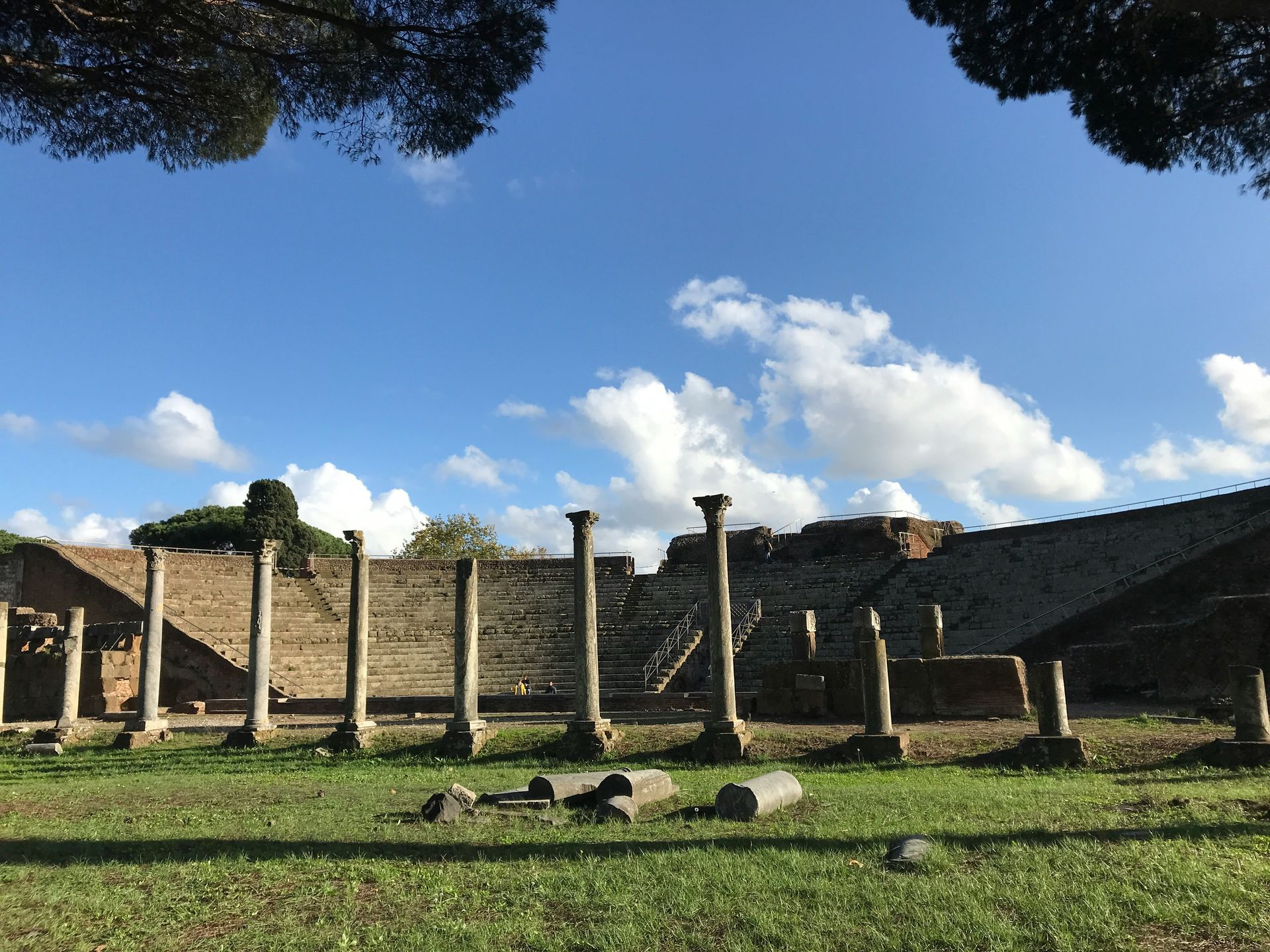
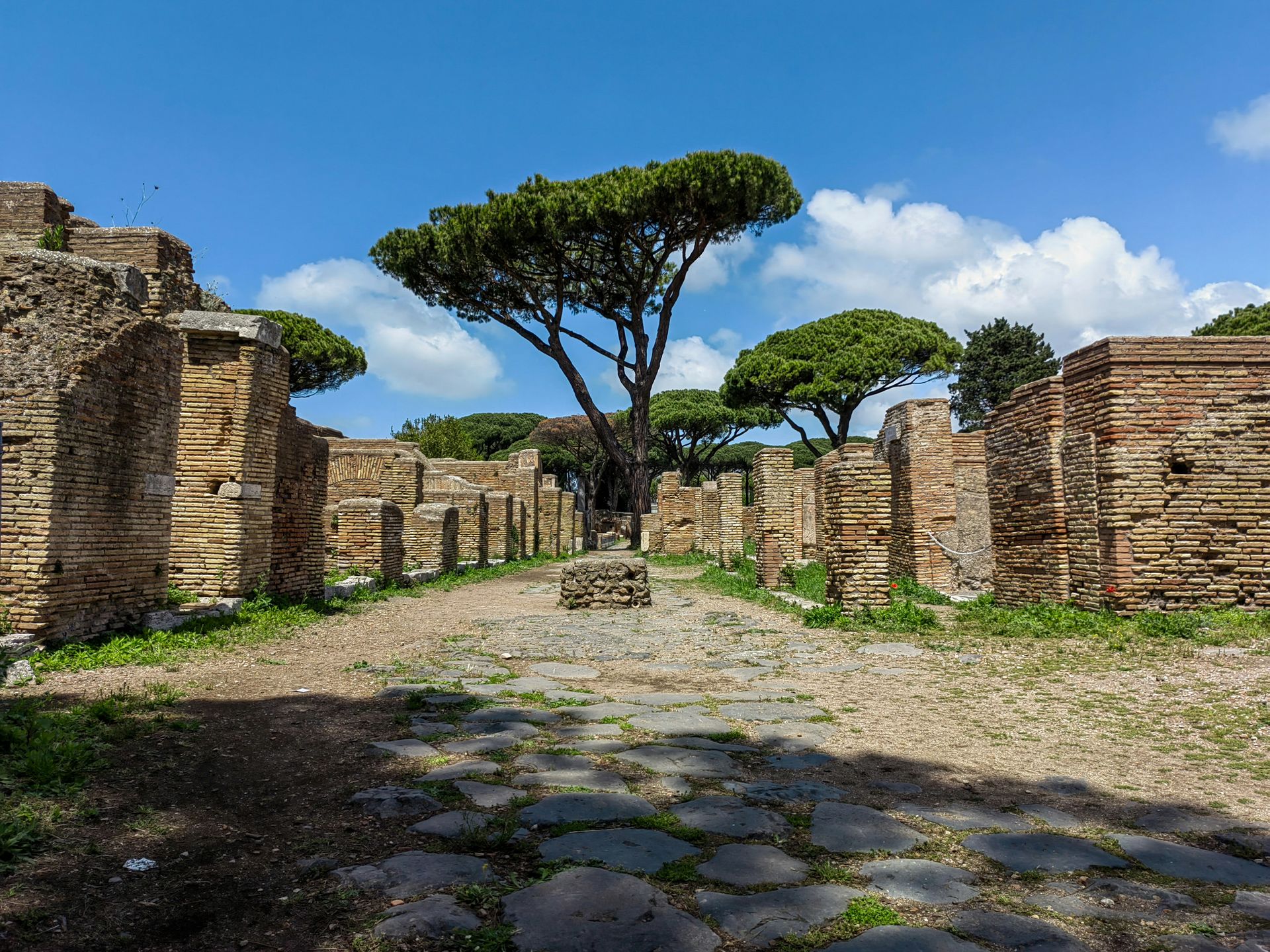
Ostia Antica ranks among the easiest outings from Rome, and the Parco Archeologico di Ostia Antica protects the remarkably well-preserved ruins of ancient Rome’s own seaport, reachable by train in roughly 30 minutes. The Terme di Nettuno, a second-century bath complex, features striking floor mosaics and a steeply tiered amphitheater that remained in active use until the fourth century CE, giving visitors a genuine sense of how long this port city actually functioned.
The Thermopolium offers one of the site’s most evocative stops, since this ancient cafe still bears traces of a menu frescoed directly onto the wall, letting visitors glimpse exactly what a Roman dockworker might have ordered for lunch nearly two thousand years ago. Wandering the site’s broader street grid reveals apartment blocks, warehouses, and public baths that together paint a genuinely complete picture of daily commercial life in a working Roman port.
Visitors hungry after a morning spent exploring the ruins can head to Ristorante Monumento, located near the site’s main entrance, for filling pasta and local seafood, well-suited to refueling before the train back to Rome. The restaurant’s proximity to the archaeological park makes it a genuinely convenient stop without requiring a detour into town.
Reaching Ostia Antica involves taking the Ostia Lido train from Stazione San Paolo, located next to the Piramide metro station, and getting off directly at the Ostia Antica stop. This straightforward train connection, combined with the site’s genuinely manageable size, makes Ostia Antica one of the most practical half-day options on this entire list for travelers without a car. Visitors should wear sturdy shoes, given the uneven ancient paving throughout the site, and arriving in the morning helps avoid the strongest midday heat during the summer months. The site’s shaded pine groves offer welcome relief between the more exposed sections of ruins, making them a genuinely good spot to pause partway through a longer visit. A dedicated audio guide, available for rent near the entrance, is a considerable help, given how sparse the on-site signage remains throughout much of the park.
2. Cerveteri guards an eerie Etruscan city of the dead
Claudio Grande / Unsplash
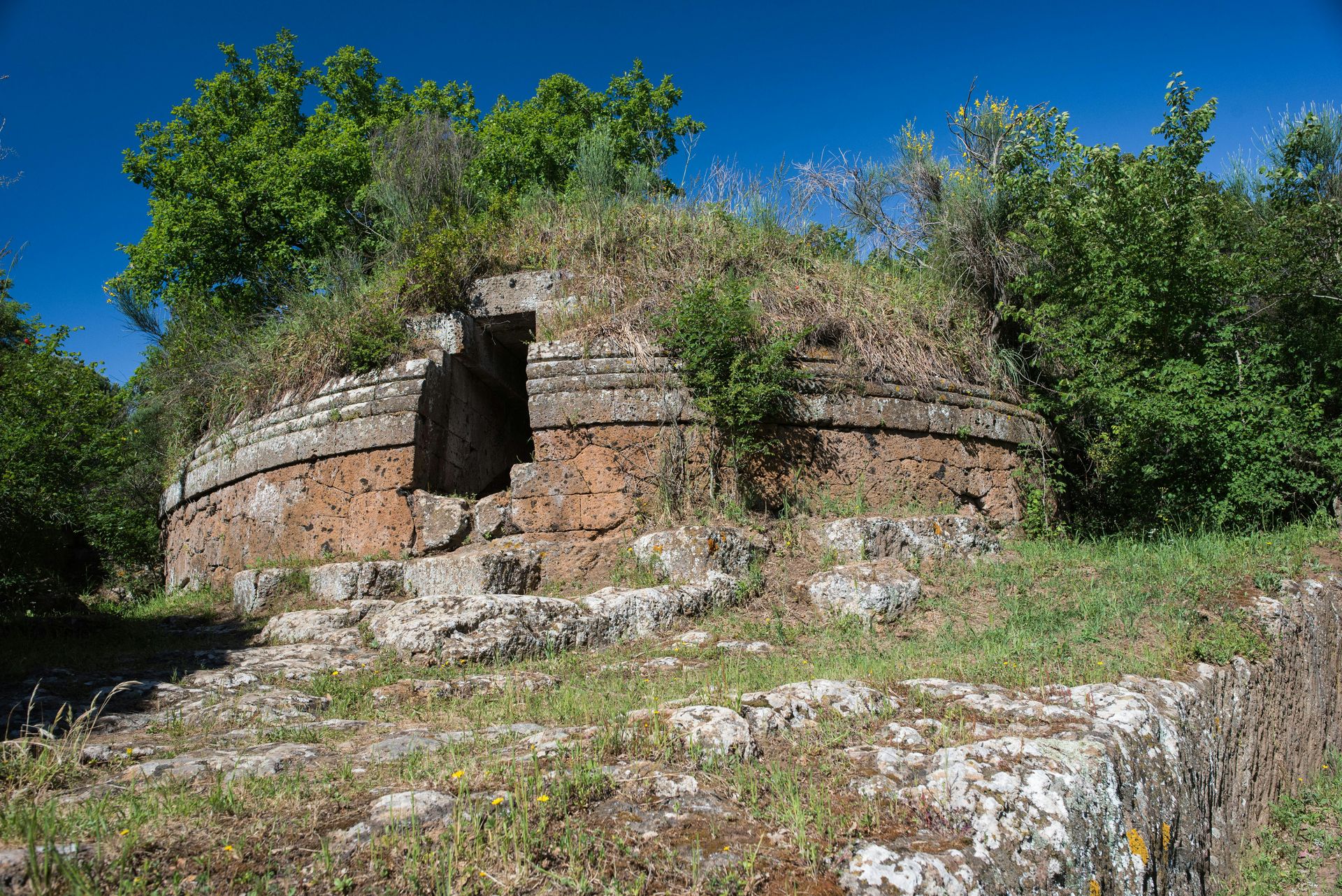
The pre-Roman Etruscans left an indelible mark on the civilizations that followed them, even though much of their own culture remains genuinely mysterious to historians today. Cerveteri’s Necropoli di Banditaccia, a UNESCO World Heritage-listed site reachable in roughly 55 minutes by bus or car, ranks among the best-preserved Etruscan ruins near Rome, presenting visitors with a genuine city of the dead complete with streets, squares, and terraces of circular, grass-topped tombs known as tumuli.
Wandering through this necropolis gives visitors a physical sense of Etruscan urban planning rarely preserved this completely anywhere else in Italy, since the tomb layout mirrors what an actual Etruscan residential district likely looked like during the civilization’s height. The Museo Nazionale Cerite, located in the historic center, rounds out a proper Etruscan education with artifacts recovered directly from the surrounding necropolis and other regional sites.
Da Bibbo, a restaurant located near the museum, offers a genuinely elevated dining experience compared with the area’s more typical osteria, giving visitors a worthwhile reason to linger in Cerveteri’s historic center after finishing at the necropolis itself. Pairing the museum visit with a proper meal here rounds out a full day focused on Etruscan history and cuisine alike.
Regular Cotral buses connect Cerveteri to Rome from the Cornelia metro station, while drivers can reach the town roughly 28 miles north of Rome via the A12 autostrada, with the necropolis itself sitting about a mile from the town center. This pairing of accessible public transport and straightforward driving directions makes Cerveteri a genuinely practical option regardless of how a traveler chooses to get there. Visitors specifically interested in Etruscan art should also plan a stop at Rome’s own Villa Giulia museum afterward, since many of Cerveteri’s finest artifacts eventually made their way there. Many of the tumuli remain open for visitors to actually walk inside, revealing carved chambers that once held furniture, pottery, and other burial goods now displayed at nearby museums.
3. Pompeii freezes daily life beneath Vesuvius’s shadow
Cole Ciarlello / Unsplash
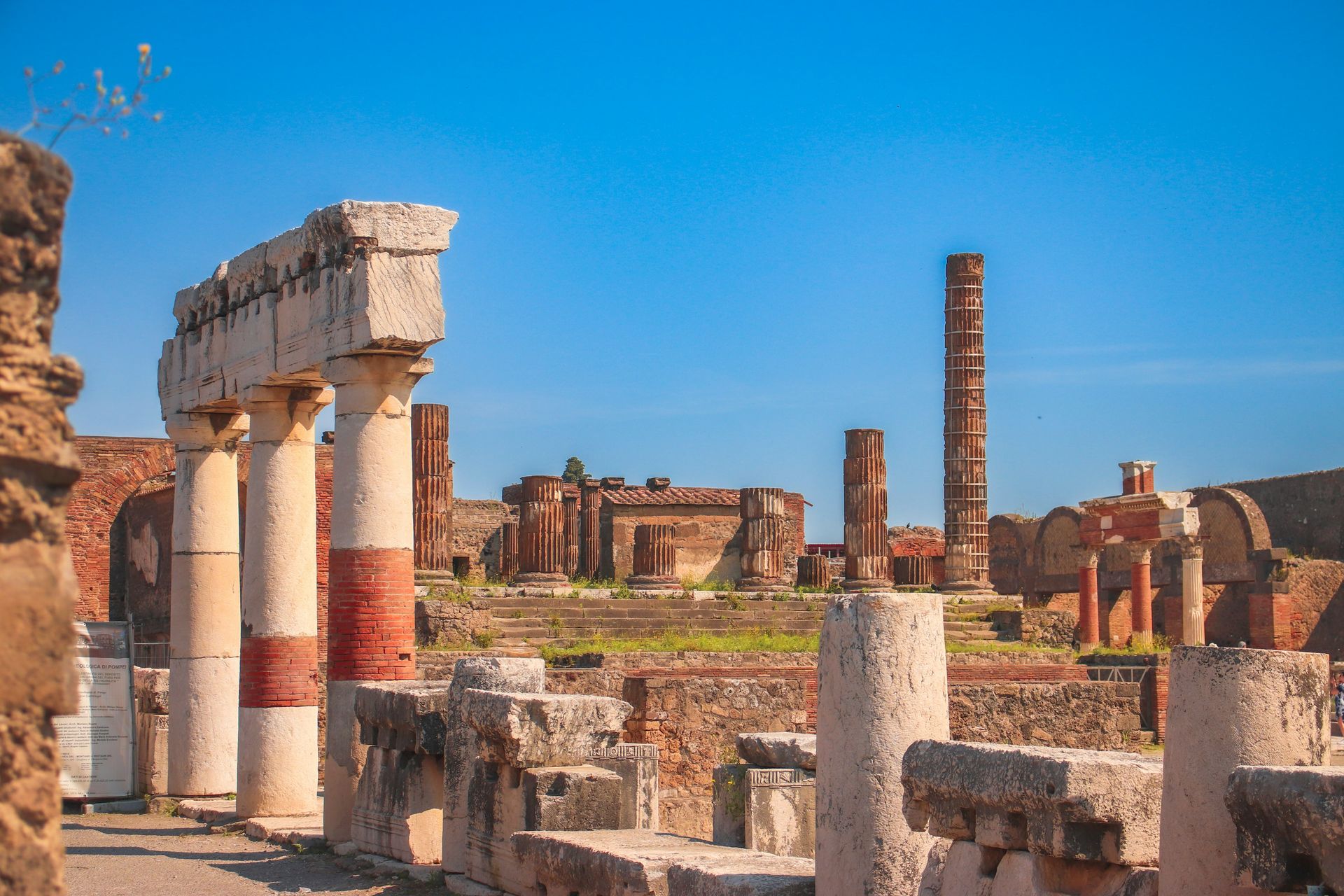
History-focused travelers willing to commit to a longer day trip should head south to the Pompeii Archaeological Park, sitting at the foot of Mount Vesuvius just south of Naples and reachable in roughly two and a half hours by train. Although a lifetime of study could barely scratch the surface of this frozen-in-time city, visitors can still see a genuinely substantial portion of it within a single focused day.
The Lupanare, the only surviving ancient Roman brothel, and the Stabian Baths both offer visitors a genuine window into daily Pompeian life beyond the site’s more famous ruined temples and forums. Beautifully preserved private residences such as the Villa dei Misteri add yet another layer of detail, since the villa’s painted walls depict elaborate Dionysian rituals still vivid enough to study closely today. Archaeologists have even recently uncovered a second fresco at Pompeii depicting mensa flatbread, a genuine precursor to modern pizza, confirming that Pompeii’s residents clearly took their snacks seriously long before the city’s sudden destruction.
Reaching Pompeii typically involves taking a high-speed train from Termini station to Naples, then switching to the Circumvesuviana to the Pompeii stop. The Frecciarossa, a direct high-speed train that cuts the total travel time to under two hours, offers a genuinely faster alternative, though it only operates on the third Sunday of each month, so it's worth checking the schedule carefully before planning a trip around this particular service. Travelers $TRV with extra time should also consider a stop at the smaller, less crowded site of Herculaneum nearby, which preserves buildings and even organic materials in remarkable detail. Casts of victims caught in the eruption, preserved through a technique developed in the 19th century, remain among the site’s most sobering and frequently photographed features. Visitors climbing Mount Vesuvius itself afterward should book a separate ticket, since the volcano’s crater trail is managed by a different park than the ruins below. The Antiquarium building near the entrance also displays smaller artifacts recovered from the site, a worthwhile stop for anyone waiting out a midday crowd surge.
4. Tivoli pairs two UNESCO estates in the hills
Matteo Panara / Unsplash
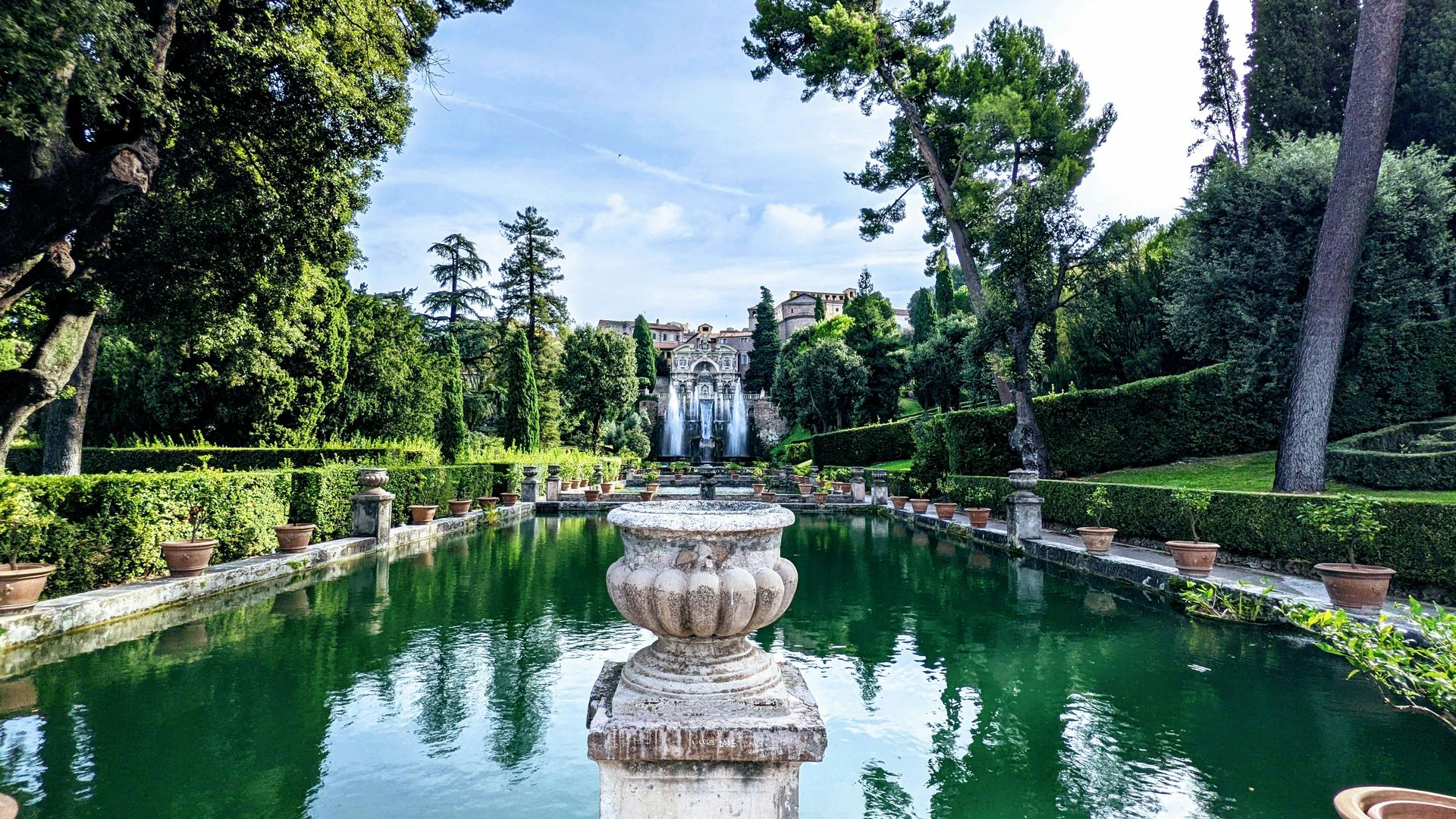
Tivoli packs a genuinely impressive amount into a tiny town, sitting a little over 15 miles east of Rome and offering visitors something distinctly different from a typical Roman day trip. Villa d’Este, a Renaissance residence perched high in the surrounding hills, features florid Mannerist frescoes alongside extravagant garden fountains that reward slow, unhurried exploration rather than a rushed walk-through.
After admiring the villa’s grounds, Ristorante Sibilla offers a genuinely special spot for lunch before continuing to the day’s second major stop. A short post-lunch walk leads down to Villa Adriana, the sprawling country estate that once belonged to the Roman Emperor Hadrian, where spectacular grounds hold towering ruins languishing beneath gnarled olive trees and enormous umbrella pines, giving the entire site a genuinely atmospheric, half-wild character.
Together, these two UNESCO World Heritage estates give Tivoli a genuinely rare double feature among Rome’s day-trip options, allowing visitors to experience both Renaissance garden design and ancient imperial architecture in the same afternoon. Few other towns this close to Rome pack in two sites of this caliber within such easy walking distance of each other.
Regular Cotral buses connect Tivoli to Rome from Ponte Mammolo metro station in roughly 50 minutes, and trains from Stazione Termini offer an alternative departing every 15 minutes throughout the day. Reaching Villa Adriana from Tivoli’s historic center requires taking local CAT bus number 4 or 4X from Largo Garibaldi, adding one additional short connection to the overall day. Visitors touring both villas in a single day should start early, since Villa d’Este alone can easily absorb two hours before the walk down to Villa Adriana even begins. Villa d’Este’s famous Hundred Fountains alone justify a lingering visit, since the terraced water feature stretches the length of an entire garden pathway. Visitors touring Villa Adriana should pick up the site’s detailed map at the entrance, since the ruins sprawl across a considerably larger area than first-time visitors typically expect.
5. Tuscia heats thermal baths beneath volcanic soil
-900x673.jpg)
Livioandronico2013 / Wikimedia Commons (CC BY-SA 4.0)
Heading due north of Rome opens up sites that most visitors miss entirely as they duck in and out of the capital on a standard Italian itinerary. The Parco dei Mostri in Bomarzo, a 16th-century sculpture garden populated by genuinely evocative stone structures, makes an excellent starting point for the day, since the garden’s original owner commissioned these unusual sculptures specifically to help process the grief of losing his wife.
Known collectively as Tuscia, this stretch of northern Lazio borders both Umbria and Tuscany and offers visitors the chance to soak in thermal waters flowing naturally from the volcanic soil underlying the entire region. The Terme dei Papi once served as a private bath specifically for popes who briefly resided in nearby Viterbo during the Middle Ages, and the site now functions as a genuinely popular year-round destination for travelers seeking wellness alongside history.
Combining Bomarzo’s sculpture garden with an afternoon soak in Viterbo’s thermal waters gives visitors a genuinely varied day built around two very different kinds of attractions within the same broader region. Few day trips from Rome manage to pair Renaissance-era eccentricity with genuine geological wellness quite this seamlessly within a single itinerary.
Trains from Termini or Ostiense stations connect Rome to Viterbo, and travelers heading specifically to the Parco dei Mostri should get off instead at the Attigliano-Bomarzo station along the same line. Drivers can reach the region via the well-connected A1 motorway, though the more scenic Via Cassia offers a quieter, more leisurely alternative for travelers not in a rush. Travelers $TRV planning a soak at Terme dei Papi should bring a swimsuit and towel, since rental options at the facility are limited and can add unnecessary cost. Several smaller, free thermal pools scattered throughout the surrounding countryside offer a genuinely rustic alternative to the more polished Terme dei Papi for budget-minded travelers. Visitors combining both stops in one day should start at Bomarzo before the site gets crowded, saving the more relaxing thermal soak for the afternoon.
6. Calcata owes its survival to a colony of artists
Claudio Grande / Unsplash
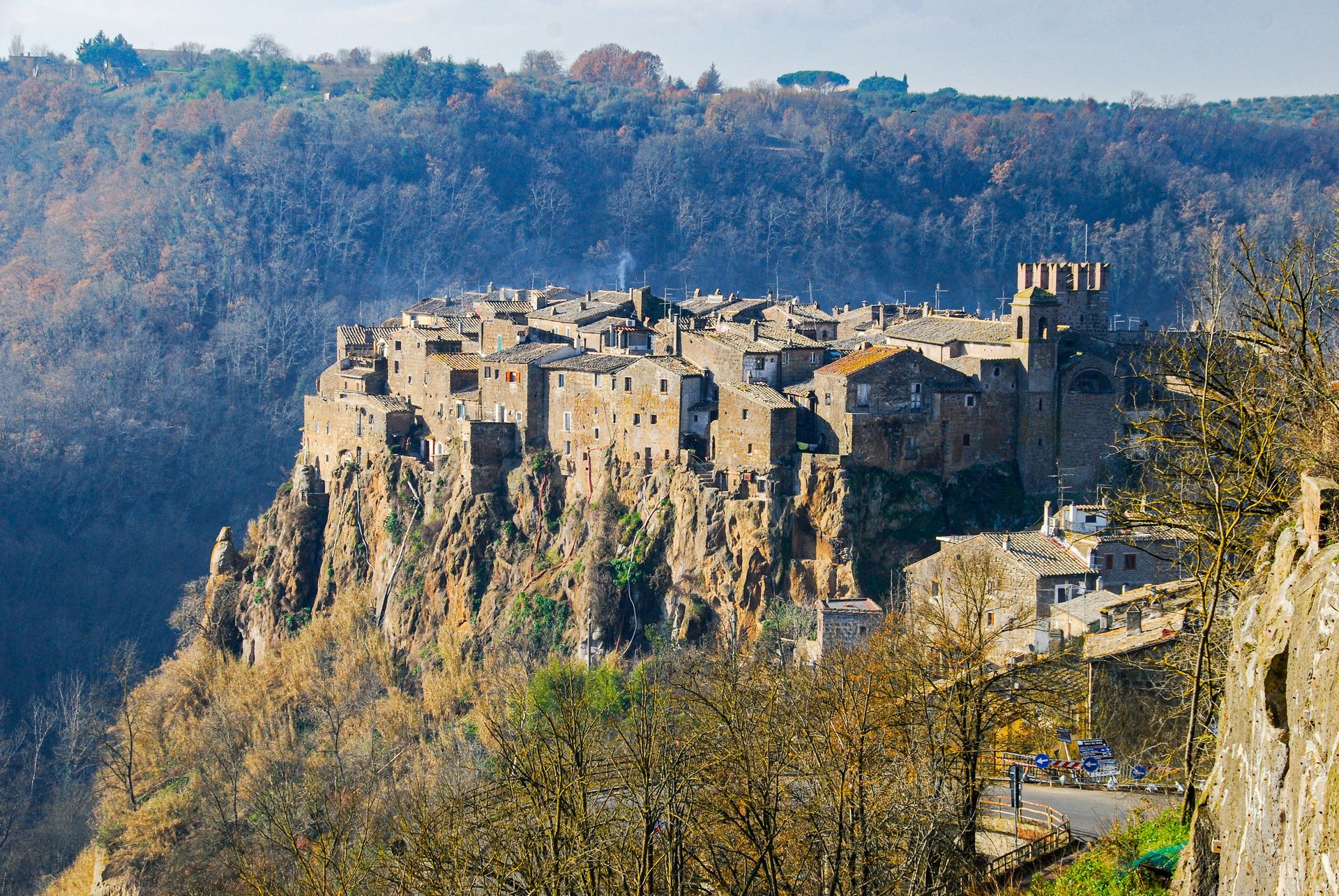
Italy holds no shortage of beautiful, crumbling hill towns, though few can claim to have been genuinely saved from demolition by hippies. Local government officials condemned Calcata’s historic center in the 1930s, fearing the town would eventually collapse, prompting a mass exodus of longtime residents that left the center entirely abandoned for decades afterward. The town is reachable in roughly one hour by car from Rome.
Artists began squatting in the empty town during the 1960s, drawn by the abandoned buildings and dramatic hilltop setting overlooking the surrounding valley. Over time, these same squatters purchased the homes they had been living in, the government formally rescinded the original demolition order, and residents began genuinely restoring the ancient buildings one by one across subsequent decades.
Calcata now functions as a tiny but genuinely vibrant community filled with cafes, art galleries, and enough layered history to fill an entire day of wandering its narrow medieval streets. The town’s unusual origin story as an artist-rescued settlement gives it a character genuinely different from that of most other hill towns scattered throughout the wider Lazio region.
Reaching Calcata involves an easy drive from Rome along the Cassia and the SS2bis motorway, making a rental car the most practical way to get there, given the town’s lack of convenient public transport connections. Visitors without a car should consider pairing Calcata with a broader guided day tour through the surrounding countryside instead. Visitors should wear comfortable shoes for the walk down into the gorge below town, since much of Calcata’s charm comes from views only visible from the surrounding valley floor. Local legend also connects the town to a supposed relic of the Holy Prepuce, once stored in the parish church and stolen under genuinely mysterious circumstances decades ago. Weekend markets throughout the town’s small piazzas sell handmade jewelry and pottery directly from the same artists who once helped save Calcata from demolition. Sunset views from the town’s cliffside edge draw a small evening crowd, making a late-afternoon visit especially rewarding for photography.
7. Monti Simbruini opens hiking trails east of Rome
Credit: Parks Italy
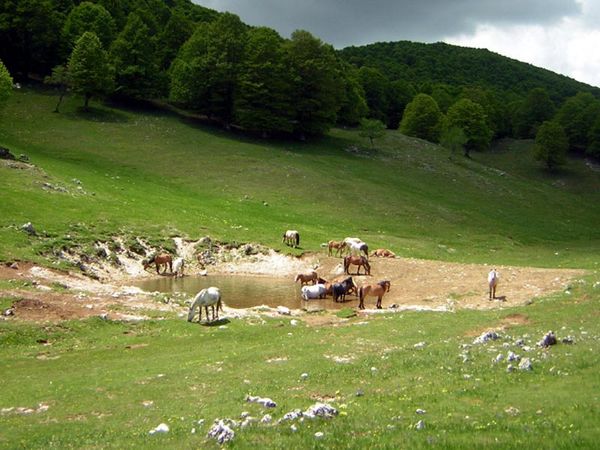
Travelers $TRV whose adrenaline needs outgrow the seven hills of Rome should head east to Monti Simbruini, one of Italy’s finest national parks and reachable in roughly one hour by car or bus. The park holds hundreds of kilometers of bike trails, walking routes, and historical landmarks, all accessible by public transport or private car, depending on a visitor’s preference.
Despite covering almost 300 square kilometers, the park remains genuinely easy to navigate, and small towns scattered along its boundaries serve as convenient reference points or rest stops for longer hiking itineraries. Rare species of flora and fauna reward patient observers throughout the park, and dramatic karst formations at sites such as Piano di Camposecco or Mola Vecchia make genuinely worthwhile picnic stops between longer stretches of hiking.
Subiaco, one of the larger towns within the park, is roughly 1 hour from central Rome by car and serves as a practical base for visitors planning to explore multiple trails in a single day. Local Cotral buses connect every town within the park directly to Rome, giving visitors without a car the flexibility to choose exactly where to start and end their hike.
Consulting the detailed trail map on the park’s official website before setting out helps visitors plan a route suited to their fitness level and available time, since the sheer size of Monti Simbruini can otherwise make planning feel genuinely overwhelming for first-time visitors unfamiliar with the terrain. Travelers planning a longer hike should download a trail map before losing cell signal, since coverage throughout much of the park’s more remote sections remains genuinely unreliable. Wolves have slowly returned to parts of the park in recent years, a genuine conservation success that rangers can discuss in detail for curious visitors. The town of Subiaco also holds two historic monasteries worth visiting on a rest day between longer hikes, adding a cultural stop to an otherwise nature-focused itinerary.
8. Orvieto crowns a cliff with Gothic cathedral art
T S / Unsplash
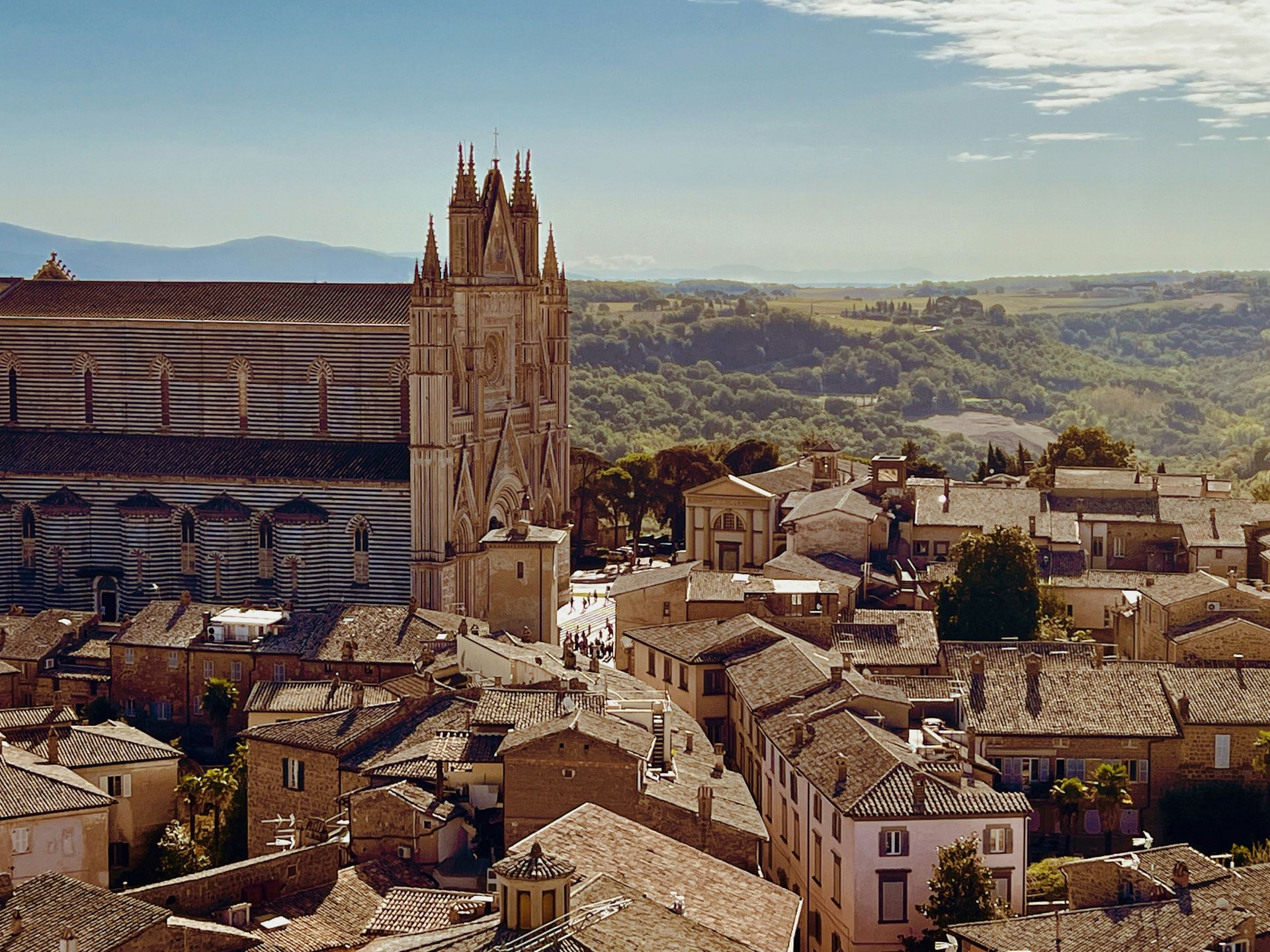
Sitting almost exactly midway between Rome and Florence, the cliff-top town of Orvieto makes a classic day trip for genuinely good reasons, reachable by train in about one hour and 15 minutes. Handsome medieval lanes reward unhurried exploration throughout the town, and fabulous restaurants, shopping, and panoramic views turn up in nearly every direction a visitor wanders.
What makes Orvieto such a singular destination, though, is its genuinely awe-inspiring cathedral, widely considered one of Italy’s great Gothic churches. The zebra-striped Duomo impresses both inside and out, featuring a mesmerizing facade alongside an astonishing fresco cycle by Luca Signorelli depicting the Giudizio Universale, or Last Judgment, in genuinely vivid detail across the chapel walls.
After visiting the Duomo, climbing the Torre del Moro rewards visitors with sweeping views over the surrounding countryside, while the Orvieto Underground tour leads through Etruscan caves carved almost entirely by hand from the soft tuff beneath the town. Booking ahead at I Sette Consoli, a tiny but genuinely excellent restaurant, secures one of its precious tables and access to a finely edited menu built around local dishes.
Regular trains from Rome Termini reach Orvieto in about an hour and 15 minutes, and drivers can find the town just off the main north-south A1 autostrada, making it accessible by either method depending on a traveler’s overall itinerary and preference for driving versus taking the train. Visitors touring the Orvieto Underground caves should book tickets in advance, since group sizes stay deliberately small to protect the fragile tuff stone passages. The town’s underground tunnels once served as air raid shelters during World War II, adding a layer of more recent history beneath the older Etruscan excavations. Visitors arriving by car should park in one of the lots below the historic center and take the funicular up, avoiding the town’s genuinely limited parking availability. The town’s ceramic workshops sell hand-painted pottery inspired by medieval designs, offering visitors a distinctive souvenir beyond what's found in typical tourist shops.
9. Florence packs Renaissance masterpieces into a single day
Jonathan Korner / Unsplash
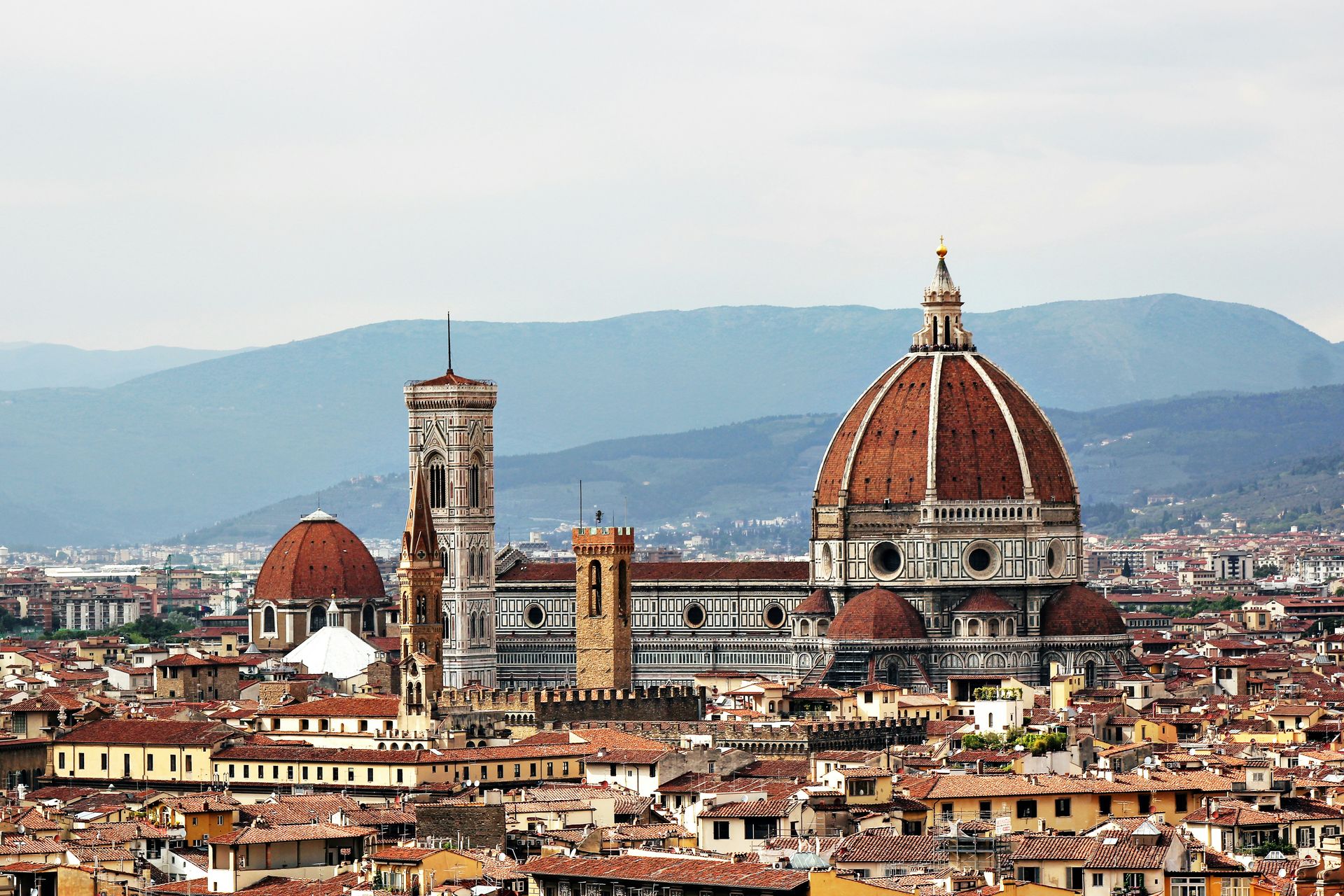
Florence sits close enough to Rome, roughly an hour and a half away by fast train, that visitors can realistically squeeze the city’s headline sights into a single focused day, especially with museum tickets pre-booked through Firenze Musei to skip the longest lines. From the train station, a short walk leads directly to Piazza del Duomo, home to a celebrated trio of sights: the Duomo itself, with its distinctive red-tiled dome, the Giotto-designed campanile, and the Battistero di San Giovanni.
Continuing onward to Piazza della Signoria brings visitors to Florence’s lavish town hall, Palazzo Vecchio, before reaching the Galleria degli Uffizi, where genuine Renaissance masterpieces fill gallery after gallery. Gilli, one of the city’s most historic cafes, offers a fitting lunch stop to refuel between these major sights without losing too much of the day to a sit-down meal.
Florence genuinely holds more than any single day could cover, so visitors should accept upfront that even a well-planned itinerary won’t reach everything the city offers, and prioritizing just these headline sights tends to deliver a considerably more satisfying experience than rushing between too many stops. Travelers $TRV specifically drawn to Renaissance art should treat the Uffizi as the day’s clear priority, budgeting enough time there before worrying about anything else on the itinerary.
Regular trains connect Rome Termini directly with Florence’s Stazione di Santa Maria Novella, making the round trip genuinely straightforward for visitors willing to commit to an early start and a correspondingly late return to Rome. Travelers hoping to see the Uffizi’s most famous works without an overwhelming crowd should book the earliest available entry slot, since the museum grows considerably busier by midmorning. Crossing the Ponte Vecchio near the end of the day rewards visitors with one of the city’s most photographed views back toward the Arno River at sunset. Visitors with any remaining time should also peek inside Santa Croce, the burial site of Michelangelo, Galileo, and Machiavelli, just a short walk from the Uffizi.
10. Castelli Romani feeds foodies porchetta and local wine
Credit: Italia.it
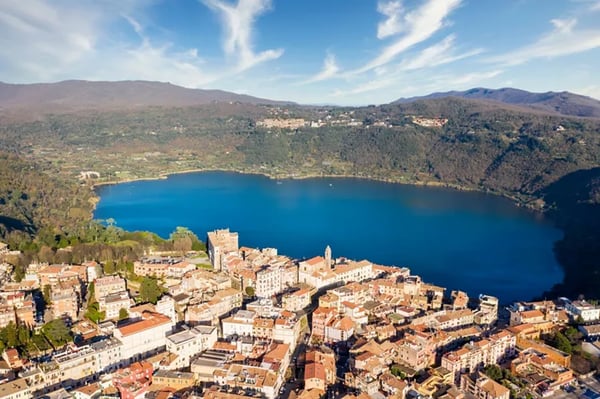
The Castelli Romani, a pretty pocket of vine-clad hills and volcanic lakes just south of Rome, makes a genuinely fabulous foodie day trip, reachable by train in roughly 30 to 45 minutes, depending on the destination. The area serves as the acknowledged headquarters for porchetta, a deboned suckling pig slathered in spices and fennel pollen before being roasted to a genuinely perfect, crackling finish.
Travelers $TRV heading toward the town of Ariccia on a Sunday should expect to see plenty of hungry Romans stopped along the roadside, waiting patiently for an appropriately overstuffed pork sandwich from one of the area’s roadside vendors. Frascati, one of the most accessible towns within the Castelli Romani, makes sampling this regional specialty especially easy, and Cantina Simonetti, one of several historic cellars scattered throughout town, pairs porchetta with genuinely excellent local white wine in a single satisfying stop.
Beyond the food itself, the Castelli Romani’s volcanic lakes and rolling, vine-covered hills give the region a genuinely scenic backdrop rarely associated with Rome’s immediate surroundings. Travelers specifically interested in wine should plan time for a proper tasting at one of the area’s cellars beyond simply pairing a glass with lunch.
Direct trains from Termini station reach Frascati in about 30 minutes, while Castel Gandolfo, on the Albano Laziale line, takes roughly 45 minutes by the same method. This straightforward rail access makes the Castelli Romani genuinely easy to combine with an otherwise relaxed, food-focused day away from the city. Travelers specifically visiting for wine should ask cellar staff about lesser-known local varietals beyond the region’s famous white blends, since several small producers rarely export their best bottles. Lake Albano and Lake Nemi both offer scenic detours between food stops, giving visitors a chance to walk off a heavy lunch along quiet volcanic crater shorelines. Genzano di Roma, another nearby town, hosts an annual flower festival each June that carpets its main street in elaborate floral designs.