
From Stonehenge's ancient stones to the Lake District's hiking trails and Brighton's Regency seafront, the best places to visit in England
Ming Jun Tan / Unsplash
England’s story, a small country with an outsized impact on the rest of the world, stretches back more than 5,000 years, and those layers of history show up everywhere a traveler goes. Wandering through historic urban centers, mysterious monoliths, misty landscapes, rugged coastlines, and national parks reveals a country packed with destinations made more compelling by the sheer number of people who have passed through them before, from Roman legions to Romantic poets.
A full year of travel still wouldn’t cover everything England offers, though the destinations below narrow the country down to a considerably more manageable shortlist. Most of these places connect easily by train, though booking ahead helps secure the best fares, and mixing in a road trip or two allows for deeper exploration of the countryside between major stops. Hiking has remained a national pastime for centuries, so packing proper walking shoes pays off across several of the destinations covered here.
The 10 places below appear in Lonely Planet, covering the best places to visit in England. They range from bustling capital city sightseeing to quiet rural villages and ancient monuments, giving travelers genuine range across history, architecture and landscape within a single, compact country. Train travel connects most of these destinations directly, though renting a car for at least part of the trip offers considerably more flexibility to explore smaller villages and rural stretches of countryside that stations rarely serve. Booking accommodations and popular attractions well ahead of arrival also pays off across nearly every entry on this list, since summer weekends throughout England draw considerable domestic and international demand alike, especially around major school holiday periods and the height of summer, when both domestic families and visitors traveling in from abroad compete for the same limited rooms.
-1920x1280.jpg)
Charles Postiaux / Unsplash
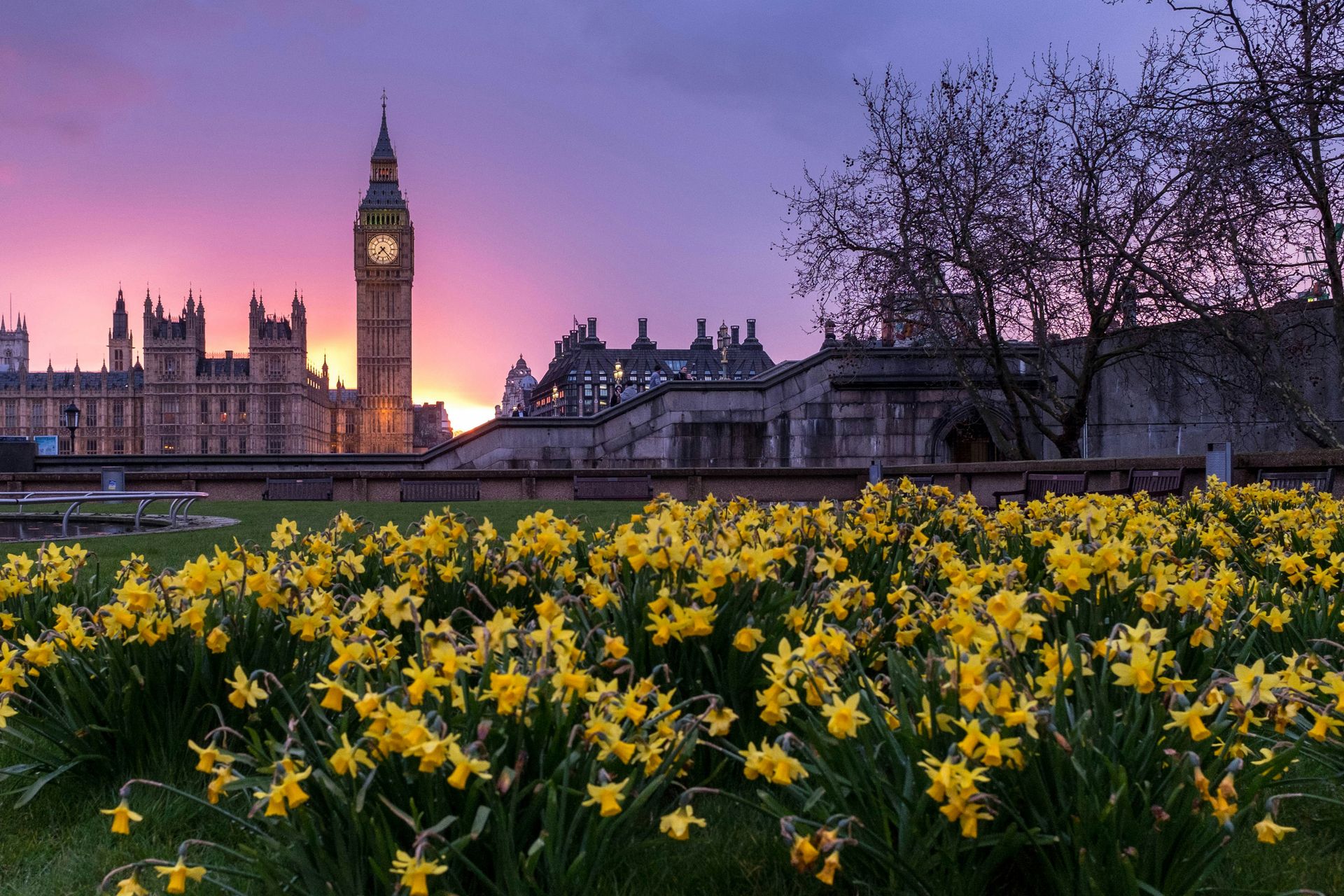
London holds considerable layers of history at every turn, and the city’s architecture reads like a beguiling biography, with internationally recognizable landmarks including the Tower of London, Westminster Abbey, Big Ben and St. Paul’s Cathedral. The city also functions as a tireless innovator in art and culture, home to world-class institutions such as the British Museum, the Natural History Museum, and the Science Museum, alongside world-leading galleries including the Tate Modern, Tate Britain, the National Gallery, and the National Portrait Gallery, all of which offer free admission.
Theater ranks among London’s essential experiences regardless of how a visitor budgets time and money elsewhere in the city. Big-name productions run on the West End, London’s equivalent of Broadway, while the South Bank hosts the National Theatre and the Old Vic. Smaller venues, from the Almeida to the Lyric Hammersmith, give theatergoers a genuine chance to discover emerging talent before it reaches the bigger stages.
This particular pairing of free-to-visit world-class museums and a notably thriving theater scene gives London real range for travelers hoping to fill several days without repeating an experience. The city’s considerable scale means even repeat visitors typically find something they hadn’t previously explored.
Travelers $TRV should plan theater bookings well ahead of a trip, since popular West End productions often sell out considerably faster than smaller fringe venues throughout the city. The city’s extensive public transport network, including the Underground and an extensive bus system, makes moving between distant museums and theater districts much more manageable in a single day. Travelers should buy theater tickets directly through official box offices when possible, since resale sites often charge considerable markups over face value for popular productions. A weekly transit pass often costs less than the combined cost of several individual fares purchased separately over a longer stay. A little upfront math often reveals real savings for longer visits covering several boroughs. Comparing weekly and daily options directly at the start of a trip settles the question quickly.
Jean-Luc Benazet / Unsplash
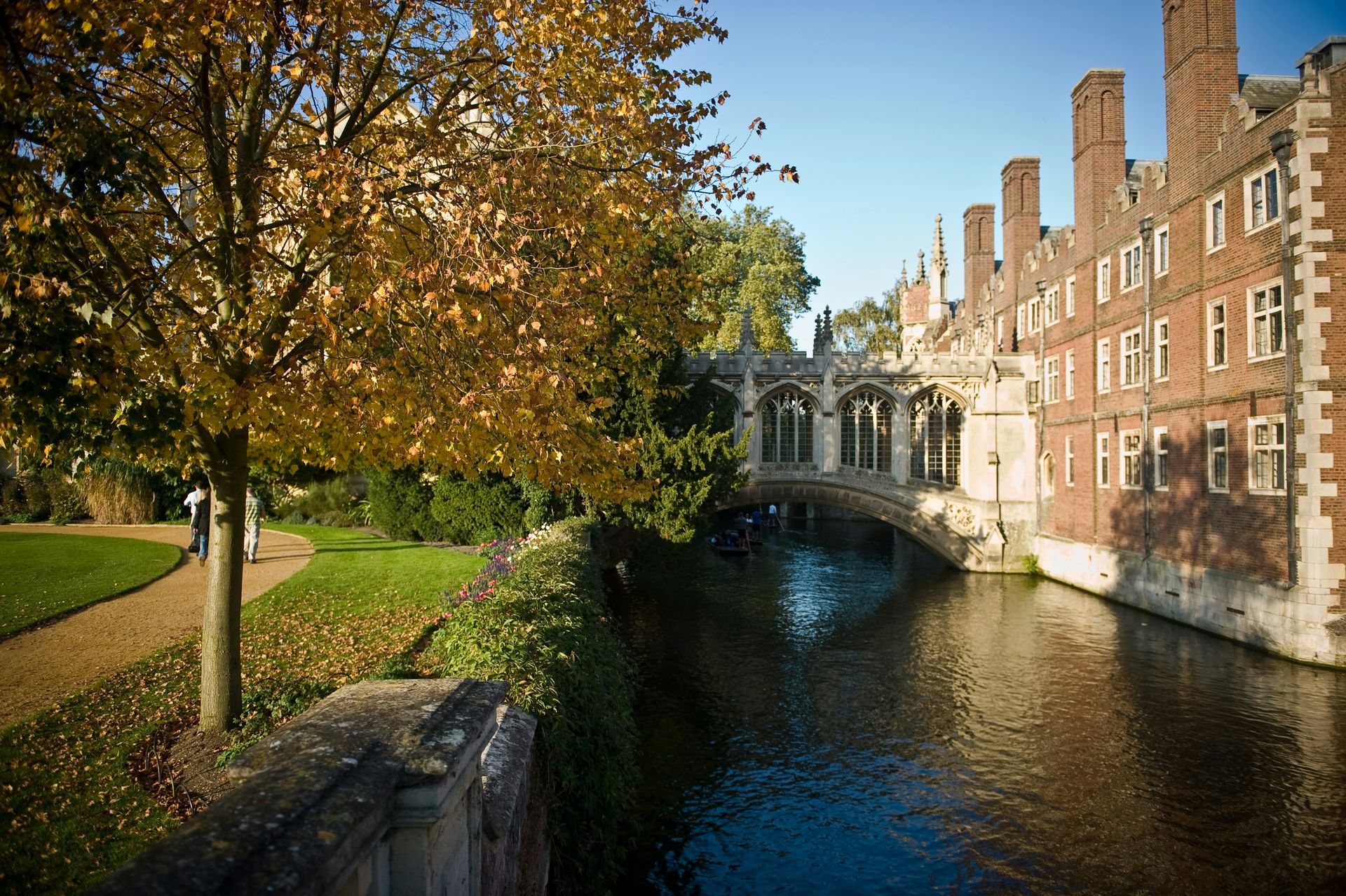
Cambridge, one of England’s great historic university cities, rewards visitors who tour a college and spend time marveling at the intricate vaulting inside King’s College Chapel. No trip to Cambridge is complete without attempting to punt a flat-bottomed boat along the River Cam past the Backs, the leafy green lawns stretching behind the city’s finest colleges, an experience that offers the best available views of the surrounding architecture.
Polishing off a day in Cambridge typically means a pint at one of the city’s many rustic pubs, giving visitors a relaxed way to unwind after an afternoon spent navigating the river. Cambridge sits just an hour by train from multiple London stations, and renting a bicycle upon arrival opens up considerable additional exploration beyond the historic center itself.
The city center holds well-marked cycle lanes, and excellent cycle paths extend into the surrounding countryside, giving cyclists genuine range beyond simply touring the colleges on foot. This particular pairing of punting, cycling and historic college architecture gives Cambridge real appeal for travelers hoping to combine gentle physical activity with considerable cultural sightseeing.
Travelers $TRV should book a punting slot ahead of peak summer weekends, since demand along the Backs can outpace available boats during the busiest tourist months. King’s College Chapel took more than a century to complete, spanning the reigns of several successive English monarchs before its elaborate fan vaulting was finally completed in the early sixteenth century. Travelers unfamiliar with steering a punt can instead hire a chauffeured option, letting an experienced local guide handle navigation while passengers enjoy the surrounding architecture. This particular option costs more upfront but removes any risk of an embarrassing collision along a busy stretch of river. Either way, the river itself remains the real highlight of an afternoon spent on the water. Groups celebrating a special occasion often favor the guided version for exactly this reason. Booking ahead during exam season also helps, since fewer boats operate while students focus on coursework.
-1920x1273.jpg)
Simon Hurry / Unsplash
Windsor Castle ranks as the world’s largest and oldest continuously occupied fortress, a majestic vision of battlements and towers along the River Thames. William the Conqueror commanded that an earth-and-timber fortress be built on the site following his successful invasion from France, and the castle was completed in 1080 before his great-grandson, Henry II, rebuilt it in stone by 1170.
Successive monarchs left their own mark on the castle over the centuries, including Charles II, who added baroque flourishes inspired by Louis XIV’s Versailles outside Paris. The castle now holds almost 1,000 rooms spanning architectural styles ranging from half-timbered fired brick to Gothic stone, and a 1992 fire that destroyed 115 rooms has since been fully rebuilt. The late Queen Elizabeth II lies buried in St. George’s Chapel alongside her husband, Prince Philip.
Weather permitting, a stroll through the grand parkland and gardens of Great Windsor Park next door rounds out a visit well beyond the castle’s own considerable interior. Travelers $TRV can reach Windsor by driving or by train from London Waterloo to Windsor & Eton station, a journey taking about an hour, and both Windsor and neighboring Eton, facing each other across the Thames, reward a bit of wandering on foot.
This particular pairing of nearly a millennium of continuous royal occupation and considerable architectural variety gives Windsor Castle real standing among England’s most historically layered single destinations. The castle’s State Apartments remain in active use for royal ceremonial functions today, giving Windsor a character considerably different from that of a purely historical monument frozen entirely in the past. Travelers should check the castle’s published opening calendar before visiting, since certain state apartments occasionally close to the public during official royal engagements. Checking the calendar even a day or two ahead of a visit avoids arriving to find a key room temporarily off-limits. A quick check online the morning of a visit usually confirms whether everything remains open as planned. This small step avoids real disappointment for visitors who traveled a considerable distance mainly to see a particular room.
Ben Guerin / Unsplash
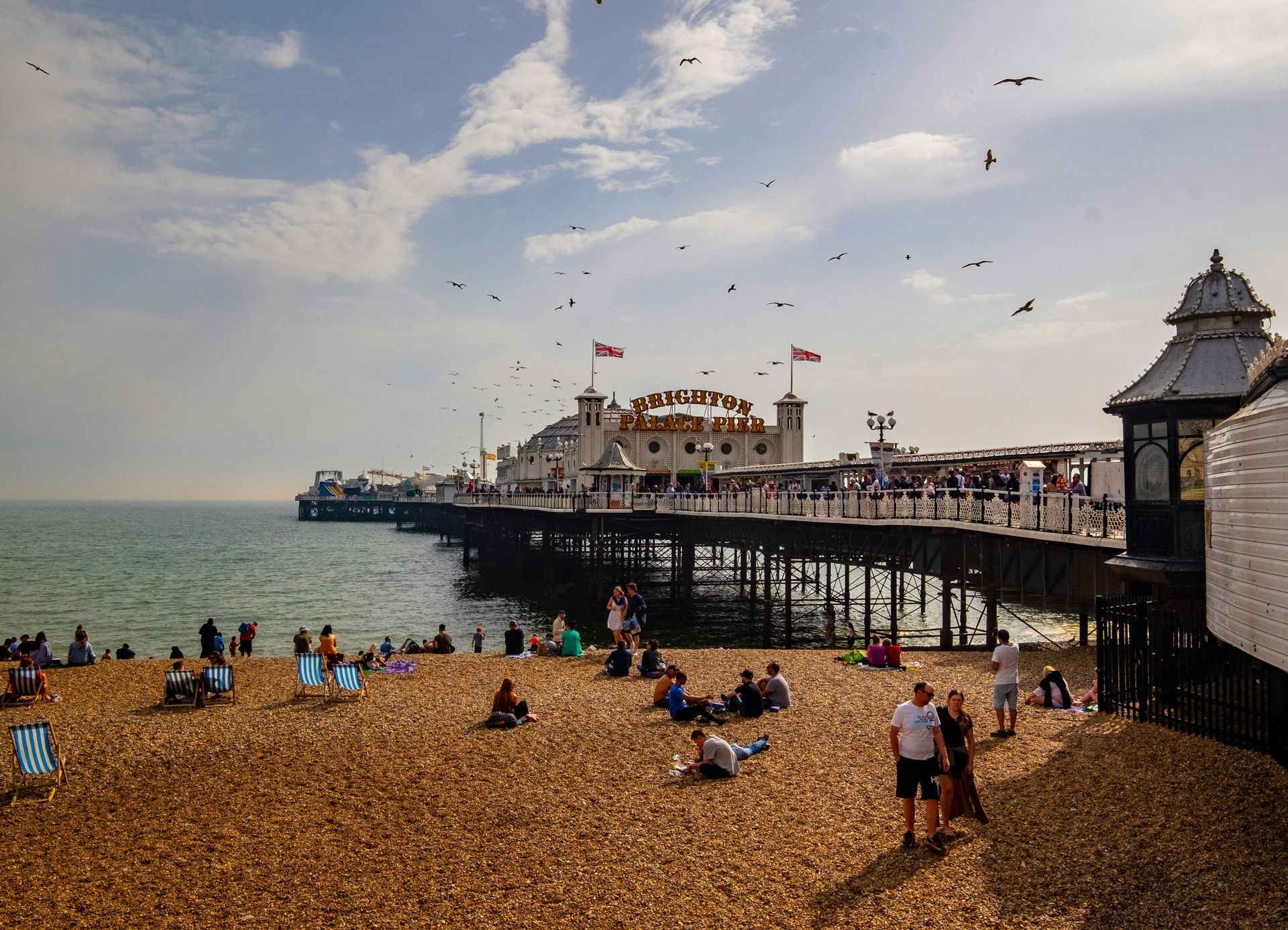
Barely an hour’s train ride from London, the seaside city of Brighton holds a quirky character entirely its own, with Palace Pier stretching out into the English Channel along England’s pebbly south coast. The warren of streets known as the Lanes offers a genuine way to soak up the city’s oddball, alternative atmosphere, holding vegan cafés, espresso bars, chaotic pubs, record stores and bric-a-brac shops, including the beloved local institution Snooper’s Paradise.
Brighton also holds the UK’s biggest queer scene alongside some of the region’s best small clubs, giving the city considerable standing as an LGBTQ-friendly destination well beyond London itself. The sightseeing highlight for most visitors remains the Royal Pavilion, a nineteenth-century party palace built by the Prince Regent, whose personal taste for the outlandish helped establish Brighton’s enduring reputation.
This particular blend of alternative culture, considerable nightlife and a distinctly eccentric royal landmark gives Brighton real range for travelers hoping to combine beach time with a livelier evening scene than a typical English seaside town offers. The city’s compact size makes exploring the Lanes and the seafront manageable within a single day trip from the capital.
Travelers $TRV should visit Snooper’s Paradise with genuine time to spare, since the shop’s considerable inventory rewards slow browsing instead of a quick pass-through. The Royal Pavilion’s considerable Indo-Saracenic architecture, unusual for an English royal building, reflects the Prince Regent’s genuine fascination with exotic design trends popular during his own era. Travelers should visit the Lanes on a weekday morning for a considerably quieter browsing experience, since weekend afternoons draw crowds from across the wider region. Arriving before most shops fully open still rewards early risers with a noticeably different, quieter version of the same neighborhood. Cafés along the way also tend to be less busy, making a relaxed breakfast easier to enjoy. A weekday visit generally means shorter lines at the Royal Pavilion too, leaving more time for the Lanes. This small scheduling choice adds up to a noticeably calmer day overall.
Heather Wang / Unsplash
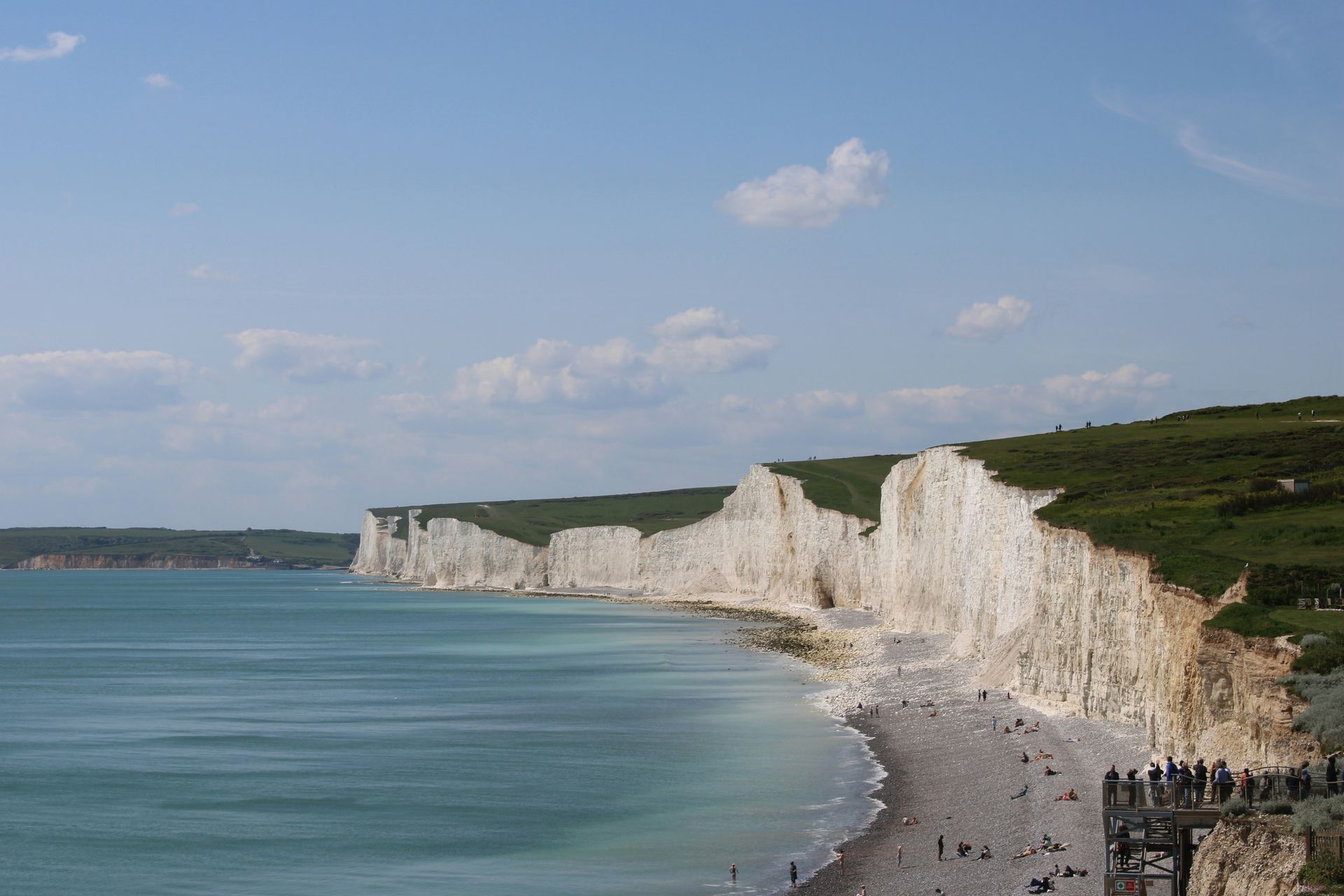
Dover’s iconic white cliffs draw the most attention nationally. Still, the colossal chalky walls of the Seven Sisters offer a considerably more spectacular experience, a four-mile roller-coaster of sheer white rock stretching along the Sussex shore above the English Channel. The formation creates an impressive southern border for the South Downs National Park, reaching its most dramatic point at the towering headland of Beachy Head.
Hiking through the grassy cliff-top fields delivers wide sea views that prove breathtaking in every sense, both for the scenery itself and for the considerably strenuous terrain underfoot. Travelers $TRV should stop for a breather at the tiny seaside hamlet of Birling Gap $GPS, where a secluded beach functions as a genuine sun trap popular with both locals and passing walkers.
This particular pairing of dramatic chalk cliffs and considerable coastal hiking terrain gives the Seven Sisters real standing among England’s most photogenic stretches of coastline. The relative lack of crowds compared with Dover gives hikers here a noticeably quieter experience despite the comparable natural drama.
Travelers should check tide and weather conditions before setting out, since the cliff-top paths can become considerably hazardous in high winds or heavy rain, given the exposure along much of the route. Erosion continues to gradually reshape the cliff faces, and geologists estimate that the coastline retreats a small but measurable distance in most years, giving the formation a distinctly dynamic, ever-changing character. Travelers should stay well back from the cliff edges throughout the hike, since the chalk surface can crumble unpredictably and has caused serious accidents in the past. The terrain shifts unpredictably close to the cliff edges, so keeping dogs and children within arm’s reach throughout the walk pays off. A short leash and a firm hand near the edges make the whole walk considerably safer for everyone involved. Checking the forecast the night before also helps, since fog can roll in quickly along this stretch of coast. A short delay costs little and considerably improves both safety and the quality of the views.

Paul Cuoco / Unsplash
Bath stands out as the belle of the ball in a nation already packed with pretty cities. Romans founded the spa resort of Aquae Sulis here to take advantage of the area’s hot springs, and Bath hit its stride again in the eighteenth century, when industrialist Ralph Allen and architects John Wood the Elder and John Wood the Younger oversaw the city’s transformation into a model of refined Georgian architecture.
Golden stone townhouses, sweeping green crescents and Palladian mansions fill the city today, alongside appealing pubs and restaurants scattered throughout the historic core. Visitors can’t actually bathe in the ancient Roman Baths themselves. However, the nearby Thermae Spa complex offers a genuine way to experience the city’s celebrated healing waters, either through a prebooked two-hour session or a first-come, first-served walk-in slot.
This particular pairing of Roman-era origins and considerable Georgian architectural refinement gives Bath real standing as one of England’s most historically layered cities, all within a single compact, walkable center. The spa tradition connecting both eras gives visitors a real, tangible link between ancient and more recent history.
Travelers $TRV should book Thermae Spa sessions well in advance during peak tourist season, since walk-in availability can be highly unpredictable once demand climbs in the busier summer months. UNESCO recognized Bath as a World Heritage Site in 1987, citing both its considerable Roman archaeological remains and its exceptional preservation of eighteenth-century urban planning throughout the city center. Travelers should also budget time for the Jane Austen Centre, since the author lived in Bath for several years and drew considerable inspiration from the city’s social scene. The museum occupies a genuine Georgian townhouse, similar to those the author herself would have visited during her time in the city. Fans of her novels will recognize several streets and buildings mentioned directly within the exhibits themselves. The overlap between Austen’s actual residence and her fictional settings gives the museum considerable appeal for devoted readers.

Qingqing Cai / Unsplash
Oxford lets visitors feel close to the brilliant minds and storied institutions that have made the city famous worldwide. This rarefied world comes alive in cobbled lanes and ancient quads where cycling students and eccentric academics still roam freely. The city’s beautiful college buildings and stunning architecture have changed remarkably little over the centuries, coexisting comfortably alongside a lively, modern, working city built up around them.
As befits a city built around students and professors, Oxford ranks among the last great bastions of the traditional British pub, with irresistible old watering holes scattered throughout its central lanes and alleyways. Travelers $TRV can easily explore Oxford on a day trip from London, either by a 50-minute train from Paddington or, for a more budget-friendly option, the low-cost Oxford Tube bus service connecting the two cities directly.
This particular pairing of living academic tradition and considerable historic pub culture gives Oxford real range for travelers hoping to combine sightseeing with a notably relaxed evening atmosphere. The city rewards slow wandering considerably more than a rushed checklist approach to its main landmarks.
Travelers should book college tours ahead where possible, since several colleges restrict visitor access during active term time and specific examination periods throughout the academic year. Oxford’s collegiate system, dividing the university into dozens of semi-independent colleges, gives the city a considerably different academic structure from that of most other universities worldwide. Travelers hoping to see a specific college’s chapel or library should check the visiting hours for each college in advance, since access policies vary considerably from one college to the next. Some colleges also charge a small entry fee during peak tourist months, a detail worth confirming before planning a full day of college-hopping. Bringing a small amount of cash covers this fee without needing to find a card reader. Checking each college’s specific fee policy beforehand avoids any last-minute surprises partway through a day of visits. Term dates vary slightly from year to year, so a quick search before the trip helps confirm current access windows.
-1920x1280.jpg)
George Ciobra / Unsplash
The Cotswolds spread across six English counties, a tangle of impossibly quaint villages built from rose-clad cottages and honey-colored stone. Officially designated an Area of Outstanding Natural Beauty, the region’s most wonderful quality lies in how reliably a traveler ends up somewhere charming regardless of how lost they get, typically finding a village green, a pub with sloping floors and fine ales, and a view of lush green hills waiting nearby.
Long-distance trails crisscross the region, including the 102-mile Cotswold Way, and these gentle yet dramatic hills suit walking, cycling and horse-riding equally well throughout the year. The Cotswolds also hold a considerable concentration of the country’s best boutique hotels, making the region considerably well suited to a multiday stay instead of simply a quick day trip from a nearby city.
Hiring a car considerably simplifies getting around the Cotswolds, since public transport between the smaller villages tends to run less frequently than in better-connected English cities. This particular pairing of quaint villages, considerable trail access and notably comfortable accommodations gives the Cotswolds real appeal for travelers hoping to slow down after visiting busier urban destinations elsewhere on a broader England itinerary.
Travelers $TRV should plan several days in the region instead of a single rushed day, since the Cotswolds reward unhurried wandering considerably more than a tightly scheduled checklist of village stops. The region’s distinctive golden limestone, quarried locally for centuries, gives Cotswold buildings their considerable visual consistency, a shared architectural material that unifies villages spread across six separate counties. Travelers should visit smaller, less-photographed villages alongside famous stops such as Bibury, since quieter settlements often deliver the same charm without the considerable crowds. Asking a local guesthouse owner for a personal recommendation often turns up a hidden favorite that guidebooks rarely mention. Staying a night or two in one of these smaller villages also gives a considerably different feel than a quick drive-through visit. Booking accommodations well ahead of weekends also helps, since the most charming inns tend to fill first.
Ana Paula Grimaldi / Unsplash
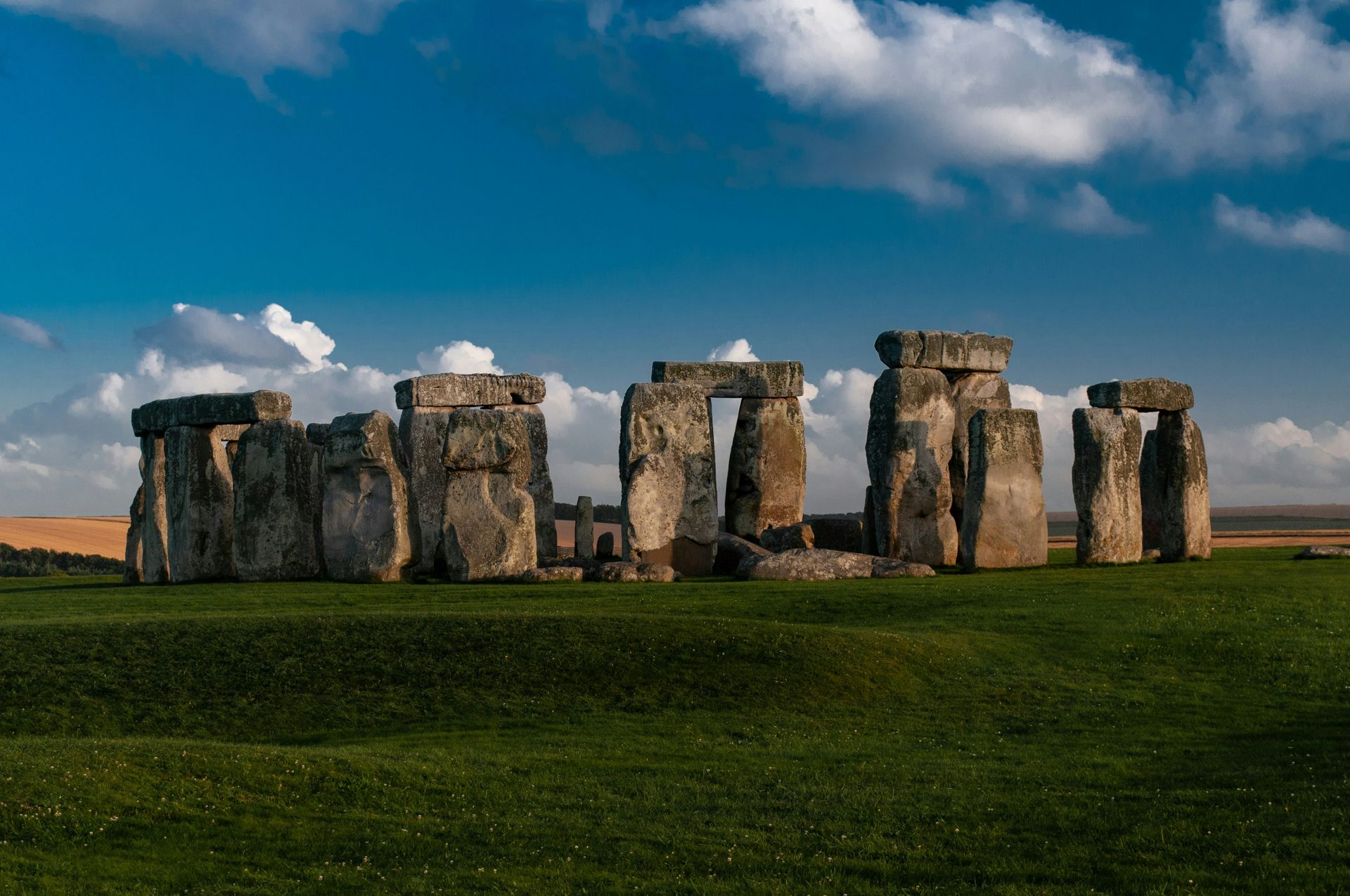
Stonehenge ranks as England’s most famous ancient site, a mysterious and compelling ring of boulders that has drawn visitors for more than 5,000 years. Yet, no one fully understands why it was originally built. An ultramodern makeover near the site brought an impressive visitor center alongside the closure of an intrusive nearby road, since restored to grassland, giving the monument a considerably stronger sense of historical context and returning genuine dignity and mystery to the archaeological site.
Most visitors view the roughly 25-ton stones from behind a low fence surrounding the monument. However, travelers willing to plan can arrange an early-morning or evening tour granting access to the inner ring itself. Standing among the stones in slanting sunlight, away from the daytime crowds, creates a distinctly ethereal experience that tends to stay with visitors long after they leave.
This particular pairing of ancient mystery and considerable modern visitor infrastructure gives Stonehenge real standing as one of England’s most improved historic sites in recent decades. The contrast between the monument’s ancient origins and its thoughtfully considered modern presentation gives visitors a real appreciation for how thoroughly the site has been reimagined.
Travelers $TRV should book inner-ring access well in advance, since these time slots remain limited and demand consistently outpaces the small number of tours offered each week. Researchers have proposed numerous theories over the decades, ranging from an ancient astronomical calendar to a burial site. However, no single explanation has earned universal acceptance among archaeologists studying the monument. Travelers should also visit nearby Woodhenge and Durrington Walls, since these lesser-known Neolithic sites sit within a short drive and offer considerable additional context for the broader prehistoric landscape. Combining all three sites into a single day trip gives history-focused travelers a considerably fuller picture of the region’s ancient landscape. Renting a car for the day makes it considerably easier to reach all three sites than relying on public transport alone. Packing a picnic lunch also makes sense, since dining options near these smaller sites stay considerably more limited than at Stonehenge itself.
-1920x1280.jpg)
Christopher Eden / Unsplash
Stratford-upon-Avon, the pretty town where William Shakespeare was born and later died, holds a tight knot of Tudor streets forming a living map of the playwright’s life. Huge crowds of thespians and theater lovers arrive to take in a play at the famous Royal Shakespeare Theatre, and devoted fans can visit five historic houses owned by Shakespeare and his relatives alongside the schoolroom where he was educated, before a respectful detour to the old stone church where he was laid to rest.
Fans of recent Shakespeare-adjacent films should note that some related filming locations sit considerably further afield in neighboring Herefordshire, including a heritage-listed Jacobean farmhouse tied to parts of the playwright’s broader story. This particular geographic spread means a truly comprehensive Shakespeare pilgrimage sometimes extends beyond Stratford’s own town limits.
This particular pairing of Shakespeare’s actual birthplace, his final resting place and a notably active working theater gives Stratford-upon-Avon real standing as one of England’s most concentrated single-subject historical destinations. Few English towns pack this much biographical detail about one figure into such a compact, walkable center.
Travelers $TRV should book Royal Shakespeare Theatre tickets well ahead of a visit, since popular productions during peak tourist season sell out considerably faster than the town’s other historic attractions. The Royal Shakespeare Theatre’s current building, completed in 1932 after a fire destroyed its Victorian predecessor, continues staging productions of Shakespeare’s plays alongside contemporary works throughout the year. Travelers should book a combined ticket covering all five Shakespeare family houses, since purchasing entry separately at each site typically costs considerably more overall. This particular ticket also typically includes access to the gardens surrounding each property, rounding out a full day of Shakespeare-related sightseeing. Travelers should also reserve a specific performance date well ahead of arrival, since the Royal Shakespeare Company’s most popular shows routinely sell out several weeks in advance during the busy summer tourist season across the entire surrounding region and county.