From a Parisian cabaret that rivals Moulin Rouge, to quiet garden spaces, the best places to visit near Champs-Élysées
Daniela Paola Alchapar / Unsplash
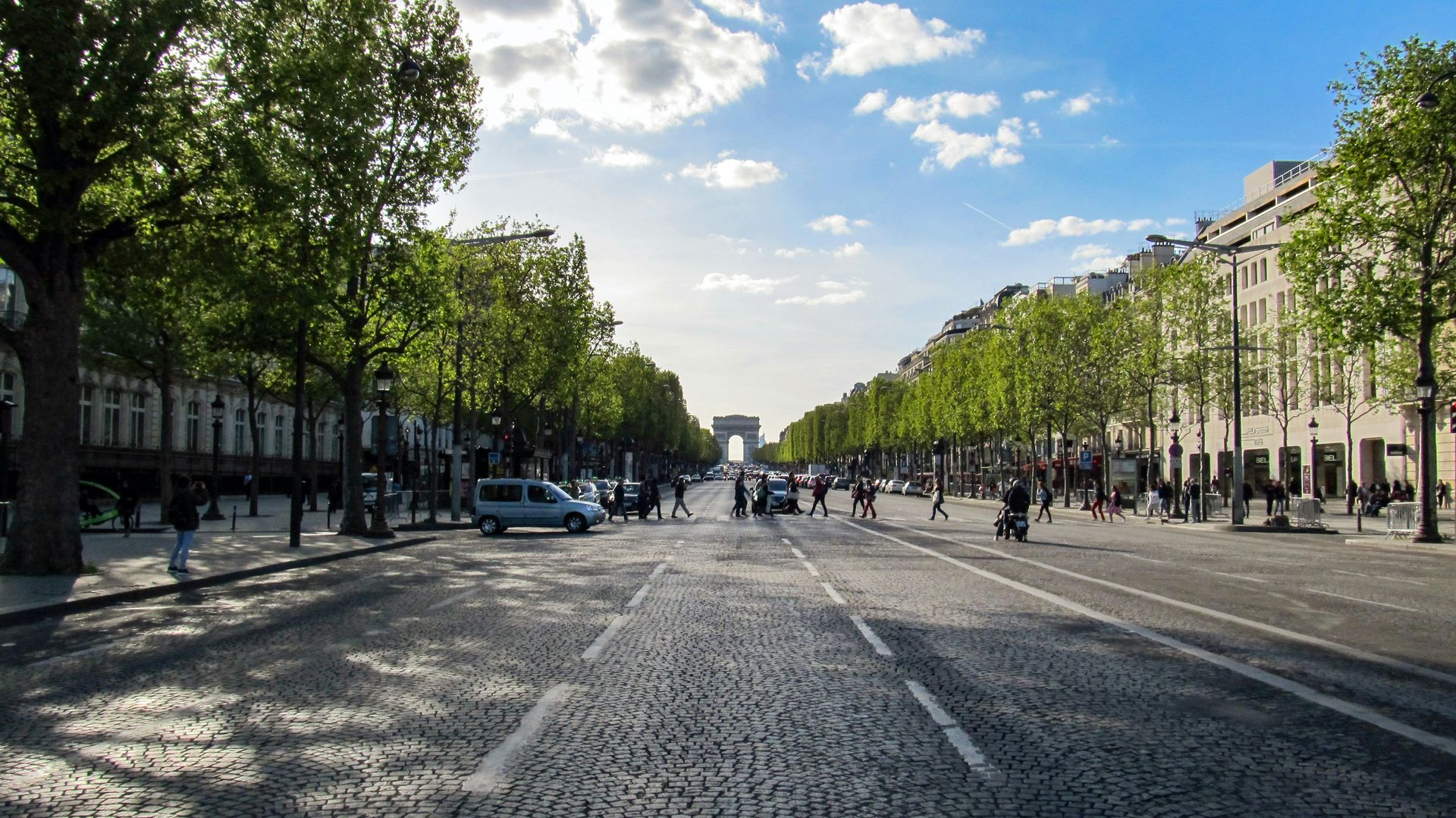
The Champs-Élysées itself has a complicated reputation among people who know Paris well. The avenue remains one of the city’s most famous addresses, and the views from either end, toward the Arc de Triomphe from Place de la Concorde and the reverse, are genuinely magnificent. But the avenue’s cafés are famously overpriced, luxury brands compete for space with mass-market chains, and the experience of walking its length can feel more like navigating a tourist processing corridor than discovering a city. The good news is that the area around it contains some of the most rewarding things to do in central Paris, and most of them sit within a few minutes’ walk of the avenue’s overpriced terraces.
Fashion museums, glamorous hotel bars, secret garden terraces, a genuinely extraordinary cabaret, and one of Paris’s most underrated historical monuments are all within easy reach. The Champs-Élysées neighborhood is one of the most expensive parts of the city to eat and drink in, but several of the best experiences here cost less than a main course at one of the avenue’s restaurants, and some are free.
The five experiences below appear in Lonely Planet, covering the best places to visit in and around the Champs-Élysées. The area’s reputation for expense is largely deserved, but most of the experiences on this list are accessible at costs well below the area’s restaurant prices, and several are free or charge a fixed admission comparable to that of any major Paris museum. The neighborhood is served by several metro lines, with Charles de Gaulle-Étoile, George V, and Franklin D. Roosevelt providing convenient access to different parts of the area, making navigating between experiences here straightforward without requiring surface transport. The 8th arrondissement is genuinely walkable at its core, and the distance from the Arc de Triomphe to the Jardin des Champs-Élysées to the Musée d’Art Moderne near the Seine is short enough to cover on foot in a single morning without feeling rushed.
Credit: Palais Galliera
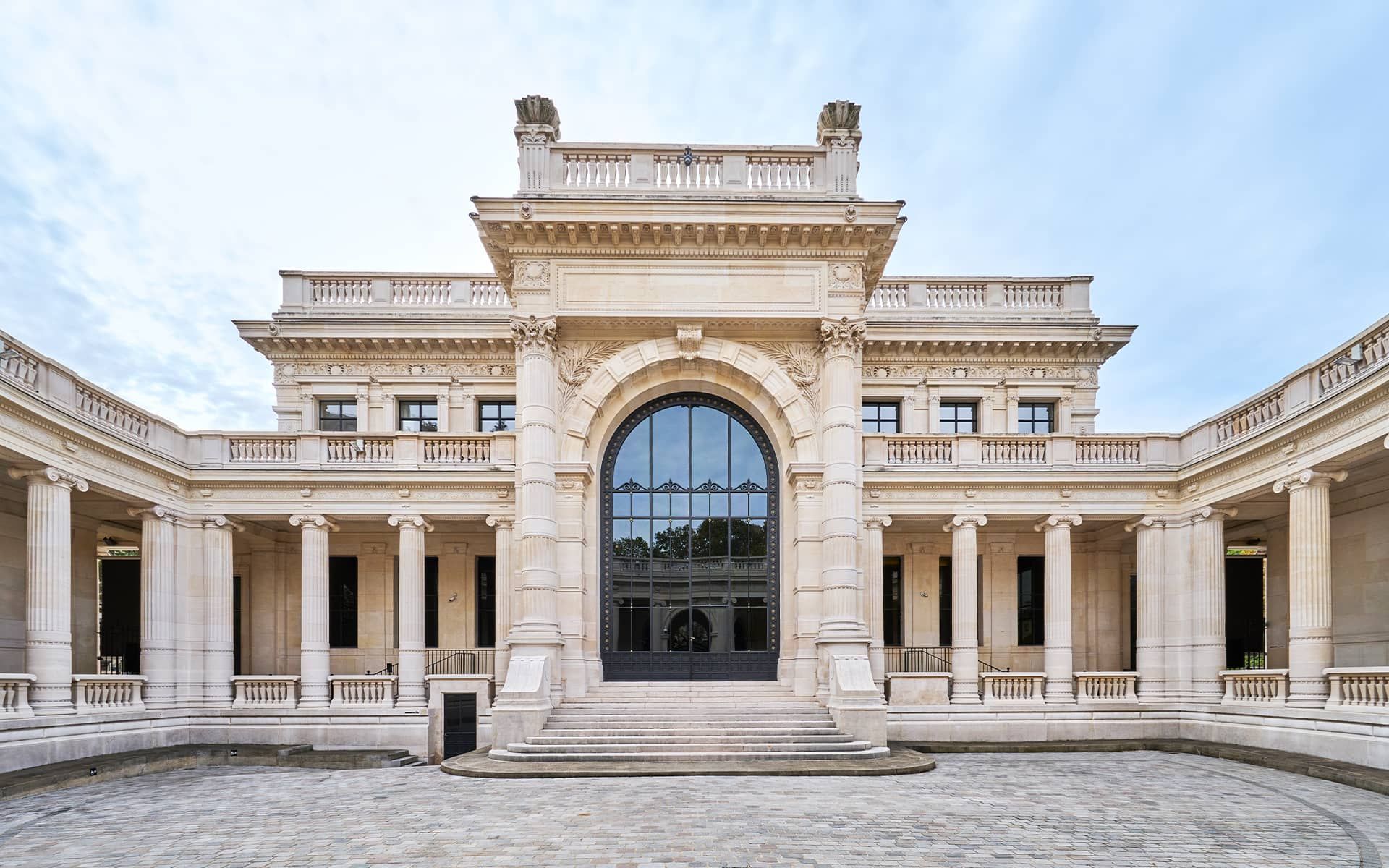
Two museums within a short walk of the avenue cover different dimensions of Paris’s most significant cultural export. Palais Galliera holds approximately 30,000 pieces of clothing and rotates them through carefully curated exhibitions designed to conserve fragile fabrics while offering new material for repeat visitors. The focus is specific and intellectually serious: technique, handmade construction, and the social history embedded in clothing across different eras and classes. Admission is €14, and the museum has an app with guided tours for visitors who want structured context alongside the objects.
La Galerie Dior at 30 avenue Montaigne occupies the former location of Dior’s original fashion house, a detail that gives the exhibition space an almost documentary authority. The presentation is theatrical in a way that suits the subject: a spectacular spiral staircase displays miniature versions of Dior’s most celebrated creations arranged in a gradation of color, and the overall effect is closer to a fairytale installation than a conventional museum layout. The museum draws large crowds, so advance booking is worth considering for visitors who want to avoid queues.
Together, the two museums provide a complete arc of Parisian fashion history: Palais Galliera, with the analytical breadth of a major civic collection; La Galerie Dior, with the focused intensity of a house archive made spectacular. Neither requires a full afternoon, and visiting both on the same day is practical given their proximity. The wider avenue Montaigne, where La Galerie Dior sits, is home to a concentration of haute couture ateliers and showrooms that makes the street itself worth walking, even without entering any of the buildings. The architectural variety along the avenue reflects different moments in French fashion’s international ascendancy, and the storefronts function as a kind of outdoor fashion museum. Palais Galliera’s historical depth, alongside La Galerie Dior’s spectacular presentation, covers both the scholarly and the theatrical dimensions of French fashion in a way that makes the pairing particularly rewarding than either museum alone.
Credit: Jenny Restaurant
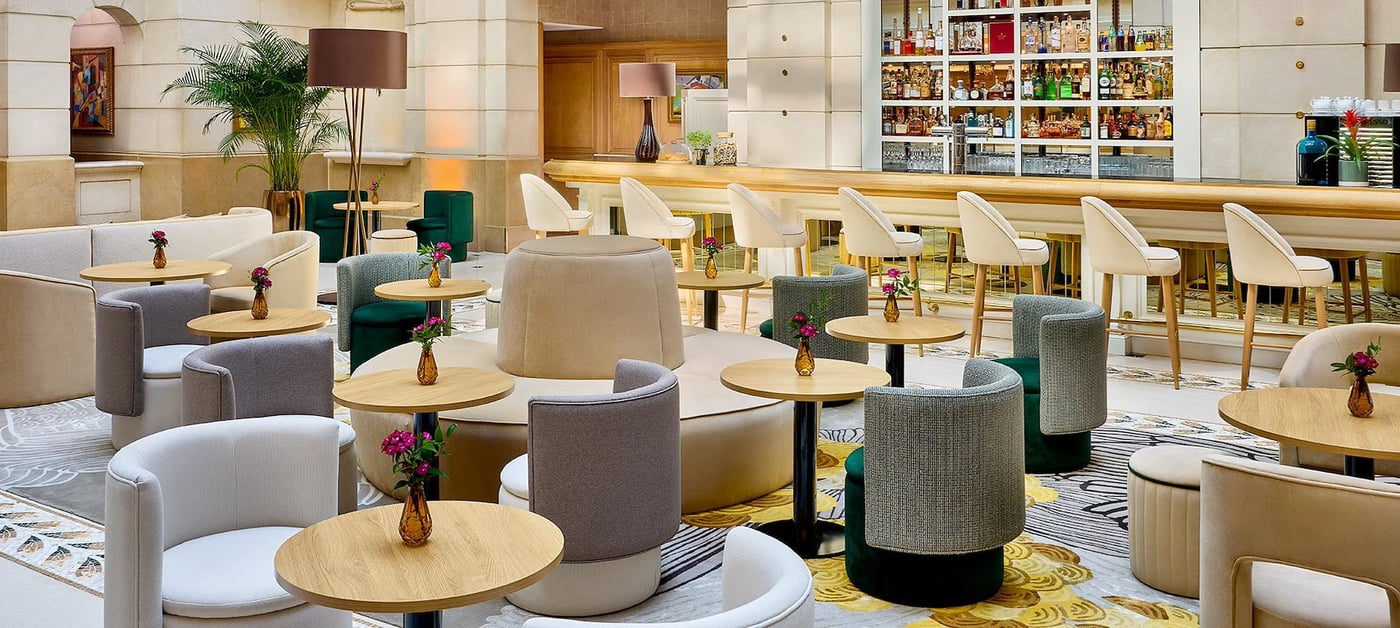
One step off the Champs-Élysées, in what was formerly the flagship Louis Vuitton store, the Paris Marriott $MAR Champs Élysées Hotel now occupies the grandest building directly on the avenue. Jenny’s Bar sits inside a glass atrium that replicates the architectural grandeur of the avenue without the weather or the crowds. Anyone can stop in for a cocktail or afternoon tea: this is not a hotel bar that enforces guest-only access, and the atrium’s design makes it one of the more genuinely impressive interior spaces in this part of Paris.
The atrium works particularly well during the hours when rain or cold makes the outdoor terrace culture of Paris temporarily impractical, which happens often enough that knowing about it is specifically useful. The cocktail prices reflect the address, but they’re competitive with what the avenue’s own cafés charge for coffee and a view, and the setting is considerably more comfortable.
Rooms overlooking the avenue start at roughly €1,200 per night, which positions the hotel well out of most budgets, but the bar is open to the public and offers the same architectural experience for the cost of a drink. The building’s history as a luxury retail flagship, visible in its proportions and ornamental detail, makes the stop worth taking regardless of budget. The hotel’s position on the avenue means it serves as a useful reference point for the neighborhood’s geography, and the 20-minute walking radius from the entrance covers most of the experiences on this list. The bar is genuinely accessible to anyone who walks in, and the staff treats walk-in guests with the same service standard they apply to hotel residents. The afternoon tea service at Jenny’s Bar follows the traditional format, with a selection of pastries and sandwiches alongside the tea program, and the setting makes it a significantly more atmospheric experience than most dedicated tea rooms in this part of Paris offer. The cocktail program at Jenny’s Bar draws on the same luxury positioning as the hotel’s overall identity, and the menu reflects the concentration of upscale bars in the surrounding neighborhood without the access limitations that most comparable hotel bars impose on non-guests.
ian kelsall / Unsplash
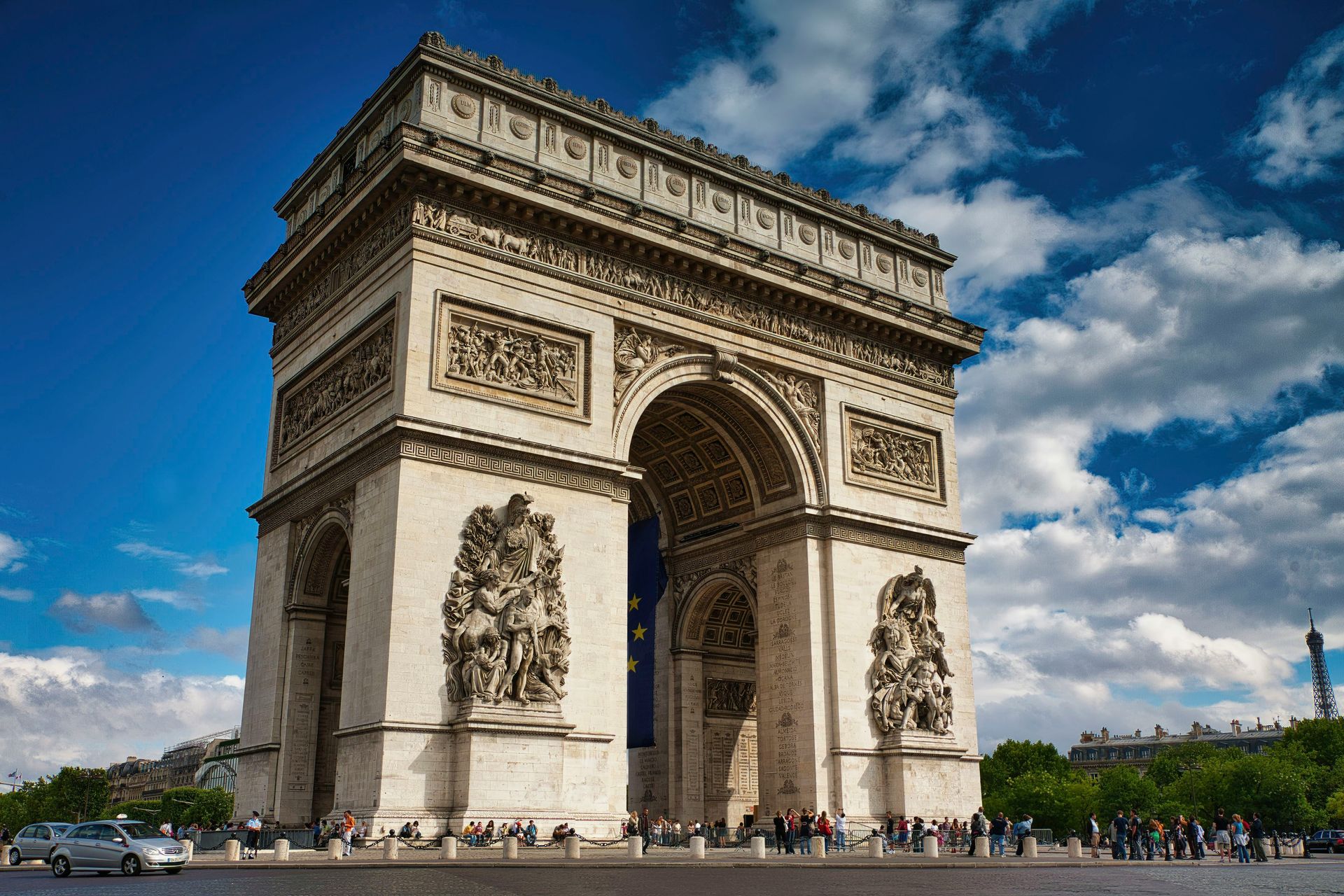
The Arc de Triomphe is visible from almost everywhere in the surrounding neighborhood, and most visitors see it from the street and move on. Climbing its 284 steps to the observation terrace at the top produces a view that changes everything about how the 8th arrondissement makes geographic sense. The 12 avenues that radiate from the monument are fully visible from above in a way no street-level perspective can convey, and the Paris skyline extends in all directions, with the Eiffel Tower, Sacré-Cœur, and the La Défense towers all visible simultaneously on clear days.
The interior exhibition on the monument’s history and its place within a global tradition of triumphal arches is worth more time than most visitors give it. The sculptural detail on the exterior columns, including the famous Marseillaise relief by François Rude, is visible up close during the ascent in a way that street-level viewing never allows. General admission is €22, and EU residents under 26 enter free.
Attending at 6:30 p.m. adds a specific experience beyond the view: the Flame of Remembrance at the Tomb of the Unknown Soldier is rekindled each evening at that time in a ceremony that has continued since 1923. The ceremony is brief, dignified, and attended by a small group compared to the monument’s overall visitor numbers, making the evening visit one of the less crowded windows for the climb as well. The Arc de Triomphe sits at the center of Place Charles de Gaulle, surrounded by 12 lanes of roundabout traffic that most visitors observe from a distance. The underground passage that connects the pavement to the monument’s entrance eliminates the need to cross the traffic, which is worth knowing before attempting to reach the base on foot. The view from the summit includes the Grande Arche de la Défense on the western axis, which aligns precisely with the Louvre’s Cour Carrée on the eastern axis in the grand urban planning vision known as the Voie Triomphale. Standing at the Arc de Triomphe and looking both ways makes the full scale of that planning ambition visible in a way that no map or photograph communicates.
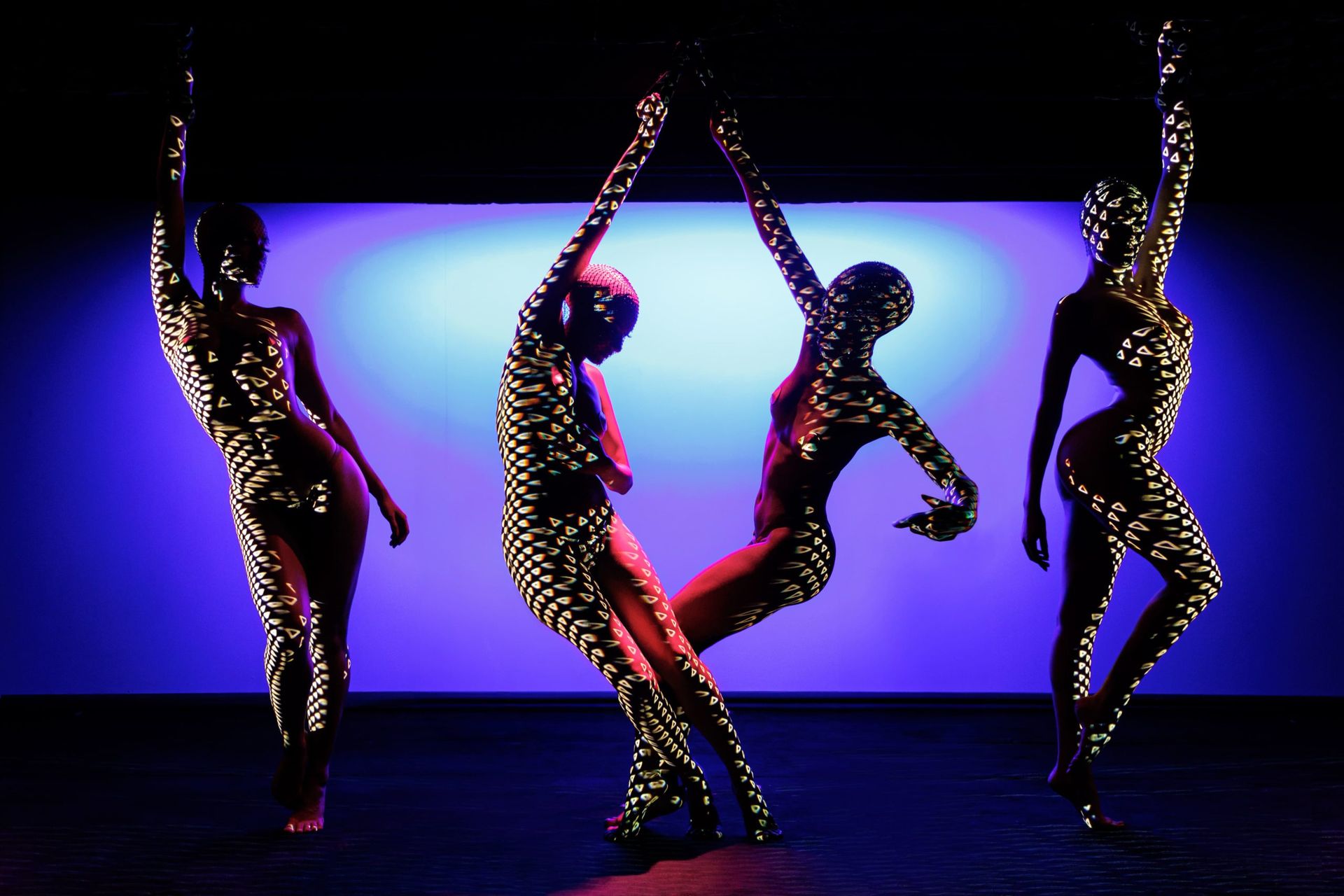
Credit: Crazy Horse
Le Crazy Horse has a distinct identity that sets it apart from the more famous Moulin Rouge and from the broader category of Parisian cabaret entertainment. The Lonely Planet writer, having now seen both, recommends Le Crazy Horse as the more inventive and rewarding experience: the Moulin Rouge trades heavily on its historical fame, while Le Crazy Horse uses lighting as its primary creative tool, building a show around the rhythm and physical precision of world-class dancers in a format that is simultaneously more theatrical and more contemporary.
The performance is a mix of burlesque and cabaret that leans into color, movement, and technical innovation, making it genuinely surprising throughout. The atmosphere inside the venue is less refined elegance and more deliberately riotous, which is the point: this is the Champs-Élysées neighborhood after dark, showing a different register from the daytime fashion museum and garden terrace experience. Tickets start at €119.
The location, close to the Seine and the Musée d’Art Moderne, puts Le Crazy Horse in a part of the neighborhood that is worth exploring before the evening performance. The street-level approach to the venue, on a quiet side street near the river, gives no hint of what’s inside, which is a specific quality of the Parisian cabaret experience worth preserving by arriving without too much advance research. Booking tickets in advance is genuinely necessary for Le Crazy Horse, since the venue has limited capacity and popular shows sell out. The ticket price includes entry to the show and a drink, with dinner packages available for visitors who want to dine at the venue. The performance schedule typically runs multiple nights per week with several shows on busier evenings. The venue is on a side street off Avenue George V, within easy walking distance of the Seine and several restaurants in the area, which makes combining dinner in the neighborhood with a late performance a practical evening structure that ends close to the river.
Moonik / Wikimedia Commons (CC BY-SA 3.0)
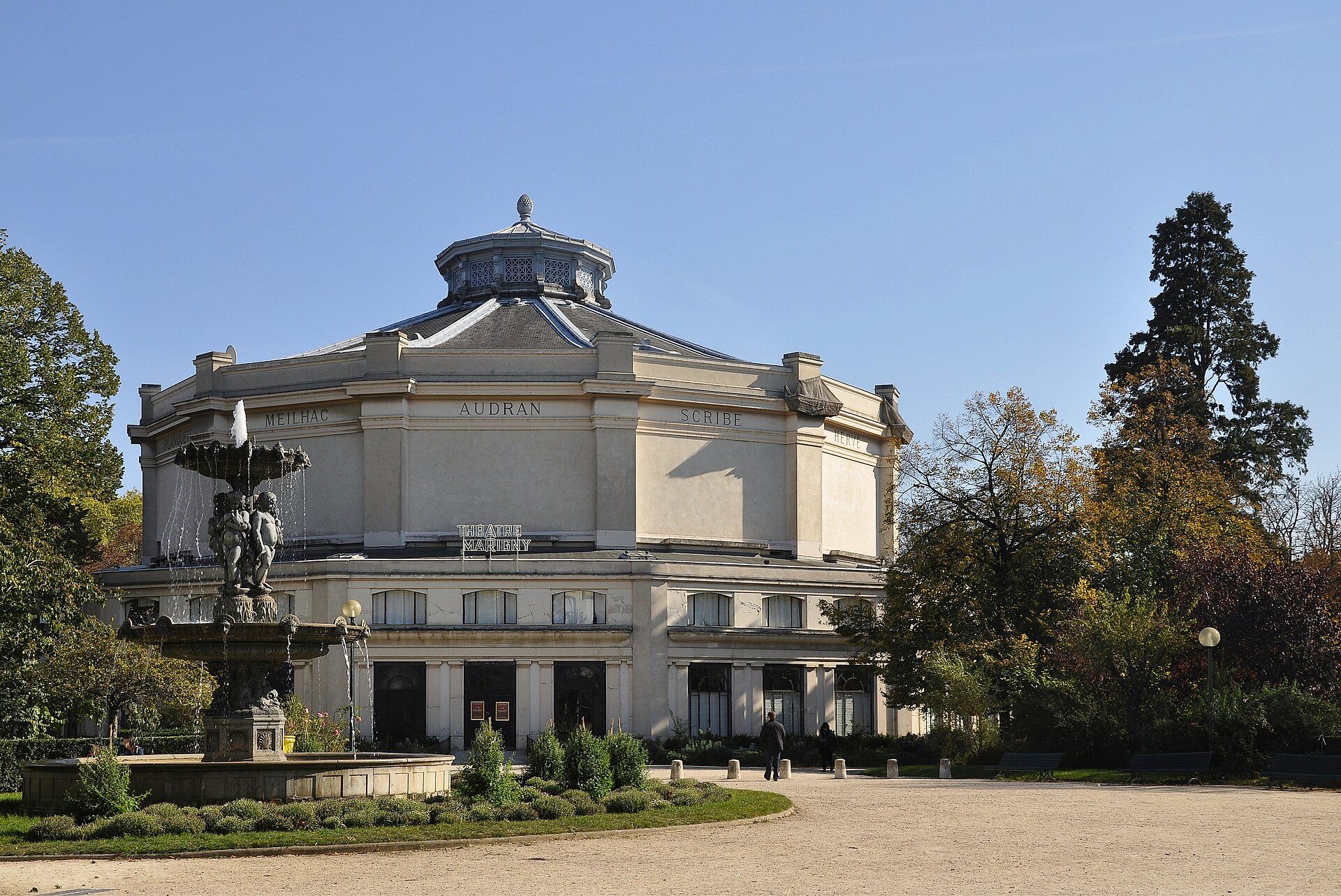
The Jardin des Champs-Élysées is the most surprising free discovery in the immediate vicinity of the avenue. The gardens run parallel to the Champs-Élysées on both sides and were significantly renovated before the 2024 Olympic Games, producing a calm green corridor within a few meters of one of Europe’s busiest pedestrian thoroughfares. A walk through the park produces a complete disconnection from the tourist density of the avenue that would feel implausible if the garden weren’t there to prove it. Further greening along the full length of the avenue is planned through 2030, extending this quality over time.
Chapelle expiatoire, toward the Opéra, sits in a quiet green square with park benches and a particular historical weight that most visitors to the area never encounter. The chapel was built to mark the site where the remains of Louis XVI and Marie Antoinette were held for 21 years before being transferred to the Basilique de Saint-Denis. A yearly march still honors the memory of the last king of France, a ceremony that reflects the persistence of royalist sentiment in French civic life in ways that surprise visitors unfamiliar with it.
The garden at the back of Hôtel Salomon de Rothschild, a few minutes from the Arc de Triomphe, is open to the public and almost entirely unknown to tourists. The only regular visitors are office workers from the surrounding district who use it for lunch. The garden’s formal layout and the historic building behind it create a setting that reads as genuinely Parisian in the quiet, unreconstructed way the avenue itself no longer does. The area between the Arc de Triomphe and the Palais de Chaillot, on the far side of the Seine, contains several additional free green spaces and public squares that extend the neighborhood’s quieter character away from the tourist density of the avenue and its immediate surroundings. The yearly march to honor Louis XVI at Chapelle expiatoire typically takes place in late January, which is otherwise one of the quieter times to visit Paris, and the ceremony’s persistence as a civic ritual reflects something specific about the 8th arrondissement’s particular relationship to French royalist history.
