
From Seoul's 24-hour noraebang bars and Michelin-starred restaurants to Gyeongju's royal tomb mounds and the oldest observatory in East Asia.
Daniel Bernard / Unsplash
South Korea’s size and transportation network make it one of the most practical countries to travel in Asia. The KTX bullet train connects Seoul to Busan in about two and a half hours. Intercity buses cover destinations the train doesn’t reach in similar time frames. Even by car, the distances between major destinations are short enough that moving between cities, coastal towns, and highland resorts in a single day is genuinely feasible, not merely aspirational.
That practicality is worth noting because South Korea’s best destinations are genuinely varied. Seoul and Busan offer the dense urban experience, with nightlife, food markets, and cultural institutions on a scale that rivals any city in the region. Gyeongju and Andong take visitors into Korea’s deep historical interior, one as an ancient capital with royal tombs and Buddhist temples, the other as a living Confucian community where traditional masks and folk performances persist. Jeju-do is a subtropical island with volcanic geology and enough outdoor activities to anchor a week. Gangwon-do delivers world-class ski resorts a hundred kilometers from Seoul.
The seven destinations below appear in Lonely Planet, covering South Korea’s most rewarding travel destinations from Seoul to the southern island of Jeju. The destinations span the country’s geographic range and cultural depth, and together they cover most of what makes South Korea worth an extended stay, not just a brief stopover. South Korea’s visa situation is straightforward for most Western nationals, with visa-free access available for stays of up to 90 days, removing a logistical barrier that complicates travel to some neighboring countries. The Korean won exchanges favorably against most Western currencies, and the cost of accommodation, food, and transit consistently undercuts comparable experiences in Japan, making South Korea one of the better-value destinations in East Asia for travelers calibrating a regional itinerary.
Yohan Cho / Unsplash
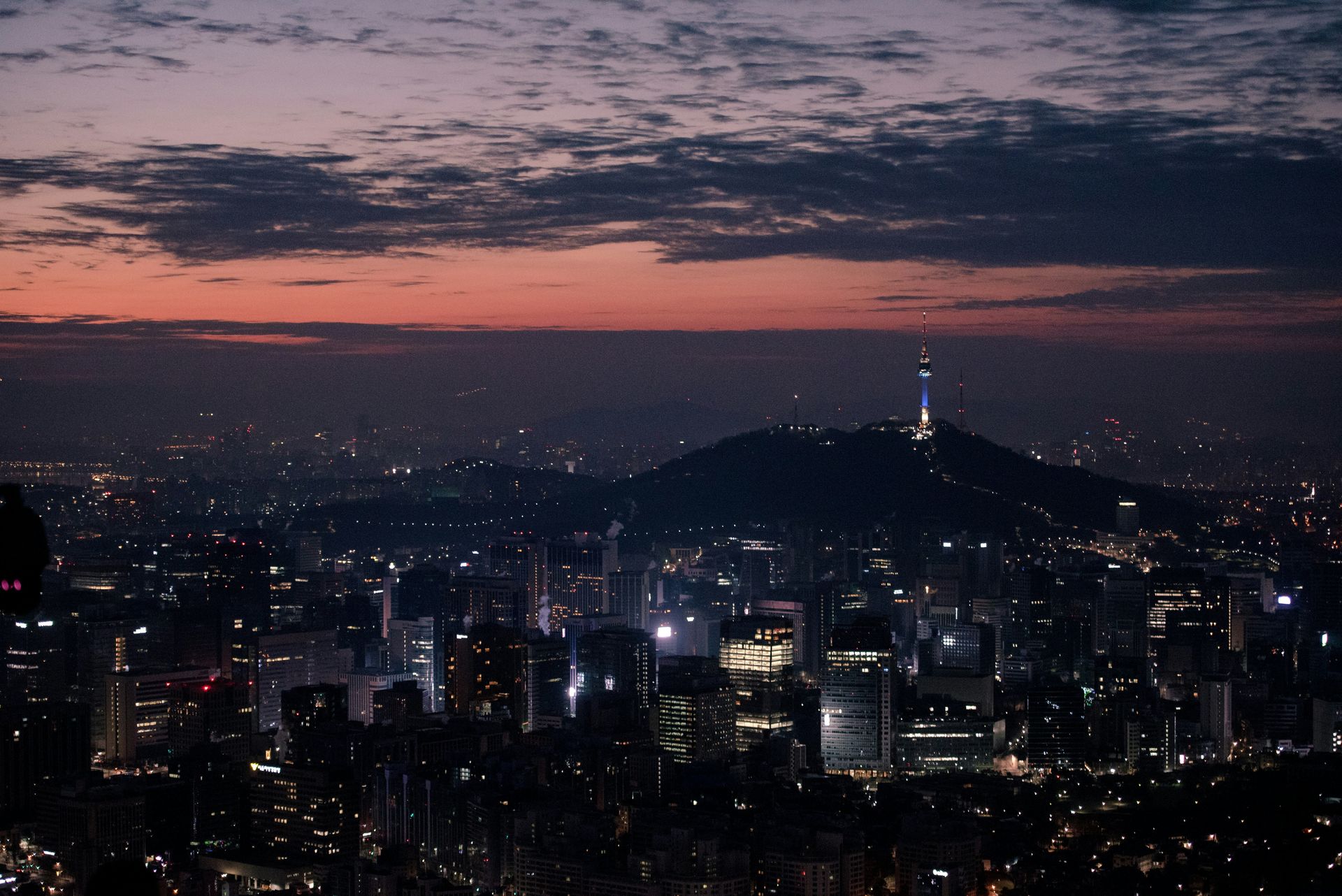
Half of South Korea’s population lives in the Seoul metropolitan area, and the capital concentrates the country’s economic, cultural, and social life with an intensity that makes even short visits feel like a genuine immersion in contemporary Korean society. The nightlife infrastructure is exceptional in both range and operating hours: low-key neighborhood bars, high-end cocktail lounges, and noraebang karaoke bars operate at any hour of the day or night throughout the year, which produces an around-the-clock social scene with no real parallel in other major Asian cities.
The most useful neighborhood geography for nightlife runs across Gangnam, Hongdae, and Itaewon, each with a distinct character. Gangnam’s clubs and bars skew expensive and polished. Hongdae, centered on Hongik University, draws a younger crowd at lower prices and generates a street-level energy specific to its status as the center of Korean indie music and art culture. Itaewon, historically the most internationally-oriented neighborhood, has evolved beyond its reputation as a foreigner quarter into a genuinely cosmopolitan area with diverse restaurants and bar programming. Euljiro, in central Seoul, has attracted a wave of newer, more experimental bars that have become the destination of choice for the city’s most trend-conscious drinkers.
Seoul’s daytime offerings are equally substantial. The National Museum of Korea and the National Folk Museum are both free and world-class. Gyeongbokgung Palace, the largest of Seoul’s five Joseon-era royal palaces, is worth half a day on its own. The city’s food scene spans from street tteokbokki to Michelin-starred Korean restaurants, at price points that compare favorably with equivalent dining in Tokyo, Hong Kong, or Singapore. The Seoul metropolitan transit system, among the most extensive and efficient in Asia, connects most parts of the city at low cost and high frequency, which makes exploring the city’s diverse neighborhoods practical without the taxi or ride-share expense that equivalent distances would incur in other major Asian capitals. The T-money transit card, sold at convenience stores and subway station machines, handles payment on all Seoul metro lines, buses, and even some taxis, and its top-up system removes the need to purchase individual tickets for each journey.
Minku Kang / Unsplash
Busan, located in the southeastern corner of the Korean peninsula, has built its identity around the port that handles roughly 80 percent of South Korea’s container cargo. The Port of Busan is the sixth-busiest in the world, and the maritime culture it drives permeates the city in ways that distinguish it sharply from Seoul’s inland density. The Busan Modern History Museum, near the port, documents the city’s role in Korean history from the Japanese colonial period through the Korean War and subsequent economic development.
Jagalchi Market, South Korea’s largest fish market, is one of the most viscerally rewarding market experiences in the country. The ground floor arranges the day’s catch, eel, crabs, sea squirts, abalone, and every common and uncommon Korean seafood species, in vendor stall after stall. Buyers select what they want, then carry their purchase up to the restaurant floors above, where kitchen staff descale, clean, and cook the seafood on the spot. The restaurants along the beachfront that specialize in jogae gui, grilled shellfish served with a range of dipping sauces including chogochujang and soy-wasabi, provide a more casual version of the same direct-from-the-sea dining experience.
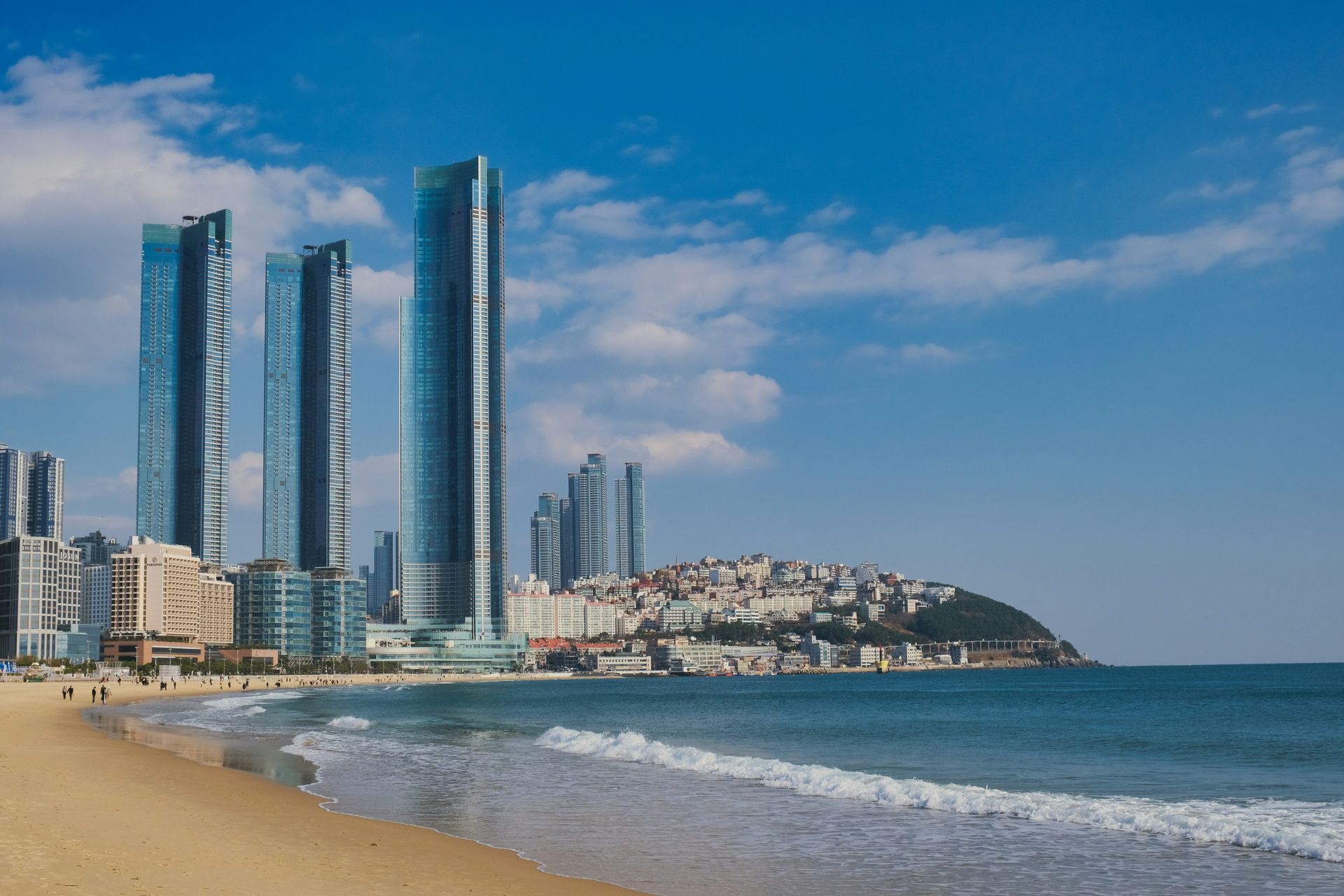
Haedong Yonggung-sa, one of the few oceanfront Buddhist temples in South Korea, sits on a dramatic rocky promontory north of the city, with waves breaking directly against the cliff below. Buddhist architecture alongside the Pacific coastline creates a setting unique in the country and worth the additional travel time from central Busan. The beach corridor stretching from Haeundae to Gwangalli, Busan’s most celebrated stretch of urban coastline, has a more conventional resort atmosphere with a long seafront promenade and a concentration of hotels, restaurants, and bars. Busan’s hillside neighborhoods, particularly Gamcheon Culture Village with its stacked, colorfully painted houses climbing a steep slope above the port, add a photogenic residential texture to the city that its maritime and beach identity sometimes overshadows in travel coverage. The KTX train from Seoul to Busan takes about 2.5 hours and offers the most comfortable way to make the journey, with seats that provide clear views of the countryside between the two cities and a dining car that serves Korean rail-specific food and drink.
Domenico Gentile / Unsplash
Gyeongju served as the capital of the Silla kingdom for nearly a thousand years, and the archaeological density of the surrounding landscape justifies its designation as a Museum Without Walls. The royal tombs of Tumuli-gongwon, massive grass-covered burial mounds that rise like gentle hills throughout the old city, are one of the most visually distinctive elements of any Korean city. The oldest astrological observatory in East Asia, at Cheomseongdae, a stone structure from the 7th century that predates the scientific institutions of medieval Europe, sits in the open air beside a field of Muhly grass.
The Buddhist grotto of Seokguram, carved into a granite cave on a hilltop above the city, contains a seated Buddha figure widely considered among the finest Buddhist sculptures in Asia. The Bulguksa temple complex below the hill includes halls, pagodas, and bridges from the same 8th-century construction period, which represents the peak of Silla's artistic achievement. The Gyeongju National Museum holds the portable artifacts from this era, including ornate gold jewelry, earthenware, and prayer bells, and the museum app provides English Bluetooth guides that cover the collection more thoroughly than conventional audio guides.
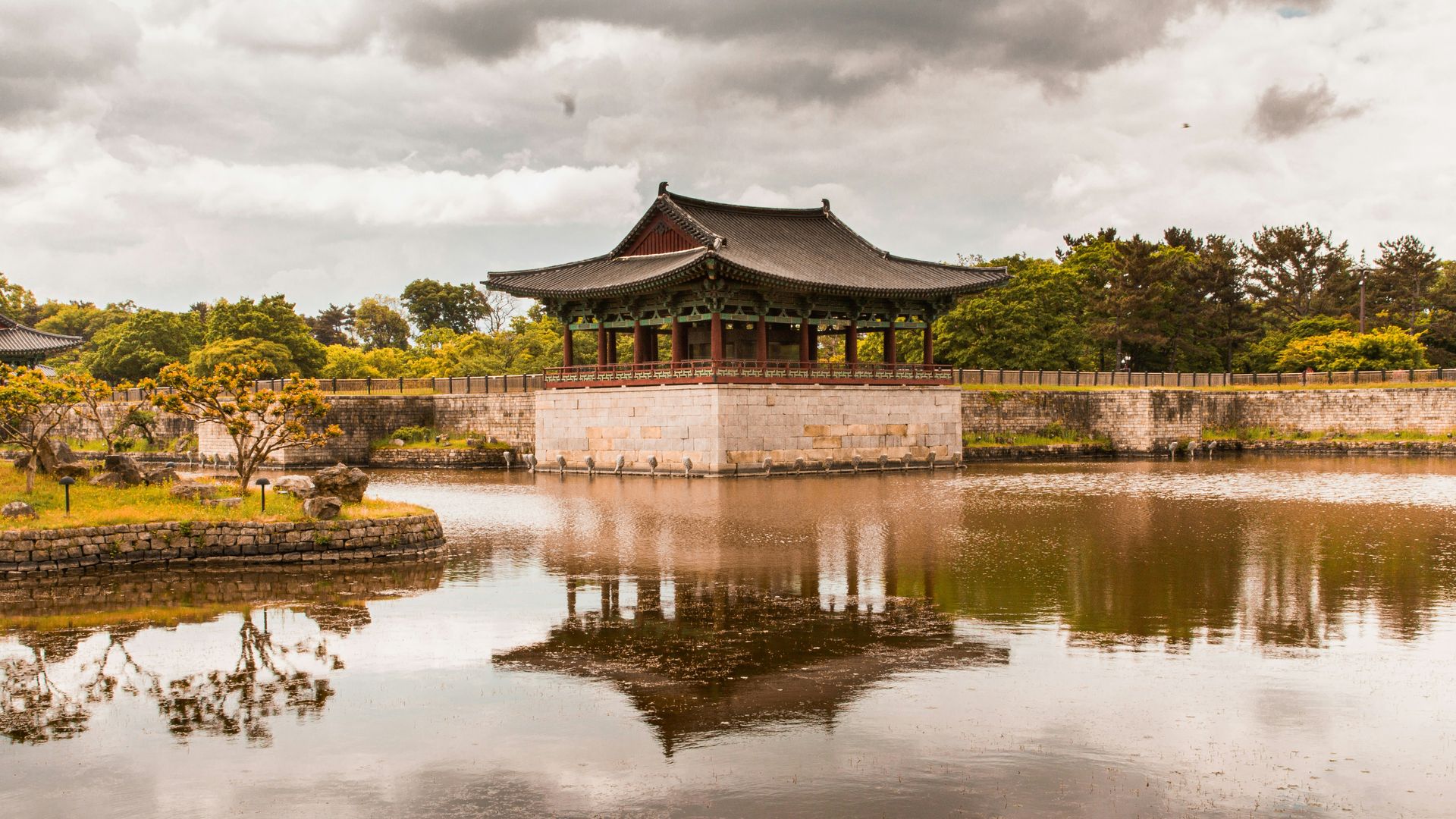
Woljeonggyo, a covered wooden bridge with red columns, green roof beams, and two end towers, illuminates at night in a display that makes the evening one of the best times to visit the old city center. The bridge connects to the Donggung palace complex, whose reflection on the adjacent pond produces one of the most photographed scenes in all of South Korea during spring and autumn. Gyeongju’s position in the southeast of the peninsula, near the coast but not directly on it, gives it a climate that is generally milder than Seoul's in winter and cooler than the coast's in summer, making shoulder-season visits particularly pleasant for walking the extensive archaeological grounds. The bike-share system in central Gyeongju is an efficient way to cover the spread-out archaeological sites, and the relatively flat terrain between the old town and the main temple and tomb clusters makes cycling the most practical and enjoyable format for a full-day exploration.
Jongsun Lee / Unsplash
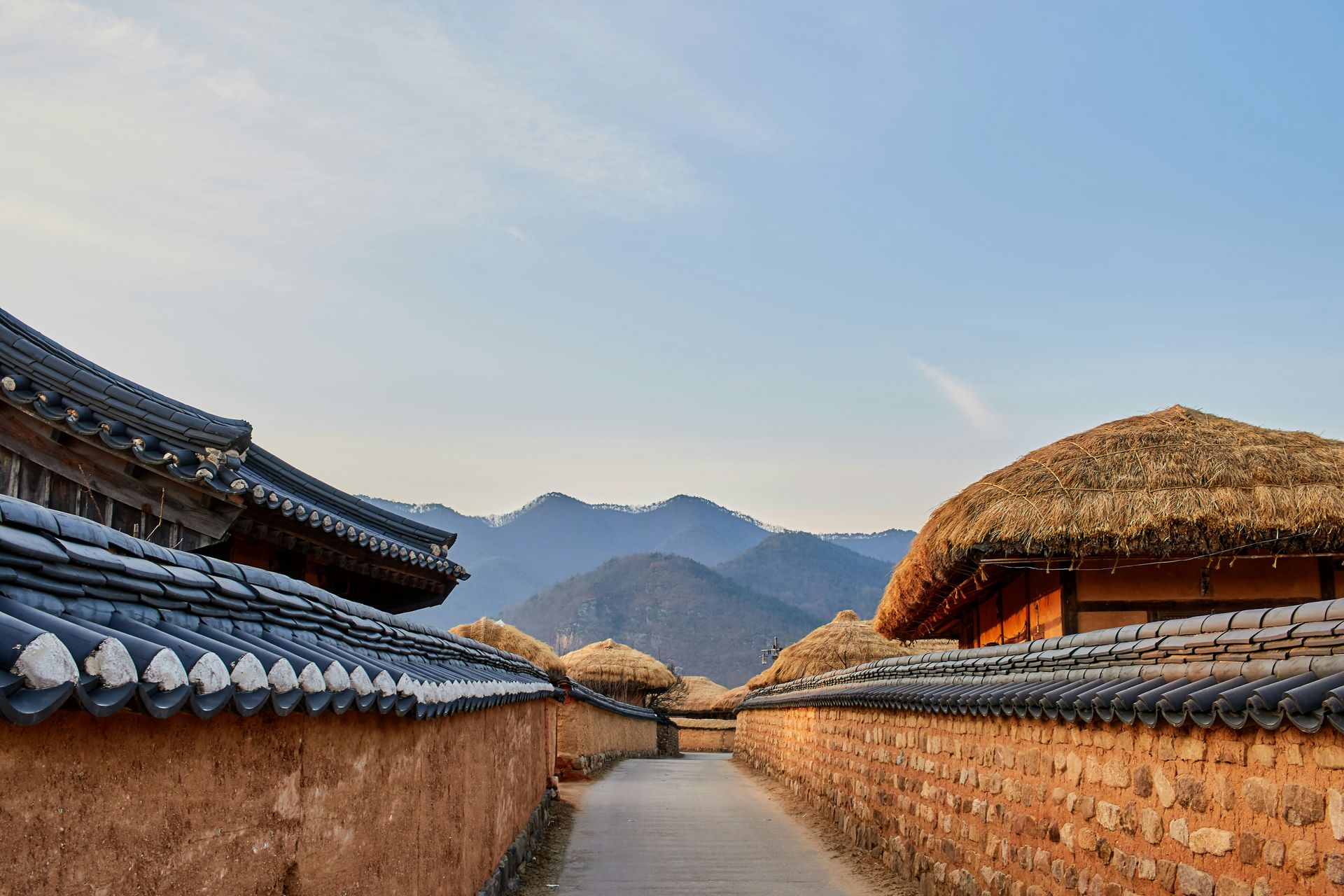
Andong, in North Gyeongsang province, carries a specific designation: the Capital of Korean Spirit, reflecting its status as the most intact repository of Joseon-era Confucian culture in the country. The anchor is Hahoe Folk Village, a UNESCO-listed settlement on the Nakdong River bend where residents still live in traditional homes with straw-thatched roofs, and where the rhythms of village life continue alongside the visitor programs. The houses, called choga, are organized according to the Confucian social hierarchy that determined their original placement, giving the village a spatial logic that a guide can explain or a visitor can read from the Hahoe Folk Village interpretive materials.
The Hahoe Mask Museum houses the region’s traditional wooden masks, carved to depict animated expressions of characters including aristocrats, servants, monks, and shamans. The masks are functional objects as well as art: the Andong Maskdance Festival, held each autumn, features live performances with plays that use the masks to deliver social commentary, in a tradition that stretches back to the Joseon period. The festival draws Korean and international visitors specifically for the performances, and timing a visit to Andong around the festival is worth the itinerary adjustment.
Beyond the folk village, Andong’s Confucian academies, including the Dosan Seowon,, where the great Confucian scholar Yi Hwang studied and taught, are worth visiting for the architectural quality of the structures and the landscape settings their founders deliberately chose. Jjimdak, the city’s signature soy-braised chicken dish, is available throughout Andong at prices and quality that make the city a food destination independent of its cultural attractions. Andong soju, produced by traditional methods distinct from the industrial soju that dominates the Korean market, is available at the Soju Museum and in local restaurants at prices that reflect its artisanal production, making it a cultural education alongside the Confucian history visit. The traditional rice wine, makgeolli, is also deeply embedded in Andong’s food culture and is best sampled fresh, which means drinking it in Andong produces a noticeably different quality from the pasteurized versions available in Seoul supermarkets.
Yeon Lee / Unsplash
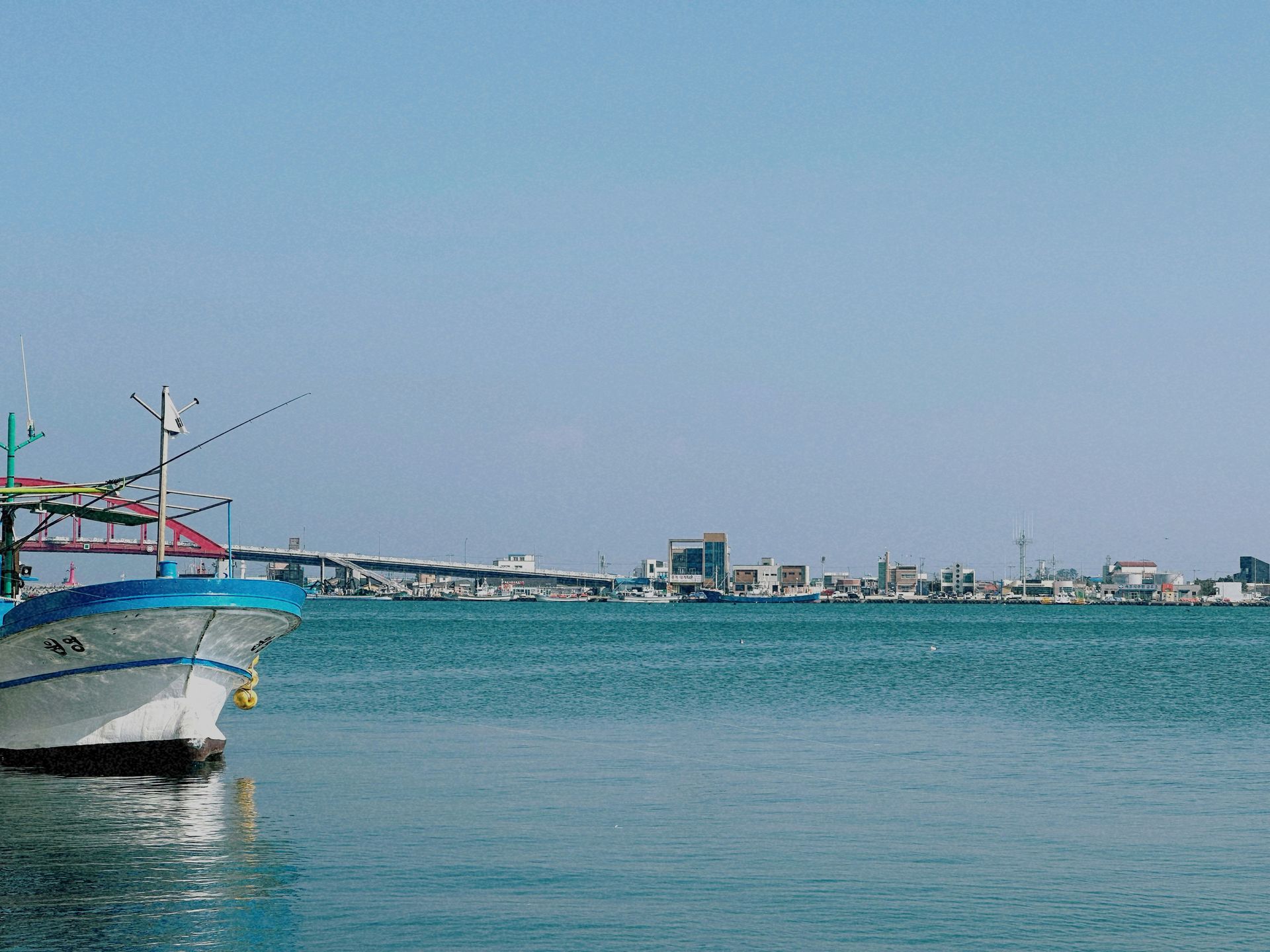
Gangwon-do province, about 100 kilometers east of Seoul, offers the most concentrated outdoor recreation infrastructure in South Korea, including the resorts that hosted the 2018 Winter Olympics. YongPyong, the country’s oldest and largest ski resort, is the top-rated facility and offers the broadest range of slopes for all skill levels. High1, featuring a casino and a revolving restaurant alongside its ski terrain, offers a resort experience that extends well beyond the slopes. Phoenix Park, Vivaldi Park, and Alpensia make up the provincial ski infrastructure for visitors seeking alternatives to the two major names.
Winter in Gangwon-do extends beyond resort skiing. The Hwacheon Sancheoneo Ice Festival offers ice fishing for sancheoneo, the mountain trout that is the festival’s namesake, alongside curling and sledding programs. The Taebaeksan Snow Festival builds ice sculptures and ice fountain installations on a scale that makes it worth visiting as a visual event independent of winter sports. Both festivals run in January and February when the province’s snowfall is most reliable.
The province’s summer and autumn programming is equally developed. Seoraksan National Park, one of South Korea’s most visited, has autumn foliage that attracts hikers from across the country in October. The East Sea coast running through Gangwon-do offers beaches, fishing villages, and scenic driving routes that make the province a year-round destination, not just a winter one. The east coast towns of Gangneung and Sokcho in Gangwon-do have developed strong independent food and café cultures that have attracted visitors from Seoul on weekend trips specifically for the coffee and seafood dining scene, making the province relevant to food-focused travelers alongside its outdoor recreation reputation. The KTX and ITX trains from Seoul to Gangneung, introduced ahead of the 2018 Winter Olympics, reduced the journey to about two hours, transforming the east coast area from a long-weekend destination into a day-trip or short-break option for Seoul residents and visitors.
Minku Kang / Unsplash
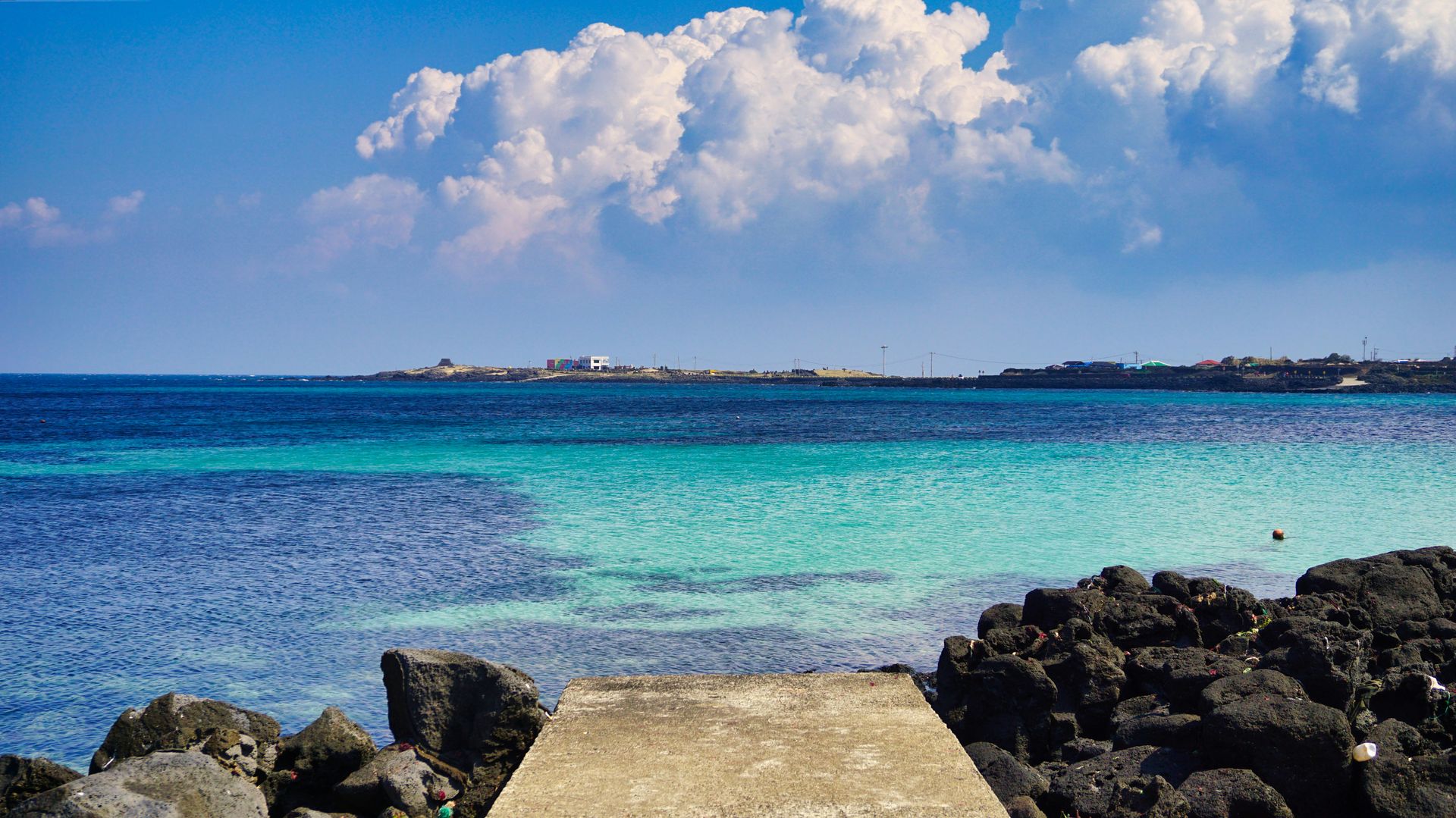
The air route between Seoul and Jeju-si is the busiest in the world by passenger count, which reflects how thoroughly the island has become the default escape destination for South Korea’s mainland population. Jeju-do’s subtropical climate, volcanic geology, and both black sand and white sand beaches produce an environment genuinely different from anything on the Korean peninsula, and the island’s designation as a UNESCO World Natural Heritage Site covers its lava tubes, volcanic cones, and the crater lake atop Hallasan, South Korea’s tallest mountain at 1,947 meters.
Hallasan is accessible to anyone with reasonable fitness and appropriate footwear on well-maintained trails, with the summit offering views across the island and, on clear days, back toward the mainland. The Geomunoreum lava tube system is one of the longest and most significant lava tube complexes in the world and is open to visitors through guided access. Jeongbang and Cheonjiyeon waterfalls, both accessible from Seogwipo on the island’s southern coast, offer dramatic waterfalls in a landscape otherwise defined by the ocean and volcanic rock.
Surfers use Woljeongri and Jungmun beaches for wave conditions that are reliable enough to sustain an instructor and board rental infrastructure. Snorkeling and scuba diving at Munseom Island off the south coast provide access to the island’s underwater volcanic geology and marine life. Traditional tewoo boat rafting at the Soesokkak Estuary is a local activity not available elsewhere in Korea and worth seeking out for its distinct experience. Jeju’s haenyeo, the female free divers who harvest seafood from the island’s coastal waters using techniques passed down through generations, represent a living cultural tradition recognized by UNESCO as intangible cultural heritage. Watching haenyeo at work from the rocks along the coast, or visiting the Haenyeo Museum near Seongsan, provides an encounter with island culture that no other aspect of the Jeju visit replicates. Jeju’s black pig, raised on the island and prepared as black pork barbecue in the restaurants of Jeju-si and Seogwipo, is the island’s most celebrated local food and one of the more distinctive regional pork preparations in a country that takes pork barbecue seriously across all its major culinary regions.
ASIA CULTURECENTER / Unsplash
Gwangju, in the country’s southwest, holds a specific position in South Korean history as the site of the May 18th Democratic Uprising of 1980, when residents joined university students in a 10-day armed resistance against the military regime of Chun Doo-hwan following the massacre of protesters. The uprising was suppressed violently, but it is now recognized as a pivotal moment in South Korea’s eventual transition to democracy, and the city’s identity has been shaped by that historical role, making Gwangju a meaningfully different experience from South Korea’s more tourist-oriented cities.
The May 18th Memorial Park and National Cemetery are the primary sites for understanding the uprising’s history and significance. The cemetery’s scale and the precision of its memorialization give it a weight comparable to that of significant memorial sites anywhere in the world, and visiting without prior knowledge of the event is worthwhile only after reading at least a basic historical account. Chungjang-ro, the street that served as the uprising’s geographic center, is now a shopping and entertainment district whose contemporary character layers over its historical significance, a process the memorial sites contextualize.
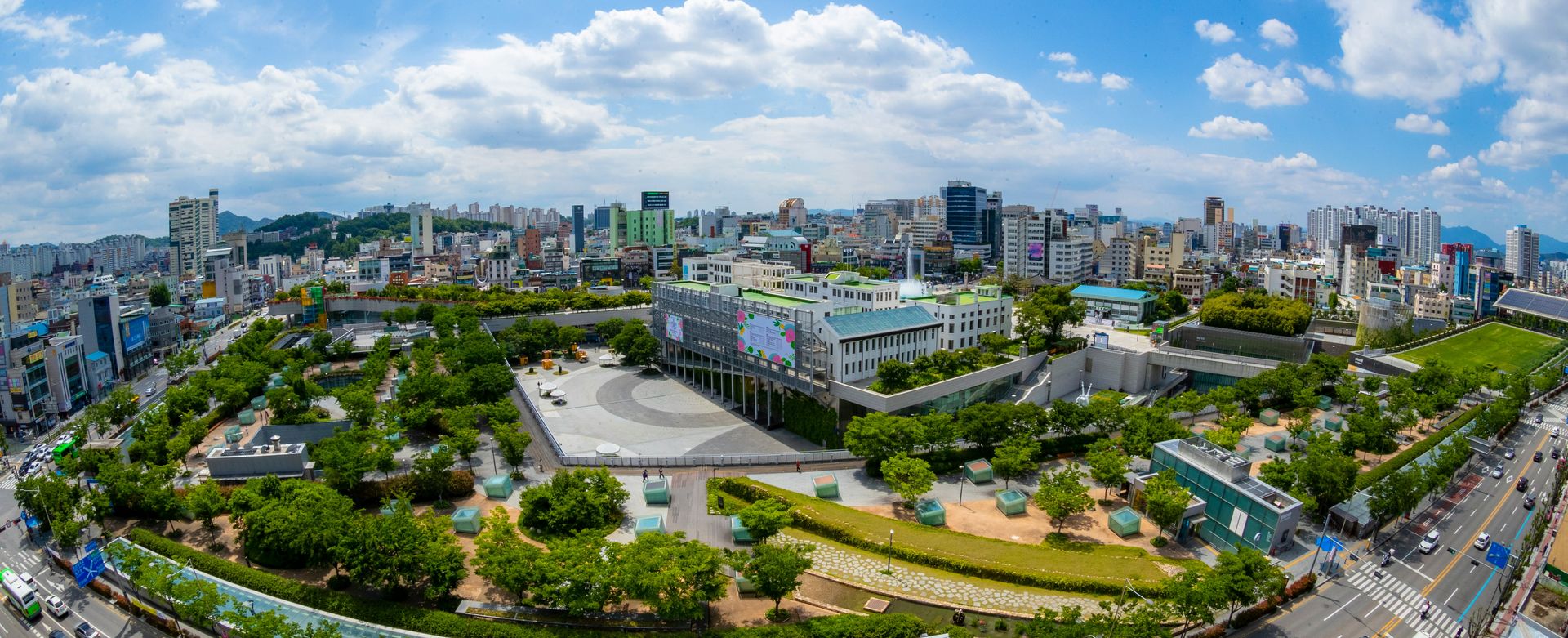
Beyond its historical significance, Gwangju has developed a contemporary arts and culture identity centered on the Asia Culture Center, which hosts exhibitions, performances, and festivals in a complex built on the former provincial government building, the site of the uprising’s final stand. The city’s food scene is specifically worth noting: the Gwangju area is considered one of South Korea’s strongest regional food cultures, and the table settings at local restaurants, which typically include more side dishes than anywhere else in the country, reflect the region’s reputation for culinary abundance. The Gwangju Kimchi Festival, held each autumn, is the country’s largest celebration of the fermented vegetable dish, the most globally recognized element of Korean cuisine, and its scale reflects both the dish’s centrality to Korean food culture and Gwangju’s pride in its culinary heritage.