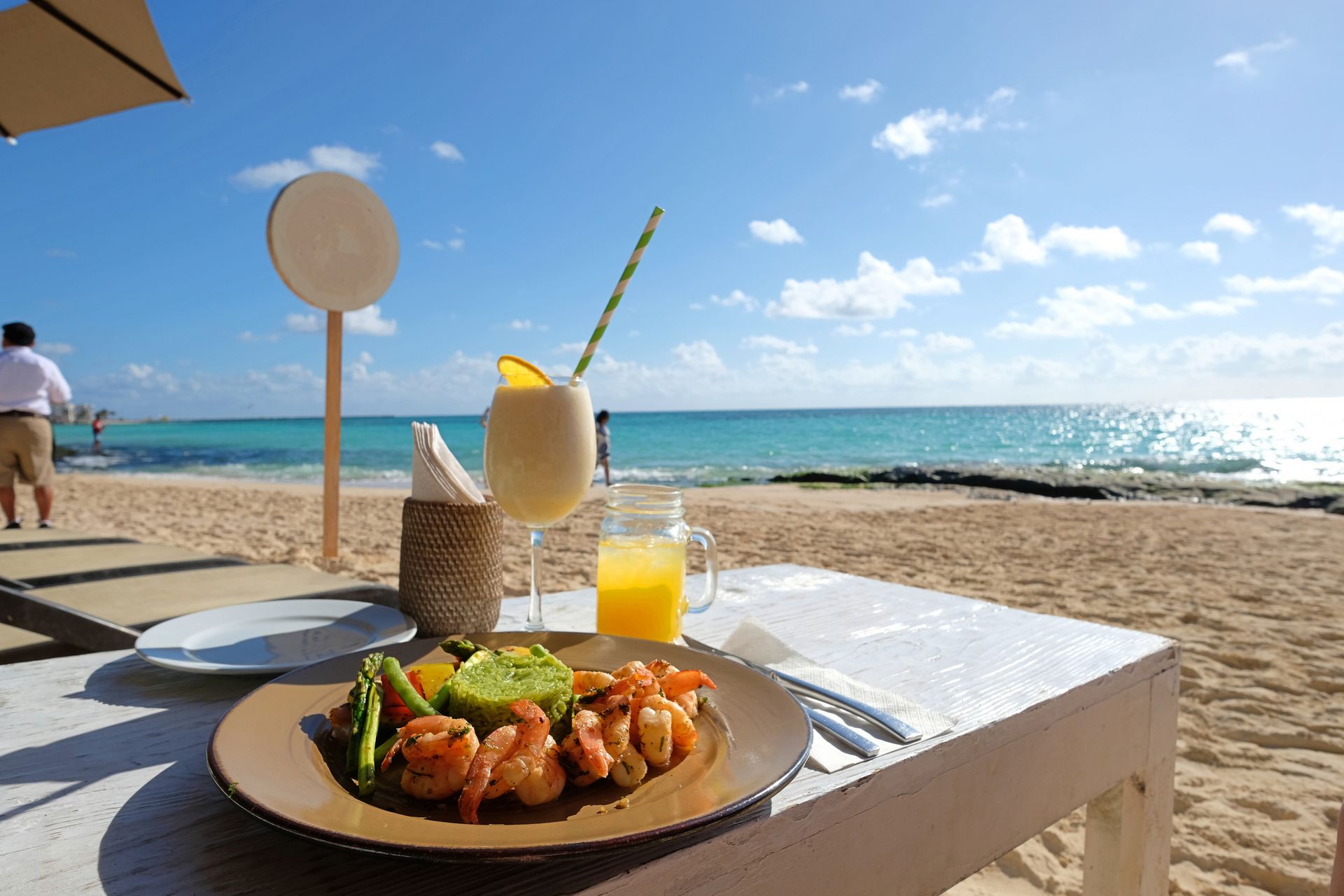
kevin yulianto / Getty Images
Mexico’s coastline is long, varied, and extraordinarily well-fed. From the protected bays of the Baja California Peninsula to the turquoise stretch of the Caribbean coast along the Riviera Maya, the country offers a range of seaside dining environments that go well beyond the generic beach restaurant model. Exceptional local seafood, an evolving fine-dining culture that draws on Indigenous Mexican ingredients and global techniques, and physical settings of genuine natural drama together give Mexico a claim to some of the most compelling seaside restaurant experiences in the Western Hemisphere.
The practical context matters here. Seaside dining in Mexico spans an enormous price and ambition range, from casual taco stands on the sand to prix-fixe tasting menus at luxury resort properties. The restaurants on this list occupy the upper end of that range. These are properties associated with celebrated chefs, international hotel groups, and the quality infrastructure that make a special-occasion meal worth planning travel for. But what distinguishes them is not price alone. Each restaurant occupies a specific physical position in relation to the water that shapes everything about the meal: the view from the table, the smell in the air, the ingredients arriving from the kitchen, and the mood that persists from the first course through the last.
The five restaurants below come from the Michelin Guide’s selection of the best spots to dine seaside in Mexico, which identified each property based on the quality of its setting, the caliber of its food and service, and its recognition within the Michelin Guide’s framework for Mexico. The list spans two coasts — the Pacific side of Baja California and the Caribbean coast of the Yucatán Peninsula — covering Cabo San Lucas, Ensenada, and Playa del Carmen, with restaurants connected to some of the most recognized names in contemporary Mexican cuisine.
1 / 5
Credit: Auberge Resorts
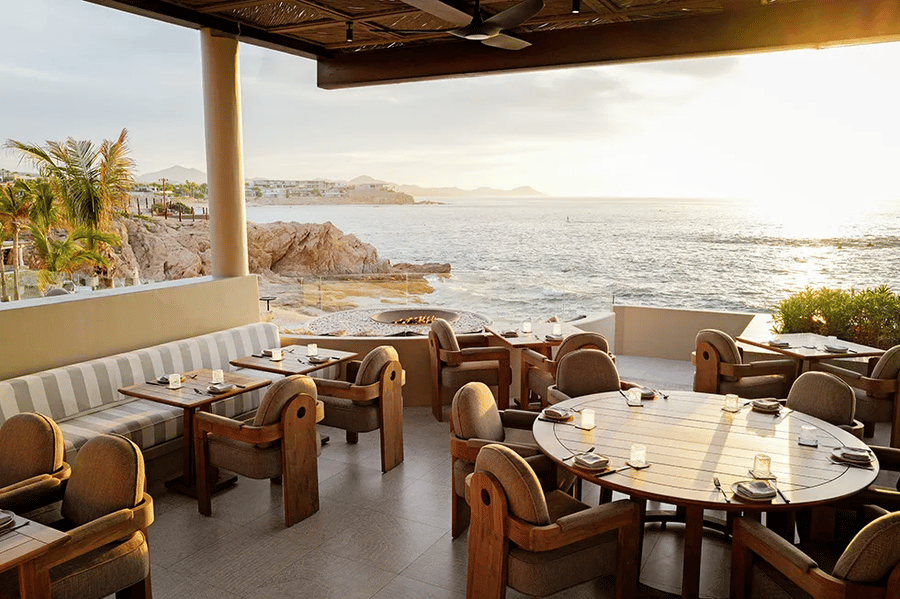
Comal, at the Chileno Bay Resort & Residences in Cabo San Lucas — a property recognized with two Michelin Keys — reaches its dining terrace by a deliberately scenic path. The walk from the resort lobby descends on a footpath through the hotel grounds before arriving at a table positioned at the water’s edge. The source describes this arrival walk as beautiful and the view from the tables as even better. The Azure Sea of Cortez surrounds the restaurant on multiple sides within a protected bay, and the design intervention above the tables is limited to a tasteful pergola and desert landscaping, leaving the water and the bay's natural topography as the dominant visual environment.
The menu at Comal operates in the contemporary Mexican register, and the source describes it as inventive with a clear personality. The formulation suggests a kitchen with strong culinary convictions, not a menu assembled to satisfy broad resort expectations. Two specific dishes earn mention: the octopus kastakan, prepared ceviche-style, which brings a technique rooted in Mexican coastal cooking to an ingredient that rewards the acid and fresh-herb treatment of ceviche, and a Pavlova with strawberry-basil sorbet for dessert, which pairs an unexpected herb note with the sweet fruit component.
The protected bay setting gives Comal a physical character that most open-ocean seaside restaurants cannot replicate. The calm water of a sheltered bay creates a different visual and acoustic environment from the surf-facing dining terraces at other properties on this list: no wave noise, no whitecaps, no horizon scan for passing vessels. The Sea of Cortez’s famously clear water and the desert landscape of the Baja California Sur coastline give the bay’s visual character a specificity — arid hills meeting cobalt water — that distinguishes Comal’s setting from the lush Caribbean environments of the Riviera Maya restaurants later on this list.
2 / 5
Credit: Hyatt
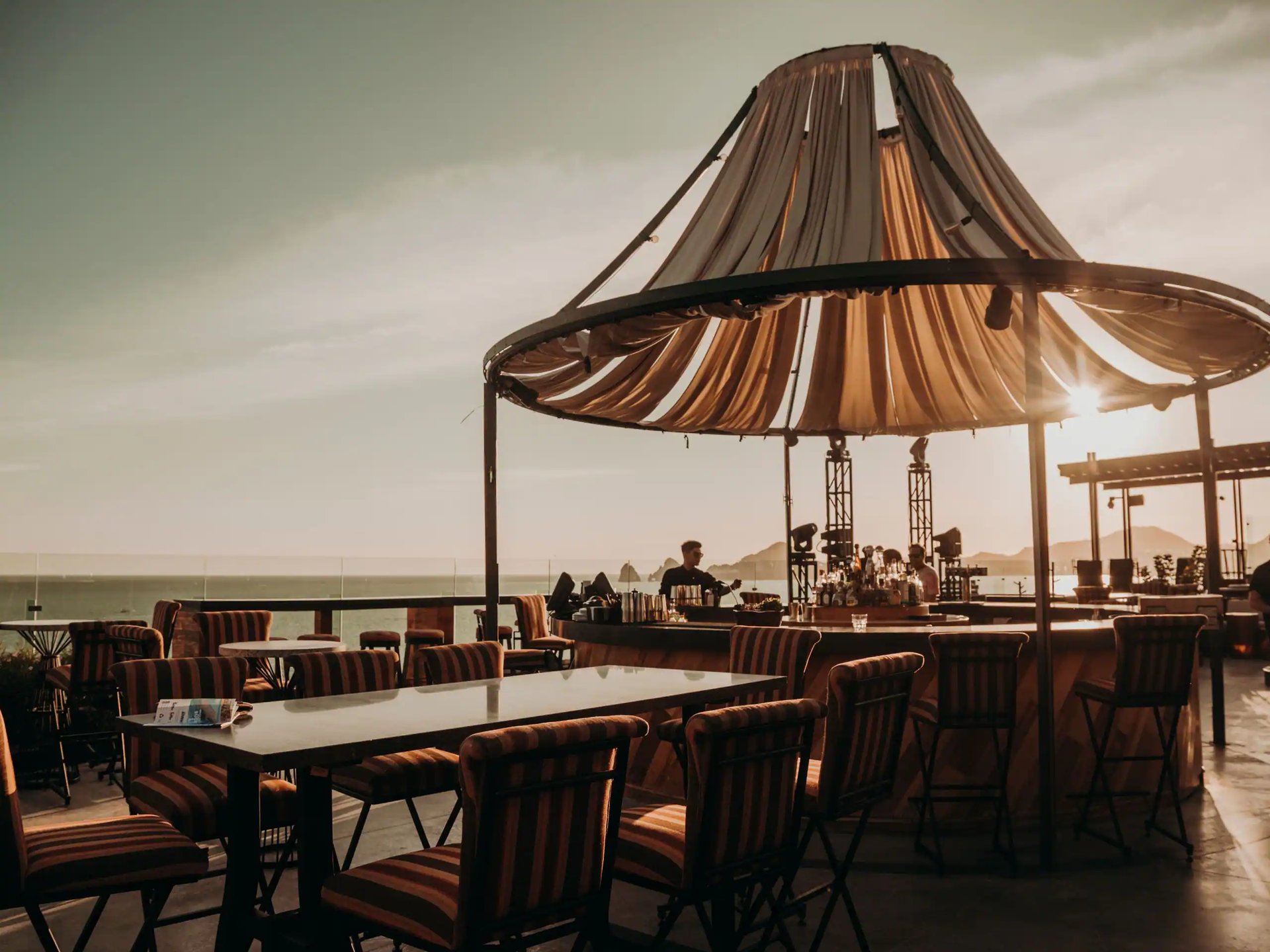
Manta, at The Cape, a Thompson Hotel in Cabo San Lucas — recognized with one Michelin Key — carries the additional distinction of being the Cabo outpost of Enrique Olvera, the chef behind Pujol in Mexico City, which holds two Michelin Stars. The source notes that the view from a balcony table at Manta is unparalleled: the rocky arch at the tip of the Baja California Peninsula, one of Mexico's most photographed geological formations, is directly in the line of sight. A celebrated chef’s culinary program paired with an unreproducible natural landmark in the view makes Manta a specific kind of seaside dining proposition. The physical setting and the food are comparable in ambition.
The menu reflects Olvera’s broader approach: bold, inventive, and grounded in contemporary Mexican cooking while drawing on influences from other culinary traditions. The source specifically identifies Peruvian and Japanese influences running through the menu, which is a consistent feature of Olvera’s creative framework across his various restaurant projects. Two dishes receive specific mention: a refreshing melon salad and a tamarind-and-soy-crusted sweet potato in a simple, elegant almond mole. The sweet potato dish brings together a Japanese condiment, a Mexican souring agent, and a classic Mexican mole base, in a construction that exemplifies the cross-cultural approach the source attributes to the menu as a whole.
Manta’s position at the tip of the Baja California Peninsula gives it a geographic specificity that intensifies the seaside experience: this is not simply a restaurant beside the sea but a restaurant at the literal convergence of the Pacific Ocean and the Sea of Cortez, marked by the arch that has defined the visual identity of Los Cabos for generations. Diners at a balcony table eat at the edge of the continent in a way that most seaside restaurants — even those with excellent views — cannot replicate.
3 / 5
Credit: Hotel Punta Morro
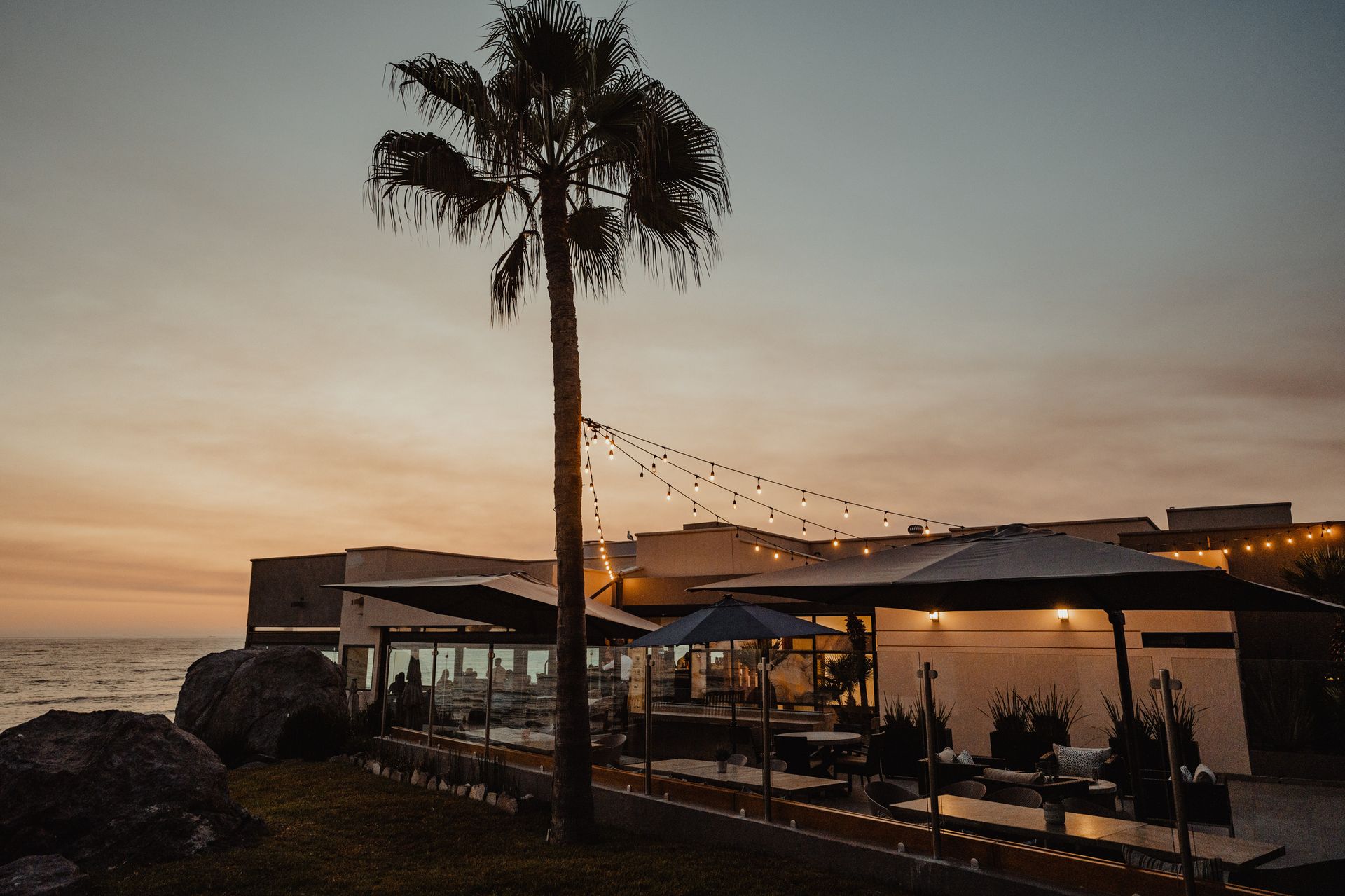
Restaurante Punta Morro in Ensenada brings an additional dimension to the seaside dining proposition that the other restaurants on this list do not offer: a glass-walled dining room facing the Pacific Ocean in Mexico’s foremost wine-producing region. Ensenada sits at the northern end of the Baja California Peninsula and serves as the gateway to Valle de Guadalupe, the wine country that has made Mexican wine a serious player in the international market over the past decade. The source frames the restaurant’s setting explicitly around this wine context, noting that a view of the Pacific Ocean pairs well with the best wine Mexico has to offer.
The menu at Restaurante Punta Morro follows the Baja Med culinary tradition. This regional style draws on the Mediterranean immigrant communities that shaped Baja California’s agricultural and culinary culture, blending house-made pastas and grilled proteins with the freshest local seafood available from the adjacent Pacific waters. The source describes a creative streak running through the kitchen despite this classic regional foundation. Two dishes illustrate it: the Empanadas Baja, filled with lobster chorizo and described as delicately crisped, apply a Spanish pastry form to a filling that only the Baja coastal environment can produce. Grilled quail from Valle de Guadalupe — the same wine region that supplies the restaurant’s cellar — arrives simply prepared and accompanied by a sun-dried chili and beer sauce.
The glass-walled dining room format distinguishes Restaurante Punta Morro from the open-air terrace and pergola settings of the other restaurants on this list. A fully enclosed glass room facing the Pacific creates a visual relationship with the ocean that differs from an al fresco terrace: the sea is always in view, framed and composed, with none of the sensory intrusion of wind or spray that an open setting introduces. For diners who want the uninterrupted Pacific panorama alongside a serious wine program and regionally grounded cuisine, Restaurante Punta Morro delivers an experience that Ensenada’s position at the intersection of wine country and the Pacific coast makes uniquely possible.
4 / 5
Credit: Cocina de Autor Riviera Maya
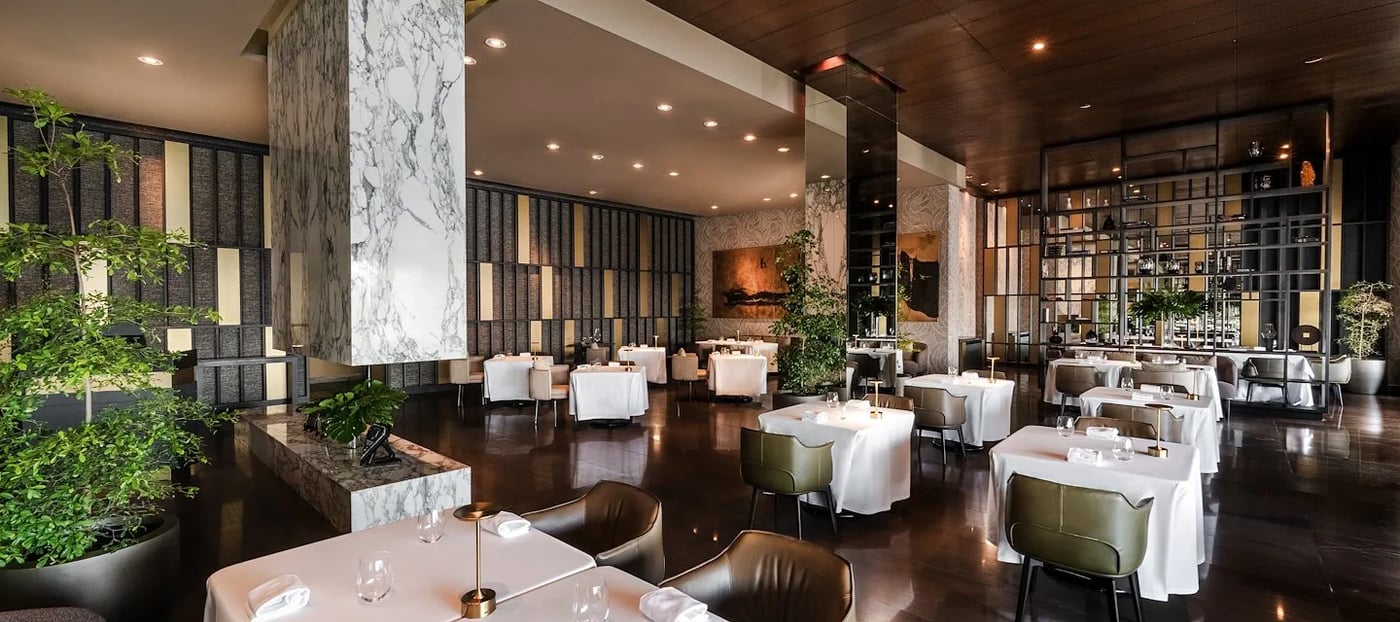
Cocina de Autor Riviera Maya, inside the Grand Velas resort in Playa del Carmen on the Quintana Roo coast, offers a prix fixe tasting menu experience with the Caribbean Sea visible through the dining room in a setting the source describes as opulent. The white tablecloths and the glistening water outside form a specific visual pairing that the source notes as a color complement, which reflects the deliberate aesthetic alignment between the interior design and the exterior environment. The restaurant operates within the Grand Velas luxury all-inclusive resort framework, which means the dining experience is part of a larger hospitality infrastructure calibrated for an international luxury market.
The menu changes regularly, which gives the restaurant an evolving culinary identity across visits and prevents the repetition that fixed tasting menus at resort properties sometimes generate. The source describes the cooking as sophisticated and modern, emphasizing novel flavor pairings and compelling textures. The formulation situates the kitchen in the contemporary fine-dining register without specifying a single regional or national culinary tradition as its primary reference. From a specific recent visit, the source identifies three courses in sequence: an early spider crab dish, a roasted pork that the source describes as cleverly decorated, and a dessert made from honey produced by the property’s own beehive. The beehive detail adds a literal farm-to-table element, connecting the dessert course to the resort’s physical grounds.
The Riviera Maya’s Caribbean coast offers a distinct physical and visual context compared to the Pacific environments of Baja California earlier on this list. The Caribbean Sea’s color — the particular shallow-water turquoise of the Mexican Caribbean — and the relative calm of a protected coastline give Cocina de Autor Riviera Maya’s setting a lush tropical character that contrasts sharply with the arid desert-meets-sea landscape of Comal and Manta in Cabo San Lucas. The shift between these two coastal registers is one of the most compelling reasons to consider Mexico as a seaside dining destination: its coastlines are not interchangeable.
5 / 5
Credit: Belmond
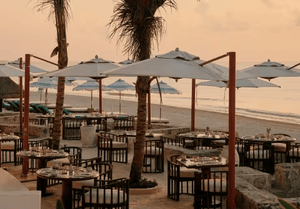
Woodend, at the Maroma, a Belmond Hotel on the Riviera Maya — recognized with two Michelin Keys — brings the specific sensory character of a live-fire grill kitchen into direct contact with the seaside environment, giving the restaurant a distinctive atmospheric identity. The source describes the smell of sea spray mingling with wood smoke from the live fire as the defining sensory note of the experience. The cooking method covers both local Mexican seafood and steaks from Oklahoma, a geographic pairing that the restaurant treats as a serious culinary statement about the range of ingredients that a wood-fire grill can serve at the same level of quality.
The design of the outdoor dining space uses richly colored tiles and a latilla-roofed pergola — latilla being a traditional New Mexican and northern Mexican construction technique using thin poles — to create an environment that feels rooted in the material culture of the region, not in the generic luxury-resort aesthetic that many Caribbean hotel restaurants default to. The source describes the result as charming, which in this context suggests a warmth and specificity of character that the more architecturally ambitious dining rooms on this list may not always prioritize.
The chef behind Woodend is Curtis Stone, the Australian celebrity chef whose Los Angeles restaurant, Gwen, holds one Michelin Star. The menu extends beyond the primary grill program to sides the source identifies as tasty enough to stand on their own: a crunchy potato pavé and buttery Parisian gnocchi. The potato pavé — a preparation associated with French fine-dining technique — alongside the wood-fire grill and the Mexican coastal seafood illustrate the range of culinary references Stone brings to a restaurant that is, at its core, a seaside live-fire destination on one of the Caribbean’s most beautiful stretches of coast. The Maroma hotel’s two Michelin Keys give Woodend a property context that matches the ambition of Stone’s menu, ensuring the dining experience extends into the hotel's accommodation and hospitality infrastructure.
