Credit: TROIS VISAGES
Tokyo's reputation as one of the world's great food cities is not built on a single tradition. It is built on the coexistence of many centuries-old sushi techniques practiced with the precision of a craft passed down through generations, French-Japanese hybrids that rewrite the rules of both cuisines, Peruvian ingredients interpreted through a Japanese lens, and Sichuan traditions transplanted and transformed by chefs who have made them entirely their own. No other city on earth hosts this many culinary conversations at once, and no other city resolves them with such consistent excellence.
The Michelin Guide has tracked Tokyo's restaurant scene for nearly two decades, and the city consistently holds more Michelin stars than any other in the world. But the guide's inspectors are not simply counting stars — they are eating constantly across every register of the city's food culture. The dishes on this list are the ones that stayed with them: the plates that surfaced when inspectors looked back on a year of meals and asked themselves what they could not forget.
What emerges from that exercise is a portrait of Tokyo dining that is more varied and more surprising than any single narrative about Japanese food can contain. A pastry-encased pigeon at a contemporary French table. A sausage stuffed with enoki mushrooms at a restaurant that defies easy categorization. A pineapple dessert inspired by Okinawa, served at a Gucci-branded outpost of Massimo Bottura's global empire. The through line is not cuisine or technique but a quality of intention — a seriousness about ingredients, seasonality, and the relationship between what is on the plate and the tradition it comes from.
Seasonality deserves particular emphasis. Several dishes on this list exist only at a specific moment in the year: young gizzard shad in summer, fugu in winter, spring vegetables that announce a change in the light before the calendar catches up. To eat in Tokyo at the highest level is to eat with an awareness of time that most dining cultures have abandoned. These are the 10 dishes that made that awareness feel like a gift.
1 / 10
Credit: Monolith
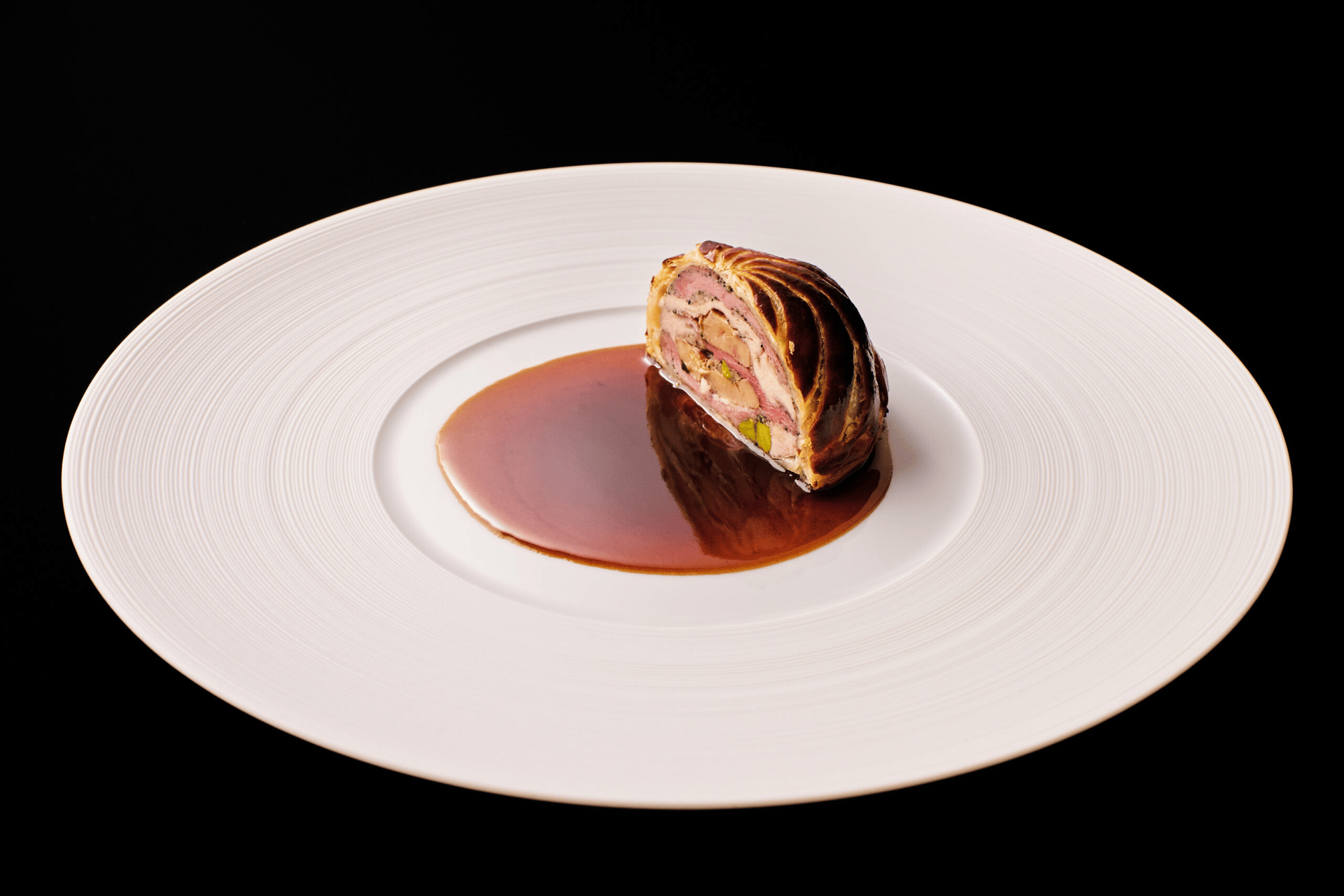
Monolith's pastry-baked imperial pigeon arrives at the table looking almost architectural — sleek, even aerodynamic, according to the Michelin inspectors who selected it. The exterior gives little away. Inside, the breast of imperial pigeon shares its pastry casing with minced pigeon, truffles, foie gras, and spinach, a combination that reads as classically French in its richness but is executed with a precision that feels distinctly Tokyo. The salmis sauce, drawn from the bird's viscera, has been carefully adjusted to avoid the heaviness that can make traditional preparations of this kind feel oppressive. The result is a dish that honors a classic format while quietly improving on it.
The pigeon en croûte is a dish with deep roots in French culinary tradition — a format that has existed for centuries and carries significant expectations. What Monolith achieves is a modern update that earns its departures from convention rather than simply asserting them. The truffle and foie gras additions are not decorative; they integrate into the pigeon's flavor profile, making the whole more coherent than its parts. For diners who understand the reference points, the dish rewards that knowledge. For those who do not, it rewards them anyway. It does so on the strength of what it delivers on the plate, independent of context. It is the kind of dish that Tokyo produces with particular regularity: technically ambitious, aesthetically considered, and good enough to justify both qualities without apology.
2 / 10
Jean-Blaise Hall / Getty Images
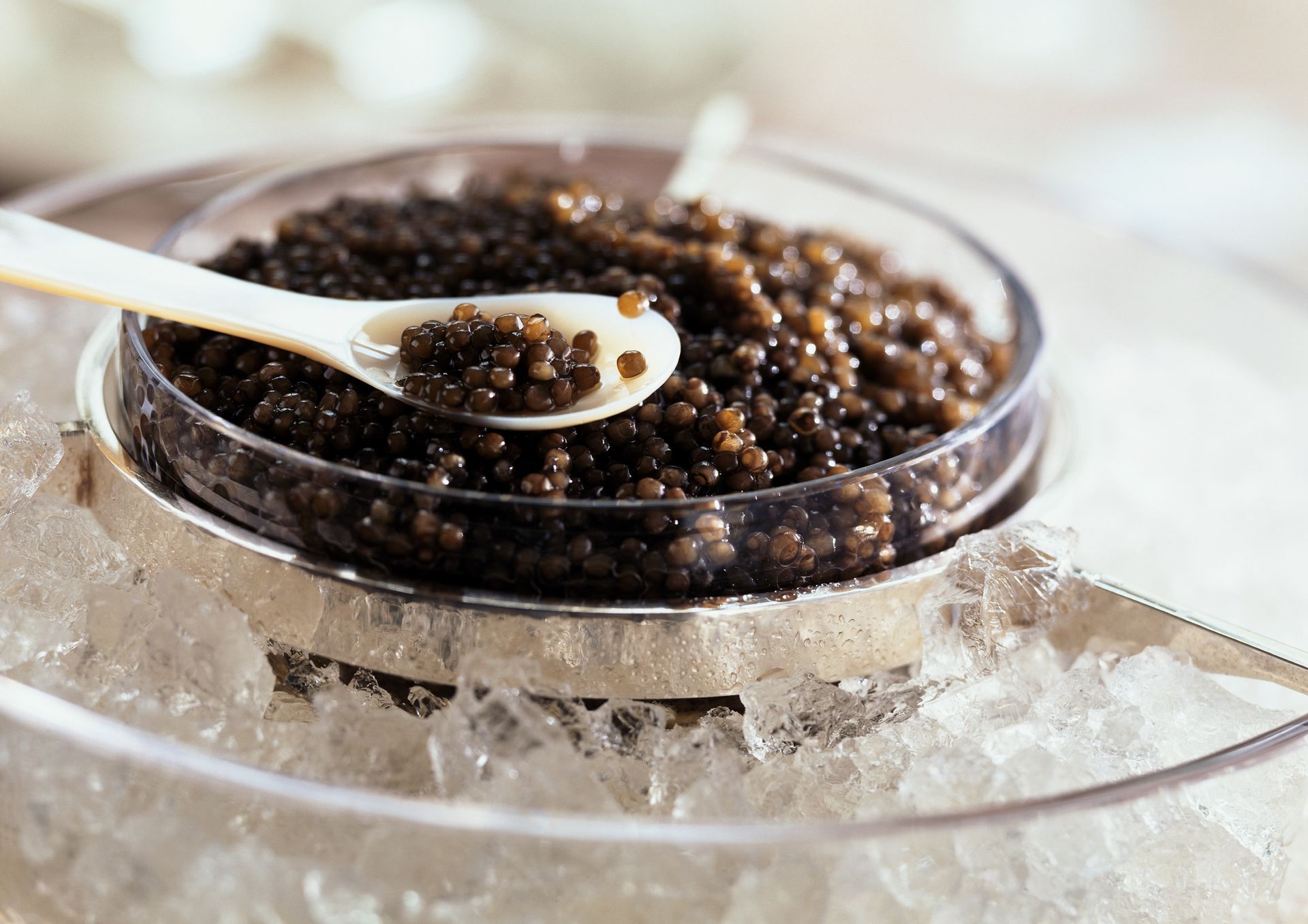
At Kanda, fugu, the pufferfish that signals winter to the Japanese palate as definitively as any ingredient signals any season anywhere, arrives alongside caviar in a combination that was conceived, according to Michelin inspectors, at a Japanese restaurant in Paris. The East-West provenance of the idea is visible in the presentation: caviar served in classic Baccarat crystal, a Western vessel carrying an Eastern fish into a dialogue with sesame tofu. The three elements — fugu, caviar, and sesame tofu — are described as resonating in three-part harmony, a musical metaphor that captures the dish's quality of balance without overstating any single component.
Fugu occupies a singular place in Japanese food culture. Its preparation requires a licensed chef, its toxicity is part of its mythology, and its flavor — delicate, clean, faintly oceanic — rewards the attention it demands. Pairing it with caviar could easily feel like a stunt, two luxury ingredients placed together for the sake of expense rather than flavor. Kanda avoids that trap. The sesame tofu anchors the dish in Japanese culinary tradition, giving the fugu a context that makes the caviar's presence feel earned rather than imposed. The combination works because each element has a function, and none overwhelms the others. For visitors to Tokyo in winter, this is the kind of dish that justifies planning a trip around a reservation.
3 / 10
Credit: Hiroo Ishizaka / tableall
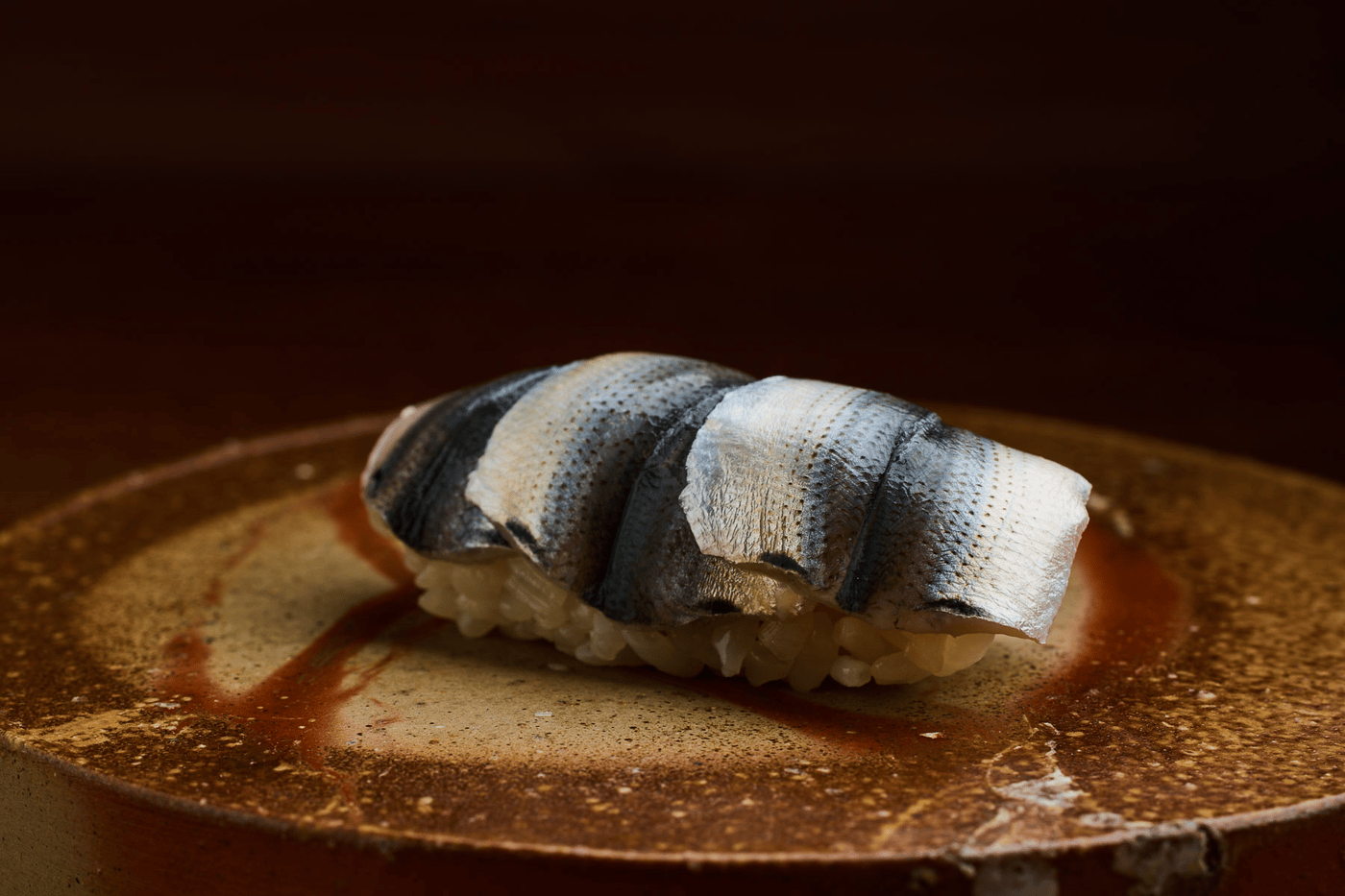
Young gizzard shad is one of summer's most anticipated arrivals for serious sushi lovers in Tokyo, and Hiroo Ishizaka's treatment of it represents the form at its most considered. Each nigiri piece is constructed from three layers of young gizzard shad, pickled in vinegar to brace the delicate flesh without overwhelming its character — a technique that requires precise judgment about timing and acidity. The shiitake mushroom nigiri that accompanies it was inspired, according to Michelin inspectors, by the exceptional flavor of Yairo shiitake from Minamiuonuma, a variety whose quality made the chef rethink what mushroom nigiri could be.
The citrus element ties the two pieces together, its refreshing acidity serving as a natural counterpoint to the baked shiitake's sultry, smoky aroma. What makes this dish worth the attention of Michelin inspectors, and worth the effort of a reservation at Hiroo Ishizaka, is the evidence it provides of a chef who allows ingredients to generate ideas rather than imposing ideas onto ingredients. The Yairo shiitake prompted the mushroom nigiri; the mushroom nigiri prompted the citrus; the citrus illuminated the gizzard shad. The dish has the internal logic of something that could not have been arranged any other way, a mark of a great sushi chef working at full capacity. It is also emphatically a summer dish — available only when the gizzard shad is young enough to justify the preparation.
4 / 10
Credit: Ginza Fukuju
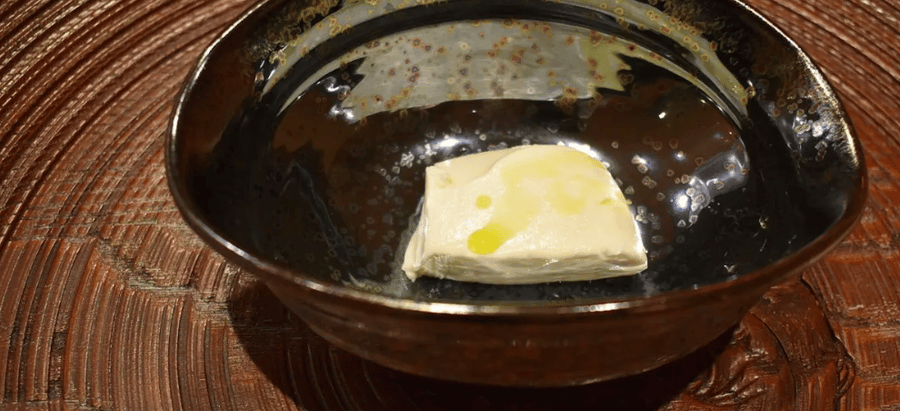
Mineoka tofu at Ginza Fukuju arrives with the weight of culinary archaeology behind it. The dish was reconstructed from the literature of old Edo — historical texts that described a preparation whose exact method had been lost — and the result, according to Michelin inspectors, is silky-smooth and richly flavorful, a testament to the research. Wasabi enhances its sweetness rather than cutting through it, producing a finish that lingers with unusual persistence. The flavor is subtle in the way that the most technically demanding Japanese preparations often are: understated on first encounter, then increasingly present as it develops.
The presentation adds a dimension of wit that balances the dish's historical seriousness. The plate is crafted to depict a tree frog on a lotus leaf — a whimsical image that complements the simplicity of the tofu arrangement without competing with it. It is a reminder that the best Japanese restaurant ceramics are not neutral vessels but active participants in the experience of a dish. Ginza Fukuju's choice of plate signals an understanding of this tradition: the frog and lotus leaf have their own symbolic resonance in Japanese culture, and their appearance here is not accidental. For diners interested in the depth of Japanese culinary history, mineoka tofu at Ginza Fukuju offers something that cannot be found elsewhere. It is a dish recovered from the past and made genuinely worth eating in the present.
5 / 10
Credit: Harutaka / tableall
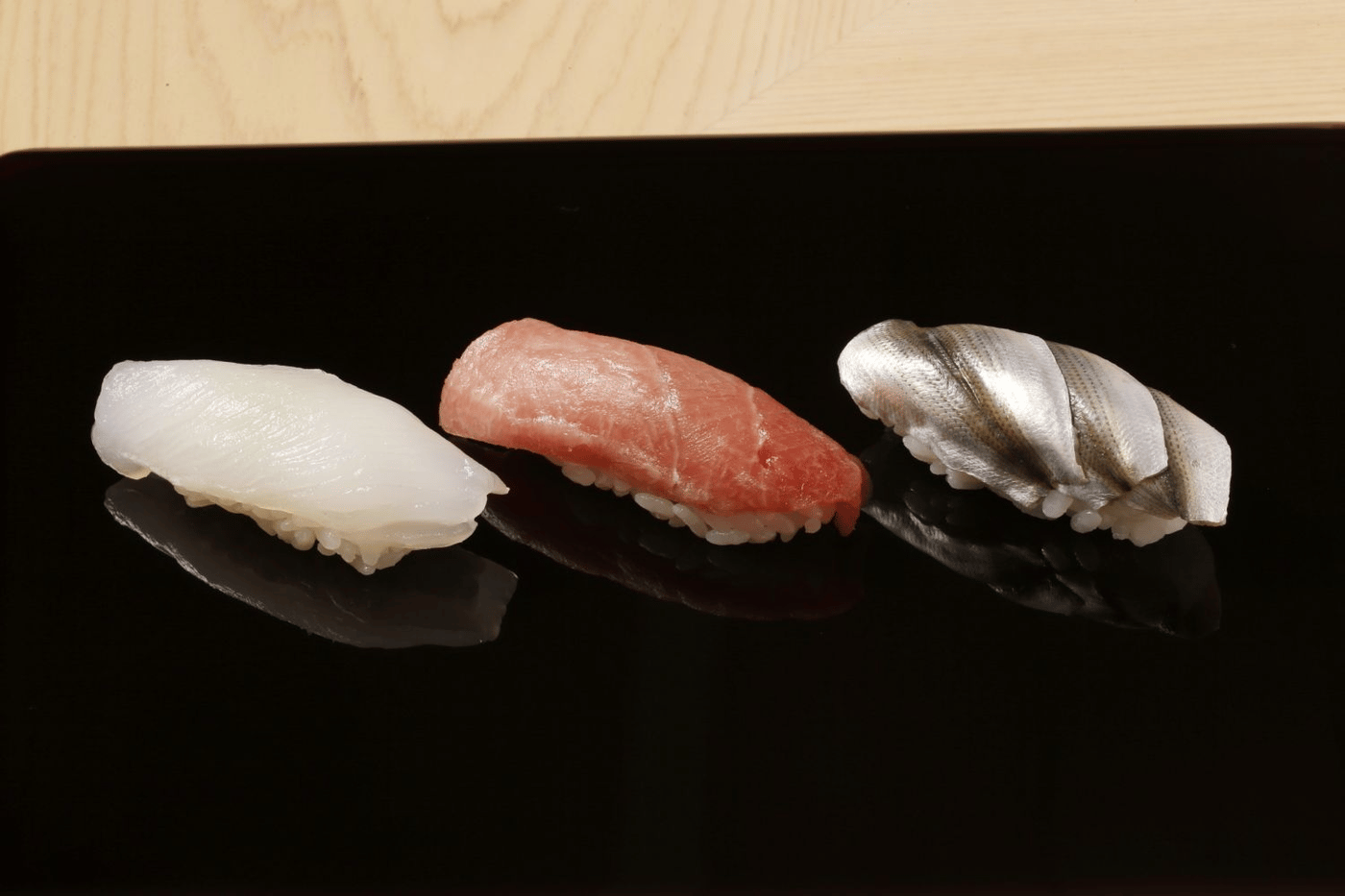
Harutaka's approach to sushi is built on a principle of uncompromising selectivity. The items on the menu are chosen to ensure no compromise in quality. This is a standard stated plainly and consistently delivered by Michelin inspectors. The tiger prawn and simmered Orient clam nigiri exemplifies that commitment. The prawns are handled at a freshly boiled temperature specifically calibrated to draw out their sweetness, with their innards carefully positioned between the prawn and the rice to optimize the flavor of each bite. The Orient clam is brushed with soy syrup and simmered to develop a deep, rich flavor that anchors the piece without overshadowing the prawn.
What the inspectors observed, and what the description of each piece as a study in beauty conveys, is a chef for whom the visual and the flavorful are inseparable. At the highest level of Tokyo sushi, presentation is not decoration; it is part of the argument that the ingredient deserves the attention it is receiving. A piece of nigiri that looks careless undermines the claim being made on behalf of its contents, however good those contents might be. Harutaka makes no such error. The tiger prawn and Orient clam nigiri arrive looking exactly as they should, and taste like a chef who has thought about nothing else. For visitors to Tokyo with a serious interest in sushi, Harutaka represents the form at its most disciplined.
6 / 10
Credit: MAZ
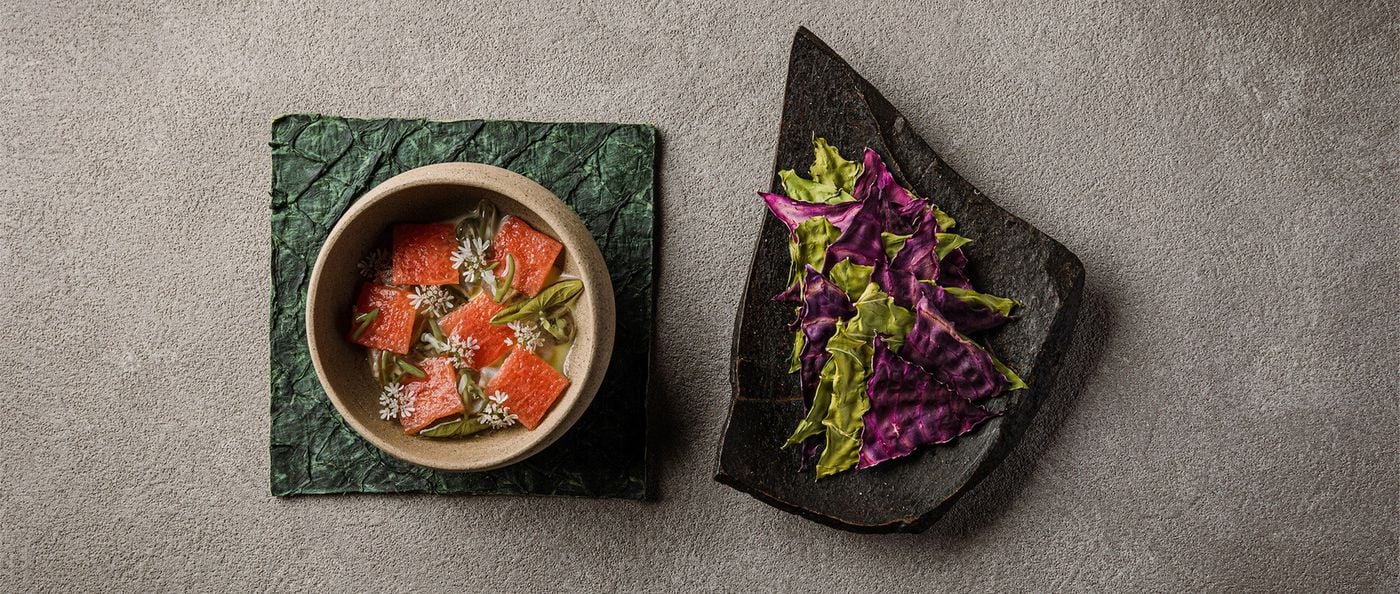
MAZ occupies unusual territory in Tokyo's dining landscape. The restaurant interprets Peru's food culture through Japanese ingredients — a premise that could easily yield novelty without coherence, but which, in the kitchen's hands, produces something Michelin inspectors describe as pervaded by a spiritual atmosphere. The dish that caught their attention combines char, watershield, and watermelon with powdered sweetfish, a combination whose logic is not immediately apparent but whose effect on the palate is described as stunningly original. The vessels are placed on mats fashioned from the skins of freshwater fish from the Amazon $AMZN, grounding the presentation in the South American culinary culture that the restaurant is interpreting.
The dish is significant not just as an eating experience but as a statement about what Tokyo's restaurant scene has become. A Peruvian restaurant in Tokyo, using Japanese ingredients to interpret South American food culture, serves on Amazon fish-skin mats. The cultural layering is dense, and MAZ manages it without condescension in either direction. The Japanese ingredients are not treated as exotic additions to a Peruvian framework; they are equal participants in a conversation between two food cultures that have more in common than their geographic distance suggests. Both value freshness, seasonality, and the relationship between ingredient and technique above almost everything else. MAZ finds that common ground and builds a remarkable dish on it.
7 / 10
Credit: Kutan
At Kutan, a dish of baked sesame tofu and pureed pea soup arrives as a seasonal announcement as much as a course. The olive green of the pea soup suggests sprouting buds, and the flower and butterfly motifs on the lid reinforce the message before the bowl is even opened. Michelin inspectors note the unripe fragrance of the pea soup as one of the dish's defining qualities. It is a scent that transports the diner to a specific moment in the agricultural year before the first spoonful is taken. Orient clam, also in season, joins the pea and sesame tofu in a combination that is as much about timing as it is about flavor.
The contrast between the pungency of the baked sesame tofu and its smooth texture is the dish's central tension, and Kutan resolves it without flattening either quality. The sesame tofu pushes; the pea soup pulls; the Orient clam provides a marine depth that grounds both. The result is a dish that demonstrates a sophisticated understanding of how contrasting elements can coexist and strengthen one another rather than compete for dominance. The presentation, the olive green soup, the decorated lid, the seasonal motifs, is not incidental to this argument. It prepares the diner for an experience that is about a specific moment in the year, and the dish delivers on that preparation. Spring in Tokyo, at this level of cooking, is worth planning a trip around.
8 / 10
Credit: RyuGin
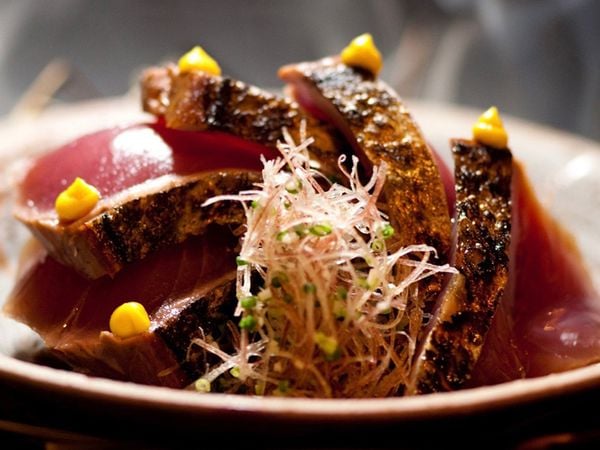
RyuGin is one of Tokyo's most celebrated restaurants, and the straw-grilled duck that Michelin inspectors selected from its menu demonstrates why its reputation is built on something more durable than novelty. The technique is ancient and simple: fragrant straw smoke applied to blood-red duck meat, the heat and aromatics transforming the iron in the flesh into a soup-stock-like aroma, as inspectors describe. A little salt draws out the flavor that the straw has imparted. The result is a dish that tastes of fire and field in a way that no other cooking method produces. It is primal, clean, and deeply satisfying.
The tenderloin is served with sieve-pureed liver and chopped ginger, additions that extend the dish's flavor range without complicating its essential character. The liver puree adds richness and a slight bitterness that offsets the sweetness of the straw-smoked meat; the ginger provides freshness and cut. RyuGin's approach to Japanese cuisine has always been grounded in the conviction that traditional techniques, applied with full understanding and precision, produce results that modern methods cannot replicate. The straw-grilled duck is evidence for that argument. It is a dish that could only be made this way, and that tastes of a cooking tradition that has been refining itself for centuries. For visitors to Tokyo seeking a comprehensive experience of contemporary Japanese haute cuisine, RyuGin is essential.
9 / 10
Credit: Bulgari Hotels
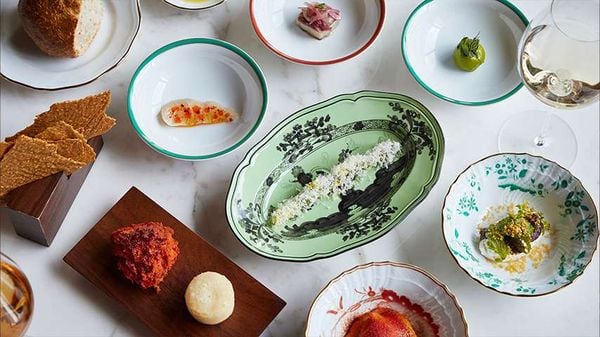
Il Ristorante Niko Romito in Tokyo is an outpost of one of Italy's most acclaimed culinary minds, and the lobster and velvet shrimp linguine that Michelin inspectors selected from its menu is a dish that could only exist in this particular context. The pasta is al dente in the way that only dried noodles achieve — a distinction that matters to anyone who has eaten great Italian pasta and understands what that texture requires. The sauce is rich with the flavor of crustacean and tomatoes, concentrated and precise. The Richard Ginori plateware on which it is served carries motifs influenced by Imari ware from the Edo period, a detail that inspectors describe as rich with meaning.
That detail is worth pausing on. A great Italian restaurant choosing Japanese-influenced ceramics for its pasta course is not a decorator's whim — it is a statement about where the restaurant exists and what that location means. Il Ristorante Niko Romito in Tokyo is not simply an Italian restaurant that happens to be in Japan. It is an Italian restaurant in full dialogue with its surroundings, and the plateware makes that dialogue visible. The lobster linguine itself is excellent by any measure, but the context in which it is served gives it an additional resonance that a bowl of the same pasta in Rome would not carry. This is what it means to cook at the highest level in a city as culturally layered as Tokyo.
10 / 10
Credit: TROIS VISAGES
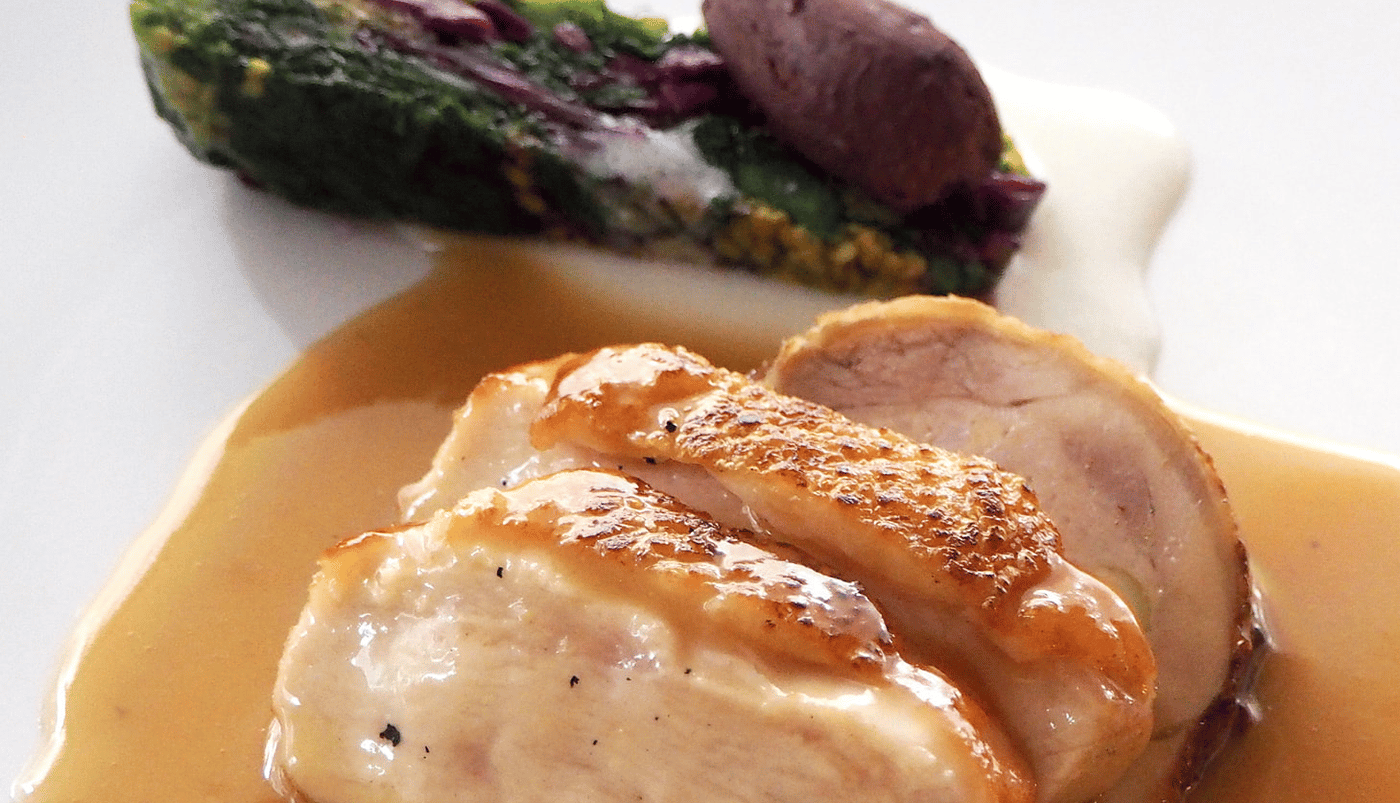
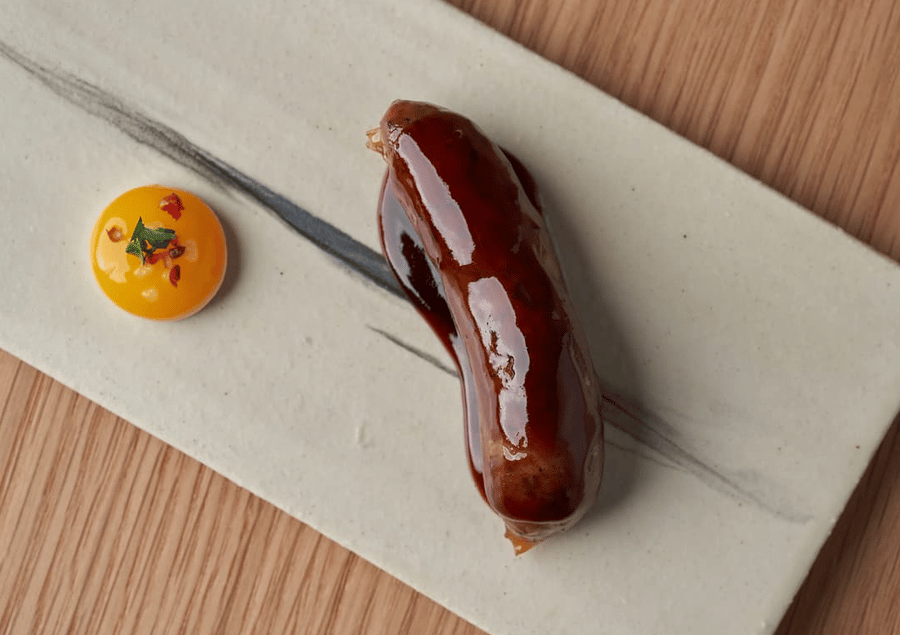
The extreme enoki sausage at TROIS VISAGES is the kind of dish that earns its place on a Michelin inspector's memorable meals list precisely because nothing about it is predictable. A sausage stuffed with enoki mushrooms, finished with a glossy sauce reduced from vegetable bouillon, accompanied by soft-boiled quail eggs that take their cue from tsukune — the meatloaf skewer served with raw egg yolk at yakitori restaurants. The reference points are varied, and the combination is original, but the dish works because every element has a clear function and none is present merely for effect.
The quail eggs are described by inspectors as a marvelous side ingredient that elevates the dish's main star. This formulation captures something important about how TROIS VISAGES approaches cooking. The sausage is the focus; the eggs serve it. That hierarchy is maintained throughout, resulting in a dish with a clear identity and a satisfying internal logic. In a city where the pressure to innovate can produce dishes that prioritize surprise over substance, the enoki sausage at TROIS VISAGES achieves both without sacrificing either. It is surprising on first encounter and coherent on reflection. This is the combination that distinguishes a genuinely creative dish from one that is merely unusual. For diners willing to follow Tokyo's restaurant scene into less charted territory, TROIS VISAGES rewards the detour.
