Credit: COMO Hotels
Florence needs no introduction. The Uffizi, the Duomo, the Arno at dusk. The city delivers on every promise it makes. But there is another Tuscany that begins the moment you leave the city walls, one that reveals itself slowly along winding roads through olive groves and vineyards, past hilltop villages that have barely changed in centuries. This is the Tuscany of the imagination: medieval castles, Renaissance villas, long lunches under cypress trees, wine poured from estates that have been producing it since before most countries existed.
The hotels on this list occupy that landscape. They are villas and agriturismo properties, restored farmhouses and ancient monasteries, castle complexes and noble residences, each within two hours of Florence and offering something the city cannot. Space, silence, the smell of jasmine in a walled garden. A pool with a view of hills that roll on until they meet the sky. A dining room where every ingredient was grown within sight of the table.
What unites them, beyond geography, is a particular quality of escape. These are not hotels that happen to be in the countryside. They are places that have been shaped by the land around them: by the grapes in their vineyards, the olive oil pressed from their trees, and the stone quarried from nearby hillsides centuries ago to build the walls you now sleep within. The Michelin Guide's selection captures properties that understand Tuscany not as a backdrop but as a living part of the experience.
Most of the hotels listed here operate seasonally, from April to October, a window that encompasses Tuscany at its most generous, when the light is long, the harvests are approaching, and the countryside earns every superlative ever written about it. What follows is a guide to the 10 best places to base yourself just beyond Florence, organized by driving time from the city.
1 / 10
Credit: FH55 Hotel Villa Fiesole
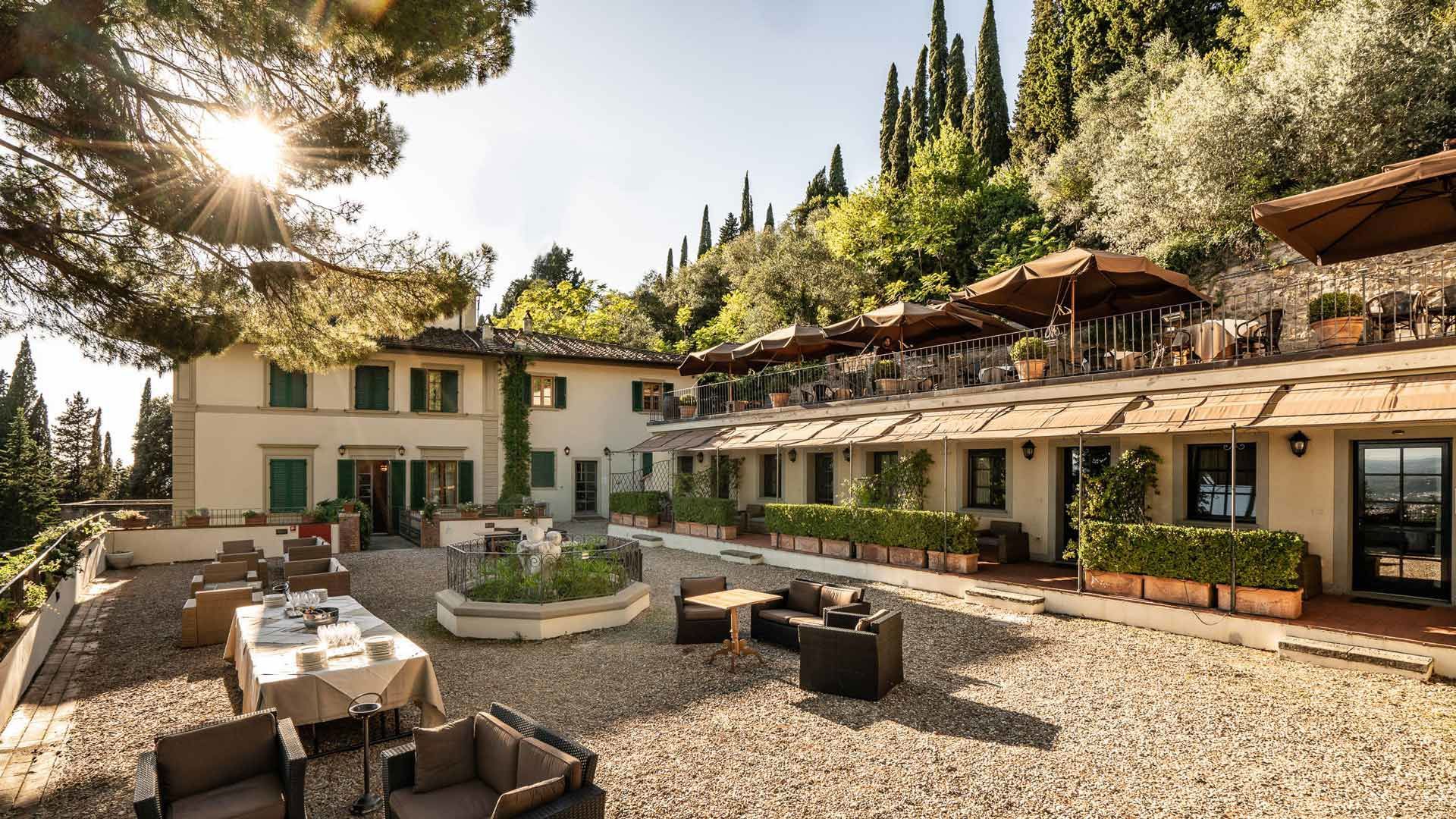
FH55 Hotel Villa Fiesole sits in the hills of Fiesole, 20 minutes and five miles from the center of Florence. It's close enough to visit the city on a whim, far enough to feel genuinely removed from it. The hotel occupies a 19th-century villa surrounded by lush gardens, and the proximity to Florence does not diminish the sense of arrival. From the terrace of the Michelin-starred restaurant, the city's skyline spreads below you in a way that feels earned rather than incidental.
The villa's 32 rooms feature frescoed ceilings, wood flooring, and classic Italian furniture alongside modern amenities, a combination that characterizes the property's broader approach. Historic architecture provides the bones; contemporary touches ensure the comfort. The pool is set among the gardens, and the overall atmosphere is one of a country retreat that happens to sit on the edge of one of the world's great cities. That positioning is the hotel's defining asset: guests can spend a morning at the Uffizi and an afternoon by the pool, or ignore Florence entirely and simply enjoy the hills of Fiesole, which have been drawing visitors seeking relief from the city since the Romans built villas here for the same reason. For those who want the best of both worlds without compromising on either, Villa Fiesole makes the case efficiently.
2 / 10

Credit: Villa Il Poggiale
Villa Il Poggiale occupies a 14th-century property just south of Florence in San Casciano in Val di Pesa, 25 minutes from the city and squarely in the heart of Chianti. The 24 rooms are each uniquely designed, filled with antique furnishings, frescoed ceilings, and textiles sourced from local artisans. Soft, earthy tones made from natural pigments give each space an authenticity that designed-to-look-old interiors rarely achieve. The detail is consistent and considered throughout.
The surrounding gardens — jasmine, hydrangea, the particular green of a well-tended Tuscan garden in high summer frame an outdoor pool that serves as the natural center of the property during the warmer months. The spa draws on the region's natural bounty for its treatments: grapes, olives, and essential oils feature across the menu, grounding the wellness offering in the same landscape that surrounds the hotel. Dining follows the same philosophy. Ingredients are sourced from organic farms, and the wine list draws on both established Tuscan producers and smaller, less widely known nearby estates — a curatorial approach that rewards guests who want to explore the region's wine culture beyond the obvious labels. For travelers who come to Tuscany specifically for its food, wine, and craft traditions, Villa Il Poggiale offers one of the most coherent expressions of all three within easy reach of Florence.
3 / 10
Credit: Salvadonica
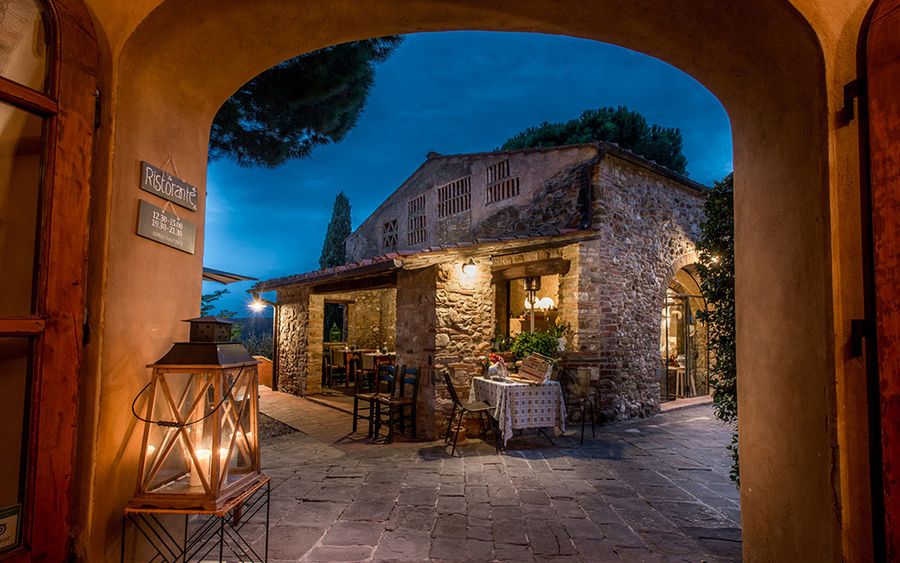
Salvadonica is a family-run agriturismo in the heart of Chianti, just outside San Casciano in Val di Pesa and 30 minutes from Florence. The 30 contemporary rooms feature exposed wooden beam ceilings and frescoed walls, combining rustic character with genuine comfort. The property operates as a working estate, and that identity shapes the experience in ways that distinguish it from hotels that merely evoke the agricultural landscape rather than participating in it.
Guests can sign up for horseback riding, tennis lessons, or daily tasting sessions showcasing the estate's own wine and olive oil — activities that connect visitors to the rhythms of the land rather than simply offering passive enjoyment of the scenery. The on-site restaurant, La Volpenera, serves regional home-cooked dishes rooted in the traditions of the surrounding area. The combination of activities, estate produce, and a setting that functions as a genuine working property gives Salvadonica a texture that more polished luxury hotels can struggle to replicate. It is the kind of place where the agriculture is not decorative — where the olive oil on the breakfast table came from the trees visible from the window, and where the wine in the glass was made from grapes grown in the vineyard you walked through that morning. For travelers who want Tuscany as a lived experience rather than a staged one, Salvadonica earns its place on this list.
4 / 10
Credit: COMO Hotels
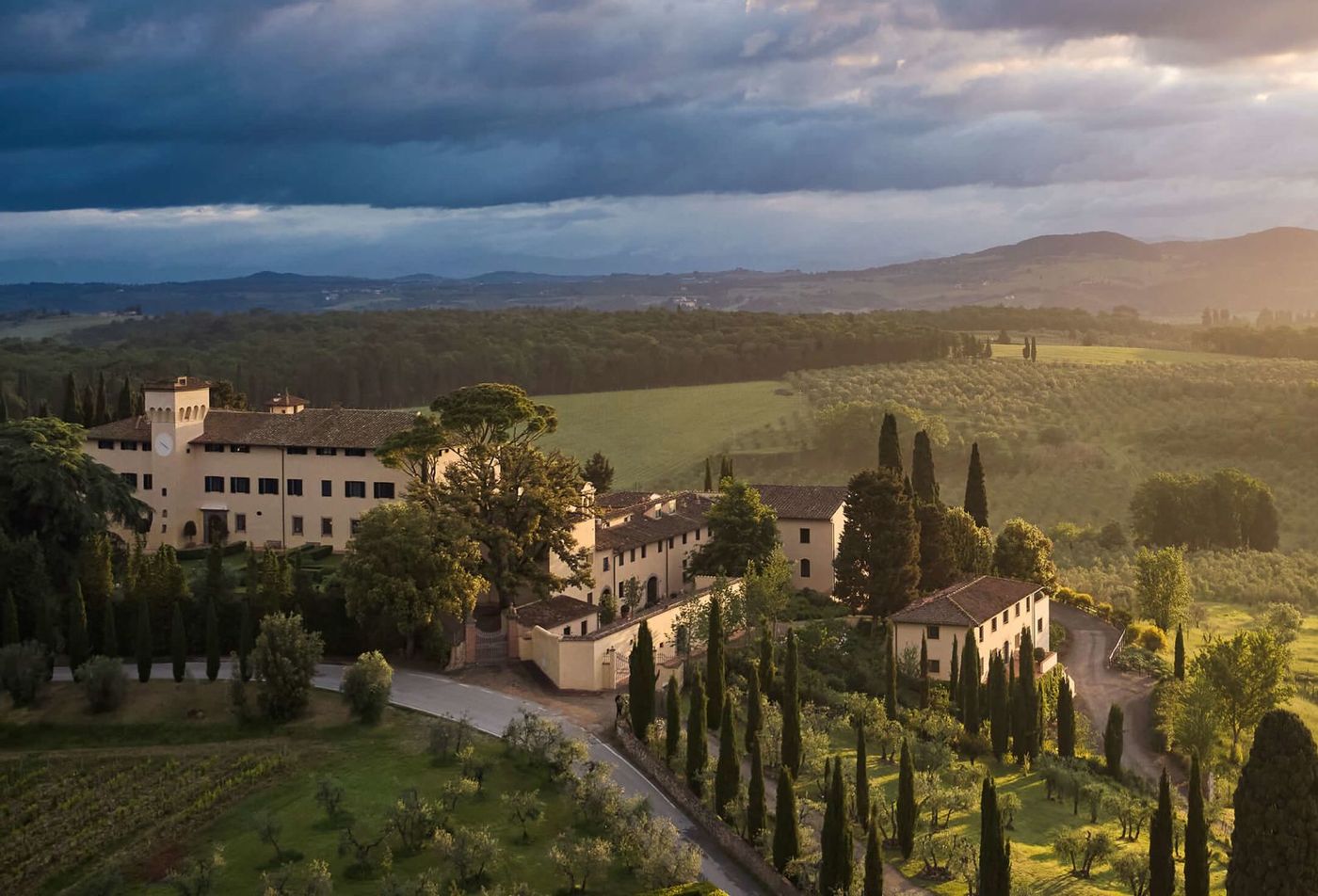
COMO Castello del Nero is one of Tuscany's most exclusive retreats, a 12th-century castle in Barberino Tavarnelle that earned one Michelin Key in 2024. The interiors, designed by Paola Navone, balance historic character with contemporary elegance — 50 rooms and suites feature cool-toned decor set against original 18th-century frescoes, a combination that feels neither museumlike nor anachronistic. For guests seeking maximum privacy, a secluded five-bedroom villa from the 1700s is available separately, complete with its own pool and countryside views.
The estate spans 740 acres of manicured gardens and vineyards, providing space enough to fill several days without leaving the property. The COMO Shambhala spa, yoga classes by the outdoor pool, and the grounds themselves all contribute to an experience oriented around genuine restoration. Dining at the Michelin-starred La Torre anchors the culinary offering, with farm-to-table gastronomy that draws on the surrounding landscape. The hotel sits 30 minutes from Florence, close enough to the city for a day trip but sufficiently self-contained that most guests have little reason to leave. For travelers who want a historically significant property with the full infrastructure of a modern luxury hotel — a spa, a starred restaurant, acres of grounds — COMO Castello del Nero is among the strongest options in the Chianti region.
5 / 10
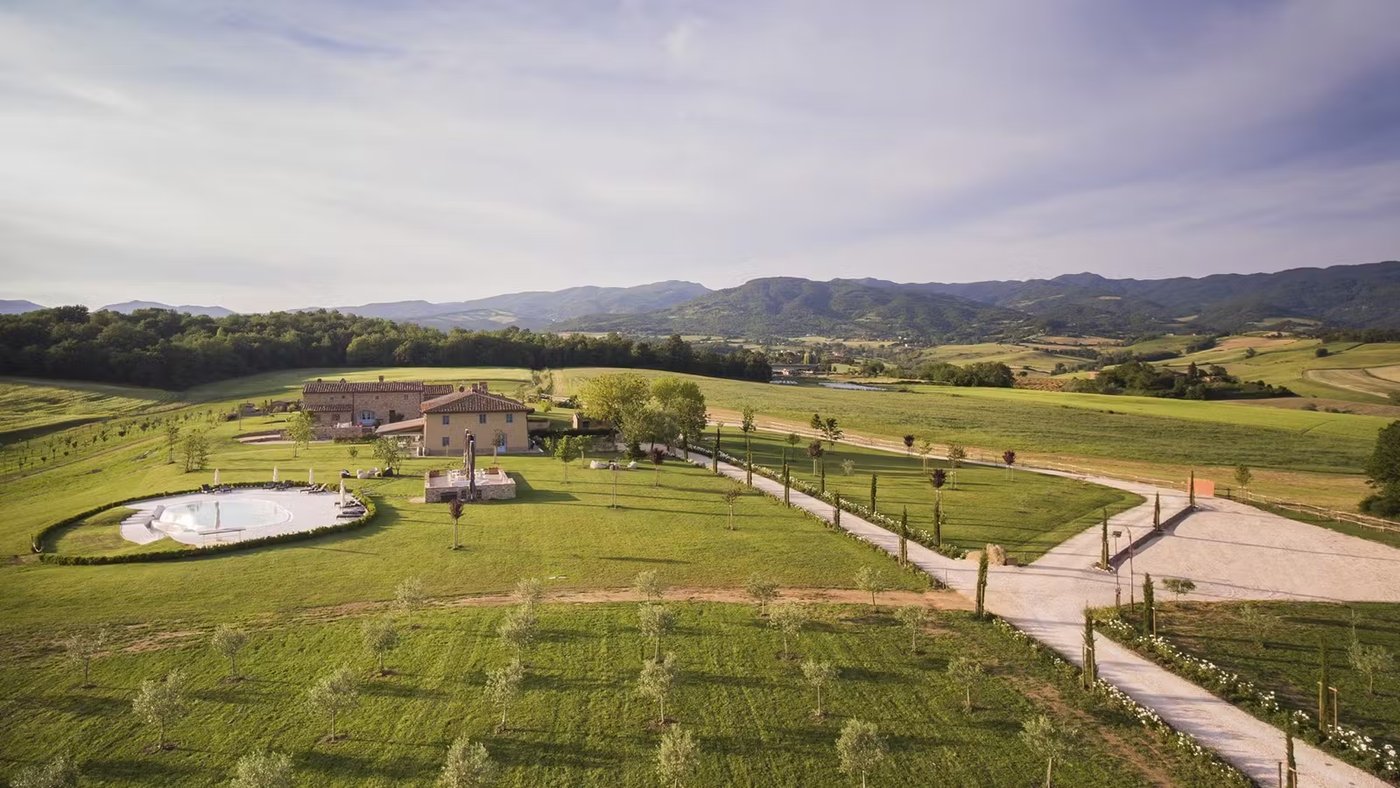
Credit: Tenuta Le Tre Virtù
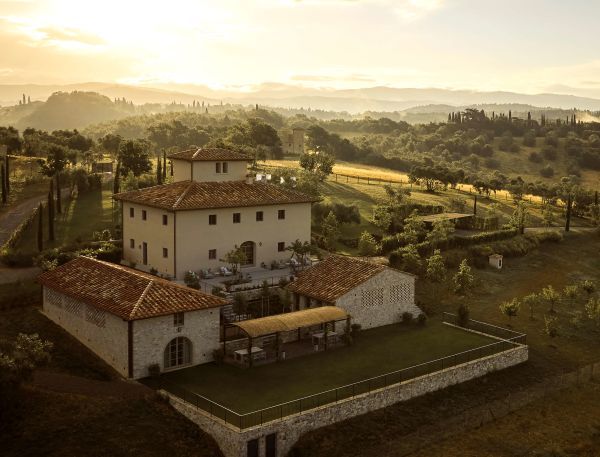
Tenuta Le Tre Virtù occupies a restored 17th-century stone farmhouse tucked into the Mugello countryside, 40 minutes from Florence and surrounded by the Apennine mountains and rolling green valleys. With only seven rooms, the property offers an intimacy that larger estates cannot match — this is a place where the atmosphere is shaped by a small number of guests sharing a space that feels more like a private home than a hotel. No televisions reinforce the proposition: shelves of books serve in their place, and the emphasis throughout is on unhurried presence.
The rooms are each painted a unique color and paired with a matching scent—fresh-cut wildflowers, lavender, or citrus — a level of considered detail that extends the property's sensory identity into its most private spaces. Exposed beams, hand-decorated ceramics, and Tuscan wrought iron provide the visual language. Dining is handled through a daily breakfast and a private chef service available on request, a flexible approach that suits the property's intimate scale. The surrounding area is ideal for outdoor activities: one of Tuscany's top golf courses, Poggio dei Medici, is a short drive away. Spring 2025 marked the launch of Tenuta's first organic wine, Ventitré — a limited-edition blend of cabernet franc, cabernet sauvignon, and merlot best enjoyed, the hotel suggests, poolside. For travelers who want genuine seclusion without sacrificing quality, Tenuta Le Tre Virtù is a compelling choice.
6 / 10
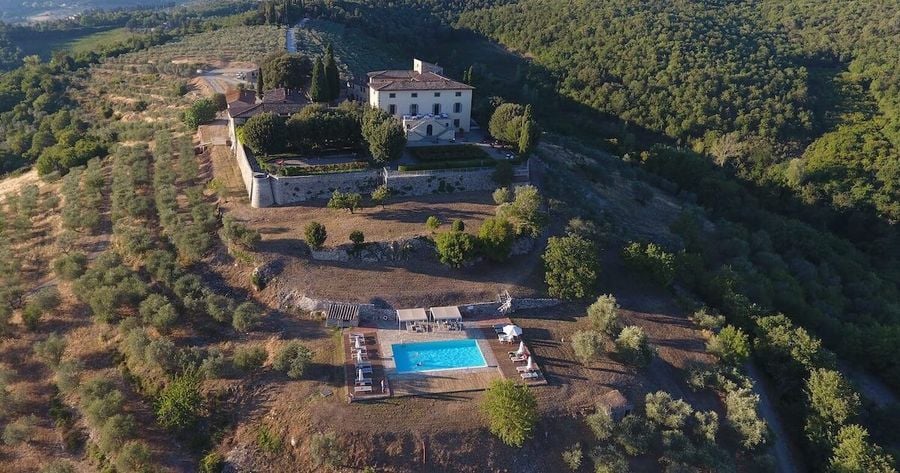
Credit: Castello La Leccia
Castello La Leccia sits on a Tuscan hilltop in Castellina in Chianti, with views stretching to San Gimignano and Siena. This panorama contextualizes the property's deep-rootedness in the region. The estate is mentioned in historical sources dating to the 11th century, and centuries of that history are woven into its stone manor house, which has been lovingly restored by the Sonderegger family. The 12-room property is understated and refined, with exposed beams, sleek interiors, and a quality of attention that reflects a family project rather than a managed asset.
The estate operates as an organic farm and wine producer, and those activities anchor the guest experience in a direct way. The zero-kilometer restaurant serves hyper-local Tuscan cuisine paired with wines from the property's own organic vineyard. This is a farm-to-table model that is genuine rather than aspirational. An infinity pool and pergola-shaded terrace make the most of the hilltop position, while an on-site spa, yoga classes, and guided wine tours extend the options for guests who want more than passive relaxation. The combination of historic significance, family stewardship, organic farming, and an exceptional location places Castello La Leccia among the more characterful retreats within reach of Florence. It is a property that rewards guests who come with curiosity about where their food and wine come from, and who want a stay shaped by the land rather than insulated from it.
7 / 10
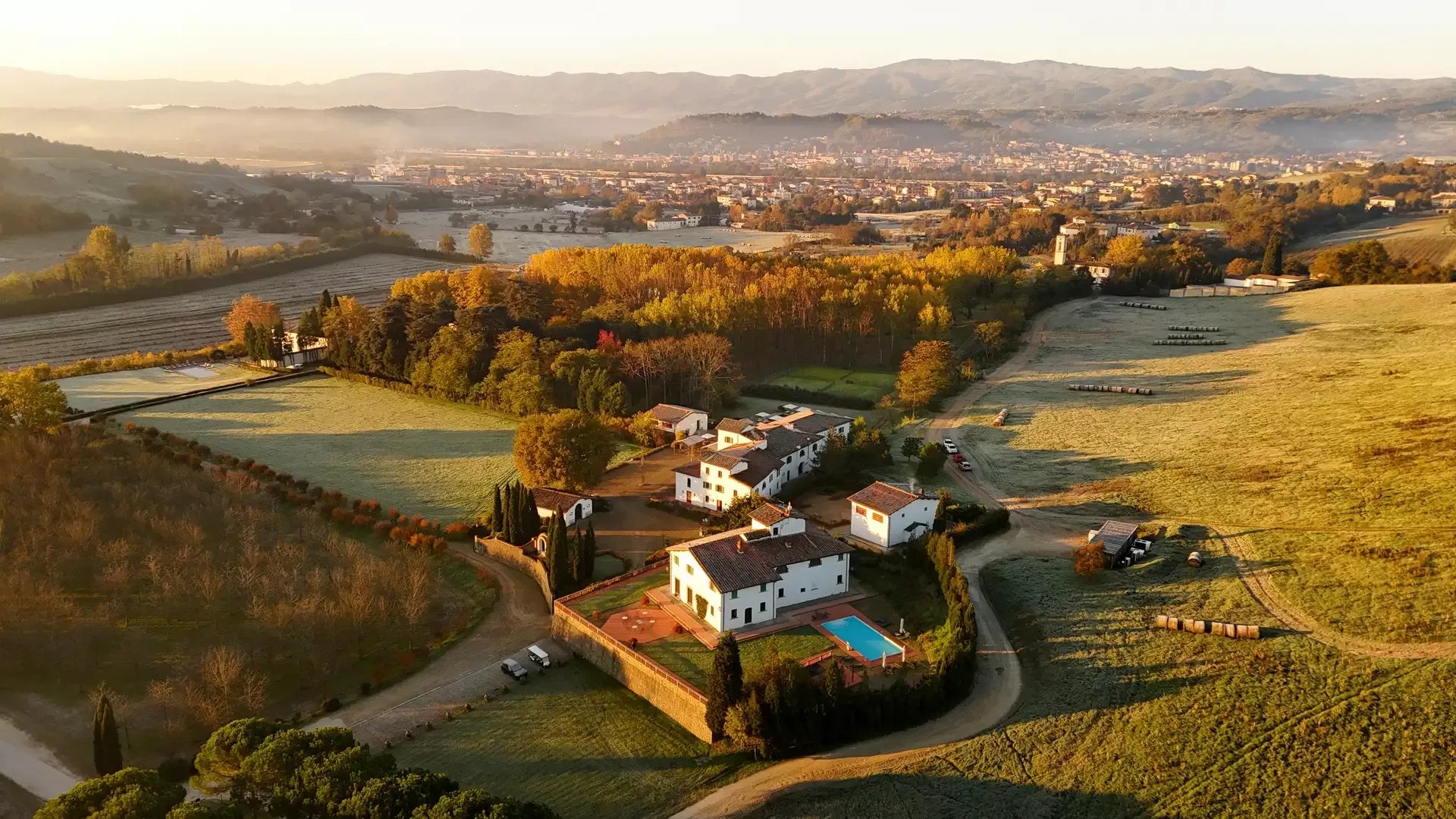
Credit: Viesca Toscana
Viesca Toscana was once the summer retreat of the Ferragamo family, and that provenance is legible in the property's approach to luxury: generous, assured, and grounded in a deep familiarity with what a Tuscan estate should feel like from the inside. Set on 173 acres of rolling hills in Reggello, 40 minutes from Florence, the estate encompasses 16th-century villas with private pools alongside suites tucked into a quieter borgo. The scale allows for a variety of experiences within a single property, from complete seclusion in a private villa to the sociability of shared estate amenities.
At the center of the food and drink offering is Il Borro — part restaurant, part bar, part gourmet shop — where Executive Chef Andrea Campani serves farm-to-table dishes using local, organic ingredients. Cooking classes, the estate's own vineyard, and a spa round out an offering that can sustain multiple days without repetition. Activities extend across the landscape: horseback riding, tennis, cycling on scenic trails, and yoga under the cypress trees are all featured. The infinity pools and in-villa chef service complete the picture of an estate that has carefully considered every dimension of a guest's stay. For travelers who want a property that delivers the private-home feeling of a Tuscan estate alongside full hotel infrastructure, Viesca Toscana is among the most complete options on this list.
8 / 10
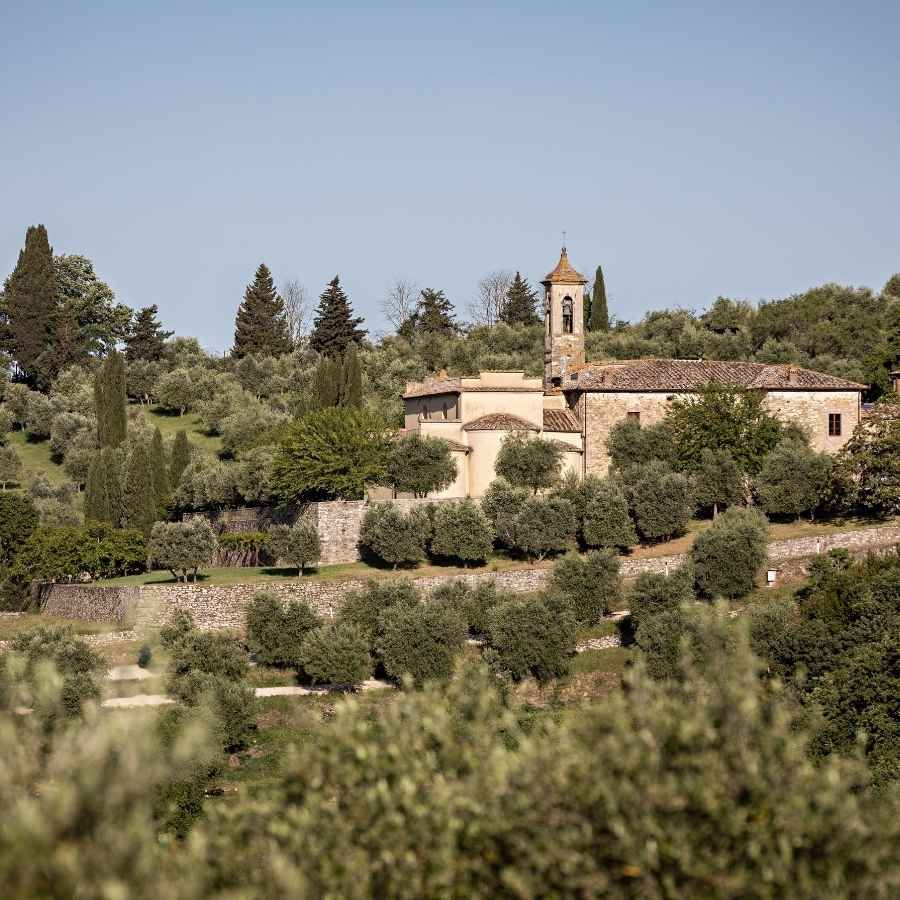
Credit: Pieve Aldina
Pieve Aldina is located in what was once a medieval hamlet in Radda in Chianti, perched on a hill surrounded by vineyards and centuries-old cypress trees, 50 minutes from Florence. The estate's restoration has preserved the character of the original stone buildings while creating elegantly understated rooms that feel appropriate to their setting — the architecture leads, and the interiors follow with restraint. The surrounding landscape does the rest: vineyards in every direction, the particular stillness of a Chianti hillside in the early morning, the smell of cypress and warm stone.
The on-site restaurant opens out into the gardens and builds its menu around local ingredients, reinforcing a connection to place that runs through every aspect of the property. The spa and outdoor swimming pool provide the expected infrastructure for relaxation, but Pieve Aldina's more distinctive offerings are found in its activity program. Picnics in the vineyards, yoga classes among the vines, and weekly Tuscan barbecues under the olive trees give the property a social rhythm that makes a multi-day stay feel varied and alive. For wine lovers, the Chianti location is reason enough: the surrounding area is among Italy's most celebrated wine regions, and the estate's positioning within it makes exploration straightforward. Pieve Aldina rewards guests who want to slow down, and who find that slowing down is considerably easier when the setting is this compelling.
9 / 10
Credit: Castello Di Spaltenna
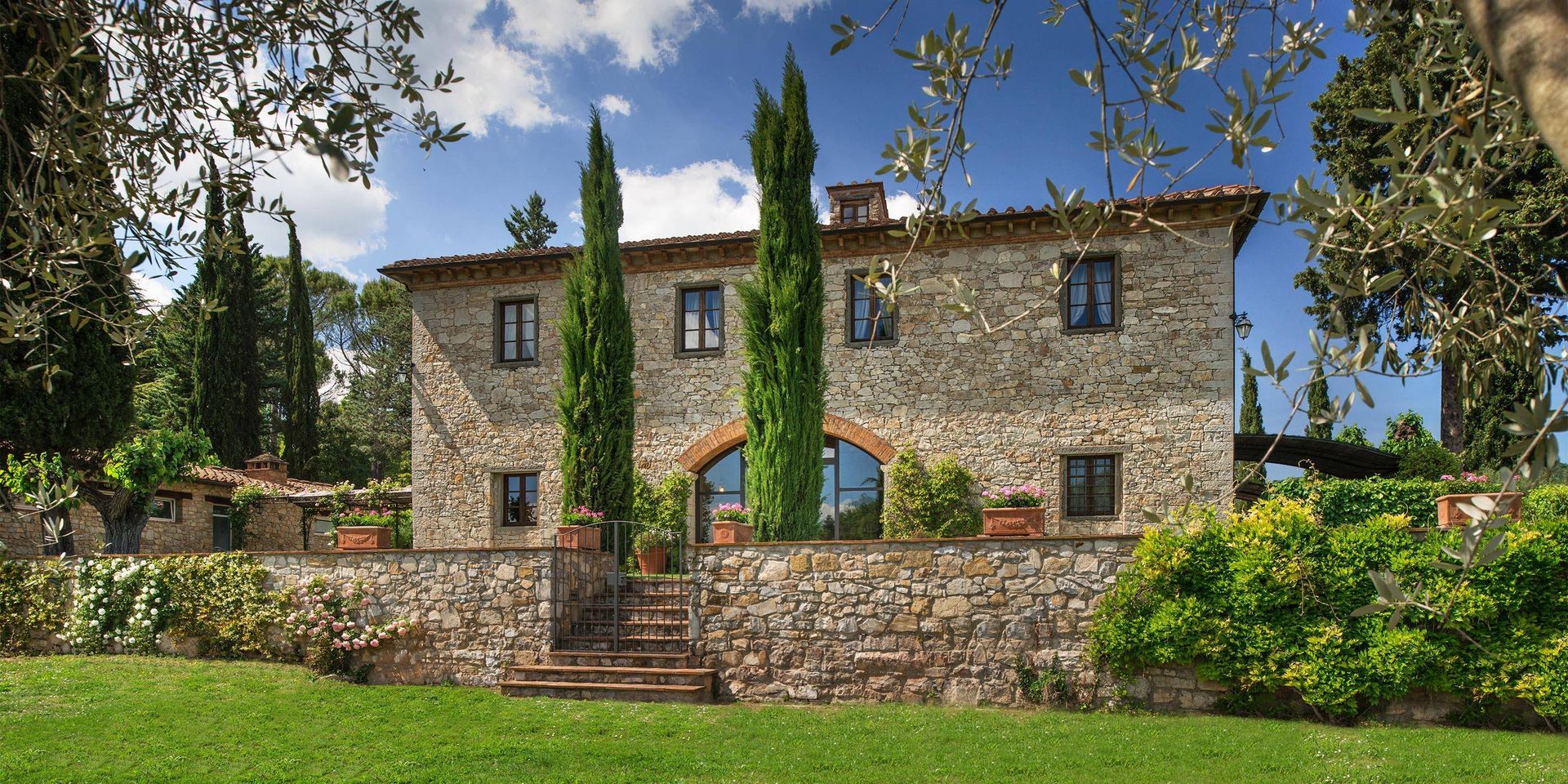
Castello Di Spaltenna has stood in Gaiole in Chianti for roughly a thousand years, from its origins as a monastery to its gradual evolution into one of the region's most characterful luxury retreats. The 37 rooms spread over three floors are each distinct: four-poster beds, 18th-century writing desks, classic fireplaces, and Jacuzzis for two, giving the property a sense of accumulated particularity rather than designed uniformity. The setting, framed by cypresses, olive trees, and wild woodlands, is archetypal Chianti, and the estate makes the most of it.
A serene outdoor pool and a brand-new indoor heated pool and whirlpool area extend the options across seasons, giving the property a year-round relevance that purely outdoor-oriented estates cannot claim. Three restaurants anchor the dining offering, including the Michelin-starred Il Pievano, soon to be helmed by acclaimed chef Antonio Iacoviello. The combination of a significant culinary appointment and a property with genuine historic depth makes Castello Di Spaltenna one of the more serious retreats on this list. This is a place where the food warrants the journey as much as the surroundings do. At an hour from Florence, it sits at the outer edge of easy day-trip range, making it better suited to guests who plan to stay long enough to settle into the rhythm of the Chianti countryside rather than use it as a base for city visits.
10 / 10
Credit: La Collegiata
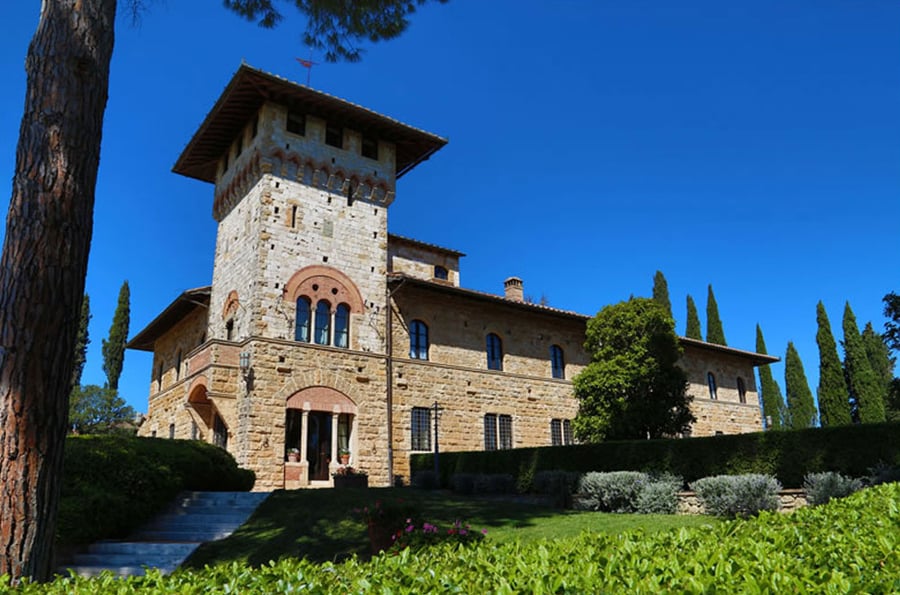
La Collegiata occupies a 16th-century monastery in San Gimignano, the medieval hill town famous for its cluster of ancient towers and its position at the edge of the Val d'Elsa, an hour from Florence. With just 20 rooms, the property operates at a scale that preserves the monastic sense of quiet that the building carries in its bones. The rooms are decorated in classic Tuscan style — warm hues of ocher, green, and burgundy with touches of blue — and combine period character with contemporary comforts, including air conditioning and modern bathrooms.
The most arresting space in the hotel is its restaurant, L'Eco Divino, which occupies the former monastery chapel. Seasonal, locally sourced dishes are served in a setting where the architecture provides a context that no amount of interior design could manufacture. Al fresco dining in the gardens, with views of San Gimignano's famous towers in the middle distance, offers a different register entirely — unhurried, open-air, and as Tuscan as anything on this list. A pool, lush gardens, and a bar area complete the offering. San Gimignano itself adds value beyond the hotel: the town is one of Tuscany's most visited medieval settlements, and the hotel's position within walking distance of its center makes it a natural base for guests who want to explore the Val d'Elsa while maintaining easy access to Florence.
