
Carbonara and carciofi alla Giudia named best Roman dishes in Michelin Guide's 2026 list
From silky carbonara to golden fried artichokes, these are the Roman dishes that have stood the test of time
Chris Canton / Getty Images
Rome does not reinvent itself. That is precisely the point. While other food cities chase trends and court culinary tourists with tasting menus built around novelty, Rome has spent centuries perfecting a handful of dishes and refusing to apologize for their simplicity. Carbonara, tripe, fried artichokes, rice balls pulled apart to reveal strings of melted mozzarella. These are not dishes that require explanation or elevation. They require good ingredients, practiced technique, and the confidence to leave well enough alone.
That confidence is the defining quality of Roman cooking. The cuisine is built on what food writers have long called cucina povera — the cooking of the poor, the resourceful, the inventive. Roman cooks historically worked with what was left after the aristocracy had taken its share: the offal, the cheaper cuts, the seasonal vegetables, the leftover rice. What they produced from those constraints became some of the most copied and least successfully replicated foods in the world. The gap between carbonara in Rome and carbonara anywhere else is not a matter of recipe — it is a matter of accumulated knowledge, local ingredients, and a cooking culture that has been shaping and reshaping these dishes for generations.
The five dishes that follow are the ones the Michelin Guide's inspectors consider most essential to understanding Roman food. They span the full range of a Roman meal, from street food eaten standing up to the dessert that closes a long Sunday lunch. Some are immediately approachable; others ask a little more of the diner. All of them reward the effort of seeking out a properly made version at a restaurant that takes tradition seriously.
Rome has no shortage of places that do exactly that. What it has even less of are dishes that need improving. These five are the proof.
1. Carbonara, amatriciana, and gricia: Rome's holy trinity of pasta
Chris Canton / Getty Images
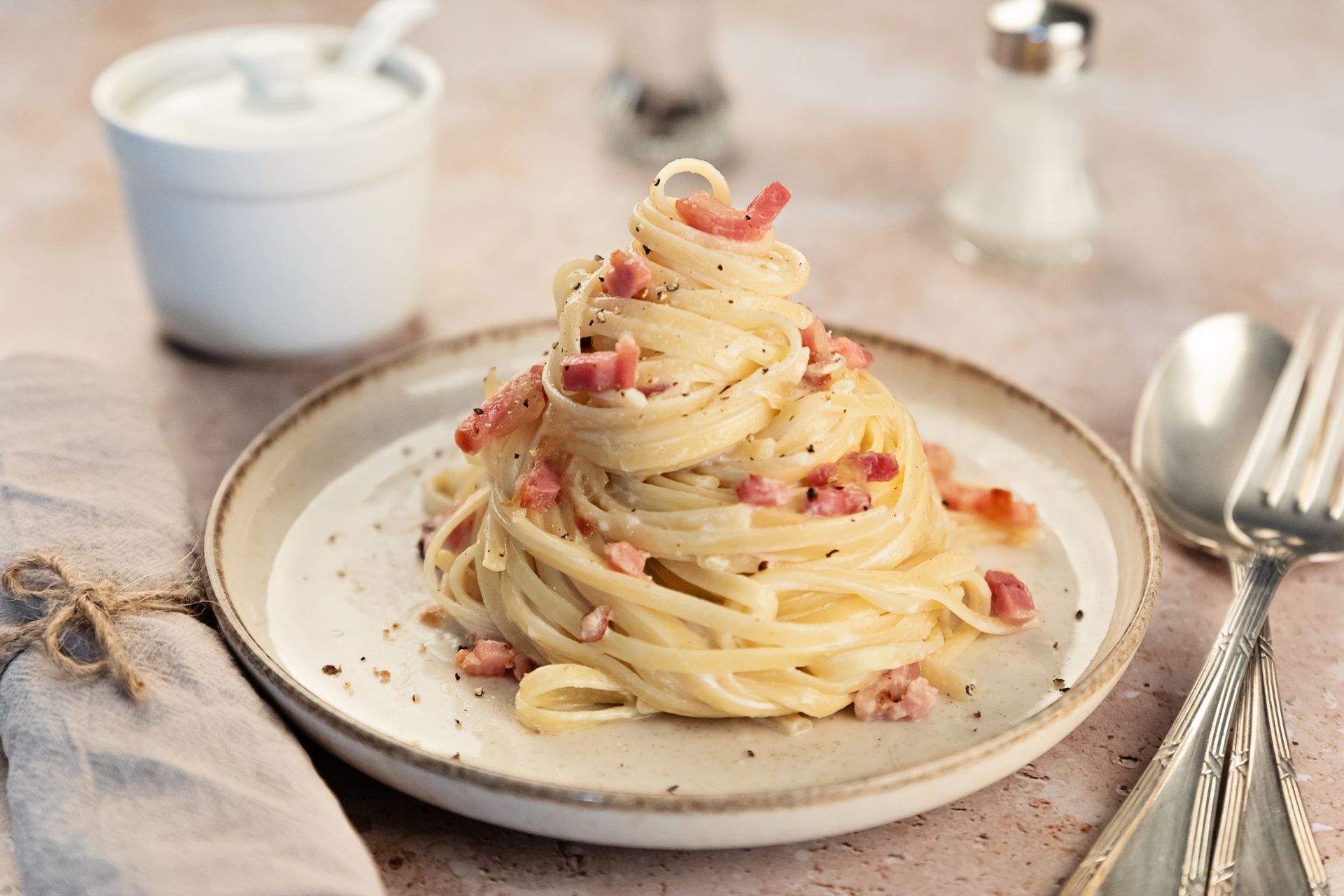
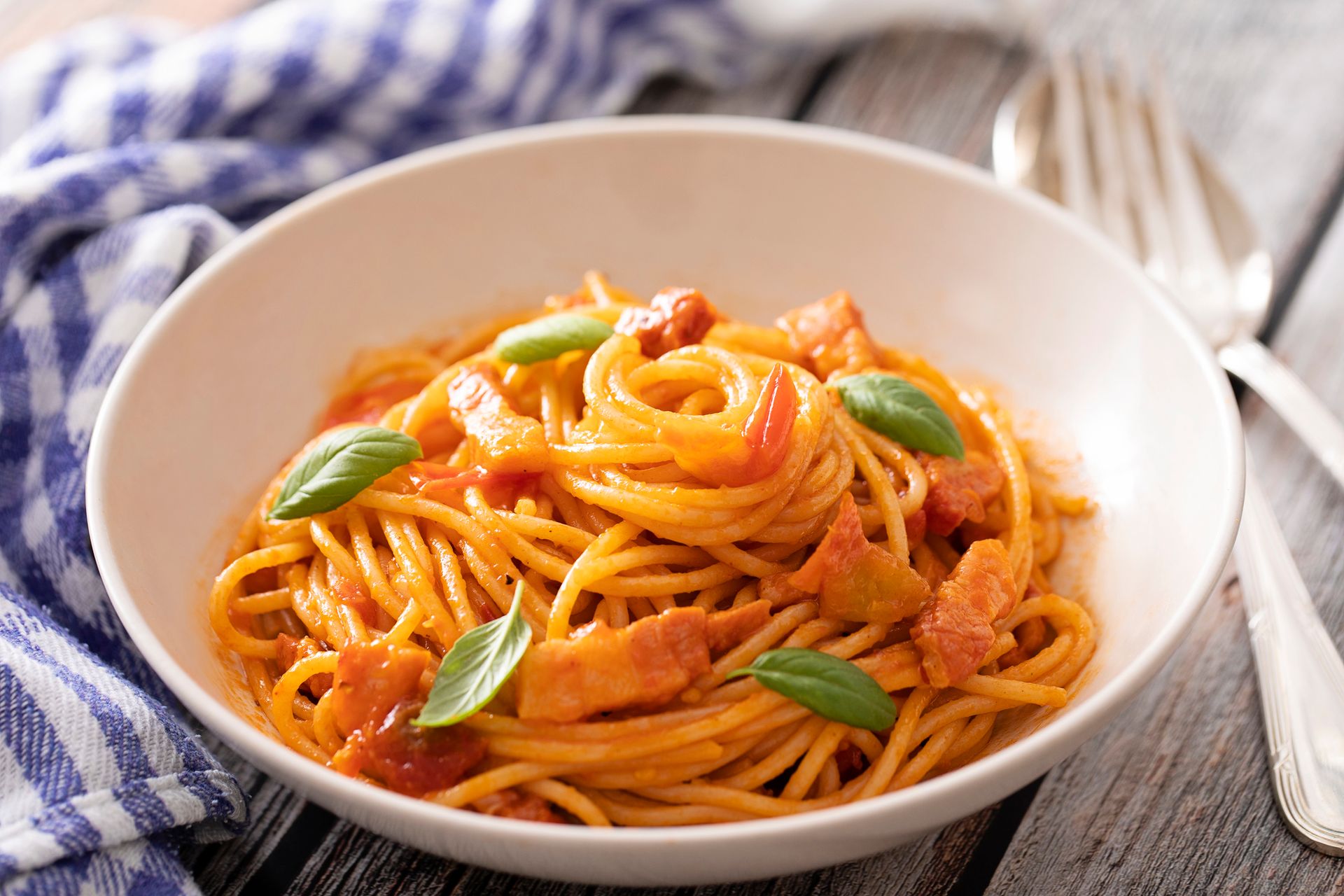
Pasta tops any honest account of Roman food, and three preparations dominate above all others. Carbonara is the most celebrated — a silky combination of egg, cheese, and guanciale, the cured pork cheek that gives the dish its backbone. The texture, when made correctly, is neither dry nor runny but suspended somewhere between the two: coating the pasta without pooling beneath it. It is technically demanding in a way that its short ingredient list does not suggest, which explains why versions made outside Rome so rarely match the original. The dish is significant enough to have its own annual observance: National Carbonara Day is held on April 6 each year.
Guanciale also drives amatriciana, where it is paired with a bright, assertive tomato sauce and finished with pecorino, a combination that is simpler than carbonara but no less precise in its requirements. The tomatoes need acidity; the guanciale needs time to render; the pecorino needs restraint. Pasta alla gricia, the oldest of the three, skips the tomato entirely, relying on the alchemy of cured pork and pecorino to carry the dish. It is the preparation that most clearly exposes a cook's technical ability, with nowhere to hide behind sauce.
For those who want heat without meat, penne all'arrabbiata, with tomato, chili, and parsley, offers a fiery, meat-free alternative that is entirely characteristic of the Roman table. Beyond pasta, gnocchi alla Romana, semolina discs baked in milk and butter until golden, round out a carbohydrate tradition that is varied, deep, and thoroughly worth exploring. Each dish reflects a city that has spent centuries learning exactly how much is enough.
2. Trippa alla Romana: the dish that built Rome's reputation for humble cooking
ALLEKO / Getty Images
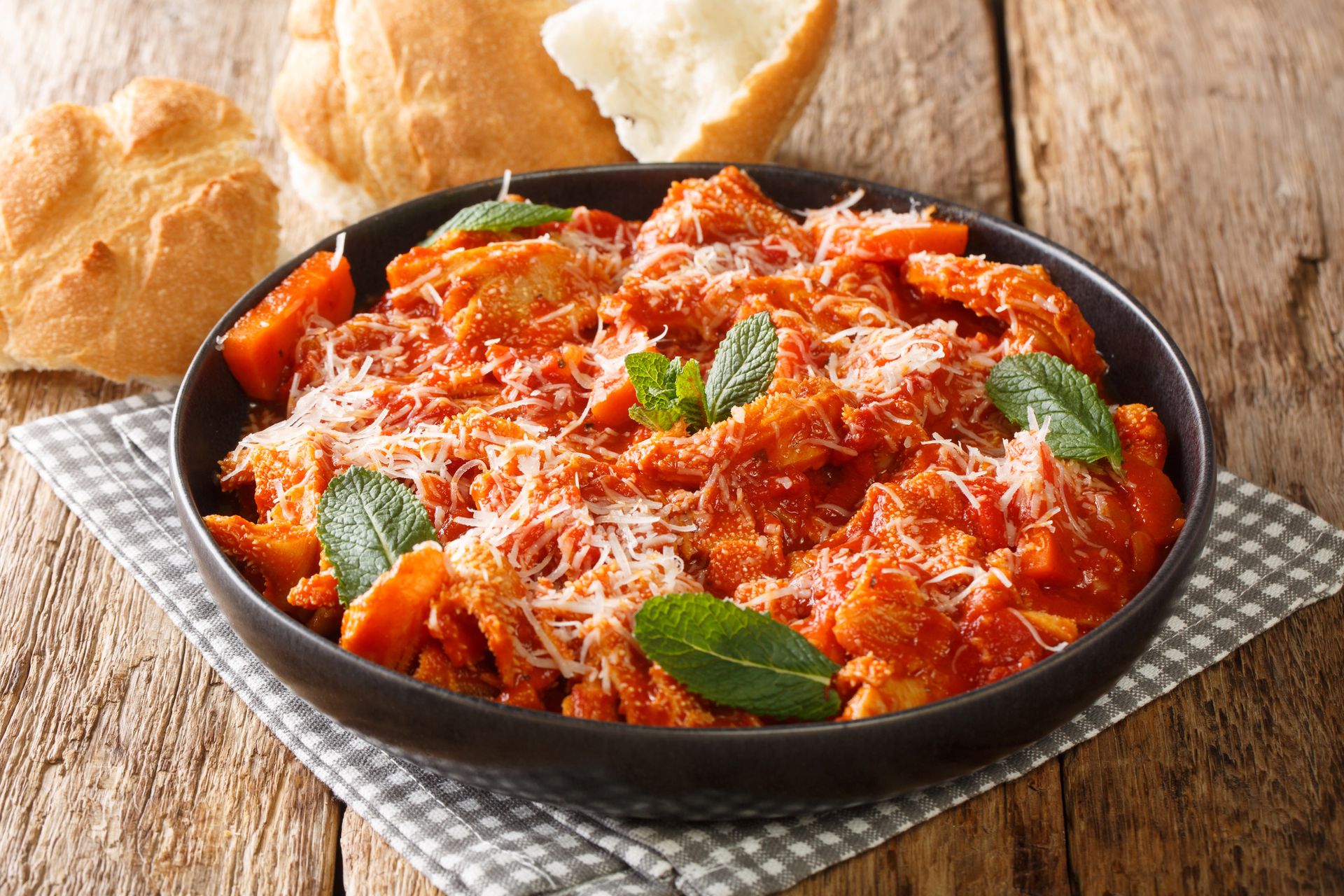
Trippa alla Romana, tripe simmered in tomato, mint, and pecorino, belongs to a cooking philosophy that Romans call quinto quarto, or the fifth quarter. The term does not refer to a single dish, but to an entire tradition: the cooking of offal, the cuts left to the working classes after prime meats had gone to the wealthy. Spleen, heart, lungs, kidneys, and tripe were what remained, and Roman cooks — particularly in Testaccio, once the city's slaughterhouse district — turned them into dishes of considerable depth and flavor. What began as cucina povera is now considered definitive Roman fare.
Trippa alla Romana is the most widely eaten expression of this tradition, rich with tomato and herbs and finished with a grating of pecorino. The mint is not incidental. It is what makes the Roman version distinct from tripe preparations found elsewhere in Italy, its freshness cutting through the richness of the stew. Alongside it, coda alla vaccinara, slow-cooked oxtail stew, and coratella, lamb offal sautéed with artichokes or onions, complete the quinto quarto canon. Each dish speaks to a resourcefulness that shaped Roman cooking as profoundly as any noble ingredient ever did.
For those who prefer to avoid offal, the Roman table offers alternatives with the same spirit of bold, unfussy flavor. Abbacchio, suckling lamb, is grilled alla scottadito and seasoned with rosemary and olive oil. Saltimbocca alla Romana, thin veal wrapped with prosciutto and sage, is lighter and more immediately approachable. Both belong to a broader tradition that prizes flavor over refinement and has been doing so for centuries.
3. Carciofi alla Giudia: the fried artichoke that stops people mid-sentence
photooiasson / Getty Images
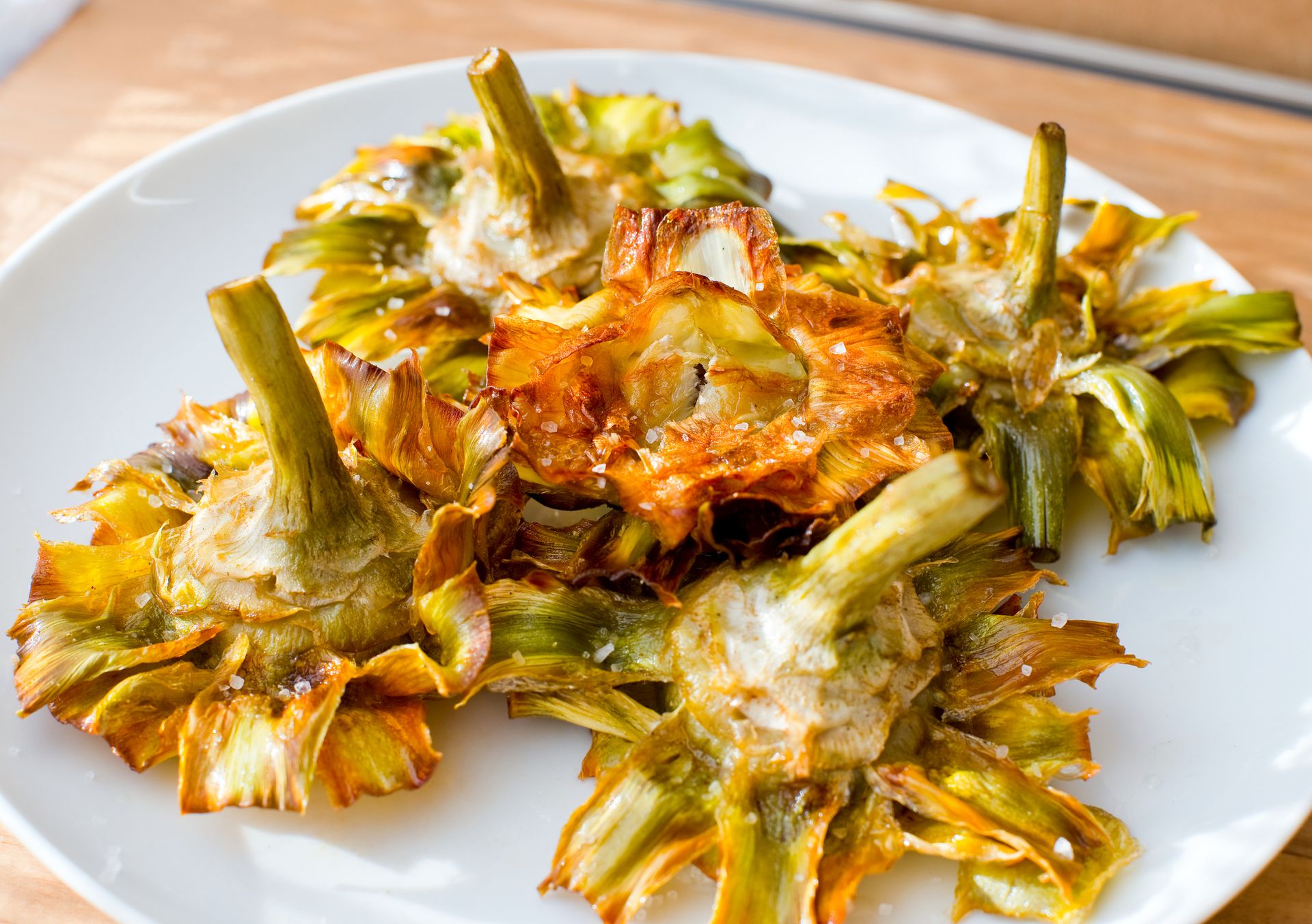
Rome treats its vegetables with a seriousness that most cuisines reserve for meat, and no vegetable receives more attention than the artichoke. It appears in two canonical forms. Carciofi alla Romana, braised gently in olive oil with garlic, parsley, and mint, is the softer preparation: the artichoke made tender and fragrant, its bitterness softened into something almost sweet. Carciofi alla Giudia is something else entirely. The artichoke is deep-fried until it opens like a flower, its outer leaves crisped to a coppery sheen that shatters at the first bite. The dish belongs to the ancient Judeo-Roman culinary tradition and is one of the most visually striking preparations in Italian cooking.
The artichoke's prominence in Roman cuisine is seasonal but pervasive. Spring brings vignarola, artichokes, peas, lettuce, and broad beans cooked together until unified and comforting. Winter offers puntarelle, the curly shoots of chicory tossed with anchovy dressing, bracingly bitter and deeply savory. Cicoria ripassata, pan-fried greens with garlic and chili, and pomodori al riso, tomatoes baked and filled with herbed rice, fill out a vegetable repertoire more varied and considered than most visitors expect.
The fried tradition extends beyond artichokes. Courgette flowers, plain or stuffed with mozzarella and anchovies, and baccalà fritto (fried salt cod) are fixtures of Roman snacking culture, eaten between sightseeing stops with the casual ease of a city entirely at home with its street food. Rome fries things exceptionally well — clean oil, right temperature, no excess batter — and the artichoke remains the finest proof.
4. Supplì al telefono: Rome's essential street food in one golden rice ball
Olga Mazyarkina / Getty Images
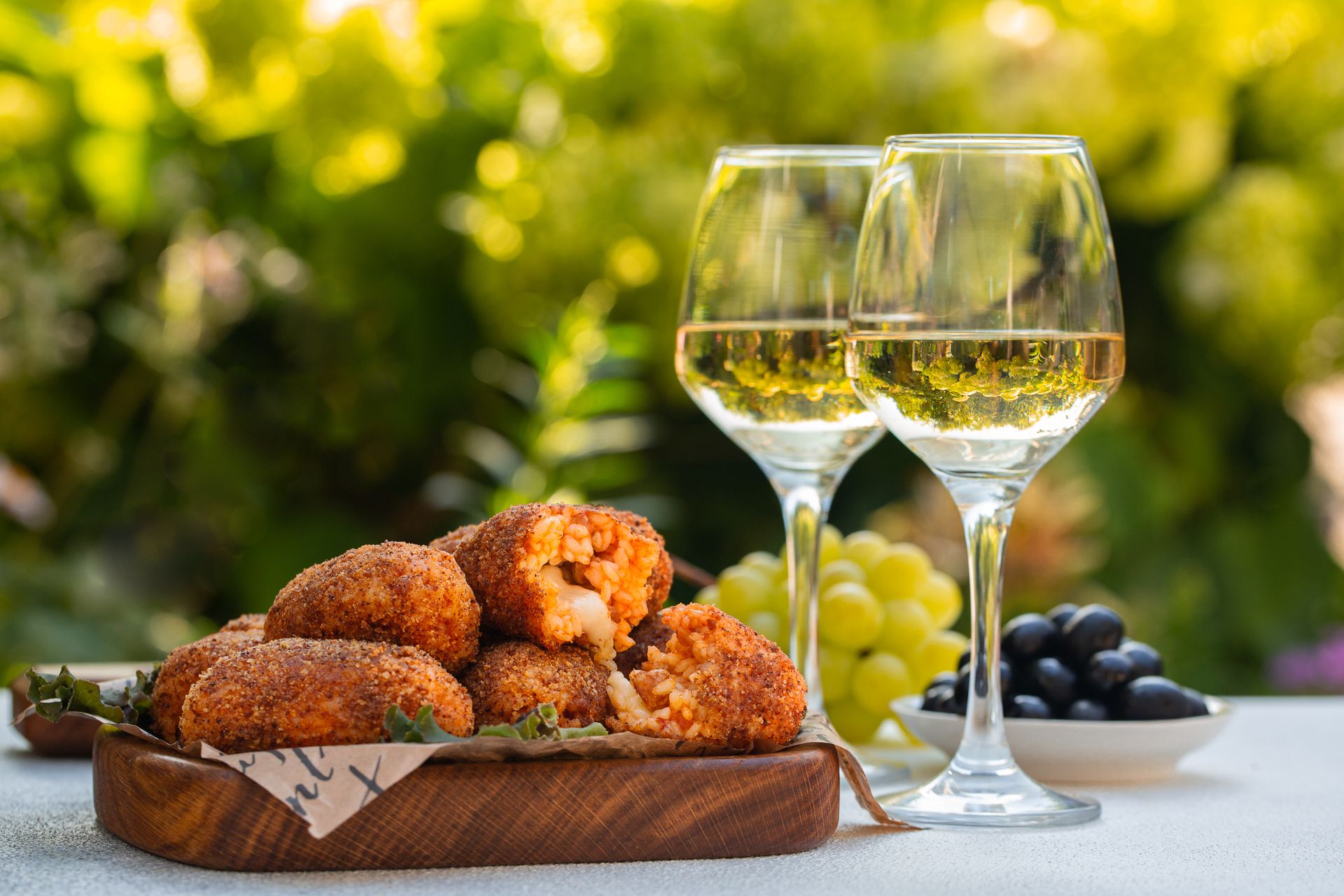
Rome's street food culture is efficient and unpretentious, built around dishes that can be eaten on the go. Supplì al telefono sits at the center of that tradition. These are golden, breaded rice balls filled with meat and mozzarella, fried until the exterior is crisp and the interior is molten. The name comes from what happens when you pull one apart: the melted mozzarella stretches like an old telephone wire, giving the dish both its playful identity and its clearest quality benchmark. A supplì that does not pull was not made correctly.
The broader fried tradition surrounding supplì is equally worth attention. Courgette flowers stuffed with mozzarella and anchovy, baccalà fritto, and porchetta, slow-roasted pork stuffed with garlic and herbs, served in sandwiches, all belong to a street food culture that has been feeding Romans on the move for generations. Porchetta has a strong claim to being one of Italy's great sandwiches: crackling, herb-scented pork and good bread require nothing else, and the best versions are found at market stalls rather than tourist-facing restaurants.
Supplì, though, is the item most specific to Rome. Arancini, the Sicilian rice ball, is its better-known cousin internationally, but the two preparations are distinct. Supplì is smaller, cylindrical, and Roman in its restraint. It does one thing — rice, meat, mozzarella, hot oil — and does it with the precision of a city that has had a very long time to practice. Seek it out at a neighborhood pizzeria rather than a dedicated street food stall, and you will usually find the best version.
5. Crostata di ricotta e visciole: the dessert that connects Roman Jewish heritage to the pastoral table
Roberto Moiola / Getty Images
Roman dessert culture is less elaborate than that of other Italian cities, and that restraint is part of its appeal. The dishes that close a Roman meal tend toward the simple and the seasonal: maritozzo, a soft brioche generously filled with whipped cream; grattachecca, shaved ice with fruit syrups eaten in piazzas on warm evenings; pizza cresciuta, a light sourdough cake associated with Easter. None of these requires much explanation. All of them deliver exactly what they promise.
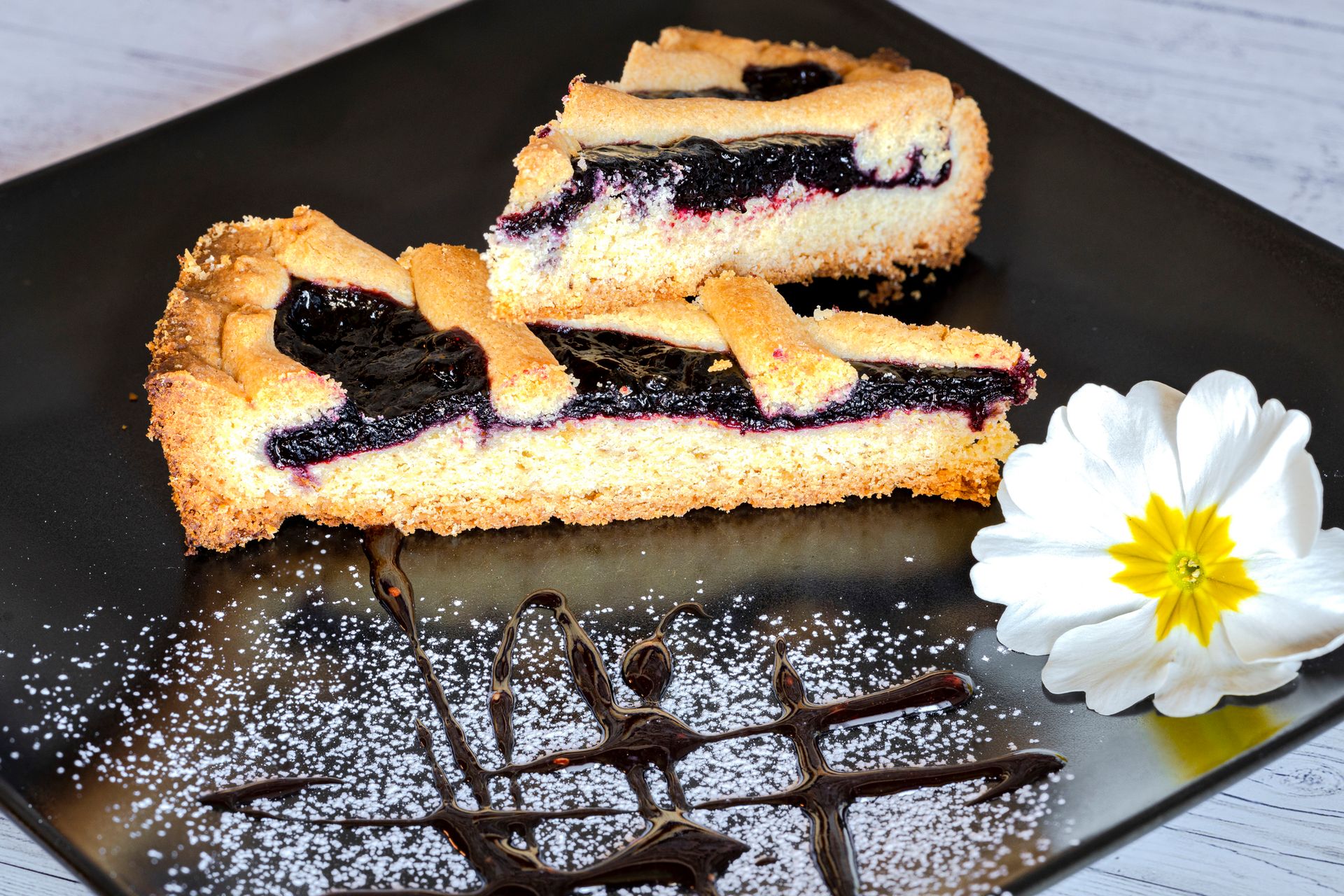
The most significant Roman dessert, according to Michelin inspectors, is crostata di ricotta e visciole, a golden shortcrust pastry filled with creamy ricotta and tart Morello cherry jam. Like carciofi alla Giudia, it belongs to the Judeo-Roman culinary tradition, one of Italy's oldest and most distinct food cultures. The combination of fresh ricotta and sour cherry is precise in its balance: the richness of the cheese against the acidity of the jam, the crispness of the pastry against the softness of the filling. This is a dessert that has been refined over a very long time and arrived at something close to its ideal form.
The ricotta connects the dish to Rome's pastoral surroundings in a way that is more than sentimental. Fresh ricotta is still sourced from flocks grazing on the outskirts of the city, giving the ingredient a quality and freshness that commercial production cannot match. The difference is significant enough to change the dessert. For visitors who want to understand Roman cooking at its most characterful, the crostata is where to end: simple, historically rooted, and quietly irreplaceable.