
From a Venice dawn arrival via Rome to an 18-hour Arctic crossing in Norway's midnight sun, Europe's best sleeper train journeys

Credit: European Sleeper
Not long ago, sleeper trains across Europe looked headed for extinction. Low-cost airlines and high-speed rail lines pushed overnight travel to the margins. While nobody disputed the romance of trundling through the night on a train, the economics no longer made sense for travelers weighing cost against time.
This decline has reversed. Growing interest in slow travel, alongside rising concern over the environmental impact of flying, driven partly by Sweden’s flygskam, or “flight shame,” movement, has boosted demand for sleeper trains across the continent. Operators have responded by reviving old routes, expanding cross-border service and building a network that links the continent without squeezing passengers into a cramped cabin at 35,000 feet. More routes keep arriving too, including European Sleeper’s planned line to Milan from Amsterdam and Brussels, currently in its final stages before welcoming passengers.
The nine journeys below appear in Lonely Planet, covering the best sleeper-train journeys across Europe. They range from a compact overnight hop that lands travelers in Venice at dawn to an 18-hour Arctic crossing chasing the midnight sun, giving rail enthusiasts genuine variety across distance, scenery and destination. Several routes also connect directly to onward services stretching well beyond a single overnight leg, from Baltic ferries in the north to a summer connection reaching all the way to Istanbul in the south. Booking well ahead matters across nearly every entry on this list, since berths on the most popular services routinely go on sale months before departure and sell out considerably faster than standard seats on the same trains. Travelers $TRV with a rail pass should still budget for a separate sleeper reservation, since most passes cover the base fare. Still, not the compartment itself, and separate reservations can sell out just as quickly as standard tickets on the same route.
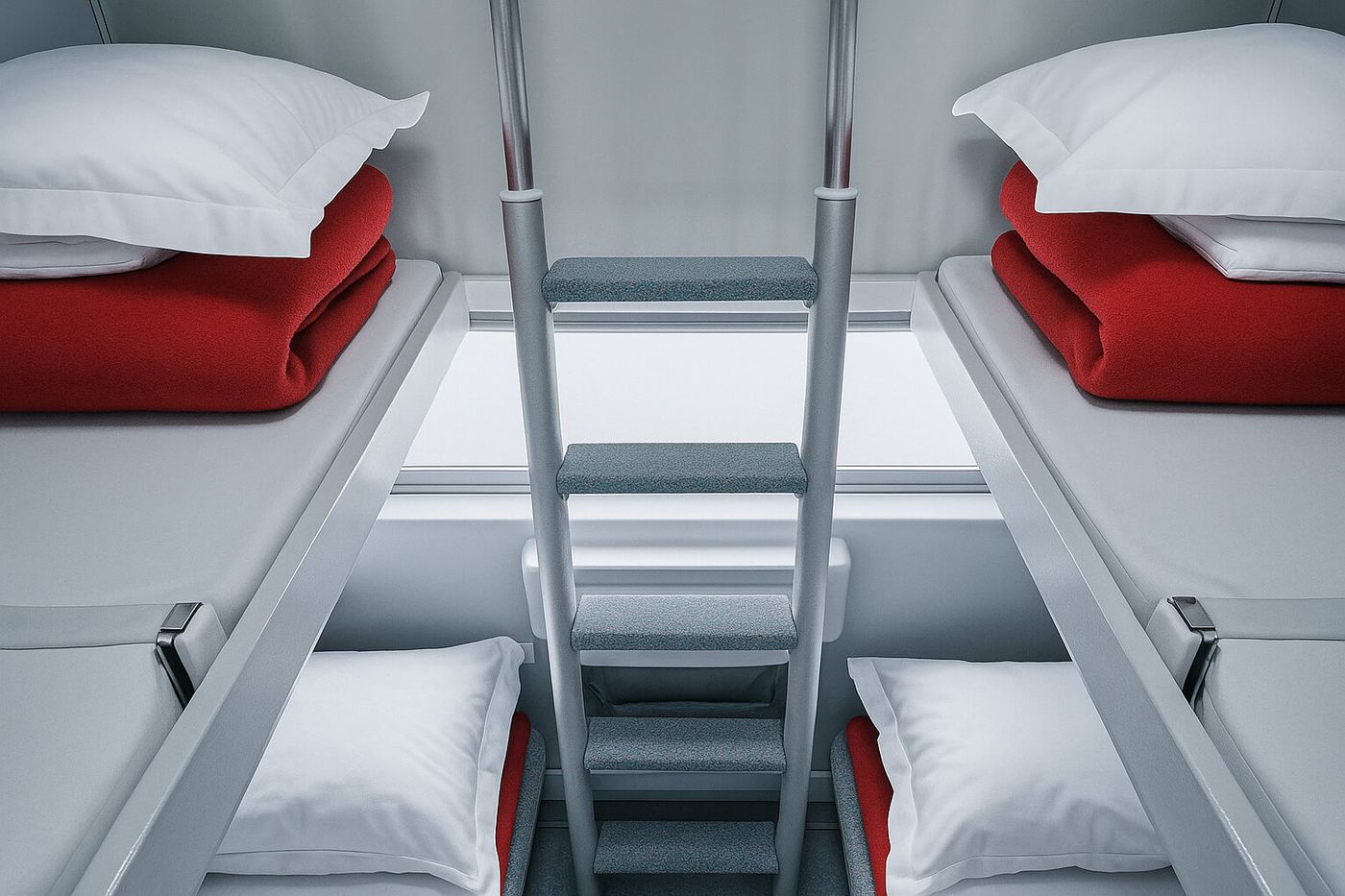
Credit: PKP Intercity
The stately Chopin night train departs Munich’s Hauptbahnhof each evening bound for Warsaw, and the station itself sits right in the center of the city, within easy reach of Marienplatz and the U-Bahn subway network. The route first heads toward the Alps, with scenery growing more rugged during the evening run through Salzburg, Austria, before continuing to a late-night stop in Vienna to pick up additional passengers.
Crossing into Czechia, the Chopin turns north, making a small-hours crossing into Poland before reaching Warsaw at a civilized breakfast time just after 8 a.m. The journey takes 14 to 15 hours and runs daily, giving travelers considerable flexibility in planning a departure date. Poland’s capital rewards a stopover with its rejuvenated Old Town, revitalized industrial districts and varied, accessible nightlife that draws a mix of visitors and locals alike.
Warsaw also serves as a genuine gateway farther north, with services running to the Lithuanian border and onward to Vilnius. From there, connecting trains reach Latvia and Estonia, or travelers can switch modes entirely and board a ferry from Tallinn across to Helsinki in Finland.
This particular pairing of Alpine scenery early in the journey and Baltic connections at the far end gives the Chopin route real range for travelers hoping to build an extended multi-country itinerary around a single overnight departure. Travelers $TRV hoping to book a berth should plan well ahead, since Interrail and Eurail passes require a separate reservation for this sleeper service, in addition to holding a valid pass. Berths typically go on sale between 30 and 180 days before travel, depending on the specific operator, so checking booking windows early helps secure a preferred cabin type before the best options sell out. The route’s onward Baltic connections make Munich an unusually distant jumping-off point for a trip that could realistically end thousands of miles away in Finland. Few single overnight departures anywhere in Europe open quite so many onward possibilities in one direction.
,_con_le_porte_ad_espulsione,_stazione_di_Acireale-900x675.jpg)
VincentLR / Wikimedia Commons (CC BY-SA 4.0)
Trenitalia’s Intercity Notte network crisscrosses Italy with several unmissable routes, and while the Rome-to-Sicily service draws considerable attention thanks to the novelty of a ferry carrying entire carriages across the Strait of Messina, the opposite direction out of the capital rewards travelers just as well. A Trieste-bound sleeper departs Roma Termini each evening and ambles through the romantic regions of Lazio, Umbria and Tuscany overnight.
Snoozing passengers may wake briefly to shunting as northbound carriages are moved off at Mestre, shortly before an unforgettable crossing of the causeway spanning the Venetian lagoon, with half the train continuing directly into Venice itself. The full journey takes 7 hours and 30 minutes and runs daily, making it one of the more accessible overnight routes on this entire list.
Any bleary eyes get swiftly jolted awake by the first sight of La Serenissima at dawn, with almost no other travelers around and a strong espresso or two waiting on arrival. This particular entry into Venice offers a considerably cheaper alternative to sweeping into the city aboard the considerably pricier Venice Simplon-Orient-Express.
Travelers $TRV hoping to extend the trip further south should note that Intercity Notte services also connect toward Sicily from Rome, giving this single rail network genuine reach across nearly the entire length of the Italian peninsula. Trenitalia’s broader Intercity Notte network has operated overnight services across Italy for decades, and the operator continues to invest in updated rolling stock to keep pace with rising demand for slow travel. Most Intercity Notte trains offer a mix of standard seating, sleeper compartments, and shared couchettes, giving travelers considerable flexibility to choose an accommodation level that matches their specific budget. Dining cars on most Intercity Notte services offer a proper sit-down meal, a welcome change from the confined economy seating found on most short-haul flights covering similar distances. Booking a proper dinner reservation ahead of departure helps travelers avoid a rushed meal once the train gets underway.
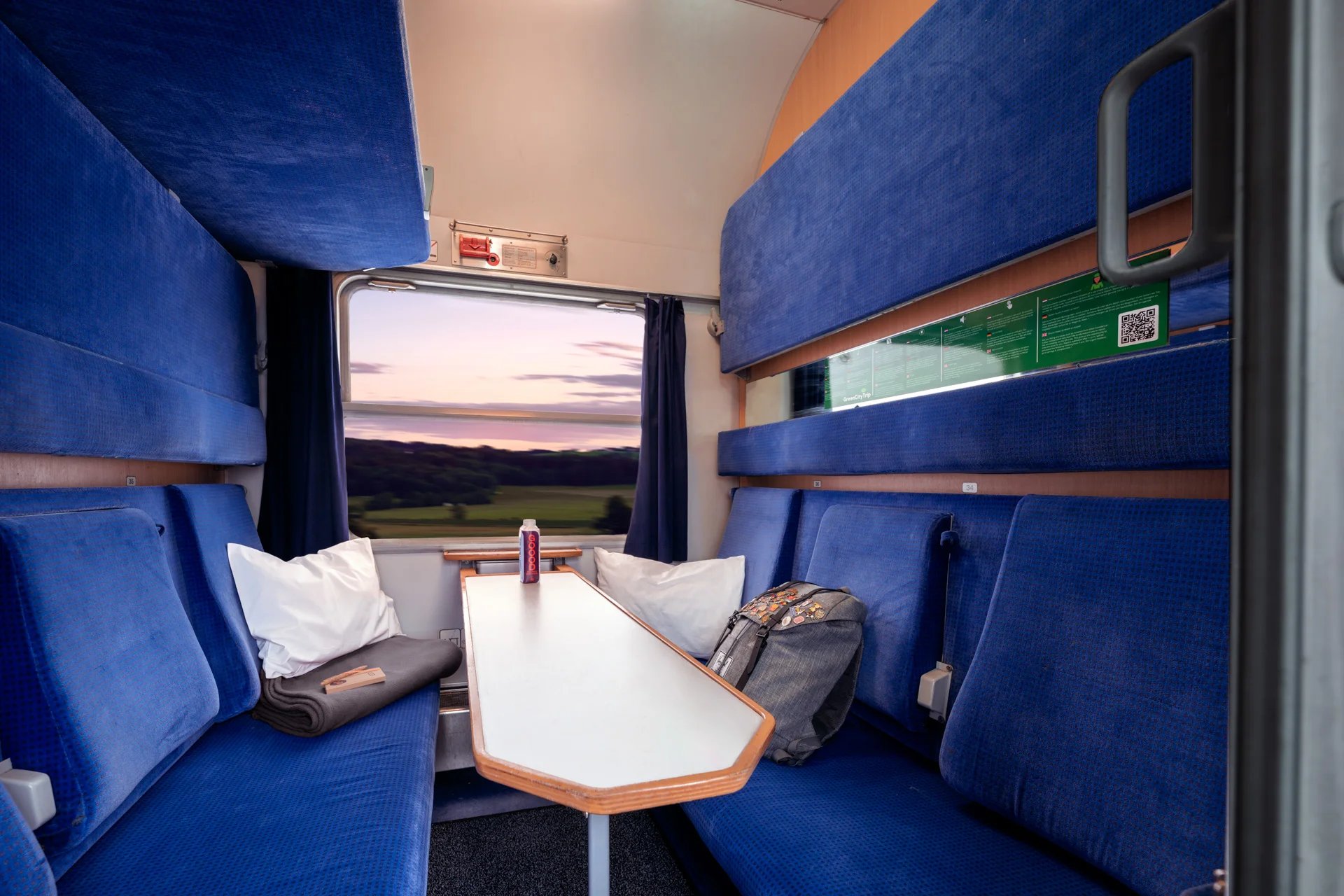
Credit: European Sleeper
The much-heralded European Sleeper service connecting Brussels to Berlin has proved an invaluable addition to the continent’s night-train scene, and the company behind it has since extended the route onward to Prague in Czechia. With stops in Antwerp, Rotterdam and Amsterdam along the way, this thrice-weekly train successfully revives a classic route that was phased out in 2008.
The journey takes between 10 and 16 hours depending on the specific destination chosen, connecting some of Europe’s most celebrated cities along a single overnight line. Adding Eurostar connections between London and Brussels onto the front end lets travelers build an entire rail odyssey stretching from the United Kingdom all the way to Czechia within a single continuous itinerary.
Travelers $TRV making that connection benefit from an unusually convenient layout in Brussels, since no station change is required there, unlike the considerably more cumbersome transfer passengers face moving between the Eurostar and other long-distance trains in Paris.
This particular revival demonstrates how much demand still exists for routes that operators had previously written off as commercially unviable, and the line’s expansion to Prague within just a few years of its Berlin debut suggests considerably more growth may still be coming. The route’s considerable early success has encouraged the company to plan further expansion, including the upcoming Amsterdam- and Brussels-to-Milan service, which is currently working through its final preparations. Online booking platforms such as Trainline let travelers reserve seats across multiple operators through a single interface, though booking directly through the train company sometimes reveals earlier availability. The route’s steady expansion since its initial Berlin launch suggests that operators increasingly see cross-border night trains as commercially viable rather than simply a nostalgic novelty. This shift matters for the broader future of European rail, since sustained profitability tends to attract further investment. More new routes may well follow if current ridership trends hold steady over the coming years across the broader European rail network.
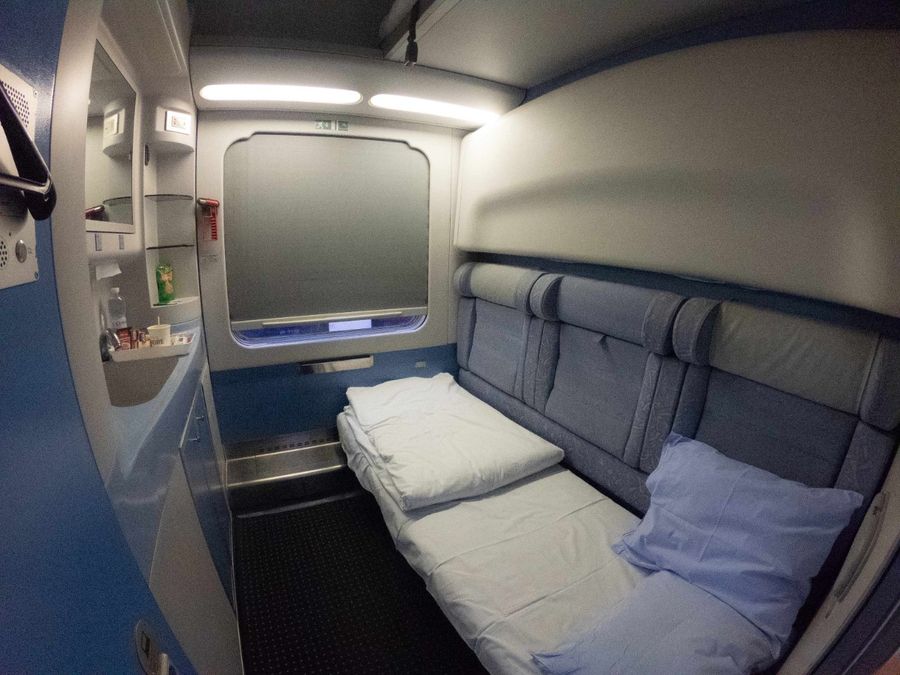
Credit: SBB
This EuroNight service, operated by Swiss rail company SBB, connects Switzerland’s largest city, Zürich, with the compact, beautiful Croatian capital of Zagreb, crossing five countries from end to end along the way. The journey runs daily and takes between 13 and 19 hours, and travelers hoping to catch the route at its most scenic should aim for the long summer nights, since daylight hours reveal far more of the mountainous terrain passing outside the window.
The line threads through Austria and Slovenia, two countries where finding an unattractive stretch of railway proves surprisingly difficult given the consistently dramatic alpine and valley scenery throughout. The route also passes, without stopping, through the tiny Alpine principality of Liechtenstein, adding an entire additional country to any traveler’s tally without requiring a single extra ticket.
Travelers $TRV can also experience much of this same scenic line by riding only as far as Ljubljana in Slovenia, though doing so means missing a particularly lovely stretch of track running alongside the Sava River between the Slovenian capital and the border beyond.
This particular route’s considerable length and five-country span give it real claim to being one of the more geographically ambitious single overnight journeys available anywhere on the continent. SBB’s considerable experience running cross-border services throughout Europe helps explain why this particular route manages such a long, multi-country itinerary without major logistical complications. Rail passes such as Interrail and Eurail typically cover this particular route, though travelers still need a separate reservation for the sleeper compartment itself beyond simply holding a valid pass. Travelers should pack a bit of patience for the considerable length of this journey, since 19 hours at the upper end of the range demands genuine commitment to the overnight format. Packing snacks and entertainment for the longer stretches helps pass the time comfortably between scenic highlights. Charging cables and downloaded entertainment help fill any quieter stretches along the way through the mountains and valleys.
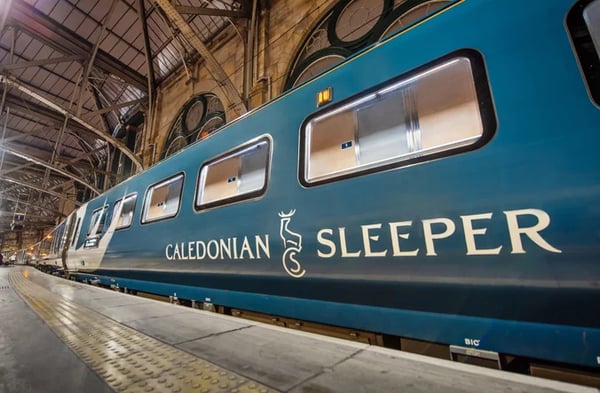
Credit: Caledonian Sleeper
Great Britain holds only two sleeper trains, the Great Western Railway’s Night Riviera and the considerably more famous Caledonian Sleeper, and both have recently benefited from major upgrades reflecting renewed confidence in the country’s overnight rail services. The Night Riviera runs southwest from London’s Paddington Station until it runs out of track at Penzance in Cornwall. However, it’s the Caledonian Sleeper that draws the most excitement among British travelers.
This legendary train departs Euston Station every night and, through a series of carriage shuffles unnoticed by sleeping passengers, reaches Edinburgh, Inverness, Aberdeen and finally Fort William in Scotland, passing through some of Britain’s most memorable trackside scenery along the way. The journey runs six times a week and takes 12 hours and 45 minutes end to end.
The final stretch of the route delivers the most spectacular scenery, offering a night on the rails followed by a morning rattling through the Scottish Highlands before depositing exhilarated passengers directly at the foot of the path leading up Ben Nevis, the United Kingdom’s highest peak and one of Scotland’s most beloved hikes.
This particular pairing of overnight rail travel and direct access to one of Britain’s premier hiking destinations gives the Caledonian Sleeper genuine appeal well beyond travelers purely interested in the train journey itself. The train’s recent upgrades included new carriages with en-suite facilities in some cabins, reflecting a broader industry trend toward more comfortable, hotel-like overnight accommodations on premium routes. Travelers $TRV hoping for the best value should compare cabin classes carefully before booking, since standard berths and premium en-suite rooms carry meaningfully different price points on this particular route. Hikers planning a Ben Nevis ascent in particular should check current weather conditions before departure, since Highland weather can shift considerably even during the height of summer. Booking well ahead also helps travelers secure a specific cabin type before the most popular departures sell out. Peak summer weekends tend to sell out first, so early booking pays off most during that particular window.
Kabelleger / David Gubler via Wikimedia Commons (CC BY-SA 3.0)
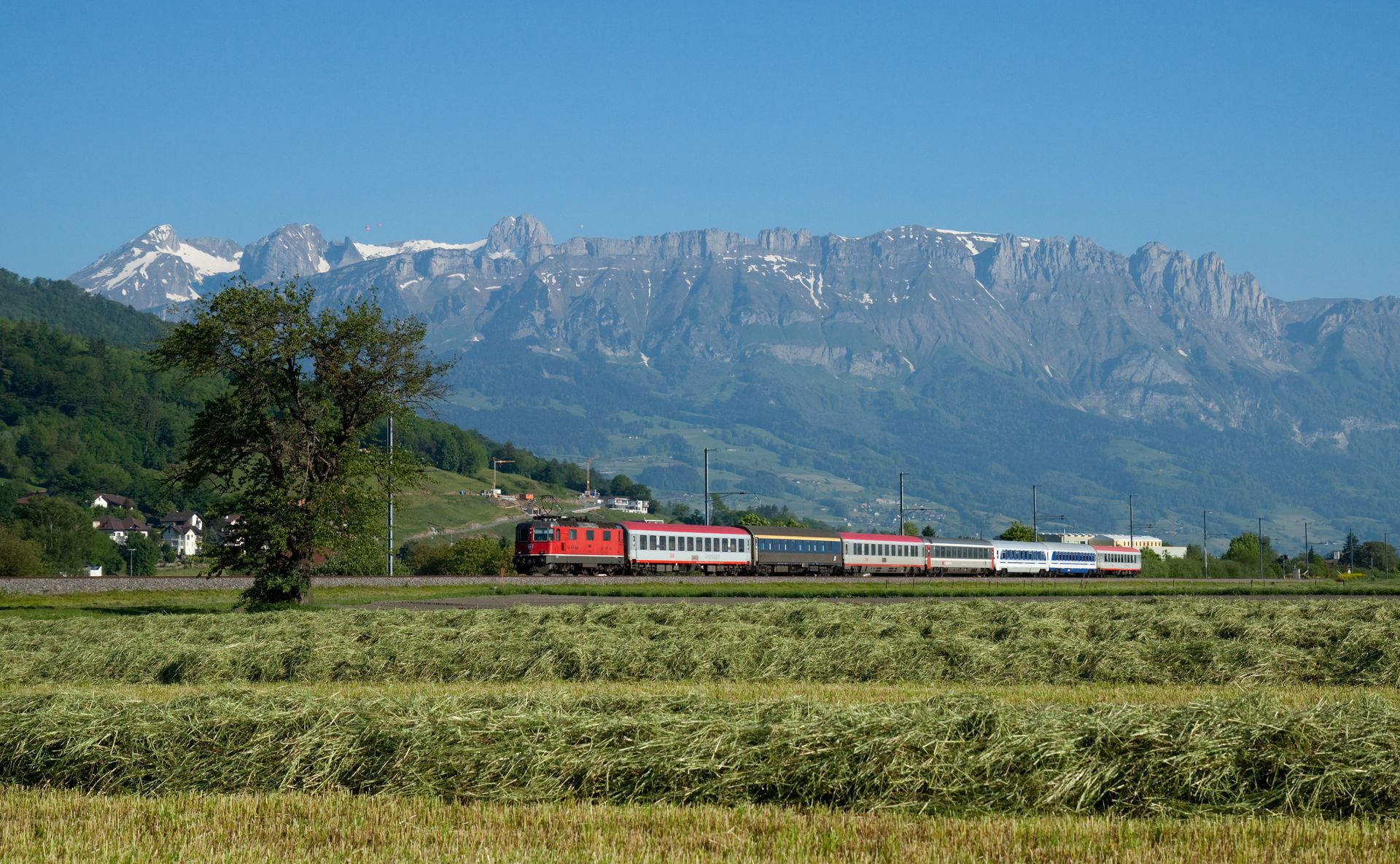
Swedish Railways operates a EuroNight route connecting Germany and Sweden, starting in Berlin and running via Hamburg before rolling into Gothenburg. Travelers $TRV hoping to reach Stockholm instead can catch connecting SJ services that continue to the Swedish capital. The journey runs between four and seven times per week, depending on the specific operator and date, and takes between 13 and 17 hours end to end.
Uncertainty currently surrounds this popular line, as public funding is set to run out in August 2026, though early indications suggest the route will continue to operate with a somewhat reduced frequency afterward. Private operator Snälltåget offers another way to reach Stockholm, running seasonal night services from mid-July through early January departing from both Berlin and Hamburg.
Snälltåget’s route departs Berlin after dinnertime, crosses the Öresund Bridge in early morning light during spring and fall, and rolls onward through the Swedish countryside before arriving in Stockholm in time for a meatball and lingonberry lunch, served aboard the train’s own highly regarded restaurant coach. On Sundays between August and December, this same Snälltåget service starts from Dresden instead of Berlin.
Both routes include a stop in Copenhagen, though SJ trains only stop at Copenhagen Airport. At the same time, Snälltåget uses Copenhagen South instead of the main station, giving travelers hoping to add a Danish stopover a genuine reason to research which stop each operator actually serves before booking. Travelers should confirm current schedules directly before booking, since funding uncertainty around this route means service frequency could shift considerably between now and the actual date of travel. Travelers choosing between SJ and Snälltåget should compare each operator’s specific Copenhagen stop before booking, since the two services use entirely different stations within the Danish capital. Gothenburg itself rewards a stopover with considerable waterfront dining and a compact old town easily explored on foot before continuing onward or returning south. A short stopover here rewards travelers with a distinctly different pace before continuing north toward Sweden.
_Ister_EN-12472_(EN_472)_2014-10-09-900x506.jpg)
Beroesz / Wikimedia Commons (CC BY-SA 2.5 HU)
Keleti station in Budapest, widely regarded as one of Europe’s most beautiful railway buildings, serves as the starting point for a fantastic overnight journey to Bucharest in Romania. Multiple sleeper services cover this route, though the Ister service offers arguably the most convenient timing, departing Hungary’s capital shortly after 7 p.m. and arriving at Bucharest’s Gara de Nord midmorning, with passport control taking place around midnight along the way.
The journey runs daily and takes 14 hours and 30 minutes. The considerable benefit of a lazy morning aboard the train comes through superb scenery as it crosses the Carpathian Mountains before descending onto the surrounding plains. This particular stretch ranks among the more visually rewarding segments found on any European overnight route, rewarding travelers who wake early enough to catch it.
From Bucharest, a direct summer sleeper connection continues onward to Istanbul in Türkiye, extending what already counts as one of Europe’s most epic railway journeys into an even longer cross-continental adventure. This particular onward connection gives travelers genuine incentive to treat Budapest not as a final destination but as the starting point for a considerably longer overland trip.
Travelers $TRV planning around the summer-only Istanbul extension should confirm current seasonal schedules well ahead of booking, since this particular connection doesn’t run year-round the way the core Budapest-Bucharest service does. Keleti station’s considerable architectural grandeur, dating to the late nineteenth century, gives the journey a memorable send-off well before the train even leaves the platform. Travelers hoping to continue toward Istanbul should book the connecting summer sleeper well in advance, since seasonal services tend to draw considerably heavier demand than year-round routes. Bucharest’s own considerable architectural mix, blending Belle Époque grandeur with communist-era brutalism, gives arriving travelers plenty to explore immediately upon stepping off the train. Travelers arriving midmorning still have most of the day ahead to start exploring the city. Grabbing breakfast near the station before setting out gives travelers a solid start to the day.
Credit: SJ Norge
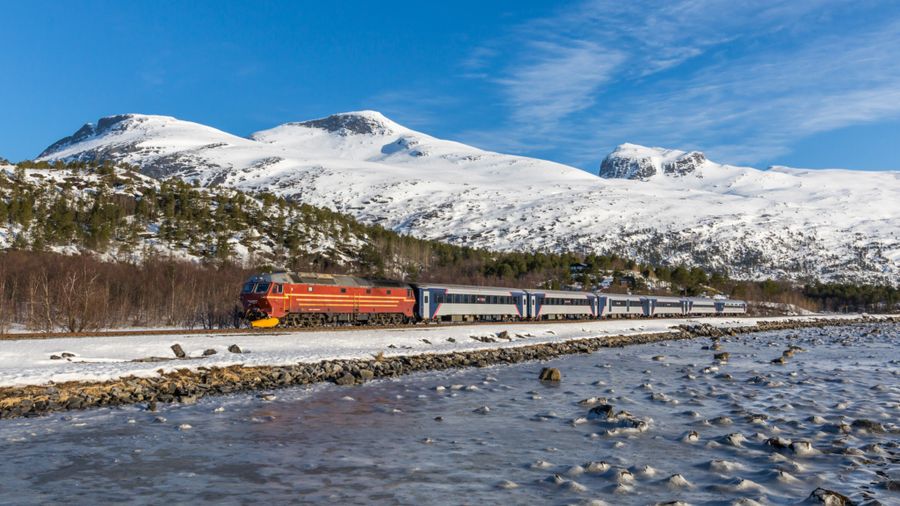
Norwegian rail journeys typically offer jaw-dropping scenery that would seem wasted on an overnight train. Yet, the route from Trondheim to Bodø, a remote city tucked inside the Arctic Circle in northern Norway, offers two solid reasons to travel it after dark anyway. The journey runs daily and takes 18 hours and 45 minutes, covering considerable distance through the country’s northern reaches.
Travelers $TRV making the trip during summer won’t miss any scenery at all, since the midnight sun shines over the Norwegian landscape for much of the night, effectively erasing the usual tradeoff between traveling overnight and seeing the view. Norwegian trains themselves also rank among the more pleasant places to spend an extended journey, with excellent facilities including in-compartment showers available in first class.
A berth on this particular route also represents excellent value in a country where bargains generally prove hard to find, giving budget-conscious travelers a genuine reason to consider the overnight option even outside the midnight sun season. This pairing of practical value and unusually distinctive seasonal scenery gives the Trondheim-Bodø route real appeal beyond simply reaching a remote Arctic destination.
Travelers hoping to catch the midnight sun at its peak should time a summer visit carefully, since the phenomenon’s exact visibility window varies depending on the dates chosen for the journey. Norway’s rail network runs considerably fewer overnight routes than several other European countries, making this particular Arctic journey an unusually rare opportunity within the country’s broader train system. Travelers should confirm current first-class availability before booking, particularly for the in-compartment shower, as not every departure offers this amenity, depending on the rolling stock assigned. Bodø itself sits close to the dramatic Lofoten Islands, giving travelers a natural next stop after disembarking from this considerable overnight journey into Norway’s Arctic north. Ferries and buses from Bodø also connect onward to several other remote coastal communities worth exploring. Booking these onward connections in advance helps travelers make the most of limited time in the region.
Credit: European Sleeper
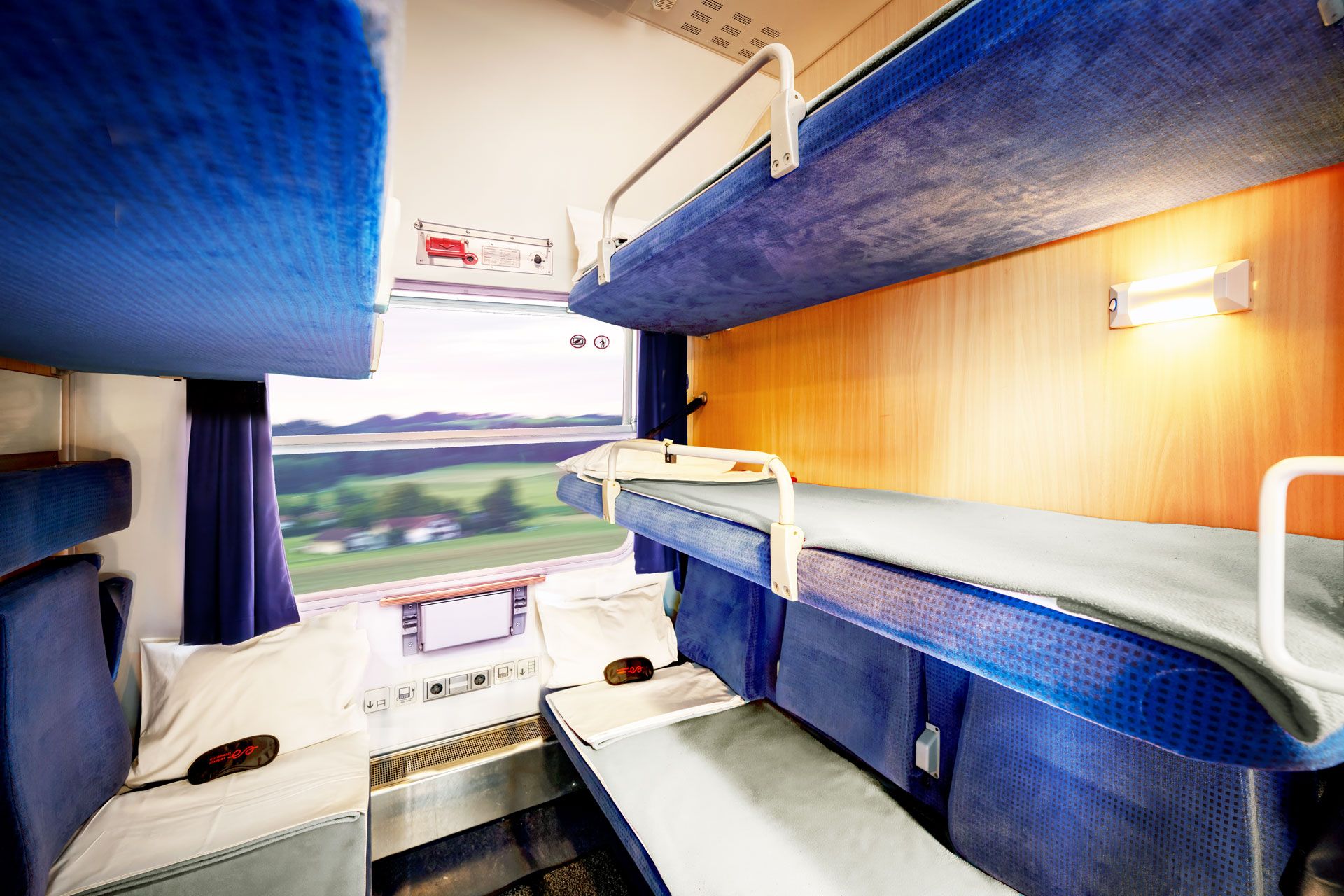
Alongside more popular routes from Paris to Nice, Toulouse and Briançon, a considerably quieter night train runs to the foot of the Pyrenees in southern France. This twice-weekly service to Latour-de-Carol features six-berth couchettes alongside a seated carriage, passing through Limoges, Toulouse and the Pyrenean foothills before arriving at Latour-de-Carol directly on the border with Spain. The full journey takes 12 hours.
This particular route offers a markedly quieter side of the Pyrenees, well beyond the tourist bustle found in Tarbes, Pau, Lourdes and Perpignan, all considerably more heavily visited stops throughout the surrounding region. Travelers $TRV arriving at Latour-de-Carol can continue onward by suburban train to Barcelona in around 3 hours, offering an interesting alternative to the TGV service running from Paris to Barcelona via Montpellier and the French Mediterranean coast.
Travelers hoping to see more of France’s far south instead can catch the scenic, narrow-gauge Petit Train Jaune, which trundles uphill directly from Latour-de-Carol, offering a dramatic mountain ride with onward connections toward Perpignan.
This particular pairing of a quiet overnight approach and multiple onward connecting options toward both Spain and the French Pyrenees gives the Latour-de-Carol route genuine flexibility for travelers building a longer trip around this single overnight segment. Travelers hoping to combine this route with the more popular Paris-to-Nice or Toulouse sleepers should check current timetables carefully, since departure days and frequencies vary considerably between these services. Travelers connecting onward to the Petit Train Jaune should check its seasonal schedule carefully, since the narrow-gauge line sometimes reduces service during the coldest winter months. The considerable quiet found along this particular route stands in sharp contrast to the crowded summer platforms typical of Paris’s more heavily trafficked sleeper departures toward the Mediterranean coast. This contrast alone makes the route worth considering for travelers hoping to avoid the busiest summer crowds. Travelers should still confirm current departure days before finalizing plans, since this route runs less frequently than busier lines.