
From air fryers to stand mixers, these are the countertop appliances that consistently earn top marks from testers and hold up over time
Quilia / Unsplash
Countertop appliances have quietly become the most consequential kitchen purchases most people make. The refrigerator and stove get the most attention, but the air fryer, blender, and coffee maker — to name a few — are what make cooking and serving easier. They determine whether you reach for frozen food or fresh, or whether morning coffee is a pleasure or a chore. The decision is worth making carefully.
The market is crowded in ways that can obscure genuine quality. New brands have proliferated across every category, with flashy designs and aggressive pricing that do not always translate to performance.
Consumer Reports has been testing small kitchen appliances for decades, evaluating real-world metrics like brewing temperature, blending consistency, noise level, and ease of cleaning, not just manufacturer specs. Other sources, including Reviewed, Food Network, CNN Underscored, and Tom's Guide, have added their own rigorous testing to the picture. Between them, a clearer set of winners has emerged across categories.
Established brands such as Cuisinart, KitchenAid, and Vitamix have the build quality and reliability to separate themselves from the rest. Newer entrants Cosori and Chefman have earned their way onto top lists by delivering on the fundamentals.
Price is not always a reliable proxy for performance. Some of the highest-rated appliances in their categories are also among the most affordable. The Dash Tasti-Crisp air fryer, for example, is among the lowest-priced options Consumer Reports has tested and is also among the highest-rated.
The 15 appliances in this list span the full range of what a home cook might need — from a morning coffee maker to a workhorse stand mixer capable of handling a double batch of bread dough. Not every kitchen needs all of them. Some overlap in function. An air fryer toaster oven may make a standalone toaster redundant, and a high-end blender can render a food processor unnecessary for some tasks.
Prices change, and some models may be updated or replaced between now and when you shop.
Credit: Amazon
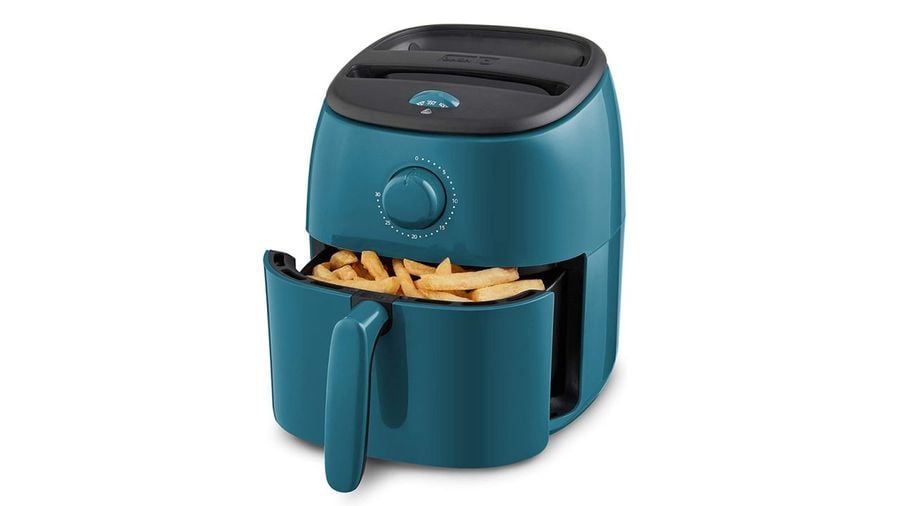
The Dash Tasti-Crisp DCAF260 is, by Consumer Reports' own assessment, the highest-rated air fryer the organization has tested. That verdict would be notable on its own. What makes it more striking is the price: the Dash typically retails around $60, placing it well below the $100-to-$200 range where most premium air fryers sit.
Air fryers work by circulating hot air in a small, enclosed chamber. The physics are similar to a convection oven, but the compact space and powerful fan mean heat is more concentrated, which is why air fryers can crisp chicken wings or reheat leftover pizza faster than a full-size oven while drawing far less electricity. The Dash Tasti-Crisp has a 2.4-quart capacity, which Consumer Reports confirms is among the most compact in its ratings. That size suits one to two people comfortably. For larger households, the tradeoff is clear: you will need to cook in batches.
Consumer Reports tests air fryers across four dimensions: capacity, how easy the controls are to read and use, noise level during operation, and how much effort it takes to clean. The Tasti-Crisp scored at or near the top in all four. Its inner basket is dishwasher-safe, which removes the most tedious aspect of air fryer ownership. The controls are analogue — a dial for time and a dial for temperature — which means no touchscreen to clean around and no settings that require a manual to decode.
What the Tasti-Crisp does not have is also worth noting. There are no preset cooking programs for specific foods, no smart-home connectivity, no rotisserie spit. If those features matter to you, the Cosori Dual Blaze or the Instant Vortex Plus — both of which also appear in Consumer Reports' top-rated list — offer more functionality at higher prices. The Cosori is a 6.8-quart model with Wi-Fi capability; the Instant Vortex Plus includes preset programs for baking, broiling, dehydrating, reheating, and roasting and earned an excellent score for controls in CR testing.
For most people, the Dash makes the stronger case. The absence of unnecessary features is not a deficit. It is the point. Air fryers are used primarily for one task: making food crisp without deep-frying it. The Tasti-Crisp does that task well, costs very little, takes up minimal counter space, and is easy to clean. Consumer Reports' testing methodology does not reward marketing features. It rewards the machines that do what they are supposed to do, reliably, without complication. On that standard, the Tasti-Crisp earns its position at the top.
One practical note: the 1,000-watt motor is modest compared to larger models, which means thick cuts of protein may take longer than the package suggests. For vegetables, frozen foods, and reheating, power is a non-issue.
Credit: KitchenAid
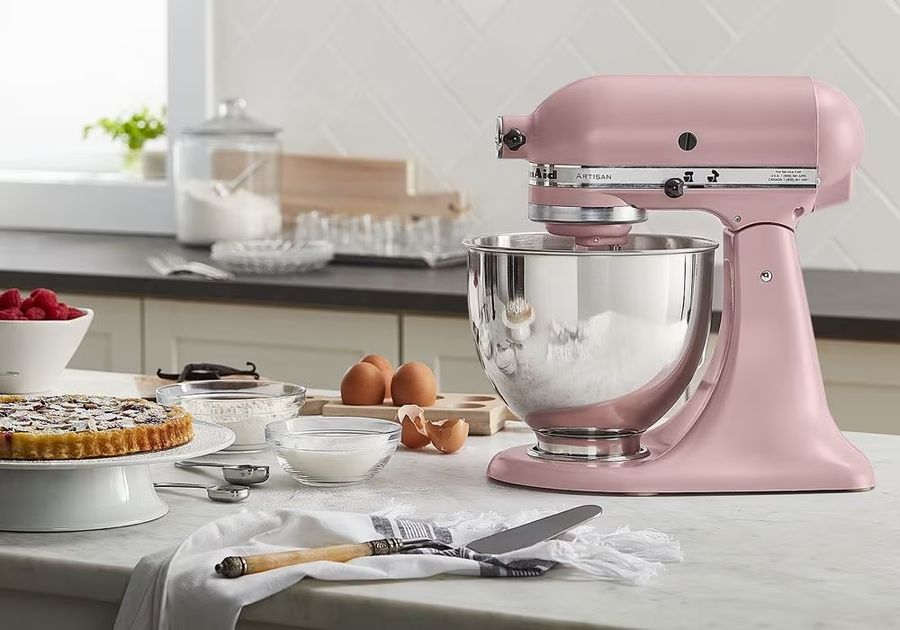
The KitchenAid Artisan has been in continuous production since 1937 in essentially the same form. The planetary mixing action — where the attachment traces a wider orbit while rotating on its own axis — has not changed. The 325-watt motor, the five-quart stainless steel bowl, the tilt-head design: these have been refined, not reinvented. That consistency is a meaningful data point. Very few consumer appliances survive the better part of a century in a competitive market without genuine merit.
Consumer Reports has included KitchenAid in its top-rated stand mixer recommendations, and the Artisan model — generally retailing in the $400-to-$500 range — is the most recognizable version. For home bakers who make cookies, cakes, and occasional bread dough, it handles all three tasks without strain. The five-quart bowl accommodates up to nine dozen cookies' worth of dough in a single batch. The dough hook can manage two standard loaves of bread, though for larger quantities, the bowl-lift Pro series offers a seven-quart bowl and a more powerful motor at a higher price.
The Artisan's ten-speed range and pulse function give meaningful control over texture. Speed one folds delicate ingredients without overworking them. Speed eight whips cream to stiff peaks in under two minutes. The machine is heavy — around 26 pounds — which is an inconvenience for storage but an advantage in use: it does not walk across the counter during high-speed mixing the way lighter machines do.
The accessory ecosystem is a significant part of the value proposition. The same power hub that drives the mixing attachment can power a pasta roller, a meat grinder, a spiralizer, a grain mill, an ice cream maker, and more. Each attachment is sold separately, but they transform the Artisan from a mixer into a multi-function kitchen machine. KitchenAid claims compatibility with over 80 attachments, and most of the original attachment specifications have not changed, which means older attachments purchased secondhand typically still work.
For buyers with budget constraints, the Cuisinart Precision Master SM-50 occupies a similar performance tier for roughly half the Artisan's price. Reviewed and other testing outlets have confirmed it performs nearly as well as the KitchenAid in cake and cookie applications. Its weakness is bread dough, as the Cuisinart slows noticeably under heavy loads. The Artisan handles that workload more easily. If you bake bread regularly, the KitchenAid is worth the premium. If your baking centers on lighter batters and frostings, the Cuisinart is a reasonable alternative.
The Artisan is available in over 20 colors, which has made it a cultural object as much as a kitchen tool. That popularity does not diminish its functionality, but it is worth knowing that you are paying partly for an icon.
Credit: Vitamix
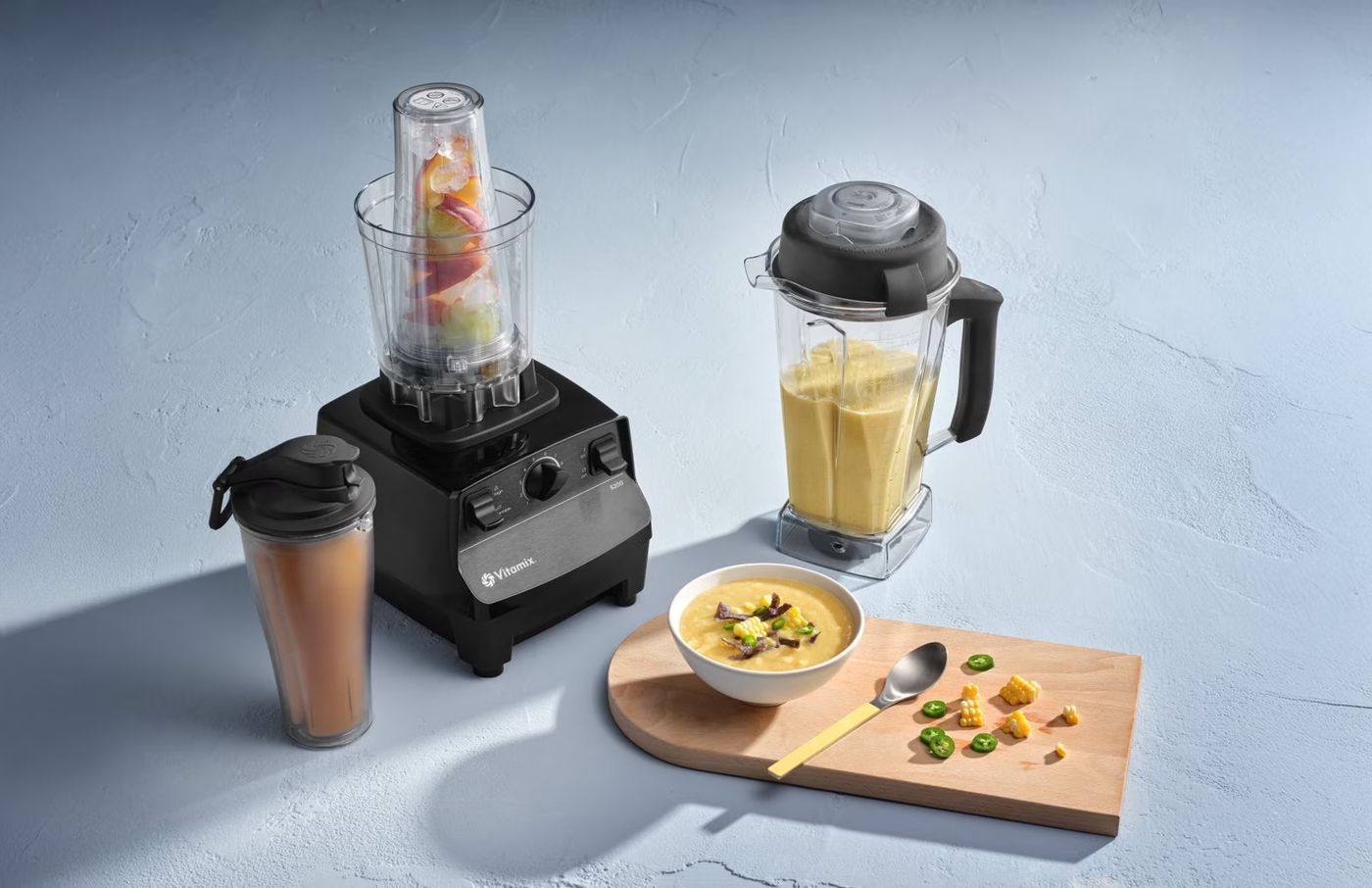
Vitamix blenders have been a fixture in commercial kitchens since the 1960s. Smoothie shops, restaurant prep stations, and hotel breakfast buffets rely on them because they handle volume and abuse that would destroy a consumer-grade machine within a year. The 5200 is the brand's entry-level full-size model and the one Consumer Reports has pointed to as a long-standing top performer in its blender ratings.
The core advantage of the Vitamix is motor power. The 5200 uses a two-horsepower motor — roughly four times the wattage of a budget blender — which means it does not slow down or stall when processing fibrous vegetables, frozen fruit, or raw nuts. That power translates into texture differences that are immediately detectable. A basic blender makes a smoothie with visible fiber chunks. The Vitamix 5200, run at high speed for 45 to 60 seconds, produces a result that is genuinely smooth.
One technical feature distinguishes the Vitamix from most competitors at any price point: the motor generates enough friction to heat liquid during blending. Running the 5200 at its highest speed for four to five minutes will bring cold soup ingredients to a steaming temperature without any additional heat source. This is not a gimmick. It produces soups, nut milks, and hot sauces with textures no stovetop blending approach can replicate.
The 5200 uses a 64-ounce tall container, which accommodates family-size batches while fitting under most standard cabinets. Cleanup is straightforward: add warm water and a drop of dish soap, run on high for 30 seconds, and rinse. The blades are not designed to be removed for cleaning, which eliminates the risk of cuts during hand-washing.
Consumer Reports has consistently placed Vitamix at the top of its blender reliability estimates as well as its performance ratings. Among survey respondents, Vitamix tops the brand for long-term dependability. The machines come with a seven-year warranty, and the company's customer service and parts availability are notably strong for an appliance in this price tier.
The price — typically $450 to $550 for the 5200 — is the obvious barrier. For buyers who primarily want a blender for occasional smoothies, the Vitamix is difficult to justify. For daily use, for households where the blender replaces the food processor for some tasks, and for people who cook from scratch regularly, the math shifts. The machine lasts. A $500 blender that performs well for 15 years costs less annually than a $100 blender replaced every three to four years.
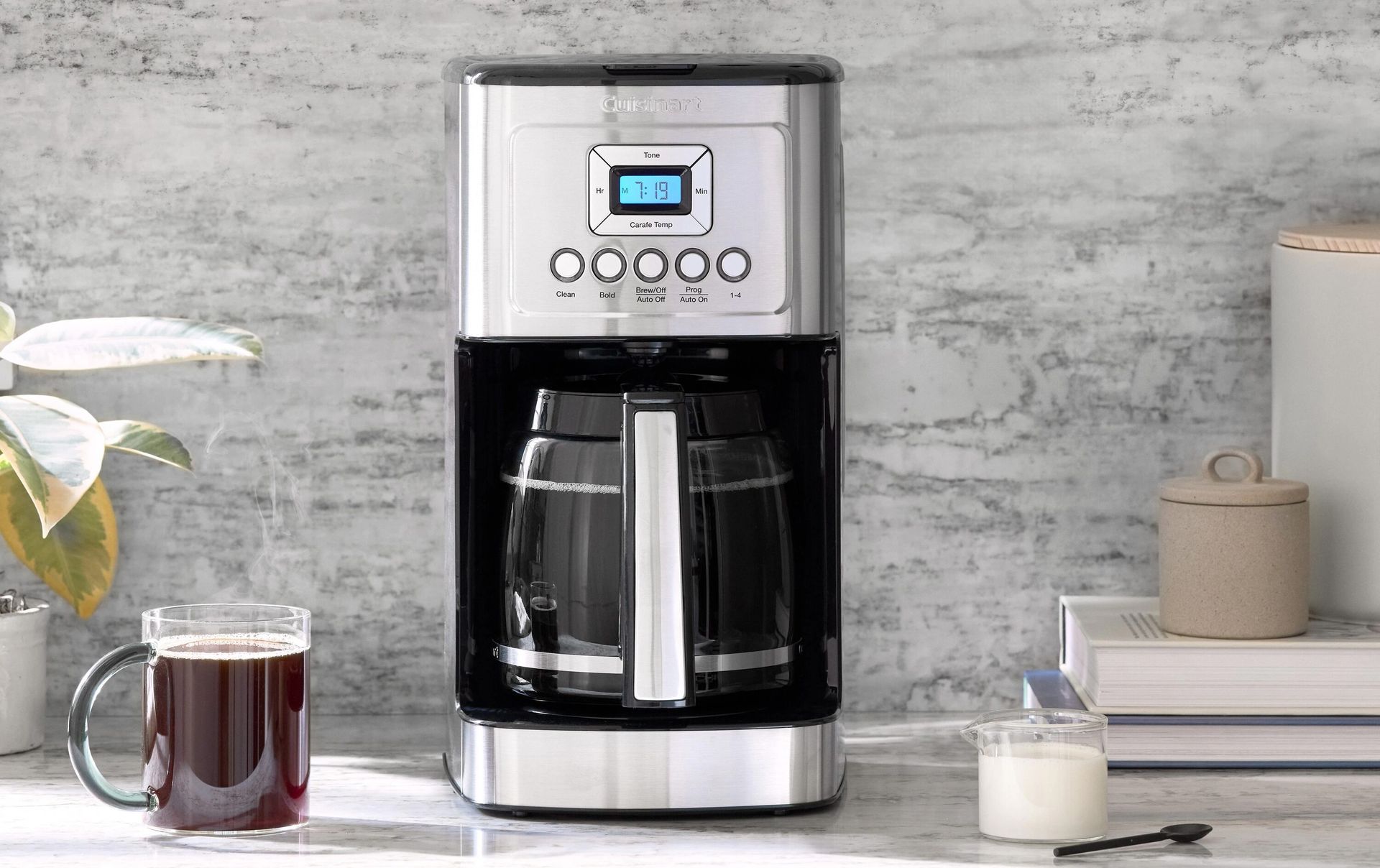
Credit: Cuisinart
The Cuisinart PerfecTemp 14-Cup Programmable DCC-3200 appears by name in Consumer Reports' drip coffee maker ratings as a top-performing model, with excellent scores for brew performance and ease of use. Consumer Reports tests drip coffee makers by evaluating whether the machine brews at the Specialty Coffee Association's recommended temperature range of 195°F to 205°F for five to six minutes — the parameters that produce optimal extraction. The Cuisinart PerfecTemp meets that standard, which many cheaper machines do not.
Drip coffee quality is more temperature-dependent than most people realize. Water that is too cool — below 195°F — under-extracts, producing flat, weak coffee regardless of bean quality. Water above 205°F over-extracts, introducing bitterness. Machines that cannot maintain consistent temperature throughout the brew cycle produce uneven cups. The Cuisinart's heating system holds the water at the correct range from start to finish.
The 14-cup capacity makes it well suited to households that brew a full pot or to offices with moderate coffee demand. The carafe is thermal-style glass with a stay-warm plate; Consumer Reports tested the carafe for ease of pouring and found it easy to handle and drip-free. The machine's controls are straightforward: a programmable timer lets you set it the night before, and the brew-strength selector allows a choice between regular and bold.
One important note: the Specialty Coffee Association has a formal Gold Cup certification program that recognizes coffee makers meeting rigorous brewing standards. The Cuisinart DCC-3200 does not carry that certification. The certified machines from brands like Breville and OXO Brew are considerably more expensive. What the Cuisinart offers is strong performance at a mid-range price, typically around $70 to $100, which makes it the practical choice for buyers who want quality without entering the premium tier.
For those who grind their own beans, the Cuisinart's flat-bottom filter basket accepts both paper filters and a reusable permanent filter, which eliminates ongoing consumables spending. Descaling is required periodically — every one to three months depending on water hardness — and the machine signals when this is needed.
One limitation worth naming: the DCC-3200 is a relatively large machine that takes up meaningful counter space. Buyers with smaller kitchens may prefer the Cuisinart Brew Central 12-cup model, which performs comparably in a smaller footprint.

Credit: Breville
Toaster ovens occupy an unusual category in the small appliance market. They are positioned as secondary ovens: faster to preheat than a full range, useful for small batches, capable of filling in when the main oven is occupied. The best ones do that job well. The Breville Smart Oven Air Fryer Pro pushes further, combining convection baking, broiling, toasting, and a dedicated air fryer mode in a single countertop unit.
Consumer Reports places Breville among its recommended toaster oven brands, and the Smart Oven Air Fryer Pro has received strong marks in independent testing from multiple outlets. Tom's Guide, in its 2026 roundup, gave high marks to toaster ovens that combine strong convection performance with air frying capability, exactly what the Breville is designed to do.
The internal capacity is the distinguishing feature at this price tier. The Breville fits a 13-inch pizza, six slices of bread, or a 9-by-13-inch pan. That is large enough to make it a genuinely functional second oven rather than a glorified toaster. The convection fan runs in two speeds — standard convection and a high-speed super-convection mode used for air frying — and distributes heat evenly across the interior.
The control interface is detailed without being intimidating. A dial and button system selects from 13 preset cooking functions, and the digital display shows time, temperature, and cooking mode simultaneously. The temperature range runs from 80°F to 450°F, covering everything from dehydrating herbs to broiling steaks. An internal light and the large glass door allow monitoring without opening the oven and losing heat.
The price — typically $300 to $400 — positions the Breville at the top of the toaster oven market. That price is harder to justify for buyers who already own an air fryer and simply want a better toaster. It makes more sense as a space-consolidation decision: one machine that replaces both a toaster oven and an air fryer saves counter space while delivering strong performance in both roles.
Cleaning requires attention. The interior crumb tray is removable and dishwasher-safe, but the oven's stainless steel interior retains grease from air-frying sessions. Wiping it down after each use is necessary. It is not a machine that cleans itself.

Credit: Instant Pot
The Instant Pot Duo has the most five-star reviews of any cooking appliance on Amazon $AMZN and has been the best-selling multi-cooker in the U.S. for several years running. That level of market penetration can sometimes signal marketing success rather than genuine quality. In this case, the performance holds up. Consumer Reports tested the Instant Pot Max and other models in the Instant Brands line, noting strong performance for rice-making and sautéing alongside the pressure cooking function that made the brand famous.
The Duo combines seven functions in a single unit: pressure cooker, slow cooker, rice cooker, steamer, sauté pan, yogurt maker, and food warmer. The six-quart version — the most popular — serves four to six people comfortably. A three-quart model is available for smaller households, and an eight-quart version suits larger families or batch cooking. The inner pot is stainless steel, compatible with the stovetop, which allows searing before pressure cooking without dirtying an extra pan.
Pressure cooking is the primary reason to own an Instant Pot. Hard legumes — dried chickpeas, black beans, kidney beans — that require 90 minutes of stovetop simmering cook in around 35 minutes under pressure. Tough cuts of meat like short ribs or pork shoulder reach fork-tender texture in 45 to 60 minutes. The sealed cooking environment also retains moisture that evaporates in open-pot stovetop cooking, which tends to produce more flavorful braises.
The learning curve is real but not steep. The first few uses require following the recipe timing guides closely. Over-pressurizing leads to watery results, while under-pressure leaves beans undercooked. After several uses, the timing patterns become intuitive. The steam release valve is the element that causes the most hesitation for new users; following the venting instructions precisely is the single most important habit to establish.
The price is an advantage. The six-quart Duo typically retails in the $80 to $100 range. For that price, it consolidates multiple appliances into one and holds its value well. Instant Pot's line has not changed dramatically in design, meaning older units are easy to find secondhand and accessories are widely available.
Consumer Reports noted a "Food Burn" warning appearing in some higher-end Instant Pot models during starchy recipes. The Duo series handles this issue more gracefully. Following the minimum liquid requirements listed in the manual prevents it almost entirely.

Credit: Amazon
Single-serve coffee makers occupy a distinct niche from drip machines. They trade volume and cost-per-cup efficiency for speed and consistency. The Nespresso Vertuo Plus is among the highest-rated single-serve machines tested by Consumer Reports, and it uses a fundamentally different brewing mechanism than its Nespresso Original Line counterpart.
The Vertuo system uses centrifusion, a proprietary term for a process that spins the capsule at high speed while injecting water through it, producing a crema layer without espresso-level pressure. The result is not technically espresso in the traditional sense, but it approximates the texture and intensity of a café lungo more closely than a standard pod brewer. For buyers who want something stronger and richer than standard drip coffee without the complexity of a proper espresso machine, the Vertuo occupies useful middle ground.
Consumer Reports evaluated the Nespresso alongside competing single-serve models and noted its ease of use, fast preheating, and quality of output among its strong points. The machine is ready to brew in about 25 seconds from a cold start — faster than most competitors at its price. The Vertuo capsules come in five sizes, from a 40-milliliter espresso to a 414-milliliter carafe size, which gives it more range than a basic pod machine.
The recurring cost is where single-serve machines require honest scrutiny. Vertuo capsules retail for roughly $1.10 to $1.40 each, which is meaningfully higher per cup than drip coffee brewed from whole beans. For one-cup-a-day households, the math is more tolerable. For households that drink several cups per day, a quality drip machine paired with good beans will consistently cost less over a year.
The Vertuo Plus uses a container and pod design that makes it compatible only with Nespresso's Vertuo-format capsules, a proprietary lock-in that contrasts with Original Line machines, which have a wider third-party capsule ecosystem. Nespresso operates a recycling program for used capsules, but it requires the user to collect them, package them, and mail them in or drop them at a participating location.
The machine is compact, reasonably quiet, and produces consistent results without requiring skill or calibration. For apartment kitchens, home offices, or households where preferences differ enough that a single pot of drip coffee is impractical, it serves its purpose well.

Credit: Wayfair
The food processor is the kitchen appliance most commonly purchased and least frequently used. Many people own one that sits in a cabinet for months at a time. The culprit is usually design complexity: machines with too many discs, too many settings, and too much friction between intent and result. The Cuisinart Custom 14 avoids most of that friction.
Consumer Reports has included Cuisinart food processors in its top recommendations across multiple testing cycles. The Custom 14 is the brand's most widely recommended mid-range model. Its 14-cup work bowl accommodates most household-scale tasks: slicing a full head of cabbage for coleslaw, shredding several pounds of cheese for a large batch of enchiladas, or processing double batches of hummus. The bowl is larger than most households will use at full capacity, but extra room prevents overflow during chopping tasks where food jumps and compresses unpredictably.
The control set is deliberately limited: an on button, a pulse button, and an off button. No numbered speed settings, no specialty modes. The pulse function — which runs the blade only while the button is held — is the most important tool in food processor operation. It gives precise control over chop size for onions, nuts, or herbs. Users who understand the pulse button well tend to get far more out of their food processors than those who rely on continuous run mode.
Standard attachments include a slicing disc, a shredding disc, a metal chopping blade, and a plastic dough blade. The chopping blade handles pureeing and emulsification. The dough blade can make pastry dough and bread dough for small batches, though a stand mixer handles larger dough quantities more effectively.
At around $150 to $200, the Cuisinart Custom 14 is not a budget machine, but it is priced well below the Breville Sous Chef, which occupies the premium tier at $350 and above. For most home cooks, the Cuisinart's performance and durability are sufficient. Breville's advantage is build quality: the Sous Chef's commercial-grade motor and die-cast metal construction will outlast the Cuisinart by a considerable margin under heavy use. For occasional users, that longevity premium is hard to justify.

Credit: OXO
The OXO Brew 9-Cup is one of a small number of drip coffee makers to earn the Specialty Coffee Association's Gold Cup certification, a designation that requires the machine to brew within a precise temperature range of 195°F to 205°F, maintain a total brew time of four to eight minutes, and achieve correct coffee-to-water ratios. The certification is not based on marketing claims; the SCA tests machines independently.
For buyers who grind fresh beans and want the drip coffee machine to deliver on the beans' potential, the certification matters. Most drip machines brew at temperatures well below the SCA threshold, producing coffee that tastes flat regardless of bean quality. The OXO Brew eliminates that variable.
The design reflects deliberate engineering choices. A 43-ounce stainless steel reservoir heats water to brewing temperature before it reaches the grounds, not mid-cycle, which would produce temperature inconsistency. The showerhead distributes water evenly across the flat-bottom filter basket, saturating the grounds uniformly rather than channeling water through one section and leaving others dry. These features are standard on $400-plus machines and genuinely uncommon at the OXO's typical retail price of $180 to $200.
The thermal carafe keeps brewed coffee hot for up to two hours without the burn-off that a hot plate causes in glass carafe machines. This is a non-trivial difference: hot plates degrade coffee through continued heat application, producing bitterness within 20 to 30 minutes. A thermal carafe preserves temperature without heat input, maintaining flavor for longer.
The machine brews nine cups, which is slightly smaller than the 12-to-14-cup machines that dominate the drip category. For households of one to three people, the nine-cup capacity is more appropriate. Larger machines waste water and energy on coffee that sits in the carafe and degrades.
One practical note: the OXO Brew requires periodic descaling, particularly in regions with hard water. The machine signals descaling need through an indicator light. Using filtered water extends the interval between descaling sessions and produces marginally better-tasting coffee.
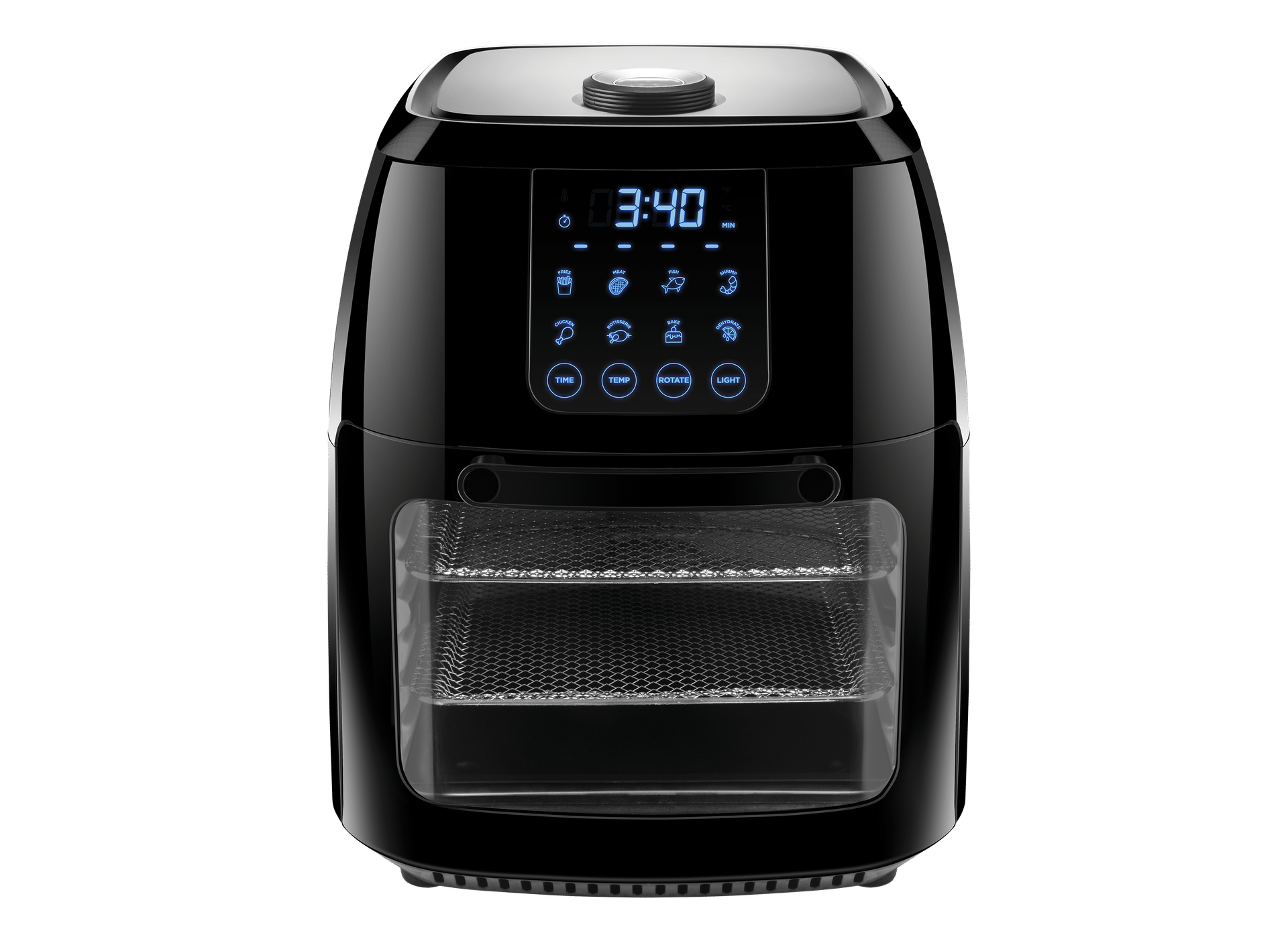
Credit: Chefman
Consumer Reports named the Chefman RJ38-2T among its top-rated air fryers, specifically for noise performance and ease of cleaning. For households where counter space is at a premium — small apartments, studio kitchens, second homes — the Chefman's approximately two-quart measured capacity and compact footprint give it an advantage over larger models that can dominate a counter.
The design is deliberately minimal. There is a digital touch display and a dishwasher-safe basket, but no preset cooking programs. Users set a temperature and a time manually. Some buyers will see this as a limitation. Others — particularly those who have dealt with air fryers that impose default temperatures that do not match recipes — will find it preferable to have direct control without working around factory settings.
Consumer Reports measures noise levels during air fryer operation and scores them relative to other models in the category. The Chefman RJ38-2T scored high for noise — which in this context means quiet — making it a reasonable choice for shared living spaces, open-plan apartments, or households with young children who are light sleepers. At its typical price of around $35 to $50, it is among the most affordable models to earn a CR recommendation.
What the Chefman lacks relative to more expensive models: rack accessories, a rotisserie function, extra capacity, and programmable presets. For buyers who want to roast a whole chicken or prepare food for more than two people at a time, it is not the right choice. The Cosori Dual Blaze at roughly $150 provides a 6.8-quart capacity, Wi-Fi connectivity, and dual heating elements for more even cooking — at three to four times the price.
For a single person or a two-person household that uses the air fryer primarily for side dishes, snacks, and reheating leftovers, the Chefman performs the task at a price that removes the cost barrier from the decision. Consumer Reports' position — that the Chefman scores near the top for its straightforward controls, excellent noise rating, and ease of cleaning — reflects performance criteria that are genuinely useful in daily use.
The dishwasher-safe basket is worth emphasizing again. Air fryer grease buildup is the primary reason people stop using them. Removing the cleaning friction is a practical feature, not a luxury.

Credit: Bold Bean Coffee Roasters
A coffee maker can only perform as well as the grind it receives. Most drip coffee machines, including the OXO Brew and the Cuisinart PerfecTemp, are calibrated for the kind of consistent, medium-fine grind that a quality burr grinder produces. Blade grinders — the $20-to-$30 spinning-blade models that dominate the budget market — produce uneven particle sizes. Some coffee grounds emerge as powder; others as coarse fragments. That inconsistency produces uneven extraction and muddy, bitter-edged coffee regardless of bean quality.
The Baratza Encore ESP is the entry-level model in Baratza's lineup and is consistently recommended by coffee equipment testers and specialty roasters as the correct starting point for home grinding. The 40-millimeter conical burrs produce a uniform particle size across 40 grind settings, ranging from fine enough for AeroPress to coarse enough for French press. For drip coffee, the middle settings — roughly 15 to 20 on the dial — produce the texture that most drip machines are designed to receive.
Wirecutter, which has evaluated coffee grinders extensively, has kept the Baratza Encore as a top pick for years, noting its consistency, repairability, and Baratza's customer service model. In an appliance category where most products are designed to be replaced rather than repaired, Baratza's approach is unusual and worth factoring into the total cost of ownership.
The Encore ESP is specifically calibrated for espresso as well as drip, with finer grind settings than the original Encore. For buyers who own both a drip machine and an espresso machine, a single grinder that handles both eliminates the need for two appliances.
The machine is not silent. Burr grinders are louder than blade grinders, and the Encore runs for about 20 to 30 seconds for a standard 12-to-14-gram dose. This is not a machine to operate at 6 a.m. in a shared apartment with thin walls. For most kitchens, the noise level is acceptable.
At approximately $180, the Encore ESP costs more than many full coffee makers. The performance argument for investing in the grinder before upgrading the brewer is well-established among coffee specialists: the grinder has more influence over cup quality than the machine does.

Credit: Zojirushi
Rice cookers occupy a deceptively simple niche — they perform one task — but the quality gap between a basic $30 model and a well-engineered machine is meaningful and immediately detectable in the results. The Zojirushi NS-ZCC10 is a five-and-a-half-cup model from Japan's most respected rice cooker brand and is the machine most consistently recommended by food testing outlets including Serious Eats, Wirecutter, and Bon Appétit.
The Zojirushi uses what it calls "Neuro Fuzzy" logic, a microprocessor that monitors the temperature inside the inner pot during cooking and adjusts heat accordingly to correct for variations in water ratio, ambient temperature, and rice type. This is meaningfully different from a simple timer-and-thermostat system. A basic rice cooker applies heat until the water boils off; a fuzzy-logic machine actively compensates during cooking. The result is consistent texture across batches even when measurements are slightly off.
The NS-ZCC10 handles white rice, brown rice, mixed rice, sushi rice, porridge, sweet rice, and a semi-brown variety through separate programs accessible via a simple panel. Each program applies a different temperature curve. Brown rice, for example, requires more water and a longer cooking cycle at lower heat; the machine manages this automatically when the correct setting is selected.
Retaining heat is a core function of any rice cooker, and the Zojirushi holds rice at the correct temperature for extended periods without drying it out. The extended keep-warm setting maintains rice for up to 12 hours with minimal quality degradation, which is useful for households where eating times vary.
The inner pot has a non-stick coating that requires hand-washing and gentle handling. This is a limitation common to virtually all rice cookers in this price tier and below. Using wooden or silicone utensils inside the pot extends the coating's lifespan considerably.
At around $130 to $160, the Zojirushi costs more than the basic one-switch models that many households use. The case for it rests on frequency of use: a household that eats rice three or four times per week will notice the consistency difference.

Credit: Coffeeness
Home espresso machines divide into two categories that require different buyer profiles. Automatic machines — the Nespresso models, the De'Longhi fully automatics — remove most of the variables and most of the skill. Manual and semi-automatic machines require the user to understand extraction, dial in grind size, and develop consistent technique. The Breville Barista Express sits at the entry point of the semi-automatic category and is designed specifically to flatten that learning curve.
What distinguishes the Barista Express from most semi-automatic espresso machines is its integrated conical burr grinder. Rather than requiring a separate grinder purchase, the machine grinds directly into the portafilter, the handle-with-basket that attaches to the group head and holds the coffee grounds during extraction. Grind size is adjusted via a dial, and the grind amount is controlled by timer. This integration keeps the dose and texture consistent from shot to shot, which is one of the primary variables beginners struggle to control.
The machine operates at 15 bars of pressure, which is standard for espresso machines in this category. The steam wand is manual, so milk foam quality depends on technique. Third-wave coffee shops, which use commercial machines at $5,000 and above, produce more consistent microfoam. The Barista Express's steam wand can produce lattes and cappuccinos that are good enough for daily use with some practice.
Wirecutter, Good Housekeeping, and Food Network have all named the Barista Express a top recommendation for buyers new to home espresso. The learning curve is real — the first week of use typically produces variable shots as the user calibrates grind size and dose — but it flattens quickly. Most users report consistent results within two weeks of daily use.
At around $700 to $750, the Barista Express is a significant purchase. The math is often framed in terms of replacing café spending: at $5 to $7 per day for a café latte, the machine pays for itself within four to six months for daily café visitors. Whether that math motivates the purchase is individual. The more relevant consideration is whether home espresso is something you will use enough to justify the counter space and the practice period.

Credit: Hamilton Beach
The market for premium two-slice toasters has grown steadily, with models from Breville, Dualit, and KitchenAid occupying the $100-to-$250 range. Consumer Reports' research establishes a consistent finding in the toaster category: top-performing toasters make uniformly browned toast very light or very dark, maintain consistent browning slot to slot, and perform that task reliably across thousands of cycles. The Hamilton Beach 22995 does this at roughly $35.
Consumer Reports tests toasters by evaluating evenness of browning — both edge-to-edge within each slice and slot-to-slot across multiple slots — and by measuring consistency across the lightest and darkest settings. The Hamilton Beach models have consistently appeared among the brand's recommended picks in the under-$50 tier. Across its toaster lineup, Hamilton Beach performs above average for evenness and consistency relative to price.
The 22995 is a basic two-slot toaster with six shade settings, a bagel setting, a defrost setting, a cancel button, and a removable crumb tray. That list of features is sufficient for the appliance to do its job. The bagel setting runs one heating element at full power and the other at low, toasting the cut face while gently warming the outer crust. The defrost setting extends the cycle duration to accommodate frozen bread.
What it does not have: extra-wide slots for thick artisan bread, a countdown timer, LCD display, or high-lift lever. Premium toasters in the Breville and Dualit range offer these features. Whether they justify three to five times the price depends on priorities. A household that toasts bread every day and values visible progress may find the Breville 2-Slice worth the investment. For most households, the Hamilton Beach produces equivalent browning quality at a fraction of the cost.
The most important practical advice about toasters applies to every model, regardless of price: the crumb tray requires regular cleaning. Accumulated crumbs in a poorly maintained toaster create a fire hazard. Emptying and wiping the tray weekly is the most consequential maintenance step in small appliance ownership.

Credit: Cuisinart
A stand mixer is the better tool for sustained mixing tasks — creaming butter and sugar for a full batch of cookies or kneading dough for 10 minutes. A hand mixer is the better tool for everything else — whipping cream directly in the bowl it will be served from, beating eggs over a double boiler, or mixing a small batch of pancake batter without dragging out a large machine. Both have their place in a functional kitchen, and they are not mutually exclusive.
The Cuisinart Power Advantage Plus 9-Speed Hand Mixer HM-90S is among the highest-rated hand mixers in Consumer Reports' ratings. At nine speeds, it has more range than most hand mixers, which typically offer five or seven. The lowest speeds are slow enough to fold dry ingredients into wet without throwing flour across the counter — a practical problem with high-powered hand mixers that jump immediately to an aggressive minimum speed.
The included accessories are comprehensive for the price tier: two beaters, two dough hooks, two whisks, and a storage case. The whisks are the feature most frequently absent from budget hand mixer sets and the most useful for applications like whipping cream or egg whites where a flat beater would over-agitate the mixture. At around $60 to $75, the HM-90S is priced in the mid-range but comes with premium-tier accessory coverage.
The machine weighs about two and a half pounds — lighter than most stand mixers and light enough to hold comfortably for five to ten minutes of mixing. The ergonomic handle positions the thumb near the speed control and ejector button, reducing the grip adjustments required during extended use. Swivel cords, which rotate to either side to accommodate left- and right-handed users, are standard on the HM-90S.
Hand mixers are not easy to clean thoroughly. The beater ejector button allows quick removal, and the beaters themselves are dishwasher-safe. The motor housing and cord require wiping by hand. Spatter collects on the front of the housing during high-speed operation with batters; wiping it down immediately after use prevents residue from hardening.
For households that bake occasionally but not frequently enough to justify a full stand mixer, the hand mixer performs most mixing tasks adequately and stores in a single drawer.

Credit: Walmart
The Instant Vortex Plus 140-3079-01 is the other Consumer Reports air fryer recommendation from Instant Brands — the parent company of Instant Pot — and it occupies a different position than the Dash Tasti-Crisp covered earlier in this list. Where the Dash prioritizes simplicity and compactness, the Vortex Plus offers more capacity, more cooking modes, and features designed for households with higher volume needs.
Consumer Reports gave the Instant Vortex Plus an excellent score for ease of controls — the highest possible rating in that category — and a very good score for ease of cleaning. The digital display is clearly readable, and the preset cooking programs for baking, broiling, dehydrating, reheating, and roasting are accessible without consulting a manual. For buyers who want an air fryer that handles a broader range of cooking tasks rather than just crisping, the preset modes provide a useful framework.
The six-quart capacity comfortably handles food for three to four people — a significant step up from the two-quart range of the Dash and Chefman models. A full batch of chicken wings, a whole cauliflower broken into florets, or a pound of frozen french fries fits without crowding. Crowding is the most common cause of uneven air fryer results, because food needs air circulation on all sides to crisp uniformly.
One finding from Consumer Reports testing is worth noting: when set to 350°F, the Vortex Plus measured at 324°F, a 26-degree discrepancy. This is not unusual for air fryers, which tend to run cooler than their set temperatures, but it means recipes developed for a calibrated oven will need time adjustments. Adding two to three minutes to any recipe calling for 350°F corrects for this gap in practice.
The Vortex Plus retails around $90 to $110, placing it between the budget Dash and Chefman models and the premium Cosori Dual Blaze. For families who want an air fryer with more capacity and preset functionality than an entry-level model, without spending $150 or more on the Cosori, the Instant Vortex Plus covers that middle ground effectively.