-1920x1440.jpg)
Georgy Trofimov / Unsplash
Summer travel has a particular pull that other seasons cannot match. School calendars clear, daylight extends, and the expectation of warm weather creates the conditions for the kind of extended escape that a week of vacation in February cannot replicate. Cruise vacations align well with all of this: they handle logistics, move travelers between destinations without the friction of airports and hotels, and scale comfortably from family groups to solo travelers to couples looking for a romantic voyage at sea. The challenge is not whether to cruise in summer but where, since the season opens a wide range of destinations simultaneously, from the sun-baked Greek islands to Alaska’s cool fjords to the long Nordic twilight.
The geography of summer cruising matters because different regions offer genuinely different experiences, not variations on the same theme. Alaska offers wildlife encounters in cool, clear weather, making outdoor time on deck a pleasure. The Mediterranean concentrates history, food, and warm-weather beach culture into a single itinerary that can span five nights or two weeks. Bermuda offers a self-contained tropical destination that stays reliably clear of serious storms during the summer months. Northern Europe gives travelers a cooler alternative with extraordinary daylight hours that stretch the usable day well into what would normally be the evening. The Caribbean, despite its summer heat and storm risk, rewards travelers who want warm water, white sand, and easy port days.
These five summer cruise destinations come from U.S. News & World Report’s selection of the best summer cruises, covering a range of regions, itinerary lengths, and cruise line options suited to the summer travel window. Each destination includes a specific itinerary recommendation and cruise line example drawn from the source, covering sailings from the Pacific Northwest and the East Coast to Europe and the open Caribbean.
1 / 5
Credit: Holland America
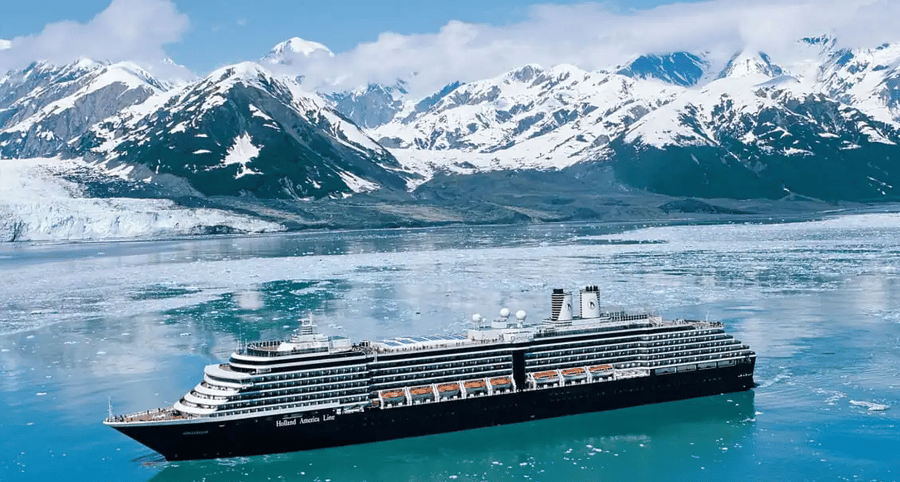
Alaska’s cruise season runs from April through October, but June and July represent the peak months for a specific set of reasons that make the higher fares worth the investment for many travelers. Temperatures reach a comfortable 60 degrees Fahrenheit, daylight hours extend well into the evening, and wildlife activity is at its most visible: brown bears, moose, humpback whales, and salmon all populate the landscape and waterways in summer in ways that shoulder-season sailings cannot match. Most Alaska cruises depart from Seattle or Vancouver, British Columbia, and run one to two weeks, with optional land-based cruisetour extensions available for travelers who want to move deeper into the interior.
Holland America Line has operated Alaska cruises for nearly 80 years and holds more permits to sail into Glacier Bay National Park & Preserve than any other cruise line. The park regulates access and limits permits to a finite annual count. The 7-Day Alaska Explorer voyage sails round-trip from Seattle and stops in Juneau, Icy Strait Point, Sitka, and Ketchikan, Alaska, as well as Victoria, British Columbia. The itinerary combines active port exploration of fishing villages and Indigenous cultural sites with scenic cruising through Puget Sound, Stephens Passage, and Glacier Bay.
The choice between time on deck and time ashore is the central Alaska cruise trade-off, and the June and July window optimizes both. The long daylight hours mean wildlife is active and visible during the scenic cruising segments, not just at port. A private balcony stateroom gives passengers a dedicated vantage point for glacier and wildlife viewing during the passages between ports. Interior cabins and shared deck spaces cannot replicate this advantage on a cold morning when wildlife appears unexpectedly, and the viewing window is brief. Holland America’s 80 years of Alaska experience also translates into well-established relationships with port communities and wildlife naturalists, giving the commentary and excursion quality on its Alaska sailings a depth that newer expedition lines in the region are still developing.
2 / 5
Credit: Explora Cruises
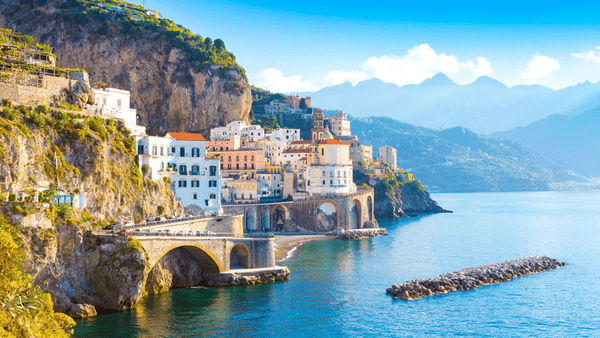
Summer is the Mediterranean’s peak cruise season, and it arrives with crowds, sunshine, and temperatures ranging from the low 80s to the mid-90s Fahrenheit. The itinerary range spans five to 14 nights, giving travelers flexibility to match the length of their trip to their schedule and budget. Major port stops include Barcelona, Rome, the Greek Isles, and Dubrovnik, Croatia, putting some of the world’s most celebrated outdoor historical attractions within reach of a single sailing. Sun protection is essential at sites such as Rome’s Colosseum and the Acropolis of Athens, where shade is scarce, and summer heat can make midday touring uncomfortable.
Explora Journeys offers a week-long itinerary, A Journey of Historic Splendour and Stunning Landscapes, that encapsulates the Mediterranean summer experience. The sailing departs from Monte Carlo, Monaco, and visits Rome, Sorrento, and Sicily in Italy, La Valletta in Malta, and Palma de Mallorca in Spain before arriving in Barcelona. The port sequence covers some of the Mediterranean’s most historically layered destinations in the region — from the Baroque grandeur of Valletta to the Modernista architecture of Barcelona — within a single week of sailing.
The onboard experience on Explora Journeys reflects a luxury positioning that matches the premium port destinations the itinerary visits. Nine gourmet dining venues give passengers variety across the length of the voyage, and the base fare includes unlimited beverages and access to the spa’s thermal suite alongside meals. The all-inclusive structure removes the per-item spending decisions that accumulate on ships with à la carte dining and beverage programs. Travelers $TRV who want the Mediterranean at its most celebrated, with the historical weight of Rome and the architectural drama of La Sagrada Familia in Barcelona, will find the summer season’s heat and crowds a worthwhile exchange for what the region delivers at its peak. The Explora Journeys all-inclusive model also removes a category of financial friction that à la carte Mediterranean cruising can quickly accumulate.
3 / 5
Credit: Norwegian Cruise Lines
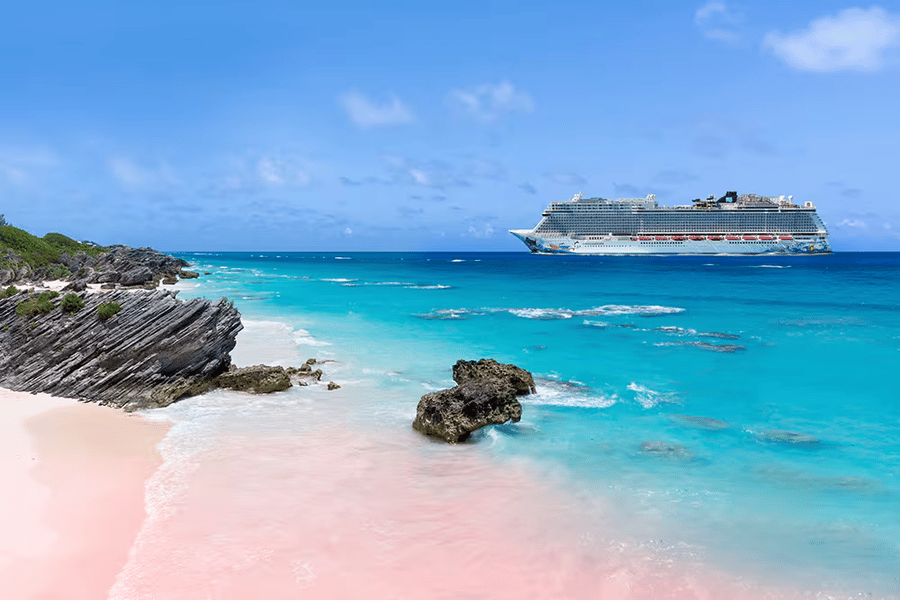
Bermuda’s geographical position in the North Atlantic places it well north of the main hurricane belt, and major storms rarely reach the island during the summer months. Caribbean destinations cannot claim the same confidence. Summer temperatures settle in the low to mid-80s Fahrenheit, the famous pink-sand beaches are at their most inviting, and ocean conditions are ideal for swimming, snorkeling, and sailing. Bermuda cruises span four to nine days and include multiple overnight port stays, giving passengers substantially more time ashore than a typical single-day Caribbean port call.
Norwegian Cruise Line $NCLH operates dozens of summer sailings to Bermuda from Boston, New York, and Philadelphia, making it the most accessible major tropical cruise destination for U.S. East Coast travelers who want to avoid flying to a southern port. The 7-Day Bermuda Round-Trip Philadelphia itinerary includes three days at sea, bookending two full days in Bermuda and a day in Charleston, South Carolina. The Charleston stop adds a second distinct destination to the itinerary, with its own historic downtown, restaurant scene, and waterfront character.
Popular excursions in Bermuda include a Bermuda Triangle evening cruise, underground cave exploration at Crystal Caves, and a beach day at Horseshoe Bay Beach for swimming, sunbathing, and snorkeling. Some Bermuda itineraries reduce the Bermuda port time and add stops in destinations such as Newport, Rhode Island, Martha’s Vineyard, Massachusetts, or Halifax, Nova Scotia, giving travelers who want a New England coastal extension an alternative to the standard Bermuda-focused schedule. The overnight port format distinguishes Bermuda cruises from most other cruise destinations, where a single port day rarely leaves time for more than two or three activities before the ship departs. The multiple overnight stays in Bermuda give passengers time to explore at a pace that single-day calls on Caribbean islands cannot provide, including dinner ashore and an evening walk through Hamilton’s historic streets.
4 / 5
Credit: Viking Cruises
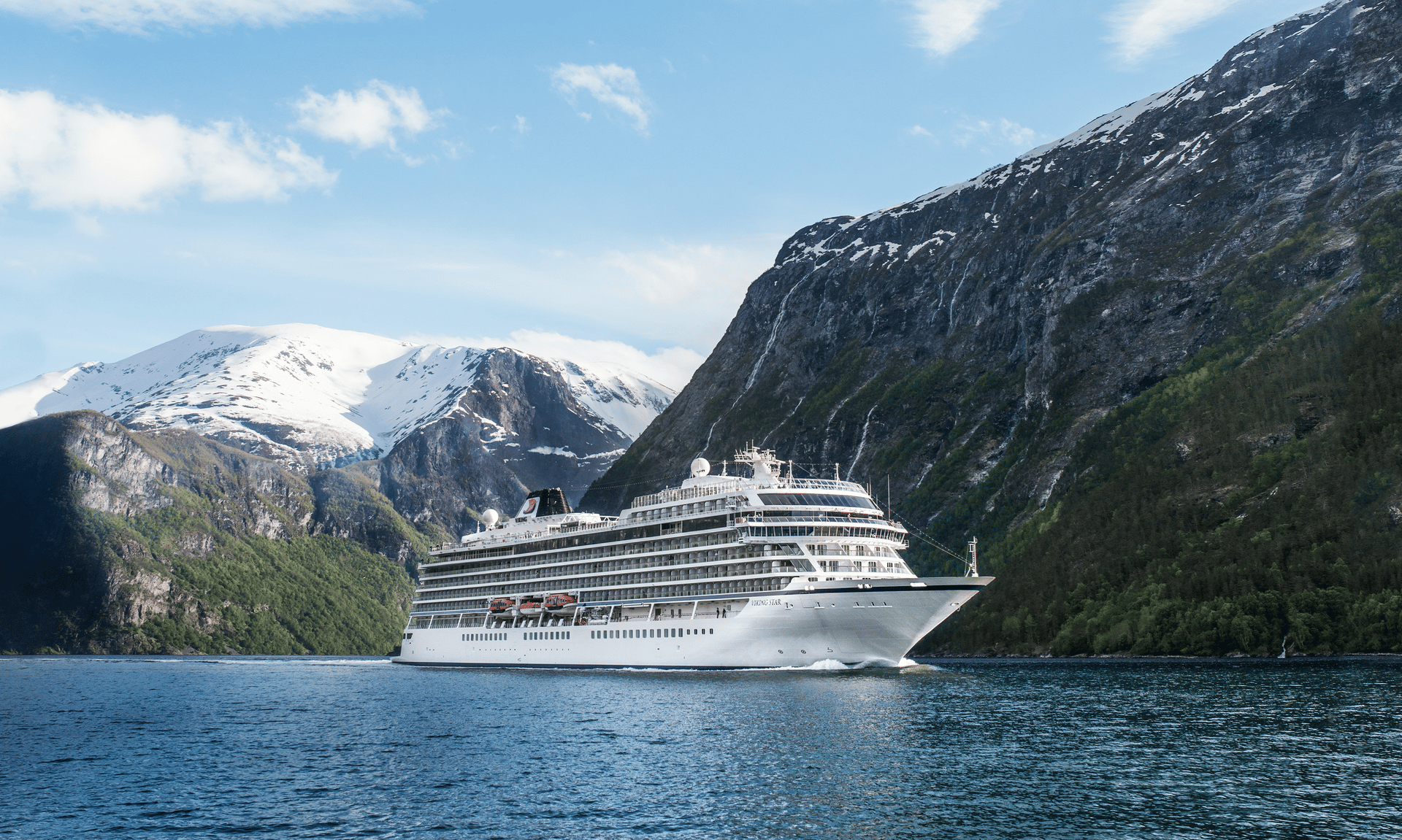
Northern Europe offers summer travelers something no warm-weather cruise destination can provide: up to 17 to 19 hours of daylight in Scandinavia and the Baltic, which extends the usable touring day far beyond what the Mediterranean or Caribbean allows. Average high temperatures in the 60s and 70s Fahrenheit give outdoor activities in cities and natural landscapes a comfortable physical dimension that the oppressive summer heat of southern Europe does not. Itineraries in this region typically run 1 to 2 weeks and visit the British Isles, Norway, Sweden, Finland, Denmark, Germany, Iceland, and the Baltic states, in various configurations.
Viking Ocean Cruises’ Viking Homelands voyage covers six countries over 15 days, calling on Stockholm in Sweden, Tallinn in Estonia, Gdansk in Poland, and Berlin in Germany, followed by Danish ports including Bornholm, Copenhagen, and Aalborg, and four Norwegian ports: Oslo, Stavanger, Eidfjord, and Bergen. Overnight stays in select cities give passengers the kind of extended evening access that single-day port calls cannot provide in cities with active dining and cultural scenes. A complimentary excursion in each port removes the per-shore cost calculation that can make a multi-port itinerary feel expensive once excursion fees accumulate.
Viking’s all-inclusive fare covers all onboard meals, Wi-Fi, port taxes and fees, 24-hour room service, and beer and wine at lunch and dinner. The transparency of the all-inclusive model suits long itineraries particularly well, since the per-day cost of à la carte dining and excursions compounds over 15 days, making the all-inclusive structure a meaningful financial simplification. The extraordinary summer daylight in Scandinavia also changes how late-afternoon and evening port time functions: in Bergen or Eidfjord at midsummer, the light at 9 p.m. looks like late afternoon, giving passengers who disembark after dinner a fully usable outdoor window. Viking’s complimentary excursion policy further reduces the per-day cost of a 15-day itinerary that would otherwise accumulate substantial shore excursion fees.
5 / 5
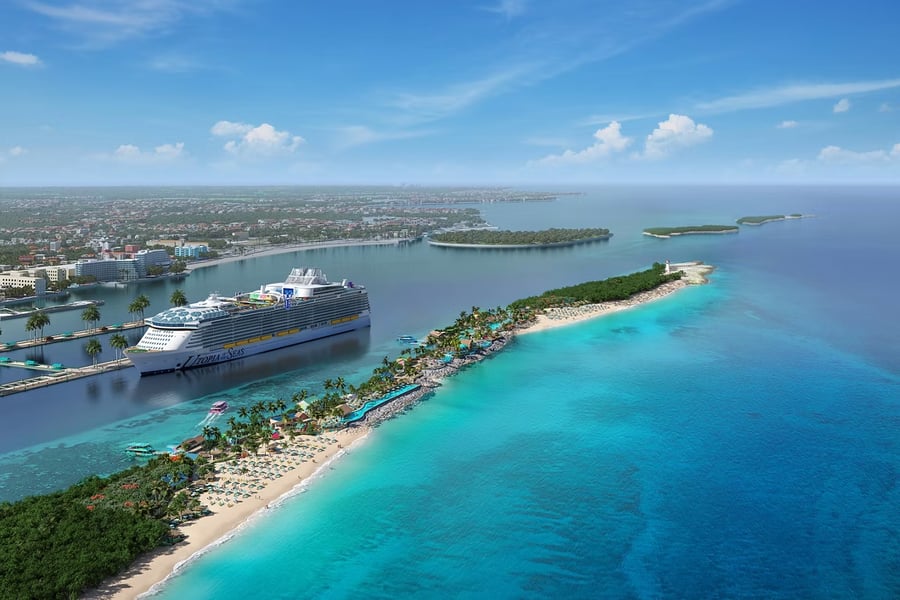
Credit: Royal Caribbean
The Caribbean in summer carries real weather risk: tropical storms and hurricanes are possible between June and November, temperatures reach the upper 80s to low 90s Fahrenheit, and humidity peaks. The source presents these conditions plainly as trade-offs that travelers accept in exchange for the region’s signature rewards: crystal-clear warm water and white sand beaches that reach their least crowded state during summer, when families with school-age children move to other destinations. Short Caribbean sailings run three to five days, while longer itineraries stretch a week or more.
Eastern Caribbean itineraries reach Turks and Caicos, the U.S. and British Virgin Islands, the Dominican Republic, and Saint Lucia. Western Caribbean voyages call on Jamaica, the Cayman Islands, Mexico, Belize, and Honduras. Both route types can include the Bahamas, where multiple cruise lines operate private beach destinations that give passengers an exclusive, resort-managed beach day in a setting the line controls entirely.
Royal Caribbean $RCL International’s Eastern Caribbean and Perfect Day cruise sails round-trip from Port Canaveral near Orlando, Florida, visiting St. Thomas in the U.S. Virgin Islands and Nassau in the Bahamas before spending a full day at Perfect Day at CocoCay, Royal Caribbean’s private island destination in the Bahamas. The CocoCay stop includes waterslides and beach access at an exclusive destination, which the source presents as a distinct draw alongside the port cities on the itinerary. The short driving distance from Orlando to Port Canaveral makes this itinerary particularly accessible for families already vacationing in Central Florida, allowing them to extend a theme park trip into a cruise without an additional flight. The eastern Caribbean routing also gives first-time cruisers a manageable introduction to the format, with a clear port structure, familiar Caribbean island scenery, and a private beach day that removes the planning overhead of organizing a full shore day on their own. Royal Caribbean’s scale also means that Perfect Day at CocoCay represents a substantial infrastructure investment in the private island category, with a level of amenity development that smaller lines’ private destinations do not match.
