
The best summer festivals around the world combine music, tradition and spectacle, and each one is reason enough to build a vacation around it
Credit: Emanuel Tadeu / Pexels
Summer festivals compress a place's history, food and public life into a handful of days, which is exactly why the best summer festivals around the world are worth building an entire trip around instead of squeezing in as a side stop on a longer itinerary. A regular sightseeing schedule rarely gets a traveler inside a centuries-old rivalry between city districts, a national holiday built on wrestling and horse racing, or a monthlong shrine festival that shuts down traffic in a major city. These ten events do that, and each one runs on a fixed, predictable calendar, which means a trip can be planned around the festival date rather than the other way around.
The list below spans three continents and runs from mid-June through late August, tracking the arc of the northern hemisphere's summer. Some entries, like Sweden's Midsummer, are rooted in the solstice itself and tied to the natural calendar. Others, like Mongolia's Naadam or Kyoto's Gion Matsuri, mark historical and religious anniversaries that happen to fall in summer months. A few, including Spain's La Tomatina and South Korea's Boryeong Mud Festival, are modern inventions that have become fixtures within a few decades rather than a few centuries.
What ties them together is scale and specificity. Each festival draws its identity from a particular place: a farm in Somerset, a beach in Boryeong, an island in the Danube, a piazza in Siena. None of them can be replicated elsewhere, which is precisely what makes attending one worth the planning involved, from booking accommodations far in advance to understanding a festival's particular customs and etiquette before arriving.
The entries below are organized roughly by when they fall on the calendar, from June through August, so a reader weighing options for a single summer trip can see how the dates line up. Each includes the basics: what the festival involves, where it happens, and what makes it distinct from festivals that look similar on the surface but run on very different traditions.
Credit: Pixabay / PICRYL
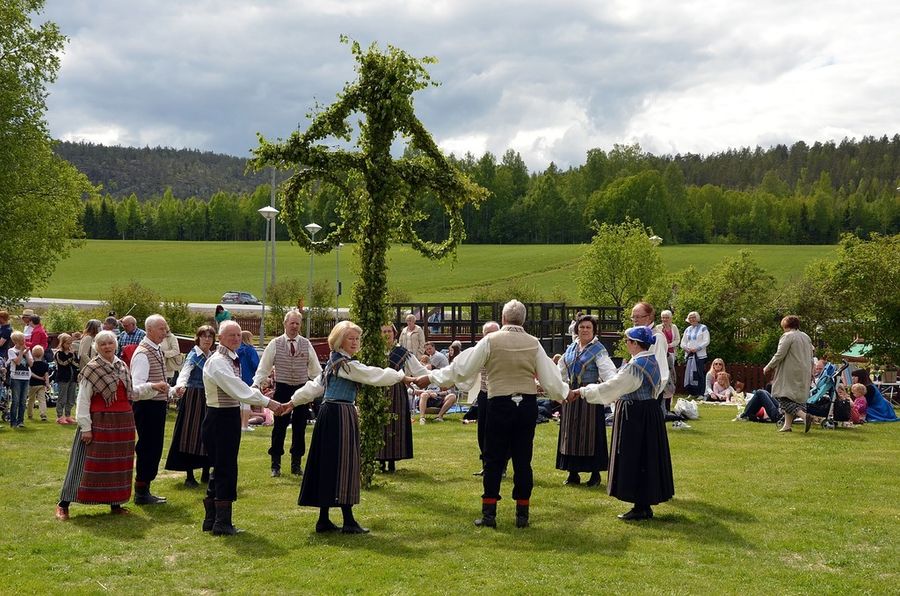
Sweden's Midsummer, or midsommarafton, is a solstice celebration held on a Friday between June 19 and 25 each year, and it ranks as the most important holiday on the Swedish calendar after Christmas.
The centerpiece is the majstång, a tall pole decorated with birch leaves and wildflowers, raised in town squares and village greens across the country. Communities gather around it for folk dancing that includes songs like "Små grodorna," in which dancers hop and mimic frogs while circling the pole. Children and adults alike wear crowns woven from wildflowers picked that morning, a custom that has become one of the most photographed parts of the holiday.
Food follows a set pattern nationwide: pickled herring served several ways, boiled new potatoes with fresh dill, sour cream, chives, and the first strawberries of the season for dessert. Aquavit and beer accompany the meal, along with snapsvisor, short drinking songs sung before each round. Many families treat the meal as a long, unhurried outdoor lunch rather than a quick celebration.
Stockholm's Skansen open-air museum hosts one of the country's largest public Midsummer gatherings, drawing crowds for its pole-raising ceremony and folk performances. The Dalarna region, particularly the towns of Leksand and Rättvik, is known for especially traditional festivities, with local folk costumes, church boat processions on Lake Siljan, and fiddle music passed down through generations.
Midsummer also marks a near-total pause in Swedish public life. Many businesses close for the holiday weekend, and much of Stockholm empties out as residents head to countryside cottages and archipelago islands. Public transportation schedules shift, and shops post holiday hours well in advance. For a visitor, this means the holiday is best experienced outside the largest cities, in smaller towns and rural areas where the traditional festivities are concentrated. Because the holiday date shifts within a narrow window each year rather than falling on a fixed date, checking the specific Friday well ahead of a trip is worth doing before booking travel.
Credit: Emanuel Tadeu / Pexels
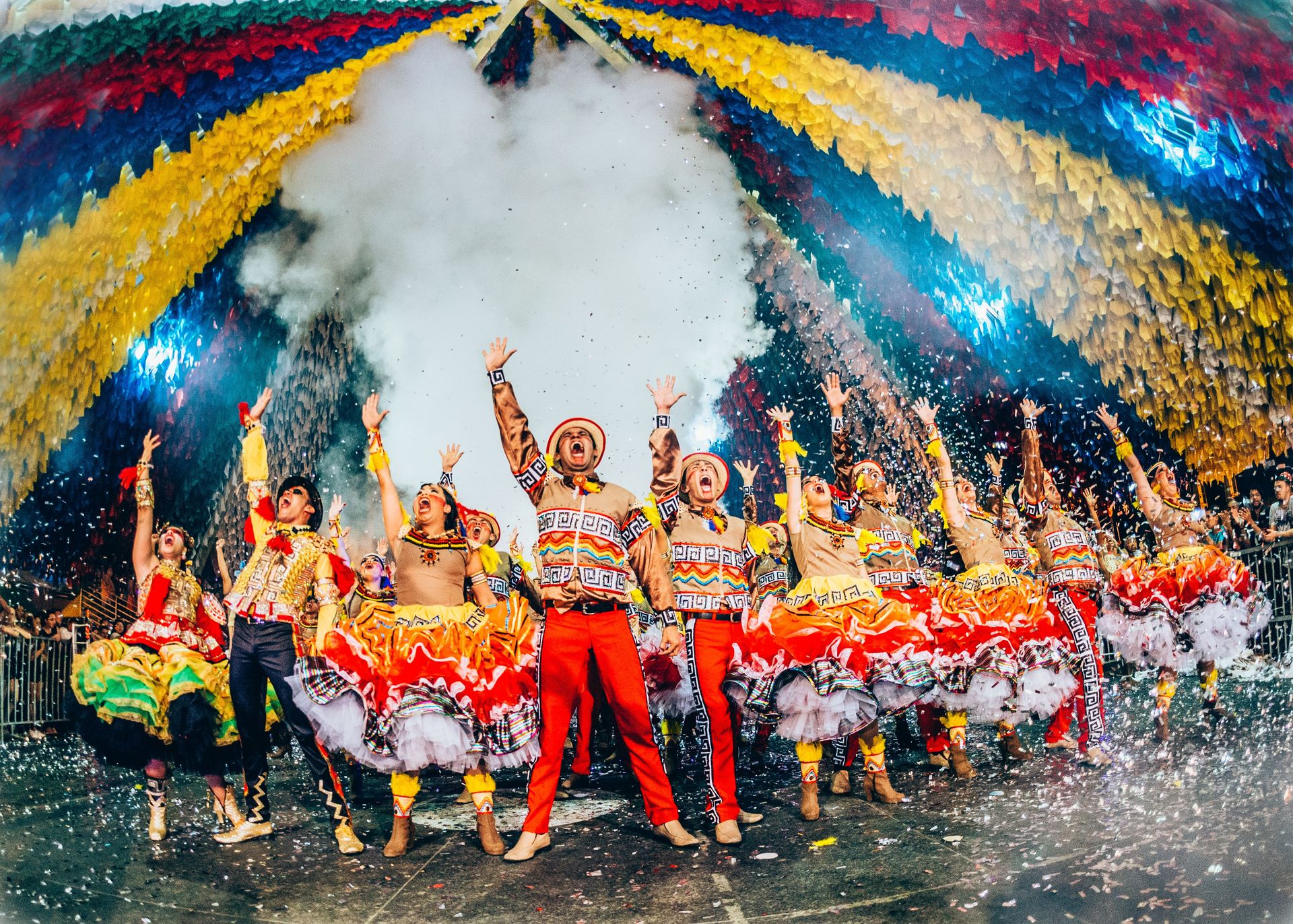
Festa Junina is a monthlong string of harvest celebrations held across Brazil every June, built around bonfires, forró music and quadrilha dancing that reenacts a country wedding.
The celebrations honor three Catholic saints whose feast days fall in June: Saint Anthony on June 13, Saint John the Baptist on June 24, and Saint Peter on June 29. Portuguese colonists brought the religious calendar with them, but the festivities took on a distinctly rural, northeastern Brazilian character over time, blending Catholic feast days with harvest traditions tied to corn, the season's staple crop.
Quadrilha, the festival's signature dance, choreographs a mock wedding complete with a bride, groom, priest and a comic disruption, performed by dancers in plaid shirts, straw hats and painted-on freckles meant to evoke rural farm life. Forró, a genre built around accordion, triangle and the zabumba drum, provides the soundtrack for dancing that continues late into the night. Bonfires, lit in reference to Saint John, burn in town squares and backyards alike.
Food centers on corn in nearly every form: canjica, a sweet pudding made from hominy corn and milk; pamonha, a corn paste wrapped in husks and steamed; and quentão, a hot drink made from cachaça, ginger and spices, served to ward off the evening chill.
Two cities compete for the title of hosting the largest São João celebration in the world: Caruaru in Pernambuco state and Campina Grande in Paraíba state. Both stage weeks of concerts, fireworks and quadrilha competitions that draw visitors from across Brazil and abroad. Smaller versions of the same traditions play out in nearly every Brazilian town during June, making it possible to experience Festa Junina well beyond the two flagship cities, though the scale and production value are considerably lower outside Caruaru and Campina Grande. Schools across Brazil also stage their own junina parties in the weeks leading up to the holiday, complete with student-performed quadrilha routines, giving the tradition a foothold in Brazilian childhood well before most people ever attend one of the large civic celebrations.
Credit: Andras Stefuca / Pexels
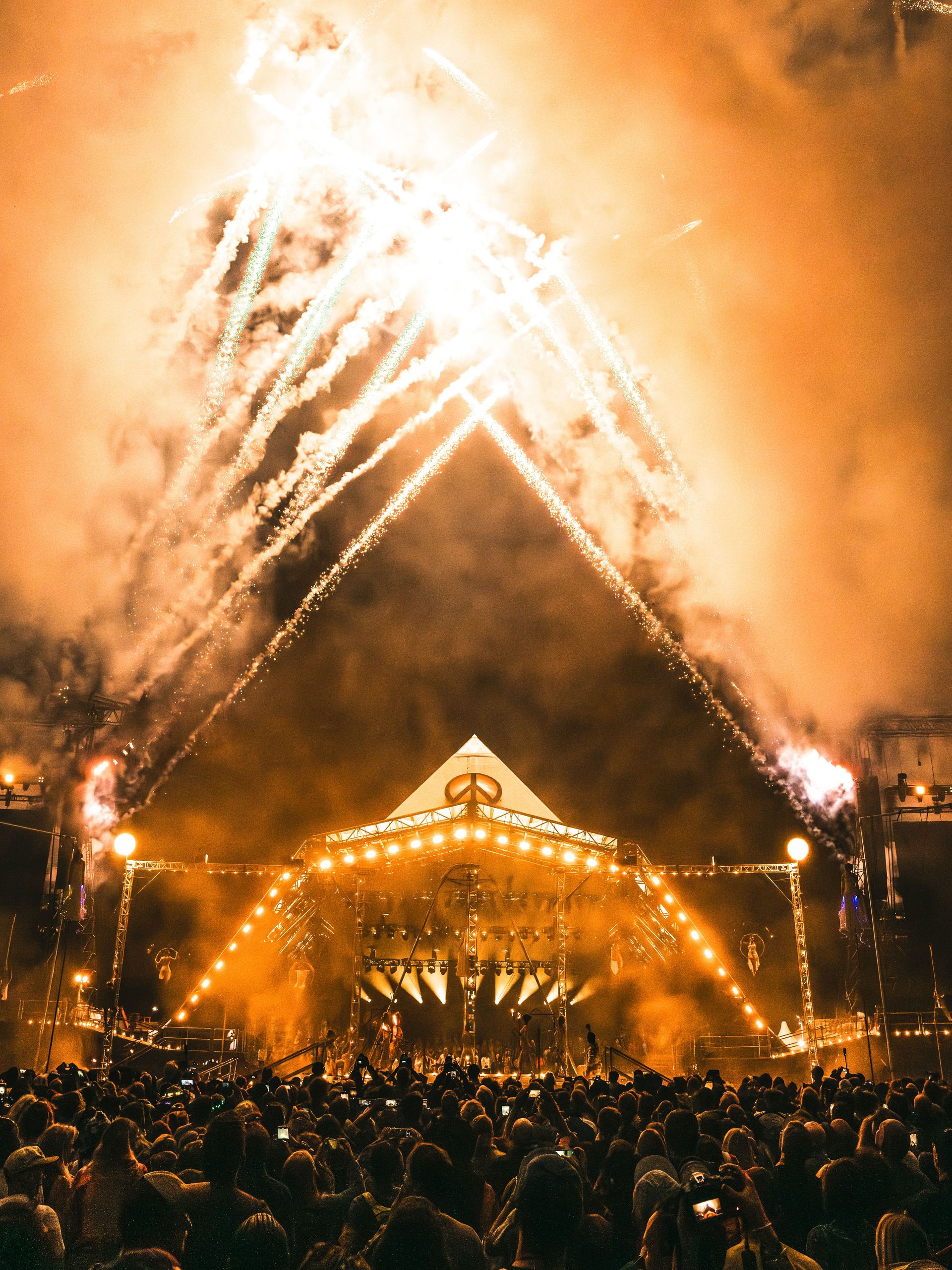
Glastonbury Festival is a five-day music and performing arts festival held on Worthy Farm in Pilton, Somerset, England, typically in late June, and it remains the largest greenfield festival in the world.
Dairy farmer Michael Eavis founded the festival in 1970, inspired partly by the era's free festival movement and a visit to the Bath Festival of Blues earlier that year. What began with a few hundred attendees paying a small entry fee that included free milk from the farm has grown into an event that houses roughly 200,000 people across its run, a figure that includes ticket holders, staff and performers.
The Pyramid Stage remains the festival's best-known landmark, hosting headline acts each night, but the site includes dozens of additional stages spread across the farm's fields, covering genres well beyond music. Theatre, circus, comedy, spoken word and dance performances run alongside the concerts, and areas like the Green Fields focus on sustainability, healing and environmental activism rather than performance.
Tickets sell out within minutes of going on sale each year, months before the festival's lineup is even announced, a reflection of the event's reputation rather than any single act on the bill. Somerset's weather has become part of the festival's identity: heavy rain turns the farm's clay soil into thick mud most years, and wellington boots are treated as essential gear rather than an eccentric choice.
Roughly every five years, the festival takes what organizers call a fallow year, canceling the event entirely to let the farmland and surrounding infrastructure recover from the strain of hosting hundreds of thousands of people. Worthy Farm sits about two and a half hours from London by car, and the nearest train station, Castle Cary, runs shuttle buses to the site during festival week for those arriving without a car. Outside the festival itself, the farm returns to dairy operations for the rest of the year, a detail Eavis has often pointed to as central to keeping the event grounded in its original agricultural setting rather than becoming a permanent commercial venue.
Credit: Andras Stefuca / Pexels
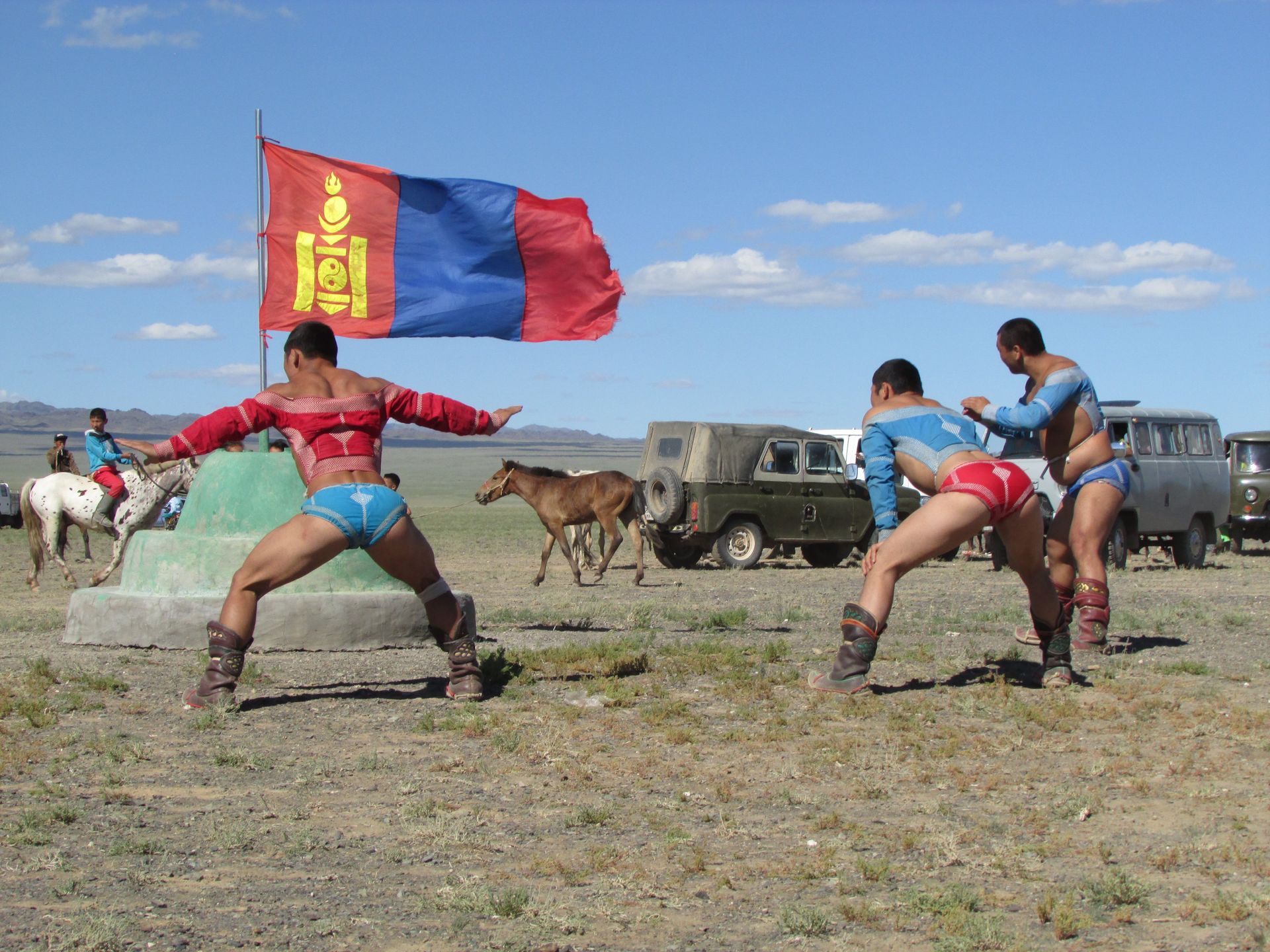
Naadam is Mongolia's national festival, held every year from July 11 through 13, centered on what Mongolians call the three manly games: wrestling, archery and horse racing.
The modern festival marks the anniversary of the 1921 revolution that established Mongolia's independence, though the traditions behind the games trace back centuries earlier, to gatherings held after military campaigns and to celebrations associated with Genghis Khan's era. UNESCO added Naadam to its Representative List of the Intangible Cultural Heritage of Humanity in 2010, recognizing the festival's role in preserving nomadic Mongolian culture.
Wrestling has no weight classes and no time limit; a match ends the moment one competitor's back, knee or elbow touches the ground. Wrestlers wear a traditional costume consisting of a short, open-fronted jacket called a zodog and tight briefs called a shuudag, and the sport carries its own ritual gestures, including an eagle-inspired dance performed before and after each match. Archers, including women's divisions, shoot at stacked rows of leather targets from a set distance, scored by judges who signal hits with a traditional call.
Horse racing at Naadam looks little like a Western track race. Riders, typically children between roughly five and thirteen years old, race across open countryside over distances that can stretch more than 20 kilometers, depending on the horses' age category. The races test endurance over raw speed, and the young jockeys are chosen for their light weight and riding skill developed from early childhood in nomadic herding families.
Ulaanbaatar, the capital, hosts the largest Naadam celebration at the National Sports Stadium, drawing the biggest crowds and the most prominent wrestlers. Every Mongolian province, known as an aimag, also holds its own smaller Naadam on the same dates, offering a more local, less touristed version of the same three games. Traditional foods appear alongside the competitions, including khuushuur, a fried meat pastry, and airag, fermented mare's milk served throughout the festival, both closely tied to the nomadic herding economy the games themselves celebrate.
Credit: Guohua Song / Pexels
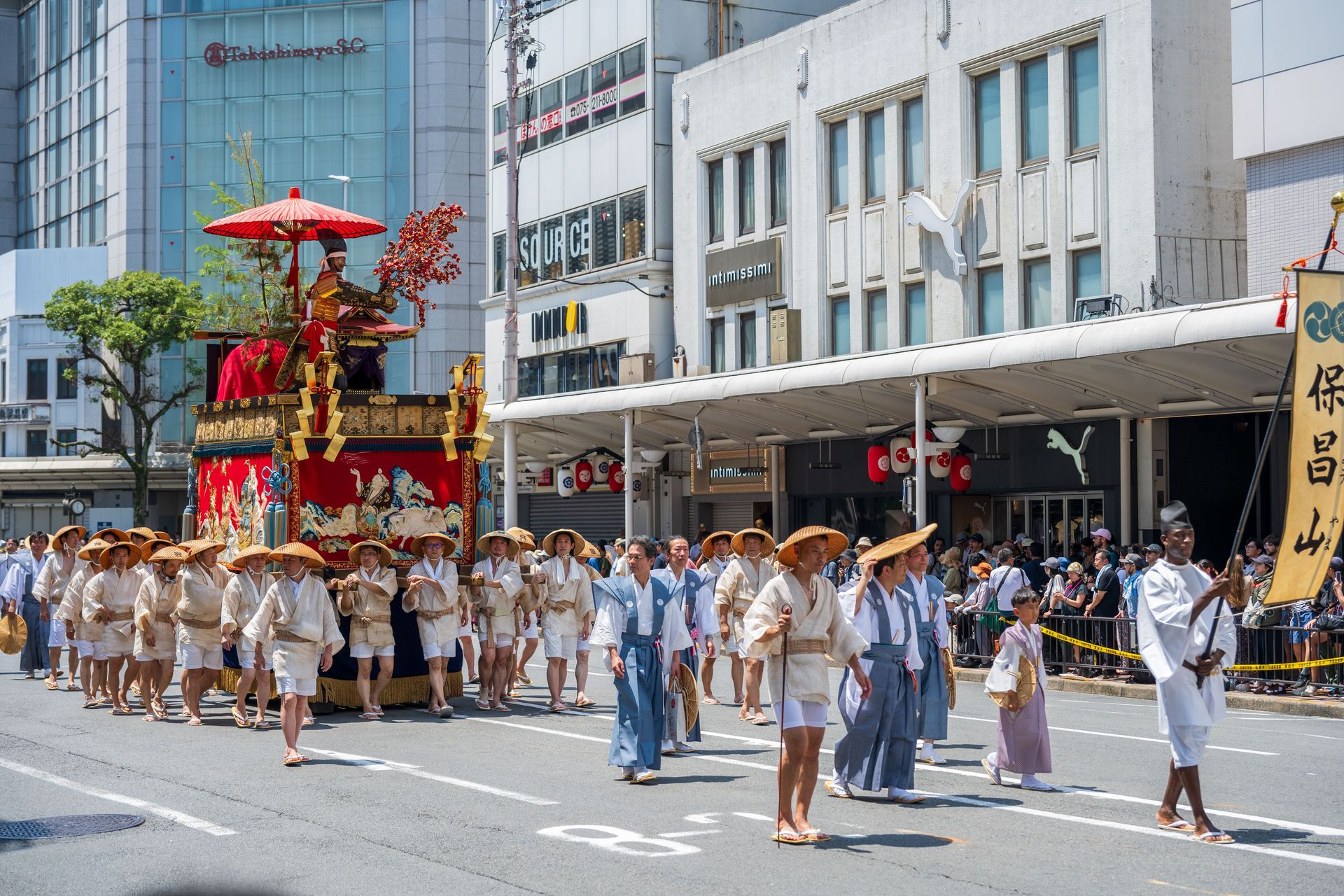
Gion Matsuri is a monthlong festival held every July in Kyoto, Japan, centered on Yasaka Shrine, and it culminates in two grand processions of wooden floats on July 17 and July 24.
The festival dates back to 869 CE, when it began as a purification ritual known as goryo-e, performed to appease spirits believed to be responsible for plague and natural disaster sweeping through the city. Over more than a thousand years, that ritual grew into the elaborate parade Kyoto now stages each summer, making it one of Japan's oldest continuously observed festivals.
The floats themselves, called yamaboko, are the festival's most visible feature. Some stand more than 25 meters tall and weigh several tons, decorated with imported tapestries, wood carvings and metalwork that reflect centuries of trade and craftsmanship. Neighborhood associations build and assemble the floats by hand each year using traditional wood joinery and rope lashings rather than nails, a technique preserved specifically for this festival.
The two evenings before each main procession, known as yoiyama, transform central Kyoto into a pedestrian-only festival ground. Streets close to traffic, food stalls sell grilled skewers and shaved ice, and many old merchant houses open their front rooms to display family heirlooms and folding screens normally kept private. Lanterns light the narrow streets around the floats, and the atmosphere on these preview nights draws crowds that rival the parade days themselves.
Gion Matsuri is widely counted among Japan's three great festivals, alongside Tenjin Matsuri in Osaka and Kanda Matsuri in Tokyo. Unlike a single-day event, its rituals, float displays and shrine ceremonies stretch across the entire month of July, so visitors have flexibility in choosing which days to attend depending on whether they want the parade itself or the quieter preview evenings. Yasaka Shrine itself hosts a portable shrine procession, mikoshi togyo, carrying the deity through the city between the two float parades, a ritual older than the floats and closer to the festival's original purification purpose.
Credit: Gnosis / Wikimedia Commons (CC BY-SA 4.0)
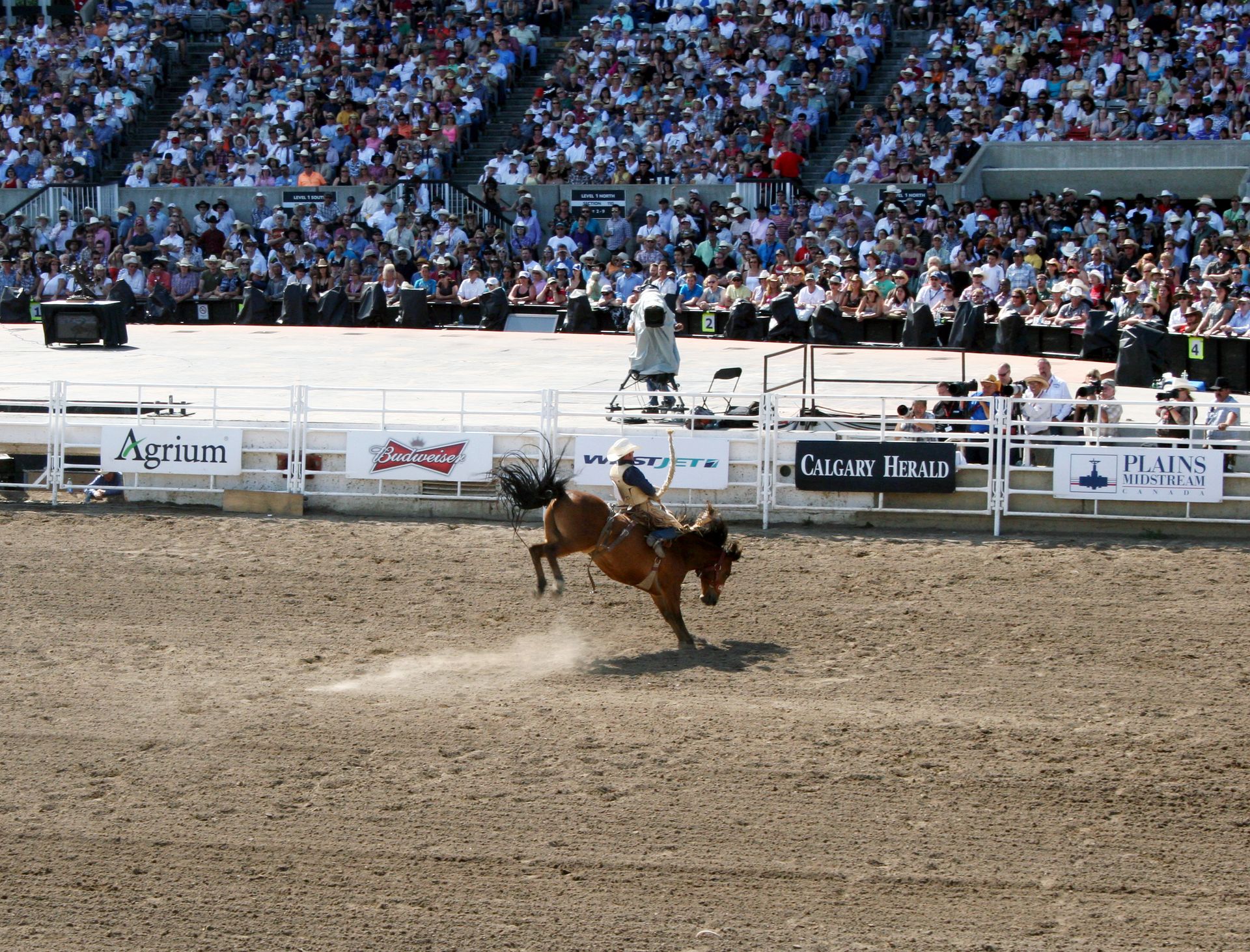
The Calgary Stampede is a 10-day rodeo and agricultural fair held every July in Calgary, Alberta, and it bills itself as the greatest outdoor show on Earth.
American promoter Guy Weadick founded the Stampede in 1912, building on Calgary's existing agricultural exhibitions and the city's ranching heritage in southern Alberta. Professional rodeo sits at the center of the event, with competitions in bronc riding, bull riding, steer wrestling and barrel racing drawing top athletes from across North America's rodeo circuit for a share of a prize purse that ranks among the largest in the sport.
The chuckwagon races are the Stampede's most distinctive event, unique to this festival among the entries on this list. Teams of four horses pull a replica chuckwagon, the mobile kitchens once used on cattle drives, around a track in a timed race that combines speed with a required routine of loading equipment onto the wagon before the horses take off. The races run each evening and draw some of the festival's largest crowds.
Beyond the rodeo grounds, the Stampede runs a midway with carnival rides and games, livestock and agricultural competitions judging cattle, horses and crops, and cultural programming at the Elbow River Camp, which showcases the traditions of the Treaty 7 First Nations of the region. Free pancake breakfasts, sponsored by local businesses and served on street corners throughout the city, have become a Stampede-week tradition independent of the fairgrounds themselves.
During Stampede week, much of downtown Calgary adopts a western dress code, with cowboy hats, boots and plaid shirts becoming standard office attire rather than costume. More than a million visitors pass through the grounds over the 10 days, making it one of the largest annual events in Canada and a significant driver of summer tourism for the city. Hotel rates in Calgary climb sharply during Stampede week, and many visitors book accommodations months ahead, since the event routinely fills the city's downtown hotel inventory well before the festival opens.
Credit: Lex Brogan / Unsplash
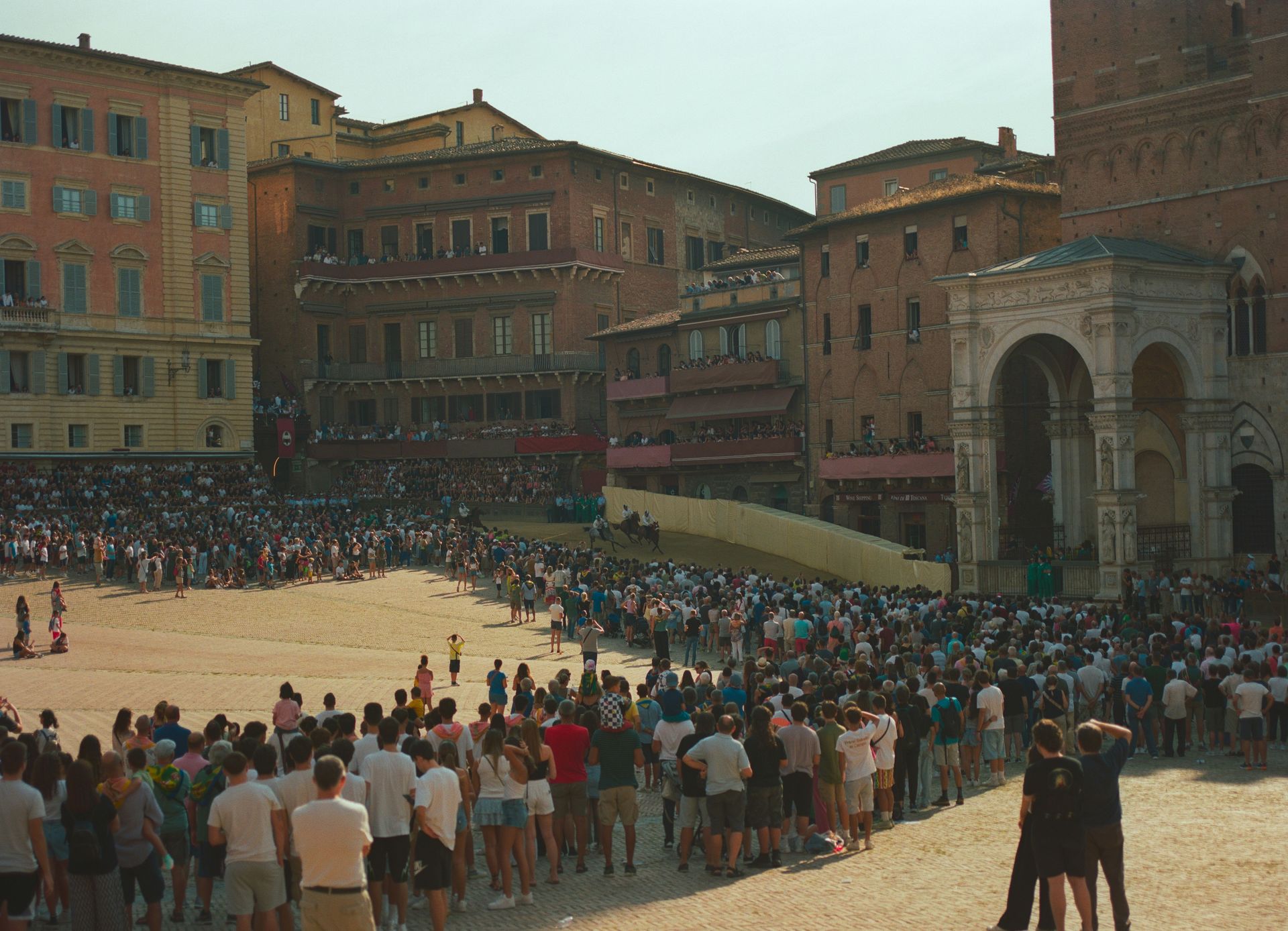
The Palio di Siena is a bareback horse race around Siena's Piazza del Campo in Italy, run twice each summer, on July 2 and August 16, and the race itself lasts only about 90 seconds.
The race represents a centuries-old rivalry among Siena's 17 contrade, historic districts that still shape social identity within the city today. Only 10 contrade compete in any given race, chosen partly by lot, since the piazza cannot safely accommodate all 17 at once. Jockeys ride bareback, without a saddle, completing three laps around the piazza's perimeter, which is covered in packed dirt and tufa for race day.
The days leading up to each Palio are as central to the experience as the race itself. Trial races, called prove, run in the days before, letting spectators watch the horses and jockeys without the full crowds of race day. A historical parade, the corteo storico, precedes the race, with hundreds of participants in Renaissance costume representing each contrada's flag-bearers, officials and historical roles. On the morning of the race, each competing contrada brings its horse into its own parish church to be blessed, a ceremony rooted in the belief that a horse that behaves inside the church will run well.
One detail sets the Palio apart from most horse races: a horse can win the race even after its jockey has fallen off during the three laps, since the contrada's honor is tied to the horse rather than the rider. This rule feeds into the intense rivalries and shifting alliances between contrade, which shape both the betting and the informal negotiations that take place before each race.
Piazza del Campo itself, a sloped, shell-shaped square at the heart of Siena, becomes the venue, with spectators packed into its center and along balconies and windows of the surrounding buildings for the brief but intense event.
Credit: Kai Hendry / Wikimedia Commons (CC BY 2.0)
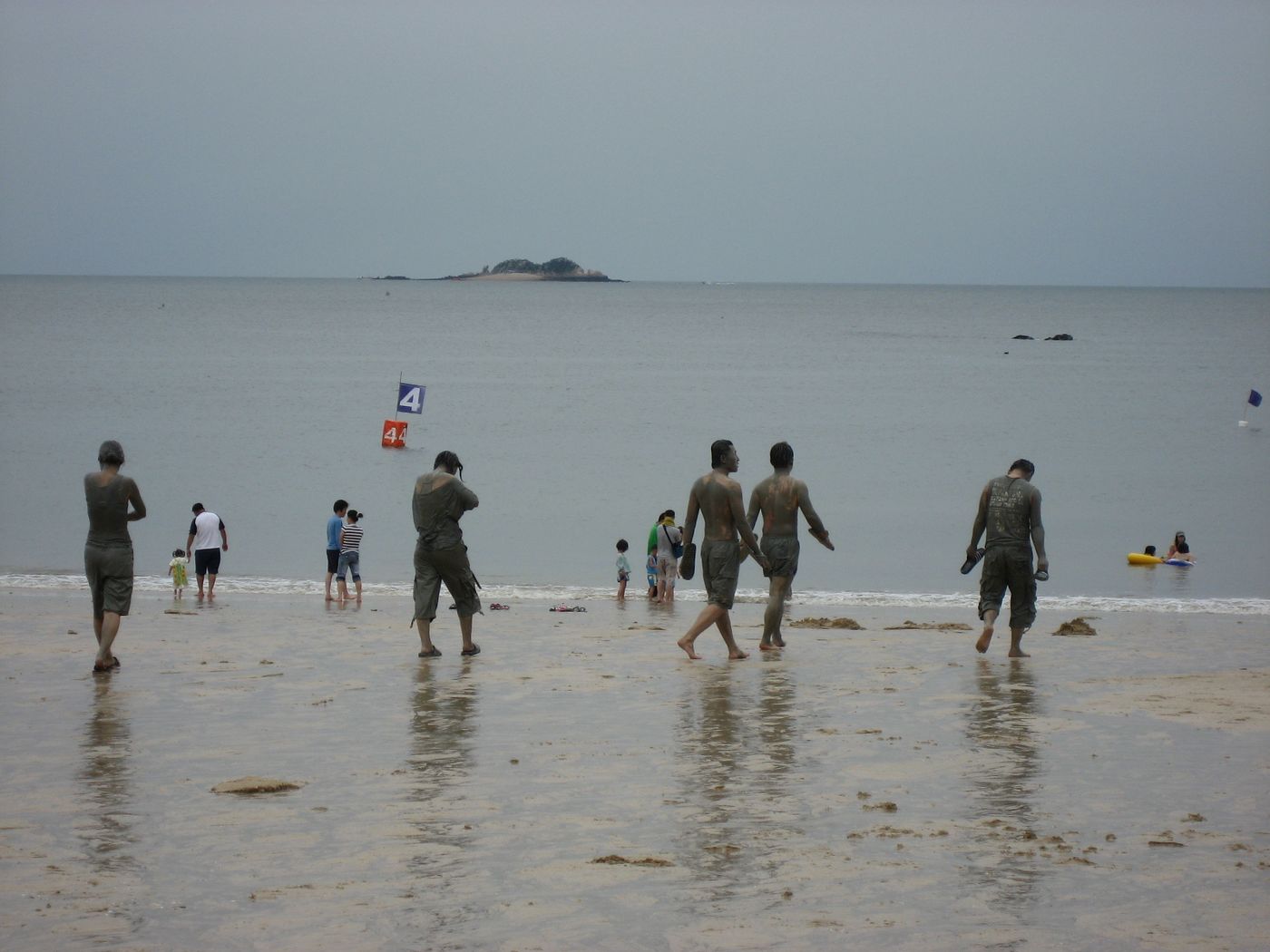
The Boryeong Mud Festival is a summer beach festival held every July at Daecheon Beach in Boryeong, South Korea, built around mud pools, mud slides and mud wrestling using mineral-rich mud trucked in from the region's tidal flats.
Local businesses started the festival in 1998 as a marketing effort to promote cosmetics made from Boryeong mud, which is considered rich in minerals such as germanium and bentonite clay and is used locally in skincare products. What began as a small promotional event has grown into one of South Korea's most internationally attended festivals, drawing large numbers of foreign visitors alongside domestic tourists.
The festival's activities lean into the mud rather than around it. Giant inflatable slides dump participants into mud pools, mud wrestling rings host informal matches open to festivalgoers, and a mud prison and obstacle courses add structured games to the open-air mud pits. Face-painting stations use the same mineral mud marketed in the festival's cosmetic tie-ins, letting visitors sample the product the event was originally built to promote.
Music and fireworks fill the evenings once the daytime mud activities wind down, with concert stages set up along the beach and firework displays over the water drawing crowds who have mostly finished with the mud pits by that point. Daecheon Beach itself, a stretch of sand roughly three and a half kilometers long on Korea's west coast, handles both the daytime festival grounds and the evening entertainment without needing a separate venue.
The festival typically runs for about two weeks in July, giving visitors more flexibility in scheduling a visit than the single-day or single-weekend events found elsewhere on this list. Boryeong sits roughly two hours from Seoul by intercity bus or train, making it a manageable day trip or overnight stay for travelers based in the capital. Weekends draw the heaviest crowds, so visitors aiming for shorter lines at the main attractions often plan around a weekday visit instead.
_-_Spain,_Buñol_29-1-1920x1280.jpg)
Credit: flydime / Wikimedia Commons (CC BY-SA 2.0)
La Tomatina is a food fight festival held on the last Wednesday of August in Buñol, Spain, where participants throw roughly 150 tons of overripe tomatoes at each other through the streets of the town center.
The festival's exact origin is disputed, but the most commonly told account traces it to 1945, when a dispute during a local parade escalated into young people throwing produce from a nearby vegetable stall. Whatever the precise spark, the food fight became an annual, informal tradition through the following years and was eventually organized and sanctioned by the town, surviving a brief ban under Francisco Franco's government before returning permanently.
The fight itself lasts about one hour, kicked off when a participant successfully climbs a greased pole to retrieve a ham fixed at the top, or by a starting signal fired if no one reaches it in time. Trucks deliver the tomatoes into the town's central square, and participants, packed shoulder to shoulder in the narrow streets, throw fruit that has typically been squeezed first to avoid causing injury with a whole, firm tomato. Organizers recommend goggles and clothes that can be discarded afterward, since the acid in the tomatoes stains fabric quickly.
Once the hour ends at a second signal, fire trucks move in to hose down the streets, using water drawn partly from a Roman-era aqueduct that still supplies part of the town. Residents and shopkeepers cover storefronts and doorways with plastic sheeting beforehand, since tomato pulp reaches windows and awnings well above street level.
Buñol has a permanent population of about 9,000 people, a number that the festival multiplies several times over for a single day. Since 2013, the town has sold a limited number of tickets, roughly 20,000, to manage crowd size after years of overcrowding strained the town's narrow medieval streets.
Credit: Bence Szemerey / Pexels
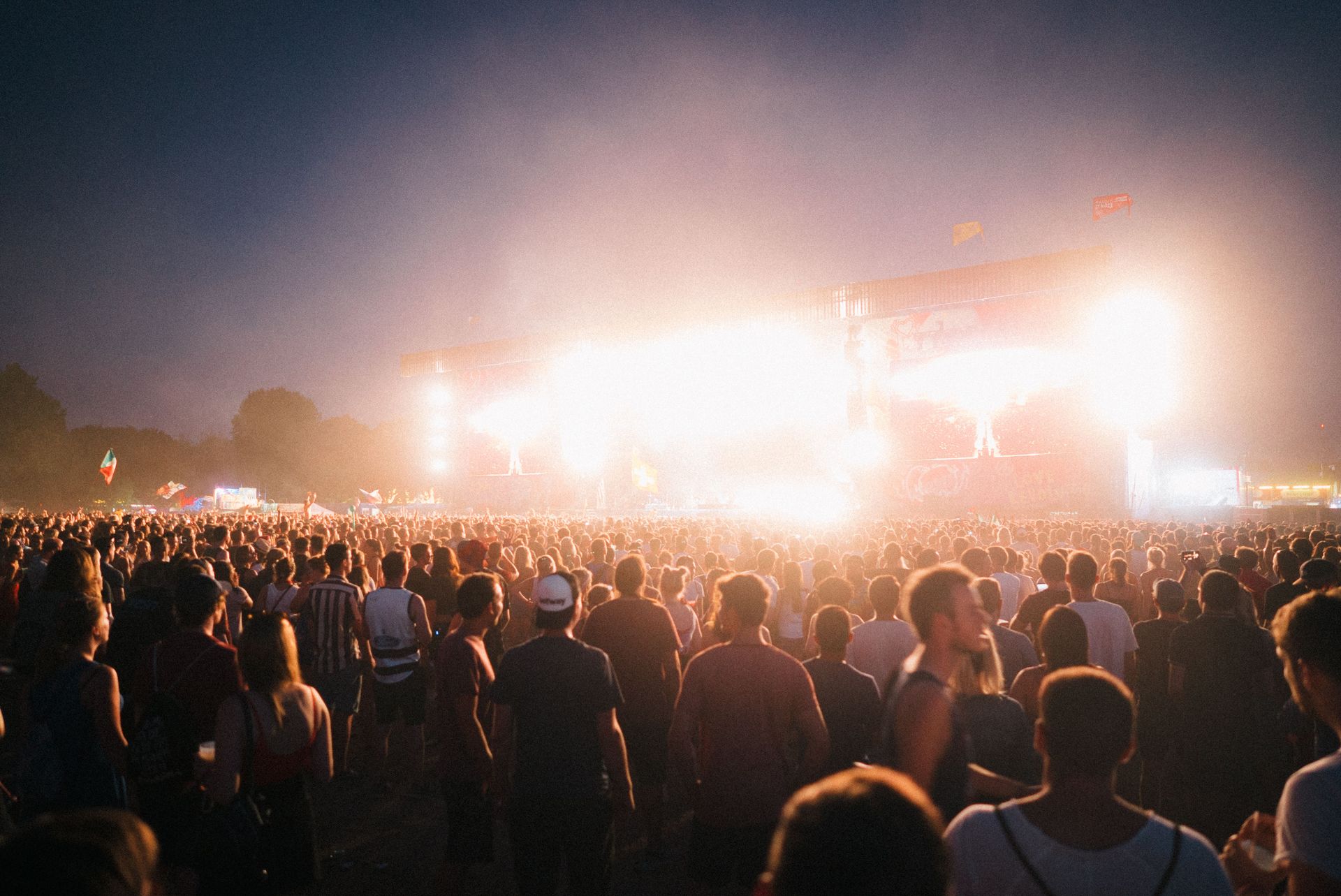
Sziget Festival is a week-long music festival held every August on Óbudai Island in the Danube River in Budapest, Hungary, and it ranks among the largest music festivals in Europe.
The festival began in 1993 as a small student gathering called Eurowoodstock, organized in the years following Hungary's transition away from communist rule, when access to international touring acts was still new for young Hungarians. Over three decades, it expanded from a modest camping gathering into a production spanning dozens of stages across the island, covering rock, pop, electronic music, hip hop and folk acts drawn from across Europe and beyond.
The festival's name simply means island in Hungarian, a nod to its setting on Óbudai-sziget, a stretch of land roughly two and a half kilometers long in the Danube that sits within Budapest's city limits but feels removed from the surrounding city once the festival grounds open. Camping is built into the festival's culture rather than treated as a budget add-on: most attendees pitch tents on the island itself and stay for the full week rather than commuting in for single days.
Beyond the music stages, Sziget programs a circus tent, theater performances, a dedicated world music stage, and cultural exhibits that run throughout the week, giving the festival a broader identity than a typical single-genre music event. A dedicated area for quieter activities, including yoga sessions and wellness programming, runs alongside the louder main stages, giving attendees a way to pace a week-long stay rather than a single high-intensity day.
Getting to the island is part of the festival's logistics rather than an afterthought: Budapest runs extra HÉV suburban rail service and dedicated boat shuttles from the city center during festival week, and a significant share of ticket holders arrive from outside Hungary, making the festival as much an international gathering as a domestic one.