
From Tivoli's hand-braked wooden coaster that inspired Disney to a Dutch fairy-tale park where the end-of-night fountain show brings tears of joy
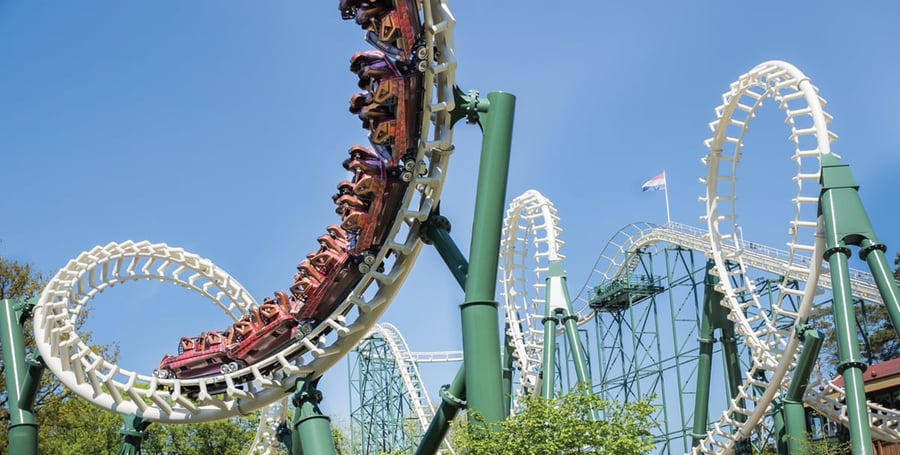
Credit: Efteling
European travel tends to organize itself around a familiar itinerary: museums, piazzas, cathedrals, and the restaurant your hotel concierge marked with a star on the map. This is a fine way to spend time in Europe, and most recommended sites deserve the attention they receive. Locals on a day off are not typically sitting in a café watching tourists photograph the same fountain. When Europeans want to enjoy themselves, they go to theme parks, and the parks they have built across the continent are genuinely extraordinary cultural institutions whose scope and storytelling rival anything the museum circuit offers.
European theme parks differ from their American counterparts in a specific way. American parks, led by Disney $DIS and Universal, prioritize branded intellectual property and the cinematic experience it enables. The best European parks ground their theming in local folklore, national mythology, and the cultural sensibility of the country where they operate. Efteling in the Netherlands draws on Dutch fairy tales and the surrealist tradition of Dutch visual culture. Parc Astérix in France builds entire lands around the ancient civilizations that the Astérix comic series satirized with affection. Erlebnispark Tripsdrill in Germany celebrates Swabian regional culture with an oddball cultural specificity no imported franchise could manufacture. The results are parks that feel genuinely embedded in their countries of origin in ways that Disneyland Paris, for all its considerable pleasures, does not.
The five parks below appear in Travel + Leisure, recommended by a writer who has visited more than 30 parks worldwide. The selection covers Denmark, France, the Netherlands, and Germany, and reflects the writer’s assessment of extraordinary detail, expansive scope, and masterful local storytelling as the primary criteria for inclusion.
Credit: Trivoli
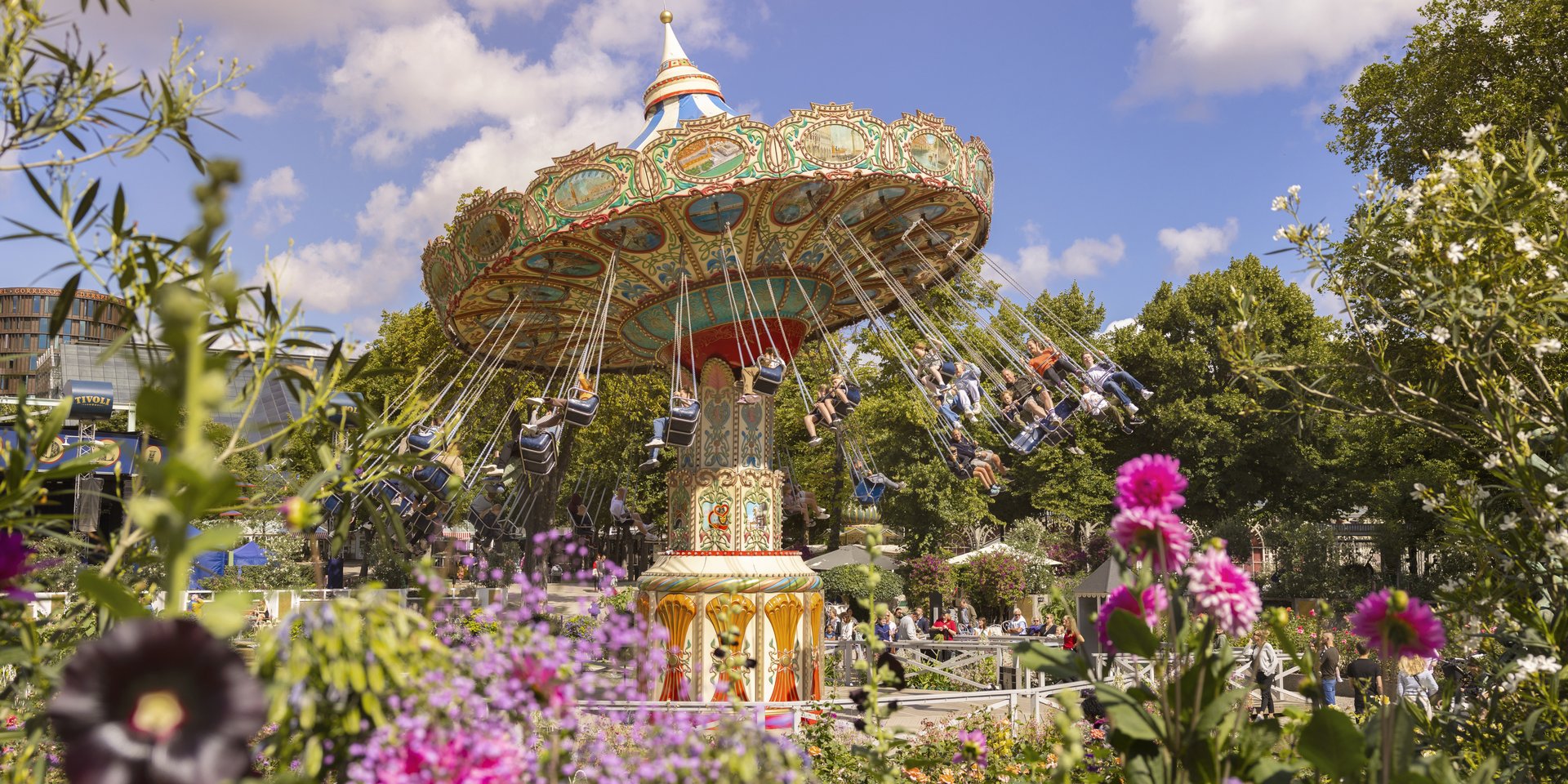
Tivoli Gardens opened in 1843, making it the second-oldest operating amusement park in the world, and its influence on the parks that followed is both documented and direct. Walt Disney $DIS visited Tivoli in 1951 and cited the beautifully landscaped park as an inspiration for Disneyland. The specific qualities Disney borrowed are legible in Tivoli’s design: themed lands organized around distinct sensibilities, meticulous horticultural presentation, and the conviction that an amusement park should feel like a cultivated world. These were Tivoli’s innovations, and the parks fashioned after it have operated within that framework for more than 170 years.
The park’s location significantly amplifies its appeal. It sits directly across from Copenhagen Central Station, woven into the city's urban fabric in a way that destination parks requiring a drive or train ride into the suburbs cannot replicate. Visiting Tivoli is an evening out in Copenhagen, not a day trip away, which gives the park a relationship to the city and its residents that suburban parks cannot achieve.
Rutschebanen, the wooden roller coaster dating to 1914, is the park’s most iconic attraction and one of the oldest operating coasters in the world. It runs through a mountain with steep drops and dark surprises, and its most distinctive feature is a human brake operator who controls the speed manually throughout the ride. Only seven coasters in the world still use this system, which gives Rutschebanen a mechanical particularity that no computer-operated coaster replicates. The writer draws a direct line from Rutschebanen to Disneyland’s Matterhorn Bobsleds, citing it as a likely precursor. Beyond the coaster, 30 additional rides fill the park, all embedded in the fanciful botanical landscape that gives Tivoli its defining character. The writer describes the park as more akin to a fanciful botanical garden than a conventional amusement park, and the description is apt: Tivoli is a place whose plants and pathways carry as much weight as its rides in shaping the visit.
Credit: Parc Astérix
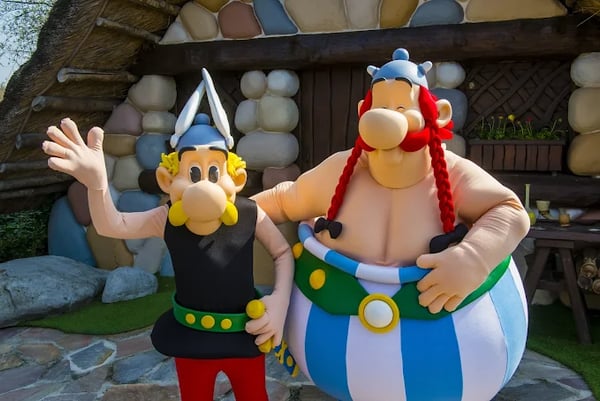
Parc Astérix sits about an hour north of Paris, a distance that requires justification when you are already in one of the world’s most beautiful cities. The writer provides the case. The park draws directly from the Astérix comic series, the beloved French satirical comic set in ancient Gaul, whose humor depends on the specific cultural literacy of its French audience. Distinct lands representing ancient Greece, the Roman Empire, and the Nordic Vikings have been built with the same meticulous care for period detail that the comic applies to its historical satire. The park’s theming rewards exactly the kind of cultural knowledge that European travel tends to accumulate.
The ride lineup extends from family attractions to major thrill rides. Toutatis, a launched coaster, earned immediate placement among the writer’s favorite coasters in the world. La Rivière d’Elis, a small boat ride through the Gardens of Olympia, is the writer’s most enthusiastically described attraction despite being the park’s simplest offering. The canopied four-seat boats pass through vibrant floral displays that the writer suggests would draw widespread admiration in a central Parisian garden. The ride succeeds not through mechanical complexity but through the care with which it is executed: quiet, beautiful, and precisely calibrated to the tranquil pastoral register the Gardens of Olympia demand.
The park also operates La Revanche des Pirates, a pirates-themed water ride, and Les Plongeons de l’Olympe, a dive show featuring performers dropping from 80-foot platforms. More than 40 rides and attractions fill the park across its various themed lands. The writer left Parc Astérix with renewed enthusiasm, a response specific to parks whose theming and ride lineup deliver more than the ticket price promised. The Astérix franchise’s French cultural specificity gives the park a grounding in national identity that no imported American brand could manufacture for a French audience, which is precisely the quality that makes spending an hour on the road north of Paris worthwhile. Visitors who arrive skeptical that any theme park justifies a detour from Paris tend to leave with a revised position.
Credit: Efteling
Mention Efteling to a Dutch person, and the response, according to the writer, is immediate warm recognition. The park has operated since 1952 and built its reputation entirely on Dutch storytelling and folklore, giving it a cultural specificity that connects Dutch visitors to the park as a national institution, the way Americans connect to certain sports teams or national parks. Over five million guests visit annually, placing Efteling among Europe’s most attended theme parks, and the attraction lineup has expanded in recent years without diminishing the classic experiences that built its reputation.
The park covers 178 acres of whimsical gardens, forests, and hidden paths whose design philosophy prioritizes atmosphere over guest throughput. Walking through Efteling feels like moving through a living world whose logic operates on fairy tale terms. The writer’s description of it as a magical, living world frames the specific quality that separates Efteling’s design ambition from parks that prioritize ride capacity above environmental immersion.
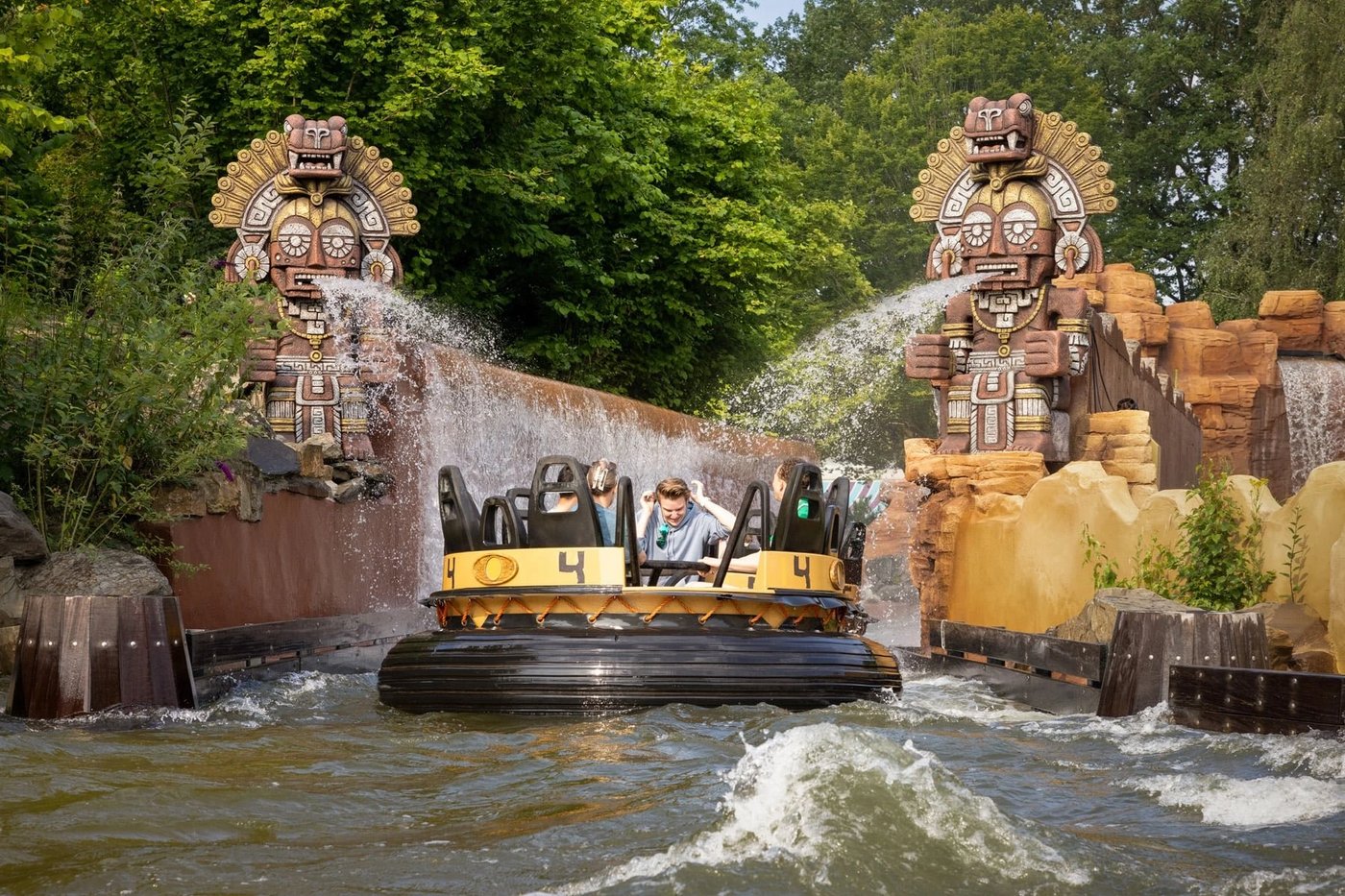
The newest major attraction, Danse Macabre, draws from Camille Saint-Saëns’ 1874 symphonic tone poem. The writer declines to describe it in detail, citing the ghostly allure its surprise depends on. Droomvlucht, a dark ride described as a dreamlike flight, is among the writer’s favorite dark rides in the world. De Vliegende Hollander, a boat-ride coaster hybrid, receives similar protective measures: the writer explicitly discourages watching it in advance. The park’s end-of-night fountain show is described as the experience that quietly brings tears of joy, which is the response that parks operating at the level of genuine emotional craft produce in their most attentive visitors. Efteling earns that response through specific intention, which is the clearest possible case for making the 65-mile journey from Amsterdam. No other park on this list has maintained its founding identity as intact across seven decades of operation, and that continuity is itself a form of cultural achievement worth traveling to witness. Efteling proves that a park built on the specific myths and visual language of a single country can attract five million visitors a year without diluting what makes it distinctly, irreducibly Dutch.
Credit: MACK Group
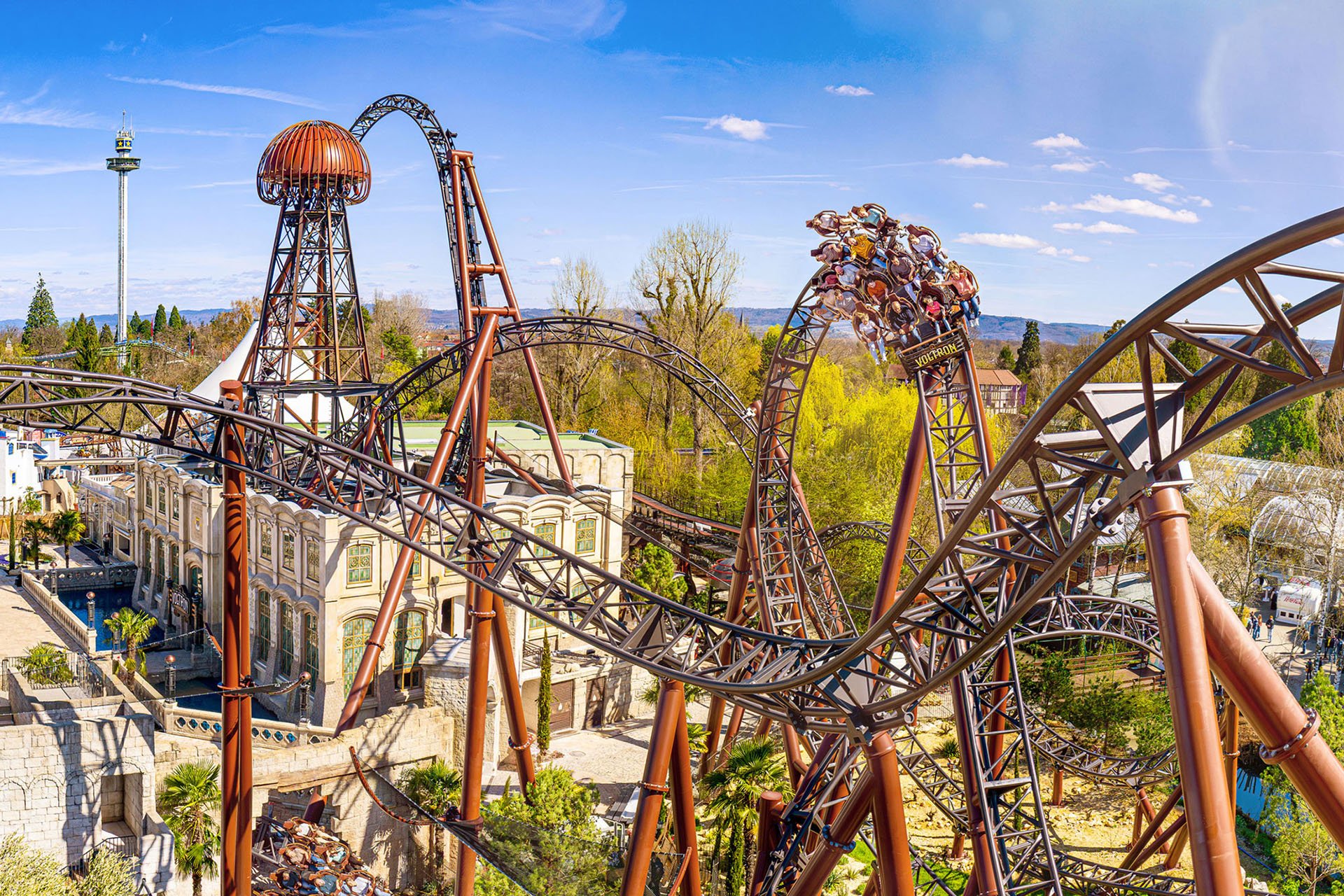
Europa-Park in Rust, Germany, covers 230 acres and represents 18 European countries through distinct themed lands containing more than 100 attractions. The Mack Family, who owns the park, has manufactured roller coasters and dark rides since 1780, initially building horse-drawn carriages before the industry evolved around their craft. The engineering heritage of that lineage is visible in every major attraction the park operates, and the writer’s most recent visit renewed appreciation for the detail and intentionality of the park’s world-building even before the rides begin. The themed queue environments at Matterhorn Blitz and Wodan Timbur Coaster are praised as experiences in their own right.
Voltron is the park’s most technically impressive attraction. Its first launch ascends a 105-degree incline, a feat the writer describes as surprising even for a visitor with extensive theme-park experience. The “Phantom of the Opera”-themed virtual reality coaster is the most spellbinding experience in the park. Riders wearing virtual reality headsets enter the world of the Andrew Lloyd Webber musical with timing synchronized to the coaster’s drops, twists, and turns. The writer, describing the experience as essential for Broadway fans, calls it something that must be seen to be believed.
Europa-Park’s mascots, Ed and Edda, wear mouse ears in a nod to Disney $DIS’s iconic silhouette. The writer acknowledges this with affectionate directness: the ears will never form an iconic image, but the park’s playfulness suits its sprawling ambition. Europa-Park is not trying to be Disney. It is doing something the Mack Family’s manufacturing heritage and European cultural scope make distinctly possible: building a park where the engineering craft behind every attraction is itself a form of storytelling, and where 18 countries’ worth of cultural material provides an inexhaustible source of reference material for the theming. The writer’s summer 2025 return visit confirmed the park’s position as a mandatory stop on any serious European theme park itinerary, and the Voltron launch sequence alone is worth the trip to Rust from any major German city.
Credit: Tripsdrill
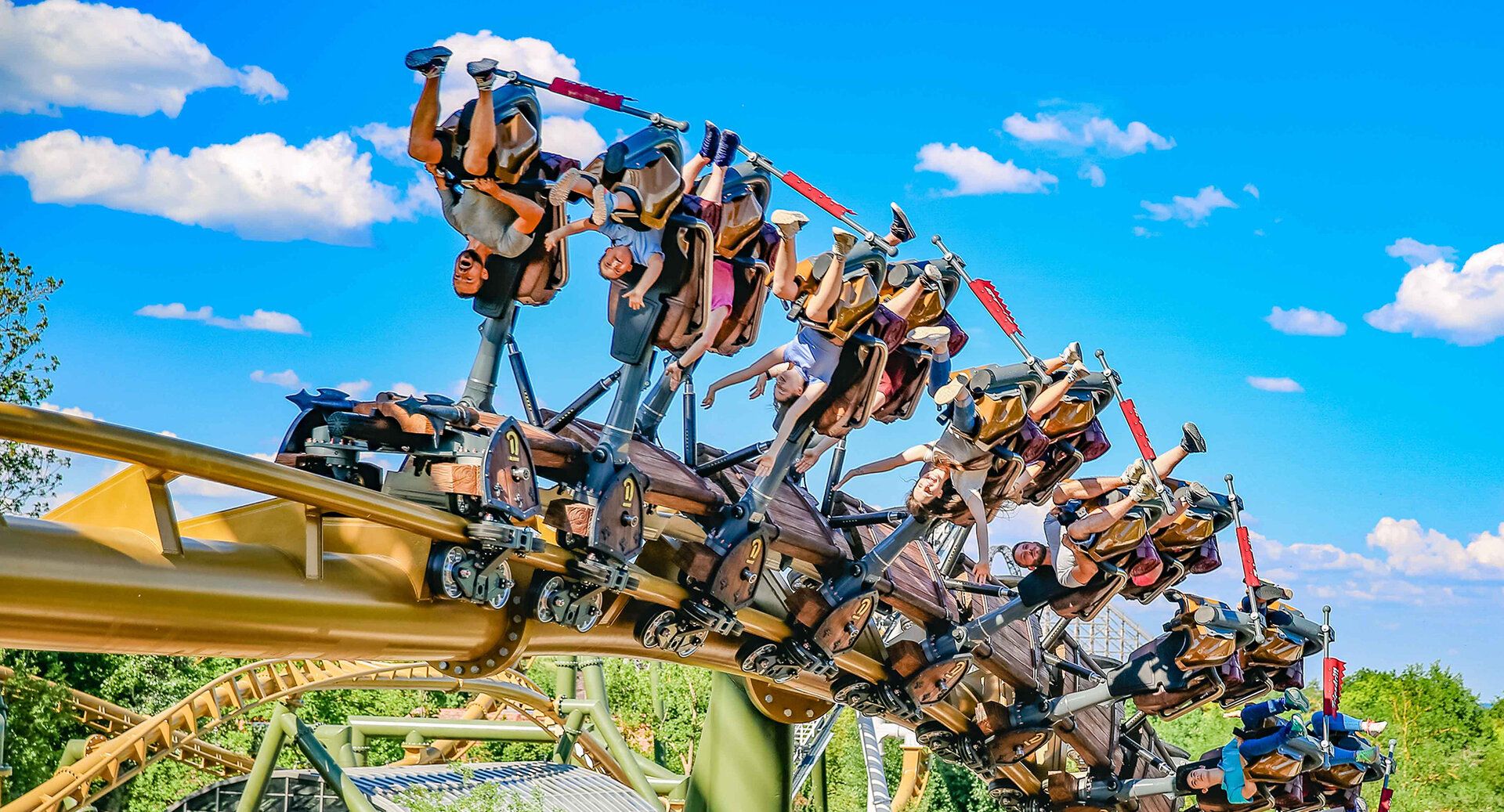
Erlebnispark Tripsdrill sits amid the rolling hills and vineyards of the Württemberg region in southwestern Germany, about 45 minutes from Stuttgart. Germany’s oldest amusement park has operated long enough to develop the specific identity that only time and regional rootedness can produce. The park focuses on Swabian cultural heritage: local inventors, folklore characters, and the region's specific comic sensibility appear throughout the attractions, rewarding visitors who know something about Württemberg and amusing even those who do not.
The humor the park deploys is deliberate and specific. An animatronic figure heaving into a barrel greets riders immediately after they disembark from Karacho, the park’s fast coaster. An outhouse door swings open for a bawdy reveal accompanied by an unsuspecting splash of water. The writer specifically warns visitors in advance. These are not accidental inclusions or lazy attempts at novelty. They reflect a coherent comedic voice that the park has developed over decades, grounded in the earthiness of Swabian folk tradition. The writer describes Tripsdrill as one of the oddest, quirkiest, and yet most charming parks visited, which captures its appeal precisely: the park succeeds because it commits fully to a comedic and cultural identity that no other park on this list attempts.
The surrounding landscape gives Tripsdrill a setting that the grander parks on this list, built on flat or featureless terrain, cannot match. Vineyards and rolling hills of the Württemberg countryside are visible throughout the park, grounding the attractions in a specific place with a specific agricultural history. The writer frames Tripsdrill as a premium day’s retreat offering superior thrill rides alongside the regional storytelling. Visitors seeking scale and engineering spectacle will find Efteling and Europa-Park more immediately impressive in those terms. Visitors who want a theme park experience genuinely rooted in a place, culture, and comedic tradition will find Tripsdrill irreplaceable, which is what the best parks in Europe offer that their American counterparts typically do not: the sense that only this country, this region, and these people could have built what stands here.