From Magic Kingdom's 50-year template to Busch Gardens' coasters towering over a 200-species zoo, Florida's best theme parks ranked
Younho Choo / Unsplash
Florida’s theme park industry is its own category of travel destination, one that operates at a scale and level of entertainment engineering unmatched by any other concentration of parks in the world. The Orlando metropolitan area alone contains more major theme parks within a 30-mile radius than most countries contain in total, and the Tampa Bay area adds a serious competitor in Busch Gardens, whose roller coaster credentials and zoo-scale wildlife program give it an identity distinct from everything to the east. The parks compete constantly, which creates an innovation pressure that keeps every major property in a state of continuous development: a park that does not open something new every one to two years loses ground in a market where the next destination is always visible from the parking lot.
The variety within the category is also wider than the theme park label suggests. Magic Kingdom’s nostalgic Main Street charm and Epcot’s educational world showcase model share the same resort but deliver experiences whose emotional register differs as much as any two parks in the country. Busch Gardens’ steel roller coasters and Universal Islands of Adventure’s franchise immersion are both theme park experiences, but the skills that make one destination enjoyable are not the same skills that the other rewards. The two water parks on this list add a third format entirely, giving the Florida park visit a range that a single-park itinerary cannot capture.
The 10 parks below appear in Travel + Leisure, recommended by a writer who has visited every theme park in the state. The list covers all four Walt Disney $DIS World parks, both Universal Orlando parks, Busch Gardens Tampa Bay, Legoland Florida, and both Disney World and Universal’s water parks. The range reflects the breadth of what Florida’s theme park industry currently offers, from the nostalgic to the genuinely unprecedented.
kaleb tapp / Unsplash
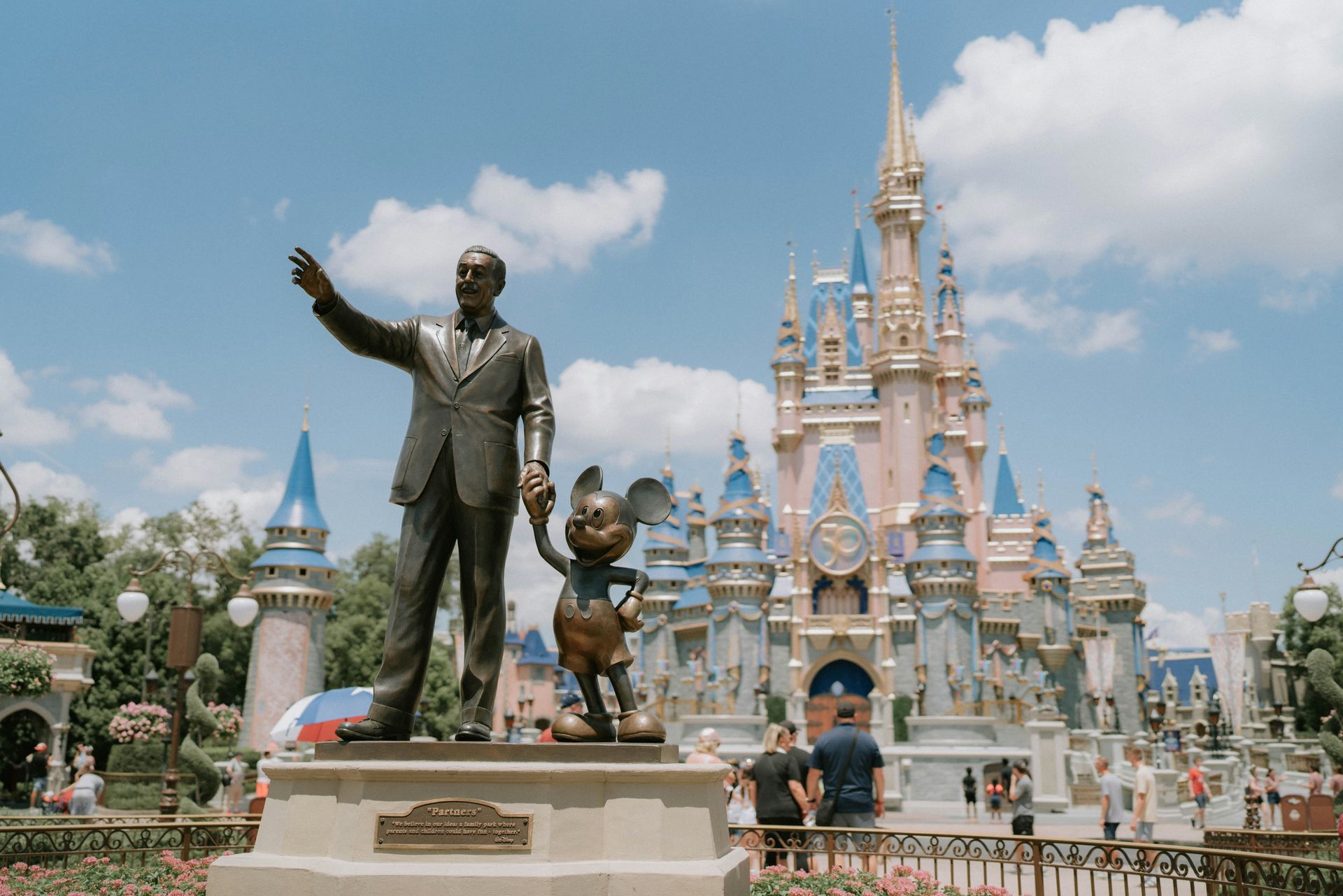
Magic Kingdom opened in 1971 and established the template that the Florida theme park industry has been working within ever since: a central visual anchor visible from every point in the park, distinct themed lands that immerse guests in specific narrative worlds, and a mix of classic dark rides, parades, and evening spectaculars that give the day a structured arc from arrival to closing fireworks. More than 50 years later, the park’s template has not been surpassed in its fundamentals, and the specific quality that Magic Kingdom delivers, which the article’s author identifies as a distinct charm that hasn’t been replicated elsewhere, comes from the accumulated weight of the park’s own history operating within that template.
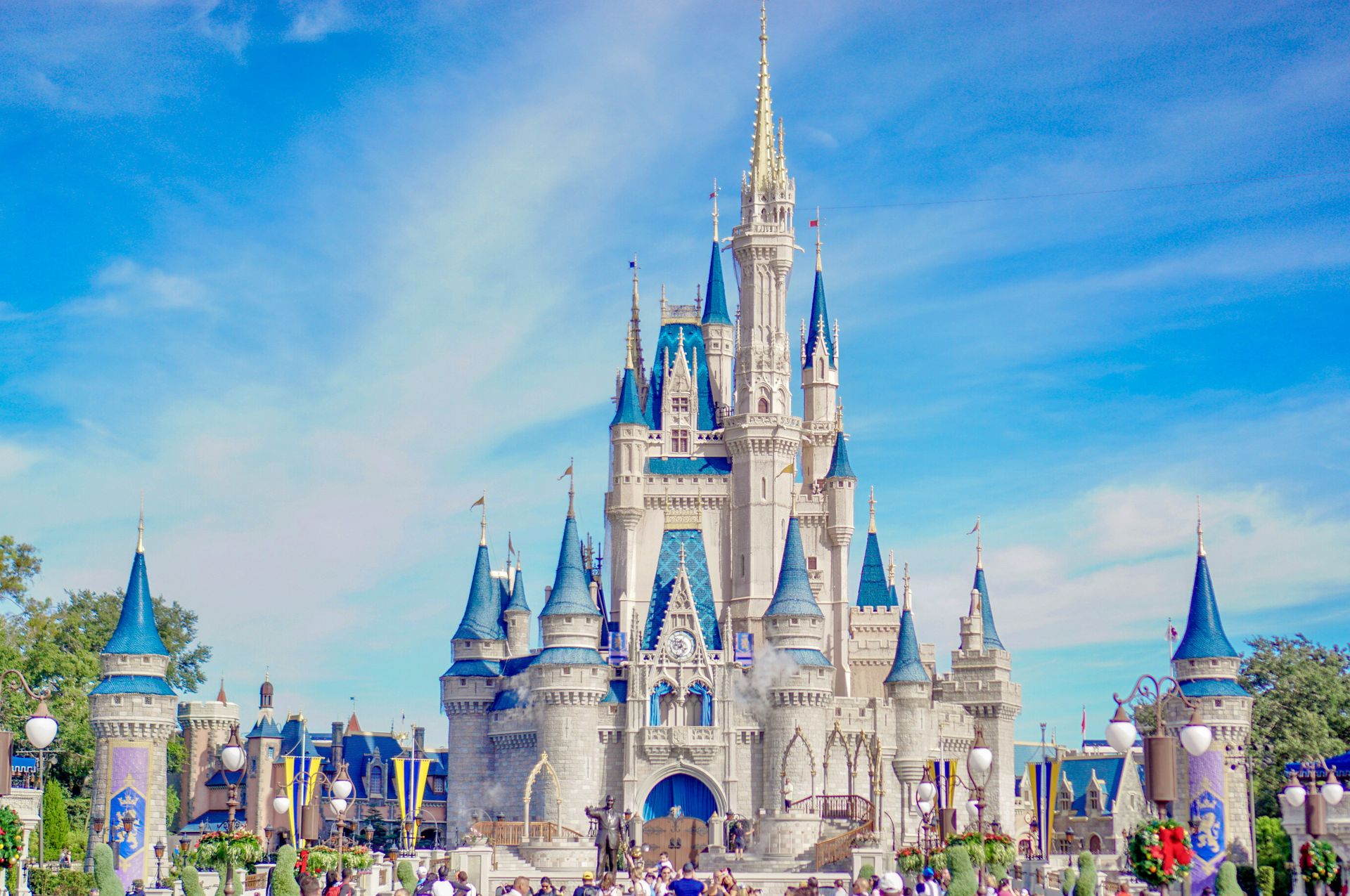
Cinderella Castle, the park’s 189-foot-tall centerpiece, gives Magic Kingdom its most recognizable image and its spatial anchor: every land in the park orients toward the castle, which means the park’s navigation logic is intuitive in a way that the more complex multi-island designs of competing parks are not. Main Street, U.S.A., the turn-of-the-century American streetscape that every guest walks through to enter the park proper, gives the arrival experience its specific nostalgic warmth, and the classic attractions that line the park’s lands, Pirates of the Caribbean, the Haunted Mansion, It’s a Small World, and Big Thunder Mountain Railroad, give the visit its generational continuity.
Tron Lightcycle/Run, the high-speed outdoor roller coaster that opened in 2023, gives Magic Kingdom its most modern thrill ride and its most striking piece of architecture, the translucent canopy structure visible from the park’s entrance. The coaster’s lap-bar restraint system and its motorcycle-position seating give it a ride feel distinct from every other attraction in the park, and its popularity requires either an early park entry reservation or a Lightning Lane purchase to avoid lengthy waits. Magic Kingdom’s evening fireworks show, Happily Ever After, uses projection mapping on Cinderella Castle alongside fireworks and live-to-tape music to close each park day with the most polished nighttime spectacular at Walt Disney $DIS World.
Greg Park / Unsplash
Epcot’s original vision, conceived by Walt Disney $DIS as an actual planned community of the future, evolved into something more achievable and in many ways more interesting: a theme park that takes learning seriously as an entertainment proposition and treats the food of the world’s cultures as a primary visitor attraction alongside its rides. The World Showcase, the lagoon-encircling ring of 11 country pavilions representing Mexico, Norway, China, Germany, Italy, the United States, Japan, Morocco, the United Kingdom, France, and Canada, gives Epcot a scope of cultural presentation that no other theme park in the world attempts at equivalent scale.
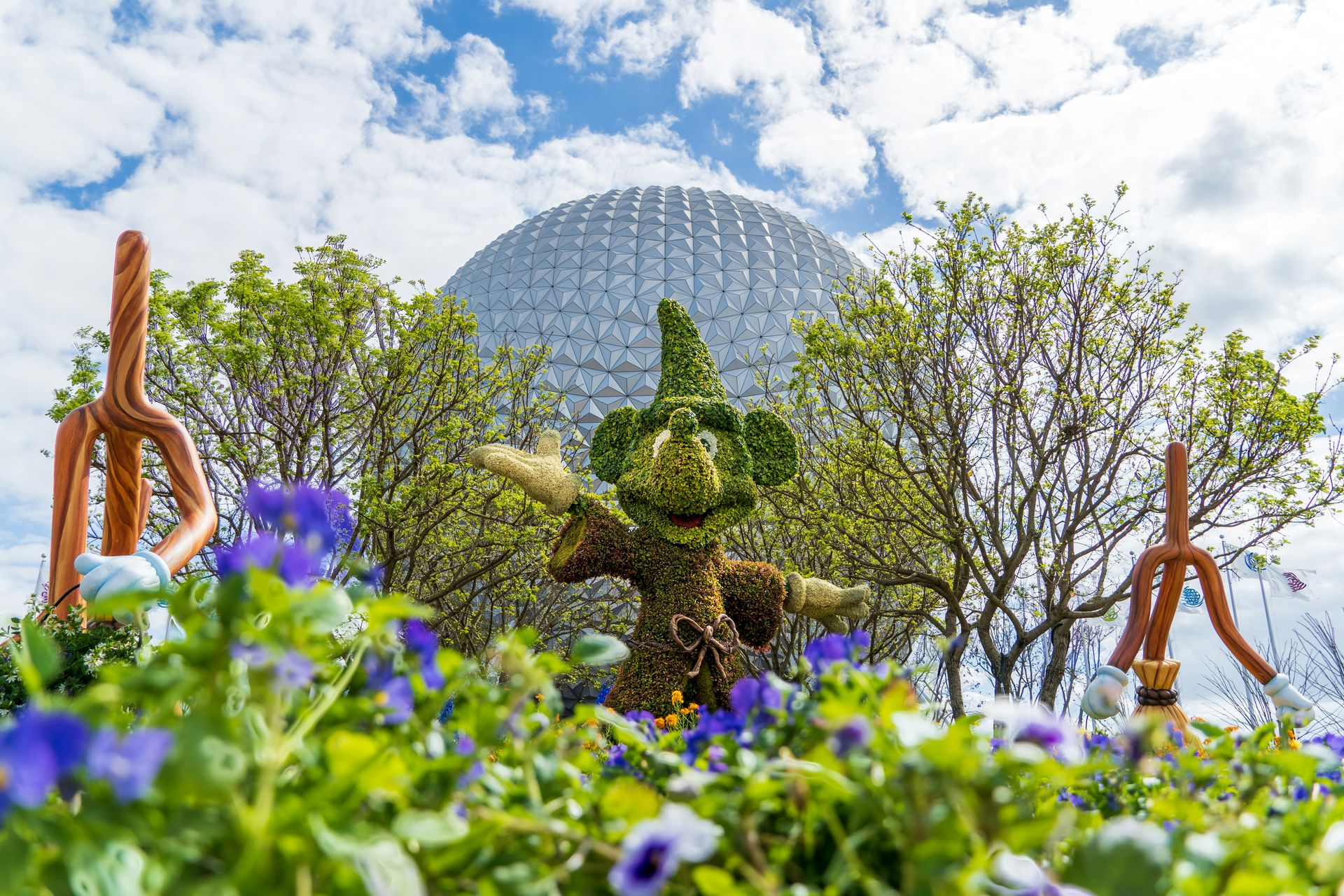
The Future World section, now reorganized into distinct neighborhoods, features Epcot's ride and attraction program alongside the country pavilions. Spaceship Earth, the geodesic sphere that serves as the park’s icon, takes riders on a slow dark ride through the history of human communication, from cave paintings through the internet. Living with the Land gives a boat tour of the park’s working greenhouse and aquaculture research facility, where actual food crops and fish are grown to supply Epcot’s restaurants. Guardians of the Galaxy: Cosmic Rewind, one of the longest indoor roller coasters in the world, is the park's most technically ambitious recent addition.
The food program gives Epcot its strongest claim to a full-day visit. The World Showcase’s restaurants, which represent the actual cuisines of their respective countries and offer varying but generally high levels of authenticity, give the park a dining program the author specifically identifies as the best at Walt Disney World. The International Food and Wine Festival, held annually in the fall, expands the dining program across dozens of booths serving small-plate samples from cuisines around the world, and the Flower and Garden Festival in spring adds topiary displays to the park’s considerable horticultural landscape. Remy’s Ratatouille Adventure, the trackless dark ride set in the world of the Pixar film, gives the France pavilion a family-friendly attraction whose scale shifts guests to a rat ’s-eye view of a Parisian kitchen, making it the World Showcase's most charming recent addition.
Carol Kennedy / Unsplash
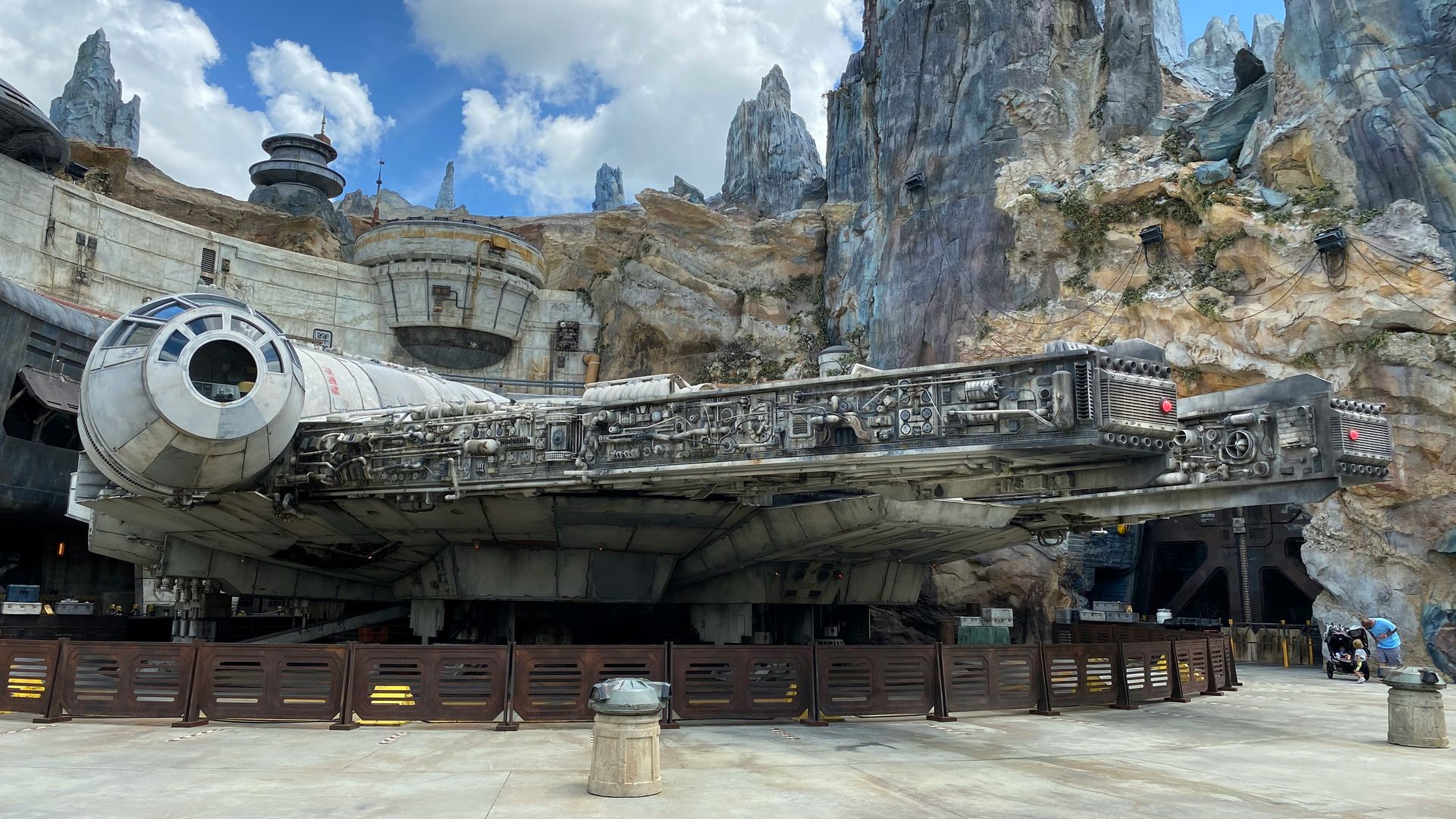
Disney $DIS’s Hollywood Studios is Walt Disney World's most franchise-intensive park, organizing its lands around the intellectual properties that have defined contemporary pop culture: Star Wars, Toy Story, The Twilight Zone, and the Pixar and Marvel films that Disney’s acquisition of those studios has brought into the park's design pipeline. Star Wars: Galaxy’s Edge, the 14-acre land built to represent the fictional planet Batuu, is the park’s most ambitious single achievement: a fully immersive environment where the visual, auditory, and culinary experiences are all calibrated to maintain the illusion of being inside the Star Wars universe.
Star Wars: Rise of the Resistance, the flagship attraction of Galaxy’s Edge, is among the most technically complex theme park rides ever built, combining a trackless dark ride vehicle with pre-show sequences, live actors, and a scale of set design whose scope gives the experience a cinema-quality production value that indoor roller coasters at competitive parks do not approach in the same terms. The ride’s length, nearly 20 minutes from the boarding sequence through the experience itself, gives it a depth of narrative engagement that the typical theme park attraction, designed for throughput efficiency, does not prioritize.
The Twilight Zone Tower of Terror, whose drop system uses a randomized sequence of drops and rises to prevent guests from anticipating the timing, gives Hollywood Studios its most distinct thrill-ride experience: a vertical drop tower wrapped in a story delivered by the attraction’s pre-show and loading sequence before the physical ride begins. Toy Story Land and Mickey and Minnie’s Runaway Railway give the park’s family-friendly dimension its most engaging options, and the Sci-Fi Dine-In Theater, where guests eat from within replica cars facing a drive-in movie screen showing vintage science fiction clips, gives Hollywood Studios one of Walt Disney World’s most specifically atmospheric dining experiences. Indiana Jones Epic Stunt Spectacular, one of the park’s original live theater productions, gives the afternoon schedule a dramatic live performance option that the ride-heavy park programming does not otherwise provide.
Brian McGowan / Unsplash
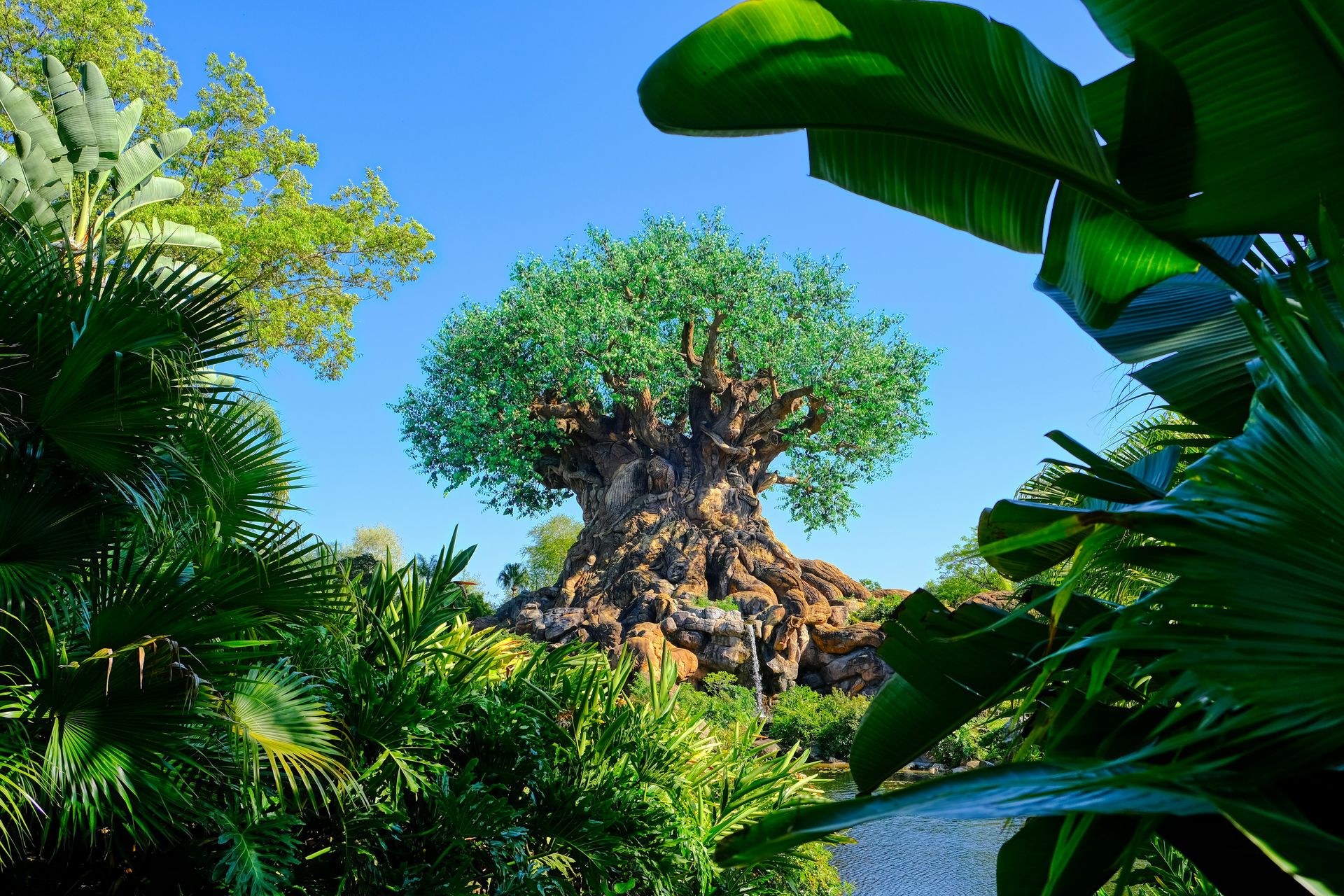
Disney $DIS’s Animal Kingdom is Walt Disney World’s largest park by acreage, and its design reflects a conservation ambition that the Disney company reinforced by consulting legendary primatologist Jane Goodall during the park’s development. The park’s geographic organization into African and Asian themed lands gives the wildlife programs, the rides, and the dining a geographic specificity that the fantasy-themed lands of the other Disney parks do not attempt, and the result is a park whose visual environment, from the Tree of Life to the savanna of Kilimanjaro Safaris, gives the nature-focused visitor a different quality of immersive experience from what the franchise-themed parks deliver.
Kilimanjaro Safaris, the park’s most beloved attraction, puts guests in open-sided vehicles for a 20-minute tour of a large wildlife preserve where free-roaming African animals, including lions, elephants, giraffes, hippos, and flamingos, are visible at close range without barriers. The animal encounters are genuine wildlife viewing, not managed proximity, and the specific quality of a Kilimanjaro Safaris experience depends on what the animals choose to do on any given morning, which gives the attraction a variability that the scripted rides elsewhere in the resort do not share.
Pandora: The World of Avatar, the land built around James Cameron’s film franchise, gives the park its most visually spectacular nighttime environment: bioluminescent plants and floating mountains illuminate after dark in a way the daytime version does not fully prepare visitors for, and Avatar Flight of Passage, the 3D flying simulator that the author identifies as one of Disney World’s best rides, gives the Avatar land its anchor attraction whose physical sensation of flying on the back of a mountain banshee is among the most convincing theme park illusions currently available at any park in the country. Animal Kingdom’s dining program, which the author describes as the most eclectic and ambitious at the Walt Disney World Resort, gives the park a food dimension specific to its global geographic inspiration that the fantasy-themed Disney parks do not attempt in the same terms.
Aditya Vyas / Unsplash
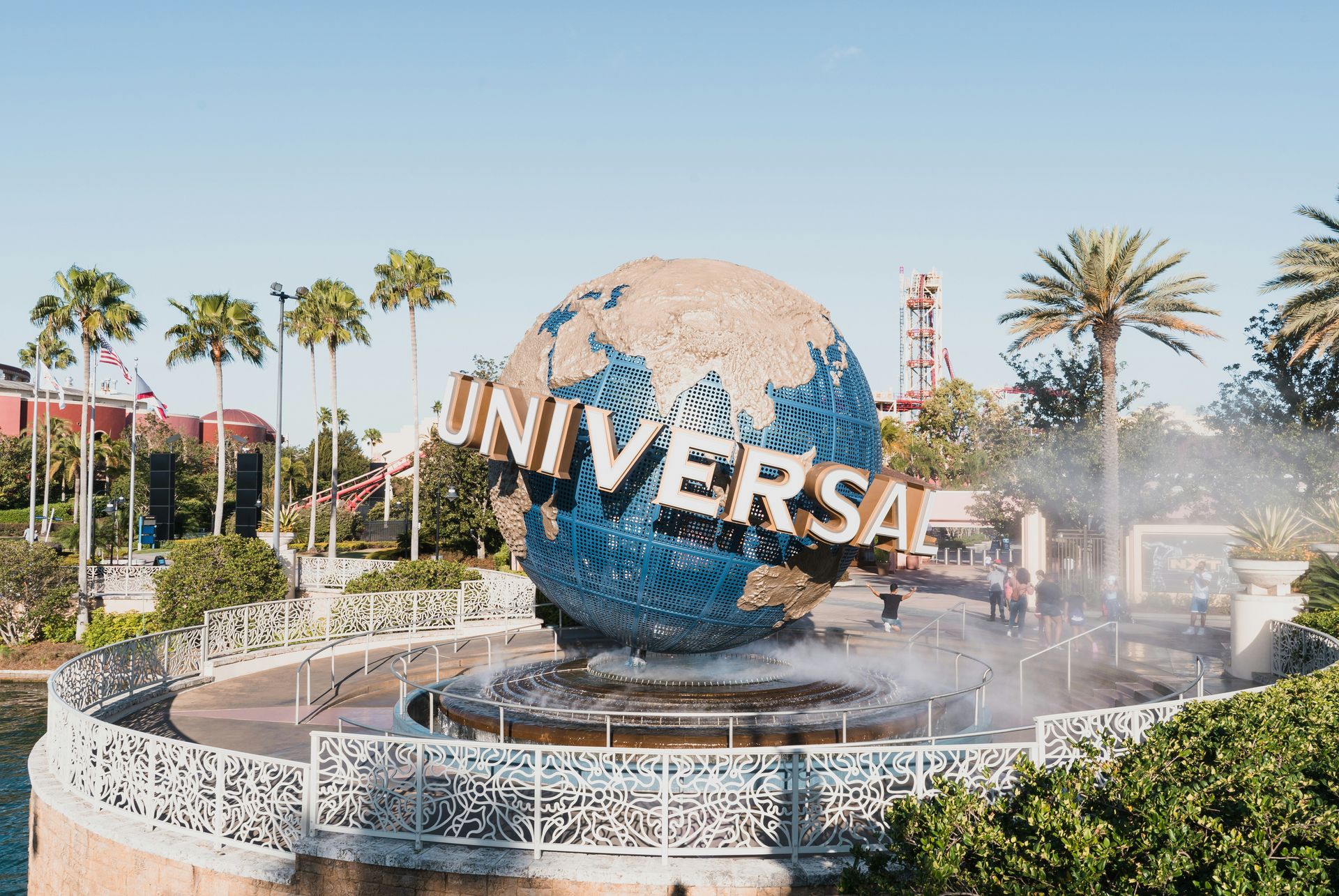
Universal Studios Florida gives the Florida park visitor a different orientation from the Disney $DIS parks: where Disney built immersive worlds inspired primarily by its own intellectual property, Universal built its identity around the broader entertainment industry, creating a park whose lands represent the backlot sets of Hollywood and the imagined worlds of major film and television franchises across multiple studios. The Wizarding World of Harry Potter: Diagon Alley, housed within the park’s London-themed section, is the most complete physical realization of a film’s fictional world that any theme park has produced: the storefronts, the ambient sounds, and the operational details of the Gringotts bank and the Knockturn Alley shops give the land a totality of illusion that the visitor familiar with the films enters with a specific sense of recognition.
Harry Potter and the Escape from Gringotts, the land’s signature attraction, is a multi-sensory 3D indoor roller coaster whose screen-based effects and physical movement are synchronized to give the ride vehicle the sensation of being caught in the middle of the dragon battle that climaxes the film. The Hogwarts Express, which departs from a replica of King’s Cross Station’s Platform 9¾ within the park, transports guests to Hogsmeade at the neighboring Islands of Adventure park through a journey whose interior window projections make the train’s movement through the wizarding world feel continuous.
The rest of Universal Studios Florida maintains the retro entertainment character that the park debuted with in 1990, and the author specifically argues for keeping the classics: the E.T. Adventure dark ride, where guests fly bicycles past a glowing moon, and Men in Black Alien Attack, where riders compete to shoot alien targets, give the park a legacy dimension that the newer franchise additions have surrounded without replacing. Universal’s Horror Make-up Show, a live demonstration of the special effects techniques used in horror film production, gives the park an educational entertainment format specific to its working studio origins that is not replicated at any other Florida park.
Aditya Vyas / Unsplash
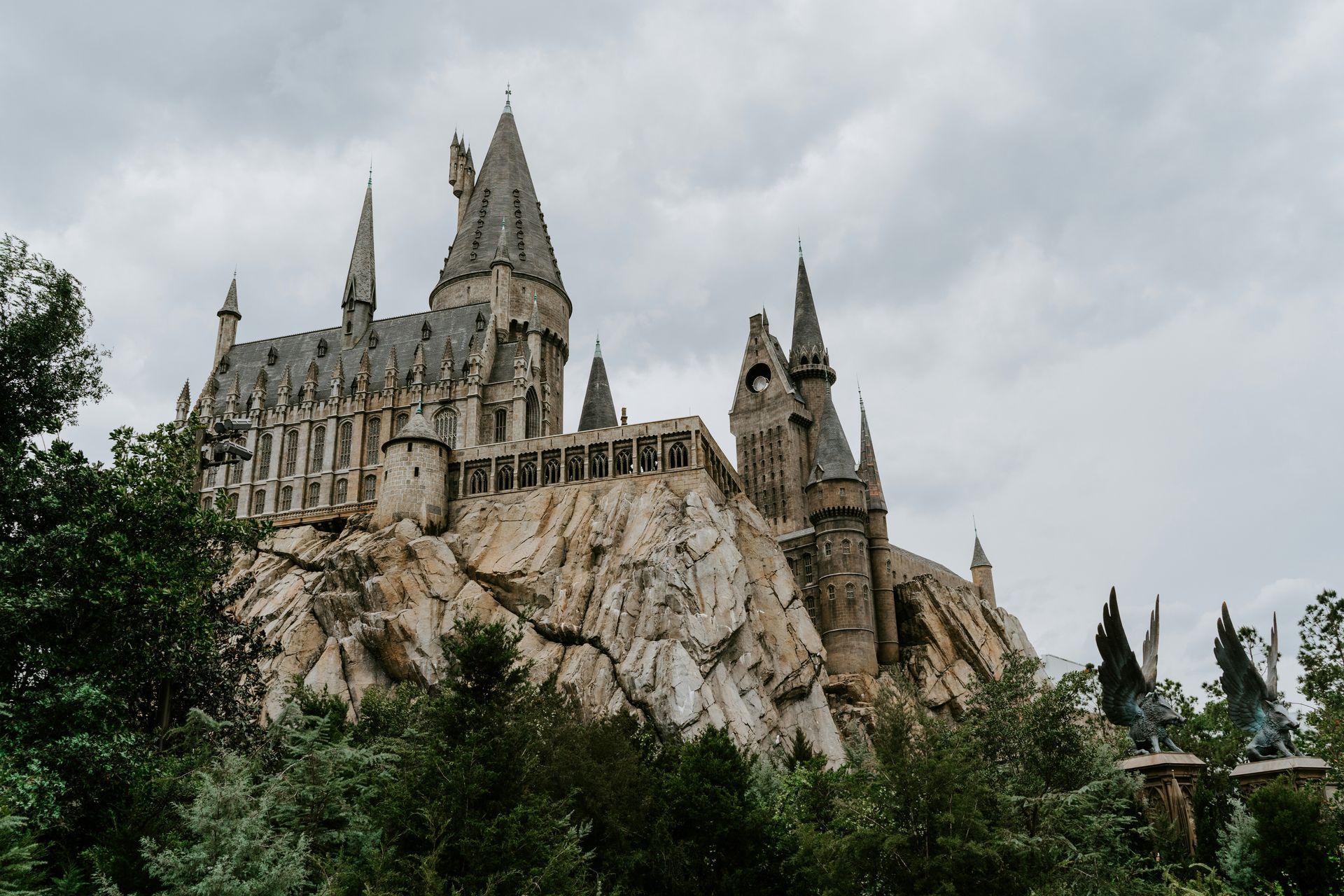
Universal Islands of Adventure gives the Florida theme park market its strongest concentration of high-quality roller coasters and its most complete version of The Wizarding World of Harry Potter’s Hogsmeade section, which includes Hogwarts Castle and the Forbidden Journey attraction. The park’s island organization, with each themed land occupying a distinct section connected by a central lagoon, gives the navigation experience a spatial clarity that makes moving between vastly different thematic environments feel natural.
Hagrid’s Magical Creatures Motorbike Adventure, which the author identifies as one of the park’s best coasters, uses a motorbike and sidecar ride vehicle to take guests through the Forbidden Forest in an experience that combines outdoor coaster sections with indoor dark ride sequences, animatronic creatures, and a backward drop that catches most first-time riders by surprise. The Incredible Hulk Coaster launches riders from 0 to 40 miles per hour in two seconds before entering a series of loops and inversions, and the Jurassic World VelociCoaster combines launch technology with a top-hat element and overbanked turns, offering the most intense ride profile of any coaster at Universal Orlando.
The park’s range beyond the coasters gives it a full-day structure: Seuss Landing offers younger visitors a whimsically scaled environment, and the author notes the park’s ease of navigation and the quality of its dining options as qualities that make it an effective day-to-night destination. The interconnection with Universal Studios Florida via the Hogwarts Express gives the two-park experience a specific narrative logic that rewards visitors who experience both parks in sequence. The Incredible Hulk Coaster’s launch system, which uses electromagnetic acceleration to achieve full speed within the first few feet of the track, gives the coaster an opening moment whose physical impact the slower lift-hill builds of conventional coasters do not produce, and the green steam effect at the launch tunnel entrance gives the departure a visual spectacle visible from much of the park’s central lagoon area.
Credit: Legoland Florida
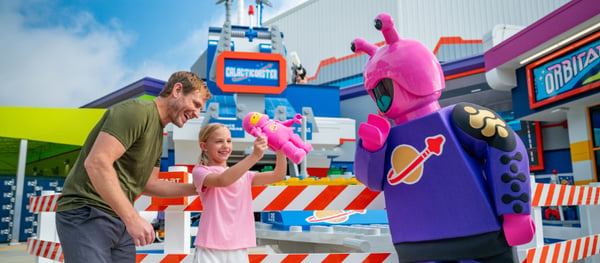
Legoland Florida in Winter Haven, about an hour from Orlando, gives the Florida theme park market its most completely child-oriented park and, according to the article’s author, a destination that rewards adults willing to engage with it on its own terms. The park’s attractions, including entry-level roller coasters and the Pirate River Quest boat ride through the former Cypress Gardens botanical park, give younger guests a threshold of physical challenge appropriate for riders who are not yet ready for the full-scale thrill rides of the Orlando parks.
Miniland, the park’s most distinctive large-scale installation, gives adults their most compelling reason to spend time independent of accompanying children: large-scale Lego structures depicting famous cities and landmarks from around the world, built with the specific brick combinations that Lego’s design vocabulary permits, give the models a textural and color quality that the artist has to see at close range to appreciate. The Lego Ferrari $RACE Build and Race experience offers an interactive dimension in a technology-forward format, with its racing simulation and hands-on build components giving older guests a reason to engage.
The adjacent Peppa Pig Theme Park, themed to the British animated series, offers families with very young children a dedicated space with rides and attractions calibrated for the youngest park visitors, without the height minimums that exclude the smallest guests from most theme park attractions. The on-site resorts, a water park, and the proximity of the two parks to each other give Legoland Florida a multi-day visit structure that the single-day format most theme park visitors use for the major Orlando parks would not support. The Legoland Hotel, whose rooms are designed around Lego themes and include brick-building challenges for children built into the room’s furniture and storage, provides families with a specific immersive environment that the standard resort room format does not attempt in the same terms. The park’s Granny Smith apple fries, which the author describes as worth a visit alone, give Legoland a food destination credential strong enough to stand on its own as a reason to make the Winter Haven drive.
Itai Aarons / Unsplash
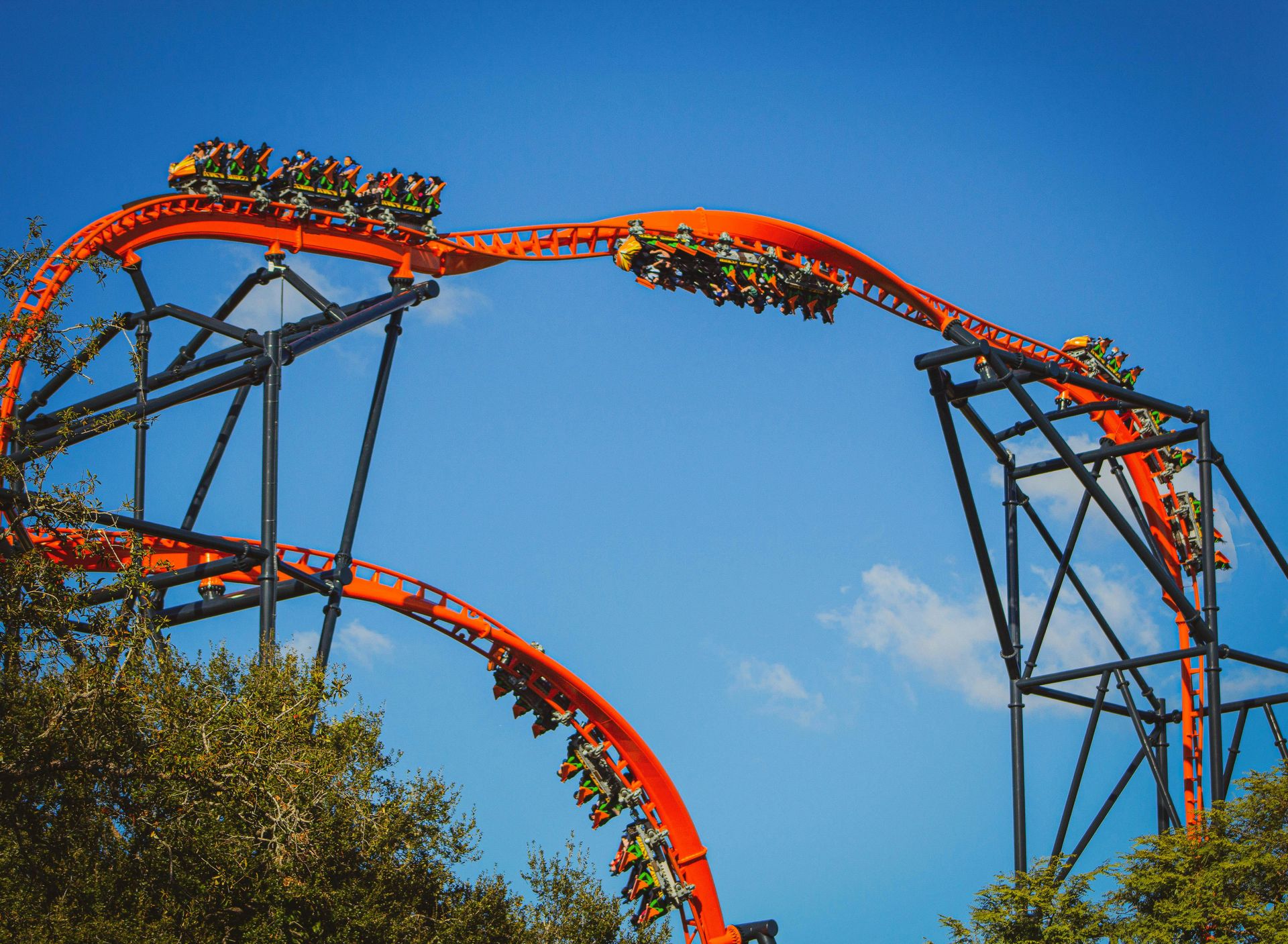
Busch Gardens Tampa Bay gives the Florida theme park market its best argument for traveling west from Orlando: a park that combines a zoo holding more than 200 animal species with a roller coaster lineup whose credentials, measured by speed, height, and ride system variety, match or exceed what the Universal Orlando parks offer. The combination is specific to Busch Gardens and not replicated at any other major Florida park: the wildlife program and the thrill ride program occupy the same footprint, giving the full-day visit a variety of experiences that pure-entertainment parks cannot provide without adding a separate animal park visit.
Iron Gwazi, a steel hybrid coaster that reaches 206 feet in height and 76 miles per hour, is Busch Gardens' fastest attraction and most physically demanding ride for guests who can handle the intensity. SheiKra, the inverted coaster whose signature element is a vertical, face-down plummet of 200 feet, gives the park its most visually spectacular single moment, visible from much of the park’s grounds and audible from the surrounding area. Montu, one of the tallest and fastest inverted coasters in the world, gives the park’s coaster lineup a third major credential that reinforces Busch Gardens’ position as Florida’s strongest thrill ride destination outside of Universal.
The Busch Gardens Tampa Bay Food and Wine Festival, which the author specifically identifies as an award-winning event worth visiting the park to attend, provides the park with a cultural program alongside the rides and wildlife. The festival’s globally inspired food and live entertainment programming give Busch Gardens a compelling reason to visit, even when the calendar does not coincide with peak coaster-riding weather. Busch Gardens’ distance from the Orlando park cluster, approximately an hour’s drive west via Interstate 4, gives the park visit a geographic commitment that the more proximate Orlando parks do not require, but the coaster lineup and the wildlife program together give the trip a specific quality of experience unavailable within the Orlando resort boundaries.
Credit: Walt Disney World Resort
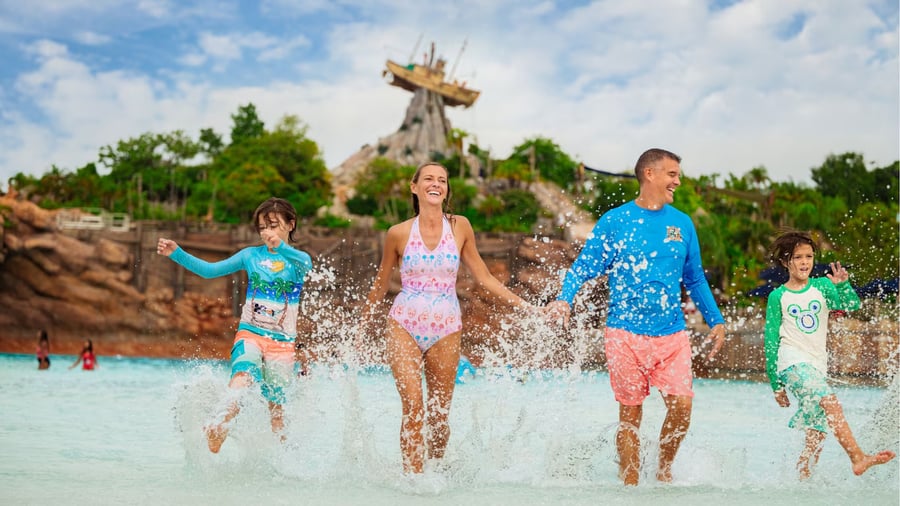
Typhoon Lagoon, one of Walt Disney $DIS World’s two water parks, gives the Florida water park category its most narratively cohesive entry: the park is built around the backstory of a fictional tropical resort that has been wrecked by a catastrophic storm, and the physical evidence of the storm, a shrimp boat perched atop the central mountain, gives the environment a visual specificity that the competing water parks’ more generic tropical resort aesthetics do not achieve. The storytelling premise extends through the park’s slide names, its signage, and the overall design of its facilities.
The wave pool, which the author identifies as the park’s highlight, is one of the largest in North America and generates waves up to 6 feet high, giving the swimming experience a physical intensity that the lazy river and the slides cannot match. Castaway Creek, the lazy river that extends more than 2,000 feet around the park’s perimeter, offers the relaxed float option on a grand scale, and Miss Adventure Falls, the park’s most family-friendly flume attraction, gives groups with mixed age ranges a shared-ride experience whose narrative theming makes the wait worthwhile.
Disney’s H2O Glow Nights, the after-hours ticketed event held during summer months, transforms the park with neon lighting that makes the wave pool and the surrounding environment look categorically different from the daytime park. The event’s smaller capacity and the specific visual environment it creates give it an experience that justifies a separate ticket for visitors whose park day extends into the evening hours. The Dole Whip, the pineapple-flavored soft serve that has become one of Disney’s most beloved food items across the entire resort, is available at Typhoon Lagoon, giving the water park a food destination credential that exceeds what most water parks offer their guests as a snack option. The park’s Caribbean-inspired food options extend beyond the Dole Whip to a full menu of island-themed dishes and beverages that give the beach chair afternoon a culinary program worth engaging with between waves.
Credit: Universal Orlando
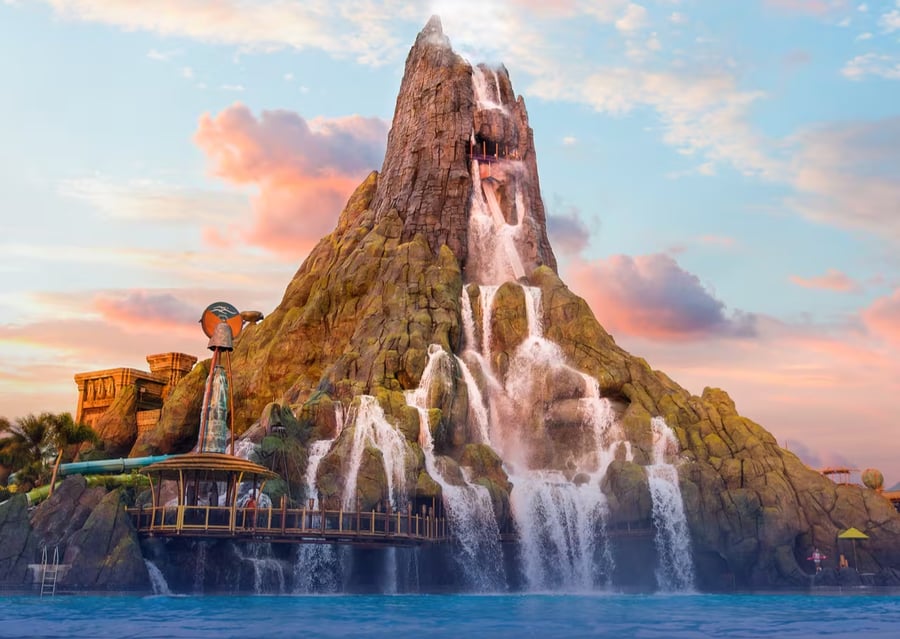
Volcano Bay gives the Florida water park category its most ambitious application of the design and immersion standards that Universal Creative has developed across its land-based parks: a 200-foot artificial volcano serves as the park’s central visual anchor, and the South Pacific theme extends through the food program, the ambient sound design, and the architectural language of the guest facilities in a way that generic water parks with tropical theming do not maintain with the same consistency. The park covers 28 acres, giving it a scale that accommodates both the major attractions and the white-sand beach areas without the crowding that smaller water parks experience when visitor capacity is reached.
The Ko’okiri Body Plunge, the enclosed near-vertical drop slide that drops riders from the volcano’s summit, gives Volcano Bay its most daunting individual attraction and the one whose physical sensation is hardest to anticipate from description. The TeAwa Fearless River, a rapid river attraction that requires all riders to wear life jackets due to the current’s intensity, offers a physically demanding version of the lazy river format, with a pace and turbulence unlike the gentle floats at competing parks. The author, who describes herself as not typically a water-park person, identifies Volcano Bay as the exception that led her to reconsider the category.
The food program gives Volcano Bay a specific advantage over most water parks: Universal’s culinary investment in the land-based parks extends here, and the dining options, from inventive cocktails to food items that reflect the South Pacific theme with more specificity than the standard park hot dog and pizza formula, give the guest who spends a full day at the park a reason to eat at multiple points during the visit. The TapuTapu wristband system, which allows guests to join virtual queues for slides from anywhere in the park without physically waiting in line, gives Volcano Bay an operational model that eliminates the water park’s traditional friction point: standing in wet swimwear in queues for the park’s most popular attractions.
