
The best things to eat and drink in Athens in 2026
From sesame koulouria eaten on the morning commute to floodlit Parthenon views from a rooftop bar above Monastiraki
Rafael Hoyos Weht / Unsplash
Athens’s food culture operates on a paradox that the city’s ancient reputation for philosophical inquiry might have predicted: the capital of the country that invented the shared mezze table has quietly become one of the most interesting individual-serving, chef-driven dining destinations in the Mediterranean. The classical Greek dining tradition, built around communal dishes passed across a taverna table, coexists with a contemporary Athens restaurant scene whose modern Greek and fusion offerings reflect a city that honors its culinary inheritance while treating it as raw material for innovation. Family recipes passed down across generations share the same neighborhood as fusion menus built from the same ingredients in unfamiliar compositions.
The visitor who approaches Athens food chronologically by meal finds a sequence of specific pleasures: the sesame koulouri eaten while walking, the phyllo pastry pie from a three-generation bakery, the strong, cold frappé that defines the Greek summer café experience, the souvlaki or gyros from a trusted hole-in-the-wall, the yogurt kebab that is specifically Athenian, and the waterfront seafood at Palaio Faliro. The sequence is a day in Athens written in food, and the city’s density of these specific pleasures within a walkable geography gives the food-focused visitor an itinerary that requires no museum or monument to justify the trip.
The 10 foods and drinks below appear in Lonely Planet, selected by Athens-based writer Caterina Hrysomallis as the essential eating and drinking experiences the city offers. Athens’s central neighborhoods, Monastiraki, Plaka, Koukaki, and Psirri, are sufficiently compact that the visitor on foot can access most of the foods and establishments on this list within a half-day walking circuit, and the Palaio Faliro waterfront seafood is the only destination requiring a taxi or transit ride of any significance from the central walking area. The city’s food geography rewards the pedestrian whose willingness to walk between neighborhoods, rather than taking transit, gives each meal its most naturally embedded neighborhood context.
1. The sesame koulouri is Athens’s most portable breakfast

Engin Akyurt / Unsplash
The koulouri is a bread ring covered in sesame seeds whose crisp shell and soft interior give it a textural contrast specific to a product that is baked for the commute: the ring’s structural integrity holds up to being carried in a bag or eaten on foot without crumbling, and the sesame coating gives the hand a grip specific to a breakfast designed for eating without a plate or a table. The koulouri’s vegan status, a consequence of a traditional recipe whose simplicity predates the modern health food movement’s discovery of plant-based eating, gives Athens’s most traditional street food a contemporary dietary credential that aligns with the global plant-based trend without having been designed with it in mind.
Street vendors and bakeries across the city sell koulouria throughout the morning, and the sight of Athenians eating them on the way to work gives the visitor their most specifically local single food encounter in a city whose tourist food circuit often directs visitors toward the taverna table, not the street corner. The koulouri’s price, among the most affordable food purchases in any European capital, gives the budget-conscious visitor their most economical breakfast option, with the same quality as the more expensive morning alternatives.
The sesame seed coating gives the koulouri a flavor profile specific to the Mediterranean seed’s prominence in Greek food culture: sesame appears in Greek cooking from antiquity, and the koulouri’s daily ubiquity in contemporary Athens gives the seed its most continuous single application in the city’s food landscape. The bread’s simplicity, a single ingredient list whose basic composition has not been elaborated or improved upon, gives the koulouri its most enduring quality: a food that has not needed to change because it was right from the beginning. The vendor’s cart that sells koulouria on the Athens street corner is one of the few food delivery formats in the city that connects the contemporary visitor to a food culture whose commercial infrastructure has not been replaced by the café counter or the app-based delivery platform.
2. Phyllo pastry pies are a more substantial Greek breakfast
Tanya Bakogiannis / Wikimedia Commons (CC BY 3.0)
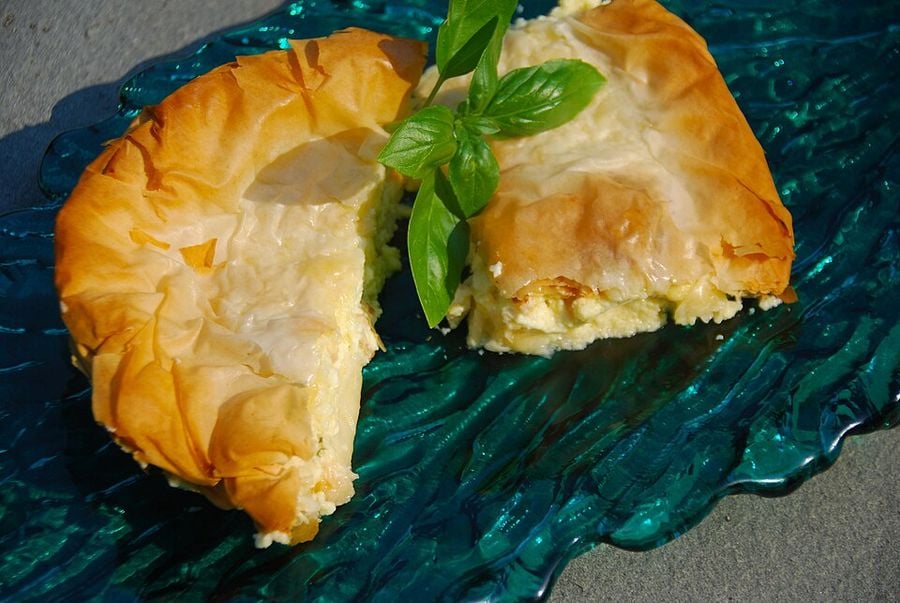
The phyllo pastry pie gives the Athens breakfast program its most traditionally substantial option: a laminated pastry whose multiple-sheet construction gives the baked product its characteristic flaky texture, filled with combinations of cheese, spinach, or pumpkin whose specific filling determines the pie’s flavor register from salty to tart to sweet. The tiropita, a cheese pie filled with feta, ricotta, Halloumi, or a mixture, gives the salty register its most direct expression, and the choice of cheese gives the filling its most variable single character: a Halloumi-dominant tiropita runs saltier, and a feta-dominant version runs more sour. The spanakopita, the spinach-and-cheese pie, provides the vegetable program with its most reliable single-serving delivery system, and the kolokithopita, the pumpkin pie spiced with cinnamon, provides the sweet register with its most specifically Greek dessert-breakfast option.
Takis Bakery in the Koukaki neighborhood, a family-run institution in its third generation of operation, is the most trusted place in Athens to start with phyllo pastry pies. The unbroken family transmission of recipes gives the products a fidelity to the original formula that newer bakeries cannot match in the same historical terms. The Bread Factory in Metaxourgeio offers the scale-driven alternative: a large bakery-patisserie whose breadth of product gives the visitor wanting a more comprehensive pastry survey the most expansive single program in the city.
The phyllo pie’s availability throughout the day, from bakery opening through early afternoon, gives the visitor who misses the breakfast window a street food option that serves as a midmorning snack, a quick lunch, or an afternoon fuel stop with equal appropriateness. The individual portion size and the handheld format give the phyllo pie the same portability credential as the koulouri, and the filling’s substance gives the pastry more sustained energy than the bread ring’s simpler carbohydrate alone provides as a morning start.
3. Greek yogurt bought in Athens offers a richer experience

Credit: Fage
Greek yogurt, as purchased in Athens, made locally and consumed fresh, gives the visitor a product whose taste and texture differ meaningfully from the exported versions that have made the style globally familiar. The Fage brand, recommended by the Lonely Planet article as the trusted supermarket option, produces the full-fat and reduced-fat versions across a spectrum whose 2 percent version is described as creamy and the 5 percent as overdrive creamy, giving the fat content a specific experiential description whose accuracy allows the visitor to calibrate their selection to their dairy preference. The honey drizzle that customarily accompanies the yogurt adds a sweet element to the breakfast, and the Greek honey’s floral profile, determined by the wildflowers whose nectar the bees collect across the varied Greek landscape, gives the honey a regional character specific to the country’s botanical diversity.
The yogurt’s affordability at the supermarket level gives it a specific value argument for the visitor who wants to eat like a local: a tub of Greek yogurt bought at a neighborhood supermarket and eaten at a park or on a balcony gives the breakfast a local authenticity and a budget efficiency that the café version cannot match in either dimension. The fresh fruit available at the city’s open-air markets gives the yogurt its most seasonal possible accompaniment, and the yogurt, honey, and fresh local fruit together make the Athens breakfast its most nutritionally complete and most specifically Greek simple meal.
The yogurt’s protein content gives the breakfast a sustained energy profile appropriate to a morning of walking the city’s hills between archaeological sites and neighborhoods, and the cooling effect of the cold yogurt on a warm Athens morning gives the breakfast a seasonal appropriateness specific to a Mediterranean capital whose summer temperatures make cold and substantial breakfast foods the most practically appealing morning option in a city where a full day of uphill walking between ancient sites and contemporary neighborhoods makes the caloric foundation of a substantial breakfast a practical investment, not a luxury.
4. Souvlaki and gyros each take a distinct form in Athens
Bruna Santos / Unsplash
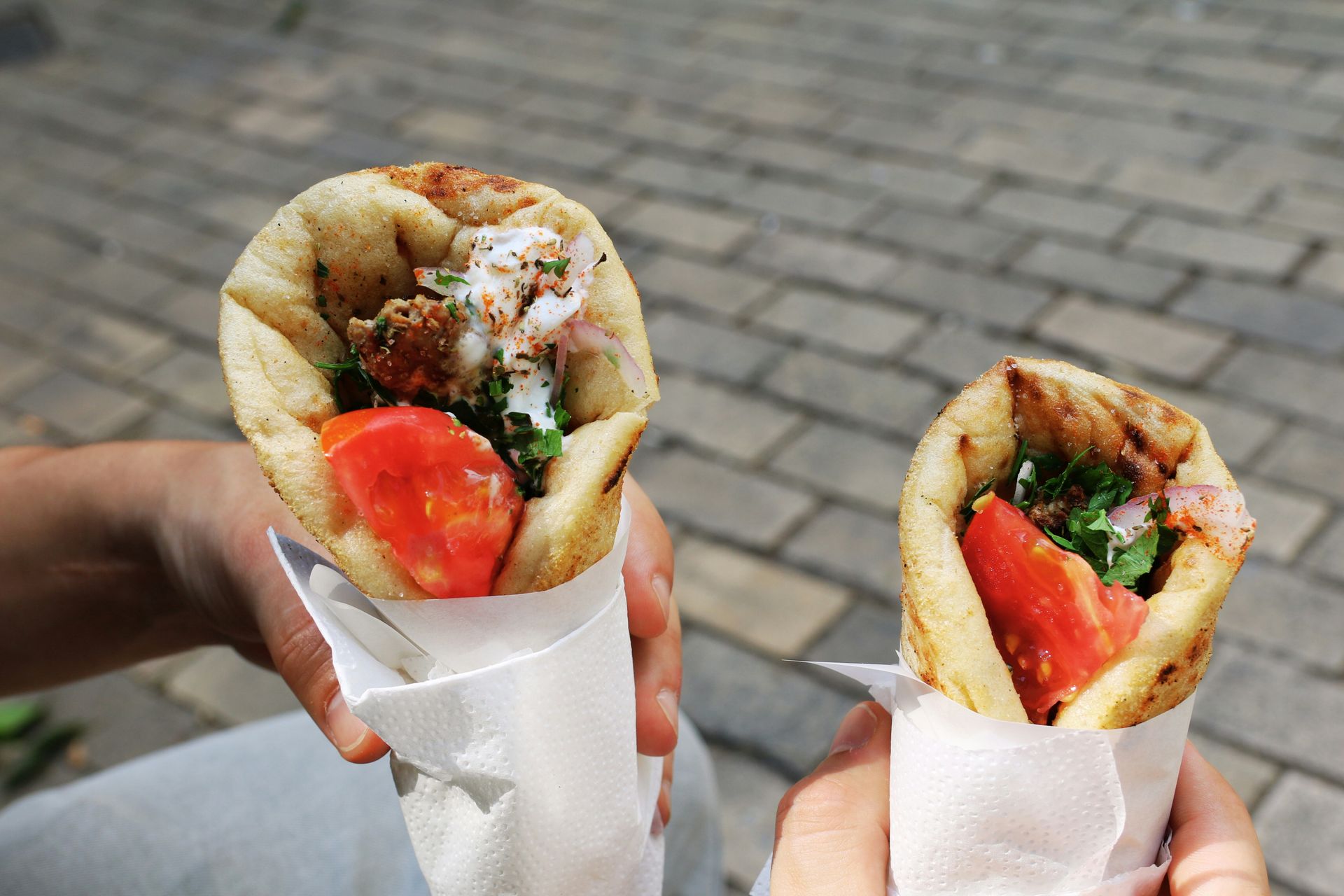
The distinction between souvlaki and gyros is one of the most practically useful pieces of culinary knowledge the Athens visitor can acquire, and the Lonely Planet article provides it clearly: souvlaki is meat cooked on a skewer whose chunks give the eating experience a specific textural bite, and gyros is meat cooked on a vertical rotisserie and shaved thin, whose texture is finer and more uniform. The herbs and spices used in both are similar, meaning the flavor profile is comparable, but the texture choice is substantive: the visitor who wants a substantial meat-eating experience chooses souvlaki, and the visitor who prefers a softer, more integrated filling chooses gyros. Both are served either in a pita wrap or on a plate as a meritha.
Achilleas in Neos Kosmos gives the souvlaki and gyros program its most recommended hole-in-the-wall : the casual neighborhood spot, whose pork and chicken souvlaki and gyros are consumed on the go, gives the fast food format its most authentically Athenian expression, and the neighborhood location away from the tourist center gives the crowd a local composition whose absence of non-Athenian diners gives the experience its most specifically local character. O Kostas offers the sit-down option for visitors who prefer a table and a longer meal format, not the standing street food that Achilleas represents at its most efficient.
The pita bread that wraps both souvlaki and gyros in the wrap format gives street food its structural element, and the tzatziki sauce that typically accompanies both gives the cool yogurt-cucumber-garlic condiment its most common single application in Athenian street food. The hot meat, warm pita, and cold tzatziki together create a temperature contrast specific to food assembled immediately before eating. The pita bread’s grilling before assembly gives the wrap a slight char whose smokiness complements the meat’s grilled flavor, and this small detail distinguishes the properly made Athenian souvlaki or gyros from the reheated alternatives found in less conscientious establishments.
5. The yogurt kebab at O Thanasis stands out as Athenian
Credit: O Thanasis
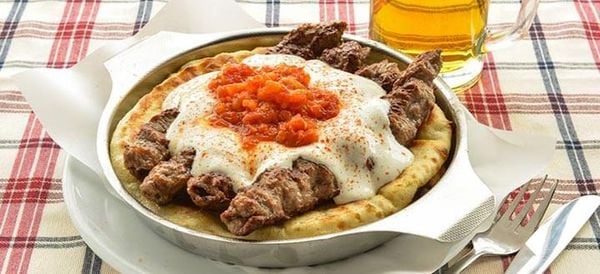
The yogurt kebab gives Athens its most locally specific single dish: fluffy pita bread topped with grilled ground lamb, Greek yogurt, and fresh tomato sauce, a composition whose specific layering of the hot meat over the bread and under the cold dairy gives the dish a temperature and flavor dynamic specific to this Athenian format and unavailable in the standard kebab presentations of the surrounding region. The dish’s portion size is substantial enough that the Lonely Planet article specifically recommends sharing one between two people for the visitor who is not planning a full meal, giving the yogurt kebab a social eating format whose shared consumption is appropriate to both the portion and the Greek dining culture’s natural inclination toward communal food.
O Thanasis in Monastiraki gives the yogurt kebab its most celebrated location among Athens locals: the casual restaurant’s reputation among Athenian regulars gives the visitor who eats there the specific endorsement of a local dining institution whose filoxenia, the Greek concept of warm hospitality extended to strangers, gives the service a cultural dimension beyond the food’s practical appeal. The Monastiraki location gives the visit a neighborhood context, with its flea market, ancient Agora, and proximity to the Acropolis, which lends the meal a cultural density specific to the city’s most historically layered single district.
The ground lamb gives the yogurt kebab its flavor foundation, specific to a protein whose importance in Greek cooking reflects the country’s pastoral agricultural history, and the fresh tomato sauce provides an acidic counterbalance to the lamb’s richness and the yogurt’s dairy depth. The three-component architecture of bread, meat, and dairy gives the yogurt kebab a structural simplicity whose flavors are distinct enough to make the dish more complex than its ingredient count suggests. The yogurt kebab’s Athenian specificity gives the dish a geographic identity specific to the city’s culinary culture, and the visitor who encounters a version of this dish elsewhere in Greece or in Greek restaurants abroad finds a different preparation whose variation from the Athens original gives the Athenian version its most specifically located single culinary credential.
6. Vegetarian Greek food in Athens disproves the meat label
Kadir Avsar / Pexels
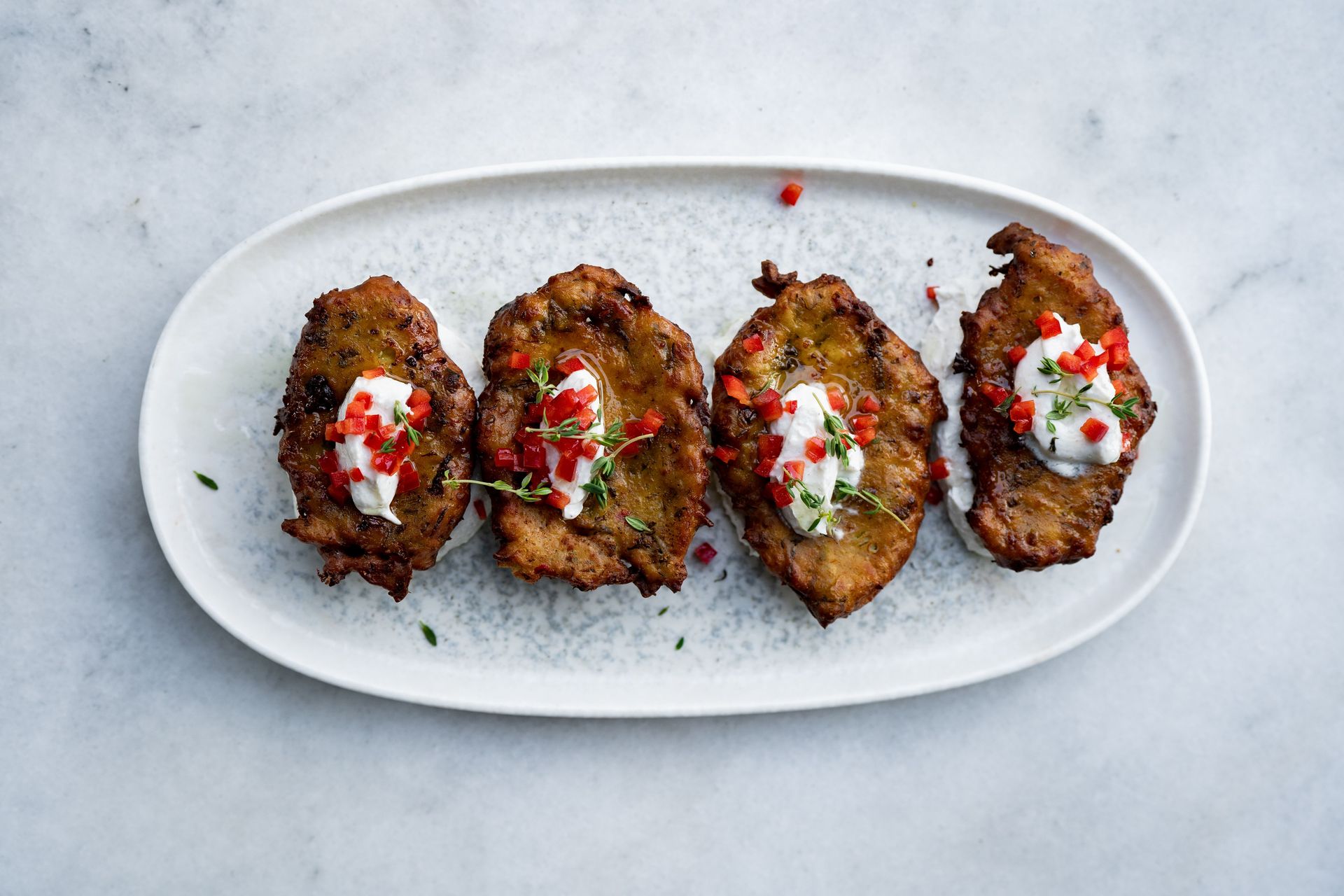
Greek cuisine’s reputation for meat- and seafood-dominated dishes obscures a vegetarian and vegan tradition whose depth and variety give the plant-based eater in Athens a broader, more authentic menu than the equivalent visitor to most European capitals encounters. The kolokithokeftedes, fried zucchini fritters whose crispy exterior and tender interior give them a texture-contrast appeal similar to the more internationally familiar falafel, are the vegetable program's most immediately appealing single snack. The vlita, boiled wild greens dressed with lemon and olive oil, gives the Greek leafy green tradition its most characteristically simple and most nutritionally honest expression, and the fasolakia, a stew of green beans and potato in tomato sauce, gives the traditional Greek family vegetable dish its most comfortingly complete version.
Yiasemi in the Plaka gives the contemporary Athens vegetarian dining experience its most specifically recommended location: a double-story, eclectic bistro whose seating spills onto the Plaka’s streets and whose seasonal small plates menu offers a rotating selection that reflects the vegetable market’s current best offerings. The 10-minute walk from the restaurant to the Acropolis gives the Yiasemi meal a cultural context, with its proximity making the restaurant a natural pre- or post-Acropolis dining destination for the visitor whose Plaka afternoon includes both the archaeological site and a sit-down meal.
The fakes, the iron-rich lentil soup that appears on Greek home tables and taverna menus throughout the year, gives the vegetarian protein program its most warming and most nutritionally substantial single dish, and the lentil’s historical presence in Greek cooking connects the contemporary soup to a pulse whose cultivation in the Mediterranean region predates the cuisine’s current form by thousands of years. The Greek Orthodox fasting calendar, whose religious observance requires the avoidance of meat and dairy products on specific days, has historically driven the development of the vegetarian and vegan recipes that fill Greek menus, and the cuisine’s plant-based depth reflects a religious dietary tradition whose practical influence on Greek cooking has been as significant as any chef’s innovation.
7. The Greek frappé defines Athens’s cold coffee signature

Nguyễn Tiến Thịnh / Pexels
The Greek frappé gives the summer café culture of Athens its most specifically local cold coffee format: an iced, creamy drink made from instant coffee shaken or blended with water and sugar to produce a thick foam, served over ice with optional milk and optional ice cream, whose specific preparation method gives it a texture and a flavor profile that the Italian cold brew, the American iced latte, and the Vietnamese iced coffee do not replicate in the same terms. The sweetness ordering system, sketo for no sugar, metrios for medium, and glyko for sweet, gives the visitor a specific vocabulary whose three-level customization gives the frappé its most democratically personalized format, and the addition of gála (milk) and pagoto (ice cream) gives the drink its most indulgent possible variation.
The frappé’s specific cultural role in Athens café life gives it a social significance beyond the beverage: Athenians consume frappés over hours-long conversations at outdoor café tables, giving the drink a sitting-time function specific to a coffee culture where the café is a social institution, not a transit point. The visitor who orders a frappé and sits at a shaded outdoor table for the duration of the drink absorbs a specific Athenian leisure culture, whose pace and social character give the city a Mediterranean time consciousness, distinct from a capital that has not yet adopted the northern European café’s efficiency-oriented consumption culture.
The instant coffee base that gives the frappé its specific character is the element that makes the drink most specific to its Greek origin: the Nescafé that Greek coffee culture adopted in the post-war decades gives the frappé its particular flavor signature, whose distinctive taste has made the drink an Athens café institution whose local authenticity rests on a global brand’s specific product. The Greek café’s tradition of allowing the frappé drinker to remain at the outdoor table for as long as the mood requires gives the beverage a duration of occupancy that no other coffee format in the European café canon extends with the same generosity.
8. Loukoumadhes delivers Athens’s most playful street sweets
avlxyz / Wikimedia Commons (CC BY-SA 2.0)
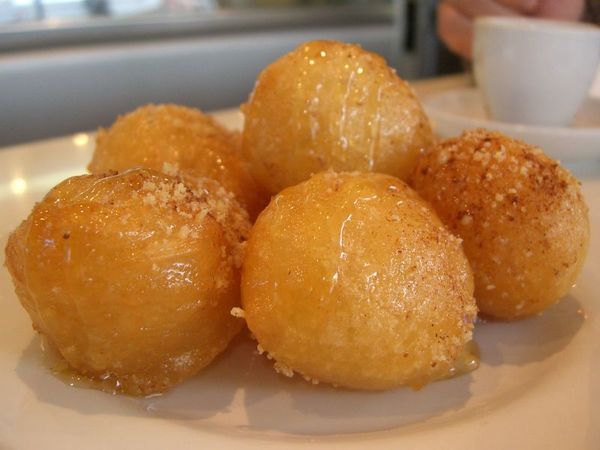
Loukoumadhes are airy fried doughnut balls whose traditional preparation coats them in honey syrup and cinnamon, giving the hot-from-the-fryer spheres a sweet, spiced glaze whose warmth and crunch make the street food the most immediately satisfying texturally in the Athens dessert category. The contemporary Athens versions that expand beyond the honey-and-cinnamon tradition into lemon curd, chocolate praline, and other fillings give the traditional format a creative range specific to a city whose food culture is comfortable with innovation on a classical foundation. The contrast between the very traditional honey-cinnamon version and the most elaborate contemporary variant gives the visitor a clear choice between the historical and the modern, reflecting the Athens food scene’s most characteristic single tension.
Lukumades in Monastiraki gives the loukoumadhes experience its most recommended place in the city center, and the Monastiraki location’s proximity to the flea market and the ancient Agora makes it the sweet treat's most convenient single afternoon stop for the visitor whose cultural program includes the surrounding neighborhood’s archaeological and commercial attractions. The street-food format, with loukoumadhes served in a cup or cone for walking, gives the dessert the portability specific to a city whose most interesting food discoveries often happen on foot between one destination and the next.
The honey’s role in the traditional loukoumadhes preparation connects the dessert to the oldest layer of Greek sweet food culture: honey was the primary sweetener in ancient Greek cooking before refined sugar’s arrival, and the loukoumadhes’ continued use of honey syrup as the defining flavoring element gives the contemporary street food a historical continuity specific to one of the world’s oldest continuously inhabited urban food cultures. The loukoumadhes’ connection to ancient Greek festivals, where fried honey cakes were offered to victorious athletes, gives the contemporary street food a historical resonance that the more recent culinary innovations cannot claim in the same depth of documented tradition, giving the loukoumadhes an edible connection to the ancient city’s athletic and religious culture.
9. Palaio Faliro’s waterfront seafood anchors Athens dining

Credit: NOPFresto
Palaio Faliro is a seaside neighborhood approximately five kilometers from central Athens whose waterfront seafood restaurants give the Athens dining program its most specifically maritime single address: a marina of luxury yachts providing the backdrop to tables where grilled red mullet, fried whitebait, pickled octopus, and feta-stuffed calamari give the seafood menu its most classically Greek range of preparations. The evening timing that the Lonely Planet article recommends for the Palaio Faliro visit, followed by a nighttime walk along the esplanade, gives the waterfront dinner a specifically warm-weather leisure format whose food-and-walking sequence reflects the Greek summer’s most natural single social rhythm.
NOPFresto and Nisos, both large waterfront restaurants in Palaio Faliro, are the two most specifically recommended establishments, offering menus that mix traditional and modern Greek dishes with international options. The waterfront location’s evening light, transitioning from the warm gold of the setting sun over the Saronic Gulf to the marina’s reflected illumination, provides the Palaio Faliro dinner with its most atmospheric single visual context at any Athens seafood restaurant.
The five-kilometer distance from the city center gives the Palaio Faliro visit a specific planning consideration: the journey rewards the visitor who has more than one day in Athens, since the transit time, most conveniently covered by taxi, makes the waterfront dinner most appropriate as the primary evening destination whose marine atmosphere and seafood quality justify the travel beyond the walkable central neighborhoods. The esplanade’s summer activity, with roller skaters and beach volleyball players passing the waterfront tables in the warmer months, gives the post-dinner walk an unexpectedly lively social backdrop specific to this coastal neighborhood’s leisure culture. The tram line that connects central Athens to the Faliro coastal area offers an alternative to the taxi, whose scenic coastal route along the waterfront gives the approach to the seafood restaurants its own pleasant prelude, and the return journey after dinner offers the coastline its most atmospheric version in the evening light.
10. Ouzo and mastika give Athens its most Greek drinks
topsyntages.gr / Flickr (CC BY 2.0)
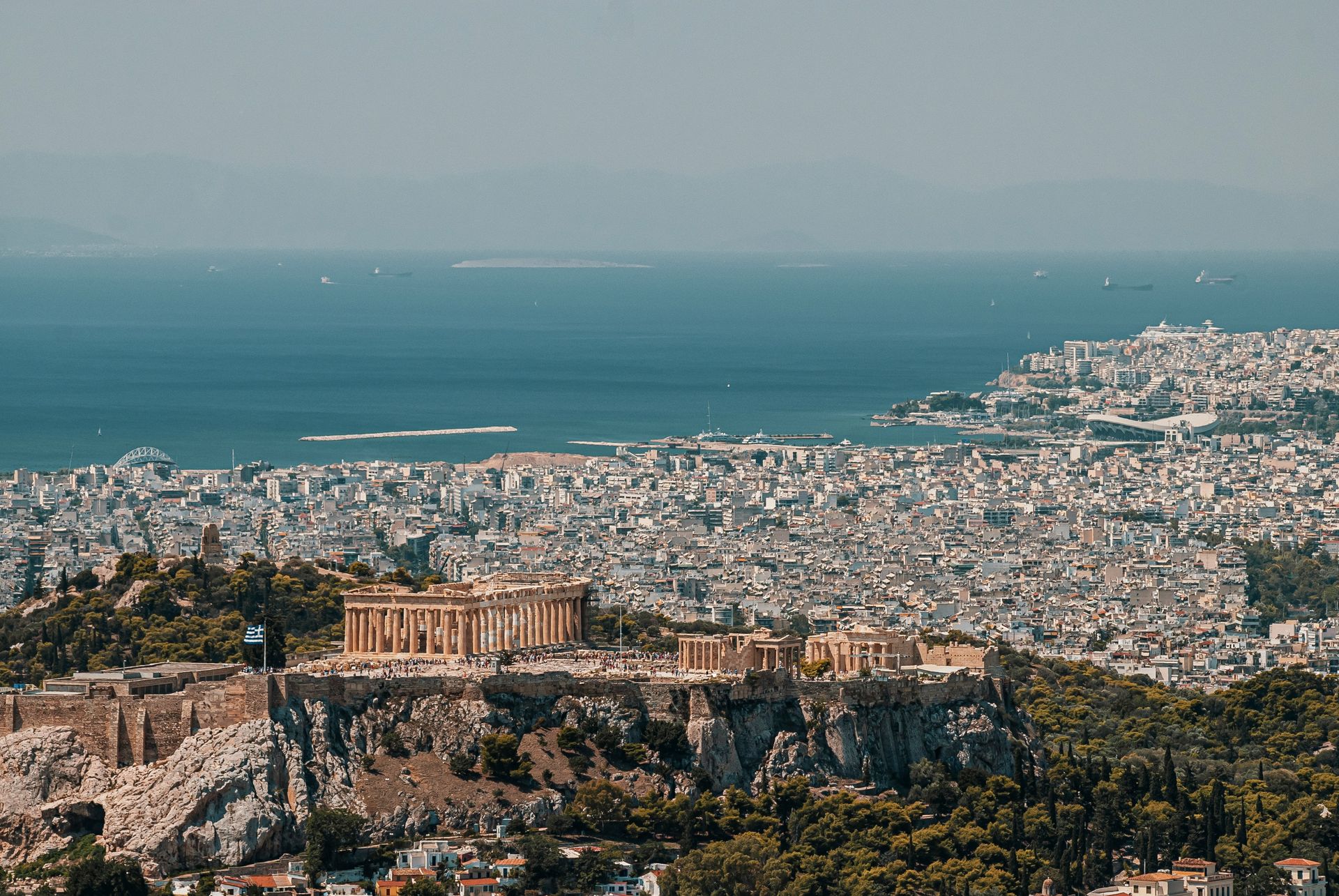
The rooftop cocktail bars of central Athens give the night view of the Parthenon its most accessible single format: the ancient temple's floodlit presence on the Acropolis above the city center turns the hilltop into a glowing reference point visible from dozens of elevated vantage points across the city's central neighborhoods, and the cocktail bars that have positioned themselves to maximize this view give the evening drink program its most specifically Athenian single pleasure. The 360 Cocktail Bar gives the Parthenon view experience its most specifically recommended place in the Lonely Planet article, whose almost perfectly centered view of the illuminated temple gives the rooftop bar the visual credential specific to a bar whose location was clearly chosen with this orientation in mind.
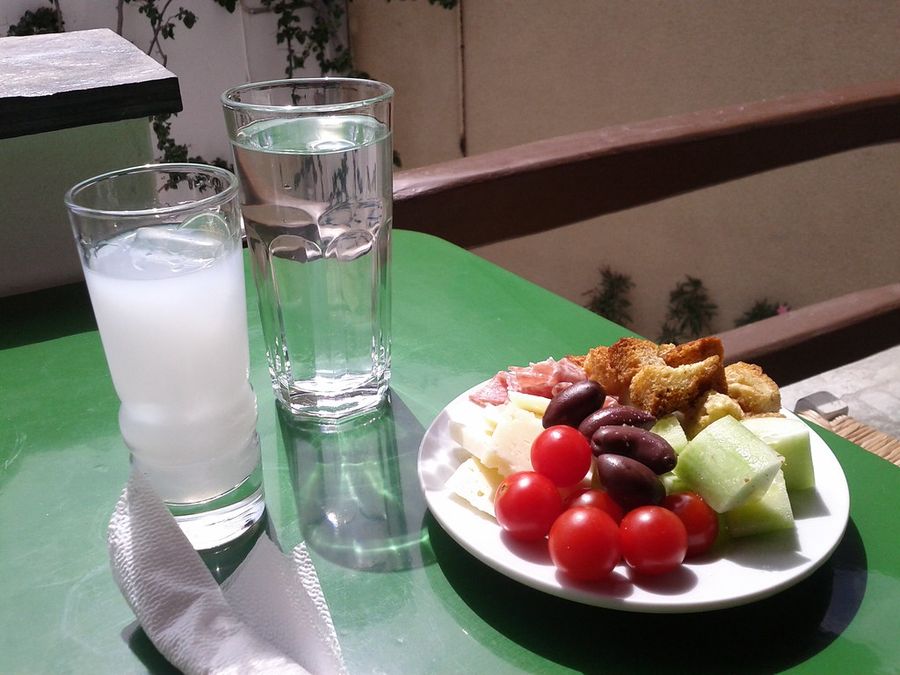
Ouzo, Greece's most internationally recognized spirit, gives the Athens bar program its most specifically national single drink: an anise-flavored spirit whose licorice character makes it a like-or-dislike proposition, a taste the Lonely Planet article honestly acknowledges as specific to the drinker's relationship with anise. Mastika, the sweeter, musky alternative made from the resin of mastic trees native to the Aegean island of Chios, offers the visitor who does not warm to ouzo's licorice profile a specifically Greek alternative whose flavor is unique to a botanical source found nowhere else in the world.
The cocktail menus at Athens rooftop bars that integrate ouzo and mastika into creative mixed drinks give the visitor the most accessible entry point to both spirits: the cocktail format's sweetening and diluting effect on the straight spirit gives the unfamiliar drinker a more approachable first encounter than the traditional straight pour, and the Parthenon view that accompanies every sip gives the rooftop bar cocktail experience its most irreplaceable single context. The 360 Cocktail Bar's name gives the view its directional ambition, and the bar's position in the Monastiraki neighborhood places it within the same district as the Roman Agora and the Library of Hadrian, making the pre-cocktail cultural walking program's most concentrated single Athens neighborhood.