
From a sunset sail on a classic West Indian sloop to a sunken Spanish galleon in a protected marine park, the best of Anguilla
Steve Adams / Unsplash
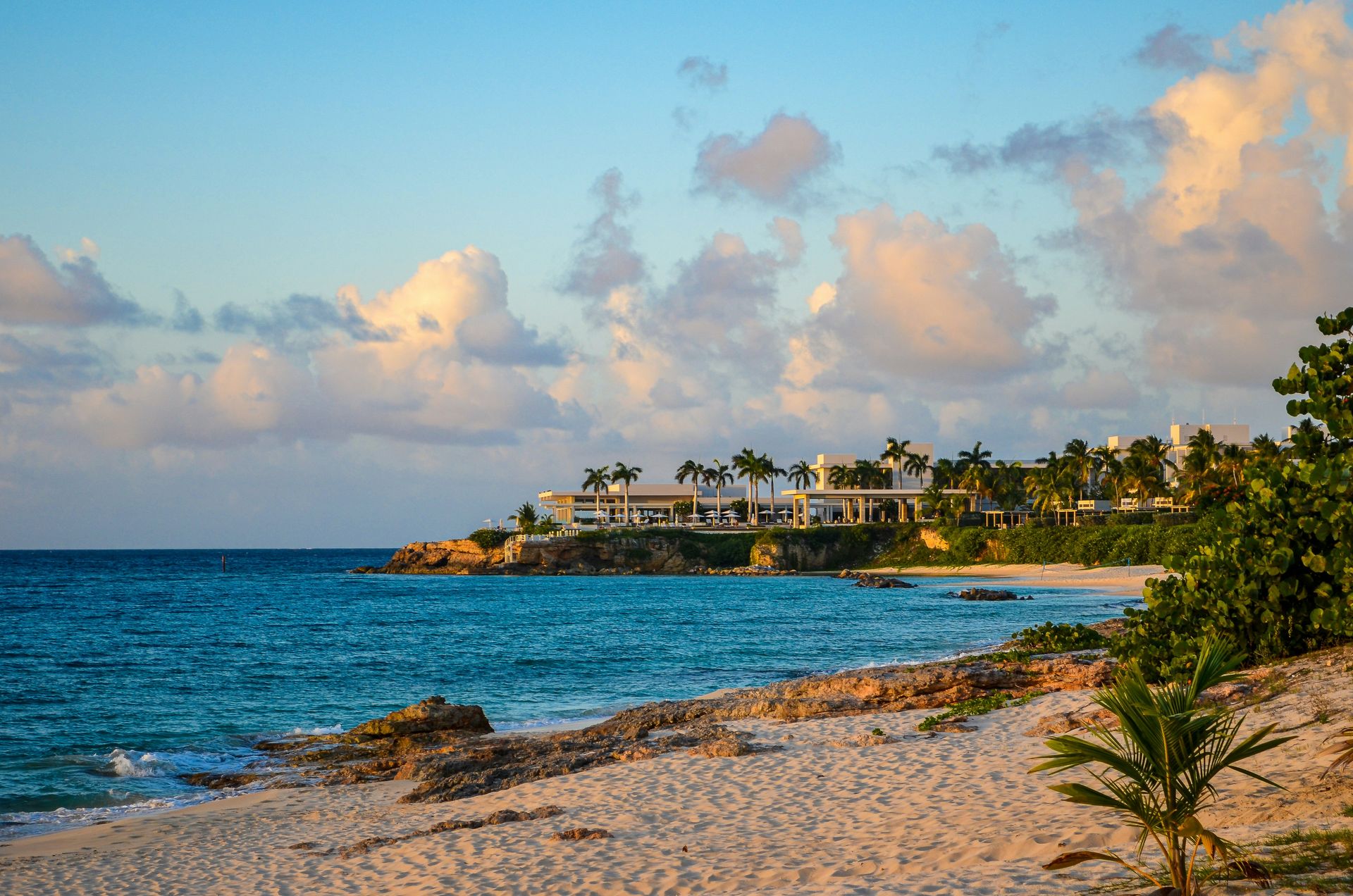
Anguilla operates on a different frequency from most Caribbean islands. Its 33 white-sand beaches are genuinely world-class, and its luxury resorts rank among the finest in the region, but the island’s most devoted visitors return year after year not for the five-star amenities alone. They return because Anguilla has preserved a quality that wealthier, more trafficked islands tend to lose: the genuine welcome of a place where exploration is encouraged, where roadside barbecue spots serve some of the best food on the island, and where a sunset sail on a classic West Indian sloop costs a fraction of what the same experience fetches on a more fashionable neighbor. The island combines world-class luxury and genuine local culture in a single small space, and maintaining both is rare.
The culinary scene illustrates the dynamic well. Without all-inclusive resorts, the gravitational pull of all-inclusive meal plans keeping guests inside resort walls does not exist; the food scene has developed independently, producing a culinary range spanning elevated Caribbean fare at chef-driven restaurants to the roadside grills where locals, expats, and visitors eat from the same menu. Italian, French, and Mexican cooking share the island with the traditional Anguillan dishes that no tourist-facing restaurant elsewhere in the Caribbean presents with the same conviction.
The 10 activities below appear in Travel + Leisure, and cover water, land, culture, food, and nightlife across an island small enough to drive end-to-end in an hour but rewarding enough to sustain a full week of deliberate exploration without exhausting what the island offers to visitors who look past the resort gates.
Credit: Anguilla Travel Board
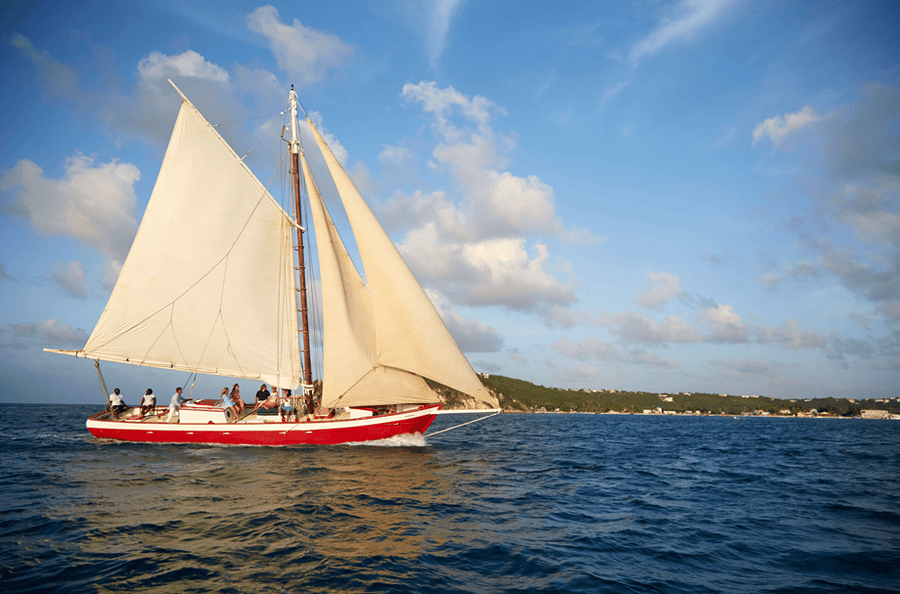
A sunset cruise on a classic West Indian sloop is the experience Liburd identifies as quite memorable, and Tradition Sailing Charter is the operator local experts consistently recommend. The sloop format is specific: these are traditional wooden Caribbean sailing vessels with a working history as fishing and cargo boats, now used for the kind of coastline exploration that no motorized charter replicates in the same aesthetic terms. Watching the sun drop toward the horizon from the deck of a craft whose design predates the tourism economy that now employs it gives the sunset its most appropriate frame.
The cocktails and Caribbean bites served on board extend the experience beyond the view. A sunset cruise that delivers only the visual spectacle is a sightseeing excursion. One that delivers food, rum, and the company of a crew whose relationship to the sea predates the tourist season gives the evening a social and cultural dimension that the resort pool bar cannot match. Liburd’s recommendation is not simply for the prettiness of the light, which any Anguillan beach provides at dusk, but for the totality of the sloop experience as a cultural encounter that connects the modern tourist economy to the island’s maritime history.
The Anguilla coastline seen from the water gives the island a perspective the land-based visitor never acquires. The beaches appear differently from offshore, the cays become visible, and the relationship between the island’s main landmass and its surrounding waters becomes legible in ways that a week of beach visits does not convey. Tradition Sailing Charter offers an experience with evident care for the vessel and its history, giving the cruise a sense of meaningfulness. Booking the sunset departure over the midday option maximizes the visual payoff, and arriving slightly early gives passengers time to settle before the sloop rounds the headland and the light begins its transformation across the water. Tradition Sailing Charter’s reputation among local experts reflects years of operating the sloop experience with the care that distinguishes it from a generic sunset tour.
Steve Adams / Unsplash
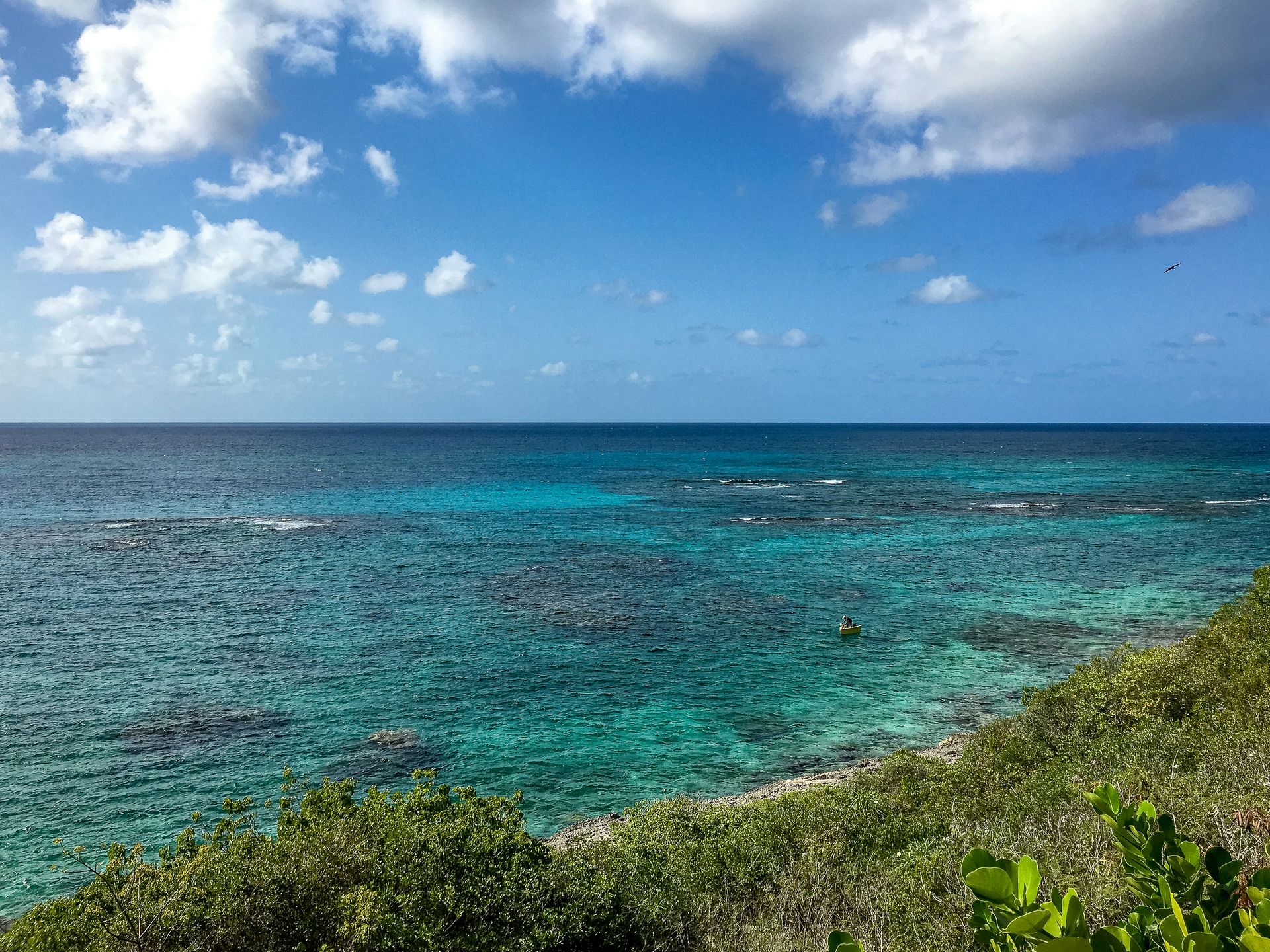
The offshore cays within catamaran distance of Anguilla’s main coast give the island its most direct access to the Caribbean beach experience in its purest form: tiny, white-sand islands surrounded by shallow, clear water where the absence of resort development means the beach belongs entirely to whoever arrived by boat that day. Liburd describes visiting the cays as one of the highlights of any Anguilla visit, and the consensus across local experts supports that position. Scrub Island and Sandy Island are among the most visited, accessible by catamaran excursion or sunset cocktail cruise from the main island’s harbors.
Prickly Pear stands out for a specific practical reason. The cay’s small restaurant serves lobster lunch, giving the boat excursion a culinary anchor that purely scenic cay visits lack. Dan Lockyer, formerly of Dream Yacht Worldwide, specifically identifies Prickly Pear as a hard-to-beat stop on any boating itinerary, and the shallow water surrounding the cay delivers snorkeling that visitors consistently describe as surprisingly excellent for a location so easily accessible. The reef system around Prickly Pear has benefited from the same marine park protections covering Anguilla’s broader waters, giving the snorkeling a fish and coral density that more heavily visited Caribbean snorkeling sites have lost to overuse and anchor damage.
The cay experience depends on the departure time and the charter selection. A morning departure gives the most time on the cay and the best chance of calm water for snorkeling. A sunset cocktail cruise to Sandy Island gives the experience a social and atmospheric character more suited to evenings. Both formats are worth pursuing across different days of a longer stay, as they deliver distinct versions of the same fundamental Anguillan quality: water and sand and sky, with no resort architecture in sight and no other island’s tourist economy competing for the same stretch of beach. The cays give Anguilla a visit, its most elemental version of the Caribbean experience, stripped of infrastructure and returned to the conditions that make the region worth traveling to.
Credit: Anguilla Beaches
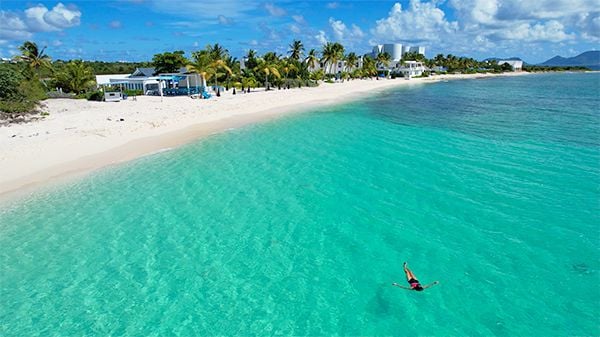
Shoal Bay is Anguilla’s most celebrated beach and its best snorkeling destination, a pairing the island’s tourism history has made broadly known without diminishing what the site delivers in person. The underwater visibility around Anguilla is excellent by Caribbean standards, a quality Lockyer specifically identifies as making snorkeling a standout activity island-wide, and Shoal Bay’s reef system gives the general water clarity a specific biological richness: stingrays, dense schools of reef fish, and occasional sea turtles appear with a frequency that keeps the snorkeling genuinely engaging across multiple visits.
The beach itself is extraordinary even by Anguillan standards. The sand is fine and brilliantly white, the water progresses through shades of turquoise and pale blue as the depth increases, and the bay’s gentle curve gives it a sheltered character that keeps conditions calm under most wind directions. The snorkeling and beach quality make Shoal Bay a destination that rewards a full day, and the Shoal Bay Beach Club at Zemi Beach House gives the afternoon a comfortable base for drinks and shade after the swim.
The sea turtles that occasionally appear at Shoal Bay connect the snorkeling experience to the broader conservation effort the Anguilla National Trust sustains through its evening turtle patrol programs during nesting season. Visitors who encounter a sea turtle while snorkeling here witness a species the island actively protects through organized conservation work. Staying at a distance and avoiding any contact with the turtles gives the encounter the quality of a genuine wildlife sighting, and the Shoal Bay reef’s health reflects the marine park protections that have made such sightings possible. Visitors who want to deepen their engagement with the turtle conservation work can book a turtle patrol excursion with the National Trust during September and October. Shoal Bay’s position as both the island’s best beach and its best snorkeling site gives it a dual claim on the visitor’s time that no other single location on the island matches.
Credit: Anguilla National Trust
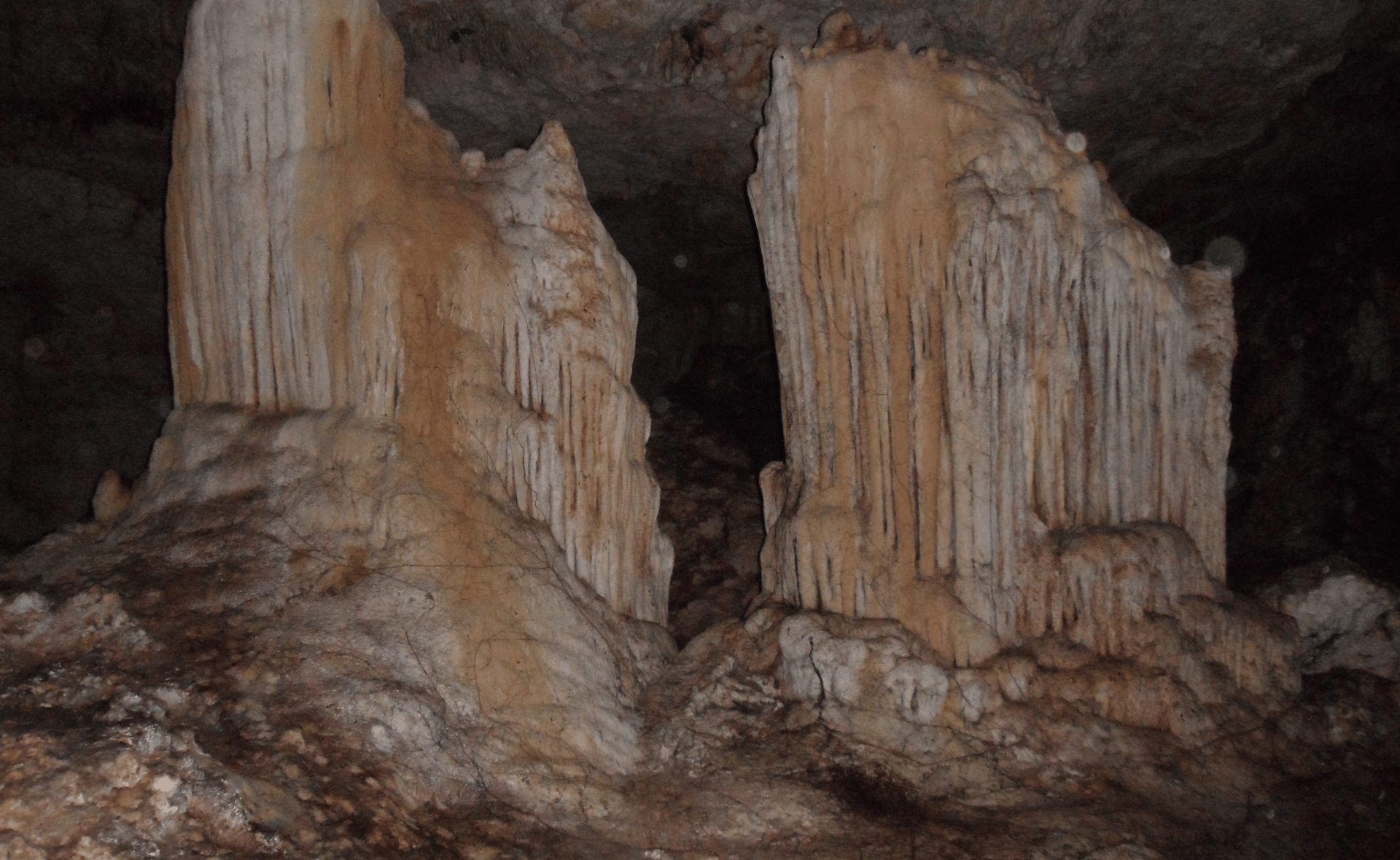
Fountain Cave and Big Spring hold hundreds of petroglyphs carved by the Taino people, who inhabited Anguilla before European arrival. The carvings represent the gods of the Taino cosmological system, and several carved stalagmites in Fountain Cave give the site a three-dimensional sculptural quality that flat rock art cannot convey. These are among the most significant pre-Columbian archaeological sites in the Eastern Caribbean, and their presence on an island that most visitors associate primarily with beach luxury gives them a historical depth the resort brochure rarely mentions.
The Anguilla National Trust organizes heritage tours, providing the interpretive context the sites require. Walking through Fountain Cave with a guide who knows the Taino historical record gives the petroglyphs their full meaning: the gods represented, the ceremonial function the cave served, and the culture that produced these images across centuries before the Spanish arrived. Without interpretive context, the carvings are visually striking but historically opaque, and the heritage tour’s explanatory depth converts a visit to an archaeological site into an educational encounter with a civilization whose presence on Anguilla predates the colonial era by centuries.
The National Trust’s work in maintaining and providing access to these sites gives visitors a direct way to support the preservation of Anguillan Indigenous heritage through their tourism spending. The tours carry a modest cost relative to most Anguillan activities and deliver a quality of cultural education that the island’s luxury hospitality sector, however excellent, typically does not. Booking through the National Trust also gives visitors a view into the organization’s broader conservation work, extending from the Taino sites to the marine environment and the sea turtle nesting beaches. Heritage and ecology are intertwined in Anguilla’s conservation framework, and the Fountain Cave tour is the most direct entry point into understanding how the island thinks about its own history. Visitors who have spent time at Anguilla’s beaches before making the heritage tour visit will find the island’s pre-colonial and colonial past sharpened by the contrast with the luxury tourism economy that now occupies the same ground.
Credit: Anguilla National Trust
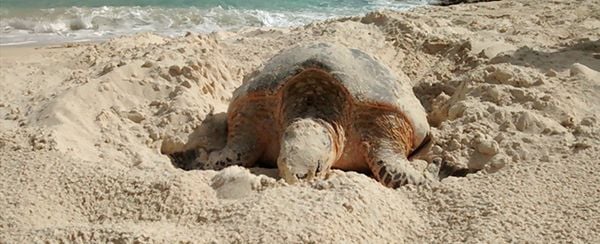
The Anguilla National Trust runs Turtle Patrol excursions from September to October, during the peak of sea turtle nesting season, giving visitors an evening program that connects the island’s wildlife to its conservation infrastructure in a participatory way. Participants learn about the species that nest on Anguilla’s beaches, observe nesting behavior alongside trained guides, and contribute to the data collection the Trust uses to monitor population health. The experience is informative and engaging, and the Trust’s framing of it as a way to support critical conservation efforts is accurate: the turtle patrol program depends on the involvement of trained guides and the public interest that brings visitors out in the evenings.
Sea turtles are legally protected in Anguilla, and the nesting beaches are monitored specifically to prevent disturbance during sensitive nesting and hatching periods. The evening turtle patrol format gives visitors access to the nesting sites under conditions the Trust controls, protecting the turtles from well-intentioned but potentially harmful unguided approaches that beach visitors sometimes attempt when they encounter nesting activity independently. The guided format is not a restriction on the experience. It is what makes the experience possible at all, because the alternative is uncontrolled beach access that the turtles cannot absorb without behavioral disruption.
The September-to-October timing of the turtle patrol season gives travelers who plan their Anguilla visit around nesting season a specific reason to favor the autumn months over the more conventional high-season timing in December through April. The weather in early autumn remains warm, the island is less crowded than during peak season, and the turtle patrol program adds a conservation dimension unavailable at any other time of year. Anguilla’s commitment to marine conservation across its seven designated marine parks gives the turtle program an institutional seriousness that reflects the island’s broader environmental priorities and distinguishes the experience from the novelty of wildlife encounters offered by less rigorous tourism operators. The September timing also coincides with some of the least crowded weeks on the island, which gives the turtle patrol visitor access to an Anguilla that the high-season visitor never sees.

Credit: Anguilla Beaches
Anguillan roadside barbecue is the meal Kircher recommends without qualification: inexpensive and amazing, always a go-to for locals, expats, and tourists alike. The format is straightforward and without pretension, with no-frills outdoor setups serving chicken, ribs, rice and peas, Johnny cakes, and other traditional Anguillan dishes from grills that have been operating the same menu for decades. The quality is consistently high, the price is accessible to any budget on the island, and the clientele is the full cross-section of Anguillan society, unlike the resort restaurants, however excellent, which are not.
The roadside barbecue experience is one of the clearest expressions of the Anguillan character Kircher describes throughout her expert recommendations: the island genuinely welcomes exploration beyond the resort gates. Johnny cakes, fried dough traditionally served with fish or as a sweet, are a specifically Anguillan staple whose roadside version differs from the polished interpretations found on high-end restaurant menus, and the roadside version is worth seeking out because its execution reflects decades of practice in serving the food to people who eat it every week.
The barbecue spots operate most actively on weekends, when local family gatherings and the absence of work schedules give the outdoor cooking its fullest expression. A Saturday afternoon at a roadside grill, eating ribs and rice and peas with paper plates, gives the Anguilla visit a social texture the luxury resort experience, however magnificent, cannot provide. Kircher’s recommendation carries the specific credibility of someone who has lived on the island long enough to know where the food is genuinely good. The roadside barbecue is also the activity that most clearly demonstrates the spirit behind her characterization of Anguilla as a place where everything is safe and accessible: the island’s welcome extends well beyond the resort perimeter to the grills where Anguillan culture is most directly on offer. The meal costs a fraction of what the resort restaurants charge and delivers food quality that makes the comparison honest.
Alexandre Brondino / Unsplash
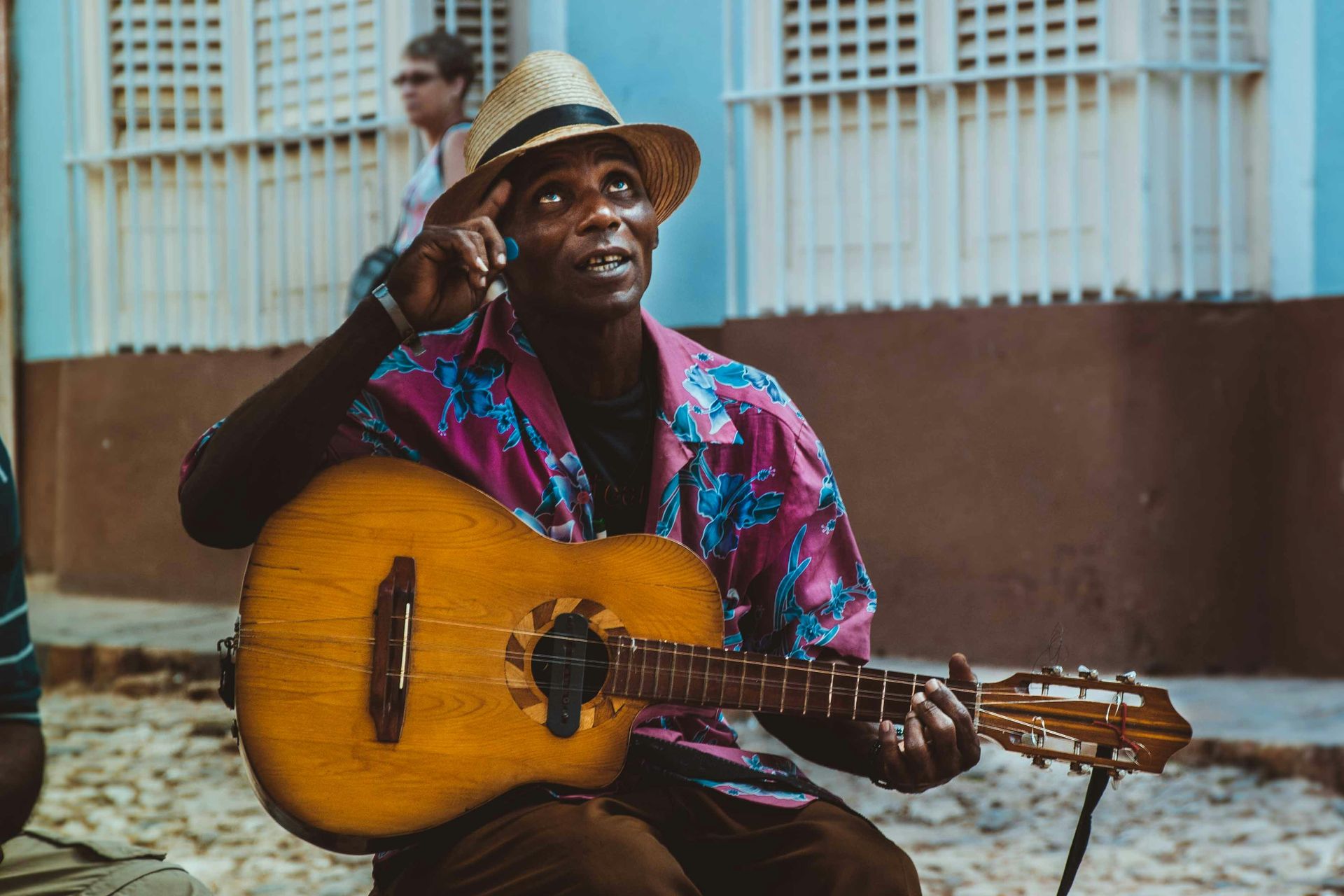
Live music operates across Anguilla every night without requiring a specific festival or event to trigger it. Sandy Ground is the island’s most concentrated nightlife district, with multiple venues offering local acts and the cocktails accompanying them, but the music spreads well beyond that neighborhood. Bankie Banx’s Dune Preserve on Rendezvous Bay hosts live music multiple nights per week, and Bankie Banx himself, the iconic Anguillan musician whose reputation extends well beyond the island, typically performs on weekends. The Dune Preserve’s beach setting, with sound carrying across the water and the stage visible from the sand, creates a physical environment for live music that indoor venues cannot replicate.
The breadth of the music scene reflects Anguilla’s specific cultural position in the Caribbean: small enough to sustain a tight community of musicians, prominent enough as a destination to attract an audience that creates demand for live performance every night of the week. The calypso and soca traditions of the Eastern Caribbean inform the local acts alongside the reggae and blues influences Bankie Banx specifically embodies. Visitors who plan their evenings around the live music schedule, checking which venues have acts on a given night before choosing a dinner location, give the Anguillan evening its fullest possible shape.
The live music scene connects with the island’s carnival culture in August, when the Anguilla Summer Festival runs from late July through early August, featuring a concentrated program of boat rides, beach parties, parades, and concerts. The first Monday of August, known as August Monday, marks the peak of the festivities with a road march featuring live calypso and soca. Visitors who time their trip around the festival experience the live music culture at its most intense, but the regular weekly programming at Sandy Ground and the Dune Preserve gives any visitor at any time of year access to the same musical tradition in its everyday form, which is the form that Anguillans themselves most consistently enjoy.
David Courbit / Unsplash
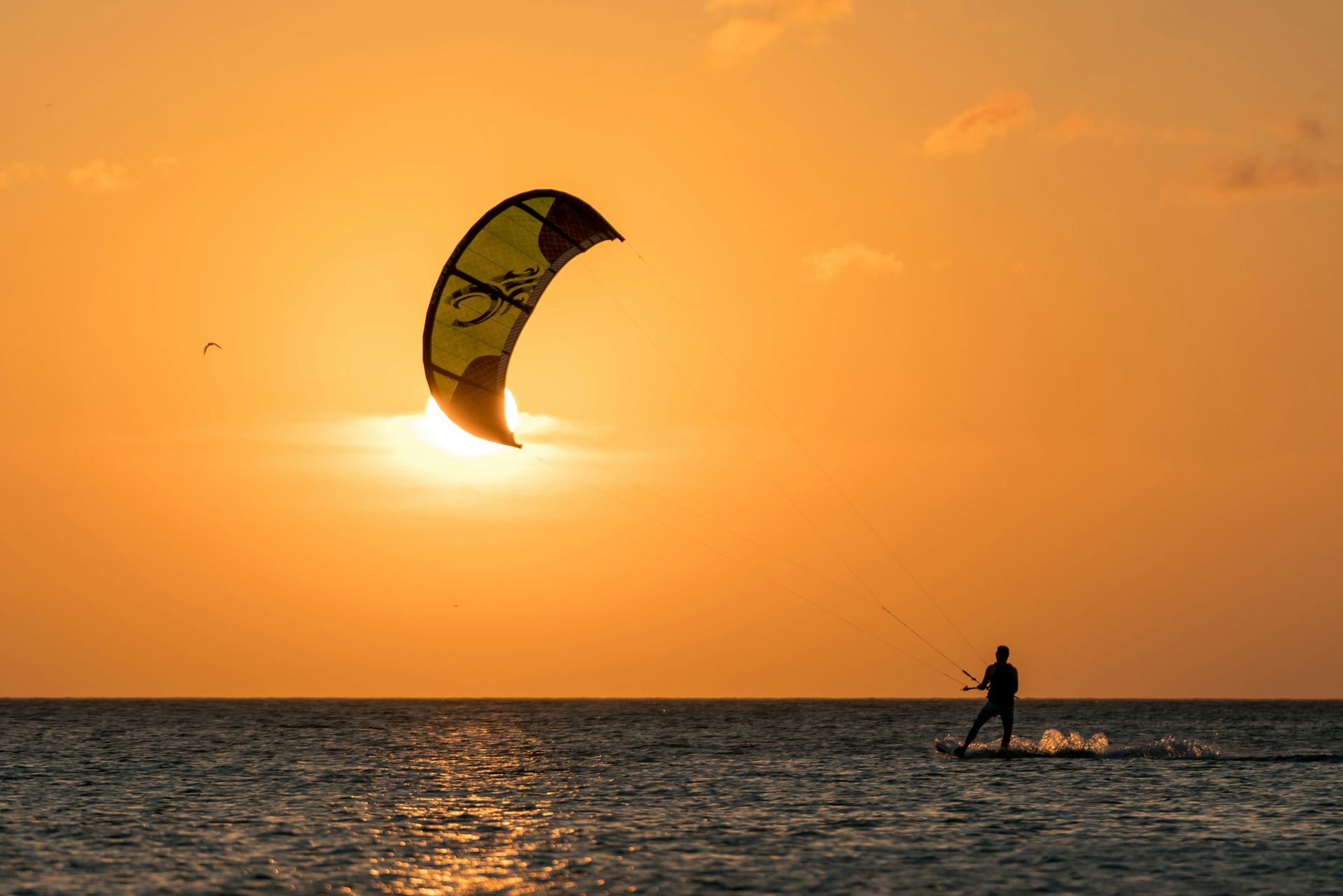
Kiteboarding on Cove Bay gives the island’s near-constant breeze a practical application, turning a weather characteristic into an activity specifically suited to the conditions. Anguilla Watersports operates lessons and equipment rentals from Cove Bay because the bay’s exposure gives it the consistent wind the sport requires. The instruction program serves first-timers and experienced riders alike, giving kiteboarding an entry point accessible to a broader range of visitors. The physical learning curve of kiteboarding is steeper than paddleboarding or snorkeling, but the instruction quality at Cove Bay gives beginners a structured path to the point where the sport’s specific sensation, board skimming across the water surface with the kite pulling from above, becomes accessible within a single lesson.
Anguilla Watersports also rents paddleboards and glass-bottomed kayaks for visitors whose interests run to lower-intensity water experiences. The glass-bottomed kayaks give Cove Bay’s clear water a distinct appeal: paddling over the reef system while looking directly through the kayak floor offers a different vantage on the marine environment’s visual richness, accessible to visitors who prefer not to enter the water. The paddleboard rental provides a quieter mode of access to the bay's calmer sections, and the two activities can easily fill a morning for participants in the same group.
The wind conditions that make Anguilla exceptional for kiteboarding also give the island its specific coastal character. The breeze off the water keeps temperatures comfortable even at the peak of the Caribbean summer, moderates the humidity, making other islands feel oppressive in July and August, and gives the beaches their constant low-level animation of wave action and sound. Kiteboarding is the activity most directly engaging with this defining environmental quality of the island, but every activity on Anguilla takes place in the context of a wind that shapes the experience in ways photographs and videos fail to convey. The Cove Bay location gives first-time kiteboarding students the specific combination of consistent wind and shallow water that makes the learning process safer and more productive than it would be at a more exposed beach.
Steve Adams / Unsplash
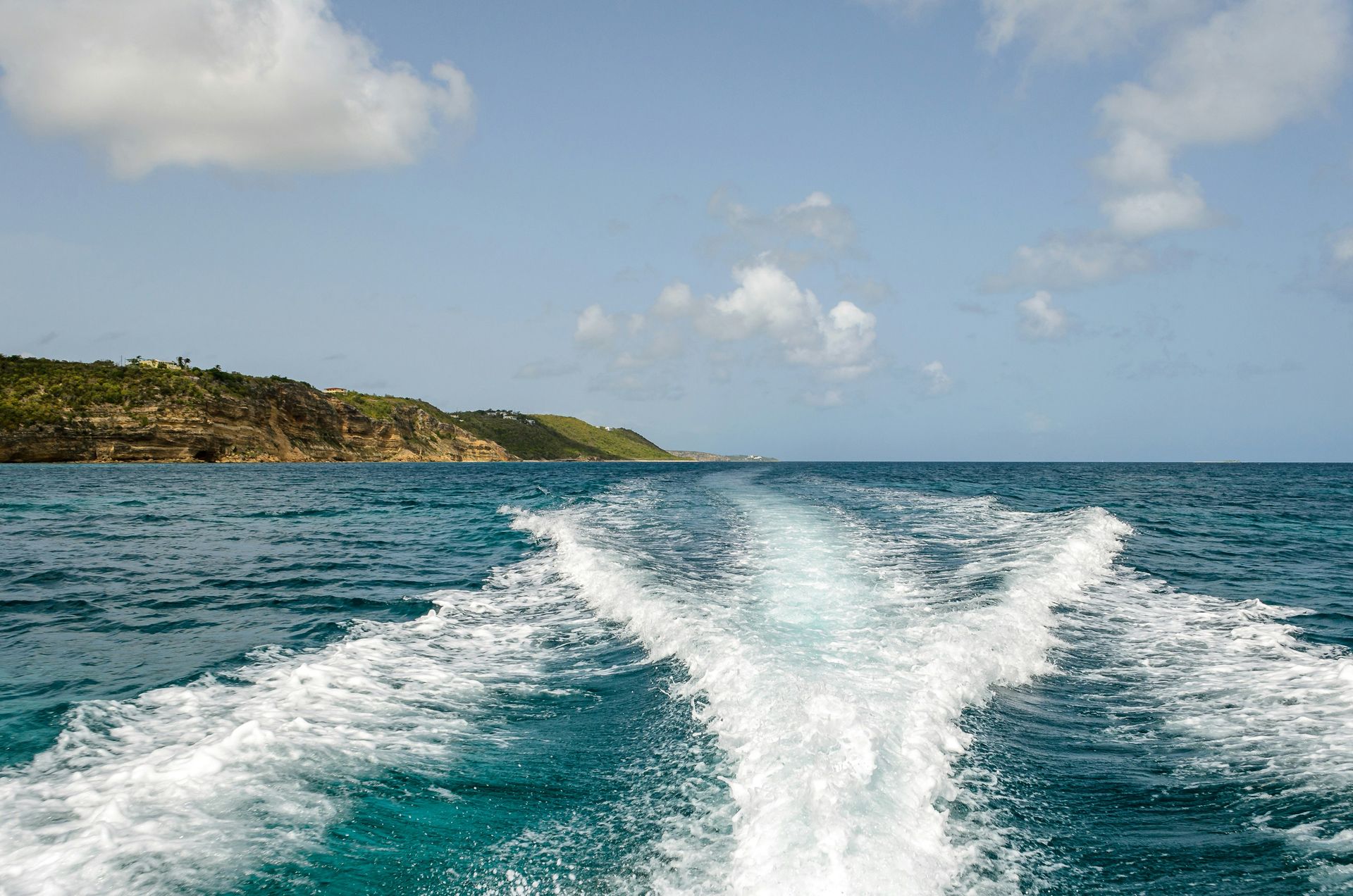
Seven designated marine parks protect the waters surrounding Anguilla, and the conservation framework they provide has ensured the island’s reef systems remain in good health, making diving and snorkeling consistently rewarding. Stoney Bay Marine Park holds the most historically significant underwater site in Anguillan waters: the wreck of El Buen Consejo, an 18th-century Spanish galleon whose submerged remains the Anguillan government has designated as an underwater archaeological preserve. Divers at the site encounter anchors, cannon balls, and religious medallions that have rested on the seabed for three centuries, offering a historical encounter unavailable at any other site in the Eastern Caribbean.
The archaeological preserve designation means the site remains protected from disturbance, and visiting divers observe the artifacts in situ without touching or removing them. The preservation status is what makes the site worth visiting: the cannon balls and anchors visible on the seabed retain their relationship to each other and to the wreck’s overall geometry because the marine park designation has prevented disturbance of the site. El Buen Consejo’s remains are the genuine article in their original positions, which distinguishes the Stoney Bay experience from the sanitized replica wreck dives some Caribbean dive operators offer as a commercial substitute.
The surrounding reef system adds a natural history dimension to the wreck dive, alongside its historical one. The coral growth accumulating on the galleon’s remains over three centuries has turned the wreck into a functioning reef habitat, where the fish and invertebrate populations of the Stoney Bay Marine Park use the iron and wood of the ship as structure, just as they use natural reef formations. The wreck functions simultaneously as a historical artifact and a biological community, and the dive gives both dimensions equal presence. Anguilla’s marine park network supports this quality across the island’s waters, and the Stoney Bay site is its most concentrated expression of how conservation policy and historical preservation can reinforce each other.
David Jones / Flickr (CC BY 2.0)
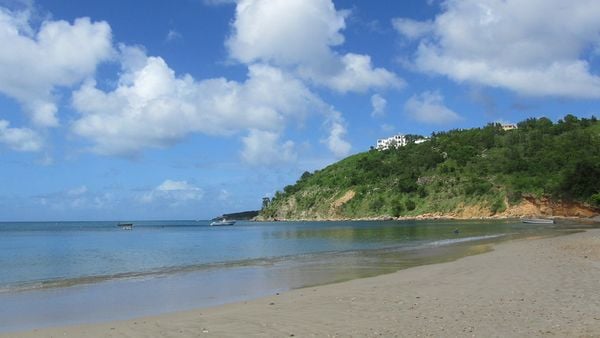
Crocus Hill is Anguilla’s highest point at just over 200 feet, a modest elevation reflecting the island’s flat, coral limestone geography. The road to the summit is steep despite the low total elevation, and the climb delivers panoramic views of Anguilla and the neighboring islands across the water. St. Martin is visible from the summit on clear days, and the relationship between Anguilla’s flat profile and the more mountainous islands surrounding it becomes visually legible from an elevation the beach-level perspective never allows. The source cautions visitors not to let the low total elevation mislead them about the steepness of the ascent.
The Crocus Hill view gives context to the island’s geography that a week of beach visits does not produce independently. Seeing the full outline of Anguilla from above, with the cays offshore and the bays along the coastline visible simultaneously, converts the accumulated ground-level experience of individual beaches and restaurants into a coherent geographic picture. Travelers $TRV who make the Crocus Hill climb mid-trip get the most from the panoramic view because the geography it reveals connects to specific places already visited, not to a map of places not yet encountered.
The view from Crocus Hill also demonstrates the specific character that makes Anguilla different from the high, green volcanic islands many Caribbean travelers associate with the region. The flat, pale limestone landscape stretching to the water on all sides, the absence of forested peaks, and the clarity with which the surrounding sea dominates every sight line give the island a visual identity rooted in its geology. Anguilla is fundamentally a coral island, and Crocus Hill is the place where the geological fact most immediately shapes what the visitor sees. The summit visit takes no more than an hour, gives the island’s geography its fullest visual expression, and costs nothing, which makes it one of the most efficient activities available to any visitor who wants to understand where they are.