
From a rum swizzle at the historic Swizzle Inn to a fried fish sandwich on raisin bread that wins over skeptics with every bite

Mark Harpur / Unsplash
Bermuda’s beaches draw the bulk of the attention, and for good reason, since pink-tinged sand and turquoise water make the island one of the most photographed destinations in the Atlantic. Visitors who never leave the shoreline still come away satisfied, but they also miss a surprising amount of what makes the island distinctive beyond its coastline. A single week spent entirely on the sand overlooks centuries of layered history and local traditions that rarely make it into a typical beach vacation itinerary. Even travelers who plan to spend most of a trip relaxing by the water tend to find that a day or two spent elsewhere adds a dimension the beach alone simply can’t provide on its own.
Bermuda sits outside the Caribbean geographically, yet it shares much of the same colonial and maritime history that shaped islands further south, including a long past shaped by pirates, smugglers, and the rum trade. This shared history gives the island a hinterland worth exploring well beyond its coastline, from abandoned rail corridors to centuries-old forts built to defend against threats that no longer exist. Visitors willing to trade an afternoon on the sand for a walk through this history tend to leave with a far fuller picture of what makes Bermuda more than just a pretty beach. This fuller picture also helps explain why so many visitors return to the island repeatedly, since a single trip rarely covers the fort tours, food traditions, and water excursions that round out what Bermuda genuinely has to offer beyond its shoreline.
The activities below appear in Lonely Planet and cover historic sites, food traditions, and outdoor experiences recommended across the island, each chosen to complement a standard beach day rather than replace it entirely.
Credit: Go to Bermuda
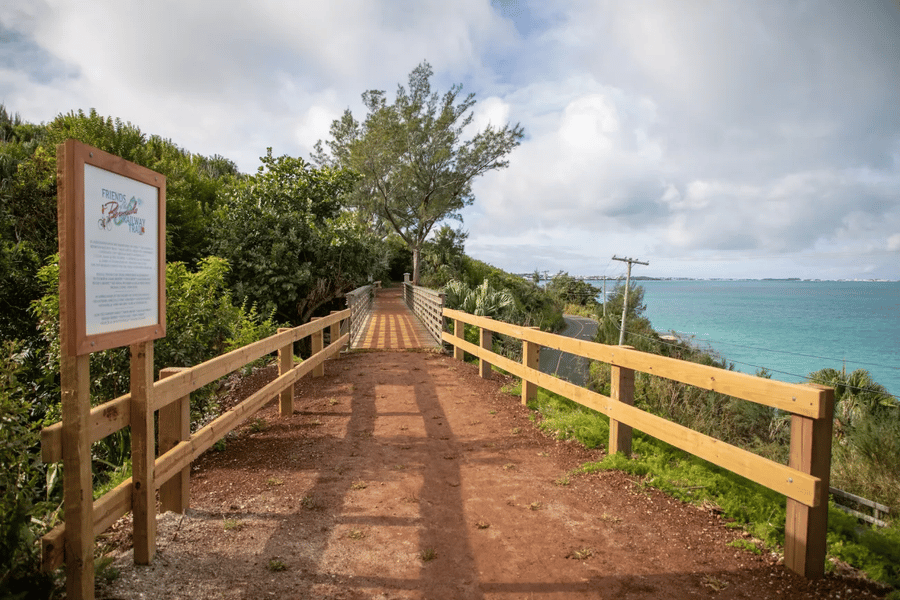
The Bermuda Railway operated as the island’s primary means of transportation from 1931 to 1948, a relatively brief run that ended once cars became widely available, rendering the rail line obsolete. Instead of disappearing entirely, the old corridor found new life as the Railway Trail, a walking path that now stretches from one end of the island to the other. The transformation from a working railway to a recreational trail gives visitors a chance to trace the same route Bermudians once relied on for daily transportation, all while taking in views that the original passengers likely never had time to appreciate.
Of the railway’s original 22 miles, 18 remain accessible to hikers today, with roads or private development absorbing the missing sections over the decades since the line closed. Walking the accessible stretches means passing through abandoned railbeds now overgrown with vegetation, which open unexpectedly onto undisturbed stretches of rocky coastline and sweeping views of the horizon. This contrast between the overgrown corridor and the open coastal view gives the trail a rhythm unlike that of a typical beach walk, alternating between shaded, enclosed sections and wide-open water views within the same outing.
Visitors can access the trail from either the Somerset end or the St George’s end, depending on which part of the island they want to explore first. Bringing a water bottle matters more than it might seem during Bermuda’s hot summer months, since much of the trail offers little shade once it moves away from the overgrown railbed sections. Travelers $TRV interested in the trail’s history beyond its scenery can book an informative walking tour through Bermuda Lectures & Tours, which focuses specifically on the railway’s operational history and its role in shaping how Bermudians once got around the island.
Few activities on the island combine exercise, history, and scenery as efficiently as a walk along the Railway Trail. A single afternoon or even a short stretch, reveals more about the island’s 20th-century transportation history than most visitors expect to encounter outside a dedicated museum.

Credit: Visit Bermuda
Goslings holds the distinction of being Bermuda’s official rum, and it forms the base of both of the island’s most recognizable cocktails. The Dark and Stormy combines Goslings rum with ginger beer and lime for a drink that has become closely associated with Bermuda internationally, while the rum swizzle mixes three different types of Goslings rum with fruit juices into a punch strong enough to earn its reputation as the island’s unofficial national drink.
Trying at least one of these cocktails during a visit counts as close to mandatory, since both drinks appear on menus at nearly every pub and hotel bar across the island. The Swizzle Inn, located near Castle Harbour, has built its entire identity around the drink that gave it its name, serving as a historic gathering spot for both locals and visitors looking to sample a proper rum swizzle in a setting that matches the drink’s reputation.
Beyond the Swizzle Inn, Bermuda offers plenty of other settings for sampling rum-based cocktails with a view attached. Beachside bars at coves such as Tobacco Bay and Achilles Bay let visitors sip a Dark and Stormy with sand underfoot, while waterfront restaurants such as 1609 offer a slightly more polished setting for the same drinks. Choosing between a casual beach bar and a proper restaurant often comes down to whether a visitor wants the cocktail as the main event or as an accompaniment to a full meal.
Rum’s central place in Bermudian culture connects directly back to the island’s colonial and maritime past, when rum trading and distilling shaped the local economy alongside piracy and smuggling. Sampling a Dark and Stormy or a rum swizzle today means participating in a tradition that predates most of the hotels and restaurants that currently serve these drinks, lending a simple cocktail order a surprising amount of historical weight. Few souvenirs capture that history as directly as a properly made rum swizzle, since the drink itself has barely changed even as the venues serving it have multiplied across the island.
Ashley kaye / Unsplash
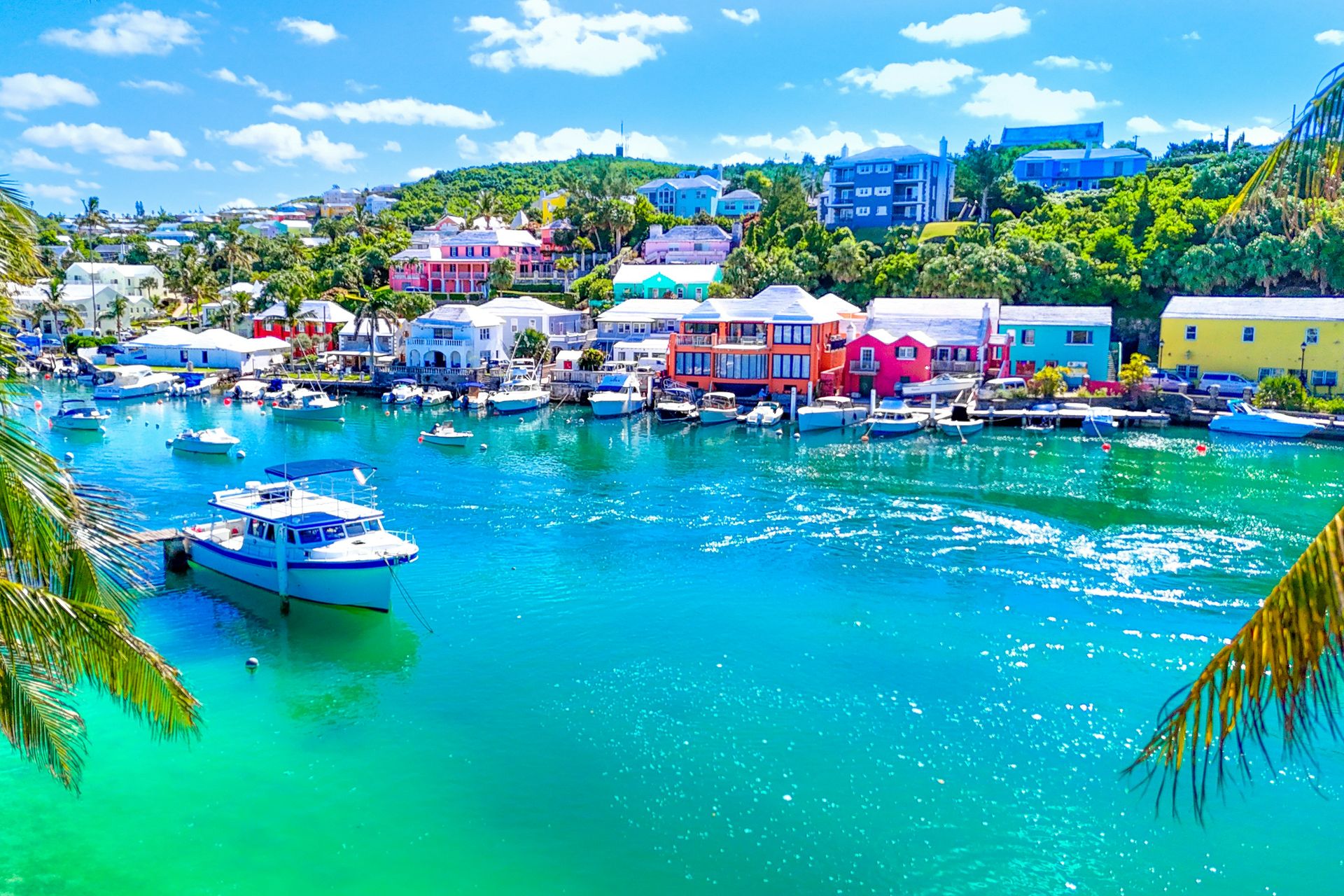
Getting out onto Bermuda’s water offers a perspective on the island that’s genuinely impossible to replicate from the shore, since the jagged coastline and overall scale of the island only become fully visible once a visitor has put some distance between themselves and land. Summer visitors often join informal “raft-up” regattas, where locals tie boats together for an impromptu gathering fueled by homemade rum swizzles, while cooler months bring the option of an offseason cruise in Bermuda’s comparatively mild winter temperatures. Neither season locks visitors out of getting on the water, which makes boating one of the few activities on this list that genuinely works year-round.
The view from a boat carries a historical dimension that adds weight to what would otherwise be a simple pleasure cruise. Pirates, smugglers, and Royal Navy sailors sent to pursue them once viewed this same jagged coastline from the water, and modern visitors cruising the same routes are, in a sense, tracing the sightlines of the very kind of maritime cat-and-mouse that shaped much of Bermuda’s early history.
Several practical options exist for visitors who want to get out on the water without owning a boat themselves. The catamaran Good Vibrations offers guided cruises for visitors who prefer a structured experience, while KS WaterSports rents boats and Jet Skis for those who want more control over their route. Kayaking and paddleboarding around the island’s bays provide quieter, slower-paced alternatives for visitors who want to explore the coastline at their own speed instead of from the deck of a larger vessel.
Budget-conscious visitors can rely on Bermuda’s ferry system, which offers a genuinely affordable way to see the island’s perimeter from the water without booking a dedicated tour. A ferry ride costs a fraction of a private charter and still delivers the same essential experience: watching Bermuda’s coastline unfold from open water rather than from the beach itself, making it one of the best values available to visitors interested in seeing the island from a different angle.

Vaibhav Raina / Unsplash
A Bermuda fish sandwich bears little resemblance to a standard fish sandwich found elsewhere, starting with the bread itself. Instead of a bun, the sandwich uses slices of raisin bread, pairing savory fried fish with slightly sweet bread in a way that catches most first-time visitors by surprise. The fish itself typically comes from the day’s fresh catch, usually a white, flaky variety such as snapper, wahoo, or mahi-mahi, fried and stacked between the raisin bread slices along with a generous helping of tartar sauce and hot sauce.
Locals order the sandwich a specific way, asking for it “with the works,” which typically means lettuce, tomato, and onion added to the sandwich along with extra tartar sauce served on the side. This layering of toppings turns what could be a simple fried fish sandwich into a fuller meal, and the extra sauce on the side lets diners control exactly how much extra flavor they want beyond what’s already built into the sandwich.
The unusual pairing of sweet raisin bread with savory fried fish tends to draw skepticism from visitors before they’ve actually tried it, and just as consistently wins converts once they have. Sweetness from the bread balances the acidity of the tartar sauce and the heat of the hot sauce, creating a flavor combination that makes more sense with each bite than on paper.
Finding a quality fish sandwich doesn’t require searching out an upscale restaurant, since some of the best versions come from unassuming, hole-in-the-wall cafes scattered around the island. Art Mel’s Spicy Dicy in Hamilton has built a loyal following for its version of the sandwich, and SeaSide Grill on the island’s north shore offers another well-regarded option for visitors exploring that part of Bermuda. Eating at least one Bermuda fish sandwich during a visit counts as close to a rite of passage, regardless of how skeptical a first-time visitor might feel about raisin bread paired with fried fish.
Credit: Go to Bermuda
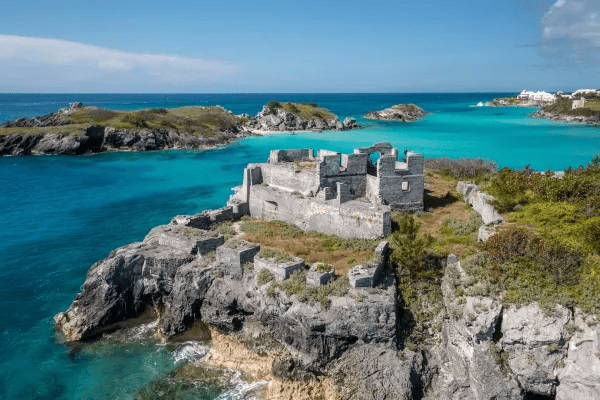
Bermuda’s position in the middle of the Atlantic Ocean made it a strategically valuable location for centuries, and the island’s numerous fortifications reflect just how seriously that strategic value was once taken. Spanish sailors found the island uninhabited when they first arrived, and permanent settlement began in the early 1600s, a period that set off centuries of construction aimed at protecting Bermuda’s land and people from various maritime threats. This construction boom left behind a density of fortifications that few comparable-sized islands can match today.
Few of those original military threats remain relevant today, but the forts themselves have survived as some of the clearest physical connections to Bermuda’s earliest colonial history. Visitors don’t need to travel far to encounter one, since fortifications dot the entire island instead of concentrating in a single area. Fort Scaur, Fort Hamilton, and Fort St Catherine each offer a different vantage point on the island’s defensive history, while the Royal Naval Dockyard stands out for its sheer scale compared with the smaller forts elsewhere on the island.
Cost and accessibility vary depending on which fort a visitor chooses to explore. Walking around the grounds of most forts costs nothing, making them an easy addition to a day that might otherwise center on the beach or a restaurant reservation. On-site museums, including the one at Fort St Catherine, charge a small entry fee for visitors who want more context than the fort’s architecture alone provides.
Timing a fort visit around the weather matters more in summer than in other seasons, since many of these sites offer limited shade and can become uncomfortably hot by midday. Visiting in the early morning during summer months lets visitors explore comfortably before the heat becomes a real obstacle, and the softer morning light tends to flatter the stone architecture in a way that midday sun typically doesn’t. Pairing an early fort visit with a beach afternoon once the heat sets in lets visitors cover both history and relaxation within a single well-paced day.

Credit: Bermuda.com
Just beneath the surface of Bermuda’s clear blue water, shallow coral reefs support a genuinely diverse cast of marine life, from parrotfish and damselfish to soft corals and the occasional visiting turtle. Visitors don’t need extensive diving experience to see any of this firsthand, since renting snorkeling gear from a hotel and heading to Church Bay delivers quality snorkeling directly from the beach without requiring a boat trip at all. This level of accessibility makes the reef one of the easiest natural attractions on the island to experience on short notice.
Visitors looking for something more unusual than standard snorkeling can try Hartley’s Helmet Diving, which lets participants walk along the seafloor, roughly two miles offshore, while wearing a helmet connected to a pumped-in air supply. The experience offers underwater access to visitors who might not feel comfortable with traditional scuba equipment, since the helmet setup requires no specialized certification or breathing technique beyond normal walking and breathing.
Scuba diving remains popular around Bermuda’s shallower reefs and shipwrecks, and numerous operators across the island can arrange dive trips suited to different experience levels. Dive Bermuda, based at Grotto Bay in the island’s north, ranks among the island’s top dive centers and runs trips to specific wreck sites, including the Pelinaion, a Greek tramp steamer that ran aground on Bermuda’s rocks in 1939 and has since become a popular dive destination for visitors interested in maritime history alongside marine life.
Visitors who would rather avoid getting their hair wet still have options for taking in Bermuda’s underwater scenery. The water’s exceptional clarity in many locations means visitors can see straight to the bottom simply by walking into the shallows, no snorkel or dive gear required. This accessibility makes Bermuda’s reefs and wrecks appealing across a genuinely wide range of comfort levels, from certified divers chasing a specific shipwreck to casual visitors content to peer into clear water from the shoreline itself.
Kyle Martin / Unsplash
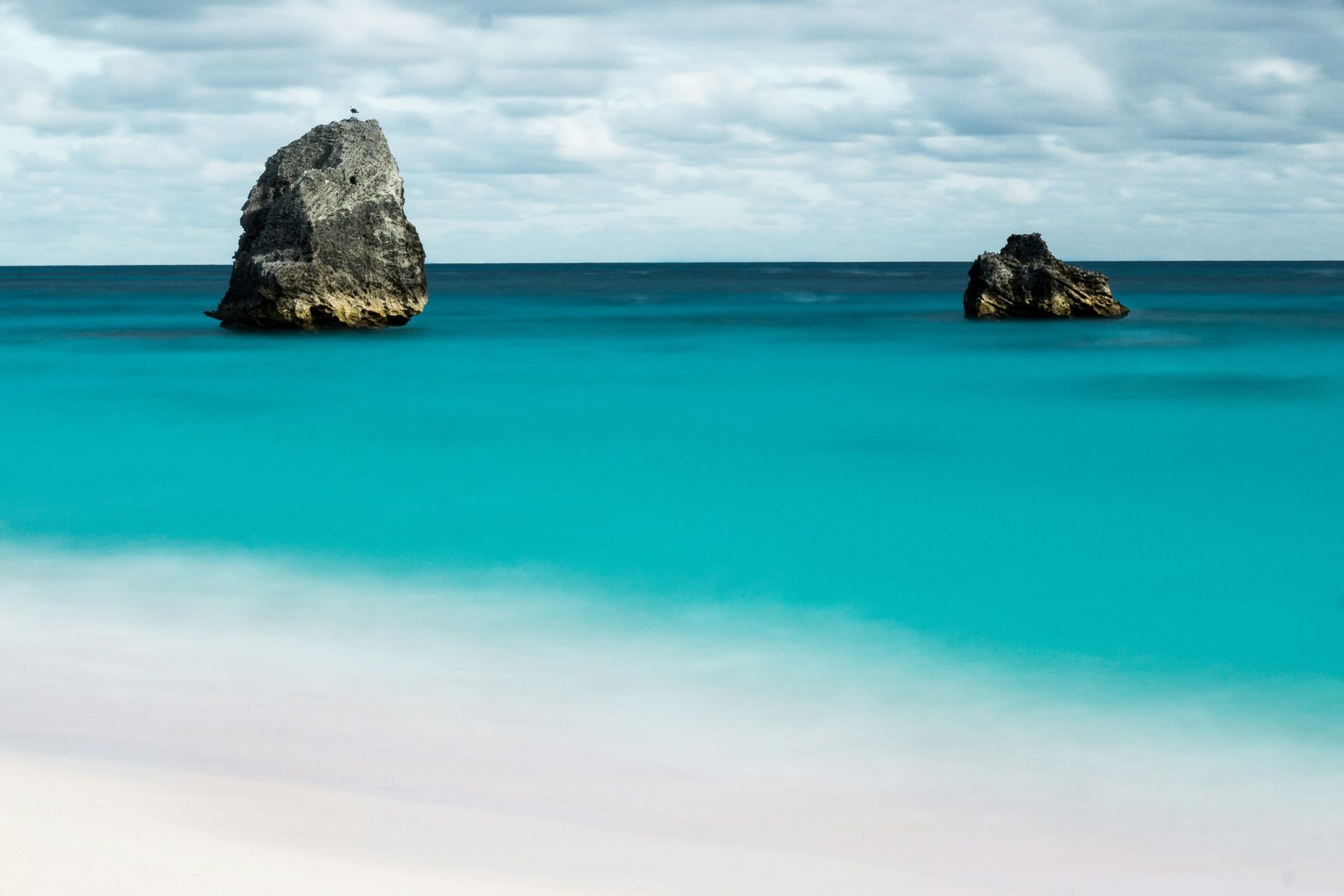
More than 30 beaches line Bermuda’s coastline, a striking number given that the entire island spans only about 64 miles of shore. This density means fine white sand, often flecked with distinctive rosy specks of coral, sits within easy reach no matter where a visitor chooses to stay, removing one of the more common logistical headaches that comes with planning a beach-focused vacation elsewhere.
A drive along the South Shore delivers some of the island’s most recognizable beaches, including Warwick Long Bay and Horseshoe Bay, both of which regularly appear in photographs used to promote Bermuda as a destination. These beaches earn their postcard reputation honestly, combining calm, clear water with the kind of pink-tinged sand that has become closely associated with Bermuda specifically, setting the island apart from beach destinations elsewhere in the Atlantic and Caribbean.
Visitors seeking a quieter alternative to the South Shore’s more popular beaches have options as well. Cooper’s Island Nature Reserve offers a noticeably more local scene, with fewer beach chairs and considerably more solitude than the island’s headline beaches typically provide. The trade-off for that solitude usually means fewer amenities on-site, but visitors willing to accept that trade-off tend to come away with a quieter, less commercialized beach experience than Warwick Long Bay or Horseshoe Bay can offer during peak season.
Choosing which beach to visit on a given day often comes down to whether a visitor wants company or solitude, since Bermuda’s beach scene ranges from bustling, photogenic stretches of sand to isolated coves that see only a handful of visitors on a typical afternoon. With more than 30 options scattered around the island, most visitors can find a beach suited to whatever mood they’re in without traveling far from wherever they happen to be staying. This pairing of abundance and variety is what ultimately separates Bermuda’s beach scene from destinations that offer a single famous stretch of sand and little else beyond it.