
The best things to do in Fukuoka, Japan
From yatai stalls where eight diners share a charcoal grill to a 41-meter bronze reclining Buddha that dwarfs any statue in Kamakura
Syuichi Shiina / Unsplash
Fukuoka is the city that travelers discover after they’ve already been to Tokyo, Kyoto, and Osaka, and the discovery tends to produce a specific kind of affection: the realization that a major Japanese city can be navigated and inhabited without the sensory intensity that the country’s more famous urban destinations require as the price of their complexity. The subway from Fukuoka Airport to downtown takes six minutes. The streets are flat and walkable. The crowd pressure is manageable. The food is extraordinary. These qualities give Fukuoka an accessibility that the headline cities lack, and they give the visitor who finds it a Japanese city experience whose specific pleasures are distinct from the planned cultural tourism of Kyoto and the metropolitan density of Tokyo.
The city’s character is built around a dining culture whose most distinctive single expression is the yatai street food stall: small, intimate, charcoal-heated, designed for eight to ten people maximum, operating under a no-phones policy that enforces the social interaction whose absence makes the tourist district dining experience feel transactional. Fukuoka has approximately 100 of these stalls, and sitting at one after dark is the most specifically Fukuokan experience the city offers. But beyond the yatai, the city rewards the visitor who ventures into its 1100-year-old shrines, its castle-moat parks, its oldest shopping arcade, and its one monumental statue whose scale no description adequately prepares the viewer for.
The 8 activities below appear in Lonely Planet and cover Fukuoka’s most rewarding experiences, from street food to sacred sites. The city’s directness, with a six-minute airport-to-downtown commute, flat, walkable streets, and famously welcoming residents, means the experiences below are all achievable without the navigation anxiety that larger Japanese cities sometimes impose on first-time visitors.
1. Yatai stalls give Fukuoka its most intimate dining
-1920x1280.jpg)
Nichika Sakurai / Unsplash
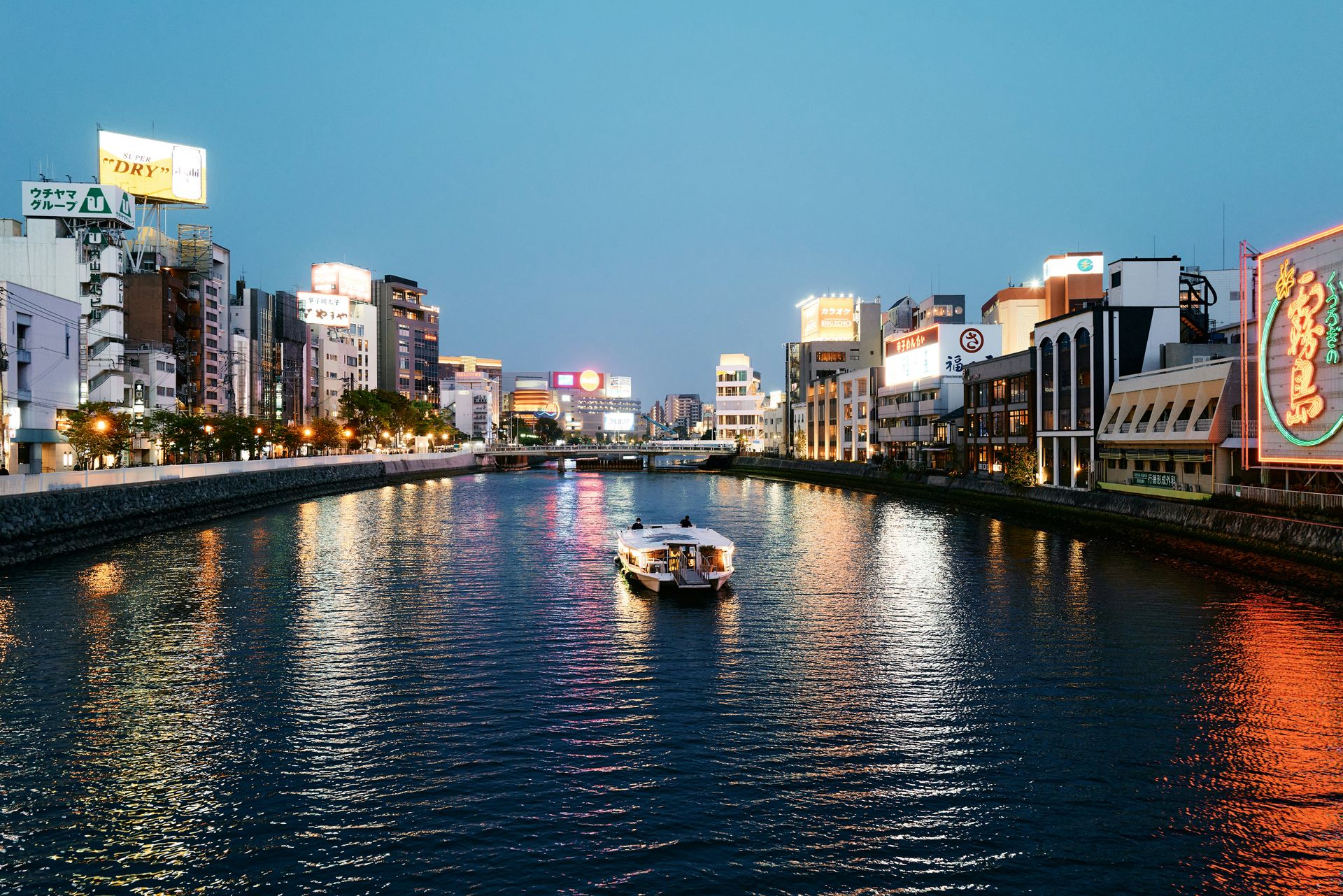
Fukuoka’s approximately 100 independently operated yatai street food stalls give the city its most specifically local dining format: small charcoal-grilled food stalls that accommodate eight to ten people at a time, concentrated in the Nakasu, Tenjin, and Nagahama areas, and operate under a social contract whose informality and enforced phone-free atmosphere make them genuinely different from any other form of restaurant dining in Japan. The most visited concentration for tourists is the Yatai-mura night market along the Nakasu River, though the Lonely Planet article notes that the riverfront location attracts primarily other visitors, not locals, and that the more solitary stalls scattered across the city give a better chance of dining alongside Fukuoka residents.
The yatai’s intimacy is structural: eight to ten people around a single grill creates a social proximity specific to a format where the stranger next to you becomes a dinner companion by the nature of the seating arrangement, and the prohibition on mobile phones that many stalls enforce gives the social interaction its most deliberate possible protection against the device-mediated distraction that has made communal dining in other contexts a series of parallel solitary experiences. The friendly banter and the sizzle of the grill give the yatai its most characteristically Fukuokan atmosphere.
The practical considerations are specific: cash is essential since not all stalls accept cards, peak hours require waiting, and once you finish eating and drinking, pay and free the seat for the next customer. The meal-ordering tip from the article, “osusume onegaishimasu,” to ask for the chef’s recommendation, gives the visitor without Japanese-language skills a specific phrase whose use signals both cultural awareness and a willingness to trust the cook’s judgment. The yatai culture is specifically Fukuokan: the city is home to the highest concentration of yatai in Japan, and the stalls’ persistence here despite the sanitation and urban planning pressures that eliminated them from Tokyo and Osaka gives Fukuoka’s food culture a specific living tradition whose preservation reflects the city’s character as a place that values the informal and the communal.
2. Hakata Kawabata-dori has 130 years of Showa-era shopping
Soramimi / Wikimedia Commons (CC BY-SA 4.0)
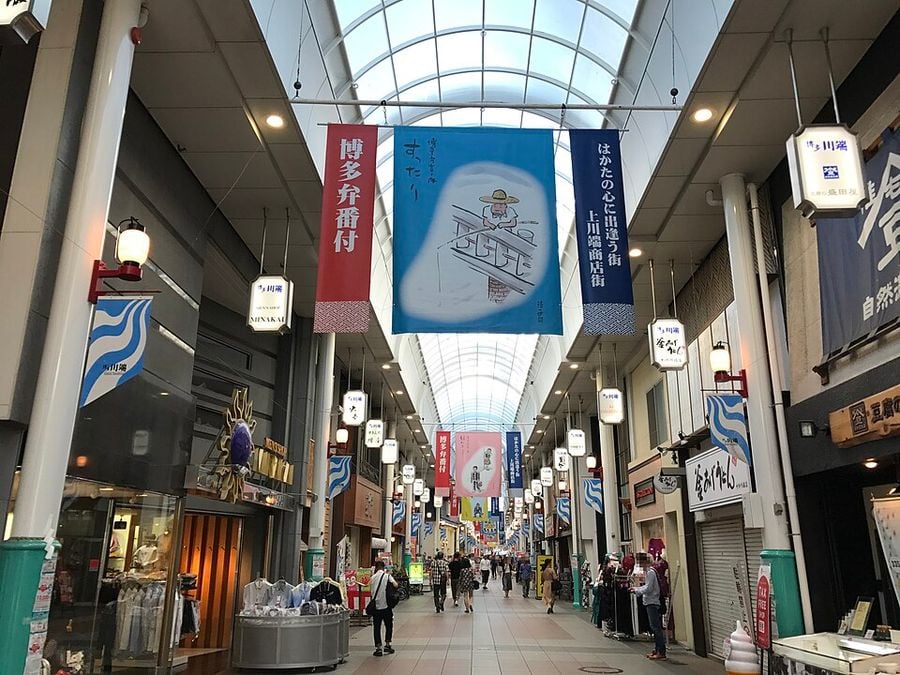
Hakata Kawabata-dōri is Fukuoka’s oldest shopping street, a covered arcade stretching more than 400 meters and containing over 100 local stores whose post-war Shōwa-era character gives the shopping district a historical atmosphere specific to mid-20th-century Japanese commercial culture. The arcade’s 130-plus years of history give it a temporal depth that the modern retail centers and the international brands concentrated in Canal City do not approach, and the mix of clothing stores, local wares, fresh produce markets, and restaurants gives the street a variety of goods whose range reflects a neighborhood commercial district, not a curated tourist retail experience.
The specialty red bean soup with grilled mochi cakes at Kawabata Zenzai Hiroba gives the food stop its most specifically traditional dessert experience, available on weekends and public holidays, and the Yamakasa festival float displayed inside the arcade gives the cultural program a permanent exhibition of the giant decorative structure whose annual July festival is one of Fukuoka’s most celebrated traditional events. The float’s scale, visible year-round outside the festival season, gives the visitor who cannot be in Fukuoka in July the material evidence of the festival’s ceremonial ambition.
The Lonely Planet article’s planning tip gives the visit its most practical single piece of advice: arriving after midday ensures that most shops are open, since late-morning openings are the norm on the street. The arcade’s covered format gives the Kawabata-dōri its weather independence, making it a destination that rewards browsing at a pace dictated by each stall’s interest, not a fixed schedule. The Hakata Gion Yamakasa Festival float, whose replica is on display inside the arcade, gives the visitor an introduction to Fukuoka’s most spectacular annual event: the July festival’s towering floats, some reaching 15 meters in height, are decorated with elaborate figures from Japanese mythology and history and are carried through the streets at a run by teams of male participants. The arcade display provides cultural context for the float’s scale and artistry in a setting where the detail is accessible year-round, without the festival crowd.
3. Dazaifu Tenman-gu Shrine honors the deity of learning
Nichika Sakurai / Unsplash
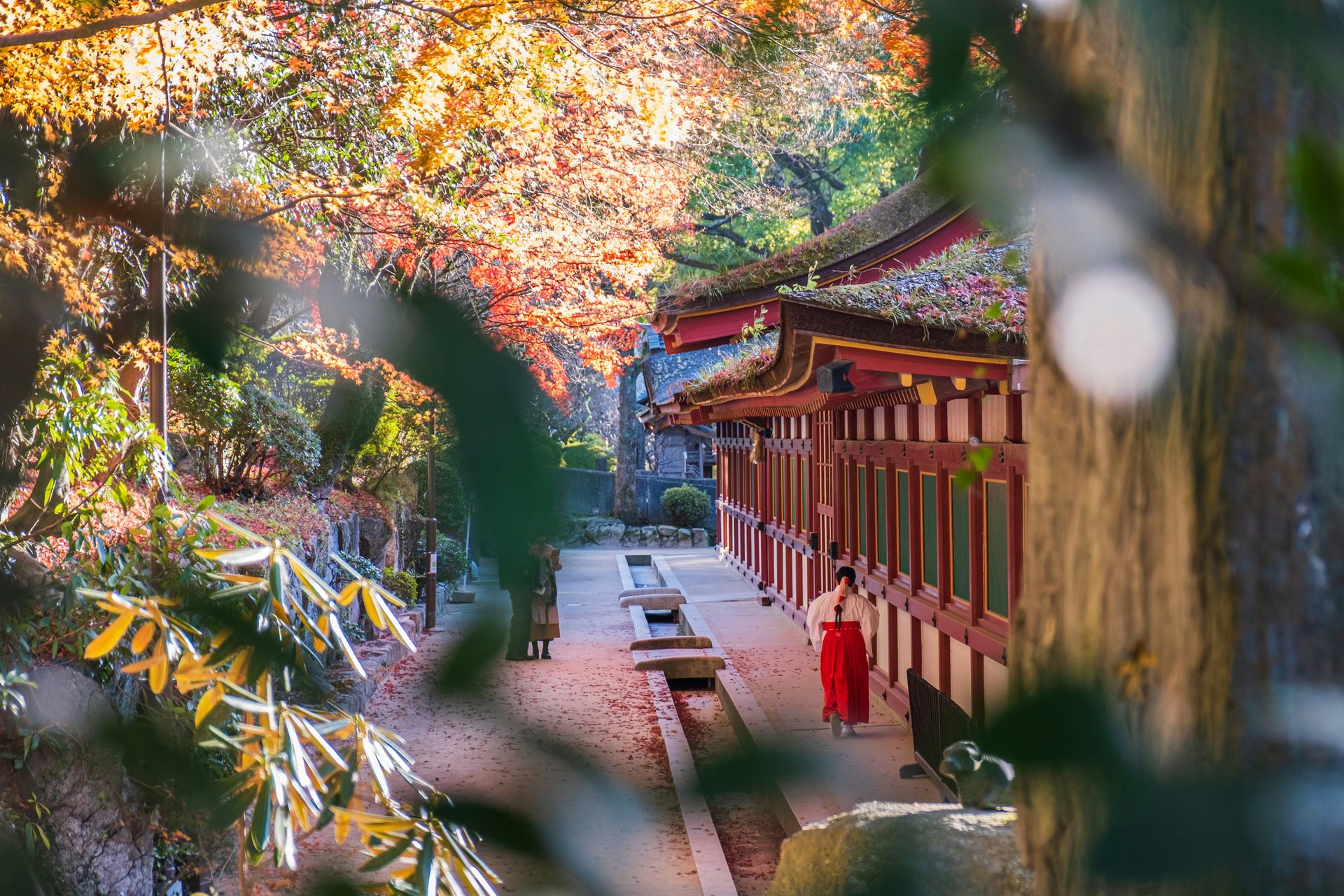
Dazaifu Tenman-gū is one of the most important Shinto shrines in Japan, dedicated to the ninth-century scholar and poet Sugawara Michizane, who is enshrined here as Tenjin, the deity of learning, culture, and the arts. The shrine’s status as one of the most significant among approximately 12,000 Tenjin shrines across Japan gives it a religious precedence whose scale reflects Sugawara’s cultural importance in the Japanese classical tradition: a scholar wrongly exiled who became a god, worshipped across the country in a network of shrines whose reach gives the deification its most geographically distributed devotional expression.
The students who visit during entrance exam season, seeking Tenjin’s divine assistance for their academic results, give the shrine its most visibly devoted human program: the ema wooden prayer tablets hung at the shrine carry wishes that span from elementary school entrance to graduate school qualification, and the concentration of exam-season visitors gives the shrine a social atmosphere specific to the educational anxiety that structures Japanese academic life. The umegaemochi, the traditional sweet sold at the shrine, whose crispy rice-cake exterior and sweetened red-bean paste interior are imprinted with a plum-blossom crest, gives the food program its most specifically Dazaifu culinary souvenir.
The 6,000 plum trees on the shrine grounds give the late winter and early spring visit its most spectacular natural program: the mass flowering draws the crowds that the cherry blossom season’s more famous display receives elsewhere in Japan, and the plum blossom’s specific significance to Sugawara, who is said to have loved the flower above all others, gives the seasonal display a narrative connection to the deity whose shrine the trees surround. The shrine is approximately 30 minutes by public transport from central Fukuoka. The approach avenue to the shrine is lined with shops selling umegaemochi, the traditional rice cake sweet, and other souvenir foods whose concentration along the pedestrian approach gives the shrine visit its most specifically commercial prelude. The Dazaifu area around the shrine also includes the Kyushu National Museum, whose permanent collection of artifacts from Asian cultural exchange provides a complementary museum program for the full Dazaifu day trip.
4. Fukuoka Tower gives the city its best panoramic views
Vien Dinh / Unsplash
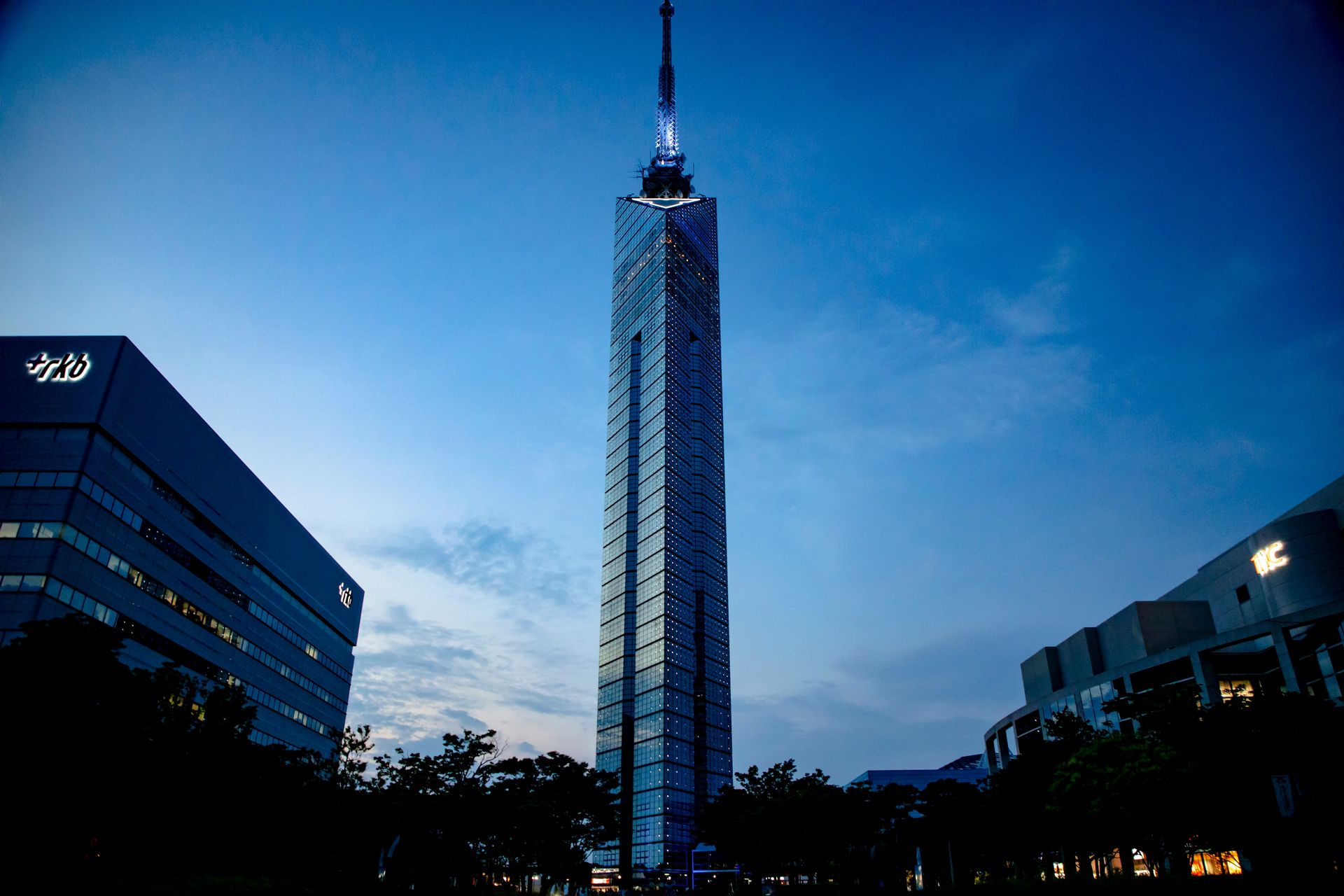
Fukuoka Tower gives the city skyline its most formal and most elevated single viewing platform: a 234-meter tower on the seafront whose designation as the tallest seaside tower in Japan gives the observation deck at 123 meters a combined view of the city, the mountains behind it, and Hakata Bay in front, whose panoramic scope the inland viewpoints cannot replicate in the same terms. The tower’s mirrored facade gives the nighttime visit its most distinctive visual character: the seasonal illumination displays reflected across the glass surface create an exterior spectacle specific to an after-dark arrival, and the observation deck’s view of the twinkling city nightscape offers the evening visit its most visually rewarding single experience.
Nishi Park gives the budget-conscious visitor the most impressive free alternative to the tower: the park’s elevation above the bay gives a city skyline and Hakata Bay view whose quality approaches the tower’s paid observation experience, and the 1,300 cherry trees whose spring bloom makes the park one of Fukuoka’s most visited seasonal destinations give the springtime visit a foreground whose color and density make the skyline view its most specifically photogenic version of the year. The park’s grounding in local daily life, where residents use it as a regular recreational space, gives the visitor who comes on a weekday morning a park experience whose local character the tourist-destination viewpoints do not provide.
The rooftop observation terrace at Hakata Station and the ACROS Fukuoka Step Garden, whose 50,000 plants cover a 14-story staircase of terraces open to the public, give the city two additional free elevated spaces whose specific characters, a transit hub rooftop and an architectural botanical garden, give the Fukuoka viewpoint program its most diverse range without any admission cost. The ACROS Step Garden’s 50,000-plant ecological staircase gives the viewpoint visit its most botanically active dimension: the cultivated hillside that ascends 14 floors above Tenjin provides the building’s exterior with a biological surface whose seasonal variation offers the regular visitor a gradually changing plant community across the months.
5. Hakata ramen anchors Fukuoka’s regional food culture
Diego Lozano / Unsplash
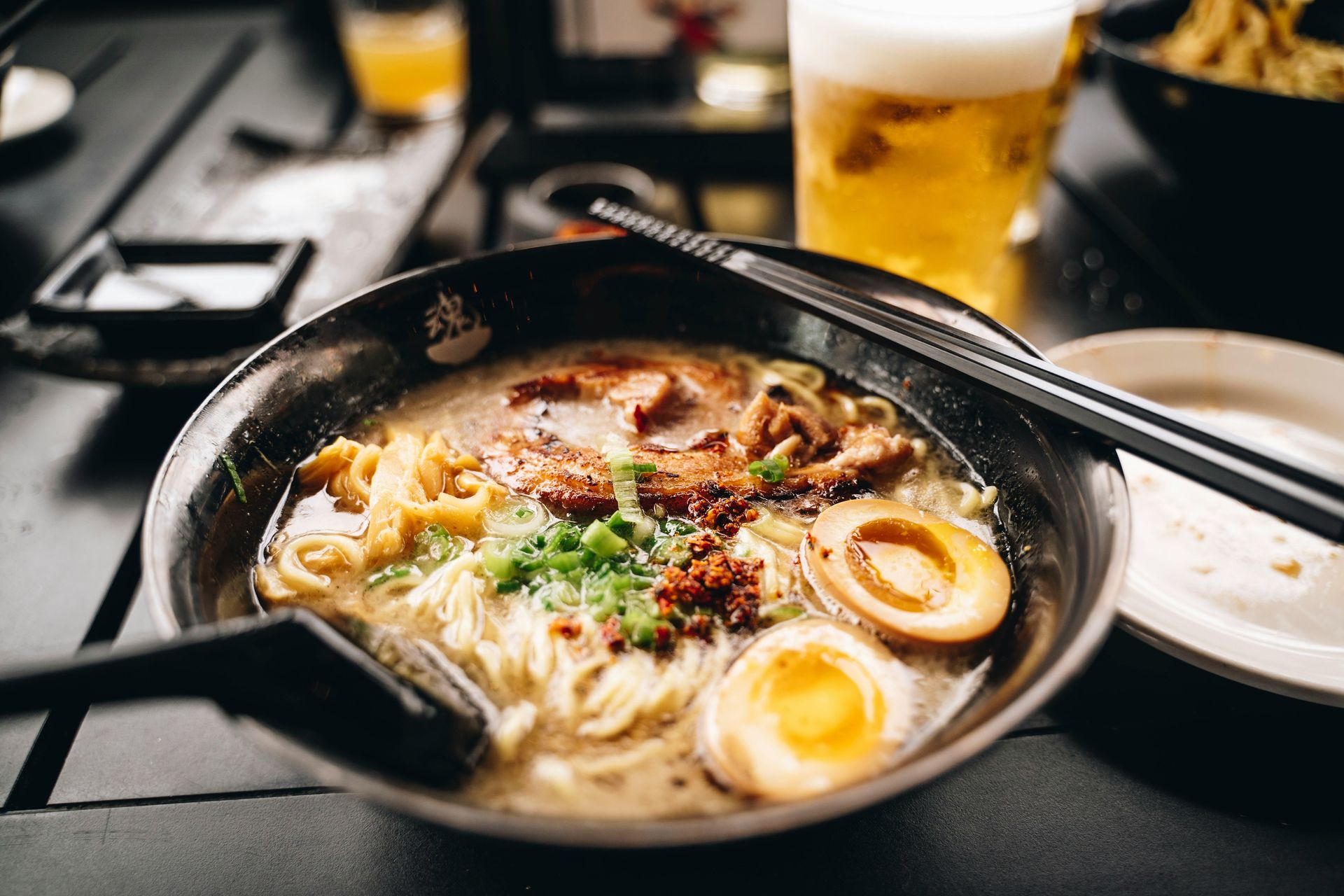
Hakata ramen is Fukuoka’s most famous single dish: a tonkotsu pork-bone broth ramen whose thin noodles and rich, creamy soup give the Fukuoka ramen style a distinct character, distinct from the shoyu and miso ramen of the northern regions. The Ichiran ramen chain, which originated in Fukuoka and has expanded internationally, gives the visitor an experience specific to the brand’s ordering format: a printed sheet with English translations whose circled selections customize the soup richness, noodle firmness, and toppings, followed by counter seating with partitions between each customer and the ramen delivered through a bamboo curtain by a server whose face remains hidden. The format’s specific design for solitary eating without social obligation gives it a specifically Japanese approach to the individual dining experience.
The mentaiko, Fukuoka’s spicy cod roe, whose bright orange color and intense flavor give it a specific identity as the city’s most recognizable food product after ramen, appears across the city’s food culture in a range of formats from the simple topping on rice to the elaborate specialty dish. The motsunabe, a communal hot pot of beef or pork intestine with garlic chives, cabbage, and other vegetables in a soy or miso broth, gives the group dining program its most specifically Fukuokan shared cooking experience, and the amaō strawberries, whose large size and juice content give them a reputation as Japan’s finest strawberry variety, give the local produce program its most celebrated agricultural product.
The Ming food hall on the first floor of Hakata Station offers the departing visitor the most convenient single-stop for edible souvenirs: the dedicated regional specialty section, whose instant Hakata ramen packs, amaō strawberry sweets, and mentaiko products give Fukuoka food culture its most portable formats for carrying home. The Ichiran ramen chain’s original Fukuoka location gives the franchise visitor the specific experience of eating at the concept’s birthplace, and the partitioned counter seats, whose design the chain has replicated globally, give the eating format its most conceptually pure original form in the city where it was invented.
6. Ohori Park holds a local window into Fukuoka's daily life
Winged Jedi / Unsplash
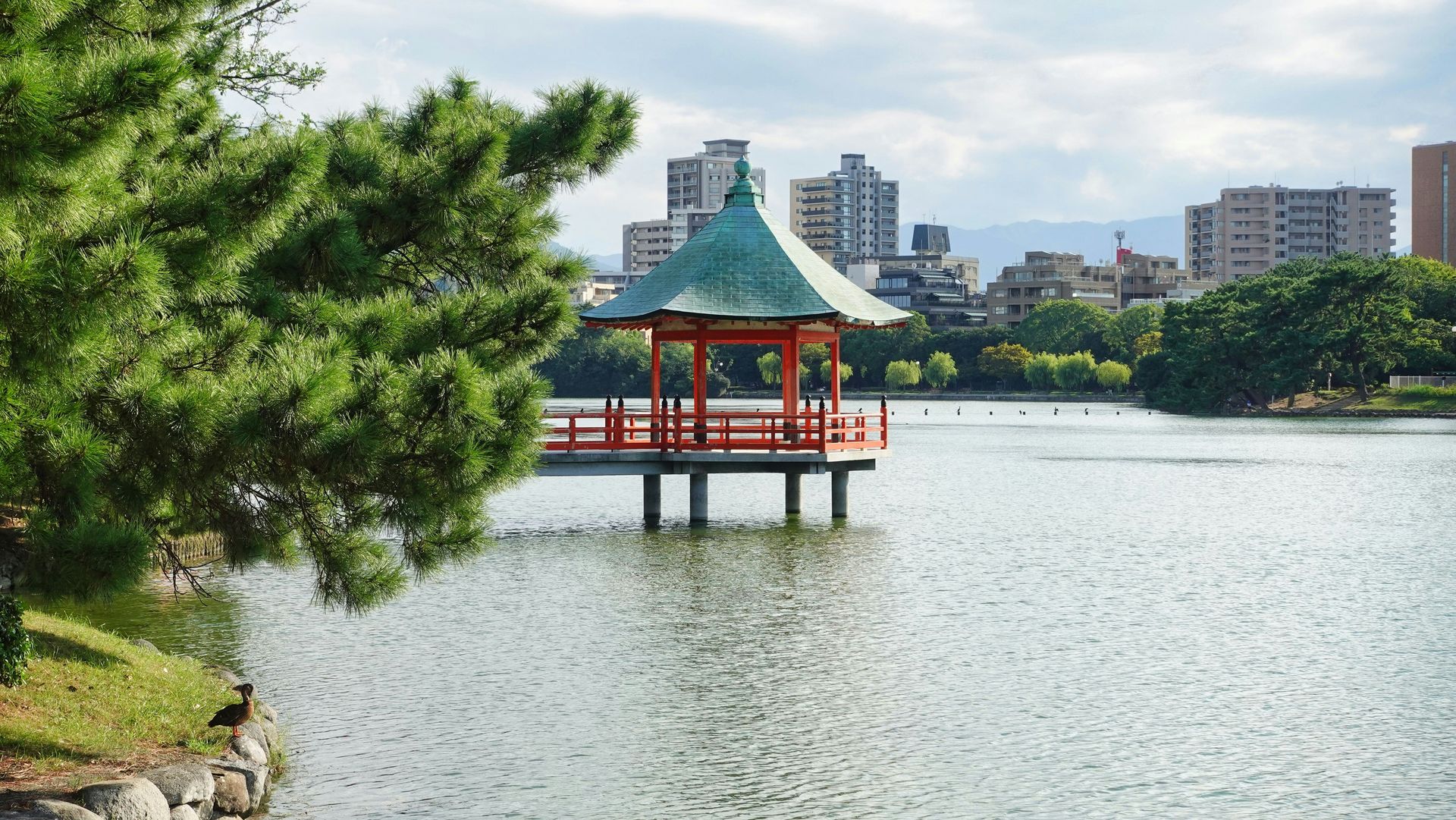
Ōhori Park is built on the grounds of the former Fukuoka Castle, whose remnants at the park’s outskirts give the free visit a historical dimension alongside the primary recreational program. The large central pond, which forms part of the former castle moat system, whose Japanese name gives the park its ōhori designation, is divided into three interconnected small islands, whose charming bridges give the walk a scenic structure, specific to a park whose engineering history gives the recreational landscape its most historically grounded single feature. The 2-kilometer jogging trail around the pond gives the park its most used single recreational program, and the steady stream of joggers, dog walkers, swan boaters, and café visitors gives the morning visit a cross-section of Fukuoka’s daily leisure culture specific to a city where the park functions as the primary outdoor social space.
The on-site Starbucks $SBUX at the pond’s edge gives the park visit its most counterintuitively charming specific stop: a globally uniform coffee chain whose lakeside location in a Japanese castle moat park gives the familiar product its most specifically local setting, and the couples who use the café as a meeting point before taking swan boats onto the water give the park its most recognizably Japanese dating culture expression. The park’s functioning as a date spot, exercise track, and casual social gathering space simultaneously gives Ōhori-kōen the multi-purpose civic park quality specific to a city whose compact urban geography concentrates the outdoor leisure population into a single well-maintained green space.
The castle remnants, accessible for free at the park’s outskirts, provide the historical program with physical evidence: stone walls and foundation traces that give the visitor a material connection to the Edo-period fortress,, whose former presence shaped the park’s current layout. The park’s functioning as a venue for the annual cherry blossom season, when the 1,300 trees create a canopy of pink above the pond’s edge, gives Ōhori-kōen its most spectacular and most photographed seasonal appearance and draws the large crowds whose presence transforms the park’s usual daily leisure character into a collective seasonal event.
7. Nanzoin Temple contains a massive reclining bronze Buddha
Alexander Schimmeck / Unsplash
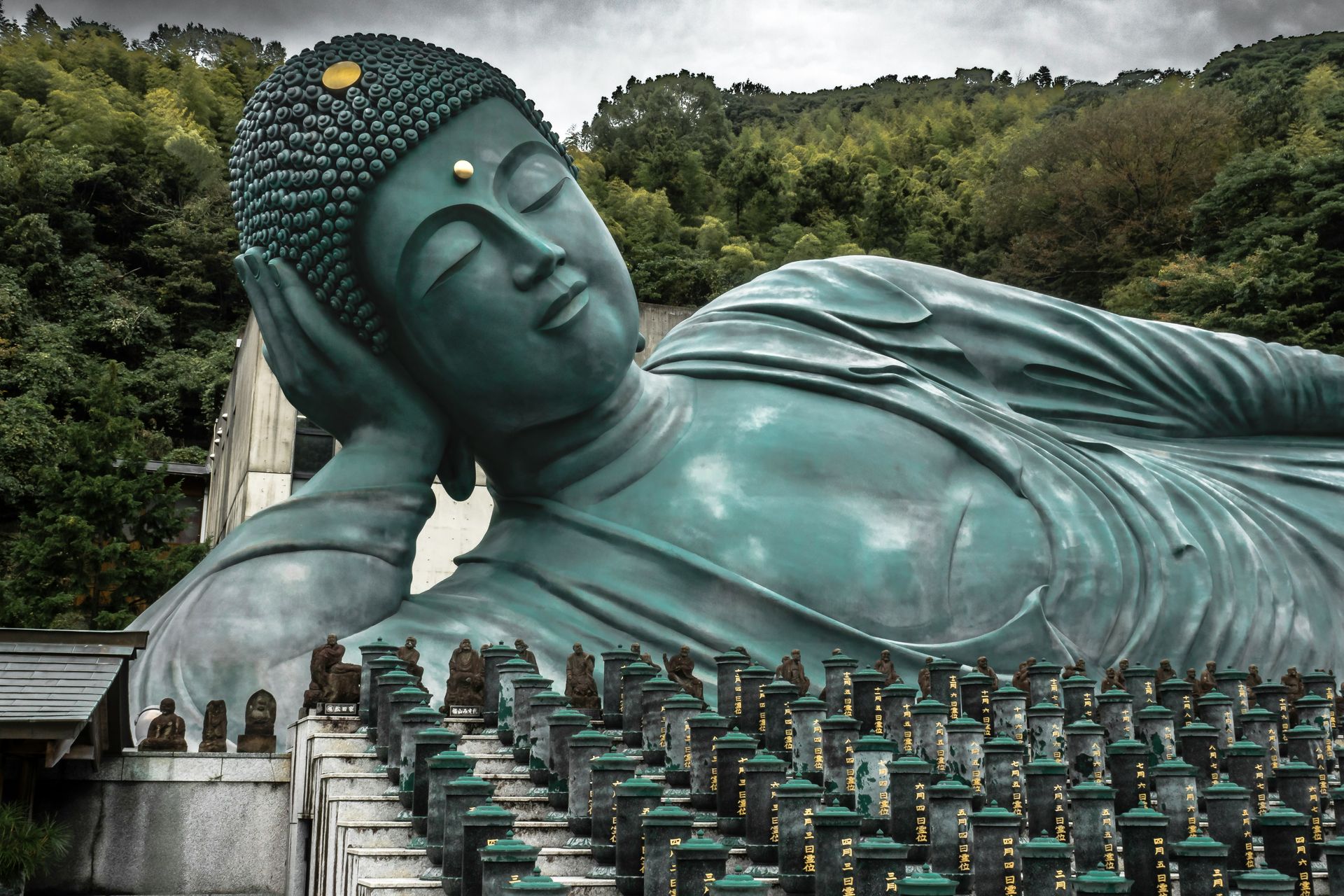
The Reclining Nehanzō Buddha at Nanzōin Temple is 41 meters long, 11 meters high, and weighs 300 metric tons, making it the largest bronze reclining statue in the world and an object whose scale no written description prepares the first-time viewer to encounter. The Lonely Planet article’s observation that nothing quite prepares you for your first gaze upon the statue gives the experience its most accurate single framing: the scale differential between the mental image formed by reading the dimensions and the actual physical presence of the statue in front of you is substantial, and the effect of encountering an object of this size in an outdoor temple setting is specific to a kind of visual surprise unavailable at the more famous seated Buddha statues of Kamakura and Nara, which the article notes the Nanzōin statue dwarfs.
The reclining pose, representing the Buddha at the moment of death and entering nirvana, is rare in Japan and more commonly associated with the Buddhist temples of Southeast Asia, giving the Nanzōin statue a visual and doctrinal character whose rarity in the Japanese temple context makes it a more unusual sight than the standing or seated Buddha alternatives. The statue’s specific provenance gives the visit an additional narrative dimension: built in 1995 to house Buddha’s ashes given to Nanzōin by Myanmar in gratitude for Japanese donations of medical supplies, the statue is one of the few Buddhist structures in Japan whose construction reflects a specific bilateral act of religious and humanitarian exchange.
The sole-touching ritual, said to bring good fortune to those who touch the intricate soles of the Buddha’s feet, gives the visit its most participatory single moment, and the temple’s reputation for lottery wins among devotees who performed the ritual gives the folk belief its most specifically material expression. The gates to the Reclining Buddha close at 4:30 p.m., giving the planning-conscious visitor a specific time constraint that can result in missing the statue entirely.
8. Canal City shopping mall features a real 180-meter canal
OKJaguar / Wikimedia Commons (CC BY-SA 4.0)
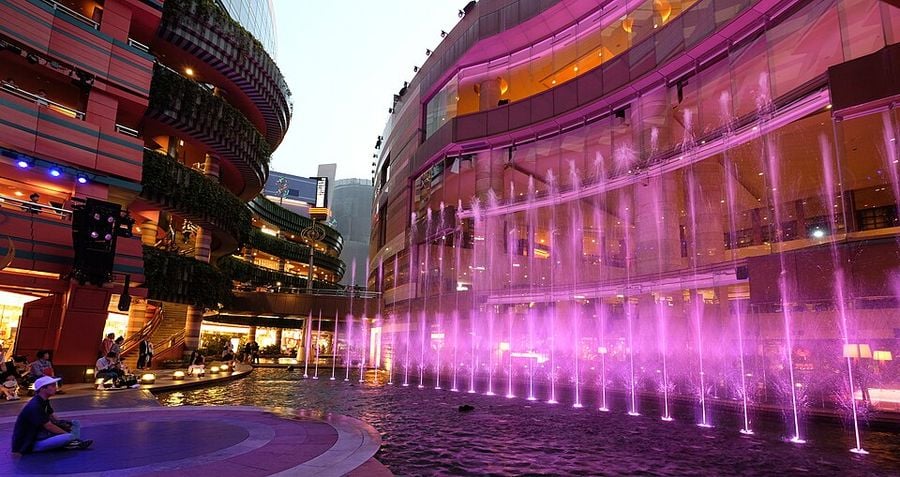
Canal City is Fukuoka’s most ambitious retail and entertainment complex: a five-floor shopping mall whose most distinctive single feature is an actual 180-meter canal running through its center, giving it a water feature that no other Japanese mall replicates in the same integrated architectural terms. The Japanese retail brands, including Muji, Uniqlo, and Francfranc, alongside international brands from Adidas to Disney $DIS, give the Canal City shopping program a range that covers both the specifically Japanese retail experience and the global brand access that visitors from smaller or less retail-developed markets find particularly valuable in a Japanese context.
The fountain show at the Sun Plaza area, running every half hour from 10 a.m., gives the Canal City visit its most reliably scheduled free entertainment, and the Canal Aqua Panorama 3D projection mapping show in the evening gives the nighttime visit its most spectacularly produced single event: a large-format digital display on the canal’s architectural surface whose scale and technical execution give the outdoor evening entertainment a quality specific to the canal’s function as both a physical feature and a projection surface.
The neighboring Kushida Shrine gives the Canal City visit its most culturally significant single extension: a short walk from the mall leads to one of Fukuoka’s most important Shinto shrines, whose year-round display of a Hakata Gion Yamakasa festival float gives the visitor who cannot attend the July festival in person a permanent exhibition of the ceremonial structure that anchors the city’s most celebrated annual tradition. The Yamakasa float’s proximity to Canal City gives the shopping complex a visit its most specifically Fukuokan cultural complement, placing the contemporary commercial and the centuries-old religious within a short walk of each other. The Canal City complex’s five distinct zones, each with a different commercial character, give the shopping program an internal variety that allows the visitor to transition between the Japanese domestic retail experience and the international brand experience within the same building, and the canal’s water feature gives the interior architecture a spatial openness uncommon in enclosed shopping malls.