From hiking Iceland's newest volcano to soaking in a geothermal cave on the Ring Road, the essential Iceland experiences
Andras M / Unsplash
Iceland’s reputation as one of the world’s most extraordinary travel destinations rests on a geological reality: the country sits on the Mid-Atlantic Ridge, where two tectonic plates pull apart at a measurable rate each year, producing volcanic eruptions, geothermal fields, glaciers, and lava formations that exist simultaneously within a landmass the size of Kentucky. The landscape that results from this activity is not static. Volcanoes erupt on timelines that geologists track but cannot predict precisely. Glaciers calve and retreat. The highland interior floods during snowmelt and is closed to vehicles for months. Iceland is a destination that changes, sometimes dramatically, from one visit to the next.
What remains consistent is the scale of the natural environment and the quality of access to it that Iceland’s infrastructure provides. The Ring Road that circles the island connects the major natural sites along a route that most visitors cover by rental car, giving travelers without specialist experience or physical conditioning access to landscapes that comparable destinations require serious expedition planning to reach. The Blue Lagoon sits 15 miles from the international airport. The glacier lagoon at Jökulsárlón is a day’s drive from Reykjavik. The highlands are accessible from the capital in a few hours when the summer roads open.
The recommendations below draw on three local experts consulted by Travel + Leisure: Davíð Logi Gunnarsson, head guide of Nordic Luxury; Dofri Hermannsson, expert hiking guide and owner of Reykjavik Erupts; and Aggi Sverrisson, executive chef at The Retreat at Blue Lagoon’s Moss Restaurant. Their picks cover the full range of Iceland’s offer: volcanic hikes, geothermal bathing, fine dining, nightlife, and the natural landmarks that define the country’s identity for travelers who have never visited and those who return repeatedly.
F D / Unsplash
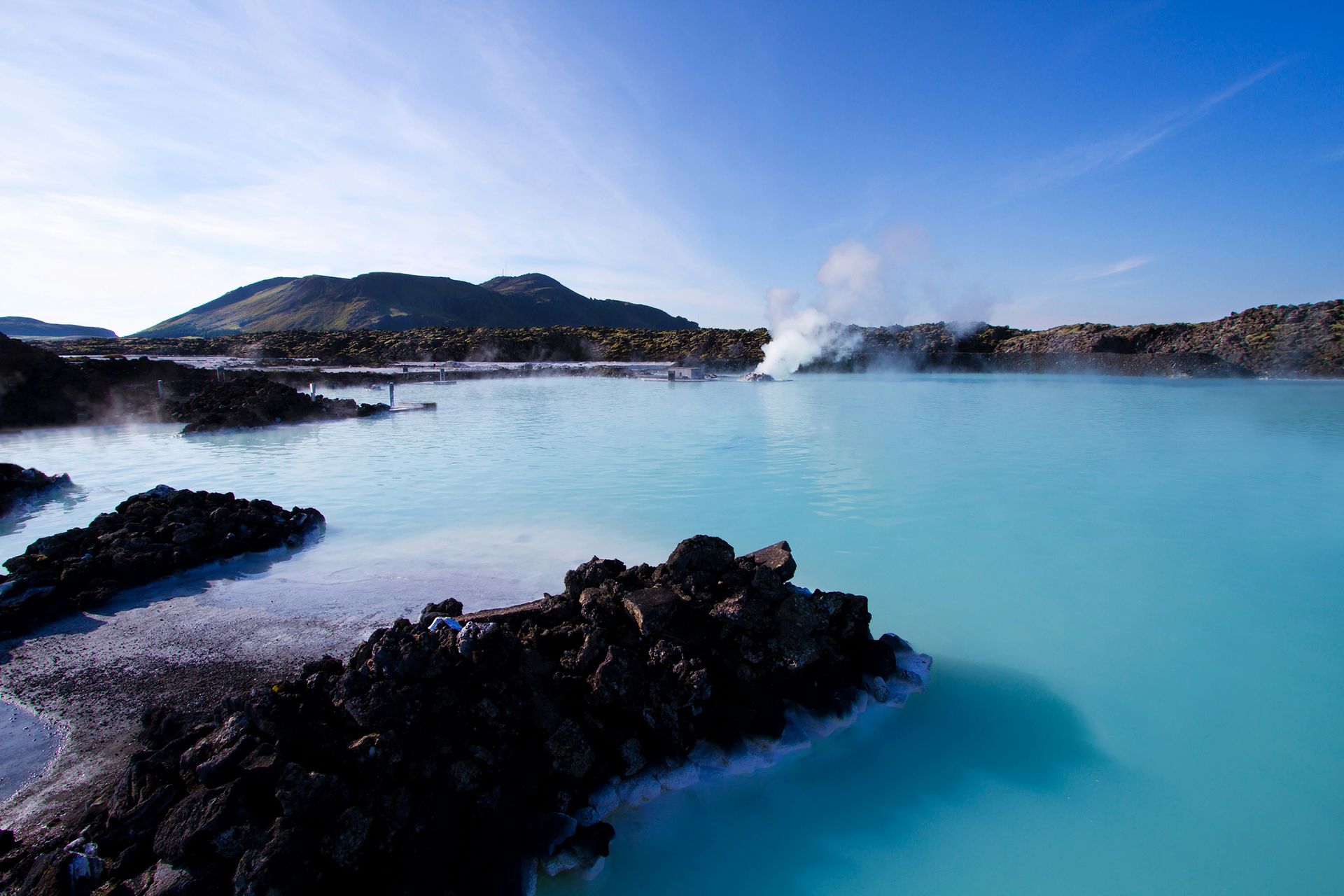
The Blue Lagoon’s position less than 15 miles from Keflavik International Airport gives it a logistical convenience that its international reputation as a modern wonder of the world makes easy to underestimate as a reason to visit. The milky-blue water that fills the lagoon’s outdoor pools derives its color and its widely cited healing properties from silica and sulfur, minerals that the geothermal water carries from deep underground through the volcanic rock of the surrounding black lava field. The combination of the water’s visual character, the steam rising from the surface, and the stark black lava landscape that surrounds the facility produces an environment specific to this location on Earth.
The timing of a Blue Lagoon visit relative to a flight gives travelers two distinct options that serve different purposes. Arriving directly from the airport before checking into accommodation in Reykjavik offers an immediate, physically restorative introduction to Iceland, using the journey time productively rather than losing an afternoon to transit. Visiting on the departure day, after returning the rental car and before the flight, gives the visit a closing ritual quality and allows travelers to carry the relaxation of the thermal soak into the journey home. Either timing works logistically; which serves better depends on the traveler’s physical state at each end of the trip.
The Retreat at the Blue Lagoon, which sits directly on the lagoon and whose guests access it as an extension of their accommodation, gives visitors who prioritize this experience the most immersive version of what the Blue Lagoon offers. Gunnarsson’s description of Radagerdi, a restaurant on the western edge of Reykjavik in a nature reserve surrounded by the sea, where winter visitors might see the northern lights from their table, represents a different version of the geothermal and natural experience available throughout Iceland without the Blue Lagoon’s international profile.
Joshua Sortino / Unsplash
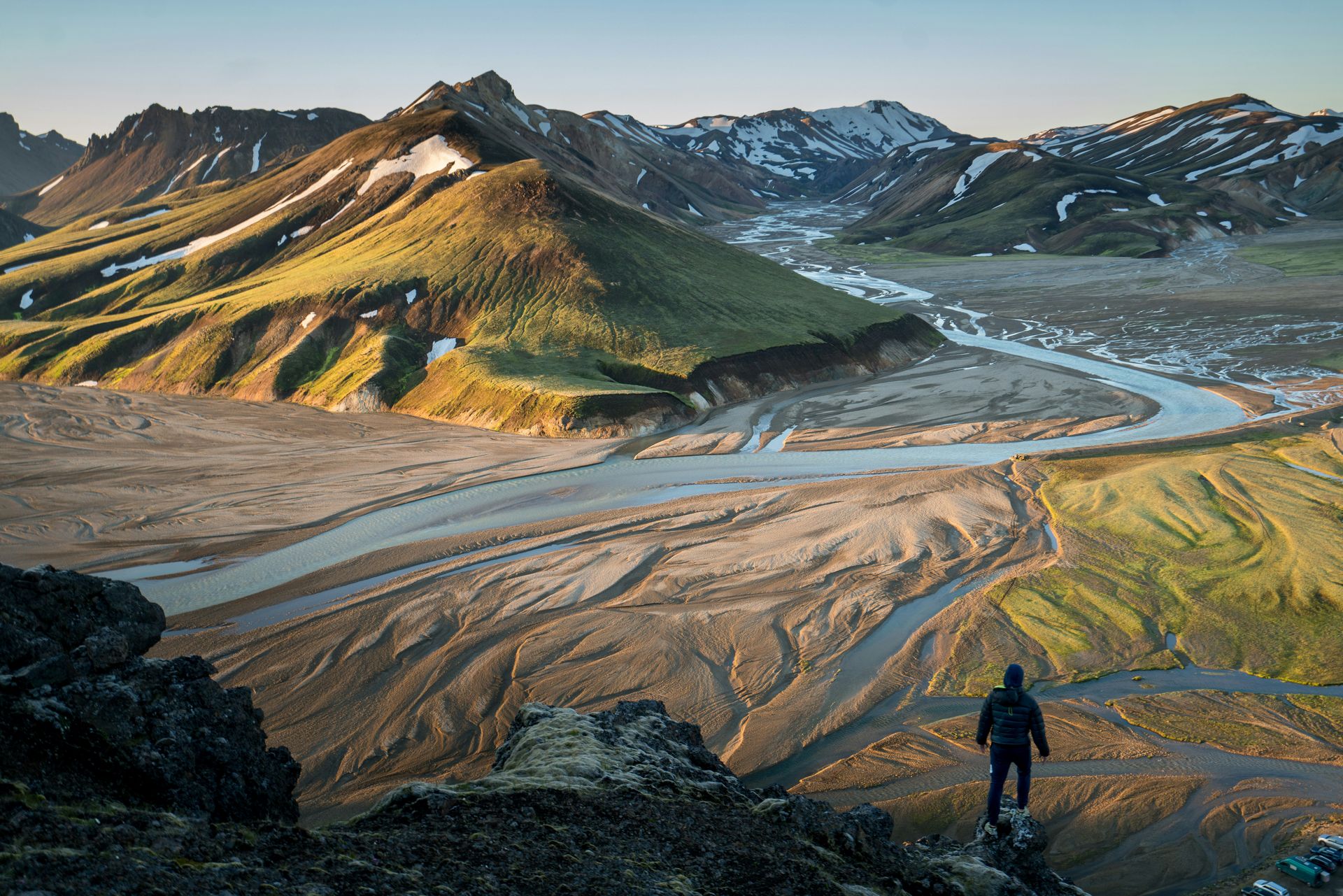
Landmannalaugar, in the highlands of Iceland, is accessible only from mid-June to mid-September, when the summer roads open through the interior. Gunnarsson describes it as an otherworldly landscape that captivates even the most experienced hiker, and the specific combination it produces — colorful rhyolite mountains, natural hot springs, and steam vents distributed across a highland reserve — does not exist in this form anywhere else on Earth. The silence that Gunnarsson identifies as one of the reserve’s defining qualities reflects the distance from the Ring Road that accessing it requires: travelers who reach Landmannalaugar have made a deliberate journey into a part of Iceland that day-trippers from Reykjavik rarely attempt.
The colorful mountains that give Landmannalaugar its most immediately striking visual quality result from the rhyolite rock that the region’s volcanic activity has deposited across the highlands in shades of yellow, green, red, and pink. The colors shift with light conditions and moisture, giving the landscape a quality of continuous variation across a single day that the more uniformly toned lava fields and black-sand beaches of the coast do not. The natural hot springs that dot the reserve allow visitors to soak in geothermal water, surrounded by the highland landscape, giving the experience a physical dimension that observation alone cannot provide.
The long summer days that Iceland’s latitude generates during the mid-June-to-mid-September window give visitors extended hours to move through the reserve’s trails and soak in its springs. Hiking at 9 p.m. under full daylight in a highland wilderness that most people on Earth will never see is the specific quality of the Landmannalaugar experience that photographs can't fully convey.
Juliann Hervio / Unsplash
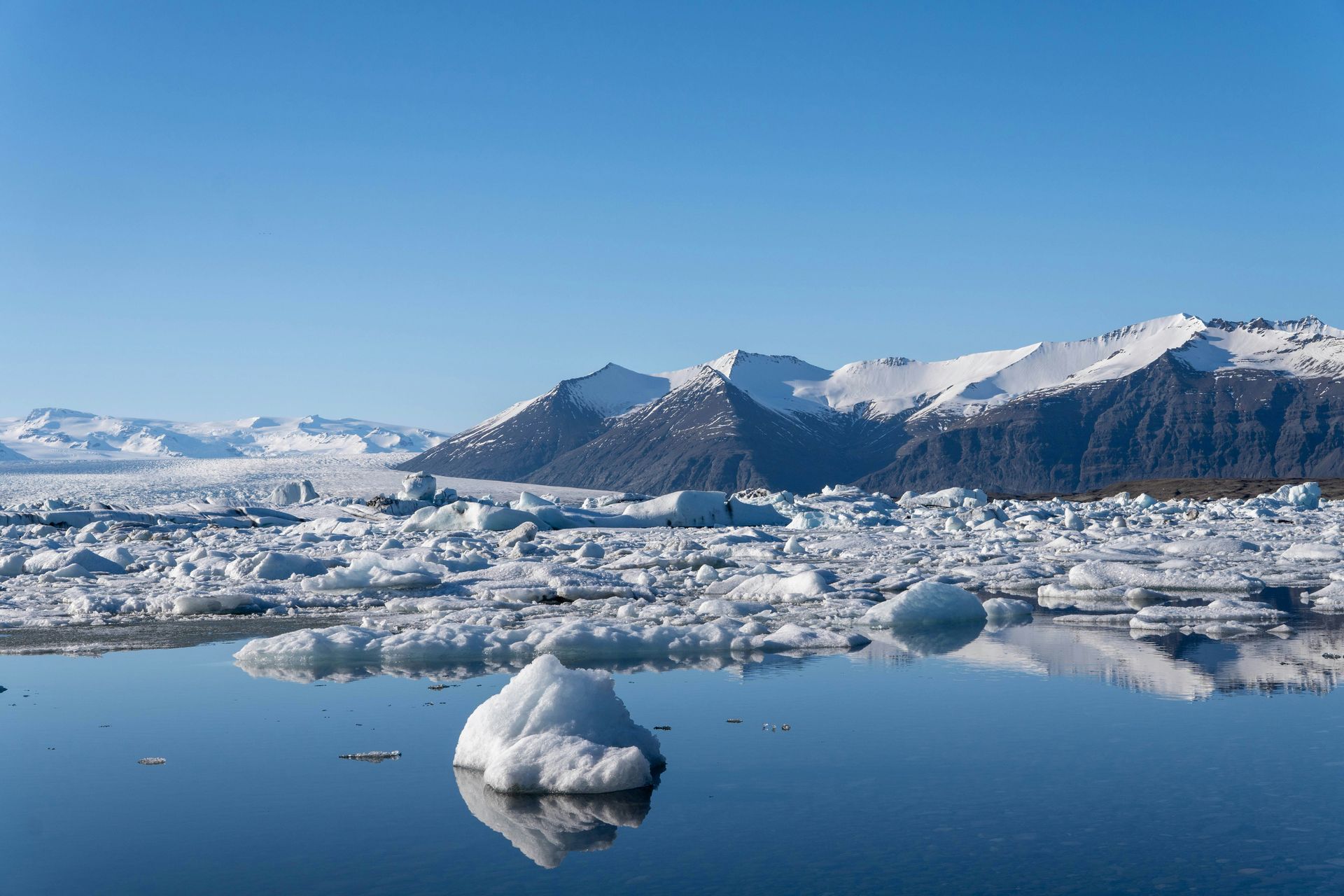
Jökulsárlón, Iceland’s most famous glacier lagoon, occupies the southeastern coast where the Breiðamerkurjökull glacier calves directly into a lake that the calving has deepened over decades of glacial retreat. Sverrisson describes it as the deepest lake in the country and identifies its combination of floating icebergs, black-sand beaches, and seal populations as the specific draw that makes the South Coast drive worth the full-day commitment from Reykjavik. The icebergs that drift from the glacier into the lake, and from the lake through a short channel into the Atlantic, carry the blue coloration that deep, compressed glacial ice produces, which gives the lagoon’s floating population a color register unlike any other water body in Iceland.
The black-sand beach immediately adjacent to the lagoon, called Diamond Beach, receives icebergs that the outgoing tide deposits on its dark surface. The visual contrast between the black sand and the translucent blue-white ice, under Iceland’s variable coastal light, creates a photographic environment that no constructed setting can replicate. The icebergs rest on the beach in shapes determined by the random breakage of glacial calving, which means each visit to Diamond Beach encounters a different configuration of ice.
The seal population inhabiting the lagoon year-round adds a wildlife dimension to the site alongside the geological spectacle. Harbor seals rest on the floating icebergs and swim through the lagoon in conditions that the calving glacier and the food supply of the channel to the sea sustain. The seals are accustomed to visitors in close proximity for photography, which gives the lagoon a wildlife encounter quality that does not require a guided excursion or a boat trip to access.
-900x505.jpg)
Anthony Quintano / Wikimedia Commons (CC BY 2.0)
Hiking a volcano that has erupted within living memory produces a direct physical encounter with the geological forces that created Iceland and continue to shape it. Litli-Hrútur is Iceland’s newest eruption, and the conditions that approach it create are genuinely variable: the terrain changes with each eruption cycle, the surface underfoot reflects the recent volcanic activity, and the experience of walking over ground that the Earth produced recently gives the hike a character that the country’s older volcanic features, however dramatic in appearance, cannot replicate. Hermannsson recommends hiring a local expert guide who knows the volcanic activity in the Reykjavik area, a recommendation that reflects both the terrain's safety dimension and the quality of experience that expert knowledge adds to what the geology offers.
The Reykjanes Peninsula, where Litli-Hrútur is located, has entered a period of heightened volcanic activity that scientists are continuously monitoring. This activity gives the area around the hike a geological currency that other volcanic destinations, whose most recent eruptions are historical rather than contemporary, cannot claim. Walking on lava fields that formed over years rather than centuries gives the visitor a sense of active geological processes that the word volcanic, as applied to Iceland’s broader landscape, does not fully convey.
The practical requirements for the hike are significant: preparation for changing conditions, appropriate footwear for uneven, potentially unstable lava surfaces, and the guide Hermannsson recommends. The hike’s difficulty and the need for preparation set Litli-Hrútur apart from the more accessible natural sites that make up most Iceland itineraries, which makes it a good choice for travelers who want physical challenge alongside natural spectacle rather than one without the other.
Einar H. Reynis / Unsplash
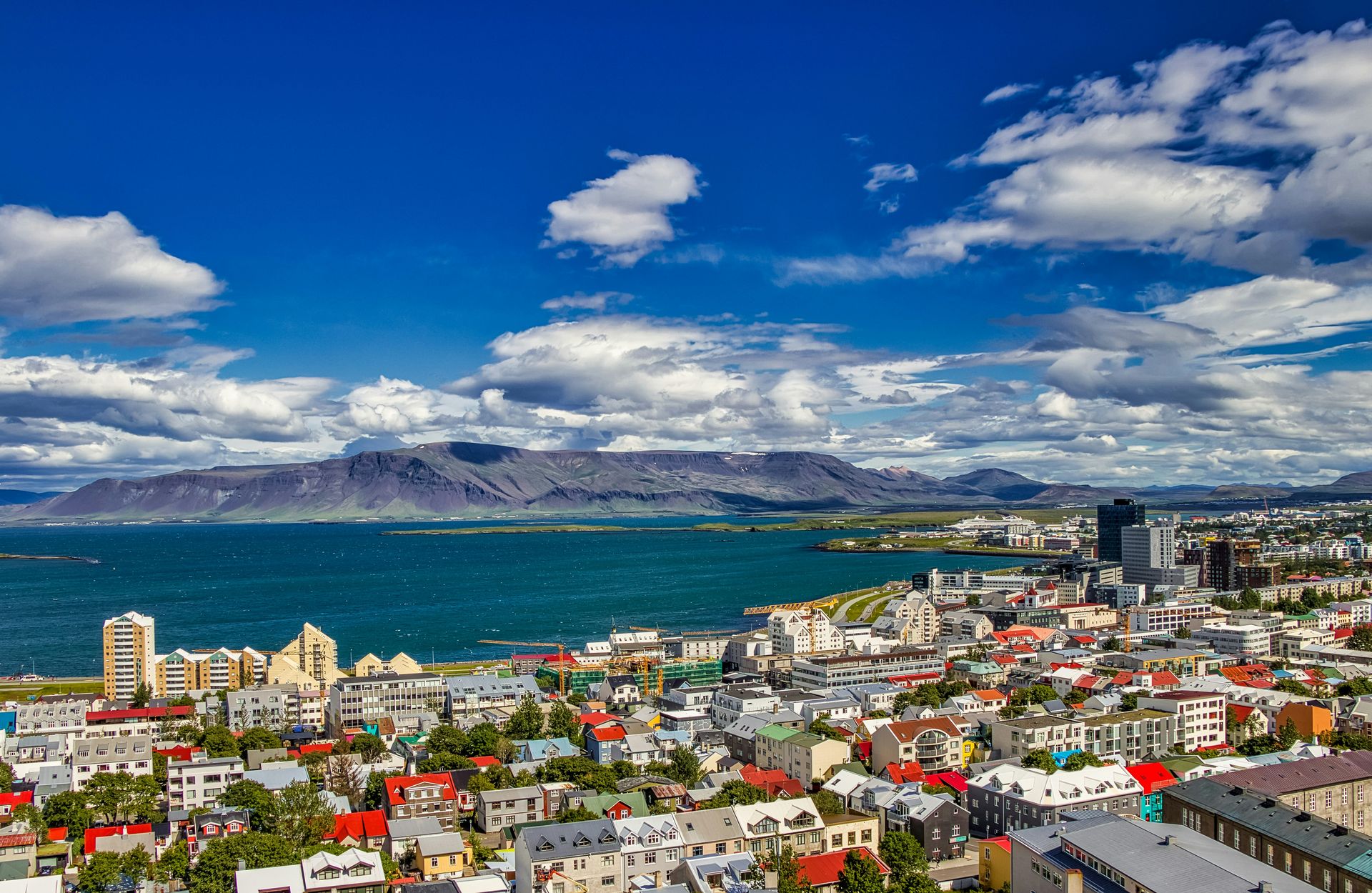
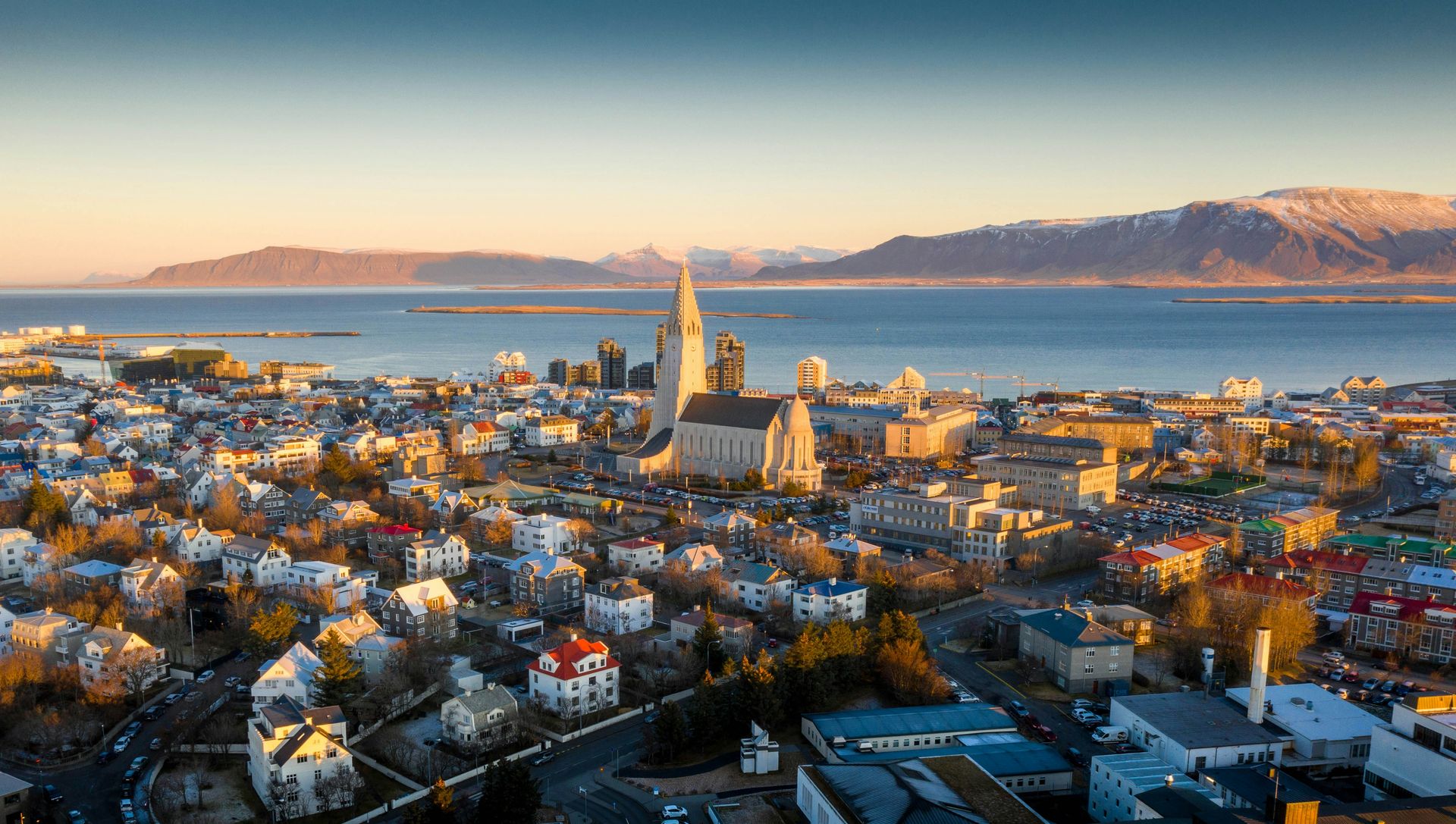
Hallgrímskirkja, the 244-foot church that rises above the center of Reykjavik, is the tallest building in Iceland and the city’s most immediately recognizable landmark from any approach. The spire and side wings that give the church its distinctive profile were designed to echo the basalt columns formed by volcanic cooling across Iceland’s landscape, connecting the building’s architectural form to the geological material that defines the country’s visual identity. As both a functioning Lutheran church and an observation deck, Hallgrímskirkja serves two purposes that each justify a visit on its own.
Gunnarsson’s recommended approach — ascending the bell tower to take in panoramic views of the city from the observation windows — gives visitors a perspective on Reykjavik that street-level views do not. The low urban density of Reykjavik, compared to the European capitals that most international travelers use as their reference point, reads most clearly from the tower: the city’s spread across the surrounding peninsula, the harbor below, and the mountains and glaciers visible beyond the city on clear days give the observation a geographic orientation that the walking city does not assemble in the same way.
The church’s interior serves its congregation in a space that the exterior’s scale prepares visitors for: a high, austere nave lit by windows created by the basalt column-inspired design, with a large pipe organ at one end that concerts and services use regularly. The combination of architectural interest, functional religious space, and practical observation access gives Hallgrímskirkja a range of reasons to visit that single-purpose buildings cannot match.
Richard Whitaker / Flickr (CC BY 2.0)
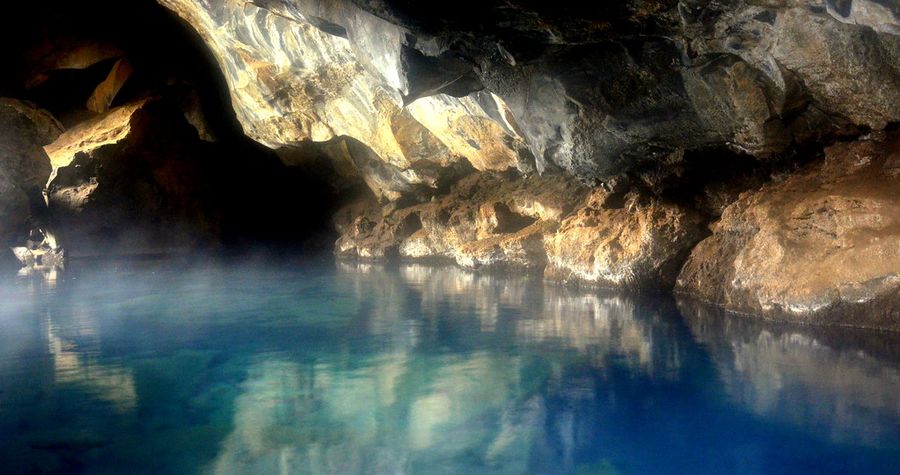
Grjotagja is a small lava cave located near Lake Myvatn on the Ring Road, which gives it accessibility that the description “hidden gem” somewhat overstates, but whose entrance's physical inconspicuousness it genuinely reflects. The cave contains geothermal hot springs within its walls, producing bubbling turquoise water in a chamber formed by volcanic activity and accessed through an opening in the lava surface above. The jagged rock walls and the quality of light that enters the cave give the interior a visual character that the warm spring’s presence amplifies rather than explains in its own right.
The cave’s Ring Road location makes it a stop that travelers covering the north of Iceland can add without a significant detour, giving it practical value alongside its visual impact. The lake Myvatn area that surrounds Grjotagja holds additional geothermal and volcanic features within a compact geography, making the cave one element of a northern Iceland day that concentrates unusual natural activity in a small area. The pseudocraters at Myvatn, the Námaskarð geothermal field, and the Dimmuborgir lava formations are all within a short driving distance of the cave.
The water temperature in Grjotagja has fluctuated over the years due to underlying volcanic activity, making swimming, once common in the cave, unreliable in terms of comfort and safety depending on the current temperature. Visiting to observe the spring within the cave environment remains the primary experience, and the visual qualities of the turquoise water against the dark volcanic rock give the cave its hauntingly beautiful character that the source identifies.
Sigurdur Fjalar Jonsson / Unsplash
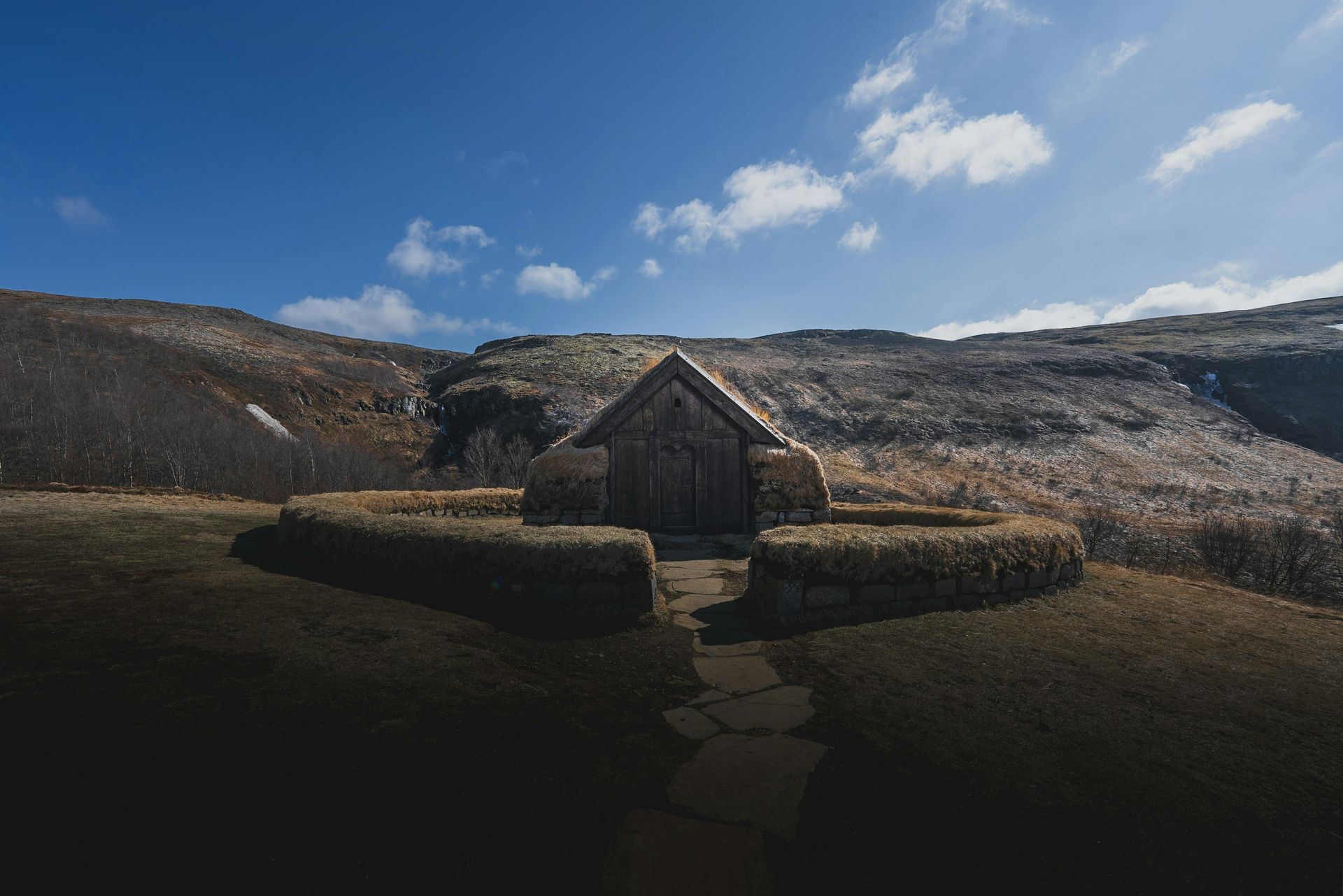
The Þjórsárdalur hike follows Iceland’s longest river, Þjórsá, through a landscape that builds toward Háifoss, one of the tallest and most dramatic waterfalls in the country. The approach along the river gives the destination a sense of progression that hikes ending at viewpoints reached by direct trail do not always generate: each section of the route delivers natural content — the Búrfell Forest, the Fossalda mountain — before the waterfall appears as the climax of a journey that the landscape has been preparing the hiker for. The waterfall drops into a canyon whose depth gives the visual scale a specific drama that photographs of Háifoss, which are numerous, consistently underrepresent.
The Búrfell Forest, which the route passes through, is a distinctive element of the Icelandic interior landscape. Iceland’s historical deforestation, a consequence of early Norse settlements’ agricultural clearing and the failure of replanted trees to establish against the sheep grazing that followed, makes any surviving or replanted forest significant as a departure from the barren moorland that covers most of the highland interior. The forest gives the hike a texture that the open river valley and the waterfall canyon complement without repeating.
The Þjórsárdalur route offers travelers who want a full-day hiking experience outside Reykjavik a destination with multiple natural features along its length, rather than a single destination accessible by a short trail. The waterfall at the end gives the hike a clear objective, while the river, forest, and mountain scenery along the route give the journey to that objective independent value.
-1920x1280.jpg)
cjuneau / Wikimedia Commons (CC BY 2.0)
Mælifell, a conical volcano standing more than 2,500 feet above the highlands of southern Iceland, is accessible only during the summer months due to its remote location and the road conditions created by the surrounding glacial streams and black sand fields outside that window. Gunnarsson describes it as awe-inspiring in its near-perfect conical shape, sitting like an island of greenery — the moss that covers the volcano’s surface contrasting with the black sand surrounding it — in a vast field of glacial streams. The visual effect of this color contrast, repeated nowhere else in Iceland at this scale, gives Mælifell a landscape identity that photographs circulate widely, but the physical remoteness of the site keeps it accessible only to travelers who plan specifically to reach it.
The volcanic cone’s shape represents the geological process of shield volcanism at a scale and symmetry that most volcanic formations do not maintain across their full profile. The green moss that covers the volcano, while the surrounding terrain remains black and barren, produces a contrast that reflects the specific moisture conditions around the cone and the resilience of the moss species that colonizes volcanic surfaces as the rock ages. Together, these geological and ecological conditions create a visual environment that Iceland’s broader volcanic landscape prepares visitors for without duplicating.
Reaching Mælifell requires either a guided tour or a capable four-wheel-drive vehicle with high clearance, as the river crossings and terrain that the route involves are beyond the capability of standard rental vehicles. Hermannsson’s recommendation to hire a local expert guide for volcanic sites generally applies here with particular force: the remote location and the variable conditions of the summer highland make local knowledge a practical asset rather than a convenience.
Credit: Visit Iceland
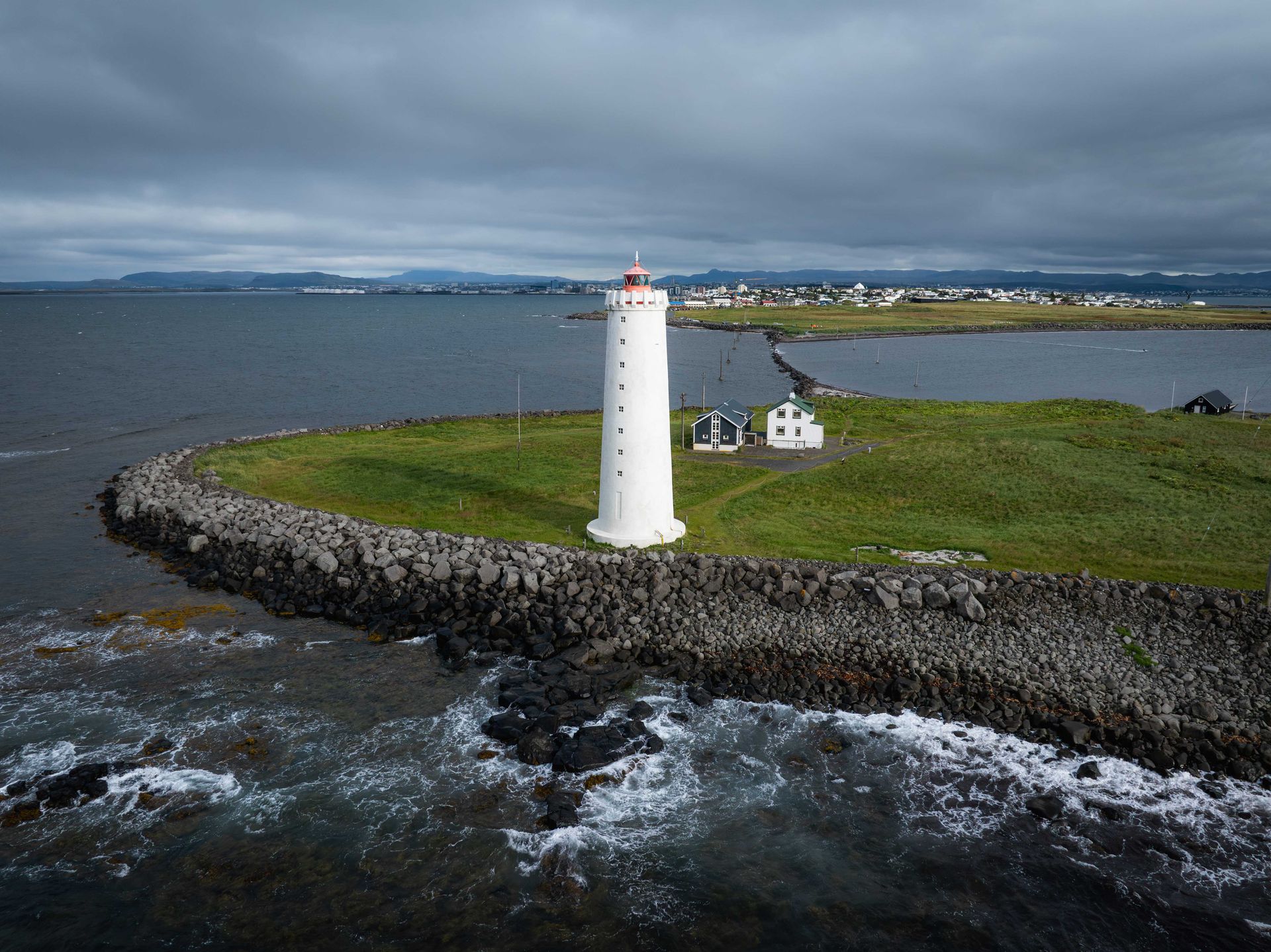
The Grotta Lighthouse sits on the Seltjarnarnes Peninsula at the western edge of Reykjavik, accessible on foot from the city center, a walk Hermannsson recommends starting at the Harpa Conference Hall. The walk out to the lighthouse follows the peninsula's coastline through a landscape that sits immediately adjacent to the city without being of it: the peninsula’s low, flat terrain and the sea on three sides give the walk a quality of exposure to the horizon that the city’s streets do not. The lighthouse at the endpoint gives the walk a destination that the coastal scenery along the route makes the journey itself worth taking.
In summer, the walk to Grotta in the evening produces sunsets over the water that the peninsula’s western exposure faces directly. The sun’s low trajectory across the northern sky during Icelandic summer evenings gives the light a warm and extended quality that the same walk in winter, when darkness falls earlier, and the northern lights become the primary spectacle, replaces with an entirely different atmospheric experience. Hermannsson identifies both seasons as rewarding for the walk, and the clear winter skies that the peninsula’s distance from the city’s light pollution provides make Grotta one of the more accessible northern lights viewing points for visitors staying in Reykjavik.
The accessibility of Grotta from the city center gives the walk a logistical simplicity that Iceland’s most dramatic natural sites, which require cars and significant travel time, do not share. A visitor who wants an evening of natural beauty without leaving the city on foot can walk to Grotta and back in a few hours, which gives the lighthouse hike a place in the Iceland itinerary that the country’s larger natural wonders, however justifiably dominant, cannot occupy.

Credit: Blue Lagoon Iceland
Moss, the fine-dining restaurant inside The Retreat at the Blue Lagoon in Grindavík, received its first Michelin star in 2023, which gives it a culinary recognition that places it among Iceland’s most significant dining destinations, regardless of the spectacular setting that accompanies the meal. Sverrisson, who serves as executive chef, describes a tasting menu built around the best of Icelandic meat and produce, using local sourcing as both a culinary principle and a connection to the agricultural and fishing traditions that Icelandic cuisine draws from. The views of the Blue Lagoon from the restaurant’s windows give the meal a visual context specific to this location, with the milky-blue water and the surrounding lava field visible throughout the dining experience.
The combination of Michelin-starred cooking and the Blue Lagoon’s geothermal environment produces a pairing unusual in the fine-dining category: most restaurants at this level of culinary recognition sit within urban contexts, where the competition and the infrastructure that serious restaurant cooking requires concentrate naturally. Moss operates within one of Iceland’s most distinctive natural environments, which gives the meal a setting that the culinary achievement alone would not create and that the natural setting alone would not provide.
For visitors planning a Blue Lagoon experience as part of their Iceland itinerary, adding a reservation at Moss adds a gastronomic dimension that the thermal bathing experience does not include. The two experiences — soaking in the geothermal water and eating at the Michelin-starred restaurant above it — give the Blue Lagoon complex a full-day structure that makes the dedicated trip from Reykjavik a more complete investment than the bathing alone would justify.
