
Luxembourg’s best experiences, from historic fortifications and royal palaces to wine regions, museums, and scenic villages beyond the capital
Cedric Letsch / Unsplash
From exploring the industrial history of the Belval quarter to touring big-hitting museums and visiting the Palais Grand-Ducal, there are plenty of rewarding, culturally rich ways to spend time throughout Luxembourg. Beyond Luxembourg City itself, this tiny European nation reveals pretty woodland footpaths and quaint castle-topped villages, a genuine surprise for first-time visitors given common perceptions of Luxembourg as a somewhat drab, business-oriented hub for banking and EU institutions.
Gourmets will genuinely love the thriving wine industry along the banks of the Moselle River, and a superb dining scene ranges from simple local cuisine drawing on rural traditions to a glittering firmament of Michelin-starred fine dining. With modest distances between sights, Luxembourg makes a genuinely great destination for travelers with limited time, and even on a short break, hitting all of the nation’s highlights stays entirely possible within just a few days.
The 10 activities below appear in Lonely Planet, covering standout experiences recommended throughout Luxembourg. Each one reveals a genuinely different facet of the country, from centuries-old fortifications to contemporary art to the working wine region along the Moselle. Combining several of these stops within a single day trip works well given the country’s genuinely compact geography, and travelers based in Luxembourg City can realistically reach most destinations on this list within an hour or so by car or public transport. Planning around specific seasonal restrictions, such as the palace tour’s narrow summer window or the Tour Jacob’s limited opening months, also helps avoid disappointment for travelers visiting outside peak season. Booking accommodation centrally within Luxembourg City makes the most sense for most itineraries, since nearly every destination on this list stays genuinely reachable as a day trip without needing to change hotels partway through a visit. A single well-located base genuinely simplifies the entire trip.
Slavan / Unsplash
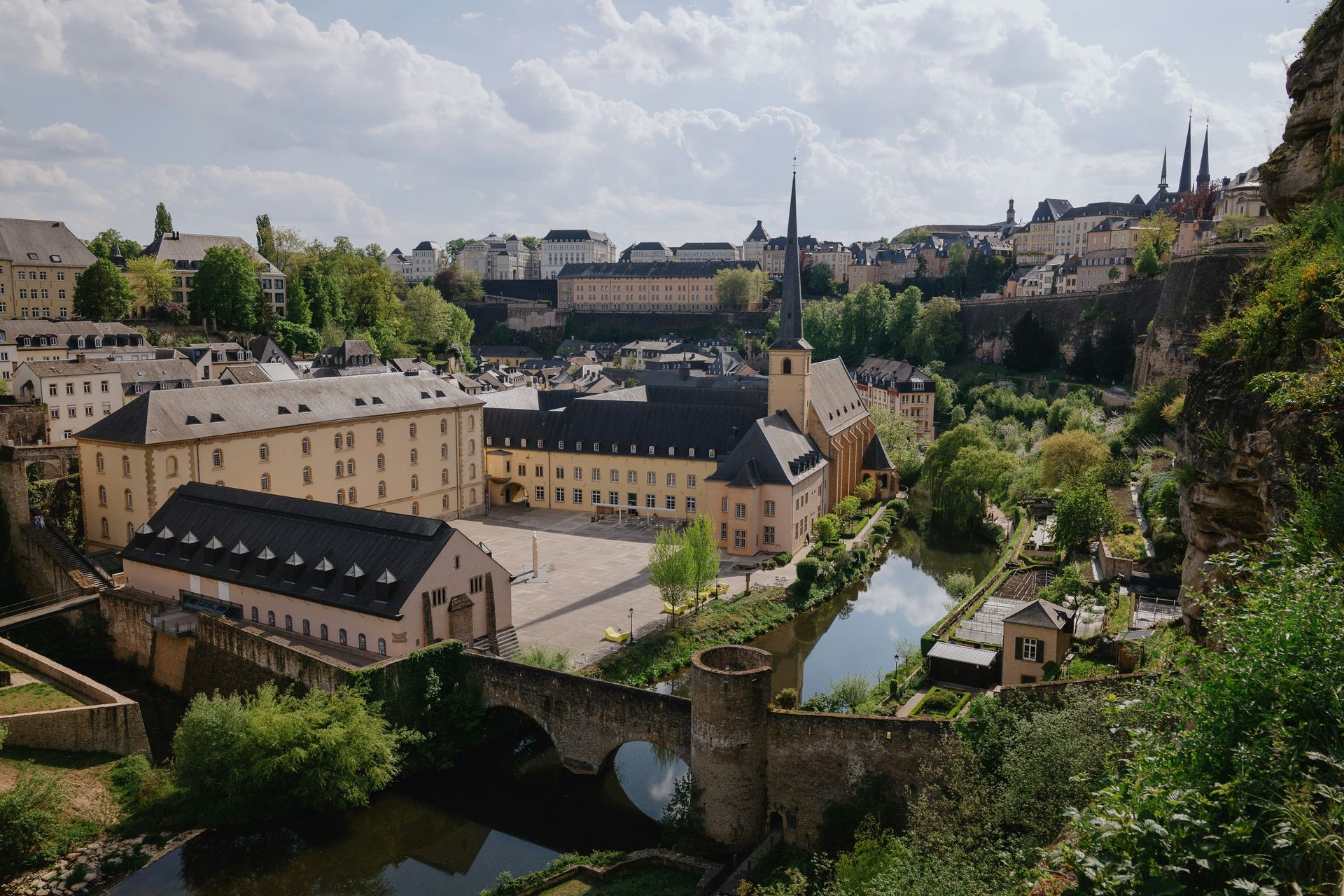
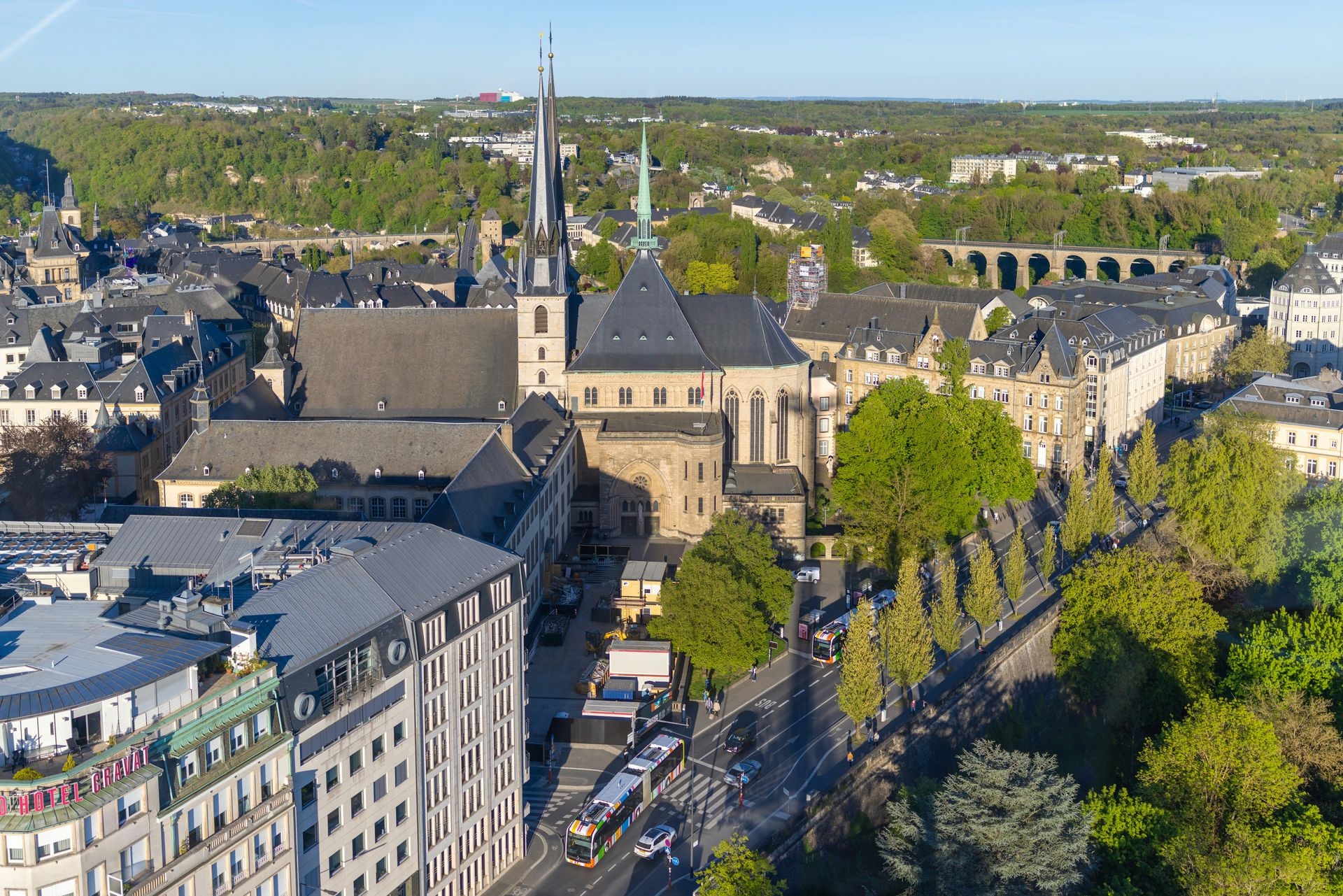
Luxembourg City’s UNESCO-listed Old Town, also known as Haute Ville, functions as a genuine layer cake of bastion walls, viewpoints and paved footpaths winding through parks throughout the historic core. The remains of medieval fortresses sit poised above the Alzette and Pétrusse rivers, giving the entire district a genuinely dramatic sense of elevation and history.
The atmospheric Grund quarter lies along the riverbanks below, while the contrastingly brash European Quarter, home to most of the city’s government institutions, sits on the Kirchberg Plateau across the red Pont Grande-Duchesse Charlotte. This contrast between old and new gives Luxembourg City genuine visual range within a single compact urban area.
The Old Town’s attractions include the Musée d’Histoire de la Ville de Luxembourg, the Cathédrale Notre-Dame and the biweekly Stater Maart market on Place Guillaume II, giving visitors plenty to explore between meals. In between sightseeing, stopping at a restaurant such as Ville Haute’s Pizzeria Bacchus rewards travelers with a genuinely quick lunch, or Restaurant Clairefontaine for considerably more deluxe French cuisine.
Public transport throughout Luxembourg City has stayed genuinely free to use since 2020, including the useful tram linking the train station, the European Quarter and the airport. The Pfaffenthal-Kirchberg funicular and two tall public elevators genuinely help travelers manage the steep cliff ascents between the upper and lower city. Travelers $TRV should also budget time to simply wander the Grund quarter’s riverside streets, since much of the neighborhood’s charm lies in small details easily missed on a rushed visit. The Stater Maart market specifically rewards a Wednesday or Saturday morning visit, since fresh produce and local specialties draw genuinely enthusiastic crowds from throughout the surrounding region. Travelers should also confirm current restaurant reservation availability before arriving, since Restaurant Clairefontaine draws considerable weekend demand from both visitors and local diners. Comfortable shoes also help considerably given the Old Town’s steep, uneven cobbled streets throughout the historic core. A reusable water bottle also helps considerably given how much walking a full Old Town circuit involves.
Shalev Cohen / Unsplash
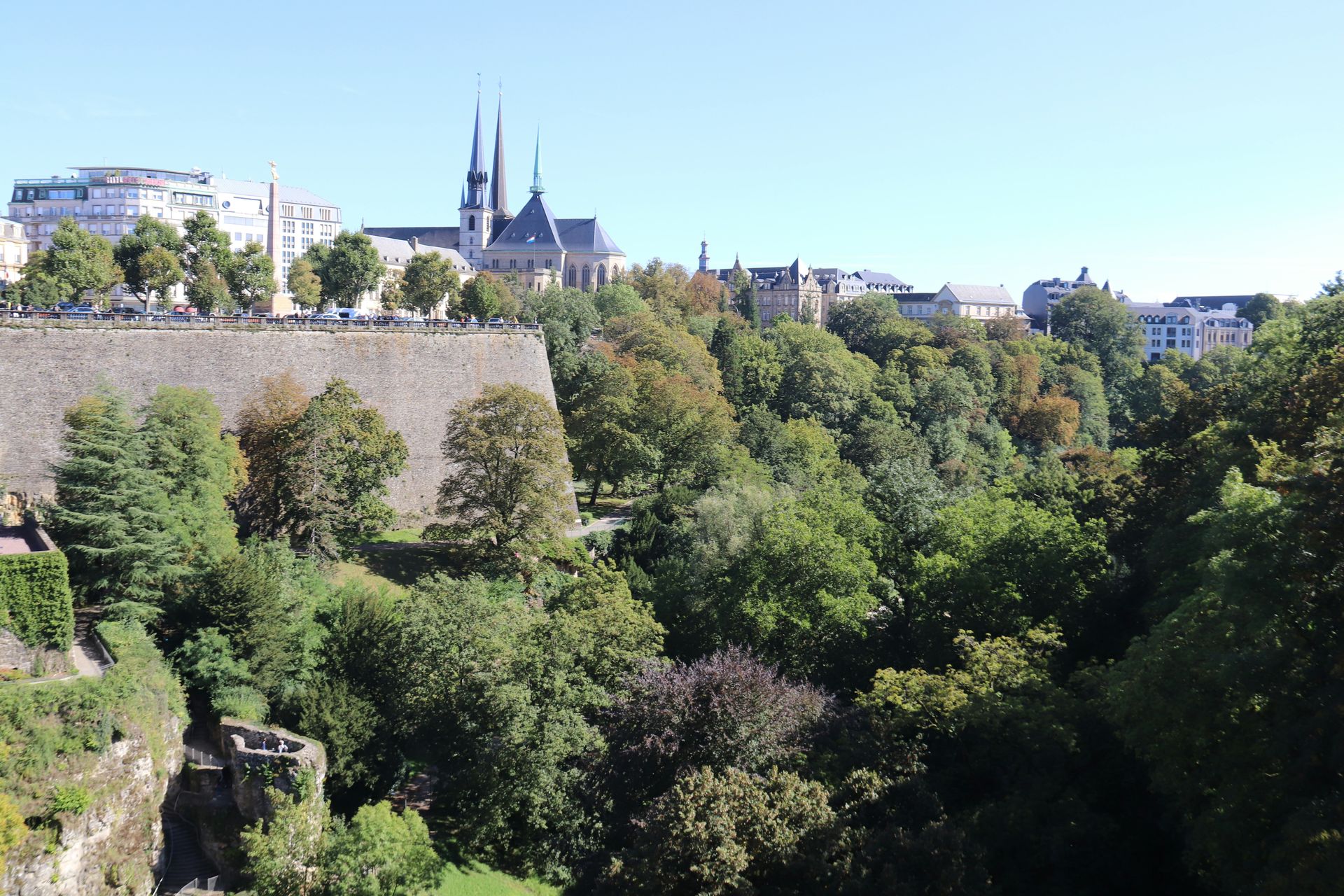
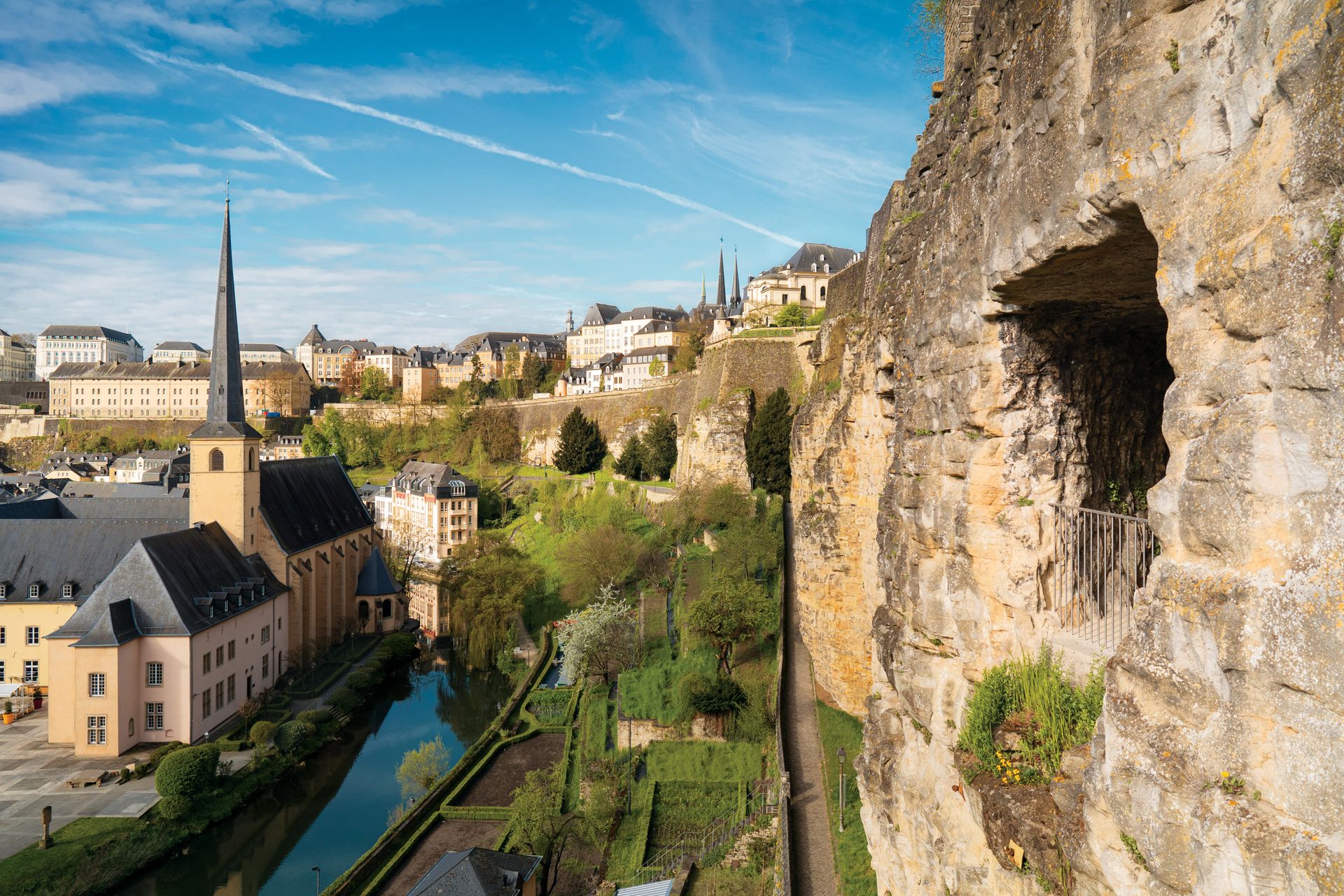
Near the Musée d’Histoire de la Ville de Luxembourg, the glorious Chemin de la Corniche pedestrian promenade genuinely beckons for an elegant stroll, tracing the city’s 17th-century ramparts along a route sometimes called Europe’s most beautiful balcony. This nickname reflects just how genuinely striking the views across the surrounding valley prove throughout the walk.
Gorgeous views across the river canyon take in the hefty fortifications of the Wenzelsmauer, or Wenceslas Wall, originally built to protect the valley back in the 14th century. This centuries-old defensive structure gives the promenade genuine historical weight well beyond its scenic appeal alone.
The rampart-top walk continues along Boulevard Victor Thorn toward the Dräi Tier, or Triple Gate, tower, an iconic city landmark that rewards visitors who follow the full length of the promenade instead of turning back partway through.
Along the Chemin de la Corniche, travelers will also find the impressive Dinselpuert gate, topped by the well-restored Tour Jacob, which houses a video presentation about the city walls and their historical significance, though this presentation only runs from April through October each year. Travelers $TRV should visit during golden hour specifically if possible, since the fortifications and river canyon views take on a genuinely dramatic character as the light shifts toward evening. Photographers specifically should visit on a clear day, since the promenade’s sweeping views over the Alzette valley depend heavily on genuinely good visibility across the surrounding countryside. Travelers should also check the Tour Jacob’s specific opening months before visiting, since the video presentation about the city walls only runs from April through October each year. A light jacket also helps considerably given how exposed the promenade stays to wind coming off the river valley. A camera with a wide-angle lens also helps considerably given how expansive the canyon views actually prove. Sunscreen also helps considerably given how genuinely exposed the walkway stays throughout most of the sunnier afternoon hours. Checking a weather forecast the night before also helps travelers time their visit around the clearest possible skies.
Credit: Visit Luxembourg
Luxembourg City’s fortifications hold genuine fame for their casemates, military emplacements set within a honeycomb of tunnels and artificial caves overlooking the surrounding valley. Prebooked tickets to the Bock Casemates require entering within an allotted fifteen-minute time slot, though once inside, visitors can explore this atmospheric warren of passageways at their own pace afterward.
On the south side of the Palais Grand-Ducal, the Pétrusse Casemates stay accessible on forty-five-minute guided tours, with snazzy new lighting effects adding genuine atmosphere throughout the underground passages. Tickets for these guided tours become available directly from the tourist office on Place Guillaume II.
This underground network gives Luxembourg City a genuinely different dimension beyond its surface-level architecture and monuments, revealing centuries of military engineering carved directly into the valley’s rock face. Few other European capitals offer this much accessible underground fortification for visitors to explore firsthand.
Travelers $TRV specifically interested in military history should budget time for both casemate sites during a single visit, since the Bock and Pétrusse locations offer meaningfully different atmospheres despite sharing a similar underground structure. Travelers should book Bock Casemates tickets well in advance during peak summer season, since the specific fifteen-minute entry slots can fill up considerably faster than travelers might expect. Travelers with mobility concerns should ask staff about accessibility before booking, since the uneven, centuries-old passageways throughout both casemate sites can prove genuinely challenging for some visitors. Travelers should also bring a light jacket regardless of season, since underground temperatures throughout both casemate sites stay noticeably cooler than the surface streets above. A small flashlight also helps considerably in the dimmer stretches of tunnel not covered by the installed lighting. Sturdy footwear also helps considerably given the uneven, centuries-old stone underfoot throughout both sites. A reusable water bottle also helps considerably during the genuinely longer guided tour through the Pétrusse Casemates specifically. Arriving a few minutes early for the timed entry slot also helps avoid missing the specific window booked in advance.
Börkur Sigurbjör / Flickr (CC BY 2.0)
Luxembourg City’s European Quarter functions as a genuinely powerful engine for government and finance, and while most banking and EU office buildings stay closed to the public, the area still offers a genuinely intriguing place to explore, complete with several interesting hidden attractions.
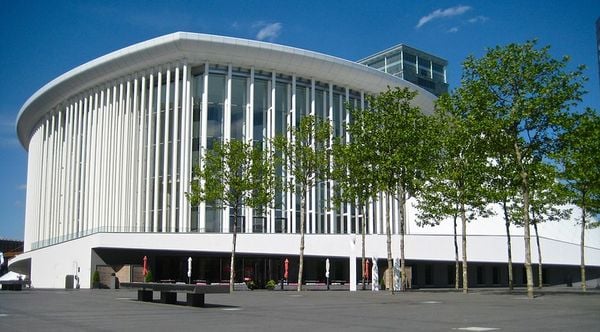
Even on otherwise slow weekends, visitors will find plenty of life at the Philharmonie, an eye-catching modernist concert hall that looks like a genuine optical illusion rendered in three dimensions. Interesting exhibitions also await at the BnL, the National Library, alongside more art on show at the Mudam, a genuinely groundbreaking gallery of contemporary works throughout the district.
Using the free funicular offers a genuinely fun way to reach this part of the city, and travelers can enjoy good views from the Pfaffendal Elevator, a glass lift running up to the Old Town across the river. Returning via footpaths amid a series of Vauban-era fortifications, including Fort Thüngen, rewards visitors with additional historical context along the way back.
This blend of contemporary architecture and older defensive fortifications gives the European Quarter genuine range for visitors interested in both modern institutions and Luxembourg’s considerably older military history. Travelers $TRV should check current Mudam exhibition schedules before visiting, since the contemporary art gallery rotates its featured collections throughout the year. Architecture enthusiasts specifically should budget time to simply observe the Philharmonie’s exterior from multiple angles, since the building’s optical-illusion design shifts considerably depending on the specific viewing position. Travelers should also check current BnL exhibition hours before visiting, since the National Library’s public displays don’t always follow the same schedule as its main lending operations. Comfortable shoes also help considerably given how much walking the funicular and elevator routes still require. A reusable water bottle also helps considerably given how much of this district rewards unhurried exploration. Comfortable walking shoes also help considerably given the district’s genuinely spread-out overall layout across the entire Kirchberg plateau. Checking current opening hours for the Mudam and BnL together also helps travelers plan an efficient single afternoon covering both venues.
Ernmuhl / Wikimedia Commons (CC BY-SA 3.0)
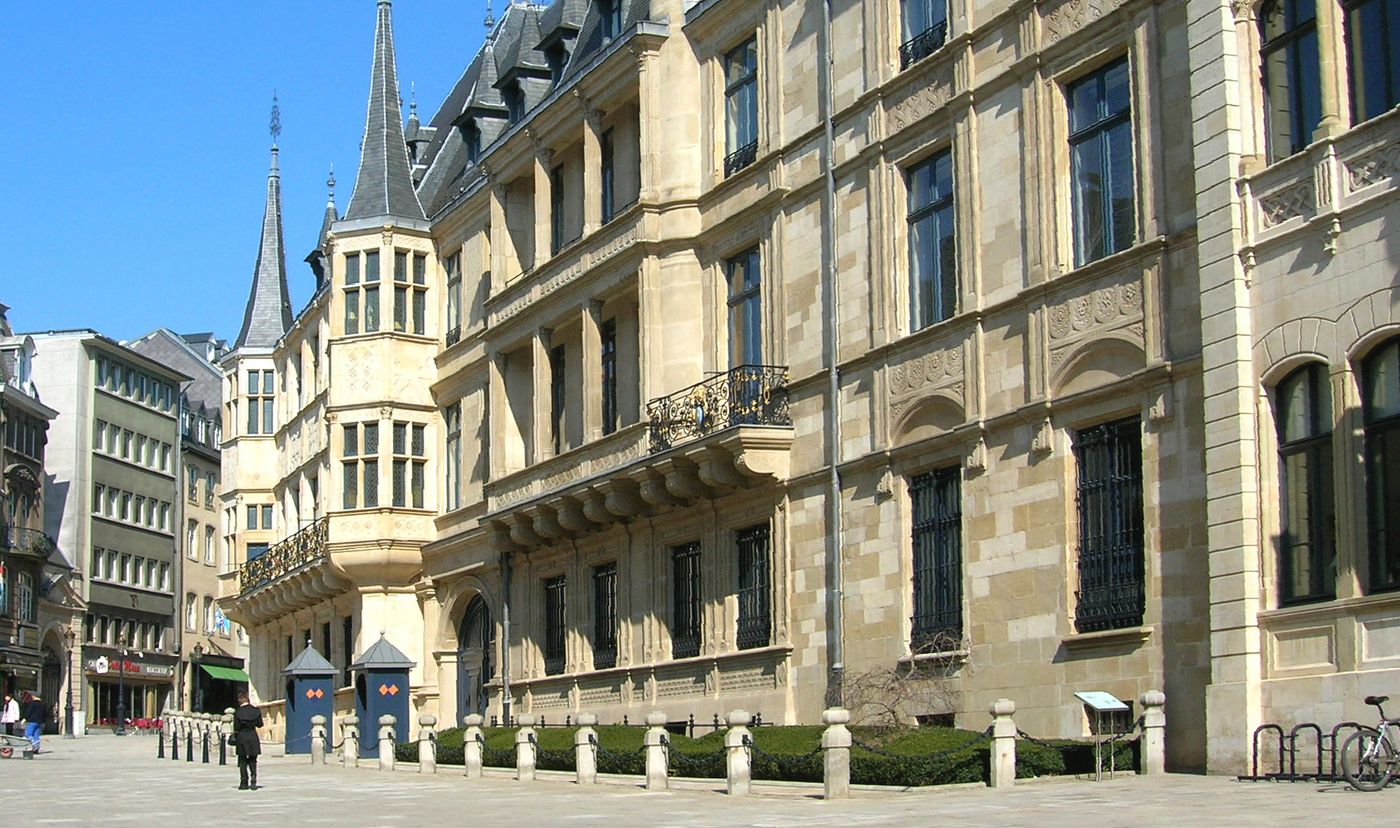
Luxembourg’s head of state, Grand Duke $DUK Henri, keeps his office in the Palais Grand-Ducal, a palatial building with genuinely photogenic pointy turrets. Built in 1572 originally as the town hall, the palace was expanded in 1860 with an annex that today houses the national parliament.
The main building has served as Luxembourg’s royal palace since 1890, and the view of the facade, a popular backdrop for selfies, can be appreciated at leisure over coffee at the Chocolate House terrace cafe nearby. Inside the palace, the decor morphs from medieval Gothic in the extravagant dining room to sumptuous gilt throughout the chambers upstairs.
Entering the palace requires prebooking a seventy-five-minute guided tour, available only from mid-July through early September, via the Luxembourg City Tourist Office. These lively tours provide genuine insight into the colorful story of Luxembourg’s royal family across multiple generations.
This limited seasonal access gives the palace tour genuine exclusivity, and travelers hoping to see the interior specifically should plan their Luxembourg trip around this narrow summer window instead of assuming year-round availability. Travelers $TRV hoping to tour the palace interior should book considerably earlier than expected, since the narrow summer-only window creates genuine competition for available tour slots. Travelers unable to secure a tour slot should still visit the Chocolate House terrace specifically, since the facade view alone rewards visitors even without touring the palace interior. Travelers should also confirm current tour availability directly through the tourist office, since the narrow summer booking window means slots can disappear weeks before a planned visit. A camera also helps considerably given how photogenic the palace facade proves throughout the day. Sunscreen also helps considerably for the outdoor coffee break at the nearby terrace cafe. A light scarf or wrap also genuinely helps for the guided tour’s genuinely cooler indoor sections upstairs. Arriving a little early for the booked tour time also helps avoid any last-minute rush through the tourist office. Every bit of preparation helps.
Credit: Museum for All
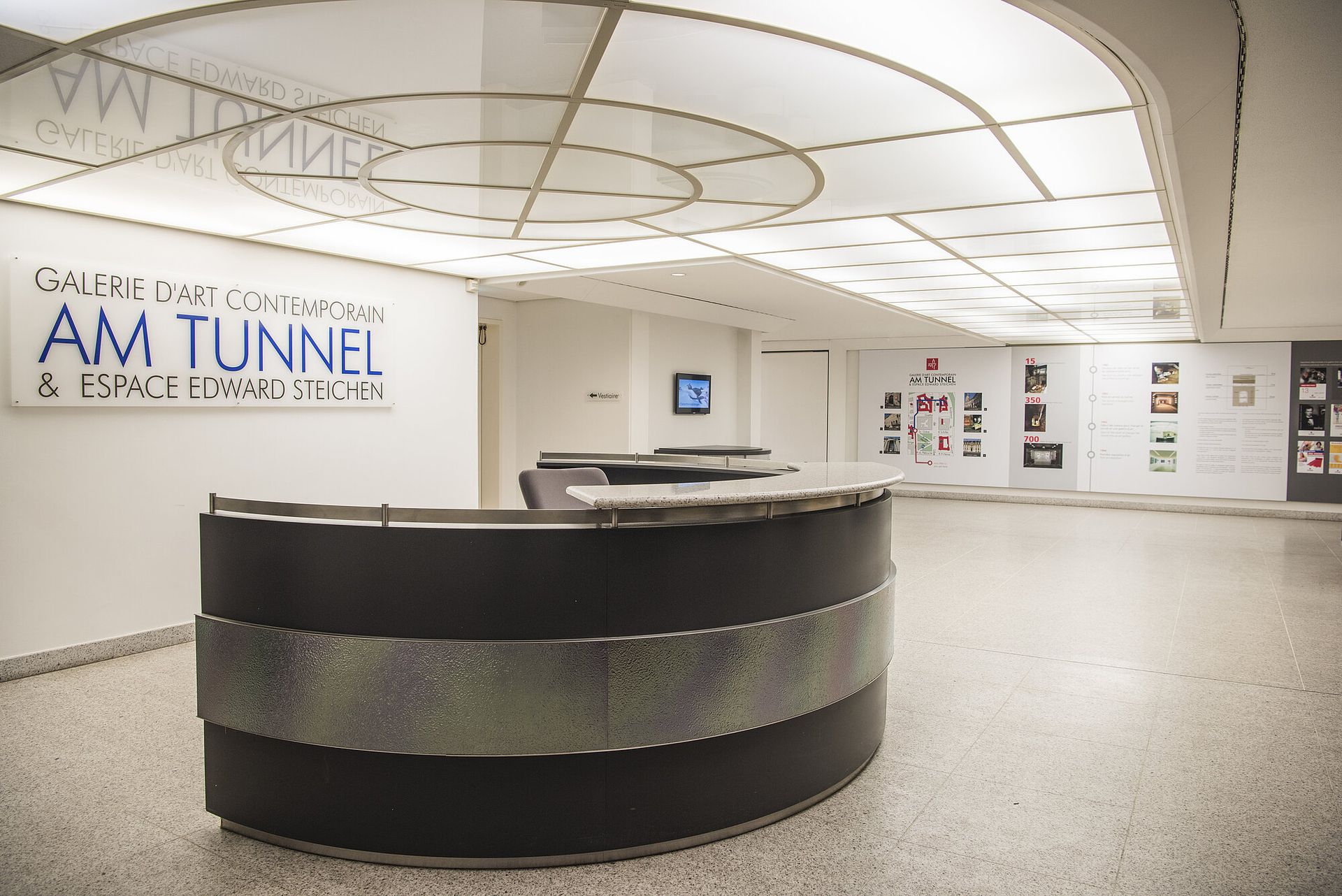
Venturing into the Am Tunnel rewards visitors with a genuinely unusual art experience, a 350-meter subterranean gallery holding photographic exhibits that change roughly every year or so. At the far end, visitors can view a fourteen-minute film about the pioneering Luxembourgish-American photographer Edward Steichen, giving the space genuine historical and artistic depth beyond a typical gallery visit.
More of Steichen’s portfolio appears at the National Museum of History and Art, the superb national art gallery located north of the Palais Grand-Ducal. This connection between the two sites gives photography enthusiasts genuine reason to visit both locations during the same trip.
The Am Tunnel forms part of the impressive Spuerkees Complex, whose centerpiece involves the tower-topped palace on Place de Metz, constructed back in 1913. Reached via a separate entrance, this palace contains a genuinely great banking museum, open specifically to groups with advance reservations.
This pairing of underground photography gallery and aboveground banking museum gives the Spuerkees Complex genuine range for visitors interested in both artistic and financial history within Luxembourg. Travelers $TRV interested specifically in Edward Steichen’s work should pair a visit here with a stop at the National Museum of History and Art, since the two collections complement each other directly. Travelers should check current exhibition rotation dates before visiting, since the gallery’s specific photographic focus shifts roughly annually and may not match every visitor’s particular interest. Travelers should also budget extra time for the Spuerkees banking museum specifically, since advance group reservations mean spontaneous same-day visits typically aren’t possible. A light layer also helps considerably given the underground gallery’s noticeably cooler temperature compared with the street above. A notebook also helps for jotting down which specific exhibits stand out most during the visit. A light jacket also helps considerably given the tunnel’s consistently cool underground temperature throughout the entire year. Checking whether English-language information is available on-site also helps travelers unfamiliar with French or Luxembourgish get more out of the exhibits.
Credit: Visit Luxembourg
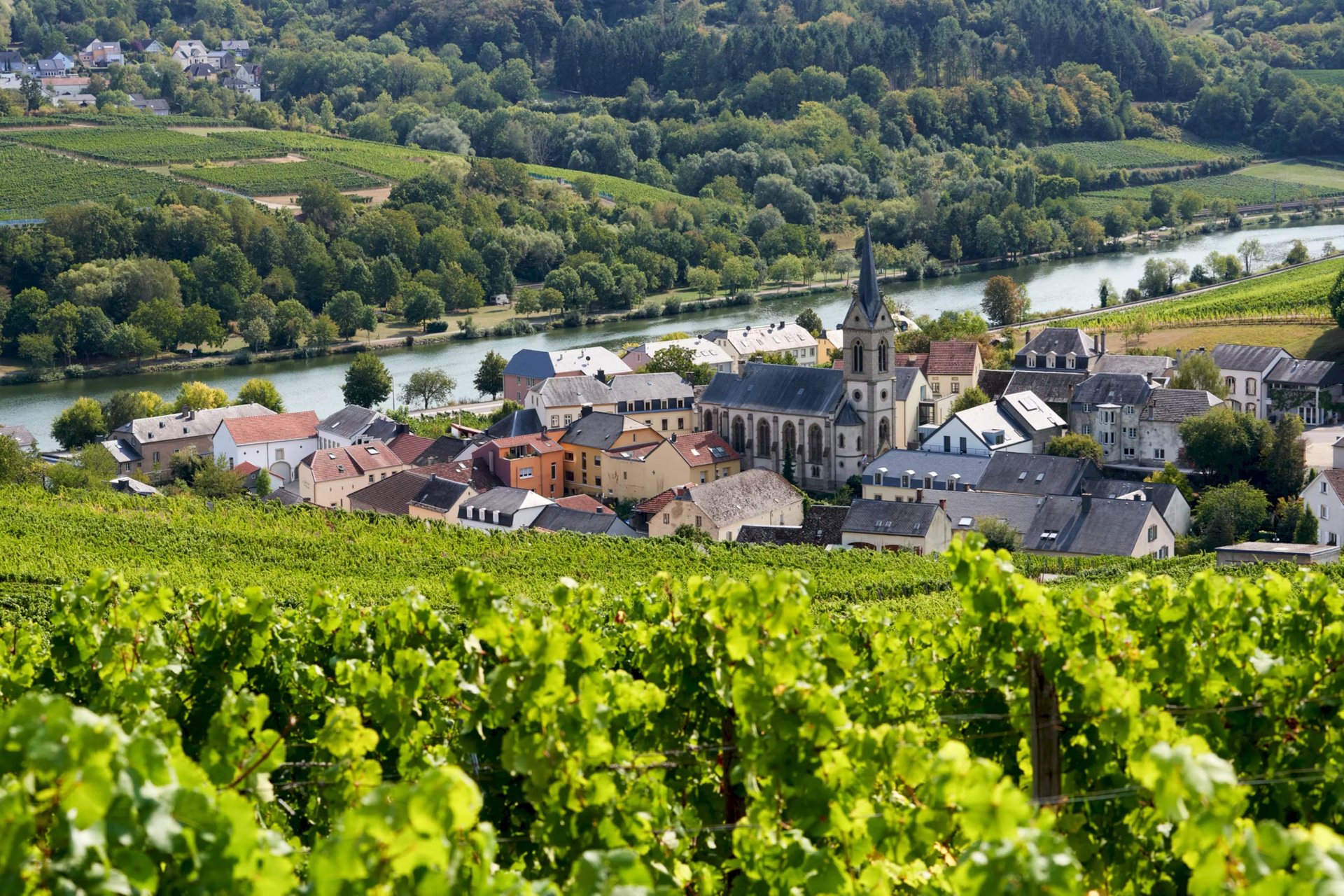
Just half an hour from Luxembourg City, the River Moselle forms the Luxembourg-Germany border between Wasserbillig and Schengen, its banks lined with genuinely emerald-green vineyards throughout the valley. The vines produce the excellent crémants, or sparkling wines, that give Luxembourg its distinctive fizz and pop, alongside a wide range of quality white wines available throughout the region.
A special delight involves the softly balanced pinot blancs found almost uniquely in Luxembourg, giving wine enthusiasts genuine reason to visit this particular region specifically for a grape variety rarely found elsewhere in such refined form.
Travelers $TRV hoping to tour as well as taste should visit Bernard-Massard by the bridge in Grevenmacher, with its art-filled reception area and genuinely humorous guides. Many travelers also feel drawn to the winemaking commune of Remich, where river-boat trips and a good selection of eateries await, though the town can get genuinely crowded, particularly on summer Sundays.
A genuinely better way to spend a Sunday afternoon involves joining a charmingly time-warped wine dance in one of the cellar rooms at Domaines Vinsmoselle’s Poll Fabaire premises. For tastings and light snack boards in a modernist salon with unbeatable poolside views, Caves Henri Ruppert rewards visitors with a genuinely different atmosphere. Travelers planning a Moselle Valley day trip should rent a car or book a guided tour, since public transport between the smaller wine villages is considerably limited. Wine enthusiasts specifically should budget a full day for the valley, since rushing between multiple vineyards in a single afternoon undercuts much of what makes each individual tasting experience worthwhile. Travelers should also confirm current tasting room hours before setting out, since smaller family-run vineyards throughout the valley sometimes keep more limited schedules than larger commercial operations. A designated driver also helps considerably given how many tastings a full day through the valley typically involves. A cooler bag also helps considerably for transporting any wine purchased directly from the vineyards.
Credit: Visit Luxembourg
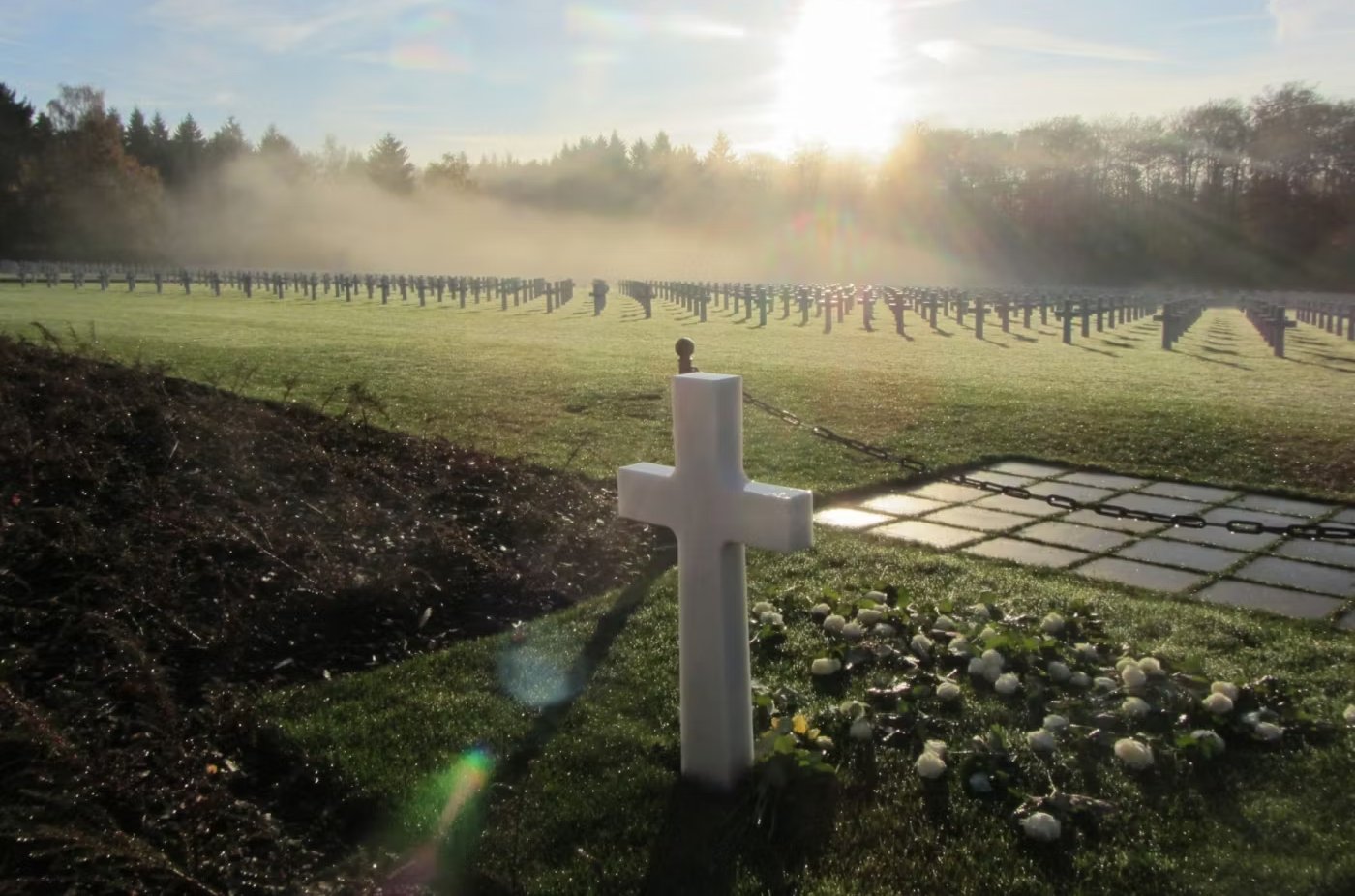
Roughly 4 kilometers from central Luxembourg City at Hamm, the Luxembourg American Cemetery is a genuinely moving place to visit. More than 5,000 white grave markers and commemorative pillars pay tribute to the American servicemen and servicewomen who gave their lives for the liberation of the Grand Duchy during World War II.
Luxembourg was actually liberated twice, first in September 1944 and again during the Battle of the Bulge that same Christmas, giving the cemetery genuine historical layers reflecting this repeated fighting throughout the region. This dual liberation history adds genuine depth to a visit beyond a single battle or campaign.
Perhaps the most famous veteran resting here involves General George Patton, famed for his swagger, ivory-handled pistol, and genuinely foul-mouthed pronouncements, who died following a car accident in 1945 shortly after the war’s conclusion.
Travelers $TRV visiting the cemetery should budget genuine time to walk among the grave markers instead of rushing through, since the sheer scale of the site, combined with its considerable historical weight, rewards a slower, more contemplative pace than a quick photo stop would allow. Travelers should check current visiting hours before arriving, since the cemetery occasionally adjusts its schedule around specific memorial ceremoni