
7 experiences that explain why people fall in love with New Zealand
Fjords, glowworm caves, Māori culture, and landscapes that look unreal on camera — where to start on a first visit to one of the most talked-about countries in the world
Anastasia Yudin / Pexels
New Zealand has a specific reputation problem for first-time visitors: it is talked about so consistently in superlatives — most beautiful, most dramatic, most unspoiled — that arriving with those expectations set unreasonably high is almost inevitable. What is less often explained is which specific experiences are responsible for the reputation, as distinct from the country's general scenic quality, which is genuinely everywhere. A first-time visitor with a week or two and two islands to cover benefits from knowing which experiences are the ones people are actually talking about when they say the country changed how they think about travel.
New Zealand's compact size relative to its landscape diversity is part of what makes it demanding to plan for: fjords, glaciers, geothermal fields, subtropical forest, and vineyard country all exist within a landmass smaller than the United Kingdom, and a first-time visitor who tries to see all of it in a short trip typically ends up experiencing all of it briefly rather than a smaller number of things properly. This list prioritizes depth over breadth: seven experiences, each substantial enough to justify a dedicated day or more, that collectively represent the range of what makes New Zealand distinctive without spreading a first visit too thin.
Each entry covers what the experience is, why it specifically explains New Zealand's reputation, and the practical logistics — which island, how much time to allocate, and when to go — that a first-time visitor needs to build an itinerary around it.
Milford Sound, South Island
Sébastien Goldberg / Unsplash
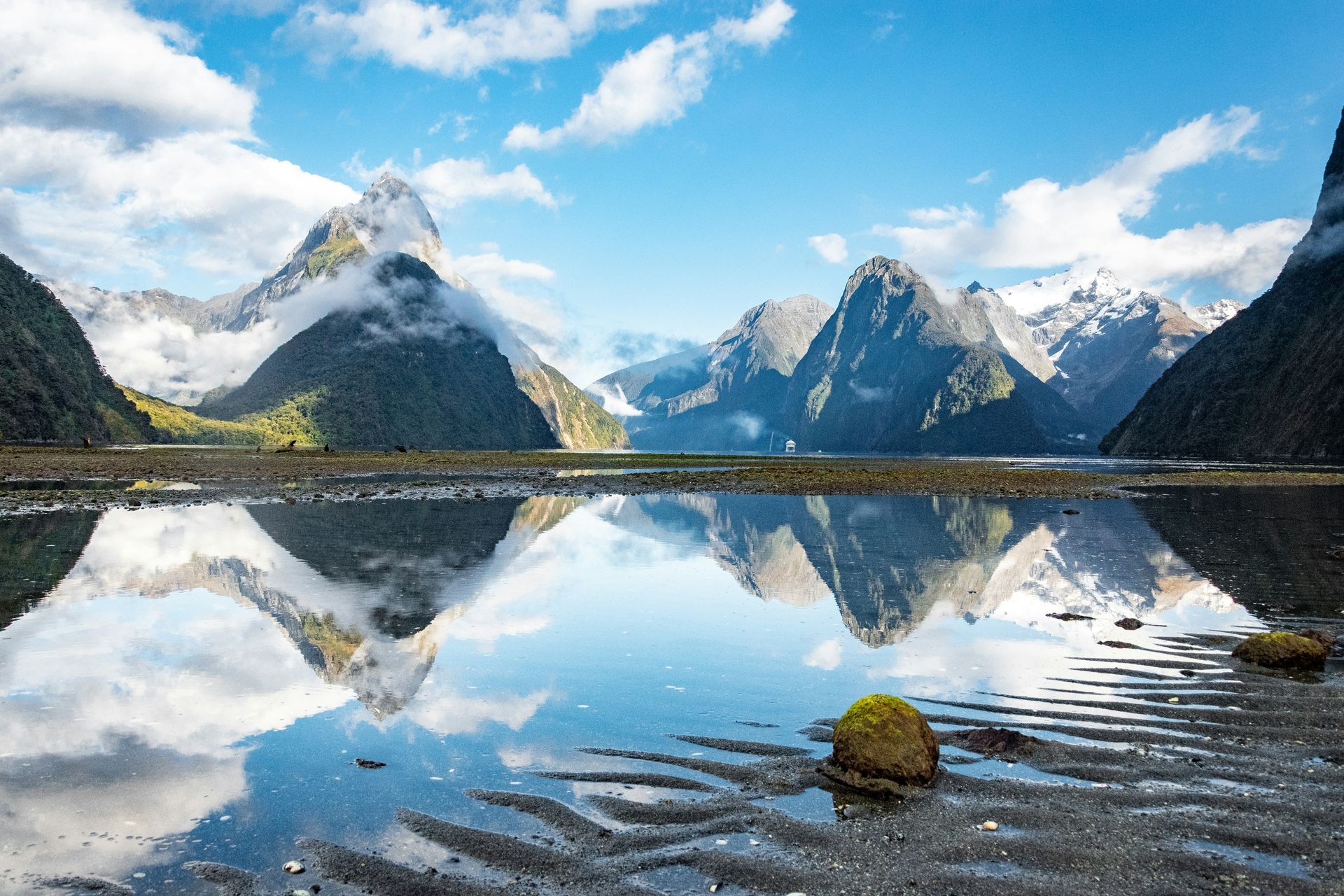
Milford Sound — technically a fjord rather than a sound, carved by glacial action rather than river erosion — is the single most photographed landscape in New Zealand and the specific place most frequently cited by first-time visitors as the moment the country's reputation stopped feeling like marketing and started feeling accurate. Sheer rock walls rise up to 1,200 meters directly from the water, waterfalls (permanent and temporary, the latter appearing after rain) cascade down the cliff faces, and the fjord's narrow, enclosed geometry produces a sense of scale that photographs consistently fail to convey.
The standard way to experience Milford Sound is a boat cruise, ranging from two-hour standard tours to overnight cruises that allow for a sunset and sunrise on the water — the overnight option is significantly more expensive but is consistently rated by past visitors as the superior experience, because Milford Sound's character changes dramatically with light and with the reduced boat traffic of early morning and evening.
The logistics are worth planning around carefully: Milford Sound is remote, accessible by a spectacular but long drive from Queenstown or Te Anau (allow a full day for the round trip if not staying overnight), and it is one of the wettest inhabited places in New Zealand, receiving rain on more than half the days of the year — which, counterintuitively, is when the waterfalls are at their most dramatic. Visiting during or immediately after rain, rather than waiting for clear weather, often produces the more memorable experience.
Waitomo Glowworm Caves, North Island
Tomáš Malík / Pexels
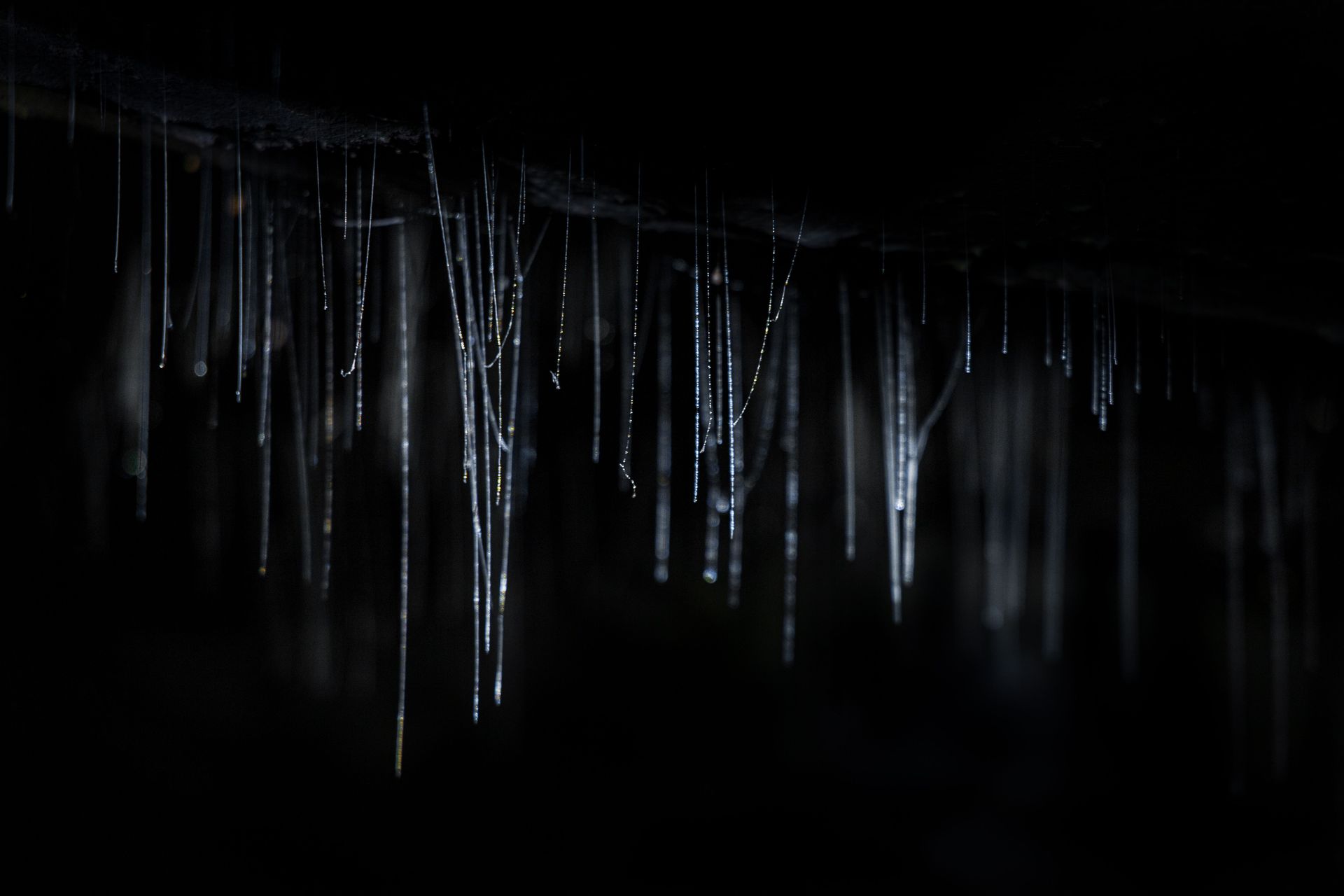
The Waitomo Caves, in the central North Island, contain limestone cave systems inhabited by Arachnocampa luminosa — a glowworm species found only in New Zealand — whose larvae produce bioluminescent light to attract prey, creating the effect of a cave ceiling covered in what looks precisely like a clear night sky of stars, despite being entirely underground. The specific experience of drifting by boat through a dark cave chamber under thousands of points of blue-green bioluminescent light is unlike anything available elsewhere in the world at this scale and accessibility.
The standard visitor experience is a guided boat tour through the main glowworm grotto, typically 45 minutes to an hour, conducted in near-total silence and darkness because the glowworms are sensitive to noise and light (flash photography is prohibited for this reason, which means the experience must be encountered directly rather than mediated through a phone screen — itself part of what makes it memorable). More adventurous options include black-water rafting, in which visitors float through the cave system on inner tubes, combining the glowworm experience with a genuine caving adventure.
Waitomo is a manageable half-day or full-day addition to a North Island itinerary, situated between Auckland and Rotorua or Wellington, making it straightforward to incorporate into a broader North Island route rather than requiring a dedicated detour.
A traditional hangi and Māori cultural experience, Rotorua

Robert Stokoe / Pexels
Rotorua, the center of Māori cultural tourism in New Zealand, offers first-time visitors the most accessible and most substantive introduction to Māori culture available in the country: a traditional hangi (a meal cooked in an earth oven using heated stones, a technique with direct historical continuity to pre-colonial Māori cooking) combined with a cultural performance featuring haka, waiata (song), and traditional weaponry demonstrations, typically presented at a marae (a Māori communal and ceremonial complex) or a dedicated cultural center.
The specific value of this experience for a first-time visitor is contextual: New Zealand's identity is substantially shaped by the bicultural relationship between Māori and Pākehā (New Zealanders of European descent) established through the Treaty of Waitangi, and visitors who encounter Māori culture only through souvenir shops and place names miss the living cultural context that a properly presented hangi and performance provides. The better cultural centers — Tamaki Māori Village and Te Puia among the most established in Rotorua — are Māori-owned and operated, employing performers and guides who present the culture from within rather than as a commercialized re-enactment.
Rotorua's geothermal features — mud pools, geysers, and the sulfur-scented landscape that gives the city its distinctive smell — are typically combined with the cultural experience in a single day, and the city's position roughly three hours from Auckland makes it a natural stop on a North Island itinerary.
Tongariro Alpine Crossing, North Island
Tom Macret / Pexels
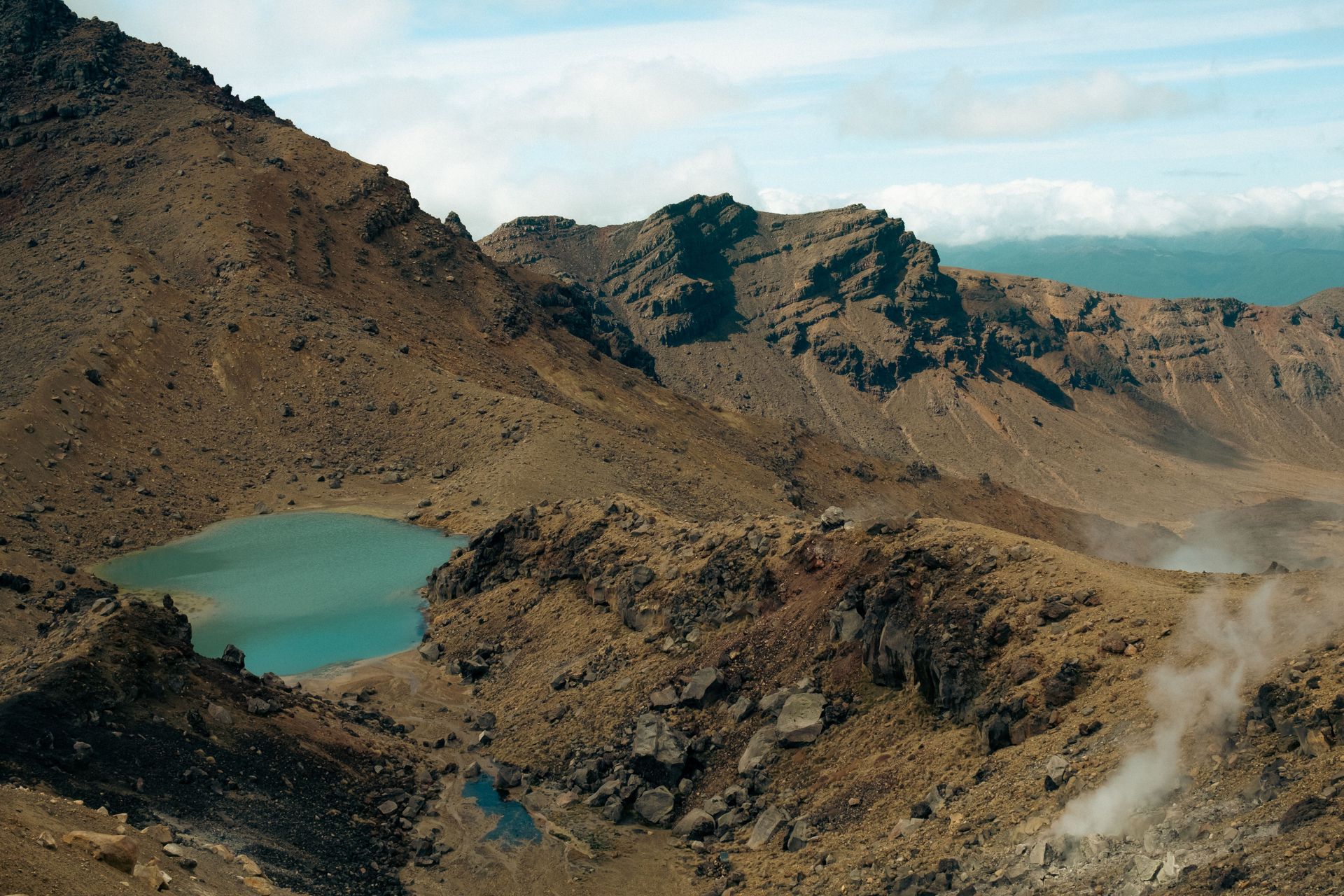
The Tongariro Alpine Crossing — a 19.4-kilometer day hike through a volcanic landscape of active and dormant volcanoes, emerald-colored crater lakes, and terrain so dramatically alien that it was used as the setting for Mordor in Peter Jackson's Lord of the Rings films — is widely considered one of the best one-day hikes in the world and is the specific experience that converts first-time visitors who did not previously think of themselves as hiking people.
The crossing takes six to eight hours to complete, involves a significant elevation gain (approximately 800 meters) over volcanic scree and, at the highest point, exposed alpine terrain subject to rapid weather changes even in summer, and requires a level of physical fitness and preparation (appropriate footwear, layered clothing, sufficient water) that is worth taking seriously despite the hike's status as a day trip rather than a technical mountaineering expedition. Weather conditions can close the crossing without notice, and checking conditions the morning of the hike is essential rather than optional.
The reward for the effort is a landscape unlike anything most visitors have hiked through previously: the Red Crater, the Emerald Lakes (colored by dissolved minerals), and the specific quality of walking across an active volcanic system that is, geologically, still doing something. Most visitors arrange transport through one of the shuttle services that run from National Park Village or Turangi, since the point-to-point nature of the hike requires transport coordination rather than a simple out-and-back.
Franz Josef or Fox Glacier, South Island
Francesco Ungaro / Pexels
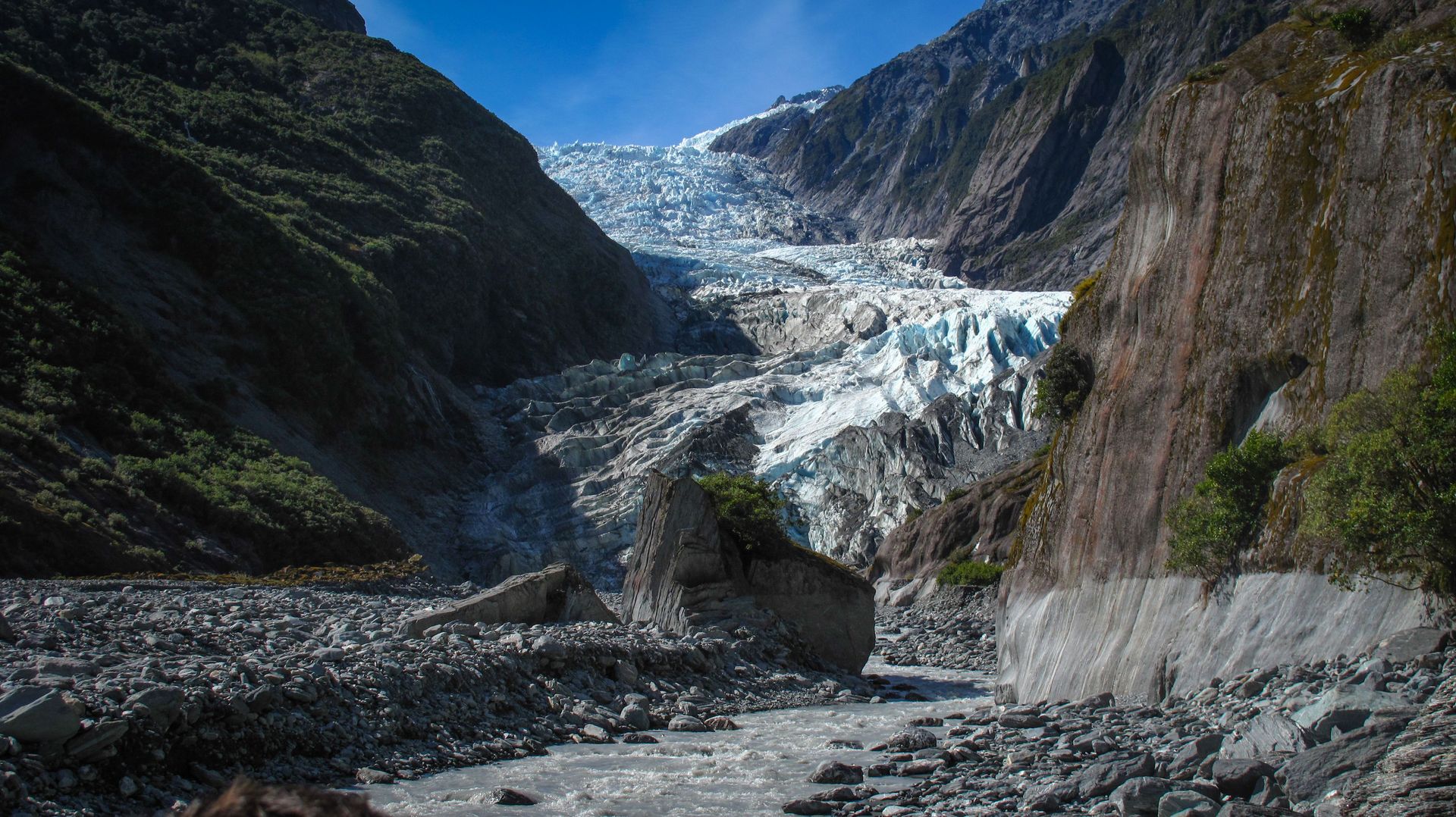
The West Coast glaciers — Franz Josef and Fox, roughly 25 kilometers apart on the South Island's rugged western coastline — are among the most accessible glaciers in the world relative to sea level and temperate rainforest surroundings, a specific combination of geography that does not exist in comparable form anywhere else on Earth: glacial ice descending through lush, fern-filled rainforest toward the Tasman Sea.
Both glaciers have retreated significantly in recent decades due to climate change, which has changed how they are experienced: ground-level access to the glacier terminus, once straightforward, is now more restricted at both sites due to instability and rockfall risk, and the recommended way to experience either glacier properly is a helicopter tour that lands directly on the ice, allowing for guided walking on the glacier surface itself — an experience that is significantly more expensive than the valley walks to the terminus viewpoints but that provides direct access to a landscape that is otherwise increasingly difficult to reach on foot.
For visitors on a tighter budget, the valley walks to each glacier's terminus viewing area remain worthwhile even without ice access, offering close views of the glacier and the specific temperate rainforest ecosystem that makes the West Coast one of the most ecologically distinctive regions of the South Island. Either glacier works as a day stop on a South Island road trip between Queenstown and the West Coast's other attractions.
Bay of Islands, North Island
Linde Lanjouw / Unsplash
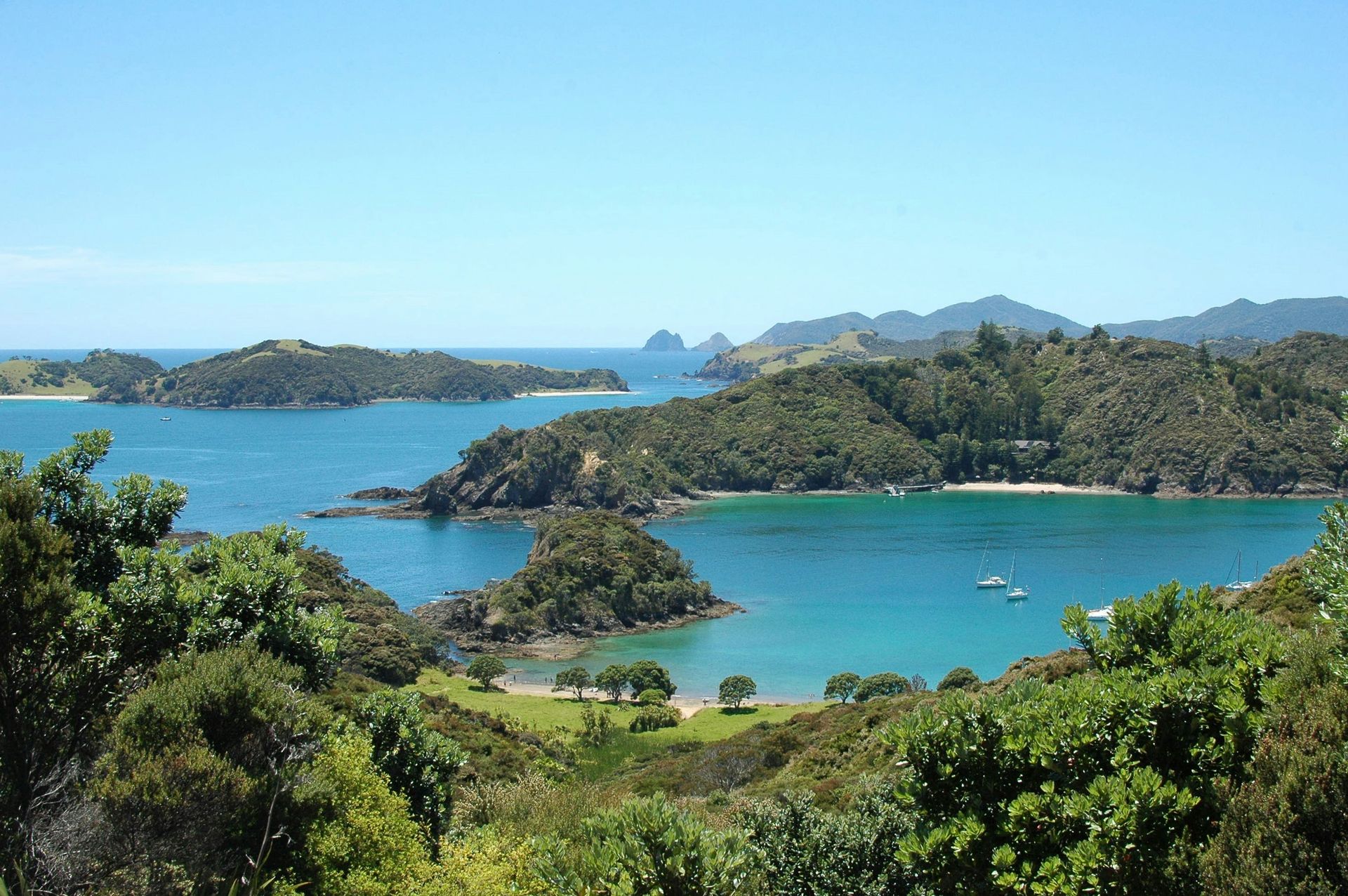
The Bay of Islands, in the far north of the North Island, contains 144 islands across a coastline whose combination of subtropical warmth, clear water, and historical significance (it is where the Treaty of Waitangi was signed in 1840, the founding document of the modern New Zealand state) makes it distinct from the South Island's more dramatic mountain and fjord scenery — a specifically maritime and historical counterpart to the alpine experiences that dominate most South Island itineraries.
The standard visitor activity is a boat tour through the islands, often including the Hole in the Rock (a natural archway through Motukokako Island that boats pass through when conditions allow) and options for swimming with dolphins, which are resident in the bay year-round. The Waitangi Treaty Grounds, where the founding treaty was signed, provide the historical counterpart to the natural scenery — a specific site where the complicated and still-contested history of Māori-Crown relations can be engaged with directly rather than abstractly.
The Bay of Islands is approximately three hours from Auckland by car, making it accessible as a multi-day addition to a North Island itinerary rather than a dedicated flight destination, and its warmer climate relative to the rest of the country makes it a specific counterpoint for visitors whose itinerary has otherwise been dominated by the cooler South Island landscapes.
Queenstown adventure activities, South Island
Pablo Heimplatz / Unsplash
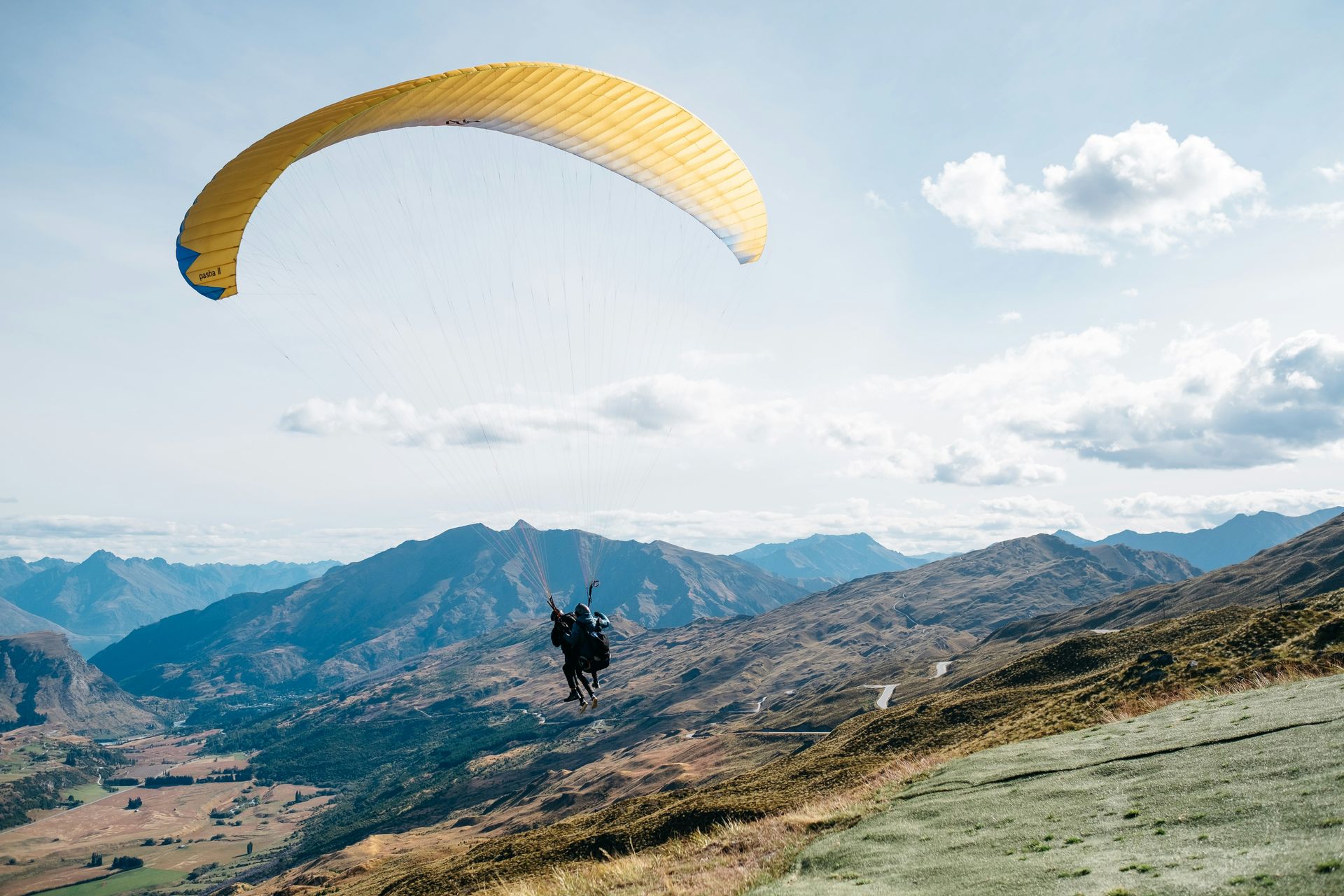
Queenstown's reputation as the adventure tourism capital of New Zealand — the birthplace of commercial bungy jumping, and a hub for jet boating, skydiving, whitewater rafting, and paragliding — is the specific counterpart to the country's scenic reputation: not merely a place to look at dramatic landscape but to engage with it directly through activities that would be difficult to arrange with comparable safety infrastructure and professionalism elsewhere.
For a first-time visitor uncertain of their appetite for extreme activities, Queenstown's specific value is the range available: a first bungy jump at the Kawarau Bridge (the original commercial bungy site, historically significant as well as scenic), a jet boat trip through the narrow canyons of the Shotover River, or, for a lower-intensity introduction, the Skyline Gondola and its luge track, provide entry points at multiple levels of intensity within the same compact town.
Queenstown's setting on Lake Wakatipu, surrounded by the Remarkables mountain range, means that even visitors who skip the adventure activities entirely find the town itself among the most scenically situated in the country, and its position as a hub for South Island exploration — within reach of Milford Sound, the glaciers, and Central Otago's wine country — makes it a natural base for several days of a South Island itinerary rather than a single-activity stop.