From swimming in the Seine with an Eiffel Tower view to free riverside salsa and swing dancing at Quai Saint-Bernard on summer evenings
Juan Ordonez / Unsplash
Paris in summer has a specific and well-earned reputation for becoming more livable as the temperature rises, not less. The city’s relationship with its outdoor spaces, its riverbanks, its parks, its canal-side promenades, intensifies across the summer months in a way that makes the hot-weather visit feel like a reward, not a sacrifice. The parks fill with picnickers. The Seine’s banks transform into temporary beaches. The music spills from courtyards and bridges on Fête de la Musique. The Tour de France ends on the Champs-Élysées. The open-air cinema sets up at La Villette. The salsa dancers gather at Quai Saint-Bernard. The city turns outward in a seasonal expansion whose specific pleasures are unavailable in the museums-and-monuments winter visit.
The 2024 Olympic and Paralympic Games gave Paris a specific summer legacy that 2026 benefits from directly: the cleanup of the Seine required to make the river safe for Olympic swimming events has created designated swimming zones where Parisians and visitors can swim in the river for the first time in decades. The Île aux Cygnes open-water swimming pool offers swimmers a view of the Eiffel Tower from the water. The Bassin de la Villette and the Canal St-Martin provide the summer swim program with additional free access locations, subject to safety-based capacity restrictions that make early arrival the most practical approach.
The 10 activities below appear in Lonely Planet, covering Paris’s most rewarding summer events and outdoor experiences. Several events on this list, the Fête de la Musique, the Bastille Day fireworks, Paris Plage, and the Quai Saint-Bernard dancing, are entirely free, giving the Paris summer a cultural program whose cost barrier is as low as any major European capital offers in the peak season. The mix of free and ticketed events gives the Paris summer a programming range that accommodates every budget.
Sharat Ganapati / Wikimedia Commons (CC BY 2.0)
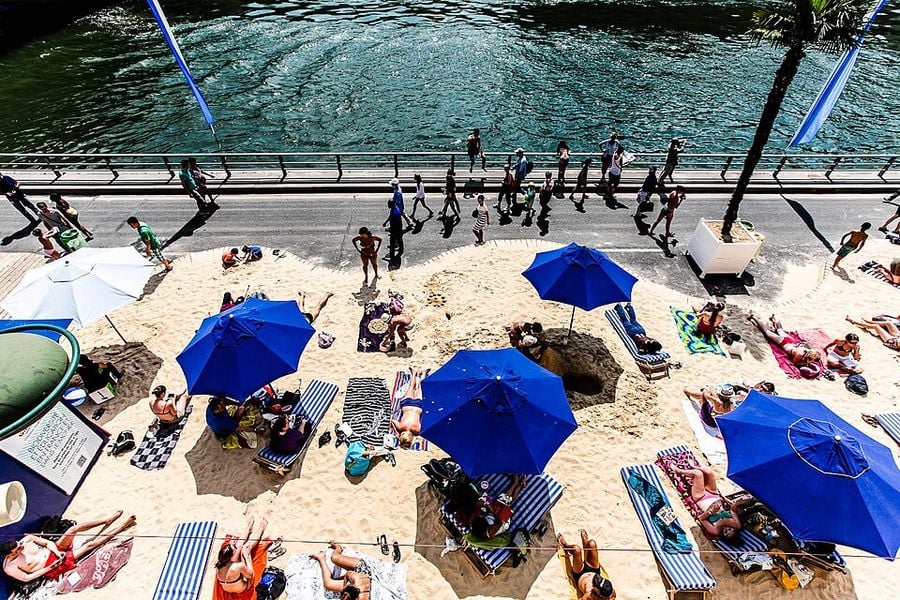
Paris Plage, the city’s annual summer beach event, transforms sections of the Seine riverbanks and the Canal St-Martin into leisure spaces from July through September, giving Parisians and visitors a riverside alternative to the city’s parks, whose specific character shifts year by year. The current iteration has moved away from the sand-and-palm-tree tropical format of earlier years toward a Mediterranean-influenced design whose native trees, deckchairs, parasols, and shared games give the riverbank a more ecologically coherent character, reflecting a greener approach to urban summer leisure. The picnic culture along the banks gives Paris Plage its most specifically Parisian social dimension: the groups who spread their blankets along the riverside give the event a communal outdoor dining scene whose informality and duration, stretching through long summer evenings, makes it one of the most genuinely local experiences a summer visitor can participate in.
The Canal St-Martin section adds pétanque pitches and table tennis tables at dedicated spots along the quayside, giving the active visitor a recreational program beyond the passive deckchair experience and giving the neighborhood its most animated summer public-space activation. The canal’s specific character, more intimate and less tourist-heavy than the Seine’s central banks, gives the Canal St-Martin Paris Plage a crowd mix more weighted toward Parisian residents than international visitors.
The event’s free and open format gives Paris Plage its most democratic single quality: no ticket, no reservation, no admission fee, and no dress code gives the spontaneous visitor the full experience without prior planning, and the Seine’s newly clean water gives the event a relationship with the river whose actual physical proximity can now extend to swimming at the designated spots nearby. The Paris Plage event’s specific evolution from the sand-and-palm-tree aesthetic of its early years to the current native-tree-and-deckchair format reflects the city’s broader shift toward the sustainable urban design whose ecological coherence gives the 2026 iteration a different character from the tropical pastiche that the event’s critics found incongruous on a northern European riverbank.
Anne Laure P / Unsplash
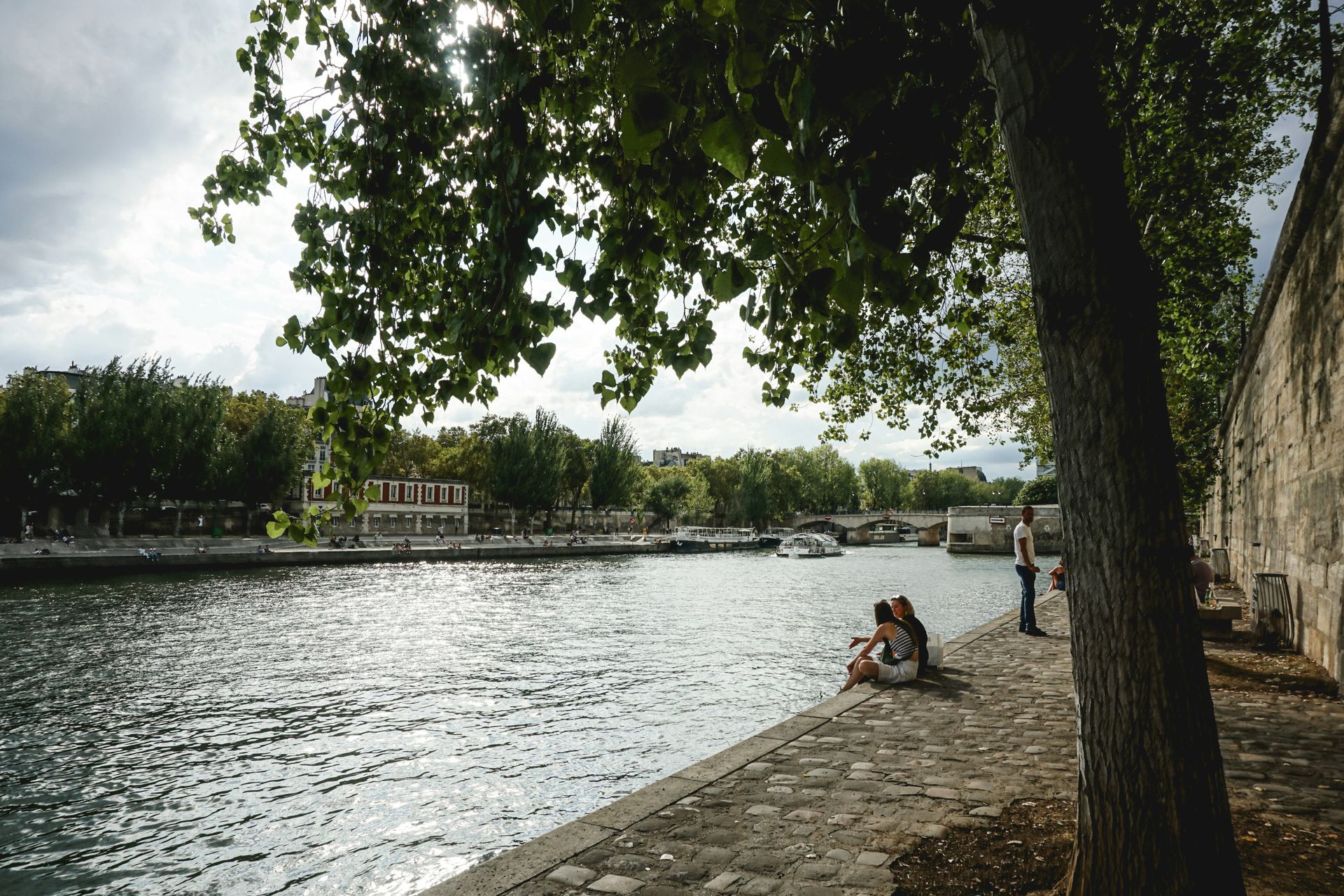
The intensive cleanup of the Seine required for the 2024 Olympic open-water swimming events has produced a specific and lasting public benefit: designated bathing zones where swimming in the river is permitted for the first time in decades. The open-water swimming pool at the Île aux Cygnes offers the swimmer a specific visual reward: the Eiffel Tower, visible from the water, provides a distinctly Parisian backdrop whose river swimming and iconic architecture together create an experience available nowhere else in the world. The Bassin de la Villette on the Canal de l’Ourcq and the pop-up swimming section of the Canal St-Martin give the Seine swimming program additional locations whose character differs from the river’s main current.
All swimming is free at the designated spots, though numbers are restricted at any given time for safety reasons, giving the early-morning arrival its most practical advantage: the first swimmers of the day find both the shortest wait and the calmest water, whose morning stillness gives the Seine swim its most tranquil physical experience before the heat and the crowds of midday arrive. The restriction-by-capacity system gives the bathing zones a managed safety program specific to river swimming, whose currents and depths make unrestricted access like that on ocean beaches impractical.
The availability of river swimming in Paris represents the most tangible single legacy of the 2024 Olympic preparation for the city’s summer leisure program, and the addition of the Eiffel Tower swimming view to the established tourist activities gives the summer visitor an experience whose novelty and Parisian character give the day in Paris its most unexpected possible physical activity. The capacity restrictions at each bathing zone, enforced for swimmer safety, give the arrival time a practical significance specific to a swimming experience that cannot be queued and held like a museum ticket: the early-morning swimmer who arrives at opening finds the water at its cleanest, calmest, and least crowded, which is the experience the Olympic cleanup investment was specifically designed to produce.
Mathurin NAPOLY / Unsplash
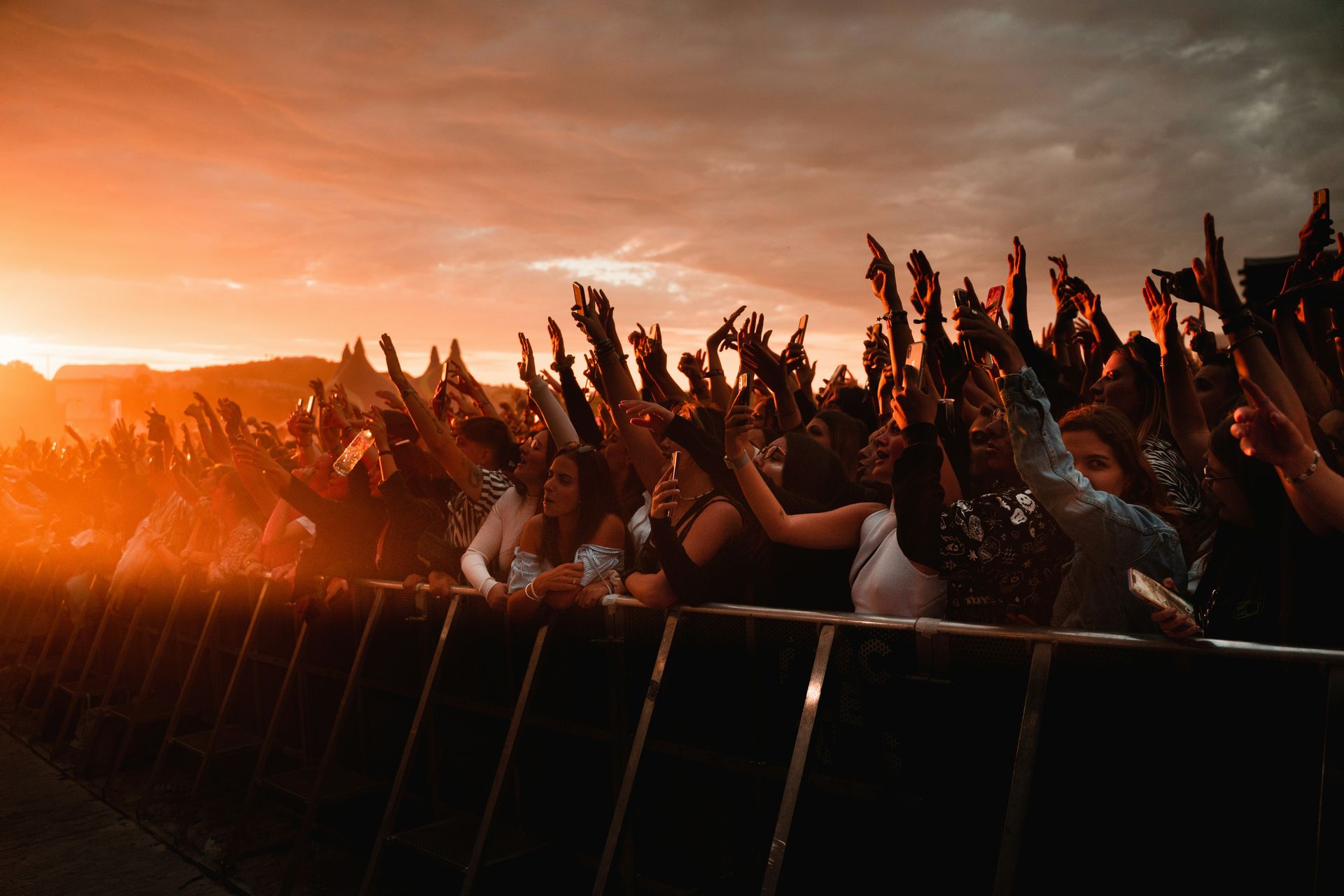
The Fête de la Musique, held every year on June 21, the longest day of the year, gives the official start of summer in Paris its most musically generous single expression: a citywide festival of staged and impromptu live performances by professional and amateur musicians across streets, courtyards, squares, and bridges, with no admission fee, no printed schedule, and no organized route. The discovery format, wandering the city and encountering whatever music the specific corner has attracted, gives the Fête a specific character whose spontaneity distinguishes it from the ticketed festival whose programmed stage and seat assignment replaces the wandering with a planned consumption of pre-selected acts.
The genre breadth gives the Fête its most democratic musical program: jazz, rock, classical, reggae, and electronic music share the city’s public spaces without hierarchy or separation, and the proximity of a classical string quartet in one courtyard and a reggae band on the adjacent street gives the wandering visitor a musical range specific to a festival that has no curatorial principle beyond the city’s willingness to offer its public spaces to whoever wants to play. Amateur participation gives the Fête its most specifically communal quality: the neighborhood musicians who set up on their own block lend the festival a grassroots authenticity that the professionally organized stages complement.
The June 21 timing gives the Fête de la Musique its most practically favorable natural condition: the longest day means the evening light persists well past 10 p.m., giving the outdoor performances their most extended comfortable viewing window of the year and the city’s public spaces their most fully inhabited summer evening. The Fête de la Musique’s specific character as an event with no single map or guide is both its most appealing and its most anxiety-inducing quality for the visitor accustomed to organized programming: the correct approach is to pick a neighborhood, begin walking, and follow the sound, a practice that gives the wandering visitor the specific pleasure of musical discovery whose unpredictability makes each Fête de la Musique evening a genuinely unrepeatable personal itinerary.
Yiwen / Unsplash
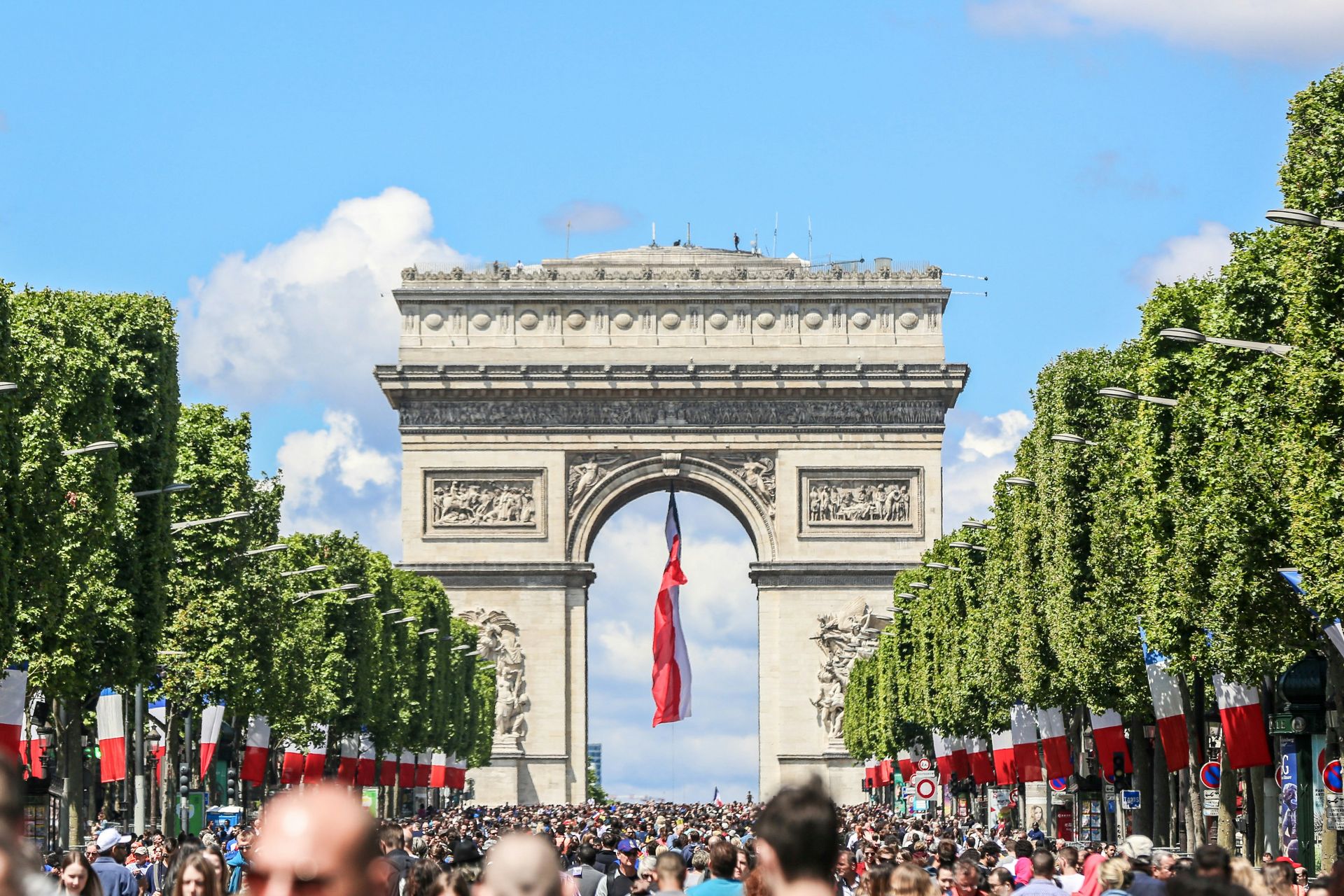
Bastille Day 2026 gives the holiday its most specific format: out of respect for the victims of the 2016 Nice terror attack, the Eiffel Tower fireworks and drone show has been moved to July 13 instead of July 14, making Thursday evening the summer season's most spectacular visual event. The Trocadéro and Champ de Mars are the two most established public spaces for fireworks viewing, and the Eiffel Tower’s position between them makes both viable vantage points whose visual compositions differ depending on the viewer’s position relative to the tower.
July 14, France’s national day, brings the military parade along the Champs-Élysées in the morning, accompanied by a fly-past of fighter aircraft and helicopters that gives the parade its most dramatic aerial dimension. The 2026 celebration adds Ukraine’s participation to the parade, giving the national day its most specifically geopolitically significant single addition in recent years. The parade’s early-morning schedule gives the visitor who arrives the night before the most convenient possible approach: the avenue fills from early in the morning as the crowd claims barrier positions, and the late-arriving visitor finds the viewing compromised by the depth of the assembled crowd.
The two-day Bastille Day program, fireworks on the 13th and the parade on the 14th, gives the holiday weekend its most complete possible coverage for the visitor whose Paris stay spans both days, and the free public access to all events gives the national holiday its most inclusively accessible summer program. The Bastille Day weekend’s restaurant and bar culture in Paris deserves specific mention: the national holiday brings out the French celebratory spirit in a way that transforms the city’s outdoor café terraces into unofficial party venues whose atmosphere on the evening of July 13, after the fireworks, gives the visitor a participatory social experience specific to France’s most patriotically charged single night of the year. The restaurants on the avenue des Champs-Élysées, whose terraces fill with Bastille Day revelers, give the July 13 evening its most commercially celebratory dimension.
Hugo LUC / Wikimedia Commons (CC BY-SA 4.0)
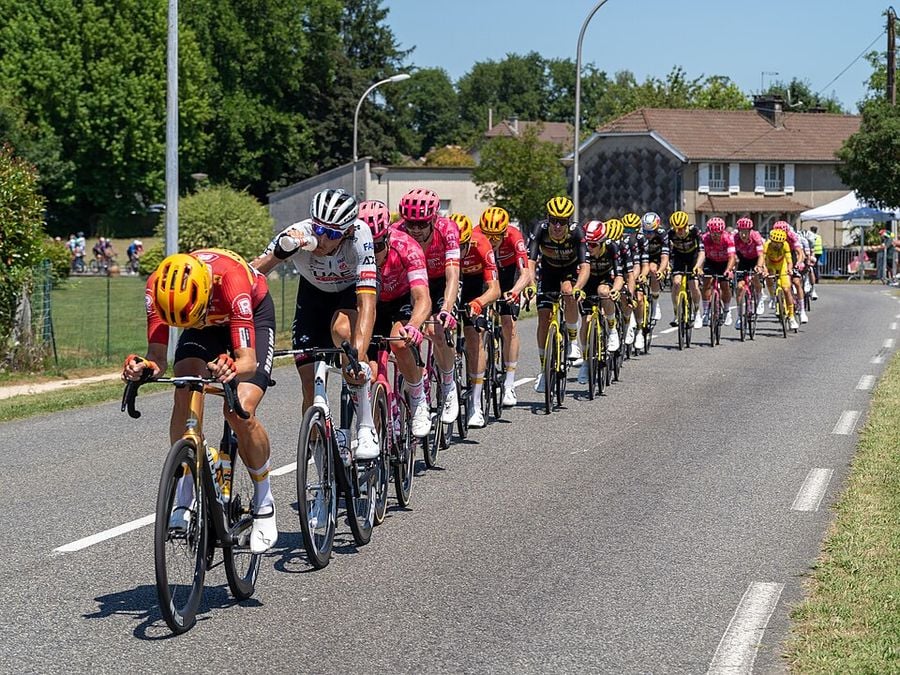
The Tour de France’s final stage ends on the Avenue des Champs-Élysées on the last Sunday of July, giving the 3,500-kilometer race its most celebrated and most visually spectacular conclusion. The peloton’s arrival on the Champs-Élysées after 21 stages and three weeks of racing gives the crowd that has gathered along the avenue from early morning a specific sporting climax whose athletic achievement, Parisian setting, and Arc de Triomphe backdrop give the Tour de France finale a visual and emotional intensity specific to the world’s most prestigious cycling race’s most iconic single moment.
The crowd management along the avenue presents a specific challenge for free-standing viewing: the avenue fills early, and the visitor who arrives without a reserved position finds the standing-room barriers occupied by those who arrived hours earlier. The VIP grandstand tickets available online offer a guaranteed Arc de Triomphe view, its most specific commercial alternative to the free-standing crowd position, and the price reflects the specific value of a seated, unobstructed view of the race’s conclusion from the grandstand nearest the finish line.
The broader Tour de France culture throughout July gives the visitor who is not on the Champs-Élysées for the final stage a citywide sporting atmosphere specific to a race whose cultural significance in France extends far beyond the cycling enthusiast demographic: the free-to-air television coverage on screens across the city throughout July gives the non-attending visitor the race’s daily drama without the logistical commitment of attending in person. The cycling infrastructure that the Tour de France and the broader cycling culture have produced in Paris gives the summer visitor a specifically active option: the Vélib bike-share system, which covers most of central Paris with docking stations within a few hundred meters of nearly every destination, gives the cyclist the same infrastructure that has made Parisians increasingly comfortable with bicycle commuting as the city’s transport culture has shifted away from car dependence over the past decade.
Credit: La Villette
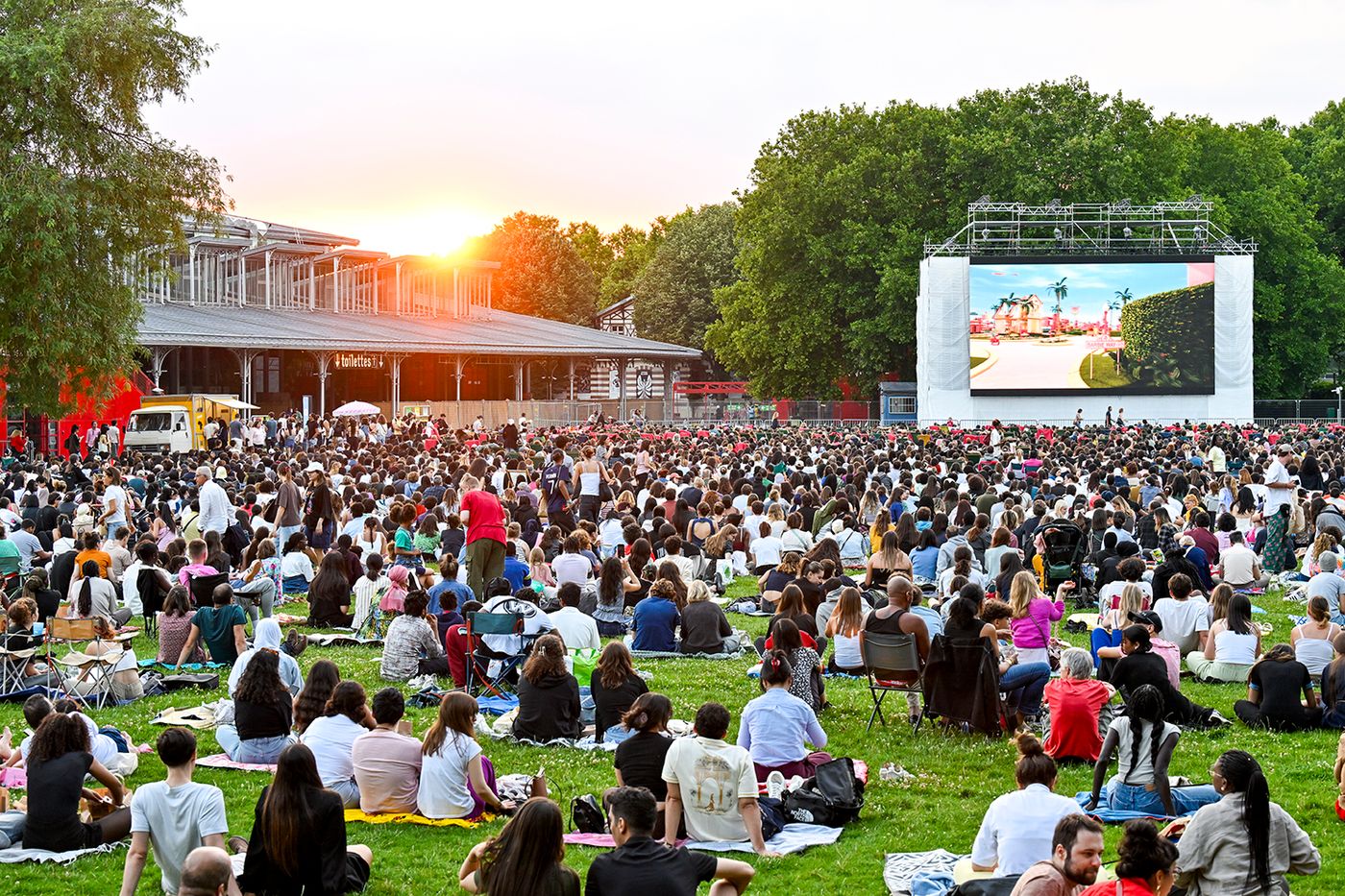
The annual open-air cinema at La Villette gives Paris its most specifically cinematic summer outdoor event: free screenings at the Parc de la Villette, whose bring-your-own-blanket format creates a picnic atmosphere that's at once informal and communal, the essence of outdoor cinema. The event runs from late July through mid-August, giving the summer visitor whose Paris stay falls in that window a free evening cultural program that the indoor art-house cinema cannot replicate in the same outdoor social setting. This year’s programming theme is nature, giving the film selection curatorial coherence specific to a park whose canal-side setting and landscaped grounds make it the outdoor cinema's most naturally appropriate site.
The prebooked deckchair option gives the visitor who prefers not to sit on the grass a paid alternative, whose modest fee provides the convenience of reserved seating and has specific practical value for visitors whose backs or mobility make prolonged grass seating impractical. The prebooked chairs are available online ahead of each screening, giving the planning-conscious visitor a reserved spot whose availability is not guaranteed for the walk-up visitor who arrives expecting ground-level accommodation.
La Villette’s broader summer context provides the cinema visit with its most complete possible evening program: the 35-hectare park, whose canal-side location and extensive facilities give the pre-screening hours a recreational setting specific to one of Paris’s largest and most programmatically active public parks. The Parc de la Villette, whose 35 hectares house the Cité des Sciences et de l’Industrie science museum, the Cité de la Musique concert hall, the Grande Halle de la Villette performance space, and the canal-side terraces, gives the open-air cinema visit an entire evening’s worth of adjacent cultural program for the visitor who arrives early. The park’s position in the 19th arrondissement, a neighborhood whose multicultural character and working-class history give it a specifically Parisian local texture, gives the La Villette visit a neighborhood experience distinct from the tourist-heavy central zones.
Credit: Paris Jazz Club
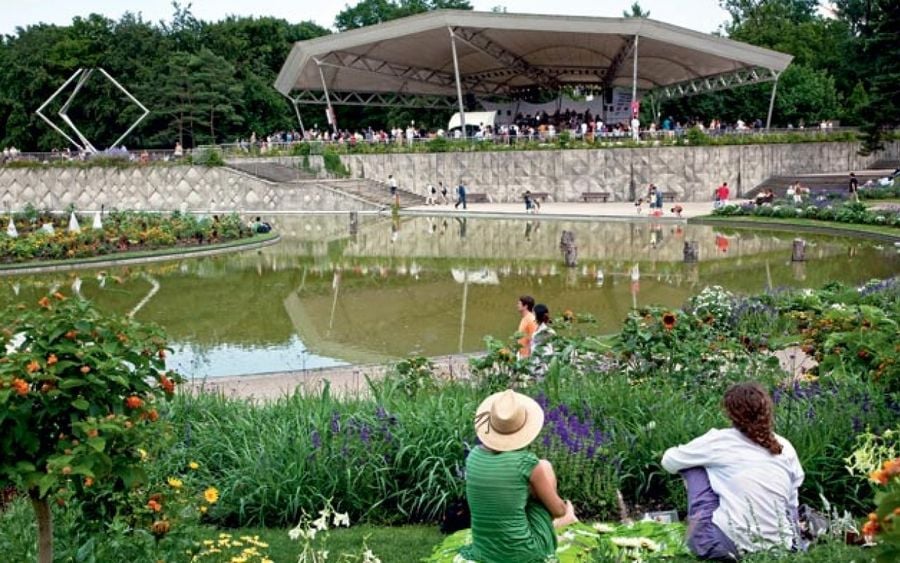
The Festivals du Parc Floral is a summer series of free outdoor events at the Parc Floral de Paris, a botanical garden within the Bois de Vincennes park, running from late June through early September and encompassing three distinct festivals whose combined breadth gives the summer program its most complete free cultural offering in any single Paris location. Pestacles serves families with young children through workshops and musical shows, with age-specific programming that gives the youngest visitors a tailored cultural experience. The Classique au Vert offers a free outdoor concert series, with its botanical garden setting complementing the Parc Floral’s rose gardens and rare plant collections, and featuring musical accompaniment tailored to the garden’s natural acoustic environment. The Paris Jazz Festival fills the open-air stage with jazz performances, featuring genre-specific programming that gives dedicated jazz visitors a reliable summer program. Its location within the Bois de Vincennes gives the forest park its most musically sophisticated setting.
The Bois de Vincennes itself, encompassing 995 hectares of former royal hunting grounds with lakes, a zoo, and extensive forested paths, provides the Festivals du Parc Floral with a broader park program whose scale offers a full day’s outdoor activities around the concert or workshop. The botanical garden’s rare plant collections and 18th-century greenhouses give the pre-concert walk a horticultural program specific to one of Paris’s most scientifically significant garden collections.
The free admission to all three festival programs gives the Festivals du Parc Floral the most generous single summer cultural offering available anywhere in Paris, and the Bois de Vincennes’s eastern location, accessible by Metro line 1, gives the festival-going visitor a Paris neighborhood whose residential character gives the cultural visit a less tourist-saturated context than the central arrondissements. The Paris Jazz Festival’s free performances give the summer visitor access to the jazz genre in one of the world’s most historically significant jazz cities: Paris’s role as the post-war sanctuary for American jazz musicians whose creative work in the city’s clubs gave European jazz its most American-influenced developmental period gives the outdoor festival a historical resonance specific to Paris as a jazz destination.
Credit: Office de Tourisme de Paris
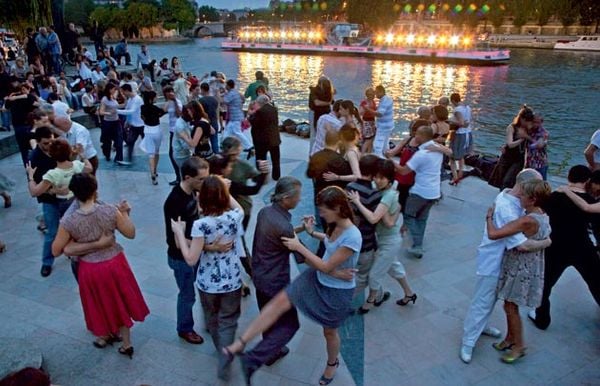
The dancing at Quai Saint-Bernard near the Jardin des Plantes gives Paris’s summer riverside leisure its most participatory and most socially open single activity: an informal gathering of locals and visitors at the semi-circular paved areas overlooking the Seine, where salsa, swing, and other social dances happen spontaneously, led by charismatic instructors and accompanied by music from portable speakers. The age range, from young adults to octogenarians, and the welcoming attitude toward beginners give the Quai Saint-Bernard dancing its most inclusive social character of any activity on this list, and the absence of any admission cost, organized registration, or required skill level gives the completely inexperienced dancer the most low-stakes possible introduction to social dance in a public outdoor setting.
The impromptu nature of the gatherings gives the visit an element of discovery specific to an activity whose format depends on who turns up and what they know: the specific dance on any given evening, salsa one night, swing the next, depends on the instructor or the community who arrives, giving the repeat visitor a varied program and the first-time visitor the specific novelty of not knowing what to expect. The riverside setting gives the dancing its most specifically Parisian visual context, with the Seine, the bridge, and the summer evening light giving the outdoor dance floor a setting whose water, architecture, and ambient urban sound are specific to this stretch of the Left Bank.
The spectator option is explicitly welcomed in the Lonely Planet article, offering the visitor who does not want to dance a specific, non-awkward role as an appreciative audience for a communal activity whose energy and warmth give the riverside evening its most spontaneously joyful atmosphere. The nearby Jardin des Plantes, whose botanical gardens, rare plant collections, and 18th-century glass greenhouses give the area its most sustained horticultural attraction, gives the Quai Saint-Bernard visitor a cultural destination for the hours before the dancing begins, making the stretch of the Left Bank between the Jardin and the quay a full summer evening program.
Lara Janssen / Wikimedia Commons (CC0 1.0)
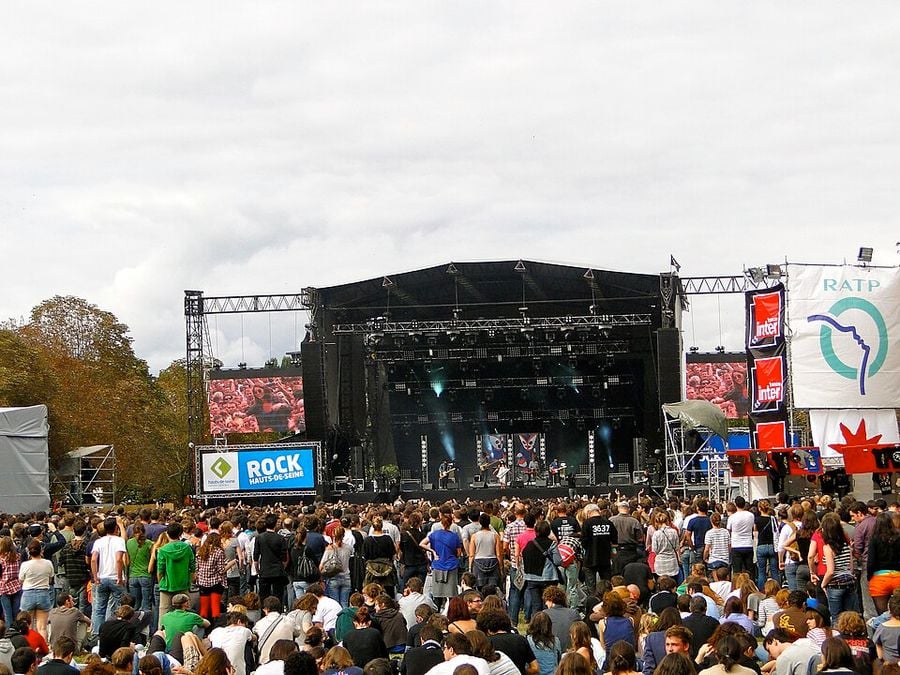
Rock en Seine gives Paris its most prestigious multi-day rock and pop music festival: a concert series at the Domaine National de Saint-Cloud on the city’s southwestern edge whose 2026 lineup includes Lorde, Tyler the Creator, The Cure, Nick Cave and the Bad Seeds, and the Deftones. The festival grounds in the elevated parkland of the Saint-Cloud domain give the event a setting whose tree-lined paths, sweeping views back toward Paris, and formal park character set it apart from the festival field aesthetic that most major music festivals in Europe adopt.
The food truck program and the parkland walking give the between-stage hours a leisure program specific to a festival venue whose natural setting makes the grounds worth exploring independently of the musical schedule. The views from the elevated park back toward the Paris skyline give the Saint-Cloud setting its most specifically Parisian visual quality, connecting the festival’s international lineup to the city it sits at the edge of in a way that a downtown concert venue cannot.
The festival’s location on the Metro and RER network gives it a logistical accessibility from central Paris that major European music festivals outside of city limits cannot match, and the day ticket and multi-day ticket structures give the visitor who wants to see specific headliners the option of attending one evening without committing to the full festival format. The 2026 lineup’s artist selection reflects Rock en Seine’s programming philosophy, balancing legacy acts, The Cure and Nick Cave and the Bad Seeds, with contemporary headliners, Lorde and Tyler the Creator, giving the festival’s audience a demographic breadth that single-genre or single-generation festivals do not achieve. The Saint-Cloud park’s formal French landscape design, with allées and parterres whose geometric structure differs entirely from the field festival aesthetic, gives the Rock en Seine experience a physical environment whose specific Frenchness adds a cultural layer to the international music program, giving the Rock en Seine experience a physical setting whose formal park character distinguishes it from the standard festival field.
Credit: Women of Paris
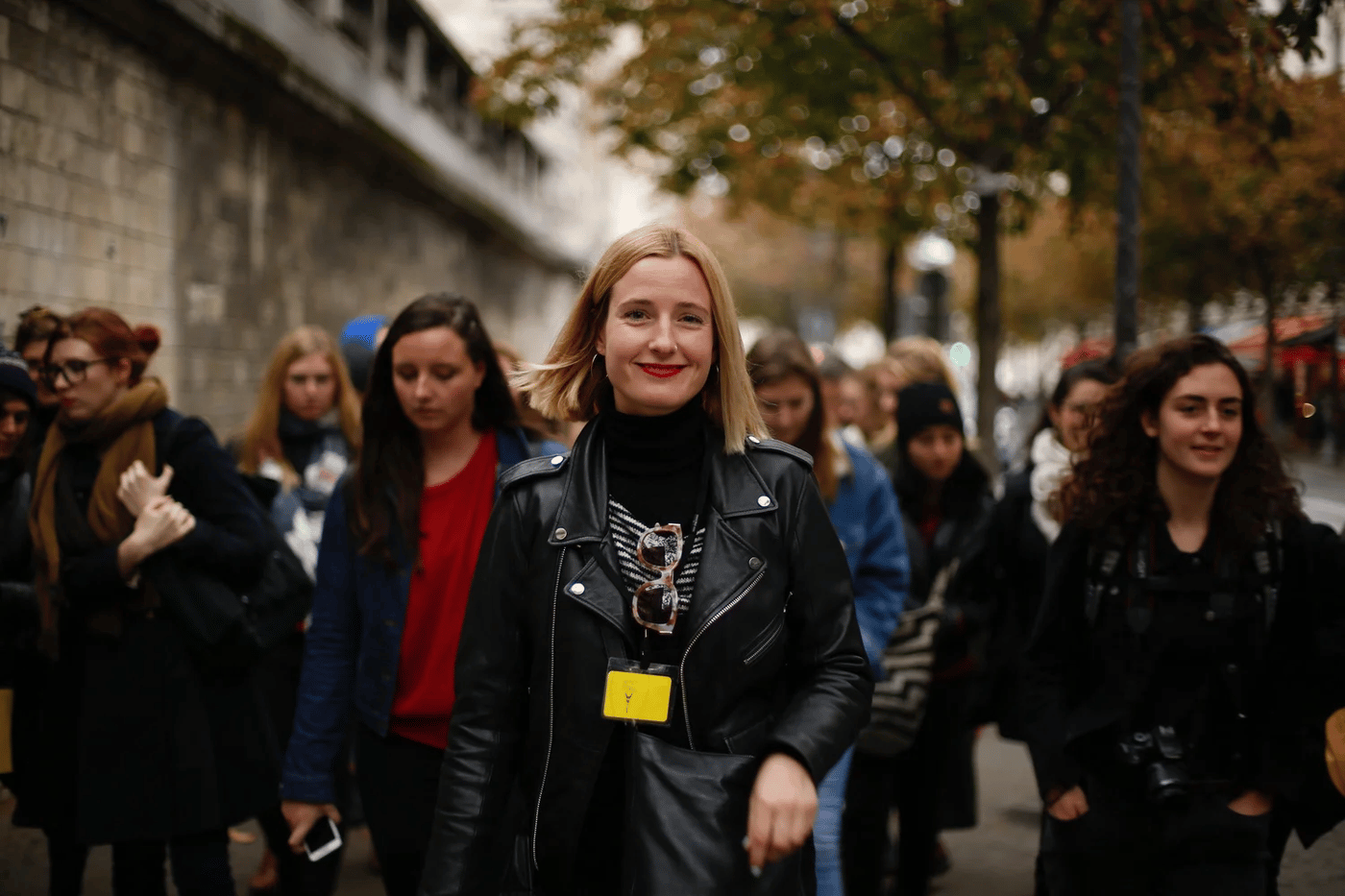
Heidi Evans’s Women of Paris walking tours give the Paris walking tour format its most specifically feminist curatorial reframing: six tours that replace the standard historical narrative’s focus on great men with the stories of the women whose contributions to Parisian history and culture the standard tour circuit consistently overlooks. The tours are often combined with food tastings at local markets and pâtisseries, giving the historical and cultural program a culinary dimension specific to a tour operator whose approach treats food as inseparable from the city's cultural identity.
The practical accessibility of the tours gives the format its most inclusive single credential: most tours are wheelchair-accessible, there is no minimum age limit, and private tours are available alongside the standard group format. The 15-person group size limit gives the tour a specific intimacy, and the small-group character allows the guide’s storytelling to take on a conversational quality that the large-group walking tour’s broadcast dynamic does not provide in the same terms.
The women whose stories Evans tells span the full range of Parisian history, from the political to the artistic to the scientific to the social, giving the six tours a collective coverage that, for the visitor who takes multiple tours, provides a significantly different understanding of the city’s history than the standard tour circuit offers. The food tasting component’s specific locations, local markets, and neighborhood pâtisseries give each tour a culinary itinerary whose venues reflect the neighborhood’s character and the historical period whose women the tour explores. Heidi Evans launched the Women of Paris tours after observing that the standard Paris walking tour circuit focuses almost exclusively on male historical figures, and the six tours she has developed offer the visitor six distinct neighborhood and period combinations whose women’s stories provide the standard Paris historical narrative with its most comprehensive alternative framing. The private tour option gives the solo traveler or the small group a personalized itinerary whose pace, depth, and specific women prioritized can be adjusted to the participant’s specific historical interests.
