Rich Martello / Unsplash
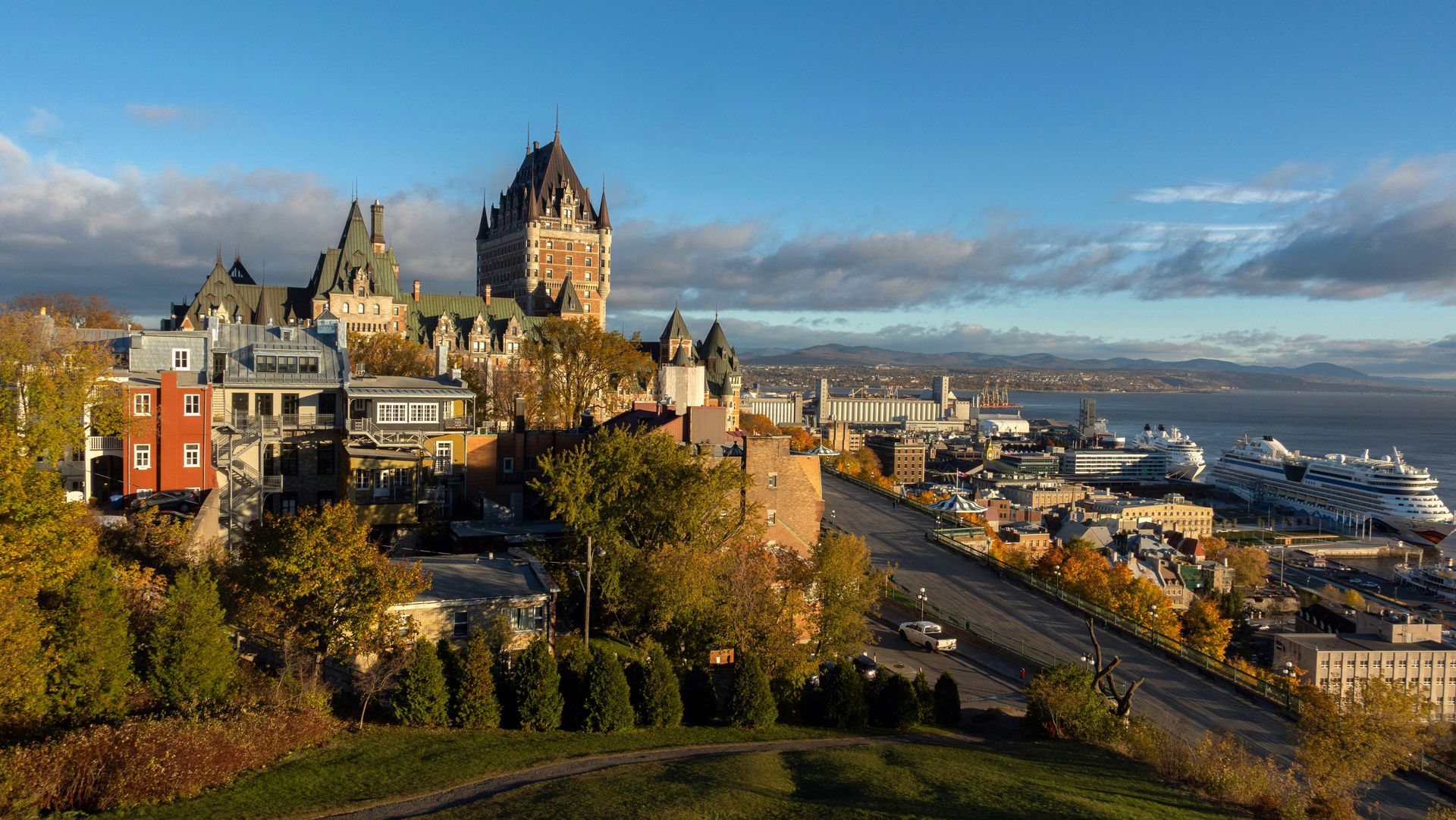
Quebec City occupies a particular place in North American travel that no other destination quite replicates. Founded in 1608 by the French explorer Samuel de Champlain, it is one of the oldest European settlements on the continent, and its historic core remains intact in a way that most cities of comparable age have not. The cobblestoned streets of Old Quebec, the fortified walls that still encircle the upper town, and the grand hotel that has perched on the clifftop above the St. Lawrence River since the 19th century give the city a physical continuity with its past that visitors from newer cities find immediately striking. Quebec City feels, in the best possible sense, like somewhere that has been around for a very long time.
The city serves as a destination year-round in a way few Canadian cities do. Summer brings festivals, outdoor dining, and a pace of street life on terraces and in parks that the long winters make residents deeply appreciate. Winter delivers the Quebec Winter Carnival, ice hotels, toboggan runs, and a snow-covered historic district that looks precisely as a French-Canadian city in January should look. Fall foliage turns the surrounding national parks and the vineyard island just downstream into sights worth traveling specifically to see. There is no bad time to go, only different versions of the experience.
The recommendations below draw on the expertise of Quebec City’s top concierges and tour guides, whose suggestions appear in Travel + Leisure. The result covers the full range of what the city offers: historical sites, natural landscapes, food culture, seasonal events, and the kind of immersive local experiences that turn a visit into something more than a list of sights covered. Each entry reflects what makes Quebec City worth the trip, rather than simply what is possible to do there.
1 / 10
Sondoce wasfy / Unsplash
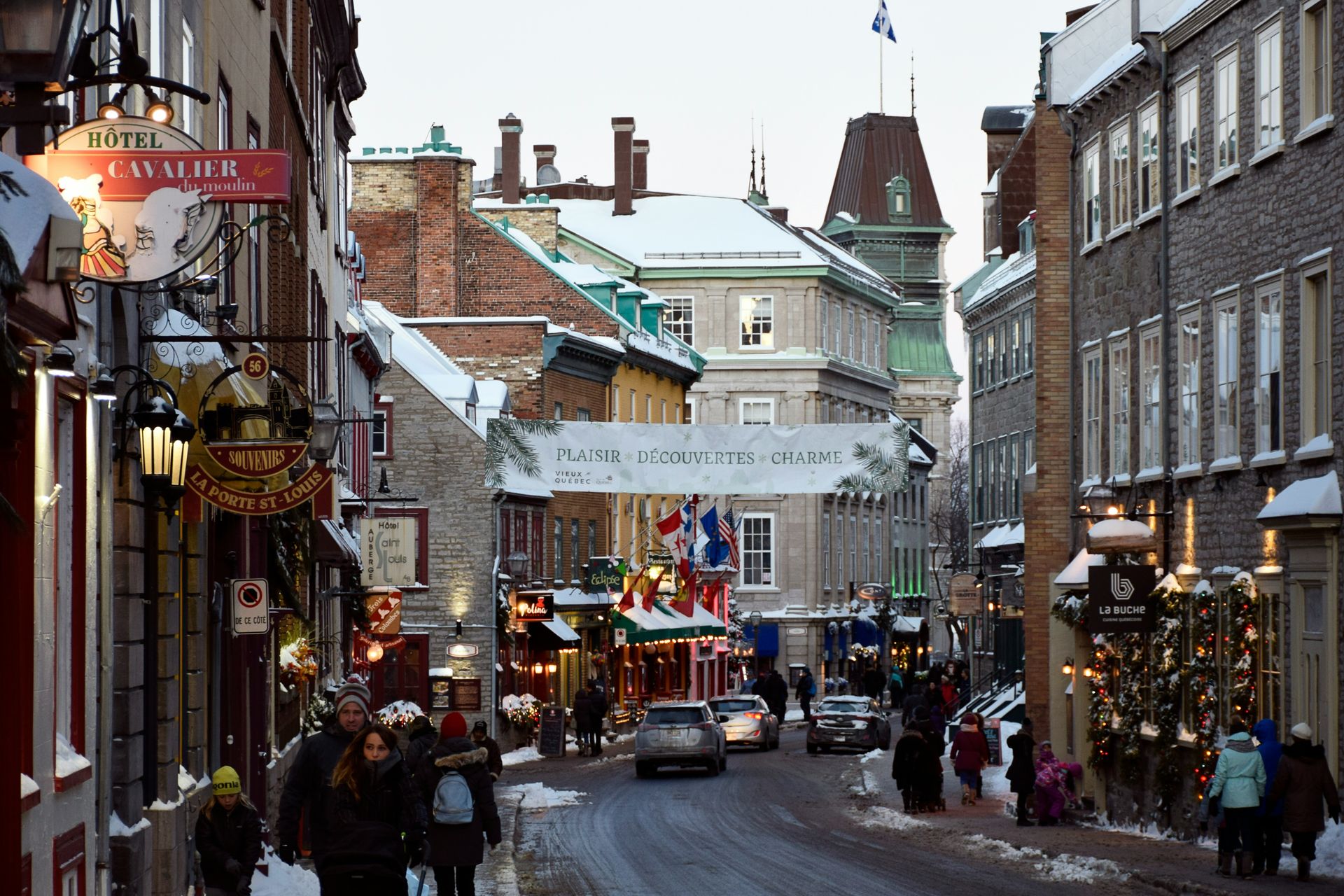
The Historic District of Old Quebec holds a UNESCO World Heritage designation and the distinction of being the only fully walled city north of Mexico in North America. Founded in 1608, the district carries more than four centuries of French and British colonial history in its streets, buildings, and fortifications, and a guided walking tour gives that history a structure that independent wandering through the same streets does not always produce. Tours Voir Québec operates from the tourist information center in Upper Town, directly across from the Fairmont Le Château Frontenac, offering access to guides whose knowledge of the district extends well beyond what the signage and plaques convey.
Tours Accolade offers a different entry point into the same history: private adventures built around a visitor’s own genealogy, tracing the specific French-Canadian lineage that many visitors of Québécois descent carry without knowing its specifics. The company also runs multi-sensory excursions designed for visually impaired travelers, which represents an accessibility commitment unusual in heritage tourism. The private format gives these tours the flexibility that group walking tours cannot match, adapting the pace, stops, and narrative to what specific visitors want to understand rather than what a standard 90-minute circuit covers.
The walls themselves merit attention as a destination beyond the buildings they enclose. The fortification system that surrounds Old Quebec was built incrementally across more than two centuries, with French, British, and American military concerns each leaving their mark on the design. Walking the ramparts gives a physical perspective on the city’s defensive logic that looking at the walls from the street does not provide: from above, the relationship between the clifftop position, the river below, and the plains beyond the walls becomes immediately clear in a way that explains why this location was worth fortifying and worth fighting over.
2 / 10
Patrick Boucher / Unsplash
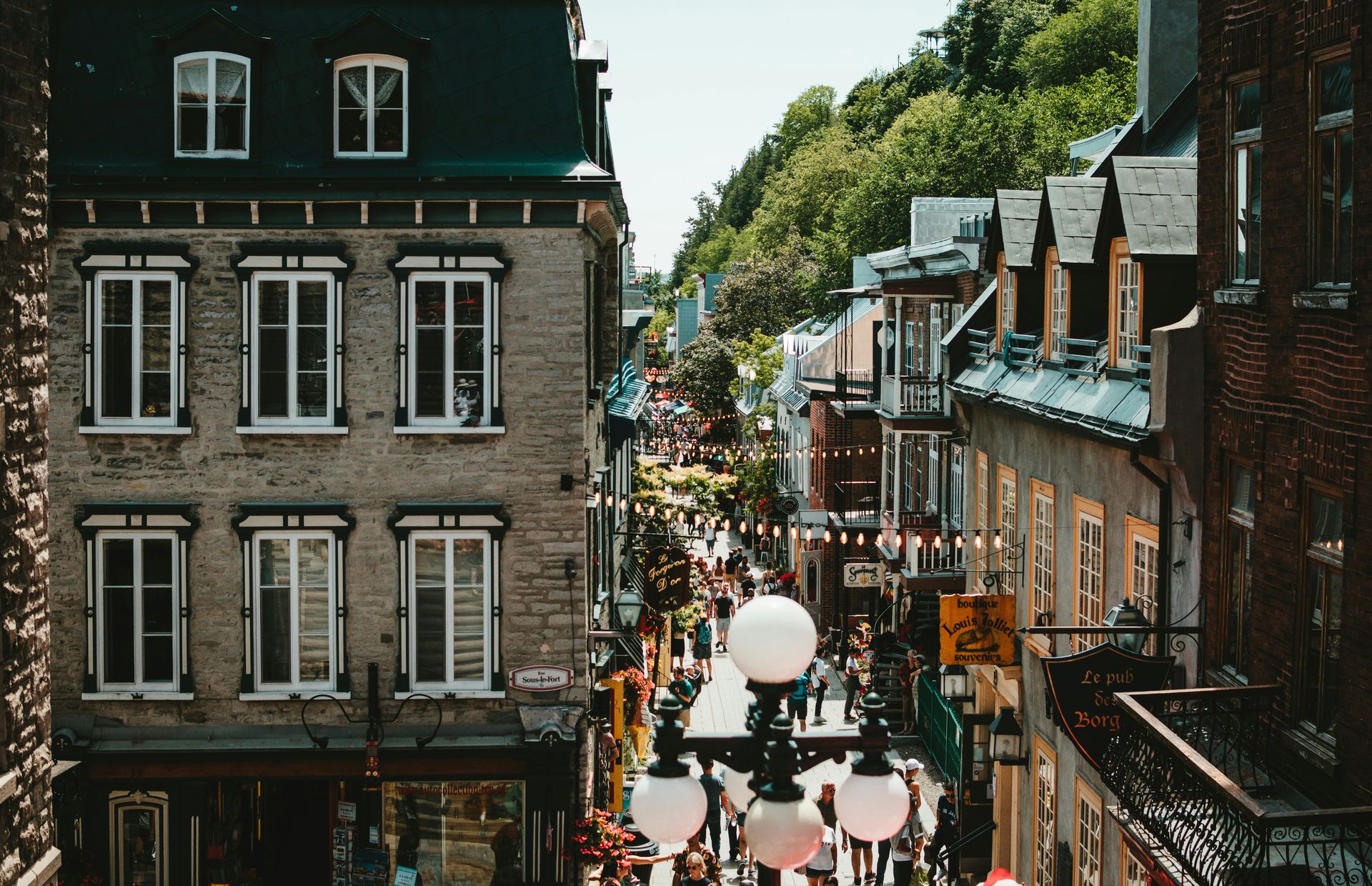
The Petit-Champlain and Place Royale area preserves a version of 17th-century New France that the surrounding city’s centuries of development have left largely intact. Geneviève Guay, head concierge at Auberge Saint-Antoine, identifies Notre-Dame-des-Victoires as a primary stop: the stone church built in 1687 is the oldest in North America north of Mexico, giving a building that still holds regular services a historical standing that its modest exterior does not prepare visitors for. The interior’s preserved features give the church a direct connection to the colonial period, a connection reinforced by the surrounding streetscape.
The commercial street of Petit-Champlain itself, which Guay describes as one of the most beautiful in Canada and among the oldest on the continent, runs through a neighborhood that tourists and locals share in roughly equal proportions, keeping the street from feeling exclusively curated for visitors. Independent boutiques, bakeries, and restaurants occupy storefronts in buildings whose stone construction and narrow footprints reflect the original settlement’s scale, and the winding character of the street produces a different view at every turn. The lantern-lit atmosphere in the evening gives Petit-Champlain a particular quality that daytime visits only partially capture.
Place Royale, the open square at the heart of the lower town, marks the site where Champlain established his trading post in 1608, making it the origin point of the city and, in a meaningful sense, of French colonial presence in North America. The bronze bust of Louis XIV at the center of the square connects the settlement to the French crown that authorized and funded it, and the surrounding buildings, restored to their 17th- and 18th-century appearance, give the square a visual coherence that most urban public spaces of comparable age cannot maintain across centuries of continuous use.
3 / 10
Merc / Unsplash
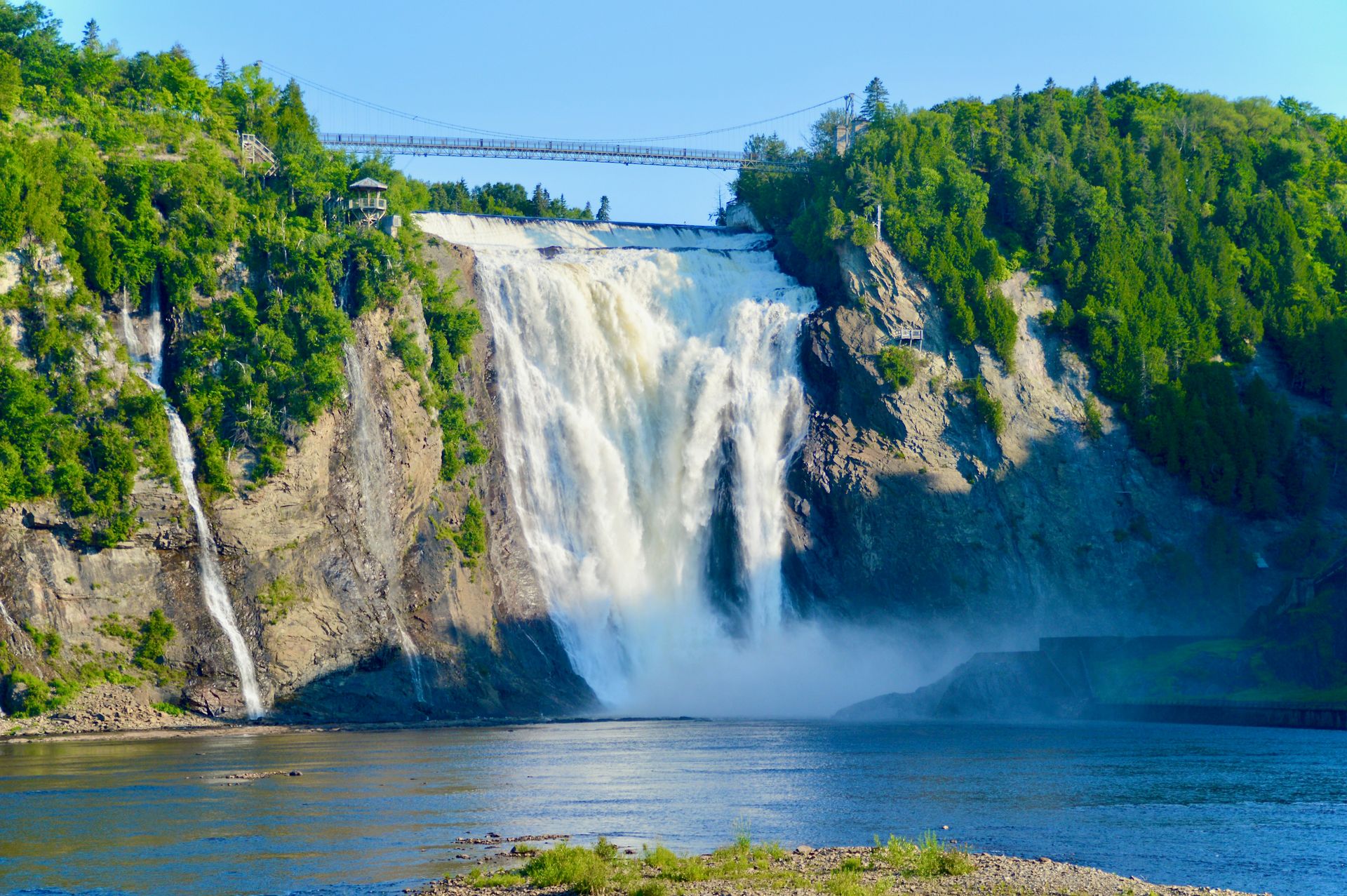
Montmorency Falls drops 272 feet into the St. Lawrence River just 15 minutes from Quebec City’s center, making it roughly 100 feet higher than Niagara Falls and considerably more accessible than its size might suggest. The falls themselves are the primary draw, visible from the suspension bridge that crosses above them and from the cliffside boardwalk that runs along the rim, offering panoramic views of the water and the river below. The approach from the cable car, which ascends from the base to the clifftop, gives visitors a perspective on the falls’ full height that the top-down view from the bridge cannot match.
Activities built around the falls give the site a practical range that suits visitors with different appetites for physical engagement. Zip lines cross above the falls at a height that gives riders a direct aerial encounter with the moving water below. Via ferrata routes ascend the cliff face alongside the falls, using fixed metal rungs and cables, giving climbers without technical rock experience a structured path up terrain carved by the falls over millennia. The suspension bridge, the boardwalk, and the cable car cover the same territory at a significantly lower commitment level for visitors whose interest is the view rather than the activity.
Winter transforms Montmorency Falls into a different natural spectacle. The spray from the falls freezes as it accumulates at the base, forming a cone of ice called the sugarloaf that grows through the coldest months and becomes a destination in its own right for ice climbers and winter walkers. The falls themselves continue behind and through the ice formation, producing a layered visual effect that the summer version of the site cannot match. The proximity to Quebec City means the falls fit naturally into a day that combines the historic district with a natural landmark of genuine scale.
4 / 10
Sina Bahar / Unsplash
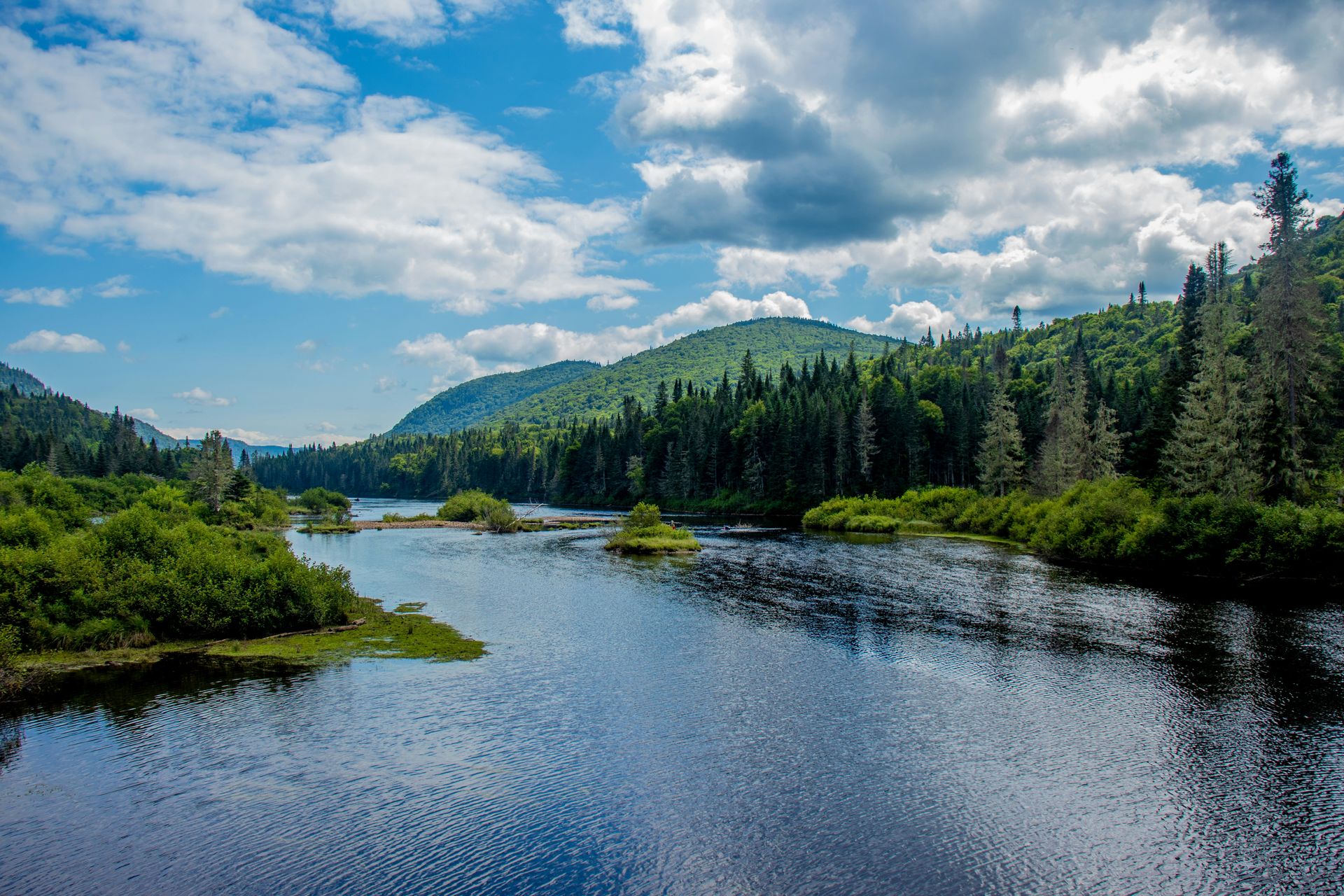
Jacques-Cartier National Park, 45 minutes from downtown Quebec City, occupies a glacial valley carved by a river that continues to run through it, producing a landscape of dramatic vertical relief within easy reach of a major city. More than 60 miles of trails traverse the valley and the surrounding terrain, ranging from flat riverside paths to summit routes that reward the elevation gain with views across the entire valley floor. Guay specifically recommends Les Loups Trail, whose summit offers a panoramic view of the valley that the trails below it do not provide at any point along their length.
The park’s river gives visitors a second mode of access to the same landscape. Kayaking and canoeing through the valley moves at a pace that the trail system does not replicate, allowing the vertical walls of the glacial cut to register at water level rather than from above. The combination of trails and water access offers the park a variety of experiences that reward a full-day visit rather than a half-day, and the driving distance from Quebec City makes a day trip entirely practical without requiring an overnight stay in the park.
Fall transforms Jacques-Cartier into one of the most visually compelling natural environments in the region. The peak foliage period at the end of September and the beginning of October saturates the valley with color — the maple-heavy forest mix that Quebec’s interior produces gives the autumn display a red-and-orange intensity that the park’s glacial topography concentrates and amplifies. Guay identifies this window as the park’s most spectacular period, and the park's relative accessibility from the city gives fall foliage travelers a natural anchor for an autumn visit to Quebec City that the urban environment alone cannot provide.
5 / 10
Credit: Parks Canada
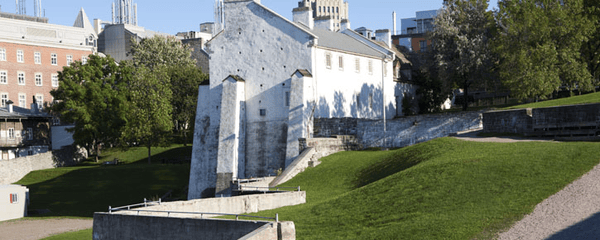
Artillery Park’s 18th-century French army barracks sit outside the standard walking tour routes that most Quebec City itineraries follow, which local guide Christian Gingras of Tours Voir Québec identifies as a significant oversight. The park covers the military history of Quebec City from 1712 through the end of the 20th century, spanning French, British, and Canadian military occupation of the same site across nearly three centuries of changing sovereignty and purpose. That span gives the park a historical depth that sites focused on a single period cannot match, and the physical continuity of the buildings connects the different eras in a way that a museum collection spread across multiple locations would not.
The Arsenal Foundry houses a scale model of Quebec City as it appeared in the 19th century, built with such detail that it gives visitors a comprehensive picture of the city’s historical layout before the modifications of the following century substantially altered it. The model functions as a map of a city that no longer exists in that form, and the ability to orient oneself within it relative to the current city produces a historical understanding of Quebec’s development that no photograph or written account conveys as immediately.
The Dauphine Redoubt deploys guides in period costume who speak in character, giving the historical interpretation an immersive dimension that descriptive signage cannot match. The combination of period dress, first-person narrative, and a setting that has not been substantially altered from its historical form gives visitors an encounter with the 18th century that the more visited sites in Old Quebec, however well preserved, provide in a more heavily touristed context. Gingras’s recommendation carries the weight of someone who has professionally guided visitors through Quebec City’s history: this is the site the standard tour skips and rewards the traveler who seeks it out.
6 / 10
Gabriel Tovar / Unsplash
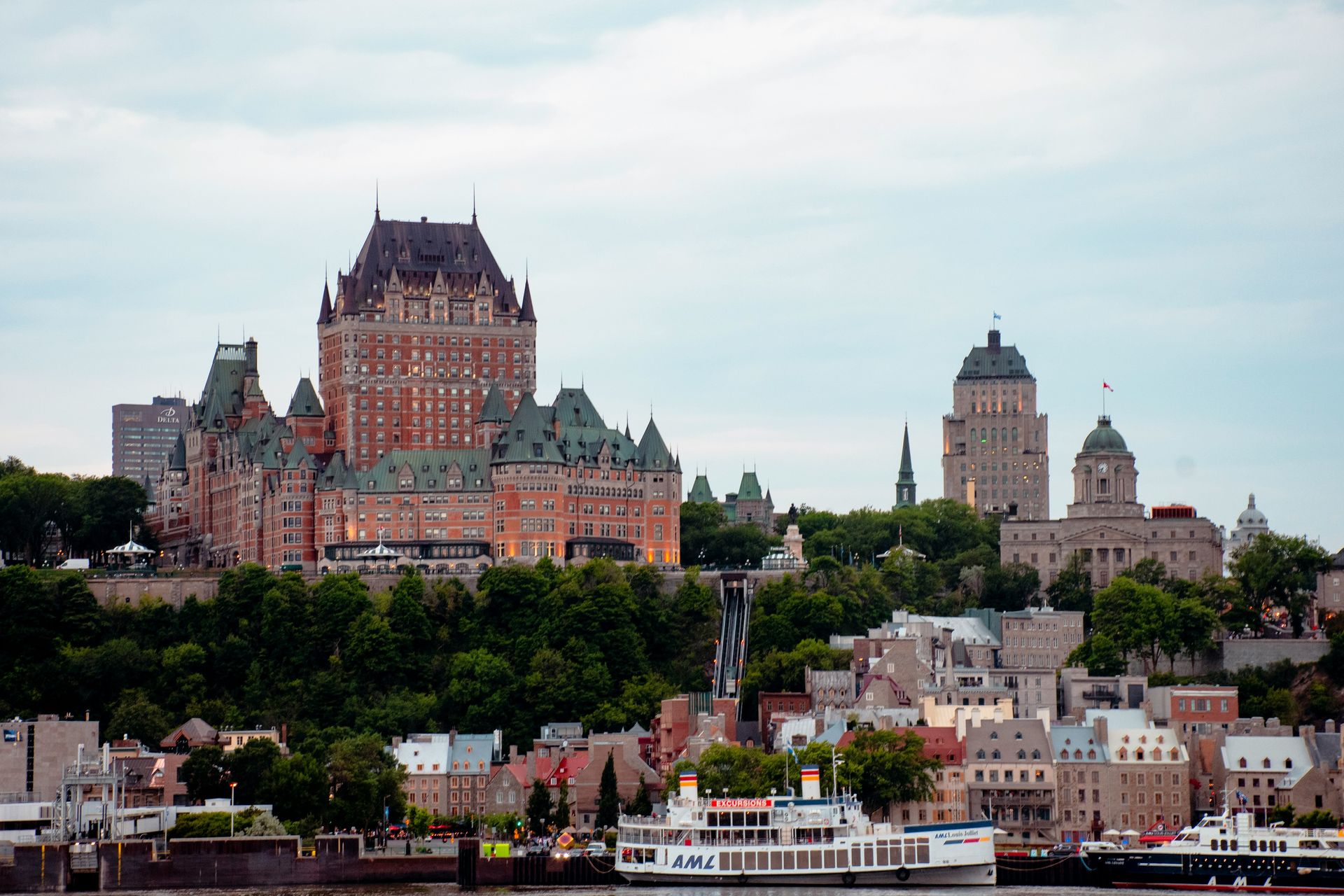
The commuter ferry to Lévis, which departs every 30 minutes and costs a few dollars, offers a 15-minute crossing of the St. Lawrence River with one of the best views of Quebec City from any vantage point. The Château Frontenac, the city walls, and the clifftop that the historic district occupies all read differently from the river than from within the city, and the distance the crossing provides gives the skyline a coherence and scale that walking through the streets below it does not. The ferry is not a tourist attraction but a commuter service, which gives the experience a local character that purpose-built sightseeing cruises on the same river do not replicate.
Gingras identifies a specific seasonal dimension to the crossing: in winter, the ferry’s passage through the ice floes that form on the St. Lawrence produces a secondary spectacle visible from the ship’s bridge, as the vessel crushes and pushes ice blocks aside to maintain its route. The sound and physical sensation of a ship moving through river ice is specific to winter river crossings in northern climates, and the proximity of this experience to the city center — a few dollars and 15 minutes from the historic district — makes it one of Quebec City’s most accessible and least celebrated winter activities.
The Lévis waterfront, once the ferry docks, gives passengers a shoreside view back across the river to Quebec City that amplifies the perspective the crossing provided. The city’s clifftop position and the height of the Château Frontenac above the river read at their most dramatic from the Lévis side, where the full vertical relationship between the river, the lower town, and the upper city becomes visible in a single frame. The return crossing provides the same view from a different angle, which is reason enough to make the round trip.
7 / 10
Credit: Visit Quebec City
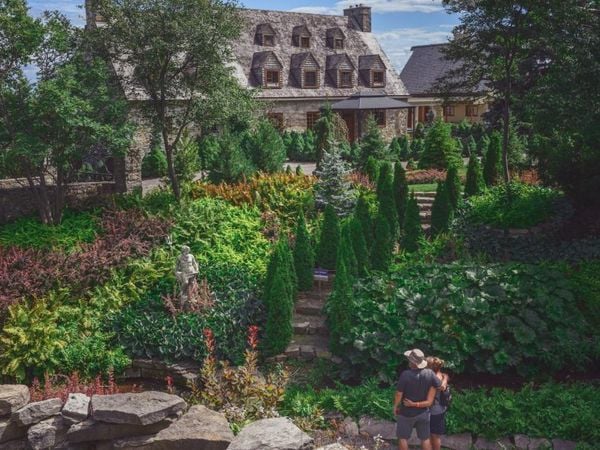
Île d’Orléans sits 15 minutes from Quebec City by car and functions as an agricultural island within easy reach of a major city, preserving vineyards, orchards, strawberry fields, and centuries-old buildings that the city’s expansion has not reached. Frantz Noël, co-owner of tour agency Conciergerie du Terroir, describes the fall visit as particularly rewarding: the vines turn red and gold in the same weeks that Montmorency Falls and the Côte de Beaupré hillside across the river reach their own peak color, producing a multi-directional natural spectacle that a seat at a local winery positions visitors to observe while drinking the wine the surrounding vines produce.
The island’s food producers offer a full-day visit that goes beyond the wineries. Homemade jams, chocolates, artisan cheeses, and seasonal produce from the orchards and fields represent a local food economy that the island’s agricultural character has sustained across generations, and the ability to move between producers over the course of a day gives the visit a breadth that a single winery visit or market stop does not provide. The circular road that runs the island’s perimeter connects the farms, wineries, and food producers in a sequence that drivers can follow without a fixed plan, stopping wherever the signage and the season recommend.
The centuries-old buildings scattered across the island add an architectural dimension to what would otherwise be a purely food-and-landscape visit. The island was settled early in the French colonial period, and the stone farmhouses and churches that survive from that era give Île d’Orléans a historical texture that its contemporary agricultural identity preserves rather than obscures. The combination of working landscapes, historical buildings, and local food production within a short drive of a UNESCO World Heritage city gives the island an appeal unusual for a single half-day or full-day destination.
8 / 10
Credit: Visit Quebec City
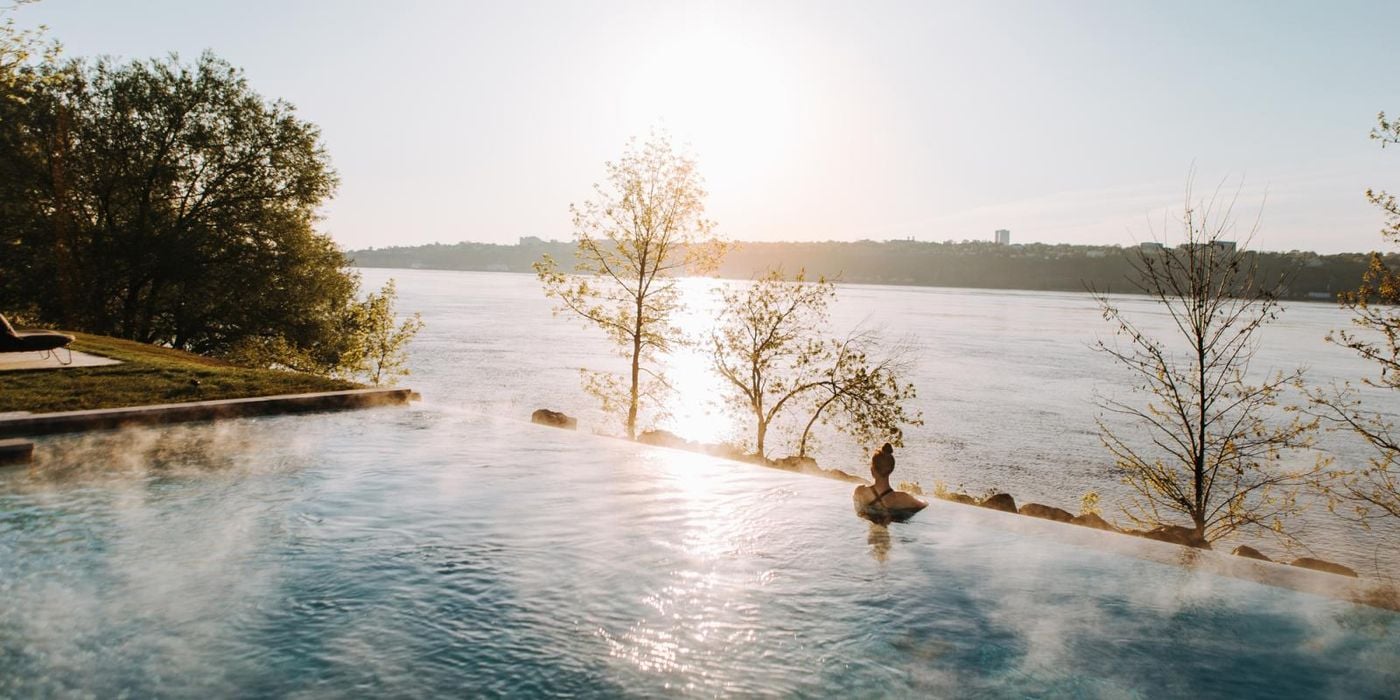
Quebec City’s Nordic spa culture has developed into one of the city’s most distinctive wellness offerings, with several options concentrated in and around the historic district that give visitors a structured thermal experience after the walking that the city’s hills and cobblestones demand. The Strøm Nordic Spa’s architecture draws attention in its own right alongside the thermal circuit it provides: the building’s design gives the spa a visual presence that the experience within it reinforces. Sky Spa’s year-round rooftop patio adds a view of the St. Lawrence River to the thermal experience, making the outdoor component of the circuit a landscape encounter as much as a wellness one.
The Nordic spa format — alternating between hot thermal pools, cold plunge baths, and periods of rest — follows a physiological logic driven by the temperature contrast. The protocol produces a specific quality of physical relaxation that passive spa treatments approach but do not replicate, and the outdoor components of Quebec City’s Nordic spas give the format a seasonal dimension that changes the experience across the year. Winter thermal bathing in an outdoor pool while snow falls and the river is visible in the distance represents a specific sensory experience that no indoor spa can replicate, and Quebec City’s winters are cold enough and long enough that the contrast between the thermal water and the surrounding air reaches levels that the spa format was designed to exploit.
Sibéria Station Spa, located in a forested setting outside the city, offers an alternative to urban spa options for visitors who want a thermal experience embedded in a natural rather than a historic district. Hot pools and saunas set among trees give the circuit a different ambient environment than the stone buildings and river views of the Old Quebec options, and the 20-minute drive from the city makes it a practical half-day excursion for visitors with a car or access to transportation.
9 / 10
Ed Vázquez / Unsplash
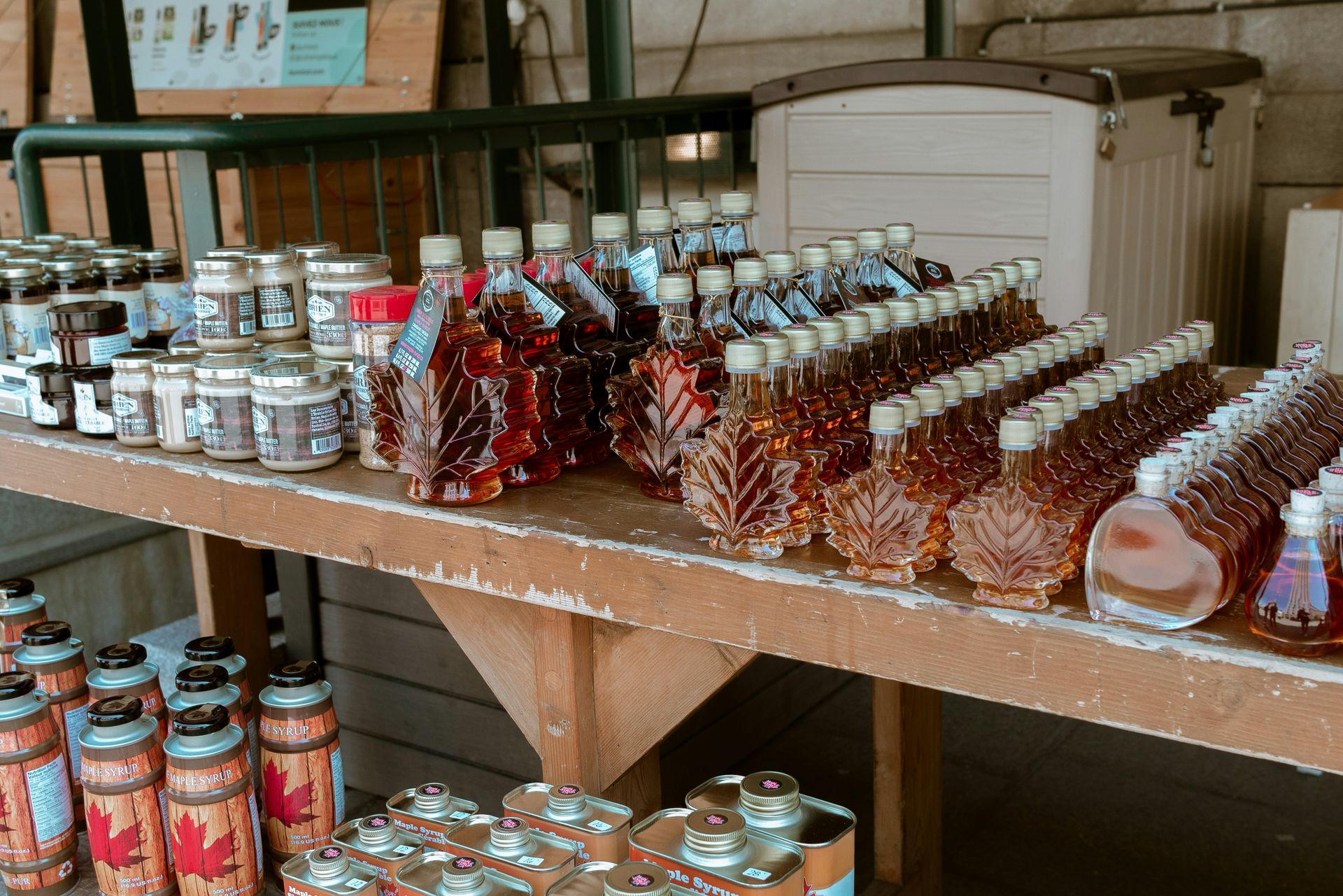
Quebec produces more maple syrup than any other jurisdiction in the world, which gives a tasting experience in Quebec City a geographic specificity that the same product consumed elsewhere lacks. Chef Tim Moroney of Restaurant Alentours describes maple syrup as a backbone of the local cuisine and a staple of every Quebec City household, a characterization that positions it as a cultural ingredient rather than a condiment. The sugaring season runs from the end of February through the beginning of May, when the sap flows from the province’s maple trees, but quality syrup is available at local markets and restaurants year-round.
Domaine Small, which Moroney recommends specifically for visitors who want a structured approach to the product, offers tastings across maple, birch, and bourbon-aged syrups. The range of expressions available within the maple category alone — light, medium, amber, and dark grades with distinct flavor profiles that the production timing determines — gives a tasting session a complexity that the single jar of grocery store maple syrup most visitors arrive knowing does not suggest. Birch syrup, produced from a different tree using the same tapping process, provides a point of comparison that clarifies what specifically the maple tree contributes to the flavor profile.
The broader food culture of Quebec City uses maple syrup in applications that extend well beyond the breakfast table. Glazes, marinades, dessert preparations, and cocktail ingredients across the city’s restaurant landscape reflect a culinary tradition that treats maple as a fundamental flavor rather than a novelty topping. A visit to any of the city’s farmers’ markets, where producers sell syrup alongside other local products, gives the agricultural dimension of Quebec’s maple industry a human scale that a supermarket shelf cannot provide.
10 / 10
Credit: Visit Quebec City
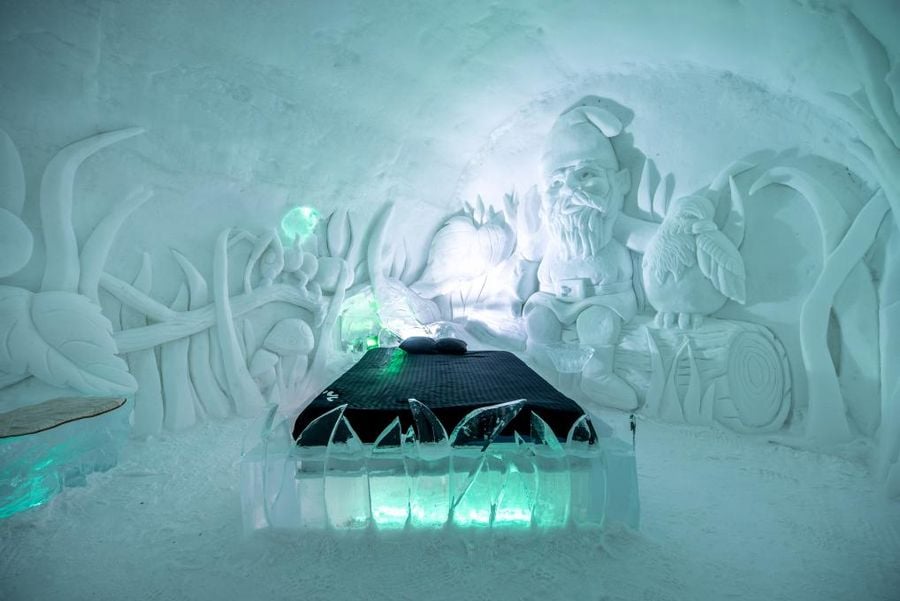
Hôtel de Glace opens each January in Village Vacances Valcartier, 20 minutes from downtown Quebec City, constructed from 2,300 blocks of ice and 15,000 tons of snow in a configuration that changes each year as designers build a new structure on the same site. The hotel operates through March, coinciding with the coldest months of the Quebec winter, and welcomes both overnight guests and daytime visitors who want to walk through the ice architecture without committing to sleeping in it. The room temperature in the hotel is kept around 23 degrees Fahrenheit regardless of the outdoor conditions, which can drop to negative 22 degrees Fahrenheit during the coldest Quebec winter nights.
The thermal management that allows guests to sleep comfortably at this temperature draws on a combination of arctic-grade sleeping bags, insulating sheets, and access to hot tubs and saunas that guests use to warm up between periods spent in the ice rooms. The physical experience of sleeping in a room carved from ice — the silence that the material produces, the blue quality of the light that filters through the walls during the day, and the complete absence of the ambient sounds that conventional hotel rooms cannot eliminate — gives the overnight stay a sensory character that no other accommodation in North America provides.
The surrounding Village Vacances Valcartier adds outdoor activities that give the hotel visit a broader winter context. Ice skating paths and massive snow slides are adjacent to the hotel, providing guests who arrive at the ice hotel with a full winter activity environment rather than simply an unusual place to sleep. The 20-minute drive from Quebec City makes the hotel an accessible overnight extension of a city visit rather than a separate trip, and combining a night at the ice hotel with days spent in the historic district gives a winter Quebec City itinerary a range of experiences that summer visits, however rewarding, cannot replicate.
