
From Bronze Age ruins beneath Santorini's ash to an active volcano hikers can walk into at the caldera's center
Jonathan Gallegos / Unsplash
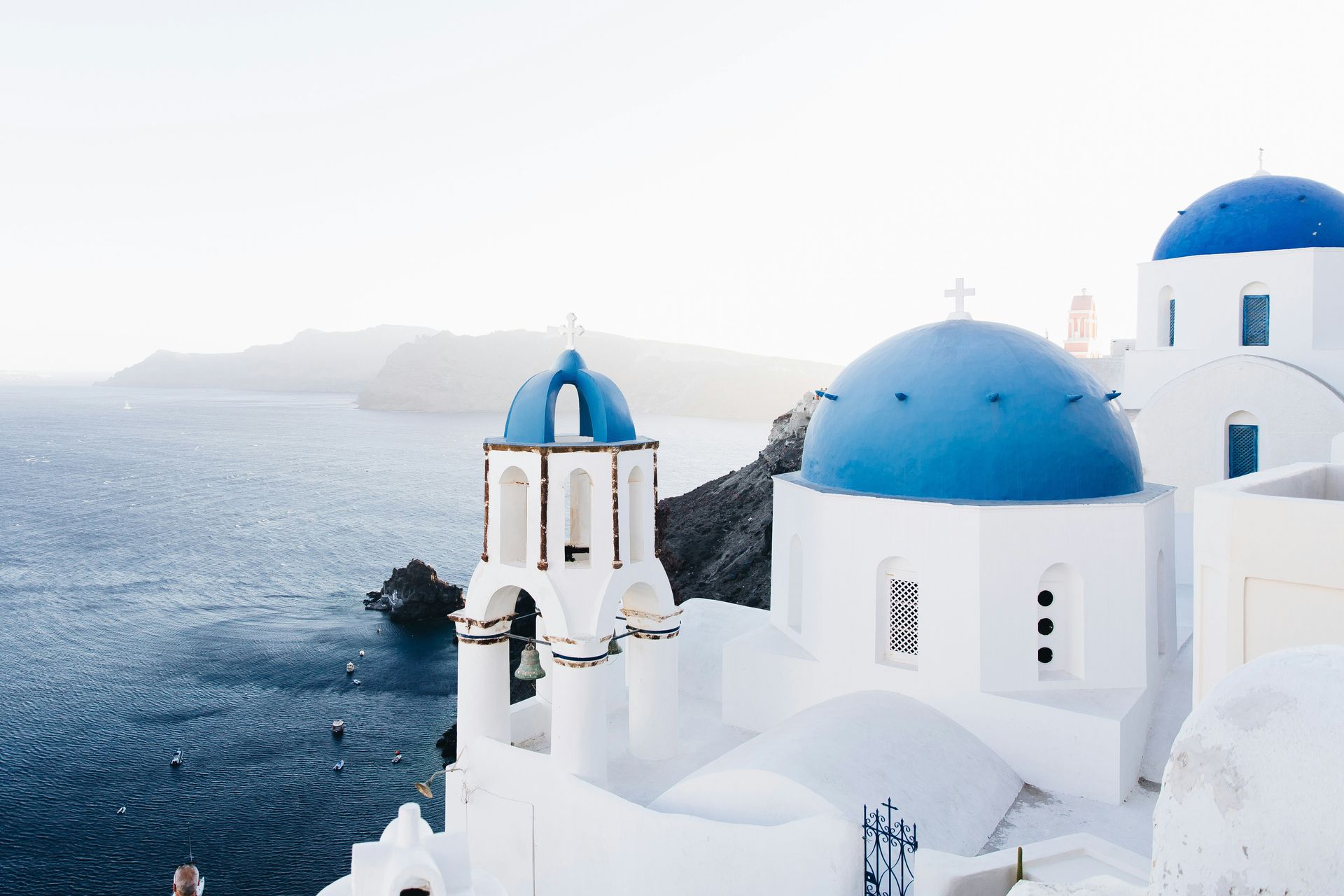
Santorini's whitewashed buildings and sun-drenched hills have genuinely made the island one of the most photographed destinations in Greece, and images of its cliffside villages routinely turn up in magazine spreads and social media feeds long before a visitor ever books a flight to the island itself, arriving already familiar with its silhouette against the sea. This reputation for pure visual drama sometimes overshadows everything else the island actually offers, and travelers who treat Santorini purely as a backdrop for photos miss a genuinely rich mix of ancient history, active geology and living Greek culture that rewards a bit of deeper exploration beyond the standard clifftop viewpoints most visitors default to during even a longer, more leisurely stay on the island.
Beyond the famous sunset views themselves, Santorini holds a genuine Bronze Age city buried by one of history's most catastrophic volcanic eruptions, a still-active volcano visitors can hike directly into, and small mountain towns where everyday island life continues largely unbothered by the crowds that gather in Oia and Fira throughout the busy summer season and into the shoulder months on either side. Cooking classes, participatory theater and even open-air cinema round out an island identity built on far more than its famous caldera views, giving visitors plenty of ways to fill a trip beyond simply chasing the perfect sunset photograph across the island's most well-known viewpoints and postcard-perfect whitewashed streets scattered throughout its cliffside towns, villages and quieter inland corners alike.
The 10 activities below appear in Lonely Planet, covering historic sites, outdoor adventures and cultural experiences recommended broadly across the island, each offering a genuinely different reason to look beyond the standard sunset photograph most visitors leave with after a short stay focused entirely on the island's most famous cliffside viewpoints.
Angelo Chrisohoides / Unsplash
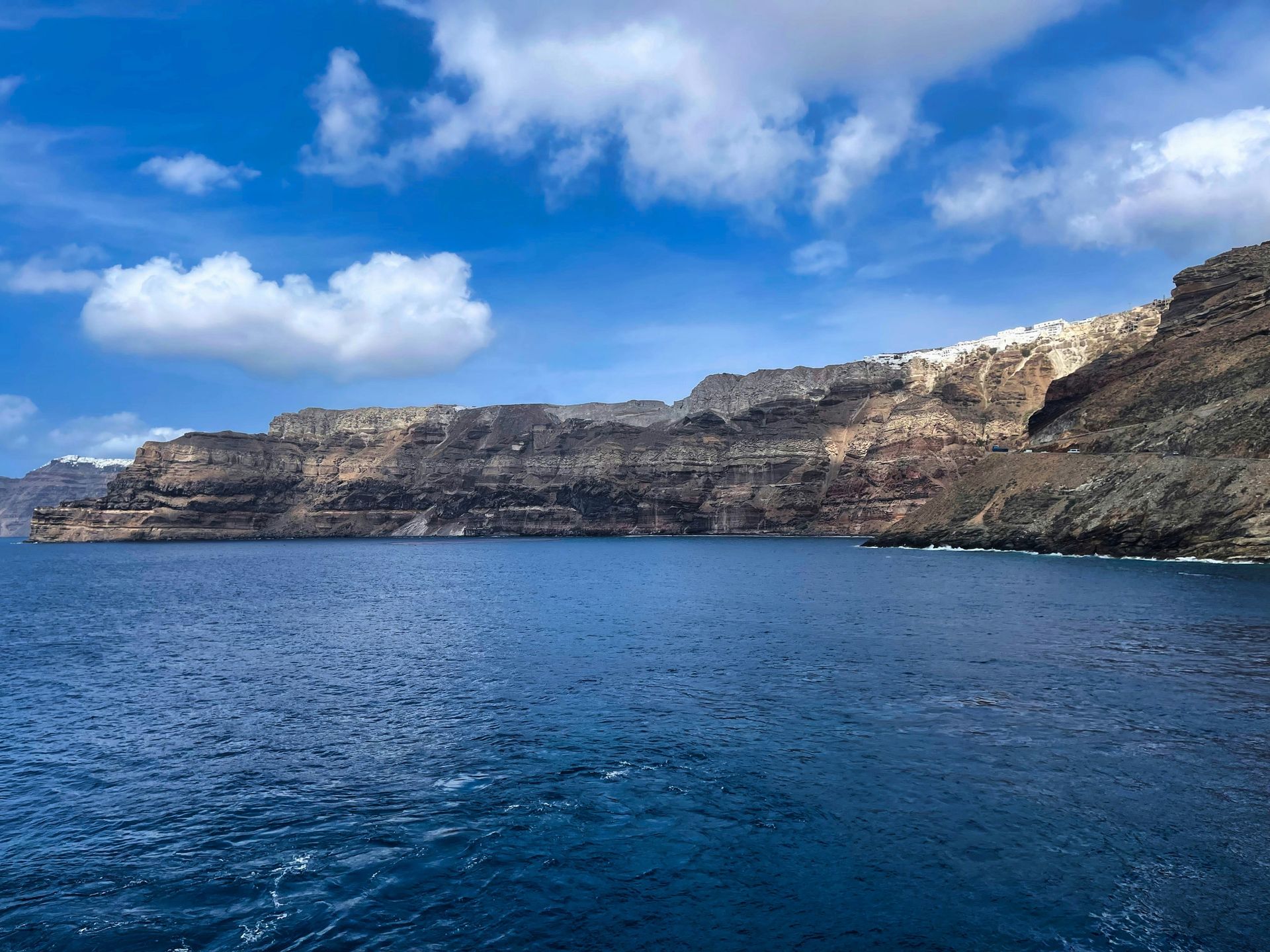
More than 3,000 years ago, a catastrophic volcanic eruption, among the worst in recorded history, consumed Santorini, collapsing the island's center and eventually flooding it with seawater from the surrounding Aegean. The scale of that eruption reshaped the island's entire geography, and the Bronze Age settlements caught in its path vanished beneath layers of ash for millennia before excavation began to reveal what had actually happened here so long ago.
Ancient writings from the Greek philosopher Plato have long fueled speculation that the Minoan settlements destroyed in this eruption inspired the legend of Atlantis, the fabled lost city swallowed by the sea in a single catastrophic day. Whether or not that connection holds up historically, the archaeological site of Ancient Akrotiri, on the island's southern tip, gives visitors direct physical access to the actual Bronze Age city that vanished during the eruption, a site substantial enough to have earned the nickname the Pompeii of Greece.
Covered wooden walkways guide visitors through the excavated site, protecting the ruins while still allowing close viewing of the ancient buildings, storage vessels and other remnants of daily Bronze Age life preserved beneath the ash. The site's layout makes it genuinely accessible to casual visitors, though the experience works considerably better with some historical context in hand instead of wandering through without any framework for what visitors are actually looking at.
Placards and explanatory materials remain sparse throughout the site, which means visitors hoping to understand the full significance of what they're seeing should strongly consider booking a guided tour in advance instead of exploring entirely on their own. A knowledgeable guide can connect the physical ruins to the broader story of the eruption, the settlement's daily life and the ongoing archaeological work still uncovering new details about this remarkable site, transforming what might otherwise be a walk past unexplained rubble into a genuinely illuminating historical experience that puts the entire eruption and its lasting aftermath into proper context for a first-time visitor.
James Ting / Unsplash
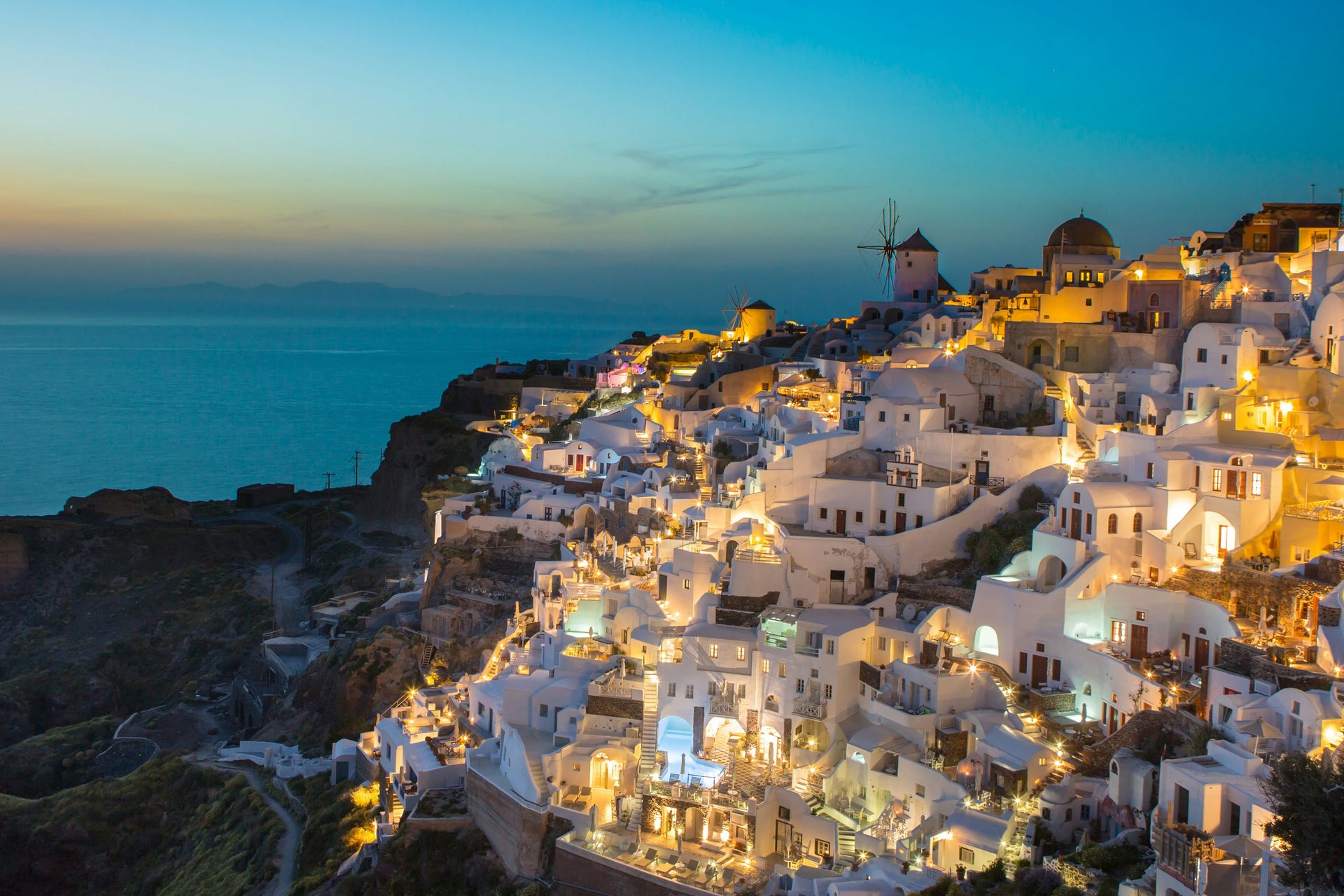
Santorini's sunrises and sunsets rank among the most celebrated in the world, and the picturesque town of Oia offers some of the island's best vantage points for watching the sky perform its daily show above the caldera. Several specific locations throughout the town work well for sunset viewing, but the ruins of Oia's Byzantine castle consistently deliver the most spectacular pairing of elevated views and atmospheric backdrop for photographs and simple quiet observation alike.
These crumbling castle walls offer more than just a photogenic setting, since their weathered stone provides a genuine glimpse into Oia's layered history alongside sweeping panoramic views across the surrounding island and open sea beyond. Watching the sun sink behind the caldera from this elevated vantage point gives visitors a sense of scale that's difficult to appreciate from lower ground level elsewhere in town.
Popularity has become the castle ruins' biggest practical drawback, and the site grows genuinely crowded as evening approaches, particularly during peak summer months when visitor numbers across the island reach their highest levels of the entire year. Securing a good viewing spot requires arriving well before the actual sunset, and visitors who wait until the last possible moment often find themselves fighting through crowds instead of settling in comfortably to enjoy the show.
Visitors serious about capturing the best possible sunset experience should treat the arrival time as seriously as the sunset itself, since claiming a comfortable spot along the castle walls an hour or more in advance makes the difference between a relaxed evening and a stressful scramble for a decent view among the crowds. Bringing a light layer for the evening breeze and simply settling in to watch the crowds gather can become part of the experience itself, since Oia's sunset draws a genuinely international crowd every single evening of the high season, turning the wait itself into a kind of shared anticipation among strangers from around the world who have all made the same journey.
Tango7174 / Wikimedia Commons (CC BY-SA 4.0)
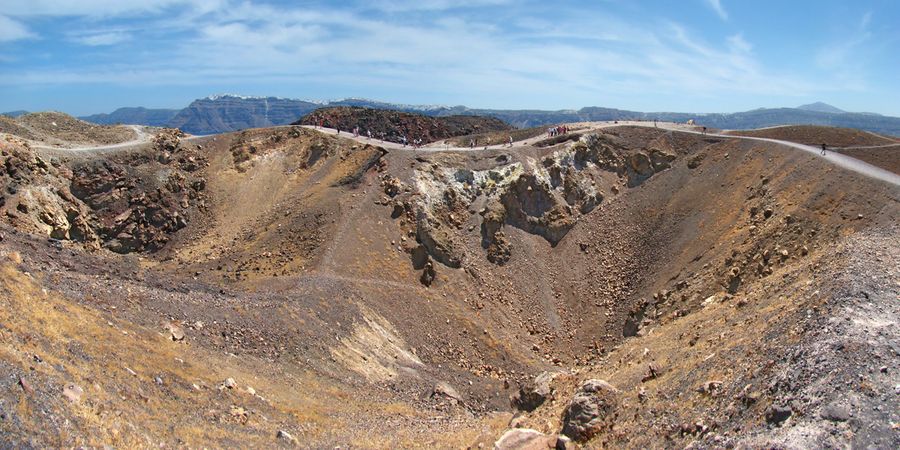
Nea Kameni, the youngest of the two volcanoes sitting at the center of Santorini's caldera, remains genuinely active today, and guided hikes across its ash-covered landscape give visitors direct access to a volcanic environment that few destinations anywhere in the world offer this conveniently. Golden, sulfur-infused waters and hot springs surrounding the volcano have built a reputation for healing properties that draws visitors well beyond those simply interested in geology.
The hike itself takes visitors along black lava perimeters toward the volcano's crater and various other openings that continue releasing sulfur steam even now, giving the landscape an active, faintly otherworldly quality that static photographs struggle to fully capture on their own. Beyond the volcanic features themselves, the hike delivers genuinely spectacular views back toward Santorini's cliffs and its two main towns, Oia and Fira, visible across the water from the elevated volcanic terrain of Nea Kameni.
Heat becomes a serious consideration during Santorini's high season, and the exposed, ash-covered landscape offers essentially no shade for hikers making their way across it under the midday sun. Starting the hike early in the morning takes advantage of cooler temperatures before the sun climbs high enough to make the exposed terrain genuinely uncomfortable, a consideration that matters considerably more here than on shaded trails elsewhere on the island.
Visitors specifically hoping to combine the volcano hike with sunset views back toward Oia and Fira should plan their timing carefully, scheduling the hike later in the day so that the final stretch coincides with the last light of the afternoon framing both towns in a golden glow across the water. This timing requires balancing the heat concerns of an early start against the visual payoff of a later one, a trade-off worth considering carefully when planning exactly when to book this particular excursion, since the two priorities pull in genuinely opposite directions depending on what a visitor values most from the overall experience of the day.
Vincent Giersch / Unsplash
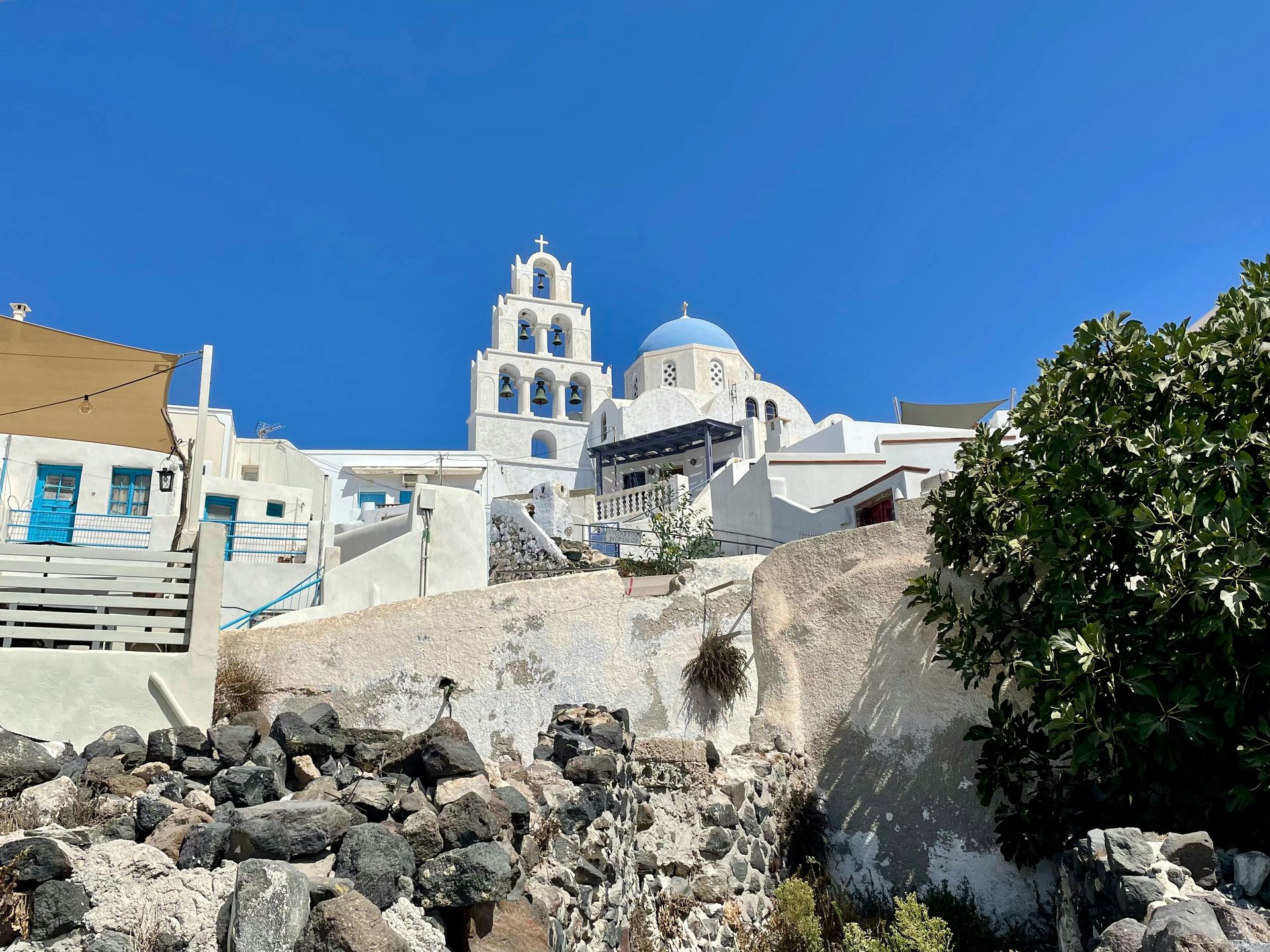
Pyrgos offers a genuinely different pace than its busier sister towns of Oia and Fira, delivering stunning scenery without anywhere near the same crowds that gather at Santorini's more famous viewpoints throughout the entire day and long into the evening. The town holds some of the island's most well-regarded restaurants, including Selene, giving visitors a legitimate culinary reason to make the trip beyond simply escaping the tourist crowds found elsewhere on the island's more popular coastal towns.
Spending time in Pyrgos gives visitors a genuine sense of what everyday life on the island actually looks like away from the constant photography and tour groups that define the experience in more heavily visited towns nearby. Locals go about ordinary business here in a way that feels noticeably different from the performance-for-tourists atmosphere that can creep into Santorini's more famous destinations during peak season.
The town's tiny, winding footpaths lead visitors through a maze of side streets and quiet cul-de-sacs, each one offering its own scenic cafes, restaurants and small churches tucked into the whitewashed architecture typical of the island. These narrow lanes reward visitors willing to wander without a specific destination in mind, since some of the town's most photogenic corners turn up unexpectedly instead of appearing on any standard tourist map or guidebook itinerary handed out at hotels nearby.
Visitors who prioritize genuine atmosphere over convenient proximity to major attractions should specifically build time for Pyrgos into their Santorini itinerary, even though it demands a bit more effort and driving time to reach than the island's more central coastal destinations. The contrast between Pyrgos's quiet streets and the crowded viewpoints of Oia gives travelers a fuller sense of the island's range, from its most photographed tourist draws to the quieter reality of daily Santorini life that most visitors never actually see during a typical short stay focused entirely on the island's headline attractions and famous viewpoints scattered along the coast.
Credit: Petra Kouzina
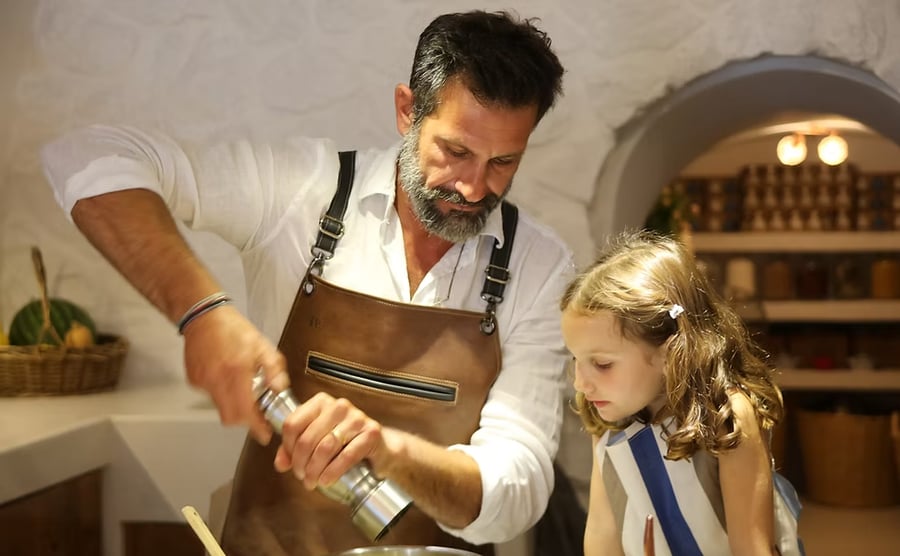
Santorini's traditional cuisine comes to life through hands-on cooking classes, and the Petra Kouzina Cooking Experience gives visitors the practical skills needed to produce a genuine multicourse feast within a beautifully charming setting overlooking the island's rolling countryside and distant sea views. Learning to cook alongside local instructors offers a considerably more immersive way to understand Santorini's food culture than simply eating at restaurants throughout an ordinary visit.
Visitors interested in pairing their cooking experience with the island's wine culture can choose a combined cooking class and wine-tasting tour instead of a standalone cooking session focused purely on food preparation, technique and recipes alone. This combined option begins with a guided tour of carefully selected wineries, letting participants plan their eventual menu around wines that pair naturally with the dishes they'll later prepare together, creating a more thoughtful connection between the cooking and drinking components of the experience.
Hands-on classes like these tend to leave a more lasting impression than passive dining experiences, since participants walk away with genuine cooking skills alongside the memory of a shared meal prepared entirely with their own two hands. Learning techniques specific to Santorini's ingredients and culinary traditions gives visitors a practical souvenir they can recreate at home long after the trip itself has ended, extending the island's influence well beyond the actual vacation dates and into everyday cooking back home for years afterward.
Booking one of these cooking experiences quite well in advance matters considerably, since class sizes tend to stay small in order to preserve the hands-on, personalized nature of the instruction offered to each participant. Visitors who wait until arriving on the island to book a spot sometimes find popular sessions already full, particularly during peak travel months when demand for immersive food experiences climbs alongside overall visitor numbers across Santorini, leaving latecomers with fewer options and less flexibility in choosing a specific date or class format that suits their schedule.
Daniel Azmanov / Unsplash
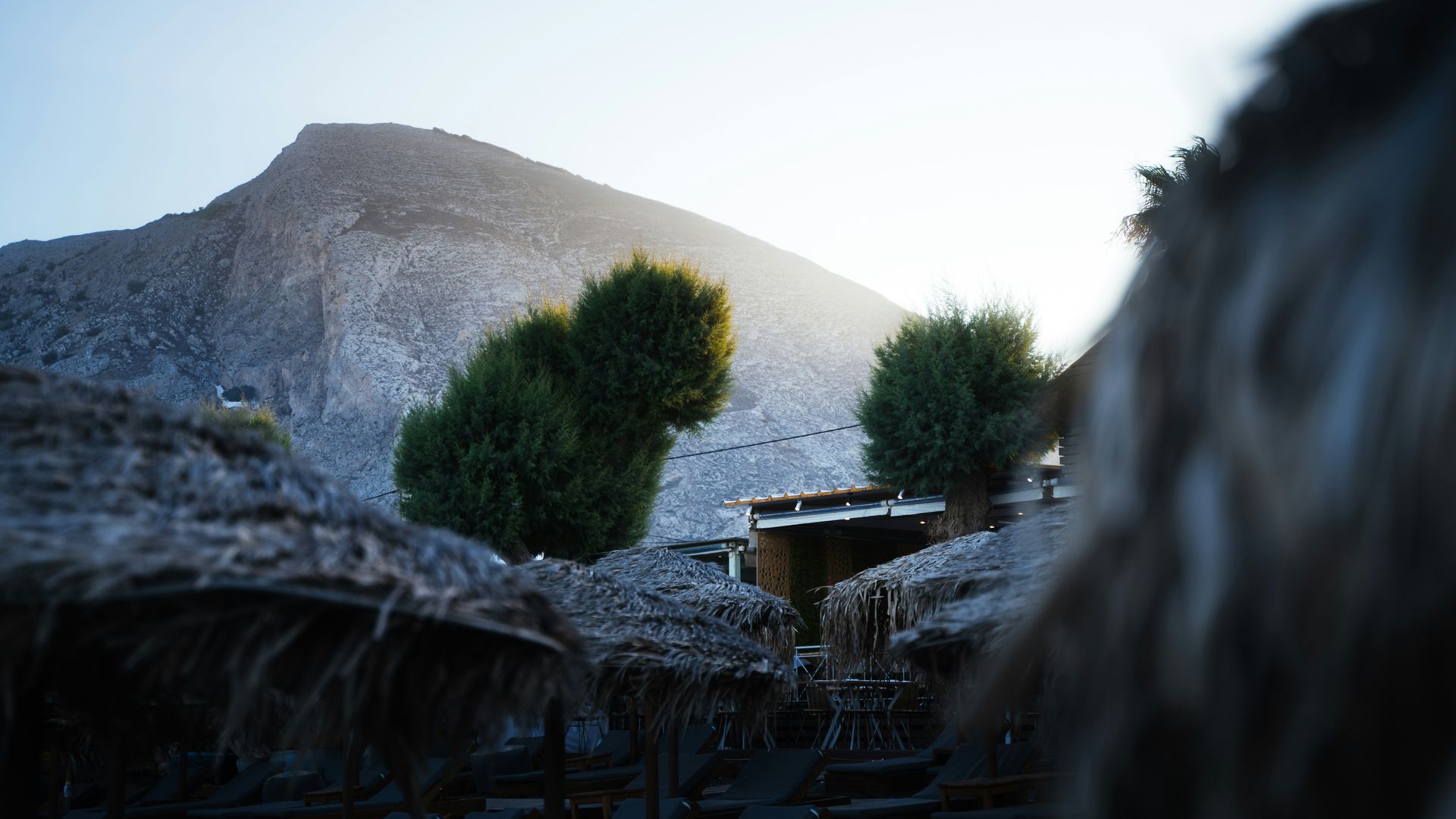
Santorini's consistently warm evening weather makes outdoor cinema a genuinely practical form of entertainment instead of a novelty reserved for special occasions, and Kamari Village hosts one of the most highly regarded open-air cinemas anywhere in the world, drawing visitors and locals alike. Watching a film unfold beneath the open night sky, with the Mediterranean warmth settling in after sunset, gives even a familiar movie a genuinely different atmosphere than a conventional indoor theater could ever hope to replicate.
The venue itself leans into the relaxed, social nature of outdoor viewing, offering tasty cocktails and classic popcorn alongside trendy director's-chair seating that trades cramped theater rows for a more comfortable, lounge-like arrangement well suited to a long, warm summer evening. This seating style suits the venue's broader vibe, encouraging visitors to settle in for the evening instead of treating the screening as a quick errand squeezed between other activities.
Arriving early matters considerably at Kamari's cinema, since the venue's genuine popularity means good seats fill up well before the film actually begins each evening screening. Visitors who show up right at showtime often find themselves settling for less comfortable positions further from the screen, undercutting some of the appeal that draws people to this particular venue over a standard indoor multiplex in the first place, where assigned seating removes the need to arrive ahead of the scheduled start time.
Pairing an evening at Kamari's open-air cinema with a relaxed dinner beforehand at one of the nearby beachfront restaurants creates a naturally paced evening that doesn't require rushing between separate activities. The relaxed rhythm of an outdoor film, paired with the island's warm night air, gives visitors a genuinely different kind of evening than the sunset-chasing and photo-taking that otherwise dominates most Santorini itineraries throughout a typical stay, offering a welcome change of pace after a day spent navigating crowds at the island's more famous viewpoints and busy tourist streets nearby.
Michaela / Unsplash
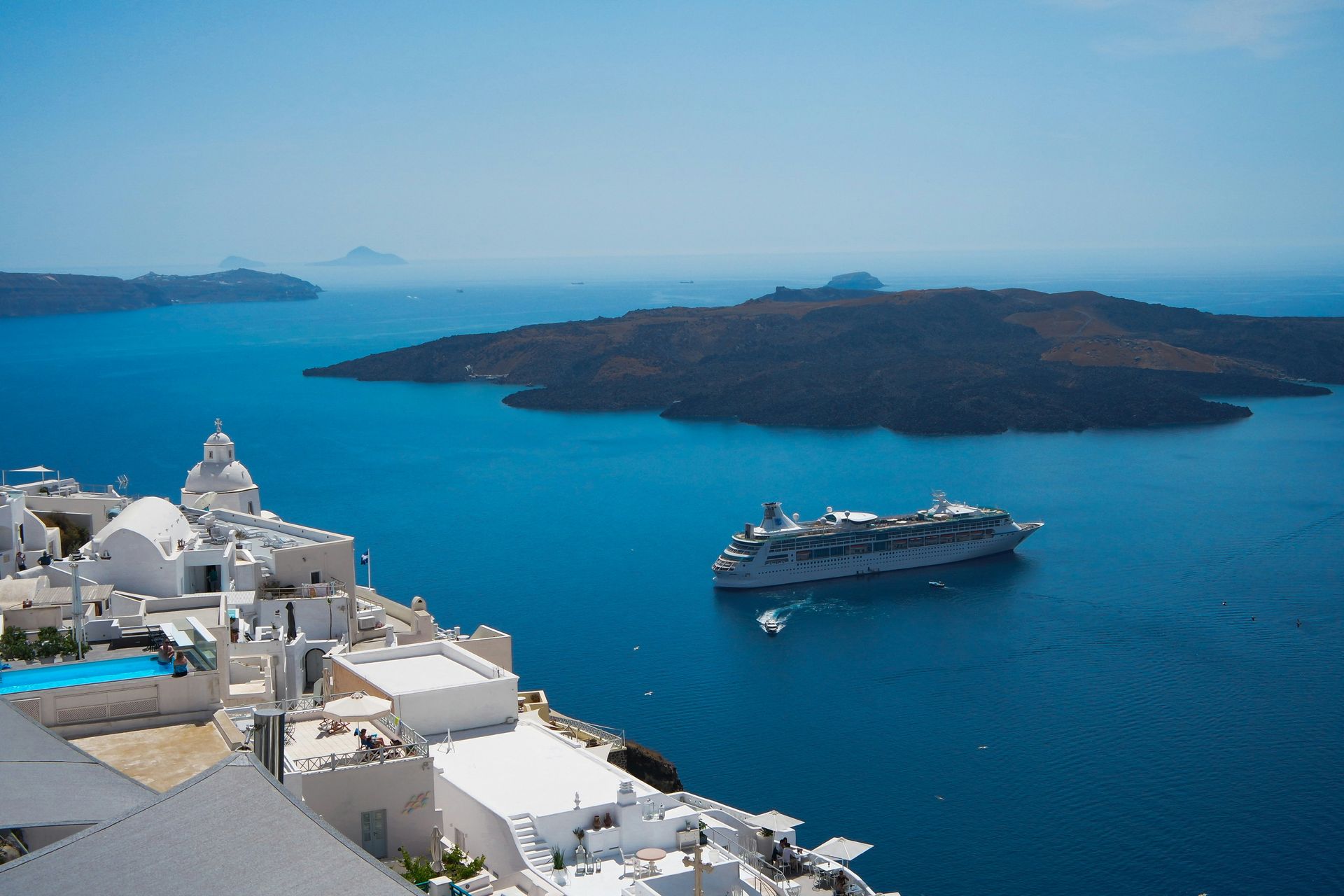
A midday or sunset cruise around Santorini's caldera on a catamaran ranks among the island's most popular activities, and for good reason, since the crescent-shaped volcanic depression at the heart of the island carries a history that blends documented fact with local folklore in roughly equal measure across generations of storytelling. Viewing the caldera from the water gives visitors a fundamentally different perspective than looking down at it from the cliffside towns above, revealing the true scale of the volcanic collapse that shaped the island's current form.
These cruises work particularly well for visitors who want to combine scenic views with a deeper understanding of Santorini's volcanic history, since many trips include commentary connecting the landscape to the eruption that reshaped the entire island millennia ago. Seeing the caldera's walls rising directly from the water gives a visceral sense of scale that photographs from the clifftop towns simply can't convey to someone who hasn't experienced it firsthand from sea level below the cliffs.
Numerous tour companies operate caldera cruises throughout the island, and Caldera Yachting has built a genuine reputation as one of the most popular operators for visitors weighing their options among the many available choices. Most cruises include an onboard meal as part of the package, turning what could be a simple boat ride into a more complete dining and sightseeing experience rolled into a single afternoon or evening outing on the water.
Booking the sunset option specifically tends to deliver the most memorable version of this experience, since watching the sky change color while surrounded by the caldera's dramatic walls combines two of Santorini's signature attractions into a single unforgettable outing. Visitors choosing between a midday and sunset cruise should factor in this added visual payoff when deciding which option best fits their overall itinerary and priorities for the trip, especially if they've already built other sunset-focused activities into earlier days of their stay on the island.
Credit: The White Door Theatro
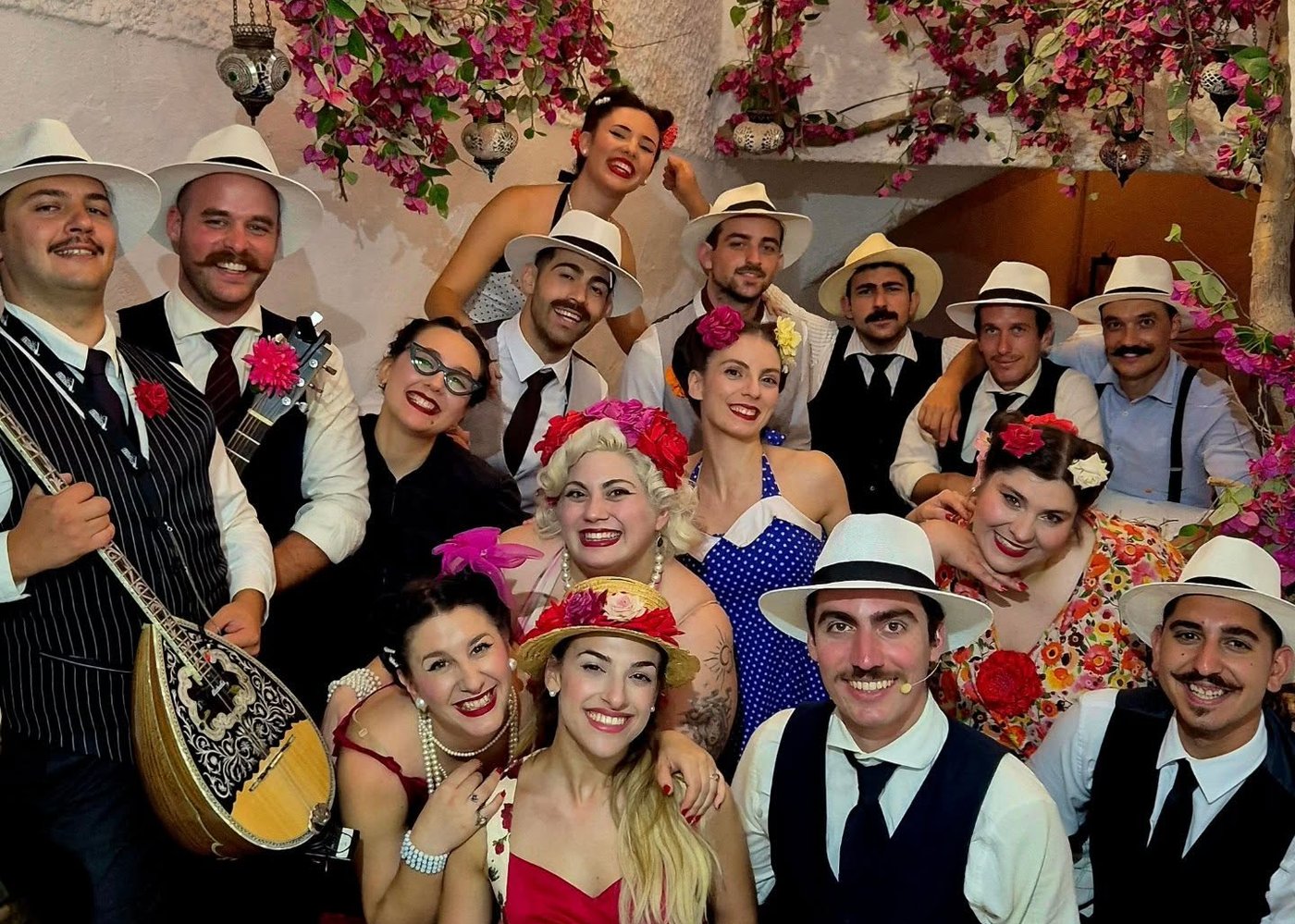
Santorini's theater scene includes at least one genuinely unusual production, and the White Door Theatro show stands apart from conventional performances by turning its audience into active participants instead of passive observers watching quietly from their seats in a darkened room. The show frames its entire performance around an interactive wedding celebration, and audience members find themselves cast directly as wedding guests instead of simply watching a story unfold in front of them.
Participation runs deep throughout the performance, and guests take part in singing, dancing, sampling mezedhes and even the traditional Greek custom of smashing plates as part of the celebratory chaos that defines the entire evening. This level of audience involvement sets the show apart from typical dinner theater or cultural performances found elsewhere on the island, creating an experience that depends as much on the audience's willingness to participate as on the performers' own skill.
The show's popularity has grown considerably given how distinctive its participatory format feels next to more passive entertainment options available elsewhere on Santorini, and booking a spot well in advance has become genuinely necessary for visitors hoping to attend a specific performance date. Waiting until the last minute to secure tickets often means missing out entirely, particularly during the busiest stretches of the tourist season when demand for unique evening entertainment options runs especially high across the island.
Visitors drawn to interactive, participatory entertainment over more conventional sightseeing should specifically prioritize working the White Door Theatro show into their itinerary, since experiences this hands-on remain genuinely rare among Santorini's broader lineup of cultural attractions and evening entertainment options. The format rewards visitors willing to embrace a bit of playful embarrassment in exchange for a memory considerably more interactive than simply watching a performance unfold from a fixed seat, and most attendees describe the shared silliness of the evening as one of the more unexpectedly memorable parts of their entire trip to the island.
Credit: Santorini Helicopter Tours
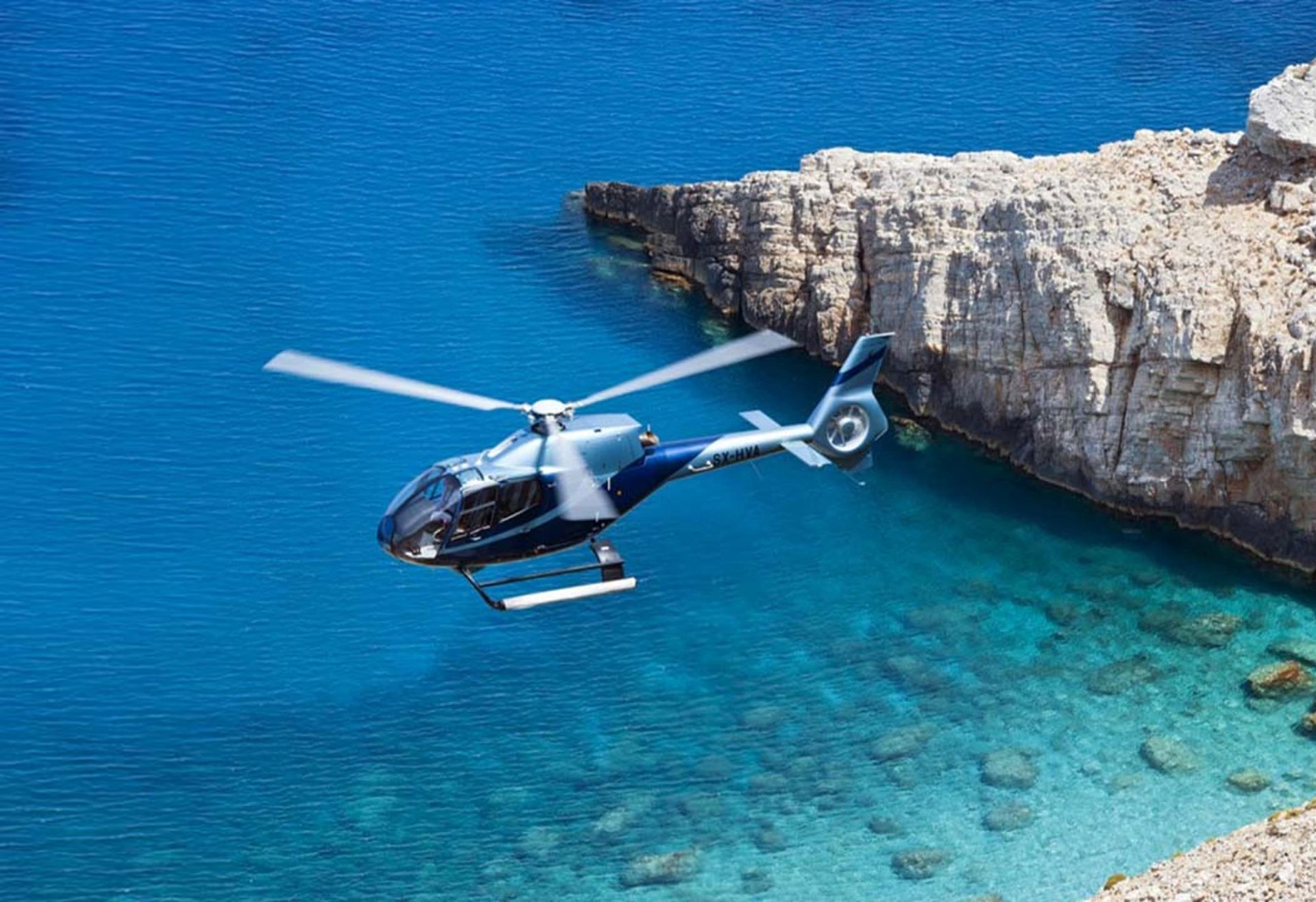
Few experiences on Santorini carry quite the same bucket-list weight as a private aerial tour of the island by helicopter above the caldera and surrounding coastline. Strapping in and lifting off over the island's picturesque landscape delivers a bird's-eye view of Santorini's beaches, whitewashed cliffside towns and blue-domed churches that ground-level sightseeing simply cannot replicate, regardless of how many clifftop viewpoints a visitor manages to check off during a standard trip to the island.
The volcanic caldera itself takes on an entirely different character from the air, and seeing its full crescent shape laid out below makes the scale of the ancient eruption considerably easier to grasp than piecing it together from ground-level views alone. This aerial perspective connects directly to the island's volcanic history in a way that few other activities on this list can match, turning an already dramatic landscape into something even more visually overwhelming from several hundred feet up.
Cost and exclusivity define the helicopter tour experience more than any other activity on Santorini, and visitors should expect to pay considerably more for this excursion than for a standard boat cruise or guided hike elsewhere on the island's more accessible attractions. This premium buys a genuinely private experience, though, free from the crowds that define ground-level attractions such as the Oia sunset viewpoint or the Akrotiri excavation site during peak visiting hours throughout the day.
Visitors who have already spent several days navigating Santorini's crowds on the ground often describe the helicopter tour as a genuinely different way to experience the island, stripped of the waiting, jostling and early arrivals required to secure a good spot at ground-level attractions. Booking this experience toward the end of a trip lets visitors see, from above, many of the same locations they've already explored on foot, adding a memorable final perspective to an itinerary built around Santorini's greatest hits and giving the whole trip a sense of closure that a ground-level activity simply couldn't provide.
Credit: Santorini More
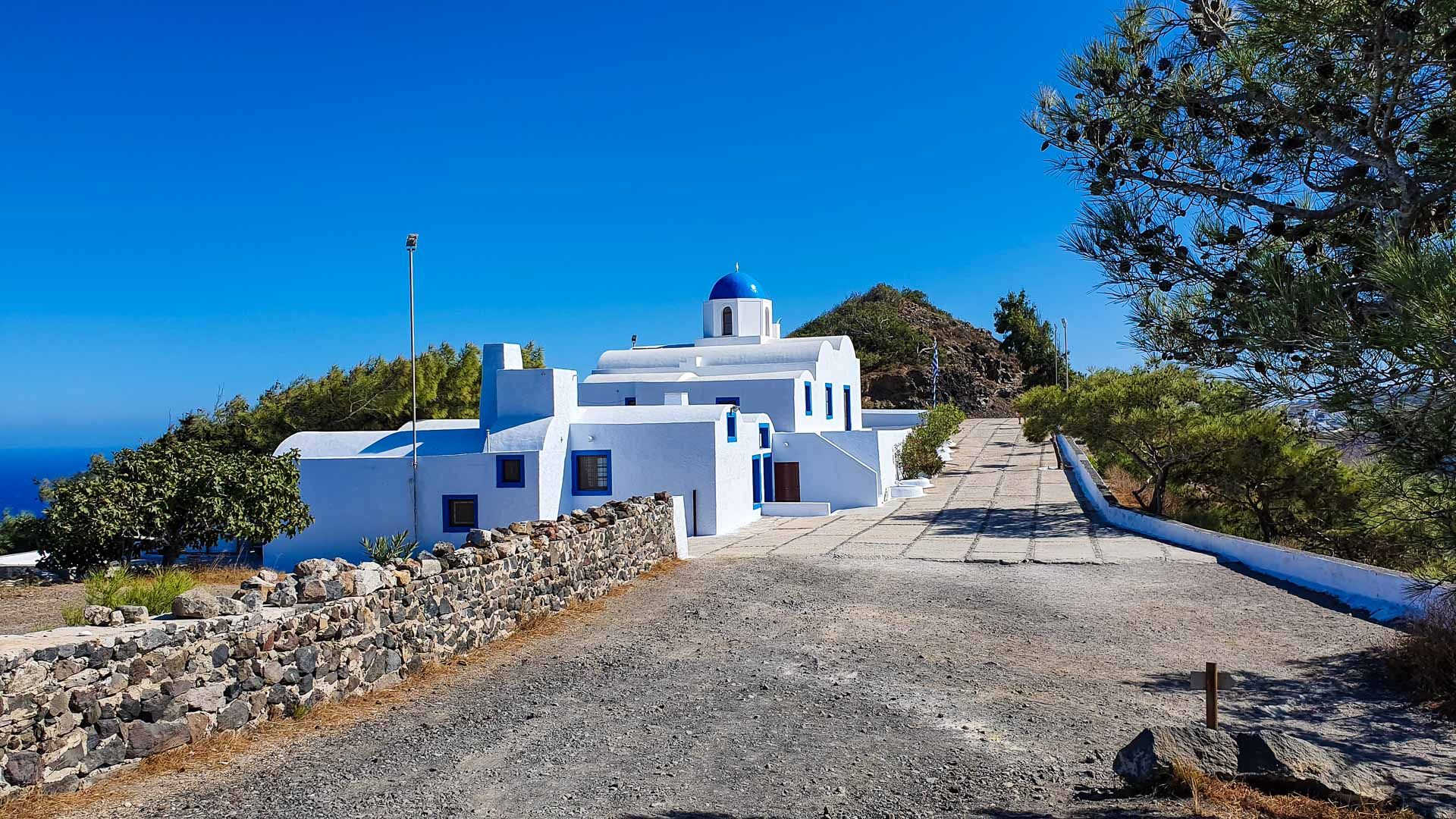
Built in the 17th century, the monastery of Profitis Ilias ranks among the oldest surviving buildings on Santorini, perched at the peak of Mount Eros, the island's highest point above the surrounding caldera and coastline. Reaching the monastery requires a walk through beautiful gardens and pine woods that lead visitors gradually up toward the building's door, turning the approach itself into part of the overall experience instead of simply a means of getting there.
Panoramic views from the monastery grounds rank among the most impressive available anywhere on the island, and visitors should pack a camera specifically for this stop, since the elevated vantage point captures Santorini's cliffs, towns and surrounding sea in a single sweeping perspective that few other locations on the island can match. This pairing of historical weight and genuinely spectacular scenery makes Profitis Ilias worth the climb even for visitors who don't consider themselves particularly interested in religious architecture or monastic history.
The monastery grounds host a small collection of local stores selling homegrown produce, including olives, wine, olive oil, candles and honey, giving visitors a genuine chance to bring home a tangible piece of the island beyond photographs alone taken from the surrounding overlooks. These small shops carry goods produced specifically in the surrounding region, offering a more authentic souvenir option than the mass-produced items found in many of Santorini's more heavily touristed shopping areas closer to the coast.
Visitors planning a full day around Mount Eros should build in enough time to properly explore both the monastery itself and the small shops on its grounds, instead of treating the stop as a quick photo opportunity before rushing back down to the coast below. This pairing of historical architecture, sweeping views and genuine local products makes this one of the more well-rounded stops on the island, rewarding visitors who linger instead of those who treat it as a brief checklist item to cross off quickly.