From tiny Golden Gai bars built around a single obsession to sake breweries that turn three ingredients into an afternoon
Jezael Melgoza / Unsplash
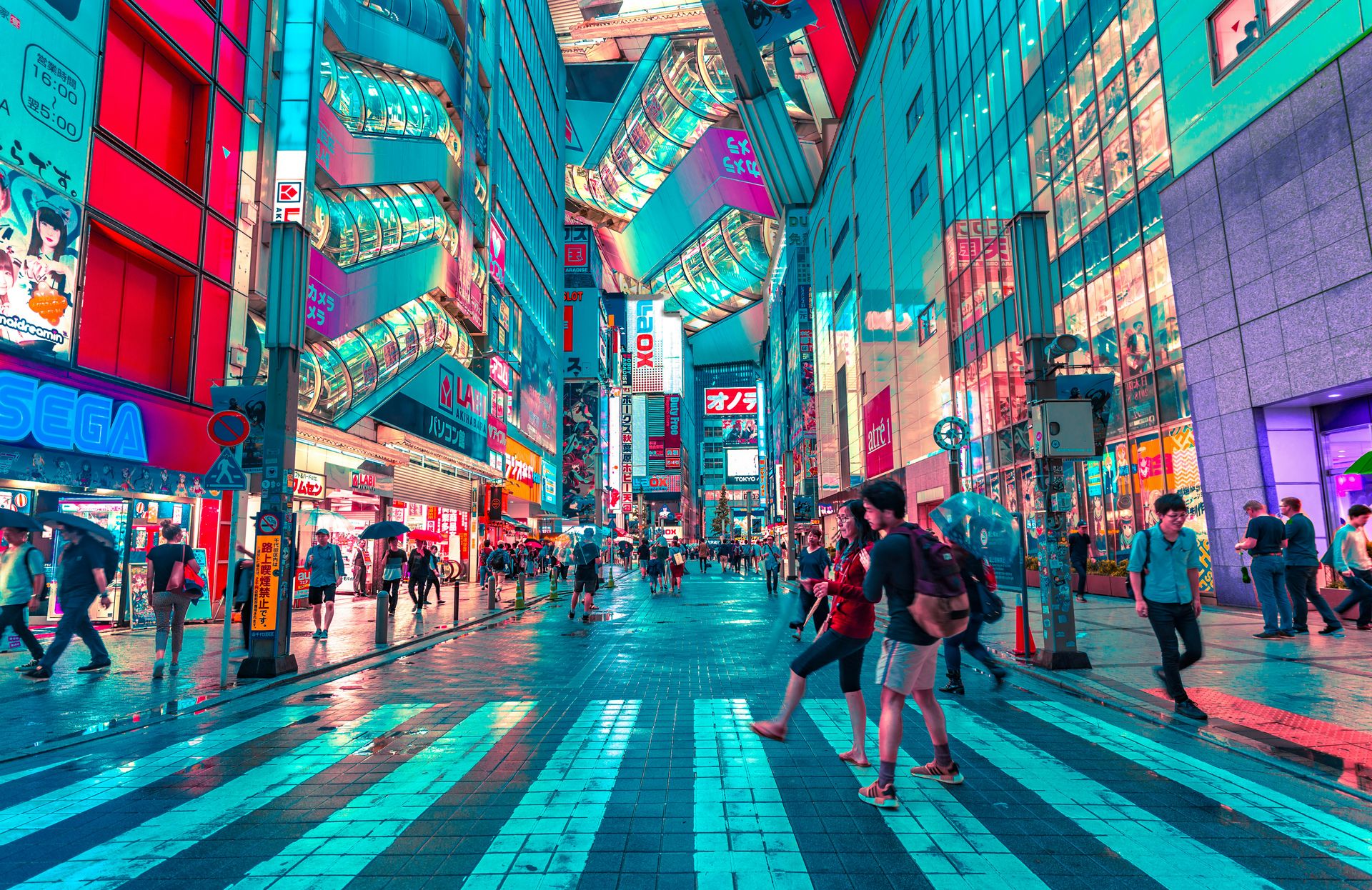
Tokyo resists the kind of summary that makes trip planning feel manageable. The greater metropolitan area covers more than 5,000 square miles, a scale that dwarfs most cities travelers use as reference points. All five boroughs of New York City combined occupy roughly 300 square miles. Tokyo contains multitudes within that vast footprint: ancient temples beside glass towers, fishing villages absorbed into residential neighborhoods, and an entertainment culture so specific to this city that no amount of reading about it prepares a first-time visitor for the experience of being inside it.
The city rewards the traveler who approaches it with curiosity rather than a checklist. Tokyo’s energy does not announce itself the way other major cities do. It operates at a frequency that reveals itself gradually, through the detail of a neighborhood side street, the ritual of a meal prepared and served with total concentration, or the surprise of a bar the size of a walk-in closet where the owner has spent decades perfecting a single cocktail style. The scale of the city can feel overwhelming at first, but the Tokyo neighborhood unit is intimate enough to make each district feel navigable on its own terms.
The 10 experiences below draw on the perspective of a writer with more than 20 years of living in Tokyo, whose recommendations appear in Travel + Leisure. The selection covers the breadth of what the city offers: its food and drink culture, its neighborhood character, its public spaces and private rituals, and the cultural experiences that no other city in the world replicates. Each item reflects something genuinely Tokyo rather than something that could happen anywhere.
Pema G. Lama / Unsplash
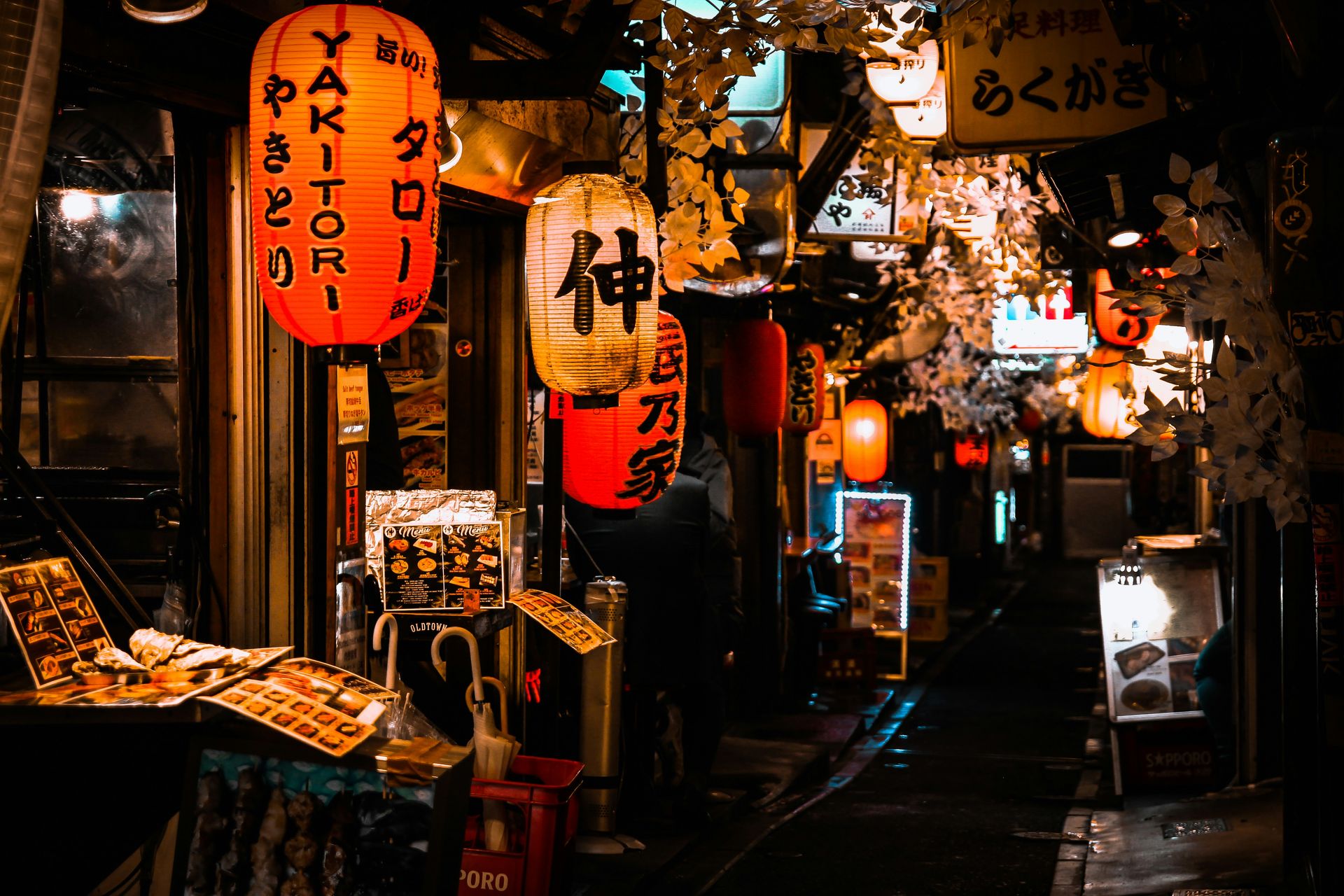
An izakaya night distills Tokyo’s social culture into a few hours of beer, shared plates, and rising noise. These Japanese pubs span a range from ancient, low-ceilinged rooms with overturned sake crates for seats to sleek modern gastropubs with elevated menus and curated wine lists, but the atmosphere when a room fills up and the evening deepens is consistent across the spectrum: raucous, warm, and entirely unlike any other dining experience the city offers. The izakaya is where Tokyo lets its guard down, and sitting inside one at full capacity gives a visitor a version of the city that more formal settings do not provide.
The range of establishments available makes izakaya a category worth exploring across multiple visits rather than a single experience to check off. Uokin Honten draws crowds for its cheap and abundant fish dishes, serving the kind of straightforward seafood that reminds a diner why proximity to the ocean matters in a city of this size. Nihonshu Genka Sakegura in Shinjuku operates as a sake specialist, offering more than 50 bottles, giving visitors a structured way into Japan’s national drink that goes beyond the default glass of Sapporo. Shirubee in Shimokitazawa serves savory oden from a kitchen that has been producing it long enough to have developed a following.
The food at an izakaya is designed for sharing and extended eating rather than the focused progression of a formal meal. Small plates arrive continuously, ordered as the table demands rather than in a fixed sequence, and the rhythm of the evening builds around the conversation rather than the cuisine. Izakaya menus typically encompass grilled skewers, sashimi, fried items, tofu preparations, and vegetable dishes, giving a table a range to move between rich and light throughout a long evening.
Going on a weeknight produces a different experience than a Friday or Saturday visit. Weekend izakayas in popular districts like Shinjuku or Shibuya operate at noise levels and crowd densities that suit some temperaments and overwhelm others. A Tuesday or Wednesday visit to a neighborhood izakaya outside the main entertainment districts gives access to the same culture at a scale that allows actual conversation alongside the eating.
aestelle / Unsplash
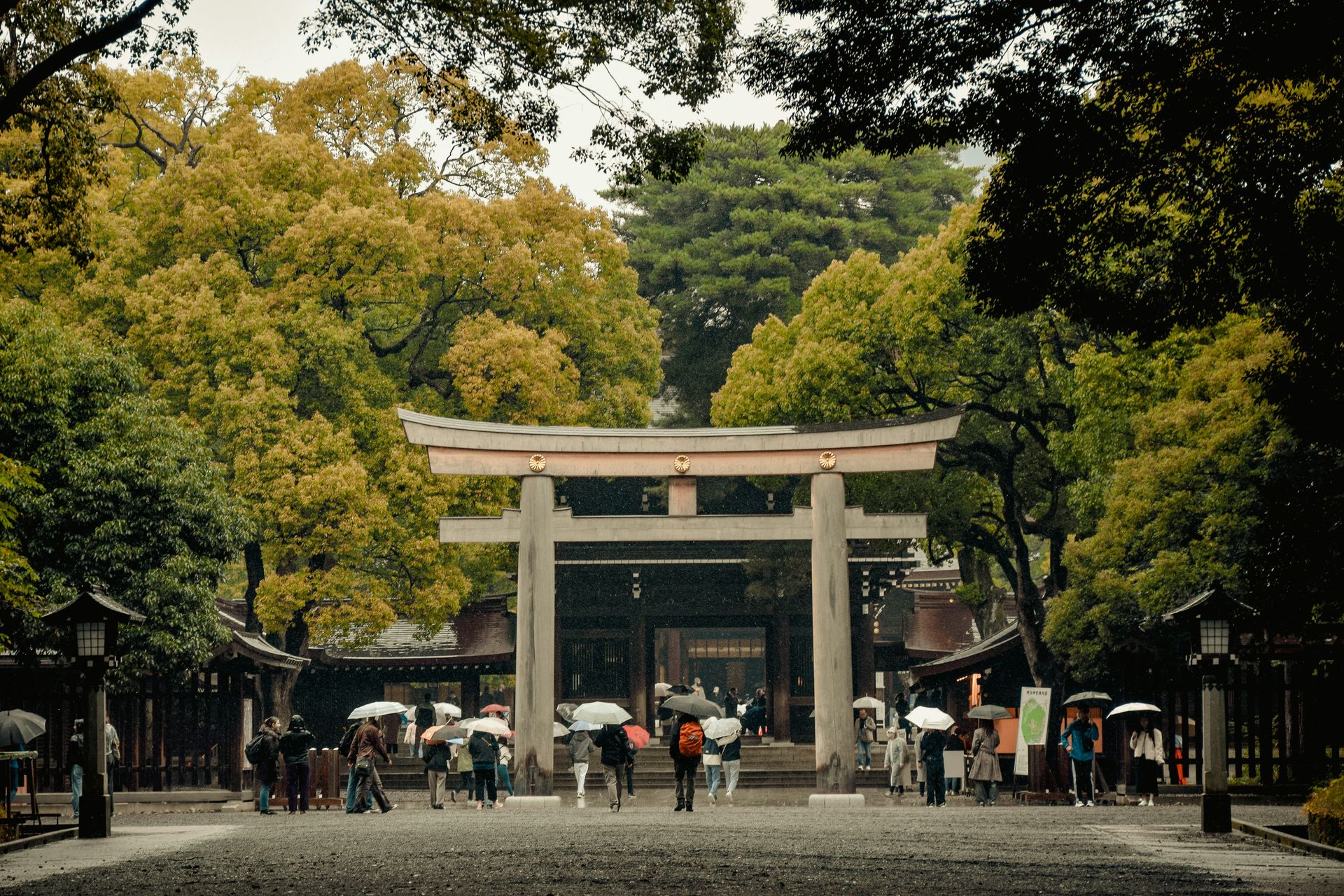
The cultural weight of Tokyo’s shrines and temples extends beyond their architectural or religious significance. In a city built at the density Tokyo sustains, these sites function as green lungs: forested precincts where the concrete recedes, and the pace of the surrounding city becomes temporarily irrelevant. Meiji Jingu in Shibuya occupies a forested enclosure of unusual size for its central location, and the approach along the gravel path through the trees shifts a visitor’s sensory register before any building comes into view.
Senso-ji in Asakusa operates at the other end of the experiential spectrum. The temple is the largest and most visited in Tokyo, and the commercial street that leads to its main gate generates a crowd density that the forested approach of Meiji Jingu does not prepare a visitor for. The temple complex itself, behind the Kaminarimon gate and past the market street, achieves a degree of calm that the approach withholds, and the scale of the main hall and its surrounding structures gives Senso-ji a grandeur appropriate to a temple that has occupied this site since the seventh century.
Gotokuji in the western suburbs offers a third register entirely. The temple claims to be the origin of Japan’s maneki-neko, the ubiquitous ceramic cat with one raised paw that appears in restaurant windows and shop displays across Japan and beyond. The grounds of Gotokuji are populated with these figures in every size, donated by visitors over generations and arranged across the temple precincts in accumulations that read as genuinely strange in the best way. The cat imagery carved into the pagoda gives the temple a visual identity specific enough to justify the journey to a neighborhood that most Tokyo itineraries overlook.
The practical value of shrine and temple visits in Tokyo is as much about rest and reorientation as cultural engagement. These precincts offer a place to sit, slow down, and recover from the sensory intensity of the surrounding city, and regular visitors to Tokyo treat them as functional spaces rather than tourist attractions.
Marek Lumi / Unsplash
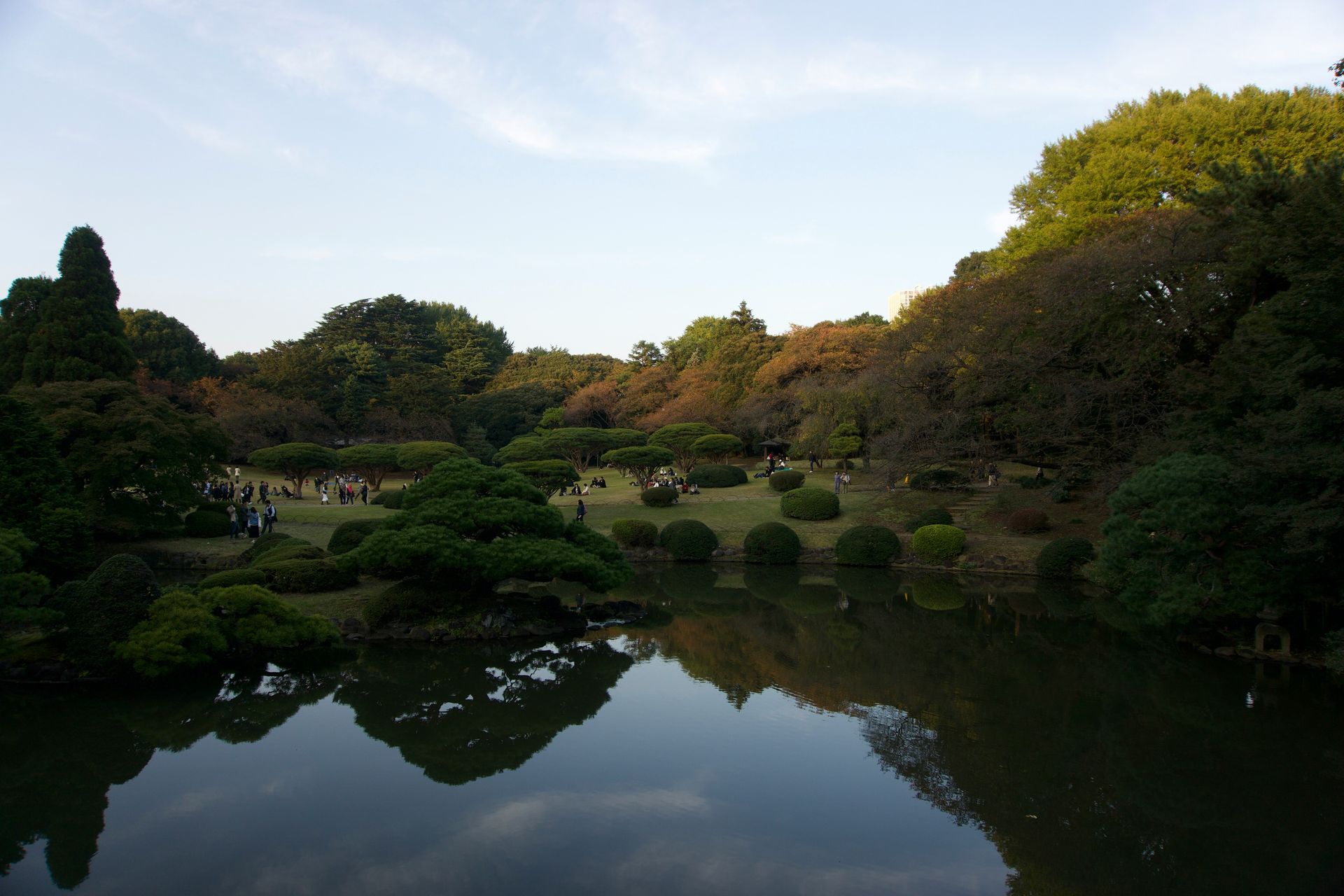
Green space in Tokyo is scarce enough that the city’s residents treat Shinjuku Gyoen with a devotion that visitors from cities with more parkland sometimes find surprising. The park covers a significant area managed by the Ministry of the Environment, and it offers something genuinely unusual for a Tokyo park: well-maintained grass where visitors can actually lie down. The invitation to spread a blanket on the turf and do nothing is taken seriously by locals who bring books, food, and occasionally sleep under the open sky with the surrounding skyline as a backdrop.
The comparison to Central Park in New York holds in structural terms: both are large green spaces embedded in dense urban fabric, and both function as pressure-release valves for cities that generate enormous amounts of ambient stress. The differences are equally instructive. Shinjuku Gyoen enforces a strict no-alcohol policy, which changes the character of the visitor population and the atmosphere significantly compared to the beer-and-blanket culture of Central Park summer weekends. The park’s quiet is real rather than aspirational.
The grounds encompass formal French and English garden sections alongside the open grass areas, giving Shinjuku Gyoen a horticultural range that rewards exploration beyond the main lawn. The park is particularly celebrated during cherry blossom season, when the concentration of bloom varieties across the grounds makes it one of the best viewing locations in the city, and the visitor numbers during peak weeks reflect that reputation. Outside of blossom season and summer weekends, the park operates at a density that allows genuine solitude in its less-trafficked sections.
A picnic assembled from the surrounding neighborhood, including a sandwich from a nearby shop, gives the park visit a local specificity that convenience store food, however excellent by any reasonable standard, does not replicate. The combination of good food, horizontal rest, and sky above a Tokyo skyline constitutes one of the city’s simplest and most restorative experiences.
Ejmin Matevousian / Unsplash
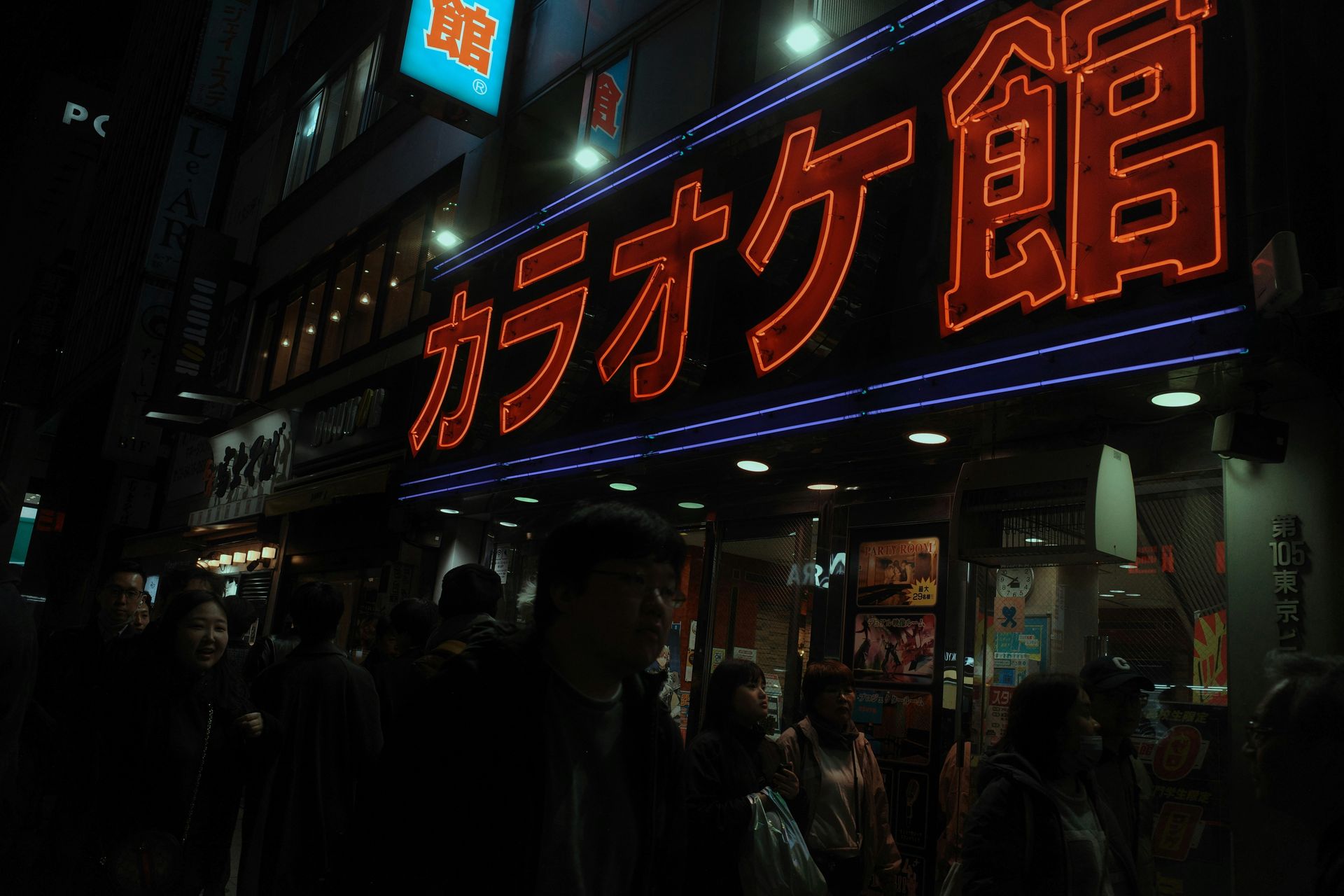
Japanese karaoke operates on a private-room model that eliminates the social anxiety inherent in the open-mic format common elsewhere. An entire floor of a building is divided into small rooms where a group books by the hour, sings whatever they want at whatever volume, and never appears in front of an audience beyond the people they came with. The format removes the judgment that makes karaoke in other contexts feel like a performance, turning it into something closer to collaborative play.
The rooms themselves range from basic booths with a television screen and tambourines to elaborately themed spaces with costumes, city views, and sound systems calibrated for actual enjoyment. Many venues supply hand percussion instruments alongside the standard microphones, and the costuming option gives parties willing to commit fully to the experience another layer of absurdity to work with. The song libraries at most Tokyo karaoke establishments cover multiple languages in sufficient depth that non-Japanese speakers can find a full evening’s worth of material without repeating themselves.
Karaoke Pasela in Shibuya represents the themed-room end of the spectrum, with wacky room designs and, in some cases, windows onto the city below. Finding a karaoke place requires almost no effort in Tokyo: the venues cluster around train stations throughout the city, visible by their illuminated signage and the occasional sound of someone warming up in a lobby. The question is not where to find one but which version of the experience suits the group.
The cultural function of karaoke in Tokyo extends beyond entertainment. It operates as a social lubricant in a city where interpersonal reserve is the default register, giving groups of colleagues, friends, or new acquaintances a structured activity that generates shared experience without requiring the kind of direct conversation that can feel effortful early in a social relationship. Attending as a visitor with Japanese companions often reveals a side of those companions that professional or dining contexts keep entirely hidden.
ayumi kubo / Unsplash
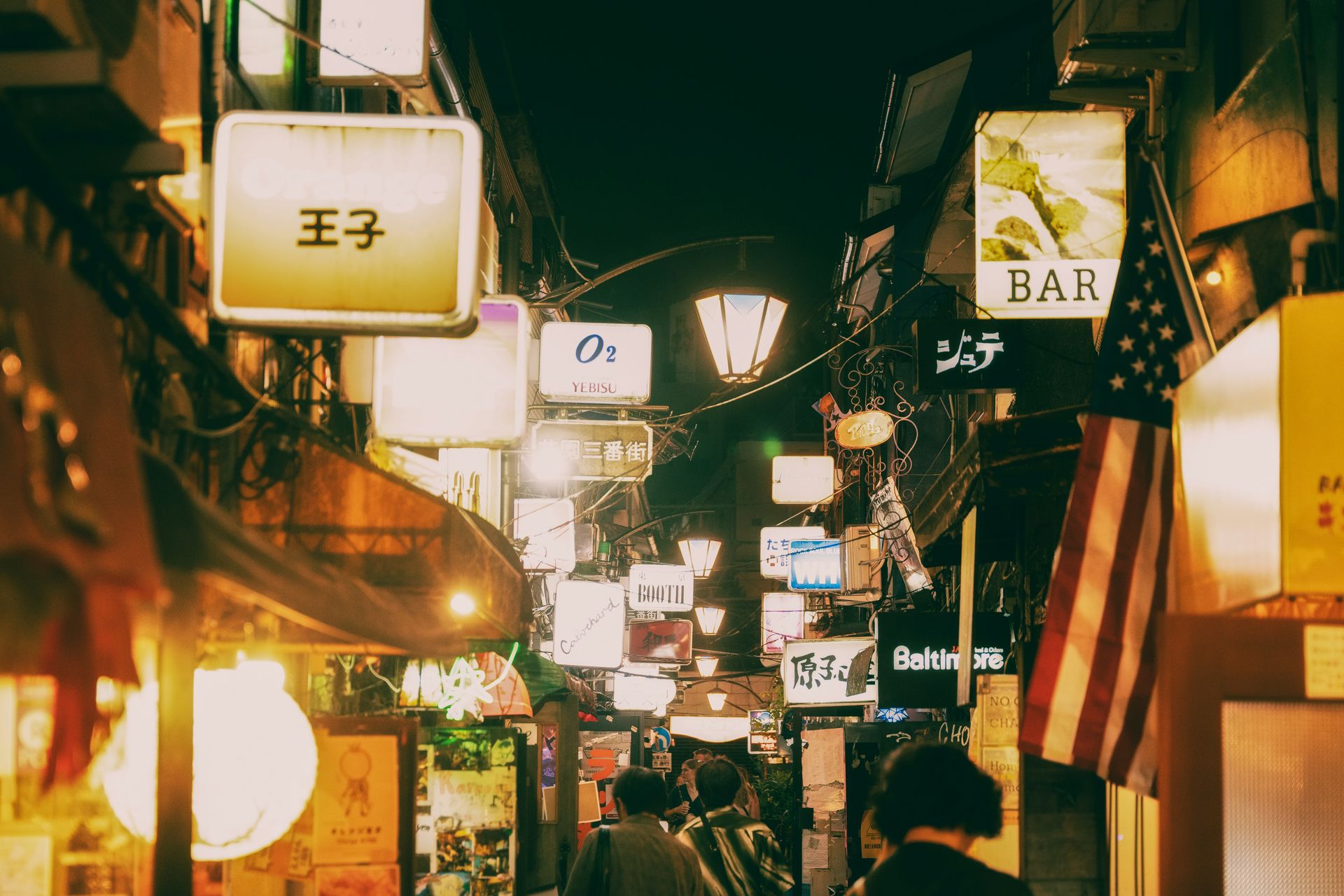
Tokyo’s cocktail culture traces a line from 19th-century Yokohama, where foreign-run waterfront hotels introduced Western bar culture to Japan, through decades of refinement that have produced bartenders now recognized among the world’s finest. The contemporary version of that culture occupies two ends of a spectrum that Tokyo manages to sustain simultaneously without diminishing the other.
At the refined end, Gen Yamamoto offers a cocktail experience structured like the omakase meals that define Tokyo’s high-end dining culture. Seasonal ingredients, custom glassware, and a flight format that builds across the course of an evening give cocktail drinking here the deliberate, sequential quality of a tasting menu. The bar seats a small number of guests, and the bartender's attention to each guest gives the experience a specific intimacy that larger cocktail bars cannot replicate.
Golden Gai in Shinjuku operates in a register so different from Gen Yamamoto's that the two seem to belong to separate cities. This warren of narrow alleys holds dozens of tiny bars, many of them seating fewer than 10 people, each with its own theme and its own bartender-owner who has designed the space around a personal obsession. Film, jazz, horror novels, vintage wrestling: the themes range from the expected to the genuinely obscure, and the experience of finding a bar whose character matches your own interests, ordering a drink from someone who has dedicated their professional life to a single niche, is specific to this neighborhood and this city.
The craft spirit movement has given Japanese bartenders additional local ingredients to work with beyond the shochu and sake that domestic production has long supplied. Whisky distilleries operating across Japan produce spirits that bartenders incorporate into both classic and original cocktails, and the category of Japanese whisky has developed an international following significant enough that some expressions have become genuinely difficult to source.
Mylene Larnaud / Unsplash
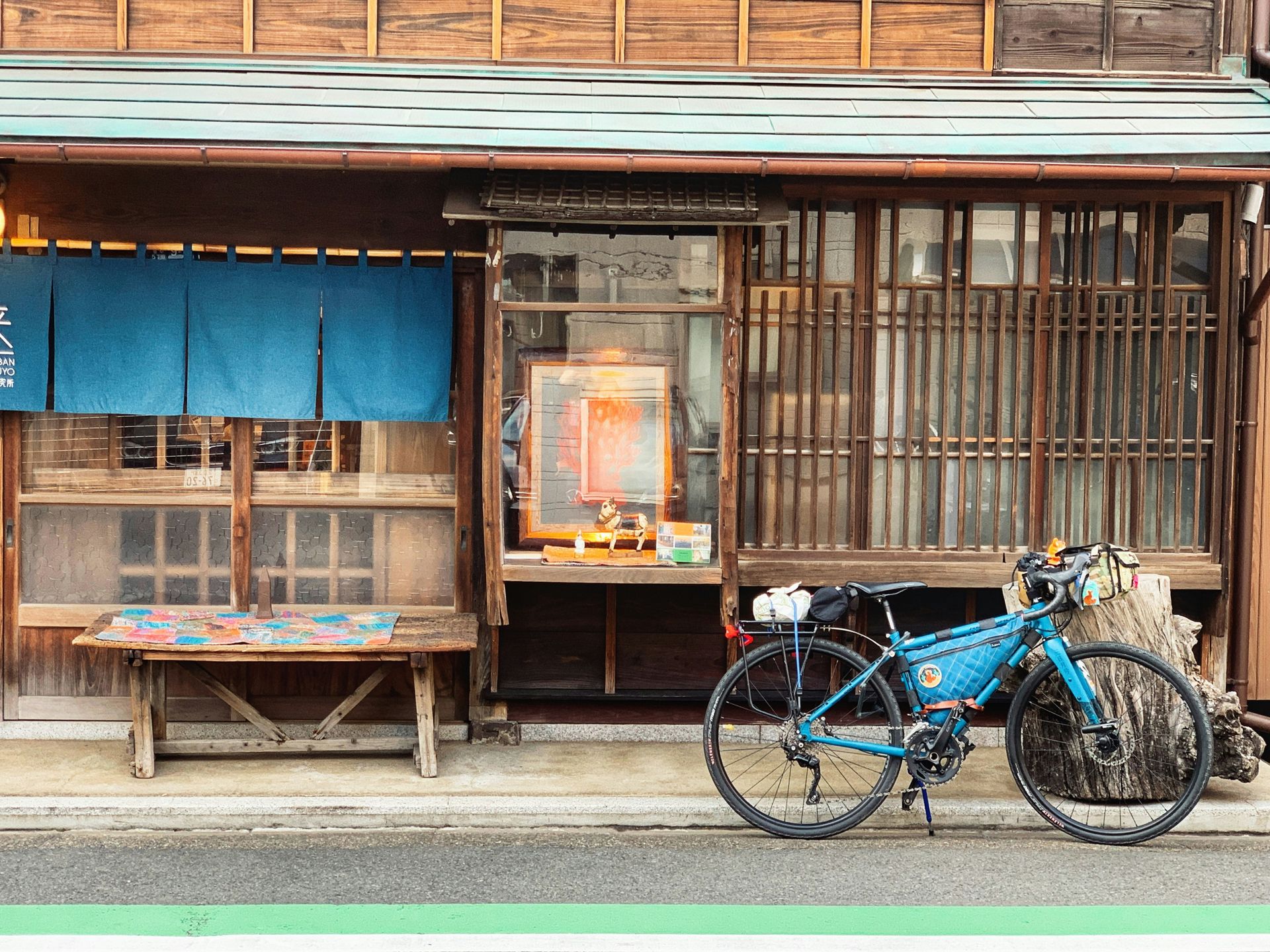
Shitamachi translates roughly as “old town,” but the term describes a texture of urban life as much as a geographic location. The shitamachi streetscape survives in pockets rather than as a contiguous district: narrow back alleys, wooden houses, and small workshops occupy plots where the density of building leaves no space between structure and street. Residents of these neighborhoods compensate for the lack of gardens by lining the curbs with flowerpots and small decorations that make the alleys genuinely atmospheric, in a way that Tokyo’s broader urban environment does not.
Yanaka, in the northeast of the city, represents the most intact surviving example of this urban character. The neighborhood escaped the bombing raids of the Second World War that destroyed much of central Tokyo, and the wooden structures and winding lanes that survived give Yanaka a physical continuity with the pre-war city that the rebuilt districts around it lack entirely. A cemetery at the heart of the neighborhood, large enough to walk through for a long time, adds a quiet, overgrown dimension to the surrounding residential texture.
Ningyocho, to the east, offers a commercial version of the shitamachi experience. Traditional craft shops, confectionery makers, and small restaurants occupy a district where the business culture reflects the neighborhood’s identity as a craftsman’s quarter going back to the Edo period. The area’s food specialties, including traditional Japanese sweets made by shops that have operated across multiple generations, give Ningyocho a gastronomic dimension that complements its streetscape's visual appeal.
Wandering through either neighborhood without a fixed destination produces better results than following a structured route. The character of the shitamachi reveals itself through incidental encounters: a workshop door left open, a shrine tucked between houses, a vendor selling something whose function requires explanation. This kind of slow urban exploration is the mode that Tokyo’s most interesting neighborhoods reward most generously.
Cosmin Serban / Unsplash
Tokyo’s museum landscape spans the expected range of art, history, and science, but the city’s most memorable cultural institutions are those built around a single niche pursued with absolute commitment. The Meguro Parasitological Museum holds the world’s largest collection of preserved parasites, displayed in cases with the clinical precision of a research institution alongside interpretive material that explains what visitors are looking at with more enthusiasm than unease. The museum is free to enter, staffed by researchers, and consistently cited by long-term Tokyo residents as one of the city’s most surprising cultural experiences.
The Small Worlds Miniature Museum recreates entire real-world locations in miniature scale, including Kansai Airport, with moving parts and a level of detail that rewards close examination. The scale of the project and the commitment of the craftspeople who built the dioramas give the museum a quality of attention that the novelty of the concept alone does not explain. Visitors who go expecting a light curiosity typically leave having spent considerably longer than planned.
Beyond these two, Tokyo sustains museums dedicated to kites, tattoos, love dolls, printing technology, luggage, and children’s games, among many others. The common thread is a curator who followed a specific interest far enough to build an institution around it, and the experience of visiting these collections is less about acquiring knowledge than about encountering the specific texture of deep expertise. Each museum teaches the visitor something, as the original article notes, even when what it teaches is primarily about the power of sustained obsession.
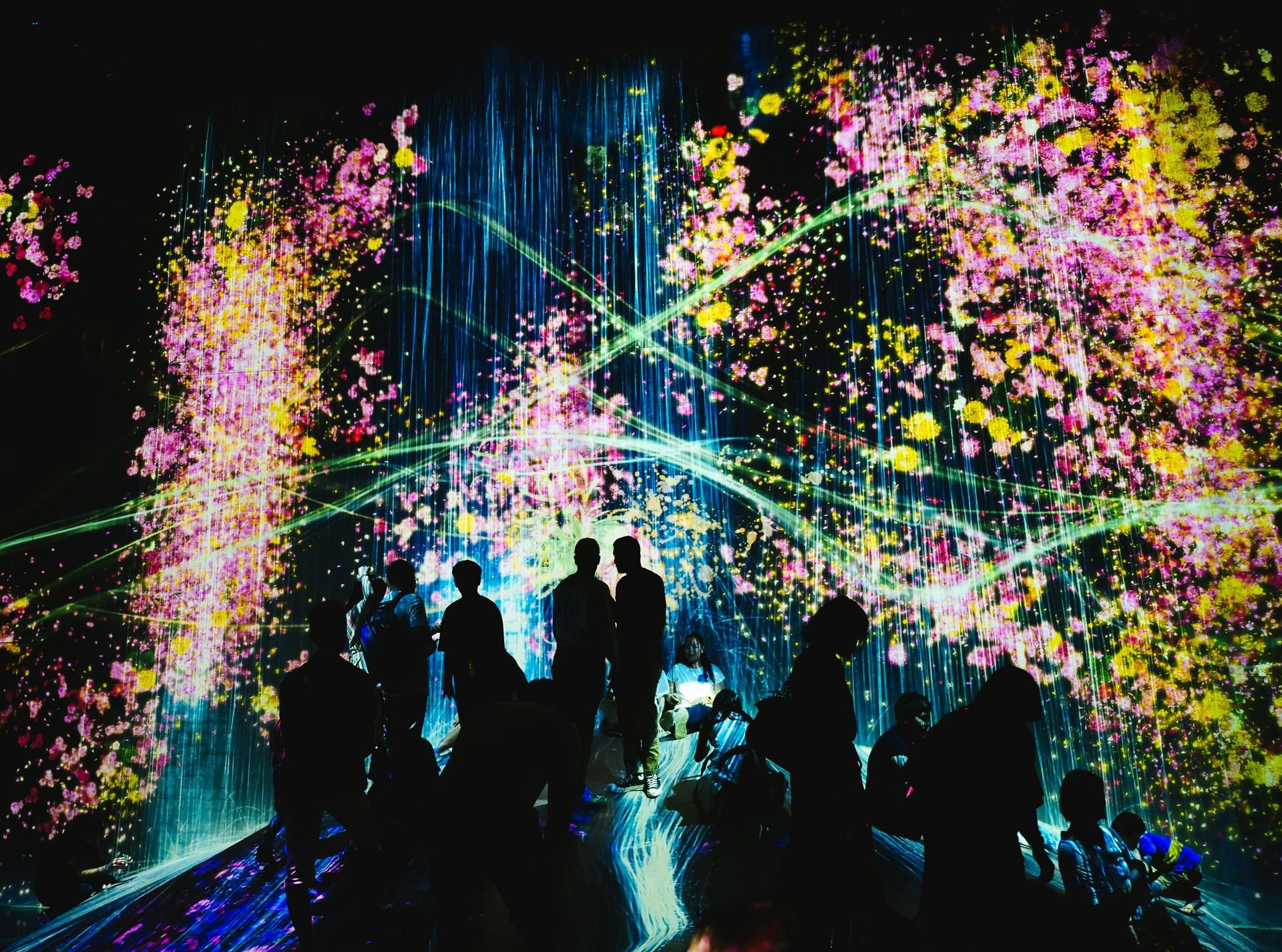
The larger, more conventional institutions around Ueno Park, including the Tokyo National Museum, anchor the city’s mainstream cultural offering with collections of genuine depth and historical significance. The digital art spaces operated by teamLab represent a newer institutional model, using technology to create immersive environments that attract visitors with no particular interest in conventional art museum formats. Tokyo’s museum landscape spans the full range from established grandeur to idiosyncratic niche, and a visitor with limited time must choose which register of cultural experience to prioritize.
Frederick Shaw / Unsplash
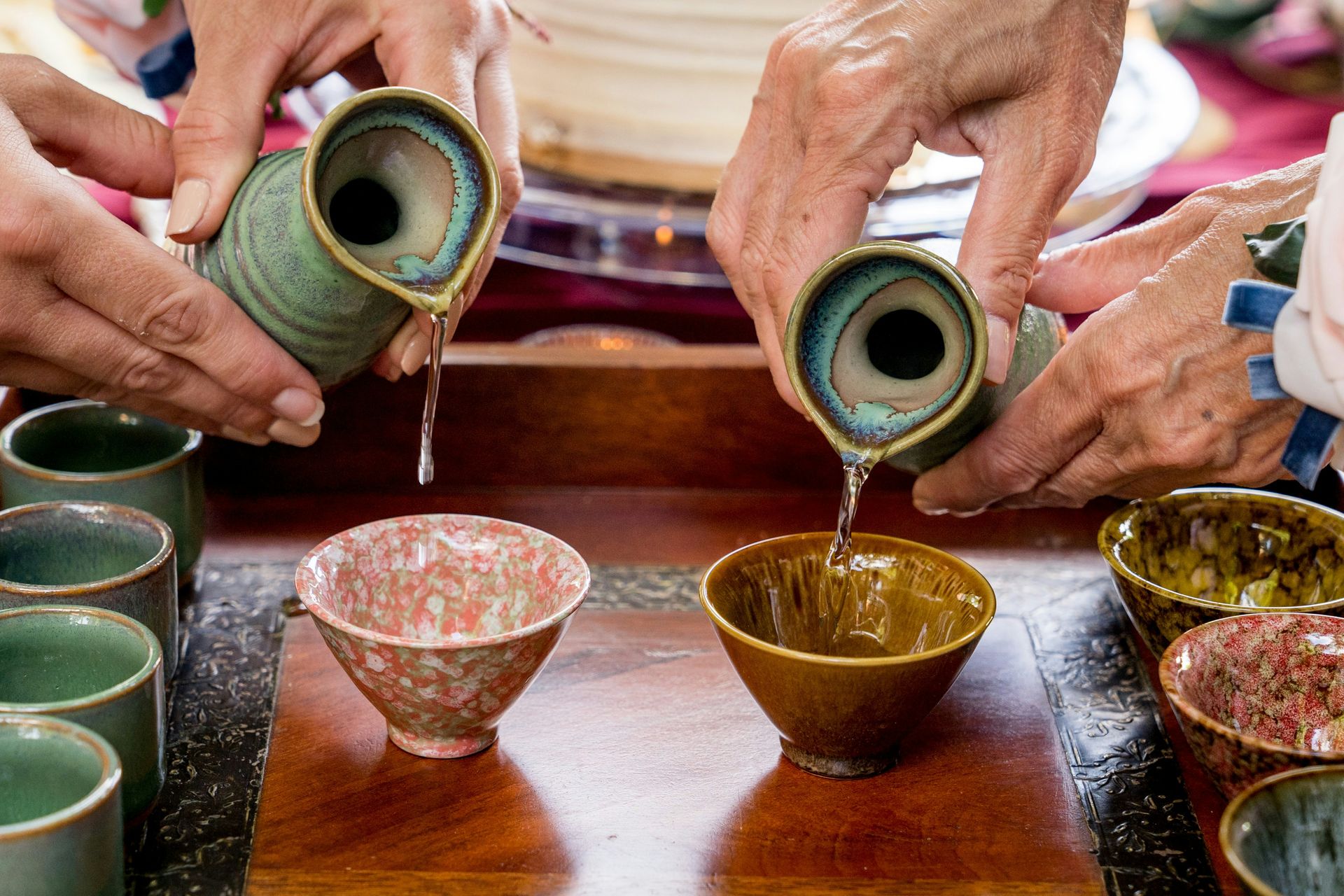
Sake is brewed from rice, water, and koji mold, a combination whose apparent simplicity masks a process capable of producing enormous variation in flavor, aroma, and character. A brewery tour makes the gap between those three ingredients and the finished drink tangible in a way that reading about sake cannot replicate. Understanding how fermentation temperature, rice polishing ratios, and water mineral content interact to produce different styles of sake gives the drink a context that changes the experience of drinking it afterward.
Tokyo is not traditionally associated with sake production, which is dominated by regions with specific water and climate conditions that the capital lacks. Toshimaya and Ozawa both operate in the western suburbs of the city, however, and both offer tours and tastings for visitors who book in advance. The suburban location means that a brewery visit fits naturally into a day that combines the western neighborhoods with other destinations, rather than requiring a dedicated trip outside the city.
The tasting component of a brewery tour gives visitors direct exposure to the range of sake styles produced at the facility, from the driest junmai expressions to the more aromatic and fruity ginjo and daiginjo categories. Comparing multiple styles in the context of the brewery where they were made, with a guide available to explain the decisions that produced each one, compresses months of casual sake exploration into a single afternoon. The educational value of the experience extends into every subsequent sake encounter the visitor has in Tokyo, at izakaya, restaurants, or specialist sake bars.
Sake’s role in Japanese cooking adds a practical dimension to understanding the drink beyond its qualities as a beverage. The same fermentation processes that produce sake also underlie mirin, shio koji marinades, and other cooking preparations that appear throughout Japanese cuisine, and a morning in a brewery gives these connections a physical grounding that adds depth to the broader food culture the city offers.
Soyoung HAN / Unsplash
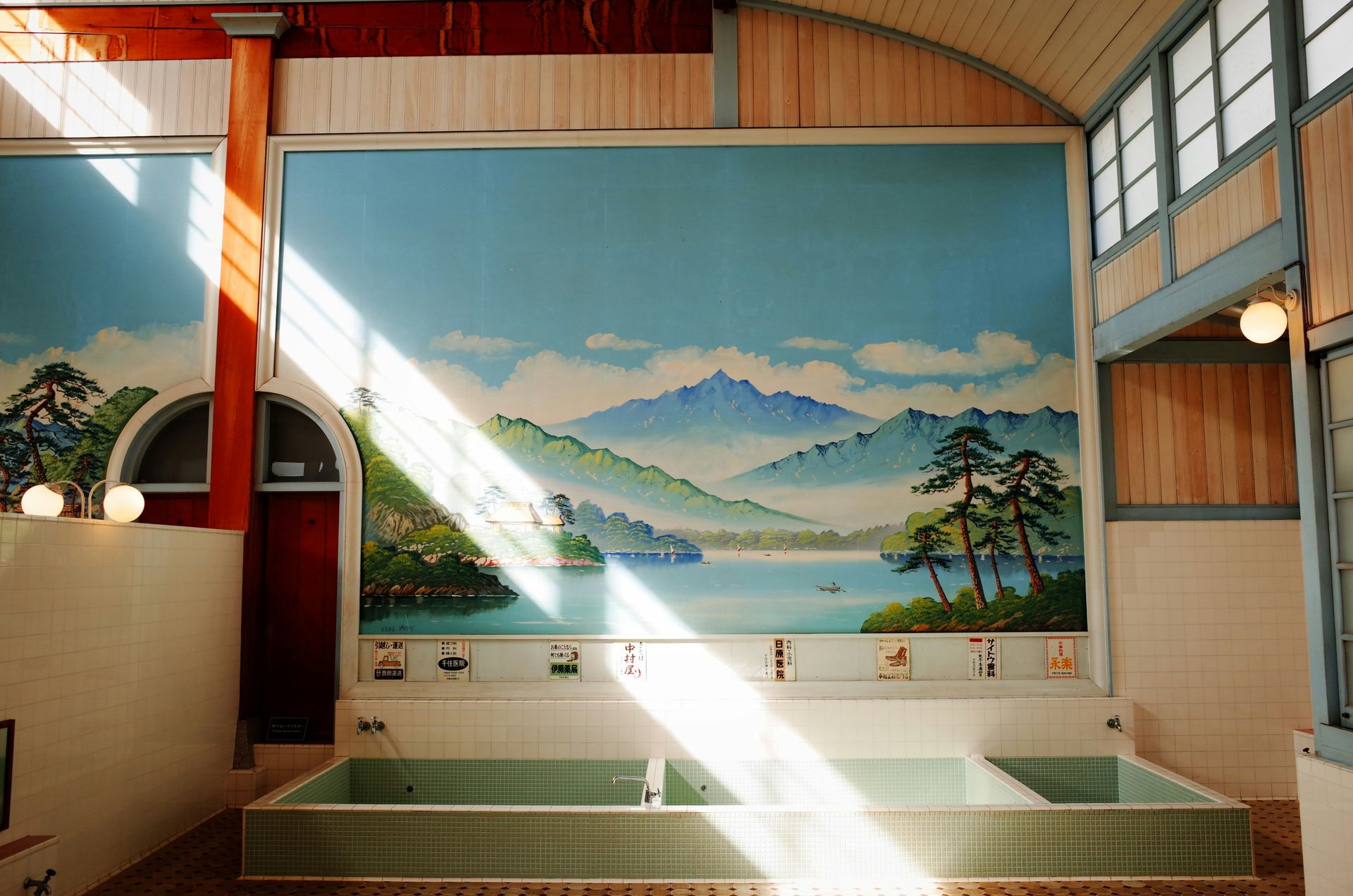
The sento, or public bath, occupied a central position in Tokyo neighborhood life before indoor plumbing made private bathing standard. These communal bathing spaces functioned as social centers as much as hygiene infrastructure, and the regulars who used them daily built the kinds of relationships that the pace of contemporary urban life rarely sustains. The sento is in the middle of a revival that combines this social history with contemporary design sensibilities and, in some cases, a craft beer tap alongside the traditional hot water.
Takenoyu represents the old-school version of the experience: a neighborhood sento where the regular clientele skews older, and the ritual follows conventions that have not changed substantially in decades. The etiquette of a traditional sento requires attention from a first-time visitor. Washing thoroughly at the individual shower stations before entering the communal pool is the non-negotiable foundation of the experience, and the main bath runs hotter than most Western visitors expect, requiring a gradual acclimatization that regular patrons have long since adapted to.
Komaeyu has updated its format without abandoning its roots, adding craft beer and light food to the sento experience, attracting a younger demographic while maintaining the communal bathing structure. The combination of post-soak beer and whatever food is on offer constitutes one of the more relaxed ways to spend an evening in Tokyo, and the expanded social function of the updated sento gives visitors a context for interaction with Tokyo residents that more tourist-focused venues do not.
The bathing culture that the sento represents connects to a broader Japanese relationship with hot water that extends from the public bath to the private ofuro, the hotel onsen, and the elaborate bath culture of traditional ryokan inns. A visit to a Tokyo sento introduces this continuum in its most accessible and neighborhood-embedded form.
Credit: Mandarin Oriental
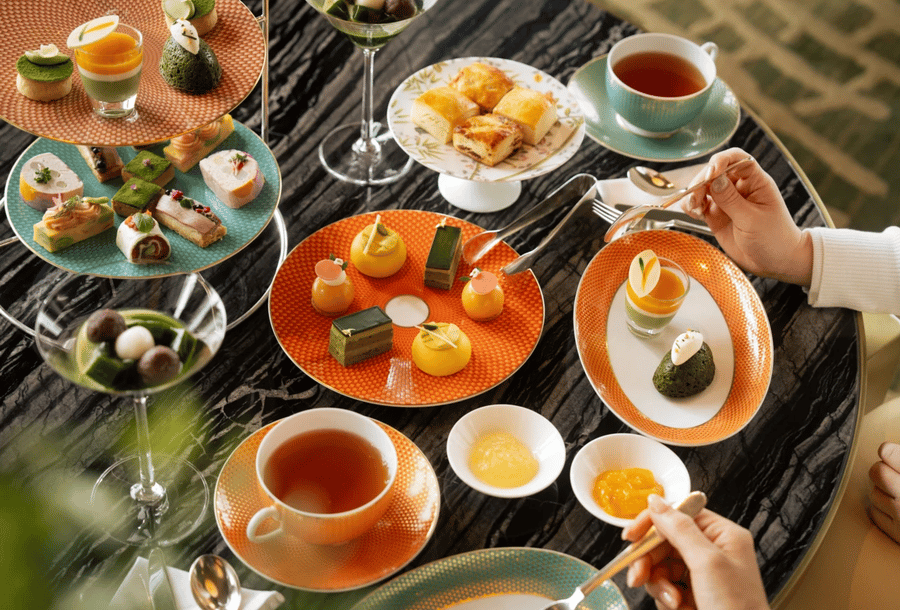
Tokyo’s afternoon tea culture operates at a scale that reflects how seriously the city takes the ritual. Diners spend close to 90 billion yen annually on the experience, a figure that drives hotels and venues to regularly develop menus and make seasonal presentation changes to compete for a market that has developed genuine expectations. The result is an afternoon tea landscape where the quality of the food, the design of the setting, and the calibration of the view compete with the deliberate effort of any other high-end dining category in the city.
Janu Tokyo’s outdoor garden terrace positions Tokyo Tower as the primary visual backdrop, framing the afternoon tea experience within a view of one of the city’s most recognized structures. The outdoor setting, weather permitting, gives the experience a spatial openness that the hotel interior contexts cannot replicate, and the garden environment adds a horticultural dimension to a ritual more commonly conducted in carpeted drawing rooms.
The lounge at Mandarin Oriental Tokyo operates at altitude, offering the kind of elevated cityscape that Tokyo’s density and building heights make available throughout the city. The menu here cycles through seasonal variations that give repeat visitors a reason to return at different times of year, and the scone program has developed enough of a following to stand on its own as a draw. The combination of height, view, and a kitchen that treats the scone with genuine seriousness represents the premium end of a category that Tokyo takes more seriously than almost any other city in the world.
The seasonal nature of the best Tokyo afternoon tea menus means that timing a visit around a specific menu requires some advance research. Hotels publish their current offerings online, and the rotation happens often enough that the menu available during a visit will differ from whatever was photographed most recently by food media covering the category. The surprise of an unfamiliar seasonal set is part of the experience rather than a complication of the planning.
