The best three-row SUVs to buy instead of the Honda Pilot in 2026
From a redesigned Kia Telluride with near-luxury materials to a Mazda CX-90 with a premium interior and three rows
Credit: Honda
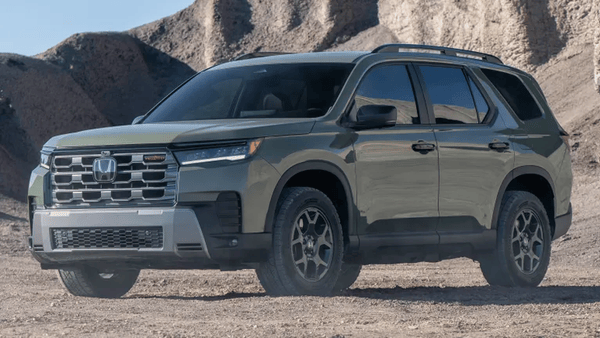
The 2026 Honda $HMC Pilot is a thoroughly competent three-row midsize SUV whose 2026 refresh brought updated styling and features to a platform that has been a segment standard for years. Its ability to seat up to eight passengers sets it apart from most competitors, which cap at seven, and its comfortable ride and well-rounded character give it broad family appeal. The criticism is the price: as the Pilot has moved upmarket, the value calculus that made earlier generations' recommendations obvious has become less clear, and the alternatives have gotten considerably better.
The midsize three-row SUV segment is currently the most competitive category in the American car market. The Korean automakers, Hyundai and Kia, have closed the quality gap with the Japanese brands and, in some areas, exceeded them. The redesigned Telluride, the Palisade, and the Santa Fe give buyers Korean-made alternatives whose interior quality, technology, and reliability credentials now compete on equal terms with the Pilot’s established reputation. Meanwhile, buyers willing to step outside the three-row requirement will find the Honda Odyssey minivan, the Passport, and the Grand Cherokee offering specific advantages that the Pilot cannot match in their own terms.
The 10 vehicles below appear in U.S. News and World Report as alternatives to the 2026 Honda Pilot, ordered by the specific advantage each offers and then by overall U.S. News rating. Prices shown are approximate starting figures. Buyers should confirm current pricing with dealers, as market conditions, trim availability, and option packages affect the final transaction number.
1 / 10
1. The 2027 Kia Telluride earns the editor’s top Pilot pick
Credit: Kia
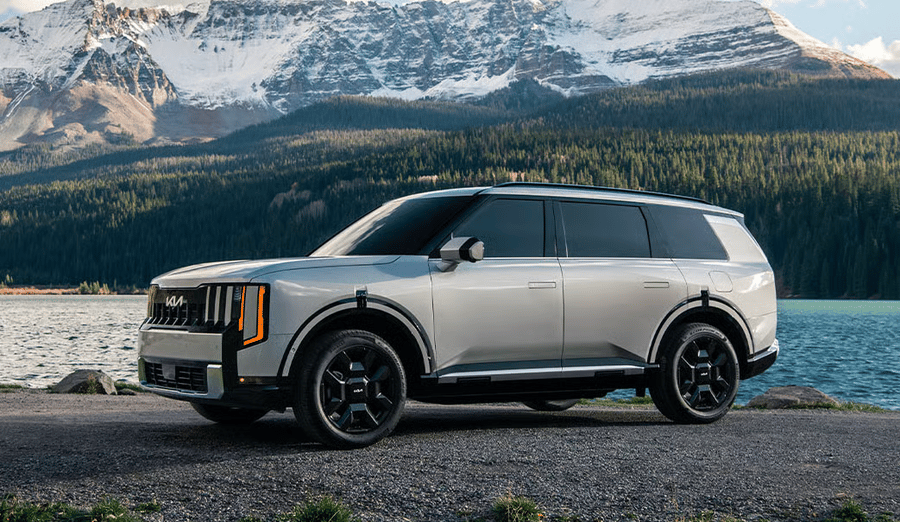
The fully redesigned 2027 Kia Telluride holds the editor’s choice position among Honda $HMC Pilot alternatives and carries a U.S. News rating of 9.5 out of 10, giving it the highest rating of any vehicle on this list. The redesign that debuted in 2027 gives the Telluride a more refined cabin and a sleeker overall design, and the interior quality across even the lower trim levels gives the vehicle a fit and finish whose materials and assembly rival those of the segment’s luxury-adjacent competitors, who charge significantly more. The standard equipment across the Telluride’s lineup includes a 12.3-inch touchscreen infotainment system, wireless smartphone integration, and a pair of wireless charging pads, giving the base configuration a technology package that the Pilot’s comparable trims do not consistently match.
The redesign did bring price increases: the Telluride, which was once notable for offering near-luxury quality at below-segment-average prices, now starts around $39,190, putting it closer to the Pilot’s price point than the previous generation’s bargain positioning. The value argument has shifted from outright price advantage to overall quality return for the dollar spent, and on that metric, the Telluride’s interior quality, technology standard, and three-row versatility give it a strong case.
The X $TWTR-Line and X-Pro trims give the Telluride a rugged off-road-oriented configuration that matches the Pilot’s trail-focused variants, giving the buyer who wants both the refined daily driver and the weekend adventure capability a single vehicle that serves both purposes without the compromise that the more urban-oriented three-row SUVs impose. The Telluride’s towing capacity and available all-wheel-drive system give the outdoor-focused buyer a capable platform specific to the Kia nameplate’s expanded ambitions. The Telluride’s three-year track record since its original launch has built an owner satisfaction profile that the first-generation vehicle’s enthusiastic initial reception has sustained, and the second-generation redesign’s improvements in refinement and technology give the existing Telluride owner a clear and genuinely persuasive reason to consider the upgrade.
2 / 10
2. The 2026 Honda CR-V holds budget Pilot alternative status
Credit: Honda
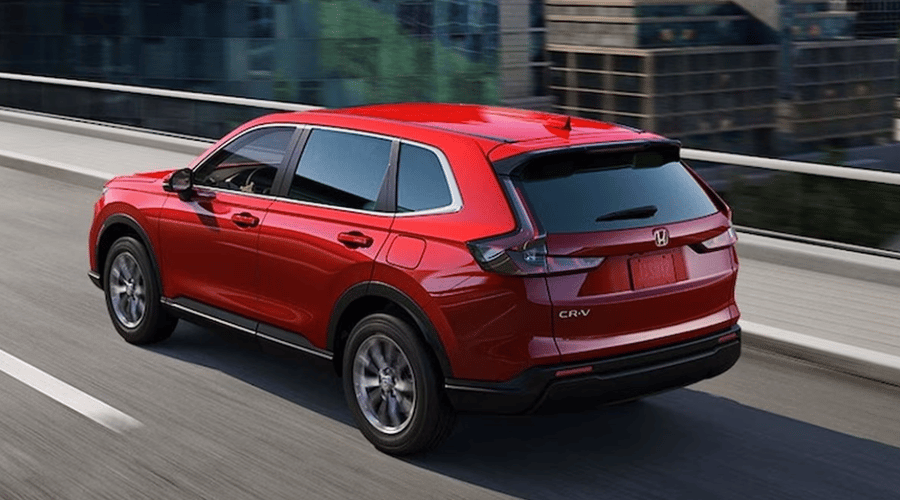
The 2026 Honda $HMC CR-V holds the best budget alternative position among Honda Pilot competitors, with a starting price around $30,920, making it the most affordable vehicle on this list by a meaningful margin. The CR-V is a compact crossover, not a three-row midsize SUV, which means the comparison to the Pilot requires the buyer to actively consider whether the Pilot’s additional interior space is worth the additional cost. For families whose real-world passenger load rarely fills all three rows, the CR-V’s more modest dimensions and lower price point make it a persuasive financial choice.
The CR-V’s qualities are those of a class leader in its own right: cargo and passenger space that exceeds most of the compact SUV competition, fuel economy that the midsize three-row vehicles cannot match, and a ride comfort and interior quality that approach the Pilot’s character in a smaller package. The 2026 refresh updates the technology and safety features, maintaining the CR-V’s competitive position in a compact SUV segment that has become one of the most contested in the market. The interior looks and feels genuinely upscale by compact SUV standards, and both rows of seats give occupants space and comfort proportionate to the vehicle’s dimensions.
The honest limitation is the space comparison: the CR-V simply cannot match the Pilot’s third-row capacity, and the buyer whose family routinely fills seven or eight seats will find the CR-V a functional daily vehicle that fails the specific test the Pilot was designed to pass. The U.S. News rating of 8.9 out of 10 gives the CR-V a strong competitive position in its class, and the Honda family resemblance in technology, safety features, and overall character makes the Pilot owner who downsizes feel like they're making a familiar and comfortable transition. The CR-V Hybrid, which delivers significantly better fuel economy than the standard gasoline version, gives the buyer who prioritizes efficiency within the compact SUV category an additional reason to consider the CR-V as the budget-conscious alternative.
3 / 10
3. 2026 Honda Prologue leads on efficiency as a Pilot pick
Credit: Honda
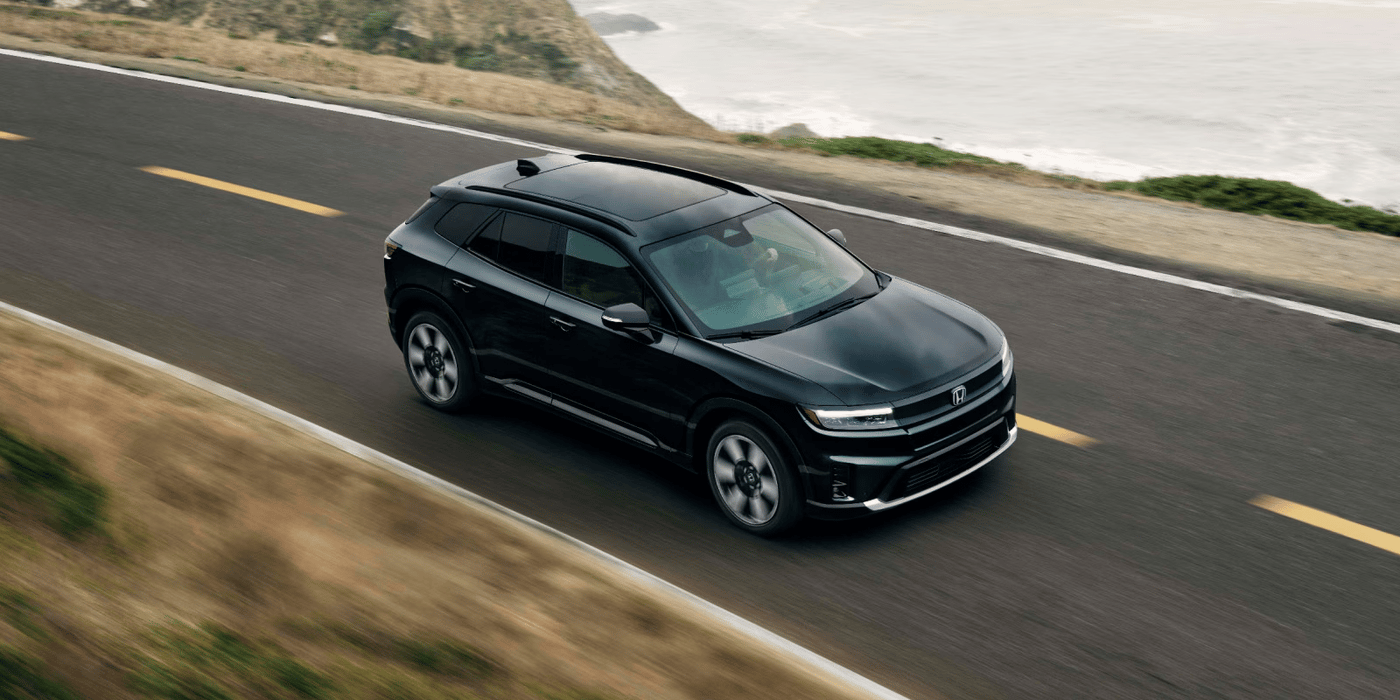
The 2026 Honda $HMC Prologue holds the top spot on this list for fuel efficiency, with a combined rating of up to 104 MPGe, giving it a decisive efficiency advantage over every other vehicle in the comparison and making it the logical choice for the Pilot shopper whose primary concern is operating cost and environmental impact. The Prologue is Honda’s first fully electric SUV, and it occupies a specific structural position in the Honda lineup: it shares a platform with the Chevrolet Blazer EV, which uses General Motors $GM’ Ultium architecture rather than a Honda-developed platform. This origin gives the Prologue driving dynamics that differ from Honda’s own vehicles and a technology stack whose software and interface reflect GM’s development priorities.
The Prologue’s range of up to 308 miles gives the electric SUV a real-world capability appropriate to the suburban family’s daily and weekend use pattern, and the Honda design ethos that shaped the exterior and interior gives the vehicle a family resemblance to the broader Honda lineup that makes the transition from a conventional Honda straightforward in terms of controls and interface. The standard safety features are, as is typical for Honda, comprehensive and highly rated, giving the Prologue its brand’s safety credentials alongside the efficiency advantage.
The specific limitations are important to state clearly: the Prologue has two rows, not three, which means it cannot match the Pilot’s eight-seat capacity. The Chevrolet platform's origins mean the driving dynamics do not reflect the Honda character that Pilot buyers are accustomed to, and the Prologue's starting price of around $47,400 makes it costlier than the Pilot itself. The buyer for whom the Prologue makes the most sense is the one who does not need the third row, wants to stay within the Honda brand family, and is ready to make the full transition to electric vehicle ownership as their primary daily transportation without the range anxiety concerns that smaller-battery EVs impose on suburban driving patterns.
4 / 10
4. 2026 Hyundai Santa Fe achieves top safety as a Pilot pick
Credit: Hyundai
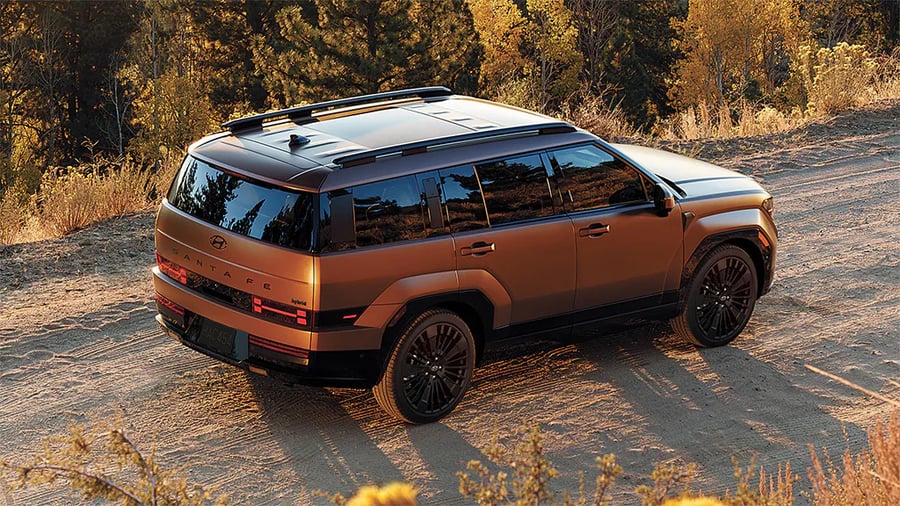
The 2026 Hyundai Santa Fe holds the safety position on this list with a U.S. News safety score of 9.7 out of 10, the highest of any vehicle in the comparison. The score reflects the Santa Fe’s standard and available safety features, along with its published crash test results from the National Highway Traffic Safety Administration and the Insurance Institute for Highway Safety, giving the safety credential a dual foundation in both active and passive safety systems. For the family whose primary decision criterion is the protection of its occupants, the Santa Fe’s safety score gives it a specific and defensible advantage over every other vehicle on this list.
The Santa Fe’s boxy, upright exterior design gives it an interior volume that offers cargo capacity and passenger space among the most competitive in the midsize SUV segment. The seating for up to seven gives it the three-row capacity that the Pilot’s core family buyer requires, and the interior finish quality and loaded features at a starting price around $34,800 give the Santa Fe a value argument that the Pilot’s higher entry cost makes difficult to dismiss. The bold exterior design is more visually distinctive than the Pilot’s more conservative styling, giving the Santa Fe a distinct market positioning for buyers who want a family SUV with a presence beyond the expected.
The hybrid version of the Santa Fe, reviewed separately by U.S. News, gives the fuel-conscious Santa Fe buyer an efficiency option within the same platform, and the Santa Fe’s consistent fuel economy leadership in the class gives the standard gasoline version a competitive operating cost profile. The Santa Fe’s finalist status for the Best Three-Row SUV for the Money award reflects the safety, space, features, and price that together make it one of the most complete, well-rounded, and genuinely defensible Pilot alternatives available anywhere across the broad and notably competitive scope of this particular 10-vehicle comparison list.
5 / 10
5. 2026 Hyundai Palisade arrives fully redesigned for 2026
Credit: Hyundai
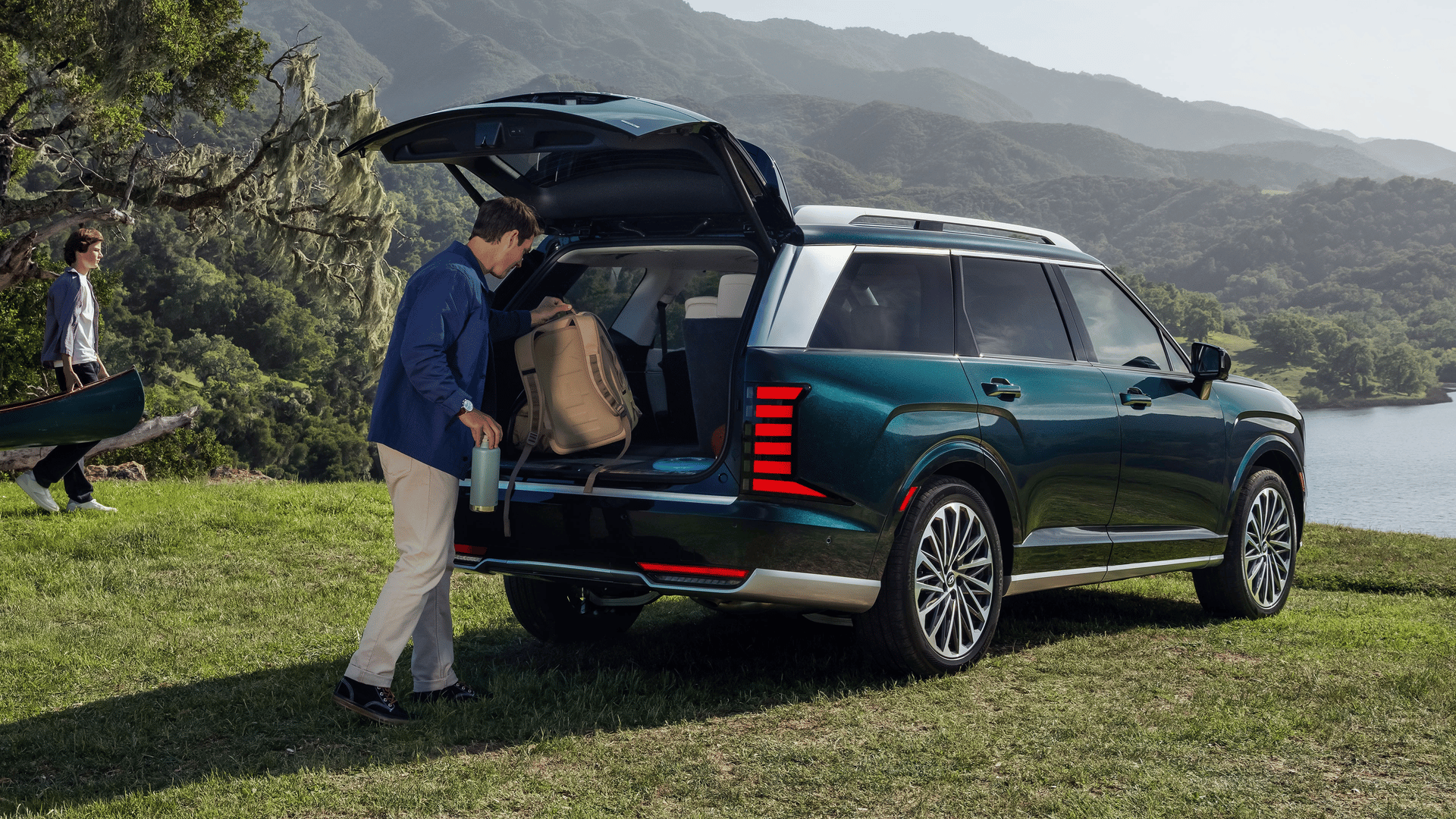
The 2026 Hyundai Palisade received a full redesign for the 2026 model year, giving it the freshest platform of any vehicle on this list and the reliability credential that the U.S. News assessment specifically identifies as its primary distinction among Pilot alternatives. The available eight-seat configuration gives the Palisade the capacity to match the Pilot’s maximum occupancy, which is a rare distinction in the segment and one of the specific advantages that the Pilot’s core buyers prioritize in the purchase decision. The redesign reflects the current state of Hyundai’s interior quality ambitions: the cabin uses top-quality materials on multiple surfaces, filters road noise to near-silence, and provides the kind of upscale atmosphere that the Palisade’s segment position, a Hyundai flagship in the mainstream division, demands.
The infotainment system centers on a 12.3-inch touchscreen display, whose ease of use is consistently praised across the segment reviews. Standard features include Bluetooth, satellite radio, six USB-C charging ports, and wireless Android Auto and Apple $AAPL CarPlay integration, giving the base Palisade a connectivity package whose comprehensiveness gives the buyer more out of the box without the options shopping that the more piecemeal feature structures of some competitors require. Available features include a 14-speaker Bose audio system, wireless device charging, and a 12.3-inch digital instrument cluster.
The starting price of around $39,435 puts the Palisade at a price point comparable to the Pilot’s, which means the value argument is not primarily about cost but about the specific qualities each vehicle does better. The Palisade’s interior quality, its redesigned platform’s freshness, and its reliability credentials give it a specific case for the buyer who treats the midsize SUV as a long-term investment whose depreciation curve and service cost matter alongside the purchase price. The Palisade Calligraphy trim’s specific focus on luxury materials and driving comfort gives the premium-tier buyer a Palisade whose positioning competes more directly with the Acura MDX and Genesis GV80 than with the base-trim Pilot’s mainstream positioning.
6 / 10
6. The 2026 Honda Odyssey is a practical Pilot alternative
Credit: Hyundai
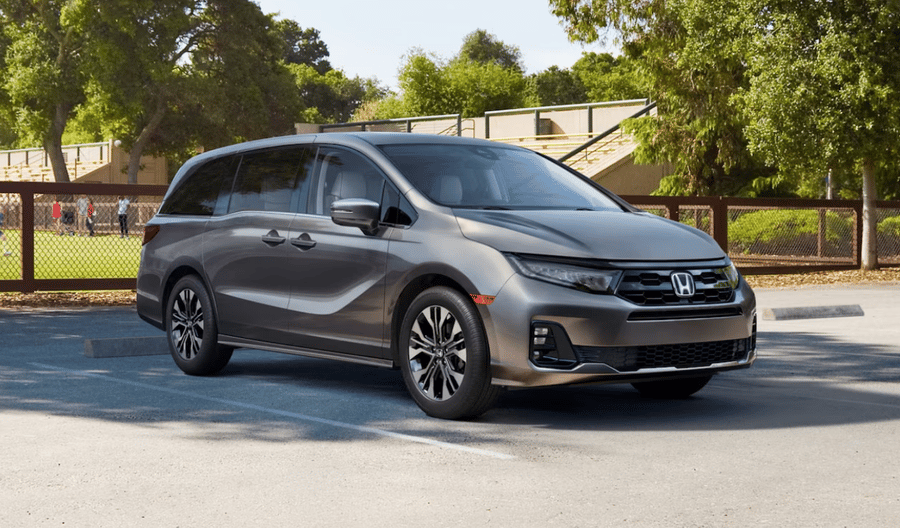
The 2026 Honda $HMC Odyssey is the vehicle on this list that most directly challenges the assumption underlying the Pilot’s three-row SUV purchase: the assumption that an SUV’s utility justifies its practical limitations in passenger access, cargo flexibility, and interior volume. The Odyssey is a minivan, and its sliding rear doors, low floor, and purpose-designed interior give it access, flexibility, and usable interior volume that the SUV’s wagon-body architecture cannot match at any price. The buyer who seriously considers the Odyssey as a Pilot alternative and finds the van’s practicality argument compelling is making a rational choice that the market data on family transportation needs consistently supports.
The Odyssey is the winner of the 2026 Best Minivan for the Money award, and its U.S. News rating of 9.3 out of 10 positions it competitively beyond the Honda lineup: this is one of the best vehicles in its segment on its own terms. The robust engine, cushioned ride, and comprehensive safety features give the Odyssey a daily driving quality that's smooth and refined, and its family-vehicle long-trip competence matches the Pilot’s truck-inflected character in the same comfort terms.
The starting price of around $42,795 positions the Odyssey above the Pilot’s base, which gives the minivan a price premium over the three-row SUV that the market’s preference for the SUV’s styling has historically made acceptable to buyers. The Odyssey’s practical argument is strongest for the buyer who regularly carries large numbers of passengers, who values the sliding-door access over the liftgate-and-step access of the SUV, and who is willing to accept the styling trade-off that the minivan’s utilitarian design profile imposes. The Odyssey’s magic seat floor storage system, which allows the second and third rows to fold flat into the floor, gives the cargo configuration a versatility that no three-row SUV can approach in the same one-person, no-disassembly, no-storage-penalty, and no-compromise-on-total-cargo-volume terms that the minivan’s purpose-built architecture enables.
7 / 10
7. The 2026 Honda Passport suits two-row Pilot shoppers
Credit: Honda
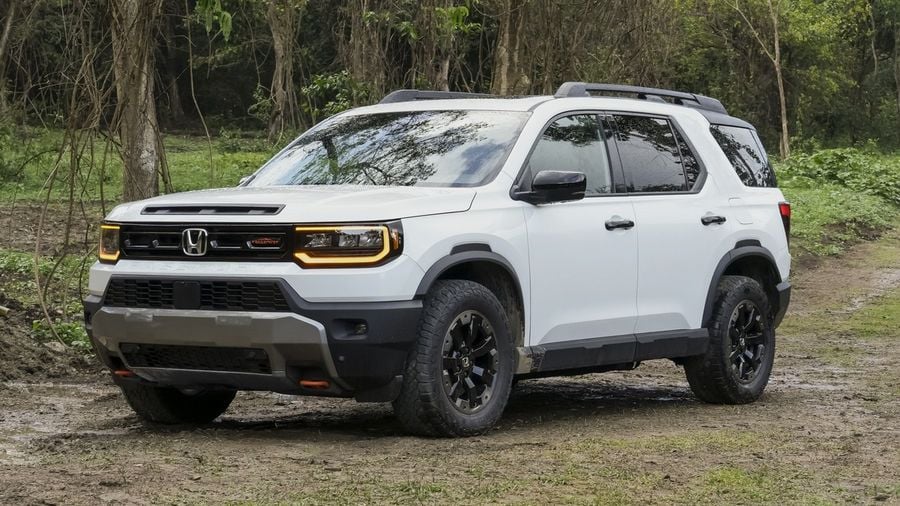
The 2026 Honda $HMC Passport is the two-row alternative within the Honda lineup for the buyer who wants the Pilot’s family attributes in a vehicle that gives up the third row in exchange for a more rugged identity and a slightly more manageable footprint. The Passport is fully redesigned for 2026, with freshly rugged exterior styling that gives the vehicle a more adventure-oriented visual presence than the outgoing model’s softer lines suggested, and the redesign brings new technology and safety features that justify the price increase that accompanied it. The Passport is the winner of the 2026 Best Midsize Two-Row SUV for Families award, giving it a competitive credential in its own category alongside the Pilot comparison.
The shared Honda platform gives the Passport the same technology and safety attributes that Pilot buyers trust, and its driving character reflects the Honda family’s calibration priorities of smooth power delivery, a comfortable ride, and competent handling. The Passport’s off-road capability is better than its predecessor’s but remains more capable on graded dirt roads and moderate trails than in the serious technical terrain that the Pilot’s more aggressive variants address. The honest assessment is that the Passport positions itself as rugged but operates more confidently in the capable-crossover category than in the dedicated off-road vehicle category. The Passport’s TrailSport variant, whose all-terrain tires, underbody skid plates, and trail-tuned suspension give it the most off-road-credentialed version of the Passport’s capabilities, represents the clearest direct competitor to the Pilot TrailSport within the Honda lineup.
The starting price of around $44,750 gives the Passport a higher base cost than the Pilot, which is a notable structural anomaly for a vehicle with fewer seats and fewer rows. The buyer who chooses the Passport over the Pilot is specifically choosing the two-row layout, either because the third row is unnecessary or because the smaller footprint gives the daily driving experience a maneuverability and refinement advantage specific to the shorter wheelbase and lower overall mass.
8 / 10
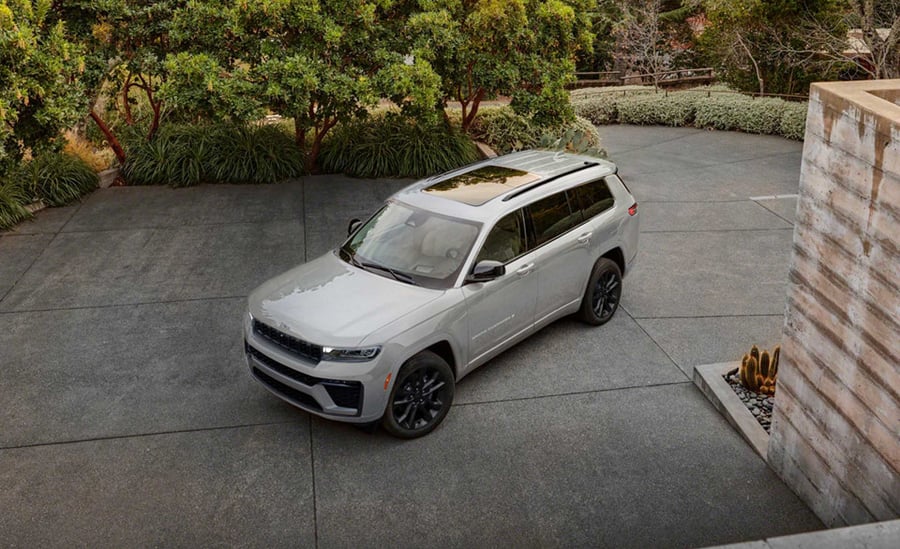
8. The 2026 Jeep Grand Cherokee has near-luxury and off-road
Credit: Jeep
The 2026 Jeep Grand Cherokee is refreshed for the 2026 model year with updated styling and new powertrain options that broaden the vehicle’s technical range without changing the fundamental identity that has made the Grand Cherokee one of the most consistently popular midsize SUVs in the American market. The entry-level trim retains a V6 engine, while higher trims now offer the Hurricane turbocharged four-cylinder, whose performance and efficiency give the powertrain lineup a broader spread appropriate to the different use profiles the Grand Cherokee’s buyer base represents. The refresh brings the Grand Cherokee’s styling in line with contemporary competitors without departing from the visual character that the nameplate’s buyers expect.
The Grand Cherokee is a two-row vehicle, so buyers who require three rows should consider the Grand Cherokee L, the long-wheelbase version reviewed separately by U.S. News. For the Pilot shopper who does not need the third row and wants a midsize SUV with genuine off-road capability alongside near-luxury interior appointments, the Grand Cherokee gives the best pairing of those two qualities in the segment. The near-luxury features and amenities offered by the higher Grand Cherokee trims give the ownership experience a premium character that the mainstream segment’s other two-row alternatives do not match.
The starting price is around $38,415, and the U.S. News rating of 9.0 out of 10 gives the Grand Cherokee a competitive position, with its value strongest for the buyer who prioritizes off-road capability and interior quality over the third-row capacity that the Pilot’s family buyer typically requires. The Jeep brand’s trail-rated heritage and the 4xe plug-in hybrid variant’s electric and gasoline powertrains together give the Grand Cherokee lineup a range of configurations that the Pilot’s more narrowly defined lineup does not provide. The Grand Cherokee’s near-luxury interior appointments in the higher trims, with standard synthetic leather, heated seats, and premium audio, give the cabin a premium character specific to the Jeep brand’s current ambition, making the Grand Cherokee's most persuasive argument for buyers who want off-road capability without sacrificing interior quality.
9 / 10
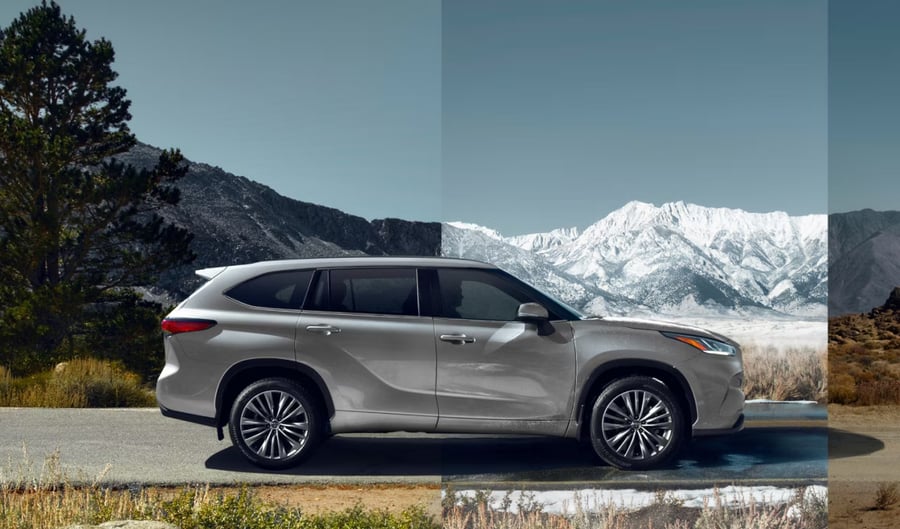
9. The 2026 Toyota Grand Highlander seats eight on a budget
Credit: Toyota
The 2026 Toyota $TM Grand Highlander is the vehicle on this list most directly comparable to the Pilot in terms of mission and capability: a three-row midsize SUV with an available eight-seat configuration, competitive fuel economy, and the daily-driving competence the segment demands. The Grand Highlander’s name accurately describes its structural relationship to the standard Highlander: an extended wheelbase that gives the third-row passengers meaningful space and the cargo area behind the third row a usable volume, both of which the standard Highlander’s dimensions compromise relative to the segment leaders. Despite the larger footprint, the Grand Highlander remains one of the most budget-conscious vehicles in the full-size-adjacent midsize segment.
The turbocharged four-cylinder engine gives the Grand Highlander its primary powertrain characteristic: adequate acceleration across daily driving scenarios, well-tuned steering and braking whose calibration gives the vehicle a balanced and predictable dynamic character, and fuel economy returns that are among the best in the segment for a three-row SUV whose size and eight-seat capacity place it in the Pilot’s specific competitive set. The starting price is around $41,630, and the U.S. News rating of 9.0 out of 10 gives the Grand Highlander a strong value position for the large-family buyer who needs the eight-seat capacity without the premium pricing of the segment’s more upscale alternatives.
The specific limitation relative to the Pilot is off-road capability: the Grand Highlander’s road-biased platform and chassis tuning give it excellent on-road manners but a more modest off-road capability, which the Pilot’s Trail Sport variant specifically targets. For the family whose SUV use is entirely on-road, this limitation is irrelevant, and the Grand Highlander’s smooth ride and easygoing character give the highway family trip its most comfortable platform in the segment. The Toyota Safety Sense package, standard across the Grand Highlander lineup, provides a comprehensive active safety suite, including pedestrian detection, lane keeping assist, and adaptive cruise control, which represent the current state of mass-market active safety technology.
10 / 10
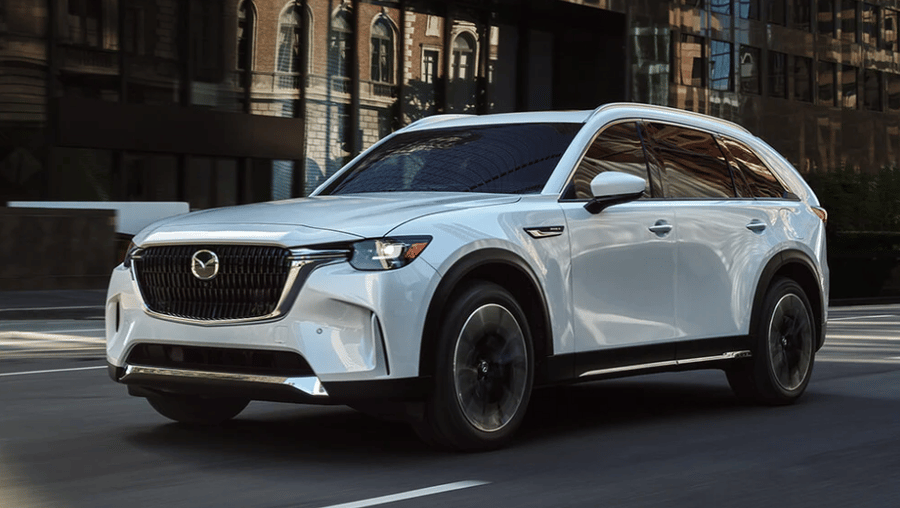
10. The 2026 Mazda CX-90 offers near-luxury in three rows
Credit: Mazda
The 2026 Mazda CX-90 gives the three-row midsize SUV category its most direct near-luxury interior experience at the segment’s mainstream price point, and the aesthetic ambition that distinguishes Mazda’s current interior design from every other mainstream brand gives the CX-90 a cabin whose materials, design sensibility, and overall atmosphere are specific to this vehicle and not replicated in the Pilot’s more conservatively finished interior. The exterior design is bold by Mazda’s internal standards, giving the CX-90 a visual presence more assertive than the subtle refinement of the Mazda3 and CX-5, though reviewers note the boldness is relative to the Mazda canon and more restrained compared to the segment’s most assertive styling exercises.
The three-row standard configuration gives the CX-90 the family-SUV functionality the Pilot comparison requires, and the practicality of its packaging provides usable cabin volume and a feature set that the near-luxury ambition does not compromise. The available plug-in hybrid variant, reviewed separately, adds electric range and additional low-end torque to the CX-90’s already efficient and engaging drivetrain, and the PHEV’s electric daily driving capability and gasoline range for longer trips give the efficiency-focused buyer an option within the CX-90 platform.
The starting price is around $38,800, and the U.S. News score of 8.8 out of 10 positions the CX-90 competitively, with its primary arguments being interior quality and driving character, not segment-leading capacity or technology. The handling can feel heavy at certain speeds, which reviewers note is a consistent characteristic of the CX-90’s dynamics, and the third-row space is adequate but not as generous as that of dedicated full-size three-row vehicles in the segment. For the buyer who prioritizes the daily driving experience and the interior environment over the last increment of cargo space and third-row accommodation, the CX-90 gives those qualities at a price that the near-luxury badge competitors charge considerably more than the CX-90’s base trim asking price to approach.
