
The best tourist attractions in the world
From the last-standing ancient wonder at Giza to a Bavarian castle that inspired Disney, the world's best tourist attractions ranked
Roberto Moiola / Sysaworld via Getty Images
Travel has a way of reorganizing a person’s sense of scale. A photograph of the Eiffel Tower conveys its shape but not its presence. A picture of Machu Picchu conveys the setting but not the vertigo of standing at its edge. The world’s great tourist attractions have accumulated their reputations over decades and centuries precisely because the in-person experience delivers something that secondary accounts — however well-crafted — cannot replicate. They reward the journey, sometimes extravagantly. The places that consistently draw the most visitors share a quality that goes beyond scenic beauty: they carry the weight of human history, technical ambition, or cultural meaning, in a form that becomes physically tangible when you stand before them.
The category of world-class tourist attraction spans an enormous range. Some are natural landmarks that preceded human civilization by millions of years. Others are human constructions of such ambition that they remain engineering puzzles centuries after their completion. Some define the cultural identity of entire countries. Others represent specific moments in history — moments of achievement, of loss, of transformation — that still resonate enough to draw millions of visitors annually. The breadth of what qualifies as a must-see attraction reflects humanity's enduring quest to build, protect, and celebrate what is worth preserving across recorded history.
These 10 attractions come from U.S. News & World Report’s list of the world’s 47 best tourist attractions, assembled through editorial review of cultural significance, historical appeal, and visitor experience. The full list spans destinations across six continents, from ancient monuments to modern landmarks, covering urban centers and natural wonders that have captured the global imagination and inspired travelers to cross oceans and continents for a few hours in their presence, and consistently delivered on that promise.
1. The Great Pyramid of Giza outlasted all the ancient wonders
SW Photography / Getty Images
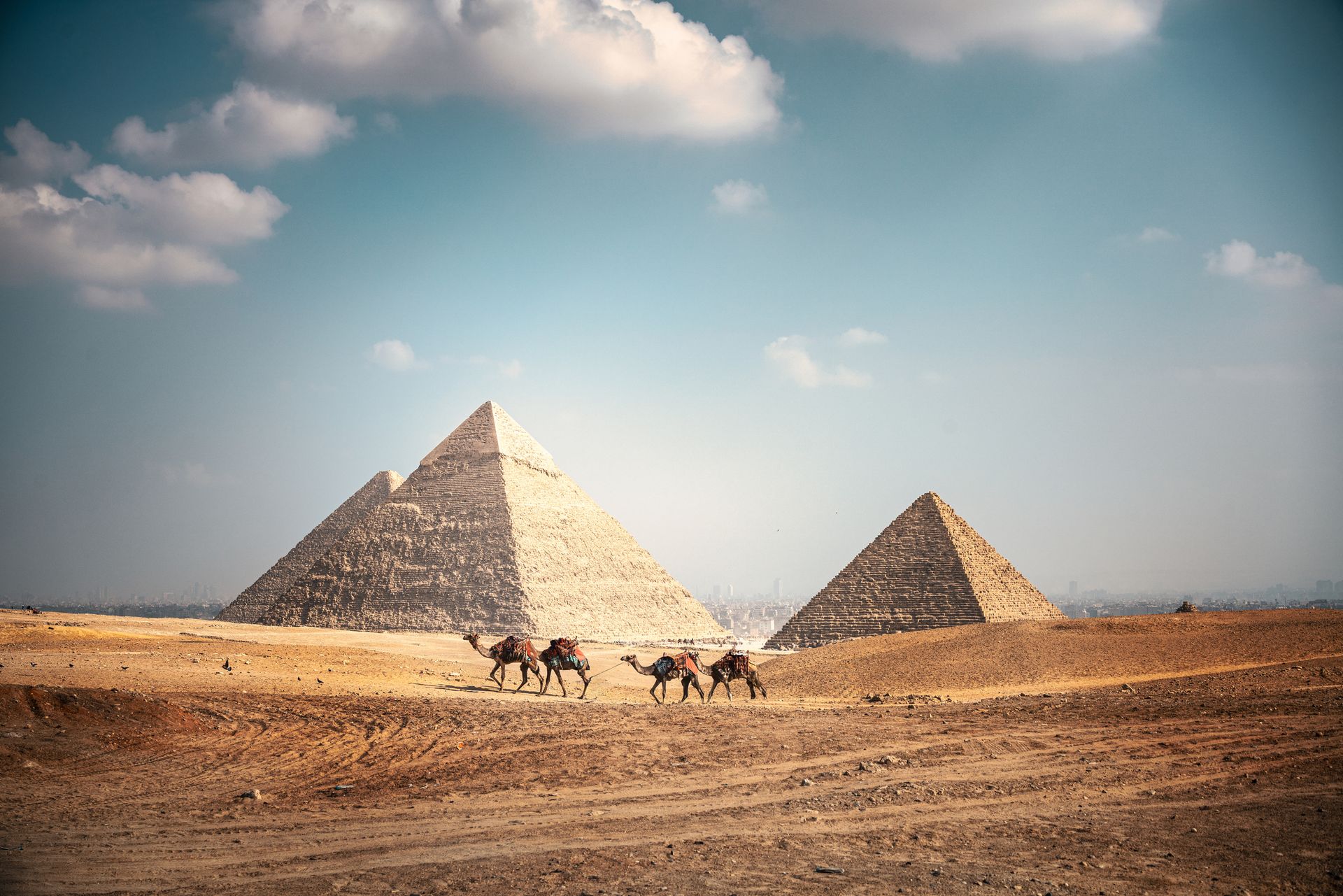
The Great Pyramid of Giza is the only surviving member of the Seven Wonders of the Ancient World. The other six have crumbled, burned, or disappeared entirely. Built as the tomb of Pharaoh Khufu, the pyramid rises 479 feet from a square base measuring 754 feet on each side, a scale achieved by moving, carving, and positioning more than two million stone blocks, each weighing between two and 60 tons. Scientists have not yet explained how ancient Egyptians accomplished this with the tools and technology available to them.
The Giza plateau holds three primary pyramids alongside the Great Sphinx, giving visitors a complex that goes well beyond a single monument. Inside the pyramids, the passages are tight but passable, and the masonry work, visible up close, gives a physical sense of the precision required in the construction. The source recommends arriving early to purchase entry tickets before the crowds build or booking a guided tour in advance.
A notable recent development changes what visitors will find at the site. The solar boat, sealed alongside Khufu’s pyramid — a wooden vessel preserved for millennia in a carefully sealed pit — has moved to the Grand Egyptian Museum, which was set to open fully in July 2025. The Great Pyramid’s status as the last-standing ancient wonder gives it a distinction that no amount of historical revision or new discoveries can dilute. Millions of years of human civilization have produced many extraordinary structures, but only this one has survived intact long enough to greet visitors from the modern world. The Grand Egyptian Museum’s opening has also changed the Giza experience: the solar boat, the Sphinx, and the pyramids themselves now operate within a broader archaeological campus that gives the site a new institutional context for the ancient monument at its center. The museum’s opening also reflects Egypt’s ongoing investment in presenting the Giza complex to international visitors at a standard that matches the monument’s global stature.
2. The Eiffel Tower runs an hourly light show that can be seen 50 miles away
HADI ZAHER / Getty Images
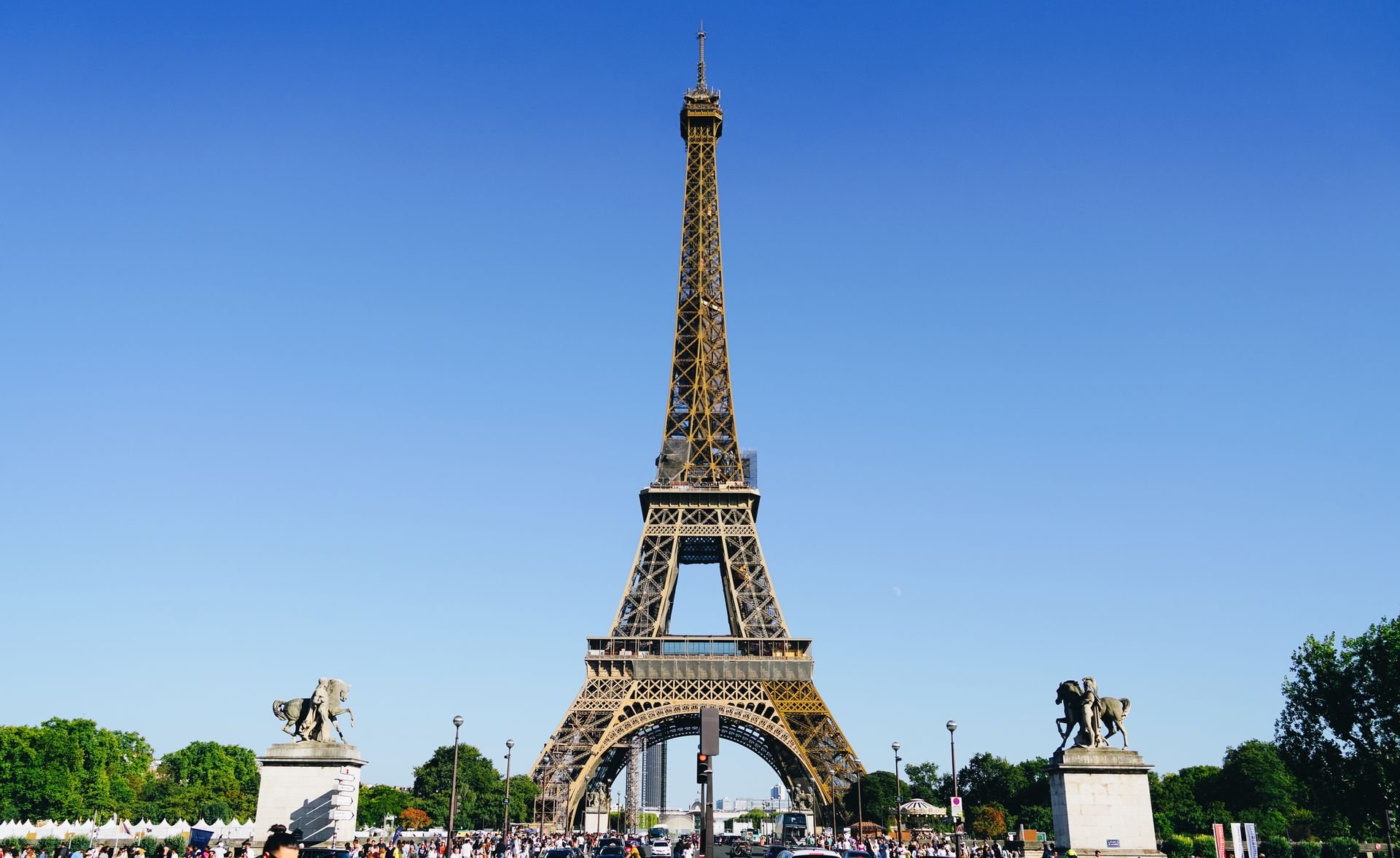
The Eiffel Tower was completed in 1889 for the Exposition Universelle and has since become the defining symbol of Paris and one of the most recognized structures on Earth. Its 1,665 steps reach the top, and elevators carry visitors to two separate observation levels for those who prefer not to climb. The tower’s evening display uses 20,000 lightbulbs alongside computer-programmed beacons that project beams visible up to 50 miles from the city center. The full display runs every hour after dark.
The tower functions as more than a viewing platform. At the summit, a Champagne bar gives visitors the option to mark the occasion with a glass of wine above the Paris skyline. Madame Brasserie, the tower’s full-service restaurant, offers a chef-prepared meal inside the structure itself, giving visitors a dining experience at altitude that the view amplifies.
The tower’s significance goes beyond its height or its lighting. Completed after just two years of construction, it represented the ambitions of the 1889 exposition: a demonstration of French industrial and engineering capability at a moment when such demonstrations carried political as well as cultural weight. It was controversial upon completion, criticized by some Parisians as an eyesore, and eventually demolished. Its survival owed to its utility as a radio transmission tower, a practical function that extended its life long enough for its aesthetic reputation to reverse entirely. The Eiffel Tower now draws more visitors annually than almost any other paid attraction in the world, and the nightly light show that illuminates it has become a Paris ritual that visitors plan their evenings around. The Eiffel Tower’s role as the defining visual reference for Paris also means that the city’s most memorable dining and hotel experiences have oriented themselves around the view, a testament to how completely one structure can organize an entire city’s tourism geography and economy.
3. The Hollywood Sign began as a 1923 real estate advertisement
Christian Adams / Getty Images
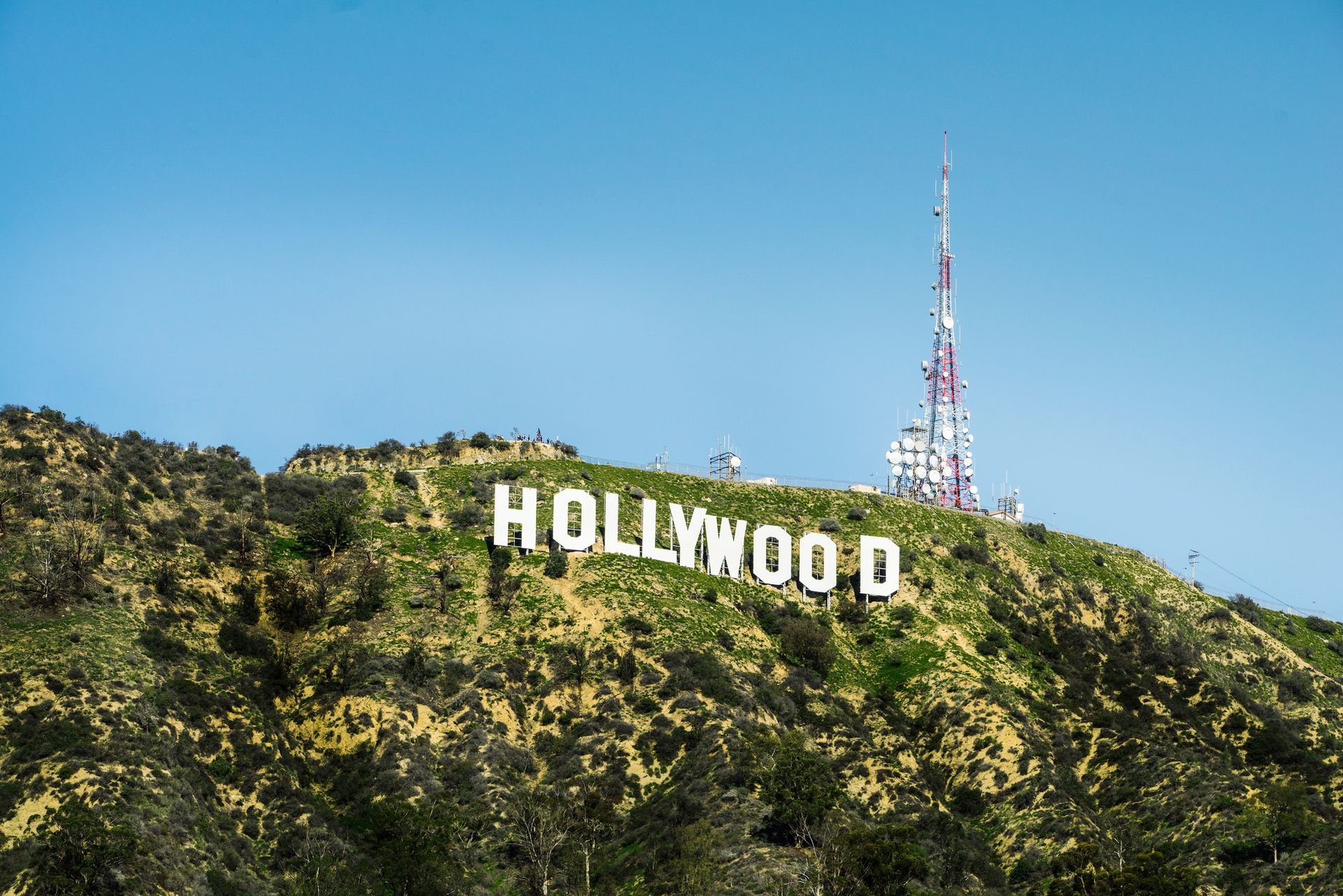
The Hollywood Sign debuted in 1923 as “Hollywoodland,” an advertisement for a real estate development in the hills above Los Angeles. The association with the film industry came later. The sign was rebuilt in 1978 to mark Hollywood’s place as the center of American cinema, trimming the original name to the nine letters that now define it. The transformation from commercial advertisement to cultural landmark reflects how thoroughly the entertainment industry reshaped the neighborhood’s identity over the intervening decades.
Three hiking trails reach the vicinity of the sign: Mount Hollywood, Cahuenga Peak, and Brush Canyon. The source notes that the area poses a significant fire risk, and the park prohibits open flames and smoking within its boundaries. Visitors who want the selfie without the hike can achieve the classic view by parking along North Beachwood Drive off Franklin Avenue and looking up Beachwood Canyon, or by visiting Griffith Park Observatory for a different angle on the sign and the city below.
The Hollywood Sign’s power as a cultural symbol comes from its context, not its scale. The letters themselves are visible but not enormous. What the sign represents is considerably larger than the physical structure: the aspirations that brought generations of performers, writers, and filmmakers to Los Angeles. The guided walking tours available at the site provide visitors with an organized way to reach viewpoints and learn about the sign’s history. The sign’s persistence as one of Los Angeles’s most visited landmarks and one of the most photographed locations in the U.S. reflects how thoroughly the film industry’s mythology has embedded itself in the city's physical landscape. The Hollywood Sign’s survival as a tourist magnet despite offering nothing to pay for or enter reflects how powerfully the idea it represents draws people to seek it out in person every year. The sign’s location in the hills above one of the world’s most visited cities also ensures a perpetual audience for which the pilgrimage is a short drive.
4. Berlin Wall Memorial spans 101 panels across 4,300 feet
Nikada / Getty Images
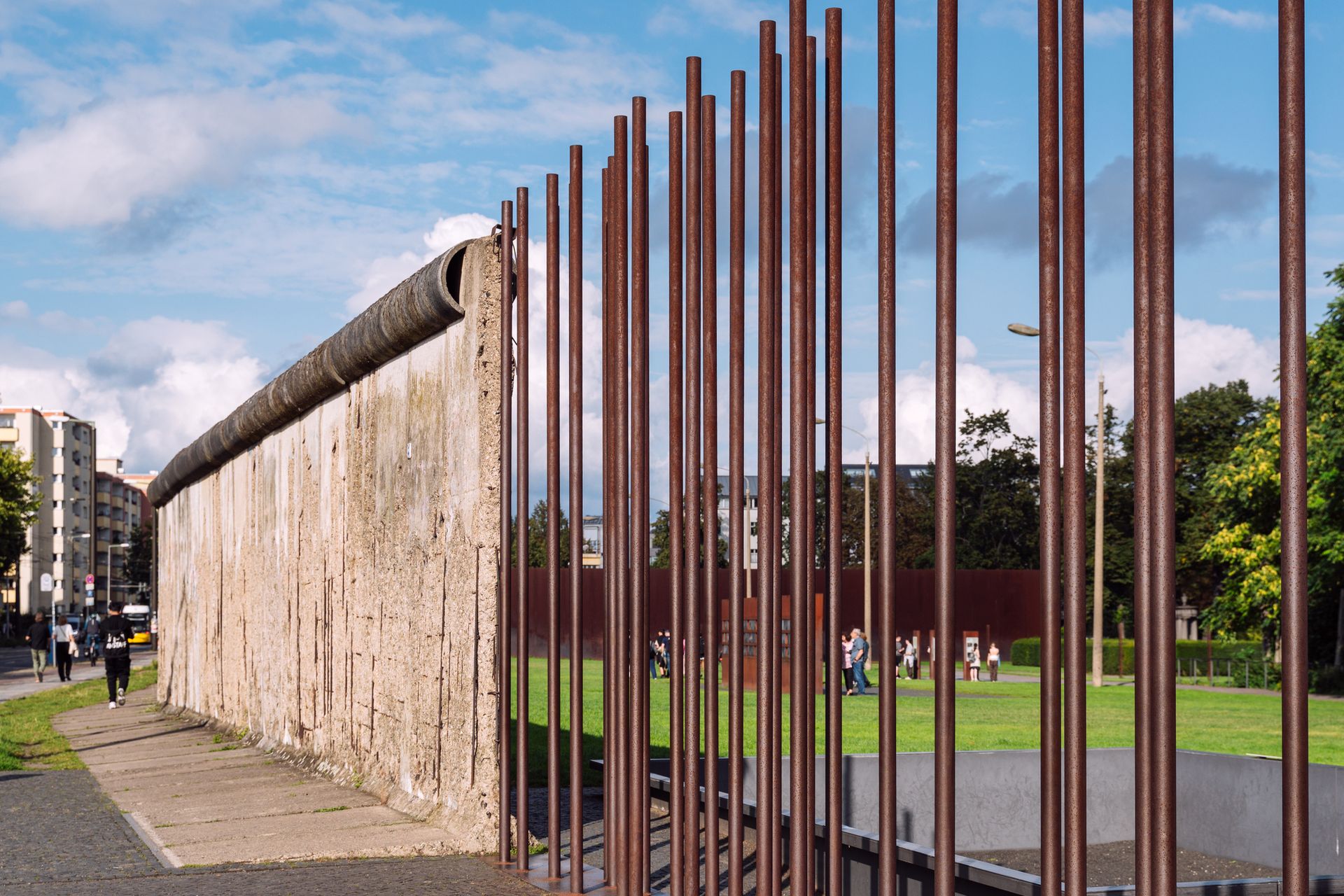
The Berlin Wall Memorial preserves a series of 101 painted panels totaling approximately 4,300 feet along a surviving segment of the structure that divided socialist East Germany from democratic West Berlin during the Cold War. Artists painted the panels in 1990 to commemorate the wall’s fall and to protect a portion of it from urban redevelopment that destroyed most of the wall after reunification. The gallery has become one of the few standing monuments to the Cold War anywhere in the world.
The site incorporates multiple points of engagement beyond the painted panels. The Chapel of Reconciliation holds German-language services to remember those who lost their lives attempting to cross to the western side. A museum adjacent to the memorial provides context on daily life in the area before 1989, giving visitors historical grounding that the panels alone cannot.
The painted panels function differently from most memorial art. They celebrate and commemorate in equal measure, reflecting the politically charged atmosphere of 1990, when artists from around the world descended on the wall within days of its fall to cover the gray concrete with images, text, and color. The contrast between the memorial’s gravity as a site of division and death and the vibrancy of the paintings that now cover it gives the Berlin Wall Memorial a visual and historical complexity that more conventionally somber memorials do not achieve. For visitors seeking to understand the Cold War’s human dimension, the Berlin Wall Memorial is the most immediate and visceral site in Europe. It captures what it meant to live in a divided city and what the wall’s fall felt like to those who witnessed it. The Berlin Wall Memorial also demonstrates how rapidly a site of trauma can transform into a destination for cultural and historical understanding. The wall came down in 1989, and within a year, artists had turned a remaining section into one of Europe’s most visited outdoor galleries.
5. Sheikh Zayed Grand Mosque hangs a 50-foot gold chandelier
Simone Simone / Getty Images
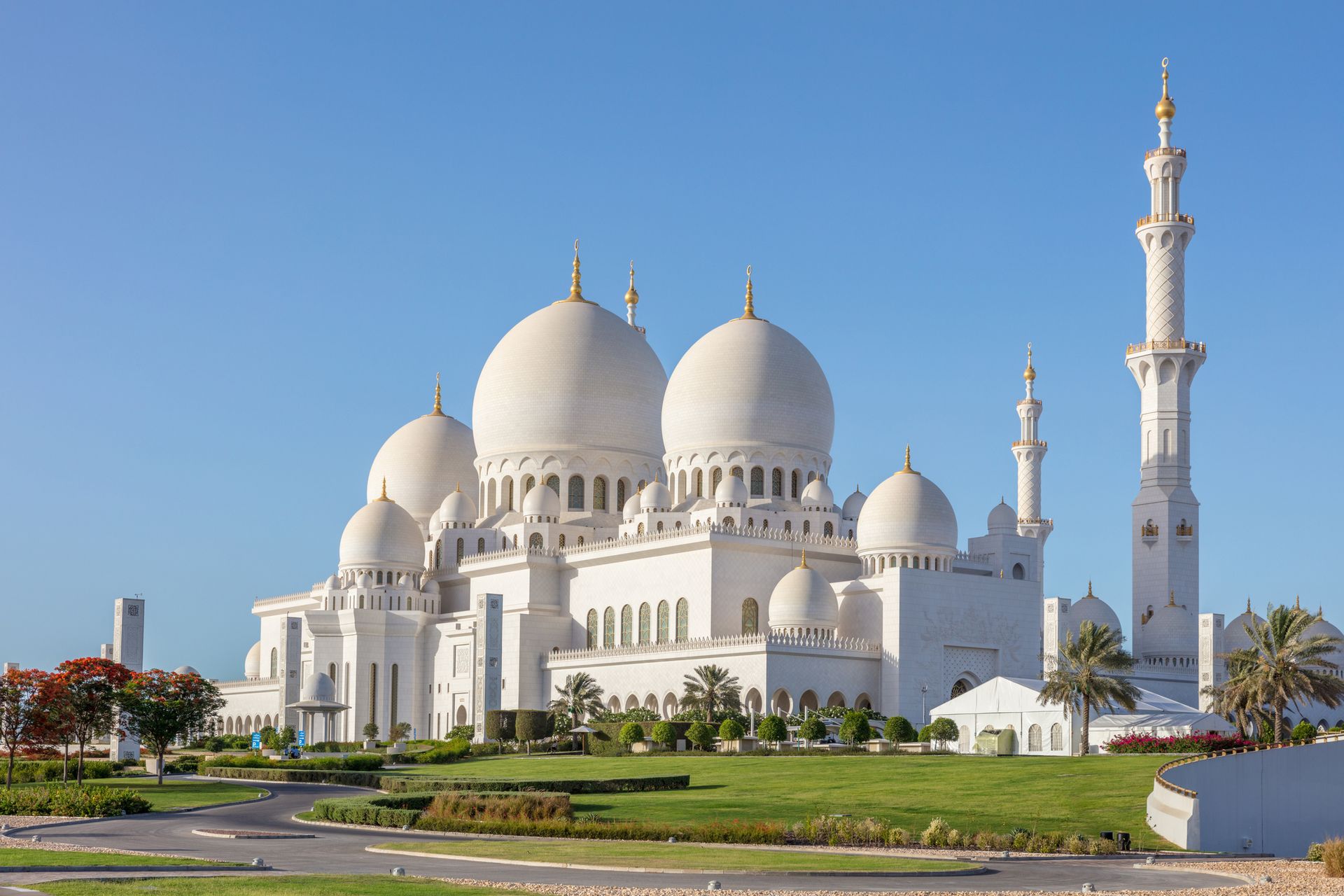
The Sheikh Zayed Grand Mosque is Abu Dhabi’s most visited tourist attraction, drawing millions of visitors annually. Its construction consumed 100,000 tons of pure white marble, giving the complex a gleaming uniformity that photographs capture only partially, but the site's actual scale is overwhelming. The mosque’s seven chandeliers vary dramatically in size, with the largest exceeding 50 feet in height and covered in 24-karat gold, adorned with Swarovski crystals, a pairing that produces a visual effect unlike any other chandelier in the world.
Admission to the mosque is free, but visitors must preregister before arriving. The dress code applies to everyone: both men and women must wear clothing covering their arms and legs, and women must also wear a headscarf. The source notes these requirements without qualification, reflecting the mosque’s status as an active place of worship visited within its religious context.
The Sheikh Zayed Grand Mosque’s appeal crosses the usual boundaries of religious tourism. Non-Muslim visitors who might not otherwise prioritize a mosque find it listed among the world’s top attractions because the scale and material investment of the structure go beyond what most sacred buildings anywhere attempt. The white marble complex, the chandeliers, and the meticulous craftsmanship represent an architectural ambition that places it alongside the great cathedrals and temples of other traditions in terms of sheer physical achievement. Abu Dhabi’s investment in the mosque also reflects the city’s broader effort to establish itself as a cultural destination alongside Dubai, and the mosque has become the centerpiece of that effort, a building that justifies a trip to Abu Dhabi on its own terms. The free admission policy at a monument of this scale is also unusual, giving the Sheikh Zayed Grand Mosque a democratic accessibility that many comparable religious landmarks lack.
6. La Sagrada Familia approaches completion after 150 years
Prasit photo / Getty Images
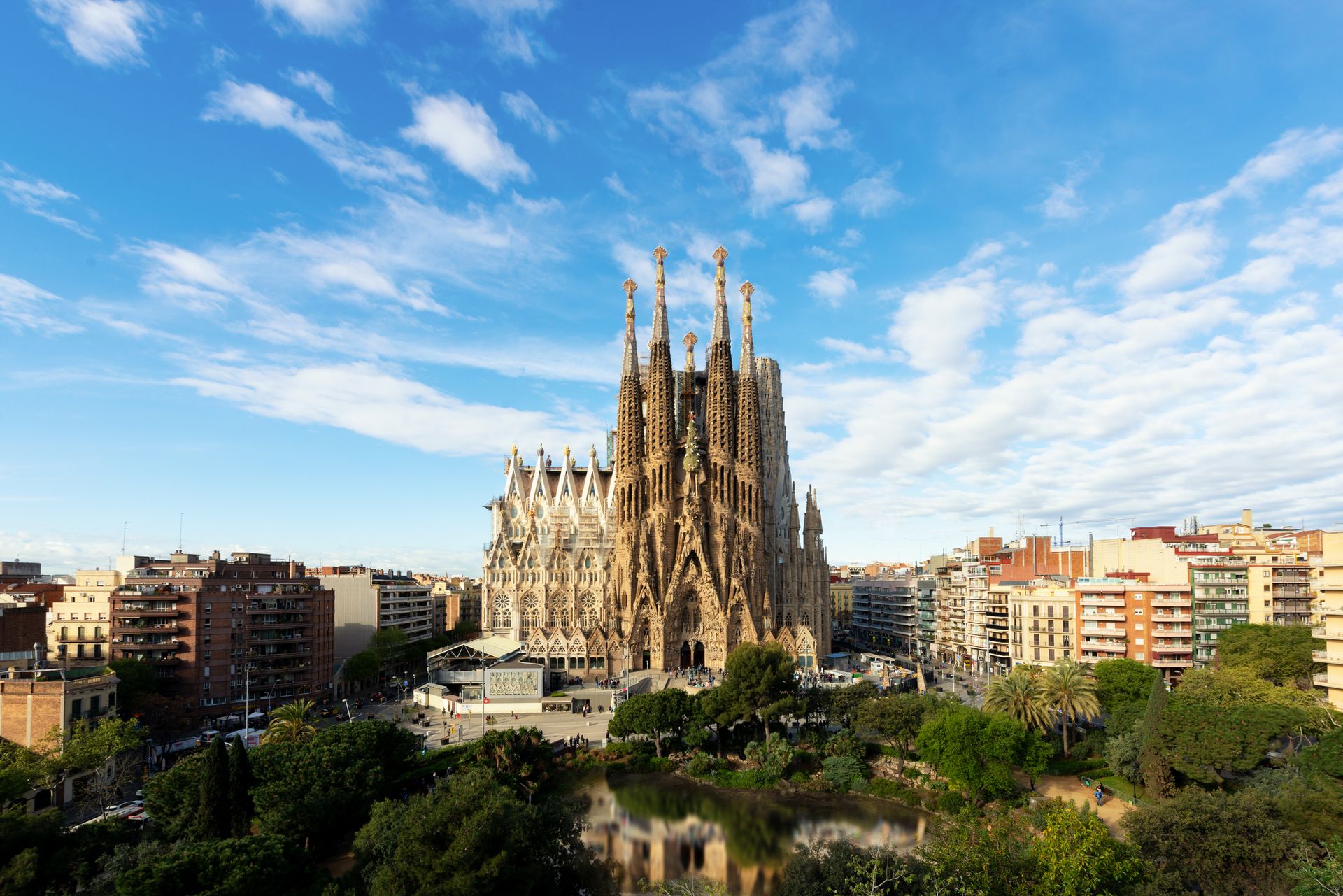
La Sagrada Familia in Barcelona has been under construction since the late 1870s, making it one of the longest-running construction projects in modern history. Visionary architect Antoni Gaudí supervised the work for 43 years until his death in 1926, and his remains rest in the crypt below the cathedral he never saw completed. The UNESCO-listed structure reached completion in 2026, more than 140 years after Gaudí took over its design and reshaped it into the undulating, organically styled landmark that draws visitors from every continent.
The cathedral’s visual character is inseparable from Gaudí’s broader body of work. The abstract stained glass, the tower formations that suggest dripping stone, and the facades covered in symbolic figures reflect an architectural language that Gaudí developed across his private commissions and public projects in Barcelona, including Parc Güell. La Sagrada Familia is the culmination of that language at its most ambitious scale, and seeing it in person makes the smaller Gaudí works in the city feel like studies for this central project.
The UNESCO designation and the cathedral’s global fame make it one of Barcelona’s most crowded attractions, and the source recommends booking a tour to avoid lines. The practical advice reflects a broader truth about the site: its visual complexity, ongoing construction, and impending completion together make La Sagrada Familia a singular tourist attraction at this particular historical moment. The recent completion date gives the current visit a sense of witnessing the end of a very long story. Gaudí’s other works in Barcelona — Parc Güell, Casa Batlló, Casa Milà — give visitors who arrive specifically for La Sagrada Familia a reason to spend several days in the city instead of a single afternoon at the cathedral.
7. Grand Palace Bangkok housed five kings across five reigns
Frans Sellies / Getty Images
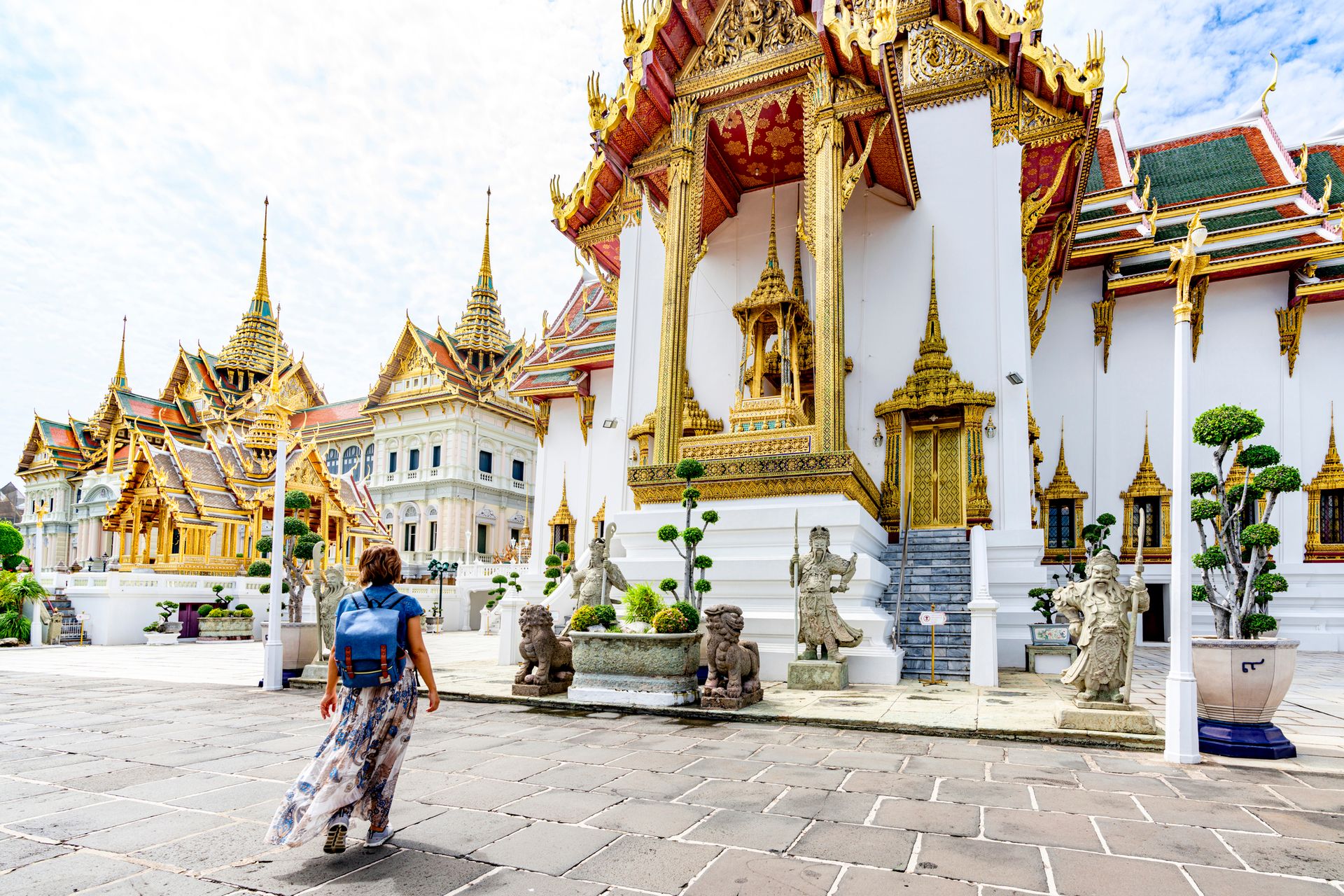
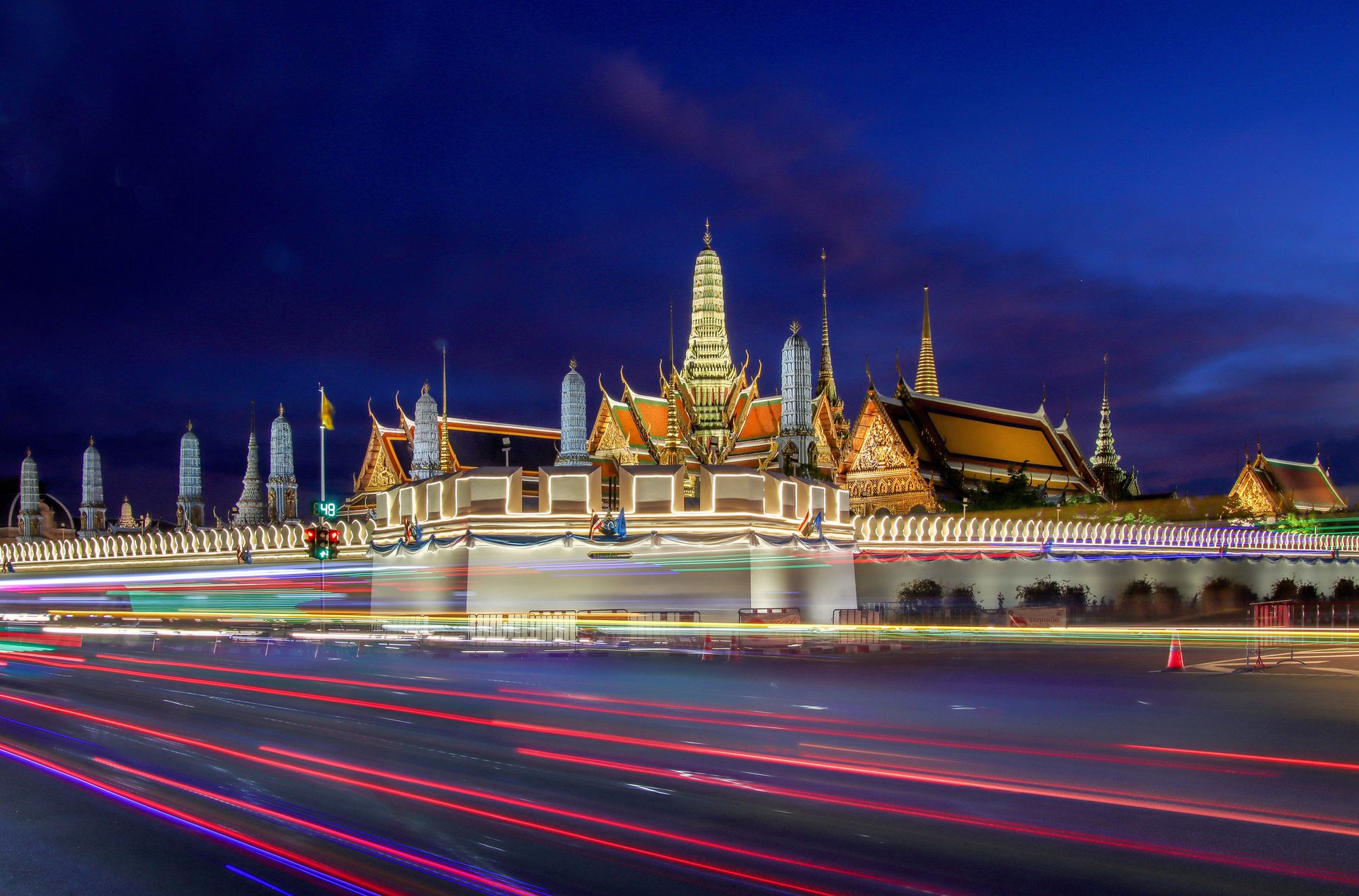
Bangkok’s Grand Palace served as the royal residence from King Rama I through King Rama V, making it the ceremonial and administrative center of the Thai monarchy across five successive reigns. The palace complex also contains Wat Phra Kaew, the Temple of the Emerald Buddha, which houses Thailand’s most sacred Buddhist image. Visitors who allocate at least half a day can move through the three main courtyards, examining the ornate carvings, gilded teak woodwork, and traditional tiles that distinguish Thai royal architecture from any other palace tradition in the world.
The dress code at the Grand Palace is strictly enforced. Both shoulders and knees must be covered, and the source presents this requirement as a firm condition of entry, not a suggestion. Visitors who arrive unprepared can sometimes borrow wraps at the entrance, but planning ahead prevents the need to do so.
The Grand Palace’s dual identity — as both a former royal residence and an active religious site — gives it a depth of experience that palace museums in other countries rarely match. Wat Phra Kaew is a functioning temple whose religious significance to Thai Buddhists remains evident in how visitors must conduct themselves within it. The Temple of the Reclining Buddha sits across the street, giving visitors who want a fuller experience of Bangkok’s royal religious heritage a natural extension of the Grand Palace visit. The source also notes the option to book a customized tour that incorporates both sites and other Bangkok landmarks, giving first-time visitors a structured way to navigate a complex that rewards preparation. The Grand Palace’s position as Bangkok’s most historically significant site also gives it a practical argument for the start of any Bangkok itinerary: the city’s other major attractions — the floating markets, Chinatown, the contemporary art scene — all exist in some relationship to the royal and religious history that the Grand Palace anchors at the city’s ceremonial heart.
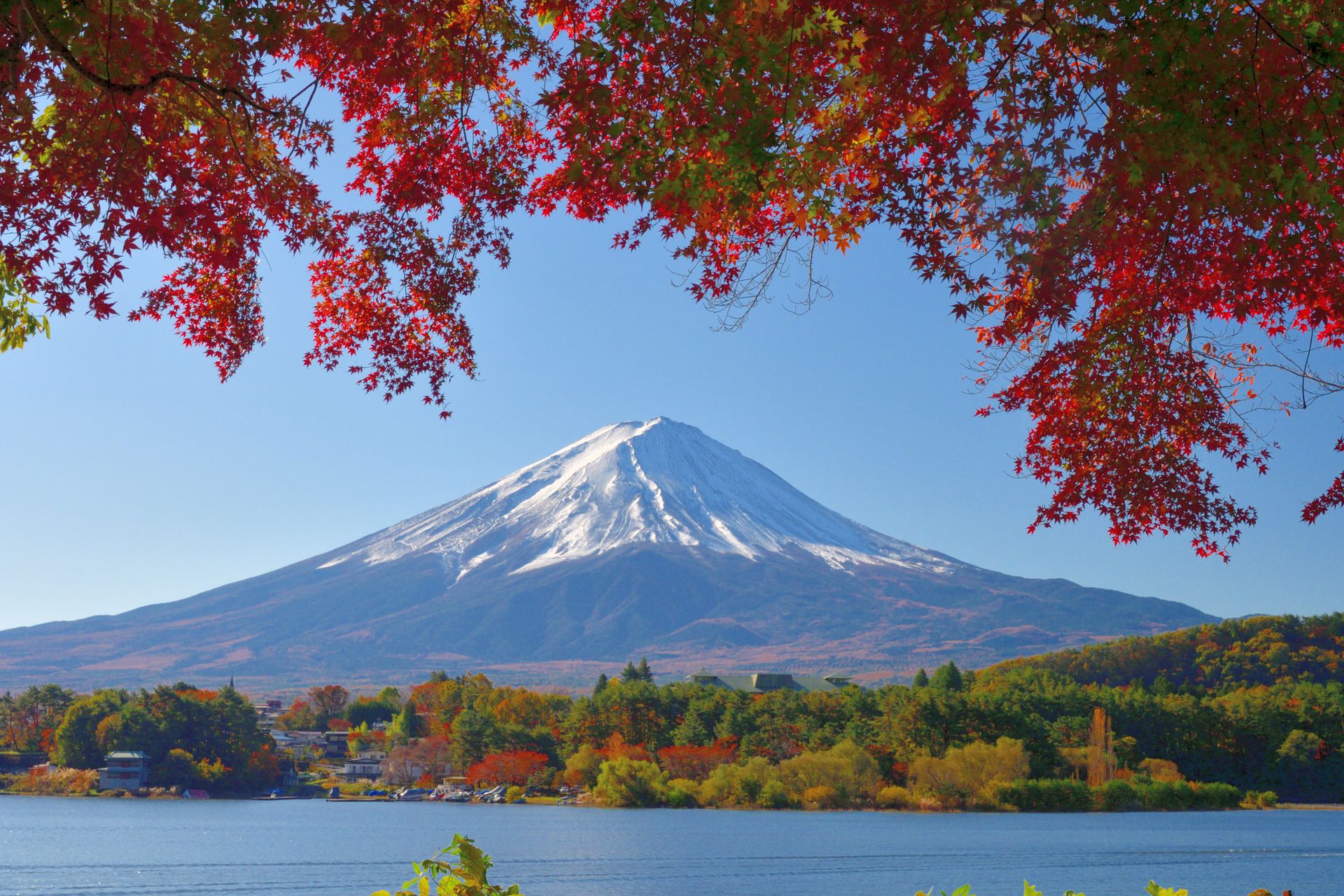
8. Mount Fuji welcomes hikers for two months each summer
magicflute002 / Getty Images
Mount Fuji’s 12,388-foot summit opens to climbers only between early July and early September, concentrating the hiking season into a window of roughly two months each year. The volcano’s symmetrical profile — gently sloping sides capped with snow for much of the year — has made it Japan’s most recognized natural symbol, revered by the Japanese people and familiar to the world through centuries of artistic depiction. Most visitors who do not hike encounter Mount Fuji from Tokyo’s observation decks or from the window of a bullet train passing through on the way to Osaka.
For visitors who want a closer experience without attempting the summit, the Fuji Five Lakes region provides access to hot springs and the mountain’s base. The best viewing conditions from this area occur in the early morning or late afternoon, and the source identifies November through May as the optimal months for clear sightlines. Skiers have the option to visit during the winter months when snow conditions attract that crowd to the mountain’s slopes.
The source specifically highlights Oshino Hakkai as an unusual vantage point. This cluster of eight ponds in the Mount Fuji World Heritage Site draws underground water filtered through the mountain itself, emerging cold and clear at the base of the volcano. Wooden bridges and walking paths connect the ponds in a traditional village setting that offers visitors a rare experience of a natural wonder framed by a preserved historic environment. Mount Fuji’s two-month climbing window, the year-round viewing culture around it, and the variety of approaches — train sighting, crater ascent, lake district visit, or traditional village ponds — together give the mountain a range of visitor experiences that few natural landmarks anywhere can match. Japan’s broader relationship with Mount Fuji also gives visitors access to the mountain’s cultural significance through art, literature, and the religious history that conferred upon it its revered status long before tourism arrived.
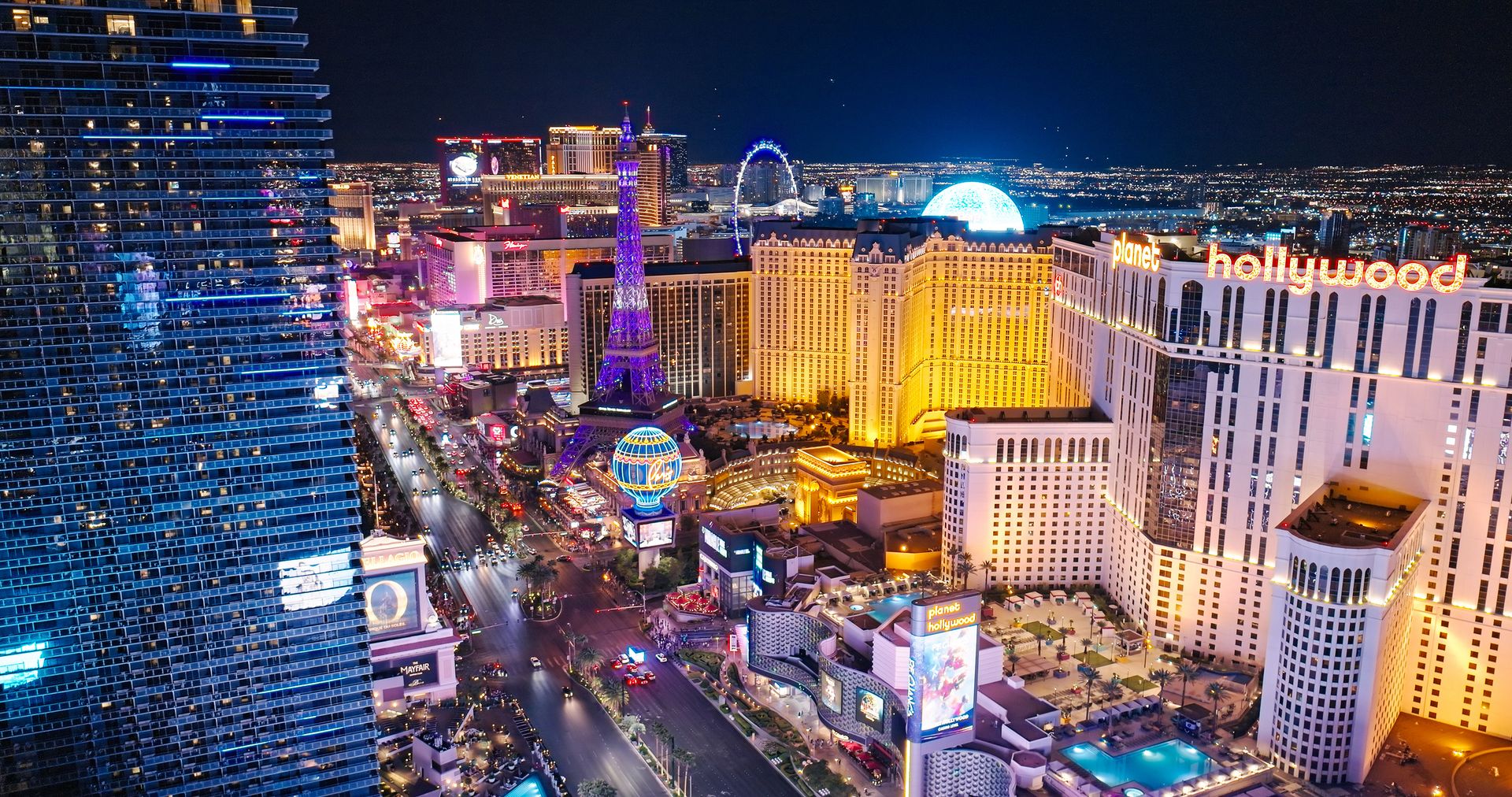
9. The Strip drew 41 million visitors to Las Vegas in 2024
halbergman / Getty Images
South Las Vegas Boulevard, known universally as The Strip, attracted more than 41 million visitors in 2024, making it one of the most heavily trafficked entertainment corridors in the world. The road runs through the heart of the casino resort district, lined with properties that compete with each other in scale, spectacle, and amenity to a degree found nowhere else in the U.S. The free dancing water show at the Bellagio Fountains and the 550-foot-tall High Roller Observation Wheel are two of the Strip’s signature attractions accessible without hotel admission or casino spending.
The source recommends walking The Strip on foot and skipping the monorail, which it describes as not particularly scenic. Traffic on the road itself can be heavy, and the pedestrian experience captures the Strip’s atmosphere: moving from property to property along the wide sidewalks, encountering street performers and passing through casino lobbies in a way that moving quickly past it does not.
The entertainment options extend well beyond the casino floor. The Big Bus night tour gives visitors an elevated perspective on the Strip’s neon and scale after dark. Helicopter tours provide an aerial view of the resort district and the surrounding desert that ground-level views cannot replicate. The 41 million visitors that the Strip drew in 2024 reflects not just the casinos’ pull but the broader entertainment ecosystem that Las Vegas has built around The Strip: the concerts, the residencies, the restaurants, the shows, and the Sphere — a new venue visible from multiple points along the boulevard — that give visitors reasons to stay and return beyond what any individual property offers on its own. The Strip’s density of world-class entertainment in a single linear corridor also gives it a visitor efficiency that no comparable destination — not Broadway, not the West End, not any single theme park — can match.
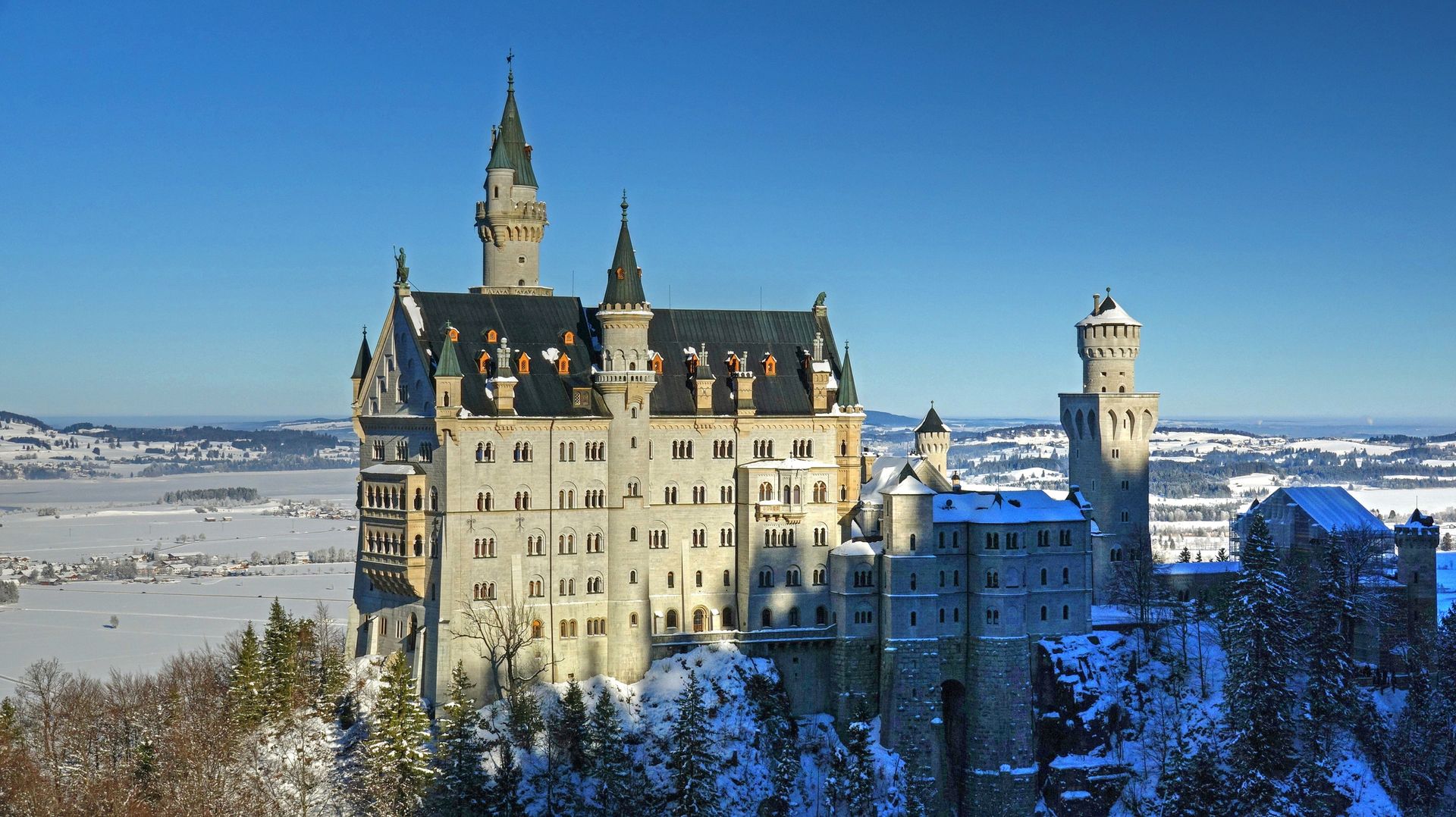
10. Neuschwanstein Castle fired Disney’s imagination
Hans-Peter Merten / Getty Images
Neuschwanstein Castle was the creation of King Ludwig II of Bavaria, who ascended to the throne at age 18 with ambitious plans for his kingdom before losing power to the Prussians and retreating into increasing isolation. Authorities declared him insane in 1886, and he died shortly afterward. The lavish hilltop palace he built during this period of retreat — white-towered, fairy-tale in profile, set against the Bavarian Alps — went on to attract more than a million curious visitors annually and became the building that reportedly inspired Walt Disney $DIS’s Sleeping Beauty Castle at Disneyland.
The source recommends booking a day trip from Munich to sidestep the independent logistics, as the castle’s popularity makes timing and on-site logistics worth managing in advance. While in Bavaria, visitors can also explore Munich’s beer gardens, the English Garden, and BMW Welt, and make day trips to the Alps, the Dachau Concentration Camp Memorial Site, and Salzburg.
The historical arc of Neuschwanstein Castle is as dramatic as its architecture. A king who lost his mind and his power built a fantasy palace, Ludwig intended as a private retreat. He never meant for it to draw tourists. Within weeks of his death, the Bavarian government opened it to the public to help pay off the construction debts Ludwig had accumulated. The castle’s subsequent influence on Disney, and through Disney on the visual language of fairy tales for generations of children worldwide, gives it a cultural legacy that extends far beyond Bavaria, far beyond Ludwig’s tragic story, and far beyond anything the king who built it could have imagined or intended. Neuschwanstein Castle’s influence on global popular culture — specifically on what children worldwide visualize when they hear the word ‘castle’ — may be its most lasting legacy, one that the troubled king who built a personal fantasy could never have predicted, sought, or understood as his own strange gift to the world.