From Ireland's Ring of Kerry and ancestry research to a luxury train through the Canadian Rockies, the best trips to finally take when you retire
Marc Najera / Unsplash
Retirement changes the fundamental parameters of travel planning. The constraint that governed every trip for the preceding four decades, the annual leave allowance, disappears, and with it the pressure to compress every experience into a two-week window. The trip that always required five months away from work is now a scheduling question rather than an impossibility. The destination that required a 15-hour flight followed by a time zone adjustment that consumed most of the first three days can now be approached with the leisurely arrival schedule that makes the adjustment genuinely manageable. The around-the-world cruise that would have required a leave of absence becomes an option. The Machu Picchu trek, which required a week of altitude acclimatization, can now be completed.
According to AARP’s 2026 Travel Trends survey, 64 percent of Americans over age 50 plan to travel in 2026, with nearly half interested in going abroad. The range of retirement travel reflects the range of travelers entering the phase: adventure seekers heading to Antarctica or the Galápagos on small expedition ships, solo travelers finding that Ireland and Australia offer independence and safety in equal measure, families combining the multigenerational trip that everyone discussed for years but never organized, and couples finally making the trip that always got postponed for something more immediately demanding.
The retirement traveler’s specific advantages are worth naming: the time to travel at the destination’s natural pace rather than a vacation’s compressed schedule, the financial means that decades of saving have accumulated, and the accumulated knowledge and curiosity that makes the historical site or the wildlife encounter land differently at 65 than it would have at 35. These advantages align with specific destinations in specific ways, and the 10 trips below, drawn from Travel + Leisure’s list of retirement travel ideas, represent the strongest matches between what retirement makes possible and what certain destinations specifically reward.
Ainars Djatlevskis / Unsplash
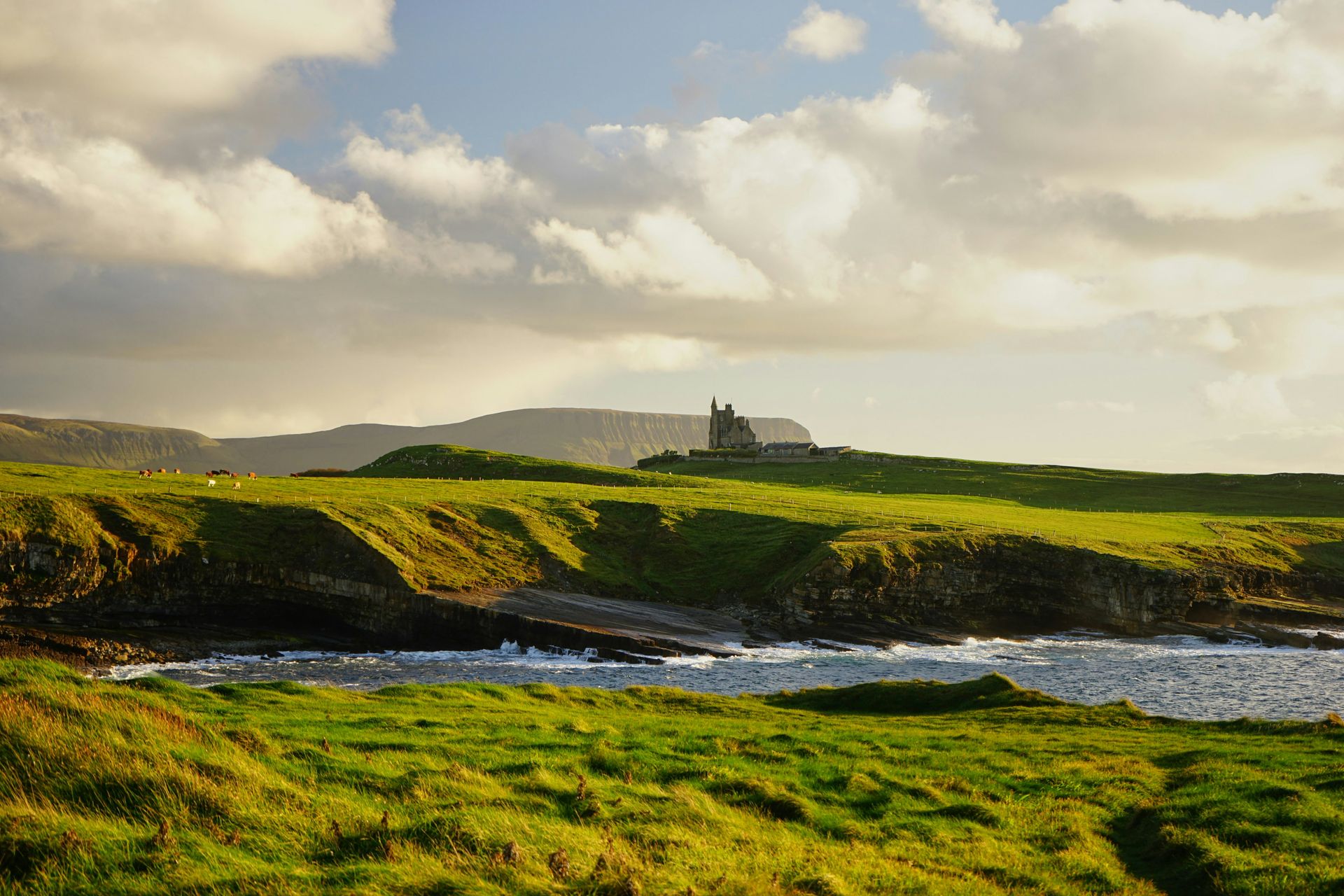
Ireland is within easy reach of the United States, making it an ideal early-retirement trip for travelers who want a genuinely foreign experience without the extreme time zone adjustment that longer-haul destinations require. The cultural connection that many American travelers feel to Ireland through family ancestry gives the visit a personal dimension that purely tourist travel rarely provides: the towns and counties from which ancestors emigrated are traceable through genealogical records, and a visit to those specific places adds an emotional dimension that generic sightseeing does not. For travelers of Irish descent, the moment of standing in the village or county where a great-grandparent grew up is consistently described as among the most moving travel experiences they have had.
Dublin gives the itinerary its urban foundation: Trinity College and its Long Room library, Kilmainham Gaol, the prison-turned-museum that covers Ireland’s independence movement, and the Guinness Storehouse with its 360-degree panoramic city view provide the capital with a full two days of historical and cultural substance before the road trip begins. The pub crawl gives the evenings a social dimension, connecting travelers to the traditional music culture sustained nightly across dozens of Dublin venues. The city’s compact walkability gives the first days a daily rhythm that the Ring of Kerry will shift into something entirely different.
The Ring of Kerry, the 111-mile circuit along the Iveragh Peninsula in the southwest, gives the driving trip its scenic centerpiece: coastal views, historical sites, waterfalls, beaches, and monuments distributed along a route whose pace the retirement traveler can set entirely according to inclination, stopping for as long as a view demands, backtracking to a village that deserved more time, or spending three days on what other itineraries try to complete in one afternoon. Castle accommodations at Adare Manor, Dromoland Castle, or Carton House offer an Ireland-specific luxury experience appropriate for a once-in-a-lifetime retirement trip. The Titanic Experience at the former White Star Line office in Cobh, the ship’s last port of call before the North Atlantic, is moving and unexpectedly compelling.
The practical note about left-hand driving is worth taking seriously: opting for an automatic vehicle and, for the city portions, a driver gives the trip a level of comfort and safety that the Irish countryside’s narrow roads and the cities’ roundabouts make practically advisable for American drivers encountering right-hand drive for the first time.
Amy Perez / Unsplash
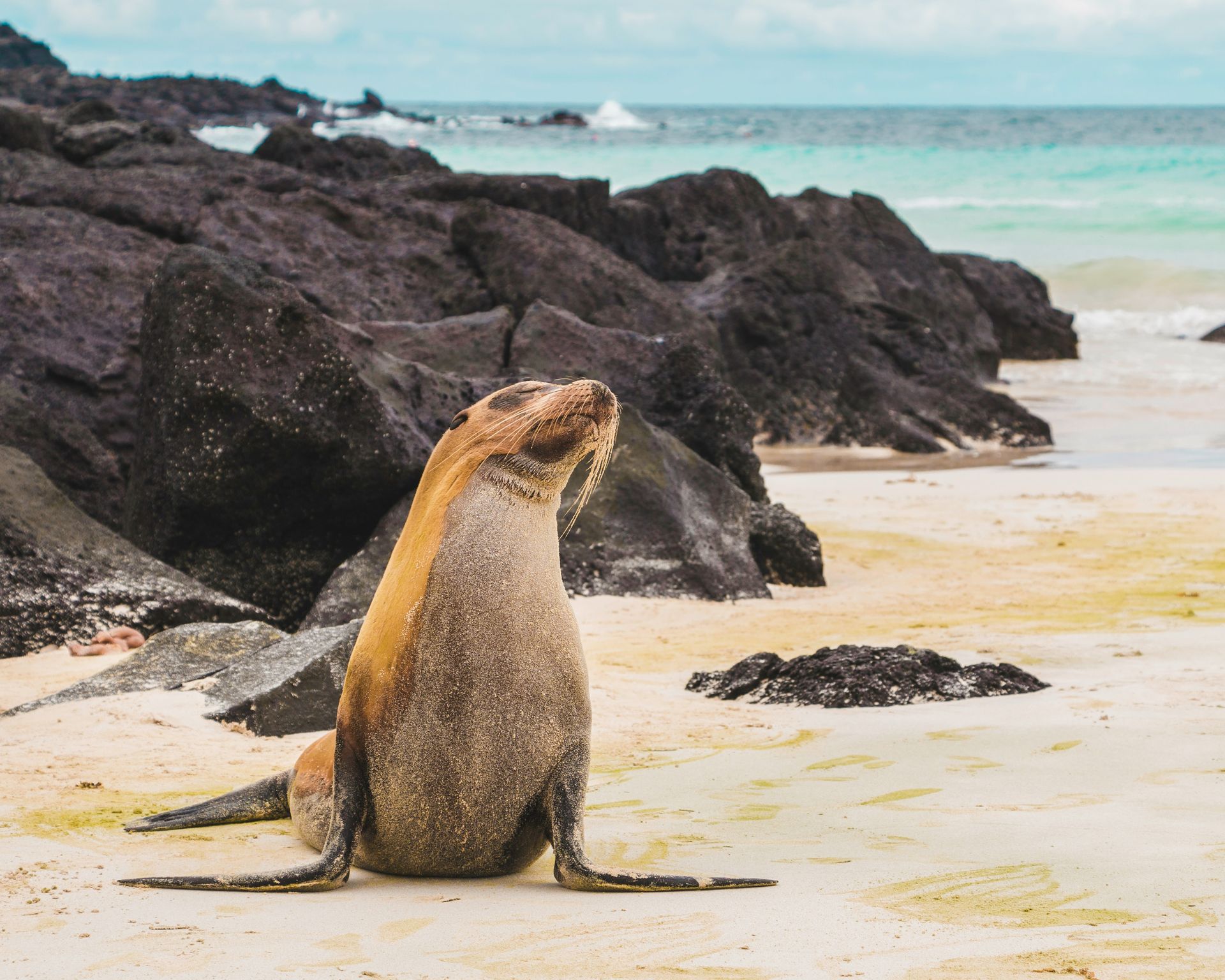
The Galápagos Islands reward the retirement traveler specifically because the optimal format for experiencing them, a small-scale luxury expedition cruise with onboard naturalists, requires the financial means and the time availability that working life rarely makes simultaneously possible. The wildlife encounters that the islands provide are categorically different from any other wildlife experience available anywhere on the planet: animals that evolved without natural predators approach human visitors with a curiosity and indifference to human presence that makes blue-footed boobies’ mating dances, sea lion pups swimming alongside snorkelers, marine iguanas and Galápagos penguins sharing the same volcanic rock, and flightless cormorants drying their wings at arm’s length feel like participation in wild life rather than observation of it from a respectful distance.
The conservation protections administered by the Galápagos National Park and Marine Reserve maintain the islands in a condition that gives the retirement traveler who has planned this trip for twenty years an experience that has not been meaningfully diminished by the tourism it has attracted. National Geographic-Lindblad Expeditions’ small ships Gemini and Delfina, carrying 48 and 16 guests respectively, give the expedition format its most intimate expression, with National Geographic naturalists and photographers guiding every landing and snorkeling excursion with the expertise that transforms a wildlife sighting into an education in evolutionary biology and island biogeography. Similar programs run through Silversea and Celebrity Cruises on slightly larger vessels, with sailings typically running seven to ten days.
For travelers whose preference runs toward land-based programs, companies including Intrepid Travel and G Adventures operate group itineraries using ferry connections between the major islands, San Cristóbal, Santa Cruz, Isabela, and Floreana, with time aboard their own expedition ships for the remote island landings at red-sand Rabida and Nazca booby nesting grounds on Genovesa. The choice between cruise and land formats depends on the traveler’s comfort with open-ocean sailing, the depth of access they want to the remote islands that only small ships can reach, and the social dynamic they prefer. In either format, the Galápagos delivers what it promises with a consistency that few destinations match.

Zdeněk Macháček / Unsplash
Costa Rica gives retirement travelers a destination whose range of environments, rainforest, Pacific and Caribbean coastlines, active volcanoes, and highland cloud forest, packs genuine ecological variety into a country compact enough to move between these environments without the internal flight connections that larger countries require. The national philosophy of pura vida, meaning enjoy life and be happy, describes an actual pace and attitude toward daily life that the best retirement travel experiences reflect: slow meals, unhurried mornings, and the afternoon hammock as a legitimate activity rather than a guilty indulgence.
The wildlife program is exceptional and diverse across regions: monkeys, sloths, wildcats, humpback whales, dolphins, and sea turtles are all observable in natural habitat without requiring the specialized expedition format that the Galápagos demands. The variety of activity options, hiking, diving, surfing, golf, wildlife observation, and river rafting, gives the retirement traveler the ability to calibrate daily physical intensity according to what the body wants on a given day, rather than a fixed itinerary. After a physically demanding day, the unspoiled beaches and rainforest lodges the country offers in abundance provide recovery with its own environmental quality: the sound of the ocean or the rainforest at night from an open-air room is itself a reason to be there.
The luxury accommodation options give Costa Rica strong credentials for the retirement trip,, whose comfort expectations are higher than those of the backpacker market the country also serves. The W Costa Rica at Reserva Conchal combines the international brand’s service standards with Playa Conchal’s distinctive shell-sand beach in Guanacaste. Playa Cativo Lodge, accessible exclusively by boat and embedded within the Osa Peninsula rainforest, gives the most immersive natural experience in a property whose upscale character makes the immersion comfortable rather than demanding. Nayara Gardens, directly adjacent to Arenal Volcano National Park, gives the volcanic landscape its most direct accommodation expression, with unobstructed views of the active cone. The two international airports, Liberia’s Daniel Oduber Quirós for Guanacaste and San José’s Juan Santamaría for the rest of the country, give different itinerary starts and ends, and practical routing flexibility.
Ondrej Machart / Unsplash
Australia has always appeared on retirement travel lists for a specific structural reason: the 15-hour flight from Los Angeles to Sydney makes it impractical for a standard two-week vacation, whose travel days consume too much time to justify the logistics. Retirement removes this constraint entirely, and the continent’s genuine scale, its distinct ecosystems, cities, and wildlife distributed across an area comparable to the continental United States, rewards the longer stay that the retirement traveler can now give it without asking permission from anyone. The solo retiree specifically benefits from Australia’s English language, extremely high safety standards, excellent infrastructure across both cities and remote areas, and the cultural familiarity that makes independent navigation comfortable rather than requiring constant vigilance.
Sydney gives the itinerary its opening sequence of iconic experiences: the Opera House tour, the harbor cruise that gives the city its most photogenic perspective, and the Harbour Bridge walk, or the arch climb for travelers with surplus energy and a comfortable relationship with heights, give the first days a set of experiences specific to this city alone. Kangaroo Island in South Australia concentrates wildlife encounters into a single island day: koalas, wallabies, kangaroos, fur seals, penguins, and kookaburras are all present in accessible habitat, giving the wildlife program the density that the Australian mainland distributes across distances that take more time to cover.
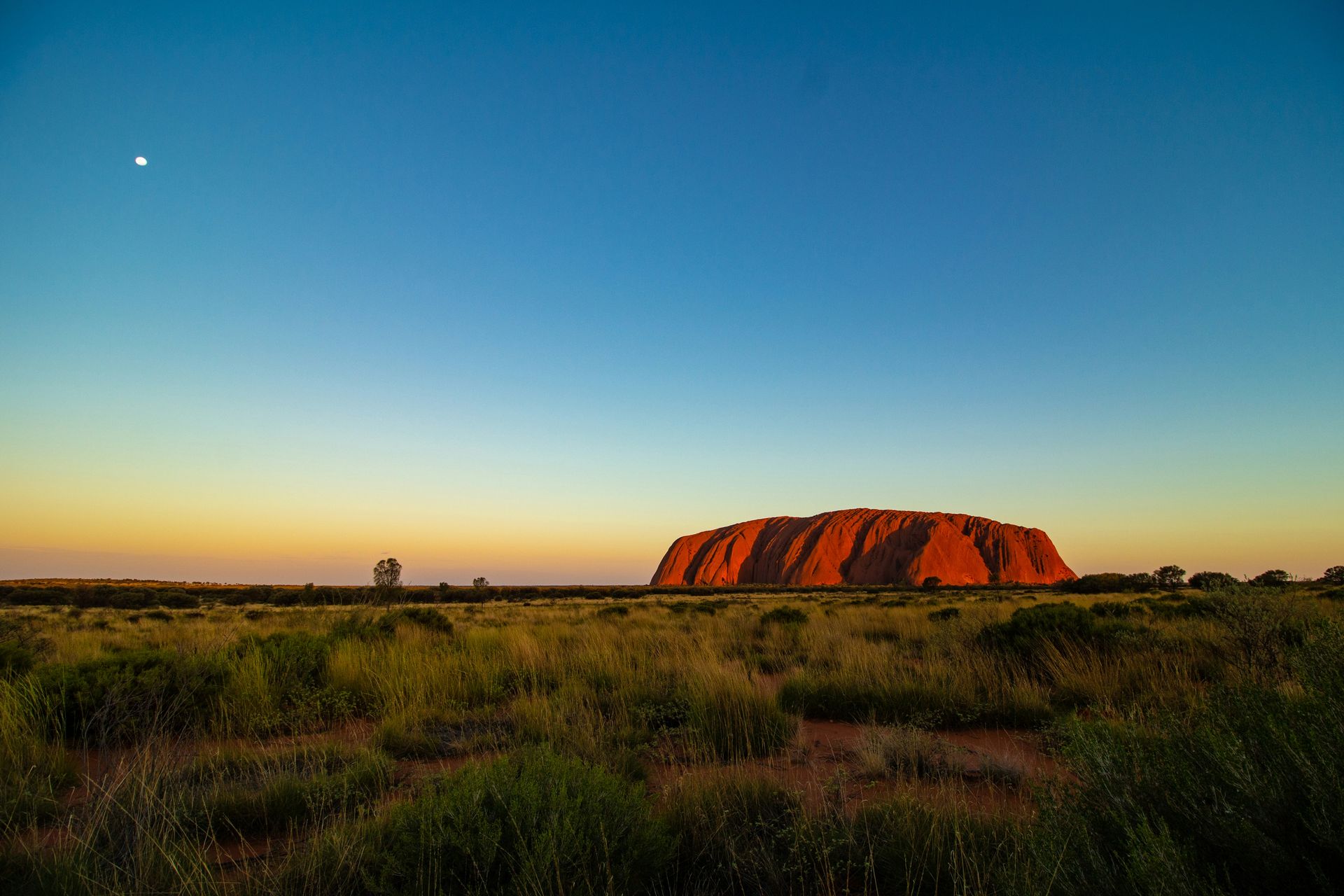
The Great Barrier Reef off Queensland’s northeast coast, home to countless species of fish, mollusks, starfish, turtles, dolphins, and sharks, gives the marine dimension its most recognized expression. The Great Ocean Road at Australia’s southeastern tip gives the coastal drive format its most dramatic Australian version, with rugged seashore, jagged limestone cliffs, sandy beaches, and the dense Otway rainforest accessible along 243 kilometers of coastal highway. Brisbane’s Yarra River cruise and the Story Bridge, Melbourne’s laneway coffee culture, and the Outback red-rock landscape of the Northern Territory each give Australia additional chapters that the retirement traveler with time can add to an itinerary that the standard two-week vacation could not hold.
-1920x1280.jpg)
Nicolas J Leclercq / Unsplash
The northern lights present a specific logistical challenge that working life rarely resolves: they appear on no schedule, require clear dark skies, and demand the willingness to wait several nights in the same location, hoping for the right combination of solar activity and atmospheric clarity. Retirement provides exactly the patience the phenomenon requires. The travel guidance to visit between September and March, when winter nights are long enough for aurora viewing, and to avoid the full moon, provides timing parameters specific enough to plan around, while acknowledging that no particular night guarantees a display. The retirement traveler who budgets 10 nights in Iceland rather than five significantly increases the likelihood of witnessing a strong aurora.
Iceland surrounds the northern lights search with a landscape and geothermal culture that makes the waiting actively rewarding rather than merely patient. The Blue Lagoon, whose silica-filtered geothermal water sits at a temperature that makes outdoor bathing in Icelandic winter genuinely comfortable, is the country’s most visited attraction and gives the geothermal dimension its most famous expression. The Silica Hotel and the five-star Retreat at Blue Lagoon offer travelers who want to extend the lagoon experience into an overnight stay accommodation directly on the property, where the possibility of watching the northern lights while soaking in the warm water adds a distinctly Icelandic luxury.
Hotel Ranga, a family-owned boutique property that has been in operation since 1999, has specifically built its offering around the northern lights: an on-site observatory, outdoor hot tubs, an aurora alert service that wakes guests when conditions improve overnight, and gourmet meals give the anticipation of the lights a daily rhythm that makes the waiting actively pleasant. The volcanic landscape, the waterfall circuits of the Golden Circle, the black sand beaches of the south coast, and the geothermal areas of the Snæfellsnes Peninsula give Iceland a day program fully independent of the aurora that justifies the trip on its own terms and makes the retirement traveler with time to wait the ideal visitor for this specific destination.
-1920x1283.jpg)
Sam Ferrara / Unsplash
Sicily gives retirees of Italian-American descent a destination that combines the genealogical travel experience, as many Italian-Americans trace family origins to Sicilian emigration in the late nineteenth and early twentieth centuries, with one of the Mediterranean’s most historically complex and gastronomically rich landscapes. The island’s occupation across centuries by Greeks, Phoenicians, Romans, Arabs, Byzantines, and Normans has left an archaeological and architectural record of extraordinary range: the ancient Greek temples at Agrigento, the Roman amphitheater at Taormina with its view of Mount Etna and the sea, the medieval Arab-Norman architecture of Palermo, and the Baroque cities of the southeast all give Sicily a history that no other single island in the Mediterranean concentrates at equivalent density.
Palermo, the capital, gives the Sicily itinerary its urban foundation: the colorful outdoor markets of Ballarò and Capo, the spectacular mosaics of the Palatine Chapel and the Monreale Cathedral, and the street food culture, arancini rice balls, panelle chickpea fritters, and the cannoli that the city claims were invented within its streets, give the city a specific Sicilian identity that mainland Italian city tourism does not replicate. The wines from vineyards near Mount Etna, whose volcanic soil gives the indigenous grape varieties, Nerello Mascalese, Carricante, a mineral character specific to the lava fields, have drawn international attention, and the food dimension of the Sicily trip now rewards exploring directly at producer estates.
The practical considerations for driving in Sicily are worth understanding before arrival: the main highways are in good condition and well-signed, giving independent drivers a reasonable framework for city-to-city travel. Within the cities, narrow streets and scarce parking make hiring a local driver for urban portions of the itinerary the practically wise choice that most travelers who arrive without this arrangement regret not having made. The train and bus network connects the major cities reliably for travelers who prefer not to drive at all, offering a flexible transportation approach across different comfort levels in Mediterranean road conditions.

sutirta budiman / Unsplash
The African safari is the bucket list destination that retirement most specifically enables, because the best version of the experience, a private concession luxury lodge with exclusive game drives, guided walking safaris, and the time to sit at a waterhole for two hours waiting for elephants, requires exactly the combination of financial means and schedule freedom that retirement provides simultaneously for the first time. The Great Migration, when millions of wildebeest, antelope, and zebras travel between Tanzania’s Serengeti and Kenya’s Maasai Mara in search of grazing, gives the wildlife calendar its most spectacular annual event and gives travelers who time their visit around the river crossings in July and August a specific wildlife encounter that no other event on earth replicates at the same scale.
South Africa offers a different safari experience: Kruger National Park and the private game reserves adjacent to it offer Big Five encounters in a country whose Cape Town provides a spectacular coastal city context that Kenya and Tanzania do not offer at a comparable level. andBeyond’s Ngala Private Game Reserve, within the Greater Kruger ecosystem, offers the exclusivity of private land access alongside the wildlife density produced by the Kruger system’s conservation management. Adventures by Disney $DIS’s 10-day South Africa family itinerary, beginning in Cape Town and including the Monkeyland Primate Sanctuary, Stellenbosch wine country, and the Kapama Game Reserve, provides the multigenerational safari with a structured, family-appropriate program that retirement-age grandparents organizing a family trip can rely on.
Zambia’s South Luangwa National Park, where The Bushcamp Company operates eight walking safari camps, offers physically active retirees access to the original safari format: tracking animals on foot with an armed guide in a park with one of the oldest walking traditions in Africa. The slow pace of walking, which gives the tracker time to read signs, identify scents, and interpret the landscape with a level of detail that vehicle-based game drives pass over, produces wildlife encounters whose intimacy the retirement traveler’s patience specifically rewards. The combination of luxury lodge comfort and the physicality of walking safari gives the African trip its most complete expression.
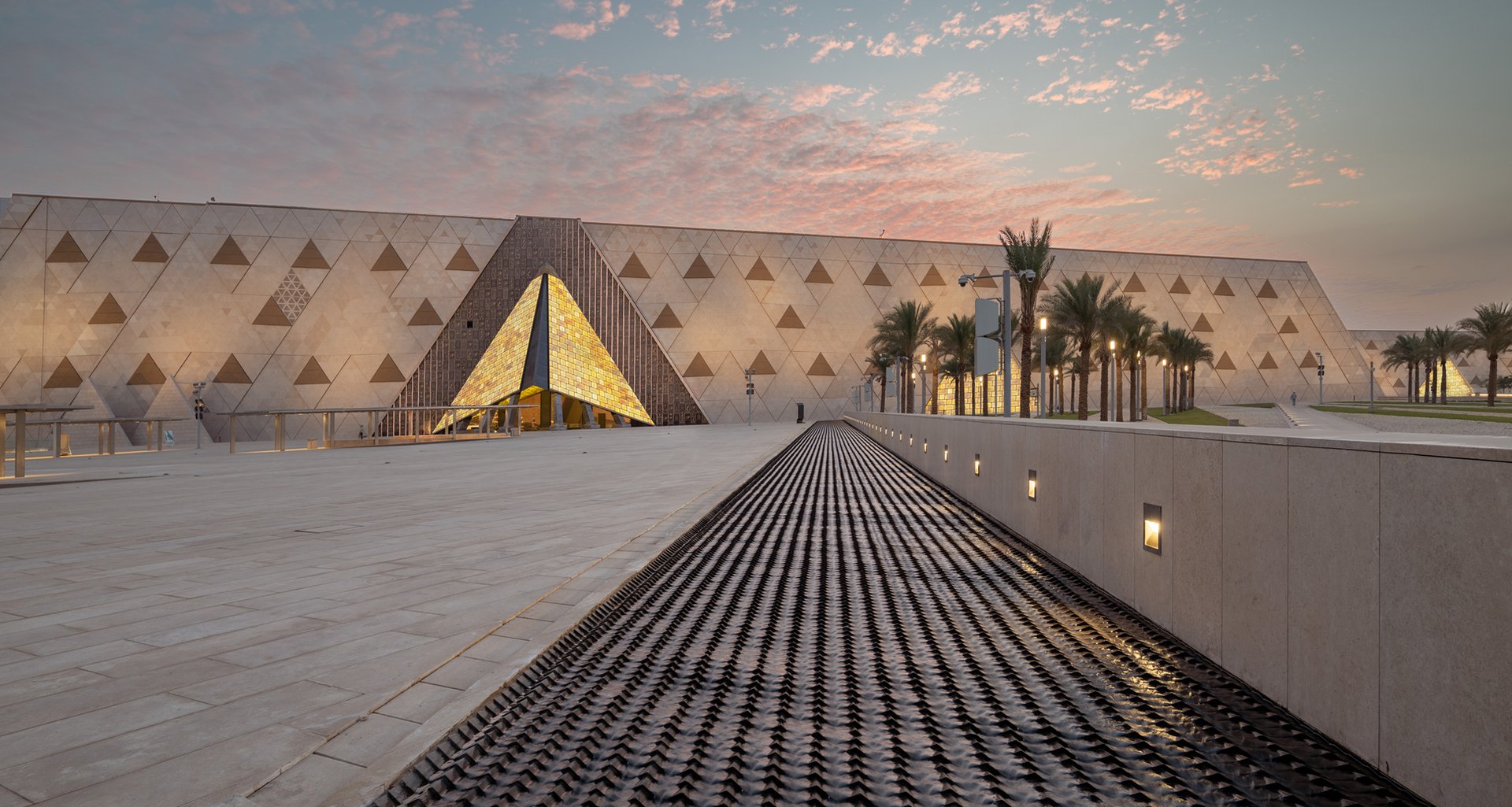
Credit: The Grand Egyptian Museum
Egypt gives the retirement traveler who has spent decades reading about ancient civilizations, visiting Egyptian collections in the world’s great museums, and watching documentaries about the pyramids, the physical encounter with the original sites that all of that preparation has been aimed at. The Pyramids of Giza are among the handful of things in the world that exceed rather than disappoint the expectations that photography has created: the mass of the Great Pyramid, the precision of the stone courses visible at close range, and the simple fact that this structure was built approximately 4,500 years ago without power tools overwhelms the intellect in ways that historical knowledge alone cannot prepare the visitor for. The Great Sphinx at close proximity gives the monument's scale a physical reality that photographs, which always include human figures for comparison, convey in ratio but not in presence.
The Grand Egyptian Museum in Cairo, which fully opened in fall 2025, gives the Egypt visit a new institutional anchor of the highest order: housing more than 100,000 artifacts, including over 5,000 objects from Tutankhamun’s tomb, the museum gives the archaeological program a curatorial depth and physical presentation quality that the previous Egyptian Museum’s overcrowded display conditions could not provide. The GEM, combined with the Giza plateau that it overlooks from its position nearby, gives the Cairo portion of an Egypt itinerary a concentration of ancient civilization encounters that justifies staying longer than previous Egypt itineraries allocated to the capital.
Guided group tours handle Egypt’s logistical complexity, transfers, ticketing, entry queues, and local arrangements, more efficiently than independent travel manages, and companies including YMT Vacations and Overseas Adventure Travel include Nile cruises that give the Valley of the Kings, the Karnak temple complex, and the Luxor temples their most appropriate approach: moving between monuments by boat on the same river the ancient Egyptians used to transport the stone that built them. Eldertreks specifically targets active senior travelers with itineraries reaching beyond the standard circuit to Abu Simbel, Alexandria, and the Siwa Oasis in the western desert.
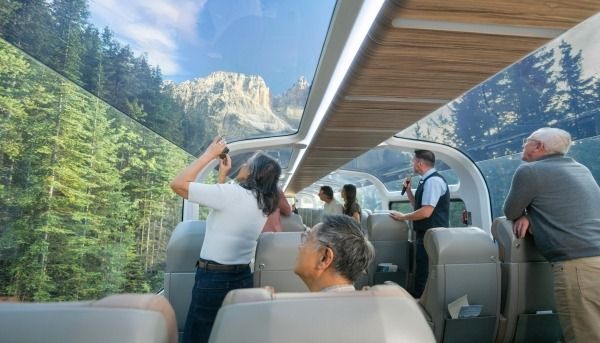
Credit: Rocky Mountaineer
The Rocky Mountaineer gives the retirement traveler access to one of the world’s most spectacular mountain landscapes from the comfort of a glass-domed railway car, whose elevated windows and open observation platforms offer unobstructed views that car windows and windshields cannot match. The Grand Adventure Circle Journey, an 11-night itinerary, combines five days aboard the train with overnight stays in Vancouver, Whistler, Jasper, Lake Louise, and Banff, a circuit that covers the breadth of the Canadian Rockies in the specific sequence that the railway’s routing reveals, connecting coastal mountain terrain to the interior ranges in a geographic progression whose logic the train format makes viscerally legible.
The journey opens in Vancouver with city exploration time before boarding, then traverses British Columbia’s Sea-to-Sky Corridor to Whistler, one of North America’s premier mountain resort towns. The route continues through interior canyons and farmland toward Jasper National Park, whose position within the Rocky Mountains gives the train arrival a specific quality of valley entrance. The Icefields Parkway segment between Jasper and Lake Louise, often cited as one of the most scenic road or rail journeys in the world, passes the Athabasca Glacier, where an Ice Explorer vehicle ride onto the ice surface gives passengers a physical encounter with glacial terrain that the train window view prepares but does not substitute for.
The train format suits the retirement traveler who wants spectacular landscapes without the concentration demands of driving mountain roads, who wants meals and comfortable accommodation arranged, and who prefers the social environment of fellow travelers to the isolation of a rental car traversing the same terrain. The glass dome gives the mountains the framing that the viewing experience deserves, and the pace, slow enough to read the landscape rather than navigate it, gives the Rocky Mountaineer a specific quality of attention that the retirement traveler’s absence of schedule makes fully available and that the working traveler’s compressed itinerary rarely permits.
-1920x1272.jpg)
Eddie Kiszka / Unsplash
Machu Picchu is one of the most consistent entries on retirement travel lists because it is a destination most American travelers have intended to visit for decades, yet have not found the right combination of time, physical capacity, and logistical resolve during the working years. The retirement window satisfies all three conditions simultaneously. Lima’s coastal setting and its contemporary restaurant scene, which has developed into one of the most celebrated culinary destinations in South America, give the itinerary an arrival city worth several days of serious eating, museum visits, and the specific atmospheric experience of a Pacific coastal capital whose ocean-facing character gives it a different sensory register from the Andean cities further inland.
Cusco, a UNESCO World Heritage city at over 11,000 feet above sea level, requires the acclimatization time that working vacation itineraries typically compress, and retirement travel can properly allocate: two to three days at altitude before ascending further gives the body the time to adjust, preventing altitude sickness from diminishing the experience at Machu Picchu itself. The Sacred Valley between Cusco and the ruins gives the acclimatization period an archaeological and landscape program of genuine substance, the ruins at Pisac, Ollantaytambo, and Moray, the traditional market at Chinchero, and the valley’s agricultural terraces, which give those days their own reward rather than the waiting quality that transit days produce.
The approach to Machu Picchu itself gives travelers multiple format options calibrated to different physical conditions. The Inca Trail remains the classic multiday trek for those whose fitness and booking timeline permit it. The scenic Inca Rail and Peru Rail trains give a less physically demanding approach, whose mountain and jungle valley views give the journey genuine quality. The Belmond Hiram Bingham luxury train gives the most elegant alternative, with a dining car and observation platform that make the journey itself a primary experience. Spending a night at the Sanctuary Lodge, the Belmond Hotel immediately outside the ruins entrance, gives the early morning arrival before the day visitors, and the late afternoon quiet after their departure, the encounter with the citadel in near-solitude that the retirement traveler’s flexibility makes achievable.
