The place you raise your kids matters more than most parents realize. WalletHub evaluated 182 cities on 45 metrics to find the best options

Ariel Blanco / Unsplash
Choosing where to raise children is one of the most consequential financial and lifestyle decisions a family can make. A family earning the same income in two different cities can end up with dramatically different outcomes for their children depending on the quality of local schools, the safety of the neighborhood, the cost of housing and childcare, and the stability of the surrounding economy. Census data shows that the average American moves 11.7 times over the course of a lifetime, and while some of those moves are driven by job opportunities or family ties, a growing share are driven by a straightforward calculation of which city offers the best combination of affordability, safety, and opportunity for children.
The factors that make a city good for families aren't always visible in the housing data alone. School quality varies enormously between neighboring districts, and two cities with similar median home prices can have wildly different crime rates, pediatric healthcare access, childcare costs, and shares of two-parent households. The best-performing cities tend to combine strong socioeconomic fundamentals, high median family incomes paired with low poverty and unemployment rates, with practical quality-of-life advantages, such as safe streets, well-funded public schools, and access to parks and recreation. Cities that fall short usually fail on one side of that equation or the other, offering affordability without safety or good schools without affordable housing.
WalletHub compared 182 of the largest U.S. cities across 45 metrics to produce its 2026 ranking of the best places to raise a family. The study weighted five equally important categories at 20 points each. Family fun tracks parks, playgrounds, recreation, weather, and commute times. Health and safety measures air and water quality, crime rates, traffic fatalities, pediatric healthcare access, and the share of uninsured children. Education and childcare evaluates school-system quality, graduation rates, daycare availability, and state parental-leave policies. Affordability captures cost of living, housing costs relative to family income, and overall financial wellness. Socioeconomics measures two-parent household rates, divorce rates, poverty, food-stamp usage, unemployment, and the wealth gap. California and the Sun Belt dominate the top of the list, but the cities that perform best are the ones that manage to deliver across all five categories rather than excelling in one while falling short in another.

Harshad Kale / Unsplash
Fremont, Calif., earned the top spot for the fifth consecutive year with a score of 72.80, the highest of any city in the study. The city's defining strength is its socioeconomic profile, where it ranked first nationally, but it also placed fifth for health and safety, second for education and childcare, and 13th for affordability, a combination of high marks across four of the five categories that no other city in the study could match. Sunset Magazine noted that Fremont was also named the "Happiest City in the U.S." by WalletHub earlier this year, a distinction that reinforces the broader picture of a community where families are thriving by measurable standards.
The economic foundation is the clearest driver. Fremont's median family income, adjusted for cost of living, sits close to $130,000, and the city has the second-lowest share of families living in poverty and the fifth-lowest share receiving food stamps. Nearly half of all households in Fremont include children under 18, a share that exceeds the vast majority of cities in the study and reflects a community where family formation isn't just possible but is actively happening at a pace that most American cities can't match. The city's two-parent household rate and low divorce rate contribute to a socioeconomic stability score that outperforms every other city in the study, and the unemployment rate remains among the lowest nationally.
Fremont's education metrics are equally strong. WalletHub's data shows that 58.3% of the city's public schools earn a rating of seven or higher out of 10 from GreatSchools.org, and summer learning opportunities per capita rank among the highest in the country. On the health and safety side, only 1.6% of children in Fremont lack health insurance, the fifth-lowest figure nationally, and just 1.1% of the population lacks access to healthy food. The city also has the fifth-most parkland acreage per capita, providing outdoor exercise and recreation options that contribute to both physical health and the kind of neighborhood environment that families seek when choosing where to settle. Fremont sits in Alameda County in the San Francisco Bay Area's East Bay, positioned between Silicon Valley's job base and the more affordable housing markets of the Tri-City area, a location that gives families access to high-paying tech-sector employment without the price tags of San Francisco or Palo Alto.
Far Chinberdiev / Unsplash
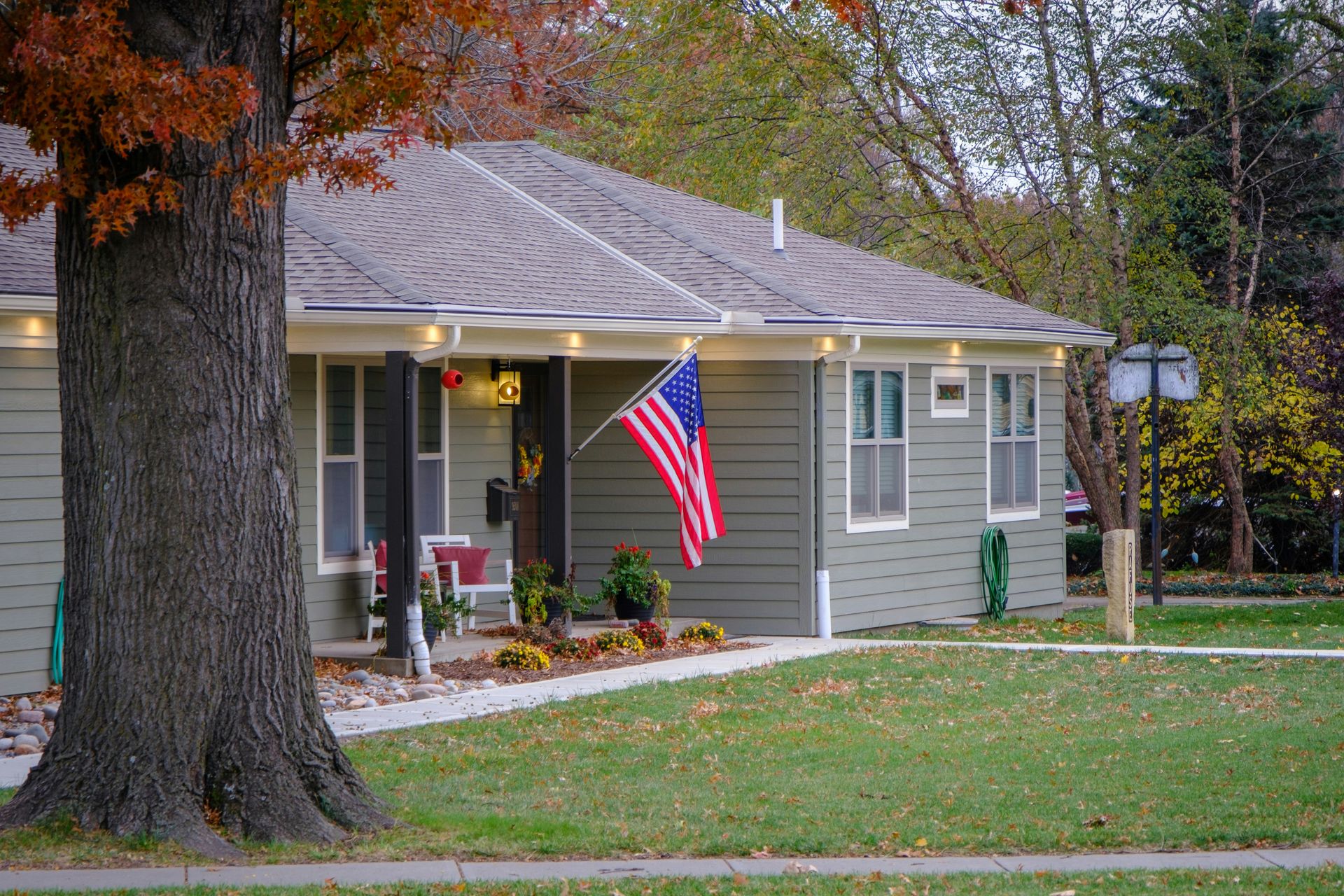
Overland Park, Kan., held its second-place position with a score of 71.76, anchored by the second-best affordability grade in the entire study and the third-best socioeconomic profile. The city's unemployment rate of 3.4% is among the lowest in the country, and its median family income exceeds $149,000 after adjusting for cost of living, a figure that reflects both strong local earnings and a cost structure that stretches those earnings further than they would go in a coastal metro. WalletHub's data shows that Overland Park has one of the smallest shares of families in poverty or receiving food stamps of any city in the study, and the financial stability of its households extends across income levels rather than concentrating at the top.
Family structure is another area where Overland Park stands out. More than 81% of households with children are two-parent families, the second-highest rate in the country, and the city has the 10th-lowest separation and divorce rate nationally. Those figures contribute to the socioeconomic stability score that WalletHub uses to evaluate the long-term environment in which children are being raised, and they align with broader research showing that household stability is one of the strongest predictors of positive outcomes for children across income levels. RentCafe data from 2026 shows that the average apartment rent in Overland Park is $1,547, with an overall cost of living 7% below the national average and housing costs 18% below the national figure, numbers that explain why the city consistently attracts families relocating from higher-cost metros, such as Chicago, Los Angeles, and Washington.
Overland Park's health and safety marks round out the picture. The city ranked 11th nationally in that category, with a low traffic-fatality rate and the fifth-best public hospital ranking in the country. WalletHub's data also shows that 55% of the city's public schools earn a seven or higher out of 10 from GreatSchools.org, a figure that puts Overland Park among the top 11 cities in the study for school quality. The city sits in Johnson County, Kan., a suburban hub within the Kansas City metropolitan area where major employers, such as T-Mobile $TMUS, Black & Veatch, and OptumRx, provide a stable base of well-paying jobs that keep the local economy diversified and resilient. For families weighing the tradeoff between lifestyle quality and cost of entry, Overland Park delivers at a price point that most cities with comparable scores across safety, schools, and economic stability simply can't match.

Jim Strasma / Unsplash
Irvine, Calif., climbed to third place in 2026 with a score of 70.16, earning the single best health and safety grade in the entire study alongside the fourth-best education and childcare score and the 11th-best family fun ranking. The city's safety record is the standout figure. Cornwall Local reporting on the WalletHub data noted that Irvine's crime rate runs 28% below the national average, and the city's safety rating is better than 90% of all cities in California. For families with young children, the practical meaning of that statistic is a community where kids can walk to school, play in neighborhood parks, and move around independently at an earlier age than they could in most other cities of comparable size.
Irvine's master-planned design is central to what makes the city work for families. The community was built from the ground up around the concept of interconnected villages, each with its own schools, parks, and commercial hubs, and the result is a suburban layout that feels less like sprawl and more like a collection of self-contained neighborhoods. The Irvine Unified School District is one of the top-rated systems in California, with high scores in math, reading, and science, and the nearby University of California, Irvine adds a higher-education anchor that supports both the local economy and the city's intellectual culture. Key neighborhoods for families include Woodbridge, Northwood, Turtle Rock, Stonegate, and Orchard Hills, each offering a different balance of housing type, price point, and school access.
The tradeoff is cost. Irvine's affordability ranking of 71st is by far its weakest category, and the gap between the city's quality of life and its price tag is the main reason it doesn't rank higher overall. The median home price exceeds $1.5 million, and childcare costs routinely surpass $2,000 per month per child, figures that make Irvine work best for dual-income households earning well into six figures. A separate March 2026 study from Hire A Helper confirmed that while Irvine offers exceptional schools, parks, health, and safety, the high cost of living and childcare means the city functions primarily for families who can absorb those expenses without sacrificing savings or financial flexibility. For families who can clear that threshold, the combination of safety, education, recreation, and climate that Irvine offers is difficult to replicate anywhere else in the country.
Daniel / Unsplash
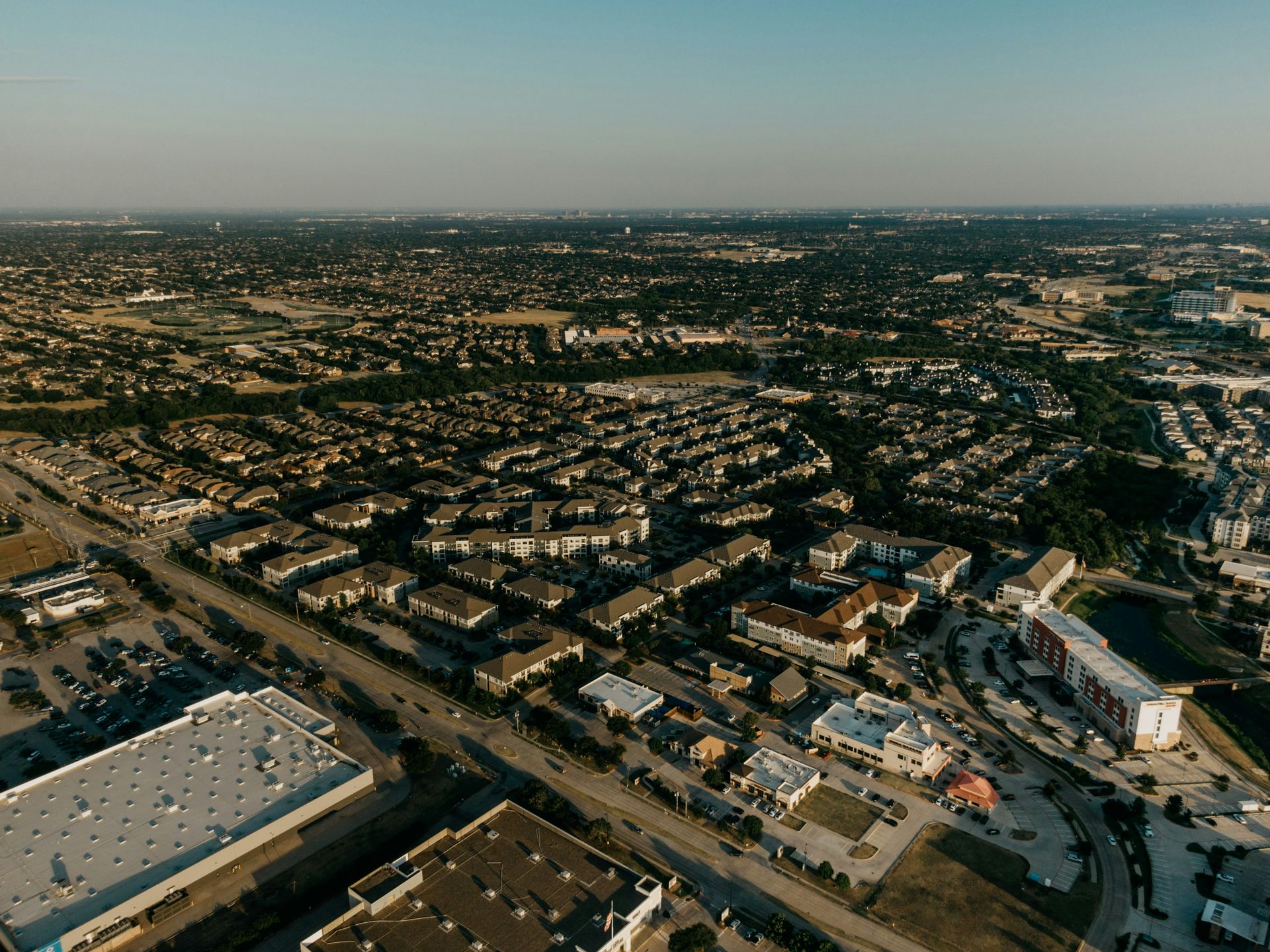
Plano, Texas, placed fourth with a score of 67.98, extending its run to four consecutive years inside the top four nationally and continuing to hold its position as the highest-ranked city in Texas. Local Profile noted that while Plano slipped one spot from its third-place finish in 2025, the city's core strengths remain the same ones that have kept it in the top tier year after year. It earned the second-best socioeconomic grade in the study (tied with Fremont) and the fourth-best health and safety score, combining strong family-structure metrics with low crime and a safe physical environment for children.
Safety and family stability are the two categories that define Plano's appeal. The city has the 10th-lowest violent-crime rate and the 29th-lowest property-crime rate among the 182 cities in the study, and the traffic-fatality rate is low enough to contribute meaningfully to its health and safety ranking. The share of two-parent families is the fourth-highest in the country, and the separation and divorce rate is the ninth-lowest, metrics that reflect a community where household stability is the norm rather than the exception. On education, more than 55% of Plano's public schools earn a seven or higher out of 10 from GreatSchools.org, and the high school graduation rate ranks fifth nationally. Plano ISD is consistently ranked among the top five school districts in Texas, a distinction that draws families from across the Dallas-Fort Worth metro and beyond.
Plano's economic base gives families the job security and earning potential that support long-term stability. The city is home to several Fortune 1000 companies and more than 10,000 businesses, and Collin County, where Plano sits, contains four of the five fastest-growing cities in America based on the most recent Census estimates tracking changes between July 2024 and July 2025. Current projections suggest the county could surpass 2.2 million residents by 2060 if trends continue, a growth trajectory that supports property values and local investment in schools and infrastructure. The 200-acre Arbor Hills Nature Preserve, the annual Plano Balloon Festival, and the Crayola Experience give families recreational options that complement the city's more measurable strengths. For families relocating to Texas from more expensive states, Plano's combination of a sixth-place affordability ranking, top-tier safety, and strong schools makes it the most compelling all-around option in the state.

Charles Jackson / Unsplash
Columbia, Md., rounds out the top five with a score of 66.74, earning the single best affordability grade in the entire study and climbing from 14th place in 2025 to fifth in 2026, the largest jump of any city in the top 10. The city's affordability ranking of first nationally, combined with an education and childcare rank of 29th and a socioeconomic rank of 35th, reflects a community where the cost of entry is low relative to the quality of schools, services, and community infrastructure that families receive. Columbia's health and safety ranking of 56th and family fun ranking of 84th are its weakest categories, but neither is low enough to undermine the overall picture of a city that delivers strong fundamentals at a price point that most of its competitors in the top 10 can't approach.
Columbia is one of the most successful planned communities in the United States, founded in the 1960s by developer James Rouse around the idea that a city could be designed from scratch to foster diversity, connection, and quality of life. The community of roughly 104,000 residents is organized into 10 self-governing villages, each with its own homeowner association, community center, and local amenities, and the broader infrastructure includes thousands of acres of parkland, more than 80 miles of trails, and three major lakes. The Columbia Association, a nonprofit that manages the community's shared spaces, provides swimming pools, fitness centers, and programming that families in other cities would have to pay for through private memberships. Howard County Executive Calvin Ball noted that the city has been recognized as Maryland's best place to raise a family and best place to live by both WalletHub and Niche, calling the distinction a testament to the county's continued investment in families, community, and quality of life.
Howard County's public school system is central to Columbia's appeal. The district is consistently rated among the top in Maryland, and the county government allocated a record $1.1 billion to the school system in its most recent budget, a seven-percent increase that funded salary increases for educators, the opening of the county's first new high school since 2005, and expanded programming across grade levels. Columbia sits halfway between Baltimore and Washington, D.C., giving residents access to two major job markets without the housing costs that come with living closer to either city center. AskDoss found that families in Columbia get top-five schools in the state at prices 40% to 50% below what comparable quality costs in Bethesda, a dynamic that explains why the city earned the number-one affordability ranking in a study that measures housing costs relative to family income rather than in absolute terms. For families who prioritize the combination of school quality, community infrastructure, and financial accessibility, Columbia's value proposition is the strongest in the country.
