
From the Grand Canyon's mile of open air to Acadia's lighthouse silhouetted against the Atlantic, the national parks with the best sunsets
Nathan Mullet / Unsplash
The national park sunset is a specific American experience, and not simply because the parks are American. The scale of the landscapes they protect, the absence of light pollution maintained by their remoteness from major population centers, and the specific geological and ecological variety of the country’s protected lands give the sunset a visual range in these parks that urban and suburban sunset viewing cannot match. A sunset seen across the Grand Canyon’s mile of open air is categorically different from a sunset seen from a city rooftop. A sunset at 12,000 feet on Trail Ridge Road in Rocky Mountain National Park, with the alpine tundra lit gold and the mountains casting long shadows across the valleys below, is a different visual experience from a sunset seen through a car windshield on a flat highway. The national park gives the sun’s daily exit the setting it deserves.
The social media data confirms what park visitors have known intuitively for generations: the national park sunset inspires documentation.
The 10 parks below appear in Travel + Leisure, ranked by combined TikTok and Instagram post volume, based on an analysis conducted in May 2026. The list spans the American West, the Southeast, and the Northeast, encompassing geological formations, alpine elevations, desert landscapes, and the Atlantic coastline within a single ranking. The post volume data gives a democratic measure of which sunsets people find most worth sharing, which is a reasonable proxy for which parks produce the most reliably extraordinary golden hour.
Maddox Furlong / Unsplash
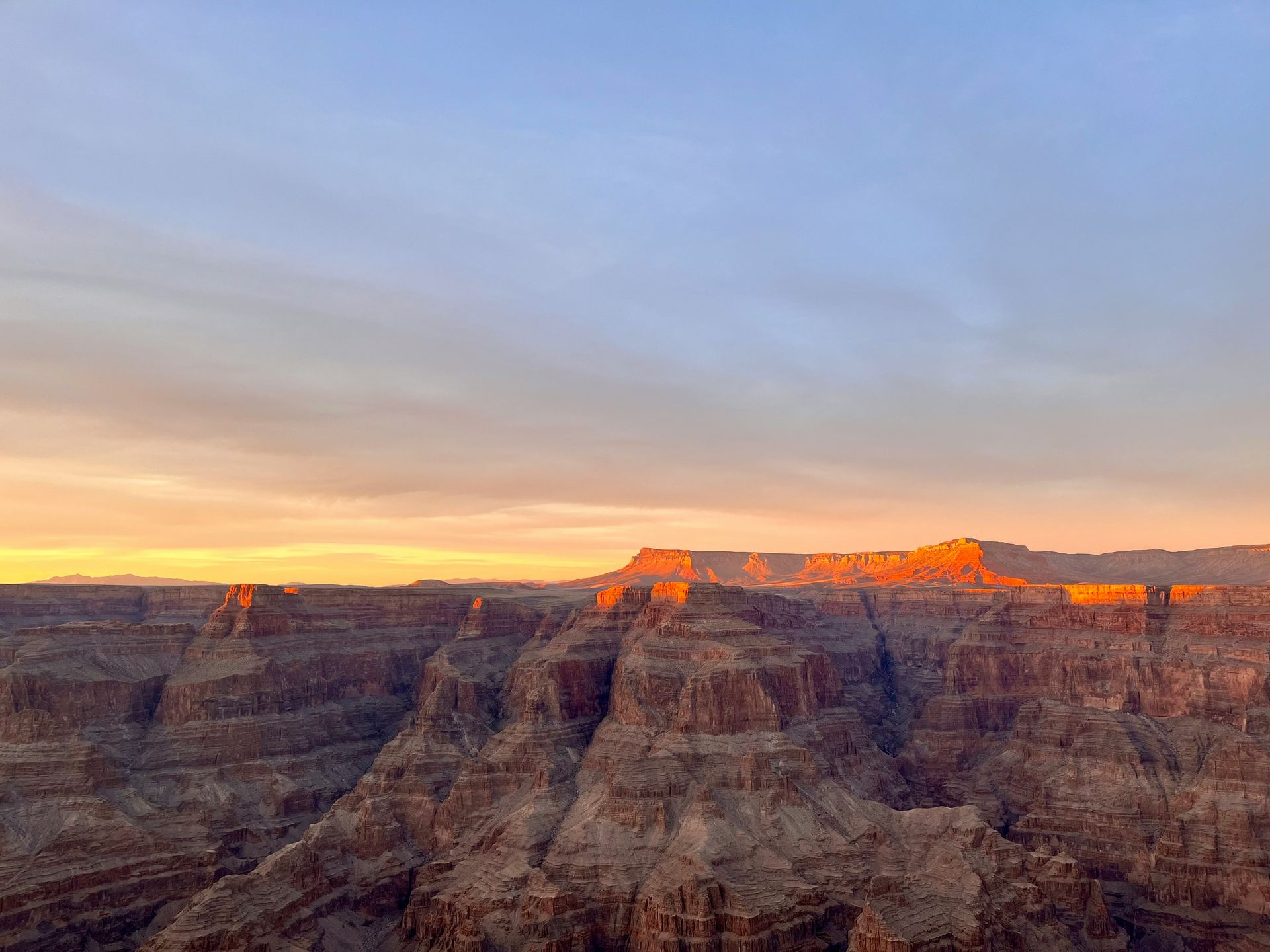
Grand Canyon National Park generated 11,322 combined posts across TikTok and Instagram in the Hoppa analysis, more than double the second-place finisher and the clearest possible indication that no American park produces sunsets that inspire documentation at the same volume. The canyon’s advantage is structural: the sheer scale of the landscape, more than a mile of open air between the South Rim and the North Rim, gives the sunset an unobstructed canvas whose dimensions no other American park matches. The rock layers that line the canyon walls, laid down across two billion years of geological history, shift through reds, oranges, and purples as the light drops, and the color progression is specific to the canyon’s particular iron oxide mineralogy. The same sunset over grassland or forest does not produce the same chromatic range.
The South Rim gives visitors several specific vantage points whose positions along the canyon edge maximize the viewing geometry. Mather Point, the most accessible of the rim viewpoints and the one most visitors encounter first, offers a panoramic view of the canyon’s full east-west expanse from above. Yavapai Point adds an interpretive geology museum adjacent to the overlook, giving the visual experience its scientific context for visitors who want to understand why the colors change in the sequence they do. Desert View Watchtower, at the eastern end of the South Rim Drive, gives a 360-degree view from an elevation 15 feet higher than the rim itself, adding the Painted Desert’s color to the canyon’s palette in the same frame.
The Grand Canyon sunset’s dominance in the social media data is not a function of the park’s general popularity alone. Yellowstone and Yosemite are both among the most visited parks in the country, but neither generates sunset-specific post volume in the same range. The canyon’s visual spectacle at sunset is genuinely distinctive, and the 11,322 posts reflect a landscape whose golden-hour performance exceeds that of every other American national park by a margin the data makes precise.
Zetong Li / Unsplash
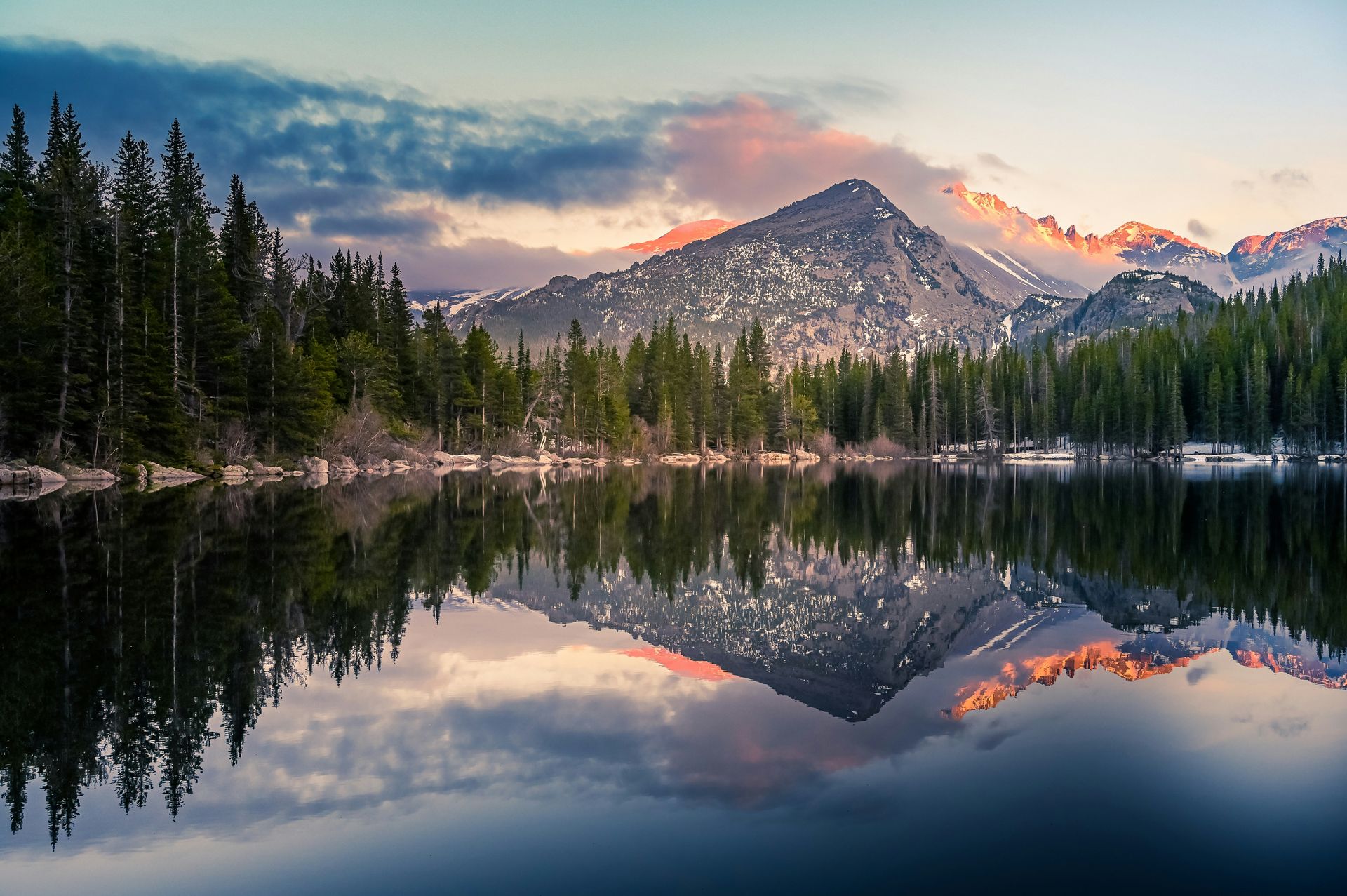
Rocky Mountain National Park generated 5,066 combined posts in the Hoppa analysis, placing second with a specific structural advantage: elevation. The park’s highest continuous road, Trail Ridge Road, reaches 12,183 feet above sea level, and the view from that elevation at sunset offers visitors a perspective on the surrounding mountain landscape that lower-altitude parks cannot. The sun sinks behind the treeline from a vantage point above it, so the full arc of the late-day sky is visible without the visual interruption that forest cover imposes at lower elevations.
The alpine tundra that covers the Rocky Mountains’ highest terrain provides the sunset with its distinctive foreground. Above treeline, the low-growing grasses, wildflowers, and sedges that the tundra environment produces give the landscape an openness that frames the western sky without clutter, and the undulating terrain of the high country gives the light somewhere interesting to land as it flattens toward the horizon. The park’s namesake peaks, visible from Trail Ridge Road in multiple directions, give the sunset a jagged skyline silhouette that flat-horizon sunsets of the plains and deserts do not.
The Sprague Lake area, lower in the park and surrounded by peaks and forest, gives a different version of the Rocky Mountain sunset: the lake’s reflective surface doubles the color of the evening sky, and the surrounding peaks give the reflection a mountain frame that makes Sprague Lake one of the most photographed locations in Colorado at any time of day. The park’s elevation also means the sunset occurs in thinner air, whose lower atmospheric density gives the light a clarity that haze at lower altitudes diminishes. Trail Ridge Road’s accessibility by car, without any hiking required to reach the 12,000-foot viewing elevation, gives Rocky Mountain a specific practical advantage over alpine parks whose most dramatic sunset viewpoints require a significant physical commitment to reach. The park’s fall timing, when the aspen groves in the lower elevations turn gold and the alpine tundra shifts to rust and burgundy, gives the Rocky Mountain sunset its most colorful seasonal expression, adding warm foreground color to the mountain silhouette that the summer’s green and the winter’s white do not provide in the same terms.
Josh Carter / Unsplash
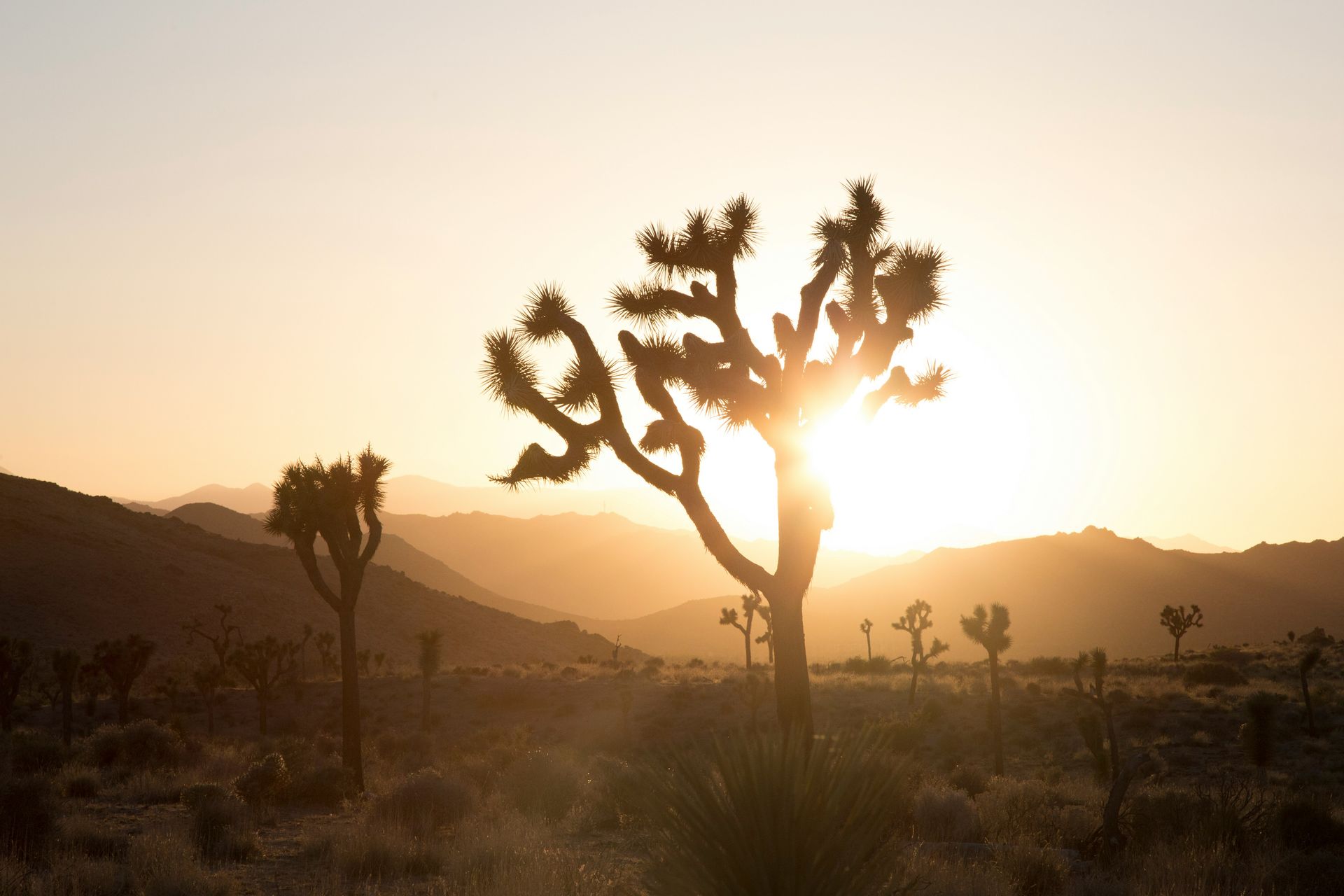
Joshua Tree National Park generated just over 1,000 combined posts in the Hoppa analysis, placing third. The park’s sparse desert landscape, with its namesake trees punctuating piles of weathered granite boulders across the high Mojave and Colorado Desert ecosystems, gives the sunset a visual environment specific to the Joshua Tree experience: a landscape so alien in its geological forms and plant life that the warm evening light intensifies its otherworldly character without making it familiar. The boulders, rounded by millennia of weathering into smooth spheres and stacked formations, catch the low sun on their west faces and cast long shadows eastward across the sandy desert floor in a way that neither the vertical relief of mountain sunsets nor the horizontal expanse of canyon sunsets can replicate.
The Joshua trees themselves, the yucca species whose distinctive branching silhouette has made them one of the American West’s most recognizable plant forms, are at their most visually striking at sunset, when the backlit silhouette of their upswept branches against the orange and pink sky produces the image that has defined Joshua Tree’s visual identity in photography and social media. The specific quality of the Mojave Desert light at golden hour, drier and cleaner than coastal or humid-environment light, gives the colors a saturation and warmth that the park’s photographers and Instagram visitors document with a consistency that the 1,000-plus post total reflects.
The park’s distance from major city light pollution, particularly its position east of the Los Angeles basin’s glow, gives the post-sunset sky a darkness that deepens the transition from golden hour into astronomical twilight. Joshua Tree is one of the most accessible dark-sky destinations in California, and the sunset marks the beginning of a visual program that continues into the night for visitors who stay after the light drops. The boulder formations that give the park its distinctive daytime character take on an even more otherworldly quality when lit by stars and a rising moon, which gives the Joshua Tree sunset the specific appeal of a natural light show whose prologue is the golden hour and whose main event continues for hours after.
Oleg Chursin / Unsplash
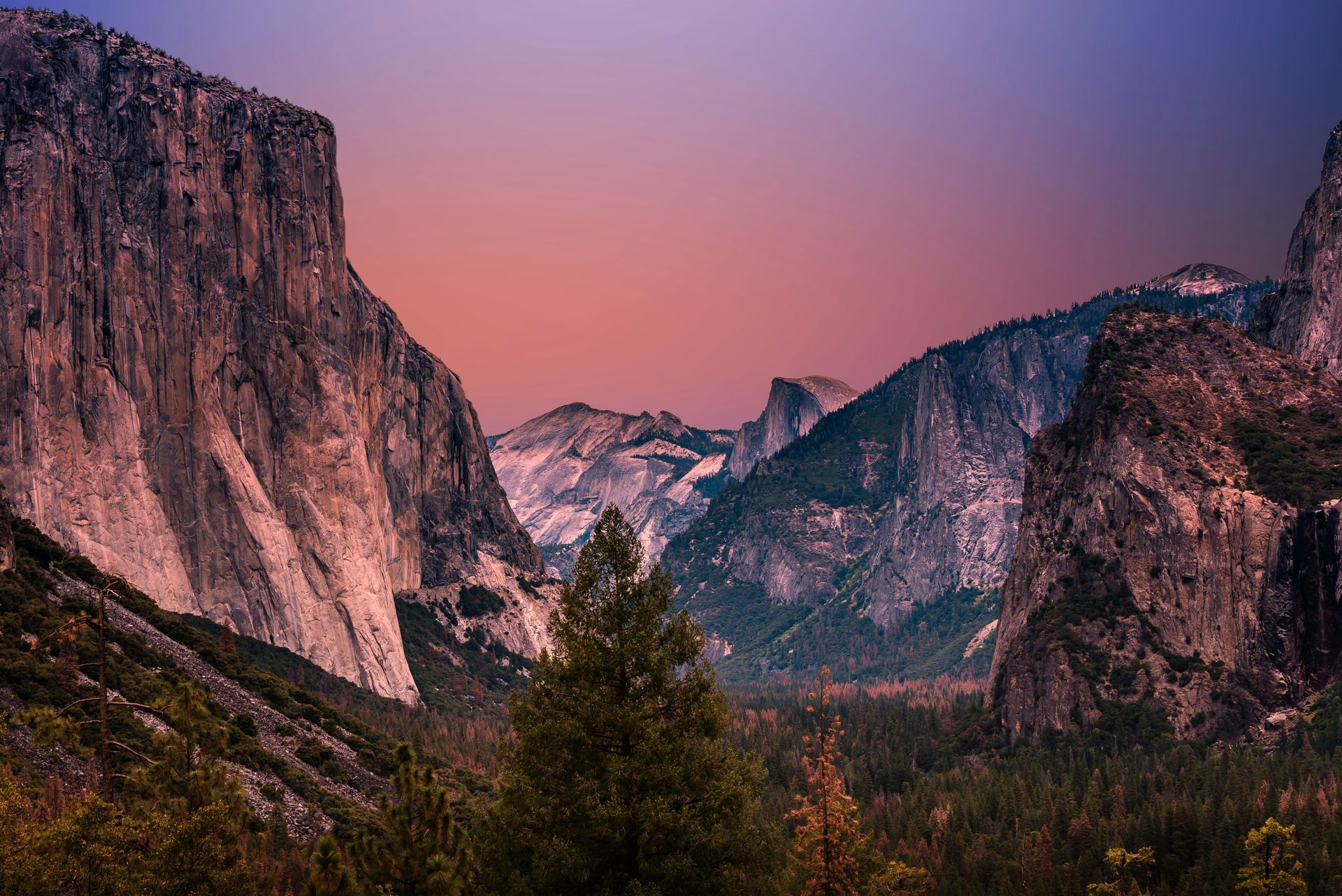
Yosemite National Park generated just over 1,000 combined posts in the Hoppa analysis, placing fourth and giving California two parks in the top four. The park’s sunset advantage is architectural: El Capitan and Half Dome, the two granite formations most closely associated with Yosemite Valley’s visual identity, catch the last direct sunlight of the day in a specific way that the valley’s east-west orientation produces. As the sun drops behind the western ridge, the light still illuminates the upper faces of El Capitan and Half Dome, while the valley floor is already in shadow, giving the granite walls a glowing quality whose warmth against the darkening sky is one of the most distinct Yosemite visual experiences.
The Valley View pullout on Northside Drive, facing east toward El Capitan’s western face and the Cathedral Spires, gives the sunset its most composed Yosemite frame: the Merced River in the foreground, the valley’s wooded floor, and the granite walls lit by the last direct sun overhead. Tunnel View, at the western entrance to Yosemite Valley, reverses the perspective and gives the valley’s full expanse, with El Capitan to the north and Bridalveil Fall to the south converging at Half Dome in the distance, its illuminated face visible at the valley’s end.
The Yosemite sunset’s social media appeal reflects the specific quality that the granite walls’ vertical scale gives the evening light: the same amount of sunlight that illuminates the valley’s trees horizontally covers 3,000 vertical feet of granite cliff face, which means the light show at sunset in Yosemite is both wider and taller than what any flat landscape produces. The park’s popularity means sunset viewpoints fill early, and arriving at Valley View or Tunnel View an hour before the expected sunset time gives visitors the best access to the primary viewing positions. The Glacier Point overlook, accessible by road when conditions permit, offers the Yosemite sunset its most elevated valley perspective: 3,200 feet above the valley floor, looking directly at Half Dome with the valley spread below, the position gives the golden hour light a spatial breadth that valley-level viewpoints cannot match.
Chris Ried / Unsplash
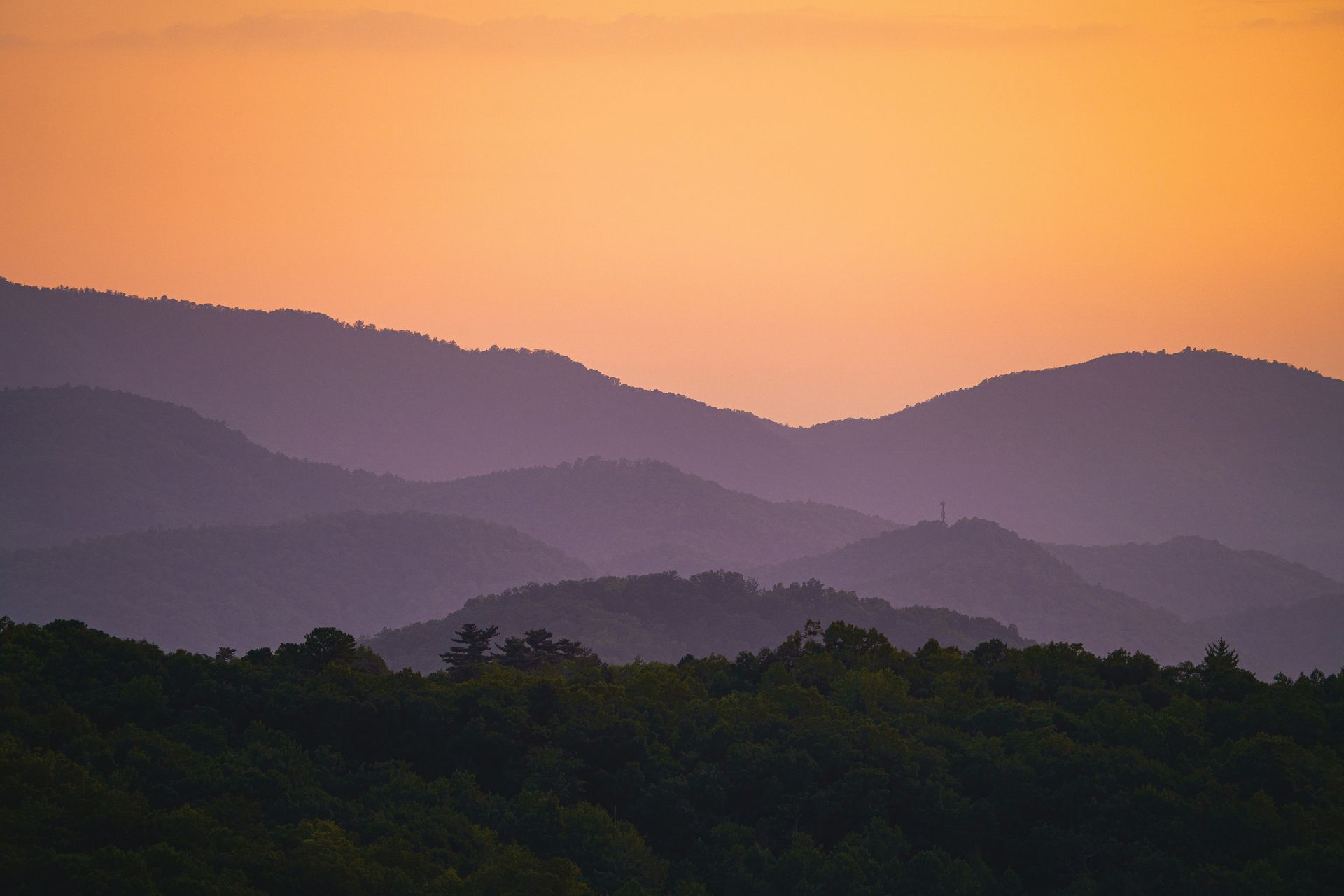
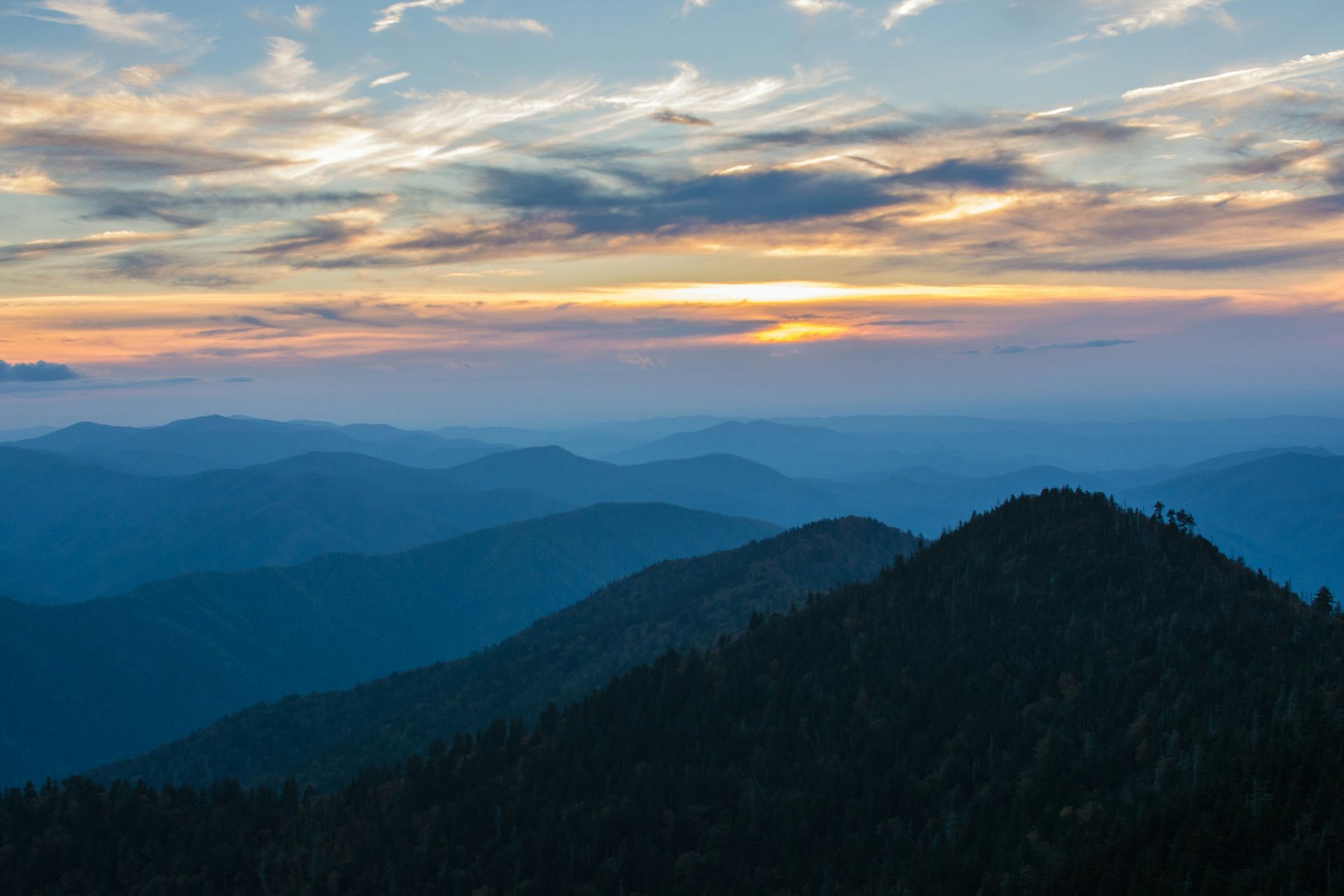
Great Smoky Mountains National Park generated more than 1,000 combined posts in the Hoppa analysis, placing fifth. The park straddles the border between Tennessee and North Carolina, and the specific atmospheric quality that gives the Smokies their name, the blue haze produced by the organic compounds that the park’s dense hardwood and conifer forest releases into the air, gives the sunset a visual character distinct from the desert and granite landscapes of the western parks. As the light drops, the layered ridgelines of the Appalachian highlands recede into successive shades of blue, from the foreground ridges in dark teal to the most distant visible peaks in pale silver-blue, and the haze softens the light, making the Smokies sunset more contemplative than dramatic.
Clingmans Dome, the highest point in the Appalachians at 6,643 feet and accessible by a paved road from Newfound Gap $GPS, offers the park's most elevated sunset viewpoint. The 360-degree view from the observation tower at the summit gives the ridgeline panorama its fullest expression: on clear evenings, the view extends more than 100 miles across the folded terrain of the southern Appalachians, and the blue haze that fills the valleys between the ridges gives the distance a visual depth whose layered quality is specific to the humid eastern mountain landscape. Newfound Gap, 2,000 feet below Clingmans Dome and accessible without the summit walk, gives a comparably dramatic ridgeline view with less elevation gain.
The Smokies are the most visited national park in the country, which means the sunset experience at the most popular overlooks involves sharing the view with substantial crowds. The park’s extensive trail system gives sunset hikers access to ridge positions and bald mountaintops whose views match or exceed those of the popular roadside overlooks, without the vehicle congestion that the popular road viewpoints generate at peak hours. The Gregory Bald and Andrews Bald trails both lead to open, grassy mountaintops above the treeline whose 360-degree views give the Smokies sunset its most expansive expression and whose relative remoteness keeps the crowds thin even at peak season.
Nate Foong / Unsplash
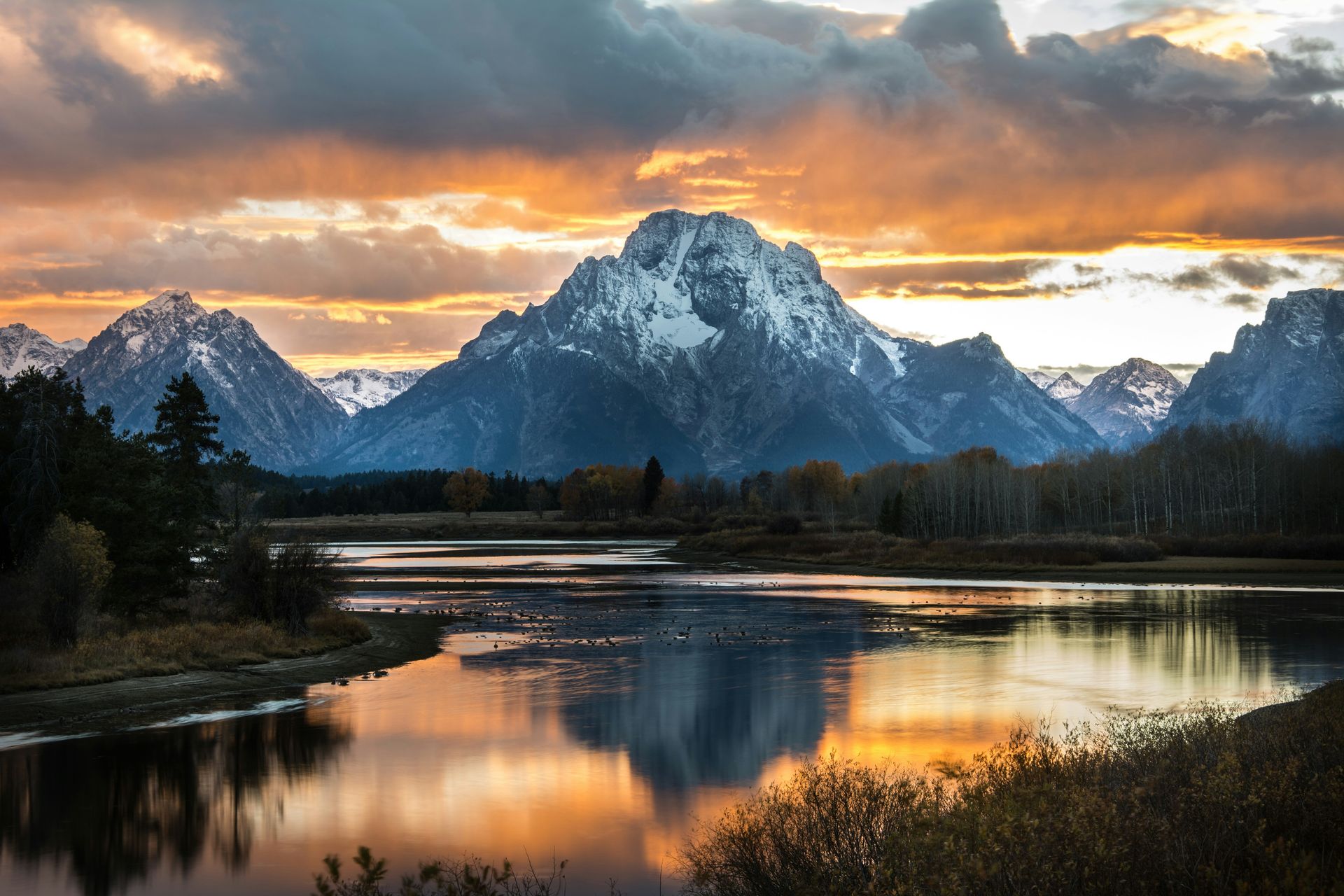
Grand Teton National Park generated more than 1,000 combined posts in the Hoppa analysis, placing sixth. The Teton Range, rising abruptly from the flat Jackson Hole valley floor without foothills to soften the transition, gives the sunset a photogenic quality whose dramatic geometry is among the most consistent in the American West. The craggy Teton peaks, including the 13,775-foot Grand Teton itself, catch the evening light on their west faces and cast shadows east across the valley in a spatial drama that the gradual slopes of other mountain ranges produce less decisively. The Snake River Overlook, where Ansel Adams made one of his most famous photographs, gives the sunset its most celebrated compositional element: the river’s S-curve in the foreground, the sagebrush flats of the valley, and the Teton peaks rising behind in the distance.
Oxbow Bend, a still-water curve of the Snake River that reflects the Teton peaks and Mount Moran in the late afternoon light, is the park’s most consistently productive sunset photography location. The reflection doubles the mountain’s visual presence in the frame, and the golden hour light that warms the peaks while the valley floor remains cooler gives the reflected image a luminosity that the direct mountain view shares, but the reflection concentrates in the flat water’s surface. Wildlife, including moose, bald eagles, and trumpeter swans, frequent the Oxbow Bend area at dawn and dusk, adding a natural history dimension to the sunset viewing.
The Jackson Hole valley’s proximity to the ski town of Jackson gives Grand Teton a practical accessibility alongside the visual spectacle: visitors who want to watch the sunset and then eat a good dinner and sleep in a comfortable bed have the full range of Jackson’s resort infrastructure within a short drive of the park’s best viewpoints. The park’s relatively compact road network, with the primary scenic loop covering the most productive sunset viewpoints in a single afternoon’s drive, gives Grand Teton the most efficient sunset-per-mile ratio of any park on this list.
Matthias Mullie / Unsplash
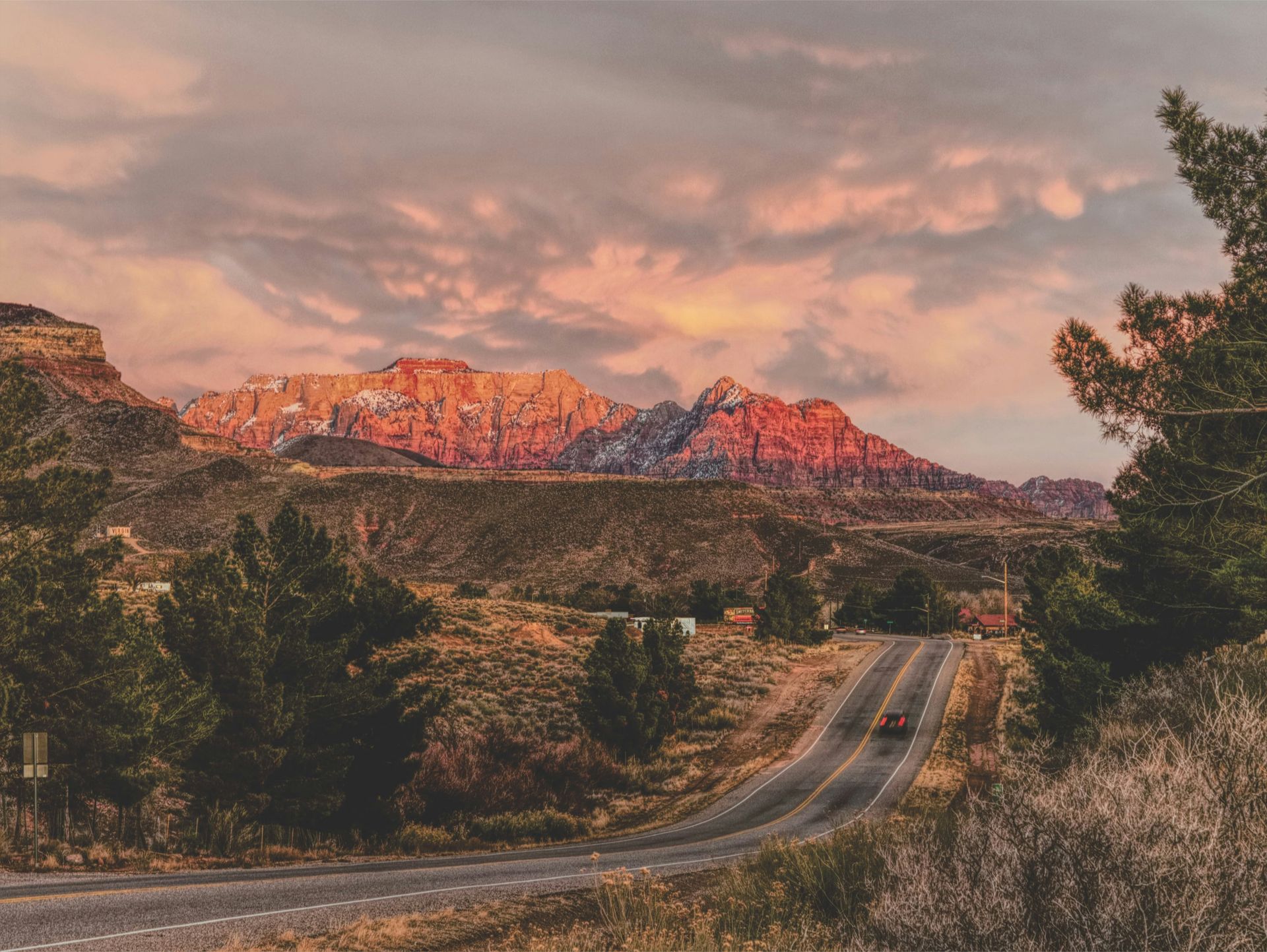
Zion National Park’s canyon geography gives the sunset a specific enclosed quality: the Navajo sandstone walls that rise on both sides of the Virgin River canyon catch the last light of the day and illuminate in shades of orange, red, and cream that the iron oxide and calcium carbonate layers in the sandstone produce when backlit by the low-angle western sun. The canyon’s north-south orientation means the eastern walls catch the last direct light while the western walls are already in shadow, giving late afternoon and early evening a progressive illumination that moves up the canyon walls as the sun drops.
Angels Landing, the park’s most celebrated viewpoint, gives the sunset its highest in-canyon perspective. The final half-mile of the Angels Landing trail, which requires holding chains fixed into the sandstone on the exposed ridge, gives the fit and undeterred hiker a 1,488-foot-above-the-valley-floor view of the canyon’s full length in both directions, with the walls lit orange on the east side and the valley floor already in the canyon’s own shadow below. The Canyon Overlook Trail, a much shorter and less exposed alternative, gives a similarly dramatic canyon view from the canyon’s rim at the tunnel entrance on Route 9.
The Zion Narrows, where the Virgin River runs between canyon walls as close as 20 feet apart and as high as 1,000 feet above, gives the sunset a specific slot canyon version of the Zion experience: the light that reaches the canyon floor at the end of the day comes through the narrow opening above in a concentrated beam whose quality changes by the minute as the sun angle shifts. The Narrows are best experienced in the last two hours before sunset, when the narrowest sections receive the most dramatically angled light. The Pa’rus Trail, a paved, relatively flat path along the Virgin River open to bicycles and wheelchairs, gives sunset viewers who cannot manage the Angels Landing hike a riverside perspective on Zion’s canyon walls at golden hour, whose accessibility and view quality make it the most underrated sunset option in the park.
Joshua Earle / Unsplash
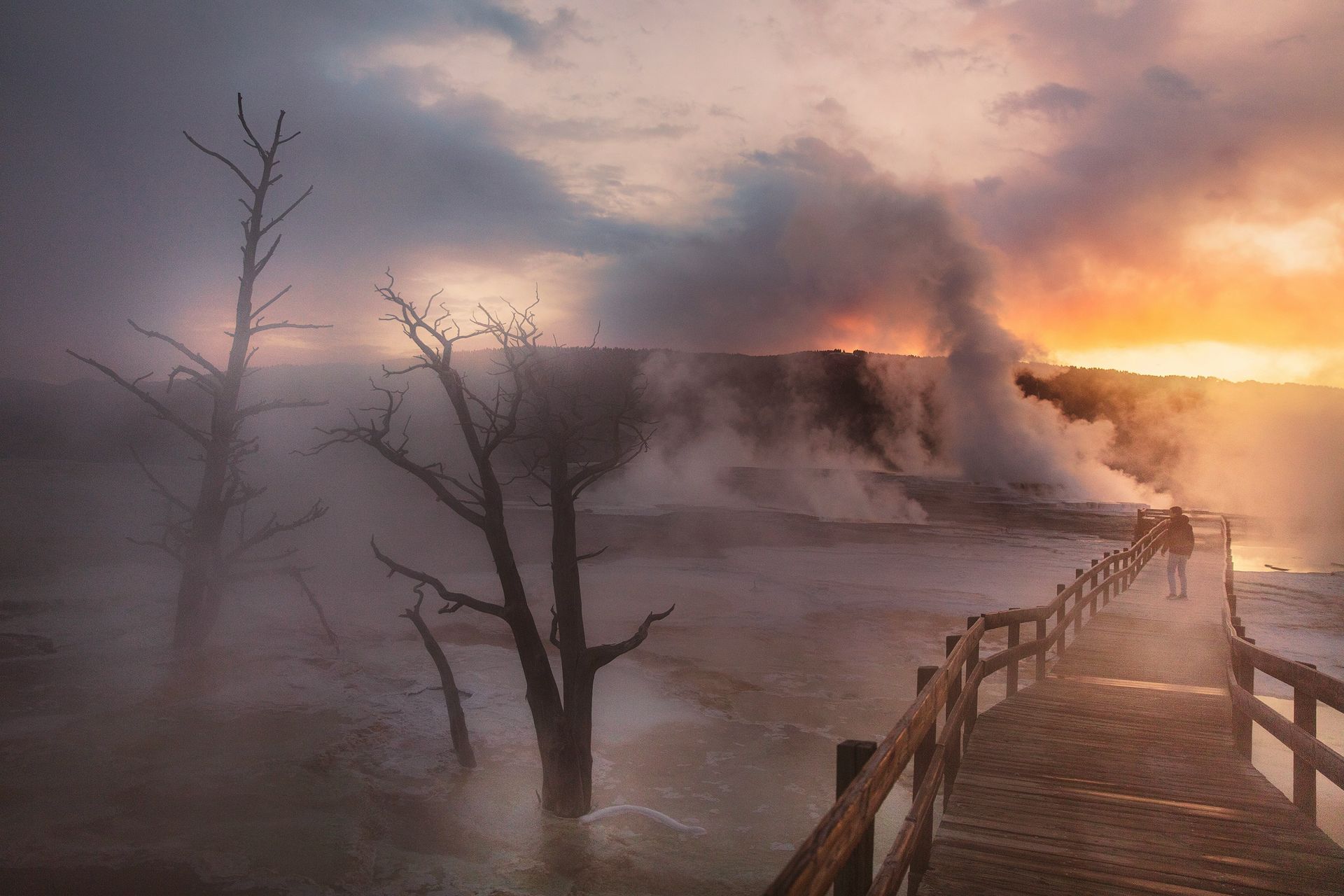
Yellowstone National Park’s sunset appeal rests on a visual combination unavailable in any other American park: the thermal activity of geysers and hot springs alongside the mountain and forest landscape gives the sunset an animated foreground that the static geological features of other parks do not provide. Old Faithful’s eruptions occur approximately every 90 minutes, and the timing occasionally coincides with the golden hour in a way that gives the geyser’s steam plume the warm backlight that photographers specifically seek. The Grand Prismatic Spring, whose colors shift from blue at the center to green, yellow, and orange at the edges based on the temperature gradient that different heat-tolerant microorganisms inhabit, intensifies at golden hour when the low sunlight warms the spring’s color from above.
The Lamar Valley in Yellowstone’s northeastern section, accessible by road and known as the park’s best wildlife-viewing area, adds a living landscape dimension to the sunset, a dimension that the thermal basins’ geological spectacle complements. Bison, wolves, pronghorn, and elk frequent the Lamar Valley in numbers that wildlife watchers specifically drive across the country to observe, and the golden hour light that warms the valley’s grasslands gives the wildlife viewing its most photogenic window. The park’s size, at 3,471 square miles, means the sunset looks different from different sections of the park on the same evening. The Yellowstone River canyon, with its lower and upper falls visible from Artist Point, gives the sunset a waterfall dimension that no other park on this list provides: the canyon’s yellow and orange rhyolite walls, whose color names the park, intensify at golden hour in a way that the thermal basins and the Lamar Valley’s open grasslands express differently but with equal visual impact. A single Yellowstone visit cannot cover the full range of sunset environments the park contains, which gives the Hoppa data’s 500-plus post count a specific shape: it reflects a park whose sunset variety keeps visitors returning to compare the view from one basin to another and from one season’s light to the next.
Mark Namenzo / Unsplash
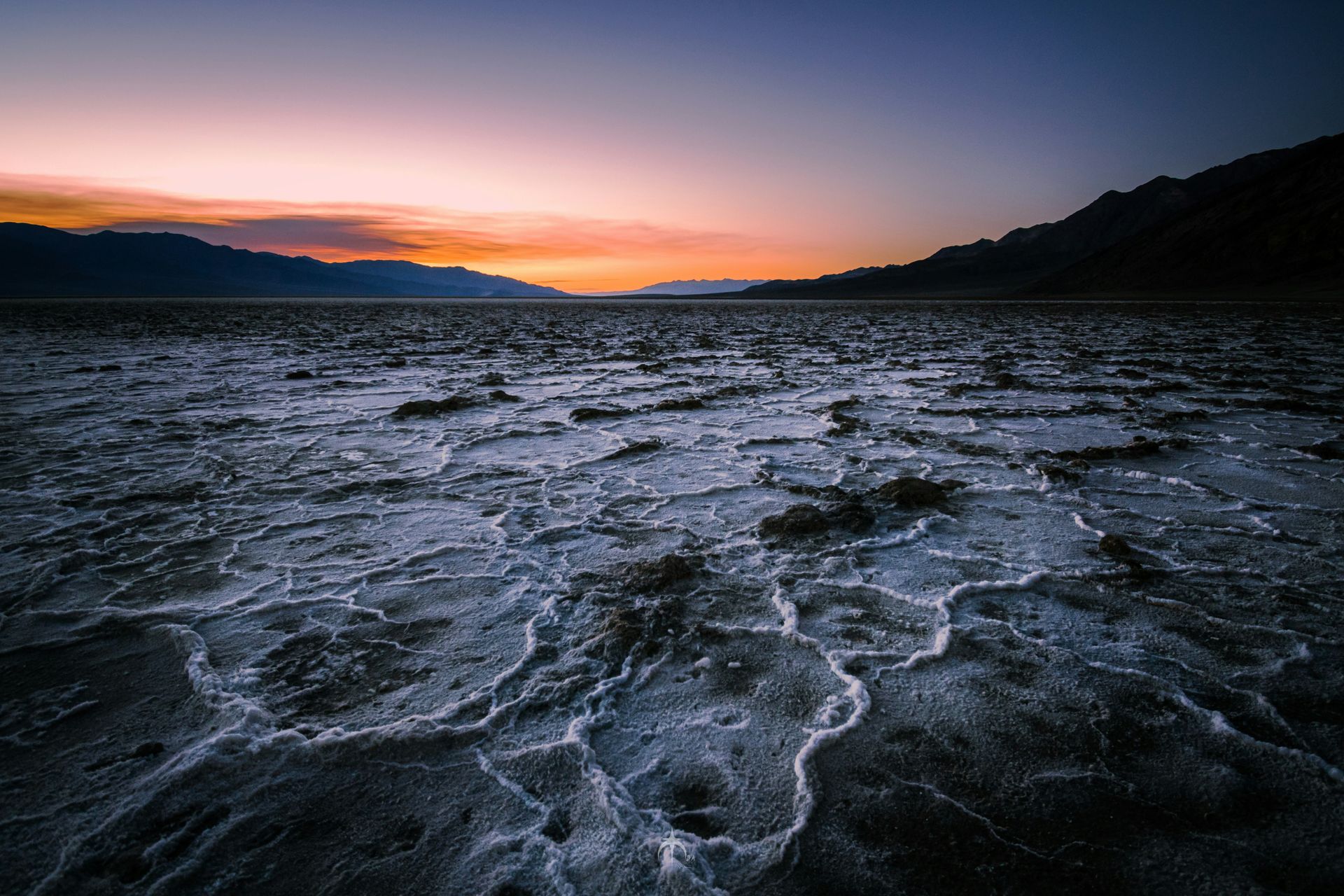
Death Valley National Park’s sunset is among the most geologically specific in the American park system. The Badwater Basin salt flats, the lowest point in North America at 282 feet below sea level, give the setting sun a flat, highly reflective surface that bounces the orange and pink light back upward, surrounding the viewer in color from both above and below in a way that conventional ground-level sunset viewing, where the color is only overhead, does not produce. The mountains that ring the basin, including the Panamint Range to the west, catch the last direct light on their peaks while the salt flats below are already transitioning into shadow, giving the dusk a vertical visual progression from lit peaks to shadowed basin.
The Zabriskie Point overlook gives Death Valley’s sunset its most dramatic geological frame: the eroded badlands of golden and purple clay, carved by ancient lake sediments into a landscape of ridges and gullies, catch the low sun and shift through colors produced by the Death Valley landscape’s specific mineral content. The overlook is accessible by a short paved path from the parking area, providing a practical sunset view that the park’s remote wilderness areas do not offer to visitors without backcountry permits and equipment. Mesquite Flat Sand Dunes, accessible by a short walk from the highway near Stovepipe Wells, give the Death Valley sunset a third landscape format: the dune crests catch the last direct light while the valleys between the dunes fall into shadow, creating a sculpted chiaroscuro across the sand that the salt flats’ flat reflective surface and the Zabriskie Point badlands’ corrugated geometry each produce in their own distinct terms. Death Valley’s extreme climate, with daytime summer temperatures exceeding 120 degrees Fahrenheit, makes the sunset the most comfortable time of day to be outside in the park for much of the year, giving the golden hour a practical justification alongside its visual one that no other park on this list requires.
Raphael Assouline / Unsplash
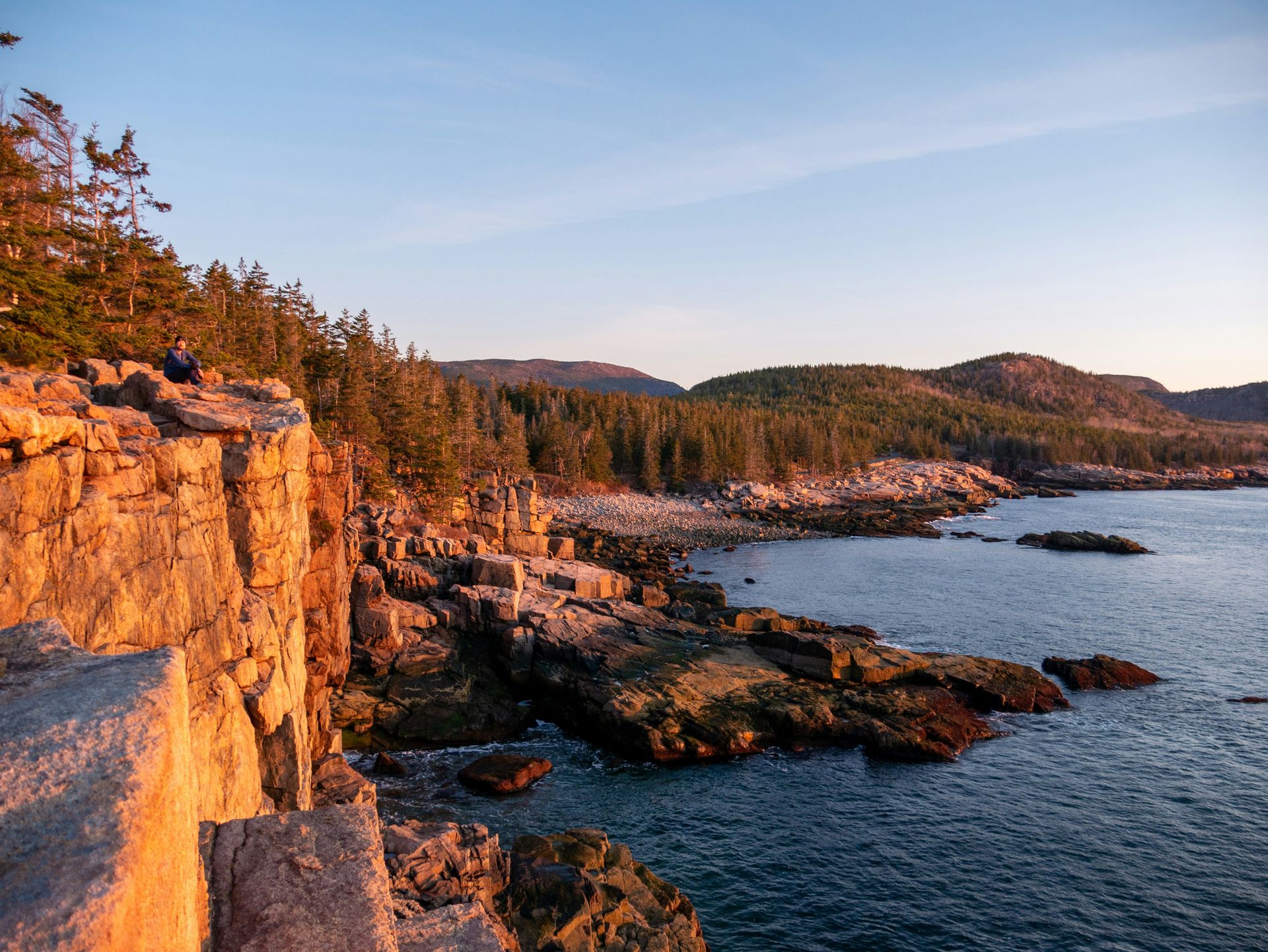
Acadia National Park on the coast of Maine offers a sunset experience specific to its Atlantic coast location: the park’s position gives visitors both an ocean sunrise from Cadillac Mountain, the first place in the continental U.S. to receive direct sunlight on many mornings, and a mountain sunset, watching the sun settle over the island’s granite peaks and forested hills while the ocean catches the last of the light below to the east. The dual orientation of sunrise over water and sunset over mountains gives Acadia a full-day light program that inland parks and pure coastal parks each provide only half of.
Jordan Pond, ringed by the glacially formed hills called the Bubbles and connected to the ocean via Jordan Stream, gives the Acadia sunset a reflective surface whose mountain frame and maritime character give it a specifically Maine quality: cool light, dark spruce forest, granite ledge, and the ocean’s presence audible if not always visible from the pond’s north end. The carriage roads that John D. Rockefeller Jr. commissioned across the park in the early twentieth century, now closed to motor vehicles, give sunset hikers and cyclists access to elevated positions throughout the park’s interior without requiring trail-finding experience. Bass Harbor Head Lighthouse, on the southwestern tip of Mount Desert Island, gives the Acadia sunset its most classically New England composition: the red lighthouse against the pink and orange sky above the rocky Atlantic coast gives the golden hour a specifically Maine maritime quality that the park’s more celebrated Cadillac Mountain sunrises and sunsets, for all their elevation and panoramic scope, do not replicate at the same intimate, sea-level, lighthouse-framed scale.
The Acadia sunset’s social media appeal, reflected in the Hoppa analysis, is consistent with the park’s overall reputation as the most scenically distinctive park in the eastern United States: the Atlantic coastline, granite mountains, and specific quality of Maine’s coastal light give the park a sunset character whose New England particularity is unlike anything the western parks produce.