
From New Orleans' Cajun food and Civil War battlefields to a 12-day Revolutionary War voyage from Washington D.C. to Philadelphia
Credit: American Cruise Lines
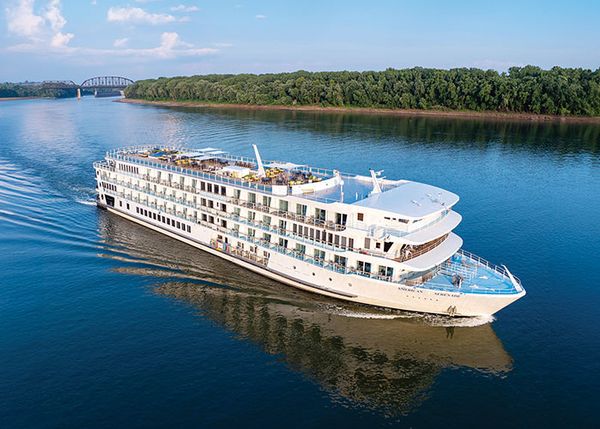
European river cruises rank among the most popular and well-known itineraries in the industry, though US-based travelers should know there’s also plenty to explore by river ship right here in North America, with no passport required for the trip. Domestic river cruising has grown considerably in recent years, giving travelers genuine alternatives to flying overseas while still delivering the slow, scenic pace that makes river cruising distinct from ocean sailings. Ships built specifically for American rivers also tend to run smaller than their European counterparts, letting them navigate shallower, narrower waterways that larger vessels simply couldn’t access.
Whether the goal involves a cultural cruise down the Mississippi River or a photo-worthy journey through the Pacific Northwest, America’s great waterways offer something genuinely worthwhile for nearly every type of traveler. Each of these rivers carries its own distinct regional character, shaped by centuries of American history layered along its banks, from Indigenous settlements and early colonial trade routes to Civil War battlefields and the westward expansion that followed.
The five itineraries below appear in U.S. News & World Report, covering the best US river cruise itineraries for 2026 and 2027. They range from week-long round trips through the Deep South to nearly two-week voyages tracing the birth of American independence, giving travelers considerable range in both trip length and regional focus. Two of the five itineraries specifically follow the Mississippi River system, reflecting just how central that single waterway remains to American river cruising, while the remaining three each explore a genuinely distinct region, from the mountainous Pacific Northwest to the colonial-era mid-Atlantic coast. Travelers $TRV choosing between them should weigh whether history, scenery, or a specific season of travel matters most to their trip and personal interests, since each itinerary genuinely rewards a different kind of traveler.
Credit: American Cruise Lines
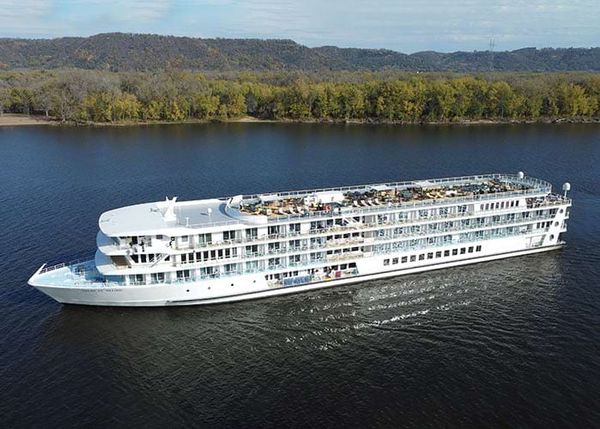
Cruises along the Lower Mississippi River typically include states such as Mississippi, Louisiana, and Tennessee, focusing on all things Southern, from fascinating Civil War sites to flavorful comfort food tours to music-themed itineraries celebrating the birthplace of the blues. The length of these sailings varies depending on whether they connect with other nearby waterways, including the Ohio River and the Cumberland River, though travelers can generally tour the Lower Mississippi itself in about eight or nine days.
Viking River Cruises’ eight-day New Orleans and Southern Charms cruise sails round-trip from New Orleans, visiting ports such as Baton Rouge, Louisiana, and Natchez, the oldest city in Mississippi, along the way. Natchez traces its founding back to the early eighteenth century, giving the city a genuinely deep well of colonial and antebellum history to explore during a stop there.
Guests can sample tasty Cajun and Creole food throughout Louisiana, stroll through the Big Easy’s bustling French Quarter, and take in the history of Vicksburg National Military Park in Vicksburg, Mississippi. The 1863 siege of Vicksburg ranks among the pivotal turning points of the Civil War, and the preserved battlefield gives history-minded travelers a genuinely sobering stop amid an otherwise celebratory itinerary built around music and food.
This particular route rewards travelers hoping to combine culinary indulgence with genuine historical depth, since few other domestic itineraries pack quite this much Southern culture into a single round-trip sailing lasting just over a week. New Orleans itself was founded in 1718 by French colonists, and the French Quarter’s distinctive architecture actually reflects considerable Spanish influence too, since Spain controlled the city for several decades following a later fire that destroyed much of the original French construction. Baton Rouge, Louisiana’s state capital, sits roughly halfway between New Orleans and Natchez along the route, giving travelers a genuinely different pace than the bigger city stops, with its own distinct blend of government buildings and plantation-era architecture nearby.
Credit: American Cruise Lines
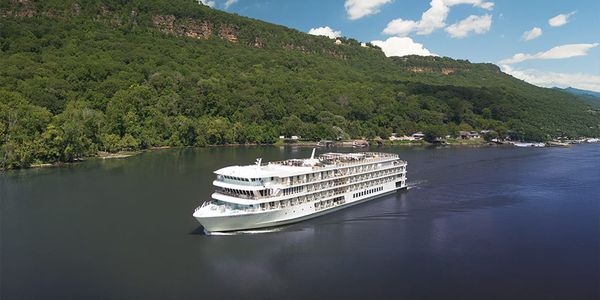
The Upper Mississippi comprises Midwestern states such as Minnesota, Wisconsin, Iowa, Illinois and Missouri, and like Lower Mississippi River cruises, Upper Mississippi itineraries may focus on a main portion of the river or add ports along other tributaries. Combination cruises covering both the Lower and Upper Mississippi are also available for guests hoping to explore a considerably longer stretch of the mighty waterway, and these combined sailings can range anywhere from eight to more than 20 days.
The Heartland of America cruise with Viking River Cruises takes passengers on a journey through some of the United States’ most treasured, historic destinations. Over an eight-day voyage running from St. Louis, Missouri, to St. Paul, Minnesota, or the reverse direction, guests hear tales of the Lewis and Clark Expedition, a journey that set out from the St. Louis area in 1804 to explore the newly acquired western territories of the Louisiana Purchase.
Travelers $TRV also visit Mark Twain’s childhood home in Hannibal, Missouri, the small river town that inspired much of the setting for his famous novels, and learn about the country’s agricultural backbone throughout Iowa’s Quad Cities region along the way. This stretch of the river passes through landscapes that shaped some of the most recognizable stories and industries in American history.
This itinerary rewards travelers specifically drawn to American literary and exploration history, giving them a genuinely immersive week tracing both a real historical expedition and the fictional world it eventually helped inspire. St. Paul and Minneapolis together form the Twin Cities at the river’s northern reaches, giving travelers ending or beginning their cruise there a genuinely vibrant urban bookend to an otherwise small-town, rural itinerary along the rest of the route. The Quad Cities region straddling the Iowa and Illinois border along the river takes its name from the cluster of smaller cities, including Davenport and Rock Island, that grew up together around the river’s industrial and agricultural trade throughout the nineteenth and twentieth centuries.
Credit: American Cruise Lines
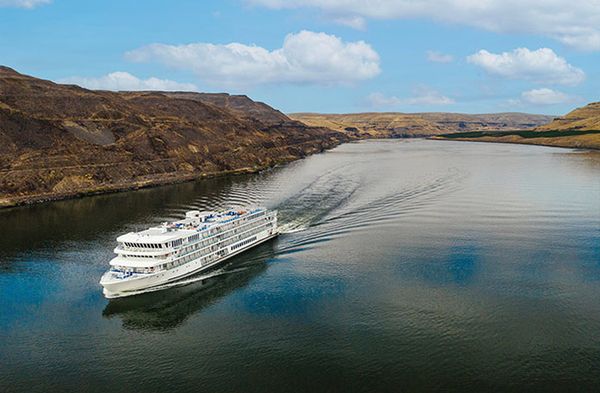
Travelers $TRV can take in the scenery of the Pacific Northwest with a sailing along these two picturesque waterways. The Snake River starts in Wyoming and runs through Idaho before connecting to the Columbia River, which flows through Washington State and Oregon, as well as British Columbia, Canada, before eventually reaching the Pacific Ocean. Itineraries typically range from seven to 16 days and often embark from Portland, Oregon.
On American Cruise Lines’ special National Parks and Legendary Rivers land-and-cruise journey, passengers board their river ship in Portland and traverse the Columbia River, visiting ports across Oregon and Washington such as Astoria, The Dalles and Clarkston. Astoria specifically sits near the mouth of the Columbia, marking roughly where the Lewis and Clark Expedition finally reached the Pacific Ocean after their long overland journey.
About halfway through the itinerary, travelers disembark their river ship near Coeur d’Alene, Idaho, where they enjoy lunch and a tranquil boat day on the lake. After that, American Cruise Lines shuttles guests from one national park to the next, visiting Glacier National Park, Yellowstone and Grand Teton over several jam-packed days, before the trip concludes in Jackson, Wyoming.
This particular itinerary genuinely stands apart from the other river cruises on this list, since it blends a traditional river sailing with an overland national park tour, giving travelers considerably more geographic and geological variety within a single trip than a purely river-bound itinerary could offer. The Columbia River Gorge, which the ship traverses along much of the Oregon and Washington portion of the route, formed largely through catastrophic Ice Age floods thousands of years ago, carving the dramatic cliffs and waterfalls visible from the ship today. Grand Teton and Yellowstone, the two national parks capping off the overland portion of this itinerary, sit adjacent to one another in northwestern Wyoming, allowing the tour to move between the two without a lengthy separate drive between destinations. Yellowstone specifically became the world’s first national park when Congress established it in 1872, giving this stop genuine historical significance within the broader American conservation movement.
Credit: American Cruise Lines
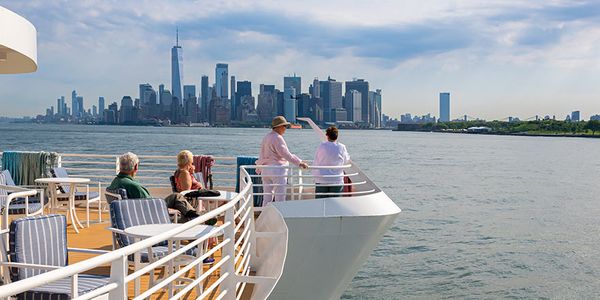
Travelers $TRV looking for a carefree autumn cruise to take in the season’s vibrant colors need look no further than a fall foliage sailing along the Hudson River. The Hudson runs almost exclusively through the state of New York, excluding a small portion that borders New Jersey, and river cruises typically travel between New York City and Albany over roughly a week, allowing cruisers to take in the beauty of the Catskill Mountains along the way.
American Cruise Lines’ nine-day Hudson River Fall Foliage Cruise lets travelers breathe in the crisp fall air while admiring red and orange trees along the riverbanks. Noteworthy stops include spooky Sleepy Hollow, home to the Old Dutch Church and Sleepy Hollow Cemetery, both immortalized in Washington Irving’s famous ghost story that gave the town its enduring reputation.
West Point, home to the storied US Military Academy founded in 1802, offers another genuinely compelling stop, giving travelers insight into one of the oldest continuously operating military posts in the country. Hyde Park rounds out the itinerary, boasting the FDR Presidential Library, the first presidential library established in the United States, alongside the historic Vanderbilt Mansion nearby.
In addition to fall foliage cruises, typically offered between late September and early November, American Cruise Lines also hosts a summertime Hudson River voyage running from June through mid-September, perfect for a warm-weather getaway or a Labor Day cruise for travelers who prefer green landscapes over autumn color. The Hudson River School of painters, active throughout the nineteenth century, drew direct inspiration from the same Catskill Mountain scenery cruise passengers view today, making this stretch of river a genuinely foundational location in the history of American landscape art. The Vanderbilt Mansion at Hyde Park, built for one of America’s wealthiest Gilded Age families, now operates as a National Historic Site, giving cruise passengers a genuine window into the extravagant estates that once lined the Hudson’s eastern bank. Hyde Park also served as Franklin D. Roosevelt’s lifelong home, and he remains the only US president buried on the grounds of his own presidential library.
Credit: American Cruise Lines
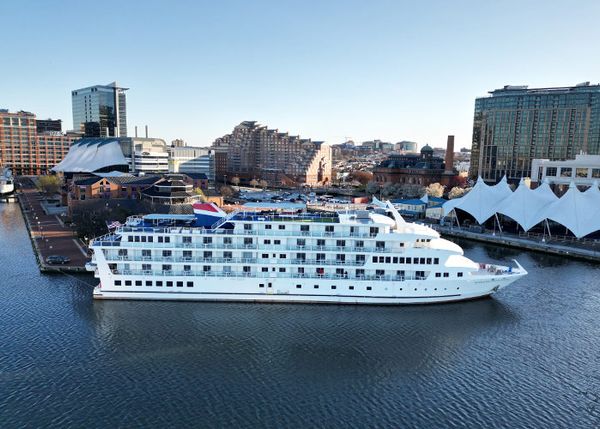
Travelers $TRV can explore the capital of the United States, alongside many other patriotic hot spots, with a river cruise along the Potomac. Typically spanning nine to twelve days, sailings depart from Washington, D.C., and float along the Chesapeake Bay, the largest estuary in the United States, toward historic sites such as Annapolis, Maryland, and Williamsburg, Virginia. Some itineraries continue onward to Philadelphia via the connected Delaware River.
American Cruise Lines’ American Revolution Cruise sails from Washington, D.C., to Philadelphia over 12 days, stopping in Norfolk, Yorktown, and Jamestown, and Colonial Williamsburg, Virginia, plus St. Michael’s and Annapolis, Maryland, along the way. Yorktown specifically marks the site of the final major battle of the American Revolution in 1781, giving history-focused travelers a genuinely pivotal stop along the route.
Highlights include excursions to Mount Vernon, the former estate of George Washington overlooking the Potomac, alongside relaxing waterfront strolls throughout the various historic port towns visited along the way. Colonial Williamsburg, restored as a living-history museum beginning in the 1920s, rounds out the itinerary’s considerable concentration of Revolutionary-era sites.
Guests can also upgrade to a special hotel package to receive a one-night stay at the Four Seasons Hotel Washington, D.C., prior to embarkation, alongside luggage service, breakfast and an educational morning at the Smithsonian Museum of American History on the National Mall. This upgrade gives travelers a genuinely convenient way to extend their time in the capital before the cruise itself even begins. Washington, D.C., was specifically chosen as the nation’s capital in part because of its position along the Potomac, giving the river a central role in American governance dating back to the country’s earliest years. The Smithsonian Museum of American History, included as part of the optional hotel package’s pre-cruise itinerary, holds one of the most extensive collections of American historical artifacts anywhere in the country, giving early arrivals a genuinely rich way to spend a morning before boarding.